
Vox clamantis in deserto




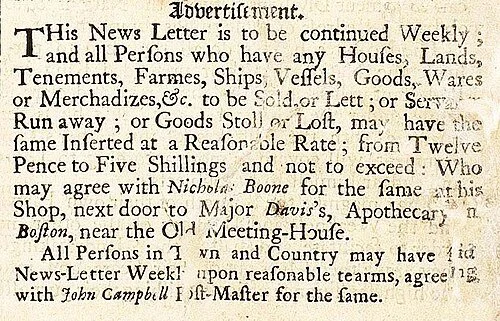

Paper path
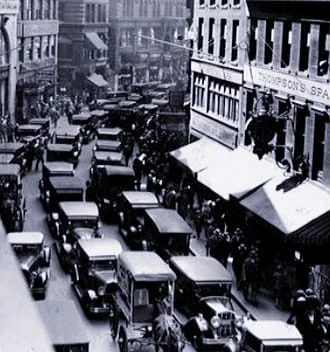
“Newspaper Row,’’ on Washington Street in Boston, in September 1929, right before the stock market crash in the next month. The Boston Globe was at 244 Washington St., the Boston Evening Transcript at 324 Washington (at Milk Street), the Boston Post at 261 Washington, the Boston Journal at 264 Washington and the Associated Press at 293 Washington. Other Boston news services, including the Boston Herald and Boston Traveler, were not far from Newspaper Row. It was a noisy and crowded part of downtown.
Enough of summer!
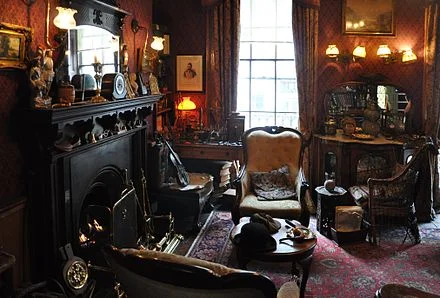
Victorian-style sitting room with a fireplace in the Sherlock Holmes Museum, London
“Caught in the doldrums of August we may have regretted the departing summer, having sighed over the vanished strawberries and all that they signified. Now, however, we look forward almost eagerly to winter's approach. We forget the fogs, the slush, the sore throats and the price of coal, we think only of long evenings by lamplight, of the books which we are really going to read this time, of the bright shop windows and the keen edge of the early frosts.”
― Denis Mackail, from Greenery Street
On an ominous note...
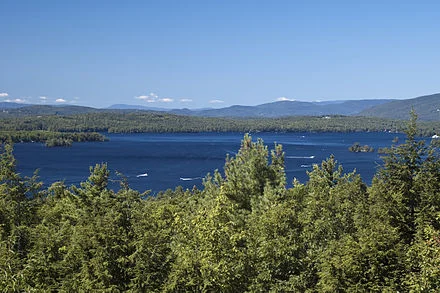
Lake Winnipesaukee and the Ossipee Mountains, in central New Hampshire
— Photo by Don Kasak
“It was a splendid summer morning and it seemed as if nothing could go wrong.’’
— From “The Common Day,’’ a short story by John Cheever set in New Hampshire
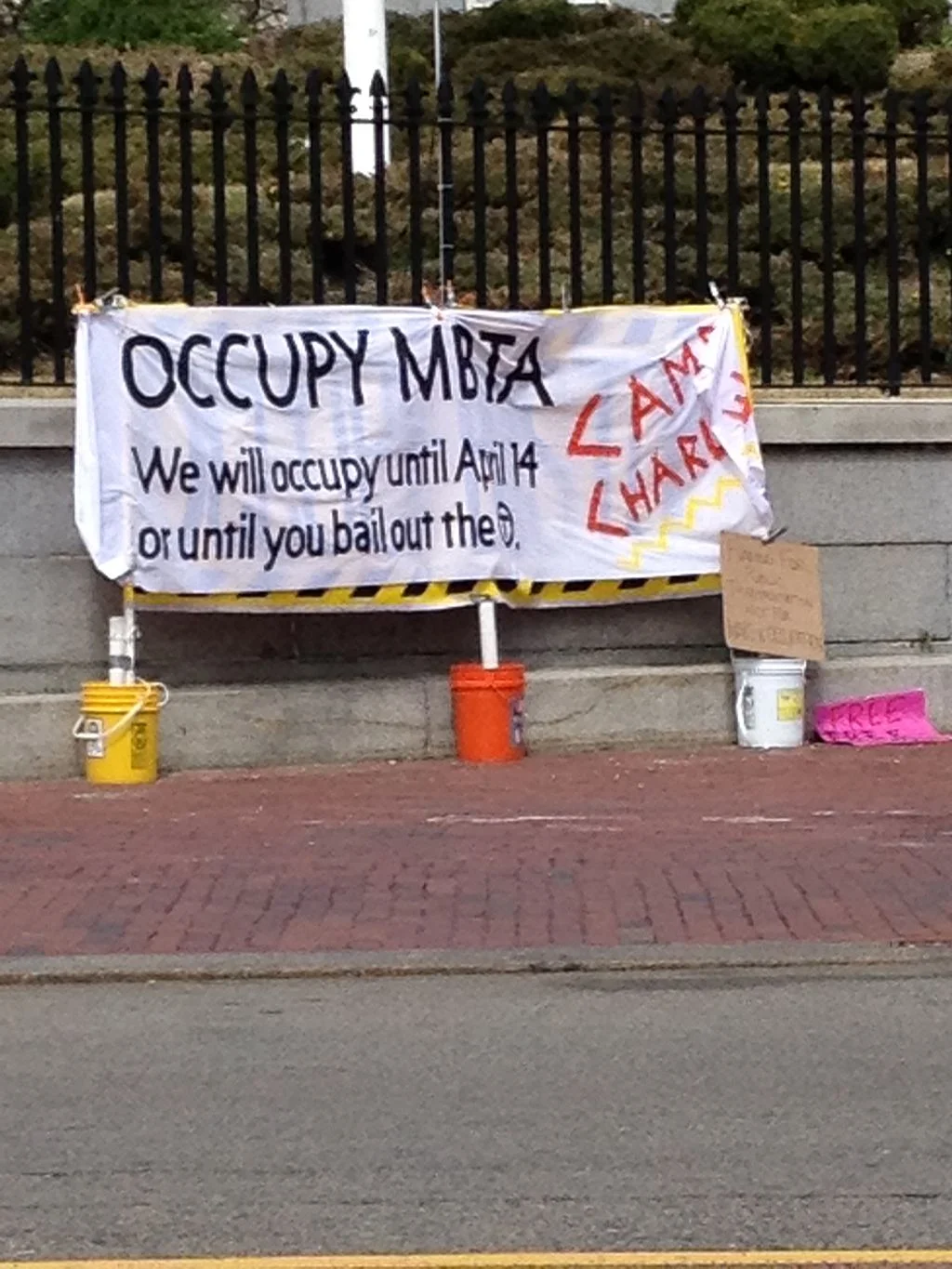
Baker tries to streamline transit improvements
— Photo by LuK3
From Robert Whitcomb’s “Digital Diary,’’ in GoLocal24.com
‘It takes much longer in the U.S. than in other developed nations to build and repair public infrastructure, as my old friend Philip K. Howard, who chairs Common Good, has researched, and written about so well, in such books as Try Common Sense.
The Massachusetts Bay Transportation Authority is in need of massive repairs and major subway and commuter train service expansion. So it was heartening to read that the public-private partnership aspect of Gov. Charlie Baker’s 10-year, $18 billion transportation plan includes provisions to streamline the procurement process.
The Boston Globe had an example of how stuff gets held up and things can be moved along at a faster clip.
“Most notably, the bill contains language aimed at avoiding what went down in Quincy last year: A development at the MBTA’s North Quincy Station ground to a halt after Attorney General Maura Healey ruled the T broke the law by not bidding out work for a parking garage that would be built there. A private developer was going to build the garage, but it would have ultimately been owned by the T.
“Baker’s bill would avoid another such situation by relaxing procurement rules to allow developers to move forward on a wide array of public transportation infrastructure — from staircases to stations — that would be part of their projects but deeded to the state or the MBTA. ‘’
One of the more interesting Baker administration proposals is to set up a new, $50 million program for a $2,000-per-employee tax credit for employers who let workers telecommute, thus reducing the pressure on Greater Boston’s often clogged roads during weekday rush hours. Of course, few managers would be affected.
To read more about the Baker plan, which of course would very much affect neighboring states, too, hit these links:
https://www.bostonglobe.com/business/2019/07/25/baker-transportation-bill-aims-encourage-public-private-partnerships/gC5V38s7pOzcv2uzoVshCJ/story.html
https://www.wbjournal.com/article/baker-seeks-arsenal-of-tools-in-18b-transportation-bond-bill
Jim Hightower: Americans head for Mexico for health care
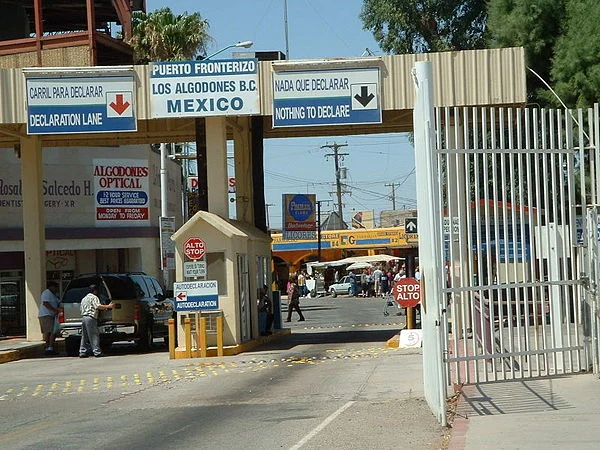
Welcome to a health-care mecca for Americans.
Via OtherWords.org
You probably haven’t heard about it, but there’s another mass migration coming across the U.S.-Mexico border.
However, these aren’t Central American families fleeing horrific conditions back home — only to be separated, incarcerated, traumatized, and demonized by Trump for seeking humanitarian asylum in our country.
Rather, these migrants are going the other way — from the United States into Mexican border towns, where they’re welcomed with open arms instead of armed guards.
They’re mostly working-class people seeking relief from our nation’s unaffordable, no-care health care system. As many as 6,000 a day travel to such towns as Los Algodones, across from Yuma, Ariz., to get medical services and prescription drugs that are priced out of their reach here in the United States.
Nicknamed “Molar City,” Los Algodones has more dentists per capita than anywhere else in the world. Quality dental work in Mexico averages two-thirds less than it costs here
This is because the health system there prioritizes care over profits.
Start with professional education, which is tuition-free in Mexico, meaning dentists and other health-care providers don’t have to jack up prices to cover a crushing load of student debt. Also, Mexico’s universal, tax-paid health care system doesn’t saddle patients with exorbitantly expensive insurance bureaucracies.
It’s a system that’s open, affordable, and accessible to all — the opposite of ours, which is why hordes of U.S. working-class people go south to find care. As a Truthout.org article reports, “U.S. citizens seeking health care can park in Yuma for $5, walk across the border, get the help they need, and come back for dinner.’’
Instead of building a senseless border wall to keep people out of the U.S., our leaders ought to be looking across the border for ideas on how to build a better health-care system.
OtherWords columnist Jim Hightower is a radio commentator, writer and public speaker.

William Hall's maritime watercolors on the Block

“The A to Z, Lost in the 1938 Hurricane’ ‘ (watercolor on paper), by William Talmadge Hall. There will be a show of his new watercolors at the Jessie Edwards Studio, Block Island, R.I., Aug. 23-Sept. 4, wlth a reception Aug. 24, 5 to 7 p.m. The gallery is on Water Street, right across from the ferry landing.
Llewellyn King: Carbon capture may be key to stopping climate catastrophe
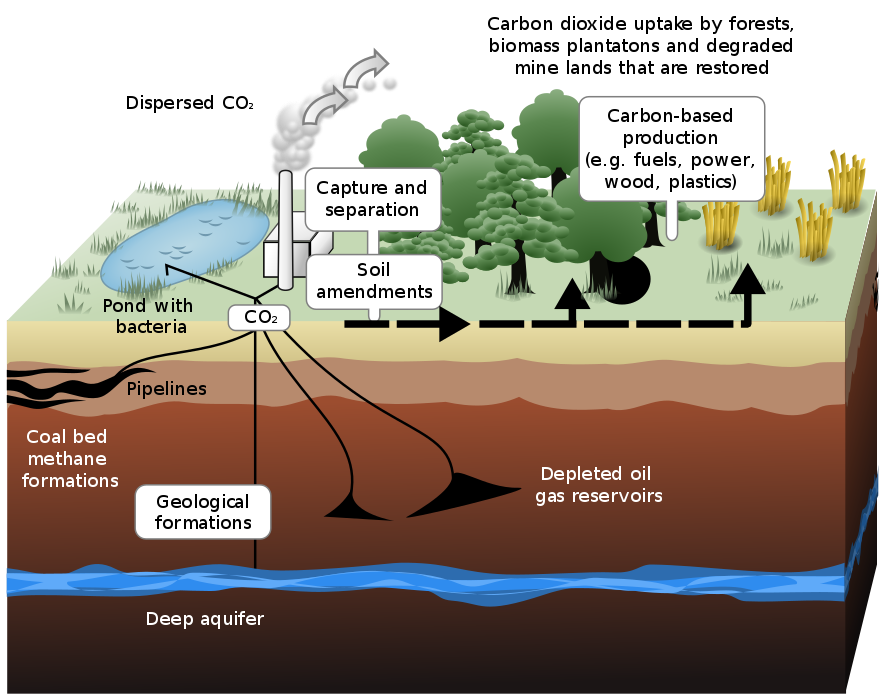
Schematic showing both terrestrial and geological sequestration of carbon dioxide emissions from a biomass or fossil fuel power station.
In the ’70s and ’80s, black was gold. Coal was king.
Coal in tandem with nuclear were to be the white knights of the United States, as we struggled with the Arab oil embargo, price-gouging by the Organization of Petroleum Exporting Countries, and declining oil production at home.
In 1977, the fledgling Department of Energy declared natural gas a “depleted” resource. Today, it battles with solar for cost advantage. The technology of fracking changed everything. Never forget technology’s possible revolutionary impact.
Solar and wind -- today’s energy darlings -- were struggling as the National Laboratories sought to make them workable. Solar was thought to have its future in mirrors concentrating heat on “power towers”. Wind was regarded with skepticism; even the shape of the towers and blades was in flux.
Everything that moved would be electrified. Nuclear would be used to make electricity. Coal would be burned as a utility and industrial fuel, and it would be gasified and liquified for transportation and other uses.
Environmentalists were pushing coal as an alternative to nuclear, which they were convinced was dangerous: In the United States it has cost no lives, but gas and oil in various ways have taken their toll.
Coal and nuclear were bright stars in a dark sky.
In 1974, at the White House, Donald Rice, who later ran the Rand Corporation, speculated in an interview with me on whether there might be oil and gas in the Southern Hemisphere, then considered unlikely and now, with production in South America and South Africa, a game-changer. Beware of the conventional wisdom.
All of this came flooding back at an extraordinary summit on global energy horizons convened in Washington recently by Dentons, the world’s largest law firm with offices in 79 countries. By pulling in lawyers from Uzbekistan to London, Dentons’ summit was able to fit America’s energy transformation into the global reality.
Richard Newell, president of Resources for the Future, laid out a picture that is sobering. He said that by 2040, the world would be pumping more carbon dioxide into the atmosphere than today notwithstanding dramatic actions to curb burning fossil fuels in North America, Europe and China. The problem is the growth in demand for electricity in what is being called the “Global East,” where new coal plants are coming online in China, India and Indonesia among other countries. This despite all deploying solar and wind, and India and China having aggressive nuclear growth plans. The electricity need in the region is great and fuel solution is fossil, mostly coal.
Enter Ernest Moniz. The former secretary of energy who now heads his own think tank, Energy Futures Initiative, is a passionate backer of carbon capture use and storage. Moniz, also an adviser to Dentons, is laying out a whole scenario of “carbon capture from air” that is persuasive. It is part of his newly unveiled “Green Real Deal.”
Having chaired two carbon capture conferences, I have wondered why the technology, which gets more sophisticated all the time, has not been embraced by coal producers with vigor. They have been cooler than the utilities who somewhat favor the technology.
Clinton Vince, chair of Dentons’ U.S. energy practice and co-chair of the firm’s global energy sector, reminded the summit of the global importance of nuclear, now shunned in the United States for cost reasons. He sees nuclear as vital to climate goals around the world.
Unlike the ’70s and early ’80s, there is no shortage of energy. The challenges are in how clean it can get; how it can be stored, if it is electricity; and how fast technology can change the energy equation -- as it has over the past four decades -- to save the climate without restricting economic growth.
The commodity that is in truly short supply is time.
Llewellyn King is executive producer and host of White House Chronicle, on PBS. His email is llewellynking1@gmail.com and he’s based in Rhode Island and Rhode Island.
Then they're tough birds

“New Yorkers’’ (oil on canvas on panel), by Purdy Eaton, in her show of paintings and photos called “Mad to Live,’’ at Standard Space, Weston, Conn., through Aug. 25.
The gallery says that Ms. Purdy, with a background in biology and epidemiology, is inspired by the natural world, particularly animals. “Her paintings feature detailed animals against abstract backgrounds, creating a surreal atmosphere in each piece. Contributing to this are the expressions of each animal: unreadable yet evocative, at turns indifferent and ominous. Each work of art invites the viewer to look ever closer, urging them to examine both the canvas before them and their own impressions of nature. ‘‘

Frank Carini: Time for municipal renewable-energy-based utilities?

Via ecoRI News (ecori.org)
More than a decade ago, Rock Port, a small farming community in northwest Missouri, reportedly became the first U.S. municipality to be powered almost exclusively by renewable energy. Four large wind turbines are connected to the power grid and provide the town’s nearly 1,400 residents with most of the power they need. The turbines produce about 16 million kilowatt-hours of electricity annually.
When the wind isn’t blowing, residents buy power from the grid. But on most days, the turbines generate enough wind power for the town to get paid to export energy.
Members of the Rhode Island Progressive Democrats of America are hoping to create a similar energy situation in Cranston. The group is raising money to have a study done to determine if a municipal renewable-energy utility would work in Rhode Island’s second-largest city.
The group’s broader idea is to create an energy plan that would transform the Ocean State into a sizable producer of solar, tidal, and onshore wind power. The group’s aim is to generate 200 percent of the power that the state needs and to return energy profits to Rhode Island as citizen dividends and municipal funding.
ecoRI News recently spoke with Nate Carpenter, the group’s state coordinator, and Wil Gregersen, its environmental co-coordinator, about Rhode Island’s renewable-energy potential and its ability to address climate change. While they admitted that the project, which is in its infancy stage, is ambitious, they also noted that it’s an excellent way to fight climate change.
Gregersen said the idea is to “build a pressure from underneath” to move legislators to address the issue.
“We really want to sell this to every person who lives here,” he said. “We know that all the pieces for doing this kind of thing exist … renewable-energy technology, models for setting up a municipal utility, all these pieces are out there they just need to be assembled.”
“We want to make switching to renewable energy an attractive offer,” Carpenter added. “We want to incentivize people to make this change.”
Rhode Island currently spends about $3 billion annually on energy, most of it from outside sources and most of it from fossil fuels. As an energy producer, Gregersen said, Rhode Island could keep that money in the local economy.
The Rhode Island chapter of the Progressive Democrats of America are partnering with Ocean State Community Energy, a collaborative of Massachusetts-based ReVenture Investments and 4E Energy, to develop a plan to build municipal utilities across Rhode Island, starting with a scalable design for a utility in Cranston. The design will use existing city infrastructure, will avoid green space, and will employ the latest innovations in renewable technology, they said.
With a well-researched plan that shows what such a utility would look like and how it would work, Gregersen and Carpenter say they will be able to start large-scale fundraising for a statewide plan and to advocate for similar projects across Rhode Island. The idea is strong, but they noted proof of concept is needed before any additional steps can be taken. The study will cost $26,000.
Gregersen said the study will determine how much renewable energy Cranston could produce and the amount of profit that could be generated. He said Cranston is a good model, because it has both urban and suburban areas.
“Rhode Island, the Blackstone valley, was the site of the Industrial Revolution and this was an incredibly powerful and wealthy place,” Gregersen said. “We’d like to do that again for our state by creating an energy revolution.”
Both Gregersen and Carpenter noted that they are disheartened by the time and effort that has been wasted dealing ineffectively with climate change. They said the issue needs to be addressed immediately. To address the ongoing lack of urgency, Carpenter said the Rhode Island Progressive Democrats of America has elevated addressing climate change/reducing fossil-fuel emissions as its core issue. He noted that worsening climate events will overstretch vulnerable communities and tear societies apart.
“We see with absolute clarity that if we don’t solve climate change we won’t solve anything we care about,” he said. “Everything that progressives are fighting for will come to nothing if climate change is allowed to continue. We’re not here to scare people. These things are real but we do have the ability to fix this, or at least mitigate the effects of climate change.”
Frank Carini is editor of ecoRI News.
JUMP Bikes, e-scooters worth the start-up problems
From Robert Whitcomb’s “Digital Diary,’’ in GoLocal24.com
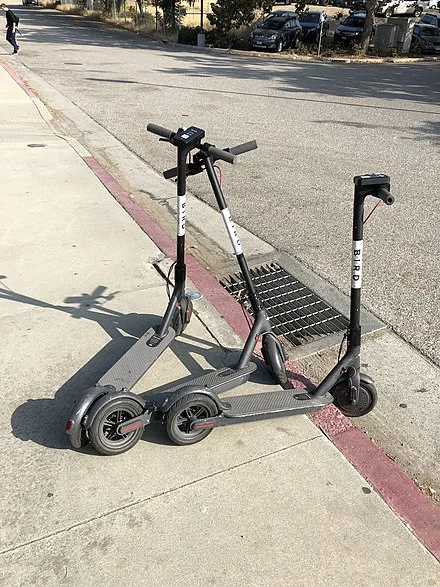
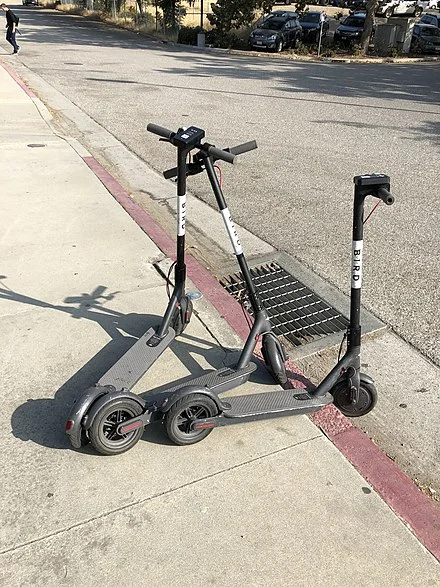
In other environmental news, GoLocal reports that Providence City Council President Pro Tempore Michael Corriea wants to ban JUMP Bikes and e-scooters from the city’s Ward Six until a community meeting can be held with transportation companies’ representatives.
Yes, we’re in the early, Wild West period of these new personal-transportation options.
New local ordinances and state laws are needed to control where they can be parked and retrieved, helmets should be mandated, and actions taken to discourage their vandalization. And there has to be a crackdown to make users of these things follow the rules of the road, such as obeying stop signs and traffic lights and barring people from riding them on sidewalks. A few of the users (especially boys and young men) use them like characters in a manic video game.
Still, we should put up with their inconveniences while appropriate rules are being crafted. They let people who cannot afford a car or truck get around easily; they take up far less space than other vehicles, and they don’t add to air pollution.
To read the GoLocal story, please hit this link.
Josh Hoxie: The U.S. economy is stacked against young people
Via OtherWords.org
BOSTON
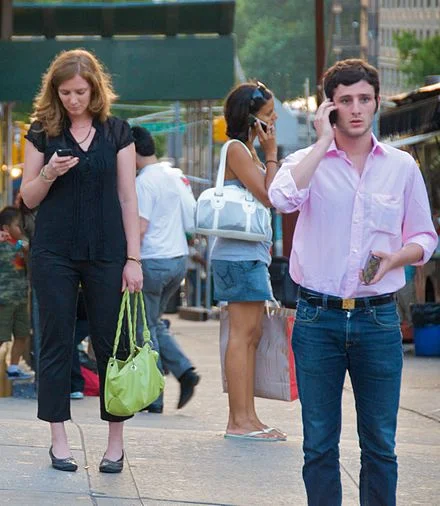
The mechanics of wealth building are fairly simple. Save more than you spend, invest those savings to generate more money. Lather, rinse, repeat.
There’s one big problem for younger people trying to do this: The rules are rigged against them. Here are five facts showing the unfair burden millennials carry.
1. Wages are stagnant.
Today’s rising generation earns 20 percent less, on an inflation-adjusted basis, than their parents did at their age, despite being better educated and more productive. In fact, Millennials are on track to become the first generation in modern American history to make less money than their parents did.
The federal minimum wage, $7.25 an hour, is lower than the cost of living in every city in the country — and hasn’t gone up in 10 years. It’s hard to save when the money coming in doesn’t come close to covering the basics.
2. Student debt is out of control.
The cost of attaining a college degree leaps annually, with aggregate student debt now topping $1.5 trillion. Savings that could’ve gone to a down payment on a house, starting a business, or saving for retirement are eaten up by monthly student debt obligations.
This is largely the result of state governments disinvesting in public colleges and universities, shifting the costs onto families. Since student debt is the only form of debt not discharged in bankruptcy, you either pay it off or die trying.
3. Everything else costs more too.
Millennial wealth problems aren’t due to avocado toast, lattes, or any other consumer spending habits. Millennials spend less than previous generations on food, alcohol, shelter, utilities, transportation and entertainment.
A few of these things are cheaper today than a few decades ago. But these are far outpaced by the skyrocketing cost of buying a house, rent, health care, college, child care, cars and insurance — and wages aren’t keeping up at all.
4. Buying a house is out of reach.
Starter home prices have increased by nearly 60 percent over the last five years, while inventory has dropped by over 20 percent, according to Zillow. Buying a house has become a punchline for many millennials who don’t have the privilege of family members who can help with a down payment.
Homeownership has historically been the greatest generator of middle class wealth, but millennials are buying houses at a lower rate than previous generations. The top reason they cite isn’t lack of interest or lust for living in a converted van. It’s inability to save for a down payment.
5. Traditional money advice is laughably out of touch.
The standard personal finance advice doled out these days is to save at least three months of expenses, save for retirement, and spend less than a third of your income on housing.
But when you don’t have enough to cover rent, student loans, and insurance, not to mention groceries, where’s all this saving going to come from? What’s the advice for the 40 million of us earning under $15 an hour, whose jobs don’t cover the cost of living?
The good news? Last year, for the first time ever, young voters outpaced Boomers at the ballot box, with millennial turnout nearly doubling from 2014. This year, they overcame baby boomers as the biggest voting bloc.
Bold solutions to un-rig the economy are on the table, like Medicare for All, college for all, student debt forgiveness, first time home buyer programs, and a Green New Deal. Millennials are in a position to benefit the most from these programs — and to contribute the most to ensuring they become law.
Josh Hoxie is a Boston-based associate fellow at the Institute for Policy Studies.
All somehow useful in an old Yankee way

“Cabinet of Curiosities,’’ by Corey Daniels, in the group show “Flux III,’’ at the Corey Daniels Gallery, Wells, Maine, Aug. 24-Sept. 28
Fancy dorms
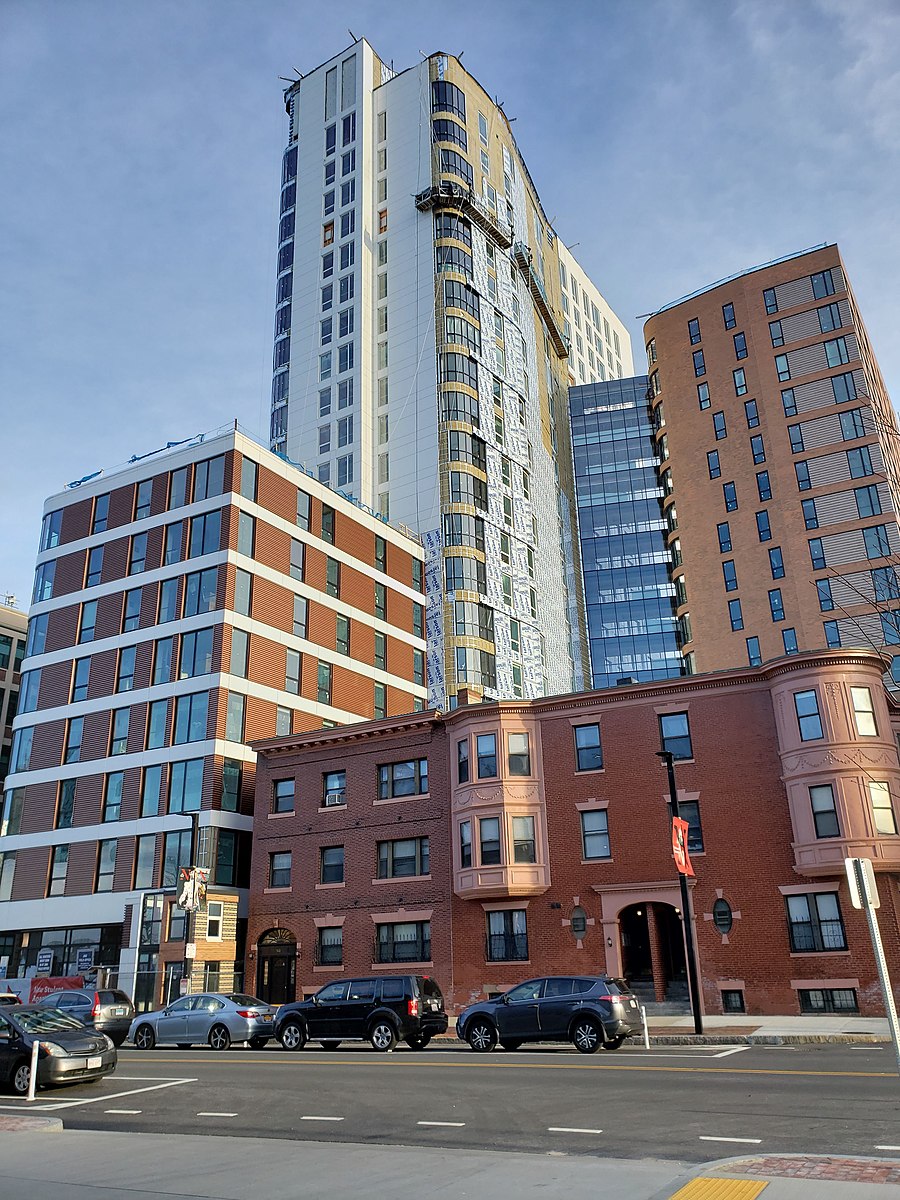
High-rise and upscale LightView apartment complex, for college students in Boston
From Robert Whitcomb’s “Digital Diary,’’ in GoLocal24.com
In New England and elsewhere an increasing number of colleges and universities are collaborating with private developers to build fancy apartment buildings (or call them “dorms’’) with heftier rents than students would pay to live in the usual barebones (often cinderblock) dorms.
In one way you could see this as a good thing because companies, not the colleges, pay to build the somewhat luxurious “dorms,’’ saving the institutions a lot of money (especially those in expansionary mode), which they can spend on other things, such as financial aid.
But a negative is that this housing separation between students from rich families and everyone else helps further widen class divisions in a time of yawning income inequality, which you can see all around you. Love those “gated communities’’! It does this in part by depriving middle- and lower-income students of much of the opportunity to mix with privileged students and gain access to their social and business connections. Residential segregation at colleges further consolidates the power of the permanent, hereditary upper class and reduces the sense of collective citizenship.

Chris Powell: Social Security benefits can and should be expanded

How disappointing that the leadership of the Republican minority in the U.S. House has dismissed peremptorily Connecticut Rep. John B. Larson's legislation to keep Social Security solvent for a century while improving benefits. Though the bill seems likely to pass the House, given the Democratic majority there, it won't go anywhere in the Senate, where the majority is Republican, unless Republicans in the House support it.
Republicans complain that Larson's bill costs too much. But the increases that the bill would make in Social Security taxes are small and gradual, and much of the new revenue would come from higher incomes that now escape Social Security taxation. Besides, if taxing too much for Social Security is a problem, why do the Republicans seem to think that the forever war in Afghanistan is a necessity and a bargain?
Yes, as the Republicans complain, under Larson's bill poorer people would receive more in benefits than they contributed in Social Security taxes. But so what? Social Security is already largely a matter of income redistribution, just as all government itself in a progressive tax framework is redistribution. All private forms of insurance are redistribution, too. But few things government does are as compelling as Social Security.
Only military contractors benefit from Afghanistan. That is income redistribution too but Republicans don't complain about it.
Call Social Security welfare if you want, but it profoundly incentivizes and rewards work, for people earn benefits only through working or their relationship to someone who worked. It is a retirement savings plan and disability insurance policy that cannot fail as long as the United States endures. Larson pointedly asks: "Where in the private sector can you buy this package of benefits that is there for all Americans? You can't. It doesn't exist."
Further, if, as the Larson bill envisions, improved Social Security benefits prevent people from retiring into poverty, money circulating in the economy will increase, because poorer people will spend most of their benefit on necessities. Meanwhile, with fewer people retiring into poverty, fewer people will rely on other welfare benefits.
Of course, details of the Larson bill are arguable, particularly the levels of taxation and benefits. But the aging of the population is expected to make the Social Security Trust Fund insolvent by 2035 if its revenue isn't increased or benefits reduced, and then Social Security will be competing for ordinary appropriations every year with other government functions -- including the usual stupid imperial wars -- even as maintaining the social insurance system should have priority.
There is no disputing the demographics. They will make Social Security insolvent in less than 20 years unless something is done, and doing nothing means cutting benefits even as income inequality worsens. Will that really be the Republican plan?
xxx
WHERE ARE THE LIBERALS?: The office of Connecticut Atty. Gen. William Tong says it is working with the U.S. Justice Department's Antitrust Division to review the planned acquisition of United Bank by People's United Bank, which would sharply reduce competition in banking in central Connecticut and western Massachusetts. At least someone is paying attention.
But Governor Lamont and state legislators, even those who portray themselves as liberals, have nothing to say about this consolidation in the banking industry and the loss of many bank branches and hundreds of jobs. The trivialities liberal legislators applaud have little bearing on Connecticut, but preserving economic competition is vital.
Chris Powell is a columnist for the Journal Inquirer, in Manchester, Connecticut.

Into the forest
And into the forest I go, to lose my mind and find my soul.
John Muir

And into the forest I go, to lose my mind and find my soul.
— John Muir
Photo by Lydia Davison Whitcomb
Still quaint
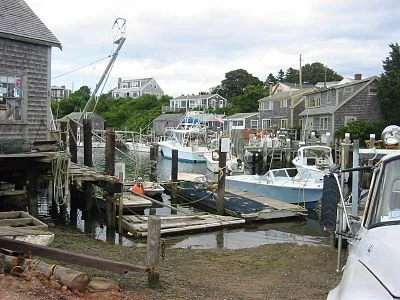
Menemsha Harbor.
“Through the years this little fishing port (Menemsha, on Martha’s Vineyard) has retained its identity with the past. The wharfs where the fishing boats tie up have a crustiness about them that is unbeatable. The inlet, Menemsha Pond and Quitsa Pond, have that something special that comes from salt marshes on the east, little coves on the southwest, and a high bluff and white sandy beaches on the west and north – they are so perfect even a full moon or a rising sun can hardly improve upon them.’
From “Welcome to Menemsha,’’ by Davis Taylor (1908-2002), a longtime Boston Globe publisher, in Arthur Griffin’s New England: The Four Seasons (1980)
Southern New England's polluted beaches
From ecoRI News (ecori.org)
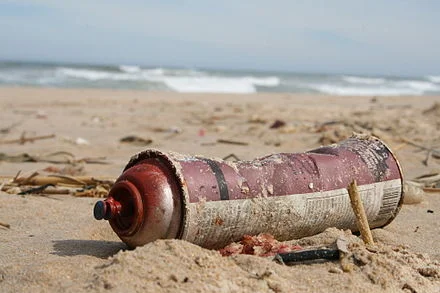
Nearly 60 percent of the 4,523 beaches tested nationwide last year had water pollution levels on at least one occasion that put swimmers at risk of getting sick, according to a new report by Environment America.
The report, Safe for Swimming?, looked at fecal bacteria levels at beaches in 29 coastal and Great Lakes states, as well as Puerto Rico.
“Swimming at the beach is a prime summertime joy for millions of Americans, but clearly we have more work to do to make sure water at all our beaches is safe,” said John Rumpler, Environment America’s clean water program director. “We must invest in water infrastructure that prevents pollution to ensure that America’s waterways are safe for swimming.”
Fecal bacteria can make people ill, particularly with gastrointestinal ailments. Common sources of this pollution include stormwater runoff and sewage overflows. Swimming in polluted water causes an estimated 57 million cases of illness annually, according to a 2018 study published in the journal Environmental Health.
This problem is widespread. In Illinois, for example, all 19 beach sites sampled exceeded the margin of safety for fecal bacteria recommended by the Environmental Protection Agency (EPA).
As for southern New England, here is what the report found:
Rhode Island: 54 of 129 beach sites sampled were potentially unsafe for at least one day in 2018. A sampling site at Easton’s Beach in Newport was potentially unsafe for 10 days, more than any other site in the state.
Massachusetts: 223 of 583 beach sites sampled were potentially unsafe for at least one day. A sampling site at Nahant Bay was potentially unsafe for 39 days.
Connecticut: 81 of 113 beach sites sampled were potentially unsafe for at least one day. A sampling site at Byram Beach in Fairfield County was potentially unsafe for six days.
Across the country, 2,620 beach sites exceeded the EPA margin of safety at least once last year. Of those, 605 locations were potentially unsafe in at least one-quarter of the bacteria tests. All told, there were 871 beach closures nationwide in 2018.
The 46-page report includes several recommendations to prevent bacterial pollution and keep beaches safe for swimming. Rain barrels, rooftop gardens, permeable pavement, and urban green space can all absorb stormwater runoff and help prevent sewage overflows.
“Our analysis of nearly 200,000 sampling results reveals threats to public health at beaches in every corner of the country,” said Gideon Weissman, of Frontier Group, which co-authored the report. “It's no longer enough to warn swimmers when beaches may be unsafe, especially when there are steps we can take today to reduce the threat of bacterial contamination in our waterways.”
Happy they've left

“Fall Town” (oil on canvas), by Rob DuToit, in his show at the Wellfleet (Mass.) Public Library, Aug. 10-24
David Warsh: From the West's 'culture of growth' to a culture of sustainability?

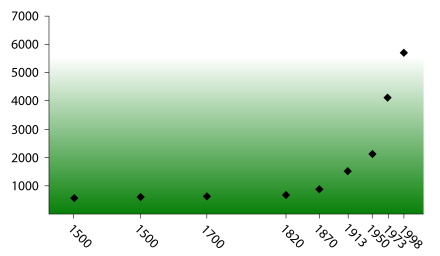
World's per-capital gross domestic product a shows exponential growth since the beginning of the Industrial Revolution.
A Culture of Growth: The Origins of the Modern Economy (Princeton, 2016), by Joel Mokyr, of Northwestern University, is one of those obviously important books that nevertheless hasn’t received the reception it deserves, owing, perhaps, to its daunting erudition; more likely, to readers who thought they already knew the story of how the West grew rich.
For instance, for well over a year, the book has sat on an office shelf at eye level across the desk here at economicprincipals.com’s world headquarters in Somerville, Mass., along with three other books by Mokyr, and three closely related volumes by Deirdre McCloskey (who has a new book coming out), as well as a set of careful notes made by a friend, waiting for a week in which I had nothing else to do except tackle them. The New York Times didn’t review A Culture of Growth when it appeared; neither did The Wall Street Journal nor The New York Review of Books. Burnishing the brand of British exceptionalism, the Financial Times, The Economist, and The Times Literary Supplement all did give it their attention.
Last month a review essay appeared, prepared by Enrico Spolaore, of Tufts University, for the Journal of Economic Literature, that locates Mokyr where he belongs. He is in the vanguard of a movement among economists broadening the concerns of their discipline to include the influence of what we commonly call culture. (Spolare’s review elicited this Free Exchange column in The Economist last week.)
Examples of this deeper curiosity abound: in The Republic of Beliefs: A New Approach to Law and Economics (Princeton, 2018), by Kaushik Basu; in A Crisis of Beliefs: Investor Psychology and Financial Fragility (Princeton, 2019), by Niccola Gennaioli and Andrei Shleifer; in David Kreps’s Nemmers lecture, at Northwestern University, Some Dimensions of Behavior with Which Economics Should Contend.Spolaore and research partner Romain Wacziarg are themselves major contributors to the literature: In Fertility and Modernity, they construct a dataset of 275 European languages and dialects in order to compare what they call “linguistic distances” among European regions with changes in fertility rates. Not surprisingly, they find that social norms diffuse along cultural lines.
For a long time it has been apparent that something important happened in Europe after 1500 that did not happen elsewhere. The recognition goes back at least to Max Weber’s 1905 book, The Protestant Ethic and the Spirit of Capitalism. More recent debate began after Australian economist Eric Jones’s 1981 book, The European Miracle: Environments, Economies and Geopolitics in the History of Europe and Asia. Then came Jared Diamond, Guns, Germs and Steel, in 1997, and David Landes, The Wealth and Poverty of Nations: Why Some Nations are So Rich and Others So Poor, in 1998. Now Mokyr, and his cross-town Chicago counterpart McCloskey, have zeroed in on fundamental cultural values, especially in Bourgeois Equality: How Ideas, Not Capital or Institutions, Enriched the World, the third volume of her monumental trilogy. The wheelhorse chapters in Mokyr’s book are devoted to two carefully defined and described “cultural entrepreneurs,” Francis Bacon and Isaac Newton, followed by accounts of the cultural diffusion and evolution of their ideas
To my mind, the greatest value of A Culture of Growth may turn out to be as a goad to reflecting on what more will be required to transform enthusiasm for growth to a culture of sustainability. At least that is the sense in which I am finally reading it now. But that’s a topic for another day.
David Warsh, an economic historian and veteran columnist, is proprietor of economicprincipals.com, where this column first ran.
