
Vox clamantis in deserto




Happy they've left
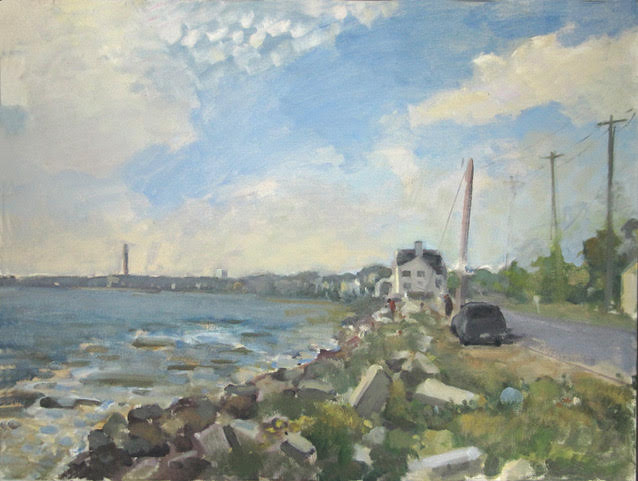
“Fall Town” (oil on canvas), by Rob DuToit, in his show at the Wellfleet (Mass.) Public Library, Aug. 10-24
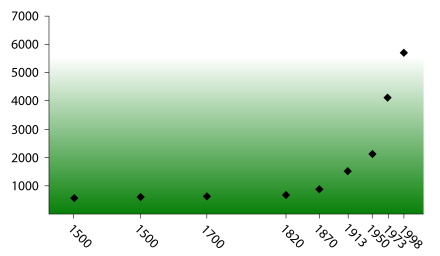
David Warsh: From the West's 'culture of growth' to a culture of sustainability?

World's per-capital gross domestic product a shows exponential growth since the beginning of the Industrial Revolution.
A Culture of Growth: The Origins of the Modern Economy (Princeton, 2016), by Joel Mokyr, of Northwestern University, is one of those obviously important books that nevertheless hasn’t received the reception it deserves, owing, perhaps, to its daunting erudition; more likely, to readers who thought they already knew the story of how the West grew rich.
For instance, for well over a year, the book has sat on an office shelf at eye level across the desk here at economicprincipals.com’s world headquarters in Somerville, Mass., along with three other books by Mokyr, and three closely related volumes by Deirdre McCloskey (who has a new book coming out), as well as a set of careful notes made by a friend, waiting for a week in which I had nothing else to do except tackle them. The New York Times didn’t review A Culture of Growth when it appeared; neither did The Wall Street Journal nor The New York Review of Books. Burnishing the brand of British exceptionalism, the Financial Times, The Economist, and The Times Literary Supplement all did give it their attention.
Last month a review essay appeared, prepared by Enrico Spolaore, of Tufts University, for the Journal of Economic Literature, that locates Mokyr where he belongs. He is in the vanguard of a movement among economists broadening the concerns of their discipline to include the influence of what we commonly call culture. (Spolare’s review elicited this Free Exchange column in The Economist last week.)
Examples of this deeper curiosity abound: in The Republic of Beliefs: A New Approach to Law and Economics (Princeton, 2018), by Kaushik Basu; in A Crisis of Beliefs: Investor Psychology and Financial Fragility (Princeton, 2019), by Niccola Gennaioli and Andrei Shleifer; in David Kreps’s Nemmers lecture, at Northwestern University, Some Dimensions of Behavior with Which Economics Should Contend.Spolaore and research partner Romain Wacziarg are themselves major contributors to the literature: In Fertility and Modernity, they construct a dataset of 275 European languages and dialects in order to compare what they call “linguistic distances” among European regions with changes in fertility rates. Not surprisingly, they find that social norms diffuse along cultural lines.
For a long time it has been apparent that something important happened in Europe after 1500 that did not happen elsewhere. The recognition goes back at least to Max Weber’s 1905 book, The Protestant Ethic and the Spirit of Capitalism. More recent debate began after Australian economist Eric Jones’s 1981 book, The European Miracle: Environments, Economies and Geopolitics in the History of Europe and Asia. Then came Jared Diamond, Guns, Germs and Steel, in 1997, and David Landes, The Wealth and Poverty of Nations: Why Some Nations are So Rich and Others So Poor, in 1998. Now Mokyr, and his cross-town Chicago counterpart McCloskey, have zeroed in on fundamental cultural values, especially in Bourgeois Equality: How Ideas, Not Capital or Institutions, Enriched the World, the third volume of her monumental trilogy. The wheelhorse chapters in Mokyr’s book are devoted to two carefully defined and described “cultural entrepreneurs,” Francis Bacon and Isaac Newton, followed by accounts of the cultural diffusion and evolution of their ideas
To my mind, the greatest value of A Culture of Growth may turn out to be as a goad to reflecting on what more will be required to transform enthusiasm for growth to a culture of sustainability. At least that is the sense in which I am finally reading it now. But that’s a topic for another day.
David Warsh, an economic historian and veteran columnist, is proprietor of economicprincipals.com, where this column first ran.


Gold coasts
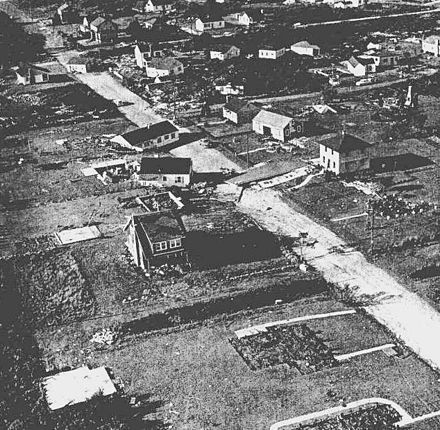
Damage along the shore of Westerly, R.I., after Hurricane Carol, which struck on Aug. 31, 1954.
From Robert Whitcomb’s “Digital Diary,’’ in GoLocal24.com
Nice about-face by Bailey’s Beach Club, in Newport, which had initially tried to close a nearby roadside snack stand started by three very enterprising Rogers High School students (“not our kind, dear!’’), but then decided to support it after a GoLocal article reported on what seemed to be a case of snobbery and arrogance, arousing some brief public outrage. Still, the reaction to the oh-so-exclusive Bailey’s imperialism reminded me of what irritates a lot of us in a nation increasingly run for the benefit of the very rich: That most of the people at Bailey’s are materially or socially fortunate through little effort of their own but rather through the accident of being from rich families. The famous Lucky Sperm Club.
To read a GoLocal article on this entertaining controversy, please hit this link.
xxx
In another interesting coastal development, there’s a move underway to lift the prohibition on federal flood insurance for more than 900 homes, mostly owned by the wealthy, on the East Coast. Many of these homes should never have been built in flood-prone areas, now made ever more vulnerable by seas rising because of global warming. The proposed change would have taxpayers cover some or most of the cost of rebuilding fancy houses and would provide federal aid to fix such infrastructure as roads and bridges.

All wet at Bromfield Gallery

“Harpa’’ (acrylic ink and oil on canvas), by Kim Smith, in the show “WET!’’, at Bromfield Gallery, Boston, through Aug. 18. The juried show features 25 New England artists. The gallery explains that exhibition uses a wide range of media to explore the theme, “from the ocean to tears to eroticism.’’
Navigating Newport
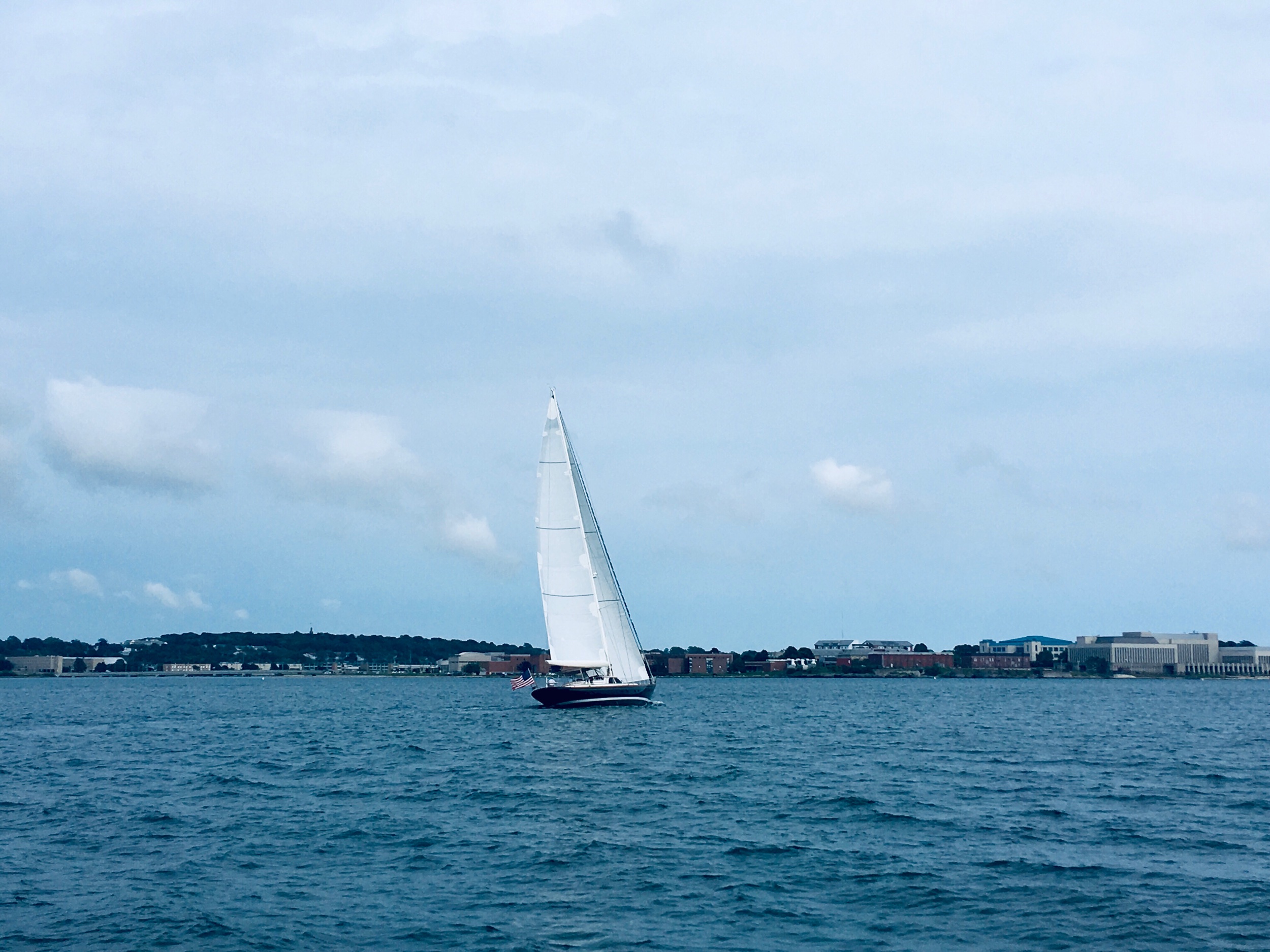
Often a faster way to cross the East Passage of Narragansett Bay than driving the Newport Pell Bridge
Photo by Lydia Davison Whitcomb
It's nicer inside

“Summer Shack” (oil and gold leaf on linen), by Joe Diggs, in his show “A Tribute to Joe’s Twin Villa,’’ at the Cotuit Center for the Arts, Cotuit, Mass. (on Cape Cod), Aug. 3-Sept 2.
So drill off New England instead

— Photo by TheConduqtor
From Robert Whitcomb’s “Digital Diary,’’ in GoLocal24.com
Fishermen opposed to proposed wind farms off the southern New England coast should send a research delegation to often stormy northwest Europe, where big offshore wind farms have co-existed with intensive fishing for years, with supports for the wind turbines acting as reefs that attract fish. Or maybe we should frack more for natural gas in Pennsylvania, blow up some more mountaintops for coal in West Virginia, or start drilling for oil and natural gas on Georges Bank to get the energy we need to keep the lights on? Those drilling platforms would take up less water than wind farms.
Barbara Gottlieb: Stop fracking ASAP

2016 march in Philadelphia. There’s extensive fracking underway in Pennsylvania.
Science. Evidence. Facts. Do these even matter anymore in U.S. policy? They should — especially when it comes to issues that affect our health and environment, like fracking.
Concerned Health Professionals of New York and my organization, Physicians for Social Responsibility, recently released a remarkable compendium of research on the subject. It summarizes and links to over 1,500 articles and reports and has become the go-to source for activists, health professionals, and others seeking to understand fracking.
The new studies we looked at expose serious threats to health, justice, and the climate.
A 2018 study in the Journal of Health Economics, for instance, found that the babies of Pennsylvania mothers living within 1.5 miles of gas wells had increased incidence of low birth weight. Babies with low birth weight (under 5.5 pounds) are over 20 times more likely to die in infancy than babies with healthy birth weight.
Babies exposed in utero to fracking are likely to face additional challenges throughout their lives. They may suffer long-term neurologic disability, impaired language development and academic success, and increased risk of chronic diseases, including cardiovascular disease and diabetes.
Other researchers are finding that fracking wells and associated infrastructure are disproportionately sited in non-white, indigenous, or low-income communities.
A study published this year in Ecological Economics analyzed the socio-demographics of people living near drilling and fracking operations in four high-fracking states: Colorado, Oklahoma, Pennsylvania, and Texas. It found strong evidence that minorities, especially African Americans, disproportionately live near fracking wells.
They don’t just face disproportionate exposure to toxic emissions, leaks, and spills. They also have fewer resources — like health insurance, medical services, or income security — that would help them protect their health.
But you don’t have to live near wells and pipelines to be at risk. We all face harm from fracking’s impact on the climate.
So-called “natural gas” is 85-95 percent methane, a short-lived but highly potent greenhouse gas. Over its first 20 years in the atmosphere, methane traps about 86 times more heat than carbon dioxide. That 20-year timeframe matters: Scientists tell us that’s about the time we have to slash our greenhouse gas emissions and begin pulling carbon out of the atmosphere.
Unfortunately, as the research we collected finds, methane leakage rates from drilling and fracking operations have “greatly exceed” earlier estimates. A 2018 analysis of methane leaks across the U.S. found leakage rates to be 60 percent higher than reported by the EPA. A 2019 study in southwestern Pennsylvania found some gas emissions to have been underreported by a factor of five.
Overall, how bad is fracking? The Compendium states that “public health risks from unconventional gas and oil extraction are real, the range of adverse environmental impacts wide, and the negative economic consequences considerable.”
It concludes: “Our examination of the peer-reviewed medical, public health, biological, earth sciences, and engineering literature uncovered no evidence that fracking can be practiced in a manner that does not threaten human health.”
The logical conclusion is that, for health, justice, and a livable world, the time to stop using fracked gas is now.
Barbara Gottlieb is the director for environment & health at Physicians for Social Responsibility, www.psr.org. She participated in the pre-publication review of the Compendium.
Building in N.E. coastal risk zones continues apace
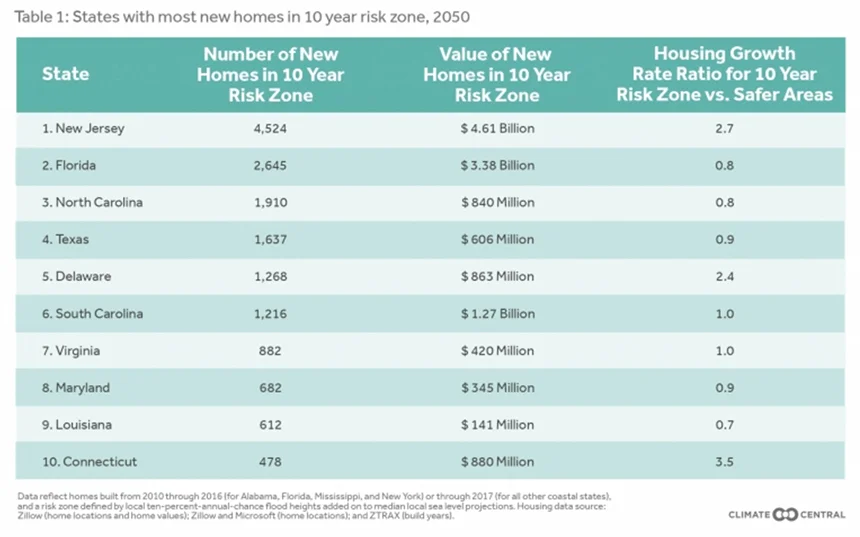
From ecoRI News (ecori.org)
As the country’s coastal communities continue to build homes in flood-risk zones, a new nationwide analysis by Climate Central shows that nearly 20,000 homes built in the past decade are at significant risk of chronic coastal flooding by 2050.
If greenhouse-gas emissions go unchecked, more than 800,000 existing homes worth $451 billion will be at risk in a 10-year flood by 2050, according to Ocean at the Door: New Homes and the Rising Sea. Those numbers jump to 3.4 million existing homes worth $1.75 trillion by 2100.
The analysis paired Zillow’s housing data with Climate Central’s sea-level rise expertise to identify the number of new homes — and homes overall — in low-lying coastal areas. It then projected how many will become exposed to chronic ocean flooding over the coming decades, depending on the choices the world makes regarding greenhouse-gas pollution. It expanded on analysis done last year that showed some 386,000 U.S. homes are likely to be at risk of regular annual flooding by 2050 and that new homes are being built at striking rates in areas that face high risks of future flooding.
The recent analysis found that Connecticut (more than three times faster), Rhode Island (twice as fast), and Massachusetts are developing coastal risk zones more quickly than safer areas.
A third of the country’s coastal states have seen higher housing growth rates inside the 10 percent flood-risk zone than outside it.
As sea levels rise, the intermittent floods that coastal communities now experience once a decade on average are projected to reach farther inland than they do today. Those floods can damage and devalue homes, degrade infrastructure, wash out beaches, and interrupt transportation systems. They also put homeowners, renters, and investors in danger of steep personal and financial losses.
The results are clear. If the world makes moderate cuts to greenhouse-gas emissions — roughly in line with the Paris Agreement, whose targets the international community isn’t on track to meet — some 17,800 existing homes built after 2009 will face an at least 10 percent flood threat each year, on average, by 2050. The figures for 2100 are more than two times higher, and more than three times higher if climate pollution grows unchecked.
“For homebuyers over the next few years, the impact of climate change will be felt within the span of their 30-year mortgage,” said Skylar Olsen, Zillow’s director of economic research and outreach. “Without intervention, hundreds of thousands of coastal homes will experience regular flooding and the damage will cost billions. Given that a home is most people’s largest and longest-living asset, it takes only one major flood to wipe out a chunk of that long-growing equity. Rebuilding is expensive, so it’s doubly tragic that we continue to build brand new units in areas likely to flood.”
Coastal communities will encounter the impacts of sea-level rise to greatly varying degrees, depending on the local rate of rise, local tides and storms, the potential future development of coastal defenses, and the flatness of the landscape and where homes are built within it. Some major coastal cities sit high enough above sea level that the biggest hit will be to their beaches. Others will suffer more far-reaching and damaging effects.
Florida would have the most homes in the zone at risk from sea-level rise and 10-year floods by 2100 (1.58 million), followed by New Jersey (282,354), Virginia (167,090), Louisiana (157,050) and California (143,217) — assuming levees and other infrastructure defenses hold and emissions continue unchecked.
What’s more, 24 cities including New York, Tampa and Virginia Beach have built at least 100 homes in that risk zone since 2009.
“In many states, building on land projected by 2050 to face chronic flood risks has outpaced development in safer places,” said Benjamin Strauss, Climate Central’s CEO and chief scientist. “Failure to control climate pollution will lead to faster-rising seas and bigger coastal risk zones, but building a cleaner-running economy can still reduce these consequences.”
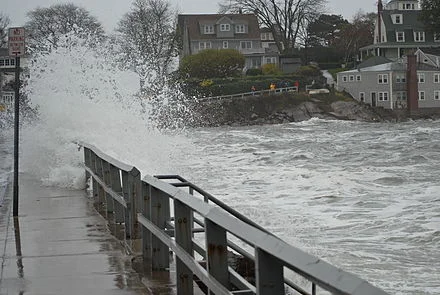
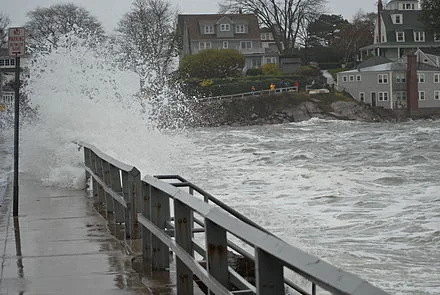
Flooding in Marblehead, Mass., caused by Hurricane Sandy on Oct. 29, 2012
As the green fades

Work by Mimo Gordon Riley in the group show “Welcome Back,’’ at Gallery at Four, Tiverton, R.I., Aug. 3-Sept. 2
Judith Graham: How to talk to seniors, families before surgery
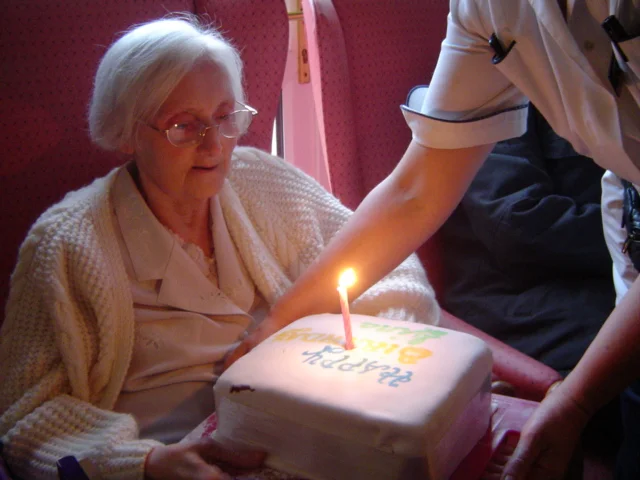
— Photo by I Craig
The decision seemed straightforward. Bob McHenry’s heart was failing, and doctors recommended two high-risk surgeries to restore blood flow. Without the procedures, McHenry, 82, would die.
The surgeon at a Boston teaching hospital ticked off the possible complications. Karen McHenry, the patient’s daughter, remembers feeling there was no choice but to say “go ahead.”
It’s a scene she’s replayed in her mind hundreds of times since, with regret.
On the operating table, Bob McHenry had a stroke. For several days, he was comatose. When he awoke, he couldn’t swallow or speak and had significant cognitive impairment. Vascular dementia and further physical decline followed until the elderly man’s death five years later.
Before her father’s October 2012 surgery, “there was not any broad discussion of what his life might look like if things didn’t go well,” said Karen McHenry, 49, who writes a blog about caring for older parents. “We couldn’t even imagine what ended up happening.”
It’s a common complaint: Surgeons don’t help older adults and their families understand the impact of surgery in terms people can understand, even though older patients face a higher risk of complications after surgery. Nor do they routinely engage in “shared decision-making,” which involves finding out what’s most important to patients and discussing surgery’s potential effect on their lives before setting a course for treatment.
Older patients, it turns out, often have different priorities than younger ones. More than longevity, in many cases, they value their ability to live independently and spend quality time with loved ones, according to Dr. Clifford Ko, professor of surgery at UCLA’s David Geffen School of Medicine.
Now new standards meant to improve surgical care for older adults have been endorsed by the American College of Surgeons. All older patients should have the opportunity to discuss their health goals and goals for the procedure, as well as their expectations for their recovery and their quality of life after surgery, according to the standards.
Surgeons should review their advance directives — instructions for the care they want in the event of a life-threatening medical crisis — or offer patients without these documents the chance to complete them. Surrogate decision-makers authorized to act on a patient’s behalf should be named in the medical record.
If a stay in intensive care is expected after surgery, that should be made clear, along with the patient’s instructions on interventions such as feeding tubes, dialysis, blood transfusions, cardiopulmonary resuscitation and mechanical ventilation.
This is far cry from how “informed consent” usually works. Generally, surgeons explain to an older patient the physical problem, how surgery is meant to correct it and what complications are possible, backed by references to scientific studies.
“What we don’t ask is: What does living well mean to you? What do you hope to be able to do in the next year? And what should I know about you to provide good care?” said Dr. Ronnie Rosenthal, a professor of surgery and geriatrics at Yale School of Medicine and co-leader of the Coalition for Quality in Geriatric Surgery Project.
Bob and Marjorie McHenry pose with their daughter Karen McHenry at their 50th anniversary party in 2009. Bob McHenry had a stroke during an operation in 2012 and was comatose for several days after the procedure. When Marjorie fell and broke five ribs in fall 2017, she decided against surgery after consulting with the hospital’s palliative care team.
Rosenthal tells of an 82-year-old patient with early-stage rectal cancer. The man had suffered a stroke 18 months earlier and had difficulty walking and swallowing. He lived with his wife, who had congestive heart failure, and had been hospitalized with pneumonia three times since his stroke.
Rosenthal explained to the man that if she operated to remove the cancer, he might land in the ICU with a breathing machine and then end up at a rehabilitation facility.
“No, I don’t want that; I want to be home with my wife,” Rosenthal recalled his saying.
The man declined the surgery. His wife died 18 months later, and he lived another six months before he had a fatal stroke.
Surgeons can help guide discussions that require complex decision-making by asking five questions, according to Dr. Zara Cooper, associate professor of surgery at Harvard Medical School:
How does your health affect your day-to-day life? When you think about your health, what’s most important to you? What are you expecting to gain from this operation? What health conditions or treatments worry you most? And what abilities are so critical to you that you can’t imagine living without them?
Cooper recalls an 88-year-old man seriously injured in a car crash arriving in the emergency room several years ago.
“When we started explaining to his family what his life would be like — that he would be highly functionally dependent and not able to live independently again — his wife said that would be absolutely devastating, especially if he couldn’t ski,” Cooper said. “We didn’t even anticipate this was in the realm of what someone this age would want to do.”
The family decided not to pursue treatment, and the patient died.
Sometimes surgeons make the misguided assumption that older patients want to follow recommendations rather than having input into medical decisions, said Dr. Clarence Braddock, professor of medicine at UCLA. In focus groups, 97% of seniors said “I prefer that my doctor offer me choices and ask my opinion,” according to research Braddock published in 2012.
Yet in another study involving older adults, Braddock found that orthopedic surgeons rarely discussed the patient’s role in decision-making (only 15% of the time) or assessed the patient’s understanding of what surgery would entail (12% of the time).
At the University of Wisconsin-Madison, Dr. Margaret Schwarze, an associate professor of vascular surgery, has developed a tool called “best case/worst case” to help surgeons communicate more effectively with older patients.
“The idea is to tell the patient a story in terms they can understand,” Schwarze said.
Instead of citing statistics on the risk of pneumonia or infection, for instance, a surgeon would explain what might happen if things went well or badly. Would the patient be in pain? Would she need nursing care? Would he be able to return home and do things he liked to do? Would she land in the ICU? Would he be able to walk on his own?
A similar range of possibilities is presented for a treatment alternative. Then the surgeon identifies the most likely outcomes for surgery and the alternative, based on the patient’s circumstances.
“Going through a major operation when you’re older is going to change your life,” Schwarze said. “Our goal is to help older patients imagine what these changes might look like.”
Because of her father’s experience, Karen McHenry was cautious when her mother, Marjorie McHenry, fell and broke five ribs in fall 2017. At the hospital, doctors diagnosed significant internal bleeding and a collapsed lung and recommended a complicated lung surgery.
“This time around, I knew what questions to ask, but it was still hard to get a helpful response from the surgeons,” Karen said. “I have a vivid memory of the doctor saying, ‘Well, I’m an awesome surgeon.’ And I thought to myself, ‘I’m sure you are, but my mom is 88 years old and frail. And I don’t see how this is going to end well.’”
After consulting with the hospital’s palliative care team and a heart-to-heart talk with her daughter, Marjorie McHenry decided against the surgery. Nearly three years later, she’s mentally sharp, gets around with a walker and engages in lots of activities at her nursing home.
“We took the risk that Mom might have a shorter life but a higher quality of life without surgery,” Karen said. “And we kind of won that gamble after having lost it with my dad.”
Judith Graham is a Kaiser Health News reporter.
Judith Graham: khn.navigatingaging@gmail.com, @judith_graham
Llewellyn King: A reality check for some Dems on fixing America's awful health-care 'system'
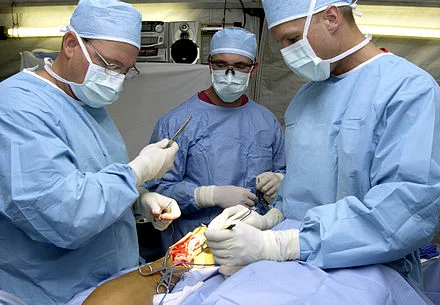
The Democrats on the left of the party, exemplified by Elizabeth Warren, Bernie Sanders and Kamala Harris, are running away with the health-care debate.
The problem for those who, like myself, want to see health care extended and rationalized is that the real goals of reform have been abandoned for “universal health care” as an ideological and political goal; add a political prejudice against corporations and the idea of the most health care for all of the people gets lost, as it did in the debates.
There should be only two goals in health-care reform: bring down the cost and see that everyone is covered.
We in the United States have the costliest medicine on earth. We also have the spottiest and most risible coverage. We spend over 18 percent of our gross domestic product on health care, nearly twice the cost of health care in other advanced countries like Britain, France, Germany and Holland. That is a huge cost, making us a less-competitive country. It comes not from medicine but rather from inefficient management.
We are a nation which venerates its business culture, but in health care, as it stands, we are protecting inefficiency as though it were a system. There are better ways, short of upending the whole structure, as Warren, Sanders and Harris would like to do, of fixing the system.
Serious reform is seriously needed.
Children’s National Hospital , in Washington, D.C., for example, I am told, employs 150 people just to deal with the insurance companies, negotiating payments, securing permission for procedures and protesting disallowances. Presumably, there are as many people in the insurance companies on the other side of these transactions. None of this huge personnel deployment is delivering health care or serving medicine. They are engaged in health care’s equivalent of a souk -- bargaining care for money. It should change because it is enormously wasteful, let alone because it fails in its mission: delivering care to the sick.
Remember the old military saw: We had to destroy the town to save it.
In full bay at the Democratic debates in Detroit, Warren, Sanders and Harris were in competition both to junk all private health insurance and to trash the companies that provide it.
I have spent three decades studying health-care delivery. While I am an unalloyed admirer of the National Health System (NHS) in the United Kingdom, it is not for the United States. Not now.
I know the NHS: It has treated my family well since its inception and, briefly, myself. But I do not think we can trash what we have here root and branch and install a duplicate NHS. We have too much that would have to be changed; too large a new bureaucracy would have to be created.
I am in favor, though, of the government as a payer of last resort for those who cannot get coverage and those for whom treatment is too expensive for the insurer.
We need to regulate medicine and to take the uncertainty out of it. That uncertainty extends from patients who never know when they will be sideswiped by an out-of-network procedure and routine providers, to the hospitals which need to know what they will be paid. Coverage should be guaranteed, not negotiated.
I used to own a newsletter publishing and conference company in Washington. I provided health insurance, which cost me in well-being as well as dollars. The costs went up relentlessly and coverage was problematic. My top aide came down with a rare cancer. The treatment was fine, all paid for, but the post- treatment painkillers were not allowed. I tried to persuade the insurer -- after all, we were a 20-strong group. They would not be moved. So my aide, who is French, had her sister send the medications from France, where she could get them for free as a citizen.
If we can get the horror of negotiation out of the system, care would be better, and costs would fall.
I am told that the future might be based on what already is working well with Kaiser Permanente, an integrated managed care consortium that insures, provides doctors and hospitals in the package.
It is worth a look -- before we start shelling the system to save it.
Llewellyn King is executive producer and host of White House Chronicle, on PBS. His email is llewellynking1@gmail.com and he’s based in Rhode Island and Washington, D.C.
"White House Chronicle" on PBS
Mobile: (202) 441-2703
Website: whchronicle.com
Cars, cars, cars

From Robert Whitcomb’s “Digital Diary,’’ in GoLocal24.com
The Carpionato Group’s planned $100 million mixed-use development in Newport at the site of the hideous Newport Grand casino would certainly be an improvement. Carpionato generally does classy work. But I found a rendering of the project a little depressing because of the capacious use of land to serve the car culture. How much better it would be if bus service were good enough to eliminate the need for all that windswept parking lot space.
This reminds me of a survey by the Metropolitan Area Planning Council in Massachusetts of around 200 apartment buildings inside Route 128. The surveyors discovered, in The Boston Globe’s words, “that about 30 percent of their parking spaces go unused, even in the wee hours of the morning, when most residents are likely home.’’ Space taken up for parking means less space available for housing, which in turn means higher housing prices.
To read the report, please hit this link.
To read The Globe’s article, please hit this link.
Classic Newport Art Museum show

L. to r.: Howard Gardiner Cushing, “Ida Rubinstein’’ (1883-1960), c. 1912, (oil on canvas) private collection; Howard Gardiner Cushing, “Gertrude Vanderbilt Whitney in Bakst Costume with Fleurs du Mal’,’ 1911-12 (oil on canvas), Whitney Studio Mural Panel, private collection.
High art and a bit of high society at a Newport Art Museum party. Hit this link to see the big show.
A flood of 'Rain' poems

Rain, depicted in the 1493 Nuremberg Chronicle
“Today is the first of August. It is hot, steamy and wet. It is raining. I am tempted to write a poem. But I remember what it said on one rejection slip: After a heavy rainfall, poems titled 'Rain' pour in from across the nation.'‘
— Poet Sylvia Plath (1932-1963), a Massachusetts native

Mike Cross: Going undercover as a student made me a better professor

On the campus of Northern Essex (County) Community College, in Haverhill
From The New England Journal of Higher Education, a service of The New England Board of Higher Education (nebhe.org)
‘Three years ago, I graduated with an associate degree in liberal arts from Northern Essex Community College (NECC) in Haverhill, Mass. Although I was one of over a thousand students to graduate that day, my situation was a little different than those of my peers. You see, I am a full-time faculty member at NECC with a Ph.D. in organic chemistry.
I had decided the year before to go undercover by enrolling as a student. Graduation day marked the end of an intense year of juggling school, work and family responsibilities. Since that day I have been asked two questions whenever someone hears about my experience: “Why on earth would you do such a thing?” and “What did you learn?”
The answer to the first question is simple. I wanted to understand some of the challenges my adult students were facing. I wanted to experience firsthand the struggle of transferring credits, taking the ACCUPLACER placement exam, registering for and attending classes—all while maintaining a full-time job and caring for my three children. This was very different from my days as an undergraduate at a research university where I was a full-time student, fresh out of high school, with a part-time job and no spouse or kids. My hope was that my experiences would help me to better understand the reasons some students drop out while others are able to push through.
What did I learn from the experience? I gained many insights into the struggles of my students and the minds of my fellow educators, but I’d like to focus on five key points with suggestions on what colleges can do to improve.
1. Some of the barriers to student success are small and easily addressed.
Many barriers to student success are small, but they are everywhere. From day one, I was confronted by tiny hurdles. While registering, I was told I had to find and bring in my high school diploma. The fact that I had a sealed transcript of the courses I took while earning a bachelor degree and doctorate wouldn’t suffice. When I took the ACCUPLACER exam, I found that the room was uncomfortably cold and loud. In one classroom, I found the chairs to be so uncomfortable I had a hard time concentrating.
Are any of these issues catastrophic? Of course not. But they are frustrating and they are certainly avoidable. When a student is struggling, even the smallest thing can be the deciding factor in whether or not they decide the hassle of college is worth it. What can we do to help? The simplest solution is to ask our students—and then take their feedback seriously. If students feel that they are heard, they are much more likely to push through the small stuff in order to achieve their goals.
2. Adjunct faculty are unsung heroes, and our colleges need to support them.
I made sure to take classes in all different formats: face-to-face, hybrid, online. And I also made sure to take classes from both full-time and part-time instructors. I had some amazing classes with fabulous full-time instructors but what surprised me the most was the commitment of our part-time instructors. Despite the fact that they are not paid to hold office hours (and many didn’t have an office at all), they often went above and beyond the call of duty to help students.
In fact, one of my favorite classes was a public speaking course taught by an extremely talented adjunct instructor. (On a side note, isn’t it tragic that despite spending every day of my career in front of a classroom of students I had never before taken a public speaking course?) The course was well-organized with clear expectations. The instructor knew that public speaking is a common fear and used humor to help students overcome their fears. He gave excellent feedback and encouraged students to give one another feedback as well.
Since adjunct faculty make such important contributions to the education of our students, we need to be sure they have the support they need. Adjunct instructors often feel isolated and don’t have the same access to resources. I’m pleased that in recent years, my college has increased the resources available to adjunct faculty through our Center for Professional Development. We have adjunct faculty fellows who build community among our adjunct faculty through social media, professional development events and an online toolkit, which provides easy access to needed resources.
3. We need to be clear about what constitutes cheating.
Cheating is rampant … but most students don’t consider what they’re doing to be cheating. In most of my classes, I was able to go incognito for much of the semester. Sitting alongside my fellow students opened my eyes to the sophistication of modern cheating. Gone are the days of crib sheets and bribing your roommate to do your math homework. In today’s classroom, students are constantly pulling up notes on their phone or watch. They use (and gladly share) test bank answers downloaded from any number of internet “study” sites. If you have a credit card, you can have someone online write your research paper or solve your take-home exam for you.
Cheating has always been a problem, so I wasn’t surprised to see that it is still an issue today. But I was surprised to find that many students don’t consider what they are doing to be cheating. They consider texting answers to classmates just “being a good friend.” Downloading publisher test banks is simply “using your resources.” Although it’s impossible to prevent all cheating, I believe the fastest and easiest way an instructor can reduce it is to make it clear what you consider to be cheating. Going over the do’s and don’ts of ethical behavior during the first week of class is a major deterrent to cheating for many students.
4. Faculty members should push through the fear and be open to new experiences that provide them with feedback on their teaching.
At the start of each semester as a covert “student,” I would try to meet with each of my instructors and let them know who I was before showing up to the first day of class. In almost every case, the faculty member would appear nervous, but would welcome me to the class and ask me to provide them with feedback throughout the semester.
There were a few professors who were not so open to having me as a student. One didn’t want me in her class for fear that I was secretly evaluating her for the administration. Another told me that by enrolling in classes at our community college, I was undervaluing the “real education” I had received during my previous undergraduate career at a university.
No one is immune to impostor syndrome. It is natural to feel anxious about new experiences, especially when those experiences may expose our shortcomings (either real or imagined). I have felt this myself as I have had a colleague take one of my classes recently. It’s an intimidating experience, but I have tried to use it as a chance to reevaluate and improve my teaching. We should be open to feedback and criticism, whatever the source may be.
Over the past year I have had the privilege of co-facilitating the Teaching and Learning Academy with one of our adjunct faculty fellows (and my former professor). The academy allows faculty to come together in a relaxed environment and discuss life in the classroom. Over the course of the semester, we visit each other’s classes and share honest feedback. Opportunities like this improve our teaching and build our sense of community.
5. It’s easy to forget what it is like to be student.
How many times have you heard colleagues say, “When I was a student …”? This phrase is usually followed by a condemnation of the current crop of students. We forget that we are just like our students. For example, in one of my classes, the professor had a strict no cell phone policy. Yet while students were doing group work, he would pull out his cell phone to check social media. We must hold ourselves to a higher standard than our students. If faculty lock the door to prevent late students from entering, they must be sure to never be tardy themselves. If we expect students to turn in work on time, we should be prepared to return exams and give feedback in a timely manner.
While not every experience I had while undercover was positive, it was truly the best professional development of my career. It rekindled my love of learning. When I registered for classes at NECC I found out that I was required to take English Composition II, as I had never actually taken it as an undergraduate. Despite my dread, I ended up loving the course. When my instructor informed me that she would like to nominate one of my papers for a writing award, I almost cried. This was the first time in all of my years of higher education that someone told me that I was good at writing.
Too often we refer to a Ph.D. as a terminal degree, as though our education is dead (or at least on life support). Most of us went into education because we love to learn, but between grading, curriculum development and committee work, it’s easy to forget the thrill of learning something new. Sitting alongside my students as we learned together not only helped me better appreciate their daily struggles, but it reminded me that we are on this educational journey together.
Mike Cross is a professor of chemistry at Northern Essex Community College.

Rachel Hodes: What 'abolish ICE' really means

Via OtherWords.org
To most of America, “abolish ICE” is a cry of the far left. Even Americans who dislike Trump’s attacks on undocumented immigrants wouldn’t necessarily tell you that ICE should be abolished; that seems far too radical. ICE stands for the U.S. Immigration and Customs Enforcement agency.
They’re forgetting that ICE is actually pretty new. It was only created in 2003, replacing the Immigration and Naturalization Service (the same agency responsible for the internment of Japanese-Americans in the 1940s).
Since its creation, ICE’s budget has almost doubled, and its activity has expanded to triple the number of agents it employs. This expansion is shocking — and unwarranted. All evidence suggests that immigrants are far from the national security threat the Trump administration claims they are. Regardless of status, they’re more law-abiding than native-born citizens.
And time and time again, immigration has been shown to have a net-positive effect on the U.S. economy, from growing tax receipts to increasing wages for native-born residents. In fact, undocumented immigrants typically pay more of their income in taxes than your average millionaire.
More noteworthy than the economics, however, is that the individuals targeted by ICE are people — and all people are entitled to basic conditions of safety and for themselves and their families.
When the majority of these immigrants are fleeing violence with roots in U.S. intervention in Central America, the moral responsibility to offer safe haven becomes even more pressing. When government agencies neglect this responsibility, we all lose some of our humanity.
What calls to abolish ICE actually do is beg the question: Why do we need an immigration system dedicated solely to terrorizing immigrant communities?
Threats of ICE raids prevent undocumented people from going to work or sending their kids to school. Those in detention are denied access to basic hygienic products, subjected to severe overcrowding, and experience all manner of abuse. Several children have died.
We spend about $7 billion a year on ICE. What would happen if we instead invested those funds in resettling asylum-seekers, or hiring more staff to process asylum applications? What if families fleeing violence in Honduras or Guatemala had to wait only a few weeks to find out if they could immigrate legally, as opposed to the current average of almost two years?
The U.S. carried out over a quarter million deportations last year. The $7 billion that funded these actions
could have been used instead to resettle at least that many refugees (over 11 times what the U.S. accepted last year). It could also almost triple the funding of the government office that naturalizes around 700,000 new citizens each year.
Which is more radical: Investing in communities that strengthen our country and honoring basic human decency? Or continuing to fund an agency that’s literally caused the death of children?
As a concerned Jewish American, I believe none of us are safe until we’re all safe. We should be focusing our resources on welcoming new immigrants and helping them access the rights of citizenship — not subjecting them to detention and deportation.
A better world, for immigrants and for everyone, is within our reach. ICE just isn’t a part of it.
Rachel Hodes is a Next Leader at the Institute for Policy Studies.
'Honesty equates to exaggeration'

"Seek Higher Ground," by Tracy Spadafora, in the show “Exaggerated: Not How I Remember It,’’ at Fountain Street Fine Art, Boston, July 31-Aug. 25.
The gallery says:
“The show of painting, photography, and mixed media highlights the unique abilities of artists to interpret and tell stories. Through visual imagery, specific details of a story are either recalled or forgotten, brought to light or buried, minimized or exaggerated. These portrayals tell us not only their importance within a story, but also what is significant to the individual doing the telling.
”Artists have the ability to translate what they know through the language of art-making; what is remembered takes root in the act of creation. The duty of artists is to use their toolsets to reflect a distinct place, person, emotion, or story—muting some information while intentionally favoring aspects which become embedded as truths. In this, honesty equates to exaggeration. ‘‘

Bygone vacation days

From Robert Whitcomb’s “Digital Diary,’’ in GoLocal24.com
During a couple of days in Vermont last week, it was nice to drive around a place where people signal before making a turn, where they don’t throw trash out their car windows and where there seem to be convivial diner restaurants in every burg, focused on breakfast of course. The friends I was visiting have a place on Lake Morey, in Fairlee, with the range of vacation houses on the lake like a Smithsonian Museum of architectural styles going back to Victorian days, when trains to nearby big towns, connected to horse-drawn transport taking summer visitors to villages and lakes, started to make such relatively remote places accessible to people made newly affluent by the Industrial Revolution burgeoning to the south of the Green Mountain State.
One of the summer houses was an exemplar of “Mid-Century Modern” interior and exterior architecture, sort of ski-lodgey and a tad musty and with such ‘50s reminders as blond furniture and orange formica countertops. Sadly, I didn’t see any copies of The Saturday Evening Post and Life Magazine lying around. I’m told that many Millennials like Mid-Century Modern, unlike most Baby Boomers, who grew up with it.
In the lake there were other reminders of bygone vacation days, such as the sailing canoe we tried out, recalling a Boy Scout Handbook from the Twenties.
I noticed there and around Providence more fireflies than I’ve seen in long time. Might that mean a tad less pesticide spraying?
xxx
Driving to and from Vermont via New Hampshire, with its highway toll collectors, I thought that it will be a little sad when E-ZPass readers make all those jobs disappear. Considering that they’re dealing with the bad air from idling motors and occasional difficult (and sometimes worse), drivers, most toll collectors are remarkably pleasant – and helpful in providing directions and even addressing driver health and other emergencies, including helping police to apprehend crooks on the road. Maybe some states will add new rest stops where this sort of human help can be provided to replace the services of suprisingly cheery toll collectors.

— Photo by MLaurenti