
Vox clamantis in deserto





Llewellyn King: A reality check for some Dems on fixing America's awful health-care 'system'
The Democrats on the left of the party, exemplified by Elizabeth Warren, Bernie Sanders and Kamala Harris, are running away with the health-care debate.
The problem for those who, like myself, want to see health care extended and rationalized is that the real goals of reform have been abandoned for “universal health care” as an ideological and political goal; add a political prejudice against corporations and the idea of the most health care for all of the people gets lost, as it did in the debates.
There should be only two goals in health-care reform: bring down the cost and see that everyone is covered.
We in the United States have the costliest medicine on earth. We also have the spottiest and most risible coverage. We spend over 18 percent of our gross domestic product on health care, nearly twice the cost of health care in other advanced countries like Britain, France, Germany and Holland. That is a huge cost, making us a less-competitive country. It comes not from medicine but rather from inefficient management.
We are a nation which venerates its business culture, but in health care, as it stands, we are protecting inefficiency as though it were a system. There are better ways, short of upending the whole structure, as Warren, Sanders and Harris would like to do, of fixing the system.
Serious reform is seriously needed.
Children’s National Hospital , in Washington, D.C., for example, I am told, employs 150 people just to deal with the insurance companies, negotiating payments, securing permission for procedures and protesting disallowances. Presumably, there are as many people in the insurance companies on the other side of these transactions. None of this huge personnel deployment is delivering health care or serving medicine. They are engaged in health care’s equivalent of a souk -- bargaining care for money. It should change because it is enormously wasteful, let alone because it fails in its mission: delivering care to the sick.
Remember the old military saw: We had to destroy the town to save it.
In full bay at the Democratic debates in Detroit, Warren, Sanders and Harris were in competition both to junk all private health insurance and to trash the companies that provide it.
I have spent three decades studying health-care delivery. While I am an unalloyed admirer of the National Health System (NHS) in the United Kingdom, it is not for the United States. Not now.
I know the NHS: It has treated my family well since its inception and, briefly, myself. But I do not think we can trash what we have here root and branch and install a duplicate NHS. We have too much that would have to be changed; too large a new bureaucracy would have to be created.
I am in favor, though, of the government as a payer of last resort for those who cannot get coverage and those for whom treatment is too expensive for the insurer.
We need to regulate medicine and to take the uncertainty out of it. That uncertainty extends from patients who never know when they will be sideswiped by an out-of-network procedure and routine providers, to the hospitals which need to know what they will be paid. Coverage should be guaranteed, not negotiated.
I used to own a newsletter publishing and conference company in Washington. I provided health insurance, which cost me in well-being as well as dollars. The costs went up relentlessly and coverage was problematic. My top aide came down with a rare cancer. The treatment was fine, all paid for, but the post- treatment painkillers were not allowed. I tried to persuade the insurer -- after all, we were a 20-strong group. They would not be moved. So my aide, who is French, had her sister send the medications from France, where she could get them for free as a citizen.
If we can get the horror of negotiation out of the system, care would be better, and costs would fall.
I am told that the future might be based on what already is working well with Kaiser Permanente, an integrated managed care consortium that insures, provides doctors and hospitals in the package.
It is worth a look -- before we start shelling the system to save it.
Llewellyn King is executive producer and host of White House Chronicle, on PBS. His email is llewellynking1@gmail.com and he’s based in Rhode Island and Washington, D.C.
"White House Chronicle" on PBS
Mobile: (202) 441-2703
Website: whchronicle.com
Cars, cars, cars

From Robert Whitcomb’s “Digital Diary,’’ in GoLocal24.com
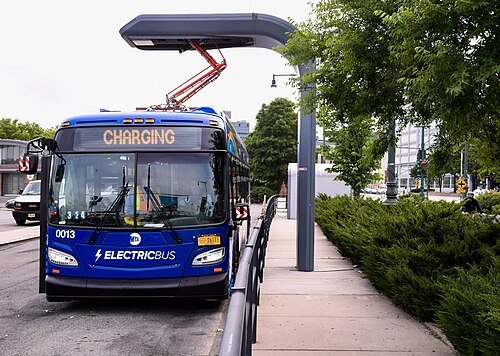
The Carpionato Group’s planned $100 million mixed-use development in Newport at the site of the hideous Newport Grand casino would certainly be an improvement. Carpionato generally does classy work. But I found a rendering of the project a little depressing because of the capacious use of land to serve the car culture. How much better it would be if bus service were good enough to eliminate the need for all that windswept parking lot space.
This reminds me of a survey by the Metropolitan Area Planning Council in Massachusetts of around 200 apartment buildings inside Route 128. The surveyors discovered, in The Boston Globe’s words, “that about 30 percent of their parking spaces go unused, even in the wee hours of the morning, when most residents are likely home.’’ Space taken up for parking means less space available for housing, which in turn means higher housing prices.
To read the report, please hit this link.
To read The Globe’s article, please hit this link.
Classic Newport Art Museum show

L. to r.: Howard Gardiner Cushing, “Ida Rubinstein’’ (1883-1960), c. 1912, (oil on canvas) private collection; Howard Gardiner Cushing, “Gertrude Vanderbilt Whitney in Bakst Costume with Fleurs du Mal’,’ 1911-12 (oil on canvas), Whitney Studio Mural Panel, private collection.
High art and a bit of high society at a Newport Art Museum party. Hit this link to see the big show.
A flood of 'Rain' poems

Rain, depicted in the 1493 Nuremberg Chronicle
“Today is the first of August. It is hot, steamy and wet. It is raining. I am tempted to write a poem. But I remember what it said on one rejection slip: After a heavy rainfall, poems titled 'Rain' pour in from across the nation.'‘
— Poet Sylvia Plath (1932-1963), a Massachusetts native

Mike Cross: Going undercover as a student made me a better professor

On the campus of Northern Essex (County) Community College, in Haverhill
From The New England Journal of Higher Education, a service of The New England Board of Higher Education (nebhe.org)
‘Three years ago, I graduated with an associate degree in liberal arts from Northern Essex Community College (NECC) in Haverhill, Mass. Although I was one of over a thousand students to graduate that day, my situation was a little different than those of my peers. You see, I am a full-time faculty member at NECC with a Ph.D. in organic chemistry.
I had decided the year before to go undercover by enrolling as a student. Graduation day marked the end of an intense year of juggling school, work and family responsibilities. Since that day I have been asked two questions whenever someone hears about my experience: “Why on earth would you do such a thing?” and “What did you learn?”
The answer to the first question is simple. I wanted to understand some of the challenges my adult students were facing. I wanted to experience firsthand the struggle of transferring credits, taking the ACCUPLACER placement exam, registering for and attending classes—all while maintaining a full-time job and caring for my three children. This was very different from my days as an undergraduate at a research university where I was a full-time student, fresh out of high school, with a part-time job and no spouse or kids. My hope was that my experiences would help me to better understand the reasons some students drop out while others are able to push through.
What did I learn from the experience? I gained many insights into the struggles of my students and the minds of my fellow educators, but I’d like to focus on five key points with suggestions on what colleges can do to improve.
1. Some of the barriers to student success are small and easily addressed.
Many barriers to student success are small, but they are everywhere. From day one, I was confronted by tiny hurdles. While registering, I was told I had to find and bring in my high school diploma. The fact that I had a sealed transcript of the courses I took while earning a bachelor degree and doctorate wouldn’t suffice. When I took the ACCUPLACER exam, I found that the room was uncomfortably cold and loud. In one classroom, I found the chairs to be so uncomfortable I had a hard time concentrating.
Are any of these issues catastrophic? Of course not. But they are frustrating and they are certainly avoidable. When a student is struggling, even the smallest thing can be the deciding factor in whether or not they decide the hassle of college is worth it. What can we do to help? The simplest solution is to ask our students—and then take their feedback seriously. If students feel that they are heard, they are much more likely to push through the small stuff in order to achieve their goals.
2. Adjunct faculty are unsung heroes, and our colleges need to support them.
I made sure to take classes in all different formats: face-to-face, hybrid, online. And I also made sure to take classes from both full-time and part-time instructors. I had some amazing classes with fabulous full-time instructors but what surprised me the most was the commitment of our part-time instructors. Despite the fact that they are not paid to hold office hours (and many didn’t have an office at all), they often went above and beyond the call of duty to help students.
In fact, one of my favorite classes was a public speaking course taught by an extremely talented adjunct instructor. (On a side note, isn’t it tragic that despite spending every day of my career in front of a classroom of students I had never before taken a public speaking course?) The course was well-organized with clear expectations. The instructor knew that public speaking is a common fear and used humor to help students overcome their fears. He gave excellent feedback and encouraged students to give one another feedback as well.
Since adjunct faculty make such important contributions to the education of our students, we need to be sure they have the support they need. Adjunct instructors often feel isolated and don’t have the same access to resources. I’m pleased that in recent years, my college has increased the resources available to adjunct faculty through our Center for Professional Development. We have adjunct faculty fellows who build community among our adjunct faculty through social media, professional development events and an online toolkit, which provides easy access to needed resources.
3. We need to be clear about what constitutes cheating.
Cheating is rampant … but most students don’t consider what they’re doing to be cheating. In most of my classes, I was able to go incognito for much of the semester. Sitting alongside my fellow students opened my eyes to the sophistication of modern cheating. Gone are the days of crib sheets and bribing your roommate to do your math homework. In today’s classroom, students are constantly pulling up notes on their phone or watch. They use (and gladly share) test bank answers downloaded from any number of internet “study” sites. If you have a credit card, you can have someone online write your research paper or solve your take-home exam for you.
Cheating has always been a problem, so I wasn’t surprised to see that it is still an issue today. But I was surprised to find that many students don’t consider what they are doing to be cheating. They consider texting answers to classmates just “being a good friend.” Downloading publisher test banks is simply “using your resources.” Although it’s impossible to prevent all cheating, I believe the fastest and easiest way an instructor can reduce it is to make it clear what you consider to be cheating. Going over the do’s and don’ts of ethical behavior during the first week of class is a major deterrent to cheating for many students.
4. Faculty members should push through the fear and be open to new experiences that provide them with feedback on their teaching.
At the start of each semester as a covert “student,” I would try to meet with each of my instructors and let them know who I was before showing up to the first day of class. In almost every case, the faculty member would appear nervous, but would welcome me to the class and ask me to provide them with feedback throughout the semester.
There were a few professors who were not so open to having me as a student. One didn’t want me in her class for fear that I was secretly evaluating her for the administration. Another told me that by enrolling in classes at our community college, I was undervaluing the “real education” I had received during my previous undergraduate career at a university.
No one is immune to impostor syndrome. It is natural to feel anxious about new experiences, especially when those experiences may expose our shortcomings (either real or imagined). I have felt this myself as I have had a colleague take one of my classes recently. It’s an intimidating experience, but I have tried to use it as a chance to reevaluate and improve my teaching. We should be open to feedback and criticism, whatever the source may be.
Over the past year I have had the privilege of co-facilitating the Teaching and Learning Academy with one of our adjunct faculty fellows (and my former professor). The academy allows faculty to come together in a relaxed environment and discuss life in the classroom. Over the course of the semester, we visit each other’s classes and share honest feedback. Opportunities like this improve our teaching and build our sense of community.
5. It’s easy to forget what it is like to be student.
How many times have you heard colleagues say, “When I was a student …”? This phrase is usually followed by a condemnation of the current crop of students. We forget that we are just like our students. For example, in one of my classes, the professor had a strict no cell phone policy. Yet while students were doing group work, he would pull out his cell phone to check social media. We must hold ourselves to a higher standard than our students. If faculty lock the door to prevent late students from entering, they must be sure to never be tardy themselves. If we expect students to turn in work on time, we should be prepared to return exams and give feedback in a timely manner.
While not every experience I had while undercover was positive, it was truly the best professional development of my career. It rekindled my love of learning. When I registered for classes at NECC I found out that I was required to take English Composition II, as I had never actually taken it as an undergraduate. Despite my dread, I ended up loving the course. When my instructor informed me that she would like to nominate one of my papers for a writing award, I almost cried. This was the first time in all of my years of higher education that someone told me that I was good at writing.
Too often we refer to a Ph.D. as a terminal degree, as though our education is dead (or at least on life support). Most of us went into education because we love to learn, but between grading, curriculum development and committee work, it’s easy to forget the thrill of learning something new. Sitting alongside my students as we learned together not only helped me better appreciate their daily struggles, but it reminded me that we are on this educational journey together.
Mike Cross is a professor of chemistry at Northern Essex Community College.

Rachel Hodes: What 'abolish ICE' really means

Via OtherWords.org
To most of America, “abolish ICE” is a cry of the far left. Even Americans who dislike Trump’s attacks on undocumented immigrants wouldn’t necessarily tell you that ICE should be abolished; that seems far too radical. ICE stands for the U.S. Immigration and Customs Enforcement agency.
They’re forgetting that ICE is actually pretty new. It was only created in 2003, replacing the Immigration and Naturalization Service (the same agency responsible for the internment of Japanese-Americans in the 1940s).
Since its creation, ICE’s budget has almost doubled, and its activity has expanded to triple the number of agents it employs. This expansion is shocking — and unwarranted. All evidence suggests that immigrants are far from the national security threat the Trump administration claims they are. Regardless of status, they’re more law-abiding than native-born citizens.
And time and time again, immigration has been shown to have a net-positive effect on the U.S. economy, from growing tax receipts to increasing wages for native-born residents. In fact, undocumented immigrants typically pay more of their income in taxes than your average millionaire.
More noteworthy than the economics, however, is that the individuals targeted by ICE are people — and all people are entitled to basic conditions of safety and for themselves and their families.
When the majority of these immigrants are fleeing violence with roots in U.S. intervention in Central America, the moral responsibility to offer safe haven becomes even more pressing. When government agencies neglect this responsibility, we all lose some of our humanity.
What calls to abolish ICE actually do is beg the question: Why do we need an immigration system dedicated solely to terrorizing immigrant communities?
Threats of ICE raids prevent undocumented people from going to work or sending their kids to school. Those in detention are denied access to basic hygienic products, subjected to severe overcrowding, and experience all manner of abuse. Several children have died.
We spend about $7 billion a year on ICE. What would happen if we instead invested those funds in resettling asylum-seekers, or hiring more staff to process asylum applications? What if families fleeing violence in Honduras or Guatemala had to wait only a few weeks to find out if they could immigrate legally, as opposed to the current average of almost two years?
The U.S. carried out over a quarter million deportations last year. The $7 billion that funded these actions
could have been used instead to resettle at least that many refugees (over 11 times what the U.S. accepted last year). It could also almost triple the funding of the government office that naturalizes around 700,000 new citizens each year.
Which is more radical: Investing in communities that strengthen our country and honoring basic human decency? Or continuing to fund an agency that’s literally caused the death of children?
As a concerned Jewish American, I believe none of us are safe until we’re all safe. We should be focusing our resources on welcoming new immigrants and helping them access the rights of citizenship — not subjecting them to detention and deportation.
A better world, for immigrants and for everyone, is within our reach. ICE just isn’t a part of it.
Rachel Hodes is a Next Leader at the Institute for Policy Studies.
'Honesty equates to exaggeration'

"Seek Higher Ground," by Tracy Spadafora, in the show “Exaggerated: Not How I Remember It,’’ at Fountain Street Fine Art, Boston, July 31-Aug. 25.
The gallery says:
“The show of painting, photography, and mixed media highlights the unique abilities of artists to interpret and tell stories. Through visual imagery, specific details of a story are either recalled or forgotten, brought to light or buried, minimized or exaggerated. These portrayals tell us not only their importance within a story, but also what is significant to the individual doing the telling.
”Artists have the ability to translate what they know through the language of art-making; what is remembered takes root in the act of creation. The duty of artists is to use their toolsets to reflect a distinct place, person, emotion, or story—muting some information while intentionally favoring aspects which become embedded as truths. In this, honesty equates to exaggeration. ‘‘

Bygone vacation days

From Robert Whitcomb’s “Digital Diary,’’ in GoLocal24.com
During a couple of days in Vermont last week, it was nice to drive around a place where people signal before making a turn, where they don’t throw trash out their car windows and where there seem to be convivial diner restaurants in every burg, focused on breakfast of course. The friends I was visiting have a place on Lake Morey, in Fairlee, with the range of vacation houses on the lake like a Smithsonian Museum of architectural styles going back to Victorian days, when trains to nearby big towns, connected to horse-drawn transport taking summer visitors to villages and lakes, started to make such relatively remote places accessible to people made newly affluent by the Industrial Revolution burgeoning to the south of the Green Mountain State.
One of the summer houses was an exemplar of “Mid-Century Modern” interior and exterior architecture, sort of ski-lodgey and a tad musty and with such ‘50s reminders as blond furniture and orange formica countertops. Sadly, I didn’t see any copies of The Saturday Evening Post and Life Magazine lying around. I’m told that many Millennials like Mid-Century Modern, unlike most Baby Boomers, who grew up with it.
In the lake there were other reminders of bygone vacation days, such as the sailing canoe we tried out, recalling a Boy Scout Handbook from the Twenties.
I noticed there and around Providence more fireflies than I’ve seen in long time. Might that mean a tad less pesticide spraying?
xxx
Driving to and from Vermont via New Hampshire, with its highway toll collectors, I thought that it will be a little sad when E-ZPass readers make all those jobs disappear. Considering that they’re dealing with the bad air from idling motors and occasional difficult (and sometimes worse), drivers, most toll collectors are remarkably pleasant – and helpful in providing directions and even addressing driver health and other emergencies, including helping police to apprehend crooks on the road. Maybe some states will add new rest stops where this sort of human help can be provided to replace the services of suprisingly cheery toll collectors.

— Photo by MLaurenti
But hold the shoes

"Are you saying yes to the dress?’’ (dolls, tulle, ribbon, thread), by Jemison Faust, in her show “Walk the Line,’’ at Atelier Newport (R.I.) through Aug. 4.

Chris Powell: Journalism and politics are often the same thing

Winston Churchill, long-time journalist
War, Prussian Gen. Carl von Clausewitz wrote, “is politics by other means’. So is journalism. Quinnipiac University journalism professor Ben Bogardus lamented this in an essay published the other day by the Connecticut Mirror, "Stop the Newsroom-to-Government Revolving Door":
https://ctmirror.org/category/ct-viewpoints/stop-the-newsroom-to-government-revolving-door/
But the revolving door can't be stopped, since politics and journalism are both constitutional rights. Besides, their interchangeability is as old as American history.
Bogardus's lament was provoked by the recent appointment of Max Reiss, political reporter for WVIT-TV30 in West Hartford, as Connecticut Gov. Lamont's communications director. Many journalists in Connecticut, Bogardus notes, have transferred between journalism and politics over the years.
"Moves like this," Bogardus writes, "hurt the image of an unbiased press and confirm the suspicion of many on the right that mainstream journalists are left-leaning and inject liberal biases into their reporting."
But most journalists today are left-leaning, and the image of an unbiased press has been false since the invention of movable type. For American newspapers originated as frankly political organs and many great figures in history were both journalists and politicians.
* * *
Alexander Hamilton, Gen. George Washington's top aide during the Revolution, founded The New York Post, was a member of Congress under the Articles of Confederation, a member of the New York state legislature, and then Washington's Treasury secretary.
The New York Times was founded by Henry J. Raymond with legal advertising placed in the newspaper as political patronage by Raymond's friends in the New York legislature. Raymond became a congressman and Republican national chairman.
Abraham Lincoln wrote editorials for the Illinois State Journal, a Republican paper, while his rival in the 1858 U.S. Senate and 1860 presidential elections, Stephen A. Douglas, wrote them for the Illinois State Register, a Democratic paper.
Horace Greeley gained such renown as editor of the New York Tribune that the Democratic Party nominated him for president in 1872.
William Jennings Bryan was editor of the Omaha World-Herald before getting elected to Congress and being nominated three times for president by the Democrats.
Warren G. Harding was editor and publisher of the Marion (Ohio) Star before his election to the U.S. Senate and the presidency as a Republican.
William Randolph Hearst, founder of the Hearst newspaper chain, was elected to Congress and ran unsuccessfully for governor of New York and mayor of New York City.
Here in Connecticut Gideon Welles was founding editor of The Hartford Times and Hartford Evening Press and a Democratic state representative from Glastonbury before becoming a Republican and Lincoln's secretary of the Navy. U.S. Sen. Richard Blumenthal and former U.S. Sen. Christopher J. Dodd, both Democrats, worked as newspaper reporters before going into politics.
The man who saved Western Civilization itself, British Prime Minister Winston Churchill, was a journalist for most of his time in Parliament.
* * *
As the American press consolidated and began to think that more money could be made with less partisanship, it moderated its politics. But that politics didn't disappear; it just became more subtle.
"Reporters," Bogardus writes, "need to realize that, by choosing to enter the profession, they're giving up the ability to be political." Nonsense -- for the selection and placement of every news story are political acts, if only in the broadest sense, since news isn't arithmetic but a human judgment of what reporters and editors consider worth reporting. While Bogardus argues that journalists should be "unbiased," nobody in journalism is, since everyone brings his life experience and political inclinations to his work. The best journalists can do is to try to be fair and report all sides of an issue.
Maintaining that journalists aren't political is only public relations, not ethics as journalists like to pretend.
Journalism, Bogardus argues, "needs to be seen as trustworthy and nonpartisan." But these days the public itself is increasingly untrustworthy and partisan since many people want to read and hear only what they already believe, and many news organizations are obliging. Nobody watches MSNBC for praise of President Trump or Fox News for criticism of him. Nobody reads The Hartford Courant for criticism of political correctness or the Waterbury Republican-American for praise of it.
While Bogardus wants journalism to be trusted, journalism is not a monolith but innumerable daily acts, so it is not to be trusted any more than anything else human is to be. Evaluating journalism is the work of citizenship, requiring attention to an array of sources of information where no one ever has the last word.
Chris Powell is a columnist for the Journal Inquirer, in Manchester, Conn.,
Retirement home

“Daisy’’ ( acrylic, chalk, charcoal on paper), by Cameron Boyce, in the show “Pinky Promise,’’ at Kingston Gallery, Boston, staring Aug. 16.
Todd McLeish: Balloons easily kill marine birds

From ecoRi News (ecori.org)
After a helium-filled balloon is released, it’s soon out of sight and quickly out of mind. But a new study out of Australia provides additional evidence that we should pay much more attention to balloons, because they can have devastating consequences to marine life.
A team of researchers from the University of Tasmania found that balloons are more deadly when ingested by seabirds than any other kind of plastic debris. An examination of 1,733 dead seabirds found that 32 percent had ingested plastic debris, and while soft plastics such as balloons accounted for only 5 percent of the items ingested, they were responsible for 42 percent of the seabird deaths.
Fragments of balloons composed just 2 percent of all ingested plastic, yet the birds that ingested balloon pieces were 32 times more likely to die than if the bird had ingested a hard plastic like a LEGO brick or lollipop stick.
The researchers said balloons are especially lethal because they can be easily swallowed and squeeze into a bird’s stomach cavity.
“A hard piece of plastic has to be the absolute wrong shape and size to block a region in the birds’ gut, whereas soft rubber items can contort to get stuck,” said Lauren Roman, the leader author of the study, in an interview with an Australian news outlet.
Roman believes that seabirds are attracted to balloons at the surface because their fragments may resemble squid, which the birds commonly eat. Most of the birds she studied were shearwaters and petrels, some of which appear in the offshore waters of southern New England in the summer.
The study was published in March in the journal Scientific Reports.
Citing the potential harm to marine life, the Rhode Island town of New Shoreham (Block Island) banned the sale of balloons earlier this year. Many other communities around the country are also taking steps to reduce the release of balloons because of their deadly impact on wildlife. Clemson University in Georgia ended its tradition of releasing 10,000 balloons before every home football game, for instance, and a campaign in Virginia aims to discourage the release of balloons during wedding celebrations.
Even The Balloon Council, which represents the balloon industry, advocates for the responsible handling of balloons, including never releasing them into the air.
But the release of balloons is still a significant problem with far-reaching implications, according to local wildlife rehabilitators and birdwatchers.
Geoff Dennis, a bird photographer and resident of Little Compton, walks his dog on several local beaches daily and collects the trash he sees. One day in late May he collected 282 balloons on the beaches he frequents. He said many more were washing ashore as he arrived. Less than two weeks later, he collected another 99 at the same beaches.
At a Fourth of July outdoor concert in Westerly, one birdwatcher in attendance counted 87 balloons released, most of which probably drifted over the ocean and landed in the water.
“I see them everywhere on the coast, and the beaches are especially bad,” said Jan St. Jean of Charlestown, an avid birder who spends much of her time year-round looking for birds along the coast. “I just think balloons are such a needless thing to purchase.”
And it’s not just the balloons themselves that are dangerous to birds and other wildlife. The strings attached to the balloons are a significant entanglement threat that have been responsible for many animal deaths.
Birdwatcher Becca Thornton of Carolina, R.I., wrote on Facebook this month that she rescued a great blue heron that was entangled in balloon string last year. “It was completely wrapped around his legs and couldn’t move or open his legs at all,” she wrote. “If I didn't see him, jump in the water and cut the string, he wouldn't be back visiting me this year.”
Several other local birders and wildlife rehabilitators also noted the related concern of birds becoming entangled in fishing line, which appears to be an ubiquitous problem along the Rhode Island coast as well.
A bill to ban the release of helium balloons in Rhode Island, sponsored by Rep. Susan Donovan, D-Bristol, this past session, would have imposed a $500 fine on violators. The bill was held for further study by the House Judiciary Committee.
“The problem is that no one away from the coast sees the balloon problem, only the plastic bag problem,” Dennis said. “And we know where that bill ended up despite how obvious that problem is.”
Todd McLeish, an ecoRI News contributor, runs a wildlife blog.
The Rhody rankings game

Eadweard Muybridge photo sequence.
From Robert Whitcomb’s “Digital Diary,’’ in GoLocal24.com
God knows, Rhode Island should and can do various things (which I have suggested here over the years) to improve its economy, but I’m always leery of rankings, such as the right-leaning CNBC and the far-right Wall Street Journal editorial page, ranking the tiny state the worst in the nation for business. Some of that was based on lagging data and in changes in how some data were weighted. I don’t trust U.S. News and World Report rankings for similar reasons. That Rhode Island is so minuscule makes comparing it with other states particularly problematic.
All such rankings are based, in varying degrees, on comparing apples and oranges. And they usually ignore such important but difficult to quantify things as convenience and location. A major reason that my wife and I continue to live in Rhode Island is how close most of what you need for daily life is within the state and its nearness to Boston and New York. None of this is to say that the Ocean State must not do much, much better.
A little referenced number: Rhode Island’s per-capita income was 17th in the nation last year. Not too bad for an old mill-town state, but it’s next to #1 Massachusetts and #2 Connecticut….
Granite State's grand hotels

“Viewing the Mountains from the Mount Washington Hotel, White Mountains, New Hampshire’’ (print), in the show “The Grand Hotels of the White Mountains,’’ through Sept. 12.
The show explores the history of New Hampshire's grand mountain resort hotels, paying particular attention to the four that still exist out of the thirty that were in business when the industry was at its height around the turn of the last century. The exhibit uses paintings, photographs, artifacts and first-hand accounts from those who stayed as guests and those who worked in these European-style establishments, which hosted up to 200 guests each with elegant rooms, fine dining and numerous recreational activities.
William Morgan: From the inspirational Williams to a deadening waiting room

Amidst bathos and banality while you wait…and wait.
— Photo by William Morgan
There are not many grimmer places than the contemporary medical office waiting room. And, as we get older, it seems we have to devote more of our lives to wasting time in such dreary, soul-deadening spaces. Carpets with busy patterns (to hide the dirt?), low ceilings with acoustical tiles, furniture (invariably in pale shades of rose or violet, sometimes stained), and dog-eared copies (several months old) of Sports Illustrated. The coup de grâce is often a television, too loud and tuned to medical info-mercials or a talk show with miserable human specimens who are in much worse shape than whatever it was that is sent us to the doctor.
We entered this particular foretaste of purgatory not to be healed, but to make an appointment. Feeling my life ebbing away, especially after the practice's telephone service informed me that I was Number 17 in the queue, my wife and I drove to the awful faux-concrete (yes, that plastic stucco-looking surface that looks nibbled at the edges) medical building on North Main Street in Providence. This is one of those rental office spaces that has been fixed up and repainted so many times, you can only pray that the mold and rodent droppings have been sealed in.
Our dermatologist at 345 North Main, blessedly, does not have a television, and we were not there long enough to start screaming. But amidst the only-slightly-better-than-cheap-motel wall art, an old photograph caught my eye.

The image shows a house I had never heard of, much less ever seen. But its demolition was a real loss. Underneath the 18th-century expansion, is clearly a rare 17th-century Rhode Island stone ender (note the large chimney to the right).
Less than a handful of these early cottages survive, so it is particularly painful to contemplate its destruction. The caption beneath the image makes it all seem more depressing:
“Our Abbott Street parking lot, with North Main Street visible at the left:
“Roger Williams {1603-1683, the theologian, writer and founder of Rhode Island} often visited here and led prayer meetings where our parking is now.’’
Providence-based writer and architectural historian William Morgan is the author of The Cape Cod Cottage. His Snowbound: Dwelling in Winter will be published next year by Princeton Architectural Press.

Jim Hightower: America's insulin migrants to Canada

Downtown Sherbrooke, Quebec, close to the U.S. border and a city that draws many Americans, mostly from the Northeast, seeking much cheaper insulin and other medications than they can get in the U.S.
Via OtherWords.org
While Donald Trump fans the embers of xenophobia in our country by demonizing caravans of desperate Central Americans headed north, there are other northern-bound caravans he doesn’t mention.
These are U.S. citizens crossing our northern border into Canada, seeking relief from the profiteering cartels that run our country’s predatory health system. These people are among the millions of Americans who’ve literally been sickened by the price gouging of pharmaceutical giants.
For example, The Washington Post reports that from 2012 to 2016, drug makers have nearly doubled the U.S. price of life-saving insulin. It’s a massive highway robbery that Trump and Co. ignore, even though it creates a financial strain so severe that many patients try cheating death by skipping some dosages — an always dangerous gamble.
Outraged and desperate, many diabetics and their families are taking matters into their own hands by making cross-border drug runs into towns just north of the U.S.-Canadian line. They’re drawn there by Canada’s single-payer healthcare system, which protects consumers from price-gouging.
As The Post reported, one small group of Minnesotans recently caravanned from their home into an Ontario border town where they could buy a supply of insulin for about $1,200 — versus the $12,000 they would’ve been charged in the United States.
Good for them, but why should anyone in our incomparably rich nation have to make border raids to get essential health care? As the organizer of this Minnesota caravan put it: “When you have a bad healthcare system, it makes good people feel like outlaws. It’s demeaning. It’s demoralizing. It’s unjust.”
We the people must rise up, organize, and mobilize to make health care profiteering unacceptable, illegal — and indeed, un-American.
OtherWords columnist Jim Hightower is a radio commentator, writer and public speaker.
Nuanced patriotism

“Showstopper’’ (collage and resin on panel), by Rob Mars, in “Summer Group’’ show at Lanoue Gallery, Boston, through July 28.
Farming oysters growing in New England

From Robert Whitcomb's "Digital Diary,'' in GoLocal24.com
Oyster aquaculture has been expanding at a good clip in New England in the past couple of decades, often in the face of nimbyism, much of it by affluent owners of shoreline summer places. But oyster farming is good for the coastal environment (shellfish filter the water) and this high-end food is good for the region’s economy, too – especially, of course, the restaurant sector. Thus it was pleasant to read that the U.S. Agriculture Dept. and the Rhode Island Dept. of Environmental Management are working together to restore oyster beds in the state in a program called the Rhode Island Oyster Restoration Initiative. The Feds are making $500,000 available in grants to Rhode Island oyster farmers this year to boost their business.
To read more about this program, please hit this link.
Llewellyn King: Those cries of 'racist' stultify needed debate
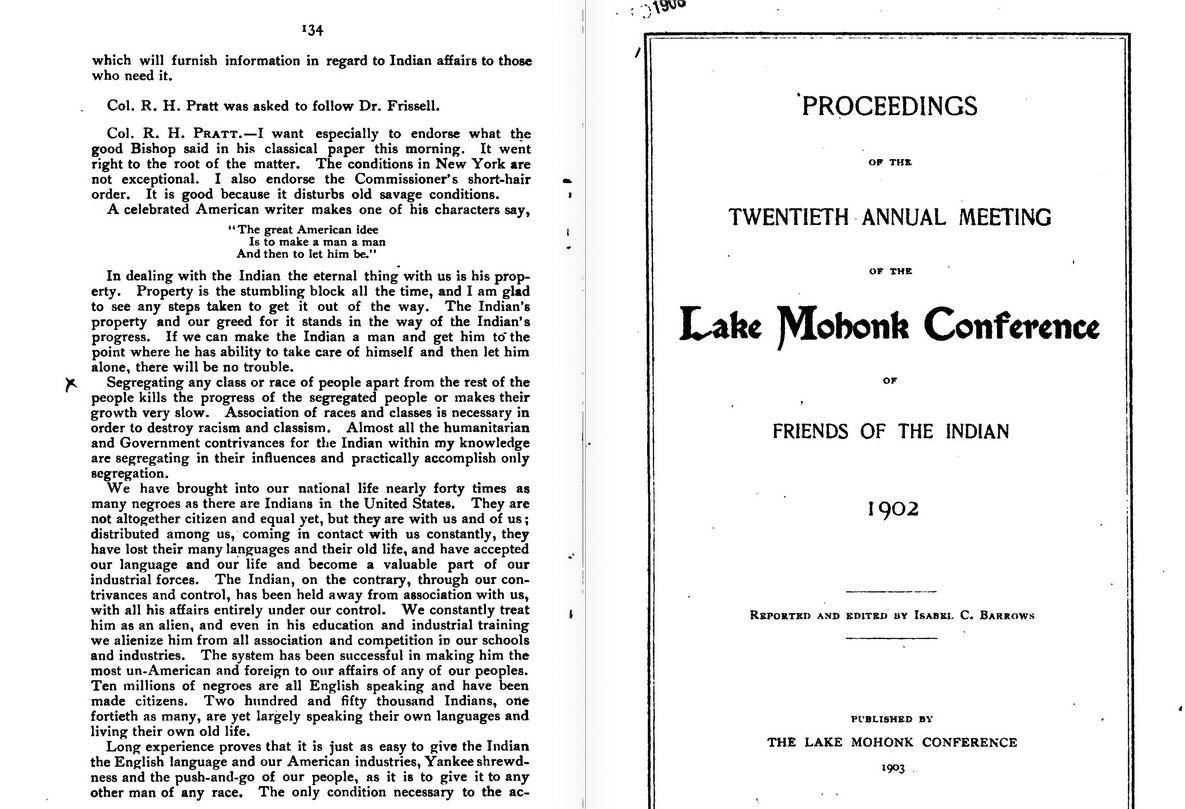
An early use of the word "racism" by Richard Henry Pratt in 1902: "Association of races and classes is necessary to destroy racism and classism.
I, a serial supporter of minority causes, am fed up with the race card. Calling someone a racist is sliming’s cheap shot. It is a banal accusation that cannot be justified and cannot be defended against. It implies the moral deficiency of those who are accused of it.
I am not abandoning my abhorrence of people held down, held back or shuffled through a justice mill because they are of a different race or ethnicity.
Believe me, I have seen it. I have seen a bartender in Baltimore refusing to serve a black man but telling him he could take a bottle home. I have worked at a newspaper where it was debated whether a black editor could manage white editors. I have covered courts where young black offenders are marched through trials that are no more than sentencing mills; where hire-by-the trial lawyers plead away young minority people who do not know what is happening to them besides that they are going to jail. I have seen segregated water fountains, park benches and restrooms.
Yes, I have seen it.
In South Africa during apartheid, I saw a policeman leading a prisoner with a wire tether around his neck, as you would walk a dog. In Zimbabwe, I saw then President Robert Mugabe become obsessed with demeaning and forcing out the white population.
I heard the language of apartheid on the West Bank, where there are struggles over land. I heard a Malaysian publisher say demeaning things about the Chinese. I know of the oppression of minorities from Vietnam to those of Korean descent who perforce live second-class lives in Japan.
I have seen how the Catholics were treated in Northern Ireland and how both sides killed each other randomly. It starts with insults and ends with bloodshed.
I have toured Auschwitz where racism was perfected into genocide and evil wrought its masterpiece.
Race-baiting, race oppression and race categorization are among the deep and pervasive threats to society and to a civil way of life.
But that does not justify the easy and destructive branding of almost anyone who disagrees with anyone else as a racist. That is cheap, shallow, damning and, as a negative, hard to disprove.
I have been there, too, and know the humiliation and impotence of being accused of something you cannot defend yourself against.
Years ago, I was going to be appointed to a vacancy on the board of the venerable National Press Club in Washington, when one board member received an anonymous phone call saying that I said racist things. I did not and I do not, but the board thought it better not to appoint me. It hurt then, decades ago, and it hurts now.
Who wants to say, “Some of my best friends are minorities” or signal their virtue to disprove the label “racist”? Like a wall poster, it is easy to put up and hard to take down.
It is time we took the race card, burned it and interred its ashes. The epithet “racist” -- which can be attached as easily as sticking on a Post-it -- is neither dialogue nor disputation. Worse, its careless use is turning people against people whose views they fundamentally support.
While it is in play, the race card can be produced from the political sleeve like a wild card to slime anyone who disagrees with its player.
I know House Speaker Nancy Pelosi has worked for decades for civil rights causes. Using the race card was woeful in its dishonesty.
By the same token, I believe President Donald T to be, in many things, a truly reprehensible man; a disgrace at many levels. But that is not a reason to use the race card. Calling someone a racist precludes bringing in the heavy artillery of facts to blow away real bigotry. In its way, it locks in prejudice.
The president standing toe to toe with four Democratic House novices of color -- the Squad -- shouting “racist” is not speech. It is a refuge for the verbally bankrupt. Sadly, by calling Trump a racist, the Squad fired the first fusillade.
Llewellyn King is executive producer and host of White House Chronicle, on PBS. His email is llewellynking1@gmail.com. He’s based in Rhode Island and Washington.
Linda Gasparello
Co-host and Producer
"White House Chronicle" on PBS

Chris Powell: Giving more money to badly governed cities is a waste

The P.T. Barnum Museum, in Bridgeport, named after the 19th Century circus mogul, who lived in that city.
In recent weeks seven Connecticut news organizations have gotten together in what they have called the Cities Project, examining ways of reviving the state's struggling cities. Much of the reporting has been about raising revenue -- extracting more financial aid from state government; applying property taxes to colleges, hospitals and other nonprofits; allowing cities to impose a sales tax on restaurant meals; and so forth.
It's tedious. For giving cities a lot more money has been state government policy for more than 40 years, ever since the state Supreme Court's decision in the school financing case of Horton v. Meskill, in 1977.
State government now covers half of city government budgets. Last year this policy exploded into extravagant incoherence when the General Assembly more or less accidentally authorized state government to assume more than $500 million in Hartford's long-term bonded debt. This rewarded and reimbursed the city for spending $80 million, despite its insolvency, to build a baseball stadium with which it stole the minor-league team of another struggling city, New Britain.
Better journalism might explore why so little about urban policy in Connecticut has worked since the cities began declining in the 1960s. Despite spending ever more money from both their own tax bases and the state's, the cities are poorer and more dysfunctional, incompetent and corrupt than ever, and their demographics are so desperate that they are hardly capable of self-government, lacking enough of a politically engaged and independent middle class to fend off the government and welfare classes, whose own furious political engagement guarantees their incomes.
Better journalism might ask why welfare policy in Connecticut produces only generational dependence and social disintegration, not self-sufficiency. It might ask why Connecticut's education policy in the cities accomplishes mainly social promotion and ignorance. It might ask why government gives priority to the compensation of its own employees. It might ask why the middle class escaping from the cities and the middle class already living in the suburbs should want this chronic failure extended to them through regionalism.
Policy premises here need to be challenged by journalism, not coddled. For why should anyone think that another 40 years of throwing money at what has failed to restore the cities will work someday? And how do the big thinkers who have presided over this disaster get away with considering themselves enlightened instead of culpable?
The tragedy of Connecticut's cities is metaphorically conveyed by a 15-minute video made last September and highlighted the other day by Only in Bridgeport blogger Lennie Grimaldi. The video, made to promote a now-stalled redevelopment proposal for the city's downtown, shows the Greater Bridgeport Symphony Orchestra playing British composer Vaughn Williams' ethereal "The Lark Ascending" in the decrepit former Palace Theater.
The orchestra's performance is magnificent and the video gently contrasts it with the theater's moldy walls and crumbling ceilings, thereby hinting at the Bridgeport that once was and might be again. Amid the frequent shootings in the city, it is hard to imagine, but there it is: a tremendous symphony orchestra with Bridgeport in its name. Within living memory Bridgeport was the industrial capital of Connecticut, but today the factories are empty hulks like the theater.
Great talent and potential remain here but there is only an echo of civic virtue. Weep for it now that government in Connecticut makes sure to succeed only with its own salaries and pensions.
Chris Powell is a columnist for the Journal Inquirer in Manchester, Conn.