
Vox clamantis in deserto



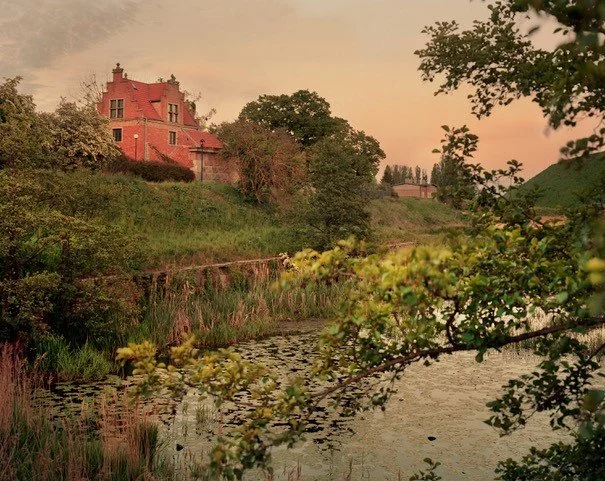
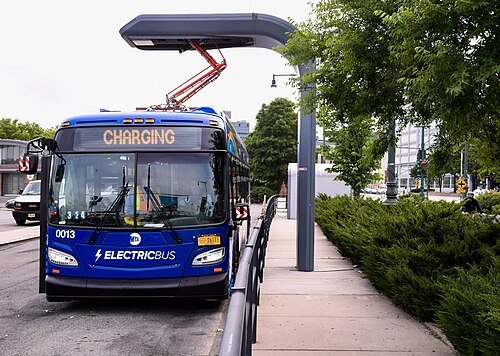





Mass. petition signers ask for curb on use of bee-killing pesticides

— ecoRI News photo
From ecoRI News (ecori.org)
Environment Massachusetts recently delivered a petition signed by 20,000 residents asking state officials to restrict the use of bee-killing pesticides known as neonicotinoids.
“A world without bees would mean a world without many of our favorite summer foods,” said Ben Hellerstein, state director for Environment Massachusetts. “People are speaking out to save our pollinators.”
Across the country, millions of bees are dying and bee colonies are in distress because of a phenomenon known as colony collapse disorder, according to Hellerstein. While many factors are implicated in colony collapse disorder, one cause is the increased use of neonicotinoid insecticides, also known as neonics.
The petition asked state officials to restrict the use of neonics. Rep. Carolyn Dykema, D-Holliston, and Sen. Jamie Eldridge, D-Acton, have filed bills (H.763 and S.463) to reduce the use of these pesticides.
“Virtually every one of my colleagues in the Legislature has heard from residents who understand the gravity and urgency of the threats to pollinator health,” Dykema said. “This is thanks to grassroots advocacy from students, beekeepers, scientists, farmers, and thousands of concerned citizens across Massachusetts who care about our environment, our food supply, and our bees.”
"Having fewer bees to pollinate our crops will have a catastrophic impact on our food supply and damage local economies,” Eldridge said.
Bees pollinate 71 of the 100 most common food crops in the world, including apples, pumpkins, cranberries and blueberries. Officials in Maryland, Connecticut, and Vermont have passed laws to reduce neonicotinoid use.
“Every few weeks we see another peer-reviewed study supporting restrictions on neonics,” said Marty Dagoberto, policy director of the Northeast Organic Farming Association’s Massachusetts chapter. ““There’s no justification to keep these toxic chemicals on store shelves for untrained consumers. It’s time for the legislature to restrict use to licensed and trained pesticide applicators.”
Llewellyn King: Federal agency's bias against nuclear-power deals abroad hurts U.S.

A small nuclear reactor of the general type cited below
They are bureaucracy’s equivalent of ghosts: old policies, fiats and ideas that have lost their relevance — if they ever had any — and are without a constituency, but they live on.
Take the Overseas Private Investment Corporation (OPIC), a little-known, self-sustaining agency of the government, which was set up in 1971 to help American businesses invest in emerging markets. It helps with risks that are outside the purview of the Export Import Bank and facilitates the attraction of private capital to do the heavy lifting. It is considered a success and an important tool in foreign policy, so much so that in October, it will be subsumed into a new agency, the U.S. International Development Finance Corporation, to work in conjunction with the U.S. Agency for International Development.
OIPC’s Web site says clearly that it helps U.S. manufacturers gain a foothold in new markets. It does not list exclusions from its consideration.
But it has priorities and blind spots, often inherited from the attitudes of a previous administration. A case in point is that it will not lend to help countries buy nuclear power or nuclear power equipment.
The nuclear industry, which is exercised about this impediment to sales in new markets, believes that the agency’s policies of opposing such assistance lie in ambivalence toward nuclear in parts of the Obama administration.
Normally, this would be of little consequence because OPIC cannot afford to finance a whole new nuclear power plant of the traditional type, running to billions of dollars. Its lending limits are in the hundreds of millions, but it does provide risk mitigation that enables other financing to proceed.
This is especially important because the nuclear-power industry is in the throes of reinvention: Small modular reactors are the new reality. These have many designs and varied support, including the traveling wave reactor from TerraPower, a Bill Gates-funded company, and the first of these new small reactors, the NuScale, is soon to be deployed at the Idaho National Engineering Laboratory. It will sell power to a consortium of local public utilities.
The stakes are not small. Fifty companies are working on new nuclear designs, most of them small modular reactors that can be built in a factory and shipped to their deployment sites for assembly. All of them will feature designs that obviate the possibility of catastrophic accidents and will seek to minimize nuclear waste.
In short, the new reactors are aimed at the very markets that OPIC is interested in. Its mission, especially when it morphs into U.S. International Development Finance Corporation this fall, will be to counter aggressive Chinese marketing under its ubiquitous Belt and Road initiative, which seeks to vacuum up markets in Asia and Europe.
David Blee, the dynamic president of the U.S. Nuclear Industry Council, has met with OPIC officials. Blee, along with nuclear industry executives, has also had a meeting with President Trump, where the issue was raised. Trump turned to his top economic adviser Larry Kudlow and asked him to investigate. So far, OPIC has not softened its anti-nuclear stance.
Lawyers who deal in international nuclear trade tell me the damage from OPIC’s ban on taking on nuclear projects is twofold: First, specific projects are likely to go to foreign competition, and second is the fact that a major U.S. agency will not even entertain assisting in financing such projects suggests a lack of confidence in American nuclear products by the government itself.
Defense contractors have always found it is impossible to sell defense hardware abroad if that same equipment is not deployed by the Pentagon. The buyer psychology is not hard to fathom: If it is not good enough for the United States, we do not want to know about it.
Critics of the agency cannot say that it is wholly out of touch with today’s reality: It is helping to finance Ivanka Trump’s projects for women around the world. Maybe America’s nuclear entrepreneurs should look to pitching their magical new machines to the first daughter. After all, the nuclear industry is employing more and more women.
On Twitter: @llewellynking2
Llewellyn King, based in Rhode Island and Washington, D.C., is executive producer and host of White House Chronicle, on PBS.
David Warsh: Of Eisenhower and Buttigieg
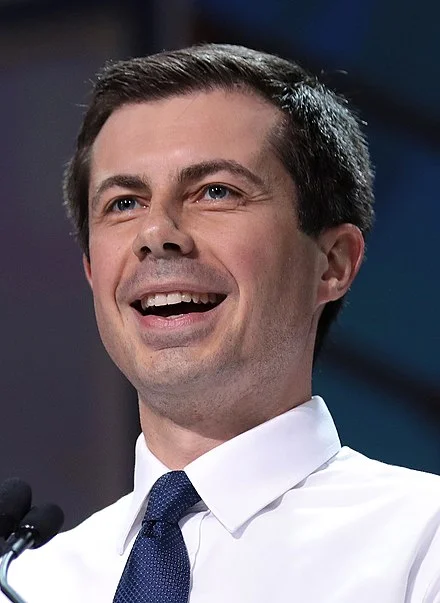
Peter Paul Buttigieg
SOMERVILLE, Mass.
Economist Paul Samuelson used to say, that if you’re going to forecast, forecast often. As a columnist, I think I’ve failed to pick the winner only once since 1980 – in 2016. I’ve touted a couple of non-starters, too (Colin Powell, Robert Gates).
Two years ago, I compared the Trump family saga to the famous old Beverly Hillbillies television series, in reverse, and ventured that the dark sitcom was more likely to run its full four years than to be ended abruptly by Congress.
Last July, in I wondered if Trump might not run again. What would be the fun for him in that? “It is always possible that Trump will run the table and, like Clinton, Bush, and Obama, settle into a second term more comfortable than the one before. I put the chances at one in three.”
Now Trump is indeed running again. He has involved the United States in bitter economic wars with China, Iran and Mexico, and has exacerbated the already strained relations with Russia he had hoped to ease. Meanwhile, he is staging re-enactments of his 2016 campaign, rallies reminiscent of his days in reality TV. Maybe he’s thinking of the banking matters that Special Counsel Robert Mueller referred to the U.S. attorney for the Southern District of New York.
In my circle, the conventional wisdom has become that Trump will win. Fear has grown that the various large constituencies of the Democratic Party will tear the party apart: progressives, moderates, women, African-Americans, immigrants. Trump’s taunting will make only make it worse.
So here goes: The nation may be one good speech and 16 months of cautious campaigning away from peace. At this point, it is no more than a hunch. The candidate most likely to give it is the mayor of South Bend, Indiana.
Of the five leading candidates in The New York Times weekly survey, two are already beginning to fade: Bernie Sanders because he earlier tried and failed, Elizabeth Warren because she set her eyes on the job only late in her career, and so veered too far left. Joe Biden, Kamala Harris and Peter Buttigieg all have disadvantages, but all three are electable, given a successful primary campaign. (See the Harris profile in The New Yorker, an appraisal of Buttigieg in the New York Times Magazine.).
Buttigieg could continue to soar. At 37, he has far less baggage than the others, and that which he possesses – his difficulties with South Bend’s legacy-dominated police department, his years as a closeted gay man in college and after – he has handled well so far. Wall Street likes him, not necessarily a plus in today’s Democratic Party, though the money pours in. (It was Darryl Zanuck who declared of film producer Robert Evans, under criticism as a youthful actor, “The kid stays in the picture.” In Buttigieg’s case, it seems to have been the same kind of small donor success that lifted Barack Obama above Hillary Clinton. Yearning for a fresh-face centrist is apparent even at the editorial board of The Wall Street Journal.
The precedent for the 2020 election may be the 1952 presidential campaign. Unwilling to re-nominate Thomas Dewey, who had narrowly lost to Harry Truman in 1948, and convinced that Ohio Sen. Robert Taft, an isolationist and New Deal foe, would lose to the eventual Democratic Party nominee, Adlai Stevenson, governor of Illinois, the establishment Republican Party put itself in receivership. Five-star Gen. Dwight Eisenhower was a thoroughly proven leader, a moderate, with no previous party affiliation. Afghanistan veteran Ensign Pete Buttigieg (USNR-Ret.) is an identifiable Democrat with little more than a record of caution and ambition.
The speech I have in mind – the first of a series of speeches, naturally – has to communicate both imperturbability and a compelling vision of the task at hand. For exemplary compassion and compression, see Abraham Lincoln’s Second Inaugural Address, a very high standard, to be sure. For a glimpse of Buttigieg’s 21st Century style, see his 11-minute appearance with Bill Maher
The Democratic debate skirmishes end on July 30-31. August is time out. The campaign proper starts on Labor Day. At that point we will be fourteen months and one good election outcome from the beginning of what might turn out to be be a fresh start.
David Warsh, an economic historian and veteran columnist, is proprietor of Somerville-based economicprincipals.com, where this essay first ran.

Don Pesci: On tolls, Lamont is spinning like a top

Clever frogs know how to take a step back so that they might advance two steps forward.
Connecticut Gov. Ned Lamont met recently with the governors of two contiguous states, Rhode Island and Massachusetts, to palaver about infrastructure maintenance. A fierce middle class taxpayer opposition to tolling in Connecticut has given the governor and the two Democrat gate-keepers in the General Assembly, Senate President Martin Looney and Speaker of the House Joe Aresimowicz, political hiccups.
Lamont began pushing for tolls during his election campaign for governor. In that campaign, Republican nominee for governor Bob Stefanowski was widely derided by Democrats and critics in the state’s media for centering his campaign on a pledge to do away with Connecticut’s income tax over a ten year period.
Pressing on, Stefanowski said his pledge was aspirational and, once accomplished, would reset Connecticut in New England’s crown as a haven from excessive taxation. In addition, it would force politicians in the state to confront the ongoing problem of excessive spending.
Couldn’t be done, everyone said; after all, the state was looking down the barrel of a biennial deficit approaching $4 billion. If politics is the art of the possible, the Democrats’ effort to impose upon Connecticut’s already tax overburdened voters a new revenue source has been, to put it kindly, unartful.
Russell Long of Louisiana might have enjoyed the first toll proposal Lamont unfurled in his gubernatorial campaign. “Most people,” said Long, “have the same philosophy about taxes.” And he poeticized the philosophy:
Don’t tax you,
Don’t tax me,
Tax that fellow behind the tree.
Get someone other than voters, in other words, to pay for your expenditure. For campaigner Lamont, the “fellow behind the tree” was large trucks steaming through Connecticut – a truck tax. Once elected, Lamont realized that truck tolling alone would not provide Connecticut with the revenue it would need for necessary infrastructure repairs. And then too, there was that pesky multi-billion deficit poking its nose over the horizon.
Lamont suggested a massive number of toll gantries, later reduced to 50, a plan that very likely ran into difficulties with federal overseers who would allow toll gantries only to reduce congestion. Connecticut may be congested with taxes, but cars? Not so much.
Along came No Tolls CT, which struck a responsive chord in the hearts of voters already overburdened by a kleptocracy that had been raiding the transportation fund since 2001.
Gatekeeper magicians Looney and Aresimowicz were unable, they said, to round up the yes votes in the General Assembly, even though Democrats enjoy huge margins in both chambers following the most recent elections in which President Donald Trump, not yet impeached, was made to play the role in the Democrat campaign script of Beelzebub, sulfur pouring out of his nostrils. The propaganda – Trump did not appear on the ballot – worked, some political commentators believe, to swell Democrat numbers in the General Assembly. Half of the Democrat caucus is composed of progressives, sulfur pouring out of their nostrils.
Lamont, as it turns out, was far more successful than Stefanowski in fooling some of the people some of the time, but his recent toll proposal has strained the credulity even of his well-wishers in Connecticut’s media.
Lamont has now reverted to his initial campaign toll proposal. Maybe tolling only trucks and tolls on bridges was not such a bad idea.
Emilie Munson of CTMirror puts it this way:
“Either proposal involving tolls or bridges would represent a significant retreat from Lamont’s proposal for numerous gantries on interstates 95, 91, 84 and the Merritt Parkway.
“And neither idea is a clear winner: both concepts face some reservations from the governor’s office and within the Democratic caucus, as well as full-throated opposition from Republican leaders.
“The resurfacing of the trucks-only concept, which he [Lamont] championed on the campaign trail and then retreated from early in office, may bring fresh accusations of political flip-flopping — even if the new suggestions are slightly different from last year’s.”
It’s not just a flip-flop, which may sometimes be written off to unforeseen exigencies. What we have here is a flip-flop of a flip-flop. Stefanowski, to his credit, neither flipped nor flopped.
Stefanowski has not entirely retreated from the political stage, nor has David Stemerman, who finished third in the Republican Gubernatorial primary.
Stemerman’s tweets are not as flashy as Trump’s lightning bolts, but they get the job done: “CT should be thriving, but a toxic combination of high cost of doing business, unfunded pension liabilities and poor infrastructure, driven by bad policies from Hartford, are hurting our state as @CNBC’s annual ranking of states for business confirms today.”
One cannot help but wonder whether the governors of Rhode Island and Massachusetts might agree with that assessment. When Lamont stops spinning like a top, it might do him well to address himself seriously to the toxic combination referenced by Stemerman – and others.
Don Pesci is a Vernon, Conn.-based columnist.
Readers reside on the obituary page

Via Robert Whitcomb’s “Digital Diary,’’ in GoLocal24.com
The publicity around the death of former Providence TV investigative reporter Jim Taricani (with whom I had a few pleasant encounters over the years when I was an editor at The Providence Journal) was to some extent nostalgia for when many network-affiliated local TV stations had substantial staffs. Heck, I can remember when some of the major market (e.g., Boston and New York) stations even had the equivalent of editorial-page editors carefully intoning usually bland opinions on assorted public-policy issues.
There’s also an increasing dependence on nostalgia to sell newspapers. Old photos especially. And increasingly, their columnists review events that occurred before the memory of a large part of the population. Newspaper readers tend old. The late Jim Wyman, The Providence Journal’s executive editor for a few years, used to lament that the people on the obituary page were “our readers.’’ And that was 30 years ago, at the dawn of the World Wide Web and well before social media.
Jump Bike in a bad dream

“Celtic Mobile Device” (found objects and acrylic), by Lorraine Sullivan, in the show “New England Collective X,’’ at Galatea Fine Art, Boston, July 31-Sept. 1.

Martha Bebinger: Have you asked your doctor about global warming?

Projected change in annual mean surface air temperature from the late 20th century to the middle 21st century, based on a medium emissions scenario. This scenario assumes that no future policies are adopted to limit greenhouse gas emissions.
— Image credit: National Oceanic and Atmospheric Administration
BOSTON
When Michael Howard arrived for a checkup with his lung specialist, he was worried about how his body would cope with the heat and humidity of a Boston summer.
“I lived in Florida for 14 years, and I moved back because the humidity was just too much,” Howard told pulmonologist Dr. Mary Rice as he settled into an exam room chair at a Beth Israel Deaconess HealthCare clinic.
Howard, 57, has chronic obstructive pulmonary disease (COPD), a progressive lung disease that can be exacerbated by heat and humidity. Even inside a comfortable, climate-controlled room, his oxygen levels worried Rice.
Howard reluctantly agreed to try using portable oxygen, resigned to wearing the clear plastic tubes looped over his ears and inserted into his nostrils. He assured Rice he has an air conditioner and will stay inside on extremely hot days. The doctor and patient agreed that Howard should take his walks in the evenings to be sure he gets enough exercise without overheating.
Then Howard turned to Rice with a question she didn’t encounter in medical school: “Can I ask you: Last summer, why was it so hot?”
Rice, who studies air pollution, was ready.
“The overall trend of the hotter summers that we’re seeing [is] due to climate change,” Rice said.
For Rice, connecting climate-change consequences — heat waves, more pollen, longer allergy seasons — to her patients’ health is becoming routine. She is among a small but growing number of doctors and nurses who discuss those connections with patients.
In June, the American Medical Association, American Academy of Pediatrics and American Heart Association were among a long list of medical and public health groups that issued a call to action asking the U.S. government, business and leaders to recognize climate change as a health emergency.
The World Health Organization calls climate change “the greatest health challenge of the 21st century,” and a dozen U.S. medical societies urge action to limit global warming.
Some medical societies provide patients with information that explains the related health risks. But none have guidelines on how providers should talk to patients about climate change.
There is no concrete list of “do’s” — as in wear a seat belt, use sunscreen and get exercise — or “don’ts” — as in don’t smoke, don’t drink too much and don’t text while driving ― that doctors can talk about with patients.
Climate change is different, said Rice, because an individual patient can’t prevent it. So Rice focuses on steps her patients can take to cope with the consequences of heat waves, such as more potent pollen and a longer allergy season.
That was Mary Heafy’s main complaint. The 64-year-old has asthma that is worse during the allergy season. During her appointment with Rice, Heafy wanted to know why her eyes and nose were running and her chest feels tight for longer periods every year.
“It feels like once [the allergy season] starts in the springtime, it doesn’t end until there’s a killing frost,” Heafy told Rice.
“Yes,” Rice nodded, “because of global warming, the plants are flowering earlier in the spring. After hot summers, the trees are releasing more pollen the following season.”
Rice checks Mary Heafy's breathing during a checkup for her asthma at the Beth Israel Deaconess clinic. Climate change does seem to be extending the Boston region's ragweed season, Rice tells Heafy.
Rice, who studies the health effects of air pollution, talks with Howard about his increased breathing problems and their possible link to the heat waves, increased pollen and longer allergy seasons associated with climate change.
So Heafy may need stronger medicines and more air filters, her doctor said, and may spend more days wearing a mask — although the effort of breathing through a mask is hard on her lungs as well.
As she and the doctor finalized a prescription plan, Heafy observed that “physicians talk about things like smoking, but I don’t know that every physician talks about the environmental impact.”
Why do so few doctors talk about the impact of the environment on health? Besides a lack of guidelines, doctors say, they don’t have time during a 15- to 20-minute visit to broach something as complicated as climate change.
And the topic can be controversial: While a recent Pew Research Center poll found that 59% of Americans think climate change affects their local community “a great deal or some,” only 31% say it affects them personally, and views vary widely by political party.
We contacted energy-industry trade groups to ask what role — if any — medical providers should have in the climate change conversation, but neither the American Petroleum Institute nor the American Fuel & Petrochemical Manufacturers returned calls or email requests for comment.
Some doctors say they worry about challenging a patient’s beliefs on the sometimes fraught topic, according to Dr. Nitin Damle, a past president of the American College of Physicians.
“It’s a difficult conversation to have,” said Damle, who practices internal medicine in Wakefield, R.I.
Damle said he “takes the temperature” of patients, with some general questions about the environment or the weather, before deciding if he’ll suggest that climate change is affecting their health.
Dr. Gaurab Basu, a primary-care physician at Cambridge Health Alliance, said he’s ready if patients want to talk about climate change, but he doesn’t bring it up. He first must make sure patients feel safe in the exam room, he said, and raising a controversial political issue might erode that feeling.
“I have to be honest about the science and the threat that is there, and it is quite alarming,” Basu said.
So alarming, Basu said, that he often refers patients to counseling. Psychiatrists concerned about the effects of climate change on mental healthsay there are no standards of care in their profession yet, but some common responses are emerging.
One environmental group isn’t waiting for doctors and nurses to figure out how to talk to patients about climate change.
Molly Rauch, the public health policy director with Moms Clean Air Force, a project of the Environmental Defense Fund, urges the group’s more than 1 million members to ask doctors and nurses for guidance. For example: When should parents keep children indoors because the outdoor air is too dirty?
“This isn’t too scary for us to hear about,” Rauch said. “We are hungry for information about this. We want to know.”
This story is part of a partnership that includes WBUR, NPR and Kaiser Health News.
Martha Bebinger, WBUR: marthab@wbur.org, @mbebinger
New help for visually impaired at Manchester airport

In departures section of the terminal at Manchester Boston Regional Airport
Manchester-Boston Regional Airport (MHT) recently unveiled a new technology to aid visually impaired travelers throughout their terminal. Manchester-Boston Regional is the largest airport in the state of New Hampshire.
Manchester Airport partnered with technology company Aira to implement these changes. Aira’s mission is to provide instant support and information to blind and low-vision persons by connecting them to a remotely-located agent through their App. Such “visual interpreters” aim to enhance the airport experience for passengers, providing them with the resources to navigate through the gates, interact with airline or airport staff, and to help organize their ground transportation. Passengers can download the app from Apple’s App Store or Google Play Store.
Manchester-Boston Regional Airport Director Ted Kitchens adds, “We continually look to evaluate and enhance the customer experience at MHT.”

Cecily Myart-Cruz: Stop McDonald's exploitation of public schools

Perverter of underfunded education
Via OtherWords.org
Corporate America is looming larger and larger in U.S. public schools. That’s not a good thing for educators, students, or workers.
Nowhere could this be more clear than the case of McDonald’s, whose founder once scouted locations for new stores by flying over communities and looking for schools. The fast food giant pioneered methods of attracting school children to its stores — from Happy Meals to marketing schemes like McTeacher’s Nights.
McTeacher’s Nights have become almost commonplace in many parts of the country. Here’s how they work.
Teachers and other public school employees prompt students and parents to eat at their local McDonald’s on an otherwise slow night. Then teachers volunteer their time behind the cash register, serving students and their families junk food, while McDonald’s workers are often told not to go in that night for their shift.
A small amount of the proceeds — $1 to $2 per student — then goes back to the school.
Many students have grown up with these seemingly innocuous fundraisers. Hundreds, if not thousands, happen across the U.S. each year, according to Corporate Accountability and the Campaign for a Commercial-Free Childhood.
Meanwhile, thanks to gross underfunding of public schools, such fundraisers get less scrutiny than they should. Beyond the obvious problem of enlisting teachers — the people children trust most, next to their parents — to serve young people junk food, there’s also the issue of labor rights.
Teachers are already woefully underpaid for the service they provide our communities. McTeacher’s Nights engage these teachers to volunteer additional hours, often displacing low-income McDonald’s workers in the process.
What results is what one former McDonald’s CEO described as philanthropy that’s “99 percent commercial” in nature. What do we call it? Exploitation.
Teachers need to be standing in solidarity with McDonald’s employees, not at cross-purposes. They are our students, family members, and our neighbors. For their long hours working on their feet, they are often paid poverty wages.
And as a recent report from the National Employment Law Project finds, the corporation is failing in its legal duty to provide employees a safe work environment. Dozens of women from California to Florida have filed complaints alleging sexual harassment by supervisors and co-workers in McDonald’s stores and franchises. And thousands of workers in 10 cities walked off the job to protest these abuses.
In the education field, we know the importance of a strong union to prevent abuses like these. Yet McDonald’s has been accused of union-busting, and even firing employees for attending Fight for $15 rallies to raise the minimum wage.
That’s why more than 50 state and local teachers unions have signed an open letter challenging McDonald’s CEO Steve Easterbrook to end McTeacher’s Nights. And this year, the American Federation of Teachers (AFT), representing 1.7 million members and 3,000 local affiliates, adopted a resolution rejecting all corporate-sponsored fundraisers for schools.
It’s time for McDonald’s and other corporations to stop exploiting our schools, children, and their own workforce. Until they do, we will continue to stand with McDonald’s workers in their fight for a living wage and a safe workplace — and for teachers fighting for the funding their local schools need.
We encourage others to stand with us.
Cecily Myart-Cruz is a veteran teacher, activist, and the vice president of the United Teachers Los Angeles/National Education Association.

James T. Brett: New England needs approval of new NAFTA

BOSTON
While the U.S. economy continues to show steady signs of growth, there is considerable concern in the business community about current U.S. trade policies and their potential to stunt that growth. And rightly so – with 95% of the world’s consumers located outside of the U.S., it is critical that we have policies in place to promote international trade and expand access to foreign markets for American businesses.
Fortunately, our leaders in Congress have the opportunity to take an important step to bolster U.S. exports and drive continued economic growth by approving the new U.S.-Mexico-Canada Agreement (USMCA), which was signed earlier this year. Approval of this agreement is of particular consequence here in New England, where two of our region’s top trade partners are our neighbors to the north and south.
The USMCA makes critical updates to modernize the previous trade pact between our three nations – the North American Free Trade Agreement, or NAFTA.
NAFTA, which was approved and has been in place since 1994, was written before many of the digital technologies that drive our 21st century global economy, such as cloud computing and online commerce, even existed. The USMCA includes important provisions to address such topics as cross-border data flow and data localization, and takes key steps to protect U.S. intellectual property.
The importance of trade with Canada and Mexico to the New England economy cannot be overstated. Canada is a top-three trade partner for all six New England states, and Mexico is in the top 10 for five of the six states in the region.
Exports from the six New England states to Canada and Mexico totaled nearly $13 billion in 2018 alone. That includes $420 million in exports from New Hampshire alone. Some of the top exports from the Granite State include computer and electronic products, machinery and transportation equipment.
At the same time, trade with our North American neighbors supported over 600,000 jobs in New England in 2017, including nearly 55,000 jobs in New Hampshire.
Some members of Congress have expressed reservations about the USMCA, particularly on such issues as labor and environmental protections, patent exclusivity for certain medicines and enforcement mechanisms.
While the business community appreciates these concerns, walking away from the USMCA because of them would be, simply put, disastrous.
Fortunately, House Speaker Nancy Pelosi has taken the initiative to establish a working group to negotiate with Ambassador Robert Lighthizer, the U.S. trade representative, to address these concerns. Several New Englanders – House Ways & Means Committee Chairman Richard Neal of Massachusetts as well as Connecticut Representatives Rosa DeLauro and John Larson – have been named to this nine-member group, so our region’s interests are certainly well-represented, and we are confident that the working group will reach a satisfactory resolution.
In our 21st Century global economy, access to foreign markets is vital to the success of American businesses. It is imperative, therefore, that the U.S. continue to maintain and expand trade relationship with key partners around the globe, and in particular, with our immediate neighbors here in North America. The New England Council is hopeful that Congress will consider the impact trade with Canada and Mexico on our nation’s economic well-being, and will take swift action to approve this important trade deal.
James T. Brett is the president and CEO of The New England Council, a non-partisan alliance of businesses and organizations.
Tales of old gardens

Entrance to the Aldrich Garden in Strawberry Banke, a historical neighborhood and museum in Portsmouth, N.H. ,featuring 37 restored buildings erected between the 17th and early 19th centuries.
— Photo by Sseacord
“We should have scant notion of the gardens of these New England colonists in the seventeenth century were it not for a cheerful traveler named John Josselyn, a man of everyday tastes and much inquisitiveness, and the pleasing literary style which comes from directness, and an absence of self-consciousness.’’
— Alice Morse Earle (1851-1911), historian and author
But they're ambivalent about it

“Two Dancers” (oil on canvas), by Selina Trieff, in a group show called “One Couple Exhibitions’’ at Berta Walker Gallery, Provincetown, through July 20.
Counselor boot camp

From Robert Whitcomb’s “Digital Diary,’’ in GoLocal24.com
At rather the last minute, when a promised summer job before my freshman year of college fell through, I took a job as a counselor in the summer of 1966 at a Boys and Girls Club camp in Plymouth, Mass., serving underprivileged kids. It was in a piney and swampy area best suited for cranberry cultivation, with mosquitos that seemed in my dreams bigger than helicopters. There were two counselors in each hot and musty cabin to oversee 12 kids bunking there. There were of course ceaseless rounds of activities, with the aim of limiting the mayhem by the campers, most of whom, I recall, came from Boston’s inner city.
The kids were mostly young adolescents, and more than a few were bigger than me and well acquainted with violence. So I faced a challenge keeping them in line, as I would later as, briefly, a young high-school schoolteacher in a class of 30 kids. I found that the trick was to deepen and make louder my voice, and imply to troublemakers that we’d have them shipped back pronto to the mean streets if they didn’t curb their behavior. I learned a valuable lesson in the importance of presentation (however weak my actual confidence in that situation). Sort of a variant of the old line that “if you can fake sincerity, you’ve got it made.’’

Chris Powell: Illegals come to U.S. border knowing they may well get in and stay

U.S. Border Patrol agents review documents of individuals suspected of attempted illegal entry this year.
Illegal immigrants to the United States do not come only from Central America. Increasingly they come from all over the world, and as the Reuters news agency reported last week, even from Africa. People are flying from Africa to South America and trudging thousands of miles through jungles, across rivers, and over mountains to sneak across the U.S. border or to present themselves at a port of entry and ask for asylum.
This is not just because life in their native countries is so dangerous, oppressive, or without opportunity. As Reuters reported, it is also -- and essentially -- because they know that if they survive the journey they have a good chance of admittance. They know that the countries they transit won't send them back because it would be expensive and because they are not staying there. Some bring their families because they know that adults accompanied by children are usually admitted to the United States after being given a summons to an immigration court proceeding weeks hence.
Of course hardly anyone so summoned ever shows up. Most disappear into "sanctuary" cities or states.
What is decisive here is the confidence that the United States will not enforce any immigration law, that in effect the country has open borders. The country also has states, like Connecticut, that provide illegal immigrants with identification documents, driver's licenses, college tuition discounts, and other assistance and obstruct their deportation if they break immigration law long enough. California now offers illegal immigrants free medical insurance as well.
The detention centers in which some illegal immigrants are being held have been likened to concentration camps, but they are no deterrent, for most people entering the country illegally are not held there. Most get through.
These people are not to be disparaged or vilified as President Trump has done. Their courage and initiative are admirable, the circumstances they leave behind pathetic or even terrifying. But most are economic refugees for whom asylum claims are bogus, even if most immigration here long has been economic.
Border enforcement is the definition of a country and open borders are the end of any country. So the first objective of immigration policy must be to regain control of the borders. Unfortunately the crudeness of the president, a Republican, seems to have driven many Democrats to oppose him on border control.
Last week House Speaker Nancy Pelosi led a Democratic campaign to thwart immigration enforcement even against people who long have been defying deportation orders. The Democratic position is that anyone who gets into the country illegally, makes it to a "sanctuary" city or state, and stays there long enough should be above the law, and last week Connecticut U.S. Sen. Richard Blumenthal actually introduced legislation to that effect. Many Democrats also argue that states should nullify federal immigration law as some states did years ago to nullify federal civil rights law.
If its border was controlled again the United States still would have an extremely liberal immigration policy -- as in the name of humanity and the country's principles it [ITALICS] should [END ITALICS] have a liberal policy, not the skills-based policy advocated by the president.
But the recent hardships, cruelty, injury, and death inflicted on immigrants lately are not Trump's fault but the fault of open borders.
Chris Powell is a columnist for the Journal Inquirer, in Manchester, Conn.
Private buses for mass transit
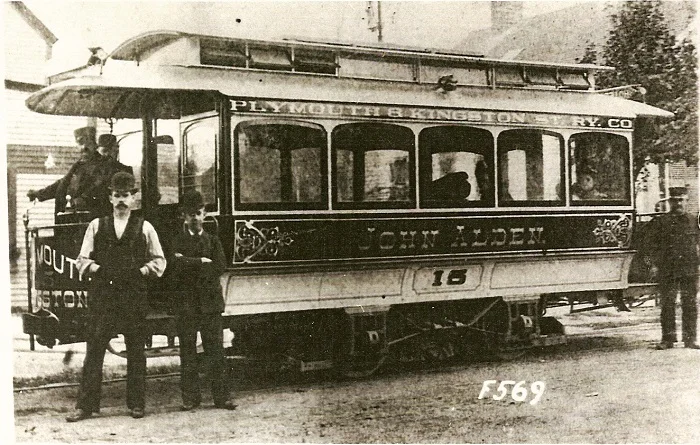
The Plymouth & Kingston, founded in 1886, was the first name of the enterprise that has long been called the Plymouth & Brockton.
From Robert Whitcomb’s “Digital Diary,’’ in GoLocal24.com
An article in The Globe by Mark Pothier, an editor there, about the Plymouth & Brockton Street Railway Co. (a charming old name), which serves many of Boston’s southern suburbs and Cape Cod, brought back my memories of traveling on the P&B’s buses between Boston and the South Shore when I had summer jobs in high school and college. Mr. Pothier, for his part, has been commuting on the P&B since 2017, after often-nightmarish car commuting that began in 2003.
Back in the late ‘60s, the traffic on the roads to Boston, especially the Southeast Expressway (which the radio folks often called “The Distressway’’), was awful. It’s probably worse now, as Greater Boston’s population and wealth have grown. There is, it is true, commuter rail service again on the South Shore, but it’s more expensive than the bus.
While the buses, like the cars, also get gridlocked, at least you can read, snooze and brood on them, and if your bus gets into an accident, at least it isn’t your fault. The bus motion sometimes produces a touch of car sickness in some of us, and they tend to lurch, but still…
My question is whether private commuter bus lines might help supplement in more places the buses of such public-transportation agencies as the Rhode Island Public Transit Authority and the MBTA. And perhaps they could offer onboard perks, such as drinks, snacks and newspapers and magazines (if any such pubs survive). Anything to make a better and denser transportation system for those unwilling or unable to drive.
Stationary movie film

“From the Small Hours,’’ by Ben Parks, in the group show “Everything Is Still: Photographers Working in Motion Picture Film,’’ through Aug. 11 at the Southern Vermont Arts Center, Manchester (a rich and fancy town). The show looks at the the long tradition of photographers using movie film for their craft.
Trying to fine tune a salt marsh

From Robert Whitcomb’s “Digital Diary,’’ in GoLocal24.com
WBUR, one of the two major NPR stations in Boston (the other is WGBH), ran a nice story July 2 about efforts to improve New England’s largest salt marsh, in Massachusetts’s northeast corner, in the Parker River National Wildlife Refuge. Over the years, farmers, to encourage the growing of salt-marsh hay for livestock, and other local residents seeking to control the mosquito population, had ditches dug to drain what was seen as excess water from the marsh. But, says WBUR reporter Miriam Wasser, that did some damage to some creatures and the marsh’s general health and so some of its drainage ditches were blocked.
But wait! Maybe they went overboard. So, as wildlife biologist Nancy Pau told Ms. Wasser:
"Our concern about too much draining has shifted, and the concern now is that the marsh is getting too much flooding," she says. “It’s important for the marsh to get flooded, but also for the water to come back off. Anything that interrupts either of those two processes can negatively impact the marsh," which is a buffer against sea-level rise. Among the negative effects of bad water flow are the spread of algae, which can kill other life. So now some of those ditch plugs are being removed, letting water behind them to go to the Plum Island River. It’s a tricky balancing act.
As the tide rises and falls, marsh grass traps sentiment, which builds up the peat out of which the grass grows. This most dramatically helps protect the coast from storm surges in hurricanes and nor’easters.
Scientists continue to learn more about wetlands biology and geology, and how to adjust “marsh management’’ to maximize these wetlands’ biological health and their role as buffers against sea-level rise and coastal erosion. When I was a boy living very close to salt marshes most of us mostly saw them as homes for birds and the source of strong, rather unpleasant smells. But biologists know a lot more now of just how important coastal wetlands are to wildlife, including the shellfish and finfish we eat. The writer and marine biologist Rachel Carson, author of The Edge of the Sea, The Sea Around Us and the world-historical Silent Spring, would presumably be pleased by the progress. She focused her work for many years on the New England coast. But we need to know a lot more about how these ecological systems work.
In any event, wetlands overseers along the whole New England coast might learn some things from the restoration efforts at the beautiful Parker River Wildlife Refuge
To see Ms. Wasser’s story, please hit this link.
Felicia Nimue Ackerman: 'I have another scheme'

National Donor Monument, Naarden, the Netherlands
Rose and Blue
(First appeared in Ragged Edge Online)
My hospice room is rose and blue.
The blue is like the sky.
They think that if you're happy here,
You'll be content to die.
They proffer comfort, warmth, and peace,
All shining like the sun.
They strive to meet your every need.
They meet all needs but one.
So now I have another scheme,
My object all sublime.
I've gotten on a transplant list,
And so I bide my time.
Felicia Nimue Ackerman is a Providence-based poet and essayist and a professor of philosophy at Brown University.

St Christopher's Hospice, in South London.
— Photo by Stephen Craven

Llewellyn King: The electric-plane era gains altitude

NASA developed the X-57 Maxwell electric plane from a Tecnam P2006T.
The aviation industry — from the backyard inventors to the giants like Boeing and Airbus — are all feverishly working on electric airplanes. The sparks are flying. The new age of flight has taken off.
Erik Lindbergh, grandson of Charles Lindbergh, calculates that 200 firms of all sizes are working on electric aircraft, reminiscent of the early days of both flight and automobiles.
Lindbergh, an accomplished pilot, who replicated his ancestor’s 1927 Atlantic solo crossing in 2002, in a single engine plane, is an avid electric aircraft proponent and developer.
Across the Atlantic in Lausanne, Switzerland, another aviation giant, Andre Borschberg, famous for his around-the-world flight in the solar-powered Solar Impulse in 2016, has just demonstrated an electric flight trainer, the H55, that is operational and being offered to flight schools around the world. It was rolled out at a press event last month.
The destination is always the same, but the paths differ.
The goal is to say farewell to noisy, polluting planes and to usher in environmentally acceptable ones. Even The Economist, a pro-business, pro-personal choice magazine with a global readership, has recently railed against the pollution from airliners and criticized the use of private jets and first-class travel. Aviation is estimated to add up to 5 percent to the greenhouse gas being pushed into the atmosphere. The real problem is that jets lay it down where it does the most damage: at 30,000 feet and above.
To those who live near airports whether it is in Arlington, Va.,, San Diego or London, noise is a real and constant problem.
It will be decades before large jet liners are replaced with electric propulsion, but for light aircraft and for a new kind of flying, involving what Lindbergh calls “flying cars,” the future begins now.
Lindbergh tells me he is working with a major automobile company on what will be a vertical takeoff and landing, flying car, aka airplane. Enthusiasts have dreamed about such a vehicle since the Wright Brothers.
Borschberg, with an enormous amount of firsthand knowledge about using electricity in propulsion, acquired in his spectacular around-the-world flight with co-pilot Bertrand Piccard, is using the experience gained with Solar Impulse in the H55. It is the first generation of trainer: good today, better tomorrow. It also gives suppliers, like Siemens — which is developing electric aviation-specific motors — to evolve their products. The H55 buys its components.
Borschberg says the flight trainer market for a two-seater simple aircraft is large and expanding, particularly in Asia. “There is a pilot shortage all over the world,” he told me.
The limitation of the H55 and other light electric airplanes, including those made in Slovenia, is range. The H55 has only 90 minutes of endurance because of the limits of battery technology. You had better have landed or you will be out of juice; up, up and away having become down, down and dismay. OK for one-hour flight training, but not for those cross-country flights that trainee pilots must make, at least in the United States.
For that reason, Lindbergh is promoting, through his company VerdeGo Aero, a hybrid with a gasoline engine and electric motors. While not a pure electric play, this will perform bridging, much as hybrids have in the car market.
Elsewhere, there is huge excitement about all-electric air taxis and many companies, including Uber, are concentrating on these. In fact, Uber ties eventual financial success to driverless air taxis.
Lindbergh says money is pouring into the electric aircraft field with rich individuals, including Larry Page, co-founder of Google, leading the way. Pure electric drones (like the air taxis, but not designed to carry passengers) are the darling of Amazon founder Jeff Bezos.
The new airplanes are of various shapes and sizes. Electricity allows you to have many propulsion points, many propellers or one; propellers at the back or the front, and even to have jet equivalent with propellers forcing air into a tunnel to create thrust.
The sky’s the limit, you might say, if batteries catch up with soaring hopes.
On Twitter: @llewellynking2
Llewellyn King is executive producer and host of White House Chronicle, on PBS. He’s based in Rhode Island and Washington, D.C.
A guide to the Ivy League

Advertisement
After over 20 years as a professional writer, editor, publisher and “pen for hire,” I have composed my new book Lions, Tigers, and…Bulldogs?: An unofficial guide to the legends and lore of the Ivy League. It is officially scheduled to be published by Fighting Quaker Books in August. However, you can go to www.lionstigersbulldogs.com to order the book or respond to weekly trivia contests for a chance to WIN a copy. From launch date (be sure to follow facebook.com/lionstigersbulldogs for information) through August 20, the book is available at a presale price of just $8 (one for each Ivy League school)!
In addition to tons of trivia about the Ancient Eight, the book and website will offer interesting information about the history of academia and college sports in America, as well as a veritable who’s who of famous graduates (and almost graduates). So if your students or children need a bit of a boost to get them thinking about and striving for college, Lions, Tigers, and…Bulldogs? can be a fun way to start the conversation.
A book party is scheduled for Sept. 14 at the New England Mobile Book Fair in Newton, Mass.
Matt Robinson, University of Pennsylvania, Class of 1996
A book party is scheduled for Sept. 14 at the New England Mobile Book Fair in Newton, Mass.