
Vox clamantis in deserto






Counselor boot camp
From Robert Whitcomb’s “Digital Diary,’’ in GoLocal24.com
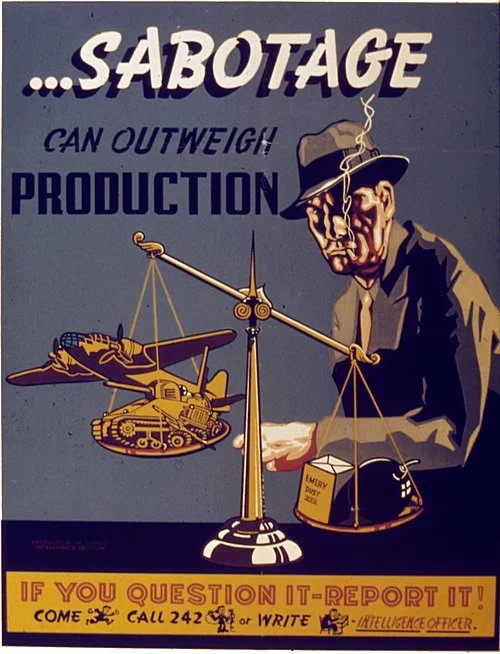
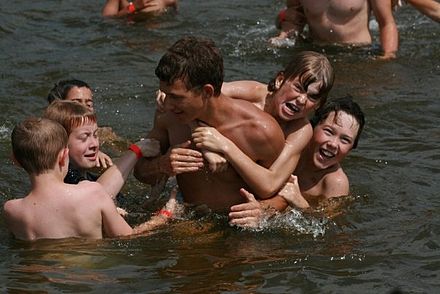
At rather the last minute, when a promised summer job before my freshman year of college fell through, I took a job as a counselor in the summer of 1966 at a Boys and Girls Club camp in Plymouth, Mass., serving underprivileged kids. It was in a piney and swampy area best suited for cranberry cultivation, with mosquitos that seemed in my dreams bigger than helicopters. There were two counselors in each hot and musty cabin to oversee 12 kids bunking there. There were of course ceaseless rounds of activities, with the aim of limiting the mayhem by the campers, most of whom, I recall, came from Boston’s inner city.
The kids were mostly young adolescents, and more than a few were bigger than me and well acquainted with violence. So I faced a challenge keeping them in line, as I would later as, briefly, a young high-school schoolteacher in a class of 30 kids. I found that the trick was to deepen and make louder my voice, and imply to troublemakers that we’d have them shipped back pronto to the mean streets if they didn’t curb their behavior. I learned a valuable lesson in the importance of presentation (however weak my actual confidence in that situation). Sort of a variant of the old line that “if you can fake sincerity, you’ve got it made.’’

Chris Powell: Illegals come to U.S. border knowing they may well get in and stay
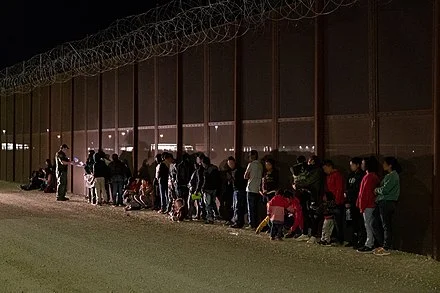
U.S. Border Patrol agents review documents of individuals suspected of attempted illegal entry this year.
Illegal immigrants to the United States do not come only from Central America. Increasingly they come from all over the world, and as the Reuters news agency reported last week, even from Africa. People are flying from Africa to South America and trudging thousands of miles through jungles, across rivers, and over mountains to sneak across the U.S. border or to present themselves at a port of entry and ask for asylum.
This is not just because life in their native countries is so dangerous, oppressive, or without opportunity. As Reuters reported, it is also -- and essentially -- because they know that if they survive the journey they have a good chance of admittance. They know that the countries they transit won't send them back because it would be expensive and because they are not staying there. Some bring their families because they know that adults accompanied by children are usually admitted to the United States after being given a summons to an immigration court proceeding weeks hence.
Of course hardly anyone so summoned ever shows up. Most disappear into "sanctuary" cities or states.
What is decisive here is the confidence that the United States will not enforce any immigration law, that in effect the country has open borders. The country also has states, like Connecticut, that provide illegal immigrants with identification documents, driver's licenses, college tuition discounts, and other assistance and obstruct their deportation if they break immigration law long enough. California now offers illegal immigrants free medical insurance as well.
The detention centers in which some illegal immigrants are being held have been likened to concentration camps, but they are no deterrent, for most people entering the country illegally are not held there. Most get through.
These people are not to be disparaged or vilified as President Trump has done. Their courage and initiative are admirable, the circumstances they leave behind pathetic or even terrifying. But most are economic refugees for whom asylum claims are bogus, even if most immigration here long has been economic.
Border enforcement is the definition of a country and open borders are the end of any country. So the first objective of immigration policy must be to regain control of the borders. Unfortunately the crudeness of the president, a Republican, seems to have driven many Democrats to oppose him on border control.
Last week House Speaker Nancy Pelosi led a Democratic campaign to thwart immigration enforcement even against people who long have been defying deportation orders. The Democratic position is that anyone who gets into the country illegally, makes it to a "sanctuary" city or state, and stays there long enough should be above the law, and last week Connecticut U.S. Sen. Richard Blumenthal actually introduced legislation to that effect. Many Democrats also argue that states should nullify federal immigration law as some states did years ago to nullify federal civil rights law.
If its border was controlled again the United States still would have an extremely liberal immigration policy -- as in the name of humanity and the country's principles it [ITALICS] should [END ITALICS] have a liberal policy, not the skills-based policy advocated by the president.
But the recent hardships, cruelty, injury, and death inflicted on immigrants lately are not Trump's fault but the fault of open borders.
Chris Powell is a columnist for the Journal Inquirer, in Manchester, Conn.
Private buses for mass transit
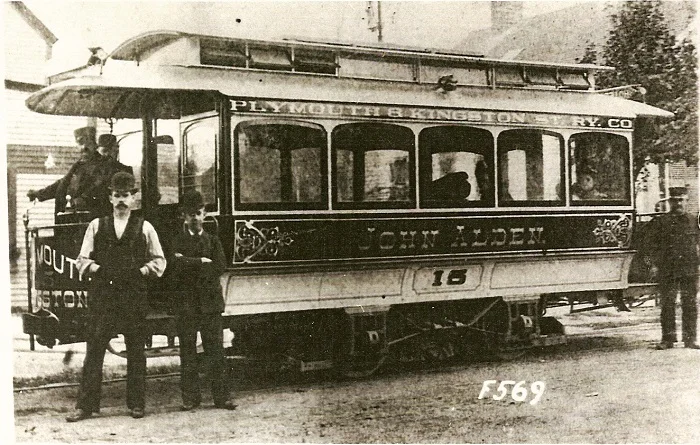
The Plymouth & Kingston, founded in 1886, was the first name of the enterprise that has long been called the Plymouth & Brockton.
From Robert Whitcomb’s “Digital Diary,’’ in GoLocal24.com
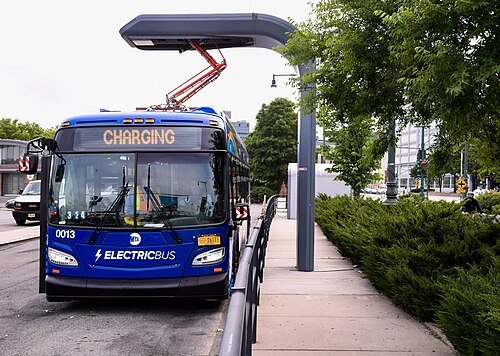
An article in The Globe by Mark Pothier, an editor there, about the Plymouth & Brockton Street Railway Co. (a charming old name), which serves many of Boston’s southern suburbs and Cape Cod, brought back my memories of traveling on the P&B’s buses between Boston and the South Shore when I had summer jobs in high school and college. Mr. Pothier, for his part, has been commuting on the P&B since 2017, after often-nightmarish car commuting that began in 2003.
Back in the late ‘60s, the traffic on the roads to Boston, especially the Southeast Expressway (which the radio folks often called “The Distressway’’), was awful. It’s probably worse now, as Greater Boston’s population and wealth have grown. There is, it is true, commuter rail service again on the South Shore, but it’s more expensive than the bus.
While the buses, like the cars, also get gridlocked, at least you can read, snooze and brood on them, and if your bus gets into an accident, at least it isn’t your fault. The bus motion sometimes produces a touch of car sickness in some of us, and they tend to lurch, but still…
My question is whether private commuter bus lines might help supplement in more places the buses of such public-transportation agencies as the Rhode Island Public Transit Authority and the MBTA. And perhaps they could offer onboard perks, such as drinks, snacks and newspapers and magazines (if any such pubs survive). Anything to make a better and denser transportation system for those unwilling or unable to drive.
Stationary movie film

“From the Small Hours,’’ by Ben Parks, in the group show “Everything Is Still: Photographers Working in Motion Picture Film,’’ through Aug. 11 at the Southern Vermont Arts Center, Manchester (a rich and fancy town). The show looks at the the long tradition of photographers using movie film for their craft.
Trying to fine tune a salt marsh
From Robert Whitcomb’s “Digital Diary,’’ in GoLocal24.com
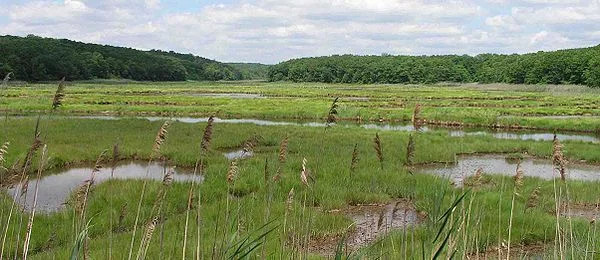
WBUR, one of the two major NPR stations in Boston (the other is WGBH), ran a nice story July 2 about efforts to improve New England’s largest salt marsh, in Massachusetts’s northeast corner, in the Parker River National Wildlife Refuge. Over the years, farmers, to encourage the growing of salt-marsh hay for livestock, and other local residents seeking to control the mosquito population, had ditches dug to drain what was seen as excess water from the marsh. But, says WBUR reporter Miriam Wasser, that did some damage to some creatures and the marsh’s general health and so some of its drainage ditches were blocked.
But wait! Maybe they went overboard. So, as wildlife biologist Nancy Pau told Ms. Wasser:
"Our concern about too much draining has shifted, and the concern now is that the marsh is getting too much flooding," she says. “It’s important for the marsh to get flooded, but also for the water to come back off. Anything that interrupts either of those two processes can negatively impact the marsh," which is a buffer against sea-level rise. Among the negative effects of bad water flow are the spread of algae, which can kill other life. So now some of those ditch plugs are being removed, letting water behind them to go to the Plum Island River. It’s a tricky balancing act.
As the tide rises and falls, marsh grass traps sentiment, which builds up the peat out of which the grass grows. This most dramatically helps protect the coast from storm surges in hurricanes and nor’easters.
Scientists continue to learn more about wetlands biology and geology, and how to adjust “marsh management’’ to maximize these wetlands’ biological health and their role as buffers against sea-level rise and coastal erosion. When I was a boy living very close to salt marshes most of us mostly saw them as homes for birds and the source of strong, rather unpleasant smells. But biologists know a lot more now of just how important coastal wetlands are to wildlife, including the shellfish and finfish we eat. The writer and marine biologist Rachel Carson, author of The Edge of the Sea, The Sea Around Us and the world-historical Silent Spring, would presumably be pleased by the progress. She focused her work for many years on the New England coast. But we need to know a lot more about how these ecological systems work.
In any event, wetlands overseers along the whole New England coast might learn some things from the restoration efforts at the beautiful Parker River Wildlife Refuge
To see Ms. Wasser’s story, please hit this link.
Felicia Nimue Ackerman: 'I have another scheme'

National Donor Monument, Naarden, the Netherlands
Rose and Blue
(First appeared in Ragged Edge Online)
My hospice room is rose and blue.
The blue is like the sky.
They think that if you're happy here,
You'll be content to die.
They proffer comfort, warmth, and peace,
All shining like the sun.
They strive to meet your every need.
They meet all needs but one.
So now I have another scheme,
My object all sublime.
I've gotten on a transplant list,
And so I bide my time.
Felicia Nimue Ackerman is a Providence-based poet and essayist and a professor of philosophy at Brown University.

St Christopher's Hospice, in South London.
— Photo by Stephen Craven

Llewellyn King: The electric-plane era gains altitude

NASA developed the X-57 Maxwell electric plane from a Tecnam P2006T.
The aviation industry — from the backyard inventors to the giants like Boeing and Airbus — are all feverishly working on electric airplanes. The sparks are flying. The new age of flight has taken off.
Erik Lindbergh, grandson of Charles Lindbergh, calculates that 200 firms of all sizes are working on electric aircraft, reminiscent of the early days of both flight and automobiles.
Lindbergh, an accomplished pilot, who replicated his ancestor’s 1927 Atlantic solo crossing in 2002, in a single engine plane, is an avid electric aircraft proponent and developer.
Across the Atlantic in Lausanne, Switzerland, another aviation giant, Andre Borschberg, famous for his around-the-world flight in the solar-powered Solar Impulse in 2016, has just demonstrated an electric flight trainer, the H55, that is operational and being offered to flight schools around the world. It was rolled out at a press event last month.
The destination is always the same, but the paths differ.
The goal is to say farewell to noisy, polluting planes and to usher in environmentally acceptable ones. Even The Economist, a pro-business, pro-personal choice magazine with a global readership, has recently railed against the pollution from airliners and criticized the use of private jets and first-class travel. Aviation is estimated to add up to 5 percent to the greenhouse gas being pushed into the atmosphere. The real problem is that jets lay it down where it does the most damage: at 30,000 feet and above.
To those who live near airports whether it is in Arlington, Va.,, San Diego or London, noise is a real and constant problem.
It will be decades before large jet liners are replaced with electric propulsion, but for light aircraft and for a new kind of flying, involving what Lindbergh calls “flying cars,” the future begins now.
Lindbergh tells me he is working with a major automobile company on what will be a vertical takeoff and landing, flying car, aka airplane. Enthusiasts have dreamed about such a vehicle since the Wright Brothers.
Borschberg, with an enormous amount of firsthand knowledge about using electricity in propulsion, acquired in his spectacular around-the-world flight with co-pilot Bertrand Piccard, is using the experience gained with Solar Impulse in the H55. It is the first generation of trainer: good today, better tomorrow. It also gives suppliers, like Siemens — which is developing electric aviation-specific motors — to evolve their products. The H55 buys its components.
Borschberg says the flight trainer market for a two-seater simple aircraft is large and expanding, particularly in Asia. “There is a pilot shortage all over the world,” he told me.
The limitation of the H55 and other light electric airplanes, including those made in Slovenia, is range. The H55 has only 90 minutes of endurance because of the limits of battery technology. You had better have landed or you will be out of juice; up, up and away having become down, down and dismay. OK for one-hour flight training, but not for those cross-country flights that trainee pilots must make, at least in the United States.
For that reason, Lindbergh is promoting, through his company VerdeGo Aero, a hybrid with a gasoline engine and electric motors. While not a pure electric play, this will perform bridging, much as hybrids have in the car market.
Elsewhere, there is huge excitement about all-electric air taxis and many companies, including Uber, are concentrating on these. In fact, Uber ties eventual financial success to driverless air taxis.
Lindbergh says money is pouring into the electric aircraft field with rich individuals, including Larry Page, co-founder of Google, leading the way. Pure electric drones (like the air taxis, but not designed to carry passengers) are the darling of Amazon founder Jeff Bezos.
The new airplanes are of various shapes and sizes. Electricity allows you to have many propulsion points, many propellers or one; propellers at the back or the front, and even to have jet equivalent with propellers forcing air into a tunnel to create thrust.
The sky’s the limit, you might say, if batteries catch up with soaring hopes.
On Twitter: @llewellynking2
Llewellyn King is executive producer and host of White House Chronicle, on PBS. He’s based in Rhode Island and Washington, D.C.
A guide to the Ivy League

Advertisement
After over 20 years as a professional writer, editor, publisher and “pen for hire,” I have composed my new book Lions, Tigers, and…Bulldogs?: An unofficial guide to the legends and lore of the Ivy League. It is officially scheduled to be published by Fighting Quaker Books in August. However, you can go to www.lionstigersbulldogs.com to order the book or respond to weekly trivia contests for a chance to WIN a copy. From launch date (be sure to follow facebook.com/lionstigersbulldogs for information) through August 20, the book is available at a presale price of just $8 (one for each Ivy League school)!
In addition to tons of trivia about the Ancient Eight, the book and website will offer interesting information about the history of academia and college sports in America, as well as a veritable who’s who of famous graduates (and almost graduates). So if your students or children need a bit of a boost to get them thinking about and striving for college, Lions, Tigers, and…Bulldogs? can be a fun way to start the conversation.
A book party is scheduled for Sept. 14 at the New England Mobile Book Fair in Newton, Mass.
Matt Robinson, University of Pennsylvania, Class of 1996
A book party is scheduled for Sept. 14 at the New England Mobile Book Fair in Newton, Mass.
Prov. Committee on Foreign Relations speakers for the new season

July 13, 2019
To members and friends of the Providence Committee on Foreign Relations (thepcfr.org).
Below is the tentative list of our dinner speakers (at our venue, the Hope Club, in Providence) for our Sept. 2019-June 2020 season. (Suggestions welcome!) There will be refinements in topics, and we’re trying to remain somewhat flexible to respond to news and other events. (Just completed-season speaker list is also below.)
Please Email pcfremail@gmail.com with any questions. Information on dues and dinner cost is at bottom of this memo.
Our first speaker, on Wednesday, Sept. 11, is to be Mackubin Thomas Owens, who will discuss America’s current military and geo-strategic posture in the world. A retired Marine Corps colonel and combat veteran of the Vietnam War, he’s editor of Orbis, the journal of the Foreign Policy Research Institute, of which he is a senior fellow, and is a former dean of academics for the Institute of World Politics, in Washington.
Dr. Owens is also a former editor-in-chief of the defense journal Strategic Review.
He has served as the associate dean of academics for electives and directed research, and professor of strategy and force planning, at the U.S. Naval War College, as an adjunct professor of international relations at Boston University and as a contributing editor to National Review, among his many other academic and journalistic activities.
xxx
Our next speaker comes Wednesday, Oct, 2, with Jonathan Gage, who will talk about how coverage of such international economic stories as trade wars has changed over the years, in part because of new technology, and how that coverage itself changes events.
Mr. Gage has had a very distinguished career in publishing and international journalism. He has served as publisher and CEO of Institutional Investor magazine, as publisher of strategy+business magazine, as a director at Booz Allen Hamilton and Booz & Company, as enterprise editor for Bloomberg News and finance editor of the Paris-based International Herald Tribune (of sainted memory) and as a senior writer for the Boston Consulting Group.
He is a trustee, and former vice chairman, of the Carnegie Council for Ethics in International Affairs.
He has written or edited for such publications as The New York Times, The Washington Post, The Los Angeles Times, Newsweek and Psychology Today magazine.
xxx
On Wednesday, Oct. 23, comes Ambassador Patrick Duddy, who will talk about Venezuelan internal political and economic conditions and relations with the U.S., Cuba, Russia and other nations. Mr. Duddy, currently director of Duke University’s center for Latin American and Caribbean Studies, served as American ambassador to Venezuela during some of the George W. Bush and Obama administrations. The late President Hugo Chavez expelled him but eight months later he resumed his ambassadorship. He finished that assignment in 2010.
Before his ambassadorships, Mr. Duddy served as Deputy Assistant Secretary of State (DAS) for the Western Hemisphere, responsible for the Office of Economic Policy and Summit Coordination, which included the hemispheric energy portfolio, as well for the Offices of Brazil/ Southern Cone Affairs and of Caribbean Affairs. During his tenure as DAS, he played a lead role in coordinating U.S. support for the restoration of democracy in Haiti.
xxx
On Wednesday, Nov. 6, comes Tweed Roosevelt, president of the Theodore Roosevelt Association and great-grandson of that president. He’ll talk about how TR’s foreign policy, which was developed as the U.S. became truly a world power, affected subsequent presidents’ foreign policies. Mr., Roosevelt is also chairman of Roosevelt China Investments, a Boston firm.
In 1992, Mr. Roosevelt rafted down the 1,000-mile Rio Roosevelt in Brazil—a river previously explored by his great-grandfather in 1914 in the Roosevelt-Rondon Scientific Expedition and then called the Rio da Duvida, the River of Doubt. The former president almost died on that legendary and dangerous trip.
xxx
On Thursday, Dec. 5, we’ll welcome Dr. Elizabeth H. Prodromou, who directs the Initiative on Religion, Law, and Diplomacy, and is visiting associate professor of conflict resolution, at The Fletcher School of Law and Diplomacy at Tufts University. She titles her talk "God, Soft Power, and Geopolitics: Religion as a Tool for Conflict Prevention/Generation".
Dr. Prodromou is also a non-resident senior fellow and co-chair of the Working Group on Christians and Religious Pluralism, at the Center for Religious Freedom at the Hudson Institute, and is also non-resident fellow at The Hedayah International Center of Excellence for Countering Violent Extremism, based in Abu Dhabi.
Prodromou is former vice chair and commissioner on the U.S. Commission on International Religious Freedom and was a member of the U.S. Secretary of State’s Religion & Foreign Policy Working Group. Her research focuses on geopolitics and religion, with particular focus on the intersection of religion, democracy, and security in the Middle East and Southeastern Europe. Her current research project focus on Orthodox Christianity and geopolitics, as well as on religion and migration in Greece.
xxx
On Wednesday, Jan. 8, comes Michael Fine, M.D., who will talk about his novel Abundance, set in West Africa, and the challenges of providing health care in the Developing World. He will speak on: “Plagues and Pestilence: What we learned (or didn't) from Ebola about Foreign Policy and International Collaboration in the face of epidemics and outbreaks’’
xxx
On Wednesday, Feb. 5, we will welcome as speaker PCFR member Cornelia Dean, book author, science writer and former science editor of The New York and internationally known expert on coastal conditions. She’ll talk how rising seas threaten coastal cities around the world and what they can do about it.
xxx
On Wednesday, March 18, comes Stephen Wellmeier, managing director of Poseidon Expeditions. He’ll talk about the future of adventure travel and especially about Antarctica, and its strange legal status.
xxx
On Wednesday, April 29, comes Trita Parsi, a native of Iran and founder and current president of the National Iranian American Council and author of Treacherous Alliance and A Single Roll of the Dice. He regularly writes articles and appears on TV to comment on foreign policy. He, of course, has a lot to say about U.S- Iranian relations and a lot more.
Mr. Parsi is a co-founder of a new think tank, financed by an unlikely partnership of the right wing Koch Brothers and the left-of-center George Soros. It’s called the Quincy Institute for Responsible Statecraft and dedicated to helping craft a new U.S. foreign policy that would be far less interventionist and put an end to America’s “endless foreign wars.’’
xxx
On Wednesday, May 6, we’ll welcome Serenella Sferza, a political scientist and co-director of the program on Italy at MIT’s Center for International Studies, who will talk about the rise of right-wing populism and other developments in her native land.
She has taught at several US and European universities, and published numerous articles on European politics. Serenella's an affiliate at the Harvard De Gunzburg Center for European Studies and holds the title of Cavaliere of the Ordine della Stella d'Italia conferred by decree of the President of the Republic for the preservation and promotion of national prestige abroad.
June: Keeping open for now but possibly something on China.
Speakers in the 2018-2019 season of the Providence Committee on Foreign Relations included:
Miguel Head, who spent the past decade as a senior adviser to the British Royal Family, on what it was like.
James Nealon, the former U.S. ambassador to Honduras and former assistant secretary of state, on the migrant crisis flowing onto our southern border.
Walter A. Berbrick, founding director of the Arctic Studies Group at the U.S. Naval War College, on “An Arctic Policy for the Ages: Strengthening American Interests at Home and Abroad
Phillip Martin, senior investigative reporter for WGBH News and a contributing reporter to Public Radio International’s The World, a co-production of WGBH, the BBC and PRI -- a program that he helped develop as a senior producer in 1995 – on the Indian caste system there and here.
Paulo Sotero, the director of the Wilson Center’s Brazil Institute on the future of that huge nation.
Historian Fred Zilian on the “Real Thucydides Trap,”—an alternate to Graham Allison’s—which threatens America’s leadership of the free world.
Dr. Teresa Chahine on international social entrepreneurship.
London-based Journalist and broadcaster Michael Goldfarb on Brexit.
Sarah C.M. Paine of the U.S. Naval War College on the “Geopolitics Underlying U.S. Foreign Policy.’’
Douglas Hsu, senior Taiwan diplomat, on tension and ties with Mainland, and Taiwan’s relations with the U.S.
Prof. James Green, a leading expert on Brazil, where he lived for eight years, and former president of the Brazilian Studies Association, on that nation’s new right-wing populist president.
xxx
PCFR Dues & Dinner Cost
Sustaining - Dues remain $120.
We urge as many members as possible to be sustaining members so that we can continue to try to improve our programs, and we plead with you to pay your dues as early as possible so that we can properly budget for the new season!
We have no endowment. Dues pay for the speakers. The dinner charge is a passthrough to the Hope Club.
Regular Member - Dues remain $90.
Spousal, for spouses of members - Dues remain $50 in addition to the regular or sustaining membership.
Student - Current students may join free of charge.
Dinner price is being cut to $45 a person in the new season from $50 in the just-completed one.
Please check the PCFR Web site – thepcfr.org – on where to send dues checks.
'Split asunder'

— Photo by Bidgee
Now on the hills I hear the thunder mutter...
Nearer and nearer rolls the thunder-clap,—
You can hear the quick heart of the tempest beat....
Look! look! that livid flash!
And instantly follows the rattling thunder,
As if some cloud-crag, split asunder,
Fell, splintering with a ruinous crash,
On the Earth, which crouches in silence under;
And now a solid gray wall of rain
Shuts off the landscape, mile by mile...
— "Summer Storm," by James Russell Lowell (1819-1891), Massachusetts-based poet and diplomat
A Friendly sail
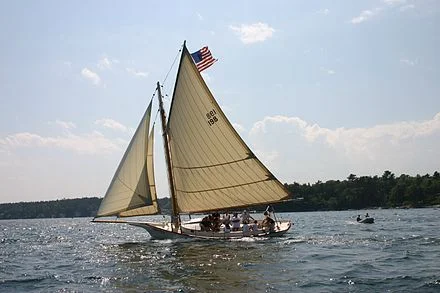
Friendship sloop (named for the Maine where they originated
“What is there about the plodding, nodding Friendship sloop, close-reaching so sturdily, so comfortably, against the summer sou-wester off the coast of her native Maine, that gives such a friendly tug to the heartstrings of the sailor?’’
Maybe it’s that “they don’t look like yachts and they don’t sail like yachts because they were originally fishing sloops, designed originally for wresting a living from the sea.’’
— Joseph E. Garland, in Arthur Griffin’s New England: The Four Seasons
The wheel within the wheel

“Massachusetts has been the wheel within New England, and Boston the wheel within Massachusetts. Boston therefore is often called the ‘hub of the world,’ since it has been the source and fountain of the ideas that have reared and made America.’’
— The Rev. F. B. Zinckle, in Last Winter in the United States (1868).
'Walling in or walling out'?

— Photo by TROO1
Something there is that doesn't love a wall,
That sends the frozen-ground-swell under it,
And spills the upper boulders in the sun;
And makes gaps even two can pass abreast.
The work of hunters is another thing:
I have come after them and made repair
Where they have left not one stone on a stone,
But they would have the rabbit out of hiding,
To please the yelping dogs. The gaps I mean,
No one has seen them made or heard them made,
But at spring mending-time we find them there.
I let my neighbor know beyond the hill;
And on a day we meet to walk the line
And set the wall between us once again.
We keep the wall between us as we go.
To each the boulders that have fallen to each.
And some are loaves and some so nearly balls
We have to use a spell to make them balance:
'Stay where you are until our backs are turned!'
We wear our fingers rough with handling them.
Oh, just another kind of outdoor game,
One on a side. It comes to little more:
There where it is we do not need the wall:
He is all pine and I am apple orchard.
My apple trees will never get across
And eat the cones under his pines, I tell him.
He only says, 'Good fences make good neighbors.'
Spring is the mischief in me, and I wonder
If I could put a notion in his head:
'Why do they make good neighbors? Isn't it
Where there are cows? But here there are no cows.
Before I built a wall I'd ask to know
What I was walling in or walling out,
And to whom I was like to give offense.
Something there is that doesn't love a wall,
That wants it down.' I could say 'Elves' to him,
But it's not elves exactly, and I'd rather
He said it for himself. I see him there
Bringing a stone grasped firmly by the top
In each hand, like an old-stone savage armed.
He moves in darkness as it seems to me,
Not of woods only and the shade of trees.
He will not go behind his father's saying,
And he likes having thought of it so well
He says again, '‘Good fences make good neighbors’’.t
— “Mending Wall,’’ by Robert Frost
Newport Harbor is 'a public trust'
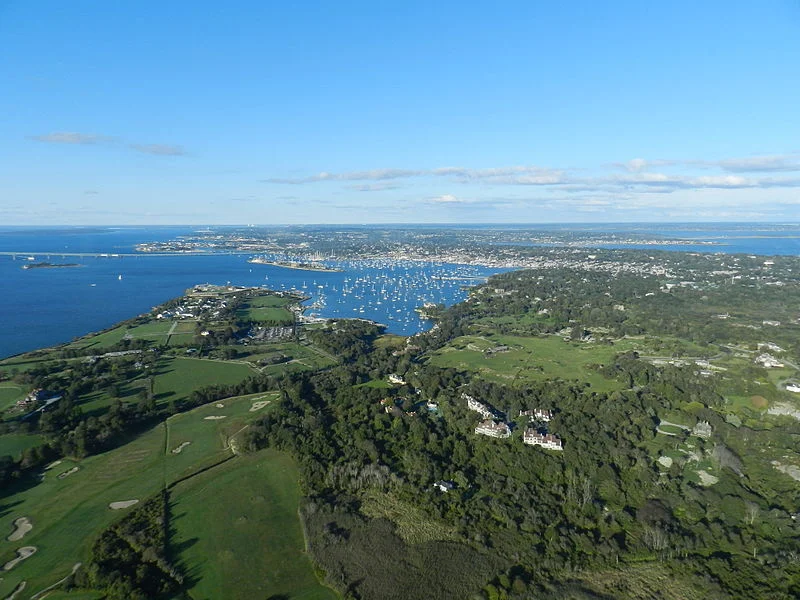
Boat-filled Newport Harbor in the upper center of the picture,
— Photo by MVASCO
From Robert Whitcomb’s “Digital Diary,’’ in GoLocal24.com
The rich are doing just fine pretty much everywhere – e.g., they effectively block off much of the coast to the peasantry with increasingly mammoth mansions and now they lay claim to part of the bottom of Newport Harbor: The New York Yacht Club makes available for sale – or rent? -- 17 commercial moorings only to club members and their guests.
I’m with the Rhode Island Coastal Resources Management Council on this: The bottom of Newport Harbor is clearly state-owned and a private entity has no right to treat it as its own.
Deputy CRMC Director Jeffrey Willis wrote:
“A mooring permit is a government-issued temporary license given to a specific person or entity, for a specific duration, to utilize a specific area of the public’s waters for a specific private purpose. The permits do not confer property rights, perpetual or otherwise, on their holders and the holders may not assign, transfer or sell them.”
“It’s not necessarily just about the New York Yacht Club. It’s about any given group that wants to exclude people. The harbor land is held as a public trust for the general public.”
The NYYC’s mooring imperialism takes privatization another step too far.
Networking

“Network 2’’ (photography) , by Leah Abrahams, in the “New England Collective X Regional Juried Exhibition,’’ at Galatea Fine Art, Boston, July 31-Sept. 1.
Chris Powell: Looking for a freedom-of-information hero in Conn.

At its annual meeting the Connecticut Council on Freedom of Information usually presents an award to a public official who has performed outstanding service to the right to know in the past year. But no such award was presented at the annual meeting a few weeks ago, for the council could not find such a hero.
As reported comprehensively last Sunday by Gabriella DeBenedictis in the Waterbury Republican-American, freedom of information is under attack in Connecticut. Bad as the previous administration was on this issue, Gov. Ned Lamont's administration may be worse, perhaps because the majorities of his party, the Democratic Party, have increased in the General Assembly.
The governor and legislature have just created an agency to disburse as much as $300 million to public education programs, at least $100 million of it state government money, while exempting the agency from freedom-of-information and ethics laws. The agency was prompted by a gift of $100 million from billionaire fund manager Ray Dalio and his wife, Barbara, a sum that has been matched by state appropriation. Another $100 million may be raised for the agency from other rich people. Apparently the Dalios requested the exemption from the FOI and ethics laws, though until now rich people in Connecticut somehow have managed to give money away without impairing open government.
With state officials on its board, the agency may operate as a slush fund for political patronage. Not surprisingly, the agency and its exemptions from accountability were enacted as part of the state budget bill without a public hearing.
A few weeks ago the governor signed and the legislature approved a new contract with the state police union that prohibits public access to complaints against troopers if the police administration finds the complaints false or unverifiable. This will facilitate whitewashes and cover-ups. For years a similar provision in the contract for the state university professors union has obstructed journalistic investigation of sexual harassment and other misconduct.
Approving the concealment provision in the state police contract, the governor and legislature signified that they haven't paid attention to the scandals with the professors or else that they place the interest of unionized government employees above the public interest.
Such provisions are possible only because state law authorizes state employee union contracts to supersede freedom-of-information law. Legislative leaders this year refused even to hold a hearing on repealing the supersedence law. Again legislators served the unions instead of the public.
The governor and legislature this year also enacted a law allowing secret arrests in domestic violence cases when both parties are charged. This will facilitate politics and influence peddling during secret resolution of the charges before they reach court and the defendants are identified. Public officials seeking to conceal their own misconduct will find this especially useful.
This year the legislature also failed to pass a bill proposed by state Rep. Michael Winkler, D-Vernon, to prohibit towns from charging $20 to people who want to make their own scans of public documents, avoiding photocopying charges. Town clerks want the extra revenue. They might as well charge admission to Town Hall.
Will Connecticut have a hero of freedom of information next year? It depends on whether more elected officials realize that good government might be good politics too.
Chris Powell is a columnist for the Journal Inquirer, in Manchester, Conn.
Todd McLeish: Improved outlook for endangered coastal bird
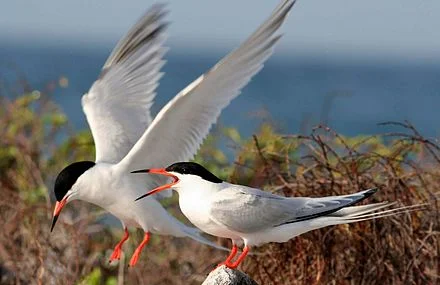
Roseate terns
From ecoRI News (ecori.org)
The North American population of an endangered seabird, most of which nest on a few small islands in Buzzards Bay, is higher than at any time since 1987, providing scientists with a feeling of optimism following a period of decline in the 2000s that had them worried about the birds’ future.
Yet the roseate tern — a gull-like bird with a black cap, pointed wings, and a sharp beak — still faces threats from predators and climate change that require constant vigilance so the recent gains aren’t lost.
Ninety percent of the population nests on three islands: Bird Island and Ram Island in Buzzards Bay, each of which are home to about 1,100 nesting pairs; and Great Gull Island off the eastern end of Long Island, where 1,800 pairs nest. The remaining 400 pairs nest on a dozen islands scattered from Nova Scotia to New York.
“We don’t know what caused the decline, just as we don’t know what’s causing the increase,” said Carolyn Mostello, a coastal waterbird biologist with the Massachusetts Division of Fisheries and Wildlife, who has monitored the terns in Buzzards Bay for more than 20 years. “That makes it really hard to have confidence that the gains are going to be permanent. It doesn’t allow us to relax anything we’re doing.”
Mostello and a team of eight biologists and students are spending almost every day of the breeding season — May through mid-July — monitoring the roseate terns on Bird and Ram islands, as well as on Penikese Island, another island in Buzzards Bay that has a small nesting population. They count and monitor every nest, assess the growth rate of every chick, band as many of the birds as possible, and conduct a variety of research studies. This year they are evaluating whether the banding process impacts the health and breeding success of the birds.
Gulls, which eat the eggs and chicks, are the terns’ primary predator, so the research team does its best to keep gulls from nesting on the islands and discourage them from getting close to the tern nests. Peregrine falcons are also an occasional concern, since they will eat the adult birds, as are any mammals such as mink, raccoons, or rats that somehow find their way to the breeding islands.
Climate change is a growing concern, according to Mostello. Because the islands are very low-lying — for example, Bird Island’s maximum elevation is just 10 feet — erosion and sea-level rise could reduce nesting habitat, and major storms could flood active nests.
Offshore wind turbines are also an increasing threat, especially with hundreds of turbines proposed for the waters just south of the breeding islands.
“Those are areas that the roseates fly through, so we’re really concerned about those projects,” Mostello said. “Even if each turbine doesn’t kill a lot of birds per year, they’ll be operational for a lot of years, and when you have a rare species that’s long-lived and produces few young per year, it starts to knock down the survival rate and could have an impact on the population. Hundreds of turbines could be a big risk to the terns.”
Biologist Carolyn Mostello and her team have been monitoring the terns on Buzzards Bay islands for two decades.
In an effort to boost the birds’ population, MassWildlife teamed with the Army Corps of Engineers and a number of other partners to restore habitat at Bird Island. By filling in some low-lying areas, planting native vegetation, and increasing the height of the seawall, the project has doubled the amount of potential nesting habitat on the 2-acre island.
“Before the restoration, the birds were very crowded, and that resulted in a lot of agonistic interactions,” Mostello said. “Their territories were small, so neighboring adults were attacking other adults and chicks, resulting in lower productivity. Now they can spread out a bit, they’re less aggressive towards each other, and the substrate is better for them. We have more habitat and it’s better habitat.”
A similar habitat-restoration project is in the planning stages for Ram Island.
Despite the improved habitat and recent population increase, Mostello isn’t ready to claim victory for the birds.
“If you have a population that fluctuates a lot — we went from 2,900 pairs to 4,400 pairs in six years — you would want to wait a while to make sure the population was actually stable before you considered them recovered,” she said. “They could be headed for a downturn. The rate of increase has slowed. It could be that we’re headed for a leveling off and a decline. Only time will tell.”
In the meantime, Mostello and her team will continue to spend almost every day of the breeding season keeping an eye on the roseate terns in Buzzards Bay, knowing that their progress could easily be reversed without a regular human presence.
“If we didn’t show up, we might get away with it for a year, but by the second year you’d have predators that knew they could feed uninhibited on the terns, you’d see declines in productivity, and partial or full abandonment of the colony,” Mostello said. “Having a human presence is non-negotiable.
“While we need to continue to shepherd them through the world, we’ll do it with the hope that someday they’ll be self-sufficient and won’t need this level of effort. We’ve been committed to this species for a long time; we have a huge responsibility here in Massachusetts with 50 percent of the continental population here, so we’re not about to slack off and lose the gains that we’ve made.”
Todd McLeish runs a wildlife blog.
Busing mostly a bust

From Robert Whitcomb’s “Digital Diary,’’ in GoLocal24.com
Joe Biden was excoriated by Sen Kamala Harris in the recent debate of Democratic presidential candidates for his opposition in the 1970s to busing ordered by federal judges to “integrate’’ public schools, mostly in cities. Senator Harris perhaps believed or hoped that there aren’t all that many people around who clearly remember what happened with busing.
Well, Biden was generally right. Forced busing was often a disaster, most famously in Boston, for which U.S. District Judge W. Arthur Garrity, a resident of rich, and lily white, Wellesley, ordered a massive busing plan that sent African American students all over the city, via long bus trips. It was a disaster, and not just because it took time from schooling and gave it to transportation and led to racial violence.
It also undermined neighborhood schools and the parent and student commitment they encourage, and intensified “white flight’’ to the suburbs and private schools, which further destabilized the school system.
If only Garrity and his ilk had spent considerable time in poor white (especially South Boston, large parts of Dorchester and Charlestown) and black sections (mostly Roxbury) of Boston, as I did as a reporter for the old Boston Herald Traveler, they would have realized that court-ordered busing would do more harm than good.
Joe Biden, representing Delaware, a state with a large African-American population, mostly in Wilmington, some affluent and middle-class white suburbs around that city and the area south of the Chesapeake & Delaware Canal, which had more in common with the Deep South than with the New Jersey-like region to the north of the canal, understood the sociological complexities of busing more than most politicians. He never was a racist, though like other senators had to work with racist Southern senators to get important legislation through. (I worked for the News Journal, Delaware’s dominant newspaper, for part of 1975 and met Biden a few times.) The area “South of the Canal’’ was a trip! One local pol down there asked me when the News Journal “is going to start hiring Americans’’ – in a nasty reference to the paper’s superb political writer Ralph Moyed, who happened to be Jewish.
Jeff Jacoby, The Boston Globe’s conservative columnist, usefully reviewed Boston’s busing mess in a July 2 article. He noted in it:
“In 1982, a Globe poll found that only 14 percent of black Boston parents still favored busing. The overwhelming majority preferred a free-choice plan, allowing parents to send their children to any public school in the city. In practice, that would have meant schools their kids could walk to.’’
“Busing made everything worse. Public school enrollment plummeted. In Boston, 78 school buildings were closed. In 1970, 62,000 white children attended the city’s public schools — 64 percent of the total. By 1994, only 11,000 white students remained. Before busing began, the average black child in Boston attended a school that was 24 percent white. By the mid-1990s, the proportion was 17 percent. Far from reducing racial isolation, busing had intensified it.’’
The best way to encourage long-term integration is to try to ensure that all students, in whatever school they’re in, get as good an education as possible so they can succeed economically and otherwise and to eschew rigid, racially based formulas. This also requires public policies that encourage family stability, including as politically incorrect as it sounds, two-parent households in which the parents are married. Family stability is a key factor in most kids’ success in school.
I'm still me

“Remember Me’’ (oil on canvas), by Julia Lin, in show “iCreate 2019 ,’’ through July 21 at the Bruce Museum, Greenwich, Conn. Ms. Lin is a Ridgefield (Conn.) High School student. iCreate was created to encourage young artists and help them connect with other artists in their age group as well as celebrate their skill.
Alissa Quart: Tech execs should read history
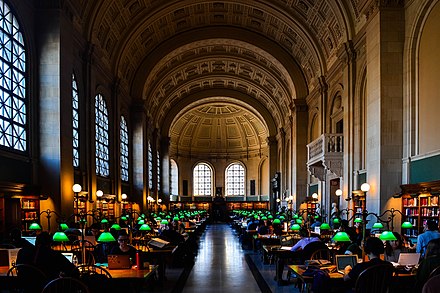
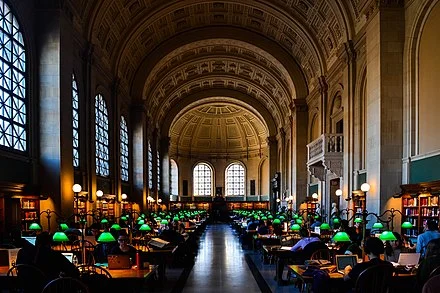
The main reading room of the Boston Public Library
Via OtherWords.org
America’s tech giants are accused of many sins, including invading our privacy and even degrading our democracy. But one other commonality among these masters of the code universe is rarely discussed: Virtually no tech CEOs have a background in the humanities, such as literature and history.
What does it mean to be human? What does it mean to be a citizen? And what are our responsibilities to one another? If their behavior is any guide, tech titans have never thought deeply about any of these questions.
Instead, major social platforms like Facebook simply build fines for privacy violations into their budgeting. Ride-sharing services like Uber underpay their hardworking drivers and offer no benefits. And hate speech runs rampant on all social networks.
If our tech overlords had studied the humanities — rather than just business or computer science — they might have been less likely to treat our data as a commodity to be used for their own purposes. Facebook might not have blithely violated its 2011 privacy consent decree, or stood back when hate speech consumed its platform.
I’m not alone in believing that arts and humanities training could create much better technologists. In a 2018 study, the National Academies of Sciences, Engineering, and Medicine called for an integration of science, technology, engineering, and mathematics with these less numerical disciplines.
In designing technology, empathy and other human-scale values are now being championed as well. After all, how can you sell good “user experience” if you know little about the users? And when the robots come for our jobs, human creative intelligence may be one of the only things still needed in the labor market.
One might ask: What are the chances of building a tech unicorn if you studied Chaucer or Weber rather than computer science?
But my argument isn’t that only English majors should run tech incubators, but that our digital masters should find a place in their lives and minds for Plato and Margaret Mead. As a study by psychologists David Comer Kidd and Emanuele Castano shows, literature makes us better at comprehending other people’s feelings — a useful skill in both a leader and an employee.
If Uber and other gig economy “winners” had studied Dickens or labor history, would they have fought so nastily to maintain that their drivers are “side hustling,” concierge-like contractors with few employment rights?
If executives at Lyft had read Jane Addams’s 20 Years At Hull House, or even a textbook on the basics of maternal biology, would they have celebrated the fact that a driver had to pick up riders after she went into labor, and then Lyft herself to the hospital to give birth?
And if those who insist on creepily long hours from their employees had at least read Marx, they might not snicker so affectionately at the T-shirt slogan “9 to 5 is for the weak.”
Today’s tech jobs — with “nap pods” and campus environments that make it so their workers almost never leave work — evoke Marx’s account of how long work days rob people of their “normal, moral, and physical conditions of development.”
This is part of a broader problem, of course. In 1971, there were fewer than two business majors for every English major in American colleges. As of 2016, it’s more than 8 to 1 and growing.
As T.S. Eliot wrote: “Where is the knowledge we have lost in information?”
Studying the humanities means engaging with what the Romantics called “the sympathetic imagination” — an idea that tech overlords would hopefully direct not just at themselves but also toward other people.
Alissa Quart is executive director of the Economic Hardship Reporting Project, which produced this piece. It ran first at the San Francisco Chronicle as was adapted for distribution by OtherWords.org.