
Vox clamantis in deserto









Patty Wright: Newly blue Maine expands access to abortion

The Maine State House, designed by Charles Bulfinch, and built 1829–1832. Bullfinch also designed the famous Massachusetts State House, with its iconic gold dome.
While abortion bans in Republican-led states dominated headlines in recent weeks, a handful of other states have expanded abortion access. Maine joined those ranks in June with two new laws ― one requires all insurance and Medicaid to cover the procedure and the other allows physician assistants and nurses with advanced training to perform it.
With these laws, Maine joins New York, Illinois, Rhode Island and Vermont as states that are trying to shore up the right to abortion in advance of an expected U.S. Supreme Court challenge. What sets Maine apart is how recently Democrats have taken power in the state.
“Elections matter,” said Nicole Clegg of Planned Parenthood of Northern New England. Since the 2018 elections, Maine has its largest contingent of female lawmakers, with 71 women serving in both chambers. “We saw an overwhelming majority of elected officials who support reproductive rights and access to reproductive health care.”
The dramatic political change also saw Maine elect its first female governor, Janet Mills, a Democrat who took over from Paul LePage, a Tea Party stalwart who served two terms. LePage had blocked Medicaid expansion in the state even after voters approved it in a referendum.
Clegg and other supporters of abortion rights hailed the new abortion legislation: “It will be the single most important event since Roe versus Wadein the state of Maine.”
Taken together, the intent of the two laws is to make it easier for women to afford and to find abortion care in the largely rural state.
Nurse practitioners like Julie Jenkins, who works in a small coastal town, said that increasing the number of abortion providers will make it easier for patients who now have to travel long distances in Maine to have a doctor perform the procedure.
“Five hours to get to a provider and back ― that’s not unheard of,” Jenkins said.
Physician assistants and nurses with advanced training will be able to perform a surgical form of the procedure known as an aspiration abortion. These clinicians already are allowed to use the same technique in other circumstances, such as when a woman has a miscarriage.
Maine’s other new law, set to be implemented early next year, requires all insurance plans ― including Medicaid ― to cover abortions. Kate Brogan of Maine Family Planning said it’s a workaround for a U.S. law known as the Hyde Amendment that prohibits federal funding for abortions except to save the life of the woman, or if the pregnancy arises from incest or rape.
“[Hyde] is a policy decision that we think coerces women into continuing pregnancies that they don’t want to continue,” Brogan said. “Because if you continue your pregnancy, Medicaid will cover it. But if you want to end your pregnancy, you have to come up with the money [to pay for an abortion].”
State dollars will now fund abortions under Maine’s Medicaid, which is funded by both state and federal tax dollars.
Though the bill passed in the Democratic-controlled legislature, it faced staunch opposition from Republicans during floor debates including Sen. Lisa Keim.
“Maine people should not be forced to have their hard-earned tax dollars [used] to take the life of a living pre-born child,” said Keim.
Instead, Keim argued, abortions for low-income women should be funded by supporters who wish to donate money; otherwise, the religious convictions of abortion opponents are at risk. “Our decision today cannot be to strip the religious liberty of Maine people through taxation,” Keim said during the debate.
Rep. Beth O’Connor, a Republican who says she personally opposes abortion but believes women should have a choice, said she had safety concerns about letting clinicians who are not doctors provide abortions.
“I think this is very risky, and I think it puts the woman’s health at risk,” O’Connor said.
In contrast, advanced practice clinicians say the legislation, which will take effect in September, said this law merely allows them to operate to the full scope of their expertise and expands access to important health care. The measure has the backing of physician groups like the Maine Medical Association.
Just as red-state laws restricting abortion are being challenged, so are Maine’s new laws. Days after Maine’s law on Medicaid abortion passed, organizations that oppose abortion rights announced they’re mounting an effort to put the issue on the ballot for a people’s veto.
This story is part of a partnership that includes Maine Public Radio, NPR and Kaiser Health News. Patty Wright is a reporter at Maine Public Radio.
Llewellyn King: An immigration fix that can be done now
I was once interested in buying a historic mansion in Virginia. It was a classic, but it needed a lot of work. It was being sold by a bank and, for a whole afternoon, my wife and I dreamed of owning it.
It was on the market because the previous owner, who had bought it to restore it, had gone broke. His mistake was that he had tried to do the whole job at once: the wiring, the plumbing, the plastering, the floors. Too much.
Had he done what other restorers would have done in similar situations, gone about restoration piece by piece, he would be the proprietor of a remarkable antebellum home today.
Some big jobs need to be done one thing at a time.
Immigration reform may be such a big job; so big it demands to be done in pieces, fixing what is fixable in the short term while the great issues -- who, from where and how many -- wait for another day and a calmer political climate.
To me, the most fixable is the plight of those who are already here: the 11 million illegal residents, predominantly from Central America.
They are here. They are people who succumbed to the basic human desire to better themselves and provide more for their families. They are illegal but they are not evil. They broke the law to find a better, safer life — the same motivation that brought people from Europe to these shores for five centuries.
Laws are made by people; human need and human aspiration are primal. We, American citizens (except those whose ancestors were transported in slavery), are the product of the same aspiration that has brought most illegal immigrants to live among us: to work hard, to raise families and to live in peace. Statistically, they are slightly more law-abiding than those who would have them gone by deportation. They are a vital new population of artisans -- skilled manual workers.
The Immigrant Tax Inquiry Group (ITIG) and its tireless founder, Mark Jason, a former IRS inspector and Reagan Republican, attracted my attention six years ago because it had a ready answer for those who are illegal but otherwise blameless.
Jason wants illegal immigrants to be given a 10-year, renewable work permit with a special tax provision: There would be a 5 percent tax levied on employers and a 5 percent tax paid by the worker – what Jason calls “five plus five.” The billions of dollars raised by the program would be earmarked for the neighborhoods where the illegals are concentrated to alleviate the burdens they impose on education, health care, policing and other social services.
Notably, his Malibu, Calif.-based group’s program has no amnesty in the usual sense; no path to citizenship, not even an entitlement to lifetime abode.
Jason has poured his personal fortune into a lobbying effort on behalf of the ITIG program, including congressional briefings and information sessions.
To me, the program would solve an immediate problem: It would end the massive deportations — so fundamentally un-American -- which have gone on through four administrations. It would allow families to come out from behind the curtain of fear -- fear in the knowledge that tonight might be their last night of hope, of a united a family and of a livable wage. In the morning (the favored time for arrests), the state could come down on hope and love with the dreaded knock on the door; paradise lost.
The Jason work-permit program is one room in the immigration edifice that could be renovated now, and with benefit rather than cost. The deportations cost in every way: They cost in lives shattered, ICE teams, deportation centers, court hearings, talented labor lost, and finally transportation to places now alien to most of those headed there as deportees – hapless and more or less stateless. There is a fix at hand.
Llewellyn King is executive producer and host of White House Chronicle, on PBS. His email is llewellynking1@gmail.com.

TD Garden to be closed for most of summer for makeover


From The New England Council (newenglandcouncil.com)
“The TD Garden {the most important arena in New England} has announced that it will be closing for most of the summer of 2019 to undergo a makeover. The arena will be closed for nine weeks as the finishing touches on $100 million worth of upgrades are implemented before the next hockey and basketball seasons.
While the arena is closed, giant cranes will be brought in to rearrange about 16,500 seats in the arena’s bowl. The project will also see expanded concourses and club areas, as well as about 400 new seats hanging over existing stands from the ninth floor and the replacement of all loge and balcony seating. When complete, around 50,000 square feet of space will have been added. The project will begin in July following the conclusion of the Boston Celtics’ season.
Amy Latimer, President of TD Garden, commented, “We knew we had two teams that were going to be in the playoffs. We said we might as well not plan on any construction in June, anyway.” Speaking about how some events had to find alternative venues, Latimer said, “People were great. Everyone understands these are massive projects.”
The Council congratulates TD Garden for making these impressive upgrades and for enhancing the fan experience at the arena.’’
Unfashionable antiques

From Robert Whitcomb’s “Digital Diary,’’ in GoLocal24.com
My clan has some elderly furniture and other old stuff. There’s a maple grandfather clock made for a great-great-something grandfather of mine called Rufus Noyes in the 18th Century, my father’s desk, with numerous hiding places for documents, from the same period, some uncomfortable old chairs from Victorian times, some old bureaus and end tables, some musty religious and other books from the 1600’s, my murdered great uncle William Dale White’s limited edition of the complete works of Alphonse Daudet and other odds and ends, including a nice portrait of a Whitcomb lady ancestor of mine done in about 1830 and looking a bit like the poet Emily Dickinson, and a pretty good painting of Minot’s Light, with three-masted schooner, off Cohasset, Mass., where I lived as a boy. None of it has much value, except emotionally. There’s a family story with each of these things.
Indeed, the value, especially of the furniture, could be falling as I type, if a rather sad Yankee magazine article on the antiques business is on mark. It’s titled “The Death of Brown Furniture,’’ and basically asserts that Millennials, being more interested in “experiences’’ than in “things,’’ aren’t interested in really old stuff, although many apparently like such “Mid-Century Modern’’ furniture as Danish modern.
The veteran antiques dealer and frequent Antiques Roadshow guest Ron Bourgeault, who is quoted in the article, is probably correct: Society’s and especially younger folks’ waning interest in, and knowledge of, history explains at least some of the falling price of antiques. That’s too bad. If we don’t know where we’ve been, it’s harder to know where we’re going. I don’t have all that much interest in the precise genealogy of my New England/Minnesota/New York/English/Scottish/French ancestors but I love to learn the stories associated with these old artifacts, some of which contain some useful lessons.
I remember with a pang my mother throwing out Victorian and Edwardian furniture back in the late ‘50s, perhaps after a few drinks. A lot of it was ugly, but, again, each piece had story with it, happy or sad.
Oh yes, I forgot the old banjo clock with the picture of the Boston Massacre on it and the collections of the works of Sir Walter Scott , Robert Lewis Stevenson and James Russell Lowell! All asthma-inducing.


Looking to help Mass. 'Hilltowns'

The arts center in Becket, Mass., one of the “Hilltowns’’
From Robert Whitcomb’s “Digital Diary,’’ in GoLocal24.com
An article by Catherine Tumber in the usually interesting Commonwealth (as in Mass.) Magazine looks at the challenges facing western Massachusetts’s “Hilltowns,’’ which are just east of the Berkshires. Some of the issues raised recall those facing rural and exurban towns in hilly interior western Rhode Island and interior eastern Connecticut. The heavily forested and rocky area includes towns with many poor people, in part because some of these towns – really more like villages -- had mills that have long since closed, and the region’s farms tend to be hardscrabble. Vacationers and rich weekend and summer folks favor the Berkshires themselves.
So Hilltown leaders are banking on such things as tourism, arts, history and, sigh, marijuana cultivation to reenergize their economies and draw more visitors. One thing that many Hilltowners don’t want is cheap-goods store chains such as Dollar General, whose arrival often kills beloved local stores.
As in Rhode Island and Connecticut, counties are generally pretty insignificant in Massachusetts. I wonder if giving some counties more power would give areas with little political clout, such as the Hilltowns, more political pull at state houses.
To read the Commonwealth article, please hit this link.
Llewellyn King: America still the land of dreams

The head of the 2017 Bristol, R.I., Fourth of July Parade. The parade is said to be the nation’s oldest, with the first one in 1785.
WEST WARWICK, R.I.
Light the candles, tune the instruments, warm up the vocal cords, a very special day is upon us. It is time to celebrate a birth, a unique birth, and a birth that in many ways has lit human hope, kindled human aspiration and fired up a few revolutions.
Happy birthday, America!
I do not know any other country that has a birthday. Others have days that celebrate their independence, their casting off a colonial state or the expulsion of a tyrannical power, but no other country has a birthday. Celebrate that, too.
As I was born a Brit, I have no idea how I would have greeted the events of 1776. Would I, like Edmund Burke, the great Anglo-Irish orator and member of Parliament, have seen the emerging difference between the rugged, inventive, self-motivated farmers in the American colonies and the then subservient masses in Britain? Or would I, like Lord North, prime minister of Great Britain, and his monarch George III, have regarded the colonists as traitors?
The farmers, these landed gentlemen, were not only creating a new country destined for world leadership, but they also were forming what would come to be the universal middle class, where accomplishment would triumph birth.
Slowly in the United States, the idea grew that people who worked with their hands could belong to the middle class, aspire to having their children go to college and move up; to improve on their parents’ station in life. While this did not reach fruition until the last century, the seeds were sown in the 18th century. It was an American evolution.
When I was a boy in faraway Southern Rhodesia (now Zimbabwe), we worshipped all things American, although we were also devotedly British. My father, who worked with his hands, had read that American artisans could enjoy a middle-class life. Awesome. A local publisher, Bernard Woolf, told me that the United States led the world because, for example, you could study ice cream making in college. I do not know where he got that idea, maybe from something he had read about Howard Johnson’s and its 28 flavors of ice cream.
As teenagers we fantasized about owning American products, including cars complete with fins and automatic drive. In fact, when the first automatics — which were American, of course — showed up, the dealership in Salisbury (now Harare) was mobbed by people anxious to see this marvel.
We believed in the virtues of the dwindling British Empire (we were a living, breathing example of it), but also in American know-how, and that there was no human challenge that America could not meet. That was slightly dented when the United States failed (correctly) to back Britain and France in the Suez Crisis of 1956, and again when the Soviet Union launched Sputnik the following year.
None of that really mattered. The United States remained, as Ronald Reagan was to say later, “a city on a hill” for us.
When I moved to Britain itself, I heard the first criticisms of the United States — heard for the first time that it was a harsh, cruel place. That was the socialist line that affected many Labor Party followers. But no one suggested that the United States was anything other than a land of opportunity.
I will bet that if you stood anywhere in the world and said, “I have a bunch of green cards here for the first takers,” you would be sacked like a quarterback on a bad day.
America is still the place to be if you want to cast off the bonds of limitation which abound around the world, whether they are social, economic or religious. This is the land of opportunity; opportunity to pursue all manner of dreams and to buck the conventional.
Week after week, in my work as a columnist and broadcaster, I criticize something about the United States, from the death penalty to the health care system, to economic unfairness. So much so that you might not know I dearly love the place.
Happy Fourth of July, America. Happy birthday, Land of Dreams.
On Twitter: @llewellynking2
Llewellyn King is executive producer and host of White House Chronicle, on PBS. He’s based in Rhode Island and Washington, D.C.
New Balance to open 'Factory of the Future' next year in Methuen
From The New England Council (newenglandcouncil.com)
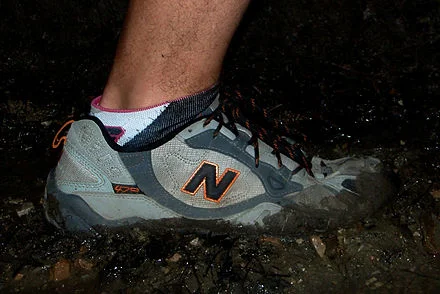
“New Balance Athletics, Inc, is moving forward with plans to build its sixth factory in New England. This factory will be the company’s first new manufacturing plant in two decades.
“New Balance is set to open what it calls its ‘Factory of the Future’ in Methuen, Mass., in 2020. This project is supported by the Economic Assistance Coordinating Council of Massachusetts, which has just approved $900,000 in state tax credits. The $33 million project will create 60 new jobs in the 80,000-square-foot facility, focusing on testing advanced manufacturing techniques, 3-D printing, and research and development.’’
New approach needed for global fisheries management
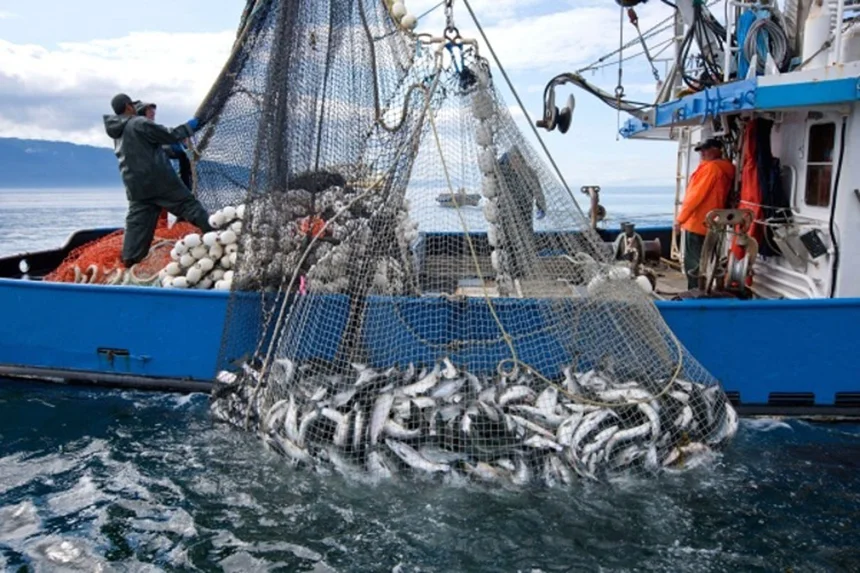
— NOAA photo
From ecoRI News (ecori.org)
The tiniest plants and creatures in the ocean fuel entire food webs, including the fish that much of the world’s population depends on for food and work.
In a paper recently published in Science Advances, National Oceanic and Atmospheric Administration (NOAA) Fisheries researcher Jason Link and colleague Reg Watson from the University of Tasmania’s Institute for Marine and Antarctic Studies suggest that scientists and resource managers need to focus on whole ecosystems rather than solely on individual populations.
Population-by-population fishery management is more common, but a new worldwide approach could help avoid overfishing and the insecurity that it brings to fishing economies, according to the paper.
“In simple terms, to successfully manage fisheries in an ecosystem, the rate of removal for all fishes combined must be equal to or less than the rate of renewal for all those fish,” said Link, the senior scientist for ecosystem management at NOAA Fisheries and a former fisheries scientist at the Northeast Fisheries Science Center, in Woods Hole, Mass.
The authors suggest using large-scale ecosystem indices as a way to determine when ecosystem overfishing is occurring. They proposed three indices, each based on widely available catch and satellite data, to link fisheries landings to primary production and energy transfer up the marine food chain.
Specific thresholds developed for each index make it possible, they said, to determine if ecosystem overfishing is occurring. By their definition, ecosystem overfishing occurs when the total catch of all fish is declining, the total catch rate or fishing effort required to get that catch is also declining, and the total landings relative to the production in that ecosystem exceed suitable limits.
“Detecting overfishing at an ecosystem level will help to avoid many of the impacts we have seen when managing fished species on a population-by-population basis, and holds promise for detecting major shifts in ecosystem and fisheries productivity much more quickly,” Link said.
In the North Sea, for example, declines in these indices suggested that total declines in fish catch indicative of ecosystem overfishing was occurring about 5-10 years earlier than what was pieced together by looking at sequential collapses in individual populations of cod, herring, and other species. Undue loss of value and shifting the catches in that ecosystem to one dominated by smaller fishes and invertebrates could have been avoided, according to the authors.
The first index used in the study is the total catch in an area, or how much fish a given patch of ocean can produce. The second is the ratio of total catches to total primary productivity, or how much fish can come from the plants at the base of the food web. The third index is the ratio of total catch to chlorophyll, another measure for marine plant life, in an ecosystem.
Proposed thresholds for each index are based on the known limits of the productivity of any given part of the ocean. Using these limits, the authors said local or regional context should be considered when deciding what management actions to take to address ecosystem overfishing. Having international standards would make those decisions much easier and emphasize sustainable fisheries.
“We know that climate change is shifting many fish populations toward the poles, yet the fishing fleets and associated industries are not shifting with them,” Link said. “That already has had serious economic and cultural impacts.”
The authors note that they are able to follow these shifts over time and see how they can exacerbate or even contribute to ecosystem overfishing.
Fisheries are an important part of the global economy. In addition to trade and jobs, fish provide the primary source of protein to more than 35 percent of the world’s population, and 50 percent of the people in the least developed countries, according to the authors. Regions where the greatest amount of ecosystem overfishing occurs are also where impacts can be the greatest.
The researchers looked at 64 large marine ecosystems around the world and found those in the tropics, especially in Southeast Asia, have the highest proportion of ecosystem overfishing. Temperate regions also have a high level of ecosystem overfishing, with limited capability to absorb shifting fishing pressure from the tropics as species move toward the poles.

David Warsh: The young and the restless in presidential politics

SOMERVILLE, Mass.
It has long seemed to me that the United States began to lose its way in 1992, when Bill Clinton defeated George. H. W. Bush for the presidency. The Berlin Wall had fallen. The Soviet Union had disbanded. The Cold War had ended. Bush was highly popular in the wake of the First Gulf War.
Leading Democrats – such as Gov. Mario Cuomo, Jesse Jackson and Sen. Al Gore — declined to run. (Gore’s son had been gravely injured in an auto accident.) Instead, Gov. Bill Clinton, former Gov. Jerry Brown, Senators Paul Tsongas, Bob Kerrey and Tom Harkin all joined the chase.
Bush reappointed Alan Greenspan as chairman of the Fed, but later charged that Greenspan reneged on a promise to ease monetary policy slightly, to compensate for the tax increase that Bush had requested to pay for the war and the mild recession (July 1990-March ’91) that had resulted. The recovery in the year before the election was unusually tepid.
Populist commentator Pat Buchanan ran against Bush from the right in Republican primaries. Though he won no states, he polled more votes than expected, especially in New Hampshire. As Buchanan faded, an emboldened H. Ross Perot entered the campaign as an independent candidate, exited, and re-entered. He won 19 percent of the popular vote in the end but failed to gain a single electoral vote.
Clinton won the election. After 12 years as vice president and president, Bush was all-too-familiar; Clinton was fresh. Bush had been the youngest Navy pilot in World War II. Clinton was a Baby Boomer who skipped Vietnam. Bush lacked energy; Clinton was a dynamo.
America enjoyed a few years of exhilaration in the Nineties: the introduction of the Internet; a dot.com mania; and, thanks to eight years of brisk growth, a balanced federal budget, after 20 years of surging deficits,. Looking back, though, Clinton was ill prepared by his years as Arkansas governor to make foreign policy. Two years as a Rhodes Scholar at Oxford had made him overconfident as well.
Unilateral humanitarian interventions followed in the Balkan civil wars that flared after the Soviet Union collapsed. NATO expansions were undertaken that the Bush administration, expecting a second term, had promised would not occur. Russia protested, but was powerless to prevent any of it. Vladimir Putin replaced Boris Yeltsin and grew increasingly resentful.
Without the discipline imposed by of the Cold War, domestic politics turned rambunctious as well. Clinton empowered his wife to seek to overhaul U.S. health insurance. Congressman Newt Gingrich replied with his “Contract with America,” gained 54 House seats and 9 Senate seats in the 1994 mid-term elections. Republican enmity toward Clinton, which had begun to overspill the bounds of decency soon after the inauguration, reached flood levels with the impeachment and failed conviction proceedings of Clinton’s second term.
The next two presidencies, 16 years, amounted to more of the same. NATO expansion continued, reaching the borders of Russia. Relations with China remained amicable throughout. George W. Bush started wars in Afghanistan and Iraq. Barack Obama pursued regime change in Libya (successfully) and Syria (unsuccessfully). The third presidential go-round, which started out in 2015 as a presumed Bush-Clinton rematch (Jeb Bush vs. Hillary Clinton) is what eventually got us to Trump.
Now Americans may be about to do it again – to prefer youth and personal ambition to consensus. The situation today is a little like 1992 in reverse. An over-abundance of Democratic Party candidates are eager to take on Donald Trump (or, in the event that he prefers not to run, Vice President Mike Pence). California Sen.
Kamala Harris damaged former Vice President Joe Biden in the debate last week. She projected youth and vigor. Biden was cautious; he had to contend with his record over 44 years of swiftly changing national politics. That Harris used the murky issue of federal court-ordered busing to attack Biden struck me as especially low. Nevertheless, Harris emerged as a candidate capable of taking on Trump. Her next challenge will be to finesse the health-care issue that handcuffed her in the debate.
She is also the candidate to watch out for, as Clinton was the candidate to watch out for in 1992. Clinton’s character didn’t come into focus until 1995, when First in His Class, David Maraniss’s brilliant biography, appeared. Harris will presumably receive a series of earlier screenings. Her appeal to her base, women and African Americans, is obvious. It remains to be seen whether she can persuade swing constituencies near the center of American political life,
Leaping far ahead, my guess is that only a better-than-expected showing by Biden or South Bend Mayor Pete Buttigieg in the California primary on Super Tuesday, March 3 (if they survive that long), will force Harris to wait. Bill Clinton would have been a much better president if he had first been elected in 1996. Mitt Romney might have defeated Hillary Clinton if he had waited until 2016.
But the young and/or the restless have dominated the top of the food chain for the last 28 years. True, it was John F. Kennedy who first jumped the queue, an element of collective memory that Clinton employed to enhance his license. With the exception of Barack Obama, they haven’t been good for the country.
David Warsh, an economic historian and long-time columnist on business, politics and media, is proprietor of Somerville-based economicprincipals.com, where this essay first ran.
'Posthumously Blooming'

“Why Art? ‘‘(oil on linen), by Joanne Tarlin, in her show “Posthumously Blooming,’’ at Galatea Fine Art, Boston, July 3-July 28.
The gallery says:
“Joanne Tarlin celebrates her father's life and works in her exhibition "Posthumously Blooming". He was a novelist, among other pursuits, living among poets, painters, musicians and intellectuals; the book was not published and was secreted away until after his death. Entitled The Artist's Life, the book has inspired his daughter's work towards the romantic, moody and atmospheric. Flowers and dissolving text excerpts wind in and out of the surface and reflect the artist's connection with mortality.’’
Treeless air

Lafayette Street in Salem, Mass., in 1910: an example of the '‘high-tunnelled effects'‘ of American elms over streets and a scene once common in New England — until Dutch elm disease killed most of these lovely plants in the mid-20th Century.
“Here where the elm trees were
is only empty air.
Where once they stood
How blunt the buildings are!
Where the trees were,
sky itself has fled
far overhead.’’
From “Elegy,’’ by Constance Carrier (1908-1991), a Connecticut poet and teacher
Not harder, smarter

Detail from “Labor’’, by Boston native Charles Sprague Pearce (1896)
I grew up in New England. I think I was brought up with the Puritan ethic: that if you worked really hard in life, then good would come to you. The harder you work, the luckier you get. I've come to believe that it's the smarter you work, the better.
Ken Blanchard, author of The One Minute Manager
Detail from “Labor’’, by Boston native Charles Sprague Pearce (1896)

Phil Galewitz: Will more states push to import Canadian drugs?

Seeking a solution to the soaring costs of drugs, Colorado, Florida and Vermont are making plans to import medications from Canada, where prescriptions are cheaper.
President Trump has offered his support, marking the first time drug importation has won a presidential endorsement.
The states’ plans are in their infancy. But they signal how frustration among consumers — especially those shouldering greater portions of their health bills through high-deductible health plans — is putting pressure on federal and state officials.
Because so many details are still being hashed out, it’s not yet clear who would be helped by the states’ efforts or if the plans can ultimately gain federal approval and withstand likely court challenges.
In the early 2000s, attempts by a few states, led by Illinois, to allow drug importation fizzled, and any new plan faces stiff regulatory and legal hurdles. But drug prices are at an all-time high. The increasing popularity of high-deductible plans means a growing number of patients are spending more money on health care. And Trump’s endorsement and current consumer demand for lowering drug prices could yield a different result this time around.
“Everyone is eager to get going into uncharted territory,” said Trish Riley, executive director of the National Academy for State Health Policy, a nonpartisan group of state health officials, which has been working with Vermont on its importation plan.
Gabriel Levitt, president of PharmacyChecker.com, which verifies online foreign pharmacies for customers, said the high prices for drugs make the efforts worth pursuing.
“It certainly will be helpful to reduce costs for some in the states that go ahead, and that’s a great start,” he said. Plus, he added, Trump’s support “puts the wind at the sails of importation.”
The 2003 Medicare Modernization Act allows states to import cheaper drugs from Canada but only the Health and Human Services secretary verifies their safety. Previous attempts by states to allow importation failed because the secretary opposed them.
Vermont, Florida and Colorado plan to work together to set up a program to buy drugs from Canada, said Riley. That coalition of states — with governors from the center, right and left — shows how powerful the issue of high-priced drugs is with voters.
The same medicines are often cheaper in other countries than the U.S. since most developed countries negotiate with drugmakers to set prices.
State officials said they expect that the effect of their programs would be modest to start, generally first permitting the importation of only certain types of high-priced drugs and for specific populations.
For example, infusion medicines used for cancer or autoimmune diseases that are administered in medical offices would not be available to import from Canada under the programs the states are setting up. Nor would drugs such as insulin, which needs to be refrigerated. Prices for these types of drugs have come under fire in the U.S., with patients calling them unaffordable.
“It’s a few states and a few drugs,” Riley said.
No Tampering With Safety
Vermont, which passed legislation to start planning the program a year ago, is still trying to find a way to ensure the safety of imported drugs and so far has identified only 17 medicines that would save enough money to be worth bringing over the border. Those drugs include treatments for conditions including diabetes, hepatitis C, cancer and HIV/AIDS.
After a review, officials decided it was not worth importing drugs for Medicaid enrollees because the state already receives hefty rebates on those medications from U.S. manufacturers and patients do not have copayments. So Vermont’s program is being designed to help residents who have commercial insurance.
Florida’s legislature authorized a blueprint this spring with a strong endorsement from Republican Gov. Ron DeSantis. The program aims to help bring down drug costs for the Medicaid program, which covers the more than 4 million enrollees in the state, prisoners and patients at free health clinics. The legislature also authorized a separate program that would provide drugs for individual Florida residents.
DeSantis signed the bill June 11 and called on federal officials to “get this done.”
Colorado approved its legislation in May, but state officials said they do not yet have details on what it might cover.
Officials in all three states have high hopes that the programs will succeed in ways not possible the last time around.
Between 2004 and 2009, Illinois, Kansas, Missouri, Rhode Island and Vermont defied the federal government and allowed residents to import from a Canadian retail pharmacy under a joint program, which flopped. Just 5,000 people participated, far fewer than the millions predicted, partially because the federal government declared the program violated federal law and warned against using the drugs. Also, in 2006, it established a Medicare drug benefit to help those 65 and older, further weakening demand.
Besides, after several years, the Canadian health minister threatened to prohibit pharmacies from participating over concerns that the program might cause shortages, and the main Canadian supplier pulled out due to lack of demand.
In 2014, Maine briefly allowed residents and employers to buy foreign drugs. Under that law, some employers, including the city government of Portland, established a program for workers to use CanaRx, a Canadian company that connects customers with brick-and-mortar pharmacies in Canada, Great Britain and Australia.
After pharmaceutical manufacturers and pharmacists sued, a federal judge overturned the law in early 2015, citing its conflict with federal law.
Then and now, opponents of importation say sending drugs over the border will increase the chances Americans get counterfeit medications, a claim often boosted by the drug industry. Levitt noted that states now intend to work directly with and inspect Canadian wholesalers, which should make Americans more comfortable about drug safety.
With prices so high, individual Americans are more open to buying drugs from Canada, anyway — some have for decades been driving over the border, using online pharmacies or going into storefronts that connect buyers to pharmacies in Canada and other countries. Although these strategies are technically illegal, the government does not prosecute individual offenders. Nor has it moved to stop the dozens of cities, counties and school districts across the United States who have programs for employees to buy drugs from Canada and other countries.
Canadian health officials are watching the debate and said they are weighing the effect a robust importation program would have on Canadian consumers.
“Collaborative efforts among implicated parties would be important in addressing any potential adverse impacts on the drug supply in Canada that may arise from increased cross-border trade,” said Eric Morrissette, a spokesman for Health Canada, the government agency responsible for public health.
Phil Galewitz is a Kaiser Health News reporter.
Phil Galewitz: pgalewitz@kff.org, @philgalewitz
Go figure
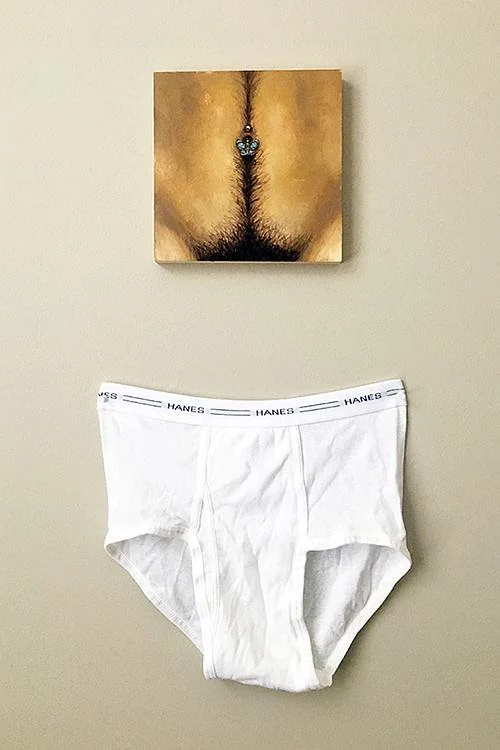
“Butterfly on a Happy Trail ‘‘ (oil on panel and underwear), by Nicolas Papa, in the group show “Figuring the Body,’’ at Kingston Gallery, Boston, July 3-Aug. 11. The jurors in the show described it as defining the body and body politics in a time of political polarization to “foster important conversations around issues ranging from racism and exploitation, body image, gender identity and gender stereotyping, trauma and memory, and the body as a cellular structure as well as an energetic one.’’
t
Re: Figuring the Body is a group exhibition showcasing New England artists who are actively defining the body and body politics in a time of political polarization. Kingston Gallery members and exhibition jurors Conny Goelz-Schmitt, Mary Lang, Nat Martin, Ann Wessmann and Chantal Zakari selected works by twenty artists that foster important conversations around issues ranging from racism and exploitation, body image, gender identity and gender stereotyping, trauma and memory, and the body as a cellular structure as well as an energetic one. The installation of this curated collection in all three spaces of Kingston Gallery creates an opportunity for pairings and juxtapositions that bring a greater nuance to the discourse. The works are topical, poignant, and sometimes humorous.
'Aching with salt'

Is nothing real but when I was fifteen,
Going on sixteen, like a corny song?
I see myself so clearly then, and painfully—
Knees bleeding through my usher's uniform
Behind the candy counter in the theater
After a morning's surfing; paddling frantically
To top the brisk outsiders coming to wreck me,
Trundle me clumsily along the beach floor's
Gravel and sand; my knees aching with salt.’’
— From “Groundswell,’’ by Mark Jarman
Fidelity's solar farm

From The New England Council (newenglandcouncil.org)
Fidelity Investments, has begun operation of its first on-campus solar farm. The new 12-acre solar farm, and will supply Fidelity’s Merrimack, N.H., campus with 16-percent of its annual energy needs.
The solar array is composed of 346 ground-mounted solar array racks containing 8,640, 360-watt modules. With 50 percent of Fidelity’s carbon footprint consisting of electricity use within buildings, the company is trying to increase its use of renewable energy. Fidelity has also pursued other sustainability programs, such as including low-emission priority parking, bird boxes, walking trails, and a project to reduce pollutants in a pond on the campus.
Joe Murray, vice president for government relations and public affairs at Fidelity, said, “It has become imperative as a business that we take sustainability seriously, and our customers and our clients demand that of us. . . This is something that is such a home run with our employees.”
'Defying order and logic'

“The Wake of the Gannett’ (oil on panel), by Jennifer Day, in her show “Endless,’’ through July at Bromfield Gallery, Boston. The gallery says that “her monochromatic paintings of oceans explore how the motion of air above and water currents below toss waves into a frenzy, defying order and logic. ‘‘
Karen Romero: Don't send migrants back to danger

Migrants from Central America looking at maps for routes to the U.S. border
Via OtherWords.org
Tijuana, where I live and work, has been thrust into the center of the Trump administration’s attack on migrants.
It’s the first site of the “Remain in Mexico” policy, which forces asylum seekers to wait in Mexico while their U.S. claims are processed. Since January, more than 15,000 people have been returned to Mexico after requesting asylum in the U.S. — many to Tijuana. The administration is now extending that policy all along the southern border.
These roadblocks in the asylum process — along with U.S. pressure on Mexico to crack down on Central American migrants — are intentionally designed to deter people from exercising their internationally protected right to seek asylum. The U.S. is turning its back on its legal obligation to protect people fleeing persecution. Instead, it’s sending vulnerable people back to some of the world’s most dangerous cities to wait indefinitely.
I regularly visit the shelters in Tijuana to meet with migrants, offer aid and support, and monitor the human rights situation. There I met Lya, a young trans woman from El Salvador who was frequently detained by the police and discriminated against because of her identity.
She worked at a beauty salon, where she began to receive threats from gangs who demanded she pay them to operate her business. When they threatened to kill her, she decided to flee. When she arrived at the U.S. port of entry bordering Tijuana, she requested asylum — and U.S. authorities sent her back to wait.
She now faces an indefinite wait and doesn’t have a lawyer representing her in the U.S.
The shelters along Mexico’s northern border are already full beyond capacity. Migrants there need housing, food, employment, and often psychological support, none of which the Mexican or U.S. governments have a plan to provide.
The U.S. has offered no information on how long asylum seekers will be forced to stay in Mexico. It could be months, or in some cases years. Over 800,000 cases are currently pending in the backlogged U.S. immigration courts.
Many families have told me they’re afraid to be in Tijuana.
I met a woman named Ruth who left El Salvador with her family last October. When they presented themselves at the port of entry, they were detained for four days. During her interview with the U.S. agents, she was not allowed to present her case, and her needs for refuge and safety were not evaluated. She was then returned to Tijuana to wait for her court date.
Like many others, the family is now considering returning to danger in their home country rather than continuing to wait in Mexico, where migrants have been the victims of robberies, extortions, and arbitrary detentions. In 2018 alone there were 33,341 homicides in Mexico. In December, two teenage boys from Honduras who had arrived with the caravan were murdered in Tijuana while they waited to apply for asylum.
Worse still, legal assistance is extremely limited. Earlier this year, U.S. attorneys who provide legal assistance to migrants in Mexico were detained and blocked from entering the country.
Under the United Nations High Commission on Refugees, asylum has been a fundamental right since 1951. The Remain in Mexico policy is a clear effort by the Trump administration to stop people from exercising that right.
Everyone who cares about human rights must call on the U.S. government to immediately and permanently repeal the Remain in Mexico policy, and let asylum seekers await the outcome of their case here in the United States.n
Never mind the Wall. They’re building warehouses.
Karen Romero is a consultant for American Friends Service Committee in Tijuana. She’s worked on migration issues at the border for almost a decade.
.

Frank Carini: Microplastic pollution imperils corals

A recent study found that northern star coral polyps routinely consumed microplastics, shown above in blue, over brine shrimp eggs, shown in yellow.
— Photo by Rotjan Marine Ecology Lab at Boston University
From ecoRI News
Coral reefs form the most biodiverse habitats in the ocean, and their health is essential to the survival of thousands of other marine species. Unfortunately, these vital underwater ecosystems are beginning to get a taste for plastic.
A Roger Williams University professor, working with a team of researchers, recently published a study that found corals will choose to eat plastic over natural food sources. Unsurprisingly, it’s not good for their health, as it can lead to illness and death from pathogenic microbes attached to microscopic plastics. It also adds to the stress already being applied to coral reefs worldwide, by acidifying and warming oceans, other pollution sources, development, and harmful fishing practices, such as dynamiting and bleaching to capture fish for aquariums.
The project grew from concern about the 6,350 million to 245,000 million metric tons of plastic in the world’s oceans, and the 4.8 million to 12.7 million metric tons of new plastic that enter annually.
Photographs and news reports have documented dead whales and seabirds found with stomachs full of plastic and of sea turtles suffocating from plastic straws clogging their nostrils. At least two-thirds of the world’s fish stocks are suffering from plastic ingestion, according to estimates, as much of the planet’s plastic pollution eventually makes its way into the ocean.
Roger Williams University associate professor of marine biology Koty Sharp recently told ecoRI News that plastic pollution presents a growing problem for both water- and land-based ecosystems.
“It’s a huge problem,” she said. “There’s really nowhere left on the planet that hasn’t been touched by plastics. We’re finding plastics in every organism we study.”
As much as plastic proliferation is a problem, Sharp is even more concerned about the impacts of a changing climate and how humans are using natural resources. She pointed to the manmade damage being done to Australia’s Great Barrier Reef as an example.
“We need to quickly and dramatically decrease our dependency on plastics and fossil fuels,” the microbiologist said. “This isn’t a problem a few people can fix.”
The study that Sharp helped author was published recently in London’s science journal, Proceedings of the Royal Society B: Biological Sciences. It is the first of its kind to identify that corals inhabiting the East Coast of the United States are “consuming a staggering amount of microplastics,” which alters their feeding behavior and has the potential to deliver fatal pathogenic bacteria.
In their samples of northern star coral, collected off the coast of Jamestown, R.I., each coral polyp — about the size of a pin head — contained more than 100 particles of microplastics, according to the collaborative research team that included Sharp, Randi Rotjan, a research assistant professor of biology at Boston University, and colleagues from UMass Boston, Boston Children’s Hospital Division of Gastroenterology, Harvard Medical School, and the New England Aquarium.
Northern star coral can be found from Buzzards Bay to the Gulf of Mexico. Since it can be found along the coast of most East Coast urban areas, Sharp said it is a “powerful tool” in helping to understand microplastic pollution.
Although this study is the first to document microplastics in wild corals, previous research had found that this same coral species consumed plastic in a laboratory setting. A 2018 study found plastic pollution can promote microbial colonization by pathogens implicated in outbreaks of disease in the ocean.
The study co-authored by Rotjan and Sharp produced similar lab results. When the researchers conducted experiments of feeding microbeads to the corals in their labs, Sharp said they found that the coral would more often choose the fossil-fuel derivative when given the choice between plastic and food of similar sizes and shapes, such as brine shrimp eggs.
In fact, every single polyp, or mouth, that was given the choice ate almost twice as many microbeads as brine shrimp eggs. After the polyps had filled their stomachs with plastic junk food with no nutritional value, they stopped eating the shrimp eggs altogether.
The study showed that bacteria can “ride in” on the microbeads. In the case of the bacteria they used in the lab — the intestinal bacterium E. coli — the microplastic-delivered bacteria killed the polyps that ingested them and their neighboring polyps within weeks, even though the polyps spit the microbeads out after about 48 hours. The E. coli bacterium persisted inside their digestive cavity.
“Research has shown that there are virtually no marine habitats that are untouched by plastics,” said Sharp, noting that research abounds demonstrating that nearly all ocean water contains plastic pollution. “Because of that, it’s critical that we understand the impact of plastics pollution. Microplastics pollution is a matter of global health — ecosystem health and human health.”
She noted that the problem of plastic pollution extends far beyond what can be seen. Plastics never fully degrade in seawater, breaking down into smaller and smaller pieces. Invisible to the naked eye, microplastics remain suspended in the water column, and this is what corals and other filter-feeding animals take in to get their food, she said.
The researchers had anticipated they would find microplastics in wild corals, but they were shocked by the volume present in their samples, according to Sharp.
Another invisible factor is the presence of microbes that hitch rides with plastics floating in the ocean, winding up in the stomachs of many creatures. These plastic-riding microbes are growing in number and upending the delicate balance of ecosystems.
Sharp said the problem is being made worse by human-induced climate change, which is helping bacteria to proliferate. She noted that microplastics in the ocean are coated with microbes.
“We know that plastic particles provide an enriching habitat for bacteria that are not usually in very high numbers in seawater,” Sharp said. “The microbial aspect of microplastics pollution is largely underexplored — it’s critical that we learn more about how plastics can affect the dynamics, abundance, and transport of microbes through our ecosystems and food webs. Alteration of microbiomes in our marine ecosystems by human-induced threats like plastics pollution and climate change holds great potential to impact marine environments on a global scale.”
To help mitigate the problem of plastic pollution, Sharp offered some tips:
Minimize single-use plastics. Use reusable bags and mugs. Buy groceries in bulk. Decline a straw if you don’t need one.
Take a day to count. How many times in one day do you use single-use plastics. What is unnecessary and what can be eliminated or replaced with more sustainable products?
Demand lower-impact packaging and support products with sustainable packaging.
Support and advocate for legislation and lawmakers that promote innovative solutions and alternatives for sustainable packaging.
“Given that plastics pollution is an ongoing threat co-occurring with climate change, it’s critical that we do more research to understand how they impact marine ecosystems together,” Sharp said, “and take immediate actions to minimize human impacts on the world’s oceans.”
Frank Carini is editor of ecoRI News.