
Vox clamantis in deserto










Frank Carini: Front groups for polluters belch out fake news

From ecoRI News (ecori.org)
The fact that the planet has a fever isn’t debatable. The millions of dollars lackeys for the fossil-fuel industry spend to discredit climate science doesn’t change reality.
Nearly 100 percent of climate scientists agree that human activity, most notably the burning of fossil fuels, is changing life on Earth — and not for the better, especially for humans.
It’s been more than five decades since scientists first expressed concern to a U.S. president about the dangers of a changing climate. Last year’s Fourth National Climate Assessment — the work of 13 federal agencies and 350 scientists — is crystal clear: The planet is warming faster than at any time in human history, and humans are causing it.
Seventeen of the 18 warmest years in the 136-year climate record have occurred since 2001, according to the National Aeronautics and Space Administration.
At least 18 scientific societies in the United States, including the Union of Concerned Scientists, have issued official statements about manmade climate change.
Despite this scientific consensus, climate-change deniers are still given airtime by the same media outlets that nightly report on floods, tornadoes, wildfires, and other extreme weather. Many of the same people being left homeless by a feverish Mother Nature vote for politicians who deride climate solutions.
Deniers ignore a public that is increasingly concerned about the impacts of climate change. A recent survey conducted by Yale University’s Program on Climate Change Communications found that 53 percent of Americans believe global warming is harming their local community and 57 percent believe fossil-fuel companies have either “a great deal” or “a moderate amount” of responsibility for the damages caused by climate change.
Deniers also ignore the fact that internal research by fossil-fuel companies supports the scientific consensus on climate change. But they plow ahead anyway with their campaign of misinformation, even as lawsuits are filed to hold the industry accountable for the climate impacts it knew would occur. Like the tobacco industry, the fossil-fuel industry minimized the negative health impacts of its products so it could operate unchecked. Some of the same shills, such as Steve Milloy, who protected tobacco profits at the expense of public health are using the same playbook to protect hydrocarbons.
“Scientific misinformation undermines public understanding of science, erodes basic trust in research findings and stalls evidenced-based policymaking,” according to a paper published in March in the science journal Nature.
The paper’s three authors noted that in April 2018 then-Environmental Protection Agency administrator Scott Pruitt signed a rule that would sharply reduce the number of scientific studies the federal agency can take into account, “effectively limiting the agency’s ability to regulate toxic chemicals, air pollution, carbon emissions and industries that science has already shown to have lethal impacts on human and environmental health.”
Milloy, a member of President Trump’s EPA transition team, said the rule to end “secret science” by “taxpayer-funded university researchers” is “one of my proudest achievements.”
In an interview with The New Yorker, Milloy defended his achievement by saying, “I do have a bias. I’m all for the coal industry, the fossil-fuel industry. Wealth is what makes people happy, not pristine air, which you’ll never get.”
Fossil-fuel front groups are paid to lie and misrepresent facts, all in the name of protecting polluting billionaires. (istock)
A dark place
Six years ago, Drexel University environmental sociologist Robert Brulle, now a visiting professor of environment and society at Brown University, published an analysis that found conservative foundations, such as the Howard Charitable Foundation, the John William Pope Foundation, the Sarah Scaife Foundation, and Searle Freedom Trust, provided the largest and most-consistent money stream to the denial movement. Much of that secret funding is now commonly referred to as “dark money.”
Here in Rhode Island, denial propaganda is spread by the Rhode Island Center for Freedom and Prosperity, with such headlines as “LAWSUIT: Center calls on RI Attorney General to release ‘secrecy pact’ documents re. cabal’s climate change inquisition” and “Center Plays Role in Lawsuit Against RI Attorney General for Climate Change Conspiracy Documents.”
The organization’s efforts are likely supported, at least in part, with money from special interests, but finding information on its website about how the center is funded is no easy task.
SourceWatch outlines the Center for Freedom and Prosperity’s strong ties to Koch-funded organizations such as the State Policy Network — a group that touts the free market as the panacea to all ills and rails against government regulation — and the American Legislative Exchange Council (ALEC), a corporate bill mill.
The Center for Freedom and Prosperity, the foundations mentioned above, and other front groups all have one thing in common: they discredit science and attack knowledge to undermine government intervention and muddy the warming waters when it comes to climate change.
The are paid to consistently lie and misrepresent facts — all in the name of protecting polluting billionaires. They routinely claim, without evidence, that climate initiatives will hurt the economy, increase cost for ratepayers, and slow job creation. They argue that climate mitigation is a hidden tax, some violation of the free market, or unconstitutional overreach.
All of this fossil-fuel-powered propaganda is, to borrow a favorite denial-group phrase, fake news, but this dark-money campaign does corrupt politics, both locally and nationally, by pressuring politicians and policymakers to protect private wealth interests at the expensive of, well, everything. This clandestine operation makes having honest and open discussions about how to mitigate the very-real impacts of climate change nearly impossible. And that’s the point.
Brulle’s 2013 study was among the first academic efforts to probe the web of funding supporting the denial movement. It found that the amount of money flowing through third-party foundations, whose funding can’t easily be traced, had risen dramatically since 2008.
Brulle found that from 2003 to 2010, for example, 140 foundations funneled $558 million to nearly 100 climate-denial organizations. He also found that the traceable cash flow from more traditional sources, such as Koch Industries and ExxonMobil, had dried up.
From 2003 to 2007, Koch Affiliated Foundations and the ExxonMobil Foundation were “heavily involved” in funding denial efforts, according to Brulle’s research. He found, however, that ExxonMobil hadn’t made a publicly traceable contribution since 2008, and that the Koch brothers’ public contributions had been dramatically reduced.
There is evidence of a trend toward concealing the sources of climate-denial funding through the use of donor-directed philanthropies, according to the study.
The study concluded public records identify only a fraction of the hundreds of millions of dollars supporting climate-denial efforts. An examination of various metrics, including Internal Revenue Service data, Brulle’s research found that 91 “climate change counter-movement” organizations have an annual income of some $900 million, with an annual average of $64 million in identifiable foundation support.
“The climate change countermovement has had a real political and ecological impact on the failure of the world to act on global warming,” Brulle wrote in a statement when his study was released. “Like a play on Broadway, the countermovement has stars in the spotlight — often prominent contrarian scientists or conservative politicians — but behind the stars is an organizational structure of directors, script writers and producers.
“If you want to understand what's driving this movement, you have to look at what’s going on behind the scenes. Without a free flow of accurate information, democratic politics and government accountability become impossible. Money amplifies certain voices above others and, in effect, gives them a megaphone in the public square.”
Sen. Sheldon Whitehouse says the U.S. Chamber of Commerce, along with the National Association of Manufacturers, are the two biggest front groups for the fossil-fuel industry.
Front-group follies
It’s difficult to comprehend what climate change is delivering, and those who do understand are disparaged, threatened, and called greedy — apparently, federal grants are making them rich.
Much of this noise is mass-produced by the U.S. Chamber of Commerce, the National Association of Manufacturers, the American Petroleum Institute, and other front groups for the fossil-fuel industry. They all have well-funded lobbying arms and links to dark-money sources. They use both to block climate-mitigation efforts at every level.
In 2009, for instance, the U.S. Chamber of Commerce submitted written comment to the EPA after the agency said greenhouse-gas emissions are a threat to public health. The business organization, which two years later would urge lawmakers to focus on expanding fossil-fuel energy production and not “high-cost energy sources” such as wind and solar, was appalled by reality.
The chamber’s written response read, in part: “The Administrator has thus ignored analyses that show that a warming of even 3 [degrees] C[elsius] in the next 100 years would, on balance, be beneficial to humans because the reduction of wintertime mortality/morbidity would be several times larger than the increase in summertime heat stress-related mortality/morbidity.”
A year later, the chamber sued the EPA, seeking to overturn its finding that climate emissions endanger public health and welfare.
That’s the kind of stupidity front groups are using to assail science, endanger public health, and put future generations at risk. The fact we’re still being governed and represented by people who spew such nonsense — last year Rep. Mo Brooks, R-Ala., a member of the House Committee on Science, Space and Technology, blamed sea-level rise on erosion and rocks falling into the ocean, saying, “Every time you have that soil or rock or whatever it is that is deposited into the seas, that forces the sea levels to rise, because now you have less space in those oceans, because the bottom is moving up.” — speaks to the power special interests wield.
The U.S. Chamber of Commerce has gone to great lengths to protect the unrelenting burning of fossil fuels. In both 2005 and ’07, the chamber opposed bipartisan cap-and trade-legislation.
In 2009, the chamber was one of the leading front groups lobbying against the Waxman-Markey cap-and-trade bill. Since the failure of that bill, the chamber’s allies in Congress have refused to hold hearings, debate, or vote on any legislation proposing reductions in carbon pollution.
The chamber has convened fossil-fuel lobbyists, lawyers, and political strategists to plot legal strategies for opposing future regulatory actions to limit carbon pollution. It led a coalition of trade groups suing to block an EPA plan to reduce carbon emissions in the electric power sector. It funded a study critical of the Paris Agreement. It spearheaded a lobbying campaign in support of a Congressional Review Act resolution to repeal a Department of Interior rule limiting methane emissions from oil and gas facilities on public lands.
The U.S. Chamber of Commerce and the National Association of Manufacturers have softened their stance on climate change somewhat in the past year or so, mainly because of increasing corporate pressure. However, the leadership of these trade/front groups is still dominated by fossil-fuel money and is loyal to a political party that has branded coal as clean.
The foundation upon which these organizations rest — the businesses they supposedly represent — is beginning to crack, as some corporations, most notably Apple, have left the U.S. Chamber of Commerce over its climate-change position, and others are following them out the denial door.
The public’s growing concern about climate change has exposed a rift between the U.S. Chamber of Commerce’s corporate members and the organization itself, according to Sen. Sheldon Whitehouse.
Sen. Sheldon Whitehouse, D-R.I., and some other D.C. lawmakers are applying pressure to this mounting relationship tension by making sure the corporate world and the public understand the negative impact fossil-fuel front groups are having on delaying solutions to a serious problem.
ecoRI News recently spoke with Whitehouse in a downtown Providence cafe. He said now that the climate-change issue has reached a level of public priority it has forced corporate America to get serious about the problem. This corporate seriousness, he added, has exposed a rift between the chamber’s members and the organization itself.
Whitehouse believes that widening this rift and exposing the front groups that are laundering denial money are the keys to addressing climate change. “All of this nonsense is funded by fossil-fuel money,” he said.
Now that House committees have subpoena power, Whitehouse said they will start digging into the “dark-money stuff.”
“There’s nothing about dark money that enjoys a legal privilege,” Rhode Island’s former attorney general said. “You just don’t have to disclose it, so they don’t. But it’s not like you can take a subpoena and say, ‘No, I don’t have to respond to that subpoena.’ All we have to do is start digging and we’ll find some very interesting stuff.”
Front groups are paid to create the appearance of public support for deregulation and to remind politicians that they may lose an election if they oppose corporate priorities, such as the burning of fossil fuels. (istock)
Follow the money
Prof. Timmons Roberts are continuing the work Brulle started nearly a decade ago.
The Climate and Development Lab at Brown University is working to shine a light on the individuals and organizations behind the climate-denial movement. The lab’s research aims to make known the vast sums spent on public-relations firms by ExxonMobil and other energy corporations to obscure what they have known for decades: that fossil-fuel emissions are destructive.
“This really is a failure to warn us that (fossil-fuel companies) know their products are going to cause all of these problems but they are not warning the public about it,” Brulle told ecoRI News earlier this year. “They are selling us the idea of oil, prosperity, and fossil fuels are all the same thing … a very, very subtle manipulation that runs into the billions of dollars over decades.”
The project has already untangled a web of denial money from oil and gas companies such as Chevron, ExxonMobil, Shell, and Texaco, and from automakers such as Ford and General Motors. These corporations fund groups such as the National Mining Association and the American Petroleum Institute, and denial groups with ambiguous names such as the Global Climate Coalition and the Cooler Heads Coalition.
The initiative profiles these groups and explains how they create the appearance of public support for deregulation, while also reminding politicians that they may lose election/re-election by opposing corporate priorities — i.e., the burning of fossil fuels.
In Rhode Island, National Grid has been one of the top opponents to legislation that would address climate emissions. The British multinational opposed seven bills that supported renewable energy and action on climate change in the General Assembly between 2012 and 2017, according to the Climate and Development Lab.
Rhode Island’s primary electric and gas utility has also donated to the front group Edison Electric Institute (EEI). The organization has opposed, or funded groups that oppose, net metering, one of the core renewable-energy policies that allow homes and businesses to sell excess solar energy to the power grid.
A 2017 report by the Energy and Policy Institute explores how regulated investor-owned utility companies are including their EEI annual membership dues in their general operating expenses. This widespread practice results in ratepayers subsidizing the political activities of EEI, which works closely with ALEC.
The Energy Council of Rhode Island also opposed seven climate and renewable-energy bills proposed at the Statehouse between 2012 and 2017, according to the Climate and Development Lab.
For 20 years, from 1997-2017, the network of players spreading misinformation about climate change has been increasingly integrated into political philanthropy, according to a study published in March by a Yale University professor.
“The study introduces a new and broader pathway through which climate change misinformation travels, beyond the tendency of research to narrowly focus on the activities of think-tanks and fossil-fuel interests, often in isolation from mainstream American institutions like philanthropy,” Justin Farrell wrote. “Yet, as this study also shows, the impact of funding from fossil-fuel sources still plays an important role, revealing that the strength of the relationship between the misinformation network and philanthropy is strongest for people and organizations directly tied to such funding.”
Farrell’s research revealed new knowledge about large-scale efforts to distort public understanding of science and sow polarization. This influence has grown in recent years with the rapid expansion of untraceable donor-directed philanthropy that enables anonymous funding to pass-through organizations such as DonorsTrust and Donors Capital Fund, according to the study titled “The growth of climate change misinformation in US philanthropy.”
Frank Carini is editor of ecoRI News.

David Warsh: Home buyers reel from high-tech flippers

SOMERVILLE, Mass.
A story of great significance broke on the front pages of The New York Times and The Wall Street Journal last week. It had nothing to do with Donald Trump
On June 20, in: “The Future of Housing Rises in Phoenix,” Ryan Dezember and Peter Rudegeair reported in the WSJ, “high-tech flippers such as Zillow are using algorithms to reshape the housing market.” Their story began: “Armed with loads of cash and the latest in machine learning, investors are reshaping the $26 trillion market for U.S. residential real estate, starting in Phoenix, the petri dish for America’s housing experiments.”\
On June 21, in the NYT: “As Investors Flip Markets, Home Buyers Are Reeling,” Ben Casselman and Conor Dougherty, added some facts. Investors bought one out of five starter homes that were sold last year, meaning those in the lower third of the market. In the most frenzied markets, they wrote, “investors bought close half of the most affordable homes sold last year, and as much as a quarter of all single-family homes.”
On the same day, in the WSJ, Laura Kusisto followed up with: “Investors Buy Homes at Unparalleled Rate.” Big private-equity firms, real estate speculators and others had a powerful advantage over families with seeking a home to live in, she wrote: they often offer to pay all cash. “Their interest poses a challenge for millennials and other first-time buyers.”
Starter homes apparently have become an asset class for Silicon Valley startups and institutional investors. Housing policy issues – not just programmatic flipping but zoning and rent control as well – are on their way to the top of America’s domestic political agenda.
David Warsh, an economic historian and a long-time columnist, is proprietor of Somerville-based economic principals.com, where this column first appeared.
Miniature sea

“Tide Pool’’ (inks on watercolor paper), by Connie Glore, at Alpers Fine Art, Andover, Mass.

Chris Powell: Overlook subsidy and new rail line looks lovely

A Hartford Line train at the Hartford Station
Wonderful as it is now to be able to take the train from Springfield to Hartford to New Haven and back as many as 16 times a day on the Hartford Line, Connecticut Gov . Ned Lamont and other state officials should have been far more realistic this week as they celebrated the railroad's first year of operation.
They noted that ridership has been greater than forecast, the trains are usually on time, passengers are happy, and the service is encouraging commercial and housing development along the line. Connecting with the Metro-North commuter rail system in New Haven, the Hartford Line gives the whole Connecticut Valley up to the Springfield area much more convenient access to New York, eliminating the need to drive a car into the city. This will increase the region's quality of life generally.
What the governor and his colleagues overlooked is the Hartford Line's enormous cost, and not just the infrastructure expense of restoring the double tracking and the stations along the line, estimated at $769 million in state and federal capital. Right or wrong, that money is already spent. Of greater concern is the railroad's operating expense, which the state Transportation Department reports at $43.9 million annually. Passenger fares are low, $13 or less one way, and the department says they have produced only $7.2 million on an annual basis, leaving a $36.7 million shortfall to be covered every year by state government.
Divided by the first year's 634,000 passengers, the Hartford Line is enjoying a taxpayer subsidy of nearly $59 per trip.
A bus ticket between any of the railroad's three main cities costs less than a third as much as the railroad's total cost for a passenger, and in some circumstances even a taxi's cost is less.
Travel by train is usually more pleasant and reliable than travel by buses and taxis, since the train avoids traffic congestion. But for those who want to work as they travel, long-distance buses typically have wireless internet service, while the Hartford Line doesn't.
So evaluating the Hartford Line requires evaluating not just the fun and novelty of the journey but, much more so, the taxpayer subsidy. Of course all transportation is subsidized by taxpayers, since the government builds and maintains the highways and airports and operates the air-traffic control system, not just passenger railroads. Further, in densely populated areas, like Connecticut's shoreline from New Haven to New York, without the railroad, which is overwhelmingly used by commuters, the highways would be impossibly crowded. Indeed, they often are already.
While $59 in state subsidy per ride may be justified to draw interest to the Hartford Line at the outset, for the long term it will be appalling. Growth in ridership may reduce the subsidy slightly, and the imposition of tolls on Interstate 91 may boost ridership. The Hartford Line's fares should be raised soon. But at best the line will be the longest of long-term infrastructure investments for Connecticut.
With its tens of billions of dollars of unfunded long-term liabilities, can Connecticut really afford the Hartford Line, or any infrastructure improvements? Of course not. Indeed, the state can't afford those unfunded liabilities either, and now the Hartford Line itself is another one. Celebrating the railroad last week the governor and those who joined him showed mainly that they're not yet serious about Connecticut's ride to insolvency.
Chris Powell is a columnist for the Journal Inquirer, in Manchester, Conn.
ReplyReply allForward
Llewellyn King: Boisterous Boris likely the next PM

Boris Johnson, with his trademark mop of blond hair.

Johnson was one of the Brexiteers being made fun of in this anti-Brexit demonstration in Manchester, England.
Barring the political equivalent of an act of God, Boris Johnson becomes leader of the British Conservative Party and prime minister on July 22.
Johnson is a man who fails upward. So much so that he has said, “As I have discovered myself, there are no disasters, just fresh opportunities. And, indeed, fresh opportunities for fresh disasters.”
Johnson has been sacked by an editor, a publisher and by his party leader. He sins, gets caught, wriggles out and comes back emboldened.
His first recorded transgression was when he got the heave-ho from The Times of London for fabricating quotes -- usually a career killer. Instead, he was hired by The Daily Telegraph and sent to Brussels to cover the European Union. He covered it by minting tales of bureaucratic excess. Later, some of Johnson’s suspect reporting entered the mythology that has powered Brexit.
One fib was that the European Commission was laying down requirements for the shape of bananas imported into Europe. Another was that there were plans for the Brussels bureaucrats to build themselves a luxurious skyscraper. He was accused of fake news long before that term was in wide use.
Johnson -- as journalists like to say among themselves – wasn’t one to let the facts stand in the way of a good story. His Brussels colleagues named him as the proprietor of the “mendacious smirk.” He had a way of looking to the side and down, sniggering away the evidence when his facts were challenged.
On the upside, Johnson is articulate and adept at turning disaster into, if not triumph, something that is funny or so outrageous that the blow is diverted. When, as mayor of London, he was stranded on a zipline and left hanging above the ground, he entertained film crews with hilarious commentary. Boris meets Lucille Ball.
It’s generally accepted that Johnson was an adequate mayor of London; although, like all politicians, he presented things already in train as his creations. He’s thought to have handled London’s hosting of the Olympic Games well. He opposed the expansion of Heathrow Airport and understood the importance of city branding, saving London’s iconic double decker buses.
For five years, Johnson was editor of The Spectator, a conservative political and literary magazine. His staff there accused him of being late, disorganized and not showing up at all, charges that have clung to him everywhere he’s worked. But he was a successful editor and presided over a rise in circulation, as well as moving the content towards his own brand of liberal conservatism.
Lazy or not, Johnson’s journalistic output over the years has been considerable and includes a workman-like biography of Churchill.
As a member of parliament, which overlapped with his editorship, Johnson never reached the heights in oratory that had been expected. He described his own parliamentary speeches as “crap.”
As an after-dinner speaker, he’s been brilliant: irreverent, self-deprecating and funny. Johnson has always played the clown -- and it has played well for him.
Born on Manhattan’s Upper East Side, Johnson was educated in England and took the upper middle class route through private schools, including Eton, and on to Oxford where he studied Classics. These he loved and has since cloaked himself in his familiarity with antiquity as a way of signaling superiority and intellectual weight. An example is a longish article he wrote later comparing London to Athens and, by implication, himself to Pericles.
Fun and games also have, it might be said, pervaded Johnson’s private life. When he was married to his second wife, Johnson acknowledged a child out of wedlock. When he was editor of The Spectator, the magazine was rocked with scandal. Johnson was having an affair with the top columnist; the publisher, a woman, was involved with a member of the government; and an editor was involved with a secretary. Cupid was not a spectator at The Spectator.
The sins of the flesh would have brought down other politicians, but Johnson has moved on and up. Now he is set to marry a woman 25 years his junior.
He upended his old friend David Cameron when he threw in with the Brexiteers and became the public face of Brexit. Again, facts went out the window. Johnson saw a way to power, and he grabbed it.
Now the premiership is almost his and Britain, going through turbulent times, faces an unsteady, cartoonish hand at its helm.
Llewellyn King is executive producer and host of White House Chronicle, on PBS. His email is llewellynking1@gmail.com. He’s based in Rhode Island and Washington, D.C.
The original idea of the Electoral College

State population per electoral vote (2010 census)
From Robert Whitcomb’s “Digital Diary,’’ in GoLocal24.com
‘Maine legislators have been debating whether to join an interstate compact that would have made the state give all its Electoral College votes to the winner of the national popular vote.
I’m not happy when the Electoral College and the popular vote go in opposite directions, as in 2000 and especially in 2016, when the Russians gave the election to Trump, who they thought would be far friendlier than Hillary Clinton. Still, by making presidential candidates campaign all over the country and not just in densely populated states, the Electoral College supports federalism.
HHoh
The Electoral College was originally meant to be a group of wise men who would use their individual judgments in choosing a president and act to block corrupt demagogues from the office. Now they vote almost always on a party-line basis.
Here’s Alexander Hamilton’s understanding, as expressed in Federalist Paper #68, of what Electoral College members would be and expected to:
They would be...”men most capable of analyzing the qualities adapted to the station and acting under circumstances favorable to deliberation, and to a judicious combination of all the reasons and inducements which were proper to govern their choice.’’
Members would be "most likely to have the information and discernment" to stop the election of anyone "not in an eminent degree endowed with the requisite qualifications."
He warned that an election could be corrupted by the desire of "foreign powers to gain an improper ascendant in our councils." Hmm….
He wrote: “Talents for low intrigue, and the little arts of popularity, may alone suffice to elevate a man to the first honors in a single State; but it will require other talents, and a different kind of merit, to establish him in the esteem and confidence of the whole Union, or of so considerable a portion of it as would be necessary to make him a successful candidate for the distinguished office of President of the United States.’’
What happened?

Julie Appleby/Elizabeth Lucas: Surgeons handed out far too many opiates

Two milligrams of the synthetic opiate Fentanyl. — a lethal dose in most people
“Prescribers should have known better”
— Andrew Kolodny, co-director of opioid policy research at Brandeis University, in Waltham, Mass.
As opioid addiction and deadly overdoses escalated into an epidemic across the U.S., thousands of surgeons continued to hand out far more pills than needed for postoperative pain relief, according to a KHN-Johns Hopkins analysis of Medicare data.
Search individual prescribing habits by doctor name or associated hospitals based on data analysis by Kaiser Health News and Johns Hopkins School of Public Health.
Many doctors wrote prescriptions for dozens of opioid tablets after surgeries — even for operations that cause most patients relatively little pain, according to the analysis, done in collaboration with researchers at Johns Hopkins School of Public Health. It examined almost 350,000 prescriptions written for patients operated on by nearly 20,000 surgeons from 2011 to 2016 — the latest year for which data are available.
Some surgeons wrote prescriptions for more than 100 opioid pills in the week following the surgery. The total amounts often exceeded current guidelines from several academic medical centers, which call for zero to 10 pills for many of the procedures in the analysis, and up to 30 for coronary bypass surgery.
While hundreds of state and local lawsuits have been filed against opioid manufacturers, claiming they engaged in aggressive and misleading marketing of these addictive drugs, the role of physicians in contributing to a national tragedy has received less scrutiny. Research shows that a significant portion of people who become addicted to opioids started with a prescription after surgery.
In sheer numbers, opioid prescribing in the U.S. peaked in 2010, but it remains among the highest in the world, according to studies and other data.
In 2016, opioids of all kinds were linked to 42,249 deaths, up from the 33,091 reported in 2015. The opioid-related death rate jumped nearly 28% from the year before, according to the CDC.
Yet long-ingrained and freewheeling prescribing patterns changed little over the six years analyzed. KHN and Johns Hopkins examined the prescribing habits of all U.S. surgeons who frequently perform seven common surgical procedures and found that in the first week after surgery:
Coronary artery bypass patients operated on by the highest-prescribing 1% of surgeons filled prescriptions in 2016 exceeding an average of 105 opioid pills.
Patients undergoing a far less painful procedure — a lumpectomy to remove a breast tumor — were given an average of 26 pills in 2016 the week after surgery. The highest-prescribing 5% of surgeons prescribed 40 to 70 pills on average.
Some knee surgery patients took home more than 100 pills in the week following their surgery.
Those amounts — each “pill” in the analysis was the equivalent of 5 milligrams of oxycodone — are many times what is currently recommended by some physician groups to relieve acute pain, which occurs as a result of surgery, accident or injury. The analysis included only patients not prescribed opioids in the year before their operation.
“Prescribers should have known better” based on studies and other information available at the time, said Andrew Kolodny, co-director of opioid policy research at Brandeis University, in Waltham, Mass., and director of the advocacy group Physicians for Responsible Opioid Prescribing.
While the dataset included only prescriptions written for patients on Medicare, the findings may well understate the depth of the problem, since doctors are more hesitant to give older patients the powerful painkillers because of their sedating side effects.
Surgeons’ prescribing habits are significant because studies show that 6% of patients who are prescribed opioids after surgery will still be taking them three to six months later, having become dependent. The likelihood of persistent use rises with the number of pills and the length of time opioids are taken during recuperation.
Also, unused pills in medicine cabinets can make their way onto the street.
Dr. Marty Makary, a surgical oncologist at Johns Hopkins, admits that he too once handed out opioids liberally. Now he is marshaling a campaign to get surgeons to use these powerful painkillers more consciously and sparingly. “I think there’s an ‘aha’ moment that many of us in medicine have had or need to have,” he said.
But old habits are hard to kick.
KHN contacted dozens of the surgeons who topped the ranks of opioid prescribers in the 2016 database. They hailed from small, community hospitals as well as major academic medical centers. The majority declined to comment, some bristling when questioned.
Look Up Opioid Prescribers: Search KHN Database By Doctor, Hospital
Some of those surgeons were critical of the analysis, saying it didn’t take into account certain essential factors. For example, it was not possible to determine whether patients had complications or needed higher amounts of pain medication for another reason. And some surgeons had only a handful of patients who filled prescriptions, making for a small sample size.
But surgeons also indicated that the way they prescribe pain pills was less than intentional. It was sometimes an outgrowth of computer programs that default to preset amounts following procedures, or practice habits developed before the opioid crisis. Additionally, they blame efforts in the late 1990s and early 2000s that encouraged doctors and hospitals to consider pain as “the fifth vital sign.” A major hospital accrediting group required providers to ask patients how well their pain was treated. Pharmaceutical companies used the fifth vital sign campaign as a way to promote their opioid treatments.
Makary, who oversaw the analysis of the Medicare dataset, said that, while opioid prescribing is slowly dropping, to date many surgeons have not paid enough attention to the problem or responded with sufficient urgency.
Dr. Audrey Garrett, an oncologic surgeon in Oregon, said she was “surprised” to hear that she was among the top tier of prescribers. She said she planned to re-evaluate her clinic’s automated prescribing program, which is set to order specific amounts of opioids.
KHN will analyze data for 2017 and subsequent years when it becomes available to follow how prescribing is changing.
Prescribing Patterns Highlight What’s At Stake
The analysis examined prescribing habits after seven common procedures: coronary artery bypass, minimally invasive gallbladder removal, lumpectomy, meniscectomy (which removes part of a torn meniscus in the knee), minimally invasive hysterectomy, open colectomy and prostatectomy.
Across the board, the analysis showed that physicians gave a large number of narcotics when fewer pills or alternative medications, including over-the-counter pain relief tablets, could be equally effective, according to recent guidelines from Makary and other academic researchers.
On average, from 2011 to 2016, Medicare patients in the analysis took home 48 pills in the week following coronary artery bypass; 31 following laparoscopic gallbladder removal; 28 after a lumpectomy; 41 after meniscectomy; 34 after minimally invasive hysterectomy; 34 after open colon surgery; and 33 after prostatectomy.
According to post-surgical guidelines spearheaded by Makary for his hospital last year, those surgeries should require at most 30 pills for bypass; 10 pills for minimally invasive gallbladder removal, lumpectomy, minimally invasive hysterectomy and prostatectomy; and eight pills for knee surgery. It has not yet published a guideline for open colon surgery.
The Johns Hopkins doctors developed their own standards because of a dearth of national guidelines for post-surgical opioids. They arrived at those figures after reaching a consensus among surgeons, nurses, patients and other medical staff on how many pills were needed after particular surgeries.
Hoping to reduce overprescribing, Makary is preparing to send letters next month to surgeons around the country who are among the highest opioid prescribers under a grant he received from the Arnold Foundation, a nonprofit group whose focus includes drug price issues. (Kaiser Health News also received funding from the Arnold Foundation.)
Even if the prescription numbers have fallen since 2016, the amounts given today are likely still excessive.
“When prescribing may have been five to 20 times too high, even a reduction that is quite meaningful still likely reflects overprescribing,” said Dr. Chad Brummett, an anesthesiologist and associate professor at the University of Michigan.
Brummett is also co-director of the Michigan Opioid Prescribing Engagement Network, a collaboration of physicians that makes surgery-specific recommendations, many of them in the 10- to 20-pill range.
“Reducing unnecessary exposure is key to reducing the risk of new addiction,” said former Food and Drug Administration commissioner Scott Gottlieb. In August 2018, when Gottlieb was at the agency’s helm, it commissioned a report from the National Academy of Sciences on how best to set opioid prescribing guidelines for acute pain from specific conditions or surgical procedures. Its findings are expected later this year.
“There are still too many 30-tablet prescriptions being written,” said Gottlieb.
Healers Sowing Disease?
Naturally, surgeons rankle at the idea that they played a role in the opioid epidemic. But studies raise serious concerns.
Transplant surgeon Dr. Michael Engelsbe, director of the Michigan Surgical Quality Collaborative, points to the study showing 6% of post-op patients who get opioids for pain develop long-term dependence. That means a surgeon who does 300 operations a year paves the way for 18 newly dependent people, he said.
Many patients do not need the amounts prescribed.
Intermountain Healthcare, a not-for-profit system of hospitals, clinics, and doctors in Utah, began surveying patients two years ago to find out how much of their prescribed supply of opioids they actually took following surgery.
“Globally, we were overprescribing by 50%,” said Dr. David Hasleton, senior medical director.
But Intermountain approached individual doctors carefully. “If you go to a prescriber to say, ‘You are overprescribing,’ it never goes well. A common reaction is, ‘Your data is wrong’ or ‘My patients are different than his,’” said Hasleton.
For the analysis, KHN attempted to contact more than 50 surgeons whose 2016 numbers ranked them among the top prescribers in each surgical category.
One who did agree to speak was Dr. Daniel J. Waters, who 13 years ago had his chest cut open to remove a tumor, an operation technically similar to what he does for a living: coronary artery bypass.
“So I have both the doctor perspective and the patient perspective,” said Waters, who practices in Mason City, Iowa.
In 2016, Waters’ Medicare bypass patients who filled their prescriptions took home an average of nearly 157 pills each, according to the KHN-Johns Hopkins analysis.
“When I went home from the hospital, 30 would not have been enough,” said Waters of the number recommended by the Hopkins team for that surgery.
But he said he has recently curbed his prescribing to 84 pills.
Nationally, the average prescription filled for a coronary artery bypass was 49 pills in 2016 and had changed little since 2011, the analysis shows.
Others who spoke with KHN said they had developed the habit of prescribing copiously — sometimes giving out multiple opioid prescriptions — because they didn’t want patients to get stuck far from the office or over a weekend with pain or because they were trying to avoid calls from dissatisfied, hurting patients.
In the KHN-Johns Hopkins data, the seven patients of Dr. Antonio Santillan-Gomez who filled opioid prescriptions after minimally invasive hysterectomies in 2016 received an average of 77 pills each.
A gynecologic oncologist, Santillan-Gomez said: “I’m in San Antonio, and some of my patients come from Laredo or Corpus Christi, so they would have to drive two to three hours for a prescription.”
Still, he said, since e-prescribing of opioids became more widespread in the past few years, he and other surgeons in his group have limited prescriptions to 20 to 30 pills and encouraged patients to take Tylenol or other over-the-counter medications if they run out. E-prescribing can not only help track patients getting opioids but also reduce the problem of patients having to drive back to the office to get a written prescription.
Dr. Janet Grange, a breast surgeon in Omaha, Neb., said that in her experience, opioid dependence had not been a problem.
“I can absolutely tell you I don’t have even 1% who become long-term opioid users,” said Grange.
The analysis showed that Grange had 12 opioid-naïve Medicare patients who had a lumpectomy in 2016. Eight of them filled prescriptions for an average of 47 pills per patient.
She called Johns Hopkins’ zero-to-10-pill pain-control recommendation following that procedure “miserly.”
The Pendulum Swings
Some of the higher-prescribing surgeons in the KHN-Johns Hopkins analysis reflected on their potential contribution to a national catastrophe and are changing their practice.
“That is a shocking number,” said oncologist Garrett, speaking of the finding that 6% of patients who go home with opioids will become dependent. “If it’s true, it’s something we need to educate physicians on much earlier in their medical careers.”
Garrett, in Eugene, Ore., said she has cut back on the number of pills she gives patients since 2016. The KHN-Johns Hopkins analysis showed that seven of her 13 opioid-naïve Medicare patients undergoing minimally invasive hysterectomies filled a prescription for opioids in 2016. Those patients took home an average of 76 pills each.
Johns Hopkins guidelines call for no more than 10 opioid pills following this procedure, while Brummett’s Michigan network recommends no more than 15.
Surgeon and researcher Dr. Richard Barth, once a heavy prescriber himself, said that his own experience convinced him that physicians’ preconceptions about how much pain relief is needed are often way off.
The analysis showed his lumpectomy patients in 2013 filled an average of 33 pills in the week after surgery. By 2016, that average had dropped to seven pills. Many patients, he said, can do just fine after lumpectomy with over-the-counter medications — and often no opioids at all.
The key, he said, is to set patients’ expectations upfront.
“I tell them it’s OK to have a little discomfort, that we’re not trying to get to zero pain,” said Barth, who is chief of general surgery at Dartmouth-Hitchcock Medical Center and has published extensively on opioid prescribing.
After lumpectomy, “what I recommend is Tylenol and ibuprofen for at least a few days and to use the opioids only if the discomfort isn’t relieved by those.”
Indeed, the data analysis showed that a significant number of patients given prescriptions for opioids never filled them because they don’t need that level of pain relief.
Between 2011 and 2016, for example, only 62% of lumpectomy patients in the analysis filled prescriptions, similar to hysterectomy patients.
In 2016, patients of Dr. Kimberli Cox, a surgeon in Peoria, Ariz., were prescribed about 59 pills in the week following lumpectomy, well above the recommendations from both Johns Hopkins and others.
But the KHN-Johns Hopkins analysis of that year’s data shows that half of her patients never filled a painkiller prescription — a fact she acknowledges has changed her thinking.
“I am now starting to prescribe less because many patients say, ‘You gave me too many’ or ‘I didn’t fill it,” she said.
Julie Appleby and Elizabeth Lucas are Kaiser Health News reporters.
Julie Appleby: jappleby@kff.org, @Julie_Appleby
Elizabeth Lucas: elucas@kff.org, @eklucas

David Warsh: Trump, North Korea and China

North Korean soldier points to the demilitarized zone between the two Koreas.
From economicprincipals.com
SOMERVILLE, Mass.
One consequence of government by bluster and contempt is that, even when Donald Trump is right, the president is unable to make the case for his policies. Take those “beautiful letters” he keeps getting from Kim Jong Un, leader of North Korea. The editor of a new book of essays outlines the logic that Trump has failed to present.
North Korea: Peace? Nuclear War? (Mosavar-Rahmani Center for Business and Government, 2019 ), edited by William Overholt, contains 18 essays by leading Korea specialists, including one by China’s foremost expert on Korean affairs and another by former U.S. Ambassador to Korea Kathleen Stephens, who as U.S. chargé d’affaires in Belfast oversaw Northern Ireland’s Good Friday agreement. (Stephens first learned Korean as a Peace Corps volunteer, before entering the Foreign Service.) A wide range of views are represented, but the authoritative voice in the volume belongs to Overholt. His summary is here. In a separate letter about the book, the veteran Asia hand compressed the argument of his essay.
“A strategy of forced denuclearization by bludgeoning through sanctions has no chance of success. A strategy of achieving denuclearization as a byproduct of achieving peace has some chance of success.’’
North Korea invaded South Korea in 1950, backed by Stalin and Mao Zedong. U.N. forces, led by the United States, defended the south. Soon Chinese troops and Soviet pilots supported the north. The war ended in stalemate in 1953. North Korea has been ruled ever since by three generations of the Kim family: Kim Il Sung, until 1994; his son, Kim Jong Il, until 2011; and his grandson, Kim Jong Un, since the death of his father.
The situation has changed over the years, says Overholt: gradually since 1978, when China put aside autarkic revolutionary ideology and began its “great leap outward” into the global market economy; rapidly, after 2011. As a scion of the ruling dynasty, Kim Jong Un was educated, among other places, in Switzerland. He has absorbed the lessons of an Asian style of development strategy that has lifted almost all of the region to prosperity. He also has a longer time horizon than his father, says Overholt. His father had been 57 when he acceded to power.
Kim has risked his position by imposing very different budget priorities from those of his father and grandfather, including the development of nuclear weapons. He has opened his country socially, at least to the extent that North Korean citizens now know what they are missing. He has employed traditionally brutal methods to protect his power.
The U.S. has replied with sanctions, demanding denuclearizaion before any relief. Both sides have good reason to mistrust one another, Overholt says. North Korean behavior in the past often has been deceptive, unreliable, and vicious. The US pursued a policy of “regime change” in Libya after Muammar Gaddafi de-nuked and set an alarming example.
But the situation in China has changed, too, in the space of years since it became a great power. China’s policy is to stabilize the peninsula. Any deal will require Chinese security guarantees for the North Korean regime. South Korea will have to agree, too. The South Korean population is fully supportive of the peace process; its government is fully engaged. So are the Chinese and U.S. negotiators, especially after Kim was said to have executed one of the negotiators and four other advisers after the breakdown of his second summit with the American president.
Time is short, Overholt says. “Kim is vulnerable and may be overthrown or killed if there is no early progress toward peace and economic development. His opponents want a return to the old military priorities and confrontational ways. Kim Jong Un has promised de-escalation, but only in stages and over a considerable period of time. Trump and Kim and their respective advisers are thus in somewhat parallel positions, dealing with a national establishment that looks to the past instead of the future. Overholt: “Early incremental but decisive progress is the only hope.”
Trump can’t do the job of building support for a China-mediated agreement to begin to lift sanctions, and the press won’t do it for him. The Great Successor: The Divinely Perfect Destiny of Brilliant Comrade Kim Jong Un (TK, 2019), by Anna Fifield, of The Washington Post, has just appeared. It looks interesting, in this adaptation from the book on Kim’s four years in Europe, or this New Yorker interview with the author. But the ridicule of the title delivers her ultimate judgment. There is much to object to about both Kim Jong-un and Donald Trump. Failing to seek to act on an urgent problem is not among them.
. xxx
Martin Feldstein died June 11, at 79. A Harvard University professor and long-time president of the National Bureau of Economic Research, he was the most influential policy economist of the Reagan generation. He was remembered by The Wall Street Journal, the Financial Times, The New York Times, The Washington Post, and The Economist. Economic Principals appreciated Feldstein in 2008, on the occasion of his retirement from the NBER. Friends who provided encouragement and social support to the engagement of a Long Island Jew and an Irish Catholic from Boston consider Feldstein’s marriage to Kathleen Foley Feldstein, also an economist, to have been spectacularly successful.
. xxx
Added this week to EP’s Bookshelf: Fault Lines: A History of the United States since 1974, by Kevin Kruse and Julian Zelitzer (Norton, 2019)
David Warsh, a Somerville-based veteran columnist and economic historian, is proprietor of economicprincipals.com.
'Look, don't touch' Snapping Turtles


Photos and text from Thomas Hook, a veteran New England Diary correspondent
Driving in Woodbury Conn., I saw this Snapping Turtle in the road. I stopped to make sure that it crossed the road safely. I know better than to pick one up so I thought a stick might prod it toward the pond on the other side of the road.
But before helping the turtle, I wanted pictures.
By luck, the first car to come by was the animal-control officer for nearby Watertown. He was off duty visiting a friend and saw me with the turtle and camera. He was worried that I would pick up the creature and so decided to come to the rescue of both me and the turtle. He found a metal rod with a loop in his van, using it to lasso the turtle and drag it to the pond and release it. Subsequently, It entered the water and disappeared.
The officer explained that the turtle has a very long neck and can reach around more than halfway back the length of its shell and SNAP!
Having seen Snapping Turtles before that were much larger than this one, it was good to know specifically why you should leave them alone. You could injure (or lose) a finger or the better part of a hand, so "look but don’t touch" is good advice.
In Boston, MFA grads' marvels

From left, detail of works by Dennis Svoronos, Corinne Planche and Jeffery Nowlin in the July 17-Aug. 11 show at Boston Sculptors Gallery titled “MassArt Masters 2019’’
From Boston Sculptors Gallery: “Each summer Boston Sculptors Gallery hosts a special guest group exhibition, and this year we’re showcasing the work of 12 newly minted MFA {master of fine arts} grads from the Massachusetts College of Art & Design. It’s composed of individuals from three generations and four countries, and from across our nation and in our own backyard.’’
Image caption
From left to right:
Details of works by Dennis Svoronos, Corinne Planche, and Jeffery Nowlin
Tim Faulkner: Offshore wind boom continues, with snags
From ecoRI News (ecori.org)
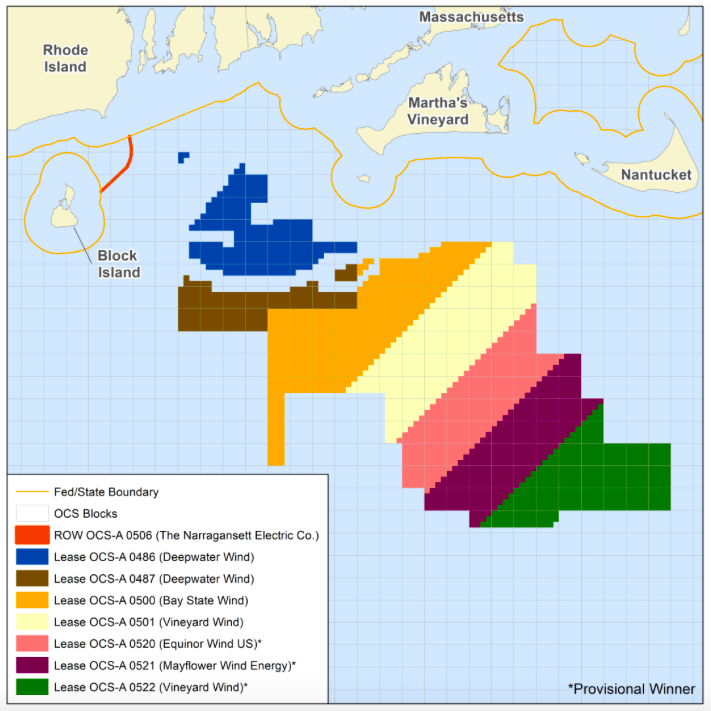
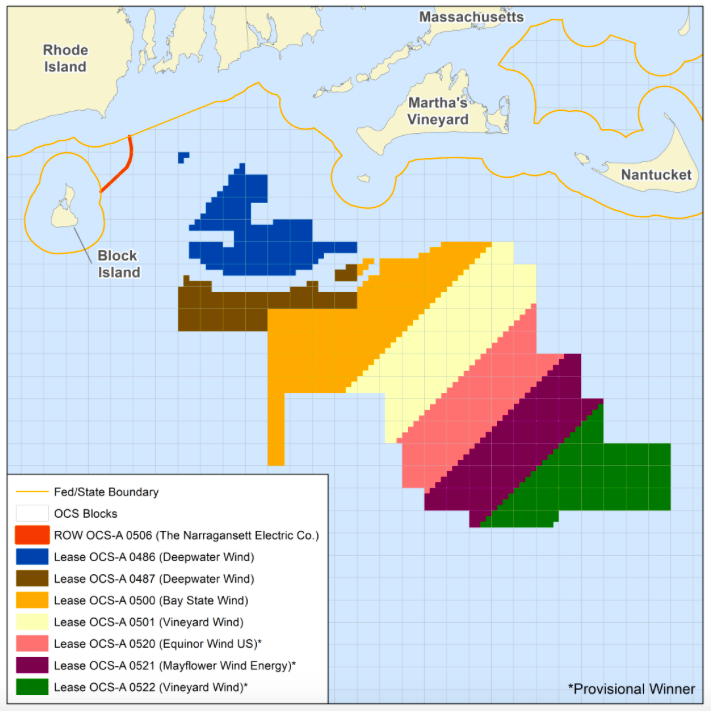
The demand for offshore wind continues, as the designated wind zones in waters south of Rhode Island, Martha’s Vineyard and Nantucket fill with projects.
At the June 11 meeting of the Rhode Island Coastal Resources Management Council (CRMC), Grover Fugate, executive director, recounted the growing pains to accommodate as much as 22,000 megawatts of offshore wind.
“This industry has literally exploded overnight,” said Fugate, as he highlighted issues confronting several projects.
The 800-megawatt Vineyard Wind facility, for instance, is deadlocked with the National Oceanic and Atmospheric Administration (NOAA) over the project’s environmental impact statement.
“That’s not something that’s been done before in the NEPA (National Environmental Policy Act) world,” Fugate said. “So we’re not quite sure where that is going to end up.”
The Nantucket Historical Commission is seeking $16 million from the Vineyard Wind developer, according to Fugate. The island town has sought funds to compensate for adverse visual impacts the 84 turbines may have on tourism.
Connecticut recently announced it wants to add 2,000 megawatts of offshore wind to the power grid but the state lacks approved offshore wind areas.
“Connecticut, of course, does not have any offshore sources,” Fugate said. “The closest ones to Connecticut are us (Rhode Island).”
Connecticut is already signed on for 300 megawatts from the Revolution Wind project located in one of four wind-lease areas that require CRMC approval.
Rhode Island has already signed up 400 megawatts from the same wind project managed jointly by Ørsted US Offshore Wind and the Massachusetts utility Eversource.
Massachusetts has a goal of 3,200 megawatts of offshore wind by 2035. It has already agreed to buy 800 megawatts from the Vineyard Wind project and the state has issued a request for proposal for an addition 800 megawatts that may come from the second half of the Vineyard Wind lease area.
Vineyard Wind went through a lengthy and contentious review for its initial wind facility and wants to meet with CRMC about a review of the second half of its wind-zone lease.
Bay State Wind, another Eversource and Ørsted project, is also moving forward with an 800-megawatt wind project in the same region. Fugate met with Bay State Wind’s CEO and discussed how the project fails to conform with a 1-mile spacing of turbines within its grid configuration.
Fugate said Bay State Wind is using a European design that doesn’t meet the fisheries requirement for U.S. projects.
“So they are taking that back under consideration,” Fugate said.
Vineyard Wind has filed a proposal to deliver 1.2 gigawatts of wind power to New York along a 95-mile transmission line from Vineyard Wind’s second wind zone, in the easternmost section of the federal wind-lease area. In all, New York is looking for some 9,000 megawatts of wind energy.
“If you add it all up it’s about 22,000 megawatts from New York to the Cape that's under consideration,” Fugate said.
He expressed frustration with the federal Bureau of Ocean Energy Management for not requiring an extended analysis of proposed offshore wind project sites.
“If you don't get two years of baseline data you have no way of measuring the impact,” Fugate said. “That may be intentional on their part, I don't know. But we have pushed for baseline data so that you can measure before and after, so that you know what you just did and how to adjust to it. But without that baseline, we don't know what we just did.”
Cable congestion
The surge in offshore wind development has created a need for transmissions lines and onshore connections to the electric grid. Wakefield, Mass.-based Anbaric Development Partners is creating a renewable-energy center on a leased site at the former Brayton Point coal-fired power plant in Somerset, Mass. Anbaric wants to install two high-voltage electric cables from Brayton Point to serve wind facilities off the coast of Massachusetts and Rhode Island. Ørsted would also like to run two cables from its Bay State Wind project to the mainland at Brayton Point.
The transmission lines would run through the the Sakonnet River along the easternmost channel of Narragansett Bay.
Fugate noted that the passage can only accommodate two power cables because of the narrow Stone Bridge corridor between Portsmouth and Tiverton. He said the activity at Brayton Point and other wind-facility operations within Narragansett Bay will be busiest during the summer, causing congestion along the East Passage, which runs between Newport and Jamestown.
“There’s a huge interference with a lot of existing uses down there,” Fugate said.
Federal review
NOAA officials will perform a three-day review of CRMC’s overall coastal program, including a public hearing scheduled for June 18. The review, required every seven years, will culminate with a report of findings that will offer suggested and required actions needed to adhere to federal grant requirements.
In a worst-case scenario, CRMC could face sanctions, which include a loss of federal funding for CRMC’s coastal programs. More than half of CRMC’s budget comes from federal sources.
NOAA’s last evaluation of CRMC was conducted in 2010.
The public hearing will be held at the Department of Administration building, conference room A, One Capital Hill, at 6 p.m.
Matunuck seawall
Hearings are expected in the fall for phase two of a seawall project on Matunuck Beach Road, in South Kingstown, R.I. The first phase was a highly controversial and meaningful case for the CRMC, as it confronts sea-level rise and shoreline erosion from climate change.
Tim Faulkner is an ecoRI News journalist.
Abstraction of liberty

Oil on canvas from Carl Mehrbach’s ”Doctrine of Liberty’’ show at Bromfield Gallery, Boston, through June 30, It’s a collection of paintings of 3D abstractions.
States' addiction promotion


From Robert Whitcomb’s “Digital Diary,’’ in GoLocal24.com
As they did with gambling (which can be highly addictive), states, including Rhode Island, Massachusetts and Connecticut, are jumping into the marijuana business. Massachusetts (along with Maine and Vermont) has fully legalized pot use and Rhode Island and Connecticut have decriminalized its “recreational’’ use. Meanwhile, it’s full speed ahead for “medical marijuana,’’ which some truly sick people use, along with others who just want to get stoned.
For the states, it’s all about trying to find new ways of increasing government revenue without raising broad-based taxes, which is usually political poison. It’s a regressive way of doing it since those wanting to gamble and smoke pot tend to be in lower socio-economic levels. Some old-fashioned types might even call this addiction promotion immoral.
Pot promoters, for their part, have long asserted that it’s not a “gateway drug’’ – an assertion that has always struck me as dubious. Perhaps they should read a new paper, in the Proceedings of the National Academy of Sciences, in which researchers looking at states that enacted medical marijuana laws saw a 23 percent increase in opioid-overdose deaths. There are lots of people with addiction tendencies. And use of one drug leads, in many people, to a desire for stronger ones.
Other studies have shown a high incidence among opiate addicts of the use and abuse of other drugs, be they amphetamines, alcohol, nicotine or others.
To read the study, please hit this link.

Negin Owliaei: Medicare for all would save lives -- and money

From OtherWords.org
One night a few years ago, my partner woke up delirious with fever, a bright rash, and joint pain so bad he couldn’t get out of bed without help. I was scared — mostly for his health, but also for our financial situation, which weighed heavily on me during our 4 a.m. ride to the emergency room.
As a freelancer, his catastrophic health insurance plan had an outrageously high deductible, and every day he couldn’t work was a day he wouldn’t get paid. I’d lost my job — and my own health insurance — earlier that year, and was still piecing together a livelihood from gig to gig. I didn’t know what we’d do if something went seriously wrong.
We left the hospital several hours later after an IV and a couple of ibuprofens — and no diagnosis. Even after insurance kicked in, we were billed about $1,000 for the experience. My partner’s joints hurt for months afterwards, but the already hefty price tag scared him off following up.
It turns out he’s far from the only one who looked at a bank statement before considering a trip to the doctor.
A recent study found that 65 million Americans had a health issue in the last year that they didn’t treat because they were worried about the cost. And 45 percent of Americans — including a third of households making more than $180,000 a year — worry they could go bankrupt over a major health issue.
Nearly half of those survey respondents said they thought U.S. health care was either the best or among the best in the world. But our actual health tells another story.
By a long shot, the U.S. has the most expensive health-care system among the 36 mostly high-income countries that make up the Organization for Economic Cooperation and Development, or OECD. But for all that money, we rank just 28th in life expectancy and 31st in infant mortality.
Nothing about this system is healthy or caring. But it doesn’t have to be this way.
In 2014, the same year we worried about a $1,000 trip to the emergency room, our insurance company spent nearly $20 million executive compensation. More than $5 million went to the CEO alone.
What if our health care system didn’t allow people to make these exorbitant profits off our pain? What — and who — could we save?
By one assessment, a universal, single-payer system like Medicare for All could expand coverage to everyone while reducing the cost to American businesses and people by as much as $310 billion — primarily by cutting down on industry bloat and by negotiating fairer pharmaceutical prices.
While our monstrously expensive health care system is maddening, the harm done to people who can’t afford to participate in that system is what’s truly enraging.
Read the stories attached to the third of GoFundMes specifically devoted to crowdsourcing money for medical costs and I’m sure you’ll feel the same. Thousands of people in the United States die preventable deaths each year simply from lack of insurance.
Fortunately, there’s a groundswell of support for a publicly funded health care system. And researchers say one proposal — the Medicare for All Act of 2019 that’s in front of Congress right now — sets “a new standard for universally and equitably guaranteeing health care as a human right in the United States.”
No one should have to worry about bankruptcy before seeking out the treatment they need. Health care is a human right, and we deserve no less than a system that provides it universally and equitably.
Negin Owliaei is a researcher at the Institute for Policy Studies and a co-editor of Inequality.org.
Chris Powell: No state is big enough to hold back a big business
Headquarters of United Technologies Pratt & Whitney unit, in East Hartford, Conn.
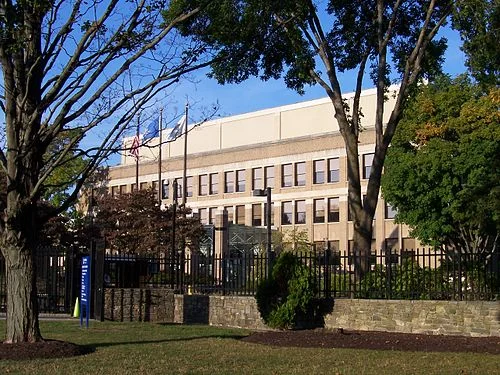
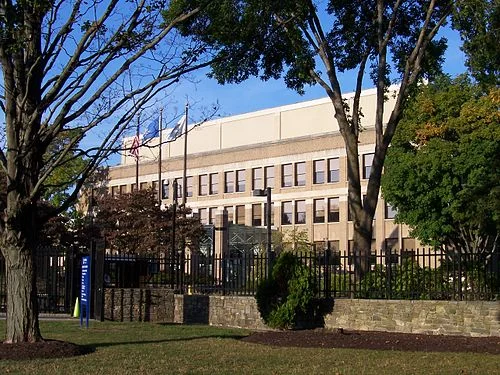
Connecticut has been more surprised than it should have been by the announcement from United Technologies Corp. that upon its merger with Raytheon Co. it will move its headquarters from Farmington to Raytheon's outside Boston, in Waltham.
As much as some politicians feared and others hoped that the move was prompted by the state's awful economic conditions, it wasn't. Rather the move was just another natural step in the evolution of a company that began a century ago as the Pratt & Whitney machine tool shop in Hartford.
The tool shop became a manufacturer of aircraft engines, merged with the predecessor of Boeing to become United Aircraft and Transport Corp., started making airplanes as well as their engines, was broken up by New Deal-era antitrust legislation, kept growing anyway, and became a conglomerate -- United Technologies -- that was heavily dependent on government contracts. As such UTC came to need political support outside Connecticut, so it diversified operations into other states and even other countries.
As a result UTC's employment in Connecticut, around 19,000, has declined to a fraction of what it was a few decades ago, and state government could have done little to prevent it. For these days no conglomerates and big government contractors are going to stick to one state. It's not just their need for national political influence for securing federal government business. It's also to avoid becoming hostage to any one predatory state government.
So Connecticut's economic future does not depend on the big companies already here. For the same reasons motivating UTC, they are more likely to expand out of state. Instead Connecticut's economic future depends on growth by smaller companies already here and entry here by companies elsewhere.
But good luck drawing or keeping anyone here while the most important thing state government has to offer anyone is the duty to share the burden of $70 billion or so in unfunded state and municipal employee retirement obligations -- that is, the duty to pay more in taxes every year [ITALICS] forever [END ITALICS] to sustain a pension-and-benefit society.
xxx
SLUSH FUND MAY EXPLAIN IT: Maybe there's a good case for giving an exemption from state freedom-of-information and ethics laws to the Partnership for Connecticut, the entity just created by billionaires Ray and Barbara Dalio and state government in the name of improving public education. The Dalios are donating $100 million, state government is appropriating an equal amount, and more donations will be sought from other wealthy people.
But if there is a good case for the exemption, nobody is making it.
Spokeswomen for Governor Lamont and the Dalios insist that the partnership should be exempt from the accountability laws because it's not really a state agency. But it was created and funded by the new state budget, a majority of its board will be state officials, and it will dispense public money to public schools. Private entities don't need any provision in the state budget exempting them from FOI and ethics laws, since those laws apply only to government agencies.
So the budget writers thought the partnership would be considered a state agency subject to the accountability laws unless another law asserted, against the evidence, that it wasn’t a state agency.
Why did the budget bestow such an exemption and exactly who asked for it and why? The spokeswomen for the governor and the Dalios were asked about this more than a week ago but have declined to provide an answer. So here's a guess: The partnership will make a great slush fund.
Chris Powell is a columnist for the Journal Inquirer, in Manchester, Conn.
'Yearnings for wholeness'

Work by Joel Moskowitz, in his joint show “Unspooled,’’ with Sylvia Sluis, at Fountain Street Fine Art, Boston, through June 30. The gallery says he “draws long, spiraling lines, mesmerized. He erases and revises over time, building up a shape that seems, finally, both loose and tightly wound. One end of the line typically hangs free, giving the viewer a way into the maze. Ink grows dense and looping like script. He blends minimalism and expressionism with a metallic sheen. His work, says Moskowitz, ‘is influenced by religious icons, yearnings for wholeness.”’
Why should Vermont grow?
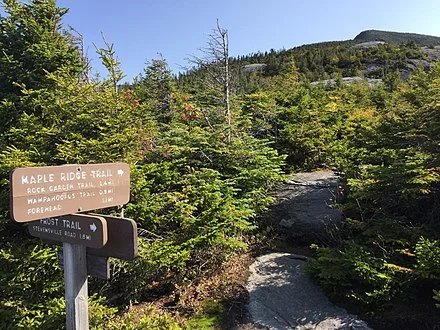
On Vermont’s Mt. Mansfield
From Robert Whitcomb’s “Digital Diary,’’ in GoLocal24.com
Vermont is doing what some other states with slow or nonexistent population growth, including Rhode Island, have talked about – bribing people to move there. In the Vermont plan, The Boston Globe reports, those who qualify get up to $10,000 over a two-year period to pay for their “moving and home-office costs, and in return, the state gets additional taxpayers to help fund schools and roads and social services.’’
Joan Goldstein, Vermont’s economic development commissioner, told The Globe: “The population needs to grow in order for the economy to grow.’’ It’s the mantra that everything must always grow.
Vermont, generally a very congenial state and one with an astonishingly low 2.3 percent jobless rate, would seem to already be doing quite well. I think that Ms. Goldstein is repeating the mantra that economic growth per se is the be-all and end-all of public policy. But economic growth per se doesn’t necessarily mean a higher quality of life.
To read The Globe’s story, please hit this link:
'Beauty of what they left behind;'

Watercolor by Joyce McJilton Dwyer in her show “Old Spaces, Ancient Places: Scotland & Ireland,’’ at 8 Bridges Gallery, Maynard, Mass., through June 29.
The gallery says: “Dwyer's watercolor paintings and pencil and ink drawings depict the landscapes, waterscapes, and archaeological sites of Scotland and Northern Ireland. She imagines what the settlement of Skara Brae and other villages might have looked like thousands of years ago in their prime. ‘Much is unknown about these cultures of so long ago, but the beauty of what they left behind caught me up,’ Dwyer says. She also replicates the land and water, putting them back in time with her watercolors. Her works create a time capsule, taking the viewer back in time to a younger, simpler world. ‘‘

Frank Carini: The uncertain future of 'the Yellowstone of the North Atlantic'

Kelp forest on Cashes Ledge
— Conservation Law Foundation photo
From ecoRI News (ecori.org)
Robert Lamb, as a Ph.D. student at Brown University, saw firsthand the “incredible diversity, breathtaking plant life, and healthy fish populations” that call Cashes Ledge home.
Lamb recently told ecoRI News that this pristine ecosystem is unlike anything else in the Gulf of Maine. That’s why he was part of a team that worked to permanently protect the 550-square-mile area that is 80 miles off the coast of Gloucester, Mass.
Led by Brown University Prof. Jon Witman, a team of divers from the Providence university, the Woods Hole Oceanographic Institution, the University of New Hampshire, and the National Park Service worked with the Conservation Law Foundation to document the bounty of marine life that exists at Cashes Ledge — a 22-mile-long underwater mountain range with average depths of 90 to 130 feet — and assess its vulnerability. This 4-minute video highlights some of that work.
The team’s efforts of four years ago, including holding roundtables and giving talks across the region, were undertaken in hopes that Cashes Ledge would be awarded a monument designation. The effort failed, but it did play a part in the creation, three years ago, of the Northeast Canyons and Seamounts Marine National Monument, the only national monument in the Atlantic Ocean.
Lamb, who now works with the Witman Lab and the Woods Hole Oceanographic Institution on various marine issues, believes that Cashes Ledge deserves the same protection, especially since the Gulf of Maine is one of the fastest-warming bodies of salt water in the world. He said the destruction of such an important underwater habitat would be devastating.
During the many dives the researchers and scientists took, censuses they conducted, and comparisons they made between Cashes Ledge and exploited coastal areas, such as the Isles of Shoals and Star Island, they found that fish biomass was about 500 times greater there than anywhere in the near shore and kelp biomass was also significantly greater, according to Lamb.
He noted that Cashes Ledge’s dense kelp forest is the most productive one in the North Atlantic.
The peaks and canyons of Cashes Ledge create nutrient- and oxygen-rich currents that support diverse habitats. The area is home to Atlantic wolffish, cod, cusk, sea stars, sea squirts, sea pens, horse mussels, anemones, rare sponges, and the largest continuous kelp forest along the Atlantic Seaboard. It also acts as a migratory pass for blue and porbeagle sharks, humpback and right whales, and bluefin tuna.
The value of Cashes Ledge has been recognized by the New England Fishery Management Council, as it has designated a large swath of the area as “essential fish habitat” for American plaice, Atlantic cod, haddock, halibut, monkfish, pollock, white hake, and witch flounder. The area is currently restricted, meaning most forms of fishing are prohibited.
Those protections, however, are “too little,” according to Lamb.
“It’s one of those places that is so unique and so beautiful … a treasure,” he said. “It merits protection for that reason alone, if not for the fisheries benefits. If you have a place where fish are allowed to grow unchecked and unimpeded by fishing, that creates a surplus of individuals that will swim, or disperses larvae, to other places that then can he caught, so it indirectly benefits fisheries.”
The partially protected area is also home to Ammen Rock, a peak so tall that it disrupts the Gulf of Maine current and creates upwellings of cold, nutrient-rich water which sustains the ledge’s vast variety of life.
Noted marine biologist Sylvia Earle has called Cashes Ledge “the Yellowstone of the North Atlantic.”
Modern commercial fishing technologies, however, make Cashes Ledge susceptible to damage. A bottom trawl, for example, could strip clear the kelp forest on Ammen Rock and completely alter the ecosystem, according to the Conservation Law Foundation. The Boston-based environmental advocacy organization has noted that some anemone populations could take up to 230 years to recover from a single drag of a bottom trawl.
Protected areas also have been shown to be more resilient to climate change, and provide sea life places to adapt to warming and acidifying waters.
See this video about Cashes Ledge.
Frank Carini is editor of ecoRI News.