
Vox clamantis in deserto







David Warsh: Judge Ellis and the rise of conservative Republican judges
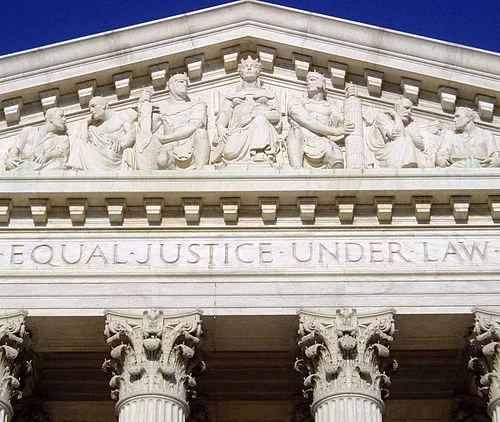
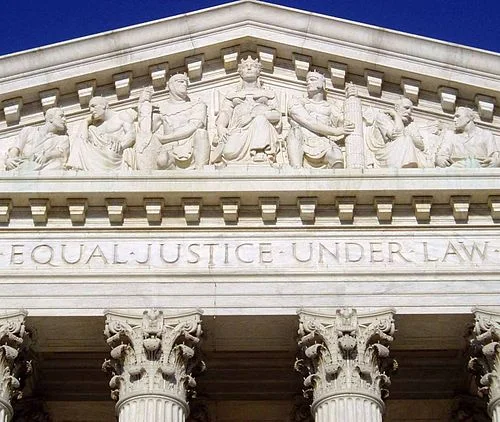
The front of the U.S. Supreme Court Building.
The controversial four-year prison sentence {considered very light by some legal observers} handed down for Paul Manafort last week will bring renewed attention to the career of Judge T.S. Ellis, of the U.S. District Court for the Eastern District of Virginia. It’s an interesting story, to be sure. After graduating from Princeton in 1961, Ellis piloted F4 Phantoms for the Navy before graduating from Harvard Law School, in 1969, and Magdalen College, Oxford, in 1970. He practiced law in Richmond, Va., until 1987, when President Ronald Reagan nominated Ellis to the district bench, the same day he proposed Robert Bork for the Supreme Court.
That was the summer that former District Court Judge Lawrence Walsh began his investigation of the Iran Contra affair, as special counsel to the Department of Justice. (He had served as Deputy Attorney General during Dwight Eisenhower’s second term.) Judge Ellis’s distaste for wide-ranging independent prosecutors is said to have begun then, and escalated during the Whitewater proceedings, along with the aversion of Congress.
I spent last week reading The Rise of the Conservative Legal Movement: The Battle for Control of the Law (Princeton, 2008), by Steven Teles, of Johns Hopkins University. It is gem of a book, quite unlike several other histories of various aspects of the conservative movement that I have read in that Teles, a liberal, musters considerable sympathy for those whose story he is telling.
Rise was his second, after obtaining his PhD in political science at the University of Virginia . (WhoseWelfare: AFDC and Elite Politics [University of Kansas, 1996] was his first.) For much of his research, Teles worked as a dispassionate reporter, interviewing principals and gaining their trust. Many of the documents he used were given to him. “Serious political earning,” he writes, “requires a view from the inside, and with it an effort to empathize with the challenge faced by the actors from who one wishes to learn,”The Rise of the Conservative Legal Movement casts no light on Judge Ellis’s own intellectual odyssey, but it brilliantly illuminates his times.
Teles begins by sketching what it was that the conservative legal movement was up against, a liberal legal movement with deep roots in the New Deal. The National Association for the Advancement of Colored People and the American Civil Liberties Union in the 1950s fashioned a new activist approach to the law, and by the early 1960s the leadership of the professional bar began to join in. A turning point was the landmark decision in Gideon vs Wainwright, in 1963, in which the Supreme Court required states to provide legal representation to persons accused of serious crimes who could not afford counsel. Oversight by the Office of Economic Opportunity gave rise to legal aid societies.
Conservative backlash followed, but was largely ineffective. Former American Bar Association President Lewis Powell wrote a memo for the U.S. Chamber of Commerce shortly before Richard Nixon nominated him to the Supreme Court, arguing that legal activism posed a grave threat to the very survival of American business, but that businessmen had “responded – if at all – by appeasement, ineptitude, and ignoring the problem.”
But the first generation of conservative public interest groups was ineffective. (During his own court tenure Powell was seen as a centrist, not a conservative.) Efforts under Nixon to “defund the Left” worked only at the margins. Teles writes, “Conservatives slowly recognized that they needed to develop their own apparatus for legal change, one that could challenge legal liberalism in the classroom, the courts, and in legal culture.”
The way out of the wilderness turned out to be intellectual. The law and economics movement, founded by Henry Simons and Aaron Director after World War II at the Law School of the University of Chicago, gathered steam when Ronald Coase joined the faculty in 1958. Henry Manne, alumnus and serial entrepreneur, introduced the new thinking to Federal judges, starting at the University of Rochester. And law professor Richard Posner, later an influential Federal appellate judge, published an influential textbook, Economic Analysis of Law, in 1973. Teles doesn’t stint on drama here, dwelling on Manne’s failed attempt to found a “Hoover Institution East” at Emory University in the early 1980s.
Similarly, Teles’s account shows how the Federalist Society filled a need. Organized with great fanfare in 1982, dedicated to burnishing the credentials of conservative lawyers, the Federalist Society opened chapter in significant law schools as quickly as possible and only slowly developed a national office. At first it existed mainly to foster debate, to attract new members. Only after the defeat of the Bork nomination did the society begin to conceive of itself as a “counter-ABA,” grooming and vetting candidate for office.
It was when the first generation of grassroots activists and business executives gave way to what Teles calls a “new class” of academics and legal professionals that the conservative legal movement found its feet, even though much trial and error remained. The rise of the conservative legal movement is too often told in terms of a “myth of diabolical competence,” by writers on the right as well the left. It turned out that three kinds of networks were required – intellectual, professional, and political, in addition to imaginative patrons. The other ingredient, Teles continues, is frank internal criticism. The most important document in reorienting conservative strategy was a testy memo written for the Scaife Foundation in 1980 that circulated widely among conservative foundations, criticizing donors’ previous efforts and pointing the way to the Federalist Society.
As noted, Teles is a liberal. His third book was Prison Break: Why Conservatives Turned against Mass Incarceration (with David Dagan, Oxford 2016); his fourth (with Brink Lindsey), The Captured Economy: How the Powerful Enrich Themselves, Slow Down Growth and Increase Inequality (Oxford 2017). With Robert Saldin, of the University of Montana, he is working on a fifth, about Republican opponents of Donald Trump. Meanwhile, The Rise of the Conservative Legal Movement remains an enduring contribution. A journey of a thousand miles begins with a single step.
David Warsh, a veteran economics and political columnist, is proprietor of Somerville, Mass.-based economicprincipals.com, where this piece first ran.
Tim Faulkner: Business opposition to R.I. ban on plastic bags is fading

From ecoRI News (ecori.org)
Several opponents of a statewide ban on plastic retail bags in Rhode Island are now backing, or at least remaining silent on the issue, legislation to make the ban a reality.
In previous years, the Rhode Island Hospitality Association (RIHA), the Rhode Island Food Dealers Association, and the Greater Providence Chamber of Commerce were staunch critics of plastic bag prohibitions. The business groups had argued the virtues of plastic bags, such as their low cost, light weight, durability, and versatility. They railed against what they deemed overregulation by the state and the burden on retailers.
The RIHA said it had a change of heart, in part, because of the 11 cities and towns that have passed municipal bans. Although the bans are similar if not identical in each community, RIHA wrote in a letter that “businesses have been left scrambling to implement a patchwork of laws, all of which have different requirements.”
At a March 6 Senate hearing, business groups praised Gov. Gina Raimondo for inviting them to join the Task Force to Tackle Plastics. RIHA’s president and CEO Dale Venturini served as the task force’s co-chair.
“As soon as the business community was engaged, we came to the table in good faith and now we have a bill in front of us that pretty much every major business association is in support of,” said Sarah Brakto, RIHA’s legislative liaison.
One of the most persistent opponents of a statewide bag ban had been Tony Fonseca, co-owner of the food packaging distribution company Packaging & More Inc. of Central Falls. Fonseca also served on the plastics task force and applauded the 22-member committee for its diversity.
He was swayed by a latest bag ban bill (S410) because it includes a mandatory 5-cent fee on paper bags. The fee, he said, will improve the environmental benefits by encouraging shoppers to use reusable bags instead of paper bags, which have their own environmental drawbacks.
“I want (the fee) to be there to change consumer behavior,” Fonseca said.
He also liked that the fee goes to the retailer, allowing them to recoup the higher costs for paper bags.
The American Chemistry Council (ACC) didn’t support the bill, but didn’t object either. The ACC, which represents the largest fossil-fuel and chemical companies in the world, has fought bans on plastics and chemicals in Rhode Island and across the country. Its lobbyists also pushed for preemption laws that prevent municipal bans.
The ACC did speak against a similar bill (S268) that includes a ban on polystyrene foam containers.
Senate President Dominick Ruggerio, D-North Providence, sponsored the stand-alone bag ban bill at the request of the Rhode Island Department of Environmental Management.
There was only one objection to the mandatory 5-cent fee, which killed a Providence bag ban in 2018. The American Forest & Paper Association submitted a letter saying the fee wrongly penalizes paper bags — “a commodity that is recyclable, compostable, made of recycled material, and reusable.”
Several reusable bag supporters, including Raimondo, want to start a program to issue reusable bags to low-income residents.
“I will commit to implement a State-led program to distribute reusable bags to Rhode Islanders — with a focus on vulnerable populations — prior to a prohibition going into effect,” Raimondo wrote in a letter to the Senate committee.
If approved, the bag ban begins Jan. 1, 2021, or a year from passage.
Environmental groups uniformly backed the bill. A few asked that the definition of reusable bags include stitched handles, so that thicker plastic bags aren’t offered by retailers.
The bill was held for further study. A House version of the bill has yet to have a hearing.
Tim Faulkner is a journalist with ecoRI News.
Who makes New England's weather?
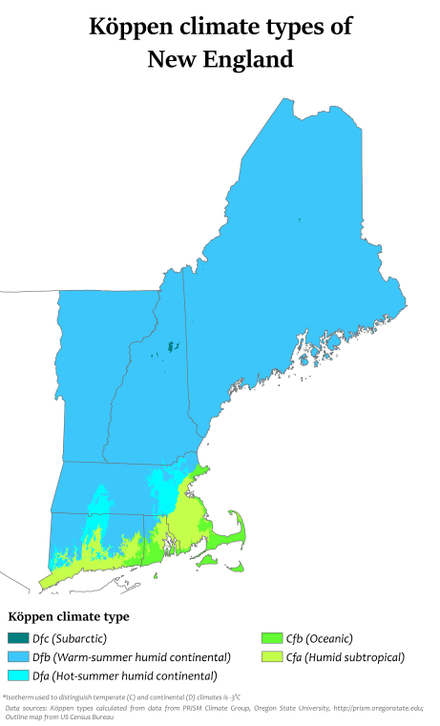

“I reverently believe that the Maker who made us all makes everything in New England but the weather. I don't know who makes that, but I think it must be raw apprentices in the weather-clerk's factory who experiment and learn how, in New England, for board and clothes, and then are promoted to make weather for countries that require a good article, and will take their custom elsewhere if they don't get it.’’
— Mark Twain
An end to a suicidal Worcester intersection?
From Robert Whitcomb’s “Digital Diary’’, in GoLocal24.com
Maybe something especially good (maybe even saving lives!) will come out of construction of a stadium in downtown Worcester to house what’s now called the Pawtucket Red Sox: It will apparently eliminate Kelley Square, perhaps the most dangerous and confusing intersection in Massachusetts. To read a darkly humorous Globe article on this, please hit this link.
To see a video, please hit this link.

Chris Powell: In school sports, pretending boys are girls cheats the girls

Trangender Pride Flag.
Two Connecticut high school boys who want to be girls keep winning track meets in the girls division as political correctness keeps trumping fairness. For few people dare to complain about it -- shamefully, not even many parents of female athletes who train hard but may never be recognized as winners as long as athletic conference rules pretend that boys can be girls.
The continued victories of the transsexual runners show that gender is biological and physiological reality, not some mere "social construct," and that males tend to have natural athletic advantages.
There may be no reason to divide some sports leagues into male and female divisions -- skill levels and age may be better ways of organizing leagues to assure the competitiveness of teams -- but for individual achievements, each sex must enjoy its own division if girls and women are to enjoy equal opportunity.
It's a free country and males should be free to present themselves as females and vice versa just as people should be free to live their lives as they choose. That's nobody's business but their own. But those who accept biological and physiological reality have rights, too. Parents especially should start speaking up for them, lest they implicitly teach their daughters to yield to PC intimidation.
* * *
A HOLIDAY FOR DEMOCRATS: Would designating Election Day as a state holiday encourage voter participation? That is nominally the premise of legislation introduced by Sen. Marilyn Moore, D-Bridgeport, but it's wrong.
For designating Election Day as a state holiday will benefit only state and municipal government employees, the foremost constituency of the Democratic Party. State government will have to observe the day off but private-sector employers will not have to do so any more than they have to observe any of the gratuitous state holidays that already benefit only government employees, like Columbus Day and Good Friday.
The Election Day holiday legislation will benefit government employees not just by giving them another paid day off but also by freeing them to work on Election Day in the campaigns of Democratic candidates without having to exchange another paid holiday, as many government employees now do to maintain their control of the party.
Even if the legislation is amended to subtract Columbus Day or Good Friday from the state government holiday list -- which should be done anyway -- designating Election Day as a holiday still will encourage even more government employees to campaign for Democrats on the day of voting.
Thus the bill is just a sneaky form of one-sided public financing of campaigns.
* * *
MURPHY ERASES UK'S BORDERS TOO: In a recent essay Connecticut U.S. Sen. Chris Murphy warned the United Kingdom against leaving the European Union and Americans against encouraging British independence. How ironic that Britain should get such advice from a high official of a country that won its own independence through war against Britain when it was a colonial power.
But the advice is less ironic coming from Murphy. For while Britain voted to leave the E.U. in large part to regain control of its borders and immigration policy, Murphy does not believe that his own country should control its own borders any more than Britain should. No, Murphy believes in "catch and release" for illegal immigrants and "sanctuary" cities and states that nullify federal immigration law.
Loss of control of immigration means a country's dissolution, as the British are figuring out. Will Americans figure it out?
Chris Powell is a columnist for the Journal Inquirer, in Manchester, Conn.
Well then get plenty of sleep!

“Insomnia’’ (print), by Mei Fung Elizabeth Chan, in the Duxbury (Mass.) Art Association’s Winter Juried Show, through April 13 at the Art Complex Museum, Duxbury.
n
Royals and broken Brexit; Flooding north; Battles in Brazil; Taiwan & China

At the PCFR: The Royals Close Up; Why They Flee Honduras; Brazil’s New Boss; Trading With and Tension in Taiwan
Herewith some upcoming talks at the Providence Committee on Foreign Relations (thepcfr.org; pcfremail@gmail.com), which are held at the Hope Club. Please consult thepcfr.org for information on how to join the organization and other information about the organization.
On Thursday, March 14, comes Miguel Head, now a fellow at Harvard’s Shorenstein Center. He spent the past decade as a senior adviser to the British Royal Family. He joined the Royal Household as Press Secretary to Prince William and Prince Harry before being appointed in 2012 as their youngest ever Chief of Staff.
Previously, Mr. Head was Chief Press Officer at the UK Ministry of Defense, and worked for the Liberal Democrat party in the European Parliament. While at the Shorenstein Center, Mr. Head is doing research into how social inequalities in Britain are fomenting the politics of division (which helped lead to the Brexit vote) and how non-political leadership, working collaboratively with traditional and digital media, can play a role in bringing disparate communities together. At the PCFR, he’ll talk about those things as well comment on the past and current role of the Royal Family, and, indeed, life with the Royals.
xxx
At the April 4 PCFR dinner, James Nealon, the former U.S. ambassador to Honduras, will talk about Central America in general and Honduras in particular, with a focus on the conditions leading so many people there to try to flee to the United States – and what the U.S. can and should do about it.
A career Foreign Service officer, Nealon held posts in Canada, Uruguay, Hungary, Spain, and Chile before assuming his post as Ambassador to Honduras in August 2014; Nealon also served as the deputy of John F. Kelly, while Kelly was in charge of the United States Southern Command.
After leaving his ambassadorship in 2017, Nealon was appointed assistant secretary for international engagement at the Department of Homeland Security by Kelly in July. During his time as assistant secretary, Nealon supported a policy of deploying Homeland Security agents abroad. He resigned his post on Feb. 8, 2018, due to his disagreements with the immigration policy of Donald Trump, and, specifically, the withdrawal of temporary protected status for Hondurans.
xxx
Then, on April 10, the speaker will be Prof. James Green, who will talk about the political and economic forces that have led to the election of Brazil’s new right-wing president, Jair Bolsonaro – and hazard some guesses on what might happen next.
Professor Green is the Carlos Manuel de Céspedes Professor of Latin American History, director of Brown’s Brazil Initiative, Distinguished Visiting Professor (Professor Amit) at Hebrew University, in Jerusalem, and the Executive Director of the Brazilian Studies Association (BRASA), which is now housed at the Watson Institute at Brown.
Green served as the director of the Center for Latin American and Caribbean Studies at Brown University from 2005 to 2008. He was president of the Brazilian Studies Association (BRASA) from 2002 until 2004, and president of the New England Council on Latin American Studies (NECLAS) in 2008 and 2009.
xxx
The PCFR hopes to announce a May speaker soon
On June 4, Douglas Hsu, a senior Taiwanese diplomat who currently oversees that nation’s interests in New England, will speak to us about Chinese military and other threats against Taiwan, and other matters, including doing business in Taiwan. That country, by the way, is among Rhode Island’s largest export markets.
WPI researchers endorse neurodiversity in the workplace

On the WPI campus.
This is from The New England Council
‘‘Worcester Polytechnic Institute (WPI) has published a new report describing the unique advantages that employees with autism, dyslexia or ADHD can bring to high tech firms. Hiring these neurodiverse employees can help companies by providing broader perspectives and new ways to solve problems.
The report notes that while workers with neurodiverse conditions may face unique challenges throughout their day, they may contribute particularly great concentration skills, visual abilities, and other advantageous skills. While many companies have initiatives to promote gender, sexual orientation and religious diversity, neurodiversity is not explicitly endorsed. Neurodiverse workers are a growing portion of the workforce, with 1 in 59 children diagnosed with autism spectrum disorder, and 6.1 million children between 2 and 17 years old having been diagnosed with ADHD.
Eleanor Loiacono, director of the IDEA Hub at WPI, commented, “I see so many talented young people being defined and limited by what others say they can’t do, when in fact they have so much to offer – wonderful abilities that make them a valuable asset to businesses and society as a whole.”
It's better that way

Plaque in Concord, N.H.
— Photo by Billy Hathorn
“New Hampshire polling data are unreliable because, when you call the Granite State's registered Republicans and independents in the middle of dinner and ask them who they're going to vote for, they have a mouth full of mashed potatoes and you can't understand what they say.’’
— P.J. O’Rourke
'Too much dwelling on what has been'

The house had gone to bring again
To the midnight sky a sunset glow.
Now the chimney was all of the house that stood,
Like a pistil after the petals go.
The barn opposed across the way,
That would have joined the house in flame
Had it been the will of the wind, was left
To bear forsaken the place’s name.
No more it opened with all one end
For teams that came by the stony road
To drum on the floor with scurrying hoofs
And brush the mow with the summer load.
The birds that came to it through the air
At broken windows flew out and in,
Their murmur more like the sigh we sigh
From too much dwelling on what has been.
Yet for them the lilac renewed its leaf,
And the aged elm, though touched with fire;
And the dry pump flung up an awkward arm;
And the fence post carried a strand of wire.
For them there was really nothing sad.
But though they rejoiced in the nest they kept,
One had to be versed in country things
Not to believe the phoebes wept.
“The Need of Being Versed in Country Things,’’ by Robert Frost
Progress toward power line in Maine

From Robert Whitcomb's "Digital Diary,'' in GoLocal24.com
Good for new Maine Gov. Janet Mills and some environmental groups for backing, against, among other interests, fossil-fuel providers and some local renewable-power providers, a $1 billion project by Central Maine Power to bring some of Quebec’s copious hydro-electric power to Massachusetts along a route in the mountainous and lightly populated western part of the Pine Tree State. This ought to reduce New England’s dependence on gas and oil being used to generate electricity.
Happily, the powerful and well-heeled Conservation Law Foundation supports the project.
Of course, the power line’s construction would disrupt some wildlife and some other environmental elements along the power line route but not nearly as much as burning gas, oil and coal does.
To read more, please hit this link:
https://nenc.news/mills-2-environmental-groups-back-cmps-1-billion-western-maine-transmission-project/
Mountain view

From the show “Alaska in Two Weeks,’’ by Ernest Stonebraker, at 6 Bridges Gallery, Maynard, Mass., through April 6. He is mostly a painter, but he took stunning photos on a recent two-week land and sea trip.
'Master of winds'

"Ere frost-flower and snow-blossom faded and fell,
and the splendor of winter had passed out of sight,
The ways of the woodlands were fairer and stranger
than dreams that fulfill us in sleep with delight;
The breath of the mouths of the winds had hardened on tree-tops
and branches that glittered and swayed
Such wonders and glories of blossom like snow
or of frost that outlightens all flowers till it fade
That the sea was not lovelier than here was the land,
nor the night than the day, nor the day than the night,
Nor the winter sublimer with storm than the spring:
such mirth had the madness and might in thee made,
March, master of winds, bright minstrel and marshal of storms
that enkindle the season they smite."
”March: An Ode,’’ by Algernon C. Swinburne

Llewellyn King: Electrifying news about airplanes

The electric Pipistrel Taurus G4 taking off from the Sonoma County Airport, in California
The case for electric airplanes is overwhelming.
The problems of today’s aircraft are well-known: noise and pollution. Homeowners may hate the noise, but pollution is the bigger issue.
While jet aircraft account only for a small part of the greenhouse gas releases worldwide, it is where they release them that makes them especially damaging. Nasty at sea level; at 30,000 feet and above, they are potent contributors to the greenhouse problem.
The answer is to begin to electrify aviation.
The need has not escaped the big air frame makers. Boeing in the United States and Airbus in Europe both have electric airplane programs. Tech giants Uber, Google and Amazon all want to develop electric vehicles to use as ride-sharing cars, pilotless air taxis and delivery drones.
A raft of small companies worldwide is working on new electric airplanes, usually just two-seaters. Some are flying but batteries limit their airborne endurance to one to two hours.
Already, there is an experimental, pilotless air taxi system in Abu Dhabi. Frankfurt airport is about to announce a system as is Singapore.
Enter André Borschberg: a Swiss innovator, pilot, entrepreneur and passionate environmentalist. He may know more about electric propulsion than anyone else and is a great believer in the electric future of flying.
Borschberg, along with Swiss balloonist Bertrand Piccard, built and flew the solar-powered electric airplane, Solar Impulse 2, around the world, landing triumphantly in Abu Dhabi on July 26, 2016.
Flying the first aircraft they built, Solar Impulse 1, Borschberg eclipsed all records for endurance by staying aloft alone for 117 hours. He holds 14 world flying records.
Borschberg and Piccard created the Solar Impulse Foundation that is seeking to identify and assist 1,000 technologies that help the environment. Those listed so far range from a plastic recycling system to self-contained toilets to village-scale desalination plants.
“They have to be able to make a profit,” Borschberg told me in a telephone interview. He believes the dynamics of the free market must be put in play to solve the growing global environmental crisis.
In his latest undertaking, Borschberg has spun off a company, H55, to develop systems for electric aircraft and to help electric aircraft manufacturers with H55 know-how. The company has developed a single-seat, acrobatic aircraft with an hour’s endurance. They hope to make a two-seater which can stay aloft longer.
In February, Silicon Valley venture-capital firm Nanodimension signed on for a first round of financing. H55 has turned onto the runway and is beginning to accelerate.
Borschberg is a pilot for all seasons. He learned to fly in the Swiss Air Force and is rated in fighter jets and helicopters. For fun he does aerobatics, as does Piccard.
Borschberg graduated with a degree in engineering and aerodynamics from the Federal University of Technology in Lausanne, Switzerland, and with a management degree from the MIT Sloan School of Management.
It is not only the environmental aspects of electric flight that charm Borschberg, but also the incredible efficiency. He says electric-powered airplanes are 60 percent more efficient than those with fossil-fueled engines and can be very precisely tuned because of the immediate availability of torque when the current is flowing.
That same efficiency with appropriate software, extends to the control of the aircraft. “A simple electric drone, which you can buy in any store, is more stable in wind turbulence than a helicopter,” Borschberg says. These properties will make vertical takeoffs and landings a reality for many new aircraft, he says.
The airplane of the future will be at an airport near you soon -- and it may not need to use the runway.
John Gillespie Magee’s poem “High Flight,” loved by aviators, begins, “Oh! I have slipped the surly bonds of Earth/And danced the skies on laughter-silvered wings.”
A new generation of engineers from Boeing to Borschberg to backyard tinkerers wants to slip the surly bonds of petroleum.
Llewellyn King is executive producer and host of White House Chronicle, on PBS. His email is llewellynking1@gmail.com. He’s based in Rhode Island and Washington, D.C.
ReplyReply allForward
Let managers manage; watch the rowers from a fixed-up ‘Red Bridge’

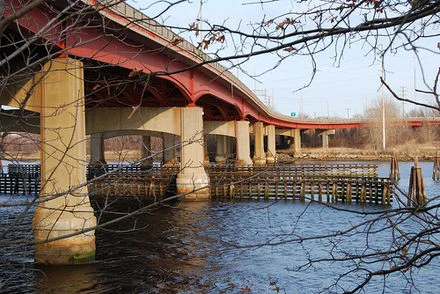
The Henderson Bridge (aka “Red Bridge”) over the Seekonk River.
Adapted from Robert Whitcomb’s “Digital Diary,’’ in GoLocal24.com
Some good and bad news in Rhode Island the past few days.
Let’s start with the bad news. The well-regarded and reformist Providence schools superintendent, Christopher Maher, has decided to step down. And while he gave a frequently used explanation for exits – to spend more time with his family – another reason seems to be that he’s frustrated by the bureaucratic limits on his ability to get things done to improve the city’s schools – improvement they urgently need.
The fact is that the superintendent needs far more freedom to improve the system. World War II Adm. Chester Nimitz famously said: “When you’re in command, command,’’ but the Providence schools chief is remarkably hamstrung. As Hillary Salmons, executive director of the Providence After School Alliance, told The Providence Journal in the Feb. 27 article “Another schools chief is leaving”:
“When the City Council controls any {expenditures} over $5,000 how can anyone manage his resources? It’s going to be hard to attract leadership with a district hamstrung by these structural impediments.’’
People in authority should be given, well, authority to do what needs to be done and of course be held accountable for their decisions. I keep citing my friend Philip K. Howard’s books on red tape and bureaucratic paralysis, the latest entitled Try Common Sense. It seems very appropriate here.
There need to be changes to enable future Providence school superintendents to actually manage their department.
xxx
On a happier note is news that the nearly crumbling Henderson Bridge (aka “Red Bridge”), connecting the East Side of Providence with East Providence, will be rebuilt in a fashion to make it more of a public asset.
The new version will be narrower, with only two lanes instead of the current unnecessary four lanes (put in for a superhighway that never happened), but will include bike/pedestrian paths in both directions. Thus the bridge will offer people in our area yet another way to enjoy the views up and down the Seekonk River as it enters Narragansett Bay, and get exercise while doing it. It will be a fine place from which to watch the Brown crew and other rowers on the river,
Kudos to the Rhode Island Department of Transportation for this plan.
By the way, my favorite writer about bridges and other transportation infrastructure is Henry Petroski – e.g., see his book The Road Taken: The History and Future of America’s Infrastructure.
Smiling welcome

“Coming to America” (pigment print on canvas), by Siddharth Choudhary, in his show “Of No Fixed Address,’’ at Artspace Maynard (Mass.) through April 5.
The gallery says: “The show is a collection of digital works. The artist has spent the past decade living in Mumbai, Paris and Hong Kong before finally arriving in New England. He draws upon his memories of travel to create works that explore relationships that transcend borders, and works of art that defy labels.’’
Connecticut's long-sluggish economy has turned a corner.

The train station in Stamford, which is closely connected with the Manhattan money machine.
— Photo by Noroton
The economy of Connecticut, still the richest state on a per-capita basis, is looking up after a long sluggish time, reports Bloomberg. To read about it, hit this link.
'Slip to silence'
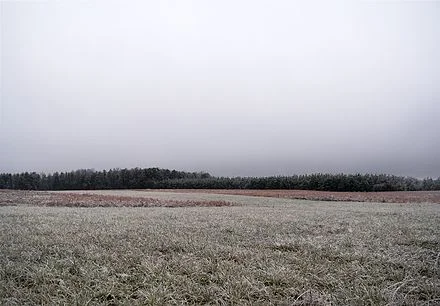
‘March days return with their covert light,
and huge fish swim through the sky,
vague earthly vapors progress in secret,
things slip to silence one by one.’’
— The late Pablo Neruda (but since he lived in the Southern Hemisphere, in Chile, he would have seen March as the start of winter, not spring!)
As usual, favoritism for rich kids
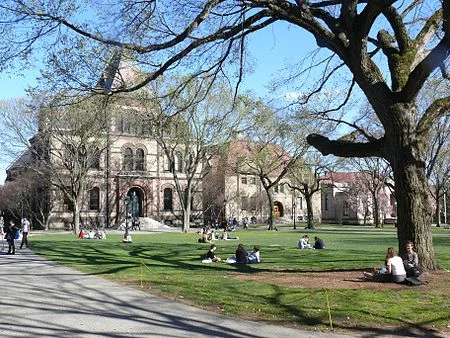
On the Brown campus in spring.
From Robert Whitcomb’s “Digital Diary,’’ in GoLocal24.com
Does Brown University tend to suck up to rich applicants and rich current students, and their parents, and sometimes give them preferential treatment? Yep. Does this help perpetuate the privilege and power of the richest people? Yep.
But most, maybe all American “elite institutions’’ do this sort of thing. That’s just one of many reasons that wealth-and-status-obsessed America has become among the most socio-economically stratified Western nations, with among the lowest rates of social mobility.
There are few signs that the preferences, varying by country, given to those born on third base will change, in America and elsewhere. Complaining about it is a little like complaining that rocks are hard.
Tim Faulkner: Bill would open R.I. state land to wild-mushroom foraging

From ecoRI News (ecori.org)
Wild-mushroom picking is a growing hobby in Rhode Island and a new bill would open up state land to foraging.
Wild mushrooms are typically found growing on decaying organic matter in cool, moist areas such as forests. And Rhode Island is running low on this habitat, prompting a request for access to land owned or managed by the Department of Environment (DEM).
The bill (H5445) allows the taking of mushrooms but only for personal use and personal consumption, with rules and regulations set by DEM.
The bill was introduced by Rep. David Place, D-Burrillville, at the request of an unnamed wild mushroom picker in his district. DEM, so far, hasn’t taken a stance on the legislation, but Place explained that DEM adheres to the Leave No Trace principles of conservation. The seven tenets include the rule “leave what you find” and avoid the removal of natural items.
Robert Burke, owner of the downtown restaurant Pot au Feu, said the interest in mushroom foraging is an extension of the farm-to-table and locavore movement. He noted that harvesting mushrooms is like picking apples and that taking the fruit does not harm or inhibit future growth.
“It’s a natural process. The fruit has to be shed by the organism. It has to detach from it,” Burke said. “And if it’s not done by someone foraging it will happen naturally with the mushrooms dying within a period of days or weeks anyway.”
Burke also noted that Rhode Island’s founder, Roger Williams, was a forager and therefore mushroom picking should be a right much like harvesting seaweed. DEM should regulate mushroom hunting the same way it issue licenses for fishing and quahogging, he said.
Although DEM doesn’t issue mushroom-hunting licenses, it does offer tips for cultivating wild mushrooms. According to the University of Rhode Island, chicken of the woods and honey mushroom are the most common edible wild mushrooms in the state. They suggest mushroom hunters bring an identification book or an experienced forager to avoid poisonous mushrooms.
The hearing was the first for the bill and therefore held for further study.
Tim Faulkner is a journalist with ecoRI News.