

But sell the reservoir?
From Robert Whitcomb’s “Digital Diary,’’ in GoLocal24.com.
‘Congratulations to Providence Mayor Jorge Elorza’s administration for ending fiscal 2018 with a $9.2 million surplus, for the third surplus in as many years. This leaves a modest rainy day fund of $11.3 million.
Mayor Elorza’s chief of staff, Nicole Pollock, said “This surplus was achieved primarily through realistic budgeting practices, a steady increase in tax collections, a hiring freeze on nonessential employees, better departmental revenue and reduced operational expenses.’’
But the last few years have been relatively prosperous. What happens in the next recession? And what about the city’s unfunded pension liability of $1 billion?
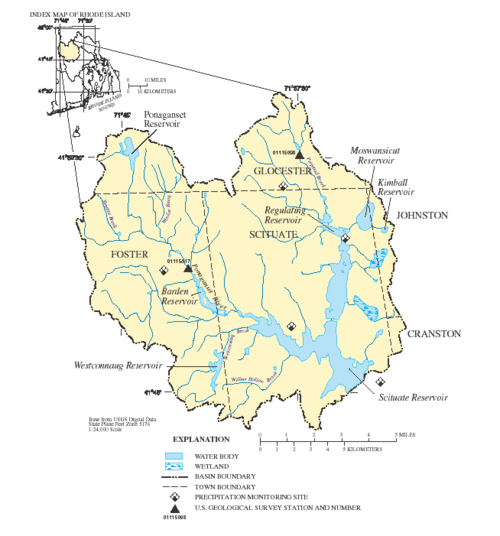
So the city should continue to investigate whether it can sell the Scituate Reservoir for several hundred million dollars.

Olivia Alperstein: Trump's EPA seeks to weaken mercury rules

Via OtherWords.org
While Americans were quietly preparing to ring in the New Year, Trump’s Environmental Protection Agency gave families a deadly present to start the year off wrong.
On Dec. 28, the Environmental Protection Agency announced a proposal that would effectively weaken the Mercury and Air Toxics Standards (MATS), which protect American families from mercury and other harmful air pollutants emitted by power plants.
The EPA “proposes to determine that it is not ‘appropriate and necessary’ to regulate” these emissions, the EPA wrote in a statement. This means that the regulations will lose the necessary legal mechanism that actually enables them to actually be enforced.
These regulations save a lot of lives — 11,000 every year, according to the EPA’s own data — and they prevent 130,000 asthma attacks annually. Stripping this regulatory power virtually guarantees more asthma attacks and more preventable deaths.
For families, those aren’t just numbers.
At any age, exposure to even small amounts of mercury can lead to serious health problems. The worst health impacts include irreparable brain development defects in babies and young children, and cancer, heart disease, lung disease, and premature death among people of all ages.
Infants, young children, and pregnant mothers are particularly vulnerable to mercury — as well as to arsenic, lead, dioxin, and acid gases, which are also regulated by MATS.
Before MATS, coal-fired power plants were the largest source of these pollutants. American families paid the price for lack of federal regulations.
I’m a fairly young person — I grew up with dire warnings about exposure to these chemicals. Yet despite overwhelming evidence of their health effects — and the longstanding availability of proven control technologies — it took over 20 years after the 1990 Clean Air Act Amendments to establish federal regulations on power-plant emissions of these harmful substances.
Through the MATS program, Congress identified approximately 180 hazardous air pollutants, including mercury, and directed the EPA to draft regulations governing their emissions from power plants.
The impact has been enormous. A significant majority of top power companies have already complied with MATS, for a fraction of the originally estimated cost. It’s estimated that over 5,000 emergency and hospital visits and 4,700 heart attacks have been prevented each year as a direct result of these vital regulations.
In fact, one of the EPA’s own resources on the program highlights its widespread benefits: “The benefits of MATS are widely distributed and are especially important to minority and low income populations who are disproportionately impacted by asthma and other debilitating health conditions,” it notes.
Undoing critical health and safety standards and putting more Americans in danger goes against the very purpose of the EPA. Even utility companies, who invested in complying with the standards, are calling for the EPA to keep MATS fully intact.
Younger generations deserve to grow up protected from these harmful and deadly substances. The EPA wants to make mercury and air toxics deadlier again. We can’t let that happen.s
Olivia Alperstein is the media relations manager at Physicians for Social Responsibility, which is a party to current litigation to protect and strengthen MATS.
Tim Faulkner: Fishermen may take buyouts to settle dispute with Vineyard Wind

— Vineyard Wind image
From ecoRI News (ecori.org)
NARRAGANSETT, R.I. — Fishermen are not happy with the latest offer from Vineyard Wind and appear headed to buyouts and other compensation rather than a redesign of the proposed 84-turbine offshore wind project.
At the project’s most recent meeting, Jan. 3 at the University of Rhode Island Coastal Institute, Vineyard Wind had no new map or compensation plan to share with the Coastal Resources Management Council’s Fisheries Advisory Board (FAB) and the 30 or so fishermen in the room.
Instead, Vineyard Wind CEO Lars Thaaning Pedersen got an earful from what sounded like a mutinous crew.
Commercial fisherman Chris Brown, a FAB member, chastised Pedersen for failing to meet with the board after a promise to do so in November. He accused Pedersen of garnering support for the wind project from Gov. Gina Raimondo.
“Don’t waste my time anymore dragging me to these things that is a forgone conclusion,” Brown said. “I don’t need to go to some governor-produced fake meeting. That’s bullshit. It’s a waste of my time.”
Todd Sutton, a lobster and gill-net fisherman out of Newport, said the review process was another example of big business quashing smaller business.
“I’m insulted by what the wind farm and the governor and some of these people are trying to do to us,” he said.
Pedersen reiterated his plan to minimize the loss of fishing access to the federal wind zone by offering financial compensation and building fewer turbines, which is possible by increasing the size to taller models with 9.5-megawatt generators. But one big issue, so far, is agreeing on the data provided by the Rhode Island Department of Environmental Management (DEM) to determine the compensation.
Jason McNamee, DEM’s chief of marine resource management, said data is lacking on lobster and crab catches and therefore he must rely on trends and assumptions to determine a dollar figure for landings and related expenses.
FAB member and commercial fisherman Mike Marchetti questioned the usefulness of trends and assumptions and said there isn’t enough time to review the science and math behind the forthcoming compensation plan.
“It’s mind-boggling where this all can go,” he said. “The problem is this is too new and we don’t have anything we can firmly put our finger on. The science hasn’t been done and there are too many questions.“
Lanny Dellinger, a lobsterman out of Newport and chair of the FAB, noted that time is running out.
“It’s 12 days from now and we need to vote. We are up against it,” he said.
On Nov. 27, the Rhode Island Coastal Resources Management Council (CRMC) granted Vineyard Wind a 60-day extension for submitting its plan for review. Although the project is in federal water due south of Cape Cod, CRMC has jurisdiction in the application process because Rhode Island-based activities such as fishing take place in the designated wind zone.
CRMC executive director Grover Fugate said in November that buyouts of fishing boats and/or permits was a last resort and instead encouraged a collaborative modification of the 160,000-acre area 14 miles south of Martha’s Vineyard. Fishermen expressed concern about crashing into turbines, especially in foul weather, and wanted wider lanes for passage and fishing and more space between each turbine to ensure safety and room for rescues, if needed.
There has been little communication between Vineyard Wind and the FAB since that late-November CRMC meeting. Rather than a discussion about a modified layout of the offshore project, the recent meeting, Fugate said, was indented to “work on a compensation package that might be suitable to overcome some of the issues that have been identified that are obviously detrimental to the fishery.”
One reason for Vineyard Wind’s unwillingness to modify the project is the lack of time. Vineyard Wind must have all permits by September to qualify for a federal tax credit. The tax credit is necessary for the expected financing on the 9-cent-per-kilowatt-hour price the developers will receive in its 20-year power-purchase agreement. Approval by the Bureau of Ocean Energy Management (BOEM) is expected by mid-July. Any significant changes to the current design would add more than a year to the application process, according to Vineyard Wind.
Meetings canceled
On Jan. 7, Vineyard Wind postponed public hearings scheduled for Jan. 8 and 9 because of the federal government shutdown. The public can comment of the environmental impact statement on the BOEM website until Jan. 22.
Provided there are no other delays caused by the federal shutdown, the FAB is expected to vote on Vineyard Wind’s offer at its Jan. 15 meeting. The full CRMC board will consider the FAB’s recommendation when it votes on the project Jan. 22.
Vineyard Wind, based in New Bedford, Mass., is 50 percent owned by Copenhagen Infrastructure Partners and 50 percent by Avangrid Renewables.
Tim Faulkner is a journalist with ecoRI News.
Getting lost in time

The New England Cement Company Kiln and Quarry historic site in Woodbridge, Conn., a busy place in the 19 Century.
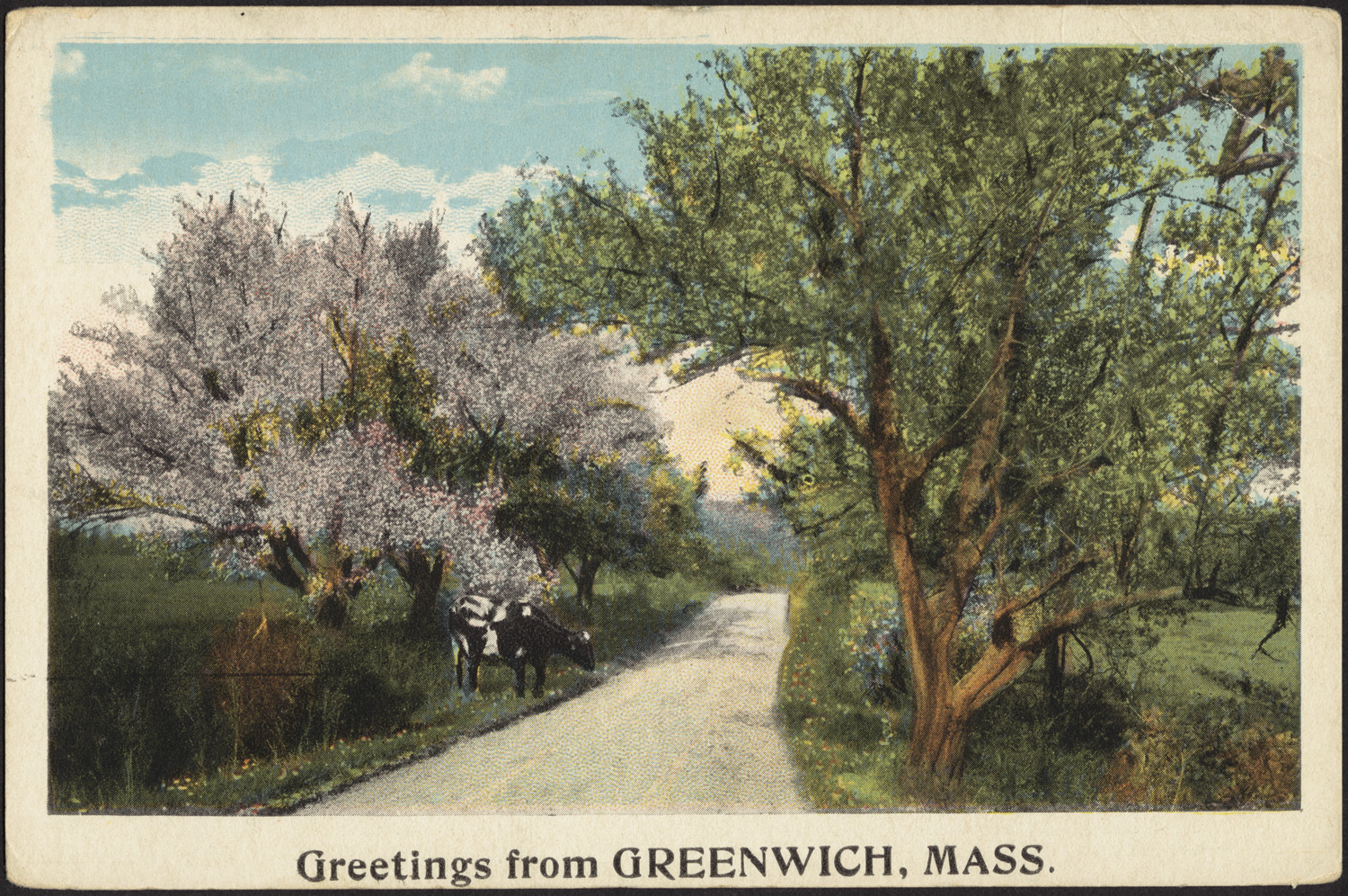
This postcard from the early 1900s depicts the bucolic community of Greenwich, Mass. – one of the four towns lost in the 1930s with the creation of the Quabbin Reservoir.
“There is a house that is no more a house
Upon a farm that is no more a farm
And in a town that is no more a town.
The road there, if you'll let a guide direct you
Who only has at heart your getting lost,
May seem as if it should have been a quarry -
Great monolithic knees the former town
Long since gave up pretense of keeping covered.’’
— From “Directive,’’ by Robert Frost
Salinger's work a time capsule

From Robert Whitcomb’s “Digital Diary,’’ in GoLocal24.com:
A few publications have noted that Jan. 1 was J.D. Salinger’s birthday. While I thought that his most famous work, The Catcher in the Rye, with its cynical and bitter adolescent prep-school protagonist, Holden Caulfield, was and is overrated, there’s no doubt that Mr. Salinger had an engaging voice. (Still, as Holden kept calling people “phonies,’’ he started to sound pretty phony himself.) What I still find most charming about Salinger’s work is his evocation of the mostly young and mostly upper-middle class people of imperial New York of the ‘40s and ‘50s – a time capsule.
Salinger became one of America’s most famous recluses after his move to the small town of Cornish, N.H., in 1953. His neighbors helped protect him by misleading reporters and fans about the location of his house. The students at nearby Dartmouth College did, too. People in the college library told me that he’d go into the college library to check something – seeking a reference to something that happened in the ‘40s? Nobody bothered him.
Jay Parini, a young English professor in the mid ’70s, wrote:
“He came often to read books or magazines in the Baker Library at Dartmouth, and several times I saw him reading by himself at a table, often late at night, in the basement of that library. Once he brushed passed me in the hallway outside my office, a lean and lonely figure. Everyone knew he did not want to be disturbed, and I would never have dared to say a word. I can still see him, a man of late middle age, hunched over a magazine at night, looking strangely out of place.’’
To read an essay by Parini about Salinger, please hit this link.
https://www.theguardian.com/books/booksblog/2010/jan/29/jd-salinger-catcher-in-rye
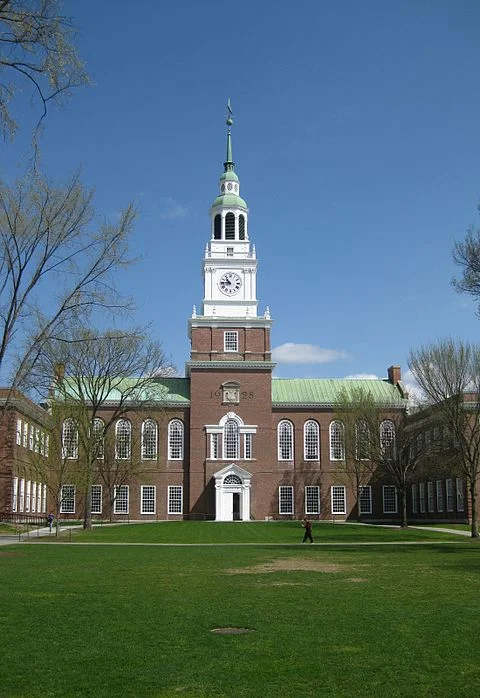
Baker Library, at Dartmouth College.
When I was in a small Dartmouth seminar on East Asian history with his then wife, Claire Douglas, no one ever mentioned her husband.
So for a recluse per se, the Upper Connecticut Valley seemed a good place to be. Whether it was good for his writing is another matter. He published nothing after 1965.
Salinger had a terrific sensitivity to how young people felt and spoke decades ago; he connected with, and wrote about best, children and teens. But of course just about all of them are dead, and their language in his writing sounds ever more dated, even to people like me who used to hear it all the time.
Stubborn pronounciation
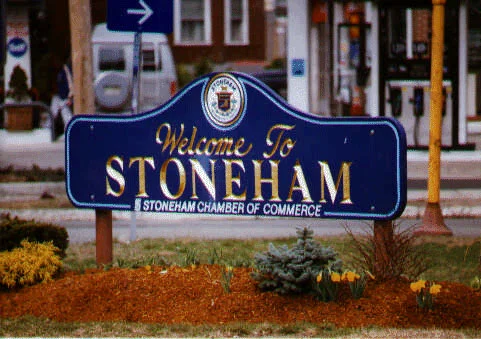
“I grew up in Stoneham, a little suburb of Boston. It's pronounced 'Stone 'em' because Massachusetts doesn't bend to the will of 'how letters are supposed to be said.'‘
— Josh Gondelman, comedy writer and stand-up comedian
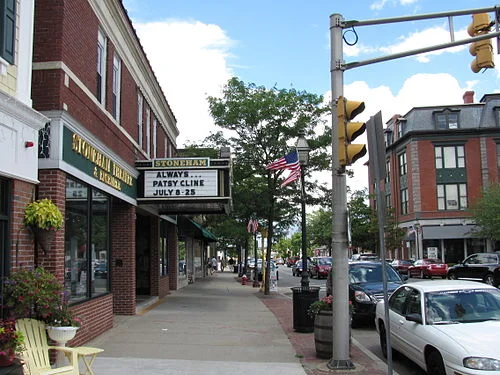
Main Street in Stoneham.
Sculptural signs of the zodiac

“Rooster,’’ by wood sculptor Donna Dodson, in her show “Zodiac,’’ at the Fuller Craft Museum, Brockton, Mass., Feb. 2-May 19. (Photo by Joan Boivin). The show references the animals associated with the Chinese and Western zodiacs.

Jay A. Halfond: The future of U.S. college internationalization

Boston University's East Campus along Commonwealth Avenue.
Via The New England Journal of Higher Education, a service of The New England Board of Higher Education (nebhe.org)
America’s university population peaked in 2010 at about 21 million students. We would be mired in a nationwide enrollment crisis if not for two major decade-long trends that cushioned a fall: students enrolling exclusively online and those relocating here from abroad to study. These, combined, now comprise almost a quarter of the nation’s students. Because these two mitigating factors do not benefit all institutions equally, a major redistribution of enrollments is underway. Those institutions with sizeable distance-learning programs and foreign populations are thriving, as others decline and some risk demise. Even Greater Boston—the world’s mecca of higher learning—has not been immune to this zero-sum enrollment shift.
America has long had abundant capacity in its colleges and universities, which have increasingly welcomed those from countries where quality higher education is a scarce resource. This coincided nicely with America’s pivotal role in the growing globalization of the world’s economy. An American degree has become a valuable rite of passage for an aspiring elite in business, government and science and technology. Part of the appeal is the opportunity to stay and work for a year or two beyond the degree (Optional Practical Training)—as about half do—and then to pursue their version of the American Dream long-term.
This dramatic increase in international students—by favoring some institutions, some fields of study and some institutions and regions—has yet to spread across the American academic landscape. Its impact is both sporadic and tenuous. It is tempting to target the Trump administration for imperiling our growing dependence on international students. The responsibility for sustaining our global presence, however, rests just as much on America’s universities.
Debunking claims of internationalization
Whenever I query my students on what percentage of students nationally they think come from other countries, they are often amazed that barely 5% are foreign. This may be their Boston bias showing. About one million international students enroll in U.S. colleges and universities—roughly triple the number over the past two decades. Half do so in only five states: California, New York, Texas, Massachusetts and Illinois. The top academic destinations are three cities (New York, Los Angeles and Boston) that reap tremendous economic rewards from these affluent visitors and their families. One-fifth of all international students attend just 20 large research universities. By expanding and professionalizing their international infrastructure, these and other universities have raised the barriers to entry for schools that have been late—or too small—to expand their international reach.
Since international students often enroll in business and STEM programs—and as often at the graduate as undergraduate level—liberal arts colleges without business majors, universities without engineering schools, and colleges without post-baccalaureate programs rarely see students from abroad.
Even though the U.S. is the desired destination for three-quarters of the world’s migrating students, their impact has been barely felt across the spectrum of schools and programs. The vast majority of America’s professors rarely, if ever, teach any of these students. Likewise, most of America’s domestic students hardly ever encounter someone from another country and, when they do, have only superficial opportunities to benefit from that interaction. We still have a long way to go before international students pervasively and profoundly impact the nation’s campuses.
For the past 30 years, “international” has largely meant Asian. Japan dominated foreign demand in the 1990s, followed by India, and now China. Two-thirds of all current international students are Asian, one-third from China—and growing. The fragility of this dependency on one country and one continent is frightening. Imagine the devastating consequences were the president to declare that Chinese students are a serious national security risk, or if China were to retaliate in a tariff war by taxing (or restricting) those who want to study in the U.S. Nor can this dependency on one region justify claims of a truly international student body.
The purposes for their presence
Nationwide tallies show that new international students began to decline in number even before the Trump Inauguration. Foreign students have shifted toward other institutions in other countries less because of an unwelcoming national administration than because an increasing number of European programs are now taught in English. Canada has become more inviting and affordable, and other nations’ universities are supplanting American schools in global rankings. Trump might exacerbate our declining competitive advantage, but we should not be overconfident that the innate appeal of America’s universities would otherwise persist. Enrollments from China, India and Vietnam are still growing, while other countries cultivate alternative places for their citizens to study. If international numbers remain flat while reliance on several countries intensifies, America’s schools will be even more vulnerable to the vicissitudes of a few nations.
This raises serious questions about whether representation from just these few countries constitutes genuine internationalization. Why have some major research universities been so welcoming? Public institutions, whose mission dictates a local focus, have been especially aggressive in growing their international numbers. If the main reasons are financial, then more full-tuition-paying students becomes an end in itself. If the reasons are academic, then this is a meritocratic means of elevating institutional reputation. In either case, the source of students matters less than their academic pedigree and willingness to pay the full sticker price of a higher education.
But if the motives are more idealistic and humanistic—if the goals are to diversify the student body and enrich the on-campus global experience—then current results of international student recruiting are far more suspect. And where they come from and what they bring to campus life becomes paramount. Simply attracting offspring of affluence from a few countries, doing little to educate them about American life, showing minimal concern for their well-being as strangers in a strange land, and failing to leverage their campus presence to benefit the global savvy of domestic students are not only missed opportunities, but irresponsible and exploitive.
With power comes responsibility
International students are not solely means to greater ends. International students have emerged as the largest, perhaps most overlooked, minority on many college campuses. Those institutions that tout their diversity need to appreciate that this is as much a moral mandate as a statistical achievement. Otherwise, through neglect, student self-segregation persists.
The internationalization of American higher education still has a long way to go, even with likely flatlining of foreign numbers in the near term. Opportunism is only a first step toward achieving a global campus. More institutions need to attract more students from abroad, from a broader range of countries and social classes, across a wider array of disciplines, with greater sensitivity to the challenges of adjusting to the American classroom and culture, and toward greater inclusivity on campus. This will require investing in student recruiting, financial aid, and academic and social programs. Doing so will strengthen the ongoing appeal for those from other countries and cultivate global awareness for the benefit of all.
Jay A. Halfond is a Professor of the Practice at Boston University, where he teaches a course on Global Higher Education, among others. He is the former dean of BU’s Metropolitan College.
Two kinds of Maine winters

Mattanawcook Lake, in Lincoln, Maine.
“Ellsworth (Maine) winters are a maddening ‘tease and freeze,’ thanks to the warm Atlantic currents. I never got used to them. It may snow in October or it may rain into December, or there may be a two-week cold snap of forty below, teeth-numbing weather. In January there is a thaw when it may be forty above for several days. It can snow in Ellsworth, sleet in Trenton, and rain in Bar Harbor at the same time. Half-hearted winters drop snowfall from crisp to slush through the beginning of April, when mud season begins. …
“Lincoln, however, is serious about winter, and the feeling is mutual. Once it snows in November, the whining of snowmobile engines fills the air. Snowmobilers ride across Mattanawcook Lake as soon as it freezes. … Those who ride onto the vast ice warm themselves in ice fishing shacks that remain into April, and the snow sticks until May. The winters are the good, old-fashioned Maine kind with plenty of snow and a good deal of disappointment if there isn't.’’
— Scott Warner, writing in www.theheartofnewengland.com
'Underexposed'
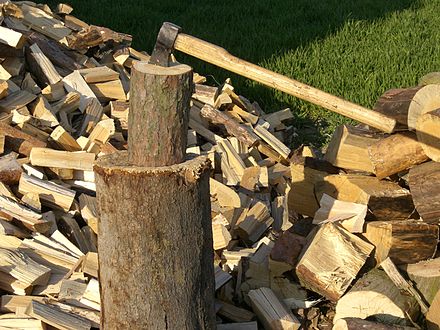
“My parents are both from Vermont, very old-fashioned New England. We heated our house with wood my father chopped. My mom grew all of our food. We were very underexposed to everything.’’
— Geena Davis, actress
'You've need to say a prayer'
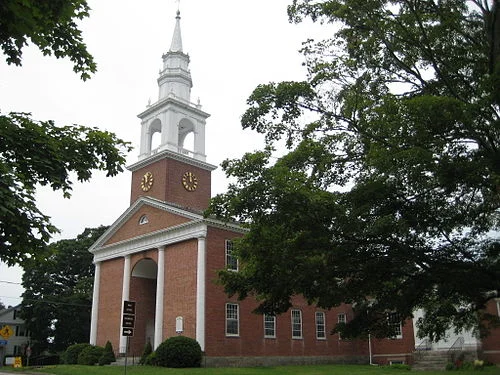
First Congregation Church, in Lebanon, Conn.
“IN the wide and rocky pasture where the cedar trees are gray,
The briar rose was growing with the blueberry and bay.
The girls went forth to pick them and the lads went out to play,
But I had to get to Stonington before the break of day.
And when I came to Stonington, she was a town of pride.
'Come in,' they said, 'and labor, and be at home and bide.
For gold shall be thy wage,' but 't was past the hour of morn—
And I had to get to Jordan while the dew was on the thorn.
There is a girl at Jordan, she sweetly smiled at me,
As pale as are the berries on the gray cedar tree.
And 'Oh,' she cried, 'thou traveler, come bide awhile with me,'
But I had to get to Lebanon while light was in the tree.
The pale church spires of Lebanon shone sweet upon the sky.
The Sabbath bells were ringing, the parson passed me by.
'Oh wait, traveler, wait, for you've need to say a prayer,'
But I had to be in Wallingford while noon was in the air.
The road that leads to Wallingford, it runs through mire and stone.
I was parched with the dust, I was bleeding and alone.
'My lad, you will die, if you do not tarry here.'
But I had to get to Killingworth while day was on the mere.
And when I got to Killingworth I heard the people say
'He has come to bring the news from a hundred miles away.'
But I had not any news and not any time to stay,
For I had to be at Jericho before the end of day.
And when I came to Jericho I heard the people call,
'Do you run to save a city that you will not wait at all?'
'I run to save no city, yet must I leave you soon,
For I have to be in Windsor with the rising of the moon.'
And when I got to Windsor, then was I spent for bread.
'Come in,' they cried, 'poor traveler! and be thou comforted.
What strange great need is on thee that makes thee journey so?'
But I had to be in Coventry ere yet the moon was low.
For a strange great need was on me that I should hunt the rain,
And take into my body a breakage and a pain;
That I should tame the sunset and goad the hurry-ing plain,
And that the leagues behind me should lie a thousand slain.
Wherefore, ye men of Coventry, if ye desire to stay,
Lay not your curb upon me, that love the open way.
For I want to smell the dew, the blueberry and the bay,
And I have to get to Colchester before the break of day.
From commerce to Christ
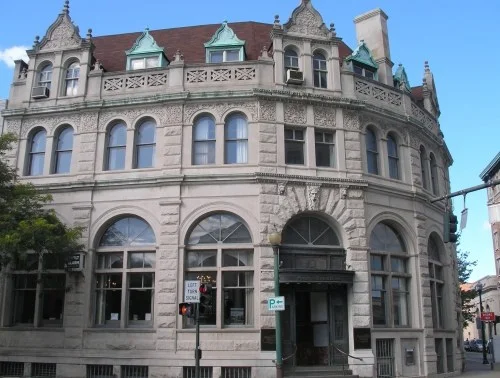
Norwich (Conn.) Savings Society Building.
From Robert Whitcomb’s “Digital Diary,’’ in GoLocal24.com.
We’ve seen plenty of stories about closed churches being turned into offices, condos, rental apartments and stores. But here’s a nice switch: The grand former Norwich (Conn.) Savings Society Building in that old mill town is being turned into a new Protestant church, the Castle Church, to open sometime in 2019.
The church describes itself thus:
“We love Norwich. Our passion is to work for the peace and prosperity of the city, aligning ourselves with God’s strategy for urban areas around the world. We regularly serve our neighbors in the Rose City. Jesus served among people – not above them. We look forward to doing the same!’’
Amazon and other parts of the Internet epidemic are killing many businesses in old (and even fairly new) buildings. Some of the old ones, especially former banks, even look a bit like churches and could be elegantly transformed to that use. But I don’t imagine that skeptical New England will be a very fertile region for this. Many of these projects will more likely than not involve the evangelical and/or fundamentalist wing of Protestantism.
'Come home to Gloucester town'
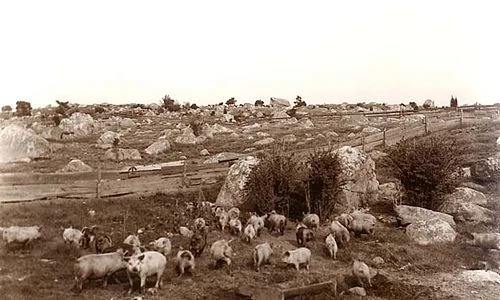
The “Dogtown’’ part of the Gloucester Moors, about 2008.
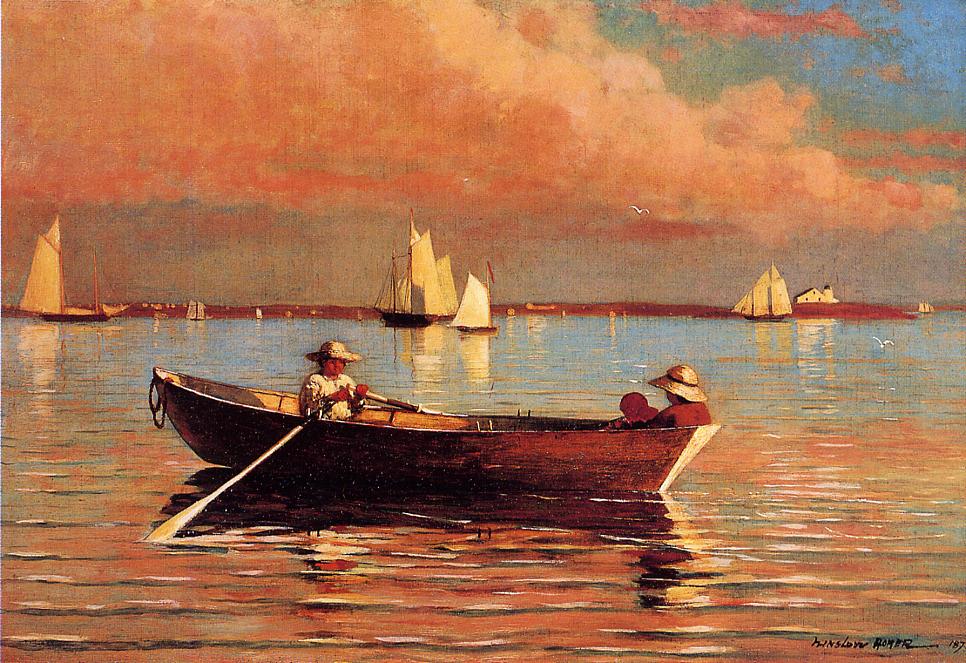
“Gloucester Harbor’ (1873) (oil on canvas), by Winslow Homer.
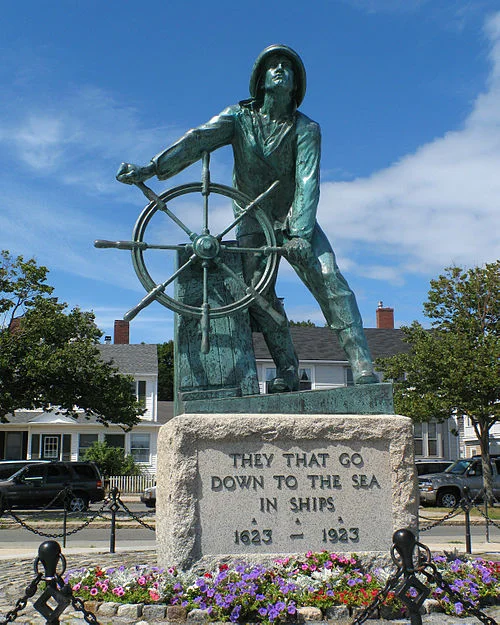
“Man at the Wheel,’’ Fisherman's Memorial Cenotaph, in Gloucester.
“A mile behind is Gloucester town
Where the fishing fleets put in,
A mile ahead the land dips down
And the woods and farms begin.
Here, where the moors stretch free
In the high blue afternoon,
Are the marching sun and talking sea,
And the racing winds that wheel and flee
On the flying heels of June.
Jill-o'er-the-ground is purple blue,
Blue is the quaker-maid,
The wild geranium holds its dew
Long in the boulder's shade.
Wax-red hangs the cup
From the huckleberry boughs,
In barberry bells the grey moths sup,
Or where the choke-cherry lifts high up
Sweet bowls for their carouse.
Over the shelf of the sandy cove
Beach-peas blossom late.
By copse and cliff the swallows rove
Each calling to his mate.
Seaward the sea-gulls go,
And the land-birds all are here;
That green-gold flash was a vireo,
And yonder flame where the marsh-flags grow
Was a scarlet tanager.
This earth is not the steadfast place
We landsmen build upon;
From deep to deep she varies pace,
And while she comes is gone.
Beneath my feet I feel
Her smooth bulk heave and dip;
With velvet plunge and soft upreel
She swings and steadies to her keel
Like a gallant, gallant ship.
These summer clouds she sets for sail,
The sun is her masthead light,
She tows the moon like a pinnace frail
Where her phosphor wake churns bright.
Now hid, now looming clear,
On the face of the dangerous blue
The star fleets tack and wheel and veer,
But on, but on does the old earth steer
As if her port she knew.
God, dear God! Does she know her port,
Though she goes so far about?
Or blind astray, does she make her sport
To brazen and chance it out?
I watched when her captains passed:
She were better captainless.
Men in the cabin, before the mast,
But some were reckless and some aghast,
And some sat gorged at mess.
By her battened hatch I leaned and caught
Sounds from the noisome hold,--
Cursing and sighing of souls distraught
And cries too sad to be told.
Then I strove to go down and see;
But they said, "Thou art not of us!"
I turned to those on the deck with me
And cried, "Give help!" But they said, "Let be:
Our ship sails faster thus."
Jill-o'er-the-ground is purple blue,
Blue is the quaker-maid,
The alder-clump where the brook comes through
Breeds cresses in its shade.
To be out of the moiling street
With its swelter and its sin!
Who has given to me this sweet,
And given my brother dust to eat?
And when will his wage come in?
Scattering wide or blown in ranks,
Yellow and white and brown,
Boats and boats from the fishing banks
Come home to Gloucester town.
There is cash to purse and spend,
There are wives to be embraced,
Hearts to borrow and hearts to lend,
And hearts to take and keep to the end,--
O little sails, make haste!
But thou, vast outbound ship of souls,
What harbor town for thee?
What shapes, when thy arriving tolls,
Shall crowd the banks to see?
Shall all the happy shipmates then
Stand singing brotherly?
Or shall a haggard ruthless few
Warp her over and bring her to,
While the many broken souls of men
Fester down in the slaver's pen,
And nothing to say or do?’’
— “Gloucester Moors,’’ by William Vaughn Moody (1869-1910)
Chris Powell: Behind the brawls at the malls
You can observe a lot just by watching, Yogi Berra said. Maybe that's possible even with local television news in Connecticut, though it's usually trivial.
For the other day WFSB-TV3 broadcast two touching stories whose details hinted at much bigger issues.
The first was about a Christmas dinner for the down-and-out in Hartford sponsored by a charitable organization, Hands On Hartford. In addition to dinner, guests received gifts -- hats, mittens, and socks -- that seemed to anticipate cold days on the street. The guests were grateful, though those interviewed, as is typical with the very poor, were missing many teeth, so feeding themselves may not be easy even when it's free.
The second story was about three sisters in Meriden who are caring for their mother because she has been diagnosed with terminal cancer. The sisters are preparing the family home for sale in the hope of raising money to get their mom admitted to a leading cancer hospital in New York, since her insurance won't cover it.
Lacking teeth no longer has to be a permanent handicap. Nor is the worst cancer case necessarily a death sentence anymore. Dental implants and cancer treatments just cost more money or more insurance than many people have. Meanwhile, the federal government still spends billions of dollars every month on stupid and futile imperial wars, and last week state government began spending another $5 million in the name of preserving open space, though Connecticut's population long has been stagnant and open space is preserving itself.
That is, these days government has money for everything except what people need most. So maybe elected officials should pay more attention to local TV news when they're not the ones being covered.
But elected officials aren't likely to notice missing teeth and lousy medical insurance when they don't notice the social disintegration exploding all around them.
Last week, while outgoing Gov. Dannel Malloy and his aides congratulated themselves on what they claim is a reduction of crime in the state, hundreds of young people brawled at shopping malls in Manchester and Milford; a 12-year-old boy was shot to death in Bridgeport by an 18-year-old illegal immigrant during a gang war in which several other youths were shot but survived; two men were shot, one fatally, in Hartford, where shootings have risen this year; and the decline in the state's prison population being touted by the governor continued to correspond ironically with a growing number of arrests of offenders with long records whose avoidance of prison despite their incorrigibility is nothing to cheer.
Bridgeport City Councilor Ernie Newton, a chronic offender himself, responded to the 12-year-old's murder by proposing that police be authorized to stop and frisk anyone who looks suspicious. Newton withdrew the idea when he was reminded that this would violate constitutional rights and inflame racial tensions, especially when most officers are white and most city residents are not.
But one of the activists who scolded Newton was just as oblivious. She told the Connecticut Post that instead of "stop and frisk" Bridgeport needs "youth programs" and "a huge increase in therapists and counselors in schools."
No, Bridgeport and Connecticut need elected officials who dare to address the causes of problems rather their symptoms and ask where all the messed-up kids are coming from, why so many kids don't have parents anymore, and how public policy may be causing this.
Chris Powell is a columnist for the Journal Inquirer, in Manchester, Conn.
Old New England skiing
Adapted from Robert Whitcomb's "Digital Diary, in GoLocal24.com
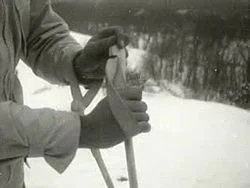
'On Jan. 1, 1961, when my parents and a couple of my siblings were staying in an old inn, or glorified bed and breakfast, in Jackson, N.H., then, as now, a ski town. As we sat in the dining room having a breakfast of blueberry pancakes and enough bacon to instigate acute myocardial infarction, the co-owner (with his wife) of the establishment, a retired Episcopal priest, came bounding in, wishing everyone a “Joyous Feast of the Circumcision!’’ Later that day, I saw him speeding down the slopes of Black Mountain with great skill, despite his having called himself a “lousy intermediate’’ and his having consumed several martinis with his guests the night before.
Skiing then was a lot cheaper – fancy equipment such as snow-making machines and high-speed chairlifts, and huge personal-injury lawsuit settlements and soaring insurance premiums, not yet having made the sport so expensive. And there were still lots of tiny commercial ski hills (many owned by local dairy farmers) with rope tows powered by truck engines spewing out very dirty exhaust. Indeed, whenever I smell heavy exhaust, I think of those ski hills, especially in “spring skiing’’ on corn snow in March. Richly evocative.
The two New Englands

The Boston skyline from Belmont.
“Reduced to simplest terms, New England consists of two regions: Boston and Not-Boston.’’
—Wayne Curtis, writing in Frommer’s 2001 New England
'Experimental woodland'
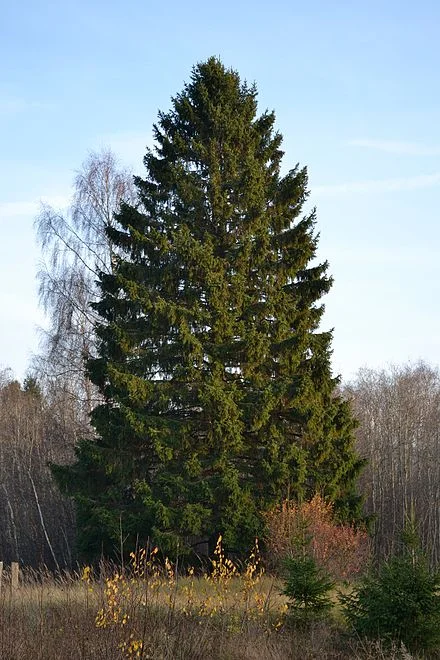
A Norway spruce tree — a species widely planted in New England.
“In the false New England forest
where the misplanted Norwegian trees
refused to root, their thick synthetic
roots barging out of the dirt to work on the air,
we held hands and walked on our knees.
Actually, there was no one there.
For forty years this experimental
woodland grew, shaft by shaft in perfect rows
where its stub branches held and its spokes fell.
It was a place of parallel trees, their lives
filed out in exile where we walked too alien to know
our sameness and how our sameness survives….
— From “The Expatriates,’’ by Anne Sexton
Llewellyn King: Prepare for the convulsion of the Fourth Industrial Revolution
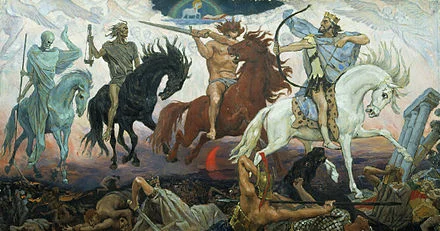
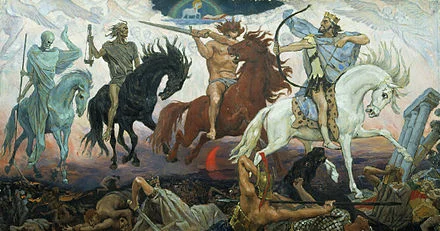
“The Four Horsemen of the Apocalypse, by Viktor Vasnetsov.
WEST WARWICK, R.I.
It isn’t starting with a bang, but don’t be deceived: The Fourth Industrial Revolution (4IR) is underway, and companies and institutions that ignore it will be overwhelmed by it. Individuals will adapt to it as best we can, as we always have.
In short 4IR is the fusing of the digital, physical and biological spheres. It’s the interconnection of everything, bringing change in companies, jobs, schools and eventually government. Government won’t to be able to stand idly by when it sees traditional businesses upended and huge changes in how we work and study, and where.
As 4IR moves ahead one can reasonably contemplate a time when body parts will be printed, robots will prepare restaurant food and drone taxis will take us to the airport, where departures will be handled without human intervention -- because you were verified through facial recognition when you bought your ticket on your smartphone, you won’t need to do anything but walk through security and onto a plane, which has a cabin crew to look after you but no pilots.
Behind and driving the revolution is artificial intelligence, commanding everything from farms, where tractors will start themselves and plow or reap without a human in sight, to street lights that turn off when nothing is moving and back on as needed, to manufacturing that will be dominated by 3D printing, better referred to as additive manufacturing.
The troubadour of 4IR is Klaus Schwab who created the World Economic Forum back in 1971, the world’s most important ideas mart known as Davos, after Davos-Klosters the Swiss resort where the forum meets every year. This year Davos kicks off on Jan. 22 and will be devoted to what Schwab, 80, a German economist and engineer, has called “Globalization 4.0”.
The first forum to look at 4IR was in 2016. Schwab has written two books on the subject -- The Fourth Industrial Revolution and Shaping the Future of the Fourth Industrial Revolution -- and has been ceaseless in promoting the future while warning of it. He told Gerard Baker, the former executive editor of The Wall Street Journal, in a TV interview that enumerating the challenges wasn’t enough, there need to be solutions as well.
A note: Don’t think you can join the 3,000 participants this year. It’s by invitation only. And if you get one, Davos hotel rooms -- plain vanilla rooms – can cost $900 a night and suites can go for $5,000 a night. When I checked, there were few vacancies. The movers and shakers start early.
The three past industrial revolutions are listed by Schwab as the replacement of animal power by water and then steam power, the latter at the beginning of the 18th Century; the deployment of electricity, starting in the late 19th century; and the digital revolution of the last part of the 20th Century.
The Davos meeting will examine the upheaval besetting the world with 4IR and how it’ll be managed. It’s what Schwab calls Globalization 4.0. “We must develop a comprehensive and globally shared view of how technology is affecting our lives and reshaping our economic, social, cultural, and human environments. There has never been a time of greater promise, or greater peril,” he says.
Andre Kudelski, a Silicon Valley veteran, now head of the eponymous Swiss high-tech company that bears his name, says, “A skilled engineer can take control remotely of any connected ‘thing.’ Society has not yet realized the incredible scenarios this capability creates.”
Says Robert Shiller, a Yale University economics professor and 2013 Nobel Prize winner, “We cannot wait until there are massive dislocations in our society to prepare for the Fourth Industrial Revolution.”
Others dream of a cleaner, safer and healthier world. Dileep George, an artificial intelligence and neuroscience researcher, quoted by the forum, says, “Imagine a robot capable of treating Ebola patients or cleaning up nuclear waste.”
Leon Trotsky, a veteran of the Russian Revolution, said, “You may not be interested in war, but war is interested in you.” He might well be paraphrased to say, “We may not be interested in the Fourth Industrial Revolution, but it is interested in us.”
Llewellyn King is executive producer and host of White House Chronicle, on PBS. His email is llewellynking1@gmail.com. He’s based in Rhode Island and Washington, D.C.
'Accidentally profound'
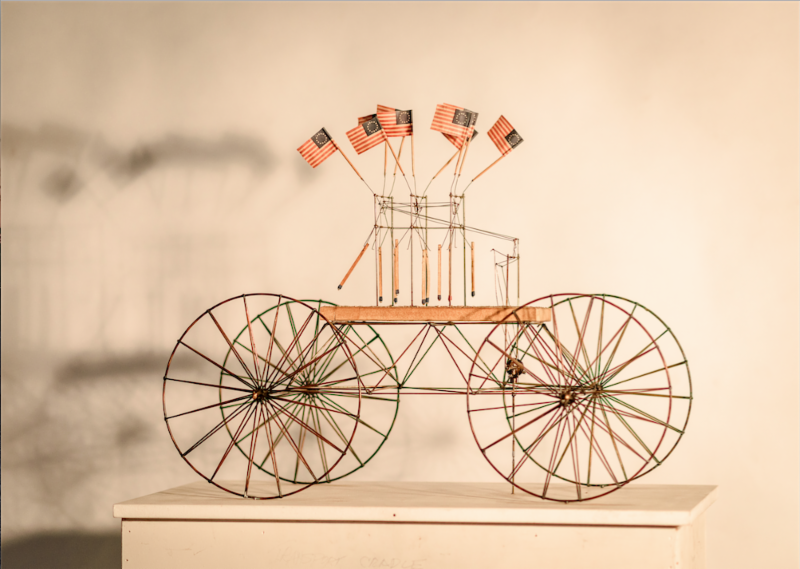
From “Flights of Fancy,’’ by the late David A. Lang, at the Boston Sculptors Gallery.
The gallery says:
“The show, curated by Katherine French, includes Lang's signature kinetic pieces, which, when set off by motion detectors, come to life when closely inspected by viewers. ‘Flights of Fancy’’ explores the whimsical - yet serious - nature of an artist who preferred to describe his efforts as ‘accidentally profound.’
“Join us at Boston Sculptors Gallery (486 Harrison Ave.) at 3 p.m. Saturday, Jan. 12 for a curator talk by Katherine French, director of Catamount Arts, in St. Johnsbury, Vt. French will offer thoughts on her relationship with Lang, an extraordinary sculptor she remembers as teacher, artist and friend. This event is offered in cooperation with the Boston Art Dealers Association, and is free and open to the public.’’