
Vox clamantis in deserto








Waterbury 'tougher than New York’

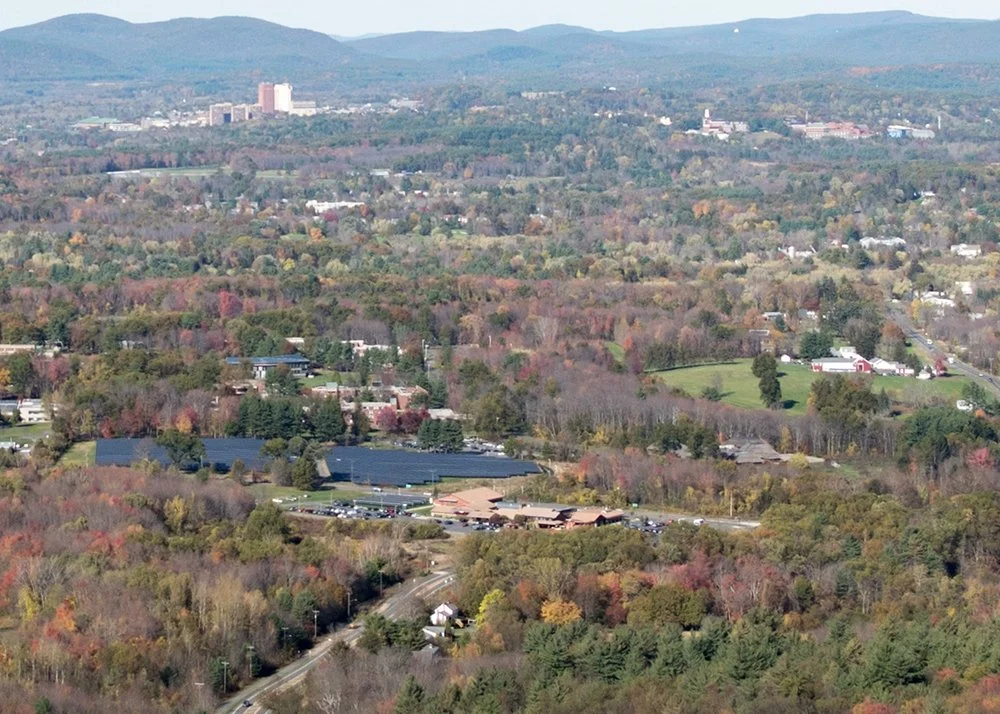
Waterbury from the west, with Union Station clock tower at left.
“My past is not pleasant; I grew up in a very tough town, Waterbury, Connecticut. I grew up in New York {City}, too, but Waterbury was tougher.’’
— Dylan McDermott, TV actor
Editor’s note: He’s right. I lived near Waterbury for four years and it’s a tough town, although the communities around it are fairly sedate and bucolic. Waterbury is an old manufacturing city, once nicknamed “The Brass Capital of the World.’’ It was a major center for making watches and clocks (think Timex) as well as most anything made of brass.
The Naugatuck River flows through the middle of it, a major reason for its rise to prominence; the river provided the power for the first factories. I well remember the river’s vivid changing colors depending on which toxic chemicals companies were pouring directly into the Naugatuck. No EPA then!
Floods from Hurricane Diane, in 1955, did tremendous damage along the river.
Despite the city’s rather gritty reputation, it has a fine museum, the Mattatuck.

— Photo by JLLM06
Llewellyn King: For neckties and against AI, airline bosses and hedge funds in 2019
WEST WARWICK, R.I.
No New Year’s resolutions this year. Nary a one. Instead I am throwing myself, body and soul, into campaigns -- campaigns designed to halt the slide in civilized life.
Here are my campaigns:
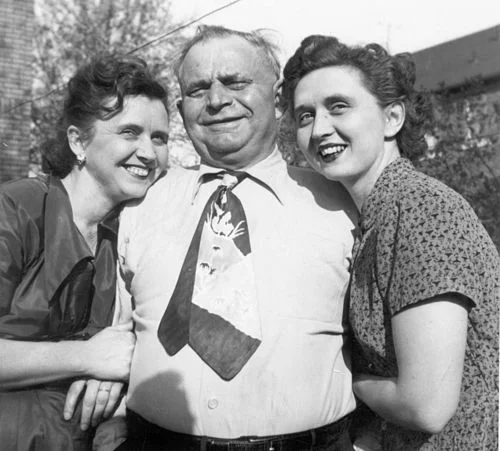
1. Rescue the necktie: More and more men are going around naked about the throat but wearing a pocket square. Now I love pocket squares, very useful if you should meet one of those famous actresses who is always in tears. Whip it out, get it soaked and presto! It goes on eBay.
The thing is that neckties are disappearing. Only businessmen on the perp walk and some politicians wear them. Even former President Barack Obama appears to have abandoned them almost entirely -- a serious regression.
Ties are important. They conceal protruding Adam’s apples, turkey necks and dirty shirt fronts. Also, they are used to wipe eyeglasses and to twirl when listening to people who go on and on.
2. I am pushing to get airline executives to ride “basic coach” on at least one 10-hour flight. They will learn that they are the agents of physical cruelty and weird perversity.
They have ordained travel without luggage because the fees for luggage on “basic” are so high you would be paying for another class of service if you take a suitcase.
The airline bosses should be squeezed into the amazing shrinking toilets (too small for grownups); they should have their knees in their faces and have to sit up as straight as a drill sergeant. They should then try to stand up after hours of contortion.
3. I want a punitive tax for banks who will not speak to you but will put you through hours of automated telephone hell, in the hope that you will give up and leave them alone (with your money and their fees with which they steal that money).
4. Hedge funds that shred the lives of workers and deny customer service in the name of “shareholder value” should be prosecuted for hate speech for those words. “Shareholder value” can be roughly translated as “We’re going to screw you.” How about “customer value” or a little “social value”?
You have been on the line for hours and are begging the artificial-intelligence recording to let you hear a live human voice, even if it is originating from a faraway country and its owner is speaking English as a third language. The machine says, “Do you want to hear the main menu again?” You slide to the floor, defeated, crazed and suicidal.
I want it to be a federal crime to have a machine with a woman’s voice. They are cursed routinely with foul expletives that even a machine should not have to hear, let alone one that thinks it is a woman. #MeToo should get on this one and demand that the programmer gets the sack without pension.
5. I will be working for honesty from automated systems. I do not want my computer to “welcome” me when I turn it on. I believe that it does not care, that it is not sincere and that it is, to this point in time, inanimate and has no feelings. Therefore, when machines say things like “Have a nice day,” even “thank you,” they are lying.
This will change as artificial intelligence is given artificial emotions and machines talk to us in ways so crafty we will not know whether it is a machine or a person. We may not even know if the damned thing has captured the affections of our loved ones. Some states still have an “alienation of affections” common law tort that allows the thwarted lover to sue for stolen love.
Already, you may have a good case for filing a lawsuit against Facebook for running off with your children. Albeit in plain sight.
Happy New Year.
Llewellyn King is executive producer and host of White House Chronicle, on PBS. His email is llewellynking1@gmail.com and he’s based in Rhode Island and Washington, D.C.

'Glacial arrogance'

Bubble Rock, in Acadia National Park, Maine. It was left there by the last Ice Age. Such ‘‘glacial erratics’’ cam be found all over New England.
“The forest floor is white,
but here & there a boulder rises
with its glacial arrogance
& brooks that bubble
under the sheets of ice
remind us that the tundra of the soul
will soften
just a little
towards the spring.’’
— From “New England Winter,’’ by Erika Jong
A cover for Christmas

Based on “Christmas Carolers’’ (oil on canvas), by J.C. Leyendecker, for the Dec. 21, 1907 Collier’s magazine cover at the National Museum of American Illustration, Newport. This takeoff features Judy Goffman Cutler, museum director and co-founder; Laurence S. Cutler, chairman/CEO and co-founder, and Jill Perkins, museum shop manager/interior administrator.
Heating from the woods

“My wife, Daniela, and I live in an old house from 1810 with three fireplaces at the end of a dead-end dirt road on Cape Cod, so I turn the trees into firewood for us and a friend of mine sells the rest.’’
— Sebastian Junger, famed bestr-selling book author (The Perfect Storm, etc.) and journalist. He lives part of the year on the Outer Cape.
Trump's push for dirtier water

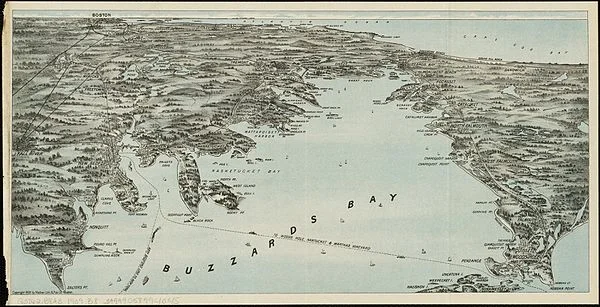
Northeast bays from space.
From Robert Whitcomb’s “Digital Diary,’’ in GoLocal24.com
Of course, the Trump administration wants to roll back federal protections under the Clean Water Act to please mining, agribusiness and real-estate-development interests! If this actually happens, you can expect more pollution, including of public drinking water, as well as damage to fish stocks and other wildlife in wetlands, rivers and lakes. Trump’s plan would harshly affect such coastal bodies of water as Narragansett, Buzzards and Chesapeake bays.
The Trump mob likes to say that the move would return needed power to the states to make determinations on water quality and how to protect it. But many states, especially in the South, that are basically run by big business interests, would simply engage in a race to the bottom of regulations, leaving more environmentally responsible states downstream to handle the new pollution.
'Surreal waiting game'

Left, “So Sophisticated” (oil on canvas), by Alexandra Rozenman; right, “Witness’’ (oil on canvas), by Anita Loomis, in the show “Untold Stories, at Fountain Street Fine Art, Boston, through Dec. 23.
.
To see a video of the show “Untold Stories,’’ by Anita Loomis and Alexandra Rozenman, please hit this link.
This is the show’s last weekend at Fountain Street Fine Art, Boston.
From Artscope’s review:
“The immediate condition and activity conveyed within the pictures made by painters Anita Loomis and Alexandra Rozenman is extrapolation. …{T}he paintings allow and welcome conjecture. The artists have created environments that focus the viewer’s attention towards inference, encouraging the seer to intellectually step into and become part of vague spaces and curious scenes — to participate in a surreal guessing game.
“For the viewer, the stories within the compositions are open-ended and puzzling, being directed in possibility by the depicted visual objects and glimpses of human form. We approach these compositions by asking what’s going on. Some paintings depict relatable imagery such as domestic interiors, landscapes and active scenes, while others are expressive and fantastical with abstracted and speculative shapes and figures.’’

Restoring smell at Massachusetts Eye and Ear

Cross-section of the interior of the human nose.
From the New England Council (newenglandcouncil.com)
”Physicians at Massachusetts Eye and Ear {in Boston} recently announced their use of electrodes in the nose to stimulate nerves, causing people who had lost their sense of smell to suddenly report smelling strong scents like onions or fruit.
“The electrodes are described as a “cochlear implant for the nose,” positioned in the sinus cavities to stimulate the olfactory bulb, which is the part of the brain where smell is processed. Dr. Eric Holbrook, corresponding author of the study and chief of rhinology at Mass. Eye and Ear, is careful to remind patients that smell restoration is far more complicated than hearing restoration, due to the high volume of nerve interaction in the structure. According to research from the International Forum of Allergy & Rhinology, while loss of smell affects around 5 percent of the general population, there are no proven therapies yet to help restore it.
“Dr. Holbrook said, ‘Our work shows that smell restoration technology is an idea worth studying further.’ He went on to say that while the research is still in its early stages, ‘there’s a high potential for it to actually be a device down the road.’
“We commend Mass. Eye and Ear on this pivotal study and thank them for their dedication to helping people recover their sense of smell.’’
Springfield may have some fiscal lessons for other old cities

Springfield Armory Museum, in the former Main Arsenal of the Springfield Armory.
Adapted from Robert Whitcomb’s “Digital Diary,’’ in GoLocal24.com
‘A piece in Governing.com by Alan Greenblatt may hold some lessons for other financially struggling New England cities, such as Providence. This is about Springfield, Mass., now best known for having a big new casino (which will not help the city in the long run). It’s also well known for the Basketball Hall of Fame (the sport was invented there), as the longtime site of gun making, for both the military and private sector, and as the boyhood home of Theodor Seuss Geisel (aka Dr. Seuss).
After 18 years of deficits and a deteriorating tax base, a state control board took over Springfield’s government in 2004. The board restructured municipal departments, and, Mr. Greenblatt reports, “laid off employees and ran a rigorous performance program, using data to keep track of what was going on. Mayor Domenic Sarno, first elected in 2007, has helped put into place real-time accounting systems when changes are called for.’’
Thus the city’s finances have been stabilized and its credit ratings have risen.
Meanwhile, law enforcement has been improved, as have the schools, with high-school graduation rates up 56 percent over the past few five years (but how much of this involves “social promotions’’ ?) and, probably more important, the dropout rate has been halved.
And CRRC, a rail-car manufacturing plant, has opened, with about 150 workers, all of them well paid in varying degrees and, unlike the plus-300 and mostly low paid workers at the MGM Springfield Casino, making a useful product instead of a service that spawns crime and other social problems.
Springfield still has plenty of problems, especially poverty, but things are much, much better these days. It has some lessons for other old cities.
To read the Governing.com piece, please hit this link.
Chris Powell: On pot, Conn. and Mass. engage in federal-law nullification
MANCHESTER, Conn.
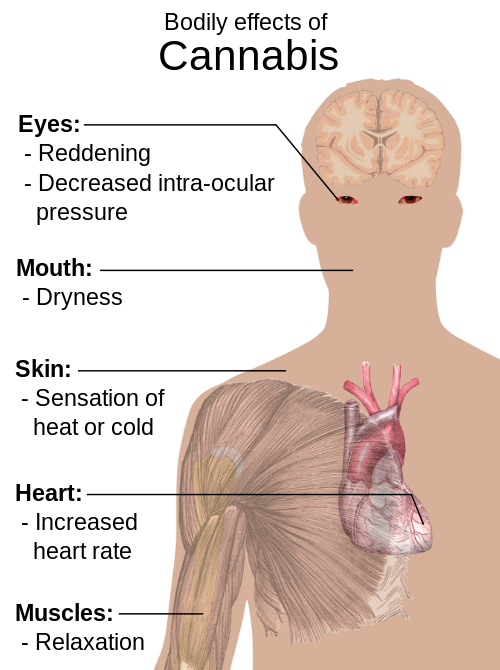
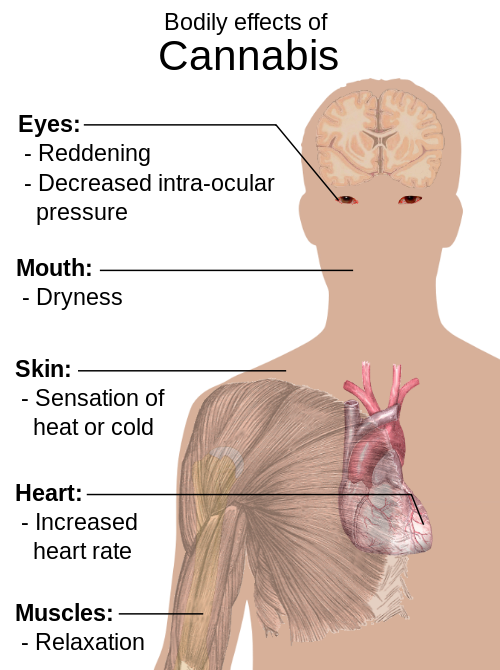
Should Connecticut legalize marijuana (cannabis) for ordinary recreational use, as neighboring Massachusetts has just done?
To a great extent Connecticut already has legalized the intoxicating weed, since the state has authorized medical prescriptions for it and licensed a few medical dispensaries, and criminal penalties for simple possession have been reduced to irrelevance. As a practical matter for years marijuana use has been so widespread in the state that police and courts didn't bother much with enforcement.
The question in Connecticut isn't so much about legalization itself as about state government's licensing and taxing sales to gain millions of dollars each year. While marijuana use is already heavy in Connecticut, thrusting state government into the dope business this way will increase drug abuse, indolence, intoxicated driving, youthful stupidity, and unplanned pregnancies.
People may find this price acceptable the more they rely on state government for their income. Others may not be as convinced.
But there is also a constitutional reason to avoid putting state government into the marijuana business. That is, marijuana remains prohibited by federal law, so state government's licensing and profiting from its sale would constitute nullification.
There would be no nullification in simply repealing Connecticut's laws against marijuana, leaving enforcement to the Feds, and probably little damage in doing so, state law being so ineffective already. But putting the state into the marijuana business would aggressively contravene federal law, as the state does by issuing driver's licenses and other forms of identification to illegal immigrants.
xxx
SO WHO NEEDS EXPERIENCE?: Connecticut U.S. Sen. Chris Murphy opposes President Trump's nomination of State Department spokeswoman and former Fox News personality Heather Nauert for United Nations ambassador because of her lack of diplomatic experience. But Murphy has just engineered the election to Congress of former Waterbury teacher of the year Jahana Hayes despite her lack of political or governmental experience. Somehow it was fine with Murphy for Hayes to start at the top without having served even a day on a local school or zoning board.
Indeed, a few days ago, upon the death of former President George H.W. Bush, Murphy, like many others, was celebrating the former president's career and character though Bush was appointed U.N. ambassador by President Richard Nixon in 1971 without any diplomatic experience, just two terms in Congress. Bush got the U.N. job not for any diplomatic skills but as political patronage, a consolation prize after losing a campaign for U.S. senator.
Trump's first U.N. ambassador, former South Carolina Gov. Nikki Haley, had no diplomatic experience either but has been widely praised for her work at the U.N.
So experience isn't everything -- unless it can be used against one's political adversaries.
xxx
JUST OPEN JUVENILE COURT: Police throughout Connecticut are complaining about repeat juvenile offenders who seem to have realized that Gov., Dannel Malloy administration's criminal-justice reforms mean that there are no longer any consequences for their crimes short of murder. Defenders of the reforms either dispute the police or complain that the reforms were supposed to be accompanied by social services for the young offenders but haven't been.
There will be no telling who is right until Connecticut opens its juvenile court proceedings to the public.
Chris Powell is a columnist for the Journal Inquirer, in Manchester.
Erin Harrington: The 'Timberdoodle' is in trouble

A notably well-camouflaged American woodcock.
From ecoRI News (ecori.org)
Bog sucker. Labrador twister. Night partridge. Timberdoodle. No, these aren’t the names of ’90s alternative punk rock bands. This list is in fact an assortment of nicknames affectionately given to one odd bird, the American woodcock. Or, if you’re a scientist, Scolopax minor.
In the words of a graduate student at the University of Rhode Island, Stephen Brenner, “There’s not too many birds in North America like the woodcock.”
The Timberdoodle is unique for many reasons. This rotund shorebird has a long sandpiper-like beak, short, stubby legs, and arguably the silliest sounding mating call known to mankind. Its eyes are oddly placed near the top of its head, which allows it to simultaneously keep a lookout for predators while also probing for food in the forest soil. It uses its long beak to feel around in the dirt for earthworms, often rocking its body back and forth in a dance that would rival that of an Egyptian, of The Bangles’ persuasion.
While this all sounds fun and silly, unfortunately, the woodcock is in trouble. In fact, for the past four decades, the woodcock population has been decreasing range-wide at roughly 1.2 percent annually, in part because of a lack of open space that the woodcock requires for its mating dances in the sky.
Graduate students and researchers in Scott McWilliams’s lab at URI are trying to figure more out about why the population is in decline and what can be done about it.
What scientists have found out about woodcock so far is that they require early-successional forest. The term seems like a mouthful, but McWilliams said the concept is fairly simple.
“Early-successional forest is an area that has only very young trees and lots of shrubs but would be mature forest if left alone,” he said.
Previous research teams have already found that one main reason why the woodcock population seems to be declining is a continuing loss of their habitat. But the fact of the matter is we still have only a vague idea of what woodcock habitat needs actually are, especially in southern New England.
Tracking habitat preferences
Former URI Ph.D. student Roger Masse was able to use tracking devices on woodcock to determine their movement patterns, and from that data, develop what is known as a “resource selection function.” This model uses sophisticated statistical analysis to analyze woodcock movement data and tell us what components of forest habitat are most important for woodcock given what is available in the area.
Brenner’s research builds off what Masse learned and takes it to the next level. The main question trying to be answered is: Does habitat quality influence the species’ willingness to stay and the movements thereafter once the bird decides to stay?
To answer this question, researchers are swapping woodcock from two different landscapes of two different management qualities and using radio transmitters to track their movements.
“If they’re in good quality habitat, they should be more likely to stay,” McWilliams said. “Whereas, if they’re in poor quality habitat, birds should be more likely to move and go back to where they came from. In short, we're asking the woodcock to tell us which type of landscape they prefer to inhabit.”
By conducting these experiments in forests that are already specifically managed for woodcock habitat needs, scientists and forest managers can come up with more specific plans for increasing numbers of other early-successional species, such as cottontail rabbits, shrubland birds like eastern towhees and prairie warblers, and even flying squirrels. But scientists and forest managers can’t do this work alone.
Recruiting landowners to help
For the past seven years, Bill Buffum’s work at URI has included supporting the RI Coverts Project, a collaborative effort between government and non-governmental organizations to address the need for more early-successional forest in Rhode Island by getting private landowners involved in forest management.
According to Buffum, a research associate in URI’s Department of Natural Resources Science, the biggest challenge for communicating with landowners is that they aren’t easily convinced that clear-cutting is beneficial for wildlife.
“A clear-cut is ugly for a couple of years … it looks like a bomb went off,” Buffum said. “But after about three or four years, the vegetation starts to grow and people start saying, ‘Wow, I’m already seeing the impact. I’m seeing birds I never saw before on my property.’”
Ultimately, the work of the McWilliams lab is important not just because it may help increase the woodcock population, but also because it may help many other species that require early-successional forest habitat. This is why the timberdoodle is referred to as an “umbrella species,” or a species that, once properly managed for, can be beneficial to many other types of species that use the same habitat.
“Whatever kind of critters we’re talking about, species depend on a variety of different habitats,” McWilliams said. “We’ve interfered with the natural sources of disturbance such as beavers and forest fires, and so part of what we have to do is help to recreate that kind of early-successional habitat and provide for those species that especially depend on it.”
Erin Harrington, a Ph.D. student in the Biological and Environmental Sciences program at the University of Rhode Island, runs Project Timberdoodle.
Getting around

Morning Commute, Shanghai (oil on canvas panel), by Ellen Leader, in her show “Through the Eyes of a Traveler: Paintings by Ellen Leader,’’ at New Art Center, Newton, Mass., Jan. 10-Feb. 23.
'As dancers in a spell'

“I’ve known the wind by water banks to shake
The late leaves down, which frozen where they fell
And held in ice as dancers in a spell
Fluttered all winter long into a lake;
Graved on the dark in gestures of descent,
They seemed their own most perfect monument.’’
From “Year’s End,’’ by Richard Wilbur (1921-2017), a New England-based poet.


Don Pesci: Sandy Hook massacre revisited and reanalyzed

Roses featuring images of victims of the Sandy Hook Elementary School massacre.
VERNON, Conn.
Documents just released years after a shooter murdered 20 students, 6 teachers and his mother, and then killed himself, at Sandy Hook Elementary School, in Newtown, Conn., on Dec. 14, 2012, have been made available to Connecticut politicians and the general public in answer to a legal action brought by a persistent Hartford Courant.
The documents had been carefully tucked away for five years and clearly point to the social and mental deficiencies of the shooter.
All reports should have been released soon after the shooter’s suicide, because none of the information contained therein could have prejudiced any legal action. It is impossible to put a dead mass-shooter on trial for murder. In the absence of the necessary data unearthed above, a public trial of sorts, some of it sprinkled with absurd speculations, was conducted entirely in the mass media, and eventually one of the weapons used in the mass slaughter, an AR15 semi-automatic rifle, was pronounced guilty and banned in Connecticut.
Arguing that “something must be done” to prevent such slaughters in the future, decision makers in Connecticut banned some weapons, aspersed the state with their emotional solidarity with the victims, passed hastily constructed anti-gun legislation and congratulated themselves on their moral acuity.
The released documents, the Los Angeles Times noted, “which had been kept from the public until now, were part of the mass of writings, records and computer files seized by detectives from the Lanza's home after the killings. The Courant mounted a five-year quest to obtain the unreleased documents, eventually winning an appeal before the Connecticut Supreme Court.”
Even though we know that the Devil resides in details, not everyone was thrilled with the release of the documentation. The story, one letter writer noted, could not be justified because it “exalted the killer” and the rest of the country, the writer mused, “are looking for articles that uplift, as well as inform and educate.” Another writer slammed the paper for “choosing the sensational low road to infamy by publishing on page one… the Newtown killer’s writings, thoughts and other tripe… The killer has no place in our collective memory – ever.” Yet another writer winced, “We do not need to know.”
In an editor’s note, The Hartford Courant pointed out, “Understanding what a mass killer was thinking not only paints a clearer picture of the individual, it helps us identify and understand red flags that could be part of a prevention formula for future mass shootings.”
Several weeks after the shooting, Connecticut Commentary noted, “Everyone in Connecticut whose hearts have been bruised by the loss of life in Sandy Hook -- that is, everyone in Connecticut – is praying for solutions that solve the problems of people who have been bludgeoned by reality. A political milking of the crisis helps only the milkers.”
Those solutions were not forthcoming for a number of reasons: The Devil managed to hold the details close to his chest. Some politicians were, it turned out, very much interested in milking the Sandy Hook cow in such a way as to clamp restrictions on firearms, thus benefiting their future political prospects; and Connecticut’s media, though it tried mightily, had failed to wrest from the Devil the details upon which a real solution to a real problem might have been proposed. The so called “red flags” flourished by the Courant in its own attempt to uncover pertinent details were fluttering six years ago, when the psychotic shooter murdered the children and staff of Sandy Hook Elementary School.
We know now – and knew then – the red flags that signaled mental distress.
PsychDrugShooters.com provides a detailed list of school shootings connected to shooters who have taken drugs. Their brief report on the Sandy Hook shooter notes that “While Lanza’s toxicology report showed no traces of anti-psychotic medications, sources say he was prescribed the antidepressant Celexa by the Yale Child Study Center in his early teens. Lanza also took Lexapro for a short time as a teen, but stopped after his mother reported symptoms such as dizziness, sweating, slurred speech and the inability to open his cereal box.”
A piece in the New Yorker, which draws on an interview with the father of the shooter, asserts that the shooter took no further psychotropic drugs following his reaction to Lexapro. Indeed doctors and nurses who treated the shooter speculate that the shooter's psychosis worsened because of his refusal to take therapeutic drugs.
Clearly, the shooter was anti-social and mentally disturbed. The father believes that his son’s Asperger diagnosis, though it may have been correct, masked a more dangerous psychosis. Neither the father nor the mother of the shooter, who had retreated into an impenetrable shell, expected violence from their son.
They were wrong. But the data suggest an that people who thought that the myriad of gun restrictions imposed after the murders could prevent further instances of this kind were also wrong.
Don Pesci is a columnist based in Vernon, Conn.
Down in the Delta

“Mississippi 640,’’ photo by Alan Strassman, in his show “Remembering Emmett Till: Mississippi Delta - Back Roads and Small Towns,’’ at Galatea Fine Art, Boston, Jan. 2-27.
Whither 'high society'?

The mysteriously alluring and exclusive Bailey’s Beach (official name Spouting Rock Beach Association), in Newport. “Rejects’ Beach’’ is in foreground.
From Robert Whitcomb’s “Digital Diary,’’ in GoLocal24.com
GoLocal readers may have read last week of the death of Marion “Oatsie” Charles at the age of (I think) 98. She seems to have been about the last of the great Newport and Washington, D.C., socialite hostesses – a vestige of the old “WASP Ascendancy’’: old money (once stinking new!), clubs (many of them for a long time anti-Semitic and even anti-Catholic), The Social Register, boarding schools, Ivy League colleges and debutante parties.
One thinks of the world parodied in High Society, the 1956 movie, set in Newport and with songs by that world’s poet laureate, Cole Porter.
Marion Charles was apparently a nice, amusing and resilient lady, though her world had plenty of social bigotry and cutting cruelty. So what about the new-money folks (money from, for instance, hedge funds and other Wall Street creatures and Silicon Valley) that are the foundation of the new high society in Newport and other watering holes of the rich, if there is such a high society anymore? I would say that they’re less bigoted, more informal, more impatient, at least as arrogant, and less polite than Oatsie Charles’s crowd.
It will fun to see how they change the mores of such old-money Newport clubs as Bailey’s Beach and the Reading Room. And change them they will: Money wins in the end.
Nicole Braun: The GOP's war on democracy in the Heartland
From OtherWords.org
For millions of Americans, there’s no “making it” if you fall beneath a certain social class line. And the Michigan GOP, which was roundly rejected in the last election, is determined to keep it that way.
In neighboring Wisconsin, Republicans decided to show voters there that their voices, votes, hardships, and pain don’t matter. They passed a series of lame-duck bills making it all but impossible for newly elected Democrats to implement their agenda.
Here in Michigan, the GOP quickly followed suit. Republicans pushed many bills through the legislature in their last days in office that hurt regular folks but benefit the elite, despite election results that show unambiguously what voters want.
Among many other things, these egregious bills ignore voter-approved sick leave protections and minimize wage increases, make it more difficult to vote, restrict campaign finance reform measures, and — for good measure — make it harder for voters to get future proposals on the ballot.
The GOP doesn’t care how tough many folks in Michigan have it, and there’s no apparent logic to their thinking except to make it tougher.
For instance, earlier Medicaid rules passed by Michigan Republicans say that folks need to work 20 hours a week. But often when you work 20 hours a week, you no longer qualify for Medicaid — even if you still can’t afford private insurance.
And when you work 20 hours a week without insurance and get sick, you’re out of luck — because Republicans just gutted a citizen-passed initiative to make sure workers have paid sick leave.
They also pushed forward a bill to drastically slow down minimum wage increases approved by voters. Studies show that no one in America can afford a two-bedroom apartment anywhere working even full-time for minimum wage, but Republicans watered down the voter-approved increase anyway.
Outgoing Republican Gov. Rick Snyder signed those bills. Sadly, many folks I talked to weren’t surprised.
Folks in Michigan have been suffering for years under GOP rule. We’ve seen blatant power abuses, including the undemocratic recall of elected officials. We’ve seen rising inequality, a rampant opioid crisis, poverty, corruption, and egregious failures like the Flint water crisis.
“Our governor has a body count — the kids he killed in Flint,” said Wil Gallivan, who lives outside Flint.
“Expecting him to all of a sudden gain some decency is just wishful thinking. We should all be wearing yellow vests at the Capitol, 100,000 people strong,” he added, referring to the “yellow vest” protests rocking France. “But who can afford to take time off their jobs to do that?”
Recalling Snyder’s purchase of an exorbitantly expensive cake just as news of the Flint water crisis was breaking, former bartender and Flint native Carol Frey reflected: “People who pull that usually lack the compassion and empathy chip.”
I teach sociology. It’s a given that the more inequality there is, the more violence, anger, despair, addiction, and hatred there is too. Inequality produces unhealthy humans and unhappy communities. No one can bloom in such unhealthiness.
By pushing forward these harmful bills even after a progressive wave, Michigan Republicans are saying that the people who voted them out don’t matter. So are their neighbors in Wisconsin and in other states across the country (like Florida, where lawmakers are trying to water down a voter-passed initiative to give people who serve time their vote back).
Still, more protests and acts of resistance are planned. Michigan people are strong, and we fight back — even if we’re broke and tired.
Nicole Braun is a sociologist in northern Michigan.
Jordan Rau: In Vermont, no break after big breaks

Sarah Witter couldn’t get a break even though her leg had gotten several.
As she lay on a ski trail in Vermont last February, Witter, now 63, knew she hadn’t suffered a regular fall because she could not get up. An X-ray showed she had fractured two major bones in her lower left leg.
A surgeon at Rutland Regional Medical Center screwed two gleaming metal plates onto the bones to stabilize them. “I was very pleased with how things came together,” the doctor wrote in his operation notes.
But as spring ended, the wound started to hurt more. In June, Witter returned to the doctor. “He X-rayed it and said it broke,” she said. “And I was thinking, what broke? And he said, the plate. He said they do sometimes.”
The doctor performed another operation, removing the cracked plate and replacing it with a larger one.
Witter said she had been dutifully following all the instructions for her recovery, including going to physical therapy and keeping weight off her leg.
“I was, of course, thinking, ‘What did I do?’” Witter said. “The doctor said right off the bat it was nothing I did.”
Then the bill came.
The two surgeries Sarah Witter had following her skiing accident last February led to almost $100,000 in bills. Witter paid more than $18,000 of that out-of-pocket.
Total bill: $99,159 for emergency services, therapy and hospital care, including $52,587 for the first surgery and $43,208 for the second surgery. Altogether, Witter’s insurer, Aetna, paid $76,783. Witter paid $18,442 — including $7,808 for the second surgery. About half of Witter’s total expenses were copayments; another $7,410 was the portion of hospital charges that Aetna considered unreasonably high and refused to pay.
Service provider: Rutland Regional Medical Center, the largest community hospital in Vermont, performed the surgeries. Emergency services, anesthesia and physical therapy were done by other providers.
Medical service: In February, two metal plates called bone fixation devices and manufactured by Johnson & Johnson’s DePuy Synthes division were surgically attached to two lower leg bones Witter had fractured in a skiing accident. These plates are long, narrow pieces of metal with holes drilled in them at regular intervals for screws to attach them to the bones. A crack had developed in one of the plates running from the side of one of those holes to the edge of the plate. A second surgery was required to remove the plate and replace it.
What gives: When devices or treatments fail and need to be replaced or redone, patients (and their insurers) are expected to foot the bill. That may be understandable if a first course of antibiotics doesn’t clear a bronchitis, requiring a second drug. But it is more problematic — and far more expensive — when a piece of surgical hardware fails, whether it’s a pacemaker, a hip that dislocates in the days after surgery or a fractured metal plate.
Warranties, standard features at an electronic store or a car dealership, are rare for surgeries and in the medical device industry.
Dr. James Rickert, an orthopedic surgeon in Indiana and president of the Society for Patient Centered Orthopedics, said a plate like the one implanted in Witter’s leg can fail if the surgeon does not line it up correctly with the bone, although usually that causes the screws to break or back out. A plate also can fail if the patient puts too much weight on it or doesn’t follow other recovery instructions.
“When the plate breaks, it’s usually from overworking it, or a defect in the plate itself,” Rickert said. “The vast majority of people follow their instructions and are honest about it. If a person comes in and tells you they’ve been following their instructions and the surgery’s done properly, to me that’s a hardware failure.”
Nancy Foster, vice president for quality and patient safety policy at the American Hospital Association, said sometimes hospitals will not charge for a second surgery “if they were aware that it was something they did that caused the patient to need follow-up care.”
Rutland Regional, Witter’s hospital, would not discuss Witter’s care or bills, even though she gave it permission to do so. “The organization is not comfortable in getting into the specifics of an individual patient’s case,” a spokeswoman wrote. The hospital also declined to discuss under what circumstances, if any, it would discount a second surgery’s cost because of the first’s failure.
Hospitals do not consider it their responsibility if a medical device failure is the problem, Foster said. But manufacturers are reluctant to take the blame for an unsuccessful surgery.
Patients are usually out of luck when a second surgery is needed because of the failure of a medical device, like Sarah Witter’s broken plate. “The biggest annoyance with this whole thing, even though it took eight months out of my life,” Witter says, “is I hate to pay for it again, and the doctor clearly said it wasn’t anything I did.”
AdvaMed, the trade group for medical device manufacturers, said some companies will provide replacement devices if theirs failed, but others do not, especially if the failure of a procedure cannot “easily be attributeDed” to the device, the group said in a written statement.
“There are numerous factors outside of a manufacturer’s control — and unrelated to the safety of the device as designed — that could result in a device not performing as intended,” AdvaMed said.
These devices aren’t cheap: Witter’s hospital billed $9,706 for the first set of plates. It billed $12,860 for the replacement and an extra piece of equipment to attach it.
DePuy Synthes, which manufactured Witter’s plates, said in a written response that “in rare circumstances” metal plates “may fracture under normal weight-bearing or load-bearing in the absence of complete bone healing.” Even then, the company said, that is a chance patients have to take.
AdvaMed said it does not keep statistics on device performance, and DePuy did not respond to questions about how often its plates fail.
Resolution: The second surgery delayed Witter’s recovery by four months and prevented her from gardening, golfing, hiking, biking and motorcycling through the summer and fall, as she usually does. “I was pretty much chair-bound for 20 weeks,” she said.
In November, she was not able to join her husband and son on a trip to Iceland. Instead of volunteering at a nearby ski resort, as she had done for six years — and which carries the benefit of a free season pass — Witter said she tried selling hand warmers and lip balm out of a small kiosk and watching the skiers through a window. She said she had to quit after six days because of the pain in her feet.
“The biggest annoyance with this whole thing, even though it took eight months out of my life, is I hate to pay for it again, and the doctor clearly said it wasn’t anything I did,” she said.
Aetna said that while it does not allow providers to charge for indisputably inept medical mistakes such as leaving a surgical sponge in a patient or operating on the wrong limb, a broken plate does not qualify for such protection.
After reviewing Witter’s records, Aetna said it concluded the hospital had billed Witter for the portion of charges Aetna had considered excessive —a practice known as “balance billing.” While Aetna cannot reject those charges because the hospital does not have a contract with it, the spokesman said Aetna would try to negotiate with the hospital on Witter’s behalf to reduce the bill.
Rutland Regional, however, indicated in its statement that the only reason it would discount a bill was for people who had inadequate insurance or were suffering financial hardship from the size of the bills. Witter said she does not meet the hospital’s criteria.
The hospital invited her to meet with her surgeon and its chief financial officer.
The Takeaway: Witter brought up the seeming unfairness of the double charges to the hospital’s billing department as well as to her doctor, who, she said, was “charming,” but told her “he had no wiggle room to do anything.”
Patients are usually out of luck when a second surgery is needed because of the failure of a medical device or a surgeon’s mistake. A few places, most prominently the Geisinger Health System in Pennsylvania, offer warranties for hip and knee, spine and coronary artery bypass surgeries, among other procedures.
AdvaMed says that if a company provides a replacement, the hospital or surgeon is not supposed to bill Medicare or the patient for the equipment — even if the operation incurs charges.
Patients should scrutinize their bills and question their doctor and hospital or surgical center about charges for replacement devices.
If the doctor or hospital is partially at fault for the failure of the first procedure, request that part or all of the costs of the second surgery be waived. Get it in writing so you can make sure the billing department follows through. Also, in a medical market where insurers want to pay only for value-based care, let your insurer or employer’s human resources department know that you are being charged twice for the same surgery. Let them fight the battle for you.
Do you have an exorbitant or baffling medical bill? Join the KHN and NPR Bill-of-the-Month Club and tell us about your experience.
Jordan Rau: jrau@kff.org, @JordanRau

Ski trail in Stowe, Vt.