
Vox clamantis in deserto


Don Pesci: Night coming on in Connecticut after Democratic election flood

It’s a washout for Republicans, a signal victory for Democrats and, some disgruntled Republicans will say, their abettors in Connecticut’s left-leaning media. The Hartford Courant editorial board held their collective noses this year and gave their prized endorsement to Oz Griebel, the anti-party gubernatorial candidate of the moment. Griebel swept up a little less than 4 percent of the vote tally.
Once again, Democrat chestnuts were pulled from the fire by the larger Democrat controlled cities in the state and college students at Yale and UConn, many of whom are transients who will not be making their homes in the state after they receive their sheepskins. These voters will not befoul their own nests.
The Democratic ploy – make the campaign about President Trump’s delinquencies – worked remarkably well in a state in which Democrat voters have for years held a huge margin in party registration.
Here and there, grumblers in the media rained on the Democrat parade. Chris Powell, the former managing editor of the Journal Inquirer newspaper, now a free-lance Cassandra whose column continues to appear in the JI and other media venues, noted “Five days before the election Lamont, the Democratic nominee, told a rally of government employee union members in New Britain, 'We're going to be fighting for you for the next four years.'
Lamont's remark recalled Gov. Dannel Malloy's infamous if honest declaration to a rally of government employee union members at the state Capitol four years ago: ‘I am your servant.’” And Powell asked pointedly, “How will the new servant of the unions deliver to them after first pledging to raise taxes, then pledging not to, and then, hours before the election, dismissing a radio interviewer's question about taxes with a ‘no comment,’ as if that answer was not as arrogant as anything ever uttered by his ignorant Republican rival?”
The “ignorant Republican rival,” gubernatorial nominee Bob Stefanowski, was almost certainly right about Connecticut’s next governor when he said repeatedly during his campaign that a Governor Lamont will raise taxes and continue the warm relationship with Connecticut's employee unions that was such a prominent feature of the Malloy administration.
So then, where do we go from here? We go back to the future.
The Republican flank of the General Assembly has been effectively neutered by losses in a Senate that had been tied at 18 -18. Rep. Joe Aresimowicz eked out a narrow win to retain his post as speaker of the House. Aresimowicz is employed by a union and cannot be expected to befoul his own nest. Sen. Martin Looney, a leftist born and bred in New Haven, will continue to preside over the Senate as president pro tem. “I’m raring to go with the excitement of having a majority again,”Looney said in an interview with the New Haven Independent. As usual, these door keepers will keep the doors shut to Republican leaders in both chambers. They will not entertain Republican budgets or Republican ideas, an eerie repeat of the correlation of forces that followed Malloy’s first gubernatorial victory, in 2011.
Lamont, Looney and Aresimowicz may now proceed along their merry way as if the Malloy years, throbbing with union favorable contracts, business flight, the largest tax increase of any administration in state history, shouts from outside the state commentators that Connecticut -- whose cup runneth over with taxes, regulations and accelerated spending, along with repeated budget deficits – was simply a bad daydream. Night is coming on, with its soft murmurings of a future prosperity.
Yale and UConn graduates, who vote and run, will figure it all out soon enough. They will not have to live in the tax-prone, progressive nest they have helped to build here in the land of steady habits.
Don Pesci is an essayist based in Vernon, Conn.
Llewellyn King: Perils and promise of artificial intelligence
Myself when young did eagerly frequent
Doctor and Saint, and heard great Argument
About it and about; but evermore
Came out by the same Door as in I went.
I feel close to Omar Khayyam, the great 11th-Century Persian poet and mathematician, not just because of his fondness for a drink, but also because of his search for meaning, which took him in "The Rubaiyat" to “Doctor and Saint” and then out "by the same Door as in I went.”
I’ve been looking at artificial intelligence (AI) and I feel, like Omar, that I’m coming away from talking with leaders in the field as unenlightened as when I started this quest.
The question is simple: What will it do to us, our jobs and our freedom?
The answer isn’t clear: Even those who are enthusiastic about the progress they’re making with AI are privately alarmed about its consequences. And they worry about how far some corporations will push it too hard and too fast.
The first stages are already active, although surreptitiously. The financial technology (fintech) world has been quick to embrace AI. Up for a bank loan? Chances are you’ll be approved or turned down by a form of AI which checked your employment, credit score and some other criteria (unknown to you) and weighed your ability to repay. Some anomaly, maybe a police report, may have come into play. You’ll be told the ostensible reason for your rejection, if that’s the case, but you may never know it.
The two overriding concerns: what AI will do to our jobs and our privacy.
If jobs are the problem, governments can help by insisting that some work must be done by human beings: reserved occupations. Not a pretty concept but a possible one.
When it comes to privacy, governments are likely to be the problem. With surreptitious bio-identification surveillance, the government could know every move you make -- your friends, your business associates, your lovers, your comings and goings -- and then make judgments about your fitness for everything from work to liberty. No sin shall go unrecorded, as it were.
This one isn’t just a future worry, it’s nearly here. The Chinese, I’m told, have run an experiment on citizen fitness using AI.
Historically, at least in literature, we’ve been acculturated to the idea of man-made monsters out of control, whether it was Mary Shelley’s Frankenstein or Robert Louis Stevenson’s Dr. Jekyll and Mr. Hyde. But the mythology probably has been around since man thought he could control life.
On jobs, the future is unclear. Until this point in time, automation has added jobs. British weaver Ned Ludd and his followers, who smashed up the looms of the Industrial Revolution, got it wrong. Nowadays cars are largely made by machines, as are many other things, and we have near full employment. Such fields as health care have expanded, while adding technology at a fast pace. AI opens new vistas for treatment. Notoriously difficult-to-diagnose diseases, like Myalgic Encephalomyelitis, might be easily identified and therapies suggested.
But think of a farm being run by AI. It knows how to run the tractor and plow, plant and harvest. It can assay the acidity of the soil and apply a corrective. If it can do all that, and maybe even decide what crops will sell each year, what will it do to other employment?
In the future AI will be taught sensitivity, even compassion, with the result that in many circumstances, like customer assistance, we may have no idea whether we’re dealing with a human or AI aping one of us. It could duplicate much human endeavor, except joining the unemployment line.
I’ve visited MIT, Harvard and Brown, and I’ve just attended a conference at NASA, where I heard some of the leading AI developers and critics talk about their expectations or fears. A few are borne along by enthusiasm, some are scared, and some don’t know, but most feel -- as I do, after my AI tour -- that the disruption that AI will bring will be extreme. Not all at once, but over time.
Like Omar, I came away not knowing much more than when I began my quest. "The Rubaiyat" (which means quatrains) is a paean to drink. At least no one suggested machines will be taking to the bottle, but I may.
Llewellyn King is executive producer and host of White House Chronicle, on PBS. His email is llewellynking1@gmail.com. He’s based in Rhode Island and Washington, D.C.
Huddling in the cold

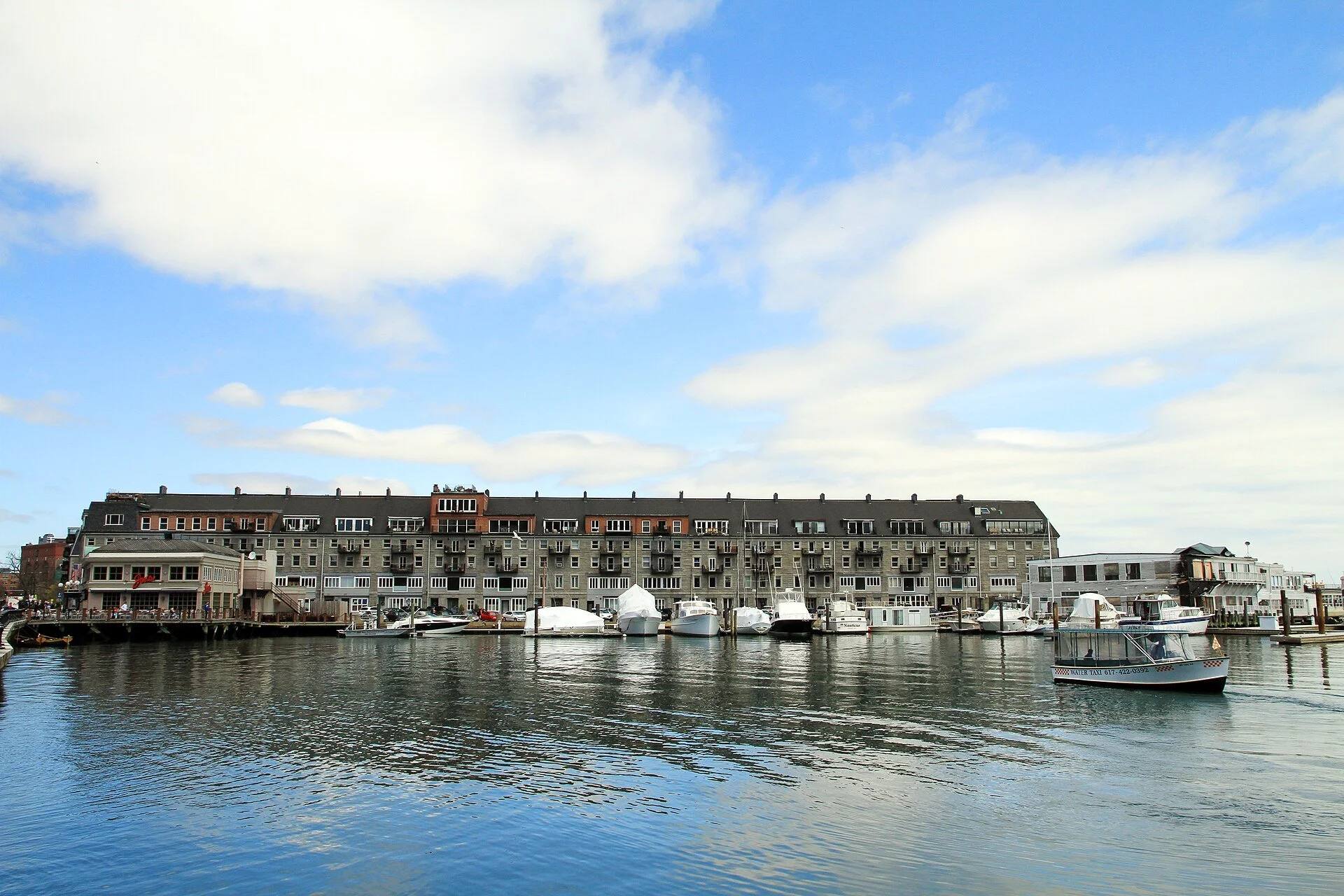
“Boats in Falmouth, Mass.,’’ photo by Bobby Baker (copyright Bobby Baker Fine Art).
Josh Hoxie: The further consolidation of America's 'patrimonial capitalism'
Via OtherWords.org
This year’s stock market saw high returns for month after month, as retirees and stock runners alike saw their portfolios rise. Then one day this fall, the market took a turn, and all of the increases of the past several months vanished.
That’s how it goes for the market. Sometimes you’re up, sometimes you’re down.
For the three wealthiest families in the country, however, the market only ever shoots skyward. The Waltons of Wal-Mart, the Kochs of Koch Industries, and the Mars of Mars chocolate own a combined $348.7 billion. Since 1982, their wealth has skyrocketed nearly 6,000 percent.
None of the living members of these families founded the companies from which their fortunes come — all were started by earlier generations.
In fact, more than a third of the Forbes 400 inherited the businesses that generated their wealth. These modern wealth dynasties exercise significant economic power in our current gilded age of extreme inequality.
A new report I co-authored with my colleague Chuck Collins at the Institute for Policy Studies, Billionaire Bonanza 2018, looks at the rise of these wealth dynasties. The Forbes 400 combined own $2.89 trillion, we found. That’s more than the combined wealth of the bottom 64 percent of the United States.
The median family in the United States owns just over $80,000 in household wealth. The richest person in the United States (and the world), Jeff Bezos, has accumulated a fortune nearly 2 million times that amount.
These pictures paint a grim picture of wealth inequality in the United States in 2018.
Wealth is concentrating into fewer and fewer hands while the rest of the country struggles to get by. One in five families has zero or negative wealth. Two in five Americans couldn’t come up with $400 if they needed it in an emergency.
Previous generations tried to warn us about economic inequality. Former President Teddy Roosevelt said in 1913, “Of all forms of tyranny, the least attractive and the most vulgar is the tyranny of mere wealth, the tyranny of a plutocracy.”
A generation later, Supreme Court Justice Louis Brandeis warned in 1941, “We must make our choice. We may have democracy, or we may have wealth concentrated in the hands of a few, but we can’t have both.”
And for a time, we heeded these warnings. Wealth and income inequality peaked in the 1920s before the passage of high personal income tax rates on the rich, a federal estate tax, and other inequality-fighting public policy measures took hold. Americans enjoyed a general flattening of the economic pyramid up until the 1980s, when the modern period of tax cuts for the rich and austerity for the rest of us begun.
It’s safe to say that a country in which three individuals own more wealth than half the country — as Jeff Bezos, Bill Gates, and Warren Buffett do now — is not what Brandeis or Roosevelt hoped for the direction of the country.
Without action, French economist Thomas Piketty warns, the United States will devolve into a “patrimonial capitalism” where the heirs of today’s billionaires dominate our politics, culture and economy.
The good news is we have solutions to avoid this.
A smart step forward would be instituting a federal wealth tax on assets above $20 million, which would raise an estimated $1.9 trillion over 10 years that could be invested in generating economic opportunities for low-wealth families. Another good idea is to tax large inheritances — people’s genetic lottery winnings — as ordinary income.
There’s nothing natural or inevitable about wealth dynasties. Our ancestors recognized this and took action. We can too.
Josh Hoxie directs the Project on Taxation and Opportunity at the Institute for Policy Studies.
Eva Paus: Celebrating international education while closing borders?
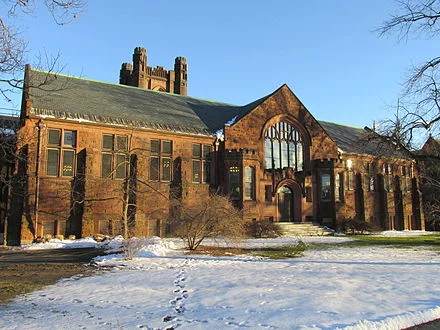
The Williston Library at Mount Holyoke College, in South Hadley, Mass.
Via The New England Board of Higher Education (nebhe.org)
In 2018, as in the past 17 years, the U.S. Department of State and the U.S. Department of Education have designated one week in the fall “to celebrate the benefits of international education and exchanges worldwide.” With this year’s International Education Week upon us, Nov. 12-18, we must ask which international education benefits we are celebrating. The very policies of this administration negate the value of engagement across cultural difference with an open mind and of wanting to understand other countries and cultures.
Over the summer, the U.S. Supreme Court upheld the administration’s travel ban for citizens from several predominantly Muslim countries. At the beginning of October, reputable media outlets reported on discussions in the White House about denying visas to all students from China, a proposal that has—fortunately—not materialized. And throughout this year, we have witnessed escalating rhetoric and action about preventing Central Americans from crossing the border into the U.S.
What does the celebration of international education mean, when minds and borders are closing and international students from select countries are excluded categorically?
Many people who oppose these policies highlight the harm done to the opportunities for international students or the economic costs to this country. What they tend to ignore are the benefits for U.S. students, indeed for all students, of international student diversity on their campus.
As the founding director of a global studies center at a liberal arts college, Mount Holyoke College, in South Hadley, Mass., I have spent the past 14 years working with my colleagues across the college to “internationalize” the education of all our students, through many different initiatives on and off campus. One of them has been to increase the number of international students at the college. Today, nearly 30 percent of our students come from outside the U.S.
When thinking of international education, most people think of U.S. students studying abroad, where they immerse themselves in a new culture and encounter and reflect upon beliefs and values that are different from their own and wrestle with their assumptions about how the world works. Studying or interning abroad is always mind-broadening and, often, transformative for life. But only around 10 percent of U.S. undergraduates study abroad; and, of those, over 60 percent are abroad for eight weeks or less.
So what about the other 90 percent?
There are many opportunities to learn about other countries and cultures on a U.S. campus, e.g., learning a foreign language or participating in internationally focused classes. A particularly powerful venue for cross-cultural learning is personal engagement with students from other countries.
When students from Miami and Shanghai share a dorm room, they get to know the opinions, traditions and quirks of each other, and they will never think about each other’s country in the same abstract way. When a Muslim student from Cairo partners with a Christian student from Omaha in a class project on family values and religion, their collaboration will likely lead to a profound examination of their understanding of each other’s religion and their own. And the students from Seattle and Mexico City who are on the same rowing team are bound to break down stereotypes, as “the other” becomes real and often a friend.
This fall, 30 percent of the incoming class at my college live with a student from a country different from their own. When they hear a disparaging statement about the totality of the people from their roommate’s country, they will not fall for it because they come to know their roommate as a fellow human being. And they may well speak up and challenge such statements. And when my upper-level economics seminar looks like a mini-U.N. assembly, students will learn about perspectives on the subject matter they did not know existed.
The next time when students from a particular country are singled out for possible denial of visa entry into the U.S., let us not only argue against such actions on the basis of the economic benefits that international students bring to this country. (To be sure, these are substantial. In 2016-17, international students at U.S. colleges and universities contributed $36.9 billion to the U.S. economy and supported more than 450,000 jobs.) But in the current climate of growing xenophobia, the international education benefits of international student diversity on our campuses is at least as important.
Sustained interaction with students from other countries—in the classroom, in residence halls and community—opens minds, challenges all students to understand and empathize with individuals who are different from them and to learn to communicate across difference. This ability to engage effectively across difference is key for successful careers, citizenship and ultimately world peace. That’s what international education is about.
Eva Paus is the Carol Hoffmann Collins Director of the McCulloch Center for Global Initiatives and professor of economics at Mount Holyoke College.
Chris Powell: Malloy wins third term as Conn. governor!

State seal of Connecticut. Love the grapes! Nutmeg State residents are big wine drinkers.
Maybe it was his only way to win Connecticut's election for governor, but having assured voters during the final weeks of his campaign that no one would have to sacrifice during his administration, either through tax increases or cuts in services, Ned Lamont now can only disappoint people, even as the hungriest ones think that he owes them big-time.
Five days before the election Lamont, the Democratic nominee, told a rally of government employee union members in New Britain, "We're going to be fighting for you for the next four years." Lamont's remark recalled Gov. Dannel Malloy's infamous if honest declaration to a rally of government employee union members at the state Capitol four years ago: "I am your servant."
How will the new servant of the unions deliver to them after first pledging to raise taxes, then pledging not to, and then, hours before the election, dismissing a radio interviewer's question about taxes with a "no comment," as if that answer was not as arrogant as anything ever uttered by his ignorant Republican rival?
But at least Lamont will enjoy a Democratic majority in the General Assembly, as the slowly rising Republican tide of recent years receded just as the party seemed about to seize legislative power. Dissatisfaction with President Trump probably hurt Republican legislative candidates.
The restored Democratic majority in the legislature probably won't object much to raising taxes again, as long as it is done quickly, leaving maximum time before the next election. New tax revenue will help protect the compensation of the Democrats' own campaign workers, like the members of government employee unions who performed sentry duty at polling places for Democratic candidates, doing political work on one their many discretionary paid holidays.
Connecticut's Republicans couldn't have suffered a bigger defeat than this election, since the state had been laid so low by eight years of Democratic administration under Governor Malloy that even Lamont ran against his own party's record. But circumstances turned out to be worse for the Republicans than Malloy's record was for the Democrats.
First was the failure of the Republicans to unite behind a gubernatorial candidate at their convention, resulting in a five-way primary whose winner was a political unknown with only 29 percent of the vote, Bob Stefanowski.
Second was the failure of the Republican bench, the party's leading legislators and mayors, to win nomination for higher office this year. Only one of those leaders did -- state Sen. Joe Markley, of Southington, who ran for lieutenant governor. With that exception everyone on the Republican ticket for statewide and congressional office had little to no name recognition when the campaign started and barely more when it ended.
That Stefanowski came fairly close despite his lack of involvement in the state's public life, his unfamiliarity with state government, and his refusal to articulate a platform beyond reducing taxes suggests that Connecticut was ready for a change of regime if it was offered a more plausible candidate.
But while enactment of the state income tax in 1991 was expected to prompt a political revolution in the legislative election the next year, the political composition of the new General Assembly was exactly the same as the old's. Malloy is leaving office detested but here comes his third term.
Chris Powell is a columnist for the Journal Inquirer, in Manchester, Conn.

Old mill towns looking for a brighter future
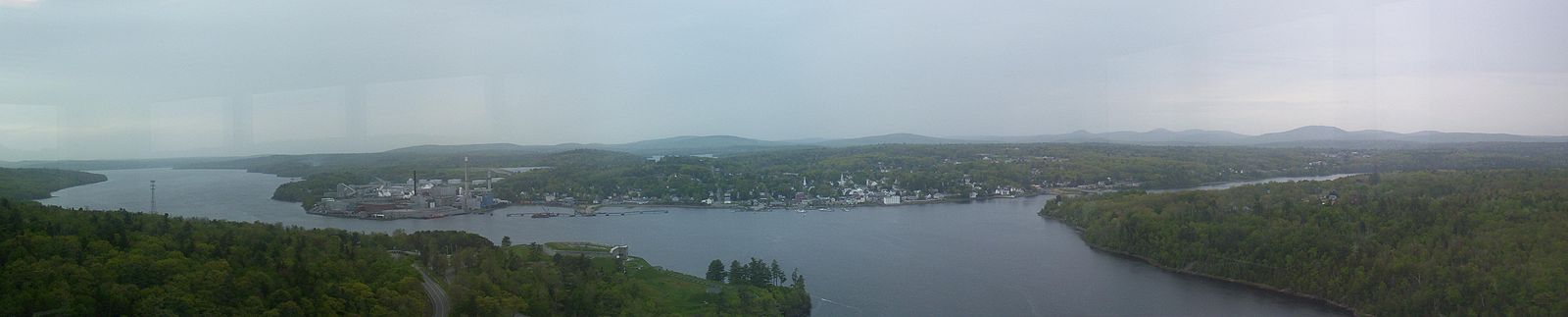
Bucksport, Maine, from the top of the Penobscot Narrows Bridge. The town may be a partial model for “Bealport’’ in Jeffrey Lewis’s new novel.
From Robert Whitcomb’s “Digital Diary,’’ in GoLocal24.com
Jeffrey Lewis’s new novel, Bealport: A Novel of a Town, published by Haus Publishing, is about the socio-economic woes of a Maine Coast community all too dependent on a shoe factory (makes me think of Maine’s famous Bass Weejun loafers). A private-equity fund partner buys the company on a sort of lark because he likes its products. He and his partners load it up with debt and basically loot it before he decides to close it, in part because of bad behavior by a local guy whom the fat cat briefly puts in charge of new product development.
The crusty Bealporters, most of whom refuse to move to places with better prospects, are left with dark futures but mostly retain their sardonic sense of humor, but some also use drugs and booze as pain relievers, along with the distraction of a demolition derby.
Coincidentally, while working on this column, I came across an article in the current issue of Yankee magazine headlined “The Town That Refused to Die,’’ about Bucksport, another, but real, Maine Coast town that had been too dependent on a mill, in Bucksport’s case a paper mill that was shut down in 2014, and the town’s efforts to economically and culturally re-invent itself. Part of the reinvention will involve the planned opening of a huge salmon-aquaculture facility. Let’s hope that Bucksport folks don’t become too dependent on that single big employer.
The whole thing reminds me a bit of J.D. Vance’s best-selling memoir, Hillbilly Elegy, about growing up poor in Appalachia. Why don’t more people just get up and move to places with more economic potential? Well, many aren’t well educated and so don’t have mobile skills, many feel that they’re too old to start over, many adore their gorgeous if sometimes harsh regions and many have very strong family and friend ties to these places going back generations. For good and for ill, they are rooted.
November in black and white



Chrysanthemums, the official flower of November
— Photos by James Oram, of Connecticut
Into every life...

“Patience (Waiting For the Rain)’’ (acrylic on canvas), in Soyoung L. Kim’s show “Marks of the Displaced,’’ at Galatea Fine Art, Boston, this February.
Cozy kitchen
— Photo by Sb2s3
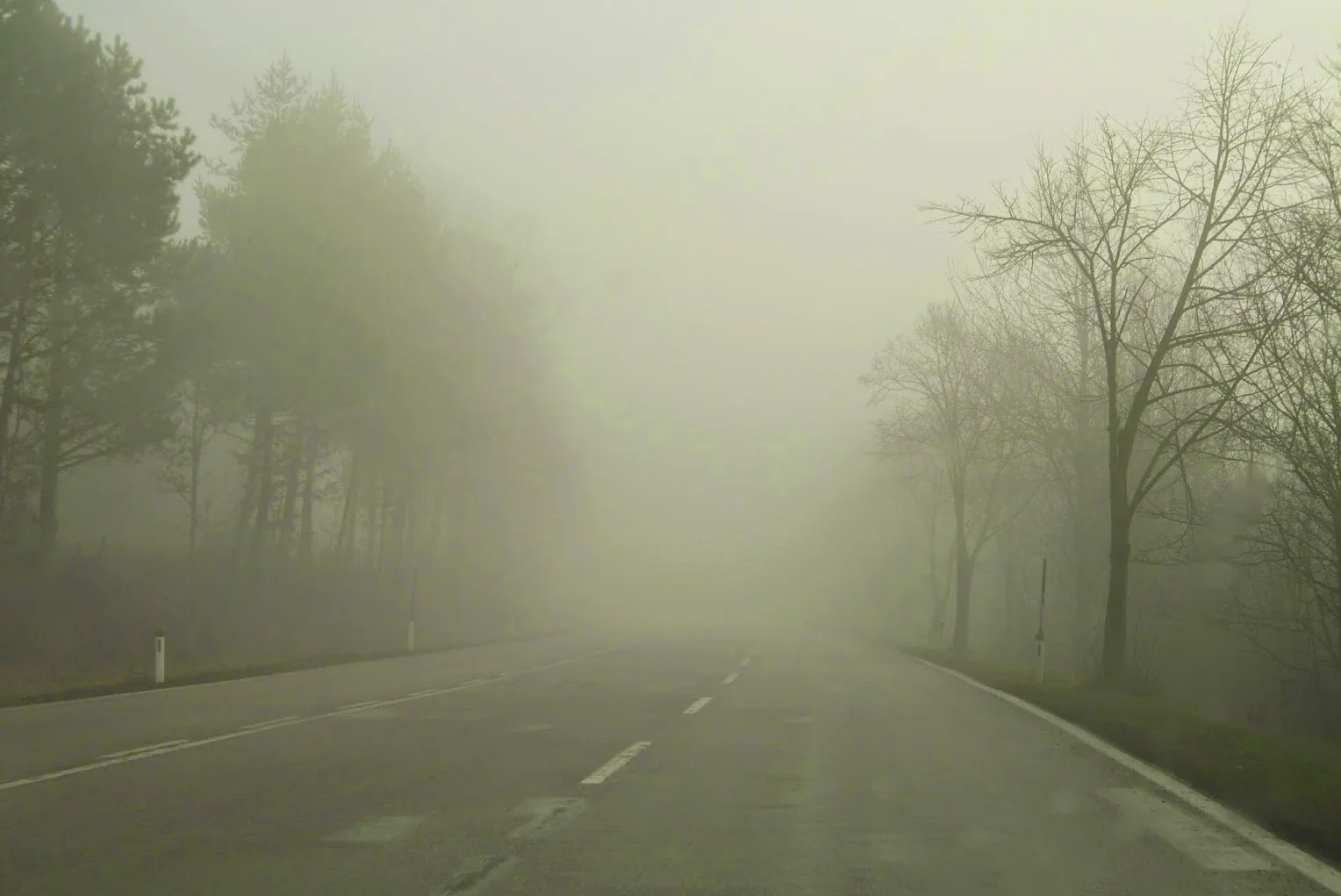
“I want to sit in the yellow
light of the kitchen,
leaves falling, wind and
fog.’’
— From “Fog Moves In,’’ by Gary Lawless, a Maine Coast poet and co-owner of the Gulf of Maine bookstore, in Brunswick, Maine.
Indian Summer and Squaw Winter

Chrysanthemum, the November birth flower.
Yet not all is wind, cloud and participation this month; the anticyclonic conditions that produce indian Summer spells in October often reestablish their influence….{The jet stream} may bring “Squaw Winter, described as a brief period of freeze and frost in mid-autumn, which is succeeded by spells of Indian Summer weather under anticyclonic controls.’’
— From the November chapter of New England Weather Book, by David Ludlum
But only to look at
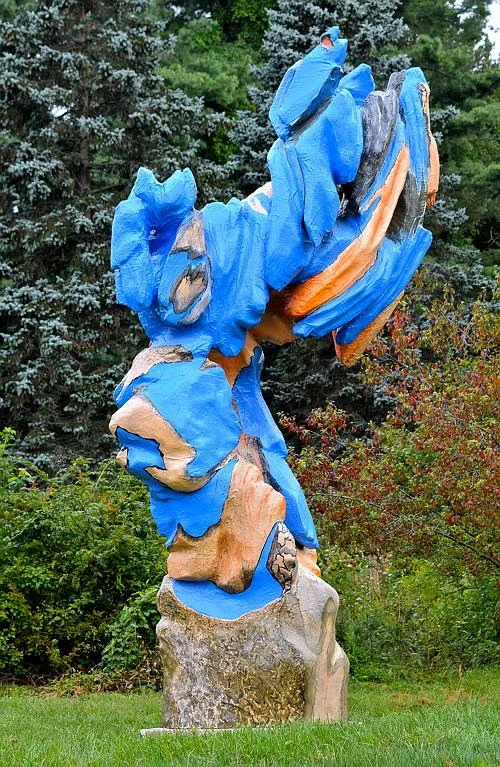
“Longing for Mountains’’ (mixed media), by Andy Moerlein, at Boston Sculptors Gallery.
Beware self-driving-car gridlock
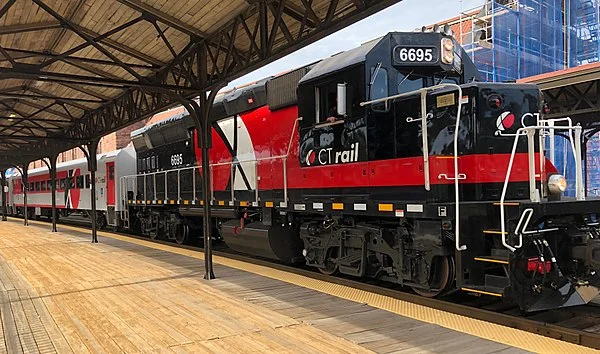
A CTrail train line, which links Springfield, Mass., and New Haven, Conn., and which has had a flood of passengers.
From Robert Whitcomb’s “Digital Diary,’’ in GoLocal24.com.
The Rhode Island Public Transit Authority has added three electric buses to its fleet. Bravo! One small step against global warming. For some people of a certain age, the buses are a reminder of how much of our urban public transportation used to be electric, in the form of trolleys.
Meanwhile, we’d better deal with the fact that the advent of millions of self-driving vehicles, hopefully electric, will probably worsen traffic congestion by encouraging more single-passenger driving and even no-passenger driving, with many vehicles being used to deliver stuff. We need much more MASS TRANSIT, not more vehicles, roads and parking lots.
As a sign of the hunger for expanded mass transit, consider that crowding has gotten so bad on Connecticut’s new CTrail line, between Springfield, Mass., and New Haven, that the state and Amtrak are scrambling to make more trains available. Some of the crowding is caused by a surprisingly large number of college students using special passes that gives students at participating institutions unlimited access to public transportation in the Nutmeg State.
To read more of this bad news/good news story, please hit this link.
David Warsh: Climate change and economic modeling
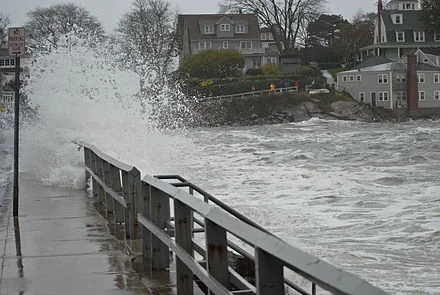
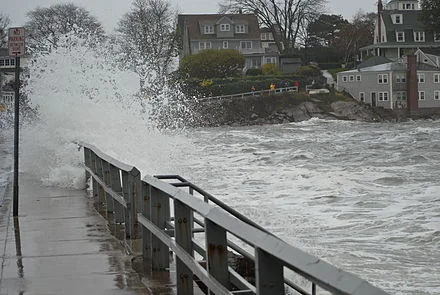
Flooding in Marblehead, Mass., during Super Storm Sandy on Oct. 29, 2012.
SOMERVILLE, Mass.
The unexpected pairing of environmental and growth economics by the Nobel committee this year contains many surprises. William Nordhaus and Paul Romer are surprisingly similar in their origins. Each is a member of an entrepreneurial family in the American West. Nordhaus is the youngest of four brothers; his father, Robert, was a ski developer and sheep rancher in New Mexico. Romer is the second of seven children; his father, Roy, is a John Deere dealer and former governor of Colorado. Each graduated from an elite high school in the East (Andover and Exeter) before attending college (Yale and the University of Chicago). Both began their graduate studies at the Massachusetts Institute of Technology.
Yet the two economists’ careers could scarcely have been more different. Nordhaus, 77, is a master of social engagement and consensus. Romer, who turns 63 on Nov. 7, is a lifelong innovator and frequent disruptor of the intellectual neighborhoods in which he has found himself. Nordhaus is the world’s foremost authority on the economics of climate change. Romer is a major figure in the history of economics, who after 20 years left economics to become a public intellectual. The Swedes, having put the two together, made it worthwhile to tell them apart.
The most striking thing about Nordhaus is the steadily expanding cone of his influence over 50 years. He immediately returned to Yale after completing his PhD in just four years at MIT and has never left, except for occasional sojourns, the first of them the most significant: 1974-75 at the International Institute for Applied Systems in Vienna, the cradle of climate modeling. He spent two years as a member of the President’s Council of Economic Advisers, 1977-79, served as provost at Yale, 1986-88, and as vice president for finance and administration, there in 1992-93.
As a member of the National Academy of Sciences, Nordhaus served on numerous interdisciplinary committees, including: the Committee on Nuclear and Alternative Energy Systems, the Panel on Policy Implications of Greenhouse Warming, the Committee on National Statistics, the Committee on Data and Research on Illegal Drugs, and the Committee on the Implications for Science and Society of Abrupt Climate Change. In 2014, Nordhaus served as president of the American Economic Association.
He was co-author, with Paul Samuelson, of later editions of the classic textbook Economics, whose 19th and final edition was published in 2009. His most recent books on climate change are A Question of Balance: Weighing the Options on Global Warming Policy (2008) and The Climate Casino: Risk, Uncertainty, and Economics for a Warming World (2013).To call him well-connected is an understatement.
Significantly, Nordhaus began his career working on the same problem that Romer later solved: how to bring knowledge creation within the compass of economic theory, instead of simply assuming its steady increase, as is conventional in macroeconomics modelling even today. “An Economic Theory of Technological Change” appeared in the American Economic Review in 1969; Invention, Growth, and Welfare: A Theoretical Treatment of Technological Change later the same year ($93.34 for an out-of-print copy) but for reasons that have never been entirely clear, Nordhaus’s thesis failed to attract the attention that would have allowed him to pursue the question. By 1972, he was working, with fellow Yale professor (and future Nobel laureate) James Tobin, on incorporating natural resources and household accounts in national income accounting – soon dubbed “green accounting.” In Is Growth Obsolete?, in 1973, the authors concluded,
At present there is no reason to arrest general economic growth to conserve natural resources, although there is good reason to provide proper economic incentives to conserve resources which currently cost their users less than true social cost.
In Vienna, Nordhaus became interested in the problem of global warming. By 1977, in“Economic Growth and Climate: The Carbon Dioxide Problem,” he argued that
In contemplating the future course of economic growth in the West, scientists are divided between one group crying “wolf” and another which denies that species’ existence. One persistent concern has been that man’s economic activities would reach a scale where the global climate would be significantly affected. Unlike many of the wolf cries, this one, in my opinion, should be taken very seriously.
He has been working on it ever since, developing economic approaches to global warming, including the construction of integrated economic and scientific models to determine the efficient path for coping with climate change. Perhaps it was all but fated, given Nordhaus’s family’s background. In any event, it was this work for which the Nobel Foundation last month cited Nordhaus.
Along the way, he fought off a cancer that could have killed him, worked well with his MIT classmate Martin Weitzman, another authority on climate change, with a different approach; and provided rhetorical support for Romer’s theorizing about the import of new technologies – in particular, Nordhaus’s 1996 study of the economic history of the cost of an evening of indoor lighting since Babylonian times. Nordhaus “returned to Mesopotamian economics,” his biography notes, with a study published on the eve of the invasion of Iraq in which he projected the cost of the war as high as $2 trillion. It was subsequently estimated to have been $3 trillion or more.
A long-term collaboration with Stanford professor John Weyant and his Energy Modeling Forum’s summer Snowmass, Colorado, workshops, helped bring major energy companies into the climate change tent. But corporate participation didn’t prevent Nordhaus, in the final pages of Climate Casino, from comparing ExxonMobil to cigarette manufacturers as having been a “merchant of doubt.” But that has protected him from biting criticism from those who believe that his cautious approach to measurement issues “enabled climate change denial and delay.” For all his mastery of consensus-building, Nordhaus’s central policy recommendation – a global carbon tax – still has a long way to go.
David Warsh, a longtime columnist and economic historian, is proprietor of Somerville-based economicprincipals.com, where this piece first appeared.
Still lifes and vets in Maine

Photo by Lynn Karlin in the show of 19 still lifes by the Maine photographer, from her “The Pedestal Series," a display of food in still-life composition in the “Art in the Capitol’’ program of the Maine Arts Commission Nov. 30-Dec. 31. Also in the program, and in partnership with VA Maine Healthcare Systems of Togus, is the Maine Veteran Artists show: works by 39 artists who have accompanied their work with artist statements that includes quotes and stories about how art plays a key role in the quality of life for many Maine veterans.’’
Maine has a long history of luring and keeping distinguished artists, to no small degree because of its physical beauty, especially along its coast.

Maine State Capitol (aka State House), in Augusta. It was built in 1829-1832 and designed by Charles Bullfinch, who designed the very famous gold-dome Massachusetts State House, built in 1795-1798. That’s fitting since Maine was part of Massachusetts until 1820.
Get over it; she's dead
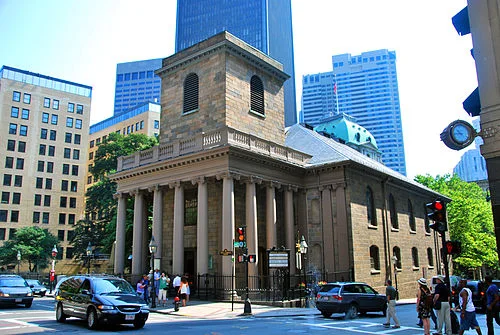
King’s Chapel in Boston. Built in 1749, originally to host an Anglican (Episcopalian) congregation, it later became a quirky Unitarian church that kept some Episcopal aspects.
“Mary Winslow is dead. Out on the Charles
The shells hold water and their oarblades drag,
Littered with captivated ducks, and now
The bell-rope in King's Chapel Tower unsnarls
And bells the bestial cow From Boston Common; she is dead.’’
— From “Mary Winslow,’’ by Robert Lowell (1917-1977)
Build Hope Point Tower

Rendering of proposed Hope Point Tower in Providence.
— By IBI GROUP, Toronto
After some hesitation, I support developer Jason Fane’s proposal to build a squiggly 46-story skyscraper in Providence’s Route 195 relocation district. I realize that some architecture experts hate it, and others like it. But in any case, it would bring new structural excitement to the city, which the city could use. A much better place for the tower would be in a vacant lot in the middle of the Financial District but Mr. Fane says that won’t work for him.
Not surprisingly, some local real estate agents and landlords are fighting hard against the project. The tower would presumably employ its own rental and sales agents. And people who now live in other, lower buildings nearby would love to move into what would be called Hope Point Tower for the impressive views. I think that it would be seen as a very desirable place to live.
It’s sort of a cliché to say this, but the Eiffel Tower was hated by many Parisiens when it went up, in 1889, as were the Twin Towers of the World Trade Center when they went up in the early ‘70s. But well before Saudi terrorists destroyed them, in 2001, they, like the Eiffel Tower, had become symbols of their cities, beloved by millions. (I worked across the street from the Twin Towers and always hated them.)
There are some intriguing questions – e.g., Mr. Fane says that the building, which would be an as yet undisclosed mix of rental and owned units, would have about 800 residents. But how many would actually be in residence much of the time? Would some of the “residents’’ be flight capitalists from Russia, China and other corrupt dictatorships buying units to store and/or launder their money and rarely if ever be there – which has happened a lot in such very rich cities as New York, Boston and San Francisco. Or, I could imagine, given the many very rich families represented by the student bodies of Brown University and the Rhode Island School of Design, would a lot be occupied by rich kids only in the academic year and/or (only occasionally) by parents flying in from around the world to visit them? What sort of commitment to the city would they have?
Meanwhile, that interest rates are rising and that we may be heading into recession next year may doom the project, even if officials finally give it the go-ahead after the very long delay up to this point.]
Hit this link to see an article on the opening of the Industrial Trust Building (aka “Superman Building’’) in 1928, a much more boosterish time in Rhode Island.

Environmental factors in decline of shellfish along East Coast

Bay scallop.
Via ecoRI News (ecori.og)
Researchers studying the sharp decline between 1980 and 2010 in documented landings of the four most commercially important bivalve mollusks — eastern oysters, northern quahogs, soft-shell clams and northern bay scallops — have identified the causes.
Warming ocean temperatures associated with a positive shift in the North Atlantic Oscillation (NAO), which led to habitat degradation including increased predation, are the key reasons for the decline of these four species in estuaries and bays from Maine to North Carolina, according to the National Oceanic and Atmospheric Administration (NOAA).
The NAO is an irregular fluctuation of atmospheric pressure over the North Atlantic Ocean that impacts both weather and climate, especially in the winter and early spring in eastern North America and Europe. Shifts in the NAO affect the timing of species’ reproduction and growth, the availability of phytoplankton for food, and predator-prey relationships, all of which contribute to species abundance. The findings appear in Marine Fisheries Review.
“In the past, declines in bivalve mollusks have often been attributed to overfishing,” said Clyde Mackenzie, a shellfish researcher at NOAA Fisheries’ James J. Howard Marine Sciences Laboratory, in Sandy Hook, N.J., and lead author of the study. “We tried to understand the true causes of the decline, and after a lot of research and interviews with shellfishermen, shellfish constables, and others, we suggest that habitat degradation from a variety of environmental factors, not overfishing, is the primary reason.”
Mackenzie and co-author Mitchell Tarnowski, a shellfish biologist with the Maryland Department of Natural Resources, provide details on the declines of these four species. They also note the related decline by an average of 89 percent in the numbers of shellfishermen who harvested the mollusks. The landings declines between 1980 and 2010 are in contrast to much higher and consistent shellfish landings between 1950 and 1980.
Exceptions to these declines have been a sharp increase in the landings of northern quahogs in Connecticut and American lobsters in Maine. Landings of American lobsters from southern Massachusetts to New Jersey, however, have fallen sharply as water temperatures in those areas have risen.
“A major change to the bivalve habitats occurred when the North Atlantic Oscillation index switched from negative during about 1950 to 1980, when winter temperatures were relatively cool, to positive, resulting in warmer winter temperatures from about 1982 until about 2003,” Mackenzie said. “We suggest that this climate shift affected the bivalves and their associated biota enough to cause the declines.”
This graph shows the rise and fall of soft-shell clam landings from 1950 to 2005. (Clyde Mackenzie)
Research from extensive habitat studies in Narragansett Bay and in the Netherlands, where environments including salinities are very similar to the northeastern United States, show that body weights of the bivalves, their nutrition, timing of spawning, and mortalities from predation were sufficient to force the decline. Other factors likely impacting the decline were poor water quality, loss of eelgrass in some locations for larvae to attach to and grow, and not enough food available for adult shellfish and their larvae.
“In the Northeast U.S., annual recruitments of juvenile bivalves can vary by two or three orders of magnitude,” said Mackenzie, who has been studying bay scallop beds on Martha’s Vineyard with local shellfish constables and fishermen monthly during warm seasons for several years.
In late spring to early summer of this year, a cool spell combined with extremely cloudy weather may have interrupted scallop spawning, leading to what looks like poor recruitment this year. Last year, Nantucket and Martha’s Vineyard had very good harvests due to large recruitments in 2016.
“The rates of survival and growth to eventual market size for shellfish vary as much as the weather and climate,” Mackenzie said.
Weak consumer demand for shellfish, particularly oysters, in the 1980s and early 1990s has shifted to fairly strong demand as strict guidelines were put in place by the Interstate Shellfish Sanitation Conference in the late 1990s regarding safe shellfish handling, processing, and testing for bacteria and other pathogens.
Enforcement by state health officials has been strict. The development of oyster aquaculture and increased marketing of branded oysters in raw bars and restaurants has led to an increase in oyster consumption in recent years.
Since the late 2000s, the NAO index has generally been fairly neutral, neither very positive nor negative. As a consequence, landings of all four shellfish species have been increasing in some locations. Poor weather for bay scallop recruitment in both 2017 and 2018, however, will likely mean a downturn in landings during the next two seasons.