
Vox clamantis in deserto



Oh what a paradise
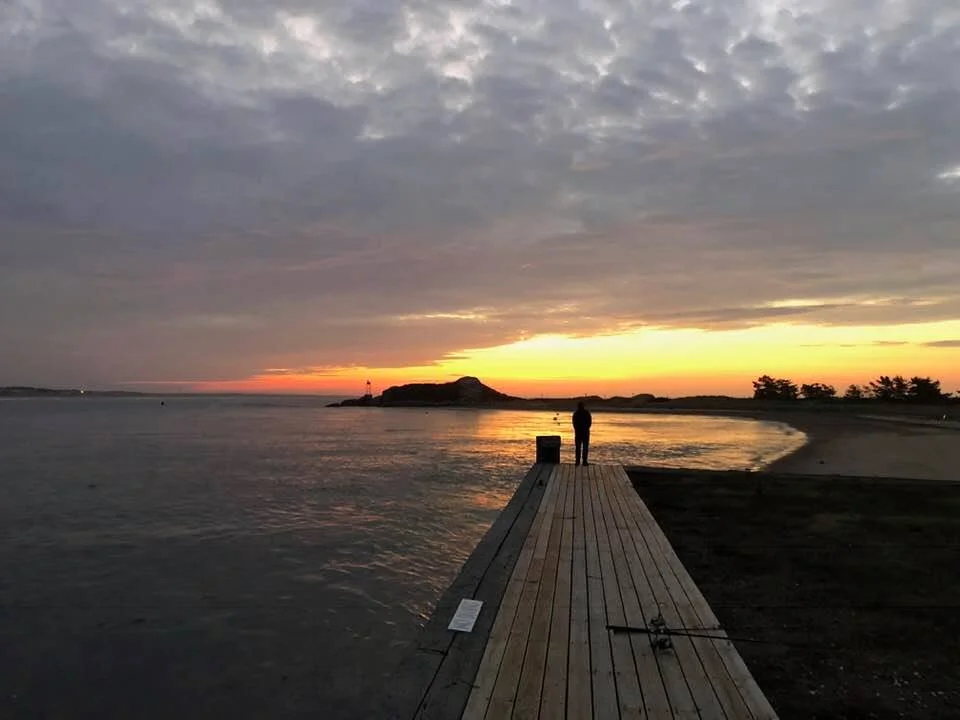
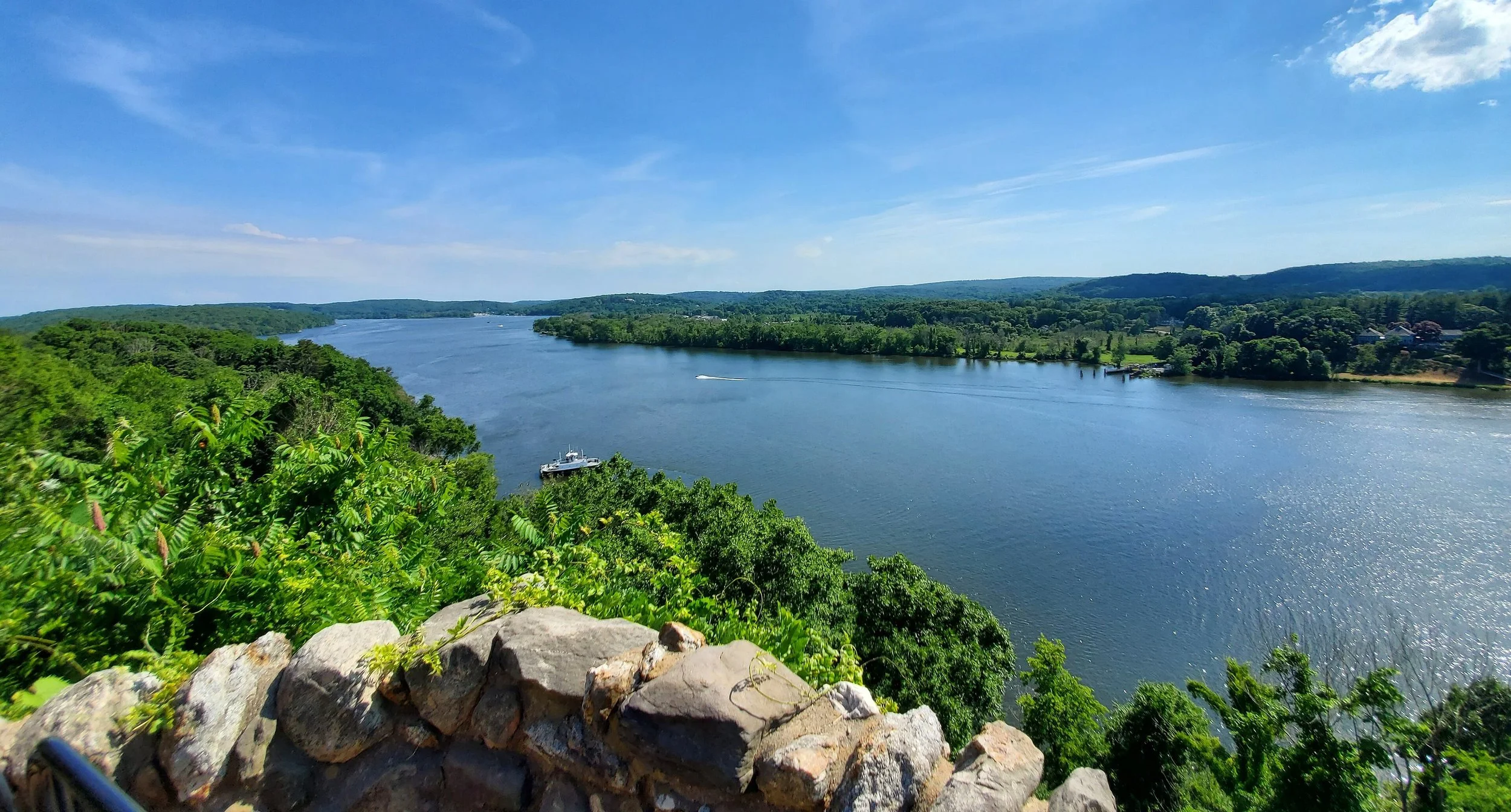
On All Souls Day, looking toward Point of Rocks (also charmingly called The Knubble), where the Westport River meets Buzzards Bay.
— Photo by Kevin Vendituoli
UMass Dartmouth gets state grant toward developing 'blue economy corridor'
This is from The New England Council (newenglandcouncil.com)
The University of Massachusetts announced that UMass Dartmouth and its SouthCoast Development Partnership received a $300,000, three-year state investment from the Massachusetts Executive Office of Housing and Economic Development. The money will go towards the development of a “blue economy corridor.”
The blue economy marks a cross section of marine-related industries, including offshore wind, fishing, aquaculture, watercraft design and marine scientists. The “blue economy corridor” initiative is intended to develop the blue economy supply chain, workforce and higher education research, all while identifying challenges to growth and exports and looking for ways to diversify the regional economy.
Speaking of the three-year plan for the Blue Economy, UMass Dartmouth Chancellor Robert Johnson said that he intends to create a strategic, regional economic plan by first talking to stakeholders and brainstorming about what the region can become. He said, “What we’re doing is laying the foundation on solid ground.”
Just taking a break

Beech tree in autumn.
“Consider again the November trees which lift their arms to say that they have only temporarily yielded; that next spring they will again assert their determination to live. Those trees, like the frog now sleeping under the mud, are on our side.’’
— Joseph Wood Krutch
Chris Powell: Just asking question gets Megyn Kelly canned

White singer and actor Al Jolson wearing blackface in the musical film The Jazz Singer (1927). The movie was the first feature-length “talkie’’.
MANCHESTER, Conn.
Anyone might be glad to be fired if it meant the tens of millions of dollars that Megyn Kelly will get in severance pay from NBC for cancellation of her Megyn Kelly Today show. There's little need to feel sorry for her.
But Kelly's dismissal is another blow to the national dialogue, since she was fired, at least nominally, just for asking a couple of questions on the air. That is, why is wearing blackface in Halloween costumes always wrong, and what is racist?
Kelly seemed to be wondering if blackface might be acceptable for someone who just wanted to dress up like a particular character. While blackface has a long association with racial mockery, Kelly didn't defend mockery.
So why wouldn't just answering Kelly's question and making an argument have been sufficient? Why was it necessary to execute her quickly, even after she apologized for her ignorance of history?
For if mere ignorance is cause for dismissal, lots of people are unfit for their posts, and Kelly's firing may strike them as raw intimidation by a political correctness that wants to punish without having to argue. That would be disrespect far greater than anything Kelly committed and would add to the country's bitter political resentments.
xxx
BIDEN MISSES LAMONT AD: Former Vice President Joe Biden came to Connecticut last week to campaign for the Democratic ticket and urge an end to vilification in politics. "Fear stokes bad behavior," Biden said. "Personal attacks stoke fear."
Ironically, just hours earlier one of the candidates Biden was endorsing, gubernatorial nominee Ned Lamont, began broadcasting a television commercial described as the hardest-hitting of the campaign, declaring that Republican gubernatorial candidate Bob Stefanowski's lack of enthusiasm for gun control might cause another mass murder at a school.
Of course, the campaign for governor has been mainly the vilification that Biden deplored, with Lamont likening Stefanowski to President Trump and Stefanowski likening Lamont to Gov. Dannel Malloy, even as the two candidates have proposed nothing useful about state government's catastrophic finances. Biden didn't help either.
xxx
REJECT THE AMENDMENTS: Two state constitutional amendments on next week's Connecticut election ballot should be rejected.
One, purporting to establish a "lockbox" for money collected by state government in the name of transportation, is as phony as the "spending cap" amendment offered to the voters in 1992 as an apology for the income tax imposed the previous year. To become effective the "spending cap" amendment needed implementing legislation, but the General Assembly let decades go by before enacting any.
The loophole in the "lockbox" amendment is that it would allow state government to withhold transportation revenue from deposit in transportation accounts, and the "lock" would not work until the revenue was actually deposited in the "box." Besides, transportation money should be subject to diversion in emergencies, as all state government money should be. The problem is that governors and legislators have defined emergency too broadly.
The second amendment, requiring public hearings for any disposal of public land, is too trivial for the Constitution. Its objective could be achieved by ordinary legislation.
The bigger problem with the two amendments is that they pretend that there is some substitute for the ordinary integrity and conscientiousness of legislators. There isn't.
Chris Powell is a columnist for the Journal Inquirer, in Manchester, Conn.
In Mass., stitching together land to save wildlife
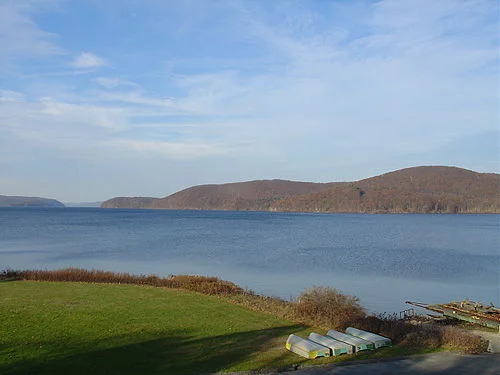
The Quabbin Reservoir, in central Massachusetts.
From Robert Whitcomb’s “Digital Diary,’’ in GoLocal24.com
One of the lethal challenges facing other animals as humans relentlessly develop land and destroy natural habitat is that there are smaller and smaller parcels for wild creatures to roam in. But local conservationists are working hard to try to address this as best they can.
For example, in Petersham, Mass., a $7 million federal Forest Legacy grant and a $1.2 million Massachusetts Landscape Partnership grant are helping to fund the protection of Chimney Hill Farm -- 760 acres of forest and fields -- as part of the Quabbin Heritage Landscape Partnership. The ambitious partnership seeks to ensure that there are long stretches of contiguous countryside in north-central Massachusetts.
The aim has been to create “a vast, interconnected 130,000-acre quilt of conservation land made up of different but adjacent protected lands that include state parks and wildlife management areas, working farms, wildlife sanctuaries and privately owned woodlands, a remarkable result for one of the most densely populated states in the country,” Jay Rasku, stewardship and engagement director of the Mount Grace Land Conservation Trust, one of the partners, told The Worcester Telegram.
More animal species will go extinct without many more efforts like these. Some opportunistic animals, such as raccoons, coyotes and deer, have learned how to survive in small tracts, in part by eating food planted by or left by humans. But others, such as (usually!) bears, wildcats and many bird species, need spacious protected countryside away from humans.
There are also such obvious benefits (for humans and other animals) of interconnecting these tracts as protecting watersheds.
To read more, please hit this link.
'Hidden crevises'

Work by Mimi Howard in the joint show with Marcia R. Wise, “Where Earth Meets Sky,’’ at Fountain Street gallery, Boston, through Nov. 25. The gallery says: “Mimi Howard’s work is inspired by a fascination with the magic and beauty found in nature, especially in the garden. Each vessel is a unique combination of hand-built and wheel-thrown parts that are then fired multiple times in a kiln. Howard’s sculptures have a tactile quality that allows those who see and touch it to readily experience the work's fluid movement and its natural edges, turn and hidden crevices.’’

Peter Certo: If only people in America's far-flung colonies could vote for U.S. president and Congress

Sailing into San Juan, Puerto Rico.
Via OtherWords.org
Few people regard Southwest Ohio as a particularly exhilarating place. But every two to four years, just drawing breath there felt like a rush for a kid drawn to politics.
It’s a purplish region of a perennial swing state, which means our often-overlooked corner of the world periodically assumes an outsized importance. This year’s crucial midterm elections are no exception.
For the 23 years I lived there, I found it so thrilling. Voting felt important. So did organizing, and learning whatever you could all year long.
It’s no small irony that the political passion I learned in Ohio led me to Washington, D.C. — which, despite what you might expect, is the most politically marginalized place in the mainland United States. For the better part of a decade I’ve made a living out of engaging the issues, but the thrill of participation has dwindled.
The 700,000 or so taxpaying residents of America’s capital district outnumber the residents of entire states like Wyoming and Vermont, and could soon overtake Alaska. Yet unlike those states, we’re awarded precisely 0 senators and 0 voting House members to represent us in Congress.
Here in the heart of the beast, we enjoy the same congressional representation as U.S. nationals in our far-flung colonial acquisitions — Puerto Rico, the Virgin Islands, Guam, American Samoa, and the Northern Mariana Islands. Which is to say, virtually none.
Of course, there’s more at stake than whether I or other transplants get to enjoy voting in national elections.
For one thing, your elected representatives often overrule our own. On many occasions, Congress has intervened to overturn democratic decisions made by D.C. voters.
For instance, when 69 percent of D.C. voters voted to legalize medical marijuana years ago, Congress blocked the District from spending its own tax dollars implementing it.
When 65 percent of us voted to legalize recreational use in 2014, some Maryland Republican forbade Washingtonians from setting up storefronts, denying us the full economic boons of legalization and keeping the black market open. To this day, elected D.C. representatives can’t even hold hearings on the issue.
America’s disenfranchised territories share one unmistakable demographic similarity: Most of their residents are people of color. Puerto Ricans are overwhelmingly Hispanic, Virgin Islanders mostly black, our Pacific territories Asian and Pacific Islander, and D.C. a diverse blend of black, white, Hispanic and Asian.
Contrast that with the small but overwhelmingly white populations of Wyoming and Vermont, which between them get two House members and four senators.
These imbalances affect all Americans, regardless of your state or race. The ramshackle, undemocratic systems we use to elect our House members, senators, and presidents vastly over-represent small states that are rural, white, and conservative, while under-representing everyone else.
This was the system that let Donald Trump become president despite losing the popular vote by nearly 3 million ballots.
It was the system that led to a 52-48 Republican Senate majority, even as Democratic Senate candidates running that year got 11 million more votes than Republicans.
And it was the system that let senators representing just 44 percent of Americans confirm Brett Kavanaugh, a judge most Americans opposed, to a lifetime seat on the Supreme Court.
A system that actually permitted one vote for one person would look radically different. But even absent a genuine popular vote system, some of the imbalances favoring smaller, whiter states could be offset by extending statehood — and real votes in Congress — to the more diverse 4.5 million residents of D.C. and America’s other non-voting territories.
The people who vote — or can’t vote — in Congress shape the country for all of us. That’s as true for my neighbors here in D.C. as it is for my family and friends back in Ohio.
Peter Certo is the editorial manager of the Institute for Policy Studies and editor of OtherWords.org.
To the Sailing Capital
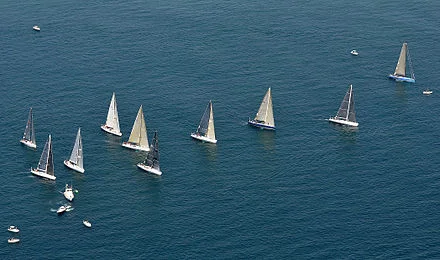
From Robert Whitcomb’s “Digital Diary, in GoLocal24.com
‘This is as it should be: The National Sailing Hall of Fame will move from Annapolis, Md., to Newport, where the institution will be housed in the Thames Street Armory Building, most of which will be owned by the Hall of Fame. The city will retain ownership of the Newport Maritime Center in the basement but the retail operations in the old building will have to go.
As a major international sailing and yachting center, the former long-time base of the America’s Cup races, one of the two homes of the New York Yacht Club and a storied port dating back to the 17th Century, Newport should have always been the home of the Sailing Hall of Fame. And, after all, the City by the Sea is on the, well, breezy sea, and not, like Annapolis, on the inner reaches of fetid Chesapeake Bay, much of which is virtually inland.
The city will retain ownership of the Newport Maritime Center in the basement.
So now Newport will have two major Halls of Fame, with the National Sailing Hall of Fame joining the International Tennis Hall of Fame - institutions honoring two sports traditionally associated with wealth in a city with a long romance with great private riches.

David Warsh: On the failure of markets
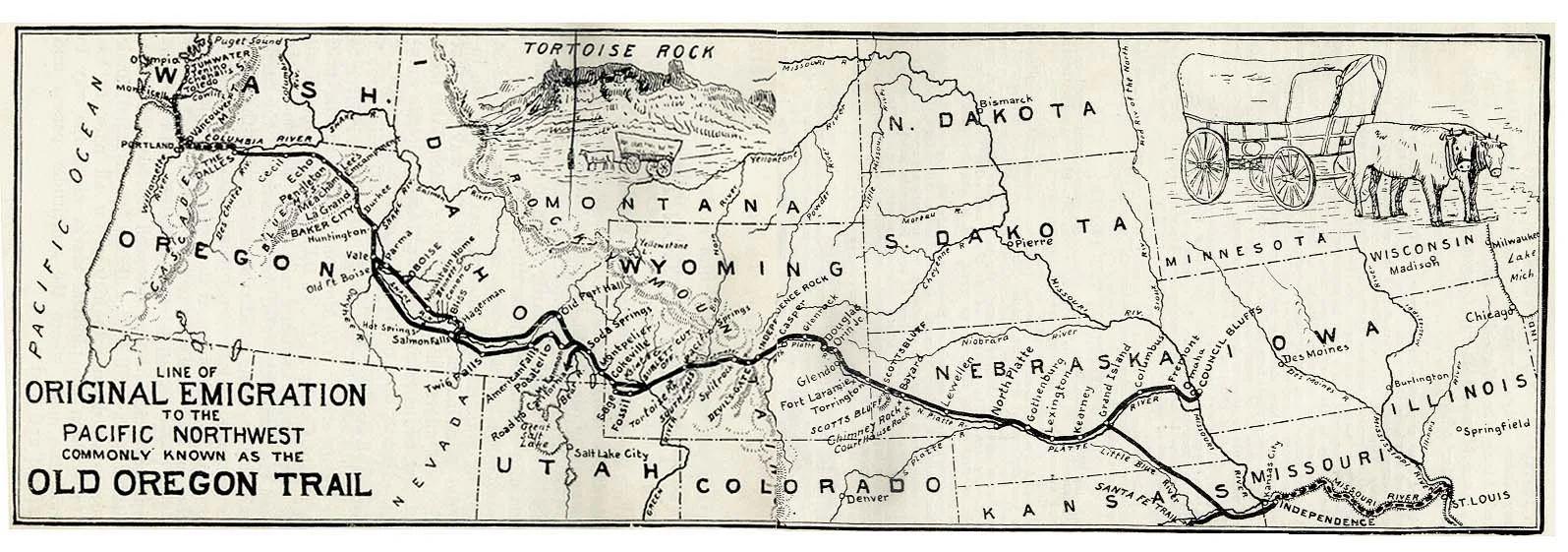
Note Independence near the border with Kansas.
As especially interesting place to visit is Independence, Mo., 250 miles up the Missouri River from the Mississippi. It was nothing more than a river bank in 1804, when the Lewis and Clark expedition stopped overnight to pick wild plums, apples and raspberries. Mormons began to settle in the little frontier town in 1831, and by 1840, you could stand by the gate of the marshalling yard and contemplate the junction of all three main wagon routes to the west: the Oregon Trail, the California Trail and the Santa Fe Trail.
Something of the sort may have been in the back of the minds of the Nobel Committee when they designated William Nordhaus and Paul Romer recipients of the 2018 Swedish Central Bank Prize for Economic Sciences in Memory of Alfred Nobel. By unexpectedly linking the two, each of whom could have been cited separately, the Scandinavians got people thinking and writing about subjects not yet well-connected in the popular mind. Nordhaus is an environmental economist. Romer is a theorist of economic growth.
The link that the prize awarders emphasized was the researchers’ shared concern with the failure of markets to deliver desired results. These are known as externalities, the effect that certain kinds of transactions have on persons who were not involved in the deal. These so-called “market failures” may be negative, as with greenhouse-gas emissions that adversely affect the global climate, or they may be positive, as with the knowledge spillovers that occur when technological know-how is widely shared.
Nordhaus has built models with extensive links to physical science models to gauge the social costs of atmospheric pollution. Romer has deepened and broadened the argument for policies in support of education, for the sharing of intellectual property, and for thoughtful zoning. Much the best discussion of the ins and outs of the laureates’ work that I have seen is by Kevin Ryan, a professor at the University of Toronto’s Rotman School of Management.
I wrote about some part of this story many years ago in Knowledge and the Wealth of Nations: A Story of Economic Discovery (Norton, 2006). Over the next couple of months I thought I might scatter half a dozen weeklies updating the story as best I can in light of the 2018 prize. It will be a welcome alternative to hashing over the election news.
The single most important message of the shared work is to show how modern mixed-market economies can cope with the exigencies of continued economic growth without a lot of regulation. Carbon taxes, on the one hand, government support for long-term research and development of green technologies on the other, can limit the damage to the Earth that is already in train, and, eventually, even roll back some of the enormous quantity of carbon dioxide that pell-mell growth over two centuries has dumped in the atmosphere.
True, the way ahead is more fraught with peril than were those trails to the Pacific Ocean. But humankind’s inventiveness has grown. What is lacking, so far, is cohesion.
David Warsh, an economic historian and veteran columnist, is proprietor of Somerville, Mass.-based economicprincipals.com, where this essay first ran.
Chris Powell: Obsession with ancestry suggests emptiness inside
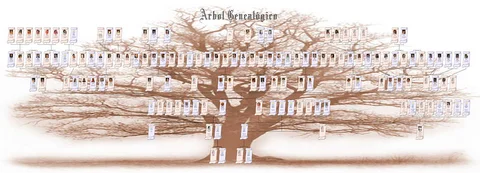
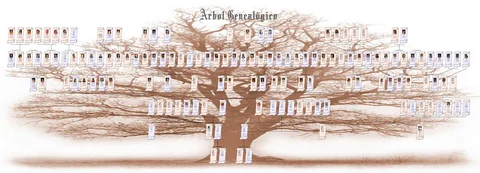
Lost in the family tree.,
Why is there such growing fascination with ancestry? Not everyone can trade on it for professional and political advancement as Massachusetts Sen. Elizabeth Warren has been doing, falsely claiming association with an oppressed ethnic group, Native Americans.
Expecting to triumph in her feud with President Trump, Warren the other day publicized her DNA test results as if they vindicated her opportunism. But the test showed she was no more Native American than the typical Connecticut casino Indian -- that is, only distantly related by blood and not at all by upbringing, culture, and experience, which are infinitely more important in forming character. Upbringing, culture, and experience may be relevant to a political candidacy because of their influence on character, but nobody needs a DNA test to discover them, since they are only what someone has lived through.
Apparently that's not enough for many people these days. They seem to believe the advertising that DNA testing will tell them who they really are, though their DNA may be completely different from their upbringing, culture, and experience. This fascination implies a certain emptiness in the psyche.
Maybe the grass is always greener not only next door but also with another ethnic group or life. At least when people imagine past lives, there are always more ancient Egyptian princesses than sweating slaves getting whipped for not moving the bricks up the ramp of the pyramid fast enough. This longing may be human nature, but the only sure thing about ancestry is that, as the old saying goes, if you track yours back far enough you'll find a horse thief.
xxx
COMMUTERS ALREADY PAY: Fending off a call from the Connecticut state Senate's Republican leader, Len Fasano, of North Haven, for an audit of New Haven city government, Mayor Toni Harp last week only confirmed that an audit might be useful.
Harp, a Democrat, suggested that Fasano, who represents suburban towns, has no business questioning city government's operations. But the mayor added that she would consider an audit if Fasano supported imposing a 2 percent tax on the incomes of suburban residents who work in the city and use its infrastructure.
Harp's dodge was pathetic. For state government already reimburses New Haven and other cities up to half their budgets, and most of this reimbursement is drawn from income taxes on suburban residents. Most suburbs don't receive anything close to such financial support from state government. So suburbanites already are paying what is in effect a commuter tax.
That's why even though they don't always realize it, suburban residents have a powerful interest in the efficiency and integrity of city government throughout the state. Resenting that interest, Mayor Harp has dared state taxpayers to reduce their subsidy to New Haven until her attitude and accountability improve.
xxx
SYMPATHY FOR THE DEVIL: The Democratic nominee for governor, Ned Lamont, has given reporters a look at his tax return, which shows that he is fabulously rich. The Republican nominee, Bob Stefanowski, has not yet disclosed his return but has spent enough of his own money on his campaign to establish that he is at least wealthy enough to live in Madison. Unaffiliated candidate Oz Griebel's return shows he is financially comfortable if not a plutocrat like his rivals.
So all three could do something more fun than running for governor in hard times and thus seeking to become the most hated person in the state, as the next governor will become. Despite their posturing, dissembling, and evasion, a little sympathy may be in order.
Chris Powell is a columnist for the Journal Inquirer, in Manchester, Conn.
Regulating electric scooters

From Robert Whitcomb’s “Digital Diary,’’ in GoLocal24.com
As electric bikes and scooters become more common in Providence and other cities, municipal officials should follow what’s happening in San Francisco, where the city’s Municipal Transportation Agency has designated two scooter companies – Skip and Scoot -- to start a pilot regulated scooter system in the very hilly and congested city.
One big issue: Keeping parked scooters off sidewalks by trying to ensure that they’re attached to existing bike-locking gear. People get cranky when they see abandoned electric scooters and bikes just lying around, sometimes blocking sidewalks and even streets. Cities and personal-transportation companies such as Skip and Scoot need hot lines that people can call to report abandoned bikes and scooters.
Other questions for cities and states: What should be the extent of dedicated personal-vehicle- lane networks? Who should regulate these vehicles? The state or communities? Should helmets be mandatory?
The arrival of these small electric vehicles is good news for cities seeking to limit car congestion and the pollution that cars cause. But much needs to be done to systemize their use to maximize their efficiency and safety.
To read more about what they’re doing in San Francisco, please hit this link.
A Puritan prince
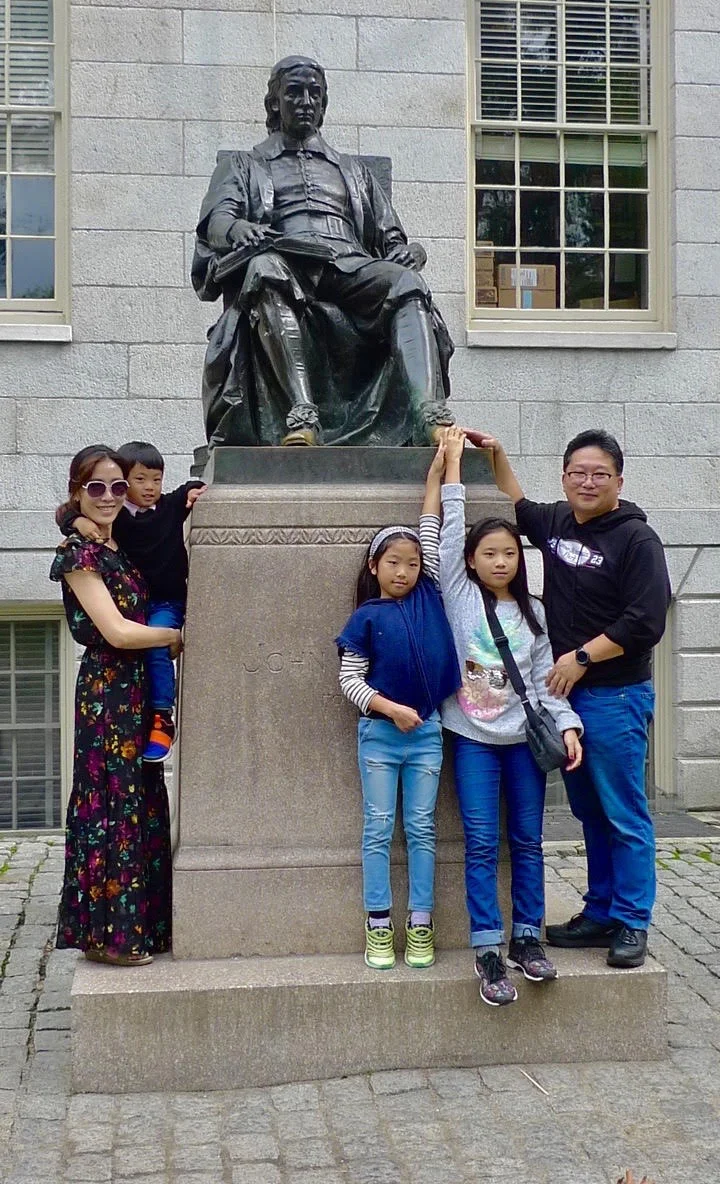
Family at the statute of Harvard benefactor John Harvard (1607-1638) in Harvard Yard.
— Photo by William Morgan
Wait till next year!

"For the second year in a row
I’ve let things go, neglected the golden
Platter-size leaves the maples discarded
All through golden October, that layered themselves
To a four weeks’ deepness, the days and long nights of October
Dense with the soft undertones of their falling.''
-- From "Raking the Leaves,'' by John Engels (1931-2007), a Vermont poet.
'Inflexibly territorial'
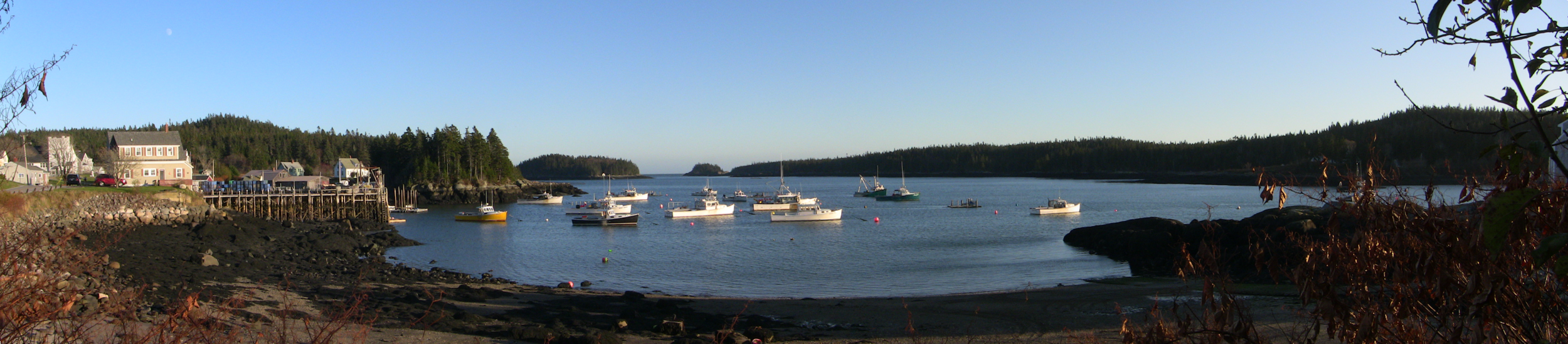
The harbor of Cutler, Maine, in late fall. The tiny town is way Downeast.
“Many small towns I know in Maine are as tight-knit and interdependent as those I associate with rural communities in India or China; with deep roots and old loyalties, skeptical of authority, they are proud and inflexibly territorial.’’
— Novelist and travel writer Paul Theroux
Affirmative action for the affluent!

Tower Room in the Baker Memorial Library at Dartmouth College.
From Robert Whitcomb’s “Digital Diary,’’ in GoLocal24.com
“Americans are the only people in the world known to me whose status anxiety prompts them to advertise their college and university affiliations on the rear window of their automobiles.’’
-- The late Paul Fussell
The federal government is suing Harvard as part of the Trump administration’s drive against affirmative action in college admissions (and elsewhere). Its angle is to assert that Asian-Americans, many of whom have very strong high-school records, should be admitted in higher percentages. What is left unspoken is that the Trump plan is also meant to help white applicants, who, at least in part because they tend to come from more privileged backgrounds than African-Americans and Hispanics, also tend to have better high-school records.
I think that the Feds should bug out of the college-admissions controversy. All elite colleges, including all eight Ivy League schools, use a wide variety of criteria to try to make sure that their undergraduate student bodies have at least a vague resemblance to the population of the nation that these schools have served very well. Indeed, the schools are jewels of American culture, having helped to produce much cultural, technological and financial wealth. Consider the scientific breakthroughs in the institutions’ labs.
Anyway, despite the schools’ efforts at affirmative action, students from affluent backgrounds (overwhelmingly white) dominate these schools because of the economic, educational and social advantages (including better public and private schools) they’ve grown up with. Students must be careful to pick the right parents! If the administration wins, the colleges will be even more skewed to the rich. Such skewing is what helped Jared Kushner get into Harvard despite a mediocre high-school record. Daddy wrote a check to America’s oldest college for $2.5 million. And Donald Trump’s transfer to the University of Pennsylvania from Fordham was lubricated by his father’s wealth.
As this Bloomberg story reported:
“A Harvard dean was thrilled. The undergraduate college had just admitted the offspring of some wealthy donors, and now the money was expected to pour into the university.
"’I am simply thrilled about all the folks you were able to admit,’ David Ellwood, then the dean of {Harvard’s} John F. Kennedy School of Government, wrote to {Harvard College} Dean William Fitzsimmons on June 11, 2014. ‘All big wins. [Name redacted] has already committed to building and building. [Name redacted] and [name redacted] committed major money for fellowships -- before the decisions (from you) and are all likely to be prominent in the future. Most importantly, I think these will be superb additions to the class."
There will always be affirmative action for the rich, even at Harvard, with a $39 billion endowment.
Oh, well: Not all the big donors’ gifts go to putting up grandiose buildings with their names plastered on them and endowed professors’ chairs, also with donors’ names plastered on them. Some goes to fellowships and scholarships.
To read more, please hit this link.
Llewellyn King: Around the world, fearfully/hopefully walking toward a border

The start of the border fence in the state of New Mexico—just west of El Paso, Texas.
If you want to come to the United States illegally, the worst point of entry is along the southern border. If the U.S. Border Patrol doesn’t get you, the gangs that prey on the hapless might; if not, you have a good chance of dying of heat prostration and lack of food and water in the desert.
The smart ones, the conniving illegals, aren’t the destitute walking in blazing heat for a rendezvous with Border Patrol agents and then lord knows what, but those who fly in with student visas, tourist visas and other travel documents and disappear into the shadows.
The people in what is loosely called a “caravan” now walking toward the border have been failed by the societies that bore them. They live in fear of murder, fear of repeated rape and other violence and fear of starvation. They live in their own circle of hell.
But they aren’t alone. There are many millions more in the failed and failing states, war-ravaged and drought-plagued, in Africa and the Middle East, trying to find a new home. Their exodus is a trickle today but will be a torrent tomorrow and a flood later.
The hopeless are on the march and they threaten to engulf some nations, like tiny Malta, an island in the Mediterranean and a European Union member state.
Europe is struggling with a flood of desperate people who cross the Mediterranean from North Africa in overloaded rafts and boats, risking drowning to reach Malta, Greece or Italy: places where they hope for food, shelter and safety.
Illegal immigration is a global problem. No country has a solution and no country deals well with it.
There are wars and insurgencies in Africa and the Middle East: Consider just the Democratic Republic of the Congo and South Sudan.
Of Africa’s 54 countries, none has anything like enough jobs for its population –its growing population. Even rich South Africa has a growing population and shrinking economic activity. Add to the failed or under-performing economies drought and climate change and you can imagine new surges in migration -- surges so large they could overwhelm the target countries.
In the Middle East, new refugees are created daily. Eleven million are on the brink of famine in war-engulfed Yemen, and Syria continues to generate refugees at a stupendous rate.
Thirty-five years ago, I was at France’s Ministry for Europe and Foreign Affairs, known colloquially as the Quai d’Orsay for its address. My briefer said, “If we don’t solve the problem of poverty, we’ll get three imports we don’t want: drugs, terrorism and people.”
The world hasn’t solved the poverty problem and it’s gotten the three things it doesn’t want.
There is no grand solution at hand, but there are small things that can be done. For us, the first might be to stop worsening conditions in the countries that are generating the flows of people toward the border. Two things would help: Don’t cut off foreign aid, exacerbating economic conditions, and don’t cut off the flow of expatriate earnings that is so important in those countries. In other words, stop the deportations.
People who are here illegally and hold jobs would hold better jobs if their status was legalized. One solution would be time-limited work permits: not citizenship, work permits.
This is advocated by the Immigrant Tax Inquiry Group, which adds an appealing twist. The Malibu, Calif.-based group recommends that illegals should pay a special tax on their wages with an equivalent tax paid by the employer. The purpose of the tax is to alleviate the local impact of immigrants on schools, policing, courts and health care.
Considering the global problem, we have a small, manageable one. The caravan of people walking through Mexico have a bigger problem: They’re inflaming Americans and endangering their own lives -- some deaths have been reported.
But if I were destitute and feared for my life in Central America, I’d likely be headed for the border, feeling I was doing something, even something hopeless.
Llewellyn King is executive producer and host of White House Chronicle, on PBS. His email is llewellynking1@gmail.com. He is based in Rhode Island and Washington, D.C.
'That's what we do' in Vermont

“For much of America, the all-American values depicted in Norman Rockwell's classic illustrations are idealistic. For those of us from Vermont, they're realistic. That's what we do’’
— U.S. Sen. Bernie Sanders (I-Vt.)
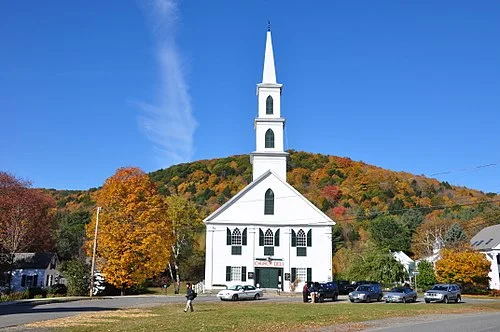
In Newfane, Vt.
Wind pays off
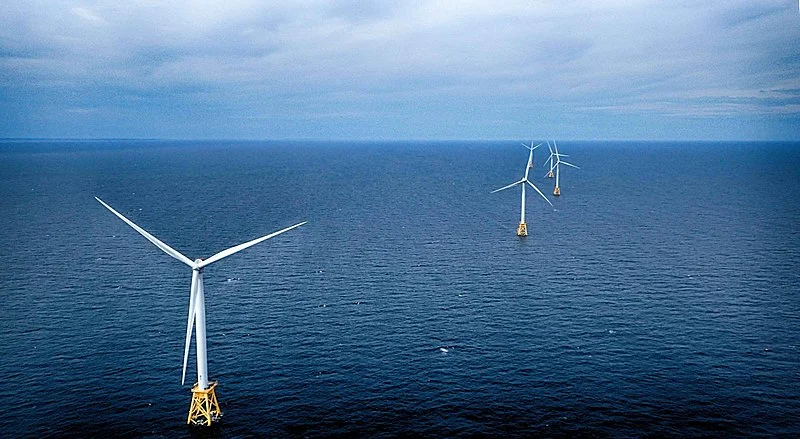
Deepwater Wind’s Block Island Wind Farm.
From Robert Whitcomb’s “Digital Diary,’’ in GoLocal24.com
The Danish energy company Orsted’s purchase of Providence-based Deepwater Wind from D.E. Shaw & Co., an investment company, for $510 million certainly testifies to the growing value of wind power, especially in the reliably wind-rich area off southern New England. Congratulations to the Deepwater Wind folks for their visionary and complicated risk-taking -- economically, technologically, politically and regulatorily.
I noted that the companies said that, Deepwater, now a subsidiary, would be based in Providence and in Boston; the latter city is where Orsted’s North American operations are based. But I predict that soon the Providence office will be closed and everything will be run from Boston (and Denmark). As a PR move in acquisitions, companies often assert that much important stuff will remain in the home town of the acquired entity. But the savings and efficiencies from consolidation almost always trump such sweet ideas sooner rather than later.
If anything, Newport, not Providence, might be the best town for a second headquarters: It’s closer to planned big wind farms south of New England. And Aquidneck Island, like Greater Providence, has lots of engineers.
By the way, wind turbines, though far, far better than burning fossil fuel, can raise air temperatures in wind-farm areas by half a degree or more by interrupting wind flows, say recent studies. All energy production has downsides. Consider, for example, that solar arrays require a lot of space, which leads to clearing woodlands in some places. Abandoned big-box store parking lots and landfills are among the best sites, besides rooftops, of course.
Tradition and transformation in N.E., higher education
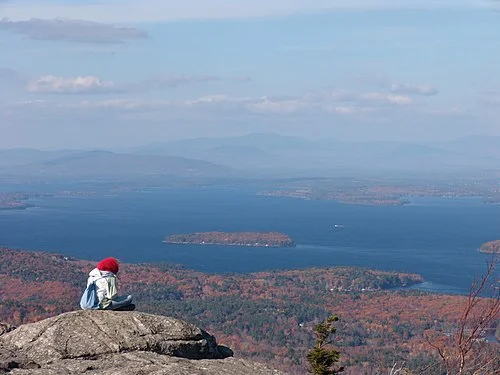
Lake Winnipesaukee, from the top of Mt. Major.
From the New England Board of Higher Education (nebhe.org)
NEBHE convened its Annual Fall Board Meeting near Lake Winnipesaukee, in New Hampshire, in September on the overarching themes of “Tradition, Transition and Transformation: Sustaining New England’s Higher Education Industry and Advantage.”
Over two days, NEBHE delegates explored the impact of changing demography, declining enrollments and opportunities for “demand cultivation” and strategies to sustain higher education’s financial sustainability in the region.
NEBHE has examined these issues in recent years as part of its Higher Education Innovation Challenge (HEIC). These challenges continue to come into sharper focus, as state and federal investment in higher education lags, public perceptions of higher ed change, and enrollment projections increase the focus at many higher education institutions on financial sustainability and new ways of doing business. Many institutions are considering opportunities with new student segments, including adults, and international students (the latter made more challenging by the current climate of global politics and immigration). Other institutions are exploring new program models such as shortened time to degrees, badges and other credentials.
At Winnipesaukee, delegates focused on opportunity. They charged NEBHE with supporting regional efforts to provide data on nontraditional, underserved, immigrant, adult students in New England, and developing a clearinghouse of best practices and policies to drive enrollment and completion. They called on NEBHE to develop strategies to engage with PK-12, including career and technical education, to reduce barriers to matriculation, specifically in urban and rural areas via early college, dual enrollment and college readiness initiatives. NEBHE delegates also urged examining the return on investment (ROI) of postsecondary credentials to adult students and the institutions serving them.
NEBHE staff developed various short documents to inform the board's discussion, including "Projecting Higher Education Supply and Demand." This report examines the projected decline in high school graduates and its impact on higher education enrollment.
During a session focused on "Policy, Regulation and Accreditation," attendees spoke of pursuing shared marketing and recruitment strategies to support growth in demand and participation in postsecondary education in the region. Among the favored options: expanded use of credit for prior learning to bolster student markets and improved transfer of prior credits and other credentials. Delegates also endorsed engaging employers and policymakers to review student debt forgiveness policies and expanding targeted student aid programs (and 529 plans) to retain college-going students who are currently being tempted away from New England by less expensive institutions, especially in the South.
Other key recommendations that emerged from the discussions included: increase the minimum wage (which one presenter noted as the past year's most important policy move enhancing college-going and completion for working learners) and explore paid work and internship options for adult students.
The NEBHE delegates also urged development of new models of cost savings across institutions and sectors, including Open Education Resources (OER) and additional strategic alliances to support the shared provision of academic and other activities among multiple institutions.
NEBHE delegates continued their review of a “Call to Action,” which cites the need for new models to address challenges and opportunities facing the New England higher education sector. After a productive group drafting process, delegates agreed to revisit such a communique for sharing with stakeholders in education, business, policy and other relevant sectors.
A meeting of NEBHE's Legislative Advisory Committee (LAC) focused on higher education cost drivers, as well as issues ranging from funding early childhood education to addressing teacher shortages to free college plans to ensuring civility in the halls of government in an age of term limits.
NEBHE also took the opportunity to present Excellence Awards to former New Hampshire Director of Higher Education and University System of New Hampshire (USNH) Chancellor Edward MacKay and Nashua Community College President Lucille Jordan. MacKay and Jordan were joined by a large group of invited guests, including a notable number of presidents and leaders of New Hampshire’s public and independent higher education institutions.