
Vox clamantis in deserto




Judith Graham: Tons of patients' data but hard for them to get at
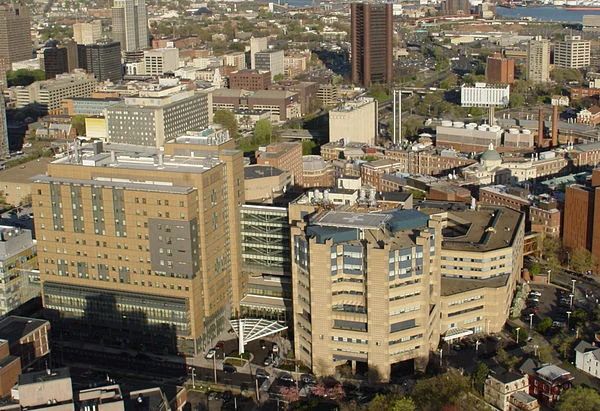
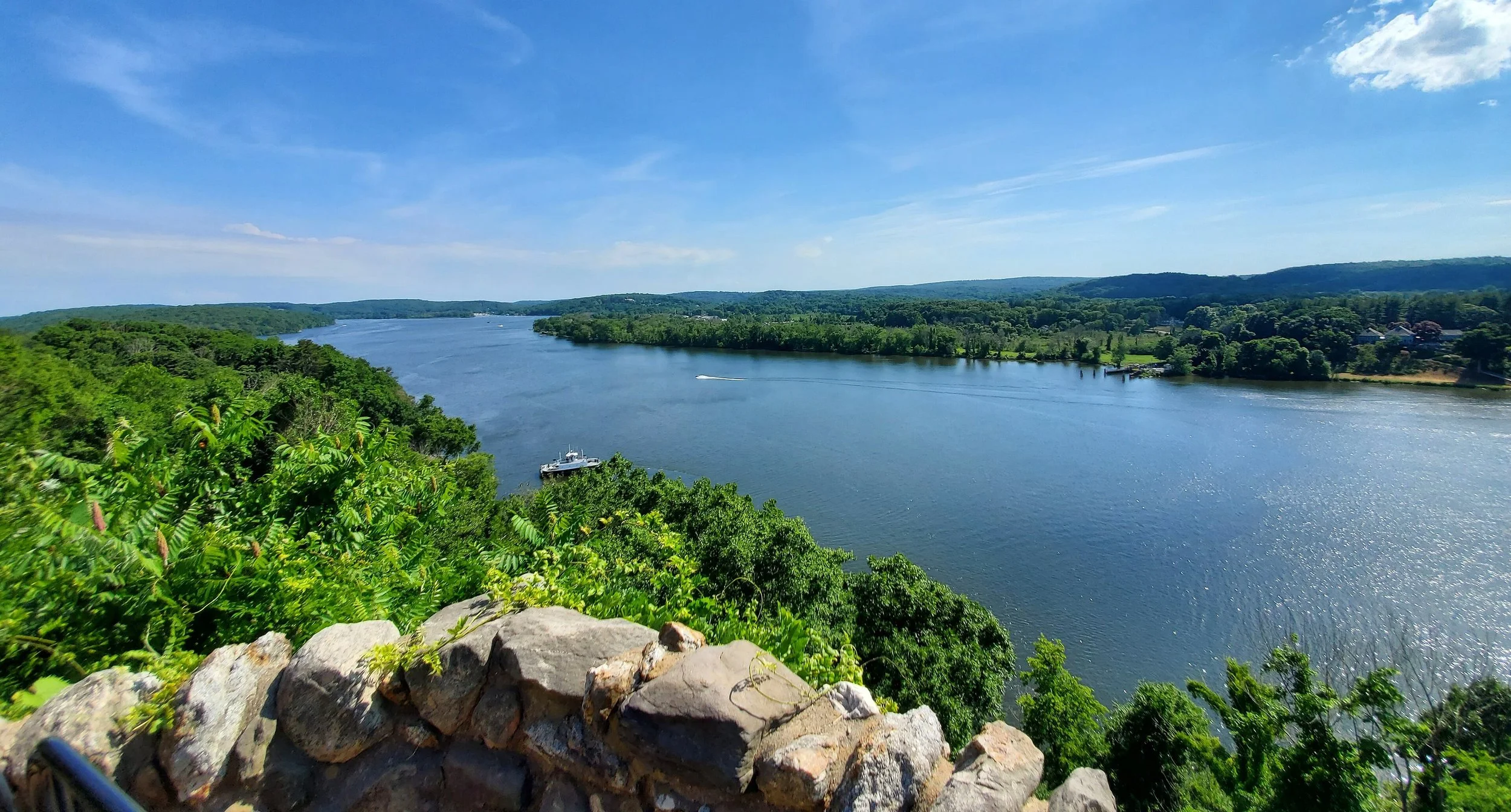
Yale New Haven Hospital, the main clinical teaching facility of the Yale Medical School.
By JUDITH GRAHAM
Medical records can be hard for patients to get, even in this digital information age. But they shouldn’t be: Federal law guarantees that people have a right to see and obtain a copy of their medical records.
New evidence of barriers to exercising this right comes from a study of 83 leading hospitals by researchers at Yale University. Late last year, researchers collected forms that patients use to request records from each hospital. Then, researchers called the hospitals and asked how to get records, the cost of doing so, how long it would take, the format in which information would be sent and whether the entire record would be available.
Researchers didn’t disclose they were conducting an academic study; instead, they posed as a relative asking questions on behalf of a grandmother who needed her records before seeking a second opinion. Family members make such requests on behalf of older relatives every day.
Hospitals’ answers were inconsistent: In many cases, the information on forms didn’t match what researchers were told on the phone. Sometimes their answers violated federal or state legal requirements.
Notably, only 53 percent of hospitals’ forms indicated patients could get their complete records. This right was acknowledged in all the phone calls. Forty-three percent of hospital forms didn’t disclose the estimated cost of obtaining records, as required. In phone calls, all but one hospital disclosed costs, but 59 percent cited a higher-than-government-recommended fee for electronic records.
“The unfortunate truth is that the system doesn’t give patients reliable or consistent responses. And some people who work in medical records departments appear to be ignorant of the law and the rights that patients have,” said Dr. Harlan Krumholz, co-author of the study and professor of medicine, epidemiology and public health at the Yale University School of Medicine.
Under a groundbreaking law, the Health Insurance Portability and Accountability Act of 1996 (HIPAA), patients have a right to get some or all of their medical records upon request. (Psychotherapy notes can be excluded.) Hospitals, medical clinics, physician practices, pharmacies and health insurers are required to make this information available within 30 days (sometimes a 30-day extension can be granted), at a reasonable cost and in the format that patients request (for instance, paper copy, fax, electronic copy or CD), if possible.
Research suggests that reviewing medical records can be beneficial. People are more likely to follow treatment recommendations, remember what happened at medical visits and feel engaged in their care when they have access to this information, studies indicate..
But HIPAA requirements are often misunderstood. Jacqueline O’Doherty, a geriatric care manager with Health Care Connect LLC, of Califon, N.J., encountered this last month when she tried to see records for an 80-year-old client who was being transferred from a hospital to a nearby rehabilitation facility after suffering acute respiratory distress.
Although the older woman had signed a form appointing O’Doherty as a “designated representative” — a status that should have allowed O’Doherty access to her clients’ records — a hospital nurse refused to let O’Doherty check the client’s lab results, medication list and discharge summary. It was only when an infectious-disease doctor intervened, citing the need for continuity of care, that O’Doherty was able to review her client’s records.
“It really depends on the institution, what they will and won’t let you do,” O’Doherty said.
After receiving a large volume of complaints about records’ cost and accessibility, the Office for Civil Rights of the U.S. Department of Health and Human Services, issued new guidelines in January 2016. For electronic records, the guidelines prohibit per-page charges and recommend a maximum cost of $6.50 for consumers. They also clarify patients’ right to have records sent to third parties, including family members or professionals advocating on their behalf.
Despite these protections, the forms used to request records aren’t standardized and can be confusing. Often it’s not clear what is being offered. “As a person who works in the health care system, even I had trouble understanding the forms and what I could request based on the options listed,” said Carolyn Lye, a medical and law student at Yale who did much of the legwork for the new study.
Problems may be even more common at physician practices, which often don’t have medical records departments. When GetMyHealthData, a campaign to expand access to digital health information, asked consumers about their experience, people described poorly informed or unhelpful staff, high fees, long waits and frustrating bureaucratic processes, among other barriers.
“People are being told ‘No I can’t give this to you’” because office staff, nurses and doctors “don’t know what they can or cannot do,” said Pamela Lane, vice president of policy and government relations for the American Health Information Management Association.
Electronic patient portals don’t solve the problem yet: Most contain limited information and don’t currently include a way for patients to request records such as the notes physicians take during patient visits. “We’re slowly moving in that direction, but we’re not there yet,” said Catherine DesRoches, executive director of OpenNotes, an organization devoted to making doctors’ and nurses’ notes more readily available to patients.
The government is making improved electronic access to medical records a priority through its new MyHealthEData Initiative, announced earlier this year. Full details of the initiative are not yet available. But Seema Verma, administrator of the Centers for Medicare & Medicaid Services, has repeatedly called for people with Medicare coverage to have better access to their records. In an unusual move, she spoke out on Twitter about the Yale study, calling its findings “not acceptable.”
What can people do if they encounter problems like those documented by the Yale researchers?
If your hospital or doctor’s office declines to make your records available, print out materials about your rights and use them to advocate on your behalf. “Tell staff, ‘I’m entitled to a copy of my records: This is my legal right, as explained here,’” Lane said.
A good resource is a model medical records release form created by the American Health Information Management Association last year, which people can copy and bring with them to help make their case, Lane said. A summary of your right to share medical information with family, friends or other authorized third parties can be found here.
To familiarize yourself with your overall rights, see this “Guide to Getting & Using Your Health Records” published by the government’s Office of the National Coordinator for Health Information Technology. And take a look at the “Get Your Data” section of the GetMyHealthData website, which includes a clear summary of your rights, how to request your medical records, and troubleshooting suggestions if you encounter obstacles. A helpful two-page summary is available here.
The eternal question

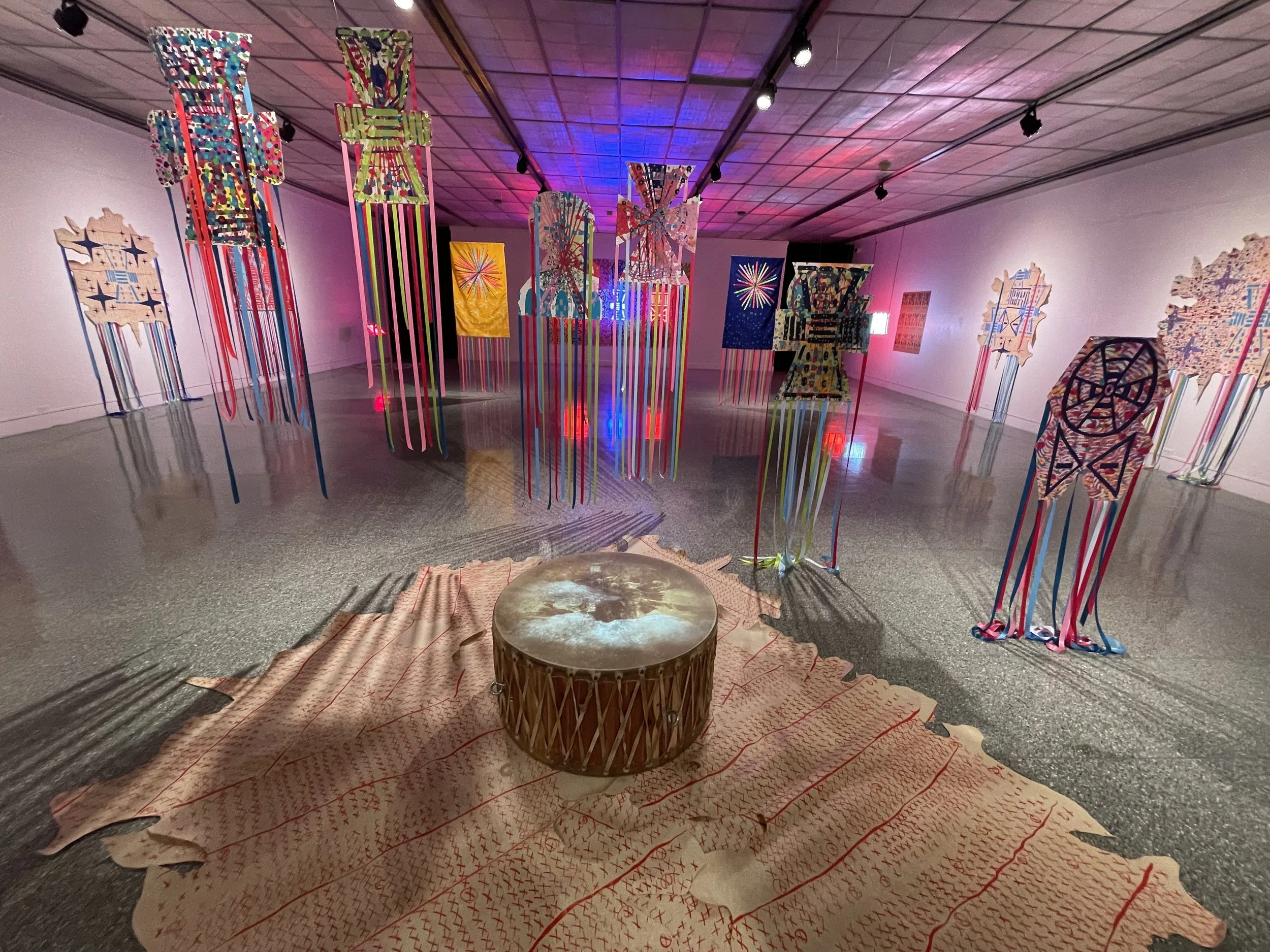
“Untitled” (letter press), by Sofie Hodara, in her joint show with Martha Rettig, “In Pursuit of Happiness,’’ at Bromfield Gallery, Boston, through Oct. 28.
Ambiguous 'promised land'

Mt Wachusett, in central Massachusetts, and at 2006 feet high the highest point in the state east of the Connecticut. River.
“Ephraim Cross drives up the trail
From Worcester. Hepsibah goes pale
At sumac feathers in the pines.
….Pine to birch
The hills change color. In the west
Wachusett humps a stubborn crest.
Ephraim takes the promised land,
Earth, rock and rubble, in his hand.’’
— From the “1750’’ part of “The Farm,’’ by Archibald MacLeish (1892-1992)
Wachusett is a monadnock: a single mountain on a relatively flat landscape. The word monadnock comes from a similarly isolated mountain, Mt. Monadnock, in southern New Hampshire.
Wachusett is a popular hiking and skiing destination, in part because it’s so near to cities. An automobile road, open spring to fall, ascends to the summit. Views from the top include Mt. Monadnock to the north, Mt. Greylock to the west, southern Vermont to the northwest, and Boston to the east.
Massachusetts's three traditional 'social estates'
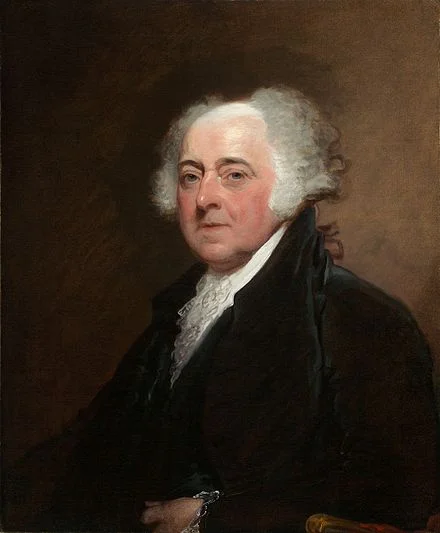
John Adams, in an 1815 painting by Gilbert Stuart.
[The Massachusetts constitution] was [John Adams’s] attempt to justify that structure by the traditional notion of social estates - that the executive represented the monarchical estate, the senate the aristocratic estate, and the house of representatives the estate of the people.
— Brown University historian Gordon S. Wood
Matriarchal in Mass. gallery

“March of the Matriarchs’’ (wood sculptures), by Donna Dodson, in her current show, until Nov. 4, at Boston Sculptors Gallery.
This is Ms. Dodson’s latest series of mysterious animal-human hybrid wood sculptures, this one featuring a sculpture group configured as a chess set.
Dodson cites the genesis of her chess set in five ‘‘mermaids’’ she created in 2016, inspired by ship-prow carvings. She told the gallery: “I wanted to do more with the series, so I set myself the challenge of making an entire chess set.” This idea, the gallery says, let her to build on the “concept of sculptures that interact directly with each other, while reflecting on the interactions among species that have nothing to do with us humans.’’
She read books about chess, noting, “The original chess set was composed of king, general, and male military figures….The queen arrived at a time when powerful queens reigned in England, Russia and Spain.” “{M}y set is maternal—I am thinking about family matriarchies, the realm of power in women's lives, how women wield power and the bonds between women in families.”
Malloy to teach at Boston College Law School

Connecticut Gov. Dannel Malloy.
Comings and goings in New England Higher Education, as compiled by John O. Harney, executive editor of The New England Journal of Higher Education, part of The New England Board of Higher Education (nebhe.org).
When his eight years as governor of Connecticut endS in January 2019, Dannel P. Malloy will serve as a visiting law professor at Boston College, his alma mater. Malloy announced he would not seek reelection in 2018. He wrote for NEJHE on The Future of Higher Education in Connecticut and was a key speaker at NEBHE’s New England Works Summit on Bridging Higher Education and the Workforce.
Former New Hampshire Bankers Association President Christiana Thornton became president and CEO of the New Hampshire Higher Education Assistance Foundation (NHHEAF), succeeding René A. Drouin, who announced his retirement last spring after 40 years with NHHEAF.
Kevin O’Sullivan will step down as president and CEO of the nonprofit Massachusetts Biomedical Initiatives, which has launched dozens of life science businesses in Central Massachusetts. He will be succeeded by Jon Weaver, the organization’s chief operating officer.
Babson College tapped entrepreneurship specialist and former Graduate School Dean Mark P. Rice, to return to Babson as provost and professor of entrepreneurship after seven years in various roles at Worcester Polytechnic Institute.
Tiffany L. Steinwert, dean of religious and spiritual life at Wellesley College, was named dean for religious life at Stanford University.
Fall River and New Bedford -- so near and yet so far
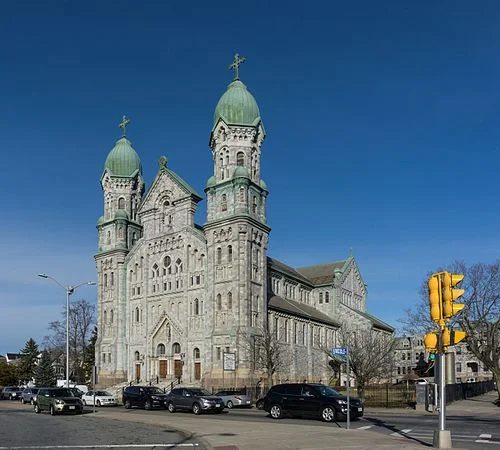
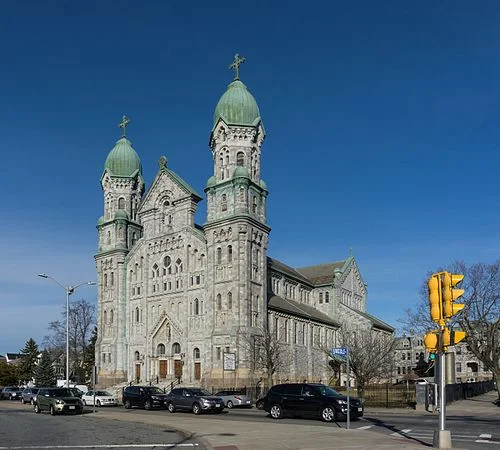
St. Anne’s Church in Fall River.
From Robert Whitcomb’s “Digital Diary,’’ in GoLocal24.com
The planned Nov. 25 closing of spectacular St. Anne’s Church, dedicated in 1906 and probably Fall River’s best known building (besides its much-disliked Brutalist city hall, which hangs over Route 195), is a reminder of the decline of churches and other institutions that were in varying degrees ethnically as well as well religiously based. These congregations, in their heydays, did much more than carry out their official religious missions. They also became social-welfare institutions, providing not only spiritual and psychological sustenance but also food and even shelter in tough times.
St. Anne’s was a French-Canadian parish, serving the many thousands of Quebecois who moved to Fall River and other New England textile- and shoe-making towns starting in the 19th Century – a migration that hit its peak in the World War I boom years. French-Canadian architect Napoléon Bourassa designed the church, with its dramatic bell towers.
Now many of the devout have died and many parishioners have long since dispersed to the suburbs or elsewhere. The priest-abuse scandals and the long decline in affiliation with organized religion in the Northeast also help explain the woes of St. Anne’s.
The church has serious physical problems, and would require millions of dollars in repairs, which apparently can’t be raised; the parish is no longer populous and committed enough to fund the work. Bishop Edgar da Cunha, who runs the Diocese of Fall River, announced that parishioners are invited to join a new “Catholic Community of Central Fall River,’’ which sounds pretty vague and diffuse.
It’s been another bad stretch for the Spindle City. Its mayor, Jasiel F. Correia II, 26, has been indicted by a federal grand jury on fraud and tax charges. This hard-charging and glitzy materialist was elected when he was 23. That means that he was far too inexperienced to run a town or city, let alone one as big as Fall River, which has a population of about 87,000. They should raise the minimum age for mayors to 30.
Over four years, beginning in 2013, U.S. Atty. Andrew E. Lelling said, Correia persuaded seven people to invest $363,690 in a startup called SnoOwl, yet another phone app.
The Feds allege that the mayor, who proclaims his innocence, illegally diverted more than $230,000 of that money. He is said to have spent the money on his mayoral campaign, travel, adult entertainment, designer clothes, jewelry, credit-card and student-loan payments, casinos and a 2011 Mercedes-Benz C300 all-wheel-drive sport sedan. This makes it sound as if he had serious lifestyle ambitions of the sort modeled by the Emperor of the Oval Office.
Fall River and New Bedford are often lumped together. After all, they’re both old textile-mill towns a mere 14 miles apart. But at least in the past few decades, New Bedford, with about 95,000 people, has generally had much abler and more visionary mayors than Fall River, most notably the current chief executive, John Mitchell, and former Mayor John Bullard.
The Whaling City has rebuilt its downtown around a cobblestoned National Historical Park and the University of Massachusetts at Dartmouth’s College of Visual and Performing Arts. Meanwhile, its big scallop fleet has prospered, bulk shipping has increased, and it has become a center for the wind-power industry. Of course, New Bedford was always much more of a port than Fall River. And a good number of urban pioneers (aka gentrifiers) have moved to New Bedford in the past few years, many drawn to its beautiful old houses, loft spaces and “romantic’’ (if gritty) waterfront.
While Fall River has lured an Amazon fulfillment center, a new Justice Center and SouthCoast Marketplace, it is way behind New Bedford as a happening place. That seems unlikely to change anytime soon.
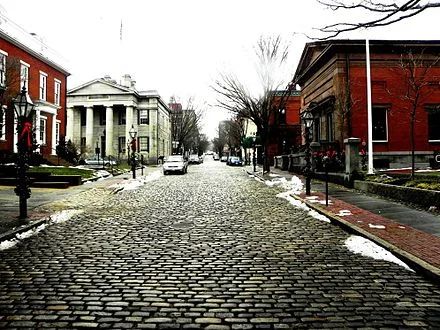
William Street, in the historic heart of New Bedford.
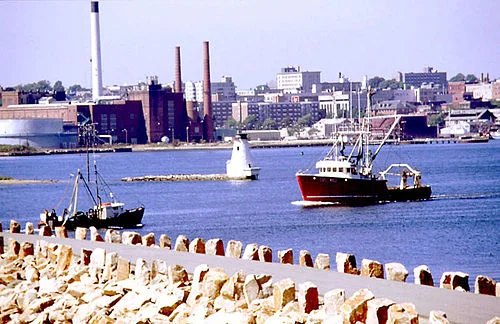
New Bedford Harbor.
Chris Powell: Social, economic policies, not plastic guns and 'ghost guns,' at root of urban violence

The “Liberator’’ — a 3D-printable single shot handgun, the first such printable firearm design made widely available online.
Maybe someday enough people in Connecticut will realize that pose-striking by politicians solves no problems but their own need for attention, but that day didn't come the other week.
Instead the pose striking got more ludicrous as Bridgeport Mayor Joe Ganim gathered his police chief, state legislators, City Council members, and other gullibles while he signed a city ordinance purporting to outlaw homemade plastic guns and guns without serial numbers, "ghost guns."
"As a city, we are taking a stand against gun violence," Mayor Ganim said, as if state and federal laws haven't done that for centuries already and as if a piddling city ordinance will deter anyone who isn't deterred by those laws.
Homemade plastic guns are the target of the latest hysteria contrived by the political left. Theoretically such guns might be smuggled through metal detectors onto airplanes. But though Bridgeport owns the small airport in Stratford next door, it has no scheduled commercial flights and doesn't plan any.
In any case homemade plastic guns can't fire accurately or even repeatedly. As for "ghost guns," almost any ordinary gun can be turned into one by filing off its serial number.
But the main drawback of homemade plastic guns is the expense of making them. They require a computerized machine that molds plastic. Except for the chance of slipping it past a metal detector, why would anyone bother getting a homemade plastic gun when tens of millions of ordinary metal guns are already available cheap throughout the country?
Of course those are the guns used in nearly all crime, and there are probably a million crimes committed with ordinary metal guns for every crime committed with a homemade plastic gun.
Besides, guns aren't even the big problem with crime, and especially not in Bridgeport. No, the gun problem is just part of the demographic problem in Bridgeport and other cities -- the steady impoverishment and proletarianizing of the population by government's mistaken social and economic policies. There is little gun crime in middle-class and prosperous suburbs, where people have enough education and family upbringing to go on to support themselves honestly.
But where there are few parents, little incentive at home for children to become educated, no job skills, and plenty of "social programs" purporting but failing to remediate those catastrophic conditions -- that is, wherever there is an environment like Bridgeport's -- crime, drugs and guns are a way of life.
Of course if he wants to win election again Mayor Ganim can hardly acknowledge that Bridgeport's problem is the people who live there, his own constituents. City politicians need scapegoats.
Ganim's scapegoats were homemade plastic guns and "ghost" guns. A few weeks earlier the mayor was railing against immigration-law enforcement. Soon he will return to complaining about what he will call inadequate state financial aid to Bridgeport, though state government reimburses about half the city's budget, as it reimburses half the budgets of most cities, and though the more the cities get, the worse their living conditions become.
But Connecticut's cities actually do well at what they are really supposed to do -- to separate the underclass from the middle class enough so no one with any political awareness is prompted to wonder why state government's most expensive policies profit only those in charge of implementing them.
Chris Powell is a columnist for the Journal Inquirer, in Manchester, Conn.

Street scene in Bridgeport, once a thriving industrial town and still, despite its many woes, Connecticut’s largest city.
Rooted in transience

“Child's Bog” (a digital capture), by Justin Freed, a Boston area photographer and filmmaker, in his show “Sacred Tree Habitat,’’ at Galatea Fine Art, Boston, Oct. 31-Dec. 2.
Frank Carini: On the path to a great beech

Rhode Island arborist Matt Largess recently led a tour of Wingover Farm’s forest. He was impressed with what he saw.
— Frank Carini/ecoRI News photos
From ecoRI News (ecori.org)
To see the video and more photos with this article, please hit this link.
TIVERTON, R.I.
The “oohs and aahs” and “oh my gods” were followed immediately by one or more superlatives from among “amazing,” “cool,” “awesome,” “incredible” and “wow.”
“If you could leave this for 100 years people would come from around the world to see it because everything else is going be gone. Just think of it that way,” Matt Largess, a respected Rhode Island arborist who has studied East Coast forests from Maine to the Florida Keys, said near the end of an hourlong walk in the woods on a 72-acre farm not far from the coast. “If Rhode Island could start to think that way, if they saved their places where people come as ecotourists to see the forest. I know its sounds farfetched but in 100 years it’s going to be that crucial, not only to see our leaf colors but just come to be in a forest near our ocean. Rhode Island is one of the great environments. We have these beautiful forests right up to the ocean, but they’re diminishing rapidly.”
During an Oct. 18 tour of Wingover Farm’s “unique” forestland, the leaves of Rhode Island’s state tree, the red maple, were turning color and Largess and two colleagues, Daryl Ward and Kara Discenza, were constantly pointing out trees of all shapes, sizes, and ages.
During the 60-minute tour, they counted nearly two dozen different types of trees, including American beech, American holly, black and white oaks, yellow and white pines, black tupelo, yellow and paper birches, sassafras, black cherry, and bigtooth aspen.
And not just individual trees, but stands of black birch, groups of teenage and adult red maple growing together, and baby holly trees sprouting from the forest floor. Largess said having birch, holly, and beech together in one place was special. He used the word “special” a lot. He said the forest has an “impressive understory.” He noted that some of the tallest hollies documented in North America are in Tiverton and Little Compton. He said native forests of American beech are shrinking rapidly, especially in Connecticut and Rhode Island.
With the population of the region’s American beech decreasing, Largess was thrilled to discover a large beech tree he repeatedly called “the mother tree.” He said the tree must be 300-400 years old and was surrounded by younger beeches, 150 or so years old, waiting to be the next mother. He pointed out beechdrops, a wildflower that lacks chlorophyll and produces brown stems on which small white and purple flowers appear July through October, growing under the forest’s majestic beech tree.
The property’s other vegetation included, among many others, mountain laurel, a broadleaf evergreen shrub; sweet pepperbush, a shrub with fragrant white or pink terminal flower spikes in late summer; and winterberry holly, a shrub with copious amounts of bright-red berries that shine in the fall and winter landscape.
Largess called the layered and biodiverse property, which includes a pond alive with frogs and fish, “a balanced ecosystem.” He said it would be an excellent location for the Rhode Island Natural History Survey to hold a BioBlitz, would make a wonderful outdoor classroom for local students, and could be a great future ecotourism site, as it could be tied into nearby Weetamoo Woods.
Julie Munafo invited the Largess Forestry professionals on the tour to better understand what could be lost should the property be developed into an 11-megawatt solar facility.
Munafo’s family has owned the Crandall Road property since the 1970s, but a pending sale could lead to some 40 acres of solar panels. The buyer’s proposed project would inevitably decimate forestland, ruin farmland, and destroy wildlife habitat.
The family is torn by the pending sale of the property — Munafo, for one, doesn’t want to see the farm reduced to acres of solar panels. But the family was unable to come to an agreement with the local land trust or find a buyer interested in farming and/or preservation, according to Munafo. She said she believes the property is selling for about a million dollars.
Largess, who has become a leading spokesmen for the preservation of trees and old-growth forests, said the farm’s open space is unique, as it features, in this order, open fields, young woodlands, and a mature forest. He was impressed with the property’s mix of vegetation, most notably its diverse collection of tree species. He noted that forestland like this “needs to be protected,” not turned into an energy facility, subdivision, or an office park.
In fact, the staunch conservationist believes that trees deserve more respect, which is why his company is “dedicated to the preservation, restoration, and education of the the Earth’s forests while enhancing awareness and knowledge of the natural world.”
“Trees are the No. 1 tool to battle climate change,” Largess said. “But my work as an arborist is less about planting trees and more about cutting them down, because cars are getting dirty or someone wants to see the water.”
Like many following the ongoing debates across Rhode Island on where to site solar projects, Largess doesn’t understand why so many are gung-ho to clear-cut forests. Like others who have weighed in on the controversial topic, he believes Rhode Island can deal with the issues of interconnection, infrastructure, incentives, property rights, and economics without sacrificing priceless open space. (A city in eastern China is building the world’s first photovoltaic highway.)
The will, both public and political, however, needs to be there. The state, its 39 municipalities, its 1.06 million people, and a host of nonprofit organizations have been grappling with the issue for two years. The town of Tiverton, for instance, is pondering a solar moratorium until it can craft an ordinance that better addresses the siting of utility-scale solar energy.
Munafo, who, like Largess, supports renewable energy, at least those projects sited responsibly, has been a vocal proponent of the moratorium. She believes the project proposed for her family’s property doesn’t mesh with the town’s comprehensive plan or even Tiverton’s current solar ordinance. In a letter to the editor recently published in the Sakonnet Times, the Jamestown resident asks: “How is wiping out a historic farmhouse, prime farmland and a special forest for a massive solar plant consistent with the comprehensive plan?”
Site work in the woods of Wingover Farm, likely done to determine the property’s ability to host an industrial-scale solar project, has already claimed a number of trees, including a small stand of American holly.
Once the trees are cut down and the solar panels installed, Largess said the development will clear a path for Russian olive, oriental bittersweet, and other invasive species to take root.
“All these trees will be gone and the whole ecosystem will change,” Largess said. “This place is special. It’s hard to find green spaces like this anymore. This property is a classic example of the problems we are having.”
Frank Carini is editor of ecori.org
The smell of work
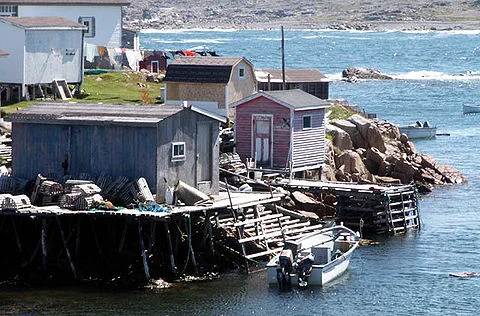
“Although it is a cold evening,
down by one of the fishhouses
an old man sits netting,
his net, in the gloaming almost invisible,
a dark purple-brown,
and his shuttle worn and polished.
The air smells so strong of codfish
it makes one’s nose run and one’s eyes water.’’
— From “At the Fishhouses,’’ by Elizabeth Bishop (1911-1979), a native of Worcester.
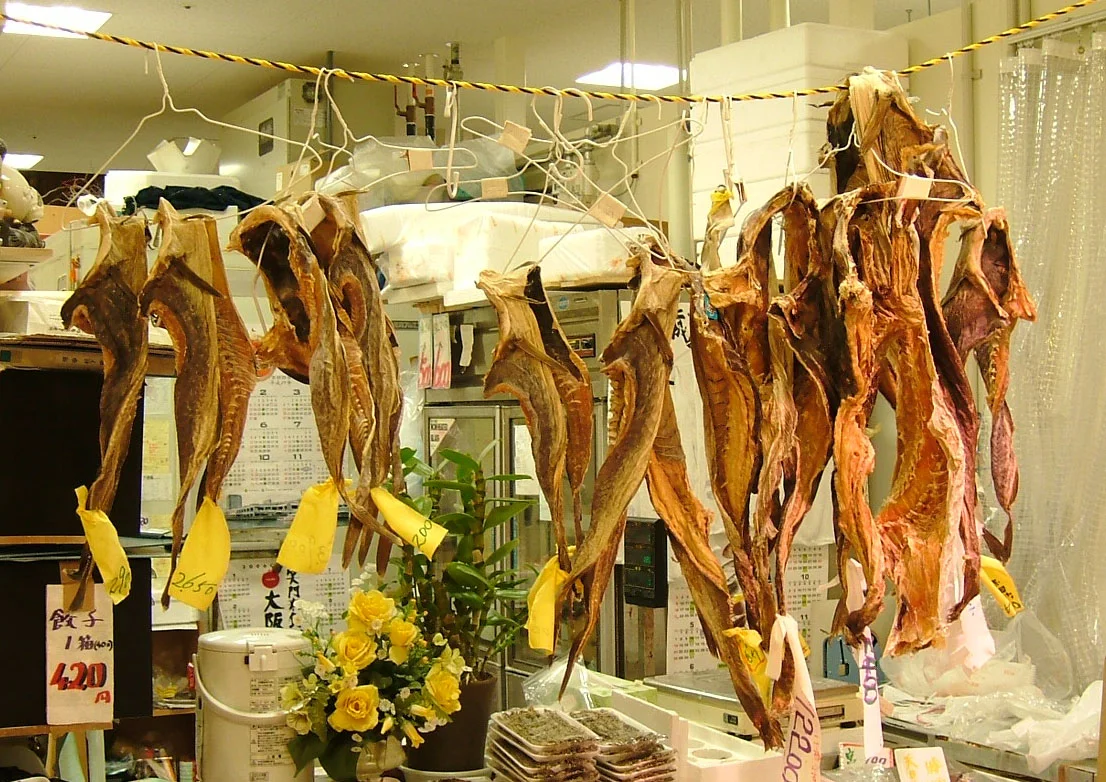
Preserved codfish.
CVS may be a leader in health-care transformation

Adapted from Robert Whitcomb’s “Digital Diary,’’ in GoLocal24.com
Woonsocket-based CVS’s purchase of Aetna, the huge insurance company, could at least start to make fragmented and exorbitantly expensive U.S. health care a bit more coherent as well as cutting costs for consumers, both in medical-visit bills and insurance premiums. (We’ll see if that happens in our profit-obsessed system.)
Of course, other pharmacy chains and insurers will also tie the knot.
By putting together the insurance function and the direct provision of care, the merger will help create better, more complete patient medical records, thus facilitating better, especially preventive, care. And by helping to make many CVS drugstores even more of the primary-care/preventive-care centers that they’ve been becoming the past few years, the merger should take the pressure off astronomically expensive hospital emergency rooms, whose overuse is one reason that America’s health-care system is so expensive and inefficient.
Much of the treatment in CVS’s Minute Clinics is provided by nurse practitioners and physician assistants, who are less expensive than U.S. physicians -- the world’s highest paid. The American Medical Association has opposed the merger in part because it fears that the competition will cut doctors’ pay.
Importantly, the merger will strengthen CVS in negotiating with drug makers, which, protected by massive lobbying operations in Washington, charge by far the highest prices in the world – indeed sometimes engage in price-gouging. Those prices are yet another reason why health-care costs threaten to bankrupt the country.
(Happily, Trump signed two bipartisan bills into law last week to ban so-called gag clauses at the pharmacy counter. The bills, the Patient Right to Know Act and the Know the Lowest Price Act, would let pharmacists tell patients that they could save money by paying cash for drugs or try a lower-cost alternative. The existence of gag clauses was an outrage.)
We won’t know for several years what the full effects of the CVS-Aetna merger will be but it’s obvious that this experiment could profoundly affect many millions of Americans.
Will consumers benefit, as well as CVS senior executives and other shareholders?
David Warsh: U.S. foreign policy and the hell of good intentions

The Unisphere, in the New York city borough of Queens.
SOMERVILLE, Mass.
The single hardest thing to understand about Donald Trump is that his dominating foreign-policy concerns are probably shared by a substantial majority of Americans, though not in any detail. Two of these matters are trade and immigration policies, but more fundamental than either is America’s overall posture vis-a-vis China and Russia – its “grand strategy.” The quintessential Manhattan real estate dodger turned television personality turns out to have a pretty good feel for American politics.
Two new books that seek to make sense of Trump’s victory have appeared recently: The Great Delusion: Liberal Dreams and International Realities (Yale, 2018), by John Mearsheimer; and The Hell of Good Intentions: America’s Foreign Policy Elite and the Decline of U.S. Primacy (Farrar, Straus and Giroux), by Stephen Walt. So far, they have been thoroughly ignored. A third book, similarly oriented, by Andrew Bacevich, No Solid Ground: America after the Cold War (Metropolitan) will appear next year.
There is not a great deal of difference between Walt’s and Mearsheimer’s basic views of American foreign policy. This is unsurprising, since the two collaborated on The Israel Lobby and U.S. Foreign Policy, a book published in 2007 after several years of controversy in the making. Then their target was what they considered the disproportionate influence on American foreign policy of the American Israel Public Affairs Committee (AIPAC), which had been a forceful enthusiast of the war in Iraq. This time their target is the foreign policy community in general.
But instead of trying to make sense of the views of the current occupant of the White House – Walt writes, “[Trump] lacked the acumen, discipline and political support to pull off a judicious revision of U.S. foreign policy, and his inept handling of these issues has undermined US influence without diminishing America’s burdens” – they zero in from different angles on the period between 1993 and 2017, when the Clinton, Bush and Obama administrations, each in control of foreign policy for eight years, pursued a policy that the authors call “liberal hegemony.”
These were the years of “the end of history” and “the unipolar moment,” when, boasting of having won the Cold War, the U.S. sought to spread its own values around the world. Balance-of-power considerations that had animated US foreign policy for the previous 50 years were put aside. Invasions, humanitarian interventions, and regime change became new instruments of policy. The result, the authors argue, were seven wars, a depleted treasury, a run-down military, and, most of all, diminished US influence around the world.
Mearsheimer, of the University of Chicago, is a political theorist, and his book is more thorough and austere, with a good deal of attention paid to philosophical matters and the history and logic of nation-states. He makes a closely reasoned case for the virtues of restraint.
Walt, of Harvard University’s Kennedy School of Government, is a scrapper. The Hell of Good Intentions is a manifesto for what he calls “off-shore balancing.” Give up on trying to remake the world in America’s image, he advocates; concentrate instead on maintaining a balance of power in three key regions in the Northern hemisphere: Europe, East Asia, and the Persian Gulf.
Two outsiders have tried and failed to reorient foreign policy along these lines, Walt says – first Obama, now Trump. Why has it been so difficult to change course? Political leadership has something to do with it: Bill Clinton, Madeleine Albright, George W. Bush, Dick Cheney, Hillary Clinton and John Kerry. Looking beyond political parties, Walt says, is an amorphous foreign- policy establishment consisting of Foreign Service professionals, multinational corporations, foundations, associations of various sorts, think tanks, and journalists specializing in foreign affairs. Ben Rhodes, who served as Obama’s deputy national security adviser, called it “the Blob.” In Because They Could I called it “the Generation of ’91.”
Walt writes: “The foreig- policy establishment will not embrace a strategy that would diminish its own power, status, and sense of self-worth.” And indeed, after 25 years, the hegemony of the liberal hegemonists is pretty complete. As Walt points out, as of 2017, the only editorial columnists at major U.S. newspapers who espouse non-interventionist views of U.S. foreign- policy were Steve Chapman, of the Chicago Tribune, and Stephen Kinzer, of The Boston Globe.
“[I]nstead of being a disciplined body of professionals constrained by a well-informed public and forced by necessity to set priorities and hold themselves accountable, today’s foreign policy elite is a dysfunctional caste of privileged insiders who are frequently disdainful of alternative perspectives and insulated both professionally and personally from the consequences of the policies they promote.’’
How to change the current mindset? Walt says the only way to broaden public debate is to “create a countervailing set of organizations and institutions that can do battle in the marketplace of ideas…. Needless to say,” he continues, “this effort will require significant financial resources drawn from Americans who worry that continuing to pursue liberal hegemony will do serious long-term damage to the United States.”
So it’s not without interest that both Mearsheimer and Walt have been supported by the Charles Koch Foundation, that arch-bugaboo of the liberal establishment. But no one who has read Know Your Enemy: The Rise and Fall of America’s Soviet Experts (2009), by David Engerman, will doubt that America’s foreign-policy establishment needs rebuilding from the ground up. In this respect, strength to at least one arm of the Koch brothers’ political activities, the Charles Koch Institute.
My hunch is that a Post-Trump Generation will take over sometime in the next six years, and gradually remake U.S. politics. The foreign-policy establishment will follow. “Offshore balancing,” after all, is just a new name for an old doctrine — what, in an earlier age, was known as foreign policy realism. Devised through trial and error by Democrat Harry Truman in the early years of the Cold War, it became the animating principle of Republican presidents from Dwight Eisenhower and Richard Nixon to Ronald Reagan and George H. W. Bush.
Could a return to realism come from the Republican Party? Perhaps, though current GOP leadership seems to have been pretty thoroughly hollowed out by its obsequiousness to Trump. A young Democratic Party candidate could campaign successfully on a program of offshore-balancing – but grooming such a candidate takes time. Those interested in defeating Donald Trump in 2020 should consider compromising on Joe Biden, especially if he pledges to serve a single term.
Only a candidate who understood himself to be more a stop-gap than a standard-bearer would make such a pledge, forfeiting an enormous amount of leverage. But Biden is old and wise enough to remember the immense service President Gerald Ford performed in similarly tumultuous circumstances nearly 50 years ago.
David Warsh, an economic historian and long-time columnist, is proprietor of Somerville-based economicprincipals.com, where this piece first appeared.
Paying proper respect
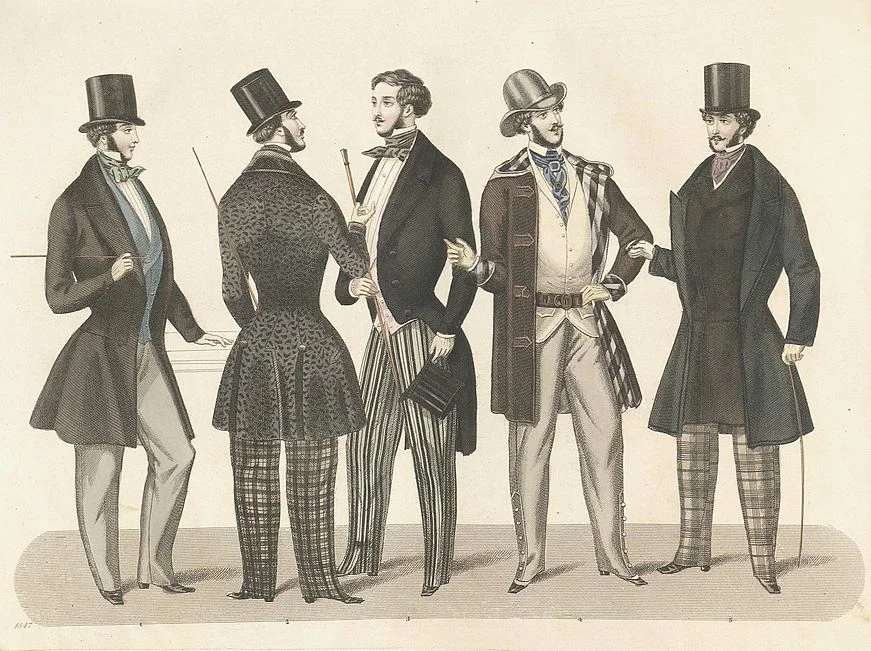
“Even in our democratic New England towns the accidental possession of wealth, and its manifestation in dress and equipage alone, obtain for the possessor almost universal respect.’’
— Henry David Thoreau (1817-1862)
“Whenever Richard Cory went down town,
We people on the pavement looked at him:
He was a gentleman from sole to crown,
Clean favored, and imperially slim.
And he was always quietly arrayed,
And he was always human when he talked;
But still he fluttered pulses when he said,
"Good-morning," and he glittered when he walked.
And he was rich – yes, richer than a king –
And admirably schooled in every grace:
In fine, we thought that he was everything
To make us wish that we were in his place.
So on we worked, and waited for the light,
And went without the meat, and cursed the bread;
And Richard Cory, one calm summer night,
Went home and put a bullet through his head.’’
— “Richard Cory,’ by Edwin Arlington Robinson, a native of Maine.
Don Pesci: In Conn., expenditure always rises to exceed income

Connecticut’s gubernatorial “debate” – Where are Lincoln and Douglas when you need them? -- between Ned Lamont and Bob Stefanowski appears to be stuck on a single “how” question: How will Stefanowski implement his campaign pledge to eliminate Connecticut’s income tax, once considered a final solution to the state’s debt problems, now a millstone around the neck of Connecticut.
The media coverage of the debates has been diverting, but most reports have been stuck in a single groove, playing over and over the same starkly abbreviated section of a larger unheard song, rather as if inconvenient questions launched in Lamont’s direction will upset the balanced apple cart that has been constructed over a period of three decades by the Democrat General Assembly hegemon in charge of state finances. Stefanowski has said his pledge to eliminate the income tax within the space of eight years is an aspirational goal that will become operational two years into his gubernatorial administration, which means, yes, Stefanowski will reduce taxes and – much more importantly – reduce spending.
Spending in Connecticut has increased threefold within the space of four governors: present Gov. Dannel Malloy, a progressive Democrat, two Republican governors, Jodi Rell and John Rowland, who, it will be recalled, pledged during his first run for governor to axe the tax – Rowland had second thoughts once he had been elected – and Lowell “instituting an income tax during a recession would be like pouring gas on a fire” Weicker, a nominal Republican who was in fact more Democrat than the Democrat pope of Connecticut at the time, then Sen. and now movie industry big shot Chris Dodd.
Stefanowski's idea is this: Taxing and spending are causally connected. If you increase taxes, spending increases will follow. In fact, that has been the rule in Connecticut’s economy ever since Weicker in 1991 poured gas on the fire. The Weicker tax saved state legislators the necessity of reducing spending, and the gals and guys in the state legislature – dominated for the last 30 years by progressive “we need more” Democrats – are very grateful indeed.
The good times now are gone. Businesses in the state have fled a government that cannot reverse its perilous race towards the yawning abyss; companies in Connecticut are looking towards a barren future under unappeasable tax-starved progressives, which further will reduce company profits – the surplus money that makes it possible for businesses to expand, hire more workers, increase wages and contribute a “fair share” in taxes to Connecticut’s dwindling state coffers. As a consequence of runaway spending, Connecticut’s economic growth is now the laughing stock of the nation.
So then, here are five “how” questions rarely, if ever, put to Lamont by Connecticut’s strangely incurious media:
1) How will Lamont curb spending, permanently and long term, in Connecticut? We have passed the point at which the state’s economy will respond positively to revocable tax credits, or to bribes given to homegrown companies to remain in the state, or to seed money given to outside companies to put down shallow roots in the state’s parched ground. A voting public that has come of age in the age of pointless political effusions made by politicians trolling for votes has, one hopes, developed an internal resistance to political posturing. Since spending is driven by ever increasing taxation – which is, in a nutshell, the whole history of Connecticut since 1991 – would Lamont favor legislation requiring a super-majority in the General Assembly to increase taxes? No effusions please. A “yes” or “no” will be sufficient.
2) Lamont has winkingly proposed a toll tax on heavy trucks in Connecticut to provide money for the transportation fund, which – big surprise – is out of cash – big surprise -- because a Democrat controlled General Assembly has raided dedicated funds across the state to satiate its largely political need to provide salaries and benefits to state workers in return for votes. Border toll installations, as Lamont well knows, cannot be re-erected without costing the state more money in penalties than his tolls on trucks would bring in. Therefore, any tolling in Connecticut must be congesting tolling, which means mucho tolling gantries throughout the state. Assuming the tolling infrastructure has been assembled, how long does Lamont think it would take before tolling is applied to grandma in her 1991 Chevy? One month? Two months?
3) Isn’t the precipitating cause of increased taxation in Connecticut the unhinged appetite among non-Stefanowski progressive legislators to move entrepreneurial capital from the private to the public sphere, the better to satisfy the insatiable appetite of state unions for salary and benefit increases? How will Lamont curb this appetite? Remember, largely owing to the pro-union efforts of Malloy in SEBAC agreements, salary increases are “fixed” until 2027, and Governor Lamont will not be able to use threatened layoffs as a bargaining chip in his negotiations with state unionized workers. Connecticut is one of the few states in the union that sets state worker salaries and benefits through negotiations between its governor and union honchos. Should the legislature present Lamont with a bill that sets salaries and benefits through legislation instead, will he sign it?
4) Over a period of three decades and more, “fixed costs” in the state – those costs over which the General Assembly has unconstitutionally abandoned all control – have steadily increased; so that, presently, the General Assembly has effective governance over only half of its expenditures, according to a Yankee Institute study. How will Lamont increase this figure to, say, 100 percent?
5) Finally, how do Lamont’s policy prescriptions differ from those of the departing governor Malloy, approval rating 21 percent, which is 21 points lower than that of President Trump at 42 percent?
Don Pesci is a Vernon, Conn.-based columnist.
'Digital biopsy' in Cambridge

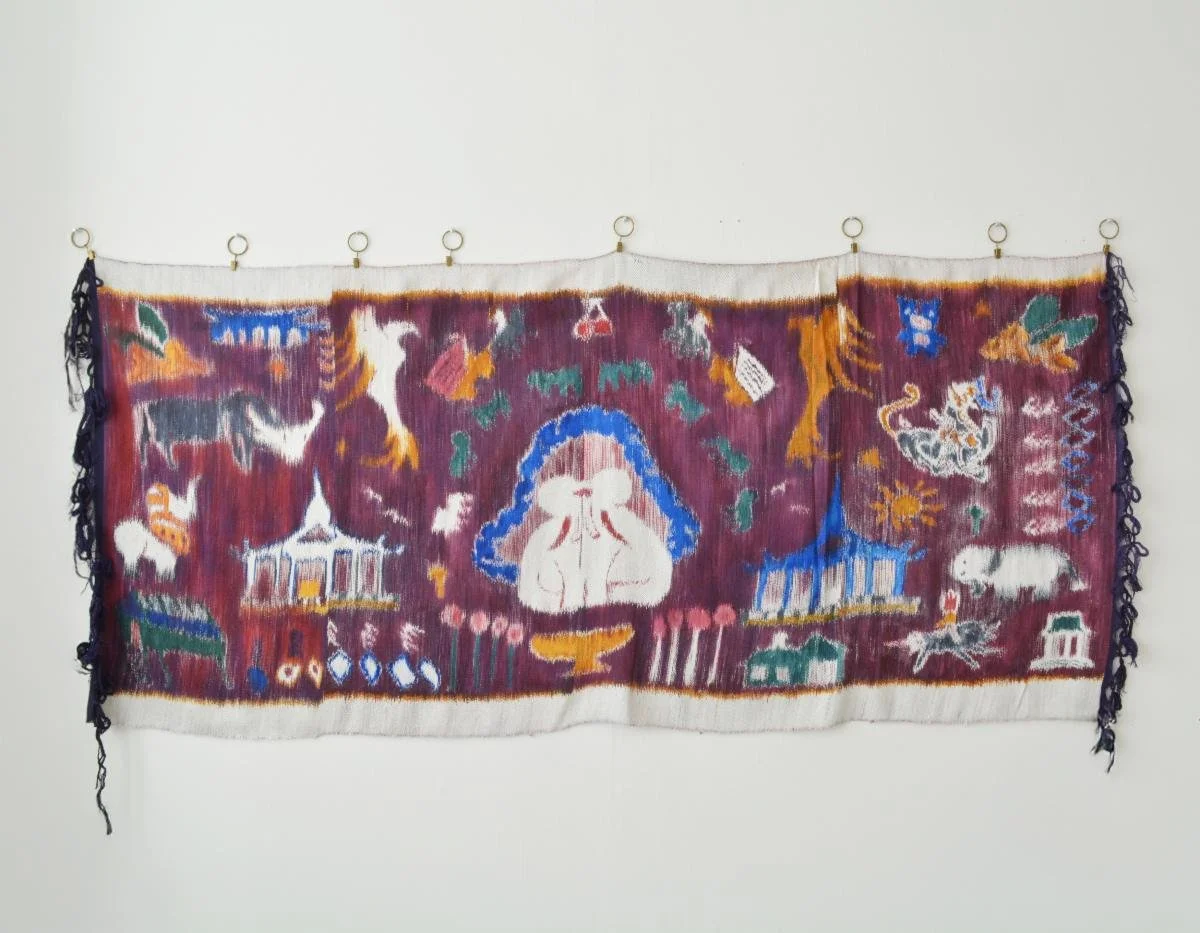
Sculpture by Cindy Lu, in her show “Data Collection: Work by Cindy Lu,’’ at Maud Morgan Arts Chandler Gallery, Cambridge, Mass., through Nov. 23
The gallery says:
”First, picture the human body. Then, as if a camera were zooming in closer, go through all layers of skin, muscle, and bone right down to the tiniest molecule. What once appeared simple has a new level of complexity, of many small parts working together on a larger scale. That describes both the intricacy of molecular/cellular biology and the work of Cindy Lu, whose background in the subjects inform her artistic style in many ways.’’
Ms. Lu explained:
"In this age of big data and artificial intelligence, we are continually subjected to digital biopsy to feed the growth of entities that seek to monetize and control our behavior.’’
Coastal Chronicle
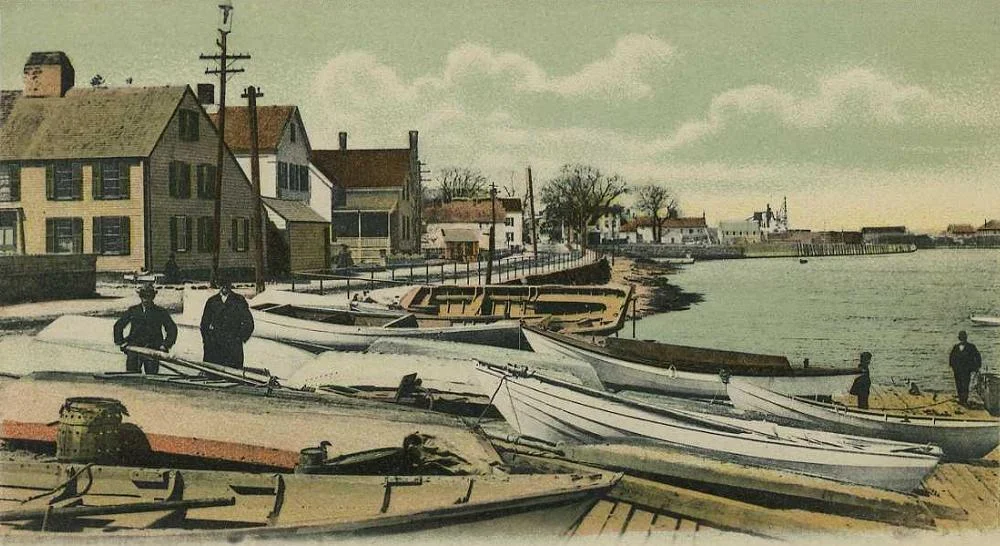
Joppa Landing, in Newburyport, Mass., once a major China Trade port.
From Robert Whitcomb’s “Digital Diary,’’ in GoLocal24.com
Coastal New England: Its Life and Past, by William F. Robinson, is the best popular history I’ve read of our shoreline and its offshore from Eastport, Maine, to Greenwich, Conn., from about 1500 to the 1980s. This coffee-table tome tells sociological, political, economic and environmental stories with scholarly rigor combined with mass market accessibility and droll (and sometimes dark and snarky) humor, showing the beautiful (such as coastal vistas and artists) and the ugly (wars, slaves, smugglers, drownings, etc.) and the full range between. It has a delightful assortment of illustrations – maps, illustrations and photos.
Jim Hightower: GOP is hard at work suppressing the vote
Via OtherWords.org
At last, Nov. 6 is coming: Time to vote! Let’s all join the majestic panorama of democracy in action!
Well… calling America’s electoral process “majestic” is overdoing it, for millions of our citizens will not be allowed to vote.
That’s because a consortium of national, state, and local officials of Republican persuasion — along with their corporate ringleaders — have mounted a tawdry campaign over the past decade to slam the ballot box shut on entire segments of America’s electorate.
In a concerted effort, these rabidly partisan officials have targeted African Americans, students, Latinos, the elderly, union households, the poor, immigrants, and other communities of qualified voters to shoo them away on Election Day.
Why? Because such citizens tend to vote for Democrats and progressive ballot initiatives.
So the GOP’s grand strategy is not to “win” by getting the most votes, but to keep from losing by aggressively (and shamefully) shutting out millions of Americans who might vote against their plutocratic, autocratic, kleptocratic candidates and agenda.
Consider voting day itself. It’s a Tuesday — a workday — automatically eliminating people working two or three jobs who can’t afford to take off a couple of hours or more to get to the polls and wait in line to vote. Move elections to weekends, make it a holiday, vote by mail… make democracy easy!
Instead, in a depraved, anti-democratic grab for partisan gain, Republican officials have frenetically been planting thick briar patches of ridiculous rules, logistical barriers, intimidation tactics, ballot deceptions, and outright voter bans in targeted precincts across the country.
These thugs are stealing the people’s most valuable civic property: Our votes. Shouldn’t they at least have to wear ski masks on Election Day so everyone can see who’s doing this to us?
Jim Hightower, an OtherWords columnist, is a radio commentator, writer, and public speaker.
'Ironic rainbow'
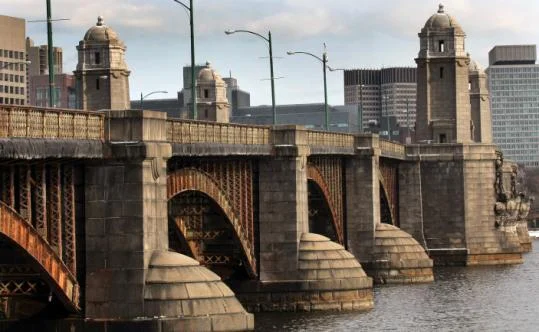
The Longfellow Bridge over the Charles River, nicknamed “The Pepperpot (or Pepper Pot) Bridge.
‘‘….winter drifts to where
The Pepperpot, ironic rainbow, spans
Charles River and its scales of scorched-earth miles
I saw my city in the Scales, the pans
Of judgment rising and descending. Piles
Of dead leaves char the air –
And I am a red arrow on this graph
Of Revelations. Every dove is sold.
The Chapel's sharp-shinned eagle shifts its hold
On serpent-Time, the rainbow's epitaph.’’
— From “Where the Rainbow Ends,’’ by Robert Lowell (1917-1977)
'The China Mission'

To members and friends of the Providence Committee on Foreign Relations (thepcfr.org):
Daniel Kurtz-Phelan, executive editor of Foreign Affairs, will talk about his exciting new book, The China Mission: George Marshall’s Unfinished War, 1945-1947, at 4 p.m. to 5:30 p.m. on Tuesday, Oct. 30, at the Joukowsky forum at Brown University, on Providence’s East Side. There will be a book signing and reception to follow.
The book is about General Marshall’s excruciatingly difficult and ultimately doomed effort to end the civil war between Mao Zedong’s Communists and Chiang Kai-shek’s Nationalists right after World War II.