
Vox clamantis in deserto






'Street art' in rich Manchester

“Coastal Bowl, Night Sky’’ (detail), by Matt Seasholtz, in the current show “Thriving Spaces: Street Art Meets Glass,’’ at the Southern Vermont Arts Center, Manchester.
The gallery says the show includes “never-before-seen works of glass and street art created for this unique exhibit.’’
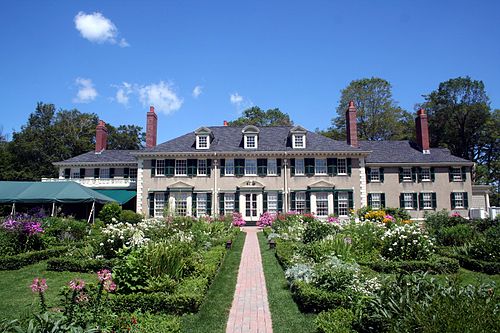
Hildene, the estate of Robert Todd Lincoln.
Manchester is an affluent resort and second-home town in the southwestern part of the Green Mountain State, well known for hosting such high-end retailing as Orvis, the fishing-gear company. Departed industries include iron mines, marble quarries, mills, lumber companies and sheep for the burgeoning New England woolen business of the 19th Century.
Robert Todd Lincoln, the president’s son, helped Manchester famous by building Hildene, his grand country place, now a museum. He was drawn to the town by the gorgeous countryside and the grand Equinox House hotel, which is still there.
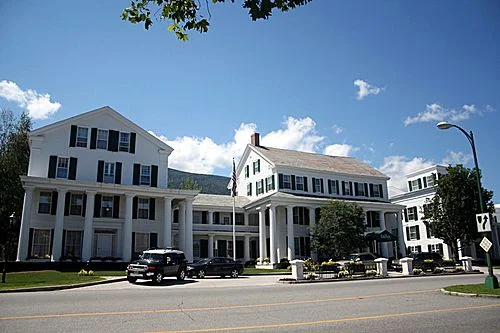
The Equinox House.
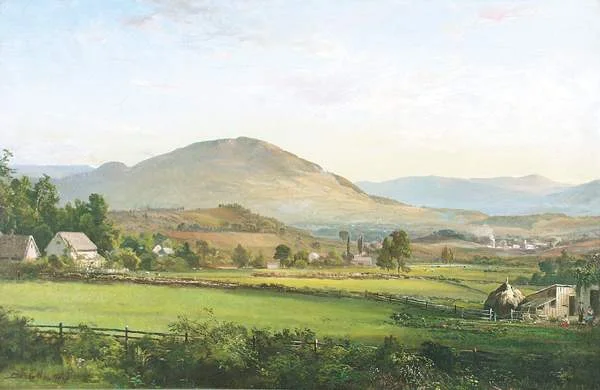
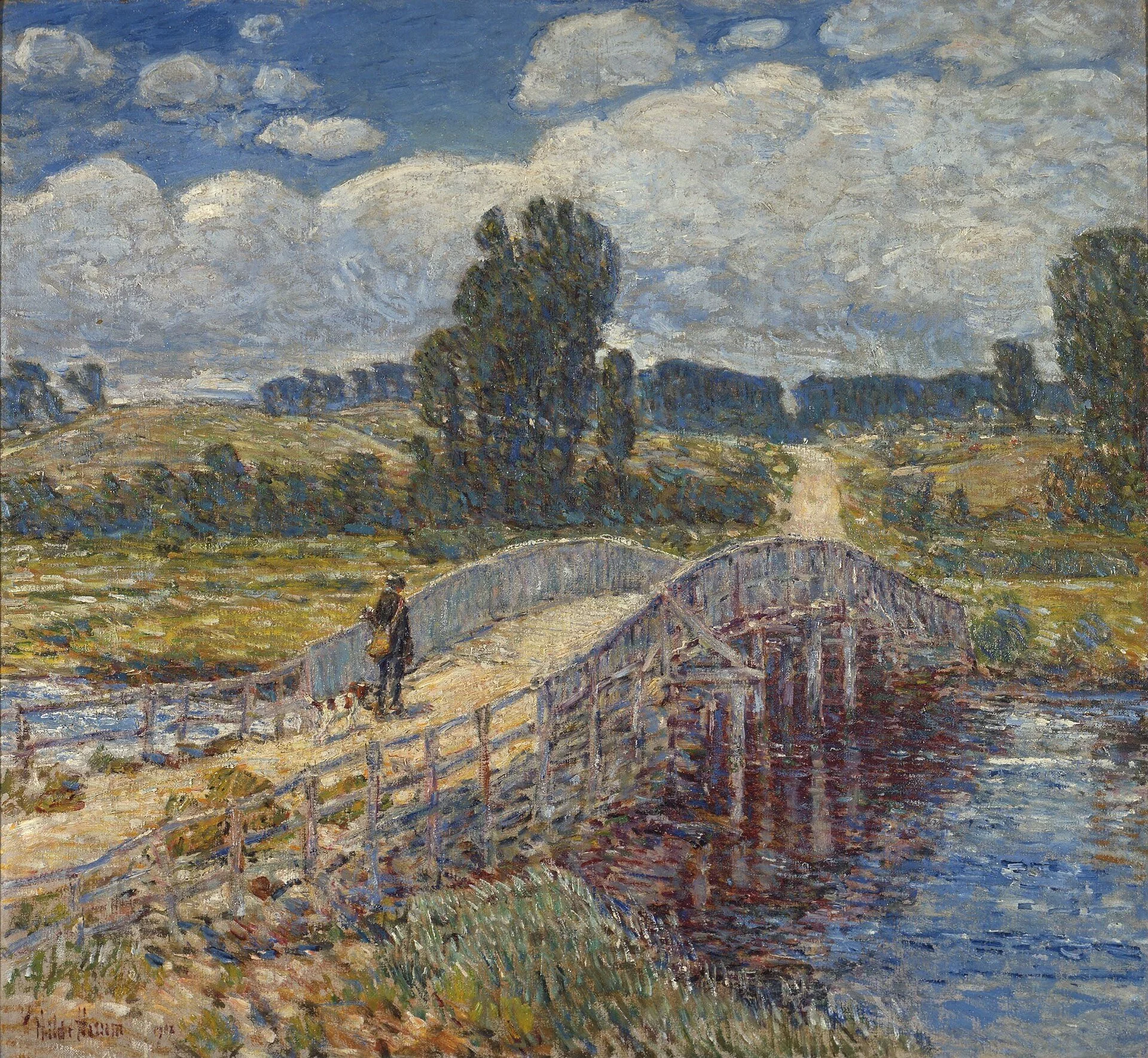
“View of Manchester, Vermont,” by DeWitt Clinton Boutelle (1870)
Jill Richardson: Why many women don't report sex assault
When Christine Blasey Ford came forward to report that President Trump’s Supreme Court nominee, Brett Kavanaugh, sexually assaulted her in 1982, you could cue the response: Why didn’t she speak out then? Why didn’t she go to the police?
There’s a long, long list of reasons why a woman wouldn’t speak out even now, and no doubt it was even more difficult in the pre-Anita Hill world of 1982.
I can’t speak for everyone who has faced sexual assault, but I can speak for myself.
1. At first, I didn’t know that what happened to me was a crime. My first assault occurred in college, 18 years ago. He lived in my dorm. I knew what rape was and didn’t think I’d experienced that. But I didn’t know that sexual violations without consent that aren’t sexual intercourse are also a crime.
2. I couldn’t talk about it. Even now, I can’t describe what happened to my therapist in any detail. What happened involved body parts that are too private to discuss with those closest to me — let alone the police, a judge or a newspaper. Talking about a past trauma can be re-traumatizing. Some of us cope by staying silent.
3. I blamed myself. I physically resisted for a while and then I froze and it happened. At the time, I told myself that if I really didn’t want it, I would’ve kept fighting. I didn’t know that freezing is a normal human response in a traumatic situation.
4. Afterward, I wanted him to be my boyfriend. My therapist said this was my way of trying to improve the situation. If he was my boyfriend, then what happened could be reinterpreted as meaningful. It’s a perverse response, but it’s apparently not uncommon.
5. I know someone who reported a rape to the police and had a traumatic experience of testifying in court and getting cross-examined by her rapist’s lawyer in front of her rapist. And then the rapist was found innocent. I don’t want that to happen to me.
6. Now, 18 years later, the man who assaulted me is an instructor of neurology at a prominent children’s hospital. He did a terrible thing to me, once, nearly two decades ago. Should I attempt to ruin his career because of it?
The answer to that is: I don’t know. If I thought he was still assaulting women and my speaking out would contribute to making him stop, I would in a heartbeat.
What he did to me 18 years ago still hurts so much that I would only revisit that assault and expose him publicly if there was a very clear purpose to doing so.
I expect if I did attempt to expose him, I’d be attacked. People would say that it wasn’t an assault because I wanted him to be my boyfriend afterward. They would say I wanted it because I froze and stopped fighting. There are good odds I wouldn’t be believed.
I’ll tell you this: Like Christine Blasey Ford, if the man who assaulted me was nominated for the U.S. Supreme Court, I’d speak up. I don’t think a man who violates a woman that way is qualified to rule on cases of violence against women, or any other aspect of their well-being. I don’t think he could be impartial.
When a victim of sexual crimes comes forward, even if it’s decades after the crime took place, we shouldn’t use her past silence against her as “evidence” to discredit her. That urge to discredit is exactly why it takes so long for some to come forward in the first place.
Jill Richardson is an OtherWords columnist.
Post-newspaper news-gathering
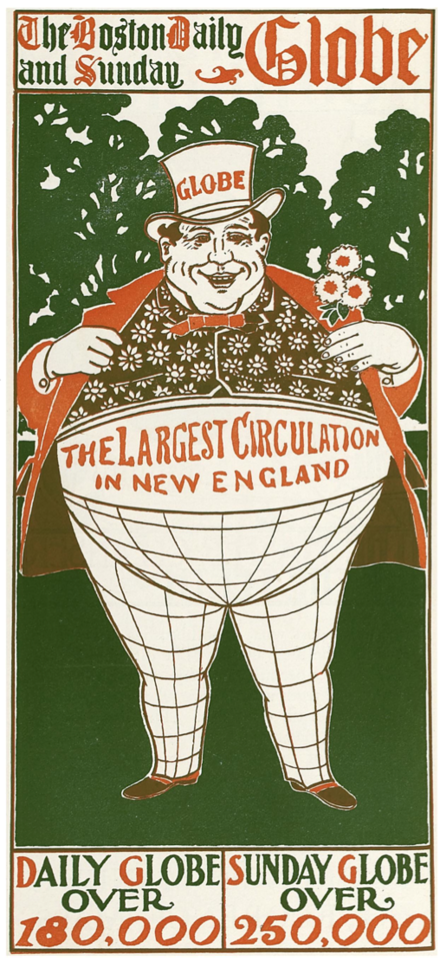
An advertisement in 1896 for The Boston Globe.
From Robert Whitcomb’s “Digital Diary,’’ in GoLocal24.com
Local newspapers continue to shrink and disappear (the Trump administration’s recent lowering of its very high tariffs on Canadian newsprint might provide a small reprieve). This has encouraged an increase in costly local corruption as the ranks of reporters rapidly diminish as does local civic engagement; newspapers have long been important parts of the public square, acting as crucial sources of laboriously collected and edited information and as convenors for public discussions of important issues.
With the monopolistic Facebook and Google draining away ad revenue, things probably won’t get better for news on paper, unless the Feds start enforcing antitrust laws for a change.
Otis White, the president of Civic Strategies Inc., writing in Governing.com, reports on a very well run community – Decatur, Ga., an Atlanta suburb – where local leaders are trying to fill the civics-knowledge gap, albeit imperfectly. The City of Decatur mails out a monthly newsletter called Decatur Focus updating stuff going on in city government. It’s well done but in effect promotes the interests and status of city officials, elected and otherwise. Decatur also has a program called Decatur 101, which seeks to develop informed and involved citizens. And there’s its Citizens Police Academy, which focuses on how the police department enforces laws.
All very nice, but all communities need independent, private-sector news gatherers. Their demise is jeopardizing local democracy. To read Mr. White’s piece, please hit this link.
Bring your insulin
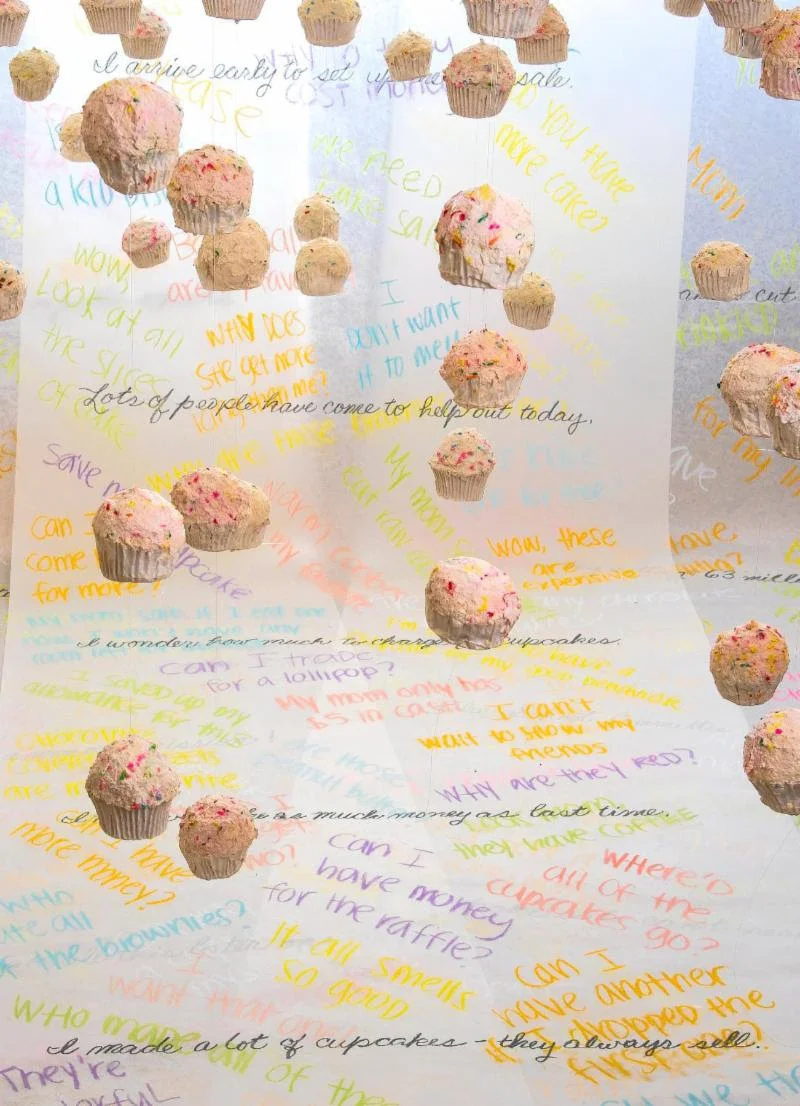
“Diary of a Bake Sale Diva’’ ( mixed media installation), by Ronni Komarow, in her show “Tender Mercies,’’ at Galatea Fine Art, Boston, Oct. 3-28.
David Warsh: If only Obama had become the Great Explainer of the Panic of 2008
SOMERVILLE, Mass.
Ten years after the Panic of 2008 began, the hardest thing is dealing with the might-have-been in its immediate aftermath. What if President Obama had better understood the situation he inherited?
He might have emulated Franklin Delano Roosevelt and begun his term as explainer-in-chief. He might have devised some modern equivalent of FDR’s “fireside chats” – the 31 radio broadcasts the president made in 1933 and 1934.
Obama then could have proceeded to explain what had happened in the previous few months, what the Federal Reserve Board, the Bush administration, and Congress had done about it and why, and what steps his administration would take next.
He would have said that, in the days after Sept. 15, when Lehman Brothers filed for bankruptcy, the U.S. had suffered an uncontrolled banking panic, the first such since the Panic of 1907 – not just the United States, but the entire global banking system.
He would have explained how the 1907 panic, halted the old-fashioned way by a syndicate of wealthy bankers led by J.P. Morgan, was so severe that it led Congress to create the Federal Reserve System as lender of last resort in such emergencies.
He would have explained that a panic after 1929 had paralyzed the inexperienced Fed in the early 1930s, and that Roosevelt had been able to ease the fears with that first chat. He might have told, as an aside, how Roosevelt’s Fed Chairman Marriner Eccles had diagnosed the paralysis, and, drafting the Banking Act of 1935, centralized lending decisions with the seven-member Board.
Obama would have explained that only after the panic had commenced did Federal Reserve Chairman Ben Bernanke, Treasury Secretary Henry Paulson and New York Fed President Timothy Geithner understand the intricacy with which the shadow banking system (as it would become known) was connected to the familiar banking system. He might have commended the Paulson eventual valor (if not his foresight) and explained that he was asking Tim Geithner to lead his Treasury Department, that he would nominate Bernanke to a second term as well.
He could have explained that, while a decline in home prices was the proximate cause of the crisis, it was better understood as an increasingly frenzied search for safe assets coming near the end of a global boom that had begun in the early ‘80s.
Therefore, he might have said, there was no reason to take the crisis out on homeowners. His administration, he would have told listeners, had begun an urgent search for a way of freezing subprime mortgages at their teaser rate for however long was required to avoid mass foreclosures.
Only then would he have moved on to the difficult topic of stimulus – the deficit spending he was asking Congress to authorize to counteract the rapidly deepening recession, which had been aggravated by a breathtaking if quickly reversed decline in world trade. And he would have warned that similar difficult choices lay ahead for members of the European Union.
True, the leaders who halted the stampede — Bernanke, Geithner, Paulson and their respective teams—didn’t understand themselves at first what they were up against. No one had seen a banking panic in the U.S for many years. They were thought to have become impossible. Four days were required to get government departments on the same page; another two weeks to persuade Congress it had no choice but to act.
But by Inauguration Day, those who had battled the panic had a pretty good idea of what had happened and why. Bernanke, Paulson and Geithner told their stories last week at the Brookings Institution in a remarkable two-day conference on the 10th anniversary of the panic.
Obama, on the other hand, either did not have a good grasp of the situation, or he did and chose to ignore it. Obama had hired Hillary Clinton’s campaign economic adviser, Jason Furman, after he defeated her in the spring; he signed former Treasury Secretary Lawrence Summers as his chief adviser on the Friday after Lehman.
That’s not to say that Summers is a bad economist. But he clearly does not share the Bernanke-Paulson-Geithner view of what was distinctive about the crisis. Summers helped persuade Obama to support the gauzy Troubled Asset Relief Program appropriation (TARP) that President Bush requested that Friday morning. And Obama never reversed himself on the campaign trail. But he had little or nothing to say about the rescue of the financial system
Instead, “stimulus” had become the mantra of the Obama team even before the election. The only question was how much could Congress be expected to approve? The Congressional Republicans, who had no better version of what had happened to take to voters than did the Obama team, hit the warpath.
Much has been said about the utter failure of “new classical” economics to give an account. But “new Keynesian” thinking was not much better (though it was better). Read Larry Summers’s first major speech about the crash, in March 2009.
“How should we think about this crisis?… [I]t was the central insight of Keynes’s General Theory that two or three times each century, and now is one of those times, the self-equilibrating properties of markets break down as stabilizing mechanisms are overwhelmed by vicious cycles, as the right economic metaphor becomes not a thermostat but an avalanche, and that is what we are confronting today.’’
To see what Summers thinks today, check out “The financial crisis and the foundations for macroeconomics,” his op-ed article in The Washington Post last week. Or wait, if you like, for A Crisis Wasted: Barack Obama’s Defining Decisions, by Reed Hundt. (Rosetta, February 2019). Hundt, another star of the Clinton administration (think Internet) and a veteran policy entrepreneur, was one of the would-be advisErs who was cast aside after the election, along with campaign economist Austan Goolsbee, Federal Deposit Insurance Corporation chief Sheila Bair, and Fannie Mae receiver Herbert Allison. His is the best account yet of what went on behind the scenes in those first six months.
Perhaps Obama would have done better to stick with Goolsbee, the economist who had come with him to the dance, rather than rely on Summers. With his University of Chicago connections, and his modest professional ways, Goolsbee would have brought fewer preconceptions to the job. He might have negotiated a more genuinely bipartisan economic stance with which to begin the Obama administration – one that put the panic at the center of his account and acknowledged that the main event had been boldly and satisfactorily resolved by Bush administration appointees four months before Obama’s term began.
Hindsight is twenty/twenty. We’ll never know. The meeting at Brookings last week, a joint undertaking of the Hutchins Center on Fiscal and Monetary Policy and the Program on Financial Stability at the Yale School of Management, was terrific. It took 10 years to happen, instead of 10 weeks in the autumn of 2008. But, even now, we may hope for a better understanding of the crisis than the one we have today.
David Warsh is proprietor of economicprincipals.com, where this column first ran.
Chris Powell: Those UConn tourists; unfair to DMV
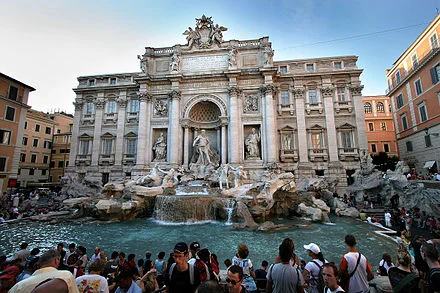
Tourists at the Trevi Fountain, in Rome.
Bad news has been piling up quickly in Connecticut’s state government this month. Among the examples:
-- A department head at the University of Connecticut at Storrs resigned after getting caught approving more than $100,000 in travel expenses and paid time off for his administrative assistant so that she could travel with him internationally in the name of attending conferences but actually for sightseeing and companionship. The department head was already earning more than $320,000 annually and during the last two years received another $125,000 in compensation for "research." Simultaneously UConn President Susan Herbst blamed a reduction in its state appropriation for the university's modest decline in a national ranking of colleges.
-- State Atty. Gen. George Jepsen announced that he is suing 13 current or former state employees for defrauding state government's employee prescription drug plan of $11 million through a kickback scheme with a pharmaceutical company in Florida.
-- A toy chicken hanging from a noose was found in the office of a black employee of the state Department of Developmental Services in Torrington. Dozens of the department's employees long have been complaining about racial discrimination in the department.
-- And the state Education Department announced the dismal results of the latest round of standardized tests of students in Grades 3 through 8 in the public schools. The results showed that there has been no closing of the "achievement gap" in the performance of minority and impoverished students in the last four years, during which state government has spent tens of millions of dollars in the name of closing the gap.
So what did Gov. Dannel Malloy do about these things? Nothing. Instead this week he flew off to San Francisco to attend a conference on climate change, as if there aren't plenty of people already attending to that issue. But who is attending to state government's lack of management? Nobody until, maybe, the next governor takes office and changes Connecticut's political climate.
A JOKE ON BOTH PARTIES: Ned Lamont, the Democratic candidate for governor, told a joke the other day in the course of making proposals to improve the state Department of Motor Vehicles. Customer service at department offices, Lamont said, has been so bad that people might enter as Democrats and exit as Republicans.
Catchy as the joke was, it wasn't really fair, for clunky as the department remains in some respects, it has improved gradually in recent years, if not enough. More of its functions have been enabled on the Internet, and department employees now strive to route people to the right windows as soon as they enter the office so they don't waste time in the wrong lines.
Besides, for the 16 years prior to the current Democratic administration, Lamont's joke could have been told with the parties reversed. Govs. John G. Rowland and Jodi Rell, both Republicans, showed less interest in the Motor Vehicles Department than Governor Malloy has shown. Indeed, the most notable frustration with the department in recent years resulted from an upgrading of its computer system that should have been implemented long before Malloy took office.
The Republican candidate for governor, Bob Stefanowski, proposes privatizing more of the department's operations. Anything that reduces state government's direct employment may save money, but improving service is something else. That may require some investment, which will be hard to find in state government for a long time.
Chris Powell is a columnist for the Journal Inquirer, in Manchester, Conn.
Studied and studied
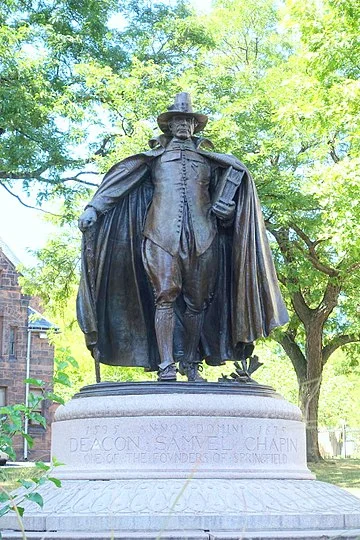
“The Puritan’’ (1887), a famous statue in Springfield, Mass., by Augustus Saint-Gaudens. Springfield is now best known for its new casino.
“So many able historians have worked over seventeenth-century New England that one would think there was little left to be learned from the people who lived there - fewer than 100,000 at the end of the century. Seldom, apart perhaps from the Greeks and Romans, have so few been studied by so many. ‘‘
— The late historian Edmund Morgan
'The bickering flames'

Marblehead Neck.

Marblehead (1914 watercolor), by Maurice Prendergast.
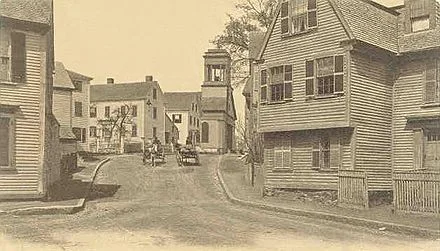
Marblehead houses at the turn of the 20th Century.
DEVEREUX FARM, NEAR MARBLEHEAD.
“We sat within the farm-house old,
Whose windows, looking o'er the bay,
Gave to the sea-breeze damp and cold,
An easy entrance, night and day.
Not far away we saw the port,
The strange, old-fashioned, silent town,
The lighthouse, the dismantled fort,
The wooden houses, quaint and brown.
We sat and talked until the night,
Descending, filled the little room;
Our faces faded from the sight,
Our voices only broke the gloom.
We spake of many a vanished scene,
Of what we once had thought and said,
Of what had been, and might have been,
And who was changed, and who was dead;
And all that fills the hearts of friends,
When first they feel, with secret pain,
Their lives thenceforth have separate ends,
And never can be one again;
The first slight swerving of the heart,
That words are powerless to express,
And leave it still unsaid in part,
Or say it in too great excess.
The very tones in which we spake
Had something strange, I could but mark;
The leaves of memory seemed to make
A mournful rustling in the dark.
Oft died the words upon our lips,
As suddenly, from out the fire
Built of the wreck of stranded ships,
The flames would leap and then expire.
And, as their splendor flashed and failed,
We thought of wrecks upon the main,
Of ships dismasted, that were hailed
And sent no answer back again.
The windows, rattling in their frames,
The ocean, roaring up the beach,
The gusty blast, the bickering flames,
All mingled vaguely in our speech;
Until they made themselves a part
Of fancies floating through the brain,
The long-lost ventures of the heart,
That send no answers back again.
O flames that glowed! O hearts that yearned!
They were indeed too much akin,
The drift-wood fire without that burned,
The thoughts that burned and glowed within.
— ‘‘The Fire of Drift-Wood,’’ by Henry Wadsworth Longfellow (18070-1882)
A scenic and mostly soothing job over the water

Bridge tender’s house in Chicago.
From Robert Whitcomb’s “Digital Diary,’’ in GoLocal24.com
Patrick Skahill, of Connecticut Public Radio, has written a delightful piece about a guy who moves New Haven’s Grand Avenue Swing Bridge to let bigger boats in and out of the Quinnipiac River where it approaches Long Island Sound. The tender, Maurice Little, has a job, which he performs in a little house at the bridge, that, of course, requires occasional close attention but allows for a lot of relaxation, too. Boat operators must call him ahead to let him know they need to come through. There’s lots of waiting, especially, I imagine, from September to May, when there are relatively few pleasure boats coming through.
Mr. Little told the reporter that his wife says: “Oh your job is boring.’’ He responds: “No it’s not boring. I’m used to it. I enjoy my job,’’ which gives him plenty of time to read books and look at his computer. And he can enjoy the ever-changing light and weather and boat traffic. Indeed, he might get enough material for a novel or at least a lyric poem.
Sounds like a nice job, but maybe best for a reflective and ruminative person finishing up his/her working years after a more strenuous career.
To read and hear the piece, please hit this link.
Kids' stuff in Concord

From the currrent show of Tomie dePaola’s book illustrations at the Mill Brook Gallery & Sculpture Garden, Concord, N.H. He has written and/or illustrated over 260 books, including Strega Nona, Tomie dePaola's Mother Goose, Oliver Button Is a Sissy, and 26 Fairmount Avenue. Mr. dePaola is now also exhibiting at the Currier Museum, in Manchester, N.H., with three other illustrators from New Hampshire.
Beauty in Brockton

“Blackbird” (glass), by Natasha Harrison, at the Fuller Craft Museum, Brockton, Mass. Brockton is gritty in many places, as you might expect in an old shoe-making center, but the Fuller is in a beautiful park with a lovely pond.

Peter Certo: Nobody in White House is part of 'The Resistance'

“Storming of The Bastille’’ (July 14, 1789), by Jean-Pierre Houel.
From OtherWords.org
This week, the White House continues its furious hunt for the anonymous official who proclaimed him or herself part of “The Resistance” in a New York Times op-ed. Unsurprisingly, the president is “obsessed” with it, CNN reports.
What really set Trump off — perhaps understandably — was the suggestion that aides were deliberately undermining orders. “We want the administration to succeed,” the author said, before describing a coordinated effort to “thwart parts of [Trump’s] agenda and his worst inclinations.”
But not all of that agenda. The author praised Trump’s commitment to “effective deregulation, historic tax reform, [and] a more robust military,” and even complained about “near-ceaseless negative coverage” obscuring those supposed accomplishments.
The president’s behavior in pursuit of that agenda may be “detrimental to the health of our republic,” the author admits, but assures readers: “There are adults in the room. We fully recognize what is happening.”
This helps the rest of us understand what’s happening, too: Career Republicans are riding right along with someone they themselves describe as “anti-democratic,” “reckless,” and “erratic.” And they’ll do it just as long as he cuts taxes for billionaires, deregulates the corporations they own, and keeps the spigot open to the military-industrial complex.
He’s doing that.
So, what’s he doing wrong? The author specifies only Trump’s “preference for autocrats and dictators” such as Vladimir Putin and Kim Jong-un.
Trump’s admiration for those figures says a lot about his disdain for democracy. But the response the author describes sounds more like an effort to shut off diplomatic openings with nuclear-armed rivals than to curb Trump’s anti-democratic impulses. Feel better?
Beyond this, the author offers few specifics on what they’d actually like to prevent.
Pulling out of the Iran nuclear deal and the Paris climate accords? Not a problem, apparently. Deregulating the banks that caused the financial crisis, and the fossil fuel companies causing climate change? Go right on ahead.
Giving corporations and billionaires a $2 trillion tax break, then trying to cut food stamps, Social Security, Medicare, and Medicaid? Trying to throw 24 million Americans off their health care?
The author describes precisely no concern about any of these things, because virtually any Republican would have done them.
Remarkably, the author actually complains that Trump “shows little affinity for ideals long espoused by conservatives.” But it sure sounds like he’s governing as one.
Sure, Trump has made unique his own contributions to modern conservatism — alliances with white nationalists, concentration camps for babies, etc. But our anonymous “adult in the room” offers no objection here either, even as down-ballot Republicans increasingly embrace those extremes.
I can believe that White House staffers really do find the president unstable and dangerous. But instead of constitutionally removing him by the 25th Amendment, they’re keeping him around so they can cut billionaires’ taxes, put over half of every taxpayer dollar into the military-industrial complex and coddle corporations that loot the country and pollute the planet.
The writer pines for the late Sen. John McCain, calling him “a lodestar for restoring honor to public life.” McCain was surely more honorable than the president he feuded with, but even he voted with Trump 83 percent of the time. Do we really think Trump’s pathologies reside entirely in the other 17 percent?
If Trump implodes, they’re going to act like his personality was the problem — not the policy agenda he’s executing on their behalf. They’ll say we haven’t gotten enough “real conservatism.”
Sorry, but I think the amazing social movements behind the real “resistance” would disagree. They’re not trying to roll back 17 percent of what this White House has done. They’re trying to transform it — and much of what came before it — 100 percent.
Peter Certo is the editorial manager of the Institute for Policy Studies.
Delay school openings to well after Labor Day?
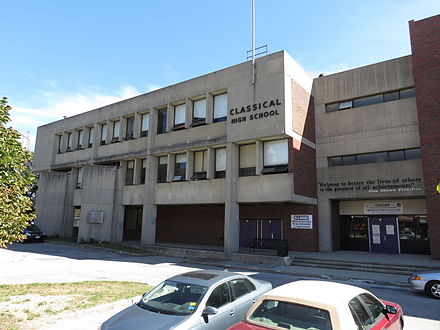
Classical High School in Providence.
From Robert Whitcomb’s “Digital Diary,’’ in GoLocal24.com
‘Rhode Island state Sen. Leonidas (sounds Shakespearean!) Raptakis has proposed having all Rhode Island public schools open after Labor Day because of late-summer heat in a state where few public schools are air-conditioned, and opening later in June, when, he says, the weather takes its time getting hot.
"Typically, the temperatures are much more bearable during June as opposed to late August and that is one reason why our kids should only be going back to school after Labor Day. It is virtually impossible for our children to properly learn during these intense heat conditions," he told GoLocalProv.
We need a comparative analysis of temperatures in mid to late June compared to late August and early September to see if he’s right. Opening later (in my youth public schools opened a day or two after Labor Day) would also certainly be good news for high school kids with summer jobs at Rhode Island’s many summer-based businesses, mostly along the coasts.
Raptakis’s remarks are a reminder of the huge income-based inequities in education. While most private school classrooms and many affluent-town public schools have air conditioning in all their classrooms, few public schools do around here. It’s mighty hard to learn in a room where it’s a humid 90 degrees. As global warming continues, I hope this basic inequity will be addressed. To read about the senator’s remarks, please hit this link.
She only looks innocent

From Raul Gonzales III’s show “Lowriders Blast From the Past: Drawings by Raul the Third,’’ in the Chandler Gallery at the Maud Morgan Arts Center, Cambridge, Mass., Sept. 23-Oct. 19.
Eversource to use drones to monitor infrastructure
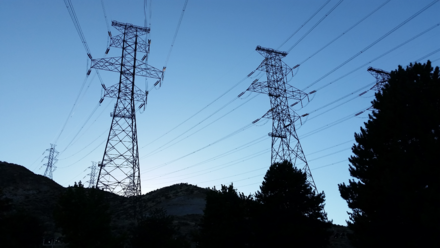
From The New England Council (newenglandcouncil.com)
“Eversource Energy recently announced its plans to begin using drones to conduct inspections of high-voltage infrastructure. Eversource is a Hartford- and Boston-based utilities company that provides electricity for over a million customers throughout Connecticut, Massachusetts, and New Hampshire.
The energy company intends to implement drones to monitor 100 percent of its power line and electrical infrastructure maintenance. This high-tech solution has many benefits, some of which include minimizing the need for infrared helicopter inspections, cutting down on fossil fuel use, and obtaining a more frequent view of the electrical infrastructure to identify and prevent potential issues. Eversource has been experimenting with drone usage since 2016, but only decided recently to make piloting them routine. As the energy industry becomes increasingly aware of the affordability and practicality of inspection drones, it is likely Eversource will become just one company of many who are taking advantage of this technology.
Carol Burke, Eversource Energy’s manager of transmission line operations in New Hampshire, said, “At first, we really were just targeting specific lines that we knew might have some issues. It worked out great and in the last two years we ended up developing a more formal program. It’s a great way to do an inspection as with very clear, detailed videos and pictures you can see any type of defect, aging or rotting on a structure.”
When driving was fun

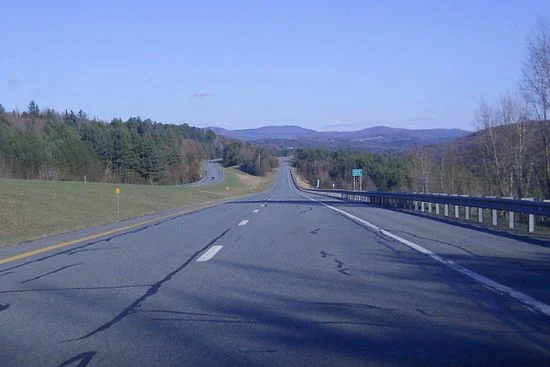
Route 91 south, in Wheelock, Vt. Route 91 north of the Massachusetts line has usually been a remarkably open road, and it goes through lovely rolling countryside along the Connecticut River.
From Robert Whitcomb’s “Digital Diary,’’ in GoLocal24.com
News of the imminent completion of Interstate Route 95 – after 61 years! – by finally filling a short New Jersey-Pennsylvania gap, brought back memories of the joy of being on the road in the early days of the Interstate Highway System. As a kid with a driver’s license minted in 1964, I drove all over the Northeast, at first using my father’s red Jeep and then a used VW bug that I bought. It was my favorite car of all time, although with the gas tank over the driver’s lap, it was a deathtrap.
It was all about freedom!
I’d happily take off in the middle of the night, when there was little traffic, to go skiing in New Hampshire or down to the Cape. For that matter, there was far less traffic during the day than there is now. That’s partly because there are many more people now, and partly because building more and wider roads draws more traffic, in a kind of Parkinson’s law (“expenditure rises to meet income’’). I was struck by how bad things had become when, a few years ago, my family and I, just off the plane at Logan Airport, found ourselves in a massive traffic jam in downtown Boston – at 2 a.m.!
Back in the ‘60s, the roadside amenities, especially the Howard Johnson restaurants alongside the more important Interstates, were also delightful.
But because of crowding, texting and crumbling infrastructure, driving on the Interstates, especially in the crowded Northeast, now is often very unpleasant amidst the anger and aggression of so many drivers. How to make it less so: Spend more money on mass transit!
Boston University economist Barry Bluestone discussed this in a piece in The Boston Globe about the worsening nightmare of driving in Greater Boston. Traffic congestion isn’t as bad yet in Greater Providence – far fewer people -- but it is getting worse, in part because we have far thinner public transit than Massachusetts. Indeed, our best mass transit is Massachusetts-based: MBTA commuter trains.
Bluestone notes that traffic congestion in morning and afternoon/evening commutes in Greater Boston means that the average driving speed then is now just 18.4 miles an hour. “That means the typical commuter is now spending around 15 hours a week sitting in traffic — or 720 hours per year.’’ That’s time that could otherwise be spent making money, sleeping, sex and a plethora of other productive activities. Sitting trapped in traffic for hours a week is also bad for your health.
But, Bluestone writes, “if we were somehow to move just 13 percent of the daily commuters off the road onto public transit — about 195,000 — highway flow analysis suggests that the average speed during commuting hours could be doubled to more than 37 mph— still well below the highway speed limit. But even that improvement would save the typical commuter about 7.5 hours per week in commuting time or 360 hours per year.’’
“Yet there is an additional benefit. The typical commuter who drives 6,000 miles per year in commuting now spends around $821 a year in fuel. Doubling the average speed increases fuel efficiency so much that it cuts the fuel bill to just $552 a year — a savings of $269 a year.’’
“The question, of course, is how to pay for … tangible improvements in public transit. The answer lies in getting the true beneficiaries of improved public transit to pay for it. If drivers were to pay only $269 a year more in gasoline taxes, tolls, or a vehicle miles traveled fee to the MBTA, the Commonwealth would have an additional $3 billion over 10 years to make some of these improvements.’’
Most other major industrialized nations, including our neighbor Canada, understand the big economic and social benefits of dense public-transit in their metro areas. Check out Toronto, for example. The United States, as usual the laggard in infrastructure (though it didn’t used to be this way), will pass an ever-steeper price for not addressing this issue, which profoundly affects the way so many of us live.
To read Bluestone’s piece, please hit this link.
Depression art in Vermont

“The Planter (1937)’' (oil on homasote) by Ronald Slayton (1910-1992), in the show “Crash to Creativity: The New Deal in Vermont,’’ through Nov. 4 at the Bennington Museum.
The museum explains:
”This exhibition sheds light on the important, under-studied aspect of Vermont's history (1933-1944), focusing on the role of government-sponsored New Deal projects. It features photography, paintings, studies for post office murals, furniture from Civilian Conservation Corps cabins, architectural plans, audio transcripts created by the Federal Writers Project as well as powerful examples of Regionalist and Social Realist paintings.’’
Harvard pay-parity policy helps bring outside workers into middle class
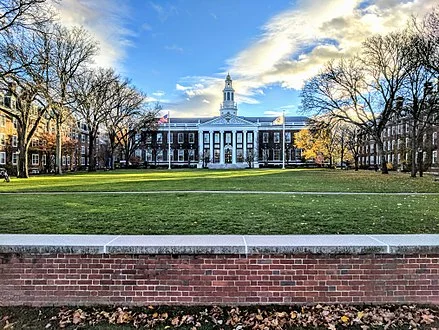
The Baker Library at the Harvard Business School, which is across the Charles River from Harvard’s main campus.
From The New England Council (newenglandcouncil.com)
“Harvard University was featured in a New York Times article that profiled one of the university’s food-service employees, Martha Bonilla. At her job preparing breakfast and lunch for executives at Harvard Business School, Ms. Bonilla and other Harvard service employees receive the same pay and benefits as those who are directly employed by the university.
Harvard’s policy requiring parity among service workers and university employees was formally adopted after numerous student-led protests in 2001 demanding better pay for campus workers. Recent research claiming that wage disparity in the US is a product of institutions outsourcing to low-wage contractors further motivates Harvard’s effort to avoid outsourcing and pull workers from the bottom of the labor market into the middle class.
The New England Council commends Harvard University’s efforts toward wage parity and thanks them for their commitment to support hard working serving employees on their campus.’’
To read The Times’s story, please hit this link.
Llewellyn King: Are we surrendering Americanism to identity politics?

Francis Fukuyama earned his place in philosophical history by declaring “the end of history” on the fall of the Berlin Wall and the collapse of communism.
Nowadays Fukuyama, an engaging traveler though the world of ideas, poses this great question: Where are we going?
In New York on Sept. 11, Fukuyama seemed to answer that question by telling an audience: nowhere very good.
The global crisis laid out in Fukuyama’s latest book, Identity: The Demand for Dignity and the Politics of Resentment, is that identity politics -- advanced tribalism, if you will -- is eroding democracy.
Fukuyama writes that the United States invaded the Middle East, during the Iraq War, to Americanize the Middle East, but the Middle East has Middle-Easternized the United States. Not only is there no national identity in Iraq now, he argues, but we are also losing our Americanism to identity politics, with its baggage of racism and division.
He points to two decidedly democratic events as harbingers of a less democratic future: Britain’s vote in June 2016 to leave the European Union and the election that same year of President Donald Trump, disaster following on disaster, identity triumphing over political union. In the case of Brexit, English nationalism upstaging the larger values of a unified Europe; and in the Trump election, the white working class voting against the other constituent parts of the nation.
Listening to Fukuyama answering questions at the New York event, organized by Philip Howard and his Common Good organization, one could be plunged into feeling that the famous American mixing bowl had become unmixed, breaking down, as Fukuyama gently suggested, into competing groups, supporting just those who belong to their group – all of this set off by white fear of the end of their hegemon in America. Hence, the hysteria over immigration.
The difference between the immigration alarm in Europe and in the United States, he said, is that Europe sees not just an invasion of different people with different customs, religions and languages, but also an assault on the cradle-to-grave welfare systems. Fukuyama said Europeans do not mind paying 60 percent of their incomes in tax because they believe they get a lot for it. That, he said, is what they see coming from immigration: People coming to live off the generous social structure for which they have not paid.
Immigrants from Africa going to Sweden -- in the news because of its electoral swing to the right -- must think they have entered nirvana: total freedom from want. Not quite the same as people coming across our southern border, seeking safety and work.
Fukuyama sees the United States in danger from identity grouping overwhelming our commonality as a nation.
I wonder about that. When I landed on these shores as a young (legal) immigrant in 1963, I wrote to a friend in England -- and I remember this clearly – saying: “This is no melting pot. This is a fruit salad.”
Well, that is still so, and it works until it is perverted by minority manipulators. For example, there has always been a racist element. It is just that President Trump and his allies have blown on these embers and brought forth flame. Race dividers feel emboldened under Trump, just as they seethed under President Obama.
It is worth pondering that before Trump, we twice elected an African-American president and that said something about us -- something quite different from what Fukuyama is saying about us in today’s race-heavy, fact-short political debate.
Some at the New York meeting suggested that the pendulum will swing back. Yes, it will but not to the status quo ante. It will be to a new place.
I believe the Trump success was fueled not so much by resentment as by a pervasive sense of irrelevance. It expresses itself politically, but its root may be with the isolation felt by those who have to deal with monopoly businesses from the cable company to the online retailer. Think the politicians ignore you, try those who have market dominance: banks, health insurers, online vendors and telecoms among others.
Fukuyama calls for dignity as a kind of antidote to identity politics. He might want to extend that excellent thought beyond just the political arena.
Llewellyn King is executive producer and host of White House Chronicle, on PBS. His email is llewellynking1@gmail.com.
Chuck Collins: Absentee rich folks are hiding wealth in real estate across America

The Boston skyline from Fenway Park. The skyscraper in the left center is the newish Millennium Tower, where much of the space is held by absentee owners, some foreign. Real estate has long been an attractive investment for money launderers.
— Photo by JJBers
BOSTON
From country farmland to big city skyscrapers, absentee billionaires may be hiding wealth in your town — and driving up your cost of living. rich are hiding trillions in wealth.
You’ve probably heard about their offshore bank accounts, shell corporations, and fancy trusts. But this wealth isn’t all sitting in the likes of the Cayman Islands or Panama. Much of it’s hiding in plain view — maybe even in your town.
America’s big cities are increasingly dotted with luxury skyscrapers and mansions. These multi-million dollar condos are wealth storage lockers, with the ownership often obscured by shell companies.
In Boston, where I live, there’s a luxury building boom. According to a study I just co-authored, out of 1,805 luxury units there — with an average price of over $3 million — more than two-thirds are owned by people who don’t live here.
One-third are owned by shell companies and trusts that mask their ownership. And of these units, 40 percent are limited liability companies (LLCs) organized in Delaware.
Why Delaware?
Criminals around the world set up their shell companies in Delaware, the premiere secrecy jurisdiction in the United States — where you don’t have to disclose who the real owners are. As a result, human traffickers, drug smugglers, and tax evaders all enjoy the anonymous cover of a Delaware company.
Many of these companies use illicit funds to purchase real estate in North American cities to launder their ill-gotten money.
In New York City, dozens of luxury towers have been connected to global money laundering. In Vancouver, Chinese investors disrupted the city’s housing market so badly that the province of British Columbia established a foreign investor tax and a tax on vacant properties.
With European countries now insisting on more transparency, illicit cash is now cascading into the United States. In fact, the U.S. is now the world’s second-biggest tax haven and secrecy jurisdiction, after Switzerland.
The U.S. Treasury Department’s Financial Crimes Enforcement Network (FinCEN) has increased its scrutiny over real estate markets in Miami, New York, and parts of California, Texas, and Hawaii.
But that just makes the rest of the country more attractive for secret cash — even far from big cities. In a small Vermont town, I met a Russian investor who lives in Dubai. He was buying up thousands of acres of Green Mountain farmland.
Our communities are being fundamentally transformed by land grabs and luxury building booms. These drive up the cost of land in central neighborhoods, with ripple impacts throughout a community. And this worsens the already grotesque inequalities of income, wealth, and opportunity.
Our communities should defend themselves.
Property ownership should have to pass the “fishing license” or “library card” test. In most communities, to get a library card or a fishing license, you need to prove who you are and where you actually live.
In Boston, they’re pretty strict — you need to show a utility bill with your name on it. Cities should require the same for real estate purchases.
At a national level, bi-partisan legislation from Senators Marco Rubio, R-Fla., and Sheldon Whitehouse, D-RI, would require that the identity of real estate owners be disclosed when buyers use shell corporations and pay millions in cash. That would be a welcome development.
Better still, cities should tax luxury real estate transactions on properties selling for over $2 million to fund local services. Such a tax in San Francisco generated $44 million last year that’s been used to fund free community college and help the city’s neglected trees.r
Communities could discourage high-end vacant properties by taxing buildings that sit empty for more than six months a year. Cities like Vancouver have created incentives to house people, not wealth.
We need to defend our communities for the people who live in them, not just store their wealth there.
Chuck Collins co-authored the report “Towering Excess’’ for the Institute for Policy Studies.