
Vox clamantis in deserto
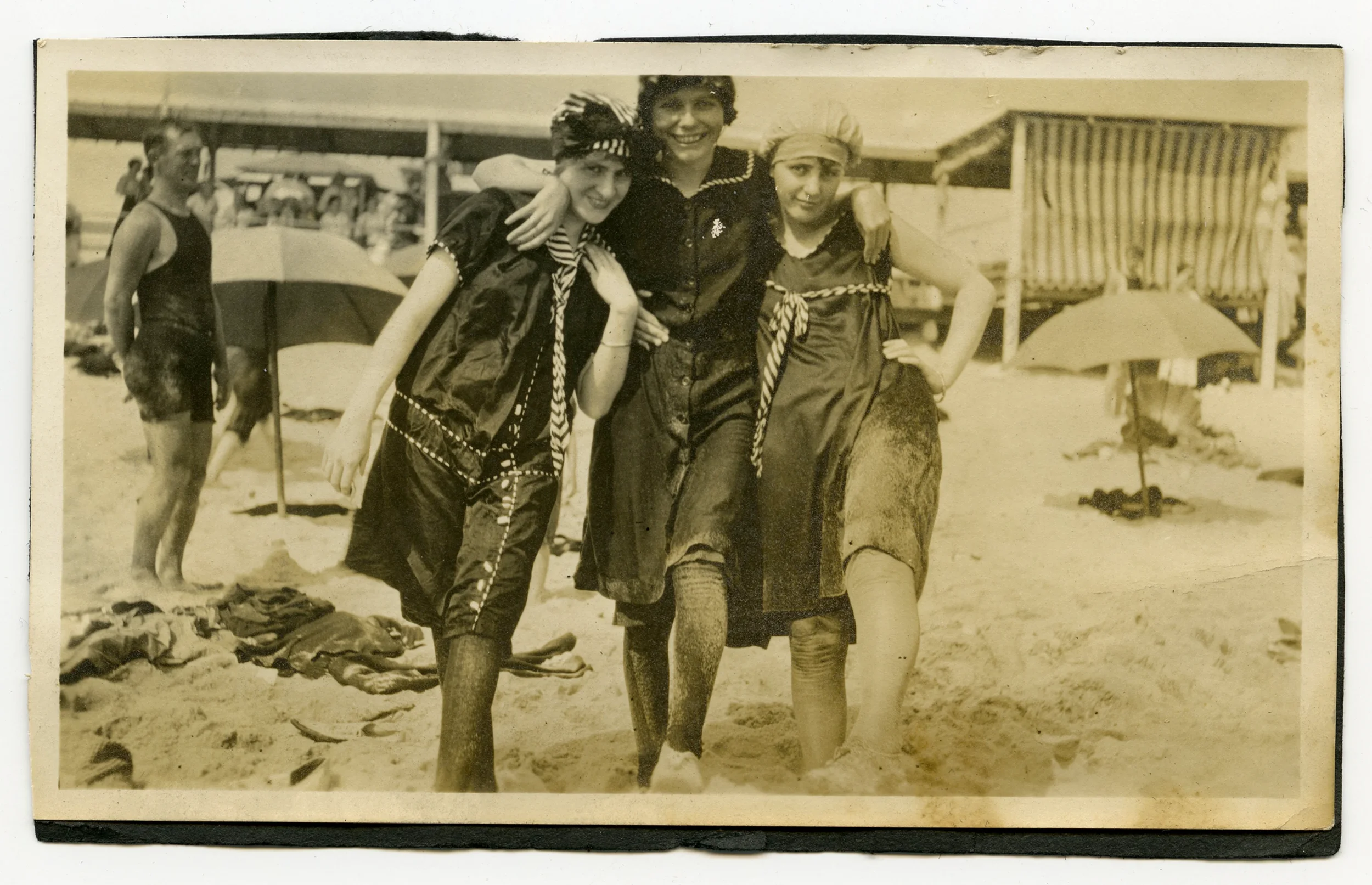




She only looks innocent

From Raul Gonzales III’s show “Lowriders Blast From the Past: Drawings by Raul the Third,’’ in the Chandler Gallery at the Maud Morgan Arts Center, Cambridge, Mass., Sept. 23-Oct. 19.
Eversource to use drones to monitor infrastructure
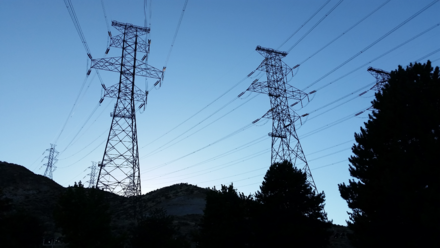
From The New England Council (newenglandcouncil.com)
“Eversource Energy recently announced its plans to begin using drones to conduct inspections of high-voltage infrastructure. Eversource is a Hartford- and Boston-based utilities company that provides electricity for over a million customers throughout Connecticut, Massachusetts, and New Hampshire.
The energy company intends to implement drones to monitor 100 percent of its power line and electrical infrastructure maintenance. This high-tech solution has many benefits, some of which include minimizing the need for infrared helicopter inspections, cutting down on fossil fuel use, and obtaining a more frequent view of the electrical infrastructure to identify and prevent potential issues. Eversource has been experimenting with drone usage since 2016, but only decided recently to make piloting them routine. As the energy industry becomes increasingly aware of the affordability and practicality of inspection drones, it is likely Eversource will become just one company of many who are taking advantage of this technology.
Carol Burke, Eversource Energy’s manager of transmission line operations in New Hampshire, said, “At first, we really were just targeting specific lines that we knew might have some issues. It worked out great and in the last two years we ended up developing a more formal program. It’s a great way to do an inspection as with very clear, detailed videos and pictures you can see any type of defect, aging or rotting on a structure.”
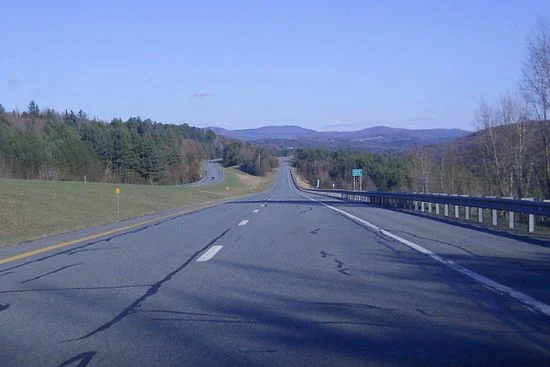
When driving was fun

Route 91 south, in Wheelock, Vt. Route 91 north of the Massachusetts line has usually been a remarkably open road, and it goes through lovely rolling countryside along the Connecticut River.
From Robert Whitcomb’s “Digital Diary,’’ in GoLocal24.com
News of the imminent completion of Interstate Route 95 – after 61 years! – by finally filling a short New Jersey-Pennsylvania gap, brought back memories of the joy of being on the road in the early days of the Interstate Highway System. As a kid with a driver’s license minted in 1964, I drove all over the Northeast, at first using my father’s red Jeep and then a used VW bug that I bought. It was my favorite car of all time, although with the gas tank over the driver’s lap, it was a deathtrap.
It was all about freedom!
I’d happily take off in the middle of the night, when there was little traffic, to go skiing in New Hampshire or down to the Cape. For that matter, there was far less traffic during the day than there is now. That’s partly because there are many more people now, and partly because building more and wider roads draws more traffic, in a kind of Parkinson’s law (“expenditure rises to meet income’’). I was struck by how bad things had become when, a few years ago, my family and I, just off the plane at Logan Airport, found ourselves in a massive traffic jam in downtown Boston – at 2 a.m.!
Back in the ‘60s, the roadside amenities, especially the Howard Johnson restaurants alongside the more important Interstates, were also delightful.
But because of crowding, texting and crumbling infrastructure, driving on the Interstates, especially in the crowded Northeast, now is often very unpleasant amidst the anger and aggression of so many drivers. How to make it less so: Spend more money on mass transit!
Boston University economist Barry Bluestone discussed this in a piece in The Boston Globe about the worsening nightmare of driving in Greater Boston. Traffic congestion isn’t as bad yet in Greater Providence – far fewer people -- but it is getting worse, in part because we have far thinner public transit than Massachusetts. Indeed, our best mass transit is Massachusetts-based: MBTA commuter trains.
Bluestone notes that traffic congestion in morning and afternoon/evening commutes in Greater Boston means that the average driving speed then is now just 18.4 miles an hour. “That means the typical commuter is now spending around 15 hours a week sitting in traffic — or 720 hours per year.’’ That’s time that could otherwise be spent making money, sleeping, sex and a plethora of other productive activities. Sitting trapped in traffic for hours a week is also bad for your health.
But, Bluestone writes, “if we were somehow to move just 13 percent of the daily commuters off the road onto public transit — about 195,000 — highway flow analysis suggests that the average speed during commuting hours could be doubled to more than 37 mph— still well below the highway speed limit. But even that improvement would save the typical commuter about 7.5 hours per week in commuting time or 360 hours per year.’’
“Yet there is an additional benefit. The typical commuter who drives 6,000 miles per year in commuting now spends around $821 a year in fuel. Doubling the average speed increases fuel efficiency so much that it cuts the fuel bill to just $552 a year — a savings of $269 a year.’’
“The question, of course, is how to pay for … tangible improvements in public transit. The answer lies in getting the true beneficiaries of improved public transit to pay for it. If drivers were to pay only $269 a year more in gasoline taxes, tolls, or a vehicle miles traveled fee to the MBTA, the Commonwealth would have an additional $3 billion over 10 years to make some of these improvements.’’
Most other major industrialized nations, including our neighbor Canada, understand the big economic and social benefits of dense public-transit in their metro areas. Check out Toronto, for example. The United States, as usual the laggard in infrastructure (though it didn’t used to be this way), will pass an ever-steeper price for not addressing this issue, which profoundly affects the way so many of us live.
To read Bluestone’s piece, please hit this link.
Depression art in Vermont

“The Planter (1937)’' (oil on homasote) by Ronald Slayton (1910-1992), in the show “Crash to Creativity: The New Deal in Vermont,’’ through Nov. 4 at the Bennington Museum.
The museum explains:
”This exhibition sheds light on the important, under-studied aspect of Vermont's history (1933-1944), focusing on the role of government-sponsored New Deal projects. It features photography, paintings, studies for post office murals, furniture from Civilian Conservation Corps cabins, architectural plans, audio transcripts created by the Federal Writers Project as well as powerful examples of Regionalist and Social Realist paintings.’’
Harvard pay-parity policy helps bring outside workers into middle class
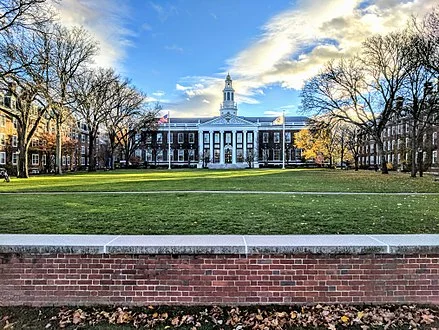
The Baker Library at the Harvard Business School, which is across the Charles River from Harvard’s main campus.
From The New England Council (newenglandcouncil.com)
“Harvard University was featured in a New York Times article that profiled one of the university’s food-service employees, Martha Bonilla. At her job preparing breakfast and lunch for executives at Harvard Business School, Ms. Bonilla and other Harvard service employees receive the same pay and benefits as those who are directly employed by the university.
Harvard’s policy requiring parity among service workers and university employees was formally adopted after numerous student-led protests in 2001 demanding better pay for campus workers. Recent research claiming that wage disparity in the US is a product of institutions outsourcing to low-wage contractors further motivates Harvard’s effort to avoid outsourcing and pull workers from the bottom of the labor market into the middle class.
The New England Council commends Harvard University’s efforts toward wage parity and thanks them for their commitment to support hard working serving employees on their campus.’’
To read The Times’s story, please hit this link.
Llewellyn King: Are we surrendering Americanism to identity politics?

Francis Fukuyama earned his place in philosophical history by declaring “the end of history” on the fall of the Berlin Wall and the collapse of communism.
Nowadays Fukuyama, an engaging traveler though the world of ideas, poses this great question: Where are we going?
In New York on Sept. 11, Fukuyama seemed to answer that question by telling an audience: nowhere very good.
The global crisis laid out in Fukuyama’s latest book, Identity: The Demand for Dignity and the Politics of Resentment, is that identity politics -- advanced tribalism, if you will -- is eroding democracy.
Fukuyama writes that the United States invaded the Middle East, during the Iraq War, to Americanize the Middle East, but the Middle East has Middle-Easternized the United States. Not only is there no national identity in Iraq now, he argues, but we are also losing our Americanism to identity politics, with its baggage of racism and division.
He points to two decidedly democratic events as harbingers of a less democratic future: Britain’s vote in June 2016 to leave the European Union and the election that same year of President Donald Trump, disaster following on disaster, identity triumphing over political union. In the case of Brexit, English nationalism upstaging the larger values of a unified Europe; and in the Trump election, the white working class voting against the other constituent parts of the nation.
Listening to Fukuyama answering questions at the New York event, organized by Philip Howard and his Common Good organization, one could be plunged into feeling that the famous American mixing bowl had become unmixed, breaking down, as Fukuyama gently suggested, into competing groups, supporting just those who belong to their group – all of this set off by white fear of the end of their hegemon in America. Hence, the hysteria over immigration.
The difference between the immigration alarm in Europe and in the United States, he said, is that Europe sees not just an invasion of different people with different customs, religions and languages, but also an assault on the cradle-to-grave welfare systems. Fukuyama said Europeans do not mind paying 60 percent of their incomes in tax because they believe they get a lot for it. That, he said, is what they see coming from immigration: People coming to live off the generous social structure for which they have not paid.
Immigrants from Africa going to Sweden -- in the news because of its electoral swing to the right -- must think they have entered nirvana: total freedom from want. Not quite the same as people coming across our southern border, seeking safety and work.
Fukuyama sees the United States in danger from identity grouping overwhelming our commonality as a nation.
I wonder about that. When I landed on these shores as a young (legal) immigrant in 1963, I wrote to a friend in England -- and I remember this clearly – saying: “This is no melting pot. This is a fruit salad.”
Well, that is still so, and it works until it is perverted by minority manipulators. For example, there has always been a racist element. It is just that President Trump and his allies have blown on these embers and brought forth flame. Race dividers feel emboldened under Trump, just as they seethed under President Obama.
It is worth pondering that before Trump, we twice elected an African-American president and that said something about us -- something quite different from what Fukuyama is saying about us in today’s race-heavy, fact-short political debate.
Some at the New York meeting suggested that the pendulum will swing back. Yes, it will but not to the status quo ante. It will be to a new place.
I believe the Trump success was fueled not so much by resentment as by a pervasive sense of irrelevance. It expresses itself politically, but its root may be with the isolation felt by those who have to deal with monopoly businesses from the cable company to the online retailer. Think the politicians ignore you, try those who have market dominance: banks, health insurers, online vendors and telecoms among others.
Fukuyama calls for dignity as a kind of antidote to identity politics. He might want to extend that excellent thought beyond just the political arena.
Llewellyn King is executive producer and host of White House Chronicle, on PBS. His email is llewellynking1@gmail.com.
Chuck Collins: Absentee rich folks are hiding wealth in real estate across America

The Boston skyline from Fenway Park. The skyscraper in the left center is the newish Millennium Tower, where much of the space is held by absentee owners, some foreign. Real estate has long been an attractive investment for money launderers.
— Photo by JJBers
BOSTON
From country farmland to big city skyscrapers, absentee billionaires may be hiding wealth in your town — and driving up your cost of living. rich are hiding trillions in wealth.
You’ve probably heard about their offshore bank accounts, shell corporations, and fancy trusts. But this wealth isn’t all sitting in the likes of the Cayman Islands or Panama. Much of it’s hiding in plain view — maybe even in your town.
America’s big cities are increasingly dotted with luxury skyscrapers and mansions. These multi-million dollar condos are wealth storage lockers, with the ownership often obscured by shell companies.
In Boston, where I live, there’s a luxury building boom. According to a study I just co-authored, out of 1,805 luxury units there — with an average price of over $3 million — more than two-thirds are owned by people who don’t live here.
One-third are owned by shell companies and trusts that mask their ownership. And of these units, 40 percent are limited liability companies (LLCs) organized in Delaware.
Why Delaware?
Criminals around the world set up their shell companies in Delaware, the premiere secrecy jurisdiction in the United States — where you don’t have to disclose who the real owners are. As a result, human traffickers, drug smugglers, and tax evaders all enjoy the anonymous cover of a Delaware company.
Many of these companies use illicit funds to purchase real estate in North American cities to launder their ill-gotten money.
In New York City, dozens of luxury towers have been connected to global money laundering. In Vancouver, Chinese investors disrupted the city’s housing market so badly that the province of British Columbia established a foreign investor tax and a tax on vacant properties.
With European countries now insisting on more transparency, illicit cash is now cascading into the United States. In fact, the U.S. is now the world’s second-biggest tax haven and secrecy jurisdiction, after Switzerland.
The U.S. Treasury Department’s Financial Crimes Enforcement Network (FinCEN) has increased its scrutiny over real estate markets in Miami, New York, and parts of California, Texas, and Hawaii.
But that just makes the rest of the country more attractive for secret cash — even far from big cities. In a small Vermont town, I met a Russian investor who lives in Dubai. He was buying up thousands of acres of Green Mountain farmland.
Our communities are being fundamentally transformed by land grabs and luxury building booms. These drive up the cost of land in central neighborhoods, with ripple impacts throughout a community. And this worsens the already grotesque inequalities of income, wealth, and opportunity.
Our communities should defend themselves.
Property ownership should have to pass the “fishing license” or “library card” test. In most communities, to get a library card or a fishing license, you need to prove who you are and where you actually live.
In Boston, they’re pretty strict — you need to show a utility bill with your name on it. Cities should require the same for real estate purchases.
At a national level, bi-partisan legislation from Senators Marco Rubio, R-Fla., and Sheldon Whitehouse, D-RI, would require that the identity of real estate owners be disclosed when buyers use shell corporations and pay millions in cash. That would be a welcome development.
Better still, cities should tax luxury real estate transactions on properties selling for over $2 million to fund local services. Such a tax in San Francisco generated $44 million last year that’s been used to fund free community college and help the city’s neglected trees.r
Communities could discourage high-end vacant properties by taxing buildings that sit empty for more than six months a year. Cities like Vancouver have created incentives to house people, not wealth.
We need to defend our communities for the people who live in them, not just store their wealth there.
Chuck Collins co-authored the report “Towering Excess’’ for the Institute for Policy Studies.
The fully adult state
“Massachusetts is the first state in America to reach full adulthood. The rest of America is still in adolescence.’’
— The late Princeton health-care economist Uwe Reinhardt, referring to the Bay State’s first-in-the-nation near-universal health-care system
'Love, loss, conflict and more'

“Untitled, from Women of Marwencol,’’ by Mark Hogancamp (digital image, courtesy of 1 Mile Gallery and Mr. Hogancamp), in the show “Mark Hogancamp: Women of Marwencol and Other Possible Histories,’’ at Keene State College’s (N.H.) Thorne-Sagendorph Art Gallery. The show opens Sept. 22.
The gallery says:
“The show is a photo-series and collection of photographs by Mark Hogancamp, an upstate New York artist who creates his pieces as a way of recovering from a violent assault. He customizes and arranges 1/6 scale figures in miniature settings to form a continuous narrative and tell an ongoing story of love, loss, conflict and more. His work addresses the dynamic of narrative, fantasy and fiction and aspects of war and gender.’’
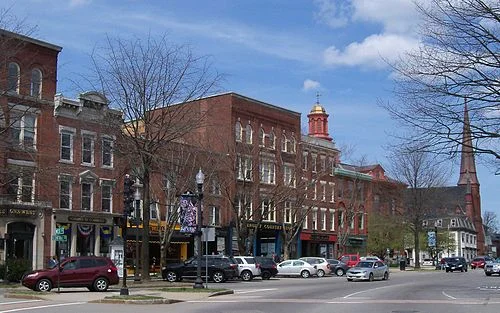
Downtown Keene.
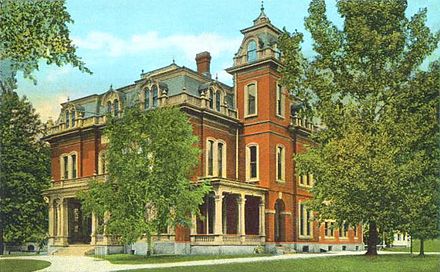
The Colony Mansion, circa 1920. It now houses the Keene Public Library.
Keene was for many years a factory town for making pails, wooden kitchen ware, chairs, sashes, shutters, doors, pottery, glass, soap, woolen textiles, shoes, saddles, mowing machines, carriages and sleighs. It also had a brickyard and foundry.
But as New England manufacturing declined in the mid 20th century, Keene transitioned to become a center for insurance, education and tourism — the last to no small degree because of its proximity to the very scenic Monadnock Region, often called “New England’s Currier & Ives Corner.’’
The city has some fine Victorian architecture from its mill town era. One is the Keene Public Library, in a Second Empire mansion built about 1869 by manufacturer Henry Colony.

Chris Powell: Of American single parenthood and low test scores

How much money has Connecticut state government thrown lately at what is called the "achievement gap" in the public schools, the gross underperformance of minority and impoverished students? Probably hundreds of millions of dollars.
But the results of the most recent standardized test taken by students in Grades 3 through 8, announced last week, show no improvement over the last four years, the period during which the current test has been administered.
Two-thirds of black, Hispanic and impoverished students are below grade level in math or English or both, 40 percent of them far behind. While the "achievement gap" correlates largely with household poverty, other standardized tests long have shown that half to two-thirds of all Connecticut high school seniors never master high school English or math but are graduated anyway. (Results are similar in other states.)
The evidence in Connecticut is overwhelming that educational achievement has little connection with spending and everything to do with parenting. But the major-party candidates for governor, Democrat Ned Lamont and Republican Bob Stefanowski, pledged last week not to reduce state funding for municipal education. They pledged this not because it makes any sense as policy but because most of the money underwrites teacher compensation, there are more than 40,000 teachers in the state, they constitute its biggest special interest, and they want parents to think that money equals education.
Many parents want to think that as well. They don't want to be told that the failure of education is their failure to raise their kids properly. About 40 percent of Connecticut's children live in single-parent households and thus many get only half or less of the attention they should get. In the cities it's close to 90 percent.
In guaranteeing the status quo in state aid to municipal education, Stefanowski has made himself especially ridiculous, since, while pledging to repeal the state income tax over eight years -- or, as his latest remarks suggest, maybe 10 years -- he is locking a huge amount of spending into future state budgets before identifying even one substantial expense he would reduce.
But last week Lamont made himself ridiculous enough on education by proclaiming what he supposes to be the need for more "workforce training" even as the test scores show that primary education itself is failing amid the state's policy of social promotion. That is, all students know that they needn't learn anything to advance from grade to grade and graduate from high school.
So it's no wonder employers complain that while they have openings for good jobs they can't find skilled workers. It's hard enough to find high school graduates who have a high school education.
There can be no improvement while public education in Connecticut remains too politically influential to audit. It will keep consuming more and producing less.
Those Grade 3-8 test scores weren't the only hint last week that simple demographics are everything. A survey by the United Way concluded that 40 percent of the state's households don't have enough income to cover necessities.
A closer look indicates that most of those households are single-parent. It is as if people never heard that having children and raising them properly is expensive and not to be undertaken without a dependable spouse and income security. But then government long has been encouraging childbearing outside marriage.
Chris Powell is a columnist for the Journal Inquirer, in Manchester, Conn.
North Country beauty
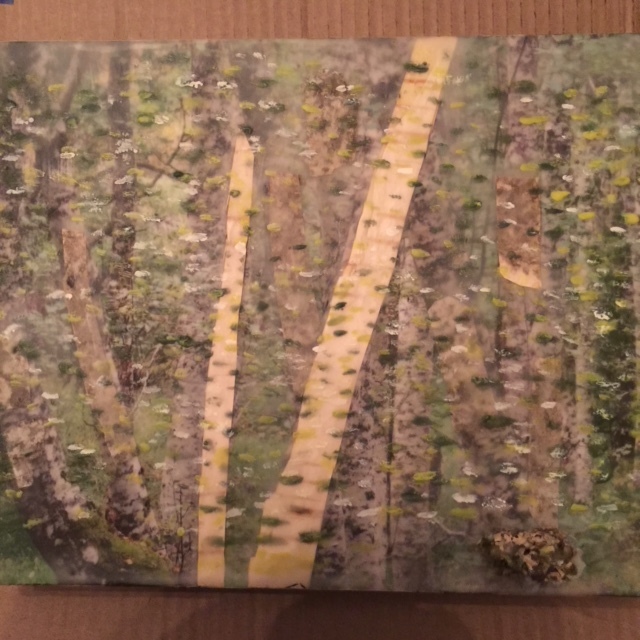
Adapted From Robert Whitcomb’s “Digital Diary,’’ in GoLocal24.com:
Artists love New England’s white birches. (One of my favorite pictures is an encaustic painting (which uses a wax process) of a stand of birches by Nickerson Miles, of Barrington — above). Castle Freeman Jr. pays a Yankee Magazine tribute to these trees, often associated, along with maples and elms, with our region. The further north you go in New England the more you see them. The birch, Freeman writes, is “by no means a flamboyant, show-offy tree {unlike, say, the flaming sugar maples of fall} but by its unique coloration {including pale-yellow leaves in autumn} and habit of growth, it makes its pale, slender presence very welcome. It’s not for nothing that the white birch is New Hampshire’s officially designated state tree.’’
Birches are also fun to carve words on and, as Frost famously wrote (below), to swing on. And, Freeman notes, its medicinal qualities make it “the apothecary shop of the north woods.’’ I hope that global warming doesn’t kill them off.
‘‘When I see birches bend to left and right
Across the lines of straighter darker trees,
I like to think some boy's been swinging them.
But swinging doesn't bend them down to stay
As ice-storms do. Often you must have seen them
Loaded with ice a sunny winter morning
After a rain. They click upon themselves
As the breeze rises, and turn many-colored
As the stir cracks and crazes their enamel.
Soon the sun's warmth makes them shed crystal shells
Shattering and avalanching on the snow-crust—
Such heaps of broken glass to sweep away
You'd think the inner dome of heaven had fallen.
They are dragged to the withered bracken by the load,
And they seem not to break; though once they are bowed
So low for long, they never right themselves:
You may see their trunks arching in the woods
Years afterwards, trailing their leaves on the ground
Like girls on hands and knees that throw their hair
Before them over their heads to dry in the sun.
But I was going to say when Truth broke in
With all her matter-of-fact about the ice-storm
I should prefer to have some boy bend them
As he went out and in to fetch the cows—
Some boy too far from town to learn baseball,
Whose only play was what he found himself,
Summer or winter, and could play alone.
One by one he subdued his father's trees
By riding them down over and over again
Until he took the stiffness out of them,
And not one but hung limp, not one was left
For him to conquer. He learned all there was
To learn about not launching out too soon
And so not carrying the tree away
Clear to the ground. He always kept his poise
To the top branches, climbing carefully
With the same pains you use to fill a cup
Up to the brim, and even above the brim.
Then he flung outward, feet first, with a swish,
Kicking his way down through the air to the ground.
So was I once myself a swinger of birches.
And so I dream of going back to be.
It's when I'm weary of considerations,
And life is too much like a pathless wood
Where your face burns and tickles with the cobwebs
Broken across it, and one eye is weeping
From a twig's having lashed across it open.
I'd like to get away from earth awhile
And then come back to it and begin over.
May no fate willfully misunderstand me
And half grant what I wish and snatch me away
Not to return. Earth's the right place for love:
I don't know where it's likely to go better.
I'd like to go by climbing a birch tree,
And climb black branches up a snow-white trunk
Toward heaven, till the tree could bear no more,
But dipped its top and set me down again.
That would be good both going and coming back.
One could do worse than be a swinger of birches.’’
— “Birches,’’ by Robert Frost
Making the most of it

Fred Barnard Illustration for Charles Dickens's “Cricket on the Hearth.
"September days have the warmth of summer in their briefer hours, but in their lengthening evenings a prophetic breath of autumn. The cricket chirps in the noontide, making the most of what remains of his brief life. ‘‘
— “September Days,’’ by the late Vermont writer Rowland E. Robinson
Measuring the health of health-care environments

Med Page Today reports, from a study done at Boston Children's Hospital:
“According to the American Association of Critical-Care Nurses (AACN) {a good working environment} is a place where healthcare professionals can make their optimal contribution. For almost a decade, critical-care nurses have been able to evaluate the health of their work environment with the association’s online assessment tool based on its Healthy Work Environment standards.
“Now a new study finds that the tool has applications beyond critical care, and is effective for assessing the health of the work environment for interprofessional patient care teams throughout a hospital’s patient care settings.
“‘Although AACN’s assessment tool has been used primarily among acute and critical-care nurses, our findings support consideration of wider use in multiple healthcare settings’ said the study’s principal investigator, Jean Anne Connor, PhD, RN, CPNP, director of nursing research, cardiovascular, and critical care patient services at Boston Children’s Hospital. ‘Clinical leaders understand that to safeguard the quality of patient care, attention must be focused on the performance of healthcare teams.”‘
“The assessment tool is an 18-question survey designed to help organizations or departments identify areas for improvement. It assists in measuring the health of a work environment against AACN’s six Healthy Work Environment standards:
Skilled communication
True collaboration
Effective decision-making
Appropriate staffing
Meaningful recognition
Authentic leadership
“The study, published in the American Journal of Critical Care, reports the results of a two-phase administration of the tool to 2,621 patient-care employees at Boston Children’s Hospital.”
To read the full Med Page article, please hit this link.Via
Heart-stopping pleasure

"New England clam chowder, made as it should be, is a dish to preach about, to chant praises and sing hymns and burn incense before. [...] It is as American as the Stars and Stripes, as patriotic as the National Anthem. It is Yankee Doodle in a kettle.''
-- Joseph C. Lincoln (1870-1944), an American fiction writer much of whose work is set on Cape Cod.
New England clam chowder, sometimes called Boston Clam Chowder in the Midwest, is a milk- or cream-based chowder, usually thicker than other regional styles of clam chowder. It is usually made with potatoes, onion and clams.
New England clam chowder is often accompanied by oyster crackers, a real salt fest.
From the Wikipedia page on Mr. Lincoln:
"Lincoln was born in Brewster, Mass., on Cape Cod, and his mother moved the family to Chelsea, Mass., a manufacturing city outside Boston, after the death of his father. Lincoln's literary career celebrating 'old Cape Cod' can partly be seen as an attempt to return to an Eden from which he had been driven by family tragedy. His literary portrayal of Cape Cod can also be understood as a pre-modern haven occupied by individuals of old Yankee stock which was offered to readers as an antidote to an America that was undergoing rapid modernization, urbanization, immigration and industrialization.''
Wider bike paths coming?
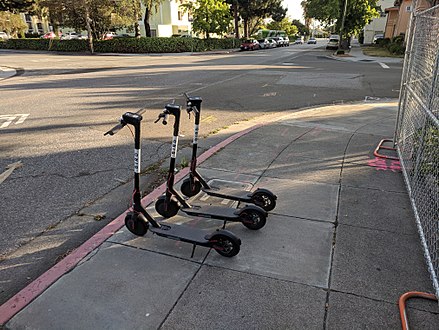
From Robert Whitcomb's "Digital Diary,'' in GoLocal24.com.
The brief appearance on Providence streets of those Bird electric scooters, before they were ordered off pending adjustments of local regulations, raised the issue of what to do with the proliferation of little vehicles on city streets. The still far too few bike paths in some cities aren’t wide enough to accommodate the increasing number of human-powered bikes, electric scooters, skateboarders, runners, wheelchairs (some motorized), three-wheelers walkers with dogs and so on.
This is becoming more of a pressing matter now that such ride-sharing companies as Uber and Lyft have said that they, too, are going to go big into the scooter- and bike-sharing business. That’s good news if it mean less business for Uber and Lyft cars, which are sometimes dangerously clogging city streets.
Emotions in tapestry
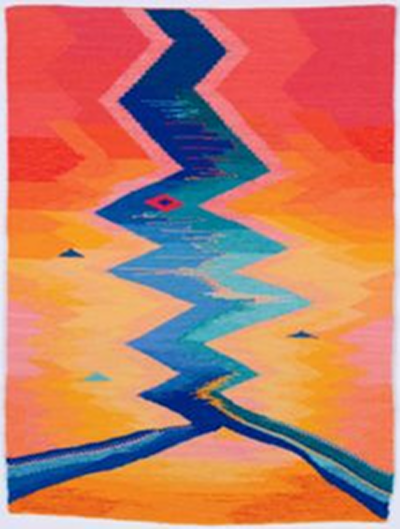
"Journey II' (hand-dyed wool), by Priscilla Alden, at Highfield Hall {a gallery} and Gardens, in Falmouth, Mass. It's part of the group show "Tapestry in New England and Beyond,'' through Oct. 31.
The gallery says: "The exhibition showcases the wide variety of style and vision found in contemporary tapestry weaving. Each piece expresses an impactful moment or experience in the artist's life, tackling everything from the plight of refugees, nature and the environment, the beauty of language, and more. Each of these moments is expressed in beautiful, detailed weavings that show the depth of the artist's emotions and convey those emotions to the viewer.''
Built in 1878 by the Beebes, a very rich Boston mercantile family, whose patriarch was James Beebe, Highfield Hall was one of Cape Cod's early summer mansions, made possible by the extension of rail service to the Cape after the Civil War. It's one of the few remaining examples of Stick-style Queen Anne architecture in the Northeast. The institution says: "Along with its adjoining mansion, Tanglewood, Highfield Hall was originally surrounded by park-like gardens, carriage trails, and almost 700 acres of woodlands. Both homes are believed to have been designed by Boston architects Peabody and Stearns, while the landscape design for both estates was created by Ernest Bowditch...."
"Brothers Pierson and Franklin Beebe, along with sister Emily, lived at Highfield Hall while their brother, J. Arthur Beebe, along with his wife and children lived at Tanglewood. Both Beebe families entertained in grand fashion and embraced a genteel and formal lifestyle supported by a large cadre of servants.''
Highfield is but a short drive to Falmouth's village of Woods Hole, probably the world's pre-eminent center for oceanographic research, and a very scenic place.
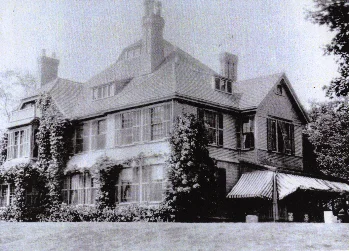
Highfield Hall some decades ago.
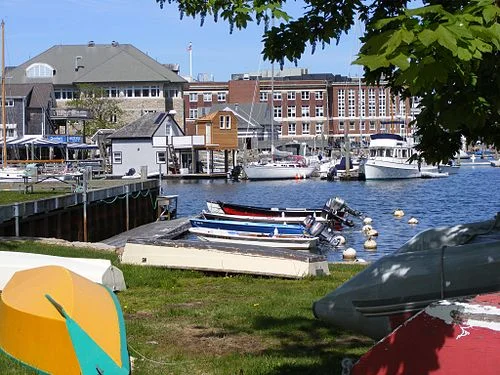
In Woods Hole, with research buildings. The village's two best-known institutions are the Woods Hole Oceanographic Institution and the Marine Biological Laboratory (whose work includes a major medical component).
From 'text messages' to real ones
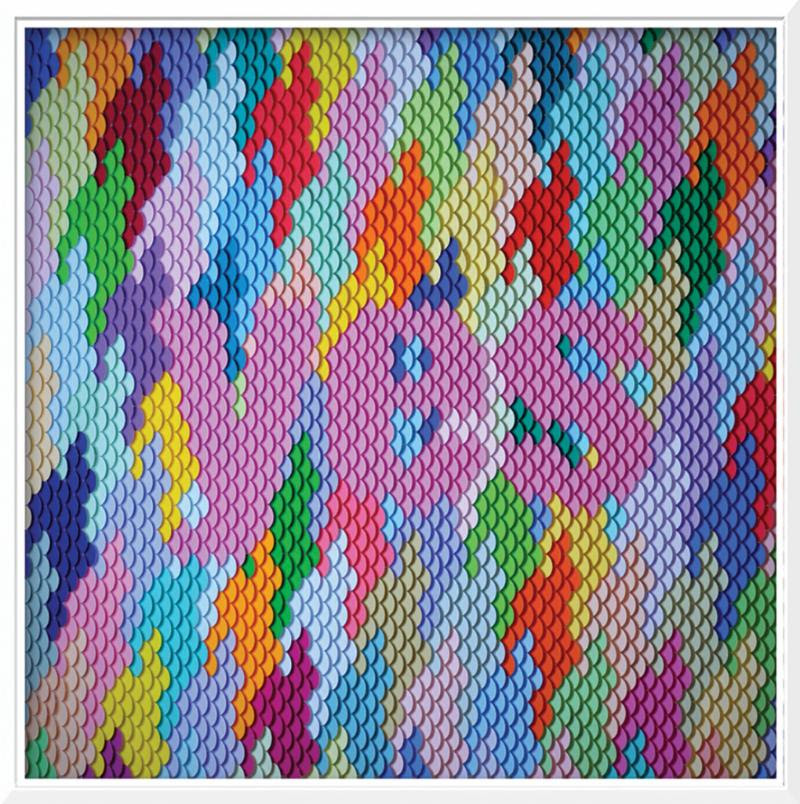
"Yes'' (hand-punched, found paint chips and mixed media) by Peter Combe, in the group show "Text Messages,'' at Lanoue Gallery, Boston, through Oct. 14. The gallery says:
"Text-based artwork requires engaged, not passive, viewers who bring a sense of curiosity and personal experience to the interpretation of each work. Like the now pervasive use of sending short bursts of words to one another through mobile devices, the artworks in 'Text Messages' primarily rely on visually 'bite-size' but carefully chosen words to both efficiently and impactfully communicate ideas, thoughts, or emotions to its receiver. Each work assumes a kind of communication shorthand with the viewer based on a perceived common experience shared through our hyper-connected lives on a variety of social media platforms. A gallery art exhibition of these physical objects, however, allows the sharing of these 'text messages' to happen among its viewers in a shared physical space, potentially sparking real-time, face-to-face conversations.

David Warsh: The lingering mysteries of the Clintons

SOMERVILLE, Mass.
Donald Trump continues to advertise his itch to fire Atty. Gen. Jeff Sessions, presumably in hopes of short-circuiting Special Counsel Robert Mueller’s Russian probe. There is another reason thsat replacing Sessions is a bad idea. The practices of the Clinton Family Foundation during the period when Hillary Clinton was secretary of state remain under investigation by the FBI.
The existence of the Clinton probe was established a week before the 2016 election by reporter Devlin Barrett in The Wall Street Journal. A few months later, Barrett left the WSJ for The Washington Post. Earlier this year, Barrett and Matt Zapatosky reported that the investigation had continued after the election.
Confidence in the attorney general’s decision-making is thus doubly important. Sessions has shown himself to be sturdily perpendicular with respect to the Russia investigation; there is reason to expect his judgement will be level with respect to the Clinton matter as well.
Meanwhile, sniping at the FBI has continued, from Congress and in the conservative press. The feud within the Bureau apparently continues as well. Last week The Post’s Zapatosky reported that federal prosecutors had been using a grand jury to investigate charges that former Deputy Director Andrew McCabe had lied when he denied authorizing the disclosure of the Clinton investigation in the first place, placing his own interests above those of the Justice Department, at least according to Michael Horowitz, the DOJ’s inspector general.
If the provenance of the FBI’s Russia investigation was somewhat tainted – Hillary Clinton’s campaign paid for the so-called Steele Dossier, which helped prompt the investigation of Russian influence on the Trump campaign – the predicate of the Clinton Foundation investigation was apparently equally suspect. Agents in four FBI field offices had read copies of Clinton Cash: The Untold Story of How and Why Foreign Governments and Businesses Helped Make Bill and Hillary Rich, by Peter Schweitzer, president of a foundation created by Breitbart editor Steve Bannon, and financed by the right-wing Mercer Family Foundation.
It has been clear since the 2016 election that the political legacy of Bill and Hillary Clinton is due for a full-scale reappraisal, as background to the 2020 campaign and beyond. Too few experts are working on the narrative of their foreign policies, chiefly NATO expansion and various humanitarian interventions; fewer still on the successes of their domestic policies; and fewest of all, I suspect, on the sources of the virulent opposition they faced, and their reaction to it. The Clinton Foundation seemed like a bad idea since the beginning. Whatever it concludes, the FBI investigation won’t make it any easier to begin to locate the Clintons in American history. That process will take decades.
David Warsh, a long-time columnist, is proprietor of economicprincipals.com, where this first ran.
Chris Powell: Will 'starve the beast' work in Conn.?

Original Godzilla film poster in 1954.
From his remarks to reporters last week at the Crocodile Club lunch at Lake Compounce in Bristol, the Republican candidate for Connecticut governor, Bob Stefanowski, seems to think it's not important to tell voters how he would cut the half of state government that is financed by the state income tax, which he wants to eliminate over eight years.
“We're ready and happy to talk about it," Stefanowski said, but he still has not done so specifically. "I don't think the argument is about what the details of people's plans are," Stefanowski added, because there is such a "stark contrast" between him and Ned Lamont, the Democratic candidate for governor. Lamont, Stefanowski said, "is going to raise taxes and I'm going to try like heck to get rid of the income tax.”
Yes, telling voters the consequences of his platform before the election might spoil the lovely dream of escaping the income tax. Since he won the Republican primary with nothing but that lovely dream, maybe Stefanowski thinks he can keep avoiding specifics because a candidate's credibility doesn't matter.
Stefanowski doesn't seem to have noticed that he got only 29 percent of the Republican primary vote and that only 20 percent of Connecticut's voters are Republicans. Or maybe he doesn't think that matters either.
But maybe even if a governor had no budget priorities and just began to cut spending across the board -- pursuing the good, old conservative platform, "starve the beast" -- much help might be volunteered to him, if resentfully.
Maybe just reversing the dynamics of budgeting would spark the necessary reforms. That's because all the spending-dependent groups in Connecticut long have been on the same side, clamoring together to increase taxes so they all could get more.
This has always worked for them, since, despite the whining about spending cuts, total spending in state government always increases and the only "cut" is in its rate of increase.
If a governor was determined to reduce or even just freeze spending and had enough support in the General Assembly to sustain his veto, the spending-dependent groups might be forced to split up and scrutinize each other for inessentials and excesses. Knowing the tricks of budgeting, these groups might make excellent auditors.
For example, advocates for the mentally handicapped, 2,000 of whom are always languishing on a waiting list for placement in group homes, might start caring about the expense of the paid day off enjoyed by state and municipal employees in the name of Columbus. They might even question collective bargaining and binding arbitration for government employees, policies that put the compensation of those employees ahead of all other purposes in government.
Employees of nursing homes and nonprofit groups with whose salaries state government long has been stingy might protest the extravagant pay at the University of Connecticut.
Passengers of the Metro-North commuter railroad, where maintenance is always neglected, might protest the bus highway to nowhere.
Parents of special-education students for whom services are hard to obtain might denounce the huge but never tabulated cost of social promotion in the schools.
They all could have fun picking through the bonding package.
If Stefanowski really thinks that most voters care only about taxes, let him run on "starve the beast."
The beast does need to go on a severe diet. But if voters are more sophisticated, Stefanowski better start explaining.
Chris Powell is a columnist for the Journal Inquirer, in Manchester, Conn.
Trying to protect Maine from the Brits in a border dispute

Entrance to Fort Knox, in Prospect, Maine.
-- Photo by SarekOfVulcan
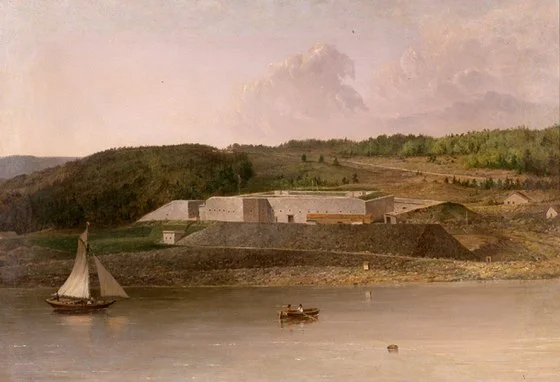
Fort Knox, painting by Seth Eastman done sometime between 1870 and 1875.
“On the Penobscot River, on the opposite bank from the once-upon-a-time paper mill, stands Fort Knox {in Prospect, Maine}, proudly named after the nation’s first secretary of war, Henry Knox, who lived in Thomaston, Maine. It was built between 1844 and 1869 {initially} to guard against the British in a border dispute with Canada. The fear was that if this part of Maine fell, the British would take over some of the best lumber-producing areas on the East Coast and this would cost the United States a most valued natural resource in the building of ships. Other than training recruits during the Civil War, the fort was never used and is now a scenic location overlooking the new bridge, crossing the Penobscot River.”
― Captain Hank Bracker, "Seawater One: Going to Sea