
Vox clamantis in deserto






Hospitals finally start to address their energy-hog problem
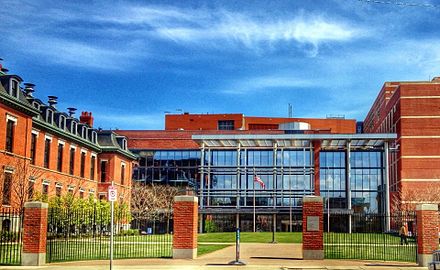
Boston Medical Center. it now has a gas-fired 2-megawatt cogeneration plant that traps and reuses heat, saving money and emissions, while supplying 41 percent of the hospital’s needs and acting as a backup for essential services if the municipal power grid goes out.
By JULIE APPLEBY
Hospitals are energy hogs.
With their 24/7 lighting, heating and water needs, they use up to five times more energy than a fancy hotel.
Executives at some systems view their facilities like hotel managers, adding amenities, upscale new lobbies and larger parking garages in an effort to attract patients and increase revenue. But some hospitals are revamping with a different goal in mind: becoming more energy-efficient, which can also boost the bottom line.
“We’re saving $1 [million] to $3 million a year in hard cash,” said Jeff Thompson, the former CEO of Gundersen Health System in La Crosse, Wis., the first hospital system in the U.S. to produce more energy than it consumed back in 2014. As an added benefit, he said, “we’re polluting a lot less.”
The health care sector — one of the nation’s largest industries — is responsible for nearly 10 percent of all greenhouse gas emissions — hundreds of millions of tons worth of carbon each year. Hospitals make up more than one-third of those emissions, according to a paper by researchers at Northeastern University and Yale.
Increasingly, though, health systems are paying attention:
Boston Medical Center analyzed its hospital for duplicative and underused space, then downsized while increasing patient capacity. Among other changes, it now has a gas-fired 2-megawatt cogeneration plant that traps and reuses heat, saving money and emissions, while supplying 41 percent of the hospital’s needs and acting as a backup for essential services if the municipal power grid goes out.
Health System in Wisconsin employs wind, wood chips, landfill-produced methane gas and even cow manure — to generate power, reporting more than a 95 percent drop in its emissions of carbon monoxide, particulate matter and mercury from 2008 to 2016
Theda Clark Medical Center, in Wisconsin, is saving nearly $800,000 a year — 30 percent of its energy costs — after making changes that included retrofitting lights, insulating pipes, taking the lights out of vending machines and turning off air exchangers in parts of its building after hours.
Kaiser Permanente aims to be “carbon-neutral” by 2020, mainly by incorporating solar energy at up to 100 of its hospitals and other facilities. One already in use — at its Richmond (Calif.) Medical Center — is credited with reducing electric bills by
While the environmental benefits are important, “what I’ve seen over the years is cost reductions are the prime motivator,” said Patrick Kallerman, research manager at the Bay Area Council Economic Institute, which released a report this spring outlining ways the hospital industry can help states such as California reach environmental goals by becoming more efficient.
Some of its recommendations are simple: replacing old lighting and windows. Others are more complex: powering down heating and cooling in areas not being used and updating ventilation standards first set back in Florence Nightingale’s day. Such tight standards “might not be necessary,” Kallerman said. Loosening them could help save money and energy.
When Bob Biggio was hired in 2011 to oversee Boston Medical Center’s facilities, hospital leaders were about to launch a broad redesign. Yet the hospital was also facing serious financial struggles. He put the move on hold while analyzing how the hospital was using its existing space, looking for unused or duplicative areas.
“My first impression with data I had gathered was our campus was about 400,000 square feet bigger than it needed to be, said Biggio. “A square foot you never have to build is most efficient of all.”
The new design is smaller but more efficient, handling 20 percent higher patient volume and eliminating the need for ambulance transportation between far-flung areas of the campus. It also cut power consumption by 42 percent from a 2011 baseline.
While the hospital sunk a lot of money into the renovation, the center was able to sell off some of its land to help offset the costs, leading to about a five-year return on investment, Biggio said.
“We are a safety-net hospital with a large Medicaid population,” he said. “So this is the last place people expect to see the type of investments and progress we’ve made.”
But how to sell that in the C-suite?
The environmental argument wasn’t how Thompson convinced executives at Gundersen.
“At no point did I mention climate change or polar bears,” said Thompson.
Instead, he focused on the organization’s mission to improve health — and the potential cost savings.
“There are multiple examples — at Gundersen and other places — where, if we’re thoughtful, we can improve the local economy, lower the cost of health care and decrease the pollution that is making people sick,” he said.
But hospitals’ energy efficiency efforts vary, with only about 10 percent attempting changes as dramatic as those done at Gundersen, estimated Alex Thorpe, a hospital energy expert at Optum Advisory Services, a consulting firm owned by UnitedHealth Group.
“About 50 percent are in the middle,” he added, perhaps because these investments are weighed against other capital needs.
“If you have a well-known doctor that wants a new cutting-edge piece of equipment, then it can be hard to make the business case [for investing in alternative energy],” said Thorpe.
Of the more than 5,000 hospitals in the country, about 1,100 are members of Practice Greenhealth, a nonprofit that promotes environmental stewardship. Fewer than 300 hospitals qualify as Energy Star facilities, an Environmental Protection Agency program that recognizes buildings that rank in the top quartile for energy conservation among their peers.
Greenhealth estimates its members average about a million dollars a year in savings, but it all depends what steps they take.
There are modest savings from such things as reducing the heating and air conditioning in operating rooms during hours they are not in use, with median annual cost savings of $45,398, a report from the group notes. Other energy reduction efforts net another median $53,599 in annual savings, while swapping older lighting for new LED bulbs in operating rooms saves another $3,329.
Individually, those savings are not even rounding errors in most hospitals’ total expenses, which are measured in the millions of dollars.
Still, within facility expenses, energy use accounts for 51 percent of spending, so even modest cuts are “significant,” said Kara Brooks, sustainability program manager for the American Society for Healthcare Engineering.
Ultimately, that may affect what hospitals charge insurers and patients.
“If hospitals can lower peak demand through energy efficiency efforts, that will directly impact their pricing,” said Thorpe.
Julie Appleby: jappleby@kff.org, @Julie_Appleby
Boeing and MIT announce Kendall Square project

At Kendall Square, in Cambridge.
From the New England Council (newenglandcouincil.com)
"Boeing Co. and the Massachusetts Institute of Technology (MIT) recently announced plans to open a new Boeing Aerospace & Autonomy Center in Cambridge’s Kendall Square neighborhood, making Boeing the first tenant of MIT’s long-planned Kendall Square Initiative. Under the new agreement, Boeing Co. will occupy about one-third of the 343,000-square-foot office building which will house the company’s recenlty-purchased subsidiary, Aurora Flight Sciences, a Virginia-based company that specializes in the design and construction of advanced unmanned systems and aerospace vehicles. The new center will focus on designing, building, and flying autonomous aircraft and developing enabling technologies.
The agreement builds on a century-long research relationship that Boeing and MIT established with the overarching goal of advancing aerospace innovation. Earlier this year, the company announced that it will serve as lead donor for a new $18 million wind tunnel on campus.
MIT Provost Martin Schmidt said, “It’s fitting that Boeing will join the Kendall/MIT innovation family. Our research interests have been intertwined for over 100 years, and we’ve worked together to advance world-changing aerospace technologies and systems. MIT’s Department of Aeronautics and Astronautics is the oldest program of its kind in the United States, and excels at its mission of developing new air transportation concepts, autonomous systems, and small satellites through an intensive focus on cutting-edge education and research. Boeing’s presence will create an unprecedented opportunity for new synergies in this industry.”
Todd McLeish: The mystery of the shearwater dieoff

Shearwater.
Via ecoRI News (ecori.org)
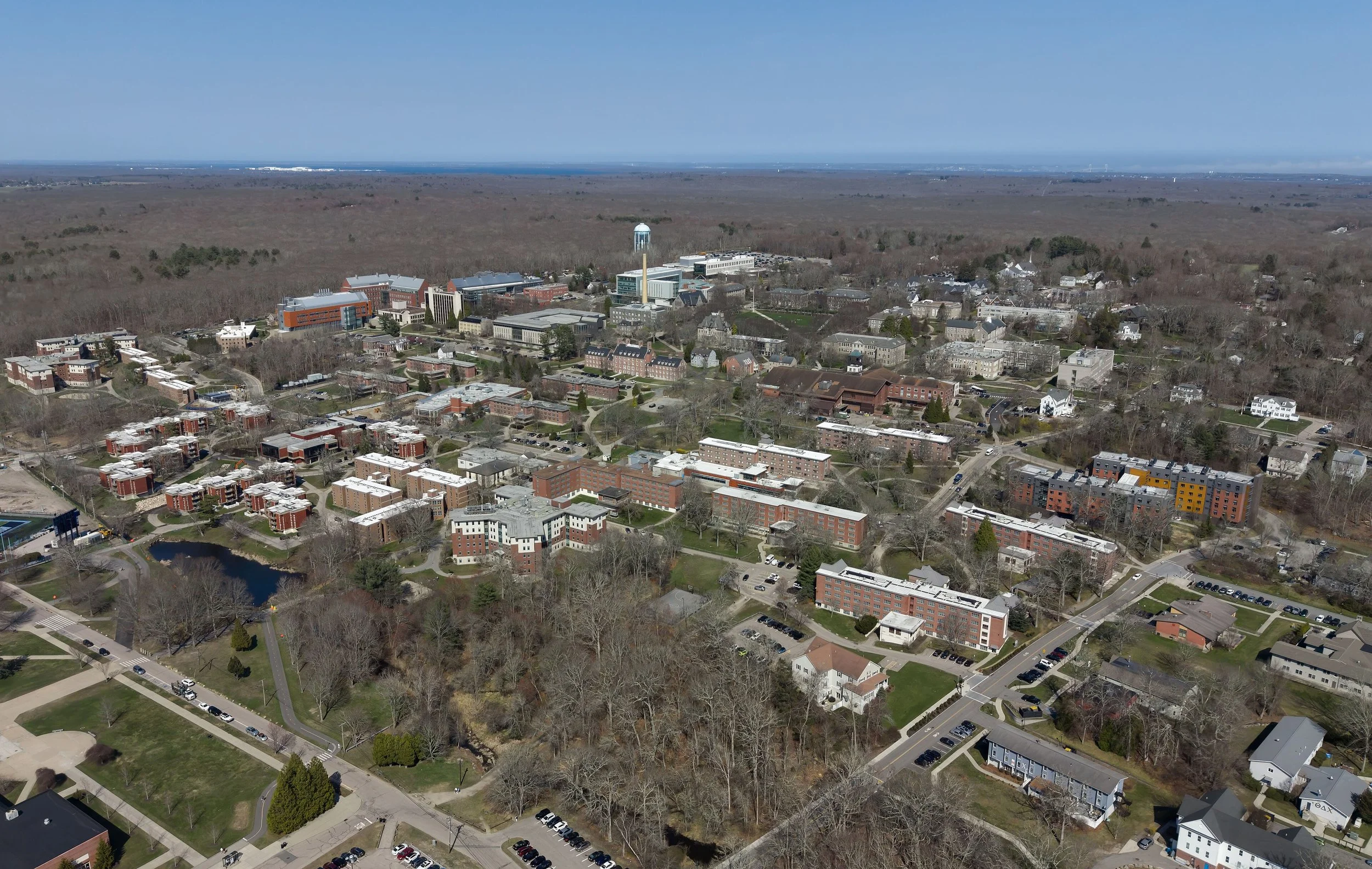
Aboard the University of Rhode Island research ship Endeavor during the first days of August, seabirds were abundant in the waters between Block Island and Martha’s Vineyard. The birds weren’t the focus of the trip — it was about providing local teachers with an opportunity to get hands-on science experience through the Rhode Island Teacher-At-Sea Program — but the birds couldn’t be ignored. They were constantly in view.
Most were shearwaters, long-winged birds that skim the surface of the waves as they search for marine organisms on which to feed. Last year at this time, however, many were unexpectedly dying and washing up on beaches throughout southern New England and Long Island, N.Y.
The population appears to be healthy this year, but scientists haven’t yet figured out the cause of last year’s die-off.
“We’re still trying to piece it together,” said seabird researcher David Wiley, research coordinator at the Stellwagen Bank National Marine Sanctuary, off Massachusetts. “We’re studying their livers to look at their toxicology to see if something killed them. And a team at Woods Hole is looking at birds caught as bycatch in gillnets. But we haven’t come up with anything definitive yet.”
Scientists speculate that the birds, which breed on islands in the South Atlantic and migrate to the East Coast in summer, arrived in local waters last year in such poor physical condition that they couldn’t survive. Whether that is because of a lack of food, an accumulation of toxins, or something else entirely is unknown.
“It could be something here [in the North Atlantic] as well,” Wiley said. “It could be a toxic algal bloom that’s caused the problem here. That’s another thing to look into. But right now, it’s all speculative.”
Although few birds have been found dead in the region this year, Wiley and a team of scientists hope to find some answers in a continuing study of great shearwaters, the most common of the shearwaters in the region, that began in 2013. Each year they capture 10 shearwaters and place satellite tracking tags on them to monitor their movements. The researchers hope to learn how and where the birds spend their time in the region.
To capture the birds, they toss bait into the water from a small boat, and then use a hand-held net to catch any birds that get close enough to reach. They weigh and measure the shearwaters, place a band around a leg, take blood and feather samples, and release them back into the wild.
So far their research has confirmed that the most important feeding area for the birds is in the Great South Channel, a deep-water site east of Chatham, Mass. The area is also an important commercial fishing destination, where hundreds of the birds are caught and drown in gillnets annually, mostly in August and September.
“Everybody is eating sand lance — the birds, the whales, the fish — so that’s where the fishermen go, too,” Wiley said. “Sand lance is the key to the southern Gulf of Maine.”
A tiny eel-like fish, sand lance are a favorite food of humpback whales, sharks, cod and other ocean predators. They spend their nights buried in the sand on the seafloor. Their cyclical population abundance drives changes in populations of the species that prey on them. And when sand lance numbers are high, conflicts arise between the whales, birds, fish, and fishermen.
The scientists are trying to figure out how to reduce the fishing bycatch of shearwaters, but they have had little success to date. The fishermen bait their nets to attract dogfish, and the baiting attracts the birds. If they don’t bait their nets, the nets must remain in the water longer as the fishermen wait for the fish to arrive, which increases the likelihood the nets will capture or entangle whales, porpoises, and other marine mammals.
Four years of data from 40 great shearwaters has confirmed that the birds move around a great deal, making it difficult to employ management strategies to protect them.
“Some static management measures like marine protected areas may not be as effective as they used to because the ocean is changing,” Wiley said. “We may be able to use our satellite tagged birds to look at where the hot spots are occurring in almost-real time. Then management can be as dynamic as the oceans themselves. We’re trying to get ahead of the curve to see if there are other ways of managing the ocean.”
University of Rhode Island doctoral student Anna Robuck is examining the birds from a different perspective. She is conducting toxicology tests to determine whether they are contaminated with any of a long list of chemical compounds, from long-banned pollutants such as DDT and PCBs to such industrial compounds as flame retardants and perfluorinated compounds, which are used as water repellents and in non-stick cookware and many other consumer products.
While she expected to find some of the contaminants in the birds’ tissues, including DDT, which is ubiquitous in the ocean, she was surprised to find some of the more than 4,000 perfluorinated compounds in the seabirds at similar concentrations to those found in gulls that live in Narragansett Bay.
“That was totally unexpected,” Robuck said. “The shearwaters live in the remote South Atlantic, so we weren’t sure we were going to be able to detect measurable concentrations, because we were uncertain that the compounds would be found in the oceanic environment. They’re found in surface water in Narragansett Bay at much higher concentrations than offshore, so we’re not sure why they’re in the seabirds.”
Birds in the bay are contaminated with a different set of perfluorinated compounds than those in offshore waters, which suggests to Robuck that the compounds are finding their way to the offshore environment via the atmosphere.
She isn’t convinced, however, that the contaminants have anything to do with the mass mortality of shearwaters last year.
“The contaminants aren’t lethal in the way we saw happening to the birds last year,” she said. “No way was it related to their contaminant burden. There are so many variables at play. I thought we’d test for something and figure it out pretty quick, but it’s turned into something much more complex.
“It’s probably an interplay of a lot of things — oceanographic conditions, food, stress from climate change. It’s a lot of stressors adding up. It’s really sad to see.”
Rhode Island resident and author Todd McLeish runs a wildlife blog.
Llewellyn King: Trump swims in a cesspool of vengeance
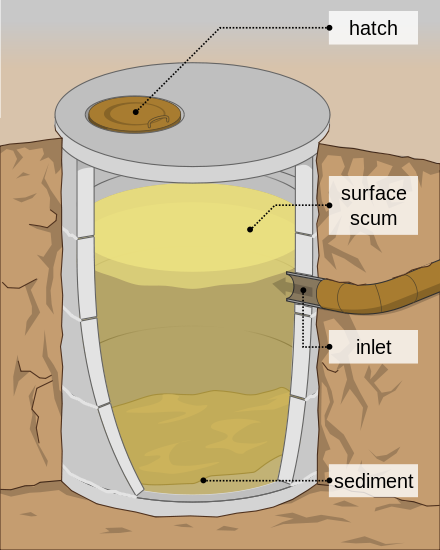
Treating the products of the Trump administration.
WEST WARWICK, R.I.
Just when you think President Trump couldn’t sink any lower, he astounds. He’s bewildering in his ability to sink and then sink further -- and all the while to claim success, rectitude and leadership.
This week’s plumbing of the sewers of conduct came in two Trump specials.
First, there was the unbecoming amount of presidential time spent on denigrating Omarosa Manigault Newman. He knew her well -- knew her propensity for infighting, exaggerating and lying -- when he hired her on at the White House.
The question is, what was a reality show contestant of no particular ability doing in the White House to begin with?
Whether the president fired her, or his chief of staff did, doesn’t matter. Clearly, there was merit in getting her out of there. That’s now more than clear, when we learn that she was taping conversations in the Situation Room, the sacred heart of the White House.
After a firing, there’s a kind of protocol: You don’t litigate the issue ex post facto, especially in public. You let it rest; those who have been fired anywhere are usually aggrieved and angry.
The executive who did the deed doesn’t then sink into verbal mud wrestling with the dismissed person. One doesn’t do that. But Donald Trump does do that -- with relish.
More egregious was his yanking the security clearance of former CIA chief John Brennan. This is vicious, petty, vengeful and strikes at the very basis of civil respect in America.
Security clearances are, at the least, a kind of badge, a medal, a recognition that you have served the country at the highest level of trust.
I’ve known four secretaries of defense, five secretaries of energy, three CIA directors and 12 national laboratory heads. I’ve seen how those now carrying the burden of office have consulted with those who had carried it.
Those who have security clearance, even if they aren’t called upon to use their knowledge often, are a kind of national reserve of expertise in sensitive matters, ready when needed. Others may need security clearance in defense contracting jobs when they leave their government service.
We don’t have civil honors as in Britain. Those with security clearances carry a little honor, a little recognition — and a lot of pride.
While Trump was bearing his teeth against the defenseless, like a hyaena afraid of losing its prey, big stuff at home and abroad was what one would’ve thought might have been of commanding interest to the president, including:
· A red tide was damaging the ocean life of Florida while hurting its tourism.
· California was burning up with the worst fires in history.
· The mayhem was continuing in Yemen.
· Turkey, a NATO member, was being driven into the arms of Russia, while its failing currency was roiling world markets.
· Russia was believed to be preparing to knock out the U.S. electric grid; and it was legitimizing its grasp on Crimea.
· China was seizing the South China Sea.
Against these, and other domestic and world crises, Trump was lost to bile and spite.
A friend, a lifetime Republican (small government, fiscal restraint, free trade, strong defense) suggested in conversation this week that the Trump legacy would cost us a generation of lost opportunity in the world. He said it would take that long to get back to old alliances and to the position of respect we have enjoyed in the world.
I disagreed. I think it could take 100 years, perhaps. The rub is one never returns to the status quo ante after upheaval. The earth moves, so to speak.
Consider two historical events with 100-year legacies. The first is the Congress of Vienna, in 1815, which mapped a peace in Europe that lasted nearly a century. The second is the ill-conceived Treaty of Versailles, in 1919, the peace document signed at the end of World War I. It led to World War II; and, to this day, it’s at the root of much of the trouble in the Middle East.
Tweeting isn’t communicating, settling scores isn’t governing, handing the world over to Russia and China isn’t what we expect of any president, even a petty one awash in bile.
Llewellyn King is executive producer and host of White House Chronicle, on PBS. His email is llewellynking1@gmail.com. He's based in Rhode Island and Washington, D.C.
A model governor in Mass.

Gov. Charles Duane Baker.
From Robert Whitcomb's "Digital Diary,'' in GoLocal24.com
The low-key Republican governor of a very Democratic state, Charlie Baker is close to a model chief executive. He rigorously oversees the administration of state government, with a sharp eye on personnel selection and oversight; after all, government is just a bunch of people. He doesn’t overpromise.
He makes his important decisions after much consultation with leaders of both parties and with cities and towns; he seeks consensus whenever possible. He tends to grant localities more say than many previous governors have, showing great respect for local knowledge. He knows how to strongly advocate his usually very pragmatic proposals, how to cut deals with the legislature, and when to give up. A former highly successful businessman, he brings a knowledge of private-sector efficiencies and innovation without confusing the responsibilities of government with those of companies, even as he’s always on the lookout for ways to privatize some services.
In another time and another national Republican Party, he’d be considered a potential presidential candidate.
Jill Richardson: Yes, Roundup is dangerous

Via OtherWords.org
The first thing I heard about glyphosate — the active ingredient in the popular weed killer Roundup — was that it was non-toxic. Whatever you wanted to say about other pesticides, many of which are poisonous to humans, glyphosate was safe.
It’s not controversial to claim that some pesticides are toxic to humans. After all, they were created to kill plants, insects and other living things. Some pesticides are so reliably toxic that people have used them to commit suicide. Others may cause cancer or other diseases if you’re exposed to them over time.
But glyphosate? There was nothing to say against it. It did its job, killing any plant it came into contact with, and then it broke down into harmless byproducts quickly. That was it.
A new court ruling calls this understanding of glyphosate’s “safety” into question.
Allegations that glyphosate caused cancer started years ago. When I first heard them, I was skeptical. After all, this was theflagship herbicide sold by Monsanto. It wasn’t just used by farmers but by homeowners and gardeners. You could buy it at Home Depot.
Of course all of the tree huggers wanted to take down glyphosate. It would be a powerful proof that they were right, pesticides are all toxic, and their opponents were wrong.
I didn’t blindly jump onto that bandwagon. This was something that could be examined cautiously, I hoped, with science.
When I heard about the recent court decision, I approached it with hesitance. I didn’t want to believe a story that may not be true.
But I also knew that California had listed glyphosate as a chemical “known to the State of California to cause cancer” a little over a year ago. There must be credible evidence that it does.
Germany is talking about banning glyphosate in the near future, and the European Union may consider doing so down the road.
The court found that glyphosate contributed substantially to the plaintiff’s cancer and awarded him $289 million in damages. It also found that glyphosate’s manufacturer, Monsanto, acted with “malice” by failing to warn consumers about the product’s risks.
Put another way, Monsanto knew that glyphosate was not safe. The company profited from the product’s sales while covering up its toxicity.
For me, this changes everything. It doesn’t take an in-depth understanding of the science to understand a cover up. If the company that made the product found out it wasn’t safe — if they believed their own evidence — and then chose to hide it, that’s something to worry about.
That’s like tobacco companies hiding their knowledge that cigarettes cause cancer for decades while millions of Americans continued to smoke — and die.
The glyphosate case illustrates larger issues. Our regulation of chemicals still isn’t where it needs to be.
Many chemicals on the market simply haven’t been evaluated for safety. Surely many of them are safe — but what about the ones that aren’t?
An Obama-era bill would have started requiring more chemicals to be tested and proven safe… and the Trump administration partially rolled that requirement back.
Arlene Blum, of the Green Science Policy Institute, offers a useful approach by highlighting six classes of chemicals most likely to cause harm. By focusing testing and enforcement on the chemicals with the highest risk, we could aim to strike the right balance between keeping ourselves safe and allowing useful chemicals onto the market.
We should no longer put a company’s right to make profits from selling chemicals above the public’s right to safety.
Jill Richardson writes about food and the environment for OtherWords.org.
'And alchemy'

Work by James Dye, in the show "Exploring the Myths of James Dye'' at the Worcester Art Museum, through Sept. 2.
"You couldn't have a culture without a story,'' he told the museum, which presents "several of the literary themes that drive Dye's graphic fictions: creation stories, dystopias and alchemy. ... Dye creates elaborate and imaginative India ink drawings informed by common global narratives.''
'Streets full of water. Advise'
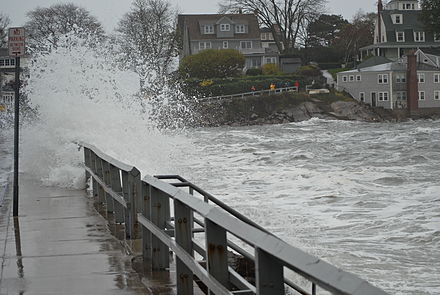
Flooding in Marblehead, Mass., on Oct. 29, 2012, during Hurricane Sandy.
From Robert Whitcomb's "Digital Diary,'' in GoLocal24.com
The population of flood-prone coastal zones in America is rising faster than elsewhere. That’s because most people love to live near water and developers have huge political and economic clout. Making matters worse is that the Feds’ National Flood Insurance Program does not take into account global-warming-connected sea-level rise, which is accelerating, especially along the U.S. East Coast. Just ask the people living in such low-lying places as Newport’s Point section; but at least that neighborhood of old houses will not be seeing more development.F
And the anti-environmentalist and very developer-friendly Trump administration wants to eliminate some rules in order to make development easier in flood-prone zones! U.S. taxpayers will get stuck with ever bigger bills to clean up the damage when these areas are hit by storms.
*Line reputedly in a telegram from Venice by the late humorist Robert Benchley.
To read a Governing Magazine article on this, please hit this link.
James P. Freeman: Democrats demand truckloads of docs on Kavanaugh to confirm their disdain

Sen. John Cornyn (R.-Texas) described it this way: “Well, you might call this the great paper chase.” The senator was not referencing the 1971 novel or the 1973 movie or the 1978-79 television series each named The Paper Chase and based on goings-on at the Harvard Law School. Instead, he was referring to the process of retrieving the massive paper trail left by U.S. Appeals Court Judge Brett Kavanaugh.
Despite the fact that public hearings for Kavanaugh will begin on Sept. 4 (the day after Labor Day) Senate Democrats insist that the judge’s entire back catalog of written work -- like going back to the vaults to recover all of The Rolling Stones original recordings on tape since 1962 -- be made available to them before a vote is made in the full Senate on his Supreme Court nomination. Democrats aim to delay any vote until after the mid-term elections holding out hope that they may retake the Senate. (Currently, Republicans control the chamber, with 51 members; no date is set for the Senate vote.)
However, recalcitrant Republicans counter that determined Democrats are behaving like paper wasps, gathering dead wood not to build a nest of objective information, but, rather, to build a rickety narrative about Kavanaugh in order to defeat his placement on the high court. Save for hope, Democrats -- notwithstanding the upcoming public hearings -- are using a bold new tactic to spur the vetting process in their favor. And it’s a long shot.
They actually filed several FOIA requests.
FOIA stands for “Freedom of Information Act” and became federal law in 1967. The act, says foia.gov, “has provided the public the right to request access to records from any federal agency. It is often described as the law that keeps citizens in the know about their government.” There are more than 100 agencies subject to FOIA requests. Last year, according to the Office of Information Policy of the Department of Justice, government agencies received over 820,000 requests.
The Hill reports that Democrats submitted requests to the CIA, the National Archives, the Department of Justice and the Department of Homeland Security for documents “tied to Kavanaugh's three-year period as staff secretary for President George W. Bush.” Democrat petitioners have also asked for an expedited response given the enormity of the paperwork sought.
It is estimated that these documents could be in excess of 1 million pages, notes USA Today. By comparison, senators had far fewer records to review under two past justice to be confirmed to the high court (182,000 pages of documents on Neil Gorsuch and about 170,000 pages on Elena Kagan). More documents will be produced about Kavanaugh than any other nominee in history, said Senate Judiciary Committee Chairman Chuck Grassley (R-IA).
Judiciary member Sen. Richard Blumenthal (D.-Conn.) called the FOIA requests an “extraordinary step,” “unprecedented” and a “last resort.” The senator also believes that this action has never been done with regard to a Supreme Court nominee. Blumenthal told MSNBC’s Rachel Maddow that Senate Republicans are “hiding” and “concealing” Kavanaugh documents.
But as Gabby Morrongiello wrote in The Washington Examiner, “Normally, records from Kavanaugh's time in the White House would be protected by the Presidential Records Act, which allows former presidents to keep their White House files secret for up to 12 years after leaving office.” President Bush left office, in January 2009.
The National Archives is indeed screening nearly 1 million of these pages to ensure none of the material is subject to executive privilege under the Act. “It says,” reports npr.com, that the review “will not be completed until the end of October.” As a consequence, Senate Republicans have moved to obtain documents directly from Bush’s legal team in order to expedite the process.
Republicans, meanwhile, argue that all this Democratic bluster is merely political stagecraft.
They recall that during Kavanaugh’s 2006 nomination as a judge to the U.S. Circuit Court of Appeals, Democrats then never demanded such a ferocious examination of his paperwork related to his White House work. Last week, Grassley released nearly 5,800 pages of documents from Kavanaugh's tenure as associate White House counsel to Bush. Already, the Judiciary Committee has received over 125,000 pages of these type of documents. And the committee is expected to release substantially more documents in the coming weeks.
Finally, Republicans say -- professing mock horror -- that Democrats are also acting disingenuously. They contend that Senate Democrats announced their opposition to Kavanaugh immediately after his nomination, without regard for the need for extensive review of documentation before such opposition.
In an op-ed for The Wall Street Journal, Grassley comments, “It stands to reason that Senator Schumer wasn’t too concerned about Judge Kavanaugh’s record before he announced his opposition. Why is it so important to Senator Schumer now?” Further, with regard to documents already in the public domain, “How much more do Democratic leaders need to know when they’re already voting no?”
Democrats are essentially saying that they detest Mick Jagger but need to listen to all his music to confirm their disdain.
After the final vote on the judge by the full Senate, it would be understandable if Kavanaugh acted as the character Hart did at the end of The Paper Chase novel: Where the finally tally of grading was pitched off in a form of a paper airplane -- a metaphor, perhaps, of a scoring and vetting system that should be thrown out.
The judge will have many papers from which to build his aircraft.
James P. Freeman is a New England-based writer who writes the Word Wise column for Inside Sources. He is a former columnist with The New Boston Post and The Cape Cod Times. His work has also appeared in The Providence Journal, The Cape Codder, newenglanddiary.com, golocalprov.com, and nationalreview.com.
Autumn underway in Maine
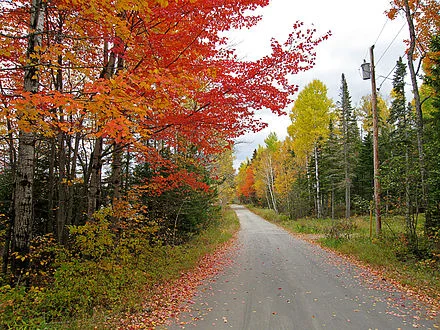
Back road in Stratton, Maine.
"In a mad moment, my family and I purchased a home in Maine because it's the place in the world that my wife loves better than any other place or any other human, and so I have committed my life and what had once been my economic security that has now returned to insecurity, to a patch of painful, rocky land on the shores of horrible, cold waters to a place where people go in the summer to experience autumn because leaves start falling on August 1.''
-- John Hodgman, writer
Llewellyn King: Despots and crooks always blame 'the media'

"The media are to blame. '' That is the cry of the dictator and the shifty politician.
I have heard variations of it since I started in the newspaper business at the age of 16. The “media” is more now more frequently used than the “press,” which was the old term.
I have heard it from crooks, con artists, egomaniacs, communists, fascists, anti-Semites, ethnic butchers and madmen.
I heard it in person from Gen. Augusto Pinochet, the brutal Chilean dictator, in Santiago and from Gen. Wojciech Jaruzelski, the last Communist leader of Poland, in Warsaw. I heard it in person from the defenders of Robert Mugabe, the Zimbabwean tyrant, and I heard it from the lips of Kenneth Kaunda, who sent Zambia down the wrong track. I heard it in person from the sycophants around Cuban strongman Fidel Castro.
In Washington I heard it from cabinet officers, congressmen, chief executive officers, contractors and lobbyists, innumerable military contractors when I was publisher of The Energy Daily and Defense Week.
Now I am hearing it from President Donald Trump. He is attacking the media, using a term – the enemy of the people – that I have only heard from dictators. Trump is attacking the very basis of all freedom: the freedom of the press. That is the freedom to find the news and publish it.
When the president attacks the media he immediately makes the gathering of the news more difficult. Those who want to brush us off, lie to us, subvert our work, endanger our income and our lives are emboldened.
Worse, the work itself is brought into doubt.
Truth is the victim: If lies can pass as fact, truth is in the gutter and the body politic is in trouble. Look to Germany in the 1930s, Cuba in totalitarian maw, the Soviet Union and its satellites under Communism’s yoke. Look to Venezuela today. Where evil is afoot, the media is silenced or subverted.
Against this, the editorial board of The Boston Globe has persuaded more than 100 newspapers to respond to Trump’s “enemy of the people” rhetoric on Aug. 16.
The thought is powerful and right, but the tactic is wrong. In showing a united front to the White House, The Globe and its allies validate the White House myth that the media is united against the people.
The media is united in only one thing: doing its job. It is not in any way monolithic. To suggest that we a monolith is to suggest, as Trump does, that there is a media hegemon with a common purpose. There is not.
We are a calling of irregulars, from the smallest newsletter to the great urban newspapers and from the podcaster to the star-heavy television networks. That is our strength; the diversity that makes us a cast of tens of thousands with individual parts.
Dan Raviv, then with CBS Radio, told me in a few words what is involved, “I like to find out what’s going on and tell people.” He nailed this job.
Yes, we make mistakes. Yes, we can be arrogant. Yes, we can be an embarrassment. Yes, some insert opinions when they should not. I still cringe at things I have gotten wrong, going back decades. At best, our mistakes keep us humble.
I would suggest that those who think we are the enemies of the people – a preposterous idea -- just remember that everything they know, with infinitesimal exception, was brought to them by journalists; journalists covering the White House, journalists writing about government, business, foreign affairs, science and wars. Individuals trying to find out what is going on from Moscow to Beijing and, when we can, Pyongyang.
When the courts have failed, the politicians have let all down, and justice is in danger, drop a dime. Call a reporter: the appellate court of last resort.
You do not call the media, you call a reporter. That individuality is our ultimate strength -- and the public’s last, very last, line of defense.
On Twitter: @llewellynking2
Llewellyn King is executive producer and host of White House Chronicle, on PBS.




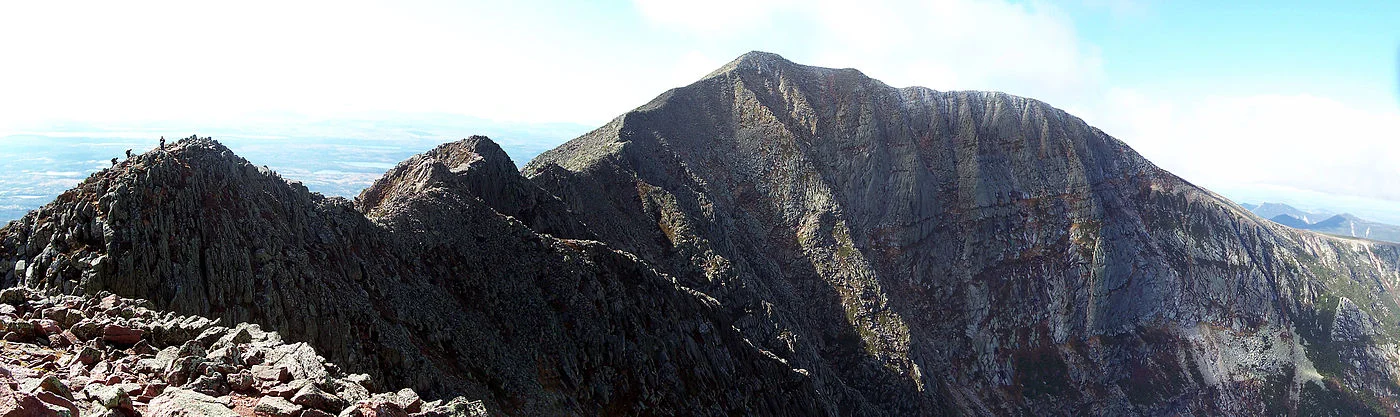
Flocks of rocks
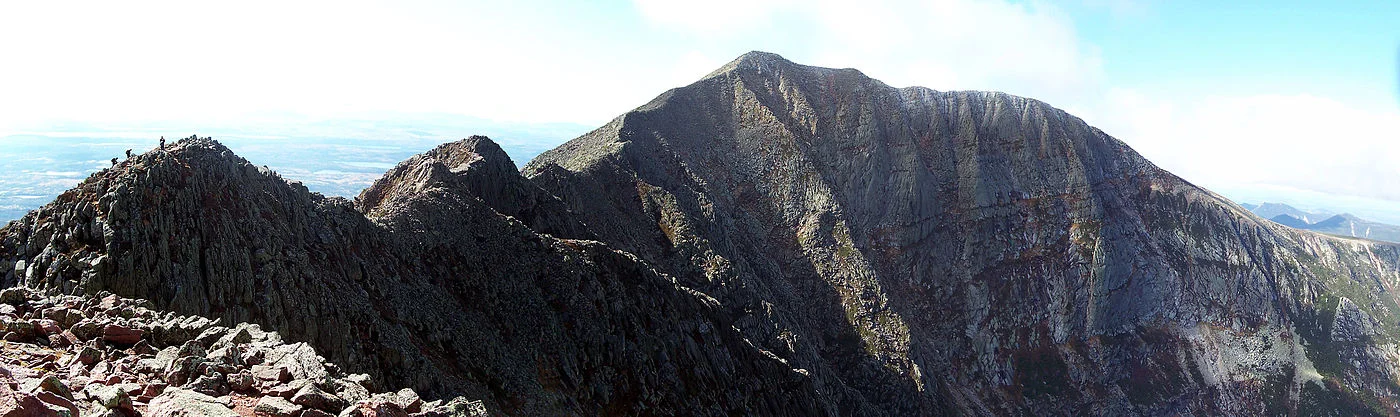
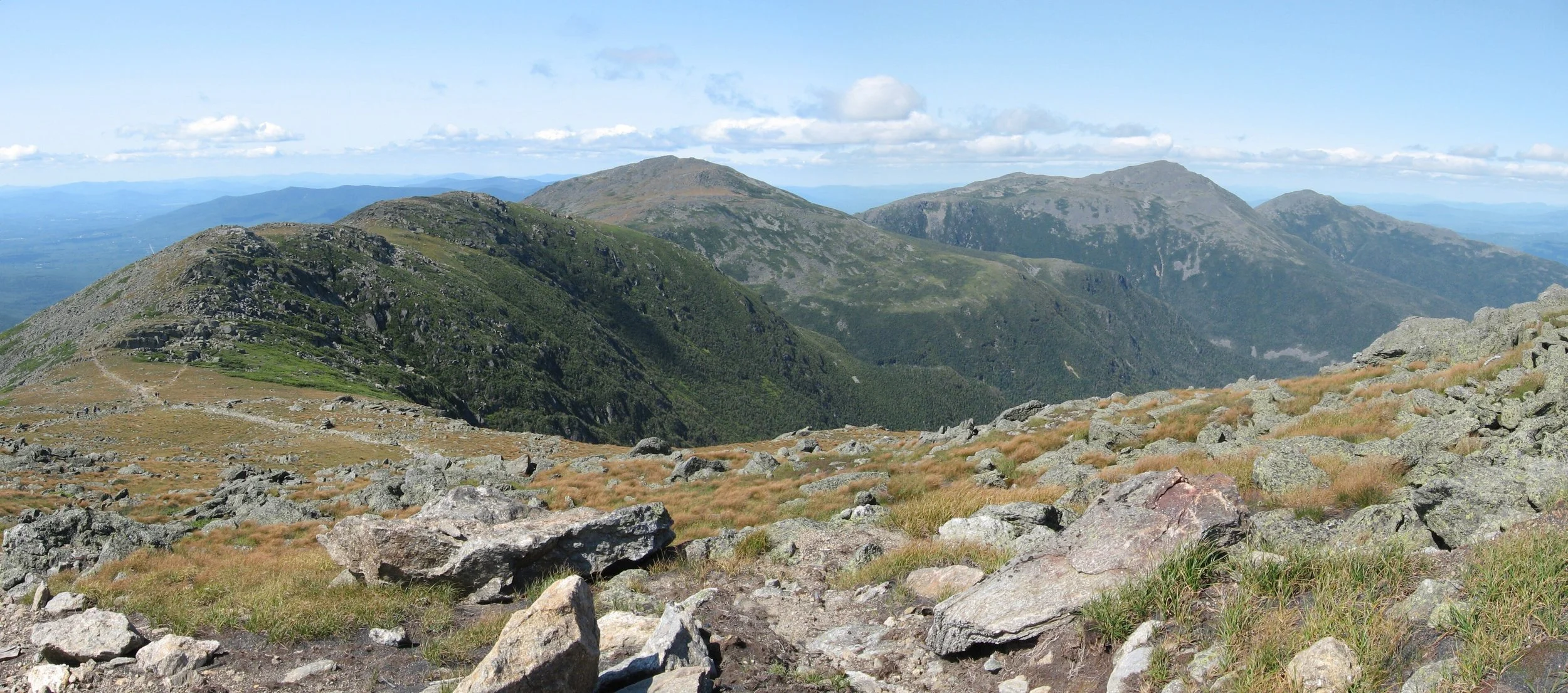
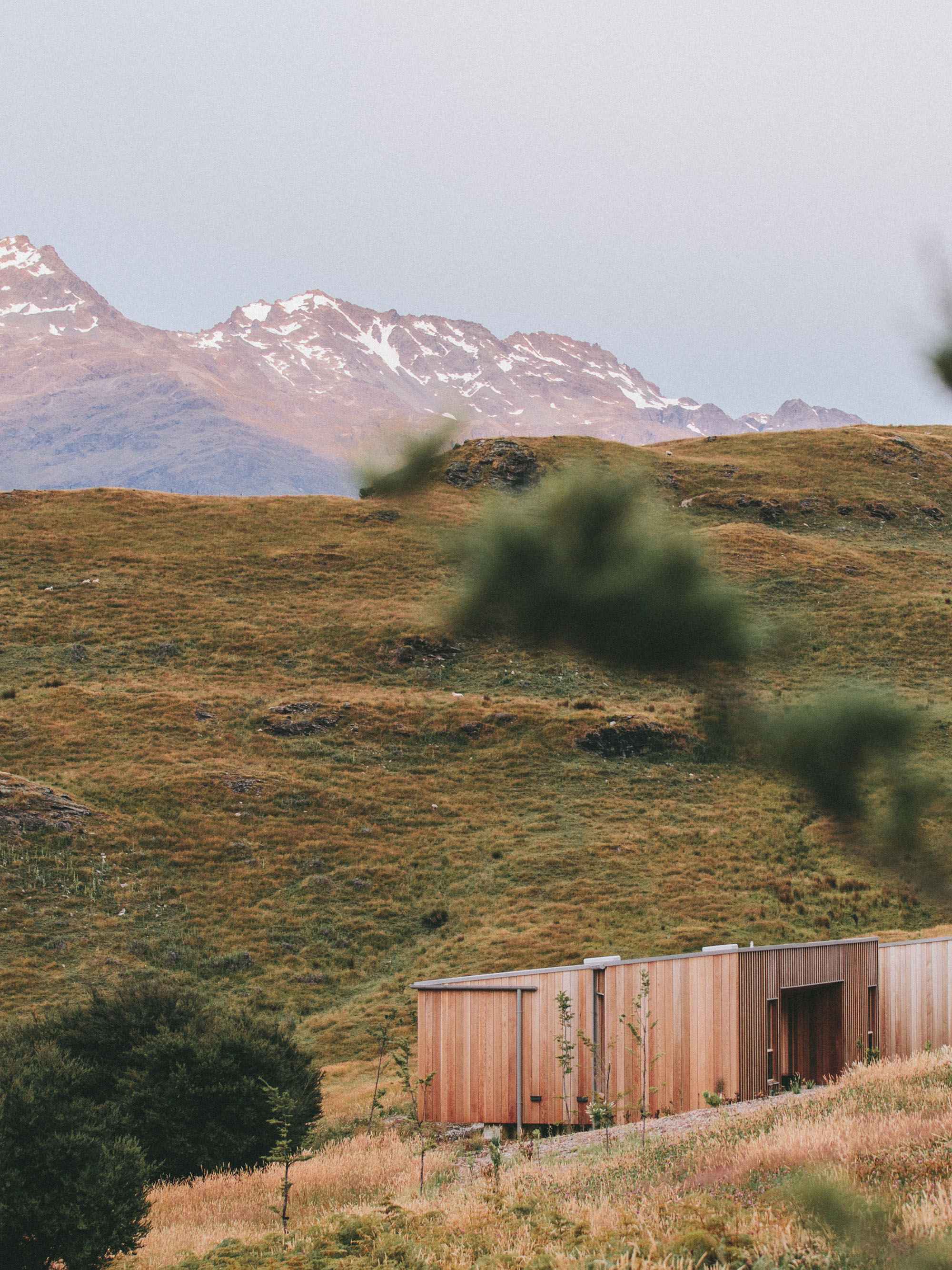
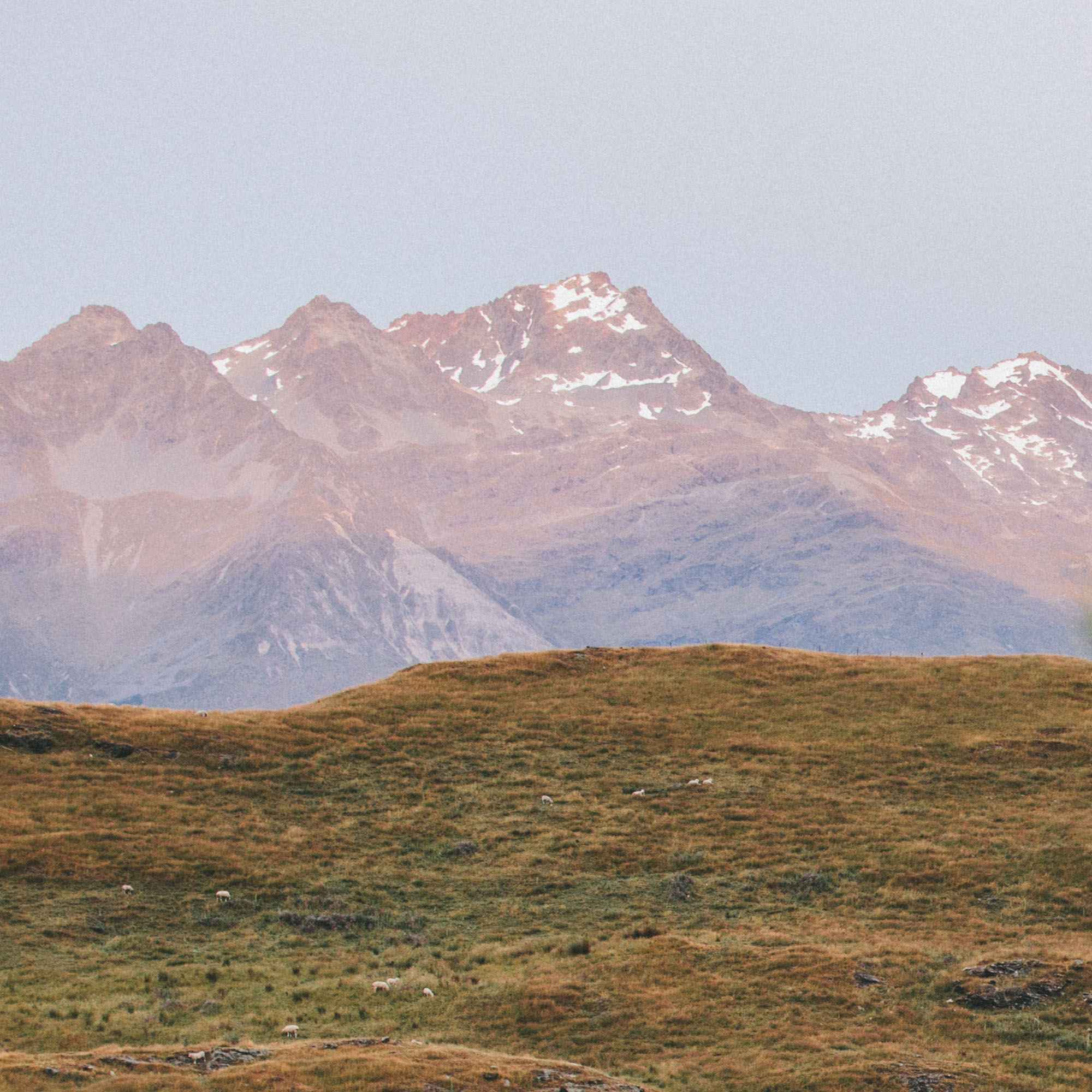
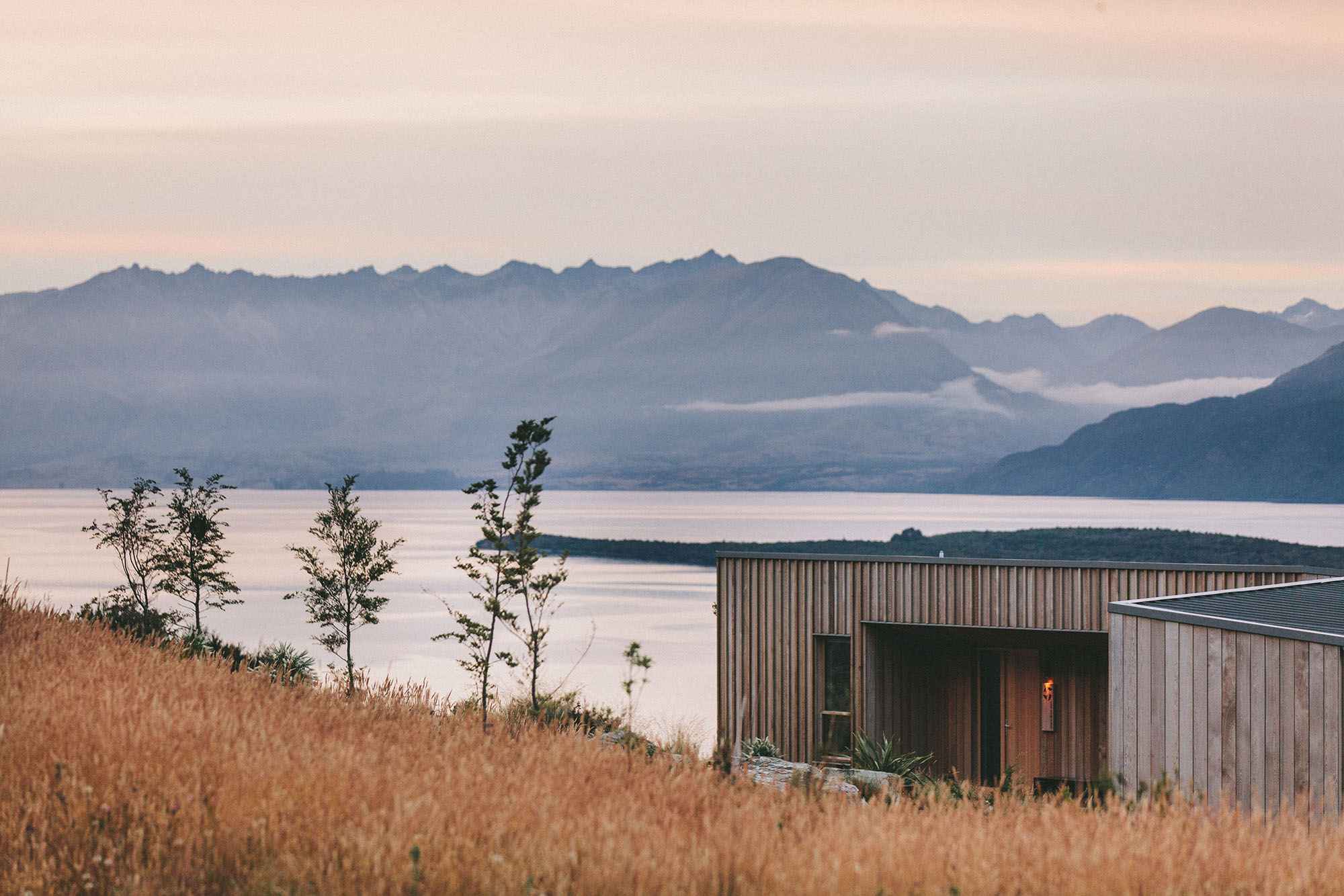
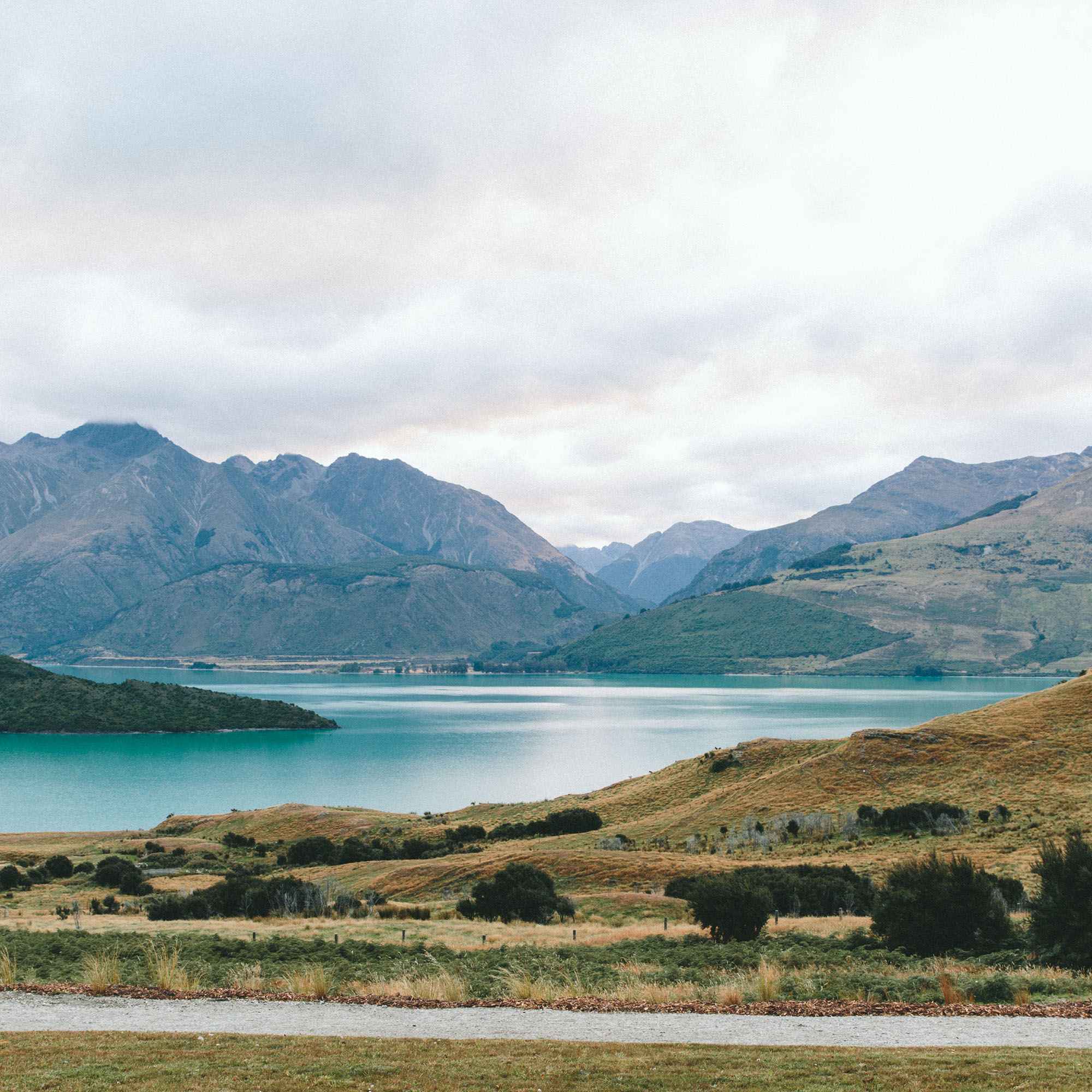
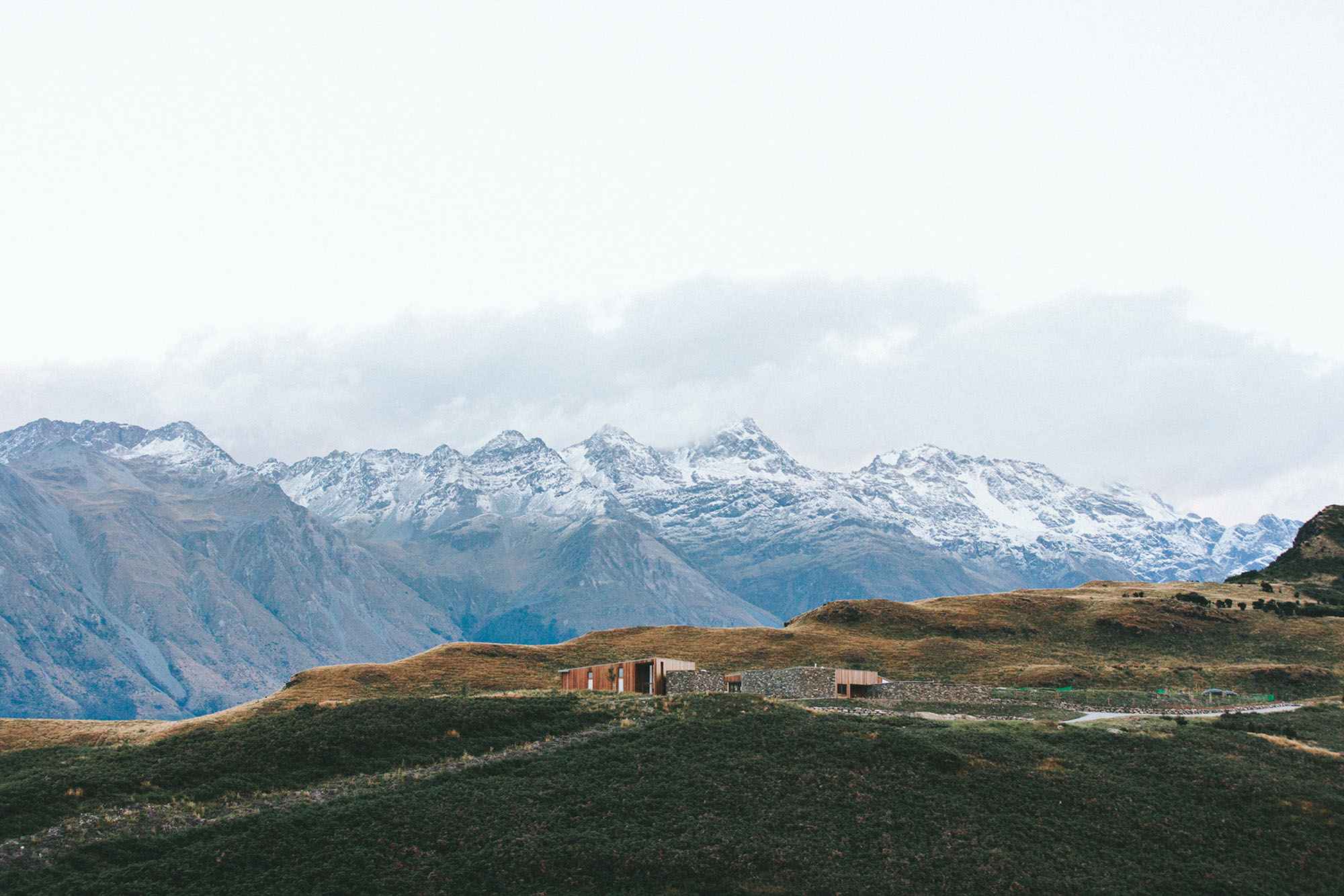
Mt. Katahdin (5 ,267 feet high), in Baxter State Park, Maine. The park was a gift to the people of Maine from Gov. Percival P. Baxter, who used his personal wealth over a 32-year period to buy and donate the original 201,018 acres of the park, starting with a 6,000-acre purchase in 1930 from the Great Northern Paper Co. Since Governor Baxter's death, in 1969, the park has been expanded to a total of 209,501 acres, including the 2006 addition of a parcel of 4,678 acres. The park includes gorgeous Katahdin Lake. Hiking along the famous "Knife Edge'' of the mountain is not for the faint of heart.
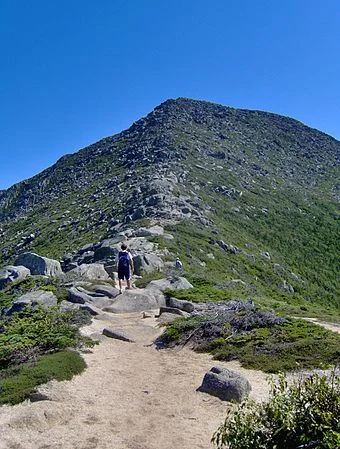
On the Appalachian Trail near the summit of Mt. Katahdin, the highest mountain in Maine, and the northern terminus of the trail.
"Having slumped, scrambled, rolled, bounced, and walked, by turns, over this scraggy country, I arrived upon a side-hill, or rather side-mountain, where rocks, gray, silent rocks, were the flocks and herds that pastured, chewing a rocky cud at sunset. They looked at me with hard gray eyes, without a bleat or a low.''
-- Henry David Thoreau, in The Maine Woods
And stops scurvy, too

'Kiwi Rhythm'' (oil on canvas), by Sherie Hawkins, in the group show "Colorist,'' at ArtProv Gallery, in Providence, through Sept. 22.
Settled and resettled

Greenfield from Poet's Seat Tower, 1917
"You go to towns in Massachusetts, Greenfield, first settled in 1686. Wouldn’t it be cool if it said, 'Greenfield. First settled c. 13,000 B.P. or approximately 13,000 Before the Present. Resettled.' Maybe we could say even, 'Resettled by whites,' Or, 'Resettled anyway, 1686.' It would have a different impact. And of course it would help explain why the town is called Greenfield, because it was a green field and the fields were left by Native people who had already been farming them.
-- James W. Loewen, historian and sociologist

Marker in downtown Greenfield.
David Warsh: The Times and the WSJ in the hot-air debate

SOMERVILLE, Mass.
A consensus seems to be emerging that climate change has begun exceeding its natural variability, and that accelerating global warming is something to be feared. What makes me think so? Accounts of widely shared experiences on the front pages of the newspapers that I read: forest fires; melting ice; famine, flood and drought; ecosystem collapse, and species loss. The Economist’s cover 10 days ago was, “Losing the War against Climate Change.”
What can we hope to do about it? It’s hard to tell, since, at least for the present, it seems only one problem among many: trade wars, international rivalries, urban-rural disparities, even arguments about the nature of truth. Yet many ways of narrowing differences exist, beginning with, as noted, the great but sometimes dangerous teacher of experience.
I’d like to suggest that we pay special attention to another mechanism. I think someone, not me, should carefully examine and compare the coverage that climate change receives from the three major American newspapers, The New York Times, The Wall Street Journal, and The Washington Post, with other nations and other languages soon to follow.
There is, obviously, a wide divergence in treatments of these issues. For example, the Aug. 5 Sunday Times magazine devoted an entire issue to a 30,000-word article accompanied by striking photographs of various disasters, titled “Thirty years ago, we could have saved the planet.” Meanwhile, the editorial page of The Wall Street Journal, arguing that Trump administration deregulation policies were “improving consumer choice and reducing cost from health care to appliances,” celebrated the decision to freeze corporate average fuel-economy (CAFE) standards as “Trump’s Car Freedom Act.” The two issues are not tightly connected, the editorial argued, offering a crash course in the microeconomics of auto-emissions regulation in a dozen paragraphs.
The Times magazine was especially striking. Nathaniel Rich, the author, writes, “That we came so close, as a civilization, to breaking our suicide pact with fossil fuels can be credited to the efforts of a handful of people, a hyperkinetic lobbyist and a guileless atmospheric physicist, who at great personal cost, tried to warn humanity of what was coming.”
Of the story’s heroes, the lobbyist, Rafe Pomerance, seemingly had been born to his role: “He was a Morgenthau – the great-grandson of Henry Sr., Woodrow Wilson’s ambassador to the Ottoman Empire; great-nephew of Henry Jr., Franklin D. Roosevelt’s Treasury Secretary; second cousin to Robert, district attorney for Manhattan,” The physicist, James Hansen, had been the first to raise the alarm, as lead author of a Science paper, in 1982, then, forcefully, before a Senate hearing in the heatwave summer of 1988. Rich’s story has its villains, too: then-White House Chief of Staff John Sununu and Office of Management and then-Budget Director Richard Darman, who together blunted a drive to cap carbon emissions during the George H.W. Bush administration. And, of course, there is the author himself; the son of former Times columnist Frank Rich and HarperCollins executive editor Gail Winston. I don’t know about the three novels that Rich has published, but a previous article in the Times Magazine, about the history of a Dupont Co. product called PFOA, for perfluorooctanoic acid, was awfully good. This new article is divided into two chapters, with all the years since 1989 compressed into a short epilogue. My hunch is that they are drawn from a book in progress.
Rich’s article elicited a response from WSJ columnist Holman Jenkins, Jr., “Fuel Mileage Rules Are No Help to the Climate.” Incorporating the arguments of the paper’s editorial on the topic more or less by reference (he probably wrote the editorial), Jenkins disparaged Rich’s attachment to international climate treaties that “by their nature would have been collusion in empty gestures.” He scolded him for failing to note that “the U.S. has gone through umpteen budget and tax debates without a carbon tax — which is unpopular with the public, but so are all taxes – ever being part of the discussion.”
That seemed to be jumping the gun, given that Rich’s magazine article so clearly seemed part of a longer account. Perhaps later Rich will get around to the issue of quotas vs. prices as a way of limiting carbon dioxide emissions. Still, I was glad to see Jenkins bring up what seems to me to be the central issue of what can be done to curb global warming. He blamed “the green movement” for “hysterical exaggeration and vilifying critics” for the failure to obtain widespread support “the one policy that is nearly universally endorsed by economists, that could be a model of cost-effective self-help to other countries, that could be enacted in a revenue-neutral way that would actually have been pro-growth” (as opposed to a presumed drag on it).
I’m not so sure that the Greens, or even the Democrats, are mostly to blame. It’s true that the WSJ has periodically published op-ed pieces propounding carbon taxation – for instance, here. But if the paper’s editorial board has taken the initiative in arguing that global warming is a serious threat and that urgent measures are required to combat it, I haven’t noticed. Jenkins wrote, “A carbon tax remains a red cape to many conservatives, but in fact, it would represent a relatively innocuous adjustment to the tax code. It could solve political problems for conservatives (who want a tax code friendlier to work, savings, and investment) an as well as for liberals (who want action on climate change.)”
I was among those who were disappointed when The Times a year ago discontinued the position of its public editor. To that point it had been the leader among newspapers employing news professionals to plump for high standards of public discussion.
Other papers rely on columnists (like Jenkins) to augment debate. and preserve a semblance of even-handedness. Newspaper discourse is a little like an ongoing series of judicial proceedings. Acting as advocates – reporters, for readers; editorialists, for publishers – obey different rules to summon experts to support their pleadings. A seminal event in the saga of global climate study occurred 60 years ago when the U.S. established a carbon-dioxide observatory atop a volcano in Hawaii in the middle of the Pacific Ocean. Who will establish an equally disinterested project to monitor major emissions of newspaper hot air — The Times’s magazine piece, the WSJ editorial page — on the topic of global warming?
David Warsh, a long-time economics and political columnist, is the proprietor of economicprincipals.com, based in Somerville, Mass.
Judith Graham: How to make life easier for those with dementia and their caregivers

Alois Alzheimer's patient Auguste Deter in 1902. Hers was the first described case of what became known as Alzheimer's disease.
Imagine your doctor telling you have Alzheimer’s disease or some other type of dementia. Then, imagine being told, “I’m sorry, there’s nothing we can do. You might want to start getting your affairs in order.”
Time and again, people newly diagnosed with these conditions describe feeling subsequently overcome by hopelessness.
In their new book, Better Living With Dementia, Laura Gitlin and Nancy Hodgson — two of the nation’s leading experts on care for people with cognitive impairment — argue forcefully that it’s time for this “cycle of despair” to be broken.
“There is no cure for Alzheimer’s but there are many things that can be done to make life better for people with dementia and their caregivers,” said Gitlin, dean of the College of Nursing and Health Professions at Drexel University and chair of the Department of Health and Human Services advisory council on Alzheimer’s Research, Care and Human Services.
At a minimum, Gitlin and Hodgson suggest pointing people newly diagnosed with dementia to the Alzheimer’s Association, the Lewy Body Dementia Association, the Association for Frontotemporal Degeneration and the government’s website, alzheimers.gov — all valuable sources of information and potential assistance.
Also, individuals and families should obtain referrals to elder law attorneys, financial planners, adult day centers, respite services and caregiver support services, among other resources. But none of this happens routinely. Instead, “people are not given access to the resources they need to plan for the future,” said Hodgson, the Anthony Buividas endowed term chair in gerontology at the University of Pennsylvania. “They’re left on their own to find out even basic information.”
Most people with Alzheimer’s and other types of dementia live at home — an estimated 70 percent. But few professionals inquire about patients’ living conditions, even though these environments play a major role in shaping people’s safety and well-being. (The remainder live in nursing homes or assisted living residences.)
More often than not, professionals don’t help families anticipate what to expect as dementia progresses. Left to their own devices, individuals with dementia and their caregivers “tend to move inwards and away from their communities, which fosters isolation, which worsens their sense of despair,” Hodgson said.
Even small steps could help improve quality of life. In their book and subsequent phone conversations, Gitlin and Hodgson highlighted several strategies:
Attend to the home. As people with dementia become more impaired, attention to their home environment needs to become a priority.
In one study cited in Gitlin and Hodgson’s book, safety issues — cleaning agents under the sink, knives and other sharp objects, guns and ovens that can be turned on and left running, for instance — were discovered in 90 percent of homes where people with dementia lived. Another study found an average of eight hazards in these residences.
What can be done: Hire an occupational therapist, ideally with expertise in dementia, to do a home assessment and recommend modifications.
Common suggestions: Reduce clutter, which can contribute to disorientation. Install handrails along staircases and grab bars and shower seats in bathrooms to reduce the risk of falls. Put up visual cues that identify where common objects are stored — underwear and socks, for instance, or coffee mugs. Make sure lighting is adequate. Remove knobs from stoves and remove other potentially dangerous electronic devices.
“What you want to know is can a person with dementia find their way easily in the home? Are there sufficient cues? Is the environment too stimulating — is there too much noise from a television that’s left on during the day, for example — or not stimulating enough?” Gitlin said.
Create a routine. People with dementia need predictability and well-structured routines that minimize uncertainty and help them get through the day.
“A routine helps people with dementia know what to expect,” Hodgson said. “That lowers their anxiety and stress and makes it easier for them to negotiate their environments. If change is introduced regularly, they’re just not going to do as well.”
What can be done: Time activities through the day to match an individual’s physical and psychological rhythms.
Common suggestions: Most people are sharper, cognitively, in the morning, so that’s a good time to look through photo albums, do puzzles, reminisce about the past, play simple word games or go off to adult day care, Hodgson said.
After lunch, people may need to rest, but they shouldn’t nap too long. “You want to have some physical activity in the afternoon, as more and more research is showing the importance of exercise for people with dementia,” Hodgson noted.
Around sunset, it’s time for relaxation and helping people settle down. Playing music or lighting a scented candle can set the mood. Good sleep hygiene — no caffeine at the end of the day, darkness, quiet and comfortable temperatures in the bedroom — is recommended at night, as sleep problems are common in people with dementia.
An occupational therapist, who can evaluate the skills of people with dementia, can suggest appropriate activities. “You’ll need to learn how to understand if someone can initiate an activity on their own or follow a sequence needed for the activity,” Gitlin said. “If not, and this is common later on, you’ll have to learn how to set up the activity and cue the person.”
Know what to expect. Individuals with dementia and their caregivers will find their needs changing as their illness progresses.
What can be done: During every significant transition, reassess needs and how you’re going to get them met — with the help of an experienced social worker or care manager, if possible. “Who are the people who can help you? What resources are available? What alterations need to be made in the home and care arrangements? You’ll need a new plan of action,” Hodgson said.
At first, the most significant need may be obtaining a reliable diagnosis and learning more about the type of dementia your physician has identified. According to a new study by researchers at Johns Hopkins University, nearly 60 percent of people with dementia have not been diagnosed or are not aware of their diagnosis.
Gitlin and Hodgson recommend that people with dementia be involved in learning about treatment options and planning for their care, to the extent possible. “Talking over people or ignoring them or telling them what should happen, without soliciting their participation, is attack on personhood,” Gitlin said.
Depression and anxiety may need to be addressed, as people struggle with the reality of a diagnosis, withdraw from work or social activities and worry about the future. Finding ways to keep people engaged with meaningful activities starts to become a challenge.
When individuals progress to moderate dementia, they may need more supervision and assistance with dressing, bathing, grooming and taking medications. This is when families often hire caregivers, if they can afford it. Communication may become compromised and problematic behaviors such as wandering, agitation or aggression may emerge.
Often, someone with dementia is unable to express her needs and resorts to difficult behaviors. A person may be bored, afraid, in pain, constipated, overwhelmed or distressed, for example. To cope, caregivers are urged to try to understand the triggers for troublesome behaviors and take steps to address them.
Interactive Web-based systems that offer expert assistance to caregivers may become available going forward. Gitlin and colleagues at the University of Michigan and Johns Hopkins University have developed a comprehensive program, WeCareAdvisor, that is being tested. Another website featuring the DICE Approach is expected to debut in three months and include interactive training videos.
In the final stage, severe dementia, people need sensory stimulation — a foot massage, music they enjoy, a fragrant bouquet of flowers. Addressing distress, discomfort and pain are key care challenges. Even if the person with dementia can’t acknowledge it, the presence of family and friends remains important. Throughout every stage of this illness, “it’s important to let people with dementia know that they belong and surround them with a feeling of warmth and affection,” Hodgson said.
Judith Graham: @judith_graham
But none the worse for it

"Black and Blue, '' by isamu Noguchi, in the show "Isamu Noguchi and the Borders of Sculpture,'' at the Portland Museum of Art, Oct. 5-Jan. 6.
The museum says the show:
"{I}nvestigates Noguchi’s expansive artistic practice by exploring his efforts to enlarge and challenge conventional notions of sculptural boundaries. Born in 1904, the Japanese-American modernist experimented endlessly with the intersection of objects, people, and space over the course of his 60-year career. Melding ideas and approaches to art from across the globe, Noguchi created traditional sculpture, landscape architecture, play structures, monuments, stage sets, interior designs, furniture, and more. This exhibition brings aspects of his varied production together, complicating notions of form and function and using the juxtaposition of materials, shapes, and techniques to encourage audiences to reimagine their sense of what sculpture can be.''
Llewellyn King: Trying to slow carbon emissions, from the right

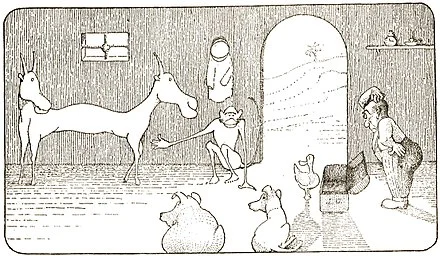
In Hugh Lofting’s children’s stories about “Doctor Doolittle” there appears an imaginary creature resembling a llama, but with a head at either end of the body, so that it always faces in two directions at once. Called the pushmi-pullyu, it’s become a metaphor for contradiction.
U.S. energy-environmental policy, I submit, is characterized by this kind of contradiction. And make no mistake, energy policy is profoundly affected by environmental policy. Mostly, it’s the bit left over after the environmental constituencies have been satisfied.
The country’s energy-environmental policies are subject to a plethora of contradicting stimuli and restrictions that, while sometimes achieving their goal, cost the economy 1 percent a year, according to an analysis by EY, the global accounting firm. This on top of bad decisions — based on what can be gotten through the regulatory thicket not on what is needed, or what will benefit the environment — and endless delay.
Now a group of Republican stalwarts, who believe that climate change is happening and is caused by human activity, wants to do something about this pushmi-pullyu situation in energy-environmental policy. Their remedy: Substitute all the contradictions, preferments, subsidies, tax anomalies and self-defeating rules with a simple, revenue-neutral carbon tax.
These climate change-minded conservatives have created a Washington-based organization, the Alliance for Market Solutions. Its executive director is Alex Flint, a former staff director of the Senate Committee on Energy and Natural Resources, and a former senior vice president of governmental affairs at the Nuclear Energy Institute.
The backers of the alliance — rock-ribbed Republican business executives, academics and think-tank fellows — are committed to turning the GOP toward taking a positive stance on climate change. They believe that science has spoken, and the environment is the great existential threat facing humanity.
Among those who are throwing their experiential weight and financial resources behind the alliance are Jeffrey Williams, founder and chairman of the eponymous investment banking company; William Strong, chairman and managing director of the private equity firm Longford Capital Management; Marvin Odum, former chairman of Shell Oil; John Rowe, former chairman of Exelon Corp., and Stephen Wolf, former chairman and CEO of United and three other airlines.
These titans are joined by academics and public intellectuals including John Graham, dean of the Indiana University School of Public and Environmental Affairs, and administrator of the Office of Information and Regulatory Affairs in the U.S. Office of Management and Budget during the George W. Bush administration, and Christopher DeMuth, a distinguished fellow at the Hudson Institute and a former president of the American Enterprise Institute.
The alliance and its backers are neither seeking to argue with the Trump administration, which has denied climate change, nor to take up arms with the forces that categorically reject any new tax. They say they’ll only support a carbon tax if it’s a genuine tax reform as well as a regulatory reform. They want to work quietly, and in small groups, inside the GOP body politic.
The difficulties of getting Republican lawmakers to consider a carbon tax were illustrated when Rep. Carlos Curbelo of Florida introduced a such a bill on July 23. It got immediate pushback from Grover Norquist of Americans for Tax Reform, and the House passed an anti-carbon tax resolution on July 25.
But Flint and members of the alliance are undaunted: “As long as we have to address carbon pollution and doing so with a carbon tax is much less burdensome than doing so with regulations, and we have to make our tax code more efficient, a carbon tax is going to be part of the conversation,” Flint said at his offices near the Capitol.
The battle to contain carbon emissions is joined — from the right.
On Twitter: @llewellynking2
Llewellyn King (llewellynking1@gmail.com) is executive producer and host of White House Chronicle, on PBS.
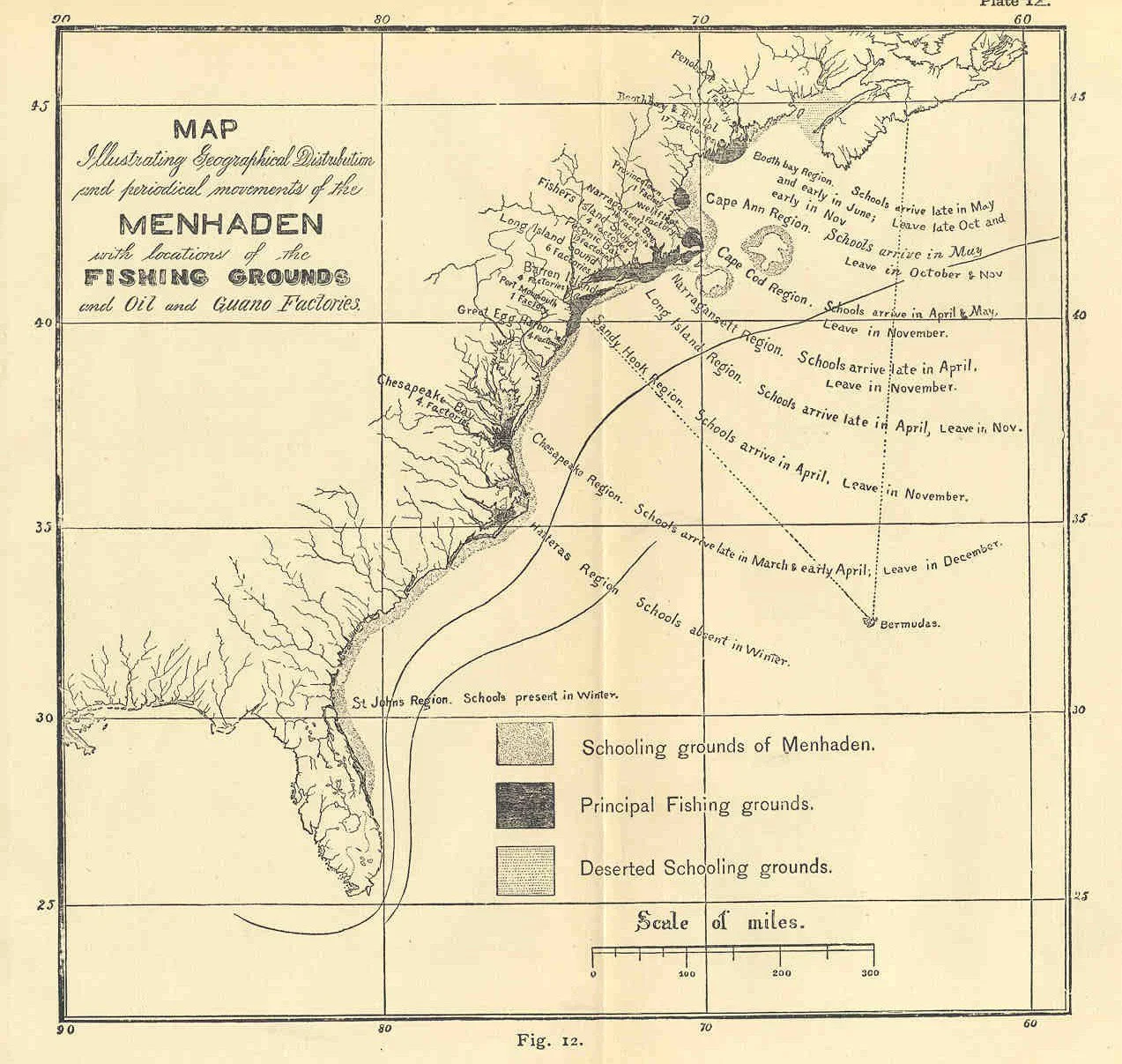
'Among the frantic menhaden'

Atlantic menhaden.

"Trolling for Bluefish,'' lithograph by Currier & Ives, 1866.
As if the banks were lined by spiders
Tossing long, shimmering filaments
The river crawls along like prey.
I’ve come, parked with rest,
All our radios on to the local station
For news of ourselves, in between the music
Hard people are soft on. Cut-bait, treble-hook plugs,
Wobbling spoons, plop among the frantic menhaden.
-- From "Bluefish Run, Machias, Maine,'' by Paul Nelson
Let's have less parking, more housing downtown

Downtown Worcester, with City Hall to right.

Downtown Providence, with the Arcade (1828) at the left.
From Robert Whitcomb's "Digital Diary,'' in GoLocal24.com
Instead of setting aside more parking places in old downtowns like Providence’s and Worcester's, cities would do better to reserve more space for housing there, boost public transportation 'sand encourage walking and bike-riding so that fewer people need cars (or require Uber and Lyft, which are jamming too many center-city streets). Setting aside so many spaces for parking in American cities (space taken from potential new housing, etc.) is bad for the cities’ economies and environment.
The scarcity of new housing, caused in part by antiquated zoning and in part by expensive “prevailing-wage’’ and other laws that can make it very difficult to build housing, obviously raises housing costs.
Donald Shoup, who’s an internationally known expert on the economics and sociology of urban parking, suggests that employers give workers the choice of taking the cash value of employer-provided parking rather than parking spaces themselves to encourage them to use public transportation or bikes.
To read an interview with Mr. Shoup, please hit this link