
Vox clamantis in deserto



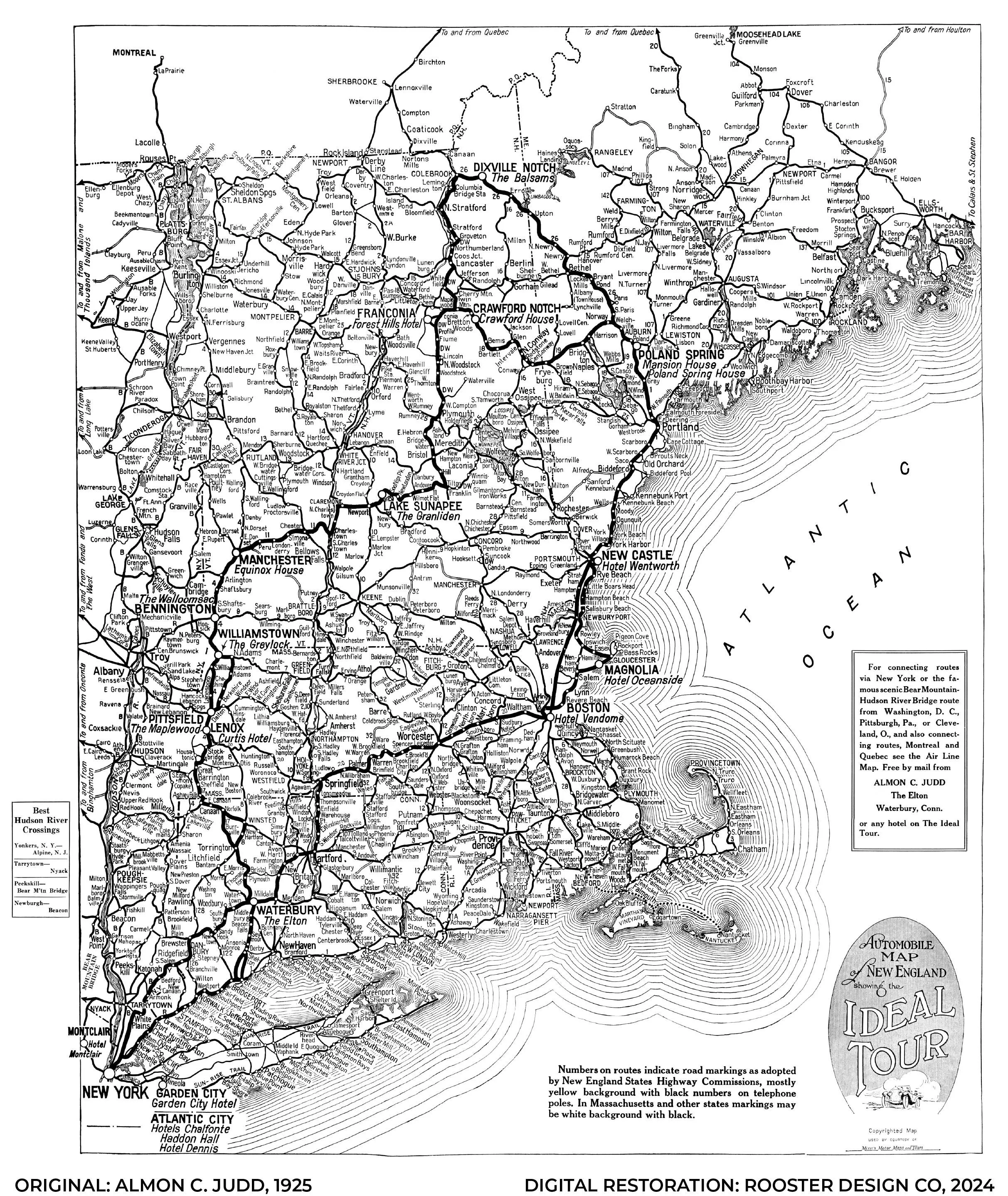
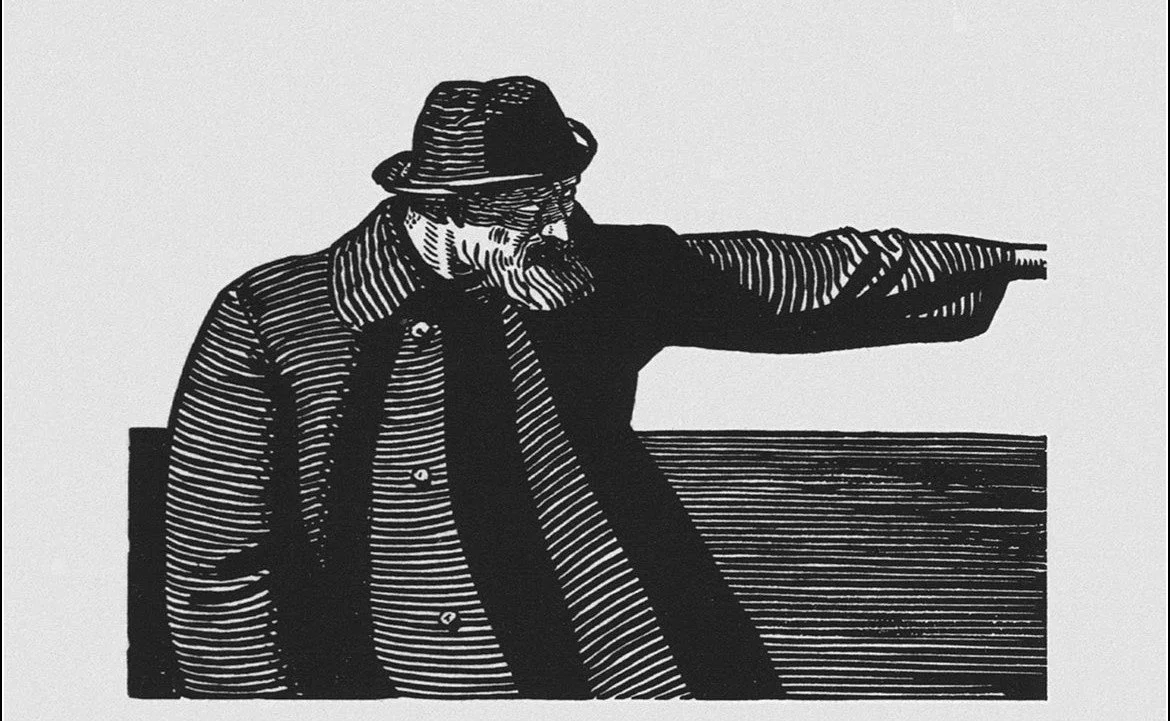
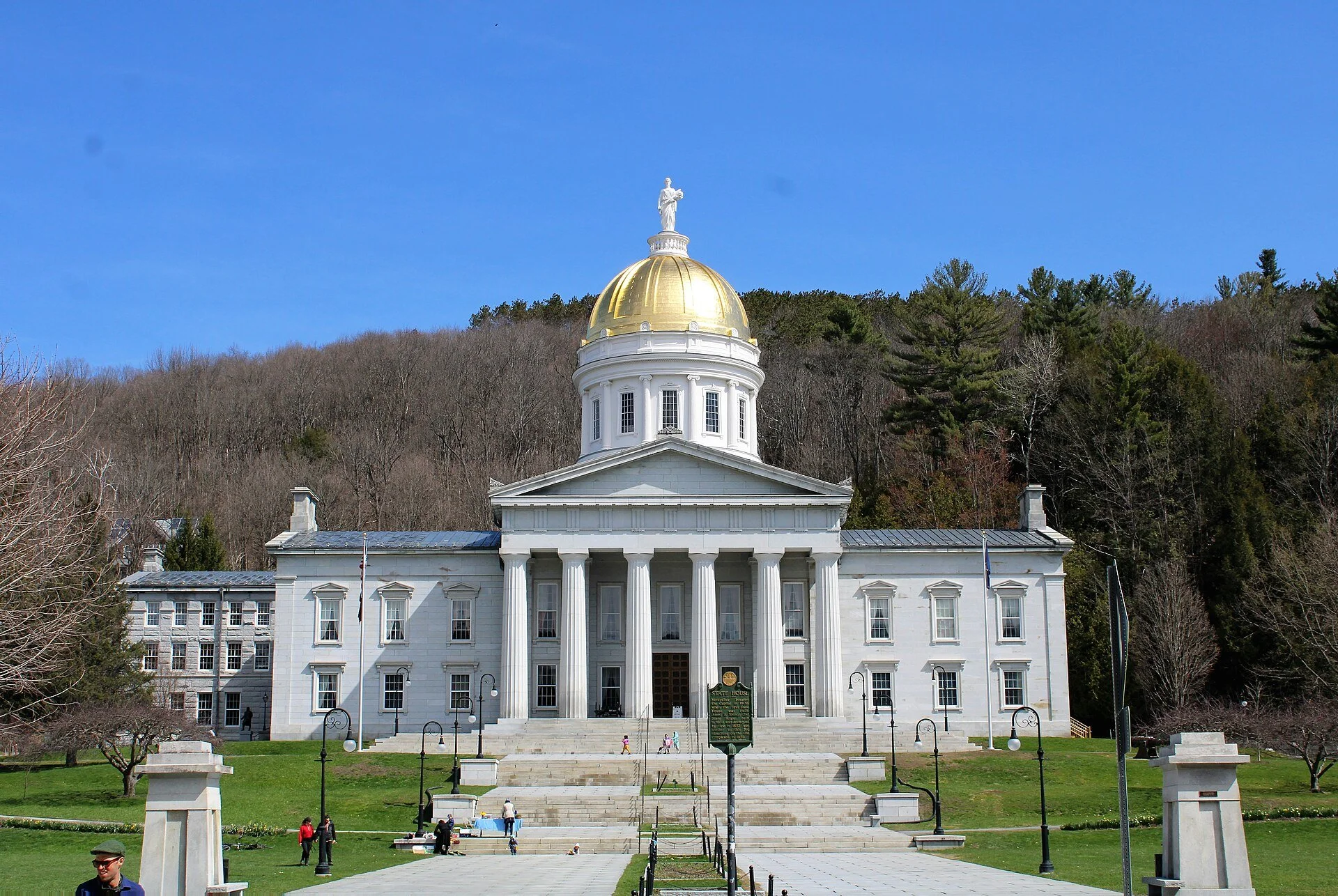
The meaning of trails
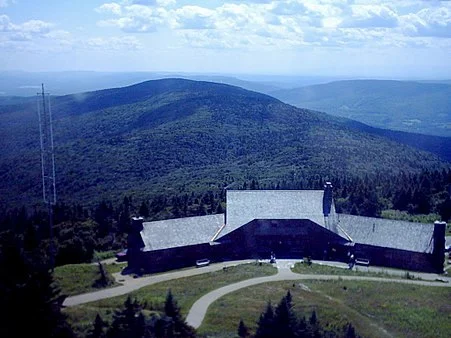
View of the top of Mt. Greylock, on the Appalachian Trail in the Berkshires, in western Massachusetts.
From Robert Whitcomb's "Digital Diary,'' in GoLocal24.com:
We’re in prime hiking season, and so I suggest reading On Trails: An Exploration (Simon & Schuster), by Robert Moor. As the promo for this beautiful travelogue says: “It’s a groundbreaking exploration of how trails help us understand the world – from tiny ant trails to hiking paths that span continents, from interstate highways to the Internet.’’
There’s lots of rich stuff about the Appalachian Trail, especially about Moor’s complex reactions to hiking it and its quirky creator. (I’ve spent some time on it; it’s grandeur, gloom, green and gray.) There’s plenty of science, philosophy and top-notch and often lyrical nature writing. And he addresses that central question: How do we choose a path through life?
The dead amongst the trees
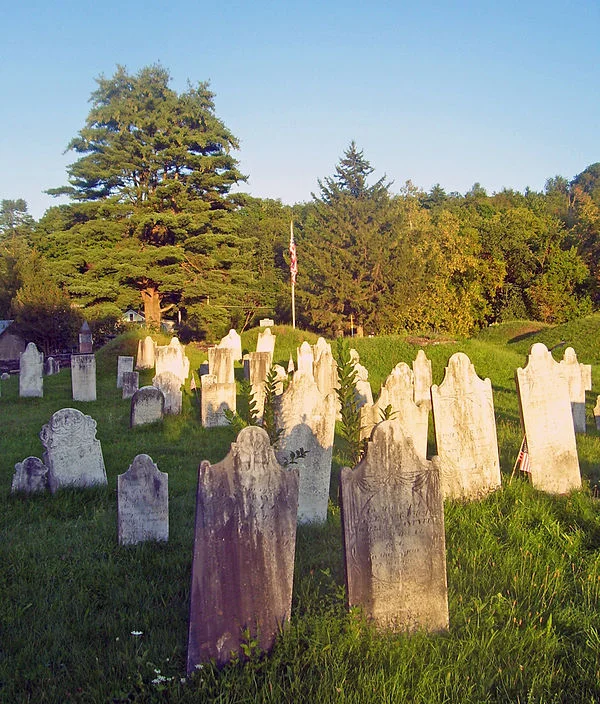
"In Maine the dead
melt into the forest
like Indians, or, rather,
in Maine the forests round the dead
until the dead are indistinguishably mingled
with trees; while underground,
roots and bones intertwine,
and above earth
the tilted gravestones, lichen-covered, too,
shine faintly out from among pines and birches....''-- From "Lost Graveyards,'' by the late Maine writer Elizabeth Coatsworth
Sunken cost

"American Infrastructure'' (encaustic and watercolor), by Nancy Spears Whitcomb.
Llewellyn King: Some GOP big shots push carbon tax

Call it a tax without tears. It is a proposal to address carbon pollution by replacing a raft of tax subsidies and regulatory requirements with a carbon tax.
What is surprising is who is pushing it: dyed-in-the-wool, rock-ribbed Republicans.
They are the top of the GOP: Every one of them has had an outstanding career in finance, industry or academia. They are men and women who contribute to Republican candidates regularly — and some of them quite generously.
These Republican grandees and party financiers have formed the Alliance for Market Solutions (AMS), which aims to educate conservative policymakers on the benefits of market-oriented solutions to climate change.
“A carbon tax, if the myriad of subsidies and regulations that policymakers now use to affect markets are stripped away, would lead to economic growth and achieve significant carbon pollution reductions,” says Alex Flint, executive director of AMS.
Well-known in Republican circles, he previously served as staff director of the Senate Committee on Energy and Natural Resources and as senior vice president of government affairs at the Nuclear Energy Institute.
The organization’s 10-member advisory board includes John Rowe, former chairman and CEO of Exelon Corp., the largest diversified utility in the United States, and Marvin Odum, former chairman and president of Shell Oil Co. and board member of the American Petroleum Institute.
What we need now, Rowe said, is “a new approach to energy tax and regulation that advances our strategic policy objectives and recognizes that the period of scarcity that began in the 1970s is over. We no longer need to subsidize energy production.”
Instead, we need policies that address “the next great energy challenge: carbon pollution,” he said.
Rowe and AMS allies believe that pairing a “revenue-neutral” carbon tax with a regulatory rollback would be good climate policy.
Flint explained: “A carbon tax would ideally be imposed upstream where carbon enters the economy. Costs would then be passed down the consumption chain through prices, which would impact decision-making and drive the use of cleaner fuels and new technologies across the economy.”
Studies by AMS estimate that a carbon tax would generate more than $1 trillion in additional revenue over the next decade, which lawmakers could use to reduce other, more distortionary taxes, or do things like make the 2017 tax reform permanent or even further reduce income taxes.
Rather than mounting a loud public-pressure campaign, Flint told me the members of the alliance — which also includes William Strong, chairman and managing director of Longford Capital Management, and Chris DeMuth, distinguished fellow at the Hudson Institute — began by meeting quietly with influential Republicans in small groups, going over the gains that would come from tax reform and emphasizing that the carbon tax does not have to be a one-size-fits-all solution, although it is a simple solution to a pressing problem.
Emphasis has been on Republicans who wield power behind the scenes and the tax writers in the House and the Senate. The reformers are getting a hearing, I am told.
The alliance has tried hard to get the facts and detailed analyses nailed down ahead of public discussion. They have done this in a new book, “Carbon Tax Policy: A Conservative Dialogue on Pro-Growth Opportunities,” edited by Alex Brill of the American Enterprise Institute.
The book is, you might say, the creed of the AMS. It is an eye-opening read by conservatives who want to limit government market-meddling and bring about sound policy through enlightened taxation.
On Twitter: @llewellynking2
Llewellyn King is executive producer and host of White House Chronicle, on PBS.
A 'farmhousey thing'
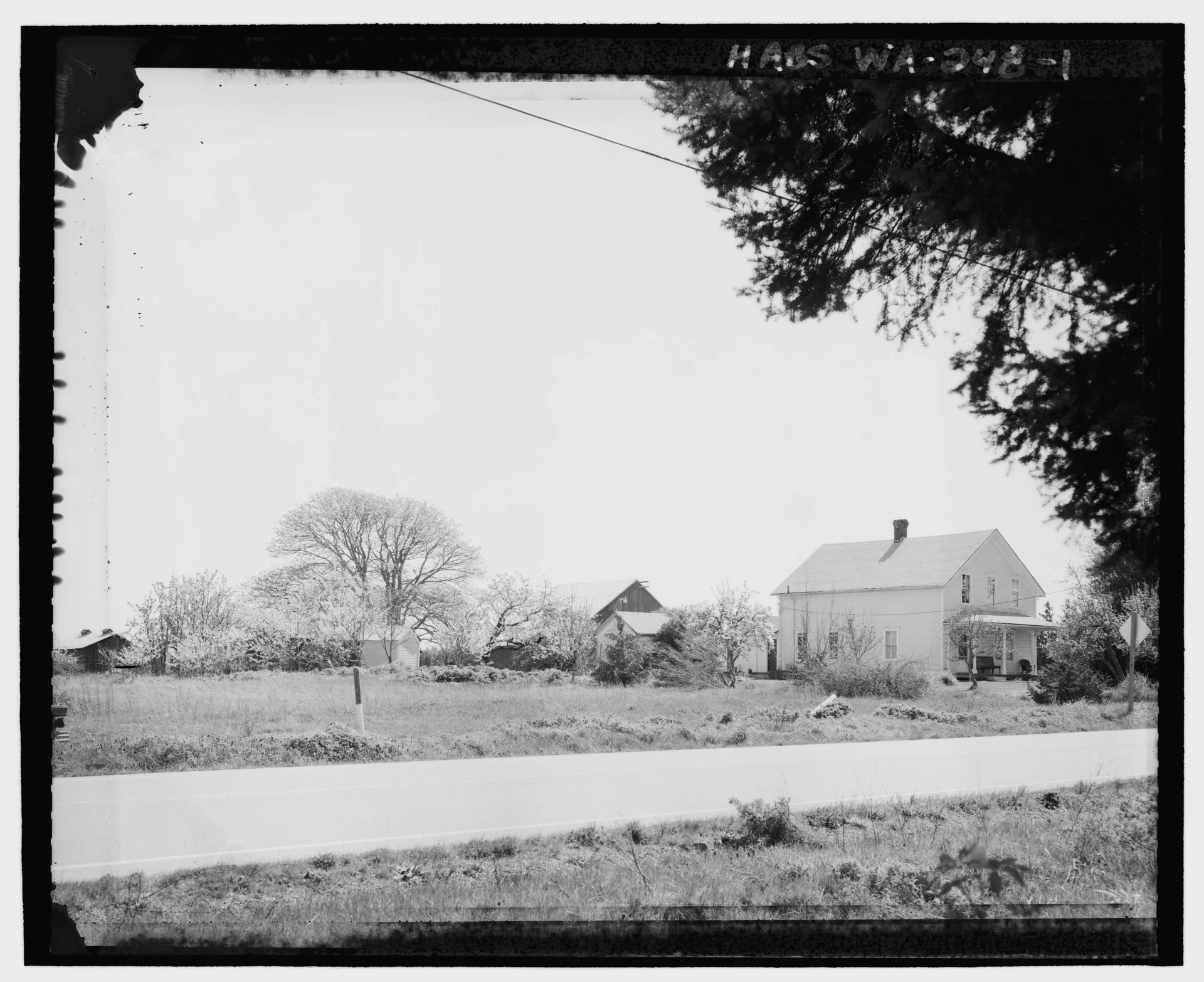
“Between Amherst {Mass.} and the Connecticut River lies a little bit of Iowa – some of New England’s more favored farmland. The summer and fall of 1982, Judith bicycled, alone and with Jonathan, down narrow roads between fields of asparagus and corn, and she saw the constructed landscape with new eyes, not just looking at houses but searching for ones that might serve as models for her own. She liked the old farmhouses best, their porches and white, clapboarded walls. 'This New England farmhouse thing,’ she called that style.''
-- From Tracy Kidder’s House (1985)
Easier to find in the fog

"Scaredy Cat'' (mixed media), by Keith MacLelland, in the group show "Close to Home,'' at Galatea Fine Art, Boston, July 5-29.
'Refined grandeur'
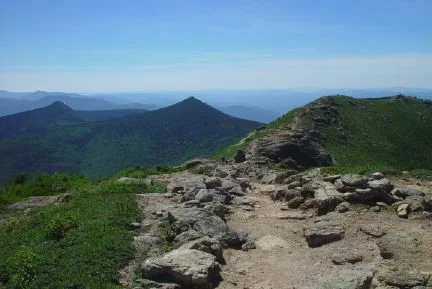
In the Franconia Ridge Trail, in the White Mountains.
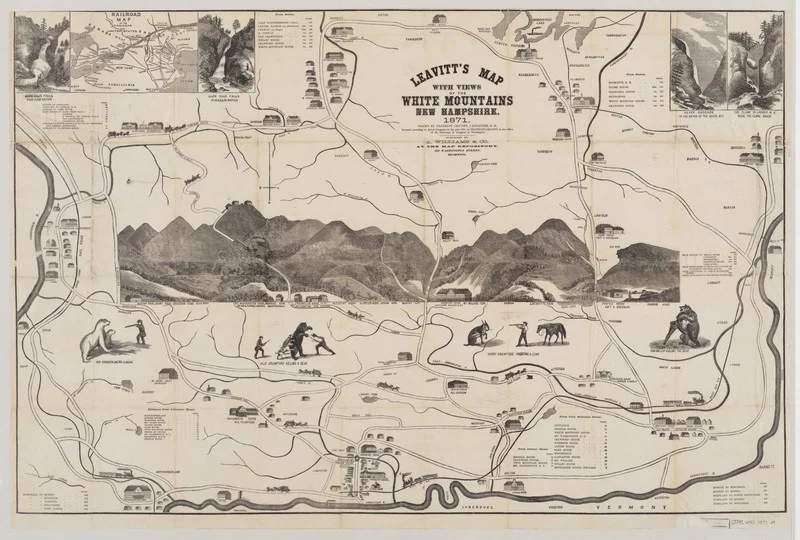
"A visit to New Hampshire supplies the most resources to a traveler, and confers the most benefit on the mind and taste, when it lifts him above mere appetite for wildness, ruggedness, and the feeling of mass and precipitous elevation, into a perception and love of the refined grandeur, the chaste sublimity, the airy majesty overlaid with tender and polished bloom, in which the landscape splendor of a noble mountain lies.''
-- Thomas Starr King (1824-1864), Unitarian minister
'When and where to stay'

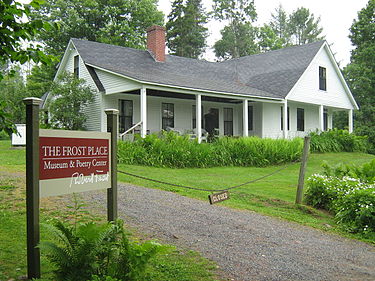
What had been Robert Frost's farmhouse, in Franconia, N.H., near the Franconia Range of the White Mountains .Frost and his family lived in the house from 1915 to 1920, and spent their summers there for nearly 20 years.
At Robert Frost’s farm, Franconia, New Hampshire
“When Robert Frost passed this stand of birch
each gray curl held his eye at word-point.
No rock but gave him pause. He’d reach to touch
it where it lay. Stones taught him to roam
by showing him where he’d been. Freedom
to go meant knowing when and where to stay.
-- From “Unlettered,’’ by Edward J. Ingebretsen
Private performance

"Elizabeth 2002'' (oil on board) by Arthur Cohen, at the Berta Walker Gallery, Provincetown.
You'll pay us to move to Vermont!
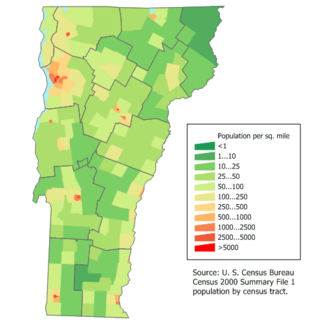
Population density in Vermont.
From Robert Whitcomb's "Digital Diary,'' in GoLocal24.com:
Something that used to surprise me a bit after the advent of the full-frontal Internet since the ‘90s is that the ability to work remotely has not hollowed out cities. Instead, big American cities have drawn increasing numbers of younger workers who are working on computers all day. You might think that more of them would want to live in beautiful countryside.
Such as in Vermont, which is trying to bribe some workers with up to $10,000 to move to the Green Mountain State, from which they’d work remotely for an out-of-state company. The Boston Globe reports:
“To qualify, workers must be employed full time with a company based outside Vermont, and move to the Green Mountain State on or after January 1, 2019. The worker must also perform most duties from a Vermont home office or co-working space. The state will then issue grants to newly minted Vermonters up to $5,000 per year for two years for things like moving expenses, Internet access, or a computer.’’
The offer sounds very much like a pilot plan, since it’s capped at only a total of $125,000 for 2019, with grants to be on a first-come, first-served basis.
The main idea, of course, is to draw in more young people, including those who might want to grow a business in the state. Vermont has long had among the lowest unemployment rates in America, but has for years been among the three or four states with the oldest population. Policymakers worry about how to ensure long-term economic growth and how to lure and keep a large enough percentage of younger people to pay taxes to maintain the state’s good social services.
I think that the joys of working remotely have been overstated. Most people want daily, in-person interactions with co-workers, and many, especially the young, prefer the energy of a big city to the most beautiful quiet landscape.
In any event, little Vermont can’t afford to pay many folks to move to Vermont. But some refugees from city jobs will find Burlington’s rather hip charms, and view of the Adirondacks across Lake Champlain, suffice for urbanity.
To read more, please hit this link.
Chris Powell: Back to the future with CTrail


Within living memory there was frequent passenger railroad service north and south out of Hartford, and the railroad company, the New York, New Haven, and Hartford, known simply as the New Haven, was as famous as any. Thanks to Hartford-born financier and monopolist John Pierpont Morgan Sr., the New Haven practically owned transportation in southern New England for the first half of the 20th Century, having acquired most of its competitors.
The line north of New Haven to Hartford and Springfield, Mass., was double-tracked to hasten the heavy traffic. But the New Haven was usually over-indebted, went bankrupt twice, was crippled by cars and highways in the 1950s and '60s, and was taken over by the government in 1970. One track north of New Haven was torn up to reduce maintenance costs. Since then the passenger service maintained on the line by the government railroad, Amtrak, has been only nominal.
Now Connecticut's Transportation Department hopes to revive passenger service frequent enough to serve commuters from Springfield to New Haven, connecting there to the Metro-North commuter railroad system, the busiest in the country, serving Grand Central Station in New York and the whole metropolitan area. Double track north of New Haven has been restored and the new trains (refurbished ones, actually) are running. This is thrilling as it shows that state government still can do something more than pay pensions to its employees, do something of potentially general benefit.
But it may be a long time before the new train service can be considered a success. For just like the old New Haven, the new service, dubbed CTrail, will lose money -- probably tens of millions of dollars per year -- and each passenger paying $8 per trip between Hartford and New Haven probably will be subsidized by state government by many times that amount for a long time. Busy as Metro-North is, fares still don't cover its costs and never will. State government pays tens of millions each year to keep the line running.
Of course highways cost money too and are vital to commerce and development. But a railroad can support commuters and development only if its stations have frequent trolley, subway, bus, or van service to connect them to their communities. Such systems are not yet in place for the new line, and when they are they will lose money too.
Ironically, at the outset the new rail service's biggest beneficiary may be the MGM casino under construction in Springfield, which more easily will siphon Connecticut and New York customers away from the Indian casinos in eastern Connecticut, costing the state still more money. State government has authorized the tribes to build a casino in East Windsor to intercept Springfield gambling traffic but the railroad doesn't go through East Windsor. No one seems to have thought of that when the site for the interceptor casino was chosen.
Even so, on the whole the new rail service will accentuate Connecticut's excellent position between New York and Boston, especially if, as is contemplated, Massachusetts extends its own commuter rail service from Boston and Worcester west to Springfield.
After all, nearly everyone in Connecticut goes to New York and Boston sometimes. Now it is easy again for people north of New Haven to go to New York by train and use the time not to stew in traffic but to read, work, or just relax or nap. (If only Metro-North and CTrail trains could be equipped with wireless internet service.)
So "puff-puff, toot-toot, off we go" -- just, please, not to another bankruptcy.
Chris Powell is a columnist for the Journal Inquirer, in Manchester, Conn.
Lizet Ocampo: The truth about 'sanctuary cities'
Via OtherWords.org
In a recent White House meeting on “sanctuary cities,” President Trump called some undocumented immigrants “animals” — a disturbing new low even for someone who’s demonized immigrant communities from the beginning. The president painted a picture of “sadistic criminals” who are being given “safe harbor” through so-called sanctuary policies.
While Trump and his right-wing supporters would have people believe that “sanctuary cities” are places that allow lawlessness and where immigrants aren’t prosecuted for crimes, the reality is far different.
Here are the facts: the federal government can enforce immigration law anywhere. The term “sanctuary city” typically refers to a jurisdiction that wants to limit the use of local law enforcement resources to carry out federal law-enforcement work, especially when they’re asked to violate constitutional protections.
While these cities focus their resources on fighting local crime, they can still work with the federal government on immigration enforcement, since federal agents can issue a warrant. This is especially the case in situations where an undocumented person has carried out a serious crime — as opposed to someone who, for example, happens to have a broken taillight.
Experts note that undermining “sanctuary cities,” which are more accurately called “safe cities,” often isn’t good for anyone.
As two police chiefs from Storm Lake and Marshalltown, Iowa, recently explained: “We depend on residents, including immigrants, to come to us when they see something suspicious or potentially criminal. If they hear of a looming ‘crackdown’ that could affect their families and friends, they are less likely to come to us to report and prevent actual crimes.”
A law-enforcement association representing some of the largest cities in the country has similarly argued that asking local police to do the work of federal immigration officers would likely lead not only to more crime against immigrants, but also to more crime overall.
And a 2017 analysis from the University of California at San Diego found that “counties designated as ‘sanctuary’ areas by ICE typically experience significantly lower rates of all types of crime“ than comparable counties without such policies in place.
While ongoing police abuse against communities of color has underscored the urgent need for police reform and the rebuilding of deeply damaged community-police trust, further eroding trust by attempting to dismantle “safe cities” policies would be a significant step in the wrong direction.
Despite the facts, Trump and his administration want to scapegoat immigrants, appealing to fear and racism rather than actually looking at which policies are most effective.
Time and again, Trump entangles two separate issues — immigration and crime — by telling gruesome stories about crimes committed by immigrants that exploit the pain of victims’ families and aim to demonize entire communities. (When it comes to crime against immigrants however, the administration is mysteriously silent.)
The reality is that immigrants are actually less likely to commit crimes than people who were born here — and that immigrants who do commit crimes go through our criminal justice system, just like everyone else.
Especially as Trump’s administration is reaching new levels of cruelty by separating children and parents at our borders, we have to be vigilant in countering the use of any dehumanizing lies for political gain. We have to push our elected officials to stand up to Trump’s dangerous anti-immigrant agenda.
Our public policies should be grounded in our shared values and in sound data about what works and what doesn’t work in our communities — never in fear-mongering.
Lizet Ocampo is the political director of People For the American Way.
.
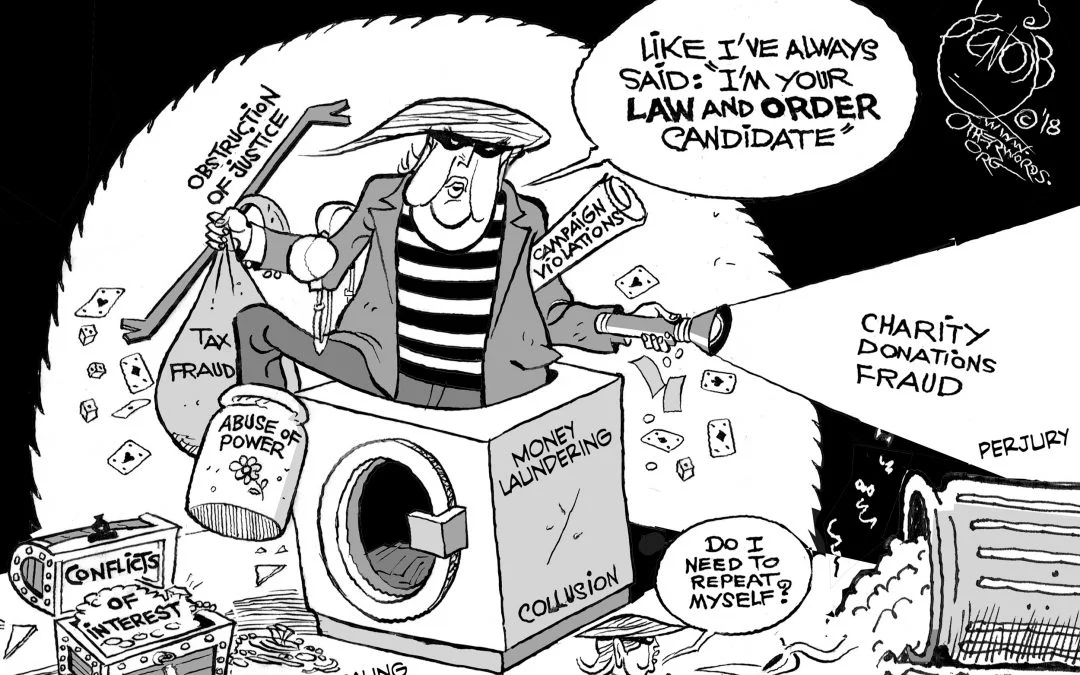

'Connecting Stories'

By printmaker and hand-made book artist Carol Strause FitzSimonds, in her joint show, "Connecting Stories,'' with Elena Obelenus, a ceramicist and printmaker, at the Providence Art Club through July 20.
But scare us more

"Tell Us Again'' (oil on panel), by Colin McGuire, in the group show "Close to Home,'' at Galatea Fine Art, Boston.
A summer twilight game

"We knock red yellow blue
twilight in and out of wickets
bent spines of invisible animals
we need to enter. The rhododendrons
are out of bounds….''
From "Croquet in Childhood, '' by Helena Minton

Pine-pollen time

Pine pollen awaits being liberated by the wind.
“Now I know that summer is here, no matter how cold it is at night, for when I went out to the car this morning, the windshield was dusted with orange and the whole shiny dark blue of the body was powdered. The pine pollen has come! This is a thick, almost oily deposit that penetrates everything. If you close a room and lock the windows, the sills will be drifted with the pollen the next morning. The floors turn orange.’’
Gladys Taber, in My Own Cape Cod (1971)
Mona Younis: On poverty, Americans' low expectations of their government
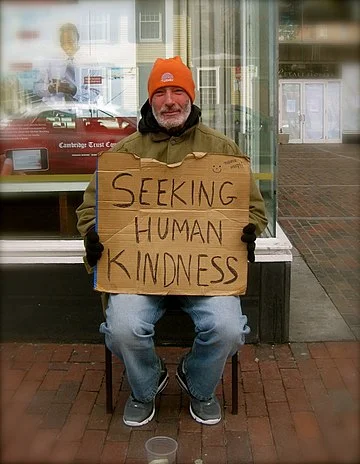
Homeless man in Boston.
From OtherWords.org
Are we Americans unworthy? That’s certainly the message we’re getting from our government.
Over 40 percent of us are poor or low-income. How is that possible in the wealthiest country in history?
“The United States is alone among developed countries in insisting that while human rights are of fundamental importance,” explains U.N. rapporteur on poverty Philip Alston, “they do not include rights that guard against dying of hunger, dying from a lack of access to affordable health care, or growing up in a context of total deprivation.”
Alston says that “the persistence of extreme poverty is a political choice made by those in power” — which means that “with political will, it could readily be eliminated.” Unfortunately, our government’s political will is increasingly exercised to make things more, not less, difficult for us.
Most Americans don’t know it, but in 1977 the U.S. actually signed an international treaty called the U.N. Covenant on Economic, Social, and Cultural Rights, which mandates government responsibility to ensure their citizens do more than merely survive. Unfortunately, one
U.S. administration after the other has completely disregarded it, and Congress never ratified it.
Our leaders have apparently judged that we either don’t need — or don’t deserve — things like an adequate standard of living and universal health care. As one dizzy U.S. congressman, Idaho Republican Raul Labrador claims, “Nobody dies because they don’t have access to health care.”
164 countries have ratified the treaty, but ours won’t. Are their people more deserving than we are? Is it something we’ve done?
It can’t be because we’re doing fine without those rights.
I mean, look at our minimum wage. There isn’t a “single county or metropolitan area,” as a Guardian report put it, where a minimum wage can get you a “modest two-bedroom home, which the federal government defines as paying less than 30 percent of a household’s income for rent and utilities.”
The price we pay for this disregard for our fundamental human rights begins at the beginning of our lives. Indeed, many of us struggle to survive to our first birthday. Citing figures from the Centers for Disease Control, the Washington Post declared our infant mortality rate “a national embarrassment,” noting that it’s higher “than any of the other 27 wealthy countries.”
That’s painful enough. But they went on: “Despite health care spending levels that are significantly higher than any other country in the world, a baby born in the U.S. is less likely to see his first birthday than one born in Hungary, Poland, or Slovakia. Or in Belarus. Or in Cuba, for that matter.”
Sad!
And a recent UNICEF assessment of how children are faring found the U.S. near the bottom of 41 rich countries when it came to meeting goals on child poverty, hunger, health, and education.
Tragic!
Well, there’s an important difference between us and other prosperous countries: Their citizens expect and demand more of their governments than we do of ours. And governments do only as much as their citizens expect — not more! So why do we accept so little from ours? How have we come to deem ourselves less worthy than others?
Mona Younis is a human rights advocate.
David Warsh: Comey tried to play referee in a dangerous game; see widely ignored context here
The report of the Inspector General of the Department of Justice on the FBI’s investigation of Hillary Clinton’s email practices has been extensively hashed over since it was published. You can read about it, if you like, here or here or here.
What’s lacking is vital context. Yet tucked away on the last two public pages of the 568-page report are some tantalizing findings destined to eventually become the fundamental background to the story.
Inspector General Michael Horowitz’s report covered eight broad topics, as described by its executive summary –
- The FBI investigation, code-named “Midyear Exam,” of former Secretary of State Clinton’s email server.
- Former FBI Director James Comey’s go-it-alone statement about the FBI’s findings in July, 2016.
- The Department of Justice’s subsequent decision not to charge Clinton with a crime.
- The discovery in September of some unexamined Clinton emails on Anthony Weiner’s laptop computer, and the month that passed before the FBI sought a warrant to examine the machine.
- Comey’s decision to notify congressional leaders in October that the investigation had been reopened,
- Some recusal issues.
- Various text messages among agents.
- And the FBI’s policies regarding Twitter announcements.
Indeed, the report presents an unusually thorough re-examination of the issues. Agents assigned to the IG’s office sifted through 1.2 million documents and interviewed more than 100 witnesses, some of them more than once.
News organizations concentrated on two aspects: Comey’s decision to make a unilateral announcement of FBI findings on July 5, in which he scolded candidate Clinton for having been “extremely careless” while recommending publicly that no charges against her be brought; and his decision to notify Congress on Oct. 28 that new emails had been found. Both decisions are held by partisans to have influenced the election to some unknowable degree.
In both cases, Horowitz was blistering. Of the July statement, its contents undisclosed in advance to his Justice Department superiors, the IG wrote that Comey had been both insubordinate and heedless of well-established FBI rules. He should have made his recommendation privately and allowed (or forced) President Obama’s Justice Department to make the call (and take the heat) that no charges would be brought. Of October, Horowitz wrote:
"… Comey’s description of his choice as being between 'two doors,' one labeled 'speak' and one labeled 'conceal,' was a false dichotomy. The two doors were actually labeled 'follow policy/practice' and 'depart from policy/practice.' His task was not to conduct an ad hoc comparison of case-specific outcomes and risks. Rather, the burden was on him to justify an extraordinary departure from these established norms, policies, and precedent.''
Receiving slightly more attention, at least in conservative media, was a text exchange between the agent leading the investigation into the Trump campaign’s Russian connections and a high-ranking FBI lawyer, then his girlfriend. Lisa Page wrote on Aug. 8, “[Trump’s] not ever going to become president, right? Right?” “No. No he won’t. We’ll stop it,” replied special agent Peter Strzok.
(Remember, Paul Manafort was still managing the Trump campaign at the time; 10 days later he resigned.) In September Strzok was promoted to deputy assistant director of the Espionage Section. In October, he drafted Comey’s letter to congressional Republicans – the one widely seen as harmful to Clinton’s candidacy.)
Overlooked entirely in the coverage, as far as I could tell, were four pages at the end of Chapter 12 -- “Allegations that Department and FBI Employees Improperly Disclosed Non-Public Information” – in other words, leaks.
Horowitz expressed “profound concerns” about the “volume and extent” of unauthorized communications, despite “strict limits,” which had been “widely ignored.” The IG’s ability to identify leakers was hampered by two factors. Horowitz wrote: Sensitive information was widely shared, often involving dozens, and in some cases, more than a hundred persons; second, the normal strict rules governing disclosure appeared to have been widely ignored during the month before the election.
Which leads to those two pages at the end of the report. (I couldn’t think of a way to link them but you can easily scroll down here to find them at the bottom – Attachments G and H.) They contain two “link charts,” or schematic diagrams, depicting verified communications between FBI employees and media representatives, in April/May and October 2016.
Why April/May? That was a period in which Comey was pressuring the Department of Justice to move more quickly to obtain possession of the laptops that Clinton lawyers had used to sort personal from State Department messages, telling DOJ supervisors that he might appoint a special prosecutor if he couldn’t obtain them. (Horowitz found no evidence that he seriously considered it.) Already Comey had begun to contemplate the unilateral announcement he would make in July, fearing that the Obama administration could no longer announce a decision not to prosecute Clinton in a way that the public would find objective and credible.
Why October? That was the period of intense behind-the-scenes maneuvering over the existence of the Weiner emails. After Comey revealed their existence in his letter to congressional leaders, Wall Street Journal reporter Devlin Barrett followed up with a blockbuster story, FBI in Internal Feud over Hillary Clinton Probe. Barret disclosed, among other things, that an FBI investigation of the Clinton Foundation had begun.
Deputy FBI Director Andrew McCabe was later fired, at the IG’s instigation, and referred for possible criminal prosecution, for having confirmed the existence of the second investigation to Barrett, and for having been less than candid when interviewed about his actions. McCabe has said that he was defending the FBI (and himself) against earlier unauthorized leaks accusing him of resisting the investigation.
No details are included in those diagrams about the identities of the callers and the called, but it seems a reasonable bet that the centerpiece of “Network Two” is reporter Barrett. Whoever it is, you get from those 112 calls a pretty good idea of what true shoe-leather reporting looks like these days. And remember, the charts reflect FBI contacts only with journalists; congressional staffers are not mentioned. (They may yet be if the Democrats regain the House.)
Comey has insisted, both in his book, A Higher Loyalty: Truth, Lies, and Leadership, and in interviews with agents working for the IG, that the threat of leaks had no effect on his decision to write that letter on the eve of the election. Some senior officials who worked for him weren’t so sure. His general counsel, James Baker, told the IG, “If we didn’t put out a letter, somebody is going to leak it.” Rudolph Giuliani, a U.S. attorney before he becoming mayor of New York, was widely involved as a go-between between FBI-connected sources and reporters at the time.
In each case, Comey’s defense against the Inspector General’s criticisms has been that he felt the FBI – and perhaps the nation itself – were caught in a “500-year flood” and that extraordinary measures were required to deal with it. Precisely this sense of the extraordinary is missing from Horowitz’s report.
The last word in these events will belong to journalists, first, and then historians. Among the former, reporter Barrett will likely be the most important. He left The WSJ for The Washington Post in February 2017 and the next year helped The Post share a Pulitzer Prize with The New York Times for national reporting on Russian interference in the 2016 presidential election and Russia's connections to the Trump campaign, the President-elect’s transition team and his eventual administration.
Comey sought to play the role of referee. My hunch is that eventually he will be seen to have performed a service similar to that of another outsize regulator with an independent streak. Former Federal Reserve Chairman Paul Volcker, also 6 feet 8 inches tall, began a costly campaign against price inflation in the late 1970s. Despite expert skepticism and political criticism, he won his battle over a 10 years and subsequently was celebrated at a hero.
Upholding post-Watergate standards at the Justice Department (Comey was deputy attorney general 2003-05) and the FBI during three presidential administrations is not the same as making monetary policy.. Yet there may be something in the experience of growing up tall that predisposes some men to act in certain ways when confronted with emergency. Whether you think the comparison is apt depends on what you expect will happen to President Trump and the congressional Republicans who support him.
David Warsh is a longtime business and political columnist and economic historian. He is proprietor of Somerville, Mass.-based economicprincipals.com, where this column first appeared.

Chris Powell: Kardashian's lesson for Moral Monday poseurs

Kim Kardashian.
People who don't watch what is ironically called "reality" television have never understood Kim Kardashian's reason for being except perhaps for her combining a voluptuous figure with tight clothes. But if she never does anything else with her life, she will have justified it by persuading President Trump to pardon Alice Johnson, the 63-year-old woman who has been in federal prison for more than 20 years, serving a life sentence for being part of a drug ring in Tennessee, a first offense and a nonviolent one.
Twenty years is unjust for mere drug dealing, and mercy is often in order, especially from the president, who lately had been calling for capital punishment for drug dealers. Yes, as New Jersey Sen. Cory Booker complains, the nation's prisons hold thousands of other drug offenders whose sentences are disproportionate to their crimes. But let Kardashian's efforts prompt a review of those cases and indeed of drug criminalization generally.
After all, as economic inequality worsens because of government policy, contraband law increases the temptation for people to make a living by breaking it. Drug law imprisons some people, like Johnson, longer than some people convicted of murder or manslaughter.
Trump is not likely to give up his demagoguery any time soon. But if there is a spark of decency and mercy in him, it should be searched for and nurtured.
Kardashian offers a lesson for the people of Connecticut's Moral Monday group who are making a career of blocking traffic in the Hartford area to protest poverty, racism and such.
The Moral Monday people exalt this as civil disobedience but it is far from the civil disobedience of old, like the lunch-counter and bus sit-ins protesting racial segregation. Those protests had a direct connection to the evil being protested. Blocking traffic today has none. Indeed, it offends even those who otherwise might be sympathetic.
The civil disobedience of old also was connected to specific policy objectives. Articulating no specific policy objectives in their protests, the Moral Monday people might as well protest the weather. For they aim less to accomplish anything in policy than to demonstrate self-righteousness. They don't care that by blocking traffic they are inconveniencing the supposed oppressed as much as the supposed oppressors. With their choreographed and gentle arrests, arranged in advance with the police, they seek a mock martyrdom.
A member of the Moral Monday group, a Unitarian Universalist minister from Manchester, the Rev. Josh Pawelek, who has gotten himself arrested several times only to be sentenced to a little community service, told the (Manchester) Journal Inquirer the other day: "I'm breaking the law because I don't know how else to draw attention to the laws that impoverish people."
Yet every day Connecticut and the country are full of political clamor and even a little action in regard to poverty. To influence policy and lawmaking and improve lives, people write letters to their elected representatives and news organizations. They support or oppose candidates for office or even become candidates themselves. They speak at public forums. They volunteer for charitable groups. If their message is compelling enough they may even recruit disciples and travel the world to spread it, risking a martyrdom far more severe than community service.
Yes, Kim Kardashian is fortunate enough to be able to stop traffic without blocking an intersection. But who would have considered her more thoughtful and relevant than a clergyman?
Chris Powell is a columnist for the Journal Inquirer, in Manchester, Conn.