
Vox clamantis in deserto
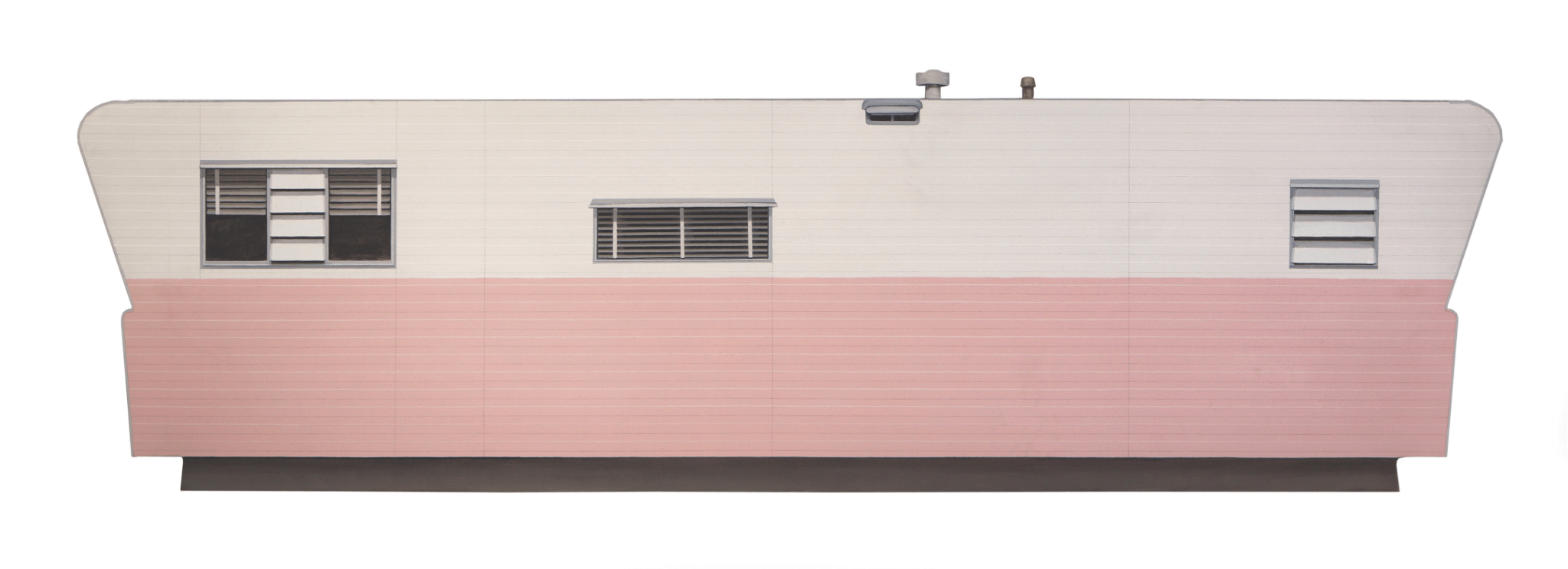



Snapper migration season

-- Photo by Lydia Davison Whitcomb, in Little Compton, R.I.
Watch out near streams and ponds! Snapping turtles are on the move at this time of year, and they can appear out of nowhere.
Don't try to pick up one! They can extend their long necks to give you a very bad bite.
They are on the roads, too. Hit this link.
William Morgan: New Providence hotel -- suburban banality in a spot crying out for urban grandeur
What would a truly creative capital city erect on a premier spot in an historic downtown? An art center? A library? A theater? A museum? Maybe a knock-your-socks-off hotel?
How about a cookie-cutter commercial travelers motor inn of the kind you could see along any highway leading to the airport in any American city?

Homewood Suites by Hilton near Kennedy Plaza, Providence
(Tocci Building Corporation)
What does it say about Providence that an anywhere hotel is being constructed on one of the most important lots downtown? This piece of suburban blandness joins such significant civic monuments as City Hall, the old railroad station, and two handsome courthouses, not to mention some notable statuary.
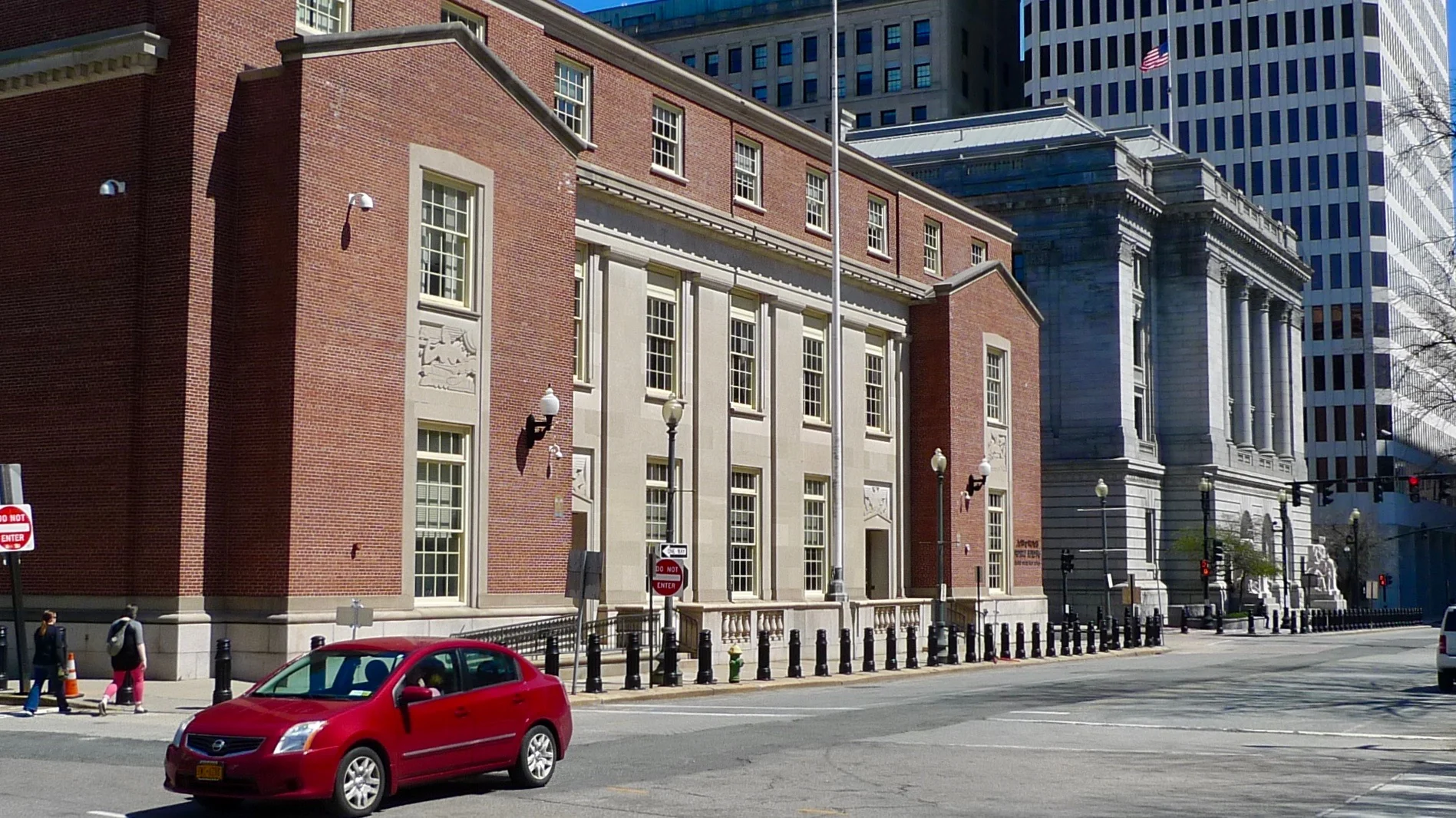
Federal Building Annex, 1939-40, and the 1908 Federal Building.
(William Morgan)
The Hilton is rising on the site of long-gone Central Fire Station. The firehouse architect gave the city a monumental piece of public architecture, a delightful yet dignified exercise in English Renaissance with a landmark tower (no doubt used for drying hoses).
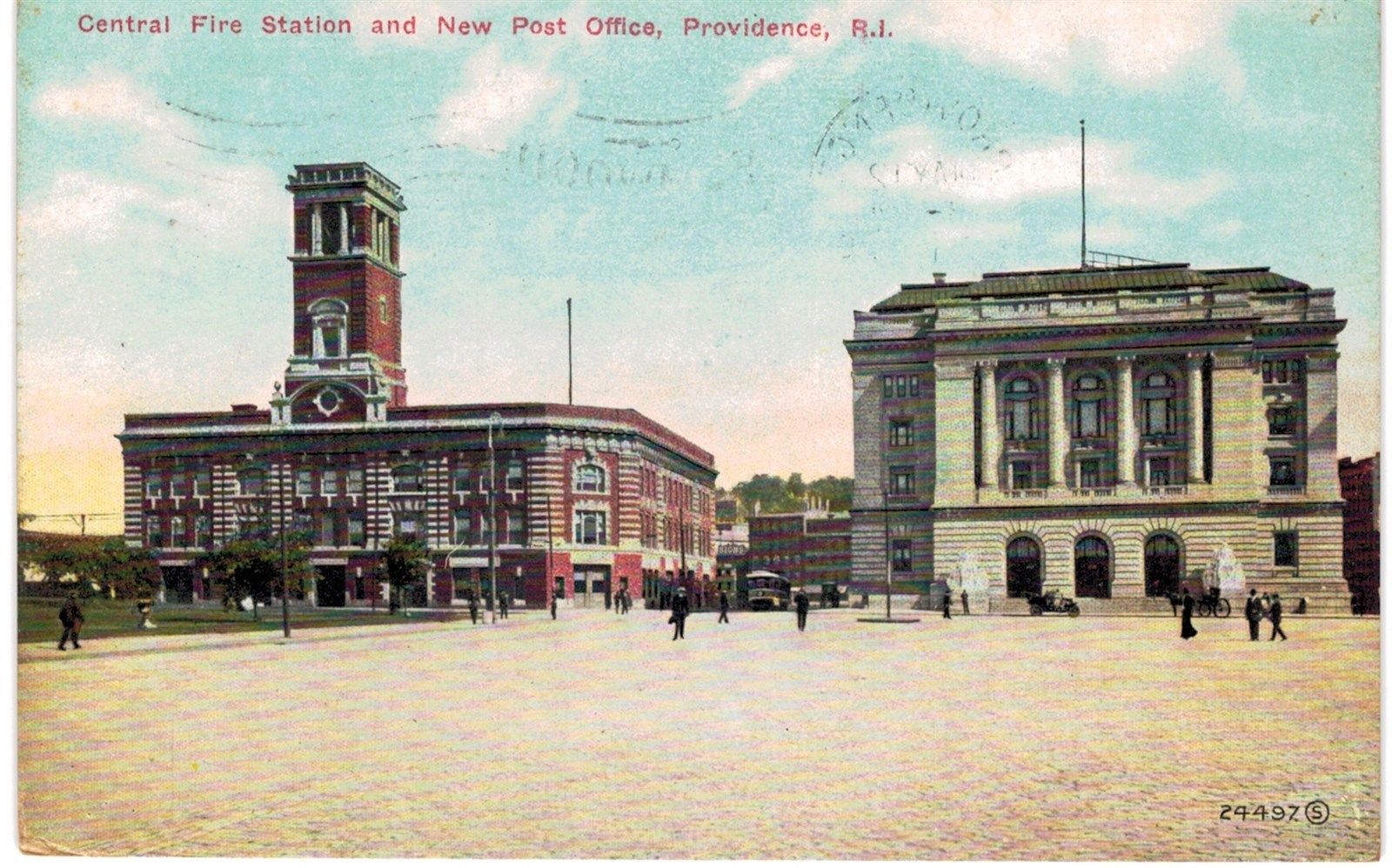
Central Fire Station (1880-90) and the then-new Federal Building and Post Office.
One does not need to see the finished product to know how ho-hum this purported “upscale” hostelry will be. As is often the case with projects such as this, the renderings look better than the actual building ever will. Yet, the designers, ZDS Architecture & Interior Design, claim to have created “a building that recognizes and is responsive to the grand and traditional neighbors that surround it without resorting to imitation.”

Homewood Suites. $20 million of blandness.
(Tocci Building Corporation)
The 109,000-square-foot hotel will be eight stories, the first floor of which will be devoted to the parking of cars. The Homewood Suites is saved from being an overbearing rectangular block by the odd shape of the lot. And the designers have mitigated the building’s bulk by dividing the façade into three groupings, in a 2, 4, 2-story sequence, in a reference to a classical column. Alas, the brick skin looks exactly like what it is, a thin veneer.
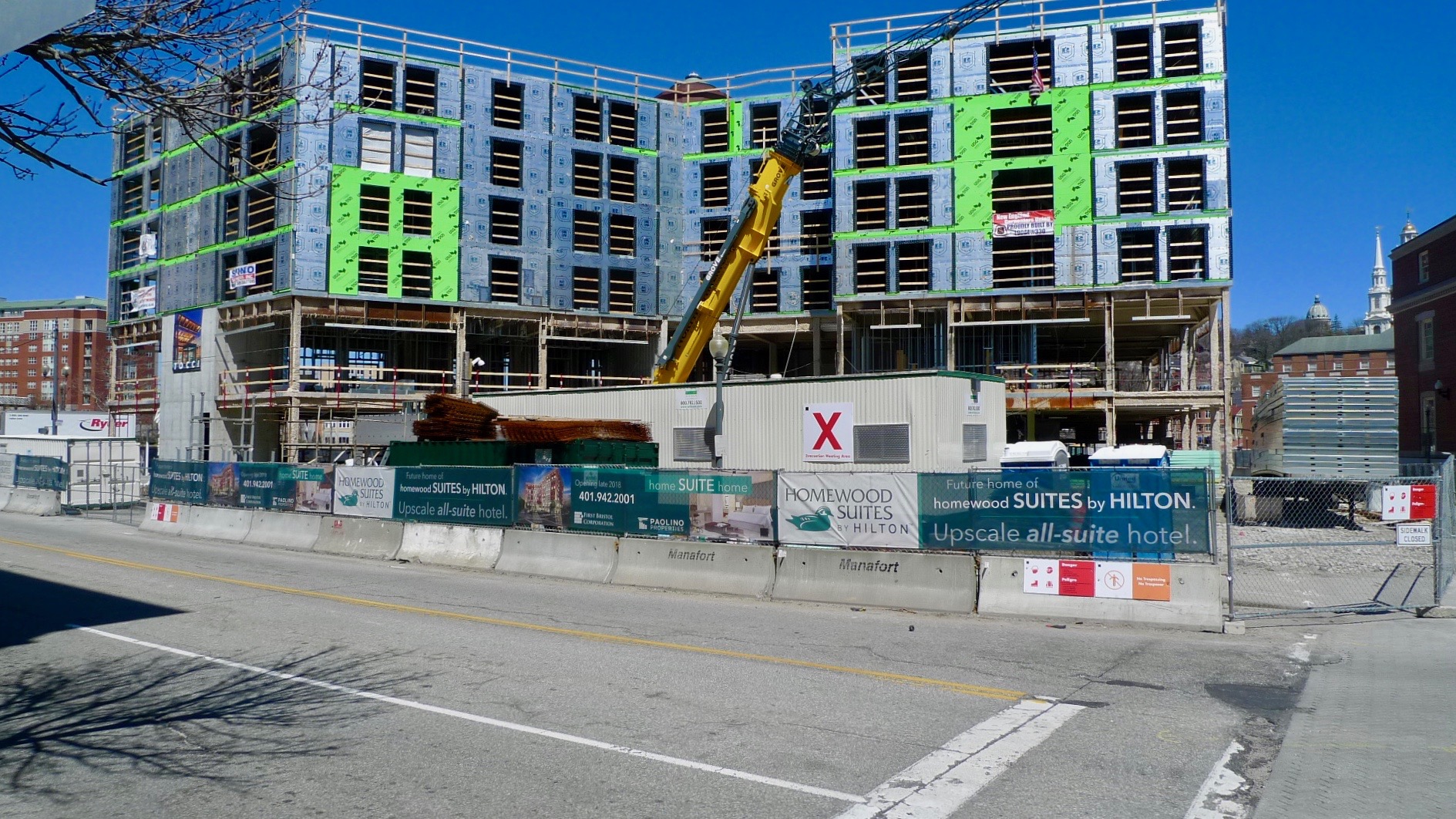
Homewood Suites under construction.
(William Morgan)
Do you ever wonder why so many uninspiring new buildings in Providence get wrapped in these contact-paper-thin brick panels? In the 21st Century we ought to be unafraid of exposing the structural frame, or crafting envelopes of contemporary materials. Perhaps the purpose of the brick is to give the allusion of Early American domestic architecture. But it is not easy to make an eight-story block homey.
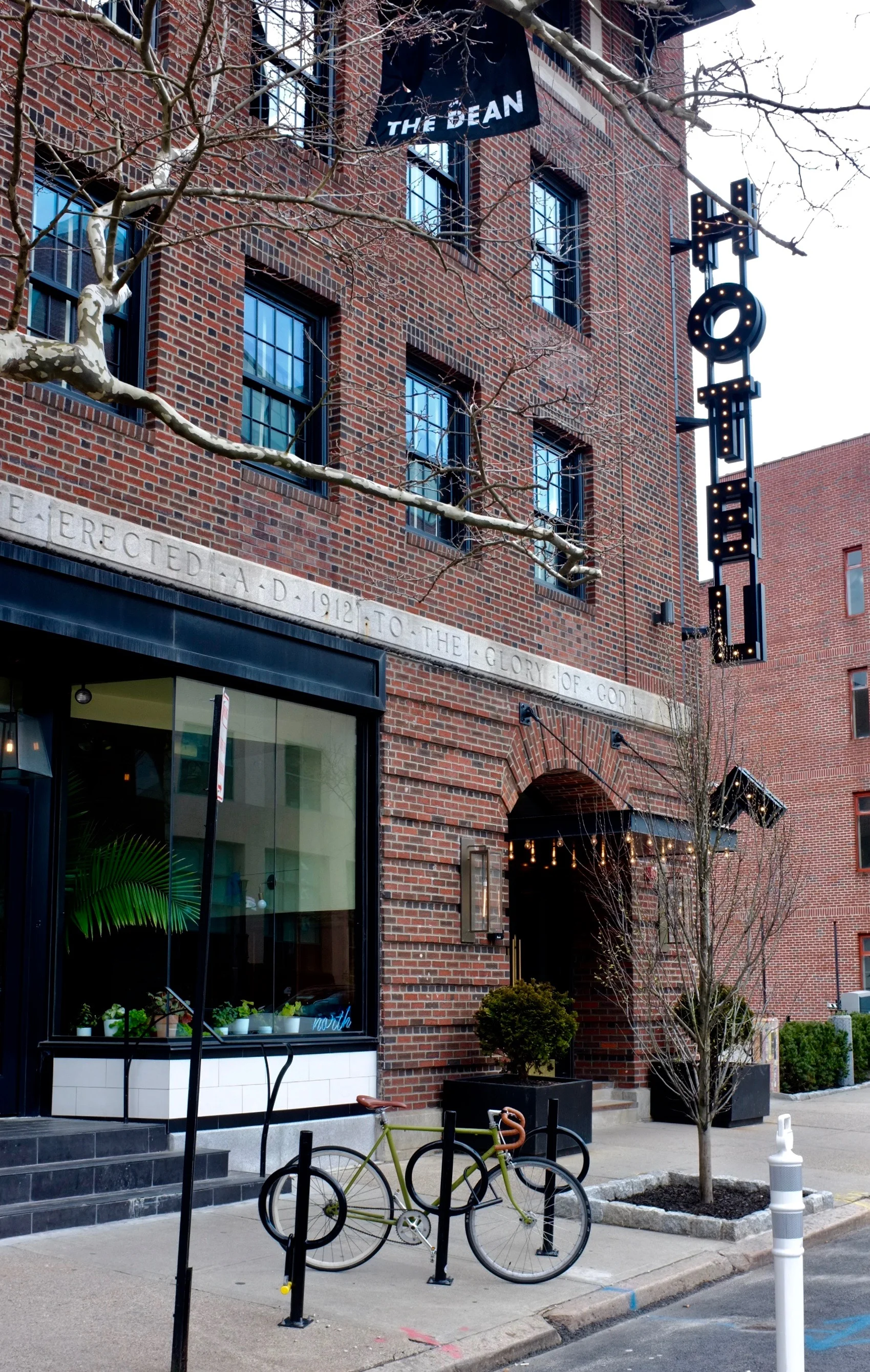
The very successful new Dean Hotel occupies an older brick building.
(William Morgan)
The “greatest works” of the architect of the Homewoods hotel, ZDS's Eric Zuena, include “luxury hotels” in Abu Dhabi, Dubai and Riyadh.” So, why didn’t Providence get some of that luxe? One should be wary of architects’ mission statements that announce they are “at the forefront of a NEW DESIGN ERA, redefining success by SOLVING UNPRECENTED PROBLEMS” (their capitalization).
Providence may need hotels. But why one at the lower end of Hilton spectrum? There must be something in between sheikdom glitz and the traveling salesman’s stopover.
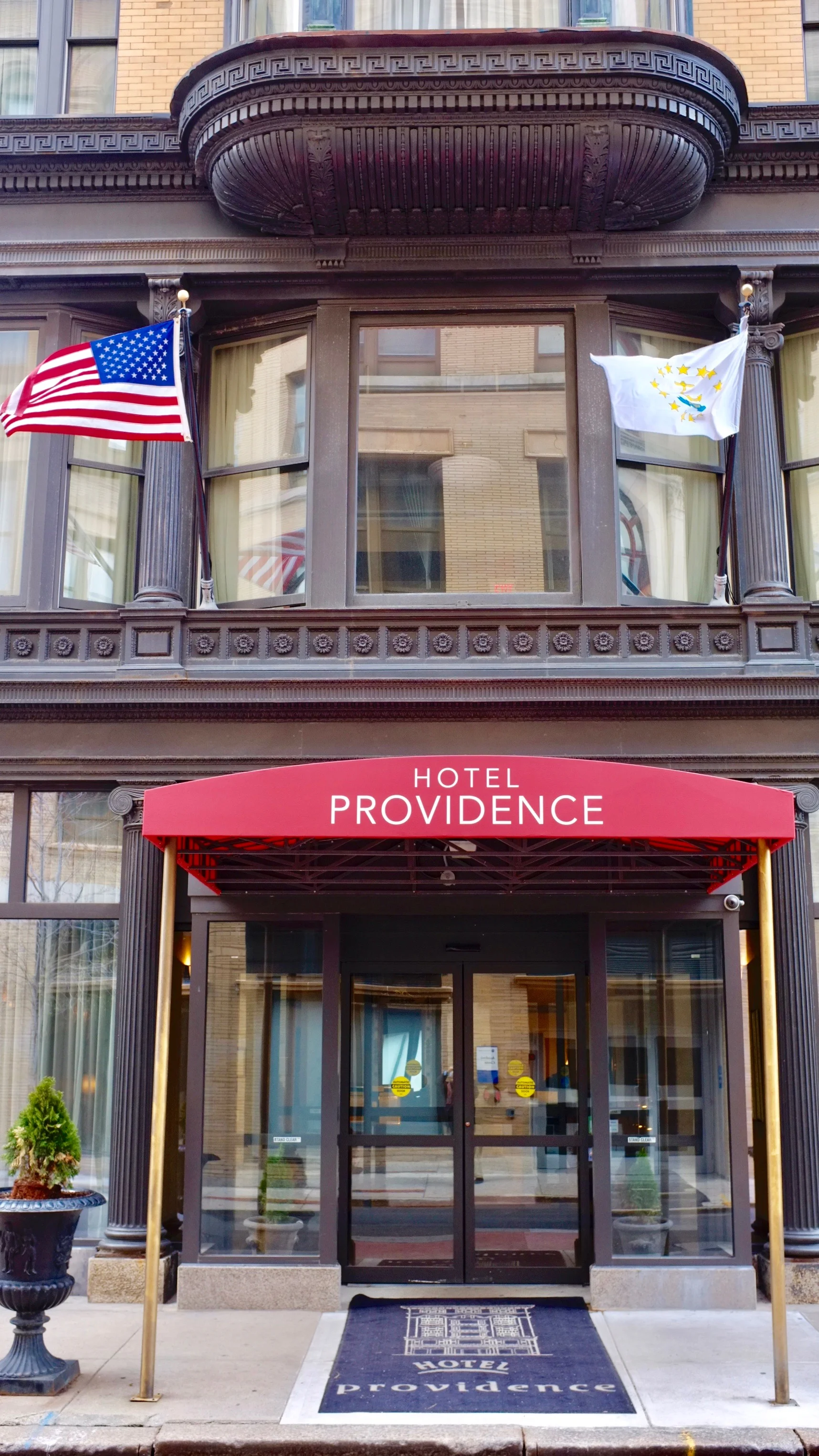
The Hotel Providence, another attractive hotel in a repurposed building.
(William Morgan)
Well-meaning people – financiers, bankers, builders, developers, city boosters – are working hard to improve Providence. Yet something is missing. Maybe we need to begin any major project by asking what it will look like and what will it contribute to the commonweal.
William Morgan is a nationally known architectural historian and author.
Wizard of the weeklies

The cover of the last issue of The (Boston) Phoenix, March 15, 2013.
From Robert Whitcomb's "Digital Diary,'' in GoLocal24.com
I felt the accelerating passage of time the other day when reading of the death at 74 of Stephen Mindich, the long-time publisher of the “alternative weekly’’ empire whose flagship was the Boston Phoenix. Eventually the Internet killed it.
But for many years, starting in the ‘70s, the Phoenix papers played an outsize role in political and arts coverage of their communities, financed by retail and event advertising and personal classified ads, some of which were pornographic. The papers could be seedy and irresponsible but they also ran some very good reporting and writing and launched many journalists into distinguished careers – in the last couple of decades of the golden age of well-paid journalism. Mr. Mindich’s death was a reminder of how long ago the Boomer youth culture that spawned the Phoenix had its salad days.
A pig heads for paradise

"Final Step (Untitled Castle)'' (acrylic on canvas on panel), by Jung Hur, at Corey Daniels Gallery, Wells, Maine, through June 17.
Chris Powell: Avoiding teaching at UConn; Kansas vs. Conn.; why the 'buffoon' won
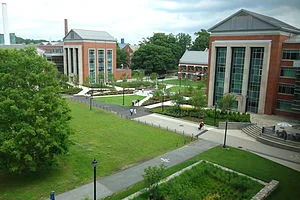
Main quad of the flagship campus, in Storrs, of the University of Connecticut.
At least some Republicans are refraining from the gush that usually insulates the University of Connecticut from scrutiny of its budget and political correctness. UConn President Susan Herbst's plan to retire for a teaching position early next year has prompted not just reflexive praise for her administration but also criticism of the university's financial excesses, particularly at the ever-troubled UConn Health Center in Farmington.
State government long has been reducing its subsidy to the university, causing it to raise tuition, and while UConn's facilities have improved greatly, fair questions abound, starting with administrative staff and salaries. But similar questions should be asked about instructional staff.
UConn prides itself on being a "research" university, the euphemism for a school where professors don't have to get their hands dirty teaching mere undergraduates, work that can be delegated to less expert and untenured instructors.
How much teaching are professors at UConn really doing, and is the state better served by their doing "research" instead? UConn seems never to have answered the question, perhaps because governors and legislators have never asked it.
* * *
EVEN KANSAS MIGHT BE A STEP UP: "Conservative businessman" Bob Stefanowski, as he styles himself in his television commercials, implicitly recognizing that no one ever heard of him, hasn't even qualified for the primary for the Republican nomination for governor. But the other day the Democratic Governors Association criticized him exclusively among the many Republican candidates.
Stefanowski had boasted in a commercial that his state budget plan had been developed in part by the economist Arthur Laffer, who had advised President Reagan. The DGA scoffed: "Conveniently Stefanowski forgot to tell voters about another one of Laffer's more recent credentials: chief architect of the Kansas budget disaster."
Yes, Kansas isn't doing well under Gov. Sam Brownback, a Republican. But Connecticut seems to be doing even worse, especially since Kansas never had the advantages Connecticut had before its government employee unions took over.
If the budget plan of an obscure candidate is the worst thing the DGA can cite about Republicans here, maybe Connecticut really has a chance of political change.
* * *
ISN'T THERE SOMETHING IN BETWEEN?: Venal, crude and stupid as the Trump administration can be, it may be most damaging not for any particular policy but for giving the impression that what it offers are the only alternatives to the failures and corruption of the liberalism that has been the country's political ethos since the 1960s.
Many people sense those failures and that corruption at least vaguely. That's why Hillary Clinton could not carry three ordinarily Democratic states in the 2016 election, losing many working-class voters and forfeiting the presidency to someone who strikes many people as a megalomanical buffoon. But so many liberals now are on the government payroll that liberals are incapable of considering whether anything that passes as liberal policy might be mistaken.
As the Democratic nominee for governor of California in 1934, the socialist Upton Sinclair titled his platform "End Poverty in California." Big money was against him and he was defeated, causing him to observe that it's hard to get someone to understand something when his salary depends on his not understanding it. Though Sinclair's side is in charge of Connecticut now, it is even harder here.
Chris Powell is a columnist for the Journal Inquirer, in Manchester, Conn.
A simpler life
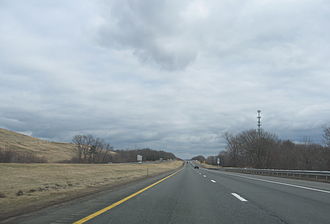
Interstate 90 approaching Chicopee, Mass., exit.
"Now I will abandon the route of my life
as my shadowy wives abandon me, taking my children.
I will stop. I will park in a summer street
where the days tick like metal in the stillness.
Then I will rent the room over Bert's Modern Barbershop
where the TO LET sign leans in the plateglass window;
or I will buy the brown BUNGALOW FOR SALE.
I will work forty hours a week clerking at the paintstore.
On Fridays I will cash my paycheck at Six Rivers Bank
and stop at Harvey's Market and talk with Harvey.''
-- From New Hampshire-based poet Donald Hall's "Mr Wakefield on Interstate 90''.
Swanning in the Public Garden
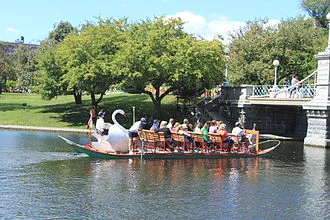
“City parks are for pleasure. Boston’s Public Garden is a gentle park and the pleasure comes from the tulip beds’ swatches of color that proclaim the spring, from the roses that follow, and from the all-summer contrast of shade and sunlight under the great trees. The action is provided by the Swan Boats, which made their first voyage in the lagoon in 1877, and have been circling the tiny island ever since.’’
-- The late Atlantic Monthly editor Edward Weeks, for his essay “The Swan Boats of Boston,’’ in Arthur Griffin’s New England: The Four Seasons. The Atlantic was founded in, and based for many years in, Boston.
Tim Faulkner: More hurdles for plans to import Quebec electricity
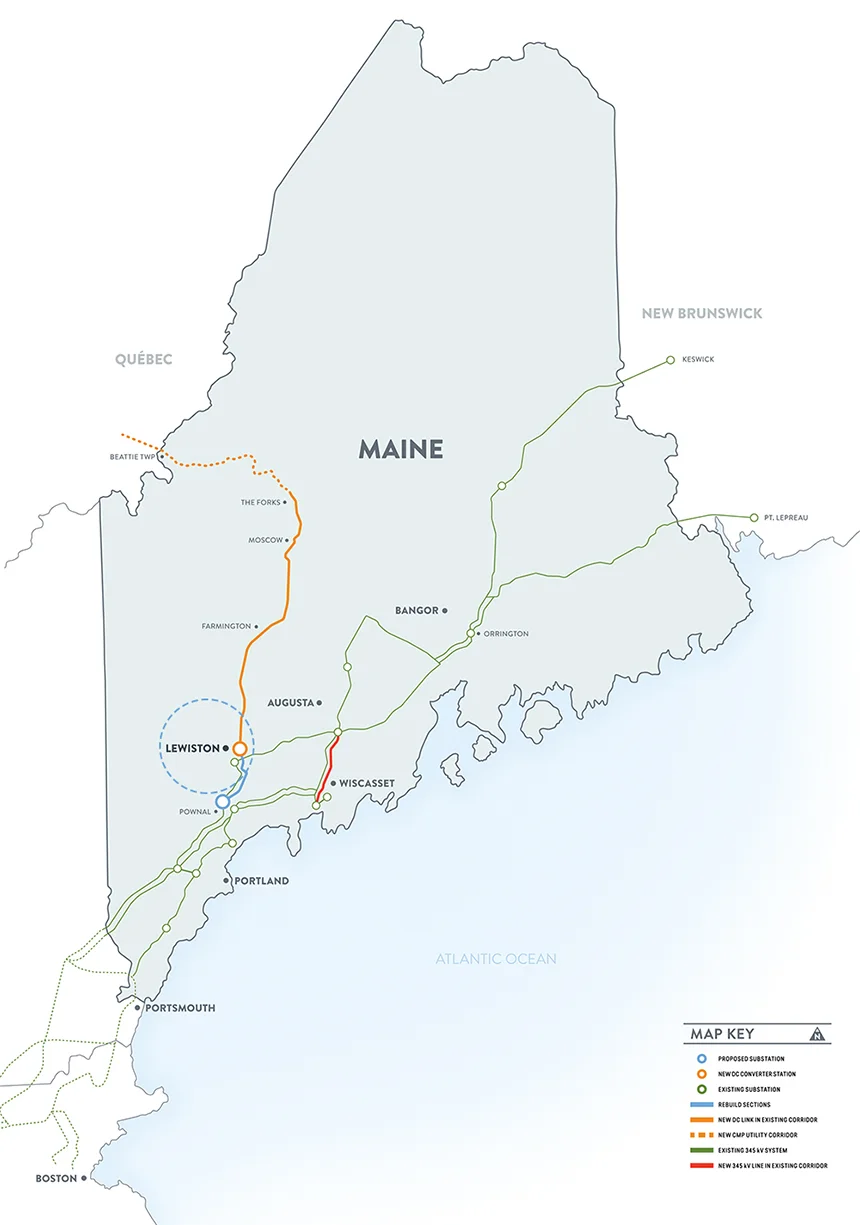
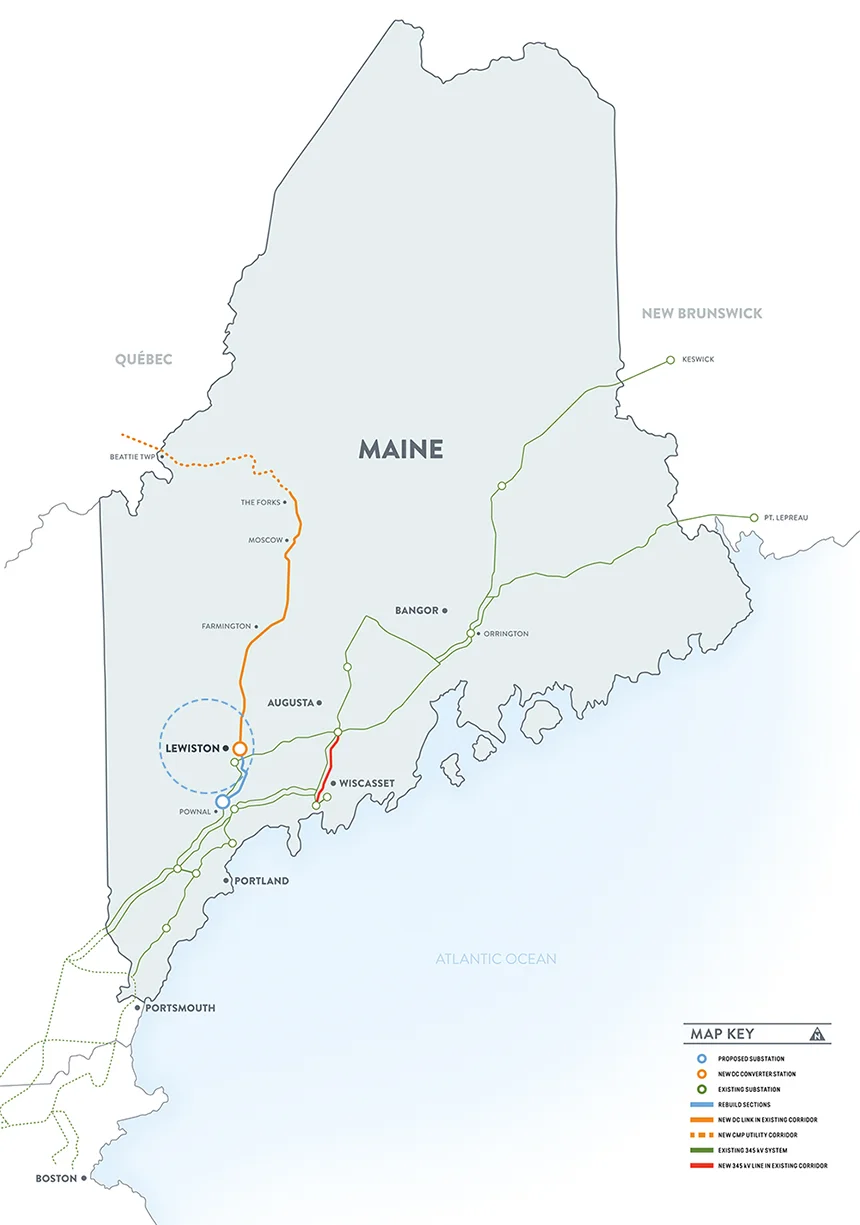
Proposed New England Clean Energy Connect project.
Via ecoRI News (ecori.org)
News continues to get worse for the Northern Pass project and efforts to deliver Canadian hydropower to southern New England.
On May 24, the New Hampshire Site Evaluation Committee denied an appeal by Northern Pass to overturn the decision that rejected the 192-mile-long high-voltage transmission line though the state.
The siting committee initially rejected the $1.6 billion project on Feb. 1 because of concern that the network of unsightly power lines and towers would harm tourism, local businesses and the environment.
According to the siting board, the appeal failed because there was no new information to review. And despite objections by Northern Pass, the positive elements of the application had been considered in the initial decision, committee members said.
"If there were conditions they could meet to approve it, we would have approved it with those conditions," said Bill Oldenburg of the Site Evaluation Committee in a video of the meeting taken by WMUR-TV, of Manchester, N.H.
In an online statement, Northern Pass, a joint venture between Eversource and Hydro-Québec, said it remains committed to the project and is considering taking the siting committee’s decision to court.
“We intend to pursue all options for making this critical clean energy project a reality, along with the many economic and environmental benefits for New Hampshire and the region. This opportunity to significantly lower energy costs for customers should be given great weight,” said Eversource New Hampshire president Bill Quinlan. “Large infrastructure projects of this scale often face challenges during the siting process, and we will continue to work with all of the stakeholders to present a project that receives New Hampshire’s approval.”
Meanwhile, Massachusetts, which has agreed to a 20-year power-purchase agreement for Northern Pass energy, has shifted its focus from Northern Pass to New England Clean Energy Connect (NECEC), a power-line transmission project that delivers Québec hydropower through western Maine to Lewiston, Maine, and on to Massachusetts.
The 145-mile project has broad community support, including from Maine Gov. Paul LePage.
The transmission system is opposed by the environmental group (NRCM), which says the project will damage 53 miles of forest. The conservation group worries that NECEC won’t receive the same vetting as Northern Pass.
“Rather than allowing Maine regulators to go through the same thoughtful process that led New Hampshire to reject that project, Gov. Paul LePage, through a spokesperson, has vowed to ram the project through Maine’s Department of Environmental Protection,” according to a March 19 NRCM statement.
The Boston Globe editorial board criticized opponents of NECEC for overlooking the 1,200 megawatts of low-emission-creating electricity and the tax revenue it will bring to communities along the route.
The financial benefits are far less than the $200 million in tourism funding and $30 million in annual tax revenue promised by Northern Pass. So far, local taxes are the only revenue promised by NECEC.
State and local lawmakers are now rethinking their initial support for the project, in hopes of increasing the financial benefits to the state. There is also concern over the fact that none of the hydropower will be available for in-state use. Local renewable-energy projects will also be unable to connect to the power lines.
NECEC is being developed by Hydro-Québec and the utility Central Maine Power, a subsidiary of the multinational corporation Avangrid.
The Massachusetts Department of Energy Resources and state utilities are negotiating a power-purchase contract with Central Maine Power for the project. The agreement must be approved by the Massachusetts Department of Public Utilities. State permits are expected by the end of 2018. Federal permits are expected in 2019.
Tim Faulkner is a journalist with ecoRI News.
Literature for the ages
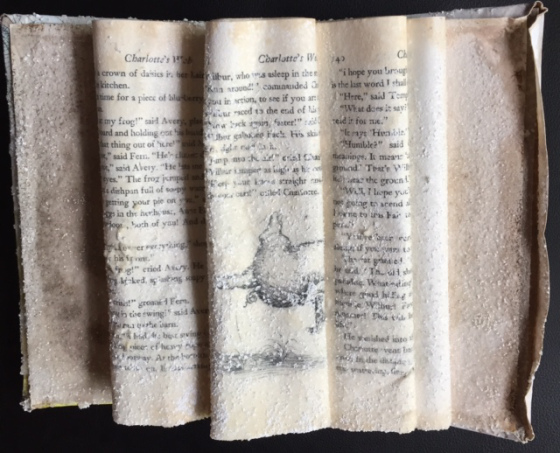
"Charlotte's Web'' (crystallized book), by Georgia Heard, at Patricia Ladd Carega Gallery, Center Sandwich, N.H.
Llewellyn King: Subjected to corporate 'elites' electronic runaround, voters turned to Trump

Trump is the product of a frustrated electorate sick of elites in Washington which pay no heed to the people who pay the taxes and have little interest in them. Thus runs the popular narrative of how we got President Donald Trump and why his base, despite everything, is firmly committed to him.
Half right, I say.
There was a great national dissatisfaction at the time of the election and there is so today. But was that really the result of unhappiness with elites in Washington?
I’d suggest that it is the daily frustration we all face in simply going about our business. Elites are to blame, but not the elites named in the political narrative that has become the conventional view of the Trump phenomenon.
The elites who frustrate us are the large corporate ones that we cannot live without and have difficulty living with. Substitute corporations for elites.
In no particular order, they are the insurance companies, the banks, the credit-card companies, the airlines, the hospitals, the telephone companies, the cable TV providers, Amtrak, Amazon and other corporations that hide behind a battery of devices programmed to avoid any direct human contact with the customer.
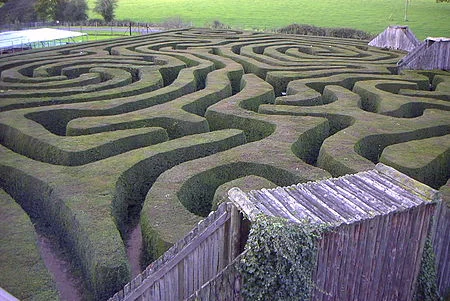
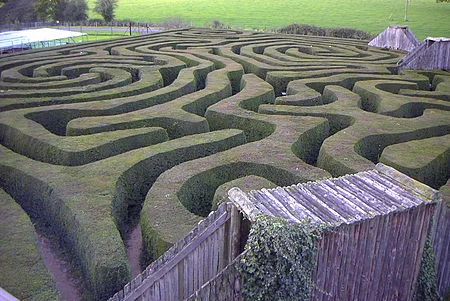
In fact, to most billion-dollar-plus corporations, the individual is less significant than a grain of sand on a California beach. These suppliers of our needs are hidden in a thicket of automatic phone systems that seem to require that you spend half an hour in a maze of prompts before, maybe, you reach a person who will also behave as though he or she is a recording; a person who is reading from a script and diverting your pleadings.
Collectively, what they’d like to tell you is you are in the wrong and will always be in the wrong because you are a statistical inconvenience, your custom a nuisance.
Step forward my bank.
More than 40 years ago, I added my then-wife to a credit card. We had an amicable divorce and we both got married again.
Regularly, over the years, I’ve asked my bank to remove her name, Jane Doe King -- to protect her privacy -- from the card. I paid all the bills and my notes with the payments and letters were never answered.
Suddenly this year, my bank decided that it was imperative that they get information on Jane Doe King, who is a nonexistent person. I went to my branch, explained the situation and was told by an officer that she’d been removed from the card. All’s well that ends well.
But it wasn’t the end, and all wasn’t well.
A few days later, when I tried to call an Uber car, I learned that my card was blocked because Jane Doe King hadn’t supplied her financial information to my bank.
I called my bank. After the de rigueur half an hour of playing the equivalent of telephone pinball with their answering system and the irrelevant prompts, I spoke to a representative. He might as well have been a recording because no matter what I said, he went back to the script in front of him.
I explained, he demurred. Jane Doe King would have to prove first that she existed and then that she wanted to be removed from the card, which she had never used in more than 40 years.
I asked him to call the officer in the bank’s branch with whom I’d spoken. He said his phones didn’t have outgoing lines and so he couldn’t do that. I said I’d go to the bank’s branch and have the officer call the credit card department and straighten out the matter. But he wouldn’t give me his direct-dial number or his last name; just his first name and the general number. I went into serious profanity-suppression mode.
Only the appearance of the person who does not exist would satisfy the Man Who Can’t Make Phone Calls. Fearing temper loss, I hung up and emailed the bank officer who had “fixed” the problem. He hasn’t replied.
The message is that you, the customer, and your account and patronage don’t count.
Even as you read this, thousands of Americans are getting the electronic runaround as they try to solve simple issues. Confused and angry they are turning to the wildest political solution they can: Trump. Sadly, this is another abortive pursuit.
Llewellyn King is executive producer and host of White House Chronicle, on PBS. His e-mail is llewellynking1@gmail.com.
Oily East Coast to come?
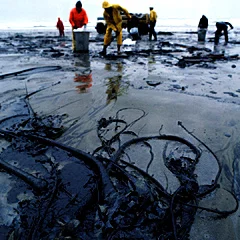
Kelp covered with oil from coastal spill.
The Trump administration wants to allow oil and gas drilling off the East Coast, except off big swing state Florida. But Republican and Democratic governors and local leaders are up in arms about it because of the potentially devastating effect on tourism -- people generally don’t like oily beaches – and fishing.
Trump’s love love of retro, fossil-fuel energy seems particularly vivid when seen against the news of the big wind turbine installations soon to go up south of Massachusetts.
Some fishermen --- squid catchers particularly -- are concerned about the impact of setting up these “wind farms,’’ but they should think about what an oil spill could do. And, as has been shown in European coastal wind farms, the wind-turbine foundations act as reefs, which can increase the number of fish (and species) around coastal and offshore wind installations. Hit this link to read more on this.
and this link.
'For what they are'

"By June our brook’s run out of song and speed.
Sought for much after that, it will be found
Either to have gone groping underground
(And taken with it all the Hyla breed
That shouted in the mist a month ago,
Like ghost of sleigh-bells in a ghost of snow)—
Or flourished and come up in jewel-weed,
Weak foliage that is blown upon and bent
Even against the way its waters went.
Its bed is left a faded paper sheet
Of dead leaves stuck together by the heat—
A brook to none but who remember long.
This as it will be seen is other far
Than with brooks taken otherwhere in song.
We love the things we love for what they are. ''
-- ''Hyla Brook,'' by Robert Frost
Hyla Brook was near the farm on which Frost and his family lived in 1900-1911.
Those North Country youths were specialists in being generalists
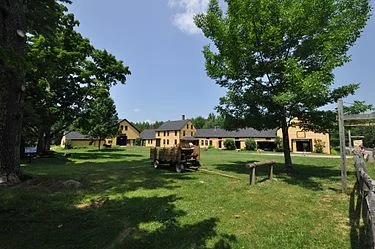
The New Hampshire Farm Museum on White Mountain Highway (New Hampshire Route 125), in Milton.
Three centuries of Granite State rural life, and ingenuity, are presented at the museum, whose center is an historic farmhouse. The museum includes a 104-foot-long, three-story great barn with collections of agricultural machinery, farm tools, sleighs and wagons. There are also live farm animals, a nature trail and a museum shop.
The museum is on the former Plumer-Jones Farm, with a typically New England series of connected buildings. The farmhouse's oldest part dates to the late 18th Century and the barns to the mid 19th Century.
"A sturdy lad from New Hampshire or Vermont who in turn tries all the professions, who teams it, farms it, peddles, keeps a school, preaches, edits a newspaper, goes to Congress, buys a township, and so forth, in successive years, and always like a cat falls on his feet, is worth a hundred of these city dolls. He walks abreast with his days and feels no shame in not 'studying a profession,' for he does not postpone his life, but lives already.''
-- Ralph Waldo Emerson (1803-1882)
Chris Powell: A tax increase called 'Passport to Parks'; must cute cows come first in Conn,?
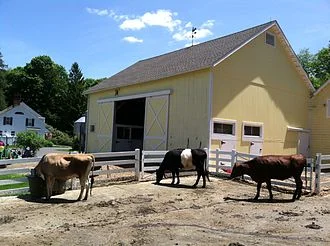
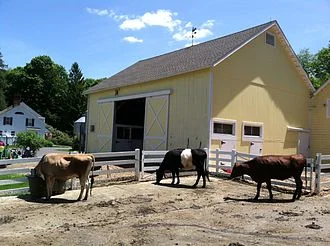
Dairy farm in Redding, Conn., now part of New York City exurbia.
Why all the celebration this week of "Passport to Parks," the new policy of free parking at state parks for vehicles with Connecticut license plates?
For the parking won't really be free at all. It has been extended to Connecticut drivers because last year the General Assembly and Gov. Dannel Malloy enacted a $10 increase in vehicle registration and renewal fees to finance the removal of parking charges for state-registered vehicles.
The state Department of Energy and Environmental Protection had been complaining that reductions to its budget were jeopardizing access to the parks. So the increase in vehicle registration fees has established a fund dedicated to park purposes.
But it's a fraud. For the governor and legislature seize supposedly dedicated funds and move them into the general fund whenever money runs short, and the higher registration fees are forcing all drivers, including hundreds of thousands of people who never use the parks, to pay even more for their upkeep while people who do use the parks are paying less.
Financing the parks with vehicle registration fees is worse than financing them with income, sales, and business taxes. For vehicle registration fees are less progressive than those taxes. That is, unlike those taxes, registration fees have no correlation with ability to pay and so they fall more heavily on the poor.
But legislators and the governor thought that raising vehicle registration fees was better politically than an ordinary tax increase because it would make a tax increase on people who don't use the parks look like an increase in services to [ITALICS] everyone. [END ITALICS]
And why the celebration this week of Governor Malloy's restoration of $1.4 million in state government subsidies to dairy farmers?
Yes, as the governor and Agriculture Commissioner Steven K. Reviczky said at Cushman Farms in Franklin as they announced renewal of the subsidies, Connecticut's dairy farmers work hard for little profit and milk prices can be volatile. But many businesses in the state are having difficulty. What makes dairy farms so critical?
Commissioner Reviczky cited the jobs provided by dairy farms and what he said the farms add to the state's "quality of life." But dairy farm jobs are few, and the contribution of dairy farms to quality of life is, at least for their neighbors, mainly muck and stink.
The manager of Cushman Farms, Jim Smith, argues that "the money doesn't stay at the farm very long. It goes back out into the economy. So this is more like a stimulus." But of course that could be said for any government subsidy. Most of the money would have been spent as well if state government had left it with taxpayers instead of transferring it to the dairy farmers.
The problems with the dairy industry in Connecticut are that its farms are on average too small ever to be competitive nationally, that the state just isn't rural enough anymore to allow for larger farms, and that any farm large enough to be competitive would have too many neighbors who wouldn't stand for it. These days neighbors complain about farms even where the farms long preceded housing.
Further, while state government this week was discovering $1.4 million to prop up a failing business model, it still faces, for example, an estimated $100 billion in unfunded pension liabilities and a waiting list of 2,000 mentally handicapped people living with elderly parents and seeking placement in group homes.
At a distance cows can be cute and scenic, but must they really come first?
Chris Powell is a columnist for the Journal Inquirer, in Manchester, Conn.
Thinking outside the frame
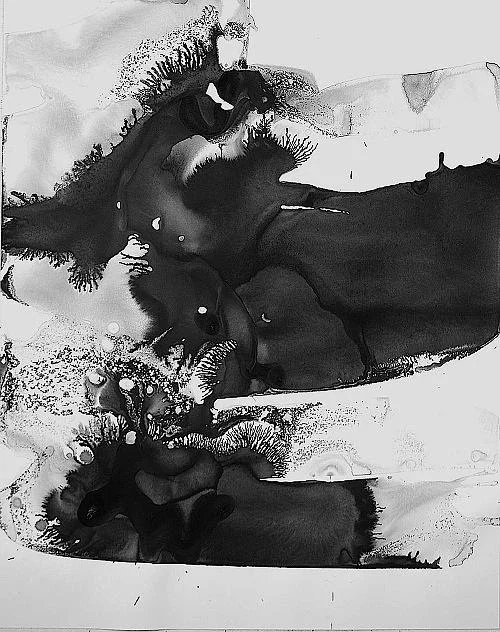
"Evaporation, flow study #7,'' by Patty Stone, at the Brookline (Mass.) Arts Center group show "Unframed,'' June 15-July 20. The show displays unframed art work on paper. The gallery says that "Each piece is purposely displayed directly on the gallery wall, allowing a more thorough exploration of each piece. 'Expanding and releasing the paper from its constraining structure often creates visual, as well as structural problems within the work,' said Elaine Sapochetti, one of the artists in the exhibition. 'Yet, challenging these restrictions also makes the development of the art endlessly exhilarating and the completed work always a surprise. Just as in life, pushing boundaries can frequently lead to new, complicated, exciting, and inspiring revelations."'
Lowell's literary 'Factory Girls'
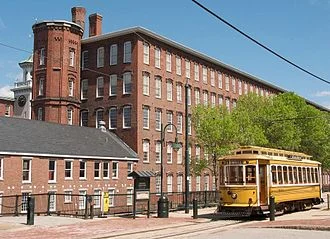
The Boott Cotton Mill Museum and Trolley, in Lowell.
"Overnight the brick town of Lowell {Mass.} rose on the Merrimack River, attracting hundreds of farmers' daughters with relatively high wages. For a generation the Lowell Factory Girls, with their neat dresses, proud deportment and literary weekly, were one of the wonders of America -- the first which Charles Dickens, arriving in New England, requested to see.''
-- From How New England Happened (1976), by Christina Tree.
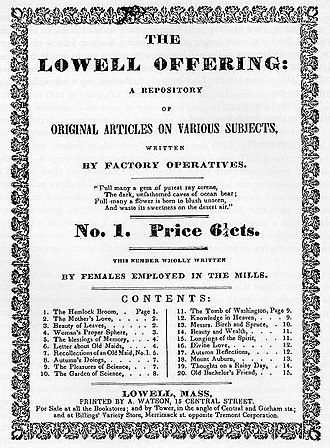
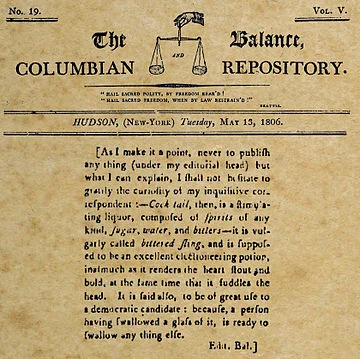
Literary journal by "Lowell Factory Girls''.
Dangerous neighborhood
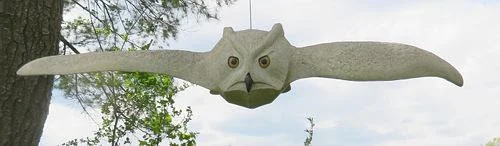
"Turning Great Horn Owl'' (granite), by Andreas von Huene ,at the Mill Brook Gallery and Sculpture Garden, Concord, N.H.
Memories of my wet wealth

I wandered lonely as a star
That floats on high o'er vales and hills,
When all at once I saw a bar,
A host of golden liquid thrills,
And there inside for me to choose,
All manner of delightful booze.
I asked and so I did receive
A cocktail heavy on the gin,
A perfect lovely bright reprieve
For me to drown my sorrows in,
And then more drinks, so nice and fine,
All leading me to joy divine.
"The world is in a glass!" I said.
"What more could I desire than this?"
Sobriety's like being dead,
And alcohol is surely bliss."
I drank and drank but little thought
What wealth these drinks to me had brought.
For oft when on my couch I lie,
I know well what these drinks have brought.
They flash upon that inward eye,
Complete with all the joy I sought.
I always can revive my mood
Recalling times when I got stewed.
"Who Needs Daffodils,'' by Felicia Nimue Ackerman
A cat would be safer

"One Day I'll Have a Cat and a Lover,'' by Candice Smith Corby, at the Fruitlands Museum, Harvard, Mass.
Harvard is an affluent rural town in Worcester County is about 25 miles west-northwest of Boston. It was settled as a farming community in 1658 and incorporated in 1732. It has hosted several eccentric communities, such as Harvard Shaker Village and the utopian Transcendentalist center Fruitlands, after which the museum is named.
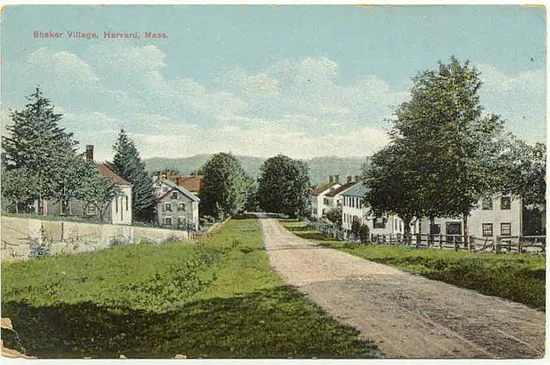
Harvard's Shaker Village in about 1905.
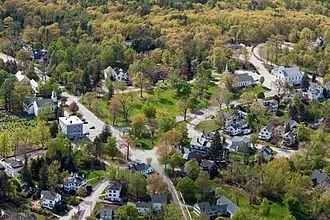
Harvard's common.
