
Vox clamantis in deserto





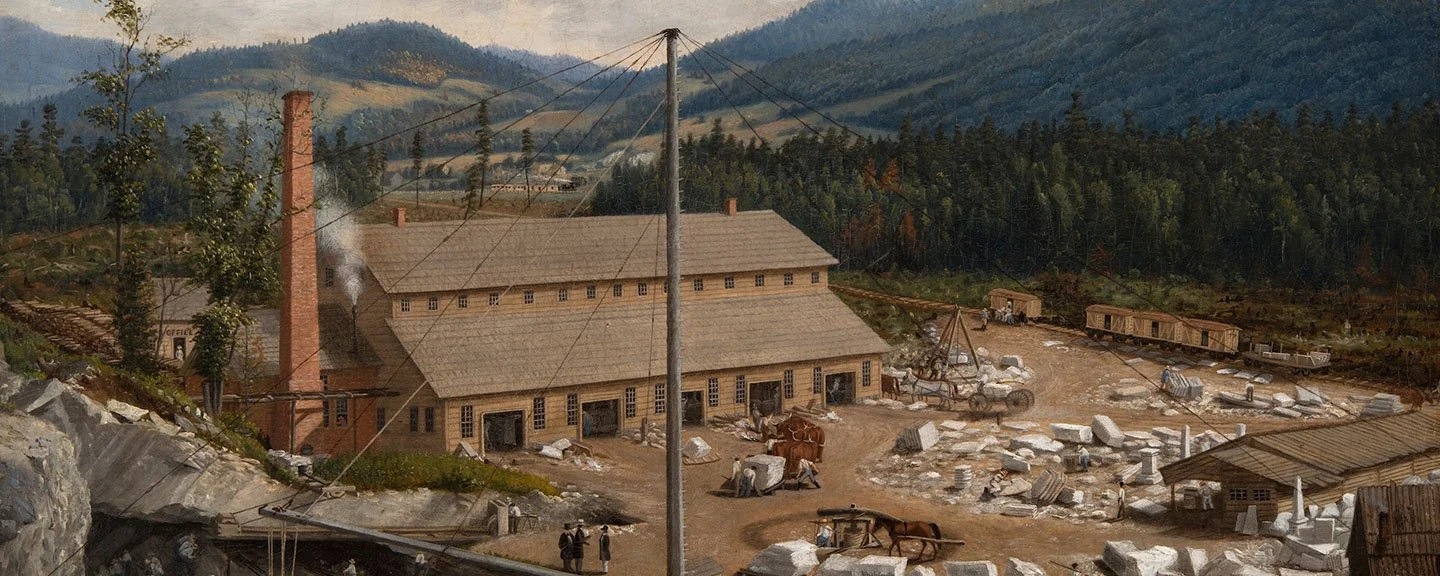
Meredith Angwin: New Englanders should get ready for rolling blackouts

Mystic Station power plant, in Everett, Mass., where two gas-fired units might be closed.
WILDER, Vt.
Rolling blackouts are probably coming to New England sooner than expected.
When there’s not enough supply of electricity to meet demand, an electric grid operator cuts power to one section of the grid to keep the rest of the grid from failing. After a while, the operator restores the power to the blacked-out area and moves the blackout on to another section. The New England grid operator (ISO-NE) recently completed a major study of various scenarios for the near-term future (2024-2025) of the grid, including the possibilities of rolling blackouts. (ISO stands for Independent System Operator.)
In New England, blackouts are expected to occur during the coldest weather, because that is when the grid is most stressed. Rolling blackouts add painful uncertainty – and danger – to everyday life. You aren’t likely to know when a blackout will happen, because most grid operators have a policy that announcing a blackout would attract crime to the area.
Exelon announces plan to close Mystic Station
In early April, Exelon said that it would close two large natural-gas-fired units at Mystic Station, in Everett, Mass. In its report about possibilities for the winter of 2024-25, ISO-NE had included the loss of these two plants as one of its scenarios. The ISO-NE report concluded that Mystic’s possible closure would lead to 20 to 50 hours of load shedding (rolling blackouts) and hundreds of hours of grid operation under emergency protocols.
When Exelon made its closure announcement, ISO-NE realized that the danger of rolling blackouts was suddenly more immediate than 2024. ISO-NE now hopes to grant “out of market cost recovery” (that is, subsidies) to persuade Exelon to keep the Mystic plants operating. If ISO-NE gets FERC permission for the subsidies, some of the threat of blackouts will retreat a few years into the future.
Winter scenarios and natural gas
The foremost challenge to grid reliability is the inability of power plants to get fuel in winter. So ISO-NE modeled various scenarios, such as winter-long outages at key energy facilities, and difficulty or ease of delivering Liquified Natural Gas (LNG) to existing plants.
Ominously, 19 of the 23 of the ISO-NE scenarios led to rolling blackouts. The worst scenarios, with the longest blackouts, included a long outage at a nuclear plant or a long-lasting failure of a gas pipeline compressor.
A major cause of these grid problems is that the New England grid is heavily dependent on natural gas. Power plants using natural gas supply about 50 percent of New England’s electricity on a year-round basis. Pipelines give priority to delivering gas for home heating over delivering gas to power plants. In the winter, some power plants cannot get enough gas to operate. Other fuels have to take up the slack. But coal and nuclear generators are retiring, and with them goes needed capacity. In general, the competing-for-natural-gas problem will get steadily worse over time.
All the ISO-NE scenarios assumed that no new oil, coal, or nuclear plants are built, some existing plants will close, and no new pipelines are constructed. Their scenarios included renewable buildouts, transmission line construction, increased delivery of LNG, plant outages and compressor outages.
Natural gas and LNG
The one “no-problem” scenario (no load shedding, no emergency procedures) is one where everything goes right. It assumed no major pipeline or power plant outages. It included a large renewable buildout plus greatly increased LNG delivery, despite difficult winter weather. This no-problem scenario also assumes a minimum number of retirements of coal, oil and nuclear plants.
This positive scenario is dependent on increased LNG deliveries from abroad. Thanks to the Jones Act, New England cannot obtain domestic LNG. There are no LNG carriers flying an American flag, and the Jones Act prevents foreign carriers from delivering American goods to American ports.
We can plan to import more electricity, but ISO-NE notes that such imports are also problematic. Canada has extreme winter weather (and curtails electricity exports) at the same time that New England has extreme weather and a stressed grid.
New England needs a diverse grid
To avoid blackouts, we need to diversify our energy supply beyond renewables and natural gas to have a grid that can reliably deliver power in all sorts of weather. When we close nuclear and coal plants and don’t build gas pipelines, we increase our weather-vulnerable dependency on imported LNG.
We need to keep existing nuclear, hydro, coal and oil plants available to meet peak demands, even if it takes subsidies. Coal is a problem fuel, but running a coal plant for a comparatively short time in bad weather is a better choice than rolling blackouts.
This can’t happen overnight. It has to be planned for. If we don’t diversify our electricity supply, we will have to get used to enduring rolling blackouts.
-----
Meredith Angwin is a retired physical chemist and a member of the ISO-NE consumer advisory group. She headed the Ethan Allen Institute’s Energy Education Project and her latest book is Campaigning for Clean Air.
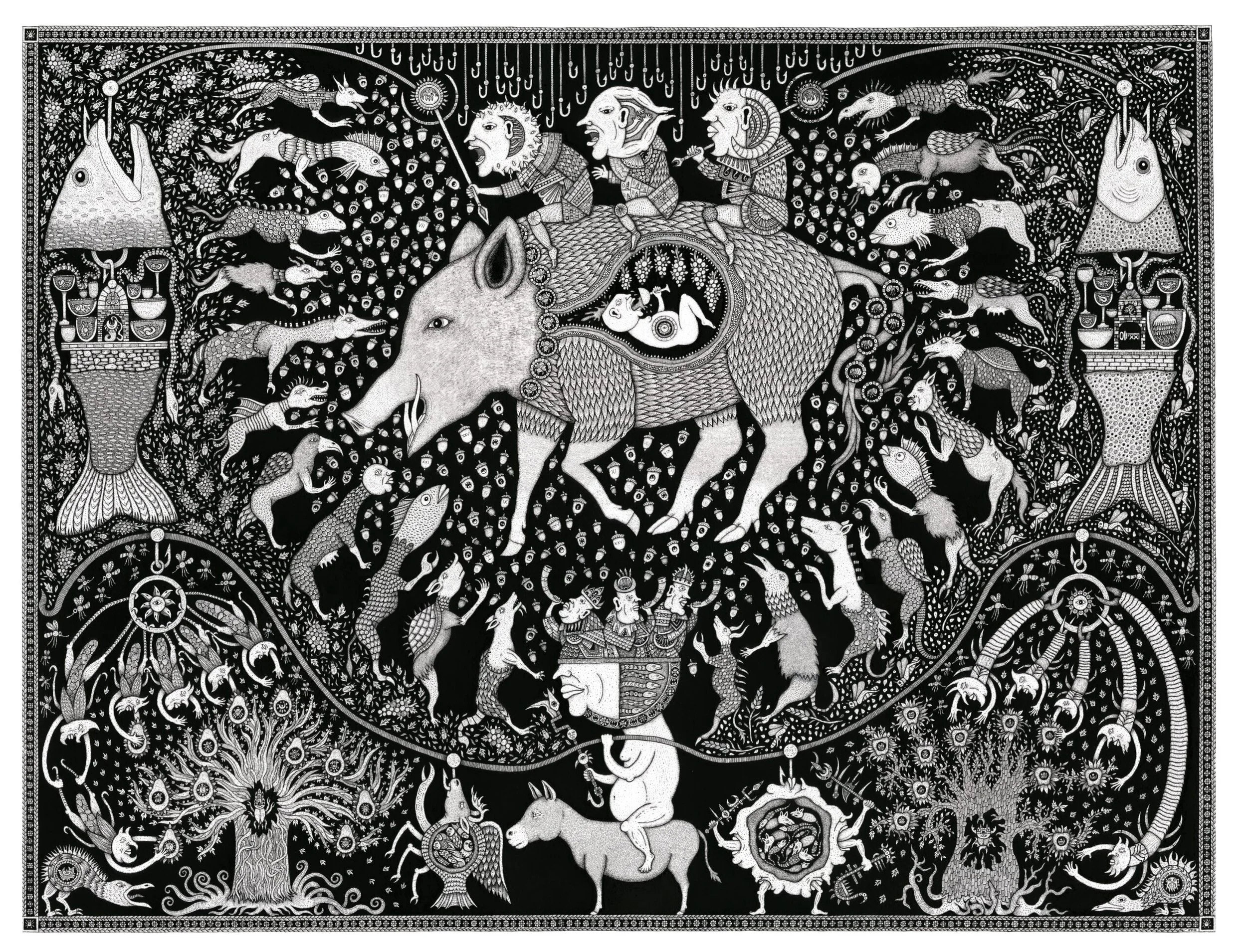
A painter's and a writer's depiction of character

Painting by Andy Newman, in the show "Parallel Paths,'' at the Umbrella Community Art Center, Concord, Mass., through June 15. The show features the work of Mr. Newman and writer Gregory Maguire, who are married to each other. Mr. Newman's figures are shown alongside characters from Mr. Maguire's novels in a display of the sympathetic depiction of character.
Llewellyn King: Wolfe a revolutionary in a white suit
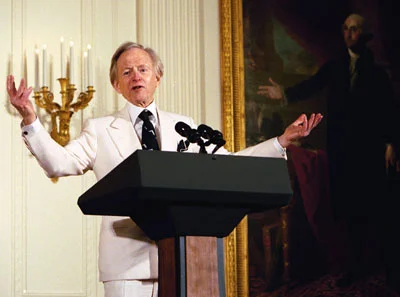
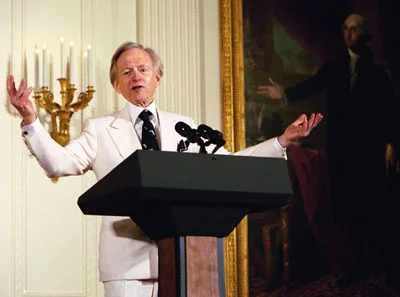
Tom Wolfe at the White House in 2004.
Every field of endeavor gets stuck in a rut and it takes a pioneer, a rebel, to blast it loose. In journalism and literature, Tom Wolfe, who died last week at 88, did that, starting in the 1960s.
His incendiary device was the “New Journalism.” It used the techniques of the novel in observation and quoted speech for news and feature writing. Wolfe was its exemplar with unequaled verbal pyrotechnics.
In the summer of 1963, I had the luck to work in the same room as Wolfe at The New York Herald Tribune in Manhattan. He was in the initial stage of shaking up journalism.
That golden summer, somehow, some of the greats of American journalism found themselves at “The Trib,” a newspaper that had had a history of shaking up journalism and was doing it again.
By 1963 the newspaper was suffering from years of poor business decisions, which had reduced it to near bankruptcy. It had been bought by the billionaire (from oil and other industries and huge inheritances) Jock Whitney to provide a mildly conservative voice to counter the liberal New York Times.
What Whitney got was a cornucopia of newspaper talent.
Probably never before or since have so many gifted wordsmiths been assembled in the same place: a championship season of talent that was to affect journalism for a generation. Altogether Murray “Buddy” Weiss, who was the managing editor, and I calculated, long after the paper had failed, in 1966, that 67 people who worked at the paper went on to major journalistic success. The names included Eugenia Sheppard, Jimmy Breslin, Red Smith and David Laventhol, who later created the Style section of The Washington Post and fired another newspaper revolution.
And sitting there, in the middle of one of long tables where the reporters sat, was one Tom Wolfe, already wearing the white suit which was his trademark all the long years of his success. The tailoring got better over time, but the color remained.
Wolfe got to New York via a Ph.D in American studies from Yale and stints at The Springfield (Mass.) Union and The Washington Post. At both papers editors knew he had talent, but sort of ignored it.
Fortune helped Wolfe along when The Trib was closed by a strike in 1962 and he contracted with Esquire magazine to travel to San Francisco and look at psychedelic paint jobs on cars.
Wolfe discovered the counterculture and Esquire discovered what became known as the New Journalism -- a term that he didn’t really like. When he had difficulty putting his discoveries into traditional journalistic form, his editors told him to send them a memo and they would write it for him.
He did and they published the long, long memo, 49 pages, in full: “The Kandy-Kolored Tangerine-Flake Streamline Baby.” It was unique in reporting history. It also introduced Wolfe into the world of the counterculture, which he, along with Hunter Thompson and others, was to chronicle.
But unlike Thompson, Wolfe never joined the counterculture. He reported on it and gave it a language of its own, drawn from how people in the culture spoke, but remained a courtly Virginia gentleman.
One of the many gifted people at The Trib at the time was Clay Felker, editor of the newspaper’s magazine, which survives today as New York Magazine.
They were made for each other and Wolfe, the reporter and wordsmith, was on his way with Felker guiding and cheering. A collection of Wolfe’s pieces came out in 1965 and the New Journalism became the rage, especially in magazines. Other names like Gail Sheehy, Gay Talese and Joan Didion were soon in the flux.
But Wolfe was the supreme writer and reporter. His masterpiece on the space program and the Mercury 7 astronauts, The Right Stuff, his blockbuster novel, The Bonfire of the Vanities, and another novel, A Man in Full were all built on meticulous reporting.
Wolfe “pushed out the envelope” – one of the many phrases he has left us with — in reporting, writing and creative punctuation. A few other Wolfeisms: “Me Generation,” “radical chic” and “master of the universe.”
Llewellyn King is executive producer and host of White House Chronicle, on PBS. His e-mail is llewellynking1@gmail.com.
Stores into schools

Empty mall in Tallahassee, Fla.
Adapted from Robert Whitcomb's "Digital Diary,'' in GoLocal24.com
As a citylab.com fan, I also can’t resist touting an article headlined “Blue Light Special: The Chicago-area High School in an Old Kmart’’. It tells the story of how a design firm turned an abandoned department store in Waukegan, Ill., into a spiffy, bright school. There are many old and decayed school buildings in New England – indeed Rhode Island Gov. Gina Raimondo has proposed a $1 billion plan to fix them over the next five years; best estimates suggest that $3 billion is needed in that tiny state alone.
But with so many large store buildings around here empty because of Amazon, etc., why not see if some could be converted into school buildings at a lower cost and with better design than we’d get by renovating existing school buildings. Consider that many New England public schools are more than 50 years old! Most big-box stores, vacant and otherwise, are younger.
To read more, please hit this link.
The uninsulated one

"Summer Studio'' (oil, wax alkyd/linen), by Steve Hawley, in his show "Studio Light,'' at the Ogunquit Museum of American Art, through July 4.
Martha Bebinger: Opioid overdoses are surging among Hispanics
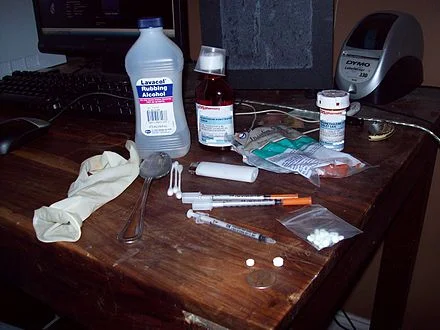
By Martha Bebinger
And NPR and WBUR
BOSTON
The tall, gangly man twists a cone of paper in his hands as stories from nearly 30 years of addiction pour out: the robbery that landed him in prison at age 17; never getting his high school equivalency diploma; going through the horrors of detox, maybe 40 times, including this latest bout, which he finished two weeks ago. He’s now in a residential treatment unit for at least 30 days.
“I’m a serious addict,” said Julio Cesar Santiago, 44. “I still have dreams where I’m about to use drugs, and I have to wake up and get on my knees and pray, ‘Let God take this away from me,’ because I don’t want to go back. I know that if I go back out there, I’m done.”
Santiago has reason to worry. Data on opioid addiction in his home state of Massachusetts show the overdose death rate for Latinos there has doubled in three years, growing at twice the rates of non-Hispanic whites and non-Hispanic blacks.
Opioid overdose deaths among Latinos are surging nationwide as well. While the overall death toll is still higher for whites, it’s increasing faster for Latinos and blacks, according to data from the Centers for Disease Control and Prevention. Latino fatalities increased 52.5 percent from 2014 to 2016, compared with 45.8 percent for whites alone. (Statisticians say Hispanic overdose counts are typically underestimated.) The most substantial hike was among blacks: 83.9 percent.
The data portray a changing face of the opioid epidemic.
Rates of fatal opioid overdoses per 100,000 across the U.S. from 2014-2016. Deaths rose 45.8 percent for whites, 52.5 percent for Hispanics and 83.9 percent for blacks, according to the Centers for Disease Control and Prevention. (Source: CDC; Credit: NPR)
“What we thought initially, that this was a problem among non-Hispanic whites, is not quite accurate,” said Robert Anderson, mortality statistics branch chief at the CDC’s National Center for Health Statistics. “If you go back into the data, you can see the increases over time in all of these groups, but we tended to focus on the non-Hispanic whites because the rates were so much higher.”
There’s little understanding about why overdose deaths are rising faster among blacks and Latinos than whites. Some physicians and outreach workers suspect the infiltration of fentanyl into cocaine is driving up fatalities among blacks.
The picture of what’s happening among Latinos has been murky, but interviews with nearly two dozen current and former drug users and their family members, addiction treatment providers and physicians reveal that language and cultural barriers, even fear of deportation, could limit the access of Latinos to lifesaving treatment.
Bilingual Treatment Options Are Scarce
Irma Bermudez, 43, describes herself as a “grateful recovering addict.” She’s living in the women’s residential unit at kaiserhealthnews.org, a collection of day treatment, residential programs and transitional housing in Boston’s Roxbury neighborhood.
Bermudez said the language barrier keeps anyone who can’t read English out of treatment from the start, as they try to decipher Web sites or brochures that advertise options. If they call a number on the screen or walk into an office, “there’s no translation — we’re not going to get nothing out of it,” Bermudez said.
Rates of fatal opioid overdoses per 100,000 from 2014-2016 in Massachusetts. (Source: Massachusetts Department of Health; Credit: NPR)
Some of the Latinos interviewed for this story described sitting through group counseling sessions, part of virtually every treatment program, and not being able to follow much, if any, of the conversation. They recalled waiting for a translator to arrive for their individual appointment with a doctor or counselor and missing the session when the translator is late or doesn’t show up at all.
SAMHSA, the federal Substance Abuse and Mental Health Services Administration, maintains a Find Treatment website that includes listings of treatment offered in Spanish. But several Massachusetts providers listed there could not say how many translators they have or when they are available. The SAMHSA site is available only in English, with Spanish-language translators available only by phone.
At Casa Esperanza, 100 men are waiting for a spot in the male residential program, so recovery coach Richard Lopez spends a lot of time on the phone trying to get clients into a program he thinks has at least one translator.
After battling with voicemail, said Lopez, he’ll eventually get a call back; the agent typically offers to put Lopez’s client on another waiting list. That frustrates him.
“You’re telling me that this person has to wait two to three months? I’m trying to save this person today,” he said. “What am I going to do, bring these individuals to my house and handcuff them so they don’t do nothing?”
Casa Esperanza Executive Director Emily Stewart said Massachusetts needs a public information campaign via Spanish-language media that explains treatment options. She’d like that to include medication-assisted treatment, which she said is not well understood.
Some research shows Latino drug users are less likely than others to have access to or use the addiction treatment medicines, methadone and buprenorphine. One study shows that may be shifting. But, Latinos with experience in the field said, access to buprenorphine (which is also known by the brand name Suboxone) is limited because there are few Spanish-speaking doctors who prescribe it.
A Matter Of Machismo: ‘It’s Not Cool To Call 911’
Lopez has close ties these days with health care providers, the police and EMT rescue squads. But that has changed dramatically from when he was using heroin. On the streets, he said, “it’s not cool to be calling 911” when a person sees someone overdose. “I could get shot, and I won’t call 911.”
It’s a machismo thing, said Lopez.
“To the men in the house, the word ‘help’ sounds, like, degrading, you know?” he said. Calling 911 “is like you’re getting exiled from your community.”
Santiago said not everyone feels that way. A few men called EMTs to help revive him. “I wouldn’t be here today if it wasn’t for them,” he said.
But Santiago and others say there’s growing fear among Latinos they know of asking anyone perceived as a government agent for help — especially if the person who needs the help is not a U.S. citizen.
“They fear if they get involved they’re going to get deported,” said Felito Diaz, 41.
Bermudez said Latina women have their own reasons to worry about calling 911 if a boyfriend or husband has stopped breathing.
“If they are in a relationship and trying to protect someone, they might hesitate as well,” said Bermudez, if the man would face arrest and possible jail time.
A Tight Social Network
Another reason some Latino drug users said they’ve been hit especially hard by this epidemic: A 2017 DEA report on drug trafficking noted that Mexican cartels control much of the illegal drug distribution in the United States, selling the drugs through a network of local gangs and small-scale dealers.
In the Northeast, Dominican drug dealers tend to predominate.
“The Latinos are the ones bringing in the drugs here,” said Rafael, a man who uses heroin and lives on the street in Boston, close to Casa Esperanza. “The Latinos are getting their hands in it, and they’re liking it.”
Kaiser Health News and NPR agreed not to use Rafael’s last name because he uses illegal drugs.
A resident walks into the Casa Esperanza’s men’s program in Roxbury. (Jesse Costa/WBUR)
Some Spanish-speaking drug users in the Boston area said they get discounts on the first, most potent cut. Social connection matters, they said.
“Of course, I would feel more comfortable selling to a Latino if I was a drug dealer than a Caucasian or any other, because I know how to relate and get that money off them,” said Lopez.
The social networks of drug use create another layer of challenges for some Latinos, said Dr. Chinazo Cunningham, who treats many patients from Puerto Rico. She primarily works at a clinic affiliated with the Montefiore Medical Center in the Bronx, in New York City.
“The family is such an important unit — it’s difficult, if there is substance use within the family, for people to stop using opioids,” Cunningham said.
The Burden Of Poverty
Though Latinos are hardly a uniform community, many face an additional risk factor for addiction: poverty. About 20 percent of the community live in poverty, compared with 9 percent of whites, according to the Kaiser Family Foundation. (Kaiser Health News is an editorially independent program of the foundation.)
In Massachusetts, four times as many Latinos live below the poverty line as do whites. The majority of Casa Esperanza clients were recently homeless. The wait time for one of the agency’s 37 individual or family housing units ranges from a year to a decade.
“If you’ve done all the work of getting somebody stabilized and then they leave and don’t have a stable place to go, you’re right back where you started,” said Casa Esperanza’s Stewart.
Cunningham said the Latino community has been dealing with opioid addiction for decades and it is one reason for the group’s relatively high incarceration rate. In Massachusetts, Latinos are sentenced to prison at nearly five times the rate of whites.
“It’s great that we’re now talking about it because the opioid epidemic is affecting other populations,” Cunningham said. “It’s a little bit bittersweet that this hasn’t been addressed years before. But it’s good that we’re talking about treatment rather than incarceration, and that this is a medical illness rather than a moral shortcoming.”
Nationally, says the CDC’s Anderson, there’s no sign that the surge of overdose deaths is abating in any population.
“We’ve already had two years of declining life expectancy in the U.S., and I think that when we see the 2017 data we’ll see a third year,” said Anderson. “That hasn’t happened since the great influenza pandemic in the early 1900s.”
The fatality counts for 2017 are expected out by the end of this year.
This story is part of a partnership that includes WBUR, NPR and Kaiser Health News.
Martha Bebinger, WBUR: marthab@wbur.org, @mbebinger
Brian Wakamo: It's past time to bring back postal banking

Inside the U.S. Post Office in Glover, Vt., which doubles as a general store.
From OtherWords.org
Millions of Americans live in “banking deserts,” without adequate access to brick and mortar banks and the services they provide. Rural and poor communities, where local banks left town thanks to the recession or the big banks buying them out, are especially affected.
Often it’s risky payday lenders who come along to fill the void.
They exploit America’s 88 million “underbanked” people, making ridiculous profits by charging sky-high interest rates on people just trying to survive paycheck to paycheck.
In some places, annual interest rates for these lenders average over 500 percent. That badly hamstrings low-income people with fees and interest payments, all because they lack simple banking services.
The practice is especially predatory toward people of color. The recession shuttered around half of all black-owned banks, leaving black Americans over 100 percent more likely to use a payday lending service than white people, according to a Pew Charitable Trust survey.
But the problem is also rampant in white, Hispanic, and Native rural communities. The National Community Reinvestment Coalition estimates that most of the over 6,000 bank branches closed between 2008 and 2016 were in rural areas.
It’s despicable, and it needs to change.
One solution could come from your friendly neighborhood Post Office. What if you could get a low-interest loan there, rather than an extortionate payday loan from a for-profit payday loan company?
Postal banking used to be widespread. Now it could be coming back.
New York Sen. Kirsten Gillibrand recently announced a bill to reintroduce the practice, aiming to put the Post Offices scattered throughout the country for a broader use: providing banking to the unbanked. The bill would allow postal banks to make loans of up to $1,000 at low interest rates, cash people’s paychecks free of charge, and provide other basic services such as checking accounts.
The idea, long touted by progressive senators Bernie Sanders and Elizabeth Warrenand many local activists, would give millions of Americans a service long excluded from their communities. It’s “a solution to take on payday lenders, to take on the problems that the unbanked have all across the country,” Gillibrand has said.
It would also tackle the banking industry writ large.
Big banks often refuse to open branches in poor or minority areas, and the few banks still around shutter thanks to industry consolidation and online banking. None of this is due to a lack of profits or money — banks are saving billions thanks to the Republican tax reform. Instead, it’s a larger, conscious choice by these banks.
Postal banking would provide essential banking services throughout these banking deserts, reaching out to people who struggle to make it day-to-day without something as mundane as a debit card.
It also provides an alternative to the shady tactics used by banks to lure in customers and make record profits. Wells Fargo famously encouraged employees to open up false accounts in their customers’ names to boost the corporate bottom line. Major banks have also helped payday lenders siphon money out of customers’ accounts automatically, so the lenders can get their own payday.
And, of course, predatory banking practices were one of the catalysts of the financial crisis.
Americans deserve better options than banking with these wolfish institutions. Getting trapped in a payday loan cycle badly hurts their ability to get past living paycheck-to-paycheck. An opportunity to break that cycle is badly needed.
Postal banking would succeed in fracturing an industry that works so hard to keep on exploiting hardworking Americans. It would also help under-served communities get on their feet. Who doesn’t want that?
Brian Wakamo is a Next Leader on the Global Economy Project at the Institute for Policy Studies.

Anne Raver: Our exciting and weird native plants

Butterfly weed.
From ecoRI News (ecori.org)
Last year around this time I wrote a piece for ecoRI News about pulling up a lot of exotic plants like azaleas and Japanese maples, and replacing them with native plants, like viburnums and dogwoods, to help out the birds and butterflies and all the other critters that depend upon native plants for food and shelter.
Now, three years into our native-plant garden, we are living among more than 50 native trees, dozens of native shrubs, and native perennials, wildflowers and grasses, many of which are spreading on their own. Tending our garden on a corner lot in Warren, R.I., we get a mix of reactions from our neighbors walking or driving slowly down the quiet streets.
“This is getting to be a jungle!” one woman observed, standing by the fence in late summer, when the tall perennials — Joe Pye-weed, queen of the prairie, rudbeckias and sunflowers — stretched way over her head.
“Isn’t it great?” I said. “Look at all the bees nuzzling those flowers.”
My neighbor likes things tidy. She cut down some big trees last year to plant more grass. And she keeps it cut short with her riding mower.
Other people love the profusion.
“Our mother asks us to slow down the car, so she can see what’s going on,” said a woman from next door. “We don’t know what the plants are, but they’re always doing something.”
A little boy, who trots down the street with his mother, heading for the playground, stops dead in his tracks when the big, yellow flowers of the prickly pear open.
“Don’t touch!” Mom warned, reminding him about the needles on the round-eared cactus. “How can that grow here? It looks like it should be in the desert.”
I tell her it’s native in New England, clear up to Maine.
But we don’t enjoy the bright flowers very long. The wild turkeys and their young stroll by to eat them.
After a few years, we’re seeing which native species love our sunny, dry acid soil, and which do not.
Butterfly weed thrives in local conditions.
The native butterfly weed (Asclepias tuberosa), a low mounding plant, with gorgeous bright-orange flowers, is spreading its seedlings all over. I couldn’t grow this beauty in my Maryland garden; the soil was just too heavy. Here, it grows like the “weed” that it is.
Its cousin, common milkweed (Asclepias syriaca) failed to flower, when I dug it up from a nearby ditch. But when I scattered seeds from another patch in fall 2016, it sprouted the next spring. And now, I see its thick, succulent leaves coming up along the fence, and in my vegetable garden.
On the other hand, swamp milkweed (Asclepias incarnata), which is a lovely soft pink, refuses to grow here. It needs damp soil to thrive.
Our eastern red cedars and pitch pines are loving it here, after we corrected a near-fatal mistake we made the first fall we were here. Thinking ourselves good gardeners, we put each little tree into its hole with a shovelful of compost. After a few weeks, the needles of the pitch pine turned yellow, the cedars turned a brittle brown.
We called the URI Gardening & Environmental Hotline (401-874-4836) and learned we had done exactly the wrong thing.
“Cedars and pines don’t like rich soil, they grow in sand dunes,” one of the master gardeners told us.
She didn’t think there was much we could do. “Sounds like they’re dying. Maybe better to start over.”
My never-say-die husband, Rock, rowed out to Rumstick Point and filled a few buckets with sand. We dug up the cedars and pines, and replanted with sand and a seaweed mulch.
The little trees slowly recovered, and now the cedars are over our heads and the quirky pitch pines are full of bright-green needles. As they get bigger, these trees provide nesting and shelter for wildlife, as well as food. Birds eat the blue-gray berries of the cedars; olive hairstreak caterpillars eat the needles. The seeds of the pitch pine cones sustain hungry pine grosbeaks and pine warblers in winter; pine elfin caterpillars thrive on its needles.
Every native plant in this garden feeds somebody. And it’s fun discovering just who they are.
As the Rhode Island Wild Plant Society’s annual sale approaches — June 2 from 9 a.m.-1 p.m. at URI East Farm, 1 East Farm Road, Kingston — I am wondering how many American hollies I can fit in my Honda Fit.
“No more trees!” Rock pleaded. (He’s counted more than 50, but they’re small.)
Not to worry, I tell him. I’m into groundcovers this year. The amazing common strawberry, which spreads rapidly, loves full sun, sandy soil, can take dry conditions, and produces delicious berries.
Red bearberry flourishes in dry, barren soil. It sports cute little bell-shaped flowers in spring, which turn to red berries for the birds (and bears) and its satiny leaves are evergreen.
Warren, R.I., resident Anne Raver has written about landscape and the environment for more than 30 years. She is an active member of the Rhode Island Wild Plant Society.
Healthcare industry protectionism

From Robert Whitcomb's "Digital Diary,'' in GoLocal24.com
Guild-like protectionism has always been very powerful in American health care, which partly explains why our health costs are the world’s highest. I was reminded of this in reading the May 7 Providence Journal op-ed column “Protectionism only hurts Rhode Island,’’ by Saya Nagori, M.D., an ophthalmologist and medical director of an online app called Simple Contacts. It’s a telehealth technology for glasses and contact-lens users.
She asserts in her obviously very economically self-interested piece, that “79 percent of the time that a contact-lens user visits an optometrist to renew a prescription, they are reissued the exact same prescription….{But} mobile app platforms like Simple Contacts use technology to administer a basic vision test….{which} is recorded and reviewed by a Rhode Island licensed ophthalmologist who can renew the patient’s existing contact-lens prescription’’ at far less cost that visiting an optometrist.
Of course, the Rhode Island Optometric Association sees this as a serious threat to members’ revenue stream and has filed legislation to ban use of this technology. It reminds me of the strenuous attempts by some physicians to keep CVS’s Minute Clinics out of Rhode Island (where CVS is based). Minute Clinics are staffed by nurses, nurse practitioners and physician assistants rather than by considerably more expensive physicians.
But the protectionists will fail in the end. American health care is just too damn expensive and so more and more patients demand new options.
Time for another WPA?
From Robert Whitcomb's "Digital Diary,'' in GoLocal24.com
The Works Progress Administration and the Civilian Conservation Corps did some great public projects in the Great Depression – the former building roads, bridges, walls, public buildings and other infrastructure (some of which is still with us), the latter reforesting wide areas, improving parks, addressing erosion on farms and building roads into remote areas. They were both job programs meant to address the immediate unemployment crisis but their work made lasting improvements.
Now, although the jobless rate is very low, some leading Democrats want to create a federal “jobs guarantee’’ to prevent mass unemployment in future recessions/depressions. The basic idea is to hire any American who wants a job and pay him/her $15 an hour and provide health insurance.
Of course, this would be hugely expensive, maybe over $500 billion a year, but backers say raising taxes on the rich, and savings in unemployment-benefit programs, Medicaid and other social services, would make it fiscally plausible. I doubt it: The costs would probably quickly spiral out of control, and it would be an administrative nightmare.\
Could the Feds really put all of the millions of people who would sign up into productive work? Of course, they’d be some jobs requiring little skill, such as ditch digging, picking up litter, some kinds of exterior painting and planting trees, but WPA-type projects now require a lot of people trained in operating complex machinery and even computers. The private sector wants people with those skills and generally pays more than $15 an hour for them.
As the usually very interesting conservative writer Megan McArdle noted in The Washington Post, the massive program envisioned by some Democrats would involve a lot of “make-work.’’ (See:
https://www.washingtonpost.com/opinions/bernie-sanders-wants-you-to-have-a-good-job-but-theres-a-catch/2018/04/24/b67a7a56-47ef-11e8-9072-f6d4bc32f223_story.html?utm_term=.a2a2c9a3dc97
But we would benefit greatly from targeted federal jobs programs that put people to work rebuilding our crumbling infrastructure and in such sectors as public health and education.
Oh, by the way, whatever happened to the huge infrastructure program promised by Trump?
David Warsh: Newspaper firms still set the agenda for news media

Rolls of newsprint.
John Micklethwait is one of five top editors in American journalism, along with Dean Baquet, of The New York Times, Gerard Baker, of The Wall Street Journal, Martin Baron, of The Washington Post, and Nicole Carroll of USA Today. In February 2015, after a decade as editor-in-chief of The Economist, Micklethwait took the top job at Bloomberg News and began a gradual shakeup of that giant, mostly digital, news service. Earlier this month, in the company’s magazine flagship, Bloomberg Businessweek, he ventured a spirited essay on "The Future of News''. Quality journalism, he says, is coming back.
With becoming humility, Micklethwait reminds readers of how he had been editor of The Economist only a few months when, in August 2006, the magazine ran an obituary on its cover, in the form of a ransom note: "Who Killed the Newspaper?''
Newspapers had traditionally set the agenda for the rest of the media, stated the editorial that accompanied a special report. “But in the rich world [of the Internet], newspapers are now an endangered species. The business of selling words to readers and selling readers to advertisers, which has sustained their role in society, is falling apart.” Readership had been declining for decades as new media proliferated, and now advertisers were finally following readers out the door.
And so it seemed. That Economist cover launched a thousand PowerPoint presentations, he noted. Such newcomers as Huffington Post, BuzzFeed and Business Insider were encroaching from one direction; giveaway newspapers like Metro from another. Such honored newspapers as The Christian Science Monitor, The Guardian, and London’s The Independent were going strictly digital; others were cutting back sharply on their news staffs. Google and Facebook continued to soar, and a strange new application offering 240-character tidbits had made its appearance. Twitter would become, in effect, “the largest newspaper on the planet.”
Yet a dozen years later, Micklethwait says that “the quality press has staged a remarkable resurrection, thanks to the introduction of metered paywalls that charge subscribers who read regularly online, but which still leave their websites open to much larger audiences of non-paying readers for whose fleeting attention advertisers are willing to pay something.” The Times has 2 million digital subscribers; the company is aiming for 8 million more. The news business is changing with technology, becoming more digital, automated, personalized and mobile, but “this is transition, not decline,” he says. People are still willing to pay for content, especially since news remains a relative bargain. The main surprise, he writes, had been “the survival of so many established names.”
The funny thing is, Micklethwait doesn’t mention print. Perhaps this is not surprising. He is, after all, editor of a mostly, but not entirely, a digital product. The subject of the continuing influence of the print press may be too close to the bone. I am entirely digital myself, and have no influence to speak of, so I’m under no such constraint. Besides, I have been right all along.
The biggest and best newspapers have survived and begun to prosper again, albeit in a low-key way, precisely because advertisers pay much more to reach readers of print than for fleeting digital impressions before online readers. I don’t see proprietary numbers, and newspapers shape and guard fairly carefully what information they release. But there is more reason than ever to think that healthy print circulation is the basis of a strong digital business.
I watch hardly any television, and listen to National Public Radio news only at breakfast. I subscribe to the print editions of The Times, The Journal, the Financial Times and to the digital version of The Post. I have been deeply interested in their differing coverage of the presidency of Donald J. Trump: The Times in a more or less permanent state of outrage, The Post full of steely purpose, but a little more restrained; The Journal so determined to seem fair to some of its readers and supportive to others that many days the Beltway hubbub doesn’t make the front page.
How these strategies will play out over time it is impossible to know, except to say that, broadly speaking, they mirror the roles each paper played in the Watergate scandal 45 years ago, with The Post’s and The Times’s parts reversed. Paul Farhi, of The Post, wrote last week admiringly about how The Journal was “back in the game,” thanks to its revelations about payments by the Trump camp to adult film star Stormy Daniels. The Journal’s scoops have “gone a long way toward restoring some of the [paper’s] lost luster,” declared Farhi. Publisher Rupert Murdoch, a long-time Trump friend, bought The Journal in 2007 and in 2013 installed Baker, a conservative columnist for The Times of London, as its editor.
The point is, while two papers are more aggressive than the third, all are viewed as producers of reliable news. (I omit the intersection of The Journal's editorial page with television’s Fox News, which is also a Murdoch property, epitomized by a Friday night talk show, Journal Editorial Report.) Because of their reputations, and the resources they have committed, there is no doubt that the newspapers are dominating the story. The Financial Times, as always, floats slightly above the fray, concentrating on how nations’ policies adjust to changing circumstances.
To put it slightly different, newspapers are businesses surrounded by moats. The term is a favorite of Berkshire Hathaway’s Warren Buffett. Moats are barriers to entry by would-be competitors – in this case, printing plants, distribution networks, brand recognition, superior revenues and know-how. The expectation of higher standards of reliability attach to the businesses of those willing to put such investments at risk.
The larger point has to do with the role of newspapers as bulwarks against that which is truly “fake news,” of which there is plenty these days. Micklethwait makes the point tellingly when he says that bursts of fake news have often accompanied big changes in technology. “After the steam-powered press increased productivity ten-fold in 1814, cheap newspapers, many scandalously inaccurate or racist, sprouted everywhere. In 1835, New York’s Sun, which sold for a penny a copy, reported confidently that half bat, half-human mutants were living on the moon.” Hearst and Pulitzer precipitated the Spanish-American War.
And yet, he says, the industry soon got wise to the market. Publishers began to differentiate the products. Many advertisers preferred to dissociate their brands from obvious rubbish; many readers preferred to pay more for a quality paper – the the Tribune, the Herald, and, in the 1890s, the Times in New York. Micklethwait thinks something similar is happening now. The three-penny newspapers vs. the penny press of the 19th Century have become this century’s $1,000- or $500-a-year newspapers and Bloomberg, with its $20,000-a-year terminals vs. the cable TV shows, the supermarket tabs, the blogs, and, of course, the Twitter accounts.
I think he’s right. But here’s the rub. Bloomberg is enormous, completely reliable, rich, but it is mostly private. Its news service was established only in 1990 as an adjunct to its wildly profitable data base of bond prices. Even though the company is much, much richer than The Times, it has much less authority, partly because of its culture, but mostly because it doesn’t reach a mass audience. Founder Michael Bloomberg could easily afford to build a national daily print newspaper from scratch, but it would take years to succeed, and, more likely, it would fail. So Bloomberg News is expanding a version of its Businessweek pay-wall approach instead, making much of its premium content available to a larger online audience on a limited basis in hopes of increasing its prominence. And of course the weekly magazine Bloomberg Businessweek helps, too. I always look forward to reading it.
But this why Micklethwait didn’t mention newsprint in his broadside on the future of news. There are a great many sources of reliable news – The Times mentioned 20 representative names in an exemplary house ad earlier this month. “Don’t just read The New York Times,” it said. “Read The Wall Street Journal. Read The Atlantic. Watch CNN. Read the BBC. Listen to NPR…” and so on down a list that included foreign Web sites and television networks – NBC and MSNBC, but not Fox.
Thereby they made their point. It may not always be so, but for now, and for the foreseeable future, newspaper companies still set the agenda for the rest of the incredibly complicated system that we still call “the news media.”
David Warsh, an economic historian and long-time columnist, is proprietor of economicprincipals.com, where this column first ran.
Lena Moffitt: Interior secretary's assault on the environment

In Big Ears National Monument, in southeastern Utah.
From ecoRI News (ecori.org)
The media’s been swirling around the many scandals involving Environmental Protection Agency head Scott Pruitt, and rightfully so. But there’s another scandalous member of Trump’s Cabinet who’s bending ethical standards and attacking our environment: Interior Secretary Ryan Zinke.
Like Pruitt, Ryan Zinke is misusing taxpayer dollars, promoting industries he’s supposed to regulate, and remaining completely opaque when it comes to decision-making. He deserves as much media and congressional scrutiny as Pruitt.
The Interior Department is supposed to be the steward of our country’s “lands, water, wildlife, and energy resources,” according to its mission statement. But Zinke’s actions toward U.S. national parks and public lands show where his alliances truly rest: with the fossil fuel industry.
Though he’s tried to play himself as a serious outdoorsman — even as he’s incorrectly rigging a fly fishing rod or wearing a National Park Service hat backwards — Zinke has made clear his real mission is to drill and extract all over public lands.
He’s lifted a moratorium on leasing federal lands for coal mining, allowing the coal industry to exploit public resources while giving taxpayers pennies on the dollar. He’s weakened fracking safety standards for public lands. And he’s taken the first steps toward opening the sensitive coastal plain of the Arctic National Wildlife Refuge to drilling.
Zinke is risking our economy, ecosystems, and gateway communities around our parks with his unilateral decisions to put profit and pollution over public health.
What’s more, Zinke is also working with Trump on the largest rollback to national monument boundaries and declarations in U.S. history. He’s recommended essentially eliminating Utah’s beautiful Bears Ears National Monument, home to sacred sites and areas of tremendous cultural importance for at least five Native American tribes.
And if his attacks on the environment aren’t enough, Zinke also has a host of ethical problems — including questionable travel expenses with private jets and helicopter rides paid for with wildfire-fighting funding. In fact, there have been at least four internal investigations reviewing Zinke’s tenure at Interior.
He even tried to spend $139,000 in taxpayer money on doors for his office. And he forces staff to raise a special flag for him every time he enters the Interior Department building — seriously — and then take it down when he leaves.
More seriously, Zinke has falsely claimed to be a geologist at least 40 times, including in congressional testimony to support his environmental rollbacks.
Finally, Zinke has created a hostile environment in the workplace. He’s told staff that diversity isn’t important. He’s transferred women, Native Americans, blacks, and Latinos out of their jobs in an attempt to get them to quit. (And on his radio show in 2013, he supported the racist idea that President Obama wasn’t born in the United States.)
Ryan Zinke isn’t interested in what’s best for national parks and public lands. He should be removed, or he should step down immediately.
When he testifies before two congressional committees this month, I hope that those members of Congress will hold him accountable. His decisions will have irreversible impacts, but it’s not too late to try and clean up the mess he’s already made.
Lena Moffitt is the senior director of the Sierra Club’s Our Wild America campaign.
Astonishing things out there

"The little sparrows
Hop ingenuously
About the pavement
Quarreling
With sharp voices
Over those things
That interest them.
But we who are wiser
Shut ourselves in
On either hand
And no one knows
Whether we think good
Or evil.
Then again,
The old man who goes about
Gathering dog lime
Walks in the gutter
Without looking up
And his tread
Is more majestic than
That of the Episcopal minister
Approaching the pulpit
Of a Sunday.
These things
Astonish me beyond words"
-- "Pastoral," by William Carlos Williams
Acrylic and birch
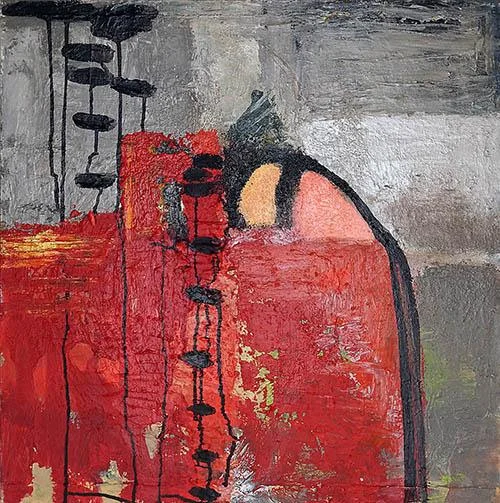
"Untitled'' (acrylic and print), by Carla Munsat, in her show "A Delicate Balance,'' at Bromfield Gallery, Boston, through May 27.
The gallery says her show "bridges two very different kinds of work: acrylic paintings on panel and canvas, and collages using birch wood and mixed media.'' Her summers in Vermont, with its innumerable birch trees, have inspired her use of birch wood.
James P. Freeman: Mass. 'Vanderpump Republicans' will never be in the majority
You must feel for Charlie Baker.
The incumbent Massachusetts governor must feel like Lisa Vanderpump, the matriarch of reality television’s Vanderpump Rules. Described in a New Yorker profile as “elegant and inscrutable,” for six seasons she has remained, observers say, above the debauchery and debris of a drama based upon the shenanigans of its wayward and intoxicated cast. Vanderpump is a kind of detached and absolved participant. Likewise, for four years, the thoughtful and reserved popular political patriarch has witnessed the unhinged vaudeville repertory that has become the Bay State GOP. Another dreadful drama: Vanderpump Republicans.
Sensible observers must feel that Republicans will never again be in the majority in Massachusetts.
For political reality is something incomprehensible to local arrested development agitators -- and their national cousins -- who have hijacked with hijinks the Party of Lincoln. And they have abandoned authentic conservative values (guiding principles, core philosophies) for hate-mongering, willful ignorance and fact-free ideology. All in the name of the Party of Trump.
President Trump, supposedly "draining the Washington swamp '' but actually drowning in his own, has done something remarkable in American politics. He has hyper-nationalized and simultaneously hyper-factionalized the Republican Party. In Massachusetts, Baker governs but Trump presides.
How else to explain the rise of Bay State Republicans Ron Beaty and Scott Lively?
Beaty, a tidal wave of bombast and bluster, is a Barnstable County commissioner who is running for the state representative seat in the 5th Barnstable District. He is challenging Republican incumbent Randy Hunt, a genuine conservative and the antithesis of Beaty. Hunt is civil, intelligent and, given the dearth of like-minded public servants, probably lonely; he is also not a convicted felon.
Beaty, whose Facebook and Twitter accounts boast his laughable conservative credentials, spent more than a year in federal prison for threatening to kill President George H.W. Bush and other politicians in the 1990s. A Trump wannabe, he recently asked if David Hogg, a Parkland, Fla., school shooting survivor, was a “fascist wannabe.” And, last October, Beaty tweeted that the #MeToo movement was “nonsense.” There is now an effort to recall him from his Cape Cod seat.
Then there is the fire and brimstone pastor from Springfield who is also a fire starter.
Knowing full well in advance his shameful acidic past, Republicans at their state convention last month still gave Lively enough votes to challenge Baker for this fall’s gubernatorial primary. They encouraged, in the words of Boston Magazine, a “world-renown homophobe,” and author of The Pink Swastika, to assert the ludicrous claim that he “represent[s] the full-spectrum conservative perspective of Republicanism” in Massachusetts. Whatever that means.
Lively, an anti-abortion, anti-tax, pro-Trump vulgarian, bizarrely wrapped himself in the drapery of Ronald Reagan who, Lively said, “stood for social and fiscal conservatism.” (Who will tell him that Reagan also signed into law in 1967 California’s Therapeutic Abortion Act (becoming pro-life later on) and, in the 1980s, created massive federal deficits?) Still, Reagan possessed a certain grace and temperament unknown to Lively, who touts himself as an “authentic conservative” and a “true Republican.” Well.
Beaty’s and Lively’s respective resumes and outbursts should automatically disqualify their candidacies. Instead, acquiescent Republicans essentially affirm them. And their values-systems. At their peril.
The official voice of Massachusetts Republicans, massgop.com, says, with the breezy élan of a tourist brochure, that it promotes “our conservative values.” What exactly are those values? Baker is respectable and a gentleman but no conservative. In fact, Baker never says he is a conservative. The others, meanwhile, emphatically and repeatedly proclaim they are conservatives. Absent loud denials, the inclusion of the word “conservative” by the state party implies endorsement for Beaty and Lively.
In her May 10 email bulletin, MassGOP Chairman Kirsten Hughes makes no mention of Beaty and Lively. She prefers to silence them. Bullies need to be confronted, not silenced. (At least WBUR’s Meghna Chakrabarti, to her credit, challenged Lively; and Baker sharply rebuked Lively after the convention vote.) No worries. Hughes happily finger points, like an admonishing adolescent, by transferring blame to the “Democrats’ toxic culture,” and how they will be “held accountable” for “tolerating” and “creating” this kind of “corruption.” So there… That settles that.
Beaty, Lively, and Hughes -- and others masquerading as conservatives -- need a history lesson.
Today, Trump self-identifies as a conservative; therefore, he must be a conservative. As a consequence, conservatism lacks definition, like a giant amoeba. Now, conservatism is what you say it is. As many of Trump’s 52 million Twitter followers, born of political mitosis, defensively attest. We’ve devolved from when political identification was rooted in philosophy and principle, which informed policy. In 2018, it’s mostly about personality.
Who needs reason when you’ve got emotion? And social media?
The long arc of modern conservatism began with Edmund Burke (1729-1797) and likely ended with William Buckley (1925-2008). For many Republicans today, they never existed.
Burke was deliberative, restrained by a sense of morality, and was suspicious of radical reforms. He espoused the virtues of prudence, moderation and character. And he would write of the Trump Revolution as he did of the French Revolution: “The levelers therefore only change and pervert the natural order of things.”
For all of Buckley’s accomplishments -- and there were many -- biographer Alvin Felzenberg writes that he “took special pride in the success he had in keeping that movement free of ‘kooks,’ ‘crackpots,’ racists and anti-Semites.” Ten years after Buckley’s death, his movement has seemingly collapsed and fractured: Extremists are dismantling accepted ethoses after their hostile takeover.
Greg Weiner, contributor to the journal Law and Liberty, brings much needed clarity to these recent developments. In the summer of 2016, he wrote of a Republican Party that underwent a “lurching metamorphosis” from its commitments to “constitutionalism, free trade, and chivalry” to “royalism, protectionism, and vulgarity.” He also anticipated that the “good sense” of the institutional Republican Party would be tested to constrain the future president. “A premise,” he concluded, “that the party’s leaders like principles more than they like power, especially as the latter is embodied in the Presidency.”
That premise is lost on those who embrace the likes of Beaty and Lively.
The last time that both chambers of the Massachusetts General Court were controlled by Republicans was in 1954, three years before candidate Lively was born. Sixty-four years later, party leaders -- and their ilk of faux-conservative enablers -- will not see so much as a slight reversal of their Republican super-minority status in 2018. That may be fitting as residents rightly associate the party with Beaty and Lively, whose presence complicates the efforts of a party desperately searching for members and voters.
Baker may have angered conservatives for acting moderate -- his original sin? --in a state where Democrats outnumber Republicans by three to one. But he acts as a mature realist, too. (Buckley called conservatism “the politics of reality.”) Some say the rise of local fringe candidates is a form of protest, expressing an anti-Baker sentiment. Arguably, though, it reflects more of a pro-Trump sentiment. Trumpism has become a sort of liberation theology for pretend conservatives who see themselves as the oppressed class among establishment Republicans. And Trump is their liberator.
Baker's re-election seems certain but no one should be surprised if Republicans lose legislative seats in Massachusetts this year. Having long ago discarded fundamental truths, and with the probability of losing more electoral power, what’s left for the pitiful Bay State GOP?
Vanderpump Republicans should be cancelled before Vanderpump Rules.
James P. Freeman is a New England-based writer and former banker. He is a former columnist with The Cape Cod Times. His work has also appeared in The Providence Journal, The Cape Codder, newenglanddiary.com, insidesources.com, golocalprov.com and nationalreview.com.
Llewellyn King: Trump's attack on the news media threatens democracy
Oh, dear! President Trump has hinted that journalists should lose their credentials. He probably means the passes that let journalists enter the White House complex at the Northwest Gate and t walk to the briefing room a few hundred yards away.
Over the decades, successive administrations -- in my accounting, starting with Jimmy Carter -- have reduced the amount of freedom that journalists enjoy inside the White House fence. It has been whittled away to the token that it is today. Jousting with the press secretary, Sarah Sanders, is not freedom to gather the news.
A reporter used to be able to walk around the complex without an escort and meet with White House staff in the Old Executive Office Building (now the Eisenhower Executive Office Building) without an escort.
More important, when you had an appointment in the West Wing, the nerve center of any administration, once you were through the door, you were at liberty to sit in the corridor before or after your appointment and often someone would invite you in for an unscheduled chat. At least, that was my experience and it was invaluable. You and they learned things. It was a two-way flow.
Incidentally, you did not need one of the prized “hard passes” to do that. Even now, in a time of restriction, a journalist does not need a hard pass to cover a briefing. You can get cleared through the gate by that part of the White House communications operation known as the Lower Press Office. You need pretty good identification like a congressional press pass, which is issued by standing committees of journalists covering Congress and sometimes just a passport or driver’s license.
Trump’s tweet about credentials suggests that he believes that all reporters need these to do their jobs. Fact is that credentials are useful but not essential. Indeed, I question the emphasis on credentials in Washington because they hint at the licensing of journalists, devoutly to be avoided and contested -- a constitutional violation under the First Amendment.
Credentials are a game subject to abuse: the very abuse Trump hints at.
It has even been suggested, by the George W. Bush and other administrations, that the press should be kicked out of the White House and given a briefing room in a nearby government building. One of the major values of being inside the White House fence is to garner interviews in the driveway with important visitors -- to be able to file on the spot with authenticity and to be a constant, if thorny, reminder to the White House, any White House, that the eyes and ears of the world are feet away.
The damage that Trump has done to the news media, and by extension to this liberal democracy, is the ceaseless denigration. In 2017, 46 journalists were killed around the world – 26 so far this year -- for just doing their jobs. Death in the line of duty is not “fake.”
What is the reporting job? It was best encapsulated by my friend Dan Raviv when he was with CBS News Radio. He said, “I try to find out what is going on and tell people.”
Quite so.
Trump makes that simple idea of finding out what is going on and telling people more difficult and sometimes dangerous. Trump’s daily assault on the news media has encouraged all of those with something to hide: those who are cheating, lying, torturing, killing and suppressing the freedom of others. He is damaging the body politic here and in other countries.
Journalism maybe a feeble light but it is a light. For many it is last hope for justice, the ultimate appellate court and the hope that they will be heard.
Trump’s relentless undermining comes at the worst of times for the journalism we have known. Newspapers are gasping, television is losing advertisers and viewers. If all this were not sobering enough, many are demanding that the great new forces for disseminating journalistic output, Google and Facebook, should practice censorship. Shame.
Finding out what’s going on and telling people is hard enough without Trump’s dangerous disparagement -- and politically correct censorship.
On Twitter: @llewellynking2
Llewellyn King, based in Washington, D.C., and Rhode Island is executive producer and host of White House Chronicle, on PBS.
What we had

"Atlantis'' (acrylic and mixed media on canvas), by Linnea Toney Leeming, in her May 12-June 1 show at the Providence Art Club.

Chris Powell: Why are Conn. and R.I. giving EB piles of money to do what it would do anyway?

USS Nautilus moored in Groton at the Submarine Force Museum.
What was the necessity of Connecticut Gov. Dannel Malloy's award the other day of $80 million to the Electric Boat Division of General Dynamics in Groton? {Rhode Island is giving the very rich company $34 million in incentives to expand at Quonset Point.}
The governor said that in exchange for the money, the company will increase its local employment by 1,900 people over the next 16 years, a state subsidy of $42,000 per job. But the federal government already had given the company the extra submarine work that was requiring that expansion of its workforce.
That is, the Malloy administration is paying EB to do what it was doing anyway, and as a military contractor EB is already getting all its money from government.
So was the state's payment necessary to keep EB in Connecticut, to prevent the company from moving to another state? That seems improbable, given EB's huge facilities in southeastern Connecticut and Rhode Island. They would not easily be relocated. Further, any risk of relocation would not speak well of Connecticut's congressional delegation, whose agitation for more submarine construction is partly responsible for the extra work coming to EB. With the federal government spending billions more on submarines, EB probably would not have minded being required to stay put.
While the governor called the state's payment to EB a "partnership," it looks more like corporate welfare from an administration that senses that, with its constant increases in taxes and business regulations, it has crippled the state's economy and feels ever more vulnerable to extortion by major corporations.
And does the Navy really need the extra submarines? As long as military contracting is such big business in Connecticut, that issue will get no more serious inquiry from the state's political leaders than the war in Afghanistan, now in its 18th inconclusive year.
xxx
SUBVERTING THE CONSTITUTION: The General Assembly and Governor Malloy are moving to put Connecticut into the "national popular vote" system of determining the votes of the state's presidential electors and thus determining the election of the president. Under the proposal Connecticut's electors would be required to vote for the candidate who led the national presidential vote.
There are many problems with this plan, starting with its subversion of the Constitution by undoing the Electoral College without a constitutional amendment and it making a compact among states without the approval of Congress as required by the Constitution.
Advocates of the "national popular vote" system say it would ensure that every vote for president counts, but it wouldn't. For it would nullify the votes of states on the minority side and diminish the influence of Connecticut and other small states, whose electors now represent more voters than the national average. The proposed system would have canceled Connecticut's votes in the 2004 presidential election, when Democrat John Kerry carried the state but lost the national vote to Republican George W. Bush. Connecticut's advocates of the "national popular vote" system seem to think that this state can never be on the minority side nationally, but it has been.
And just how is the national popular vote to be officially counted and totaled? There are no such counts and totals. The secretaries of the 50 states count only their own state's votes and certify their electors
The Electoral College has its disadvantages but so does the "national popular vote" system. The proposal would allow political corruption in "sanctuary states," nullifiers of federal immigration law -- particularly California and New York -- to steal more than their allotted electoral votes and control presidential elections by facilitating voting by their millions of illegal immigrants.
Chris Powell is a columnist for the Journal Inquirer, in Manchester, Conn.
Think diffidence, not surliness
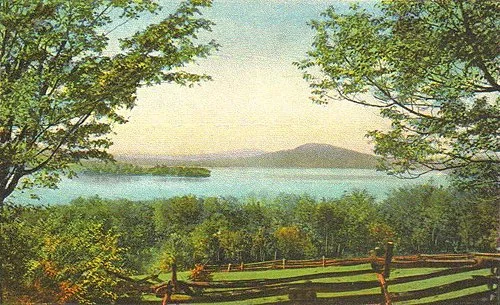
Rangeley Lake, Maine, on a postcard, circa 1920. Mrs. Rich's book, first published in 1942, about living with her family near the lake.
“In spite of all that is said, and more especially written, about the crabbed New Englander, New Englanders, like all ordinary people, are nice. Their manner of proffering a favor is sometimes on the crusty side, but that is much more often diffidence than surliness.”
― Louise Dickinson Rich, in We Took to the Woods