
Vox clamantis in deserto




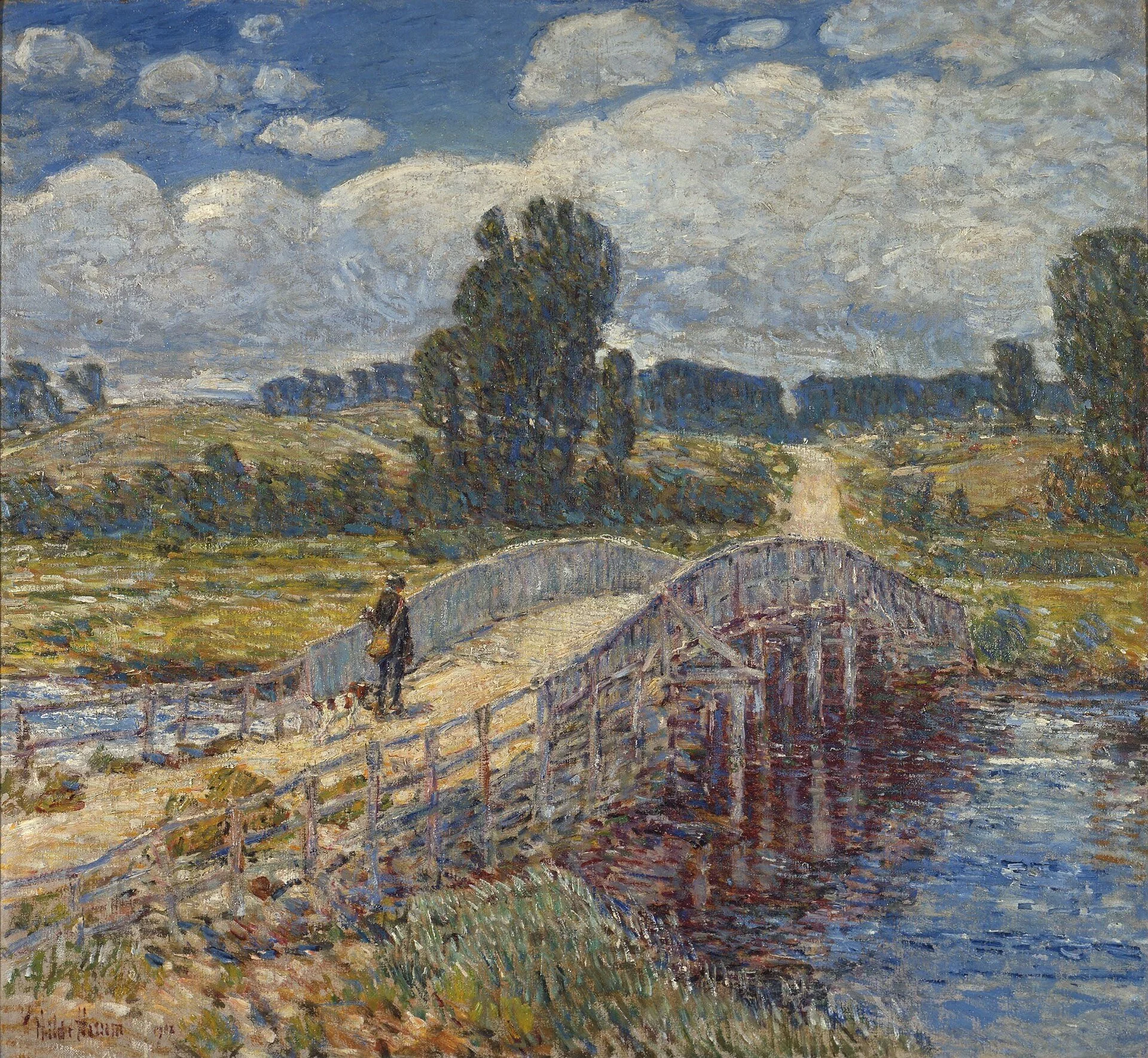




New England's lilacs

"Lilacs, False Blue, White, Purple,
Colour of lilac,
Your great puffs of flowers
Are everywhere in this my New England ...
Lilacs in dooryards
Holding quiet conversation with an early moon;
Lilacs watching a deserted house; ...
Lilacs, wind-beaten, staggering under a lopsided shock of bloom,
You are everywhere.''
-- Amy Lowell
Health-care hurricane

From Robert Whitcomb's "Digital Diary,'' in GoLocal24.com
As insurers, drugstore chains, such as Rhode Island-based CVS, with its Minute Clinics, and the likes of Walmart team up to provide direct health care, independent physician groups face growing pressure. Many doctors have decided to throw in the towel and become hospital employees. Meanwhile, many physician groups (including the one I use) are extending their hours and making other changes to be more convenient for harried patients in order to better compete with the retail clinics.
The clinics are a response to America’s astronomically expensive, fragmented and inefficient health-care system. They offer a range of services for injuries and illnesses that can often be treated by a nurse, nurse practitioner or physician’s assistant at a cost considerably less than a physician would charge and much, much less than a hospital emergency room.
But will your local Minute Clinic get to know you, especially if you have a chronic illness, as well as your primary-care doctor, so as to be in a position to adjust your care over time? And what sort of relationships will develop between local physicians and retail clinics, considering that they’ll often be competitors? The retail health-care revolution is just getting going. The old model of American health care is falling apart; it’s economically unsustainable.
Stay as long as you want

"Empty'' (photo), by Rebecca Skinner, in the "Transient'' show at Fountain Street Gallery, Boston, through May 27.
Don Pesci: Transactional journalism and fake news
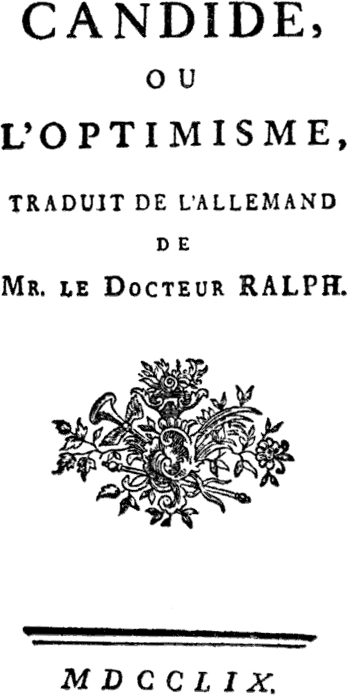
Frontispiece of Voltaire's Candide
Newspapers should have no friends
-- Joseph Pulitzer
Sometime in the past few years, nearly everyone in Connecticut, with the possible exception of the state’s ebullient left-leaning writers, became a cynic. And cynicism has increased in direct proportion to the inability or unwillingness of status quo progressives in the General Assembly to confront the state’s most pressing economic problems. “We've been sitting through the last days of the legislative session doing everything BUT paying attention to the state's economy and fiscal situation,” state Rep. Gail Lavielle notes on Facebook. Procrastination is the typical response of a do-nothing politician to a serious problem.
Given the state of the state – perilous – the unheeding joyful crowd may remind some people of Voltaire’s mercilessly flayed Candide, the eternal optimist who, despite rough treatment at the hands of an unforgiving world, continues to insist that, in spite of his manifold humiliations, this is still “the best of all possible worlds.”
Voltaire knew whereof he spoke. Hounded from country to country by his targets who sought to shove him into prison for the unpardonable crime of discomforting the comfortable, Voltaire had taken the measure of life’s cruelties and absurdities. To protect himself from lawyers waving defamation suits, the attorneys general of the day, he threw his cynicism into fiction that spared him prison time and disarmed the menacing optimists; had Voltaire been caught in their jaws, he would have suffered a fate not unlike that of Candide.
At almost exactly the same time in England, Alexander Pope, a hunch-backed Catholic, was creating a similar havoc among brethren belle lettrists. The art of journalism was still in swaddling clothes. Under Pope’s hand it grew up, very quickly. Pope threw his satires into poetry. His "Dunciad'' was a poetic torture chamber for those with whom he did polemical battle.
After much huffing and puffing, the two gave birth to modern journalism, the animating spirit of which is perfectly suggested by Pope’s boast:
"Am I not proud? Yes. Why should I not be,
When even men who do not fear God -- fear me?''
Moderns may be surprised to hear that it is only a hop, skip and jump from Voltaire and Pope to Joseph Pulitzer, after whom the much coveted Pulitzer Prize is named. Pulitzer’s vision of a press independent of political influence, one that lives or dies fiercely guarding its prerogatives, is at opposite ends from what Sharyl Attkisson has called, disdainfully, transactional journalism, which is at least as great a danger to journalism as fake news.
Pulitzer advised that good reporters should have no friends, and there were in the golden age of journalism reporters willing to confront, at great personal and professional costs, the considerable powers arrayed against them. Attkisson, who bailed out of CBS News two decades ago because she felt she would no longer be able to pursue stories inconvenient to the political friends of major news outlets, talks very sensibly about fake news.
There are two kinds of fake news. There is fake fake news and real fake news. Many politicians who find themselves on the receiving end of proper denunciation will denounce as “fake” news that is objectively true, although even objectively true news may be slanted. Real fake news cannot be true, but true news can be faked. And that is the boat that brings Attkisson to the shore of transactional journalism.
The transaction in transactional journalism is a business arrangement agreed to informally among politicians and friendly journalists, an arrangement possibly more damaging to good journalism than fake news because it cannot be as easily detected. Or rather, it can be detected and verified only by reporters in the field who have succumbed to the allure of powerful politicians, or by editors, publishers and owners of media outlets that have developed over the years a mutually supportive business relationship with politicians and their own valued sources upon which the prosperity of the media outlet in some sense depends. News depends upon sources and access; sources, whose primary loyalty is to the reigning powers, can dry up. Access can be denied.
There has been during the Malloy administration a great deal of objectively true evidence that Connecticut has entered an economic death spiral. The abandoning of the ship of state by those most responsible for Connecticut’s present economic condition – perilous – certainly suggests a flight from the past. The race for governor on the Democrat side has so far involved the party’s junior varsity politicians. Ned Lamont, said to be the leading Democrat gubernatorial contender, is no Ella Grasso or Abe Ribicoff. Indeed, Lamont is no Sen. Dick Blumenthal or Sen. Chris Murphy, both of whom appear to be content to remain in Washington, D.C. where they spend their days seeking to sink President Trump’s boat, at a time when the Democrat ship of state in Connecticut is sending up bubbles.
The cry of alarm coming from editorial boardrooms across the state is hardly ear-piercing. Where is the media hullabaloo? A thoroughgoing cynic may be forgiven for putting down the guarded optimism of political commentators in the state to Attkisson's transactional journalism.
Don Pesci is a Vernon, Conn.-based columnist.
'In an intenser calm'
"But not on a shell, she starts,
Archaic, for the sea.
But on the first-found weed
She scuds the glitters,
Noiselessly, like one more wave.
She too is discontent
And would have purple stuff upon her arms,
Tired of the salty harbors,
Eager for the brine and bellowing
Of the high interiors of the sea.
The wind speeds her on,
Blowing upon her hands
And watery back.
She touches the clouds, where she goes,
In the circle of her traverse of the sea.
Yet this is meagre play
In the scrurry and water-shine,
As her heels foam—
Not as when the goldener nude
Of a later day
Will go, like the center of sea-green pomp,
In an intenser calm,
Scullion of fate,
Across the spick torrent, ceaselessly,
Upon her irretrievable way.''
-- "Spring Voyage,'' by Wallace Stevens
Llewellyn King: Time to go back to basics at the White House Correspondents Dinner
The White House Correspondents’ Association dinner got just too celebrity ridden for its own good, as outfits who don’t know where the White House briefing room is lobbied for more and more tables.
It used to be an annual drunk for journalists to visit each other and see and be seen. It was a chance for the Fourth Estate men to wear tuxedos and women to wear evening gowns and to hit the parties in the hotel suites before and after the dinner — the tickets, it is hoped, paid for by the employers.
Then came Vanity Fair, People and Bloomberg and the annual excuse for excess for those engaged in journalism became the Oscars East and another excuse for excess by the excessive from the West Coast.
Journalists, who used to invite spouses and politicians they wanted to cultivate, were relegated to the D List as the aforementioned outfits and the networks demanded tickets for the Hollywood grandees. For years, as a member of the association, I was offered two tables and took one. But the celebrity cramming reduced my allocation to just two tickets; no chance to impress my potential sources or sponsors for my television program.
Along with celebrities from ZIP Code 20190 came small-time news executives, who leaned on their Washington correspondent for tickets for the publisher and spouse.
Ambassadors and lobbyists begged journalists for tickets. I was even offered money. More commonly, lobbyists would offer to pay for the poor scribbler’s ticket as well as their own. They were glad to let it be known that they’d pay for a table, if they could just get in themselves.
Many excluded hacks were soon showing up at the hotel in dinner dress to see and be seen in the hotel bar and in the corridors. Some hospitality tents on the lawn could be penetrated without a ticket: You could get a free drink and go home to watch the rest on TV. You saw your friends, you were seen, and you saved face along with money. Gradually, the hotel — the spacious if unexceptional Washington Hilton — increased security and pretending to be on the inside got harder.
A former Washington gossip columnist, Patrick Gavin, devoted much of a year to a documentary on the spring perennial, complete with interviews seeking to mine its social significance. It was craziness that had become fashionable, like the running of the bulls in Pamplona.
But the Gatsby-like madness couldn’t go on. The New York Times, always the first to take itself seriously, pulled out in 2011. Then, in 2013, the everyday corruption of Washington (the cozy press relations with politicians and lobbyists) was laid bare in “This Town: Two Parties and a Funeral — Plus, Plenty of Valet Parking — in America’s Gilded Capital.” The author, Timesman Mark Leibovich, fingered the White House correspondents’ dinner as a celebration of all that stank in Washington.
The respectability of the dinner was teetering before President Donald Trump launched his boycott. But there’s a back story. In 2011, President Barack Obama and “Saturday Night Live” comedian Seth Meyers ridiculed Trump for leading the “birther” movement and hosting a reality TV show. Some say that drubbing led Trump to run for president.
Picking a comedian for the dinner has always been dicey, and the association aims for diversity. He or she must be a political humorist and understand that the audience contains people who’ve been drinking and want to get back to it. Any dinner speaker knows a room full of drunks is tough.
This gig is made even more difficult by the presence of the president as patron and target. He should be roasted but left underdone, enjoying his time on the spit — as did Presidents Obama and George W. Bush, who also poked fun at themselves brilliantly.
Drew Carey, who was the comedian at the 2002 dinner, told me it was the most difficult room he had ever worked. Michelle Wolf turned the tables on April 28; she, with her vulgarity and rudeness, was the hardest comedian for the room to swallow.
Mercifully, it may go back to an orgy of journo camaraderie, fun and, yes, liquor — copious quantities of bipartisan spirit
On Twitter: @llewellynking2
Llewellyn King is executive producer and host of White House Chronicle, on PBS.
'Stillness within change'

"Preface That" (detail), (encaustic paint), by Mary Marley, in her joint show with photographer Rebecca Skinner, at Fountain Street Fine Art, Boston, through May 27.
The gallery says:
"Marley and Skinner’s work explores the paradox of moments of stillness within larger patterns of change. Each part is connected to the whole but not subsumed by it. The work deals with the distinctness of passing moments as they meld into the current of time. Everything is in flux, but nothing is lost.''
"Mary Marley generates wholeness from fragments by patching together patterns and structures from disparate times and cultures. Having manipulated oils, paper cuttings, and mixed media, she has most recently found expression through encaustic painting. The layering of these pigments creates a unique luminous quality to her graphic narratives.''
Ebony Slaughter-Johnson: It's the wrong time to cut public housing
From OtherWords.org
Housing and Urban Development (HUD) Secretary Ben Carson has answered President Trump’s call to shrink the social-safety net. Carson recently offered a proposal that would triple the rent some of America’s poorest families have to pay before they get housing assistance.
Housing advocates are appalled. If they’re pushed out of public housing, many low-income families could face housing instability at every turn. That could mean a lifetime of poverty, tenuous employment, and an unstable environment for kids.
As of March 2018, the median cost of a new home is $337,200, placing home ownership out of the reach of many Americans.
Even for those who try to reach it, redlining and discriminatory lending on the part of banks can render the possible impossible. An analysis from Reveal by The Center for Investigative Reporting found that black Americans in particular — even 50 years after the Fair Housing Act — were denied home loans at rates higher than whites in 48 cities.
In many American cities, de facto segregation has replaced de jure segregation in the form of gentrification. With rents rising, many low-income Americans are either displaced altogether or forced to compete for more expensive housing options geared toward the gentrifiers better able to afford it.
Even those not directly impacted by gentrification are seeing rising rents and housing insecurity.
According to the National Low Income Housing Coalition, the average minimum wage required to afford a one-bedroom rental — at a time when the federal minimum wage refuses to budge beyond $7.25 — was $17.14. There’s not a single city in the country where a full-time minimum wage job can get you a market-rate apartment.
Even before Carson’s proposed changes, many low-income Americans were having a hard time getting access to housing help. Just 35 out of 100 extremely low-income renters find public housing with affordable rent.
That’s no doubt due to the fact that HUD has witnessed budget cuts that go back well before the Trump administration, but have gotten no better since. Carson’s plan fits within a long trajectory of decreased access to assistance from HUD — which, as of 2014, had reduced its offering of public housing units by 200,000 since the mid-1990s.
America is in the midst of a housing crisis, which resulted in more than 553,000 Americans facing homeless on any given night in 2017. That’s the size of a large city. In 2016, evictions, which sociologist Matthew Desmond called a “direct cause of homelessness,” were filed at a rate of four per minute.
Carson’s proposed rent hikes could mean homelessness for those unable to pay. Housing instability is associated with depression, reduced access to basic necessities, and absenteeism and low test scores in children.
On the other hand, the stability provided by public housing positively correlates to increased income. According to a 2016 analysis from the National Bureau of Economic Research, each year a teenager spent receiving public housing assistance resulted in their earning hundreds more in income as an adult.
Lack of affordable housing, rising rents, discriminatory lending, gentrification, and homelessness: These are the instabilities, chronicled in a new report by the Poor People’s Campaign and the Institute for Policy Studies, that Carson would foist upon already vulnerable families.
Such cruelty isn’t surprising — this is, after all, a man who claimed that poverty was a “state of mind“— but it is disappointing.
Ebony Slaughter-Johnson is an associate fellow at the Institute for Policy Studies who covers history, race, and "the criminalization of poverty.''
Historic neighborhoods face rising seas

The very low-lying Point neighborhood, in Newport.
From Robert Whitcomb's "Digital Diary,'' in GoLocal24.com
Lots of communities, especially on the East and Gulf coasts, have been working to mitigate the effects of sea level rise. Planned projects include raising the first floors of flood-vulnerable buildings, elevating roads and railbeds, building storm barriers in some places, creating park-like green spaces and expanding marshy areas to minimize wave action and soak up flood waters.
But what do you do in a thickly settled historic urban neighborhood, such as Newport’s glorious Point neighborhood, which has one of the nation’s highest concentrations of colonial era houses? Residents of the neighborhood have been dealing with ominously high tides in the past few years. Newport and the state need to consider new measures to protect such neighborhoods, which might have to include special local taxes for local mitigation
Horsefeathers

"Dive'' (feathers and sticks), by Alysa Bennett, in her show "A Change of Horse,'' at AVA Gallery and Art Center, Lebanon, N.H., through May 25. The gallery says her "career inspiration and artistry have been of subjects that bring movement and mystery. Horses have been a core subject for the artist for many years and are shown in multiple mediums of drawings, prints and sculptures. ''
Lebanon is an old Connecticut River Valley mill town, chartered in 1761, that was revolutionized by the routing, in the 1960s, of Interstates 89 and 91 through the town and nearby White River Junction, Vt. (where Amtrak and freight trains stop), in addition because of the growth of Dartmouth College.
That's especially with the expansion of Dartmouth Hitchcock Medical Center, which is affiliated with the Geisel School of Medicine at Dartmouth, in Lebanon, and with the growth of storied Dartmouth College itself, whose main campus, in Hanover, is just to the north. Dartmouth Hitchcock is the largest medical center in northern New England. The Geisel School is named after Theodor Geisel, aka "Dr. Seuss,'' a member of the Dartmouth College class of 1925.
So the former small-factory town now has a mixed economy based on education, medical services, high-technology and retail. It and White River Junction also have some good restaurants.
Nostalgic or futurist Serenbe
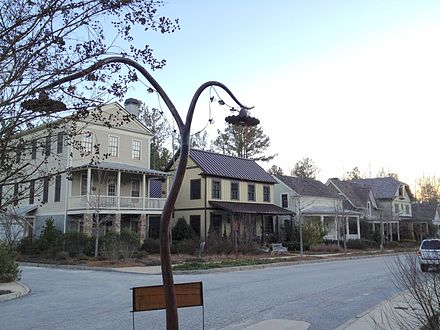
Houses in Serenbe.
From Robert Whitcomb's "Digital Diary,'' in GoLocal24.com
Serenbe, an “intentional community’’ outside Atlanta, which is infamous for sprawl development, speaks to the desire of many Americans for a return to the idea of close-knit towns in some partly mythical past and/or to go to a utopian future where people can live close to nature without giving up such urban pleasures as high-class entertainment, nice restaurants and shops. Serenbe is a mix of single-family houses (in different styles), townhouses and apartments and incorporates many energy-saving “green”” ideas. It’s not cookie-cutter. It also looks a bit small-town New Englandish.
It is, however, a bit precious. As Mimi Kirk wrote in an article about Serenbe, “In some ways, Serenbe is like a less-gritty version of a gentrified urban enclave, one that’s surrounded by woods instead of less-affluent neighborhoods.’’ In any case, sociologically and environmentally, it’s a major improvement over the usual suburban sprawl of ranch houses and McMansions.]
To read Ms. Kirk’s article, please hit this link:
https://www.citylab.com/design/2018/03/the-seductive-power-of-a-suburban-utopia/555329/
Manhattan masterpiece
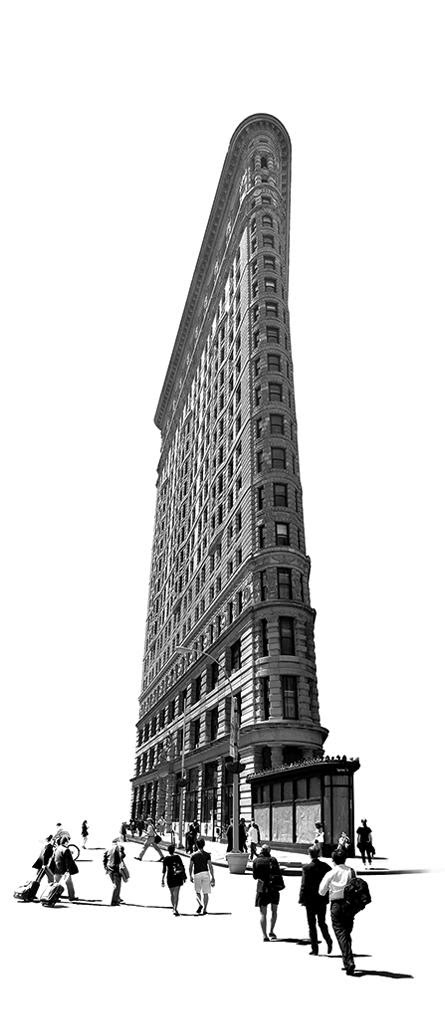
"Flatiron" (building in Manhattan), by Marc Harrold at Lanoue Gallery, Boston.
'Begin afresh'

''Yet still the unresting castles thresh
In fullgrown thickness every May.
Last year is dead, they seem to say,
Begin afresh, afresh, afresh."
-- From "The Trees,'' by Philip Larkin
May surprise

"The sounds coming through our bedroom windows were ominous. We recognized the 'crack-crash' punctuating the almost tangible silence as the noise of snapping, falling limbs. Two decades of New England woodland living had accustomed my wife and me to the winter ice storms and clinging wet snows that 'trim' the pine trees. But this was early May in Massachusetts --- a time of lilacs and apple blossoms.''
-- Robert C. Cowen, on a May snowfall in The American Land (1979)
(The reference is to the bizarre May 9, 1977 snowstorm that affected much of southern New England.)
Jill Richardson: The Koch-led billionaires' conspiracy against democracy
The Koch brothers are oil magnates and billionaire GOP funders.
They believe that their great wealth entitles them to rule over the many. For decades, they’ve been running a surreptitious assault on the rules that protect the majority of us from their abuse. From whacking our voting rights to busting unions, their intent is nothing less than to pull a coup on democracy, installing a government of, by, and for the superrich.
They’ve enlisted a secretive cadre of other billionaires who share their extreme kleptocratic belief that 1) the property rights of the rich are more important than the people’s political rights, 2) that majority rule is not a good form of governing, and 3) that the “Makers” (as the billionaires dub themselves) should be able to overrule collective actions of the lower classes (whom they call “Takers”).
They’ve created a complex, sophisticated web of right-wing front groups that have already corporatized a slew of our most basic laws and institutions, and they’ve gained a chokehold on nearly every level of government (including our courts and whole states, such as Wisconsin, North Carolina and Texas). They’ve essentially taken over the Republican Party.
Even more shocking than the arrogance of this unprecedented power grab by the conspiracy of billionaires is its quiet success.
The Koch Coup crept up on us because it abhorred publicity and couched each move as an independent effort by a separate group. Then the conspirators backed the Supreme Court’s outrageous 2010 Citizens United decision, decreeing that unlimited corporate spending is allowed because it’s “free speech.” Only then did Americans begin waking up to the reality that the Kochs were making an assault on democracy itself.
To learn more, check out the extensive Koch web files at the Center for Media and Democracy: www.exposedbycmd.org/koch/.
Jill Richardson is an OtherWords.org columnist.

Llewellyn King: Murdoch profits richly by mining resentment, tribalism and sex

Rupert Murdoch.
Rupert Murdoch stands astride the Atlantic. He is the most successful newspaper publisher in the United Kingdom and the proprietor of Fox, the most successful cable news channel in the United States.
While he has many other spectacular holdings in the U.K., the United States, Australia and Asia, those are the two pillars on which the empire stands now that he has sold 21st Century Fox Entertainment to Disney.
I believe the two pillars are linked by what amounts to the Murdoch formula: find a chauvinistic, nationalistic vein and mine it.
Murdoch blew on the embers of resentment and stoked the fires of tribalism through The Sun, his big British moneymaker, and Fox News, his American gold mine.
He understood this social stratum, whether it was in working-class Britain or spread across what we now call the Red States in America. This audience felt ignored, put upon and unloved. Its traditional champions on the left — the unions, the Labor Party and the Democratic Party — had condescended to it, but not celebrated it.
Murdoch articulated its frustrations and gave them voice not where you would expect it on the left, but on the right.
A new and exceptional book by Irwin Stelzer, The Murdoch Method, lays out how Murdoch did this and how he holds his empire together. Stelzer should know. He has been a friend and consultant to Murdoch and his many enterprises for 35 years.
Stelzer, whom I have known for 45 years, is worthy of a book in his own right. When he met Murdoch, he had already achieved success enough for many a man. He founded National Economic Research Associates and sold it well. Then, after a stint with Rothschild in New York, he enjoyed running an energy program at Harvard. Then came Murdoch.
Stelzer worked so closely with Murdoch that a rival newspaper in London described him as “Murdoch’s man on earth.” And he was.
He was sometimes the go-between for British prime ministers and leading American figures, from Richard Nixon to Richard Cheney. Stelzer made Murdoch’s case to the mighty, and he crunched numbers. Money and the power of media made this world go around.
As the title suggests, Stelzer explains in his book how Murdoch manages so diverse a company as News Corp. and how he created and grew it from the newspapers he inherited from his formidable father, Sir Keith Murdoch, in out-of-the-way Adelaide, Australia.
What emerges is a portrait of man who thinks of himself as an outsider, a loner: a practitioner of a kind of minimalist management out to war against theestablishment and its elites.
Murdoch, both as a publisher and a businessman, has been incredibly courageous. He flipped The Sun from timid left to truculent right. He also stripped the brassieres off the models on Page 3. Chauvinism, sex and celebrity gossip was what Murdoch offered, and the public could not get enough. He also broke the British print unions in a near-military move to a secret printing site in Wapping, East London, in January 1986.
In America, Murdoch pretty well failed with newspapers he purchased in San Antonio, Boston and Chicago. He has not exactly succeeded with The New York Post, but he keeps it going as a personal indulgence. He is doing well with The Wall Street Journal. But Fox News is the jewel in his American crown.
Stelzer’s Murdoch and his method is one of a small executive staff: excellent executives who are very well paid and prepared to answer a call from their boss day and night. He let really gifted people, like Roger Ailes, of Fox, run their enterprises until there was a scandal and then, bang, the locks were changed, and settlements were paid. Murdoch is generous and ruthless.
Murdoch and Stelzer were in a way made for each other, although they did argue and sometimes Stelzer lost, only to find out just how wrong he was — as when he opposed the creation of the Fox Business Network.
Stelzer acknowledges he does not like everything Murdoch does; and he should not. Murdoch has treated the world as a playground where you make money by making damaging mischief — so you hire people like Sean Hannity and tolerate the inanity. Or you court the Clintons, but back Trump.
Stelzer has been on a wild ride and he takes you along in clear, readable prose.
On Twitter: @llewellynking2
Llewellyn King is executive producer and host of White House Chronicle, on PBS. He is based in Rhode Island and Washington, D.C.
David Warsh: 'It's the Computers, Stupid' and other essays
SOMERVILLE, MASS.
A fresh copy of The Age of the Applied Economist: The Transformation of Economics Since the 1970s (Duke, 2017) arrived in the mail the other day. Editors Roger Backhouse and Béatrice Cherrier note in their introduction that 10 of the last 12 winners of the John Bates Clark Medal were described as “applied” or “empirical” or doing work of “practical relevance.”
Make that 13. Parag Pathak, of the Massachusetts Institute of Technology, a market designer known for his work on the assignment of students in public schools, was recognized earlier this month. The Clark Medal is awarded annually by the American Economic Association to an economist under the age of 40, teaching in an American university, judged to have made the most significant contribution to economics
Backhouse, of the University of Birmingham, and Cherrier, of the Centre National de la Recherche Scientifique, are among today’s leading professional historians of economics. Their book is the annual supplement to the quarterly journal History of Political Economy (HOPE), which is also published by Duke University Press. The Age of the Applied Economist contains 11 essays on various topics, including “‘It’s Computers, Stupid’: The Spread of Computers and the Changing Roles of Theoretical and Applied Economics,” by the editors.
They trace the development of computers after World War II from mainframes running punch cards, in the 1950s and 1960s, to the advent of personal (or “micro”) computers and the Internet after 1981 (omitting the development of mini-computers in the 1960s and 1970s, which I suspect will turn out to have been significant to their story). They wisely note that “the evidence required to write a comprehensive history of the role of computing in economics is often hard to locate”. They urge their fellow historians nevertheless to pay careful attention to the significance of new computational tools for the discipline.
Still, they argue, the advent of powerful and easy-to-use computers is undoubtedly important, although by itself it is not sufficient to explain the turn toward applied economics that they document in the their conference volume. Beginning in the 1980s, they write, “some computationally very intensive techniques were marginalized, and computationally less-demanding approaches based on quasi-experiments became widely used in microeconomics.”
They mention the development of new databases and the emulation of methods of clinical testing in medical science. They cite the account in their conference volume, by Matthew Panhans, of Duke University, and John Singleton, of the University of Rochester, of a “credibility revolution.”
For all the brio of The Age of the Applied Economist, the book reads more like a prospectus for a research program than a persuasive account – which, of course, is the end that many of the forty-eight previous HOPE conferences have served. A good gloss on the subject is no substitute for shoe leather and sitzfleisch. Whether the age belongs to applied economists, or behavioral economists, or experimental economists, or even organizational economists, is far from settled.
The distinction between theoretical and empirical work seems overdrawn. Under a broad definition, a dozen Nobel prizes have been awarded for work in applied economics over the years, beginning with Simon Kuznets in 1971, including, most recently, Angus Deaton; but the first recognition of what will presumably be several awards for work in the “methods revolution” still lies ahead.
To reassure myself on this point, I took down from the shelf two classics of the recent history of economics: The World in the Model: How Economists Work and Think Cambridge, 2012), by Mary S. Morgan, of the London School of Economics, and How Economics Became a Mathematical Science (Duke, 2002), by E. Roy Weintraub, of Duke University.
Morgan develops an essentially philosophic argument though a series of closely examined case studies: David Ricardo’s groundbreaking “recipes,” more persuasive than syllogisms; Francis Ysidro Edgeworth’s diagrams; the caricatures of Max Weber (“ideal types”), W.S. Jevons (“calculating man”), and Frank Knight (“slot-machine man”); the thought experiments of Alfred Marshall; the analogical model of Walter Newlyn and Bill Phillips, a model run by water; the question-and-answer models of John Maynard Keynes and Paul Samuelson; the microscope-like simulations of Martin Shubik and Guy Orcutt; the “exemplary narratives” of game theory.
Weintraub, on the other hand, tells a series of stories, often quite personal: his economist father’s struggles with mathematics in an age of rapid change, and his own struggles, as a mathematician, with his father; and the relation of both to Hal Weintraub, brother to Sidney, uncle to Roy, a talented mathematician taken off by Hodgkin’s Disease at the age of 31. All this serves as a web in which to weave stories of Alfred Marshall and the development of the math-heavy Tripos final examination in economics at the University of Cambridge at the beginning of the 20th Century as a way of sorting out candidates; the influence of French Bourbaki scholarship on the further development of mathematical economics after 1945; and the spadework chapters that led to Weintraub’s 2012 book, with Till Düppe, of the Université du Québec à Montréal, Finding Equilibrium: Arrow, Debreu, McKenzie and the Problem of Scientific Credit (Princeton). In that book Weintraub’s doubts about mathematical austerity seem to give way to a tough-minded acceptance of one of the major tools – perhaps the major theoretical tool – of post-World War II technical economics.
These books are obviously not for those who are casually curious about what happened to economics in the twentieth century. But for anyone seeking to understand “the age of models,” or “the age of mathematical economics,” including practicing economists, they are landmarks. Establishing “the age of applied economics” will require a similar effort. The problem is that it isn’t easy to make a living as a historian of economics. Economics departments have ceased to teach the subject, much less require it of graduate students. And jobs involving the production of new knowledge of the field’s history are few and far between.
The miracle is that the community of the historians of social science continues to produce important books. We’ll just have to wait a little longer for a history of whatever age this is.
David Warsh is proprietor of economicprincipals.com, where this first ran.

David Haworth: Missing person report from the E.U.

BRUSSELS
To foreigners an oddity of U.S. diplomatic practice is the long gap between postings when replacing one envoy with another.
In contrast, most other foreign services put a premium on slipping the next Excellency into his or her predecessor’s place as soon as possible and the incomer’s name is known even before the valedictory cocktails are out of the way.
And there’s another thing debated locally when any American Embassy changeover takes place: Will the job be a State Department choice (career) or be the happy gift of an incoming president (political appointee)?
Frankly in most cases these two characteristics of State’s continuum don’t much matter, the hum of diplomacy continues anyway under a put-upon charge d’affaires.
But what about the post of the Representative of the United States of America to the European Union?
Highly regarded Anthony L. Gardner left that post just before Christmas 2016 – that is, well over a year ago – and has yet to be replaced.
This does not sit well with the European Union authorities, who deploy some 140 missions round the world.
The continued absence of a U.S. ambassador in the so-called “capital of Europe” is, therefore, not only a painful jab in E.U. officials’ pride but has serious practical consequences as well for a relationship in goods and services worth an annual $1.1 trillion.
What precisely does “America First” mean for the 28-member E.U.? Few, perhaps no one, can know with certainty.
Is the continuing failure to nominate an ambassador a calculated snub or just the normal vagaries of choice? To what extent does it represent America’s growing isolation – or “Exitismus” as it’s known in think tank circles?
One clearly irritated E.U. ambassador told me of the urgent need for a “valued interlocutor” from Washington D.C. – someone who carries the president’s authority to shape trans-Atlantic relations at a time when, arguably, they have never been worse or more volatile.
The E.U.’s proposal for a “digital tax” to raise more revenue from hi-tech corporations such as Google, Apple and Facebook has done nothing to improve Brussels-Washington relations. In the defense and security areas the Middle East continues to vex both sides. President Trump has made known he’s angry that some NATO members, most notably Germany, don’t pay their full dues to the alliance.
As the leading German weekly Die Zeit admits: “There is nothing to romanticize about the trans-Atlantic relationship but rather a lot to repair” and there’s little time.
On May 1, Trump will drop the temporary reprieve from tariffs on U.S. steel (25 percent) and aluminum (10 percent) but the E.U. wants a permanent exemption, according to the French and German leaders and European Commission president, Jean-Claude Juncker, who has said that that deadline is impossible to meet.
Some officials fear the steel-tariff issue could be the opening shot in a threatened trans-Atlantic trade war with retaliation targets Harley-Davidson, bourbon and Levi’s jeans among 200 other U.S. brands; more optimistic Europeans point out trade spats are nothing new, part of the weather.
Beyond dispute, however, is the need for an authoritative U.S. point man, an ambassador to the E.U., who can finesse political messages coming out of the White House.
The Trump presidency has disturbed most previous European assumptions about U.S. policy. Straightaway the new president dumped the pending Atlantic free trade agreement (TTIP), then he opted out of the Climate Change deal so carefully crafted in Paris.
European anxiety grew when one of Trump’s friends, Ted R. Malloch, was – apparently -- to head up the U.S. mission here. During a short visit last spring the former businessman/academic caused offence by claiming on TV the E.U.’s common currency, the euro, would fail, and moreover the E.U. had become anti-democratic and anti-American.
He also claimed the Trump administration “is no longer interested in the old form of European integration.”
Since then the Malloch prospect has faded – to be replaced by whom?
E.U. institutions, the Commission, the Council and the European Parliament, not to mention 28 chancelleries, are impatient to know. When the choice is finally made, it will be a defining moment in Atlantic relations.
Brussels-based David Haworth writes for Inside Sources, where this piece first appeared. A seasoned reporter on European subjects, he has worked for the International Herald Tribune, the Irish Independent, the Irish Daily Mail & The Observer.
Be fair to brick-and-mortar stores

From Robert Whitcomb's "Digital Diary,'' at GoLocal24.com
I hope that the U.S. Supreme Court reverses itself and decides that retailers on the Internet can be made to collect state and local sales taxes in states where they have no physical presence. If somebody in a state buys something at a physical store in that state and has to pay its sales tax, it’s only fair that someone residing in the same state pay sales tax in buying the same product online.
The problem goes back to a 1992 Supreme Court ruling that spurred Internet shopping. That ruling, Quill Corporation v. North Dakota, said that the U.S. Constitution bars states from collecting sales taxes from enterprises that don’t have a physical presence in a state. But in these surreal times, more and more of us don’t seem to have a physical presence anywhere.
Internet retailers complain that collecting the taxes will be too complicated. But in a world where, for instance, social-media companies can micro-target customers with great precision, I’m sure ways can be found to efficiently manage the tax collection.
It has long struck me as bad public policy that physical stores (whose owners pay local property taxes and otherwise contribute to the local economy and civic life) must collect sales taxes from local consumers patronizing these establishments while businesses living on computers far away don’t have to. Unfair advantage.
This inequity has deprived states of billions of dollars in tax revenue to pay for essential services and transportation and other physical infrastructure.