
Vox clamantis in deserto

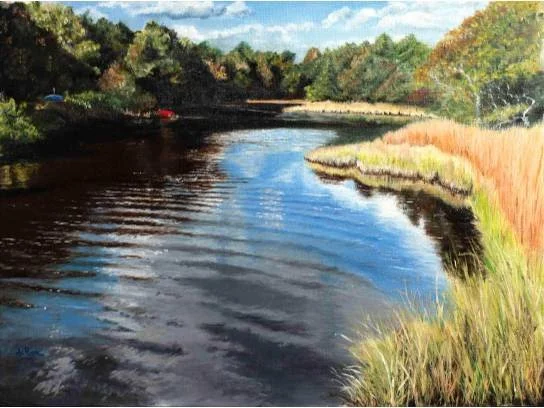



UNH names UNC provost as next president
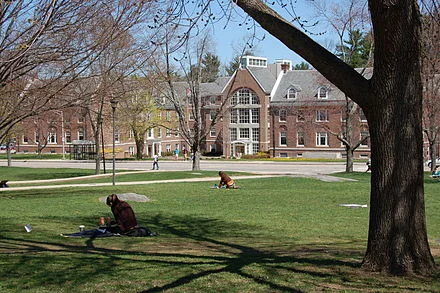
Congreve Hall at the University of New Hampshire's main campus, in Durham.
From the New England Council (newenglandcouncil.com)
"The University of New Hampshire (UNH), a New England Council member, has named James W. Dean as the institution’s 20th President. Dean has most recently served as vice chancellor and provost at the flagship University of North Carolina (UNC) at Chapel Hill, where he was also a professor of organizational behavior. Dean succeeds Mark W. Huddleston, who is retiring after 11 years at the helm of UNH, the Granite State’s largest public university.
"As UNC’s chief academic officer, Dean hired seven deans, bolstered faculty retention efforts, and led campus-wide efforts for the university’s 10-year review process for reaccreditation from the Southern Association of Colleges and Schools Commission., He also worked to strengthen student advising to better meet the needs of the diverse campus. Dean was selected after a national search and was approved by the University System of New Hampshire board of trustees by a unanimous vote. He starts in his new position on June 30, 2018.
"John Small, chairman of the University System board, said UNH is gaining an “experienced leader from one of the nation’s top public universities.” Dean said, “I am deeply honored to have the opportunity to serve as president of UNH at a time when all public universities need to rethink our efforts to support the public through teaching, research and engagement.”
Tree-killing Southern Pine Beetle moving into southern New England

Southern Pine Beetle.
From ecoRI News (ecori.org)
Pitch pine forests are at greater risk of attack from the Southern Pine Beetle than forests with a mix of tree species, according to recent research by Dartmouth College. The study shows that the composition of forests is more important than other factors when predicting where the destructive pest will strike next.
The research, published in Forest Ecology and Management, adds to understanding of the Southern Pine Beetle and confirms previous research from the beetle’s southern habitat on the importance of characteristics that increase forest susceptibility to the pest.
The research finding has important implications for forest managers who need to predict and prevent infestation by a pest that is already responsible for significant forest damage and that is continuing its climate-induced move northward, according to researchers.
“Knowing which tree stands may be most susceptible to this beetle is extremely important information for managers working to protect our forests,” said Carissa Aoki, a post-doctoral research associate at Dartmouth and lead author of the study. “This research not only tells us that preventative treatment such as thinning can be effective, but also helps prioritize tree stands for treatment based on structural characteristics."
Southern Pine Beetles have a hard reddish brown to black exoskeletons and measure about 0.12 inches, about the size of a grain of rice.
For the study, researchers focused on southern pine beetle infestations in the New Jersey Pinelands, a forested area that spans the southern and central portions of the state. The average coldest night of the winter in this region has warmed by about 7 degrees Fahrenheit in the past 50 years, creating favorable conditions for the Southern Pine Beetle to increase its range.
The last documented outbreak of Southern Pine Beetle in New Jersey occurred more than 80 years ago, but the mid-Atlantic states may see more regular outbreaks in the future. The northern New Jersey Pinelands, and pitch pine stands in the New England states with similar structural characteristics, are particularly at risk of infestation as the beetle continues to move northward, according to researchers.
As of 2014, a new outbreak was detected on New York’s Long Island, and scattered throughout Connecticut the following year. These beetles have additionally been trapped as far north as Rhode Island and Massachusetts, though large-scale tree mortality hasn’t yet occurred in these southern New England states.
“The northward movement of the southern pine beetle is just one example of how climate warming is permitting rapid range expansions,” said Matthew Ayres, a professor of biological sciences at Dartmouth. “We can expect many more cases because the warming continues. This might mean you can grow a cherry tree where you couldn’t before, but you and your plants can also expect a growing battery of pests that weren’t there before.”
The researchers found that Southern Pine Beetle infestations in both wetland and upland areas were far more likely to occur in pure conifer stands than mixed stands of oak and pine. While wetland conifer areas were especially affected, wetland mixed sites had fewer spots than expected.
While the study confirms some of what was previously known about the species, the finding in the Pinelands — that a high percentage of pine trees in a stand is a more important factor than moisture levels — is in contrast to previous research that indicated strong evidence for the connection between high moisture and stand susceptibility.
Researchers also found that stands of intermediate age — about 25 to 75 years for pitch pine — were disproportionately infested. Forest stands comprised of older, larger trees tended not to be very susceptible, while young trees are known not to be susceptible and weren’t sampled. The volume of trees in a stand and the percentage of each tree that is green were also found to contribute to stand susceptibility.
The results indicate that the same tactics that have been effective at limiting beetle impacts in the South could also be effective in newly occupied northern ranges. Those tactics include monitoring to detect population increases, rapid suppression of spots when they are still rare, and thinning of trees for prevention.
Southern Pine Beetle activity occurs in extremes — either very rare or through infestations that involve millions of pests. During episodic outbreaks, the beetles readily kill even the healthiest pines through synchronized attacks that overwhelm tree defenses.
“The Southern Pine Beetle is one of the most aggressive tree-killing insects in the world. Outbreaks tend to be self-sustaining because the more beetles there are, the better they succeed,” said Ayres, a co-author of the report and with 25 years of experience studying the beetle species.
Josh Hoxie: Debunking five big myths about U.S. taxes
From OtherWords.org
Tax Day has come and gone. Maybe you have a big bill from Uncle Sam or maybe you got a fat refund. Either way, it’s easy to get lost in the noise from pundits and politicians who thrive on the tax code’s complexity.
This is made even harder by the right-wing groups who are spending millions on television ads in support of the Trump tax cuts in the lead-up to the mid-term elections this November.
To draw a clear line between fact and fiction, here’s a set of commonly heard myths about our tax code.
Myth: The United States is a high tax country.
Reality: Among wealthy countries, the United States ranks 31 out of 35 for taxes as a proportion of GDP in 2016. Only Chile, Ireland, Mexico and Turkey collected a smaller percentage.
The average rate among wealthy countries was just over 34 percent of GDP, while the U.S. is just 26 percent, meaning that Americans could see their taxes go up 30 percent and still be below the average. This myth was repeated over and over to justify the Trump tax cuts, but it was false all along.
Myth: Corporations pay high taxes in the United States.
Reality: Corporate tax revenue made up just 2.2 percent of GDP in 2016, significantly less than the average wealthy country. The Trump tax cuts will likely make our corporate tax revenue the lowest among all developed countries.
Many profitable corporations already pay negative federal income taxes, meaning they get more in subsidies than they pay in taxes. In 2017, there were 15 such companies — including Amazon, Molson Coors, and Duke Energy.
Myth: Undocumented workers don’t pay taxes.
Reality: Undocumented immigrants pay an enormous amount of taxes — in fact, $11.7 billion in state and local taxes alone. That figure includes $7 billion in sales and excise taxes, $3.6 billion in property taxes, and $1.1 billion in income taxes.
All told, undocumented workers pay about 8 percent of their income in state and local taxes. Compare that to the wealthiest 1 percent, who pay just 5.4 percent. Those much-maligned immigrants pay a greater share of their income to support local communities than the wealthiest individuals in the country.
Myth: Cutting taxes for the rich trickles down and spurs economic growth.
Reality: Liar, liar, pants on fire. This stubborn myth, made famous by Arthur Laffer in the 1980s, gets repeatedly almost daily. The nonpartisan Congressional Research Service looked at every tax cut over the past 65 years and found zero correlation between tax cuts and economic growth.
Instead, they found that cutting taxes for the rich makes the rich richer. Go figure. The Institute for Taxation and Economic Policy looked at state tax cuts and came to the same conclusion.
Modern examples include the major tax cuts in Kansas pushed forward by Republican Gov. Sam Brownback. Not only did those fail to generate growth or pay for themselves, they cratered the state budget and created a fiscal crisis.
Myth: The Trump tax cuts help the middle class.
Reality: The Koch Brothers stand to see their pay go up by $27 million per week. Meanwhile, a secretary in Pennsylvania made famous by soon-to-be-former House Speaker Paul Ryan saw her take home pay go up by $1.50.
And that’s pretty much part and parcel of what the Trump tax cuts do. The wealthiest 5 percent of taxpayers get about half the benefits while the bottom 95 percent splits the other half.
Don’t get it twisted: The tax code heavily benefits the wealthiest households and most profitable corporations. Unfortunately, the Trump tax cuts only further shift favor in their direction. The first step to changing this dynamic is understanding it.
Josh Hoxie directs the Project on Taxation and Inequality at the Institute for Policy Studies.
Buying small colleges
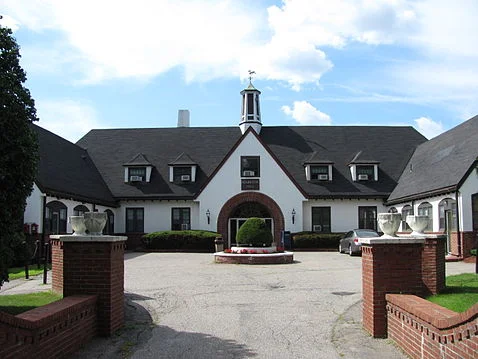
Holbrook Hall at Mount Ida College.
That the University of Massachusetts at Amherst is taking over the campus of tiny and bankrupt Mount Ida College, in Newton, is a sign or the times. The fact is that there are too many small private colleges in a time of a smaller cohort of college-age kids and ever more intense competition for student money. It’s probably tougher in New England than in most of the country because the region has a famed collection of very distinguished and well-endowed private colleges (most famously four of the eight Ivy League institutions and MIT) and generally improving, and expanding, state university systems to lure customers.
So now the flagship of the UMass system will get a physical site in Greater Boston. In the deal, UMass Amherst will assume $55 million to $70 million in debt from Mount Ida and then use the campus, which has dorms, labs, library and sports fields, as a place from which students can work on internships and engage in academic collaborations with other Boston-area colleges as well as with businesses. UMass Amherst also said that having the campus will boost fundraising by providing a site closer to rich alumni and others in the great wealth-creating machine centered in Boston, Cambridge and along Route 128. Understandably UMass Boston feels dissed.
Watch for more such takeovers of small colleges by larger ones. I’m glad they’ll still be used for education, though that might turn out to be mostly vocational.
In praise of stone walls
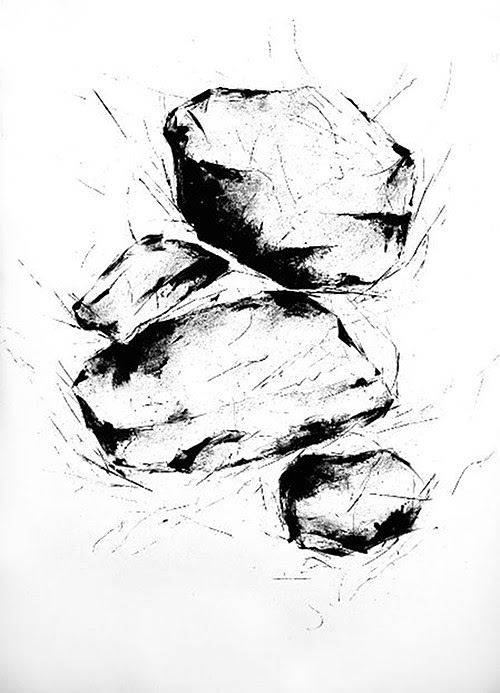
"Stonewall Series: No. 5" (gouache on paper), by Natalie MacKnight, in her show "Listening to the Wind,'' at 6 Bridges Gallery, Maynard, Mass., through May 26.
The gallery says:
"The exhibition show is a series of drawings and mixed media on paper in which the artist depicts the sense of peace and tranquility that she draws from nature. As a child, Macknight was fascinated by rocks and this grew into an appreciation for all the subtle aspects of nature that draw the eye. 'Listening to the Wind' celebrates nature in all its meditative strength and energy and invites the viewers to see what MacKnight sees in the natural world.''
Chris Powell: Pursuing war and trivia
For a few days, President Trump seemed to threaten to go to war against Syria and its ally, Russia, on his own, without congressional approval. If the president had bothered to ask for authorization, Congress might have been too busy.
For half the Senate was interrogating Mark Zuckerberg, the chief executive of Facebook, about the "social media" company's compromising of the privacy of its users, as if people shouldn't know that putting personal information on the Internet is how not to have any privacy at all.
Meanwhile, the rest of Congress seemed obsessed with perpetuating the special prosecutor's investigation of the president over his campaign's supposed "collusion" with Russia, an investigation that now has extended to a tryst Trump supposedly had with a pornography actress before he became president.
The Trump investigation is becoming reminiscent of the perpetual investigations of Bill Clinton when he was president. Does anyone remember the Whitewater "scandal" and Monica Lewinsky, the White House intern with whom Clinton had a tryst? His lying about it prompted his impeachment, though it too was much ado about nothing.
Like the Clinton investigations, the Trump investigation also is starting to evoke the assurance given to Soviet dictator Josef Stalin by the chief of his secret police, Lavrenti Beria: "Show me the man and I'll find you the crime." Will the special prosecutor find a crime committed by Trump before his unconstitutional bravado reduces the world to ash in a nuclear exchange? Will Congress look up in time to know what hit it?
xxx
AVOIDING FACEBOOK IS LIFE INSURANCE: At least Facebook has been a blessing to news organizations. Before Facebook, when news organizations needed to report an untimely death, they had to solicit a photograph from the decedent's family, an unpleasant and sometimes intrusive task.
But now news organizations need only to look up the decedent on Facebook, where they usually will find not only his photograph but also a full biography, often intimate. These days it seems that no one dies horribly without having neatly laid everything out for news organizations on Facebook.
Conversely, it seems that if you stay off Facebook and other "social media," the worst that will happen to you is that you'll die of old age in bed at home.
xxx
ESTY HAD TO KNOW BETTER: Connecticut Congresswoman Elizabeth Esty, who is ending her political career because she mishandled violence, threatening, and sexual harassment by her former chief of staff, Tony Baker, explains that she wrote a letter of recommendation for the creep to get him out of Washington and away from his former girlfriend. But of course that only risked inflicting him on new victims in his next job.
This doesn't mean that perpetrators of sexual harassment and worse should never be able to find work again. It means that they should not be able to get jobs by deception and omission -- not be able to get jobs until their misconduct is acknowledged and atoned for.
Esty isn't the only employer who concealed and passed along misconduct this way. The practice long has been common with sexual predators in business, government, education, and even churches. But no one should have known better about this than a member of Congress who often posed as a foe of sexual harassment.
Chris Powell is a columnist for the Journal Inquirer, in Manchester, Conn.
David Warsh: The pro-Trump mutiny in the FBI before the 2016 election
You didn’t have to be a news junkie to recognize that the FBI was deeply involved in determining the outcome of the 2016 election, or a statistical whiz to believe the law enforcement agency’s influence was greater than the Russian cyber-mischief that undoubtedly occurred.
Only yesterday, though, when a 35-page report by FBI Inspector General Michael Horowitz revealed that former Director James Comey and his former deputy, Andrew McCabe, contradicted each other about a critical Wall Street Journal background interview in October 2016 that McCabe had authorized, did the dimensions of the problem come clear.
McCabe was fired last month, a day before his planned retirement, for having confirmed the existence of an FBI investigation of the Clinton Foundation, and for having lied to investigators about his role in the affair. For all the detail it included, Horowitz’s report was completely unpersuasive – for all the background it left out. It seems clear that McCabe misled investigators. But then, the formal investigation of his role began the day President Trump fired FBI Director James Comey, when incentives within the FBI began to shift.
In the closing days of the presidential campaign, FBI leadership was caught between opposing factions: the Obama administration’s Department of Justice, on the one hand, to whose senior officials and prosecutors it reported; and an unknown number of its own rebellious agents on the other, eager to pursue an investigation of the Clinton Foundation, and who were abetted by retired agents, Congressional Republicans and the editorial page of The Wall Street Journal.
WSJ reporter Devlin Barrett, citing campaign-finance records, reported (subscription required) on Sept. 23, 2016 that Virginia Gov. Terry McAuliffe, a strong Clinton ally, had donated nearly as much as $675,000, through the political organization he controlled, to the 2015 Virginia state Senate campaign of pediatrician Jill McCabe. As associate deputy director, her husband was uninvolved in Clinton investigations at the time, but months after his wife’s defeat was promoted to deputy director.
The same day the story appeared, Barrett wrote an FBI spokesman to ask whether, in August 2016 McCabe had ordered agents investigating the Clinton Foundation to avoid drawing attention to the probe, or even to “stand down.” Barrett wrote, “[H]ow accurate are these descriptions? Anything else I should know?”
By the end of the week, McCabe authorized two aides to undertake a background interview in which they disclosed a testy confrontation with an unnamed senior Justice Department official in which McCabe had refused to halt the investigation, and thereby confirmed the existence of the investigation. Citing “people familiar with the matter,” Barrett wrote, in “FBI in Internal Feud over Hillary Clinton Probe” (subscription required), that no fewer than four field offices – New York, Washington D.C., Little Rock, and Los Angeles, were investigating foundation practices.
Two days later, Barrett disclosed further details (subscription required). But by then a furor had developed over Director Comey’s disclosure, three days before, that some new Hillary Clinton emails had been discovered which could be relevant to a previously closed investigation. (They turned out not to be.)
There is abundant evidence in news accounts that a low-key but aggressive mutiny was underway in the summer and autumn of 2016 among FBI field agents. It aimed at damaging Clinton’s candidacy and furthering that of Donald Trump. Comey and McCabe sought to control it, together and in separate ways. Implicit threats of further leaks probably played a role in forcing Comey to reveal the existence of the trove of recently discovered Clinton emails.
McCabe told the Inspector General that he had disclosed to his boss his decision to authorize the background session. Comey denied that he had. Inspector General Horowitz sided with Comey. His report took a narrow view of McCabe’s motivation, ascribing it to self- interest. The decision to respond to the leakers’ charges “served only to advance McCabe’s personal interest, and not the public interest, as required by FBI policy.”
I haven’t read the Comey book, A Higher Loyalty: Truth, Lies, and Leadership, but, from the early accounts, it seems clear that he chose not to surface the incipient mutiny that forced his deputy’s hand and, perhaps, his own. That’s understandable enough: Comey continues to seek to maintain discipline and preserve the apolitical reputation of the nation’s chief law-enforcement agency. Keep in mind the mutineers were a relative handful of highly-placed executives. They may have enjoyed a certain amount of tacit support, but the vast majority of the FBI’s 13,400 agents and 20,000 supporting staff went about their jobs with professional disinterest.
That means that the outsider who knows most about what happened inside the FBI in those few months before the election is reporter Barrett. In February last year, he left the WSJ for The Washington Post. There he has kept up a steady stream of scoops, most recently last weekend, a joint byline with Philip Bump,“Criminal investigation into Trump lawyer’s business dealings began months ago.”
The Post has many other reporters working on the story; so do The New York Times and the WSJ: Barrett is no one-man reincarnation of star reporters Bob Woodward and Carl Bernstein who took charge of the Watergate scandal nearly 50 years ago.
He is, however the author of the Rosetta Stone-like story through which the outcome of the 2016 election eventually will be deciphered. Like many others in the news trade, I was dumbfounded by the election of Donald Trump. Until this week I thought of it as essentially accidental – two bad candidates decided by the hangover from globalizationNow I am more interested than before in the thumbs upon the scale. Never mind however much is left of the Trump administration. Not until Barrett finally publishes his account will we be able to form a clear idea of how Trump’s victory came to be.
David Warsh is proprietor of economicprincipals.com, where this column first ran.
Bruce Horovitz: Is there such thing as 'normal aging'?

Caroline Mayer, with her husband, Ed, visits the Cape Cod Canal earlier this year.
-- Photo courtesy of Caroline Mayer
By BRUCE HOROVITZ
For 93-year-old Joseph Brown, the clearest sign of aging was his inability the other day to remember he had to have his pants unzipped to pull them on.
For 95-year-old Caroline Mayer, it was deciding at age 80 to put away her skis, after two hip replacements.
And for 56-year-old Dr. Thomas Gill, a geriatric professor at Yale University, it’s accepting that his daily 5½-mile jog now takes him upward of 50 minutes — never mind that he long prided himself on running the distance in well under that time.
Is there such a thing as normal aging?
The physiological changes that occur with aging are not abrupt, said Gill.
The changes happen across a continuum as the reserve capacity in almost every organ system declines, he said. “Think of it, crudely, as a fuel tank in a car,” said Gill. “As you age, that reserve of fuel is diminished.”
Drawing on their decades of practice along with the latest medical data, Gill and three geriatric experts agreed to help identify examples of what are often — but not always – considered to be signposts of normal aging for folks who practice good health habits and get recommended preventive care.
The 50s: Stamina Declines
Gill recognizes that he hit his peak as a runner in his 30s and that his muscle mass peaked somewhere in his 20s. Since then, he said, his cardiovascular function and endurance have slowly decreased. He’s the first to admit that his loss of stamina has accelerated in his 50s. He is reminded, for example, each time he runs up a flight of stairs.
In your 50s, it starts to take a bit longer to bounce back from injuries or illnesses, said Stephen Kritchevsky, 57, an epidemiologist and co-director of the J. Paul Sticht Center for Healthy Aging and Alzheimer’s Prevention at Wake Forest University. While our muscles have strong regenerative capacity, many of our organs and tissues can only decline, he said.
Dr. David Reuben, 65, experienced altitude sickness and jet lag for the first time in his 50s. To reduce those effects, Reuben, director of the and chief of the geriatrics division at UCLA, learned to stick to a regimen — even when he travels cross-country: He tries to go to bed and wake up at the same time, no matter what time zone he’s in.
There often can be a slight cognitive slowdown in your 50s, too, said Kritchevsky. As a specialist in a profession that demands mental acuity, he said, “I feel I can’t spin quite as many plates at the same time as I used to.” That, he said, is because cognitive processing speeds typically slow with age.
The 60s: Susceptibility Increases
There’s a good reason why even healthy folks age 65 and up are strongly encouraged to get vaccines for flu, pneumonia and shingles: Humans’ susceptibility and negative response to these diseases increase with age. Those vaccines are critical as we get older, Gill said, since these illnesses can be fatal — even for healthy seniors.
Hearing loss is common, said Kritchevsky, especially for men.
Reaching age 60 can be emotionally trying for some, as it was for Reuben, who recalls 60 “was a very tough birthday for me. Reflection and self-doubt is pretty common in your 60s,” he said. “You realize that you are too old to be hired for certain jobs.”
The odds of suffering some form of dementia doubles every five years beginning at age 65, said Gill, citing an American Journal of Public Health report. While it’s hardly dementia, he said, people in their 60s might begin to recognize a slowing of information retrieval. “This doesn’t mean you have an underlying disease,” he said. “Retrieving information slows down with age.”
The 70s: Chronic Conditions Fester
Many folks in their mid-70s function as folks did in their mid-60s just a generation ago, said Gill. But this is the age when chronic conditions — like hypertension or diabetes or even dementia — often take hold. “A small percentage of people will enter their 70s without a chronic condition or without having some experiences with serious illness,” he said.
People in their 70s are losing bone and muscle mass, which makes them more susceptible to sustaining a serious injury or fracture in the event of a fall, Gill added.
Seventies is the pivotal decade for physical functioning, said Kritchevsky. Toward the end of their 70s, many people start to lose height, strength and weight. Some people report problems with mobility, he said, as they develop issues in their hips, knees or feet.
At the same time, roughly half of men age 75 and older experience some sort of hearing impairment, compared with about 40 percent of women, said Kritchevsky, referring to a 2016 report from the Centers for Disease Control and Prevention.
Another conundrum common to the 70s: People tend to take an increasing number of medications used for “preventive” reasons. But these medications are likely to have side effects on their own or in combination, not all of which are predictable, said Gill. “Our kidneys and liver may not tolerate the meds as well as we did earlier in life,” he said.
Perhaps the biggest emotional impact of reaching age 70 is figuring out what to do with your time. Most people have retired by age 70, said Reuben, “and the biggest challenge is to make your life as meaningful as it was when you were working.”
The 80s: Fear Of Falling Grows
Fear of falling — and the emotional and physical blowback from a fall — are part of turning 80.
If you are in your 80s and living at home, the chance that you might fall in a given year grows more likely, said Kritchevsky. About 40 percent of folks 65 and up who are living at home will fall at least once each year, and about 1 in 40 of them will be hospitalized, he said, citing a study from the UCLA School of Medicine and Geriatric Research Education and Clinical Center. The study notes that the risk increases with age, making people in their 80s even more vulnerable.
By age 80, folks are more likely to spend time in the hospital — often due to elective procedures such as hip or knee replacements, said Gill, basing this on his own observation as a geriatric specialist. Because of diminished reserve capacities, it’s also tougher to recover from surgery or illnesses in your 80s, he said.
The 90s & Up: Relying On Others
By age 90, people have roughly a 1-in-3 chance of exhibiting signs of dementia caused by Alzheimer’s disease, said Gill, citing a Rush Institute for Healthy Aging study. The best strategy to fight dementia isn’t mental activity but at least 150 minutes per week of “moderate” physical activity, he said. It can be as simple as brisk walking.
At the same time, most older people — even into their 90s and beyond — seem to be more satisfied with their lives than are younger people, said Kritchevsky.
At 93, Joseph Brown understands this — despite the many challenges he faces daily. “I just feel I’m blessed to be living longer than the average Joe,” he said.
Brown lives with his 81-year-old companion, Marva Grate, in the same single-family home that Brown has owned for 50 years in Hamden, Conn. The toughest thing about being in his 90s, he said, is the time and thought often required to do even the simplest things. “It’s frustrating at times to find that you can’t do the things you used to do very easily,” he said. “Then, you start to question your mind and wonder if it’s operating the way it should.”
Brown, a former maintenance worker who turns 94 in May, said he gets tired — and out of breath — very quickly from physical activity.
He spends ample time working on puzzle books, reading and sitting on the deck, enjoying the trees and flowers. Brown said no one can really tell anyone else what “normal” aging is.
Nor does he claim to know himself. “We all age differently,” he said.
Brown said he doesn’t worry about it, though. “Before the Man Upstairs decides to call me, I plan to disconnect the phone.”
'The story of this place'

"Summer at Sailor's Home Cemetery and Black's Creek" (oil on panel), by Yvonne Troxell Lamonth, in the joint show, "Unknown Terrain,'' with Constance Bigony, at Galatea Fine Art, Boston, May 1-31.
Ms. Lamonth wrote about her work:
"As the 'City' encroaches on us, pushing in and filling up any open space, a need to make reverent that which remains wild and free becomes critical. Living in Quincy, Mass., somewhat new to me, is a process of discovery. My morning walk with my dog, Wiki has becomes a small journey. Past Sailor's Pond, with its egret tree, Beechwood Knoll Elementary School and around to the Sailor's Home Cemetery path and Black's Creek the landscape comes alive.
"Color, shape, movement and constant environmental changes make capturing the essence a challenge. Working en plein air is a race against time, grabbing for the subtle changes as the channels fill and the clouds subdue the golden sea grass. Now, I am attempting to synthesize the overall experience and glory of this natural wonder. Each day I see more and gather more sensations.
"I hope to tell the story of this place. I visit and revisit certain branches and the way they fall over the field. I am surprised when pale green leaves fall over glistening snow. My awareness becomes heightened when, from my flood zone abode a short distance from the sea, I watch the waves splash over the sea wall bringing water, sand and wind closer to my comfort zone than I had ever anticipated. What comes next?
"My most recent inspirations have come from the imagination of Milton Avery, the seas and depth of Winslow Homer and the earthiness of Lois Dodd. And, of course, I look to the spirit of Marsden Hartley and Helen Torr. Learning from the greats helps inch me along.
"All this is to say, how frightened I am, not just of encroachment of 'City,' but, of our climate being undone by corporate irreverence and profit, deception and greed. How important for us all to have a voice, 'Think Globally, Act Locally.'
"Now that my neighborhood has inspired my art making, it has also become the source of my concern. I have learned about a compressor station being pushed into Weymouth, Mass., that will impact Quincy, Braintree, Boston Harbor and beyond, with toxic chemicals, causing harm to people, animals, the earth and the sea. As I make my small journey each day, I hope others will appreciate their own Mother Earth and take a stand."


Negin Owliaei: Striking teachers fighting for much more than raises
Via OtherWords.com
Teachers across the United States are having a moment.
Educators are building on the momentum from West Virginia, where striking teachers won a 5 percent pay raise for state employees. Now the protests have spread to Arizona, Kentucky, Oklahoma and the nation’s capital.
The educators are winning broad public support, but some politicians aren’t pleased.
Teachers are displaying a “thug mentality,” Kentucky Gov. Matt Bevin complained. They’re asking for too much, like a “teenager wanting a better car,” according to Oklahoma Gov. Mary Fallin.
Is it really “selfish and short-sighted,” as Bevin put it, to demand a livable wage?
Teachers have long lived on austerity salaries while seeing their benefits, from pensions to health care, come under attack. They make less than other college graduates in all 50 states, and they’re more likely than other workers to hold a second job.
But better pay isn’t all that’s compelling educators to act. Teachers are using the classroom to fight for their entire communities.
In Kentucky, teachers had to protest to save a critical social-service program, which nearly fell victim to state tax cuts for the wealthy.
Politicians in Oklahoma spent years following the same path, slashing taxes for oil and gas companies while letting schools suffer. Thousands of Oklahomans have shared now-viral photos of the battered textbooks used by the state’s students.
The problem isn’t confined to a few bad actors. According to the Center on Budget and Policy Priorities, 29 states provided less overall state funding per student in 2015 than they did before the 2008 recession. The result: school conditions so poor that they’re forcing teachers to stand up and demand better.
These teachers are taking notes from Chicago. In 2012, when teachers there launched their first strike since 1987, Mayor Rahm Emanuel said it was a “strike by choice” that Chicago’s kids didn’t deserve. Teachers countered that the real choices harming the city’s kids came from government officials and their corporate backers.
The union released a report pushing for proven reforms that would allow teachers to improve education while reducing inequality. And they proposed progressive taxation measures and closing corporate loopholes to help pay for the services their students needed most.
Chicago’s teachers weren’t just bargaining for their own paychecks and benefits. They were demanding justice for everyone in their classrooms — and for the community as a whole.
Labor leaders elsewhere are following that model.
Detroit teachers made national headlines in 2016 with “sickouts” in protest of the poor conditions in public schools — including black mold, rats, and lack of heat. The city teachers argued that suburban schools in the state would never be left to deteriorate in the same way.
In St. Paul, teachers included demands for racial equity in the classroom in their collective bargaining negotiations, which took place right as Super Bowl festivities kicked off there. How could the state’s corporations fund the Super Bowl, teachers argued, yet not pay enough in taxes to fully fund school districts?
The teachers striking today are using the same arguments. The Oklahoma Education Association has proposed several revenue-raising options, like eliminating deductions for wealthy investors and increasing production taxes on oil and natural-gas companies. All told their ideas would add more than $900 million to state coffers.
Just like the Chicago strike of 2012, the teacher protests taking place today aren’t a “choice,” but a response to one. Politicians chose to slash funding for public schools. Teachers are fighting that decision — and for their communities.
The only selfish and short-sighted thing to do is continue with a broken status quo.
Negin Owliaei is a researcher at the Institute for Policy Studies. She co-edits Inequality.org, where a longer version of this op-ed appeared.

William Morgan: Specialty license plates are out of control
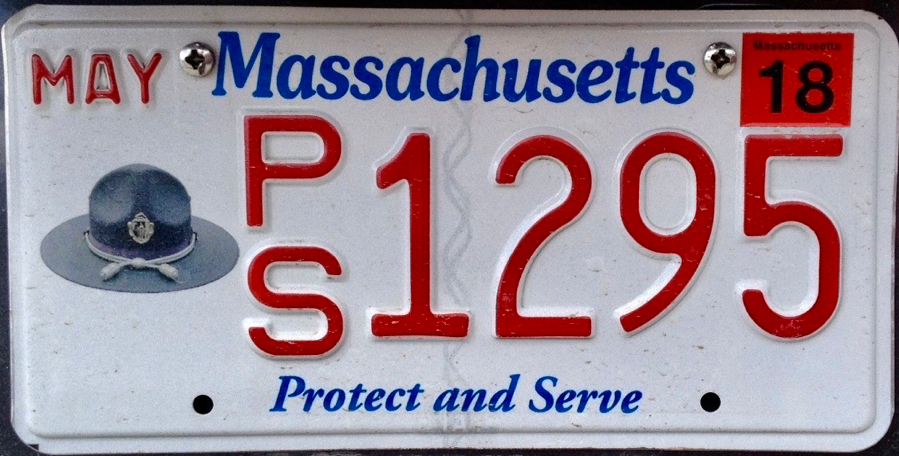
Automobile owners in the Commonwealth of Massachusetts now have the option of a new specialty license plate. A percentage of the extra $40 fee goes to “support state and local police, firefighters, MBTA Transit Police, EMTs and their families in times of need.”
Who could object to helping first responders? These are the men and women who put their lives on the line for all of us, all the time. But the Massachusetts State Police campaign hat on the plate (think Royal Canadian Mounted Police, Gen. “Black Jack” Pershing, or Smokey the Bear) reminds us of recent disclosures about exorbitant overtime salaries for some state troopers. (Some troopers, particularly on the Logan International Airport detail, have allegedly earned over $300,000 a year. And the troop that covers the Massachusetts Turnpike may be disbanded to discourage further abuses of the public purse.)
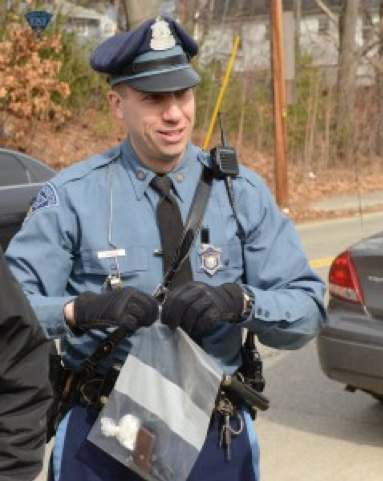
Massachusetts state trooper.
-- MSP.news.org
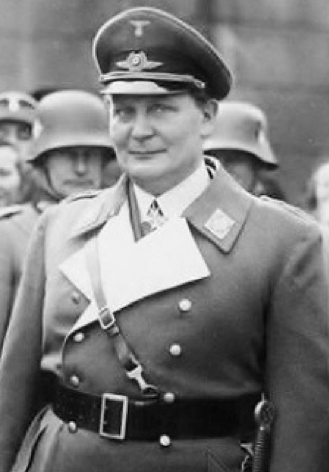
Hermann Göring
-- (Bundesarchiv); MSP.news.org
Aside from the current issues affecting the troopers in their blue Hermann Göring-like uniforms, one maybe should ask why the widows of policeman and firemen need additional funds. And why is a license-plate surcharge the best way to secure those funds?
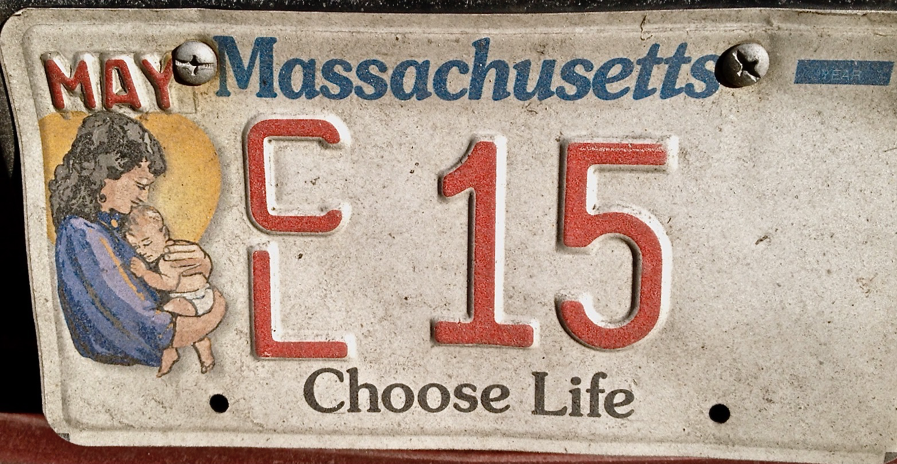
Yet the trooper license plate is not as egregious as the Choose Life one. Ostensibly, “Supporting the positive choices of life, adoption and safe havens,” this plate is clearly the darling of anti-abortion forces. As such it carries a heavy political message that seems to go beyond raising breast-cancer awareness or supporting the environment. (Virginia is one of the only places I know of with a counter plate: "Trust Women. Respect Choice,'' although perhaps one could imagine the corollary, "Choose Death,'' say, for Hells Angels or the Hemlock Society.)
The proliferation of specialty license plates is out of control, although the New England states lag way behind in the number of options available to its car owners. Several states offer “In God We Trust” monikers, which some might think violates the First Amendment separation of church and state. Kentuckians can mount a black plate that supports the Friends of Coal, while 9/11 memorials, autism awareness and veterans’ tags can be found in most states. Virginia has a “Protect Pollinators” (butterflies, rather than fertility clinics), there are numerous farm-themed plates to buck up agriculture, and in Texas, the Sons of Confederate Veterans sports that not-so-subtle symbol of racism, the rebel battle flag.
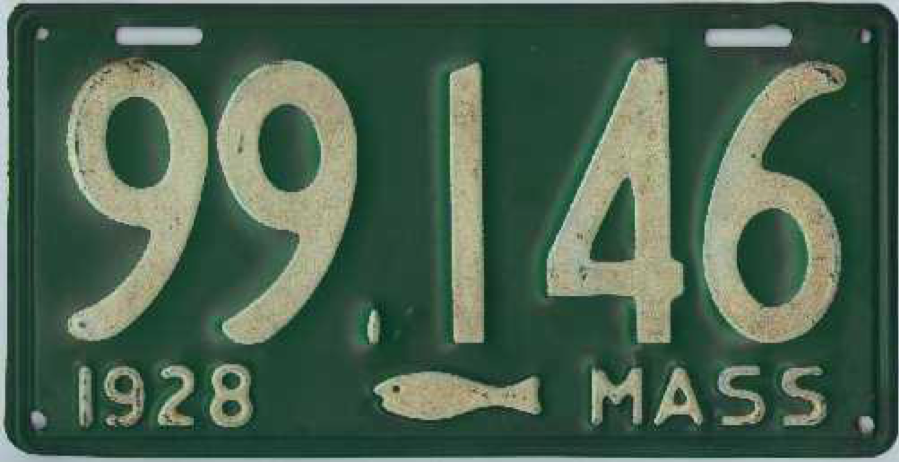
As a colony, Massachusetts spearheaded the armed rebellion against British rule. Perhaps, the often-groundbreaking commonwealth could lead the way back to a simpler, no-nonsense license plate – one that does not shout for attention or shill various political causes. And as nod to those folks who believe that license tag has to have some signifier, how about resurrecting the cod plate of 1928 – no motto, no flag, no credos, just the sacred fish.

The wooden "Sacred Cod'' hangs in the Massachusetts House of Representatives chamber, signifying the great importance of the fish to the early economy and society of what became the Bay State.
William Morgan is an architectural historian, author and commentator on numerous design matters.
UMass Dartmouth event will look at the Blue Economy
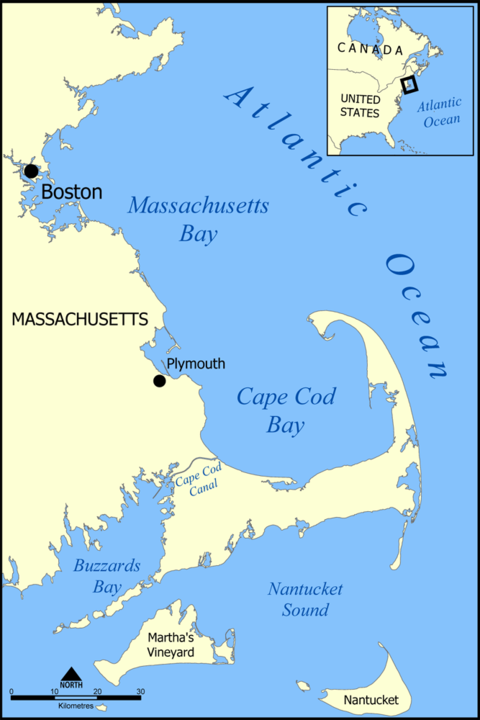
This recently came in from our friends at the New England Council (newenglandcouncil.com)
"The University of Massachusetts at Dartmouth and the Council on Competitiveness will co-host an event focused on the Blue Economy on Thursday, April 19, from 8 a.m. to 1 p.m. at the university’s Claire T. Carney Library, at 285 Old Westport Rd., Dartmouth, Mass.
"The event, 'Catching the Next Wave: Building the Blue Economy through Innovation and Collaboration,' will explore the development of Massachusetts’s Blue Economy, which includes commercial fishing and fish processing, offshore wind, marine science and technology, tourist and other industries. Leading experts in business, government, labor, and academia will speak on innovations and entrepreneurial ventures that will shape the Blue Economy and the collective ability to balance economic imperatives and environmental constraints.
"The event is part of the Inauguration Week activities for Robert E. Johnson, the new chancellor of UMass Dartmouth. If interested, you can view the program and register for the event here.
Great idea, just not here
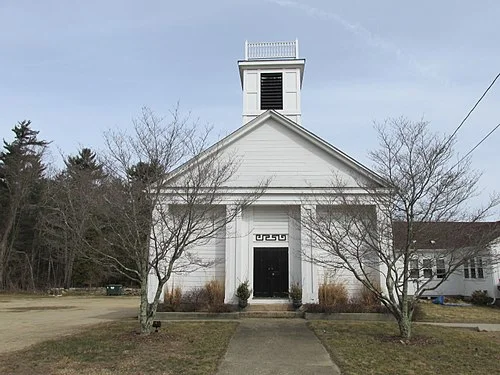
Chestnut Hill Baptist Church in Exeter.
A lot of people in rural Exeter, R.I., apparently don’t want big wind- or solar-powered electricity generation in their town, which includes small if woodsy landholdings as well as some big estates of rich people. It would be nice if all big solar- and wind-energy facilities could be put on such places as vacant parking lots at closed malls, at Superfund sites and the roofs of closed factories but we’ll need more space than that to move very deeply into a post-fossil-fuel world.
John Scuncio, former police chief on nearby and also rural Hopkinton, touted solar panels and wind turbines because “when you tie up a piece of property with solar or wind’’ you remove land that could otherwise be developed for housing. But I’d guess that most people in Exeter don’t want more houses or large green energy projects, although they do want electricity, to be generated somewhere.
Exeter is an example of why housing costs are so high in New England: Legal (“snob zoning”) and informal restrictions on expanding the supply of housing units make existing housing that much more expensive.
'Druidic' Dogtown
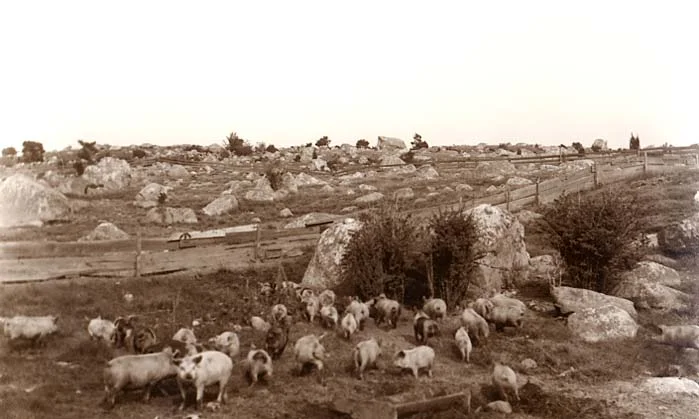
Dogtown, on Cape Ann, in 1908.
''The place (Dogtown, in Gloucester, and Rockport, Mass.) is forsaken and majestically lovely as if nature had at last formed one spot where she can live for herself alone.. (it) looked like a cross between Easter Island and Stonehenge -- essentially druidic in it appearance, it gives the feeling that an ancient race might turn up at any moment and renew an ageless rite there.''
-- Marsden Hartley (1877-1943, modernist painter, poet and essayist), one of whose paintings of Dogtown is below, as is a brief history of the place.
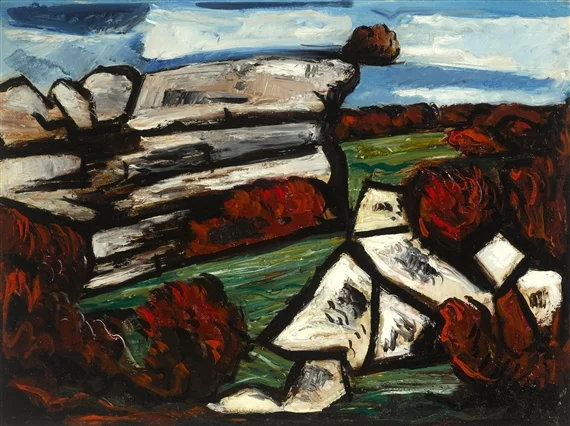
The ghost town known as Dogtown is divided between Gloucester and Rockport. Dogtown was first settled, as a farming village, in 1693, with the name said to develop much later from dogs that women kept while their husbands were fighting in the American Revolution. In the mid-1700s as many as 100 families inhabited Dogtown, which was stable until after the American Revolution.
Most of the farmers in Dogtown moved away by the end of the War of 1812 and the area became known for its rather creepy beauty and huge boulders.
Mobile patent-medicine clinic

Work by Stephen Martin in his joint show with Sorin Bica, "Identity,'' at Fountain Street Fine Art, Boston, through April 29.
The gallery says that Mr. Martin "is a mixed-media artist and sculptor who works primarily with antique photos and found objects to fashion unique human stories. His work is about reclamation; while he incorporates found objects to form the 'ground' of the pieces, the figurative element is of primary importance.
Llewellyn King: Teaching liberal arts alongside the trades
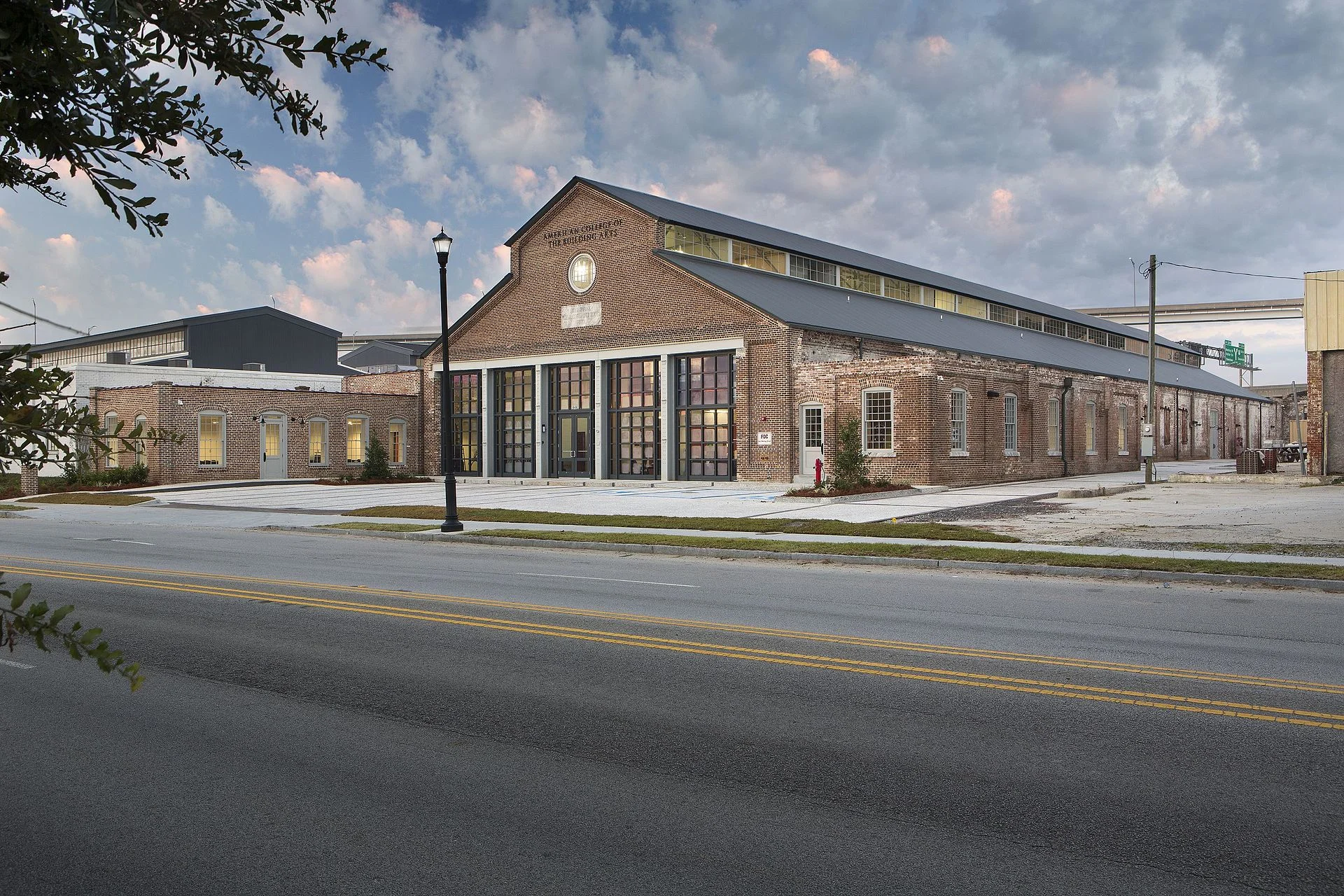
The American College of the Building Arts, in Charleston, S.C.
-- Photo by Jason W. Kaumeyer
Innovation and entrepreneurism, these are strains of the American Dream. That dream is simple: to be self-employed, to own your own business, to be answerable to customers and not to bosses, as well as to make a better living and to enjoy the benefits of the tax system that favors business.
It may be fundamental to the dream, but students pouring out of universities are, by and large, unprepared to follow the business-of-their-own dream. We do not create in the educational system people equipped to launch companies that create jobs and protect the fabric of our society, giving it strength and texture.
At the base of the educational tower, students graduating from many high school systems are poorly equipped for little more demanding than fast-food service or day labor.
Graduates of liberal arts colleges have to seek jobs in large companies or in government. It is darn hard to start a history company or a sociology service, or to incorporate as a geography business.
In short, the liberal education system is skewed against entrepreneurship, particularly against small startups where sweat equity is the principal financing and where a single skill can be the foundation of a healthy enterprise.
I once heard a speech by one of the founders of Intel in which he said there was a difference between small business and new business. Quite.
It is small business that interests me. The little enterprises that are the essential ingredient in free enterprise, the source of creativity and, not to be forgotten, the source of happy and fulfilled lives. The pursuit of happiness can be entwined with the pursuit of self-employment in work that the worker loves.
When I first learned of a small college — minuscule, you might say, because there are fewer than 100 students — in Charleston, S.C., I was gladdened— and when I learned that about a third of its graduates had gone on to start their own small businesses, I was ecstatic.
The institution is the American College of the Building Arts. Its mission is not to create entrepreneurs, but to meld together trade crafts and liberal arts.
Entrepreneurism is a byproduct, an unexpected bonus.
The combining of the liberal arts with skilled artistry is a potent concept at a time when there is an extreme shortage of craftsmen, and a real dearth of those who reach the master level, both men and women.
About a third of the student body at ACBA are women. In two days reporting at the college, I found women doing complex forgings in the blacksmithing department, chiseling stone in the masonry classes, and doing timber-frame construction.
The same students, away from the forges, chisels, hammers and saws are to be found studying Charles Dickens’s Hard Times and the Industrial Revolution or puzzling over Palladian concepts in the architectural drawing class.
If I sound enthusiastic about this concept in education, it is because I am.
My father was a blue-collar worker and small businessman, but he missed in his life, which was hard, the joy of literature, the stimulation of art and the wonder of the theater. He missed the liberal arts. For myself, I miss the satisfaction that he got from making a decorative gate in wrought iron or putting up a barn.
I find the idea the liberal arts can be taught alongside trade craft to be stimulating. ACBA President Colby Broadwater III, a retired three-star general, acknowledges the college is so small — it came out of a shortage of skilled artisans to do restoration after Charleston was hard hit by Hurricane Hugo, in September 1989 —that it is less than a grain of dust in the stone carving room compared to big universities. But it is important, a frontier in education.
“Who said artisans shouldn’t be educated?” says Broadwater. Quite so.
I might add, “Who says they shouldn’t build craft skills into businesses?”
They are chiseling, hammering, plastering and sawing a new kind of educational future in a very small college.
On Twitter: @llewellynking2
Llewellyn King is executive producer and host of White House Chronicle, on PBS. He's based in Rhode Island and Washington, D.C.
Barry Schiller: A vision for better commuter rail service and links in southern New England
Via ecoRI News (ecori.org)

MBTA locomotives in South Station, the inbound terminus of commuter rail lines from the south of Boston.
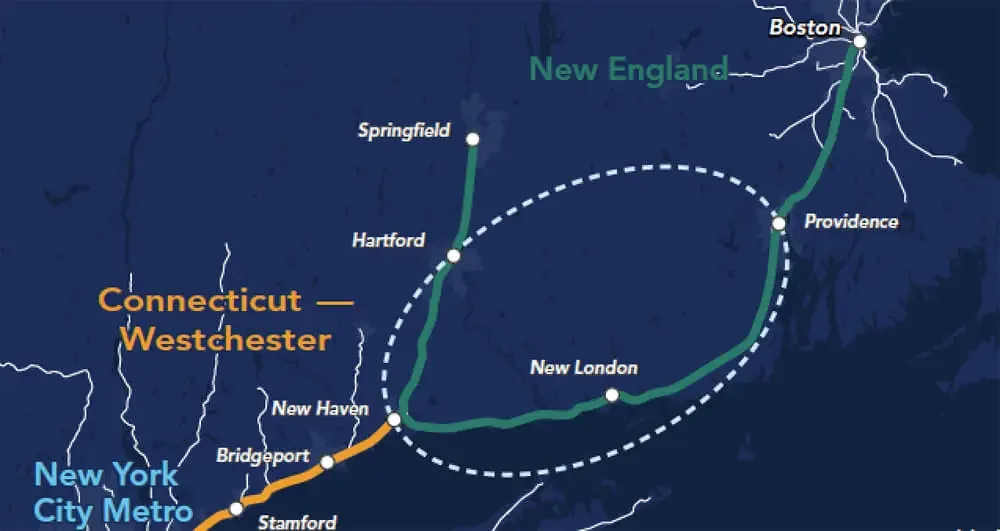
We all know Rhode Island benefits from its proximity to Boston, which provides our residents and businesses access to markets, jobs, entertainment, medical services and schools. But we are held back by problems related to getting there and back.
The roads are increasingly congested, and that slows buses too. There are accidents, and parking can be tough. Highway improvements are sometimes environmentally destructive and very expensive. For example, the Rhode Island Department of Transportation may spend about $300 million just to redo less than a mile of I-95 in central Providence. And we know we should reduce gasoline consumption, which drains money out of the local economy and contributes so much to greenhouse-gas emissions.
Amtrak Acelas are quick, but also expensive. The Massachusetts Bay Transportation Authority (MBTA) commuter trains provide access and we are “on track” to add a Pawtucket-Central Falls station so that those communities can better access Boston and the rest of the state. The MBTA also brings Massachusetts folks to Rhode Island, including a significant number of “reverse commuters” without clogging our roads and Massachusetts folks also use it to get to our airport.
But the trains are relatively slow, often taking about 70 minutes to go the 44 miles from Providence to Boston. Though there are 20 trains each way weekdays, and there can be inconvenient gaps between trains, more than 2 hours apart at times. And the service isn’t very reliable about being on time.
So a regional group called Transit Matters has developed a vision for how the commuter rail could better serve the region’s economy and environment. After looking at best practices elsewhere, notably Philadelphia and Paris, its main recommendations include: electrification; high-level platforms at all stations; more frequent service; free transfers to local buses and subways; infrastructure improvements at a few bottlenecks.
On the Providence line, where there already are electric wires used by Amtrak, we would need additional wires in just a few stretches, notably the Pawtucket layover yard. That would make those nearby happy not to have diesel-engine pollution or noise. Electric engines are quieter and cleaner, and accelerate quicker, speeding up trips. They are more reliable and last longer than diesel. After startup capital costs they have lower operating costs.
High-level platforms, missing in eight of the current 15 stations on our line, also speed trips by quicker boarding at stations, especially for those with disabilities. The time to get to Boston could be reduced to about 46 minutes. Speedier trips use equipment and labor more efficiently and would also generate more revenue by attracting more passengers.
Long term, Transit Matters recommends a rail tunnel connecting North and South stations in Boston. This would have many operational advantages, avoid the need for an expensive expansion of South Station, and connect Rhode Island to the North Shore and northern New England, and connect them to us!
There are obstacles, including finding the capital funds to do all this, harder with the Trump administration hostility to both our region for not voting for him and to trains with their highly unionized workforce.
The environmental community, though interested in promoting electric cars, has mostly ignored electrifying our commuter rail. It’s also a challenge to get two states, the MBTA and the Rhode Island Public Transit Authority (RIPTA) to all work together and coordinate. But, there are a lot of benefits.
Barry Schiller, a transit rider and longtime transit advocate, is a former board member of the Rhode Island Public Transit Authority.
Get out there and look

"I
In my room, the world is beyond my understanding,
But when I walk, I see that it consists of three or four hills and
a cloud.
II
From my balcony, I survey the yellow air,
Reading where I have written,
‘The spring is like a belle undressing.’
III
The gold tree is blue.
The singer has pulled his cloak over his head.
The moon is in the folds of the cloak.''
-- "Of the Surface of Things,'' by the late Wallace Stevens, Hartford insurance executive and Pulitzer Prize-winning poet.
They avoid empty niceness

"Vermonters are not only charmless of manner, on the whole; they are also, as far as I can judge, utterly without pretense, and give the salutary impression that they don't care ten cents whether you are amused, affronted, intrigued, or bored stiff by them. Hardly anybody asked me how I liked Vermont. Not a soul said 'Have a nice day!'"
-- Jan Morris, British writer