
Vox clamantis in deserto




'Painter with a photographer's eye

"Italy XIIISM,'' a painting by Gretchen Dow Simpson in her current show at Reliable Gold, in Providence. She is particularly celebrated for her crisp and close-up views of New England and other architecture, interior and exterior, and for her intense attention to proportion and lighting. She considers herself a “painter with a photographer’s eye,” and architectural forms have always drawn her.
She is also well known for the more than 50 covers she has done for The New Yorker magazine.
Trains to the City by the Sea?
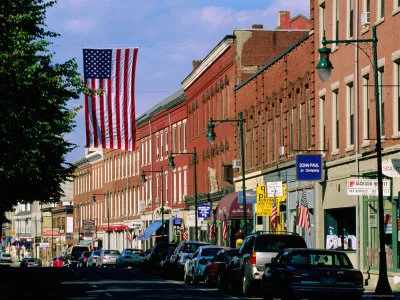
Downtown Rockland, Maine.
Adapted from Robert Whitcomb's "Digital Diary,'' in GoLocal24.com
"There’s a proposal to start summertime passenger rail service to Rockland, Maine, from Boston. Rockland, a boating and arts center, is on Penobscot Bay and a prime vacation area. The idea reminded me that establishing summertime rail service between Providence and Newport would be a wonderful thing. More entrepreneurs these days are looking into starting fairly short-distance rail passenger lines. Providence-to-Newport summer service (probably via Fall River) might attract one.
Scheduled passenger service between Fall River, Mass., and Newport on the Newport Secondary ended in 1938. Fall River and Providence were connected by a rail passenger line for decades in the first part of the 20th Century.
One possible entrepreneur for a Providence-Newport line might be Vincent Bono, whose Boston Surface Railroad Company wants to start a private commuter rail line between Providence, Worcester and Nashua, N.H., by 2020.
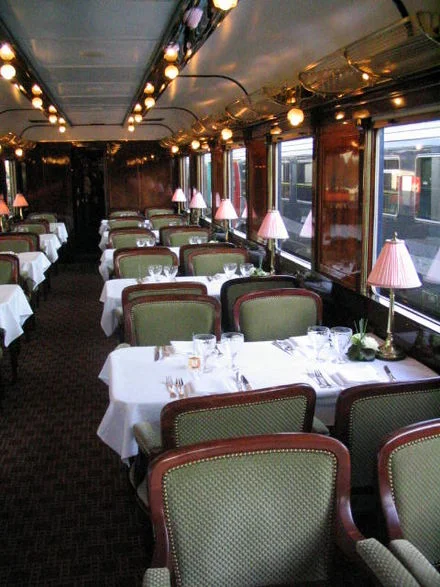
I’ve been thinking a lot about trains from my boyhood lately, such as the cozy Pullman compartments on our trips to the Midwest and the South, the blue air in the smoking cars, the damask table cloths in the dining cars where union rules mandated that you write down your meal order and that the trains would pick up piles of local newspapers from the cities where you’d stop on the Southern Railroad.
An interior Spring

"The roofs are shining from the rain,
The sparrows twitter as they fly,
And with a windy April grace
The little clouds go by.
Yet the backyards are bare and brown
With only one unchanging tree --
I could not be so sure of Spring
Save that it sings in me.''
-- "April,'' by Sara Teasdale
Street Life

''Metro" (etching), by Mitsushige Nishiwaki, in his show
"Metropolitan Twist,'' at the Gurari Collections, Boston April 6-May 27. He's a self-taught artist whose works have been shown in Japan, France, England and the United States. The busy streets of Paris, New York and London help inspire his work, which depicts the common motions of everyday life.
Jim Hightower: Companies step up their thefts from their employees
Via OtherWords.org
Workplace exploitation has been around from the beginning. But rather than using whips to make the assembly lines move ever faster, today’s corporate exploiters use technology, devious work schedules, and lobbyists to extract more work from employees — for less pay.
Walmart, for example, wants to provide next-day delivery for online customers by having its low-wage workforce use their own time and vehicles to drop off packages as they go home after work.
Economists have a technical term for these corporate ploys: stealing.
One entire group being victimized by corporate thieves are the 4.3 million Americans who make up our “tipped workforce.”
Mostly employed as wait staff in restaurants — from big chains like IHOP to the most exclusive dining establishments — these workers fall under a grossly unjust category of labor law that allows their employers to pay a miserly minimum wage as low as $2.13 an hour.
The rationale is that customers will subsidize this sub-poverty pay by leaving generous tips — a convenient corporate lie refuted by the fact the income of tipped workers is a third less than non-tipped workers. And tipped workers are nearly twice as likely to live in poverty.
Luckily, Trump has intervened to help. Lucky for restaurant owners, that is.
Bowing to demands by restaurant industry lobbyists, Trump’s Labor Department has proposed a new rule allowing employers to seize workers tips and use them for any purpose — including fattening their own profits. Paying $2.13 an hour already amounts to a massive wage theft, but this elevates it to legalized highway robbery!
Even the most notorious robbers in history would be too ashamed to pull a job this wicked. Thankfully, a Democratic provision slipped into an omnibus spending bill may have stopped it for now.
Still, today’s combination of corporate greed and Trump’s ethical bankruptcy is turning blatant wickedness into business as usual.
Jim Hightower is a radio commentator, writer, public speaker, and editor of the populist newsletter, The Hightower Lowdown.
James T. Brett: Some big wins for New England in federal spending bill
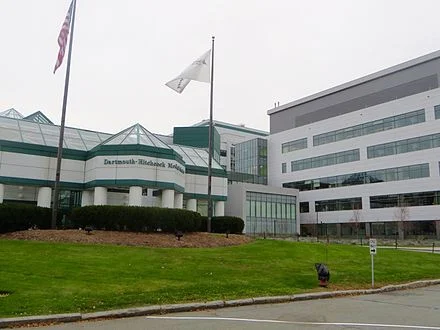
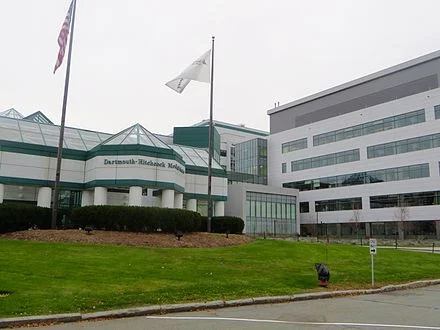
The Dartmouth {College}-Hitchcock Medical Center, in Lebanon, N.H., a recipient of National Institutes of Health research funds.
BOSTON
Last month, Congress passed and President Trump signed into law a $1.3 trillion fiscal 2018 federal spending bill. The bill, which funds the federal government through Sept. 30, includes some big wins for New England, particularly in the areas of health care and scientific research.
New England is home to leading research hospitals and universities, which are developing treatments for numerous devastating diseases. Much of this work is supported by funding from the National Institutes of Health (NIH), and so it is welcome news that the omnibus bill passed last week includes a $3 billion increase in NIH funding, bringing the total funding for this agency to $37 billion.
This increase will have a significant impact in New England. In fiscal year 2017, New England received more than $3.6 billion in NIH funding, which supported nearly 45,000 jobs and drove nearly $8.5 billion in economic activity, including nearly 2,100 jobs and more than $350 million in economic activity in Rhode Island alone. An increase in NIH funding will surely benefit our region, while also helping our medical institutions continue their important work.
The spending bill also includes a $300 million increase in funding for the National Science Foundation (NSF), which funds a wide range of scientific research, much of which is conducted at colleges and universities. Many institutions throughout New England receive such funding, and are conducting cutting-edge research in a variety of fields.
In fiscal year 2017, New England institutions received more than $650 million in NSF funding, including nearly $50 million in Rhode Island. The increase in NSF funding for the current year will mean greater support for research that is underway throughout New England.
A third important area addressed by the spending bill is the opioid-addiction crisis, which has had a significant impact in New England. According to the Centers for Disease Control, there were nearly 4,500 drug overdose deaths in the region in 2016, including 326 here in Rhode Island-
Fortunately, the spending bill includes some $4 billion for various efforts to combat the opioid epidemic, including funding for addiction research, grants to bolster state efforts and support law enforcement, and support for rural communities. This additional support will no doubt help the various efforts underway in our region to combat this epidemic.
Of course there are a variety of other elements of this bill that will benefit New England — including an increase in defense spending, boosts for apprenticeship programs and career and technical education, and money to upgrade Amtrak’s Northeast Corridor, just to name a few.
But the three provisions outlined above will certainly have a significant impact on the economy and quality of life in our region.
It is important to note that this deal was just that: a deal, the product of bipartisan compromise. There will be a variety of other important issues before Congress in the near future, including gun control, immigration reform, and infrastructure investment. We are hopeful that this example of bipartisanship is a sign of things to come. Our region and our nation deserve it.
James T. Brett is the president and CEO of The New England Council (newenglandcouncil.com), a nonpartisan alliance of public and private organizations across the region that lobbies in the region, in Washington and elsewhere for programs that benefit New England's economy and broader society.
Free speech and big money at colleges
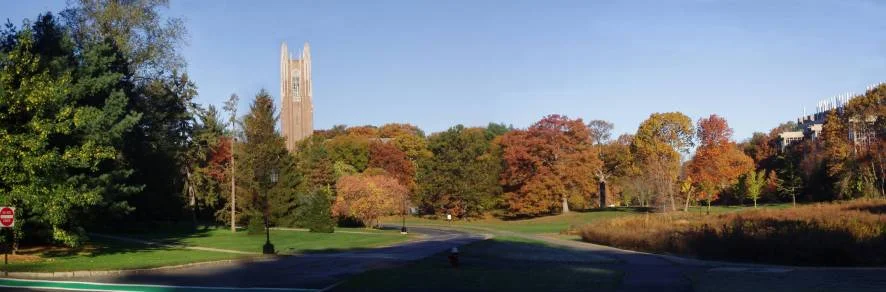
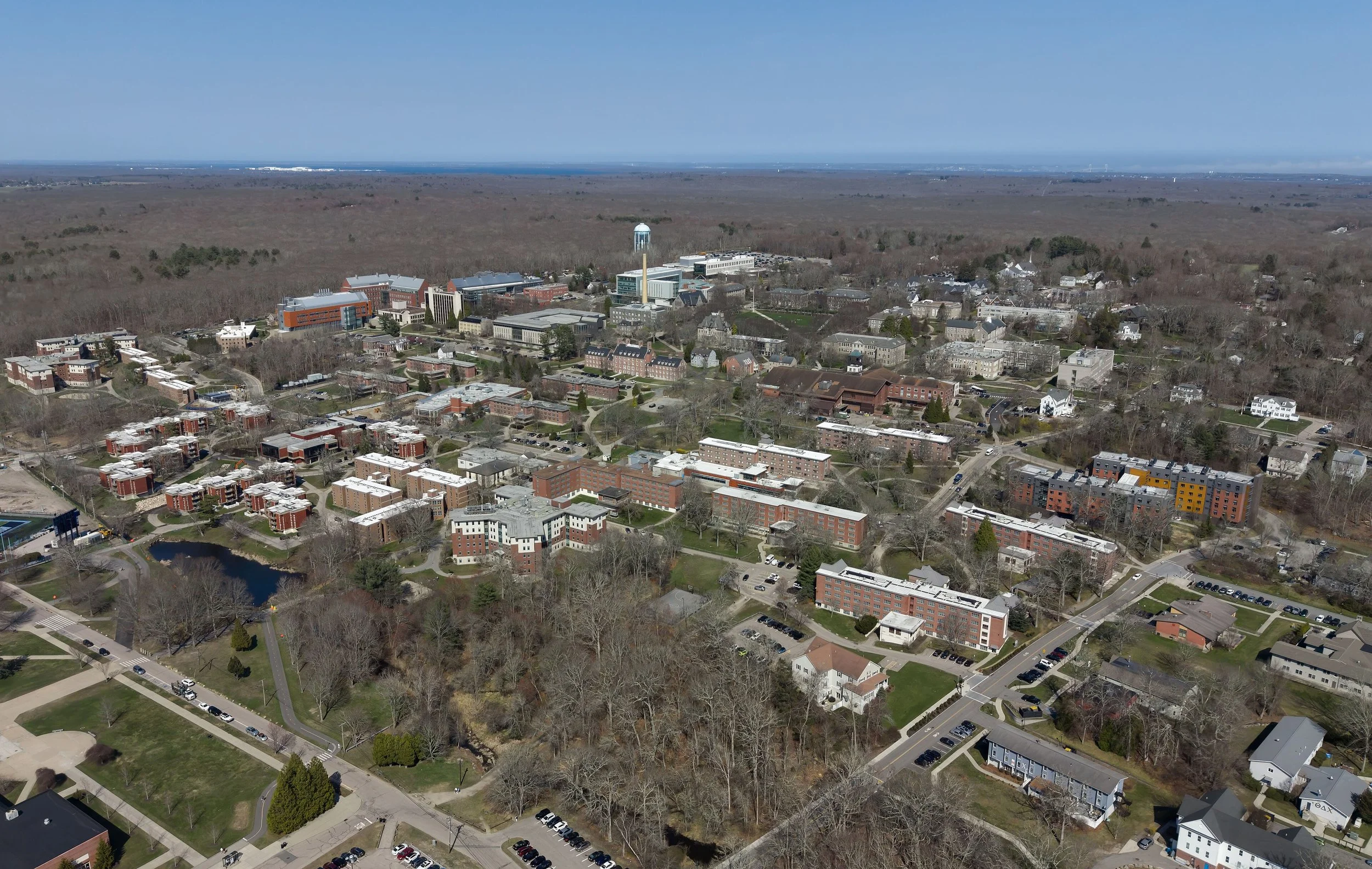
On the Wellesley College campus.
From Robert Whitcomb's "Digital Diary,'' in GoLocal24.com
Colleges should afford a very wide range of speakers the opportunity to express their views, be they left, right or other. So on the face of it, a program at elite Wellesley College, in Massachusetts, called the Freedom Project sounds fine. The programs bring “libertarian’’ and conservative speakers to the beautiful campus, with the idea of offsetting the generally liberal views of students and teachers there.
But the program is funded by the Charles Koch Foundation, a right-wing group aimed at promoting the views of the current version of the Republican Party. Charles Koch, of course, is a member of the billionaire Koch Brothers, who inherited their sprawling business from their father and are leading members of the plutocracy now running the country. They are, not surprisingly, obsessed with tax cuts for the wealthy and deregulation.
Conflicts of interest abound. For example, reports The Boston Globe, Wellesley sociology Prof. Thomas Cushman, who has been running the Freedom Project there but is stepping down, said he wouldn’t invite The New Yorker’s famous investigative writer Jane Mayer to speak because he didn’t like her book about the Kochs, Dark Money: The Hidden History of the Billionaires Behind the Rise of the Radical Right.
To read The Globe’s story, please hit this link.
But the Wellesley Freedom Project has invited Alex Epstein, author The Moral Case for Fossil Fuels, which the Kochs, who have huge stakes in the fossil-fuel industry, not surprisingly have recommended to their donors.
Better if colleges assiduously avoid relationships with big foundations and businesses that want to pick speakers for propaganda reasons. But that also means that college administrations and faculties have a duty to ensure that students can hear a very wide range of views on their campuses and that they punish students and faculty who try to prevent speakers from making their arguments. Too many colleges have been weak on free speech, which should be enshrined in academia.
And to have foreign propaganda and surveillance outlets on campus, such as the Chinese government-run Confucius Institutes at, among other places, Bryant University and the University of Rhode Island, is utterly inappropriate.
Slowly come the leaves

"Coming to woods in light spring rain,
I know I am not too late.
In my week
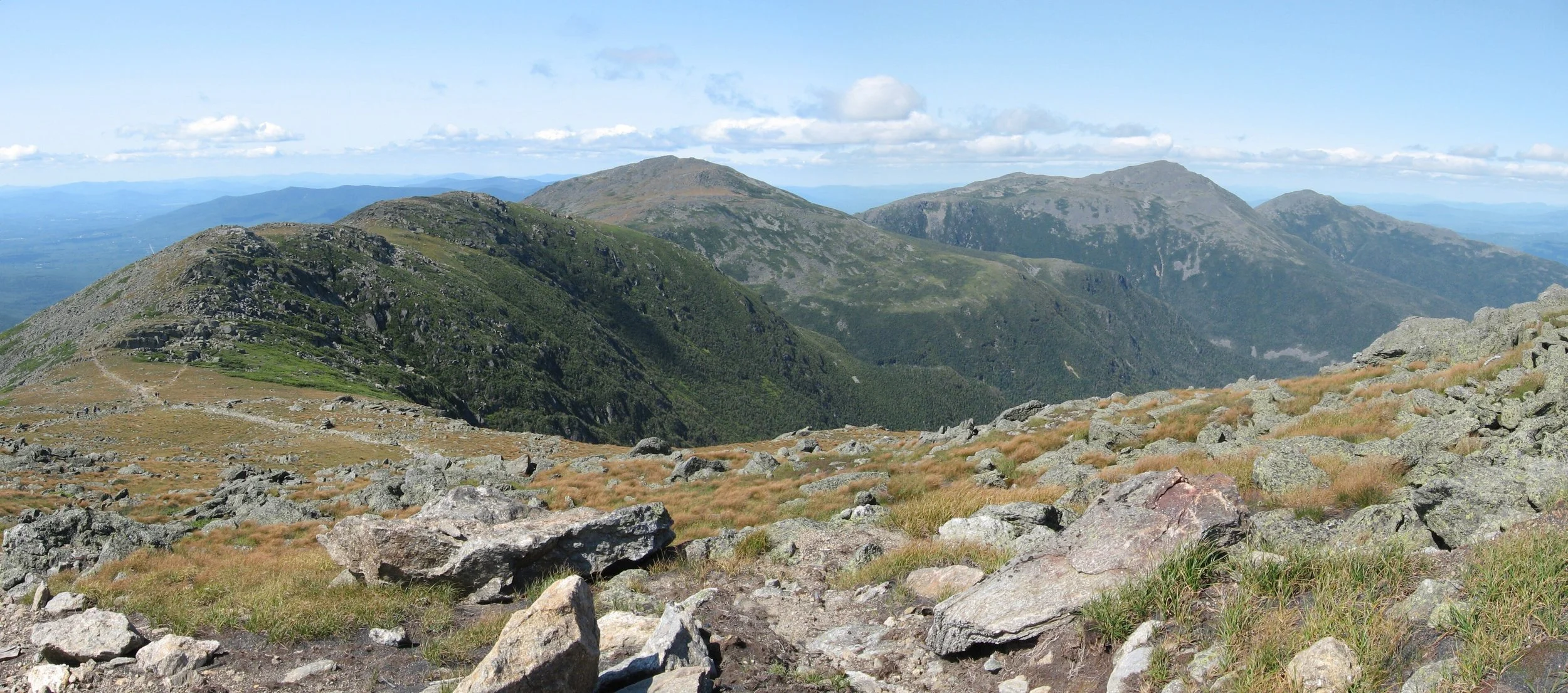
of walking down from the White Mountains,
I dreamt I might die before
familiar woods woke me.
Come slowly,
the way leaves come, I’ve arrived at
their turnings: from bronze, gold, wine
to all greens….''
--From “Coming to,’’ by Philip Booth
"Nature’s first green is gold,
Her hardest hue to hold.
Her early leaf's a flower;
But only so an hour.
Then leaf subsides to leaf.
So Eden sank to grief,
So dawn goes down to day.
Nothing gold can stay.''
-- "Nothing Gold Can Stay,'' by Robert Frost
George McCully: Academic disciplines: Synthesis or demise?
From the New England Board of Higher Education (nebhe.org)
Current anxiety over the values and directions of what we used to call “higher education” has rich and complex roots in the past, as well as problematic branches into the future. A crucial and core aspect of the subject not yet adequately understood is the structure and strategy of scholarship itself, and its future.
Forty-five years ago, in the heyday of “multiversities” lauded in books by presidents Clark Kerr (UC Berkeley) and James Perkins (Cornell), I wrote an article for the Journal of Higher Education entitled “Multiversity and University.” It contrasted the two models of scholarship, and contended that, whereas multiversity academic disciplines are each internally rigorous as scholarship, taken together as a putative whole, the multiversity had never been defended as scholarship and could not be so defended, because it is not scholarship. The disciplines arose and came together by historical accidents, not by intentional, systematic, scholarly or philosophical design.
They arose in the early modern period of Western history—the 15th to 18th centuries, with the Renaissance, Reformation, Scientific Revolution, Absolutism and Enlightenment—arguably the first “Age of Paradigm Shifts” in every field, significantly driven by Gutenberg’s IT revolution in printing. Each of the various modern disciplines created its own vocabulary and conceptualization, which were based on analyses of contemporary events and developments, and—this is crucial—were exclusively specialized.
Scholarship is always necessarily specialized—it examines the world in detail. What is distinctively modern with the multiversity is that its specializations exclude other subjects—studying each one (e.g. economics, politics, astronomy) separately, to the exclusion of others, in various languages that are mutually incompatible and incommensurable. Collectively, modern academic disciplines imply that scholarship at its highest levels describes the world as if it were fragmented, in separate silos. This structure and strategy of knowledge, inquiry and education played a leading role in producing modern secular Western civilization.
Its long-term effects have been profound. Exclusive specialization was originally intended only to separate each field from religion in a period of religious wars. The cumulative effect—coincidentally and inadvertently—was that they also excluded each other, obviating our sense of reality as a coherent whole, which it actually is. This also gradually undermined authentic liberal education, which seeks self-development in wholeness of life. In the multiversity, “higher education”—advanced self-development—has devolved, as we see today, into advanced technical training—information and skills development. As such, it leads to lives fragmented accordingly—even divided against themselves. Translated into public policy in the real world, the disciplines’ exclusions feed back as problems—in the early '70s Journal of Higher Education article the prime examples were our failures in Vietnam and the deepening ecological crisis caused by technology ignoring ecology. In sum, the flaws of fragmented scholarship have inclined us to problems at strategic levels in modern culture—in knowledge, education, public policy, and personal values—owing to the unattended gaps among the disciplines.
Needless to say, however, the article’s fundamental critique raised no noticeable dust. Basically no one cared—in part, no doubt, because they had been trained not to care about the whole. But because the assertions were true, it should not be surprising that today we are compelled to return to the subject by a new set of historical circumstances and trends in this second Age of Paradigm Shifts, also propelled by an IT revolution—this time of computers and the internet.
It may help to recap the history of how and why the tradition of university or universal learning was superseded. Basically, medieval civilization broke apart as printing enabled the flood of new information in all fields in this period to be much more rapidly and broadly shared, so as to set new standards in the sciences and scholarship. The Reformation and Wars of Religion encouraged scholars and scientists to dissociate their work from the contending universal religious doctrines and authorities. The best-known examples are those of the Scientific Revolution in astronomy, physiology and other physical sciences, which became increasingly empiricist in protective isolation from Classical and Christian authorities and dogmas. The flood of biological discoveries from the New World, of flora and fauna previously unknown and thus without symbolic significances, freed “natural history” from medieval natural philosophy and theology. In the social sciences, Machiavelli gave birth to political science by asserting that the application of traditional Christian values to questions of “how to maintain the State” in Renaissance Italy would likely fail, so that to be successful rulers should focus exclusively on power relationships.
Rampant monetary inflation spreading throughout Europe in the 16th Century, initially thought to be caused by sinful covetousness, was shown by Sir Thomas Smith to result from the sudden huge influx into the European economy of gold and silver bullion from the New World. Juan Luis Vives, the Spanish humanist living in northern Europe, pioneered modern sociology by analyzing permanent poverty in Bruges, modern psychology in his advocacy of women’s education, and a secular understanding of current events based on the Stoic categories of concord and discord. Humane letters addressed an increasingly bourgeois secular society, and rationalist and empiricist philosophy sought autonomous grounding. By the 18th Century Enlightenment, intellectuals were consciously seeking secular alternatives to medieval universal values based on theology. A symbolic example is that “philanthropy”—the “love of what it is to be human”—became a central value in ethics, especially in forward-looking Scotland and America.
The cumulative result of all these paradigm shifts was the disintegration of what had been a university encyclopedia (etymologically: encyclos paideia: “universal” or “all-embracing” learning) of scholarship and culture. The various disciplines, to their credit, were freshly and hugely productive; they gradually hardened and were drawn into academic institutions. By the end of the 19th Century, they had become a standardized structure of separate parts with no integrating whole. To be sure, outside and on the periphery of academe, there were significant exceptions and even resistance to the disintegrating academic trend—by Alexander von Humboldt, George Perkins Marsh, Charles Darwin, Emerson, Thoreau, Poe, Henry Adams, William James, Ernst Haeckel and many others. The term “multiverse” was coined by Adams to describe the emerging pluralistic view of reality. By 1963, Clark Kerr coined the term “multiversity” to describe the heterogeneity of branches within single academic institutions, and lauded its intellectual dominance in American society. In 1966, James Perkins echoed his enthusiasm. The 1973 Journal of Higher Education article cited above was, therefore, a radically non-conforming view.
But the subsequent history of the multiversity has not been a continuing success. By the early '90s, Jaroslav Pelikan’s The Idea of the University: A Reexamination asserted that colleges and universities were in “crisis.” The political and cultural turmoil in academe of the late-'60s and early '70s rudely deposed both Kerr and Perkins. The business model of higher education became increasingly dysfunctional, with runaway costs mainly for ballooning administrations, declines in public funding, inexorably growing reliance on underpaid “adjunct” faculty, a decline in tenured faculty ratios, and students graduating with enormous loan indebtedness. Students and their parents have become highly critical, seeing themselves as exploited consumers buying academic credentials on unfavorable terms for short-term, unreliable job markets.
Thus, to the intellectually weak organization of learning is now added an institutionally and financially weak infrastructure, making the whole system more vulnerable in a rapidly transforming world. There is even evidence of increasing scholarly and professorial unease —e.g., the widespread increase in attempts to reconnect the disciplines in “interdisciplinary” and “multidisciplinary” studies; the AACU’s promotion of “integrative learning;” Northeastern University’s new “humanics” curriculum; Arizona State University’s experiments in replacing the academic departmental structure with integrative fields of study addressing real-world problems; and Georgetown University’s Center for New Designs in Learning and Scholarship, among others.
Moreover, six powerful factors—“conducive conditions”—fundamentally challenge today’s multiversity structure of academic scholarship:
First and most powerful is the continuing Information Technology (IT) revolution, which arose outside and independently of the multiversity in the late ‘90s, and has been transforming the content, management and communication of information in all fields. Because the multiversity consists of information and depends on its technology, scholarship and teaching are being thoroughly—broadly and deeply—affected.
Second is a part of that revolution, namely, the explosion of sheer data—recorded and collected facts—to be analyzed. The most prominent expression of this is so-called “Big Data”—datasets so large and complex that ordinary software, even massively parallel systems running on hundreds or even thousands of servers, cannot manage them. Over 94 percent of all data are now estimated to be stored digitally, much of it with open access, usable by anyone, anywhere, at virtually no cost. Adequate management will require and thus evoke new technology and methods of analysis, some already existing, more yet to be developed.
The data explosion is subversive of multiversity disciplines because it comes from, and is about, the real world, which is not divided into separate parts conforming to academe’s conventions. Big Data is not separated out into silos. When it becomes manageable with more powerful technology, the exclusionary fallacies of academic silos will be further illuminated, calling into question the entire multiversity structure. Professors will have to retool their work.
Third is personnel—the huge increase and surplus of qualified researchers forced to work outside academe. Doctoral degrees today far exceed academic and research job openings. Fewer than half of those earning science or engineering doctorates gain jobs directly using their training. In the most popular fields like biomedicine, fewer than one in six join a faculty or research staff. Every year, the market tightens while federal research grants are flat or declining. The American Academy of Arts and Sciences reports the same for the humanities—numbers of doctorates awarded rise annually, while numbers of job openings decline.
Fourth is a knowledge explosion produced by the first three factors. What do these highly trained and underemployed people do with their skills? Some find gainful semi-relevant employment in industries, which are outside academic disciplinary restrictions; many take advantage of computers and the internet to do independent research, translating data into knowledge, largely freed from academic constraints. The capacity of traditional paper-printing in books and periodicals has been far exceeded by qualified research, so the surplus finds expression in many forms on universally accessible and even peer-reviewed spaces on the infinitely capacious internet. The bottom line is that the total output of research from all practitioners, significantly empowered by the IT revolution, now far exceeds the capacity of our academic and commercial information infrastructure to absorb and use it, much less to govern its content and formats. A crisis in knowledge management has already begun.
Fifth, which might administer the coup de grace for the multiversity, is future IT. The successors to today’s digital computers are now being developed outside academe by leading global corporations and governments: “quantum computing”—computers with exponential processing power (“qubits”) that are already capable of operating 50,000 times faster than today’s equipment, and soon will reach 100,000. The new technology has already run two million quantum programs to test and write papers on theories that we never before had the processing power to prove. New machines create new fields, which are not retrofitted into academic departmental straitjackets, but are free to roam and graze among the masses of new Big Data, to solve real-world practical problems such as climate change and overpopulation. This will render exclusive specialization obsolete.
Sixth is the real-world environment of academic infrastructures, which is enhancing the power of the first five disruptive innovations. Our world is transforming at an accelerating pace propelled by developing technology. Higher education is more than ever held accountable to the outside world in today’s monetized consumer economy of academic accreditations for jobs to repay the loans that bought those credits in the first place. A telling example is the revolution in AI—artificial intelligence—that can already drive cars and trucks and make homes and other accessories “smart,” self-regulating and intercommunicating, and that will certainly transform higher education. IBM CEO Ginni Rometty predicts that all jobs will be augmented by AI, requiring constant new learning and adaptation by jobholders. Therefore what today’s students need is not just information transfer as in the traditional multiversity, but learning how to teach themselves, with online and accessible “lifelong learning systems,” enabling constant retraining and upgrading of knowledge and skills—even (best case scenario) self-development.
The disruptive innovation of Massive Open Online Courses (MOOCs) is no longer experimental; students can gain academic credits for approved courses taught by experts from anywhere in the world, both inside and outside academe. Some of those courses are organized by conventional disciplinary categories, but many are not; they address real-world subjects and are accorded academic credits for business reasons. Other innovations—e.g., experiential learning, civic engagement—are moving in the same direction, from inside the academy out into the real world, signaling that conventional academicist categories are increasingly felt to be unrealistic.
These six factors—the IT revolution, data explosion, researchers surplus, knowledge explosion, future technology and the transforming real-world environment of scholarship—are radically more powerful than their counterparts in the first, early-modern Age of Paradigm Shifts, to which the emerging disciplines were originally attuned. Ours is a second Age of Paradigm Shifts, powered by the second IT revolution. Scholars then were concerned with the Classical distinction of humans from animals; today we are concerned to distinguish humans from machines.
We know that technological revolutions are inexorable and unavoidable; they must be accommodated. The entire set of academic disciplines, describing the world in separate parts by exclusive specialization evoked by actual conditions in the early modern period, is now antiquated and needs to be transcended by another innovative set, similarly evoked. To be sure, traditional subjects still exist—economies, polities, societies, cultures, physical sciences, etc.—for which deep expertise is always needed, but they can no longer be considered autonomously. What needs to change are the interstices. We need now to describe the world systematically, as computers will press us to do, but in realistic terms as a coherent whole—which science assumes. We may also hope our new learning will be firmly humane, distinguishing us from our artificially and massively intelligent machines. Colleges and universities, which have a special commitment to human values, would do well to assume leadership roles in accomplishing this.
George McCully is a former historian, professor and faculty dean at higher education institutions in the Northeast, then professional philanthropist and founder and CEO of the Catalogue for Philanthropy.
Mobile home

"Thaddeus Bartlett's House, Skinnerville (Mass.) View,'' by Pauline Lin, in the show "Gimme Shelter,'' at Brickbottom Artists Association, Somerville, Mass., April 26-May 26.
Book culture

"Behind the Scene" (dimensional collage of vintage book parts), by Conny Goelz-Schmitt, in her shoe "More Questions Than Answers,'' at Kingston Gallery, Boston, April 4-29.

Tim Faulkner: Deepwater Wind's big expansion plans

The proposed Revolution Wind facility would be built in a federal offshore wind zone between Block Island and Martha’s Vineyard. (Bureau of Offshore Energy Management).
Via ecoRI News (ecori.org)
Providence-based Deepwater Wind continues to invest in the areas of New Bedford and Fall River while embarking on other projects across the Bay State, including a mountain-lake power plant in western Massachusetts.
The owner of the Block Island Wind Farm has announced it will choose Somerset, Fall River or New Bedford to host a facility for building 24 wind-turbine foundations for its Revolution Wind facility proposed in a federal wind zone between Block Island and Martha’s Vineyard.
If approved, Revolution Wind would start construction in 2022, according to Deepwater Wind. In all, the offshore wind facility is projected to inject $300 million into the regional economy and create 2,300 jobs. Three hundred employees would be employed at the yet-to-be-named site for turbine foundation construction, where workers would weld, fabricate and paint the 1,500-ton steel structures.
“This is about building a real industry that lasts,” Deepwater Wind CEO Jeffrey Grybowski said.
In a recent radio interview with 1420-AM (WBSM), New Bedford Mayor Jon Mitchell said the number of jobs promised is too low for the size of the site needed for the foundation work. Mitchell said Deepwater Wind is looking for about 100 acres. He suggested that the 307-acre site of the former Brayton Point power plant in Somerset might be better suited for the work.
New Bedford is already expected to receive some of the economic benefits of Revolution Wind and other proposed wind projects. The 26-acre New Bedford Marine Commerce Terminal will host construction and staging work for Deepwater Wind's latest project and the Bay State Wind and Vineyard Wind renewable-energy facilities.
Deepwater Wind is also seeking proposals from local shipyards to build special boats that ferry employees to its offshore wind facility. Some 12 employees would operate the vessels during the 20-year-plus life of the Block Island Wind Farm turbines. Similar boats would be built for Deepwater Wind’s other projects in the wind zone in the waters between Massachusetts and Rhode Island. The 21-meter Atlantic Pioneer was built by Blount Boats shipyard in Warren, R.I., to transport crew and supplies to and from the Block Island Wind Farm.
Revolution Wind is the first offshore wind project to take advantage of 2016 Massachusetts legislationthat calls for 1,600 megawatts of offshore wind by 2027.
Mountain power
Revolution Wind is billing itself as an energy source that can deliver electricity when needed, even if the wind isn’t blowing. A lack of electricity from the proposed 400-megawatt wind farm would be substituted by a 40-megawatt-hour battery storage system designed by Tesla. It will also take ownership of electricity from a hydroelectric “pumped storage” system in Northfield, Mass., some 115 miles from the Massachusetts South Coast.
There’s no dam. Instead, a manmade lake atop Northfield Mountain drains into a generator within the mountain. The 50-year-old facility requires more energy to refill the 5-billion-gallon lake with water than it produces. But the 1,168-megawatt energy facility, owned by FirstLight Power, makes money by using electricity for its pumps during off-peak hours, when prices are lower, and selling it to the grid when electricity prices are higher. The hydro facility also provides on-demand power, so it's a suitable partner for a wind facility that periodically stops spinning.
Revolution Wind, therefore, could join fossil-fuel power plants as a baseload energy generator that can be turned on and off based on electricity demand.
“Revolution Wind will deliver ‘baseload’ power, allowing a utility-scale renewable energy project for the first time to replace the retiring fossil fuel-fired power plants closing across the region,” according to Deepwater Wind.
The Northfield Mountain Generating Station is waiting for its federal operating license to be renewed. In February, Environmental Protection Agency administrator Scott Pruitt made a surprise visit to the pumped-storage facility, which draws its water from the Connecticut River. Pruitt was joined by a member of the Federal Energy Regulatory Commission, the entity that decides if Northfield Mountain will get relicensed. Pruitt gave no comment on whether he supported the power facility and was criticized for not meeting with local officials and environmentalists who support the power facility.
Expandable offshore transmission network
Deepwater Wind is partnering with Nation Grid Ventures, a division of National Grid the utility, to build a a network of undersea power cables that would connect Revolution Wind and other offshore wind facilities to the electric grid. If approved, the project would speed up the approval and licensing of other wind facilities by having an existing network of transmission lines to tie into within the Massachusetts and Rhode Island offshore wind zone.
Tim Faulkner reports and writes for ecoRI News.
Don Pesci: A Conn. congresswoman's unusual "Metoo'' case
Editor's note: Congresswoman Esty announced yesterday she would not seek re-election.
Stories like this open a window into sealed rooms in which the usual favorable campaign propaganda is produced by the truckload.
This one, which ran in the Washington Post, is not good news for Connecticut U.S. Rep. Elizabeth Esty, most recently seen bobbing her head in assent to a vigorous attack on the National Rifle Association (NRA) by a teenage rabble rouser in Washington DC.
The Post story begins with a knock-out lede: “The threat from Rep. Elizabeth Esty’s chief of staff arrived in a voice mail.
“’You better f-----g reply to me or I will f-----g kill you,’ Tony Baker said in the May 5, 2016, recording left for Anna Kain, a former Esty aide Baker had once dated.”
Kain alerted the police, according to the Post story, “filed a report for felony threats and obtained a 12-month restraining order against Baker.”
A week later, Esty found out about the episode, and “… rather than firing or suspending Baker, the congresswoman consulted her personal attorneys and advisers, she said. She also spoke to Kain on May 11, emails show; Kain said she provided detailed allegations that Baker had punched, berated and sexually harassed her in Esty’s Capitol Hill office throughout 2014, while she worked as Esty’s senior adviser… On May 5, 2016, Baker called Kain approximately 50 times and said he would ‘find her’ and ‘kill her,’ she alleged in the petition.”
Three months after the reported abuse, Kain bade Esty goodbye, the congresswoman having provided him with a favorable job recommendation. Kane found employment with the Ohio branch of Sandy Hook Promise (SHP), an organization formed after the slaughter of school children and staff of the Sandy Hook Elementary School that agitates in favor of gun control and school safety. Before hiring Baker, SHP contacted Esty by phone.
We do not know if there is a record of the conversation -- SHP’s spokesperson was unavailable for comment when the Post story ran -- but it seems reasonable to assume that Esty had not warned officials at SHP that their hire had assaulted and threatened women, was an alcoholic and had exhibited brutal and violent tendencies. Esty had signed a non-disclosure agreement with Baker. The penalties for breaking contracts superseded any political backlash that might have damaged Esty’s career as both a third term Congresswoman and an ardent defender of women’s rights in the post-Weinstein #metoo era.
Esty retained Baker in her office for three months after she had full knowledge of her chief of staff’s assaults and life-threatening e-mails. On the advice of counsel, she signed a non-disclosure agreement that would protect both her and Baker from the indignity of answering media inquiries. And, as part of the agreed upon separation, Esty recommended Baker to Sandy Hook Promise as a promising hire. For all of this, Esty is deeply sorry.
Will sorry be enough? Esty is, after all, a woman who has placed herself on the post—#metoo barricades. Her mistake was simply listening to the lawyers -- Esty is also a lawyer – and not acting in the moment as her conscience prompted her. If she is on the left side of the political barricades, why should unsavory incidents such as these cost her a well-established position of eminence within the social progressive movement she has ridden like a hobby horse into re-election efforts for three, possibly four terms in the #metoo inspired Democrat Party? “Esty said she plans to advocate for greater accountability in how congressional offices are managed,” the Post advises, closing out the tawdry tale.
Republicans already are waving Esty’s head on their campaign pikes, and Democrat support for the beleaguered Esty is flaccid. Executive director of the Connecticut Citizen Action Group, most often the last passenger to jump overboard on a sinking ship, said he’s “not ready to jump off” the ship yet. U.S. Senator Dick Blumenthal was cautiously unoptimistic. “I’m deeply disappointed,” said the moral conscience of the Senate. “She should talk to her constituents. It’s their decision not mine. I need to know more and so do her constituents.” The always eupeptic U.S. Senator Chris Murphy said, “I talked to Elizabeth, and I'm glad she acknowledges this [that mistakes were made]. Nobody working in a congressional office or any other setting should feel afraid to come to work. Protecting victims of workplace harassment needs to come first, and the rules of Congress need to change to ensure that happens."
Esty has said she has no intention of resigning her position in the U.S. House. Is it presumptuous to suppose that the congressional reforms Murphy believes are necessary might be more quickly adopted if Esty did resign?
Don Pesci is a Vernon, Conn.-based columnist and frequent contributor to New England Diary,
So many books, so little time
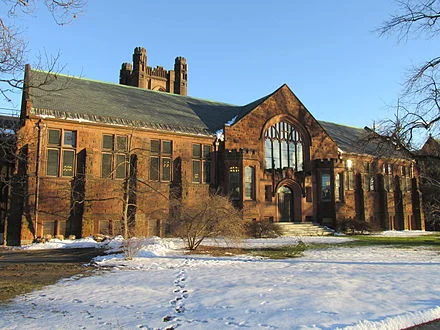
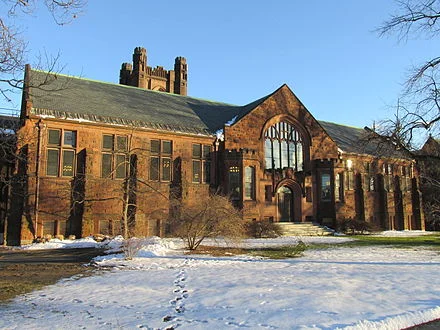
At Williston Memorial Library, Mount Holyoke College {South Hadley, Mass.}
“The chapter ends. And when I look up
from a sunken pose in an easy chair
(half, or more than half, asleep?)
the height and heft of the room come back;
darkly, the pitched ceiling falls
forward like a book.
Even those mock-Tudor stripes
have come to seem like unread lines.
Oh, what I haven’t read!’’
From “Reading Room,’’ by Mary Jo Salter
Whole Foods centralizes away the local

From Robert Whitcomb's "Digital Diary,'' in GoLocal24.com
GoLocal’s March 28 story headlined “Amazon Is Slashing Jobs at Whole Foods in New England Region’’ is an unsettling sign of the times. The story was instigated by a Business Insider article that said: “Whole Foods is slashing regional and in-store marketing and graphic-design jobs in its latest push to centralize operations, say people with knowledge of the matter….It’s not clear exactly how many jobs will be affected….”
GoLocal reports that “the impact locally is that the hand-drawn blackboard signage will disappear and local advertising promotions with {nonprofit} community organizations may go away.’’’ On the East Side of Providence there are two Whole Foods stores and a somewhat similar high-end supermarket called Eastside Marketplace, formerly locally owned but now owned by Ahold, a Dutch company but which heavily promotes local ties. Will Amazon/Whole Foods’ centralizing drive push customers there?
(Trump is correct to say that Amazon has too much power, although he may be mostly driven by his fear and hatred of The Washington Post, which is owned by Amazon CEO Jeff Bezos.)
U.S. train service is 'scandalous'

The Acela pulls into Old Saybrook, Conn.
"In America, we happen to be living in a third world country from the point of view of economic and social development. I came back from New York yesterday and I took the fastest train in the country, the Acela. My wife and I took the New York-Boston train sixty years ago - it wasn't called the Acela then - and I think it's improved by about fifteen minutes since then. Any other country in the world would be about half the time. In fact when it's riding along the Connecticut turnpike it's barely keeping up with traffic, which is just scandalous.''
-- Noam Chomsky, linguist and left-wing social activist"
Those lost cedars

From "The Last Gift She Gave,'' by Carrie Dickeson, in the group show "Solastalgia,'' at the Dedee Shattuck Gallery, Westport, Mass., April 4-29.
She asks: "Is it possible to balance the manufactured with the organic, the man-made with the earth-grown? In decades to come, how will 'Nature' respond to the synthetic materials that humans generate?''
"The title, 'The Last Gift She Gave' emerged from a series of text messages, as my mother stood witness to the extraction of our family’s cedar trees, felled in exchange for an updated power grid. We shared a history with those trees. They shaded our summer gatherings, and shielded our home from winter winds. As a child I used to climb the cedars’ scraggly trunks, seeking new perspectives, hanging upside down, inadvertently collecting the sap sticking to my hands and clothes. This visceral relationship included the intimacy of hugging the branches, and breathing the spicy oils. And long before my own childhood, the trees stood strong, through multiple generations.''
Boston's old private clubs press on in the 21st Century

The august Somerset Ciub, at 42-43 Beacon St., Boston.
This piece first ran in The Boston Guardian as Robert Whitcomb's March "Boston Diary'' entry.
That members of the Algonquin Club have voted to sell the old Back Bay institution, at 217 Commonwealth Ave., to a developer that will turn it into a for-profit (shocking!) club, focused my attention on Boston’s old clubs. I’ve been in most of them, as a guest, over the past half century. To me, they’re still museums of class, but with some new human exhibits.
The Algonquin, founded in 1886, was one of what had been men’s clubs (they’re gender-integrated now) founded in the mid to late 19th Century as meeting places for Boston’s elite, made rich by international trade and the Industrial Revolution. The Somerset, Union, Tavern, Algonquin and the St. Botolph clubs remain the most famous; the University and Harvard clubs are a different species. Then there’s the Chilton Club, founded very late, in 1910, for ladies but now admitting men.
They each had their special reputations. For example, the old story goes, the Somerset had the old-money types, the Algonquin those still trying to make a pile, the Union the money managers (lawyers, trust officers, etc.) and the St. Botolph’s the arty and literary types.
These are “third places’’ --– not home, but with homelike aspects not found in restaurants and hotels, and certainly not work places, although many members would be likely to run into colleagues there.
Such “mansions away from mansions,’’ as Sam Hornblower called them in The Harvard Crimson in 2000, were/are very appealing both for their creature comforts and how they are seen as validating high social status. Further, until recent decades, Boston was not famed for its restaurants and its hotels (the old Ritz Carlton a famous exception). The clubs helped fill the service gap for real and wanna-be Brahmins.\
But the Hub has become much more like Manhattan, and now abounds with great restaurants and hotels. And even rich lawyers, businesspeople, academics and physicians are much more likely in these frantic days to eat at their desks or restaurants than at old clubs, which tend to be run in elegantly unhurried ways. Meanwhile, the ethnic coherence of these places as refuges for the old WASP aristocracy has long been crumbling in an increasingly globalized, multi-ethnic and meritocratic Boston. Mix up membership or die!
(I’m increasingly struck by how much downtown Boston has come to look like Manhattan. As you walk east across the Common, with the skyscrapers in front of you, you’d think you were walking east in southern Central Park.)
I think that most of the old clubs will survive, although their lunch business will continue to lag. With good marketing, the aging of the population and the increasing density of very rich people in, especially, the Back Bay and on Beacon Hill, should be good for the institutions. They can draw growing numbers of wealthy retired and semi-retired people, especially if these clubs boost the number of special events, such as famous speakers.
Even as the Algonquin is turned into a for-profit for striving Millennials, the rest of the clubs will go on in pretty much the same way, except that more of the criteria for membership will be relaxed. (What will happen to the old “blackball’’ tradition?”)
One criterion for admission, however, that won’t change is the need to have lots of money, new or old.
Loyal to New England flowers

iris, a mid-spring flower in New England.
"Not only was she traditional by nature, Katherine showed a strong streak of parochialism in her approach to gardening. New England was what she knew as a child, and the roots of her ancestors went deep in the soil of Maine and Massachusetts. The things that grew in New England, therefore, were 'correct.' They occupied a special place in her heart, an authenticity not enjoyed by flowers that made the mistake of blooming in other sections of the country.''
-- E.B. White, commenting in his late wife Katherine White's book Onward and Upward in the Garden. For many years, they lived much of the year in Brooklin, Maine.

Llewellyn King: We lost our confidence in basic rightness of America in the '60s

Soldiers stand guard in Washington, D.C., in the riots that followed the assassination of Martin Luther King Jr.
The assassination of Martin Luther King Jr. on April 4, 1968, was a shot that rang out like none other in the tumultuous 1960s.
Washington and many other cities erupted in riots, mostly described as race riots, but I would aver. I was there. I walked the streets of the nation’s capital, saw the looting, and had rioters protect me from fire and mayhem.
These were riots of anguish. They were, if you will, a great bellow of pain. King meant more to the African-American community of that time than we can now imagine.
If anything, right after the Washington riots, when peace was being kept by National Guard troops backing up local police, there was a surreal politeness between the races. Reporters, who were in the thick of things, wrote about it.
Later, when Congress held hearings and conservative Southern congressmen wanted to know why the District of Columbia police had not opened fire on the rioters, why they had been so restrained, race was emphasized. To its credit, the largely white police force held its fire.
Despite the civility, it was not pretty. Washington’s stores were looted and restaurants burned. On 14th Street, maybe the worst hit, I watched as a pleasant restaurant called California, as I remember, blazed while the owner stood on the street and wept, tears running down his face. He wanted to know why the police did not act, why the fire department could not save his restaurant.
The price Washington and the nation paid was high. After cataclysmic events, things do not return to the status quo ante. They are forever changed.
As King had changed the civil rights debate, so his murder changed Washington. The obvious things were a greater segregation in a city that had been quietly edging toward modest integration. At that time, we went to black-owned clubs on U Street to hear jazz, and young people like myself had black friends in a natural, not a contrived, way.
Sure, there was racism everywhere (particularly, I had found, in the police department), but there was a cozy feel to the nation’s capital. It went. White flight was almost immediate, and the move by so many whites to the suburbs changed a lot of things. Washington became a black city surrounded by white suburbs in Maryland and Virginia.
The riots were emblematic of what was happening in the tumultuous decade. It was a decade in which old values perished and were replaced with a new lack of trust in government and institutions, big and small, public and private. It persists today.
The 1960s were host to major movements, all underlaid by the Vietnam War and the loss of young American life there. It was the key in which the symphony of discontent was written.
Along with the war were the social movements, all of which fingered the establishment, the elites. There was the civil rights movement, the environmental movement, the women’s movement and a huge sense among young people that the older people could not be trusted.
These legacies of the 1960s are still with us: distrust of government, lack of confidence in expertise, suspicion of institutions, and the use of the media and the courts to achieve political and social goals.
The greatest loss to the 1960s might be patriotism. We do not have the absolute confidence in the rightness of the national cause, which had motivated what Tom Brokaw called the “greatest generation.” Craven praise of the military should not be confused with what we had in the 1940s and 1950s: selfless patriotism.
The turbulent decade put paid to the old patriotism and unleashed a new kind of social riot that is alive and well.
On Twitter: @llewellynking2
Llewellyn King is executive producer and host of White House Chronicle, on PBS.