
Vox clamantis in deserto





'Basic problem of human conduct'
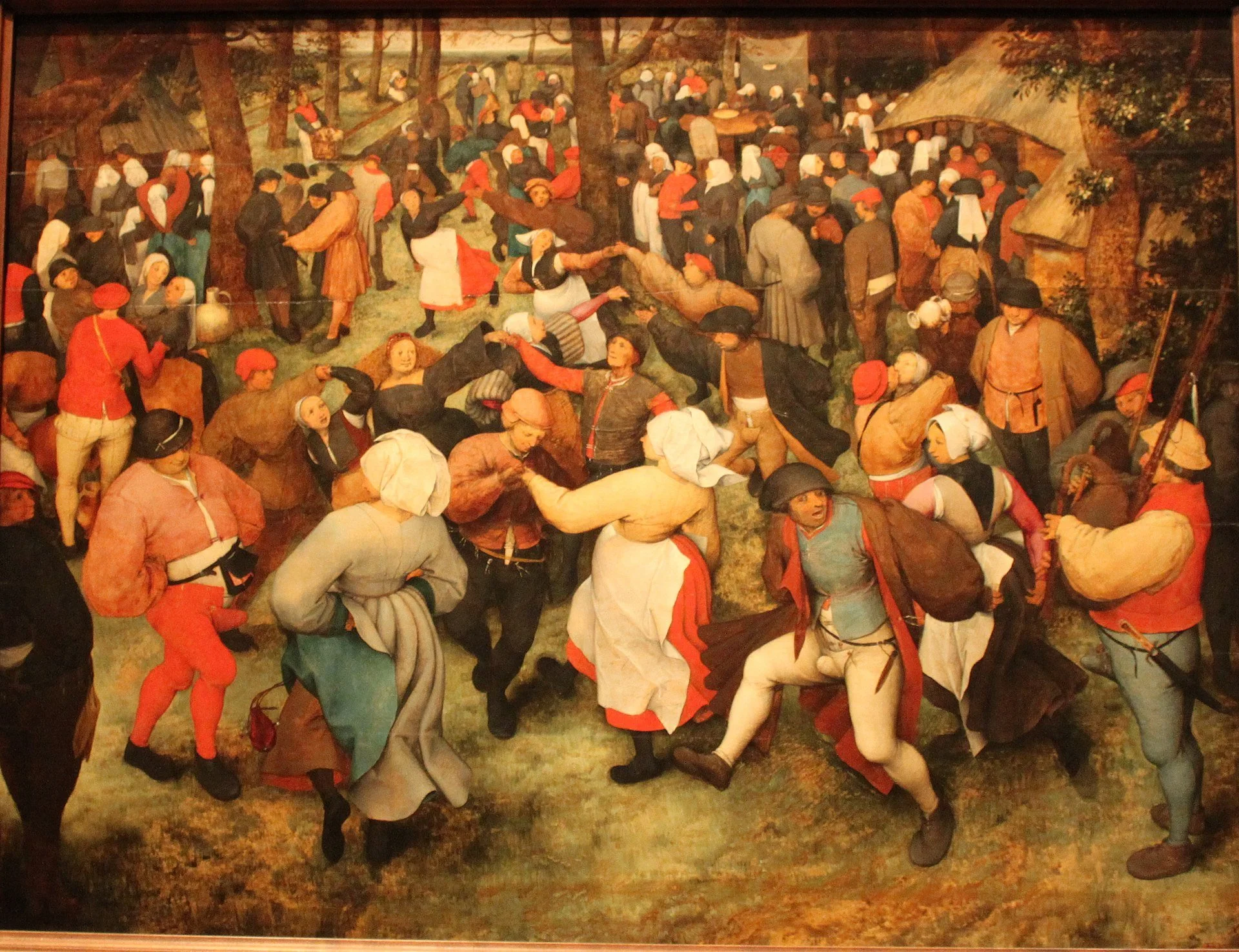
"Vermont tradition is based on the idea that group life should leave each person as free as possible to arrange his own life. This freedom is the only climate in which (we feel) a human being may create his own happiness. ... Character itself lies deep and secret below the surface, unknown and unknowable by others. It is the mysterious core of life, which every man or woman has to cope with alone, to live with, to conquer and put in order, or to be defeated by.''
-- Dorothy Canfield Fisher (1879-1958)
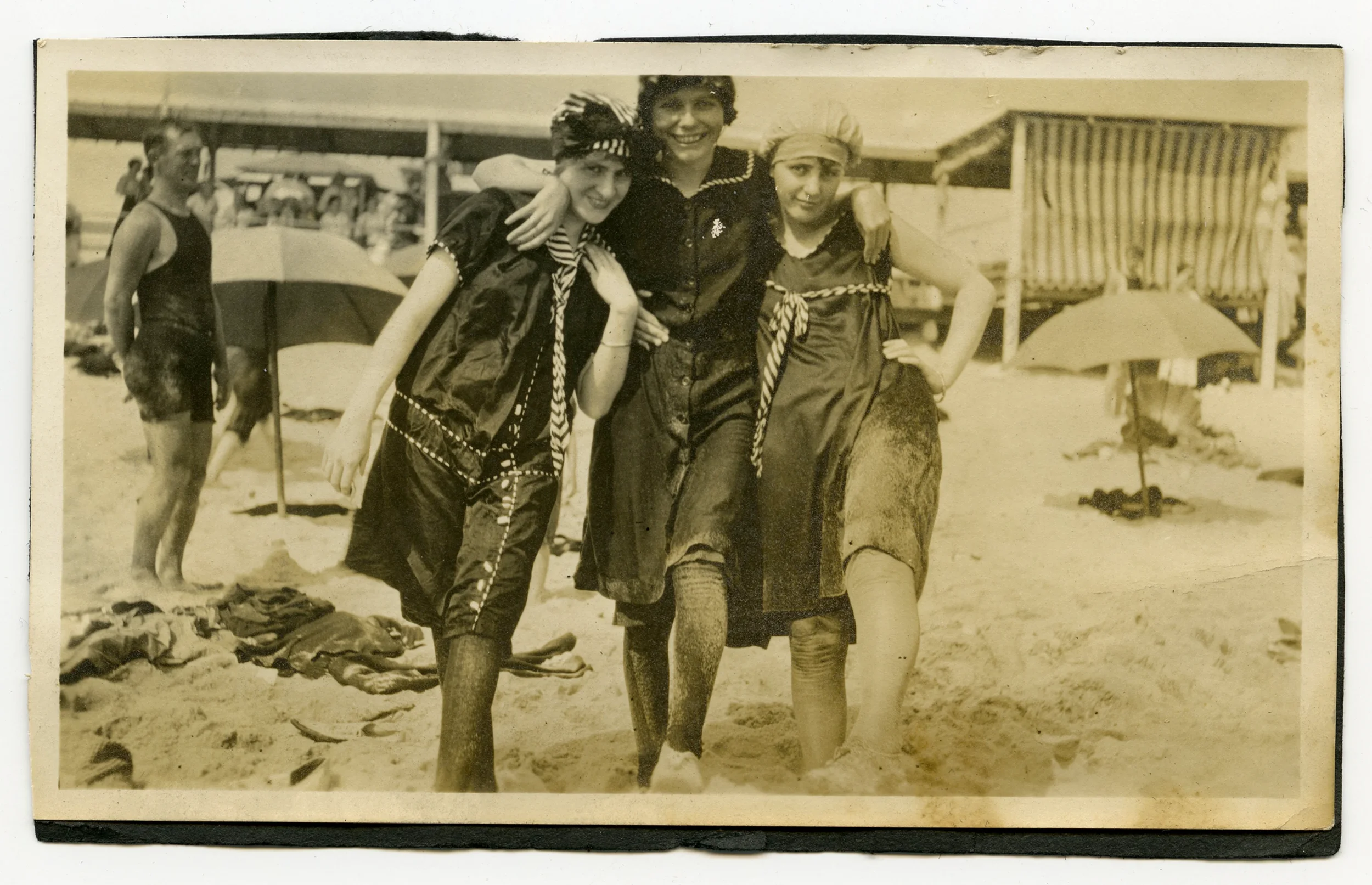
Mrs. Fisher was an education reformer, social activist and best-selling author. She was originally from Kansas but eventually moved to Vermont, which she loved. She died in Arlington, Vt., in the gorgeous valley between the Green Mountains and the Taconic Range. (See pictures below.) She became a luminary of the Green Mountain State and was the first woman to be awarded an honorary degree by Dartmouth College (across the Connecticut in New Hampshire).

At the Vermont State House, in Montpelier (the smallest state capital, but considered hip).
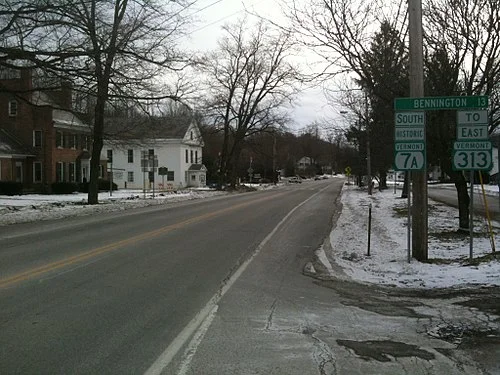
Sleepy downtown Arlington, in southwestern Vermont. In the summer, the area swarms with vacationing and weekending New Yorkers bearing much appreciated cash and credit cards to be used at the area's many inns, restaurants and expensive shops.
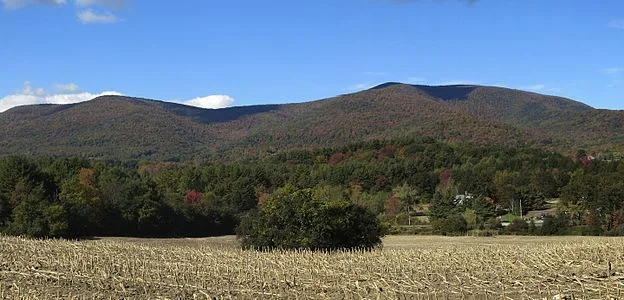
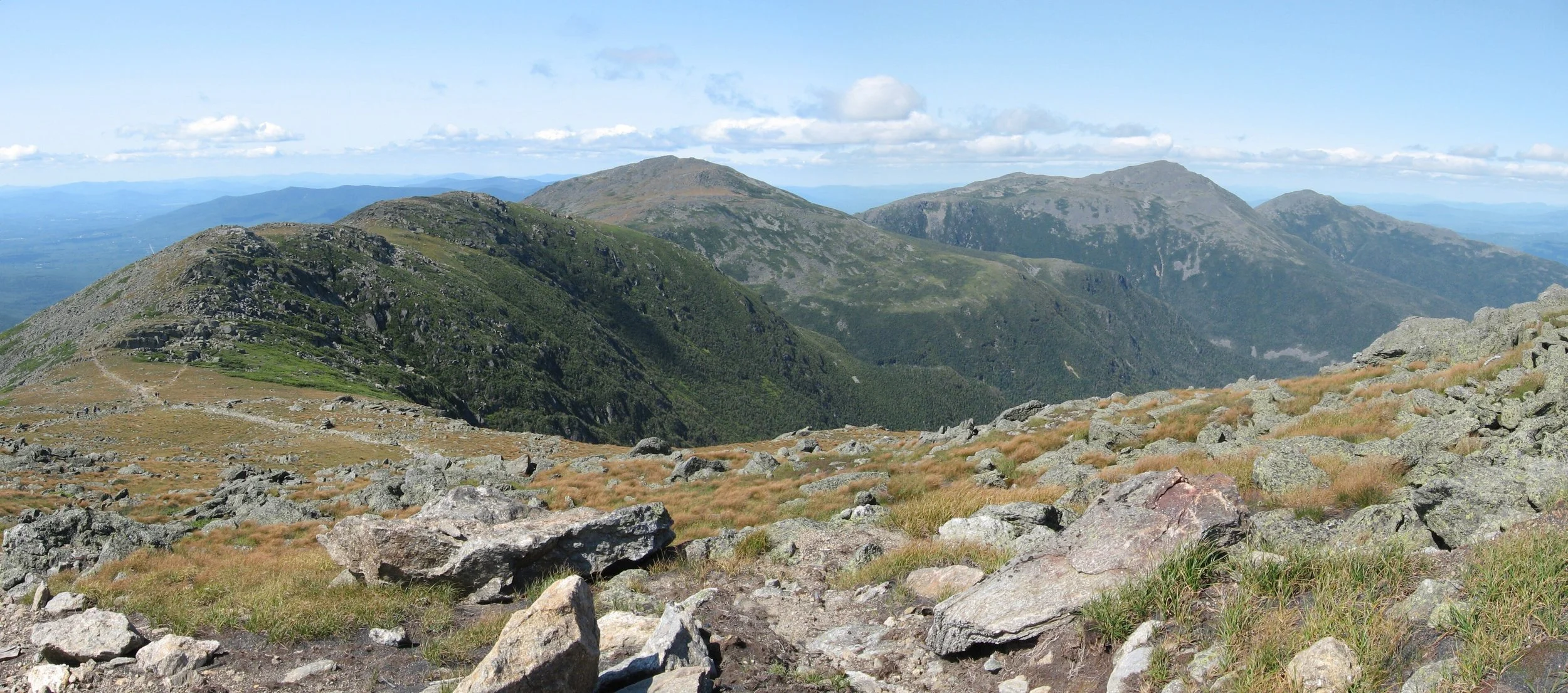
The Taconic Range.
R.I. economic advance and anxiety

"Anxiety" (1894), by Edvard Munch.
From Robert Whitcomb's "Digital Diary,'' in GoLocal24.com:
Given that Rhode Island’s economy is generally doing better than it has for years (of course the booming global economy explains much of this), that her administration has not been touched by major scandal (yet) and that she is a very articulate and personable person (more apparent in small groups than in big ones or on TV), Rhode Island Gov. Gina Raimondo’s lack of popularity surprises me.
Some of this is probably Rhode Islanders’ traditional cynicism and distrust of politicians, fueled by past scandals and tribalism. Some of it may be due to the fact that her administration has run a program to attract businesses with tax and other incentives to move to the state, causing some resentment/envy among the businesses already here. I, too, have skepticism about “bribing’’ companies to move to Rhode Island with special deals, preferring to entirely recruit on the basis of the location, quality of the physical and educational infrastructure and that vague but important thing “quality of life.’’
But in the real world, all states wave goodies to lure companies. Maybe if the six New England states agreed not to get into bidding wars with each other it would cut down on tax-incentive brandishing: Promote the region as a whole.
(To read about Vermont’s controversial business incentive program, which may have negative lessons for other New England states, please hit this link.
http://digital.vpr.net/post/can-you-prove-vermont-s-main-business-incentive-creates-jobs-it-s-debatable#stream/0)
And of course she also has to deal with the fallout from the UHIP/Deloitte benefits-payments system disaster, variants of which happened in some other states, too.
But maybe her biggest problem is simply that many see her as a cool technocrat who doesn’t connect with them
Former Sen. and Gov. Lincoln Chafee may run against Ms. Raimondo in the Democratic primary from the left, whose members are, as with the Tea Partiers on the right of the GOP, the most enthusiastic voters. As Richard Nixon, who tended to run from the right but govern in the center or sometimes even center-left, famously put it in a conversation with John Whitaker, an aide:
“The trouble with far-right conservatives … is that they really don’t give a damn about people and the voters sense that. Yet any Republican presidential candidate can’t stray too far from the right-wingers because they can dominate a primary and are even more important in close general elections.”
“The far-right kooks are just like the nuts on the left. They’re door-bell ringers and balloon blowers and they turn out to vote.’’
'Medium and Materiality'

Left to right: "Bernie,'' by Stacey Piwinski, (hand-woven leather jacket and yarn); "Remembrance: A Worker's Altarpiece'' (earthenware and found objects), by Mary E. Carlisle; "Beat,'' by Michael King (pill bottles, wood, LED lights), in the group show "Dialogues: Medium and Materiality,'' at the New Art Center, Newtonville, Mass., April 17-May 5.
The show features sculpture, installation, video and painting by current students and alumni of the Lesley University MFA in Visual Arts program. It examines, in the gallery's words, "the significance that medium brings to an artist's intent and highlights the interdisciplinary aspect of the Lesley program, aiming to create a diverse platform representative of the contemporary arts discourse.''
'They wear in they wear out'

“Jake takes over from Otto, slubs mortar onto brick, clumps brick
onto mortar.
Does this. Does it again. Wears out.
Topples over: No pause.
Rene appears. Homer collapses. Angelo springs up. No break in the
rhythm.
slub clump slub clump
They wear in they wear out.
They lay the bricks that build the mills
that shock the Blackstone River into yellow froth.
-- From “The Tragedy of Bricks,’’ by Galway Kinnell
The Blackstone River runs from Worcester, Mass., to Pawtucket, R.I.

David Warsh: Trump's war on FBI might gradually become the dominating story of his regime

SOMERVILLE, Mass.
What’s going to turn out to be the ultimate story of the Trump presidency? The respective philosophic stances of the four most important English-language dailies could be glimpsed on March 24’s front pages:
· The New York Times: “Trump Seethes, But Signs Bipartisan Spending Pact”; “President Unbound, Aides Bewildered, Capital Reeling”; “A 1.3 Trillion Deal Flies in the Face of His Agenda”; “Icy Maneuvering by U.S. and China in Tech Cold War”
· The Wall Street Journal: “Trump Relishes Off-Script Approach”; “Stocks Sink to the Worst Week in Years”
· Financial Times: “Bolton’s rise signals eclipse of moderates under Trump”; “China ready to hit back with tariffs”
· The Washington Post: “Budget is signed, with a dose of drama”; “Trump aide [George Papadopoulos] got campaign guidance on foreign efforts”; “In Bolton, President gains an old hand at bureaucracy game”
There was nothing that day about the porn star or the Playboy model. But a couple of days earlier, The Post had tucked inside its front section a story about the FBI. “McCabe was asked about media contacts on the day [FBI Director James] Comey was fired” shone a narrow beam of bright light on a dark corner of what I believe will in the end become the dominating story of Trump’s time as president.
Deputy director Andrew McCabe was fired earlier this month by Atty. Gen. Jeff Session, on the advice of the FBI’s Office of Professional Responsibility, which relied on information developed by FBI Inspector General Michael Horowitz. Cited was a “lack of candor” in various interviews with FBI investigators working for Horowitz – a cardinal sin among FBI agents.
The Post article, written by Matt Zapatosky and Karoun Demirjian, presented several new facts. The IG’s team questioned McCabe that day President Trump fired Director Comey. They asked him about the role he played in sourcing of a story that appeared the autumn before in the WSJ, 10 days before the election. His alleged lack of candor that day, May 9, may have been the first of several examples ultimately cited in his firing, a day before he was slated to retire with fully vested pension benefits.
That WSJ article, “FBI in Internal Feud over Hillary Clinton Probe,” by Devlin Barrett, revealed a series of disputes, both between Justice Department prosecutors and the FBI, and among factions within the bureau itself, about whether and how to pursue investigations of the Clinton Foundation. Reporter Barrett disclosed that, according to “people familiar with the matter,... Early this year, four FBI field offices – New York, Los Angeles, Washington, and Little Rock, Ark. – were collecting information about the Clinton Foundation “to see if there was evidence of financial crimes or influence peddling.”
The previously unreported investigation had been a matter of internal debate within both agencies throughout the campaign year, Barrett wrote, before describing the sequence of arguments in unusual detail. The Post hired Barrett away from the Journal in February last year.
Where did Barrett get his information? One vector became clear last week. Zapatosky and Demirjian, similarly citing “people familiar with the matter,” wrote that McCabe, acting in his capacity as deputy director, had
"authorized two FBI officials, the FBI’s top spokesman and FBI lawyer Lisa Page, to talk to a Wall Street Journal reporter [Barrett[ in October 2016, for a story the reporter was preparing on the Clinton email case and a separate investigation of the Clinton Foundation….. McCabe has said publicly that he felt he was “being accused of closing down investigations under political pressure,” and he wanted to push back."
Similar pressures may have led Director Comey to notify Congressional leaders on October 28 of the existence of a small trove of previously unexamined emails from Hillary Clinton’s private email server – a headline-provoking move that may have influenced the election results more powerfully than Russian interference.
The Inspector General’s report has not yet been released. Horowitz, a political appointee in the Bush and Obama administrations, has as good a reputation for integrity and independence as does Comey, but the concerns of the two men are not identical. (Trump and his supporters, and some others, routinely disparage Comey’s reputation.)
Conspicuous in the announcement of the scope of the IG’s review were “allegations that Department and FBI employees improperly disclosed non-public information.” How even-hand and thorough Horowitz’s investigation has been of leaks during the campaign year is, for now, anybody’s guess. Senate Judiciary Committee Chairman Charles Grassley (R-Iowa) has promised hearings once the report becomes public.
The story of a presidency inevitably settles on a narrative. The Watergate inquiries that ended Richard Nixon’s presidency were furthered by a little-noticed battle over who would replace long-time director J. Edgar Hoover after is untimely death. The public understanding of what had happened was greatly shaped by the legend of “Deep Throat.” Internecine strife of a different sort seems likely to ultimately determine the way the Trump administration is remembered.
A daring mutiny by disgruntled FBI agents as the election neared? Political favoritism by those serving in the Obama administration? As with the Watergate proceedings, the questions go to the heart of what it means to serve with honor and to tell the truth. All they lack so far is a relatively dispassionate public forum in which to be examined. My guess is that they’ll find one next year. In that case, unless military conflagration supersedes it, Trump’s war on the FBI will gradually become the dominating story of his administration.
David Warsh, a veteran commentator on financial, political and media matters, is proprietor of economicprincipals.com, where this column first ran.
'The Donkey' in Holy Week
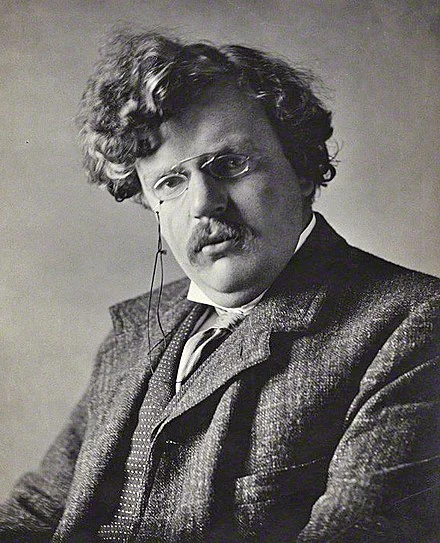
G.K. Chesterton in 1909.
Gilbert Keith Chesterton, always known just as G.K. Chesterton, was a major figure in British literary, artistic and intellectual life in the last years of the 19th century and until his death, in 1936, at the age of 62.
Chesterton was a humorist, a controversialist and a much- loved foil for wits of the day, including George Bernard Shaw, Oscar Wild and H.G. Wells.
He was as physically big as he was prolific: He stood 6 feet four inches and weighed 286 pounds, and wrote 80 books.
His enduring work includes the Father Brown mysteries (the dramatization of which can be seen on PBS), his book in praise of orthodoxy and his defense of tradition in religious service, which led him from the High Church of England to embrace Catholicism. He became a Catholic as an expression of religious orthodoxy.
He was known to board the wrong train and to wire his wife to find out where he should be. Once she replied, "Home."
He said the only way to be assured of catching a train was to miss the preceding one.
Despite his religious stance, he was a lover of fun; warm and endearing.
What I remember of his work, although I have enjoyed his plea for orthodoxy over the years, is his cherishable poem, "The Donkey," written for Good Friday. Every year, I try to share it with as many as possible and have read it on radio and television.
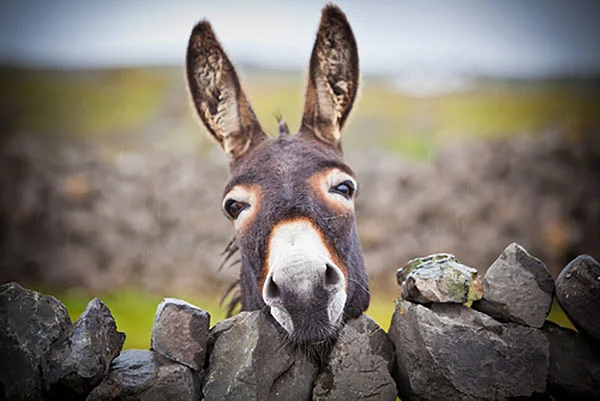
Here it is:
"When fishes flew and forests walked
And figs grew upon thorn,
Some moment when the moon was blood
Then surely I was born;
With monstrous head and sickening cry
And ears like errant wings,
The devil's walking parody
On all four-footed things.
The tattered outlaw of the earth,
Of ancient crooked will;
Starve, scourge, deride me: I am dumb,
I keep my secret still.
Fools! For I also had my hour;
One far fierce hour and sweet:
There was a shout about my ears,
And palms before my feet.''
Llewellyn King is executive producer and host of White House Chronicle, on PBS.
'Marsh at the End of the World'

Sprague River Marsh- Phippsburg, Maine. White line represents study area boundary.
"A gnarled old pine marks the entrance to the Sprague River Marsh {in Phippsburg, Maine}. It is high summer, a short season of riotous green in Maine. But the tree hasn’t taken any cues from the tilting of the planet, the long hours of sunlight, or the sudden warm spike. Its branches extend, empty and bare. This pine must be at least a hundred years old, but as with so many others I saw lining the banks of tidal marshes up and down the coast, too much salt water had too regularly soaked into the ground around the tree’s root system, killing it. On the surface, a single tree might seem inconsequential. But its death is a sign of a much larger transformation—the disintegration of tidal marshes all along the coast.''
From an article by Elizabeth Rush in the magazine Guernica titled "The Marsh at the End of the World:
Wetlands are some of the world’s greatest carbon sinks, and they're starting to rot: from Maine, an investigation of an ecosystem on the brink.''
To read the article, please hit this link.
'Violence Transformed'

"Make Way for Ducklings," by Hope Ricciardi & Dominick Takis, in the "Violence Transformed'' series running through June 4 in galleries around Greater Boston.
"Violence Transformed'' is an annual series of visual and performing arts events currently in its 12th year.
The program's coordinator of performing arts, Hope Ricciardi, explains that the exhibits "specialize in art addressing violence in the community."
For more information on "Violence Transformed'' and its exhibitions for March and April, please visit violencetransformed.com/events.
The title of the picture above refers to Make Way for Ducklings, a famous children's book written and illustrated by Robert McCloskey telling the story of a pair of mallards who decide to raise their family on an island in the lagoon in Boston Public Garden. It was first published in 1941.
Sam Pizzigati: Billionaires like Musk won't save the world

Will we be bar-hopping here soon?
Via OtherWords.org
Will Mars save humanity? Or will our savior be billionaire Elon Musk?
Musk, the CEO of SpaceX and Tesla, humbly believes that we don’t have to choose. Mars will save us, he promises, and Musk himself will engineer this Mars miracle.
In 2019, Musk claims, SpaceX will start making short trips to Mars. By the early 2020s, his company will begin colonizing the Red Planet with a human population.
Why this feverish haste to set foot on interplanetary terra firma?
Musk sees a new “dark age” descending on our precious Earth. Another world war — or some environmental collapse — appears likely to threaten us with extinction, he fears.
Mars strikes Musk as our ideal refuge, the place where humankind will heroically regroup and eventually “bring human civilization back” to our mother planet.
And we can even have some fun in the process. The Mars colony that Musk envisions will have everything from iron foundries to “pizza joints and nightclubs.”
“Mars,” he quips, “should really have great bars.”
Reporters have become accustomed to this sort of visionary whimsy from Musk. The billionaire, In These Times says, has crafted his image as “a quirky and slightly off-kilter playboy genius inventor capable of conquering everything from outer space to the climate crisis with the sheer force of his imagination.”
This carefully cultivated image has proven extraordinarily lucrative.
Investors now value Tesla, his 15-year-old car company, at around $60 billion — not bad, note Wall Street watchdogs Pam and Russ Martens, for a firm that “lost almost $2 billion last year and has never delivered an annual profit to shareholders.”
But Musk remains supremely confident that his enterprise on Mars will take root and prosper. He’s betting a good chunk of his fortune on that.
Or rather, he’s betting a good chunk of taxpayers’ fortune.
Musk owes his billions, as commentator Kate Aronoff points out, to the billions in direct taxpayer subsidies his companies have received over the years — and the billions more in taxpayer-funded research into rocket technology and other high-tech fields of knowledge.
So Musk is essentially investing our billions in his own pet projects, everything from the Mars gambit to establishing a mass-market niche for high-tech flamethrowers.
None of this is going to rescue humanity anytime soon.
Indeed, if Musk really wanted to ensure humankind a sustainable future, he wouldn’t be plotting escapes to Mars or marketing flamethrowers to the masses. He’d be challenging the global economic status quo that’s left him phenomenally rich and our world phenomenally unequal.
This inequality may well pose the greatest threat to our well-being as a species. Stark economic divides invite armed confrontations.
Inequality and conflict, Norwegian scholars observed last year in a major report for the United Nations and the World Bank, remain “inextricably linked.” They found that “inequality influences the outbreak and dynamics of violent conflict,” going all the way back to the ancient Greeks.
In more recent years, researchers have made great strides in understanding the actual pathways in unequal societies that turn conflict violent. But huge gaps in the research are still frustrating our understanding.
What we do know: Hawking high-tech flamethrowers is never going to save humanity. Neither will bar-hopping on Mars.
Sam Pizzigati co-edits Inequality.org, where an earlier version of this appeared. His latest book ,The Case for a Maximum Wage, will be published this spring.
Don Pesci: How to fix Connecticut's fixed-cost problem

"Sisyphys'' (1548–49), by Titian.
Jim Powell asked in an eye-opening piece in Forbes magazine 67 months ago, “How Did Rich Connecticut Morph Into One Of America's Worst Performing Economies?"
A partial answer, freighted with supportive data, has now been advanced in a piece commissioned by The Yankee Institute titled “Above the Law: How Government Unions’ Extralegal Privileges Are Harming Public Employees, Taxpayers And The State."
Everyone, both inside and outside the state, is intimately familiar with the bad news most of us have internally affirmed during the past few decades. Consider the rise in the Connecticut’s “fixed costs,” a fixed cost being one that can be reduced only by extraordinary, politically unlikely efforts: “In 2006, fixed costs constituted only 37 percent of the state’s budget; by 2018 that amount was 53 percent.” In 2016, the Census Bureau reported that Connecticut was one of only eight states to lose population. Fixed costs are strangling the state’s economy and pushing taxpayers and workers out of state.
Chris Powell, who lately retired as managing editor of the Journal Inquirer newspaper, in Manchester, Conn., was asked some time past what should be done about “fixed costs,” to which he replied, “Unfix them.” A fixed cost is one that legislators who have pledged their troths to unions are disinclined to unfix for politically insidious reasons. So long as decision-making in matters of salaries, pensions and benefits remain in the hands of unions negotiating in secret with obliging governors, cowardly legislators subject to reelection will be more than happy to deed their budget responsibilities to others who will "fix costs" so that they then cannot easily be ameliorated by constitutional means.
During Gov. Dannel Malloy’s first term in office, taxes in 2011 increased by $2.5 billion, a record jump that included a 20 percent surcharge on corporate profits. Another $1.3 billion hike occurred in 2015. So onerous are Connecticut taxes that the Tax Foundation “rated the state as 44th in the nation for tax burden, and the second worse – 49th – for property taxes.” Coincidentally, the non-partisan Office of Policy and Management and the Office of Fiscal Analysis showed “a combined downward revision of $1.6 billion in projected tax revenue for fiscal years 2018 and 2019 compared to estimates provided just five months earlier.”
The state was taxing more and getting less, not a surprise to anyone familiar with the law of diminishing returns. At some tipping point in the tax scale, tax increases produce less revenue. Steadily increasing labor costs reduce a state’s ability to meet other more important obligations – especially when the state is averse to implementing long term, permanent reductions in spending.
The late Prime Minister Margaret Thatcher famously said that the trouble with socialism is that “sooner or later, you run out of other people's money.” The same holds true in a progressive state like Connecticut, in which labor costs continue to rise but further taxation is no longer possible because there are limits, economic and political, to taxation . If you cannot reduce labor costs through sensible and necessary measures, and if you cannot meet rising costs through tax increases, the only remaining option open to you, if you are a professional politician, is to commit hara-kiri and deed the intractable problems to your successor – the path chosen by Governor Malloy, who had declined to defend his ruinous policies by running for a third term in office.
The way out of the dark and forbidding forest is the way in – in reverse. Connecticut must move “fixed costs” into the fixable column overseen by elected legislators. This can be done in part by removing pensions and benefits from items negotiated during union-administrative contractual lovefests. Better still, why not allow elected legislators to set all presently negotiated items through statute? By eliminating union contracts and collective bargaining altogether, the General Assembly will simply be reassuming its constitutional obligations; it is the legislature, not the governor in conclave with unions, that is constitutionally obligated to appropriate and expend tax money. It is our elective system of government that holds legislators responsible for getting and spending, and this constitutional authority cannot be farmed out to unions and arbitrators without fatally damaging our republican form of government. Who died in the Constitution State and left unions, arbitrators and cowardly House and Senate leaders our bosses?
In a summary section of “Above The law,” the Yankee Institute provides common sense reforms that, if instituted, “will restore democracy to the Constitution State and secure fairness for taxpayers." These reform measures include: ending the supersedence of labor contracts over state law; prohibiting unelected arbitrators from writing law; promulgating a law requiring unions to undergo regular recertification elections by workers; require the publication and public distribution of all government union reports; limit collective bargaining to wages only; prohibit government employee layoffs based solely on seniority; allow all government workers to opt into union membership every year; at the same time, allow workers to refuse union membership and represent their own interests; enact right-to-work laws for private sector employees now operative in 28 states; eliminate card check and make secret ballot elections the sole method by which workers may select or vote out a union; and lastly, enact meaningful and long term public pension reform.
A government that cannot regulate itself cannot sustain itself as a representative republic, but must eventually become a fixed, inalterable administrative state that abolishes self-rule through constitutionally prohibited means – such as distributing constitutional obligations to unelected bodies unanswerable to the people.
Don Pesci is a Vernon, Conn.-based columnist.

John O. Harney: Comings and goings at New England colleges
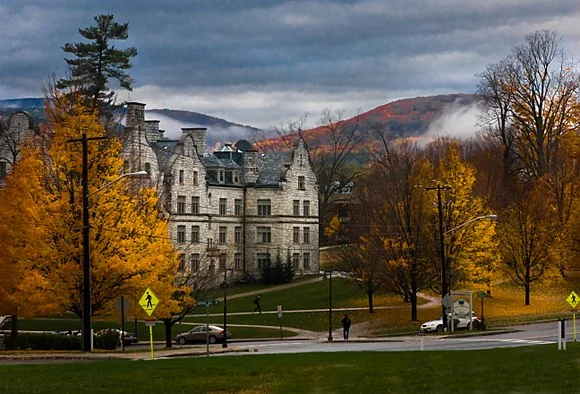
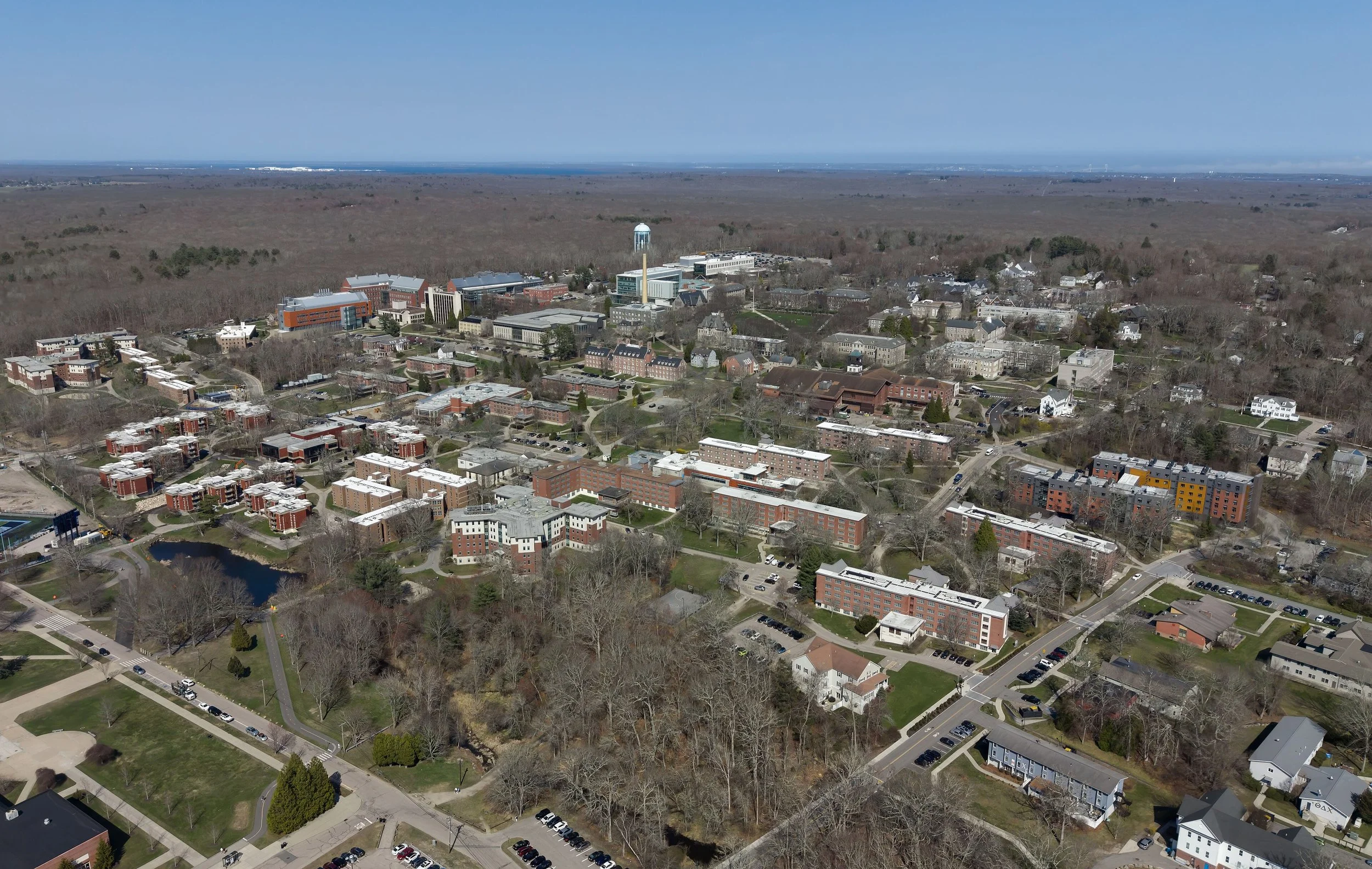
Morgan Hall, at Williams College, in Williamstown, Mass. See the Berkshires in the background. Williamstown has two important museums, among its other beauties -- the Williams College Museum of Art and the Clark Art Institute. The famed songwriter Cole Porter had a house in Williamstown.
Via the New England Board of Higher Education (nebhe.org)
Maud S. Mandel, dean of the college and professor of history and Judaic studies at Brown University, was named president of Williams College, succeeding Protik (Tiku) Majumder, who has served as interim president since Adam F. Falk left the Williams presidency after eight years to be president of the Alfred P. Sloan Foundation.
Massachusetts College of Art and Design Executive VP Kurt T. Steinberg was named president of the Montserrat College of Art in Beverly, Mass., beginning July 1. Steinberg will succeed retiring President Stephen D. Immerman, who led the college for nine years and wrote for NEBHE’s New England Journal of Higher Education about integrating the arts with STEM fields.
Hartford Seminary named Joel N. Lohr, currently dean of religious life at University of the Pacific in Stockton, Calif., to be the seminary's next president, succeeding Heidi Hadsell, who is retiring after leading the seminary for 18 years.
Anthony Poore, director of Regional and Community Outreach at the Federal Reserve Bank in Boston, was named executive director of New Hampshire Humanities. Poore has written for the New England Journal of Higher Education about the Boston Fed's consumer programs in “Counterbalancing Student Debt with ‘Asset Empowerment’” and “Economic Mobility and Baby Talk: Children’s Savings Accounts Mark New Frontier in Paying for College’’.
Endicott College appointed John’s Hopkins University associate dean John Caron to be the college’s provost.
Kathryn Edney, who has served roles at Bowdoin College, Plymouth State University and the University of New England, was named dean of the School of Arts and Sciences at Regis College.
John O. Harney is the executive editor at NEBHE's New England Journal of Higher Education.
Time for for runoff elections
Adapted from Robert Whitcomb's "Digital Diary,'' in GoLocal24.com
With what seems to be a long-term trend of well-known third-party gubernatorial candidates preventing any candidate from getting more than 50 percent of the vote in a general election in some states, including Rhode Island, it’s time for the states to have runoff elections between the two biggest vote getters. The U.S. phenomenon of third-party candidates preventing a candidate in the general election from winning a majority is most entrenched in Maine.
Many Americans would agree with Lee Drutman, writing in Vox:
“{A} two-party system is inadequate to represent the diversity of public opinion. As a result, a lot of voters feel neither party represents them, even if they tend to vote one way or another. Note, for example, that the share of voters identifying as independents hit a record high (tie) of 46 percent in December 2017. The share of voters saying a third party is needed (because Republican and Democratic parties do not do an adequate job of representing the American people) hit a record high of 61 percent in Gallup’s most recent polling on the question.
“The most obvious benefit of ranked-choice voting is that voters can choose the candidate they most want to elect without having to worry so much about the ‘spoiler effect.’’’
“{I}ndependents and third-party candidates could run without being spoilers, giving voters more choices and making for a more vibrant political debate.’’
To read Mr. Drutman’s article, please hit this link.
Chris Powell: More and more taxes to fund Conn.'s 'pension and benefit society'; roommate hate wasn't racial
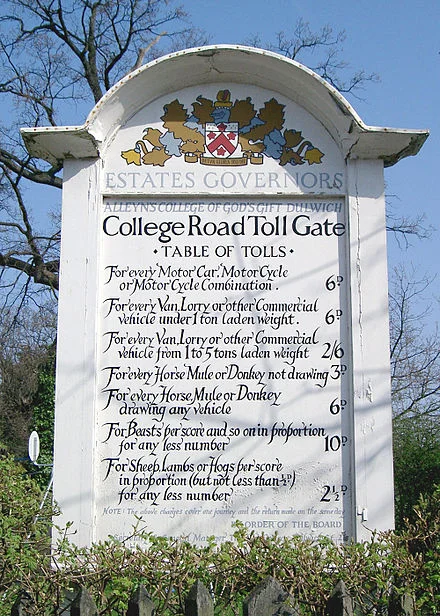
What if half the effort being made by Connecticut Gov. Dannel Malloy and the General Assembly to raise revenue for state government was put into trying to economize? For that matter, what if any effort was?
But that is mere dreaming. The agenda of the governor and the legislature’s Democratic majority is not just to impose highway tolls, raise the gasoline tax, the sales tax, and the cigarette tax and authorize municipalities to impose their own sales tax, but also to expand casino gambling and authorize sports betting, the latter initiatives being regressive taxes, taxes that fall disproportionately on the poor, whom Democrats always profess to be serving.
Advancing these plans last week, the Democrats overlooked the latest scandal of their administration. The University of Connecticut announced that a department head at its medical school was being demoted for not noticing that a professor had disappeared for months while still being paid his $200,000 annual salary. Police say he had been murdered by his wife.
So the department head will lose her title and the $30,000 annual stipend that goes with it but still will be paid $300,000 in salary and another $83,000 per year in fringe benefits -- even more than is paid to the university’s “chief diversity officer,” who, at $220,000 per year, recently warned students that they might need mental health treatment if they encountered conservative political views. She was not demoted.
It seems that the more state government raises revenue, the more oblivious it becomes to its failure to accomplish its nominal objectives, the more it functions mainly as a pension and benefit society. There is an election this year but it already seems too late.
* * *
DUE PROCESS PREVAILS: Hartford Superior Court last week refused to let racial politics interfere with justice. A white former student at the University of Hartford was granted probation for her disgusting abuse of her former roommate, who is black, though the local chapter of the National Association for the Advancement of Colored People clamored to have the perpetrator charged with a hate crime.
The former roommates plainly did hate each other but, as Hartford State’s Attorney Gail Hardy, who is black, told the court, there was no evidence that racial animus was behind the crime. The victim then concurred with the probation.
A legal precedent that white and black college students can hate each other for reasons other than race is modest progress. That a black prosecutor refused to be demagogued by other black people into denying due process of law for a white person was heroic.
* * *
A SETBACK FOR BOUGHTON: Among the candidates for governor, Danbury’s nine-term Republican mayor, Mark Boughton, may be the best prepared, having also been a teacher, state legislator, and municipal association official and possessing a calm demeanor and sense of humor.
But a few months ago Boughton had surgery for a benign tumor on the brain and at a political event last week he suffered a seizure he attributes to poor diet and failure to take medication to prevent seizures. He says he will do better on those accounts while resuming his campaign.
Will the incident hurt his candidacy or just make more people eager to run with him as lieutenant governor? Politics can be like that.
Chris Powell is a columnist for the Journal Inquirer, in Manchester, Conn., and a frequent contributor to New England Diary.
'Windows to the Woods'

Painting by Tamara Gonda in her joint show with Nancy French "Windows to the Woods,'' April 6-May 5, at the Whitty Gallery in the Wild Salamander Creative Arts Center, Hollis, N.H.
The gallery says: "The beauty of the natural world is not lost on these two artists. The peaceful wooded scenes painted by Tamara Gonda are perfectly complemented by the graceful curved branches in the sculptural pieces hand crafted by Nancy French. Celebrate spring with a visit to this exhibit.''
"When I see birches bend to left and right
Across the lines of straighter darker trees,
I like to think some boy's been swinging them.
But swinging doesn't bend them down to stay
As ice-storms do. Often you must have seen them
Loaded with ice a sunny winter morning
After a rain. They click upon themselves
As the breeze rises, and turn many-colored
As the stir cracks and crazes their enamel.
Soon the sun's warmth makes them shed crystal shells
Shattering and avalanching on the snow-crust—
Such heaps of broken glass to sweep away
You'd think the inner dome of heaven had fallen.
They are dragged to the withered bracken by the load,
And they seem not to break; though once they are bowed
So low for long, they never right themselves:
You may see their trunks arching in the woods
Years afterwards, trailing their leaves on the ground
Like girls on hands and knees that throw their hair
Before them over their heads to dry in the sun.
But I was going to say when Truth broke in
With all her matter-of-fact about the ice-storm
I should prefer to have some boy bend them
As he went out and in to fetch the cows—
Some boy too far from town to learn baseball,
Whose only play was what he found himself,
Summer or winter, and could play alone.
One by one he subdued his father's trees
By riding them down over and over again
Until he took the stiffness out of them,
And not one but hung limp, not one was left
For him to conquer. He learned all there was
To learn about not launching out too soon
And so not carrying the tree away
Clear to the ground. He always kept his poise
To the top branches, climbing carefully
With the same pains you use to fill a cup
Up to the brim, and even above the brim.
Then he flung outward, feet first, with a swish,
Kicking his way down through the air to the ground.
So was I once myself a swinger of birches.
And so I dream of going back to be.
It's when I'm weary of considerations,
And life is too much like a pathless wood
Where your face burns and tickles with the cobwebs
Broken across it, and one eye is weeping
From a twig's having lashed across it open.
I'd like to get away from earth awhile
And then come back to it and begin over.
May no fate willfully misunderstand me
And half grant what I wish and snatch me away
Not to return. Earth's the right place for love:
I don't know where it's likely to go better.
I'd like to go by climbing a birch tree,
And climb black branches up a snow-white trunk
Toward heaven, till the tree could bear no more,
But dipped its top and set me down again.
That would be good both going and coming back.
One could do worse than be a swinger of birches.''
-- "Birches,'' by Robert Frost
Historic preservation seen as bonanza for Rhode Island
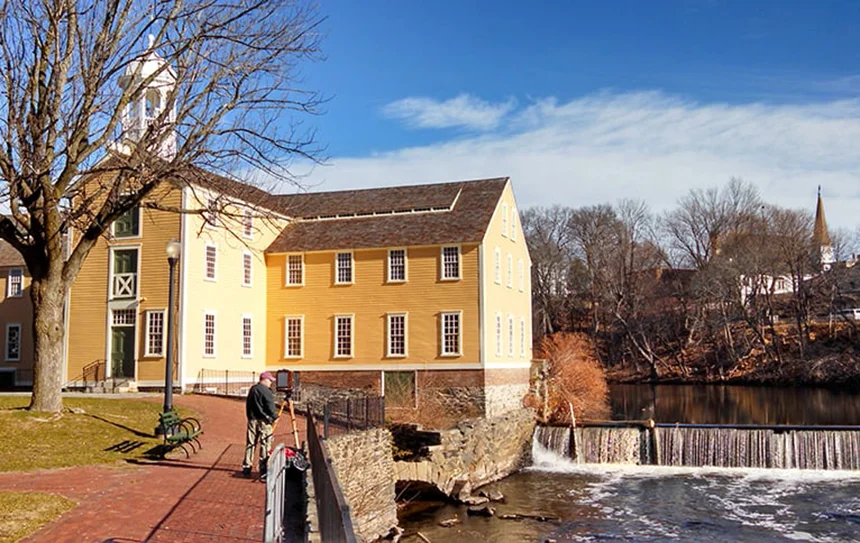
The late 18th Century Slater Mill, in Pawtucket, R.I., is considered one of the birthplaces of the American Industrial Revolution.
From ecoRI News (ecori.org)
Historic preservation pays dividends for Rhode Island’s economy and environment, according to a recent study commissioned by The Preservation Society of Newport County and Preserve Rhode Island. The report by nationally recognized economist Donovan Rypkema of PlaceEconomics is the first to analyze Rhode Island's preservation sector on four main themes: heritage tourism, historic tax credits, quality of life, and sustainability.
“What we found is Rhode Island’s historic cities, towns and neighborhoods attract visitors, residents, businesses and investment,” Rypkema said. “The assets of past centuries are the base of a 21st-Century economy and are often locations of choice for today’s Rhode Islanders.”
Preserve Rhode Island executive director Valerie Talmage noted that the study took a comprehensive look “at the diverse ways in which our lives are positively impacted by historic preservation.”
Some of the key findings in the 37-page report include:
Rhode Island welcomes 9.8 million heritage visitors annually, who add nearly $1.4 billion to the state’s economy.
Spending by heritage visitors creates 19,000 direct jobs, and another 7,000 indirect jobs.
Since 2001, 326 historic buildings have been rehabilitated in 26 of the state’s 39 cities and towns using state historic tax credits.
Every dollar the state invests in a tax-credit project generates $10.53 in economic activity.
Nearly 60 percent of Rhode Island’s population growth since 2000 has occurred within local historic districts, which comprise only 1 percent of the state's land area.
Preservation is green, as the reuse of one 40,000-square-foot historic building is equivalent to taking 24 to 28 cars off the road and preserving 4.2 acres of open space.
“In 1956, Preservation Society founder Katherine Warren said, ‘Historic preservation is an economic asset as well as an aesthetic one.’ This report proves how visionary she really was,” Preservation Society of Newport County executive director Trudy Coxe said. “Historic preservation has become an important economic driver for the state and investing in our historic resources is a direct investment in our future.”
Funding for the study was provided by the van Beuren Charitable Foundation, Rhode Island Historical Preservation & Heritage Commission, and the National Trust for Historic Preservation. Washington, D.C.-based PlaceEconomics is a private sector firm with three decades of experience analyzing the economic impacts of historic preservation.
An all-day conference scheduled for next week will also address the impacts of historic preservation on Rhode Island’s economy.
Grow Smart Rhode Island’s annual Power of Place Summit, March 29 at the Rhode Island Convention Center in downtown Providence, will explore how the state with the “greatest concentration” of historic buildings and neighborhoods in America can capitalize more fully on this strategic asset.
The conversation will attempt to answer this question: How can Rhode Island regain its momentum for redeveloping historic buildings and neighborhoods?
Discussion panelists are: Scott Wolf, Grow Smart’s executive director; Kristin DeKuiper, partner at Holland & Knight LLP; state Rep. Kenneth Marshall, D-Bristol; Kaity Ryan, deputy chief of staff for Preservation Society of Newport County; Clark Schoettle, executive director of the Providence Revolving Fund; and Talmage from Preserve Rhode Island.
Beginning in 2002, the “pace of breathing new life into our state’s bountiful supply of old historic buildings increased when Rhode Island stepped up with an ambitious State Historic Tax Credit program to supplement a similar tax credit at the federal level,” according to Grow Smart.
“Entrepreneurs responded by fixing and re-purposing hundreds of historic buildings — many underutilized or vacant.”
The result attracted new people, business, jobs and vitality to historic centers across Rhode Island. However, momentum slowed when the program was eliminated in 2008 and then was reinstated with limited funding in 2013.
Currently, 32 projects representing a proposed quarter-billion-dollar investment in Rhode Island’s economy remain on the program’s waiting list, according to Grow Smart.
America's fascination with guns

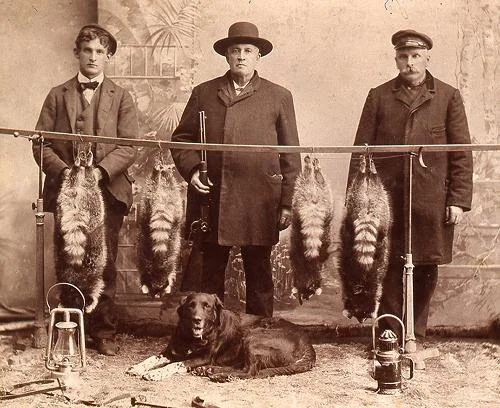
"Coon Hunters'', c. 1895 (toned gelatin silver print), by John G. Ellinwood, in the show "Gun Country,'' at the Addison Museum of American Art, at Phillips Academy, Andover, Mass., through July 31.
This show looks at representations of firearms in the Addison's own collection as a way of analyzing the origins of America's fascination with guns. It's accompanied by "Speaking of Guns," a sound art installation created in collaboration with Phillips Academy students.
The museum says that the objects in "Gun Country" are being shown together for the first time, "inviting discussion on the cultural significance of guns in America and how it has remained strong through the years. In a time when guns are a pervasive and sometimes polarizing topic of discussion in America, 'Gun Country' is a timely examination of how it all began.''
Write here…
Llewellyn King: Time to bring back earmarks?
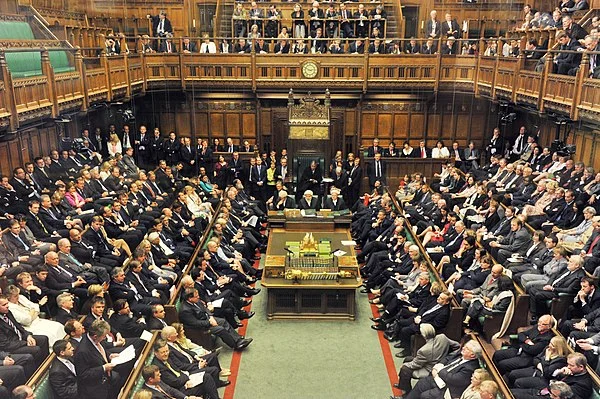
The remarkably intimate House of Commons chamber.
To know what is wrong with Congress, look to Britain. Look to what is wrong with the venerable British system and the House of Commons.
The fact is rank-and-file members of both institutions have little role in government.
In Britain, it has always been accepted that members of Parliament vote with their parties except when there are rare free votes on issues where there is conscience but no policy – for example the vote to abandon the death penalty in 1969, which was a free vote with members voting their consciences.
The sense of the impotence that the British system engenders in ordinary backbenchers was well explained in the autobiography of Matthew Parris, a former Conservative MP who served in the House of Commons when Margaret Thatcher was prime minister. He concluded that he could do much more for Britain out of Parliament and abandoned it to become one of the nation’s most successful political writers and broadcasters. He says of his time in Parliament, “To be an MP is to feed your ego and starve your self-respect.” Political television star and former Republican congressman from Florida, Joe Scarborough, might concur.
Do members of Congress, particularly in the House, feel as frustrated? Many have told me so.
Richard Arenberg, who worked for Democrats on Capitol Hill for 34 years and now teaches at Brown University, told me, “There is not much point in being a member of the House if you are in minority.”
Members of that chamber, particularly in opposition, have insignificant effect on the governance for which they came to Washington to carry out. The outcome on most issues is predetermined by the leadership of the majority.
The U.S. system is tolerant of those who defy the party in a way the British system is not, but we have moved, since the Gingrich Revolution of 1994, to a practice that is closer to parliamentary than it ever has been. We, the leadership decides, you vote.
Members do not control what comes to the floor and are expected to vote with their parties most of the time. They are the proverbial potted plants, revered socially and stunted professionally. They can shine in committee work, but they do not affect the outcome in legislation.
In this system, with the rigidity that has evolved, Congress is not the place to be if you are member without a leadership role.
Therefore, it is no surprise that bipartisanship is so hard to come by these days and compromise has been largely abandoned as a part of the work on Capitol Hill.
Although the parties seethe internally, Democrats tugged between the center and the left, Republicans torn between their center and their right, there is no common ground between them, little bipartisan agreement.
Craig Shirley, a noted biographer of Ronald Reagan, points out that compromise was possible when there were liberal New England Republicans and conservative Southern Democrats. That overlap, he says, is gone and with it, possibility for compromise.
What is to be done? One answer, suggested by President Trump, hinted by House Speaker Paul Ryan and floated around Washington in the think tanks, is to bring back earmarks so that members of Congress can fight for projects for their districts, trade support and have a greater sense of purpose.
Although earmarks, as they became more profligate, got a bad name (the “Bridge to Nowhere” in Alaska) and were denounced by the fledgling Tea Party as congressional sin incarnate, they gave purpose to members -- something to bring home.
At a recent meeting of the American Enterprise Institute, Jason Grumet, founder and president of the Bipartisan Policy Center, said, “What do we have to lose? The current congressional process is broken.”
My guess is that it will happen, if the Tea Party Republicans can be mollified, and it will be an enhancement of Congress, not a diminishment.
You see, there is a bridge I would really like to see built close to where I live, so I can get to the beach faster in summer.
Llewellyn King is executive producer and host of White House Chronicle, on PBS. His e-mail is llewellynking1@gmail.com.
Aetna CEO touts return to community-based healthcare

Via Cambridge Management Group (cmg625.com)
FierceHealthcare reports that Aetna CEO Mark Bertolini “is pushing for a return to community-based healthcare even as the insurance company prepares to merge with retail pharmacy giant CVS.''
“Critics of the merger have said the deal will hurt competition and cut local services. But Bertolini said the $69 billion deal with CVS doesn’t change the fact that the healthcare industry is moving toward a renaissance of community-based care,” the news service reported.
“Everything is going back to community,” Bertolini said at a conference in California. “I think the best way to manage the kind of shift we’re in is to go back to community and build smaller and smaller governance models to help support the growth of this. What you’re in essence building is a marketplace in the community around health.” Aetna is based in Hartford and CVS in Woonsocket, R.I.
To read more, please hit this link.
'Blurred in thin rain'
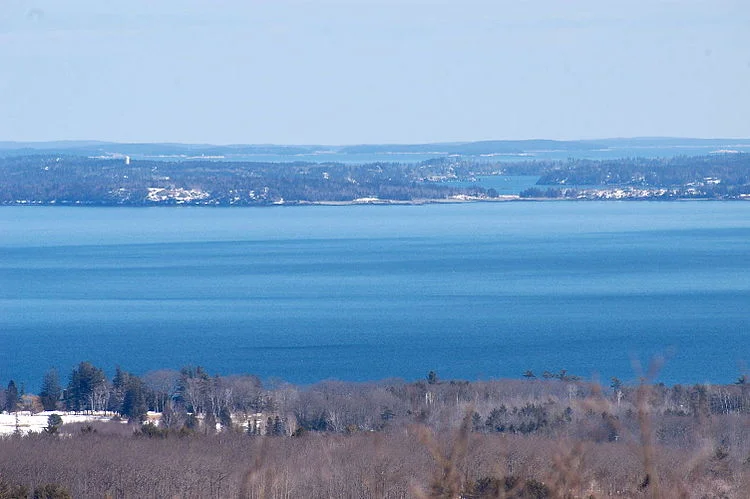
The Thorofare.
“Still weeks to ice-out
in upcountry lakes. Here
on the coast, salt-ice
gets lifted off coves
by gales and steep wave-
lengths. Tides flow hard
between the mainland
and islands. Out in
the Thorofare, two fish-
boats, blurred in thin rain,
march back and forth like
small boys’ small toys’’
From “Beyond Equinox,.’’ by Philip Booth, who spent much of his life in the beautiful mid-coast Maine town of Castine. The "Thorofare'' is the passage between Vinalhaven and North Haven Islands. (It's usually spelled "Thoroughfare''). Castine is the home of the famous Maine Maritime Academy, seen below.
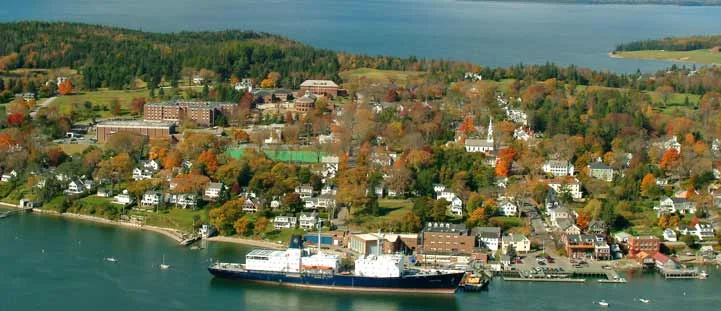

Winter scene in Castine.