
Vox clamantis in deserto




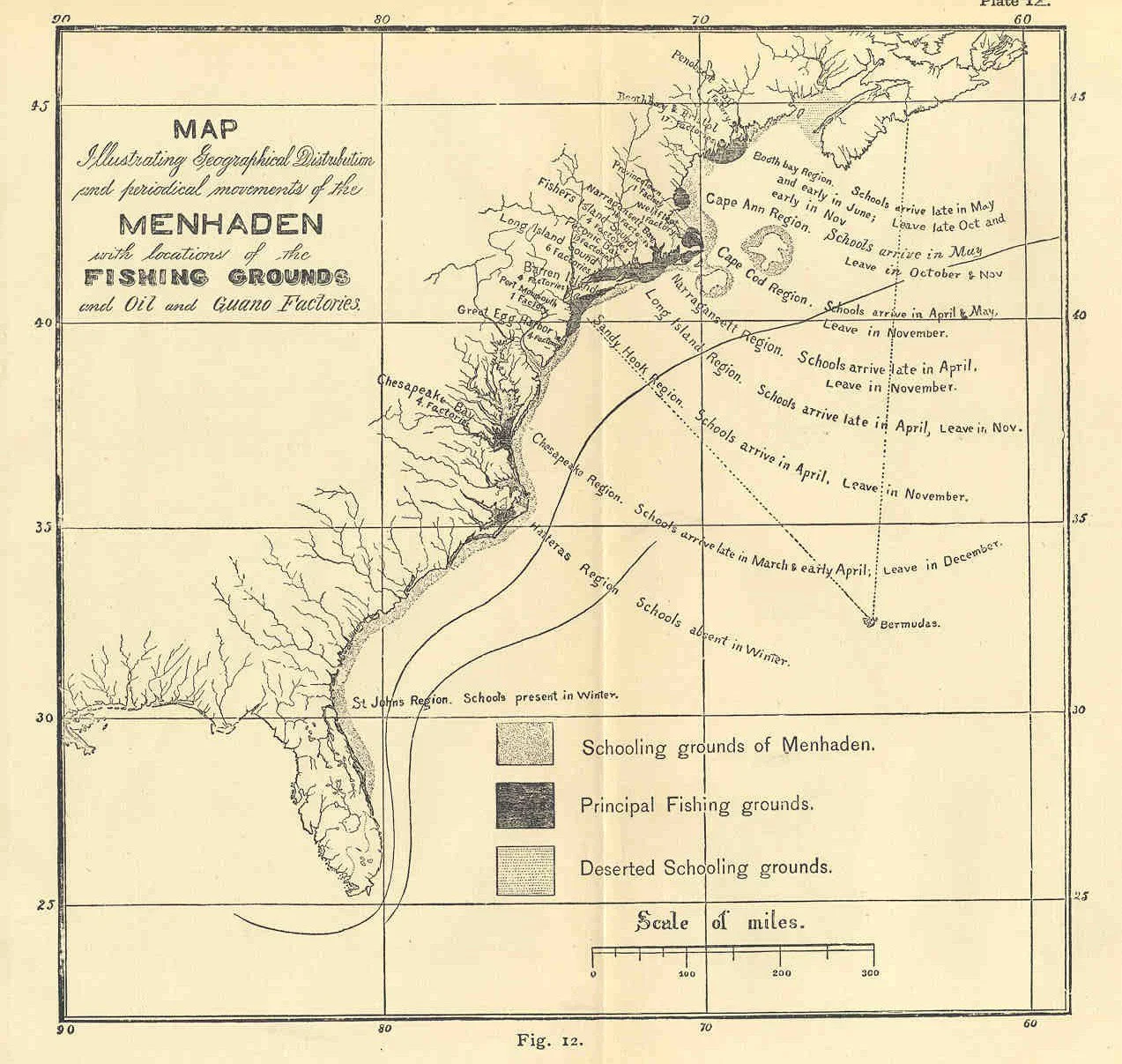

'Gala time' in the 'sugar bush'

"Sugar shack,'' where the sap is boiled to produce syrup, surrounded by its "sugar bush''.
"Then 'sugaring off' was a gala time, with parties in the "sugar bush,'' where dippers of syrup were poured into the snow to harden for the guests....Sweet, sour pickles were often served to whip up jaded appetites. They ate sugar between the buttered layers of pancakes four tiers thick; and songs were sung and jokes were cracked and even the most dour old farmer became genial at the thought that the long cold mountain winter was over and spring would soon be there.''
-- Ernest Pole, on the sugar harvest after the 1938 hurricane, in his book The Great White Hills of New Hampshire (1946)
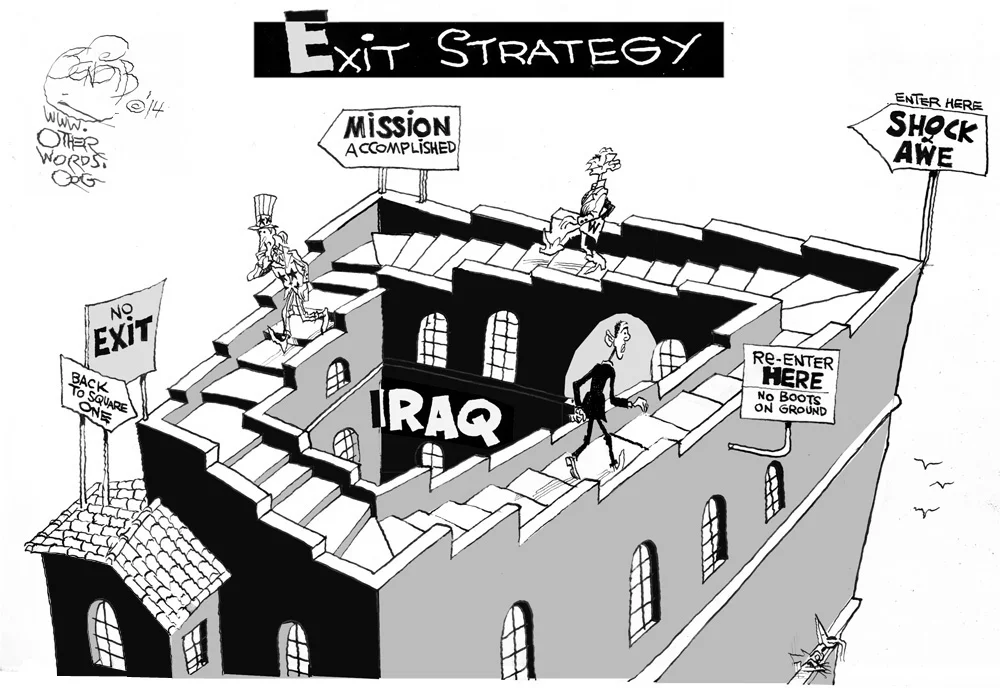
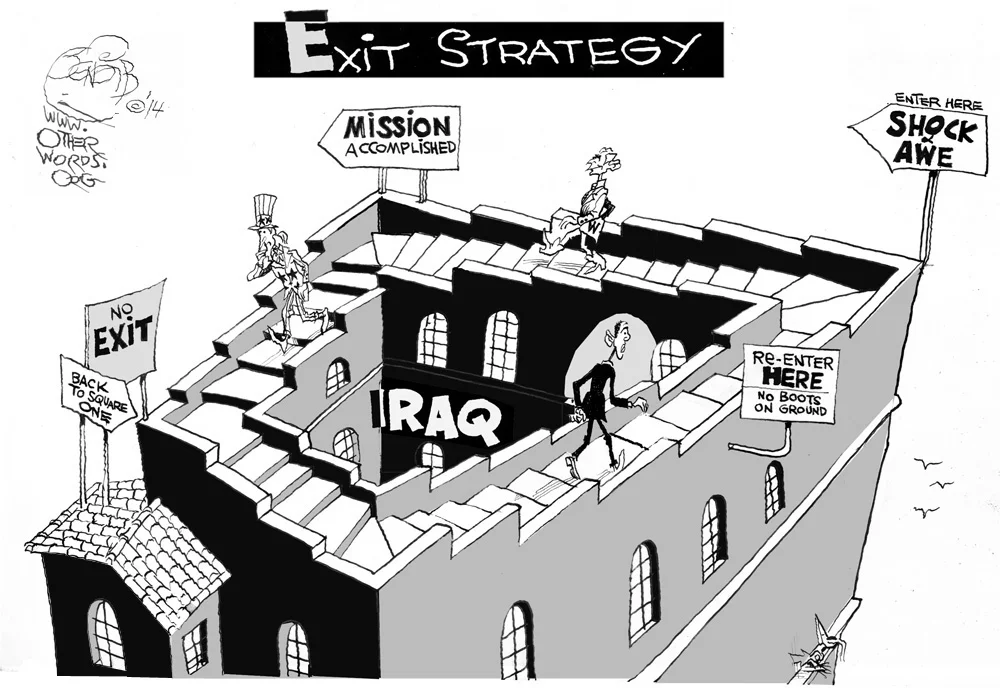
Stephanie Savell: The ongoing vast, devastating cost of the Iraq War
PROVIDENCE
This March marked the 15th anniversary of the U.S.-led invasion of Iraq.
In 2003, President George W. Bush and his advisers based their case for war on the idea that Saddam Hussein, then dictator of Iraq, possessed weapons of mass destruction — weapons that have never been found. Nevertheless, all these years later, Bush’s “Global War on Terror” continues — in Iraq and in many other countries.
It’s a good time to reflect on what this war — the longest in U.S. history — has cost Americans and others around the world.
First, the economic costs: According to estimates by the Costs of War project at Brown University’s Watson Institute for International and Public Affairs, the war on terror has cost Americans a staggering $5.6 trillion since 2001, when the U.S. invaded Afghanistan.
$5.6 trillion. This figure includes not just the Pentagon’s war fund, but also future obligations such as social services for an ever-growing number of post-9/11 veterans.
It’s hard for most of us to even begin to grasp such an enormous number.
It means Americans spend $32 million per hour, according to a counter by the National Priorities Project at the Institute for Policy Studies.
Put another way: Since 2001, every American taxpayer has spent almost $24,000 on the wars — equal to the average down payment on a house, a new Honda Accord, or a year at a public university.
As stupefying as those numbers are, the budgetary costs pale in comparison with the human toll.
As of 2015, when the Costs of War project made its latest tallies, up to 165,000 Iraqi civilians had died as a direct consequence of U.S. war, plus around 8,000 U.S. soldiers and military contractors in Iraq.
Those numbers have only continued to rise. Up to 6,000 civilians were killed by U.S.-led strikes in Iraq and Syria in 2017 –– more civilians than in any previous year, according to the watchdog group AirWars.
In addition to those direct deaths, at least four times as many people in Iraq have died from the side effects of war, such as malnutrition, environmental degradation, and deteriorated infrastructure.
Since the 2003 invasion, for instance, Iraqi health care has plummeted — with hospitals and clinics bombed, supplies of medicine and electricity jeopardized, and thousands of physicians and healthcare workers fleeing the country.
Meanwhile, the war continues to spread, no longer limited to Afghanistan, Iraq, or Syria, as many Americans think. Indeed, the U.S. military is escalating a shadowy network of anti-terror operations all across the world — in at least 76 nations, or 40 percent of countries on the planet.
Last October, news about four Green Berets killed by an Islamic State affiliate in the West African nation of Niger gave Americans a glimpse of just how broad this network is. And along with it comes all the devastating consequences of militarism for the people of these countries.
We must ask: Are these astounding costs worth it? Is the U.S. accomplishing anything close to its goal of diminishing the global terrorist threat?
The answer is, resoundingly, no.
U.S. activity in Iraq and the Middle East has only spurred greater political upheaval and unrest. The U.S.-led coalition is seen not as a liberating force, but as an aggressor. This has fomented insurgent recruitment, and there are now more terrorist groups in the Middle East than ever before.
Until a broad swath of the American public gets engaged to call for an end to the war on terror, these mushrooming costs — economic, human, social, and political — will just continue to grow.
Stephanie Savell co-directs the Costs of War project at Brown University’s Watson Institute for International and Public Affairs.
Watch out for the 'balloon blowers'

From Robert Whitcomb's "Digital Diary,'' in GoLocal24.com
Given that Rhode Island’s economy is generally doing better than it has for years (of course the booming global economy explains much of this), that her administration has not been touched by major scandal (yet) and that she is a very articulate and personable person (more apparent in small groups than in big ones or on TV), Rhode Island Gov. Gina Raimondo’s lack of popularity surprises me.
Some of this is probably Rhode Islanders’ traditional cynicism and distrust of politicians, fueled by past scandals and tribalism. Some of it may be due to the fact that her administration has run a program to attract businesses with tax and other incentives to move to the state, causing some resentment/envy among the businesses already here. I, too, have skepticism about “bribing’’ companies to move to Rhode Island with special deals, preferring to entirely recruit on the basis of the location, quality of the physical and educational infrastructure and that vague but important thing “quality of life.’’
But in the real world, all states wave goodies to lure companies. Maybe if the six New England states agreed not to get into bidding wars with each other it would cut down on tax-incentive brandishing: Promote the region as a whole.
(To read about Vermont’s controversial business incentive program, which may have negative lessons for other New England states, please hit this link):
http://digital.vpr.net/post/can-you-prove-vermont-s-main-business-incentive-creates-jobs-it-s-debatable#stream/0)
And of course she also has to deal with the fallout from the UHIP/Deloitte benefits-payments system disaster, variants of which happened in some other states, too.
But maybe her biggest problem is simply that many see her as a cool technocrat who doesn’t connect with them
Former Sen. and Gov. Lincoln Chafee may run against Ms. Raimondo in the Democratic primary from the left, whose members are, as with the Tea Partiers on the right of the GOP, the most enthusiastic voters. As Richard Nixon, who tended to run from the right but govern in the center or sometimes even center-left, famously put it in a conversation with John Whitaker, an aide:
“The trouble with far-right conservatives … is that they really don’t give a damn about people and the voters sense that. Yet any Republican presidential candidate can’t stray too far from the right-wingers because they can dominate a primary and are even more important in close general elections.”
“The far-right kooks are just like the nuts on the left. They’re door-bell ringers and balloon blowers and they turn out to vote.’’
Mass. companies continue to produce major water pollution

Via ecoRI News (ecori.org)
Industrial facilities dumped excessive pollution into Massachusetts waterways 124 times over 21 months, according to a new report by Environment Massachusetts.
“All of Massachusetts’s rivers and streams should be clean for swimming, drinking water, and wildlife,” said Ben Hellerstein, state director for Environment Massachusetts. “But industrial polluters are still dumping chemicals that threaten our health and environment, and no one is holding them accountable."
The report, "Troubled Waters: Industrial Pollution Still Threatens American Waterways,'' comes as the Trump administration tries to weaken clean water protections and slash enforcement funding for the Environmental Protection Agency (EPA).
In reviewing Clean Water Act compliance data from January 2016 through September 2017, the Environment Massachusetts Research & Policy Center and Frontier Group found that major industrial facilities are regularly dumping pollution beyond legal limits set to protect human health and the environment, in Massachusetts and across the country.
“In thousands of instances, industrial facilities have released more pollution than they were permitted to, but that is just the tip of the iceberg,” said Elizabeth Berg, a policy associate with Frontier Group and one of the authors of the report. “Many facilities have further violated the Clean Water Act by failing inspections, or filing incomplete reports. Our waterways simply need better protection.”
For example, the report found that the Texas Instruments facility in Attleboro, Mass., poured pollutants in excess of its permit limits 13 times into Coopers Pond, including one violation more than 500 percent beyond its permit limits. Wyman-Gordon Co. in North Grafton also exceeded its permit 13 times.
The 10 states with the most exceedances reported by major industrial facilities. (Environment Massachusetts)
"Our rivers and streams are where we go fishing, swimming and boating ... as well as the source of drinking water for many communities,” said Gabby Queenan, policy director for the Massachusetts Rivers Alliance. “At the local, state and federal level, we must do a better job of protecting these essential public resources.”
Over that 21-month period from January 2016 to September 2017, major U.S. industrial facilities released pollution that exceeded the levels allowed under their Clean Water Act permits 8,148 times, according to the 70-page report.
The report also found that during about one-third of exceedances — more than 2,600 times in total — pollutants were being added to waters that were already too polluted for uses such as recreation, fishing or drinking water, hindering efforts to restore them.
Three-quarters of facilities that exceeded their discharge permit limits did so more than once. These polluters seldom faced fines or penalties. Each year from 2011 to 2017, an average of 27,849 facilities were non-compliant across the country, while an average of 13,076, less than half, faced any EPA or state enforcement action.
'Edge of one of many circles'

Male red-winged blackbird
I
Among twenty snowy mountains,
The only moving thing
Was the eye of the blackbird.
II
I was of three minds,
Like a tree
In which there are three blackbirds.
III
The blackbird whirled in the autumn winds.
It was a small part of the pantomime.
IV
A man and a woman
Are one.
A man and a woman and a blackbird
Are one.
V
I do not know which to prefer,
The beauty of inflections
Or the beauty of innuendoes,
The blackbird whistling
Or just after.
VI
Icicles filled the long window
With barbaric glass.
The shadow of the blackbird
Crossed it, to and fro.
The mood
Traced in the shadow
An indecipherable cause.
VII
O thin men of Haddam,
Why do you imagine golden birds?
Do you not see how the blackbird
Walks around the feet
Of the women about you?
VIII
I know noble accents
And lucid, inescapable rhythms;
But I know, too,
That the blackbird is involved
In what I know.
IX
When the blackbird flew out of sight,
It marked the edge
Of one of many circles.
X
At the sight of blackbirds
Flying in a green light,
Even the bawds of euphony
Would cry out sharply.
XI
He rode over Connecticut
In a glass coach.
Once, a fear pierced him,
In that he mistook
The shadow of his equipage
For blackbirds.
XII
The river is moving.
The blackbird must be flying.
XIII
It was evening all afternoon.
It was snowing
And it was going to snow.
The blackbird sat
In the cedar-limbs.
"Thirteen Ways of Looking at a Blackbird,'' by Wallace Stevens
Set up 'microgrids'

A microgrid with renewable energy resources in grid-connected mode.
From Robert Whitcomb's "Digital Diary,'' in GoLocal24.com
With recent storms and widespread power failures in eastern New England reminding us of the fragility of our regional electricity grid, many experts are looking at creating more “microgrids.’’ Those are localized groups of electricity sources that normally operate connected to the traditional centralized electrical grid but can also be disconnected to "island mode" and function autonomously. Of course the storms are also leading many consumers to buy gas or diesel generators and/or to take the big step of installing their own green source of power – especially rooftop solar panels.
We’re unlikely to experience fewer storms in the future, and the tops of New England’s glorious big and heavily leafed (for six months a year) deciduous trees are thick over many electrical lines. I doubt if the public would be willing to pay to bury them all!
A city for genealogists and antique dealers?

Part of the Boston skyline seen from Memorial Drive, Cambridge.
"Harvard (across the river in Cambridge) and Boston are two ends of one mustache. ... Without the faculty, the visitors, the events that Harvard brings to the life here, Boston would be intolerable to anyone except genealogists, antique dealers, and those who find repletion in a closed local society.''
-- Elizabeth Hardwick (19176-2007), critic and essayist.
Editor's note: Things have changed a lot in Boston recent decades, and it's now a very dynamic and globalized city
Lord of the North Shore

This looks like something from Brideshead Revisited. It's the Crane Estate, in Ipswich, Mass., built by plumbing-fixture mogul Richard T. Crane in the 1920s. The 59-room structure is sometimes open for tours. See: www.thetrustees.org.
It's close to the exquisite Crane Beach -- four miles of fine-grain sand backed by pitch pine forest on Ipswich Bay that's protected by a wildlife preserve. It's also close to the beautiful but often storm-battered Plum Island, named for the beach plums that flourish there. (See picture below.) But who knows if Plum Island will be there in a century, given rising seas and seemingly more frequent Nor'easters?

u\
At least once a week

"Island Storm'' (oil on canvas), by Sandys Moore, at Alpers Fine Art, Andover, Mass.
Progress is a two-way street

From Robert Whitcomb's "Digital Diary,'' in GoLocal24.com
Sometimes a city can take relatively simple and inexpensive measures to make itself more popular and prosperous. For example, it can improve its signage, clean up graffiti more quickly and punish the perpetrators – and turn more one-way streets into two-way streets.
The last has been generally shown to increase a city’s overall employment, reduce crime and accidents, boost the quantity and quality of housing (including hotels) and expand such sectors as food, entertainment, the arts and professional services.
Now, some might complain that two-way streets make downtowns too crowded. But crowded cities are safer and more dynamic than less densely populated ones. And those with lots of street life 24/7 are the best. That’s a good reason to replace as many surface parking lots as possible with buildings (even if they’re parking garages). The fewer gaps between buildings the better. For an interesting discussion of the pros and cons of two-way streets, read this CityLab piece, co-authored by Richard Florida, who has written a lot about downtown Providence, among other old cities.
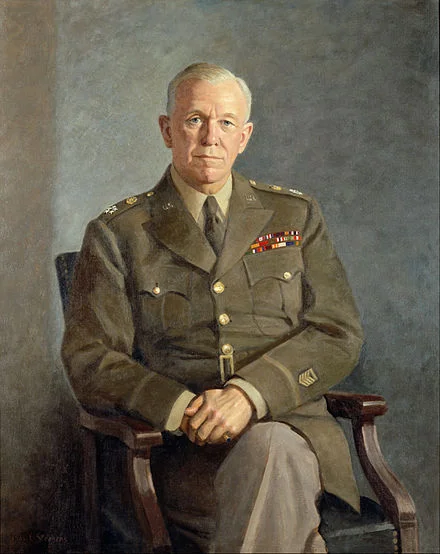
David Warsh: The other Marshall Plan
SOMERVILLE, MASS.
Rex Tillerson never had a chance to become the pretty good secretary of state that he might have become. As the president who fired him with a Tweet explained: “We were not really thinking the same…. Really, it was a different mind-set, a different thinking.”
The diplomatic press corps seemed credulous in agreeing with their sources, career Foreign Service officers, that, whatever else, that Donald Trump had been elected should not affect the conduct of their mission.
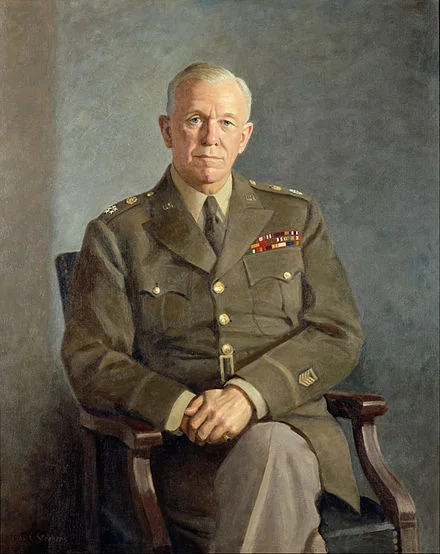
In the last melancholy week, while thinking about the tasks that the next president will face, whoever it may be, it was good to have two quite different books to read about one of the greatest secretaries of state, the revered George Marshall, who, having served as first acting and then actual Chief of Staff of the U.S. Army from 1939 until 1945, was Secretary of State from 1947 until 1949. (He stepped in for a year as Secretary of Defense, in September 1950-51).
On the next to last page of The Marshall Plan: The Dawn of the Cold War (Simon & Schuster, 2018), economist Benn Steil draws the moral of his book: “In contrast with the earlier Cold War period, the post-Cold War period has been marked by the absence of an American Grand Strategy, a calibrated mapping of means to large ends.”
The first 375 pages of Steil’s book describe with a flair for drama how that mapping was undertaken, and with what result. His account of the political foundations seems certain to become a standard reference work for many years to come.
The last 25 pages of the book, in a chapter called “Echoes,” describe the improvisation that has served since 1990. Steil’s reflections are a curtain-raiser – a full-blown overture, I suspect, given that he is a popular historian and senior fellow at the Council of Foreign Relations – to a debate that is bound to happen about the wisdom of NATO enlargement after 1990 to the very boundaries of Russia.
It’s a pity, then, that Steil’s publisher didn’t devise a title to convey the real significance of his story. But the aid package was only the softer half the U.S. strategy that underpinned containment. The North Atlantic Treaty Organization, a military alliance formed originally by a dozen Western nations two years after Marshall’s famous Harvard University commencement address in 1947, was the other half. Steil summarizes the way the strategy evolved:
"Over the course of 1946 and 1947 the United States developed a framework of Soviet containment to safeguard its interests without appeasement or war. It then devised the Marshall Plan as the most promising means, given Soviet conventional military supremacy in Europe, and a large American edge in economic power, to implement it. When France and Britain averred that economic integration made Marshall nations more dependent on each other and less able to defend themselves against hostile action by Russia or Germany, the United States responded with NATO. Together the Marshall Plan and NATO provided the means to carry out containment.
"The grand strategy of containment worked – there is no longer much argument about that. Steil respectfully examines historian Alan Milward’s critique of Marshall Plan triumphalism and concludes that the proposition that 'less food and more Germany would have worked better is 'farfetched.”'
Arriving at his “Echoes” chapter, and the question of NATO’s Cold War afterlife, Steil is only a little less certain. After describing how Secretary of State Madeline Albright chose Harvard’s commencement on the 50th anniversary of Marshall’s address to tout NATO enlargement, he writes,
If historical anniversaries were important for NATO expansion, waiting two years for the 80th anniversary of the Versailles Treaty would have been more apposite. The treaty heaped humiliations on Germany after World War I with no clear end in sight, and help ed create the economic and political conditions that led to World War II. Having improbably abandoned communism for democracy, and capitalism in a near bloodless revolution, Russians were, 10 years after the fall of the Berlin Wall, feeling similarly humiliated and threatened by an unexpected Western military advance towards their borders.
China hardly comes up in Steil’s book. Further good news, then, is the arrival of The China Mission: George Marshall’s Unfinished War 1945-1947 (Norton, 2018), by Daniel Kurtz-Phelan, a former Foreign Service officer and executive editor of Foreign Affairs.
It has been nearly forgotten, but between his wartime years and his term at Foggy Bottom, Marshall spent 17 months in China, trying to mediate between the national government of Chiang Kai-shek and the Red Army of Mao Zedong.
He failed, of course. But what a romantic story Kurtz-Phelan makes of it!
Some 400 pages by Steil on Russia, another 360 pages about China – who has time to properly read these books? Not me. I race through the first and the last chapters, rely on the indices for the rest, and stop when I am confident that, at least, I have understood the author’s point of view.
I’ll tell you this, though: I will take The China Mission to Michigan with me this summer, because I so enjoyed Barbara Tuchman’s Stillwell and the American Experience in China 1911-1945 (1971) many years ago: those years in China were, after all, a romantic time. Kurtz-Phelan has written his book in the same vein, and with an even more compelling figure at the center of it.
Moreover, the aftermath of the mission – the Who-Lost-China? controversy that poisoned political lives in the U.S. for the next 20 years – is a warning about the kind of harm that can ensue if the coming debate over NATO enlargement takes the wrong turn.
Indeed, you’ll understand by the end of the book what President Lyndon Johnson was thinking (and, if you know something about it, how mistaken he was) when he asserted that U.S. foreign policymakers had “lost their effectiveness from the day that the Communists took over China” and concluded therefore “I knew that all these problems, taken together, were chicken shit compared with what might happen if we lost Vietnam.”
The other Marshall Plan, then, was to know when to fold ’em. A less judicious adviser could have started a whole new war, committing U.S. troops to battle on the Chinese mainland in 1946, instead of five years later, in very different circumstances, in Korea.
After one last attempt, in late December 1946, to persuade Chiang to govern his cities rather than seek to engage the rebels on the battlefield, Marshall cabled President Truman that the Chinese leaders were not going to end their civil war. “It is quite clear to me that my usefulness here will soon be at an end, for a variety of reasons.” Truman called him home days later.
The story should be reassuring, Kurz-Phelan concludes. “Even at the height of its power, when it had just led the Allies to victory in World War II and accounted for nearly half of the global economy, America could not solve every problem….” But even then, “America did not have to solve every problem to show it was strong.”
David Warsh, an economic historian and long time political, historical and economic journalist, is proprietor of eonomicprincipals.com, based in Somerville.
A grand tour of some grand New England houses

William (“Willit’’ ) Mason, M.D., has written has a delightful – and very handy -- book rich with photos and colorful anecdotes, called Guidebook to Historic Houses and Gardens in New England: 71 Sites from the Hudson Valley East (iUniverse, 240 pages. Paperback. $22.95). Oddly, given the cultural and historical richness of New England and the Hudson Valley, no one else has done a book quite like this before.
The blurb on the back of the book neatly summarizes his story.
“When Willit Mason retired in the summer of 2015, he and his wife decided to celebrate with a grand tour of the Berkshires and the Hudson Valley of New York.
While they intended to enjoy the area’s natural beauty, they also wanted to visit the numerous historic estates and gardens that lie along the Hudson River and the hills of the Berkshires.
But Mason could not find a guidebook highlighting the region’s houses and gardens, including their geographic context, strengths, and weaknesses. He had no way of knowing if one location offered a terrific horticultural experience with less historical value or vice versa.
Mason wrote this comprehensive guide of 71 historic New England houses and gardens to provide an overview of each site. Organized by region, it makes it easy to see as many historic houses and gardens in a limited time.
Filled with family histories, information on the architectural development of properties and overviews of gardens and their surroundings, this is a must-have guide for any New England traveler.’’
Dr. Mason noted of his tours: “Each visit has captured me in different ways, whether it be the scenic views, architecture of the houses, gardens and landscape architecture or collections of art. As we have learned from Downton Abbey, every house has its own personal story. And most of the original owners of the houses I visited in preparing the book have made significant contributions to American history.’’
To order a book, please go to www.willitmason.com
Chris Powell: Hypocritical nonsense in debate over Conn. chief justice nomination
Arguing this week for Gov. Dannel Malloy's nomination of Associate Justice Andrew J. McDonald to be chief justice of Connecticut's Supreme Court, state Rep. William Tong (D.-Stamford), co-chairman of the General Assembly's Judiciary Committee, fed the state House of Representatives a lot of nonsense.
"We are not in a position of second-guessing judges," Tong said. "We must honor the separation of powers. If we don't, we compromise the independence of the judiciary."
But if it's wrong for legislators to second-guess judges, why does Connecticut's Constitution give the General Assembly the power to appoint and reappoint them, just as the U.S. Constitution gives Congress the power to appoint judges? By what criteria should legislators decide judicial appointments?
Tong and other backers of McDonald, nearly all of them political liberals, maintain that experience, ability, and character should be decisive, not what nominees have done or are likely to do in office.
By this standard the country should have obediently accepted forever the U.S. Supreme Court decisions in Dred Scott v. Sandford (once a slave, always a slave), Plessy v. Ferguson (racial segregation is OK), and Lochner v. New York (labor conditions can't be regulated by government), and should obediently accept forever the court's decisions in Citizens United v. Federal Elections Commission (corporations have First Amendment rights) and District of Columbia v. Heller (individuals have Second Amendment rights).
Of course McDonald's supporters don't really believe their own argument. None would argue that President Richard Nixon's Supreme Court nominations of Judges Clement F. Haynsworth Jr. and G. Harrold Carswell, former segregationists, should have been confirmed by the U.S. Senate just because of their experience and good character, nor that Judge Robert H. Bork, nominated to the court by President Ronald Reagan, should have been confirmed, though he was a brilliant scholar and was faulted only for holding that constitutions should be construed as they were originally understood.
The Senate rejected those nominees for political reasons -- they were seen as too conservative and interventionist -- and all of liberalism cheered. But Connecticut is being told that judicial nominees must not be opposed for being too liberal and interventionist.
As for Tong's supposed concern for the separation of the powers of government, Connecticut's Supreme Court long has been separating the legislature from its powers. That's what the court's recent decision purporting to find capital punishment unconstitutional was about, a decision in which McDonald concurred.
In fact the separation of powers of the branches of government applies only to the exercise of those powers, not their definition, which is left to the state and federal constitutions and to statute. Deciding on judicial nominations does not violate the separation of powers.
As for judicial independence, that applies to deciding individual cases, not to the wholesale rewriting of constitutions, as the state Supreme Court did in the capital punishment case.
With the latest long-term master contract for the state employee unions, Governor Malloy has put their expensive privileges beyond control through the ordinary democratic process for a decade.
Judicial terms in Connecticut are eight years, so if McDonald is appointed chief justice, the governor may have guaranteed liberal interventionism on the court for nearly as long.
That would be more of a legacy than most governors leave.
Chris Powell is a columnist for the Journal Inquirer in Manchester, Conn., and a frequent contributor to New England Diary.
Impatience time

Apple orchard in Hollis, N.H.
“Pruning the apple tree I scatter
Its suckers and twigs across wet snow.
March wind honeycombs the drifts,
and when my work is done I stand
in an attic window close
to spume of driven clouds.’’
-- From “A Season’s Edge,’’ by T. Alan Broughton (1936-2013), a Vermont poet and pianist.
Are N.H. state liquor stores facilitating money laundering?

From Robert Whitcomb's "Digital Diary,'' in GoLocal 24.com
The logo of the New Hampshire Liquor Commission. The global shape represents the worldwide products the commission sells, the triangular shape the shape of the state, and the "L" shape for "liquor".
Most adult New Englanders know about New Hampshire’s highly lucrative state liquor stores, the revenue from which helps the Granite State avoid having state income or sales taxes. The New Hampshire Liquor Commission had a staggering (for a small state) $698.2 million in sales last year.
Consumers drive from all over the Northeast to buy cheap booze in New Hampshire.
But now, it turns out, there may be funny business, with Andru Volinsky, a member of the state’s Executive Council, calling for an investigation of the commission for, he says, enabling out-of-state bulk purchases and perhaps breaking federal tax laws. Mr. Volinsky tells New Hampshire Public Radio that the commission’s practices could “unquestionably facilitate money laundering related to criminal activities.’’
Whenever government sets itself up as a business, whether in liquor or gambling (as with state lotteries and state-government overseen casinos) the potential for associated crime should be obvious.
To read the New Hampshire Public Radio article, please hit this link:
Chuck Collins: Some business leaders agree that reducing inequality is good for the bottom line
For decades, big business leaders have warned that redistributing wealth is bad for business. Taxing the rich to pay for infrastructure and education, they say, will kill the goose that lays the golden egg.
But what if it’s the opposite? What if decades of stagnant wages and growing inequality are scrambling the golden egg and stifling the economy?
A growing body of research suggests that’s exactly what’s happening. And a growing number of business leaders now agree.
Jim Sinegal, the retired CEO of Costco, famously fended off Wall Street pressure to cut wages and made an eloquent case for a higher federal minimum wage. “The more people make, the better lives they’re going to have and the better consumers they’re going to be,” Sinegal told The Washington Post years ago.
“Our country needs less inequality and more opportunity,” agreed former Stride Rite CEO Arnold Hiatt in 2015. “Instead, we’re moving toward a society that will be economically and politically dominated by the sons and daughters of the Forbes 400.”
One of the clearest voices on the business risks of growing inequality is Peter Georgescu, a retired ad man from one of the world’s largest marketing firms. His new book, Capitalists Arise: End Economic Inequality, Grow the Middle Class, Heal the Nation, is a stinging indictment of the way business has been done in our country.
“For the past four decades, capitalism has been slowly committing suicide,” he writes — especially shareholder capitalism, where businesses operate for the benefit of shareholders and no one else.
“Shareholder primacy has become a kind of cancer that needs to be eradicated before it destroys our way of life,” Georgescu warns.
Those views were recently echoed in a letter written to CEOs by Larry Fink, chairman of the investing giant Blackrock.
In January, Fink called on the companies Blackrock invests in to “understand the societal impact of your business as well as the ways that broad, structural trends — from slow wage growth to rising automation to climate change — affect your potential for growth.”
Businesses, Fink exhorted, need a social purpose other than making money.
Reversing inequality will require robust government action at all levels. This includes boosting the minimum wage, fairly taxing big businesses and the rich, and making robust public investments in education, infrastructure, and individual opportunity.
We also need government to crack down on wage theft and discrimination, and to protect the right to organize. Unions and activists have demanded these changes for years.
So what can supportive businesses do? Everything.
They can encourage more employees to be owners. Employees already have an ownership stake at companies such as Publix supermarkets and Southwest Airlines.
They can raise their wage floor to close the monstrous pay gap between top management and average workers — a policy long supported by business guru Peter Drucker. And they can publicly speak out in favor of policies that reduce inequality.
If nothing else, they can stop paying dues to business associations that lobby against sensible taxes and labor protections — like the U.S. Chamber of Commerce and the National Federation of Independent Businesses, which tend to be much more conservative than their members.
Can more business leaders “wake up and take action,” Georgescu challenges? Or will they “continue doing business the ways it’s been done… until the whole system risks falling apart?”
Corporate leaders should stand with ordinary Americans to push for serious public policy to halt the nation’s slide towards greater inequality.
Chuck Collins directs the Program of Inequality and the Common Good at the Institute for Policy Studies.
Once the sardine capital

Union Dock in Eastport, Maine, in 1910.
"On a boat cruising down east, sardines are scooped out of the holding seine at Eastport {Maine} at dawn. 'Sardines' may be any of several species of fish; in Maine they are usually small herring. Fish are penned in nets until the boats are ready to load. The fish are taken a short distance to canneries which work round the clock, according to the time of the catch.''
Luis Marden (1913-2003), American writer, explorer and photographer.
Eastport used to be America's sardine capital but its last sardine fishery closed in 2010.
Blue Cross Blue Shield in plan to expand Metro Boston bike-sharing

Zagster bike-sharing station on a corporate campus in Burlington, Mass.
This is from the New England Council (newenglandcouncil.com)
"Blue Cross Blue Shield of Massachusetts (Blue Cross) recently entered a six-year partnership agreement with the Metropolitan Area Planning Council and bike share operator Motivate International, Inc. to expand access to bike share in the metro Boston region.
"The existing Hubway system will be rebranded as Blue Bikes to reflect Blue Cross’ support for expanding the bike share system. Currently there are 1,800 bikes, but with Blue Cross’ sponsorship there 3,000 Blue Bikes by the end of 2019, and more than 100 new stations. Blue Cross’ support will bring brand new bikes, new mobile app features, and more valet service at busy stations. The expansion and transition to Blue Bikes will begin in spring 2018.
“We’re delighted to partner with Boston, Cambridge, Brookline, and Somerville on the Blue Bikes initiative. . . Not only are we helping to expand bike share access to communities that have long been asking for the program, we’re also living up to our company’s commitment to healthy living and to environmental sustainability,” said Andrew Dreyfus, president and CEO of Blue Cross Blue Shield of Massachusetts. The bike sharing system will remain operated by Motivate and owned by the municipalities of Boston, Cambridge, Brookline, and Somerville.''
Chris Powell: Free college is just a ploy; go local, not regional
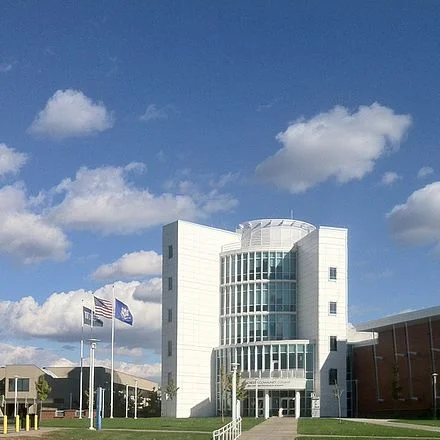
The arts, technologies and science center at Manchester Community College.
MANCHESTER, Conn.
Connecticut state government's great new "bipartisan budget" is already $250 million in deficit and budget deficits in the billions are forecast for years to come, but Democratic leaders in the state Senate are proposing to make community college free for students. Mere taxpayers would pay an extra $30 million or so per year.
Many Democratic legislators also favor making state financial aid available to illegal immigrant students in college.
Meanwhile state government's financial support for the innocent needy is in danger of being cut, and a commission appointed to study state government's financial trouble has just urged saving money.
So why are the Democrats so calculatingly oblivious, so intent on reminding people that they remain the Party of Free Stuff, as if anything really is free and as if state government's financial trouble and the contraction of the state's economy haven't been caused in large part by too much free stuff?
The Democrats are doubly oblivious about free community college because Connecticut's education problem is not higher education but primary education. Standardized tests show that most of the state's high school students never master high school math and English but are graduated anyway. Many then are admitted to public colleges only to take remedial courses. A Superior Court judge surveying the state's primary education system reported 18 months ago that high schools are graduating illiterates.
The Democrats say free community college will help the state's employers, who lack qualified applicants. But improving outcomes in primary education, through which everyone goes, would help employers more than free college when so many college students just repeat high school in pursuit of another false credential.
Indeed, in these circumstances free college is less a gift to students than to educators, whose unions dominate the Democratic Party. The proposal is another ploy to rile up the party's base.
xxx
TRY LOCALISM, NOT REGIONALISM: Pushing regionalism again in a series at the Connecticut Mirror this month, veteran journalist Tom Condon approvingly quotes a Massachusetts mayor who says a region that wants to prosper has to "act like a region." But Condon proposes little more than the politically correct groupthink of creating regional governments and giving them taxing authority on top of the taxing authority of state and municipal governments.
What advocates of regionalism don't notice is that Connecticut already has tried plenty of regionalism.
That's what state government is, with all its laws and policies outlawing or impairing democratic control of expenses, like binding arbitration of government employee union contracts, defined-benefit pensions for government employees, "prevailing wage" requirements for government construction projects, and the state Board of Mediation and Arbitration's forbidding dismissal of government employees even for the worst misconduct.
More regionalism would mainly let the corrupt and incompetent city governments, which dominate state government through their influence in the majority party, grab more taxes from suburbanites.
In these circumstances the chance of improvement in Connecticut would be greater with more localism, letting municipalities opt out of expensive state mandates that serve only special interests.
Even as Condon was writing his series, New Haven Mayor Toni Harp proposed raising her city's property tax rate by 11 percent rather than aggravate the city's government and welfare classes with too much economizing. Why should anyone outside New Haven want more of that?
Chris Powell is a columnist for the Journal Inquirer in Manchester, Conn., and a frequent contributor to New England Diary.

Artists' personal scenery

Images from the group show "Scapes'' at Galatea Fine Art, Boston, April 4-29. From left, work by Barbara Lindstrom, Carol Wontkowski and Christina Beecher.
Galatea says:
'''Scapes' is a members group show incorporating the works of photography, painting, sculpture, and mixed media. All artists use the idea of 'Scapes' in their works in a variety of ways: landscapes, mindscapes, places to escape to/from, and interpret what these scenarios mean to them.
"'Scapes,' a term extracted from landscape, denoting an extensive view, is represented in a variety of ways in this interdisciplinary exhibition featuring the works of six gallery artists. Representing many forms of scapes -- landscapes, seascapes, skyscapes, dreamscapes, mindscapes -- the mixed media exhibition conveys a sense of place and fresh imaginative views of the artist's personal scenery.''