
Vox clamantis in deserto






Jill Richardson: Time for an honest talk about 'free trade'

Via OtherWords.org
America, can we talk? We need to talk about “free trade.” We’ve needed to have this conversation for a while, actually. Like, since the 1980s.
For the past several decades, the U.S. political establishment has advocated free trade as part of a broader economic ideology called neoliberalism.
Now, you may need to ignore the word “liberal” in there — its meaning here is different from how most people use it in our politics.
Neoliberalism is not a Democratic idea. Ronald Reagan was a huge champion of it. In more recent decades, all of our presidents from both major political parties were on board with it — until, to some extent, Trump.
The simple way to understand neoliberalism is that it’s the package of economic and trade policies the U.S. has lived under since the Reagan administration. Deregulation. Privatization. That sort of thing.
One pillar of neoliberal ideology is free trade.
In business school, I was taught not to question it. The idea was that if countries removed trade tariffs, then everyone would benefit.
Each country would produce what it’s most “efficient” at producing: Developing nations will manufacture goods with cheap labor. The U.S. will grow lots of corn and soybeans and export them. And everyone wins because there will be low prices.\
The counter arguments are often humanitarian and environmental. If we’re going to buy clothing and iPhones from nations with cheap labor, lax environmental laws, and few labor rights, then the people who make the goods we buy will work in unsafe and inhumane conditions.
That’s essentially what happened.
For example, in 2013, a building housing garment factories in Bangladesh collapsed, killing 1,134 people and injuring thousands more. Cracks had appeared in the building before it collapsed, and an engineer declared it unsafe. Factory owners ordered their workers back to work — and then the building collapsed.
The workers were producing clothes for export, including top U.S. brands. But, on the upside (say the neoliberals), clothing made in Bangladesh is nice and cheap in the United States.
Also, corporations get massive profits. You can make more money when you can pay workers only $3 a day.
Free trade may help our consumers and corporate CEOs — but it hurts workers. In the book Threads, Jane Collins details how the garment industry changed after some companies began sending jobs overseas.
Workers in the U.S. became limited in how much they could push for higher wages. They knew that if they pushed too hard, their employer would fire them all and move the factory to Mexico, Vietnam, or Bangladesh.
Furthermore, an American company that wanted to pay its workers well was limited in its ability to do so, because it was competing with other companies that paid less for labor overseas.
A similar trend has played out, rather more famously, with manufacturing jobs.
For some voters in hard-hit regions, part of Trump’s appeal is that he was one of the first major party candidates to oppose free trade.
Unfortunately, it doesn’t look like he’s got a great alternative for it.
Pugnaciously declaring he’s implementing a steel tariff has so far done little more than outrage our allies and provoke Europe to retaliate by putting tariffs on American goods like bourbon and blue jeans, which could also hurt American workers.
Trade wars won’t fix the deeper problem of neoliberalism. But maybe future leaders will see that it pays to question the costs of “free trade.”
OtherWords columnist Jill Richardson is the author of Recipe for America: Why Our Food System Is Broken and What We Can Do to Fix It.
Wood is actually a bad source of energy for New England

Firewood.
From Robert Whitcomb's "Digital Diary,'' in GoLocal24.com
'New England has lots of woodland and so we’re tempted to see biomass as a good source of “renewable energy.’’ The theory goes that, yes, burning wood, notably in the form of wood pellets, releases carbon dioxide but growing trees absorbs it and so the whole process can be seen as “carbon neutral’’.
But a report from an outfit called Not Carbon Neutral says that CO2 emissions far exceed the absorbing capacity of the living trees planted or maintained as future fuel sources. The report’s author, Mary Booth, told ecoRI News journalist Tim Faulkner:
“This analysis shows that power plants burning residues-derived chips and wood pellets are a net source of carbon pollution in the coming decades just when it is most urgent to reduce emissions.’’ She included in her calculations the fossil-fuel emissions from the shipping and manufacturing of wood fuels.
Southern New England gets some electricity from burning wood in northern New England.
The report reminds me of the wood-burning mania in New England during the energy crises of the ‘70s. It was handy to have all that wood available for heating in New England to offset a little the swelling price of heating oil, but the wood stoves caused serious air pollution in many parts of our region, including in rural areas once noted for their clean air.
So wind, solar and hydro are the way to go in New England’s energy future.
To read Mr. Faulkner’s article, please hit this link:
https://www.ecori.org/renewable-energy/2018/2/26/report-says-wood-based-energy-doesnt-add-up
For New England, think bar fight

"Most people, when they imagine New England, think about old colonial homes, white houses with black shutters, whales, and sexually morbid WASPs with sensible vehicles and polite political opinions. This is incorrect. If you want to get New England right, just imagine a giant mullet in paint-stained pants and a Red Sox hat being pushed into the back of a cruiser after a bar fight.''
-- Matt Taibbi, journalist
For Greenfield storeowners, Amazon much tougher foe than Walmart

Greenfield in 1917, around its commercial heyday.
From Robert Whitcomb's "Digital Diary,'' in GoLocal24.com
'The Atlantic had a good article (“A Small Town Kept Walmart Out. Now It Faces Amazon,’’ March 2) about Greenfield, a town in western Massachusetts.
Greenfield has managed to keep big-box retailers out of town in order to preserve locally owned stores. But now local store owners and consumers who want to keep them are fighting a bigger enemy – Amazon. The behemoth online retailer offers a convenience that’s very difficult to compete against. Alana Semuels writes:
“Greenfield and other towns across New England are learning that while they might have been able to keep out big-box stores through zoning changes and old-fashioned advocacy, there’s not much they can do about consumers’ shift to e-commerce. They can’t physically keep out e-commerce stores—which don’t have a physical presence in towns that residents could push back against—and they certainly can’t restrict residents’ Internet access. ‘It’s one thing for me to try and fight over land use in the town I live in, or in somebody else's town,’ {local leading} big-box foe {Al} Norman told me, ‘But e-shopping creates a real problem for activists, because on some level, shopping online is a choice people make, and it’s hard to intrude yourself in that.”’
Beyond the demise of local business that keep much of their revenues in their area, there’s a hollowing out of local civil society as people have fewer opportunities to meet in local stores; there are fewer of them as more and more folks order more and more products from home or office. As the Internet society heads toward its fourth decade, we’ll need to find different ways to encourage locals to meet and to participate in their community other than, say, joining AA.
To read The Atlantic’s article, please hit this link:

Llewellyn King: Thinking machines will replace innumerable skilled jobs

Consider it as the work dichotomy.
There is a shortage in the millions for skilled labor jobs in the United States. The country is desperate for men and women who drive trucks, operate machines, weld, wield hammers – or can fill skilled jobs in dozens of categories, from bulldozer operator to utility lineman.
Bill Hillman, chief executive officer of the National Utility Contractors Association, the organization that represents contractors (people who do everything, from replacing electricity poles to working down manholes to operating heavy equipment), says getting help is a major problem for his members. So they are setting up training programs and working with schools and community colleges.
But these also are some of the people who could be jobless due to artificial intelligence (AI) in the near future. Thomas Kochan, co-director of the MIT Sloan Institute for Work and Employment Research, told me this “middle of the labor market” is coming under attack by AI deployment.
John Savage, professor of computer science at Brown University, foresees a need for major retraining of workers with the spread of AI. But he told me he is “optimistic”: He sees major displacements but new opportunities.
Displacement is a worry for workers, but so is job quality deterioration in the so-named gig economy or freelance economy: a volatile labor pool where the employer holds most of the cards.
Gig workers are spread among diverse occupation groups: arts and design, computer and information technology, media and communication, transportation and material moving, construction and extraction. They are working here and there without permanence, medical insurance or pension provisions, like employer 401(k) contributions.
That is for starters and it is happening now. Then comes the apocalypse when millions of workers find themselves displaced by thinking machines. Think of what happened to elevator operators in cities when elevators were automated.
The first to go might be taxi drivers, some truck drivers, airline pilots and others in transportation. Already in Phoenix, you can ride in a robot taxi operated by Waymo, the Google self-driving car project. Truck makers, stirred on by potential competition from new entrants, like Tesla, are hard at perfecting autonomous intercity trucks.
To my mind, the issue is not whether but when. There are more than 3 million truck drivers on U.S. roads. Not all will be displaced by AI, but if 1 million go, there will be considerable downward pressure on wages.
Traditionally, and Savage points this out, automation has led to a surge in new, different jobs. Ned Ludd, who with his followers destroyed mechanical weaving machines in England in the early 1800s, was wrong. Mechanized weaving added far more related jobs than those lost.
But this time it could be different, warns John Raymont, chief strategy officer of Kurion, an advanced technology nuclear company. He says the difference is that automation heretofore has led to more products, and therefore more jobs. Artificial intelligence threatens to take away jobs without producing new products, which themselves produced new jobs.
Take the automobile production line: It led to more people being able to afford cars and more jobs maintaining and fueling those cars. It enhanced America’s growing prosperity.
So far, AI appears to be aimed directly at employment. In the way that cheap labor in Asia sucked manufacturing jobs out of the United States, so machines may take over skilled jobs from airline pilots to Uber drivers, Raymont says. Other jobs may still be safe, including plumbers, he says.
And it will not be just manual workers who will have their jobs taken over by wily computers. Accounting, tax preparing and auditing, money lending, loading and unloading ships and trucks will be done by machines guided by artificial intelligence. A ship, it is theorized, will be able to leave a U.S. port without the aid of seamen or dock workers and sail to Singapore, dock and unload autonomously.
Job displacement may have this opportunity: More leisure time in which people can play golf on greens maintained by thinking mowers, aerifiers and fertilizer spreaders. After they play, a machine may make them an extra dry martini at the club bar.
Llewellyn King is executive producer and host of White House Chronicle on PBS. His e-mail is llewellynking1@gmail.com.
Integrating drawings and music

"Compania Irene Rodriguez'' (watercolor and ink), by Carolyn Newberger, in her show "In Concert,'' at Galatea Fine Art, Boston, April 4-29.
She told the gallery:
"Sitting in a darkened concert hall, with a loose hand and receptive mind I try to capture the urgency, spark, and character of sublime music and dance. The sounds and movements animate my pen as their spirits penetrate my soul.
"For the past several years, my husband, Eli, and I, both musicians, have been reviewing music and dance performances at the Tanglewood, Jacob’s Pillow, and Aston Magna festivals. We work for The Berkshire Edge, a newspaper of ideas, news and culture serving Western Massachusetts.
"Integrating drawings with music and dance commentary fits naturally into my complex identity as an artist, writer and musician. In this show, the first of its kind, I offer illustrative reviews with their attendant drawings that express my respect for art’s capacity to exalt and inspire.''
A little humility, please

The Breakers, the most famous of the Newport man mansions.
“The house of stone turns its back on town
To govern an Atlantic even sky can’t stop.
Big as a museum, it keeps us off the lawn
With chain-link fences camouflaged by rose hips.
Presiding from this height, it says Look on
My works, ye Mighty and despair!’’
From Carole Simmons Oles’s “On the Cliff Walk at Newport, Rhode Island, Thinking of Percy Bysshe Shelley’’
Jim Hightower: The Dow doesn't reflect how most Americans are doing
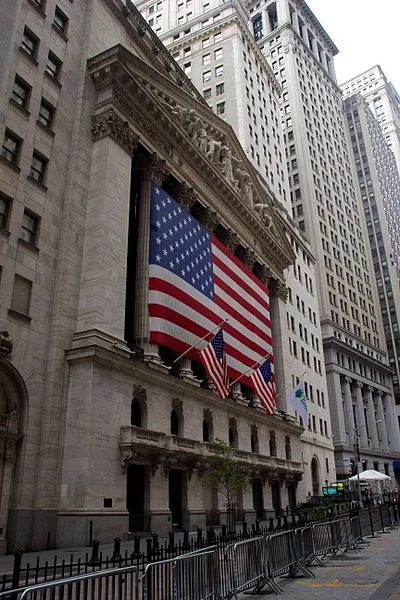
The New York Stock Exchange.
.
Via OtherWords.org
Language matters. For example, the words that corporate and government officials use to report on the health of America’s economy can either make clear to us commoners what’s going on — or hide and even lie about the reality we face.
Consider the most common measurement used by officials and the media to tell us whether our economy is zooming or sputtering: Wall Street’s index of stock prices. The media literally spews out the Dow Jones Average of stock prices every hour — as though everyone is waiting breathlessly for that update.
The thing is, nearly all stock is owned by the richest 10 percent of Americans. So the Dow Jones Average says nothing about economic conditions for 90 percent of us.
For the true economic health of America as a whole, we need to know what I call the Doug Jones Average. How are your average Doug and Dolores doing?)
As we’ve seen, stock prices keep rising to new highs. But wages and living standards for the middle class and poor majority have been held down by the same corporate and political “leaders” telling us to keep our eye on the Dow.
To disguise this decline, they play another dirty language trick on us when they issue the monthly unemployment report. Currently, with the unemployment rate down to 4 percent, they tell us America’s job market is booming.
But that only reflects the number of jobs, not the dollar value of those jobs in terms of wages and benefits. Having lots of people doing poorly paid work is hardly a healthy job market.
Notice that they don’t measure the stock market by the number of stocks out there, but by their value. They should measure our job market the same way.
Of course, they’d only do that if they gave a fig about all of us Dougs and Deloreses. And that speaks volumes about their bias for stock-owning elites.
OtherWords columnist Jim Hightower is a radio commentator, writer, public speaker, and editor of the populist newsletter, The Hightower Lowdown.
'Rumor in the air'

Eastern bluebird.
"In New York and New England the sap starts up in the sugar maple the very day the bluebird arrives, and sugar-making (see below) begins forthwith. The bird is generally a mere disembodied voice; a rumor in the air for two or three days before it takes visible shape before you.''
-- The late John Burroughs, naturalist and essayist.
"

Boiling off maple sap to make syrup in late winter and early spring.

The Green Mountain State is very proud of its maple-syrup sector.
Sleeping through the storm

Surface analysis of the Great Blizzard of 1888, which took place March 11-14. Areas with greater isobaric packing indicate higher winds. This remained New England's most famous snowstorm until the Blizzard of Feb. 6-7, 1978.
"A wintry storm's blown over us while we slept.
The world's no worse for it,
Though a storm-window cracked a bit
When it fell down hard in the middle of the night.
All we value most we've kept.
The tree of life is still upright.''
-- From "March Winds,'' by Alfred Nicol, who lives in Amesbury, Mass.
'Memory and matter'

"See You in Dreams,'' by S. Tudyk, in her show "An Improving View,'' at ArtProv Gallery, Providence, April 4 through May 26. The gallery says that she "draws inspiration from her surroundings as well as her thoughts and memories. In these works, she explores the process of fragmentation, applied to both memory and matter. ''
Memories of the New Haven
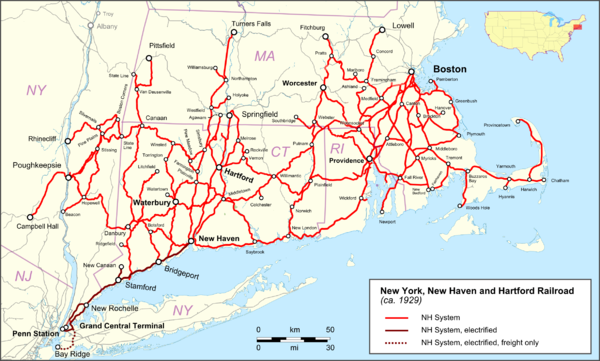
The apogee of the New Haven, right before the Depression.
Adapted from Robert Whitcomb's "Digital Diary,'' in GoLocal24.com
'The other week I took the Shore Line East commuter rail line, which runs between New London and New Haven. I noticed that the cars were from the old New Haven Railroad, which went out of business in 1968! That the cars are so old testifies both to how sturdy (if now rattling) they are, reminding me of those tough old DC 3 prop passenger planes that were flown for decades by numerous airlines, and to how old so much of America’s infrastructure is. (The official name of the the railroad was, as you can see above, a mouthful. But everyone just called it "The New Haven''.)
The old NH cars also reminded me of the old New Haven Railroad itself, with its stuffy smoking cars, itchy upholstery and, on its longer runs, especially Boston to New York, dining cars where you could even get lobster but because of silly labor rules, you had to put your order in writing.
And then I think of the weary and melancholy commuters, such as the Dan Draper character in Mad Men, sitting and smoking in a New Haven Railroad car and looking sadly out at a platform at a suburban station in Westchester or Fairfield County where a sole man, wearing a fedora and a London Fog raincoat, is pacing back and forth in the dusk.
Tim Faulkner: Northern Pass decision delayed again
-- Pro-Northern Pass map
Via ecoRI News (ecori.org)
The Northern Pass hydropower transmission-line project isn't dead yet, but time is running short for the $1.6 billion project.
On March 12, the New Hampshire Site Evaluation Committee (SEC) voted, 5-0, to defer a request to reopen the deliberation process. The committee did agree to suspend its Feb. 1 oral vote to deny the project but only until the written decision is released later this month. A decision on whether to restart hearings won’t be made until May.
The March 12 meeting was held at the request of Northern Pass in an effort to somehow convince the SEC to rehear and reverse its Feb. 1 decision to reject the project. Soon after that vote, Massachusetts, the primary buyer of the electricity, gave the developer, Eversource Energy, until March 27 to salvage the proposal.
“This is just really a Hail Mary effort on Northern Pass’s part,” said Melissa Birchard, staff attorney for the Conservation Law Foundation. “It was a long shot and they knew it. But they just wanted to make an effort to satisfy the Massachusetts’ ultimatum.”
Opponents say the project threatens 95,000 acres of forestland and could harm scenic tourist areas. Small towns fear the project would hurt business and disrupt their communities.
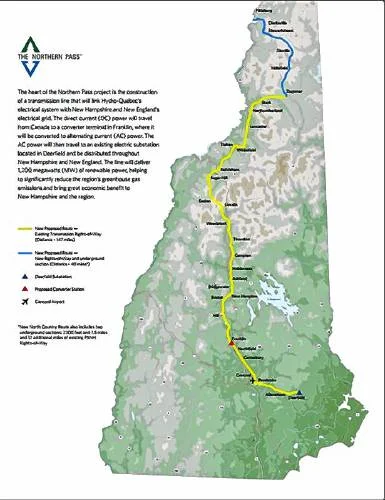
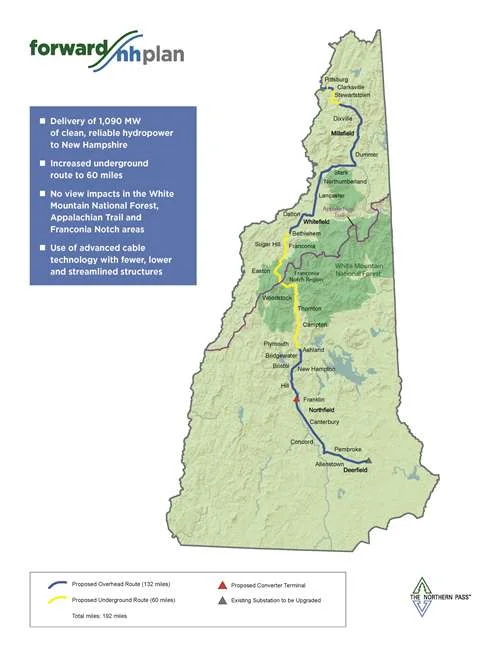
New Hampshire Gov. Chris Sununu endorsed the 192-mille high-voltage system for the jobs and the promise of lower electric bills for ratepayers. He was disappointed that the siting board rejectedthe project on Feb. 1.
Massachusetts agreed to buy a portion of the 1.09 gigawatts of so-called "low-carbon energy" to meet its Clean Energy and Climate Plan for 2020.
In the meantime, the Bay State selected a backup plan, the New England Clean Energy Connect, developed by the Central Maine Power Co., to bring Canadian hydropower to Massachusetts.
There has been no response from the Massachusetts Department of Energy Resources regarding the recent SEC decision to postpone any action on the Northern Pass until May.
On Feb. 28, Eversource Energy filed a request to vacate the SEC's decision saying it wanted to elaborate on efforts to address the objections to the project. According to Eversource, the impacts on tourism and property values would be offset through payments from a $200 million state fund. Also, Eversource says alternative construction methods would be used lessen impacts on businesses.
Eversource claims the project will create 2,600 jobs during constriction, save New Hampshire ratepayers $62 million annually, add $30 million to state and local tax revenue annually, and reduce regional carbon emissions by more than 3 million tons a year.
The project received good news March 6 when the Canadian National Energy Board approved the proposal, thereby completing the last of the permits for the construction between Eversource Energy and Hydo-Quebec, a Canadian government-run utility.
Eversource issued the following statement after the March 12 decision by the SEC:
“We hope it is an indication that the SEC will evaluate the required statutory criteria, as well as thoroughly consider all of the conditions that could provide the basis for granting approval. At a time when the region needs new and diverse sources of clean energy, it is vitally important that projects like Northern Pass are considered fully and efficiently and without unnecessary delay.”
Tim Faulkner is a reporter and writer for ecoRI News.
Judge rules Brigham can order nurses to get fly shots

Via Cambridge Management Group (cmg625.com):
The Massachusetts Nurses Association isn't happy that a judge has ruled that Brigham and Women’s Hospital, in Boson, has the right to order its employees to get the flu vaccine
“We are disappointed with the decision and are considering an appeal,” MNA spokesman David Schildmeier told the Boston Herald. “To threaten a nurse with her job for exercising her right under (Department of Public Health) regulations to decline the vaccine, when that vaccine in the last two years has been between 20-35 percent effective, is an unfair and punitive policy.”
Judge Anthony M. Campo, of Suffolk Superior Court, ruled in favor of the Brigham, which last fall began ordering that all employees get the flu vaccine, barring very specific medical or religious reasons. Those who are unvaccinated must wear face masks.
The MNA contends a stringent policy isn't needed, given the Brigham staff’s 98 percent vaccination rate.
To read the entire article, please hit this link.
Bob Lord: When a CEO is far more generous to GOP fundraisers than to his own employees
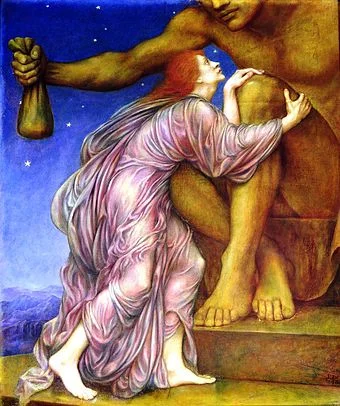
The Worship of Mammon, by Evelyn De Morgan.
Via OtherWords.org
That America’s income distribution has grown dramatically more unequal in the past 40 years is beyond debate. The share of the top 1 percent has doubled since 1980, to over 20 percent of all income.
Could it get any worse? A look at America’s large, privately held corporations suggests it could.
When Americans think of large corporations, most of us think of corporations like Pepsi or ExxonMobil, whose shares are publicly traded.
We can know a fair amount about these companies from the reports they file with the Securities and Exchange Commission. Thanks to an Obama-era rule that recently went into effect, we even know how much their CEO makes compared to typical workers.
Many large corporations, however, are privately owned. Typically a single shareholder, members of the same family, or perhaps a small group of investors owns all the stock of one of those corporations.
These private owners aren’t required to release much financial information, and few do so voluntarily. So their finances are much more opaque.
According to Forbes, there are over 200 privately held corporations in America with over $2 billion in annual revenue. The largest, Cargill, had $109 billion in revenue in 2016.
Unlike at publicly traded corporations, we don’t know just how unequal things are between the employees of those privately held corporations and their owners. Might those owners be stingier with workers?
I began to wonder about this when I saw an announcement by Ronald Cameron, the owner and CEO of the poultry processing Mountaire Corp., of bonuses he’d decided to give his hourly employees. Those bonuses, he said, were made possible by the tax legislation recently passed by the Republican Congress.
Mountaire, according to Forbes, has 6,000 employees and just over $2 billion in annual revenue. If every employee qualified for the maximum bonus of $1,000 Cameron announced, Mountaire’s employees would receive $6 million in bonuses total.
Cameron, I’d noticed, is also a major Republican donor. He contributed over $14 million to Republican candidates for the 2016 election, including $2.4 million to Trump.
In other words, he was substantially more generous with politicians than with the 6,000 employees whose hard work has made him a very rich man.
What then, I wondered, might the income distribution be for the population at Mountaire — that is, the 6,000 employees and Cameron? What percentage of Mountaire’s profit does Cameron pay to his 6,000 employees, and how much does he keep for himself?
Mountaire doesn’t release that information. But we can make an educated guess based on what we know about similarly sized, publicly traded poultry processing companies.
Based on profit margins from those companies, along with data from a recent salary survey of Mountaire employees, Mountaire likely is paying $180 million or less in wages to its 6,000 employees each year — leaving about $200 million in pre-tax profits for CEO and owner Cameron.
In other words, over half the income at Mountaire may go to one person. That’s 600 times as concentrated as in the country overall.
Mountaire could be an outlier. But consider this: CEOs at publicly traded corporations resisted reporting their ratio of CEO compensation to median worker pay for seven years. Honeywell recently became the first corporation to report its CEO to worker pay ratio, an eye-popping 333 to 1.
That’s how bad it is at the companies we know about. How bad might it be at the companies we don’t?
Bob Lord is a Phoenix-based tax lawyer and an associate fellow at the Institute for Policy Studies. Distributed by OtherWords.org.
'New knowledge of reality'

An American robin, one of the most common New England songbirds.
"At the earliest ending of winter,
In March, a scrawny cry from outside
Seemed like a sound in his mind.
"He knew that he heard it,
A bird’s cry, at daylight or before,
In the early March wind. ..
"Surrounded by its choral rings,
Still far away. It was like
A new knowledge of reality.''
-- From Wallace Stevens's "Not Ideas About the Thing but the Thing Itself". Stevens was arguably, after Robert Frost, the greatest 20th Century American poet. He was also a highly successful insurance executive in Hartford, which for many decades was called
"the insurance capital'' of the world.
Our weather is actually orderly
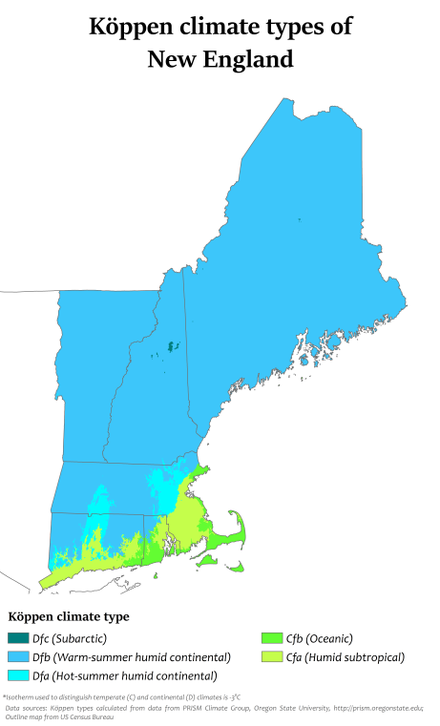
Mark Twain said that "one of the brightest gems in the New England weather is the dazzling uncertainty of of it'' ....It is indeed fickle, severe, unpleasant (Twain goes on to say New Englanders kill a lot of people every year 'for writing about 'Beautiful Spring'') and, quite often, glorious. Yet even in the face of the massive evidence of its unpredictability, I would venture to speculate that New England weather does not occur haphazardly any more than anything else in this complex but orderly universe.''
-- Judson D. Hale Sr., editor-in-chief of Yankee Inc. in an essay in Arthur Griffin's New England: The Four Seasons.
And patience and resignation

"Anticipation" (oil on paper), by David Witbeck, in his joint show with Joan Boghossian at the Providence Art Club through March 30.
Past time to confront the digital duopolists
Adapted from Robert Whitcomb's "Digital Diary,'' in GoLocal24.com:
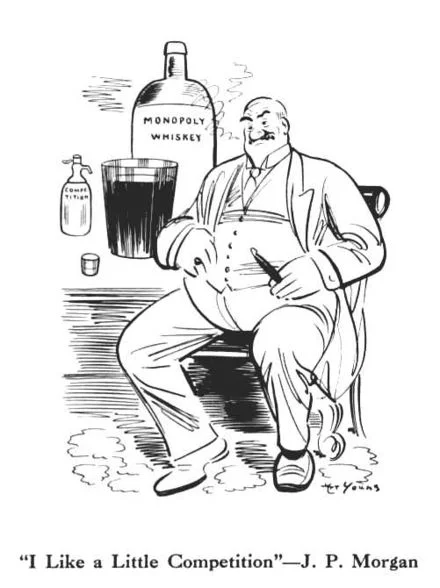
What to do reduce the corrosive power of the rapacious and unregulated duopoly of Facebook and Google?
One of the worst of their effects is that by gobbling up most of the digital advertising revenue in the United States they are destroying many local news organizations, whose work is essential in providing oversight of public and private institutions. Their demise is a green light for corruption.
David Chavern, CEO of the News Media Alliance, which represents about 2,000 newspapers in the U.S. and Canada, in a Feb. 26 Wall Street Journal article (“Protect the News From Google and Facebook’’), touted one way to start rectifying this situation: a bill in Congress sponsored by Rhode Island Congressman David Cicilline. The measure would reform antitrust laws to let newspapers and other news media collectively withhold their products from the duopolists at Facebook and Google to pressure them to give those smaller media an adequate return on their investment so that they can employ enough journalists to adequately cover the news.
Why oh why are antitrust laws applied to little publications and not to the gigantic Google and Facebook? Those two empires are in restraint of trade just as much as was the Standard Oil Trust at the end of the last century.
I’m mostly talking about local media; the big national ones, such as The Wall Street Journal, The Washington Post and The New York Times, will be okay.

David Warsh: On Putin, think of a high-tech Russian 'nesting doll'

Russian nesting dolls; Vladimir Putin is the one on the far left.
Scary Vladimir Putin, Bogeyman to the World, has been on full display in U.S. newspapers this month, most conspicuously on the front page of The New York Times, in a misleading photograph suitable for the cover of a new edition of Nineteen Eight-Four. “Putin Says He Has ‘Invincible’ Nuclear Missile,” was the headline. The hypersonic zig-zag cruise missiles and torpedoes of which he boasted might be a bluff for now, The Times noted. Fully operational, however, such weapons would “travel low, stealthily, far and fast – too fast for defenders to react.”
A week later, The Times reported on the attempted assassination using nerve gas of former Russian military intelligence officer Sergei Skripal, who in the 1990s had become a double agent for the British intelligence service MI6. The Brits all but charged the Russian government with making the attempt. The Russian government denied responsibility and took umbrage.
It was then Russian President Dmitri Medvedev who pardoned Skripal in 2010 and swapped him for a batch of Russian spies. Former KGB officer Vladimir Putin was then serving as prime minister. The business newspaper Kommersant recently reported that Russian authorities considered the damage done by Skripal comparable to that of Oleg Penkovsky, another military intelligence double agent who was caught and tried in the aftermath of the Cuban Missile Crisis, in 1962. Penkovsky was reportedly rolled alive into a crematorium oven in 1963.
What wasn’t on display last week was an analytic account of what else Putin said in what was, after all, his state of the nation address, three weeks before the election in which he is seeking a fourth presidential term. For that I turned to Alexander Baunov, of the Carnegie Moscow Center. I get my Russia news from Johnson’s Russia List — 191 items last week, of which I read perhaps 25 — and from Jonathan Haslam’s blog, "Through Russian Eyes''. Haslam is Kennan professor at the Institute for Advanced Study in Princeton.
Bloomberg’s Andrey Biryukov and Evgenia Pismennaya set the stage for Putin’s hour-long speech. Simon Shuster conveyed its atmospherics in Time, and Mary Dejevsky, of London’s Independent, its production values. But it was Baunov who made sense of it, in A Hi-Tech Russian {"nesting"} Doll: Putin’s Fourth-Term Reboot, on the Carnegie.ru Web site:
"Putin’s goal is now neither to recreate the USSR, nor to become part of the West. Rather, the ambition is to build an economic and technological “West” inside Russia, while continuing an aggressive posture towards the West on the outside….
"Putin’s speech depicts his vision of Russia as a kind of Matryoshka, a Russian {"nesting"} doll. The inside of the doll—the domestic part—is digital, wears hipster glasses and a short trendy jacket. The outside foreign part is dressed in military camouflage fatigues.''
That sounds like something the Chinese are well on their way to achieving: to be like the West, but with a diluted version of its values. But where China has the luxury of a geographic theater with natural boundaries – the “Greater East Asia Co-Prosperity Sphere,” as it was envisaged by Japan – Russia faces much greater difficulties identifying and protecting the boundaries of a natural sphere of influence. Its ambivalent relationship with Western Europe is more than three centuries old and shows no signs of flagging. No wonder, then, that, the day after his speech, Putin told a press conference that he regretted the break-up of the former Soviet Union.
The problems of the Russian economy, interesting though they may be, are for the most part orthogonal to those of the U.S., which at the moment have to do with the prospect of trade wars with its allies. Vladimir Putin is there to stay in a way that Donald Trump probably isn’t. As Princeton University Prof. Stephen Kotkin told The Wall Street Journal last week, 18 years after Boris Yeltsin chose him as successor, Putin is no longer the “arbiter over a scrum of competing interests” but has become instead “the leader of a single faction that controls all the power and all the wealth.”
But Kotkin is simply mistaken when he says that, while Putin didn’t highjack the U.S. election itself, “he high jacked American public discourse.” It is the major newspapers — The Times, The Washington Post, and at least the editorial pages of The Wall Street Journal – as well as The New Yorker magazine that are holding U.S. Russia policy hostage to their disdain for Donald Trump. This proposition wants a separate column. I will write it soon.
David Warsh, an economic historian and long-time columnist on economic, political and media matters, is proprietor of economicprincipals.com, where this columnist first ran.