
Vox clamantis in deserto




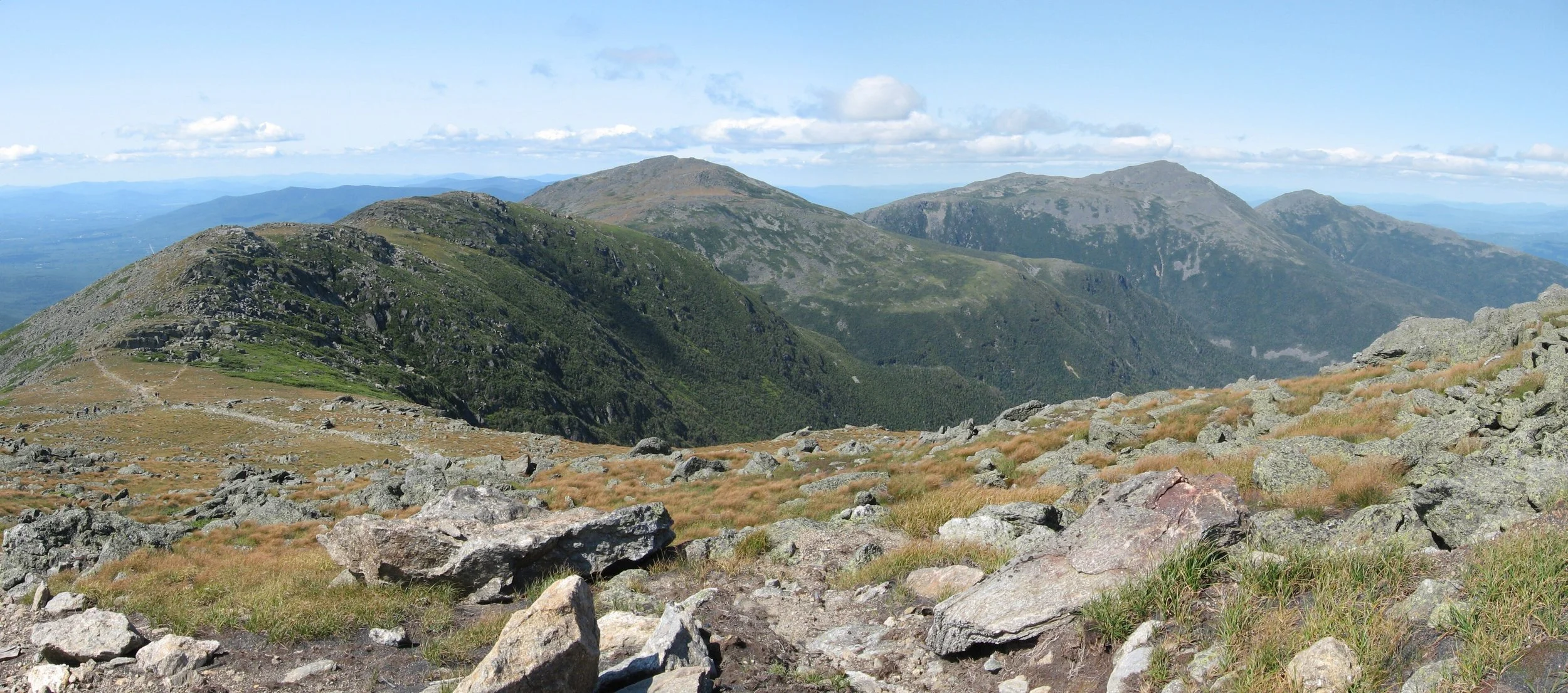


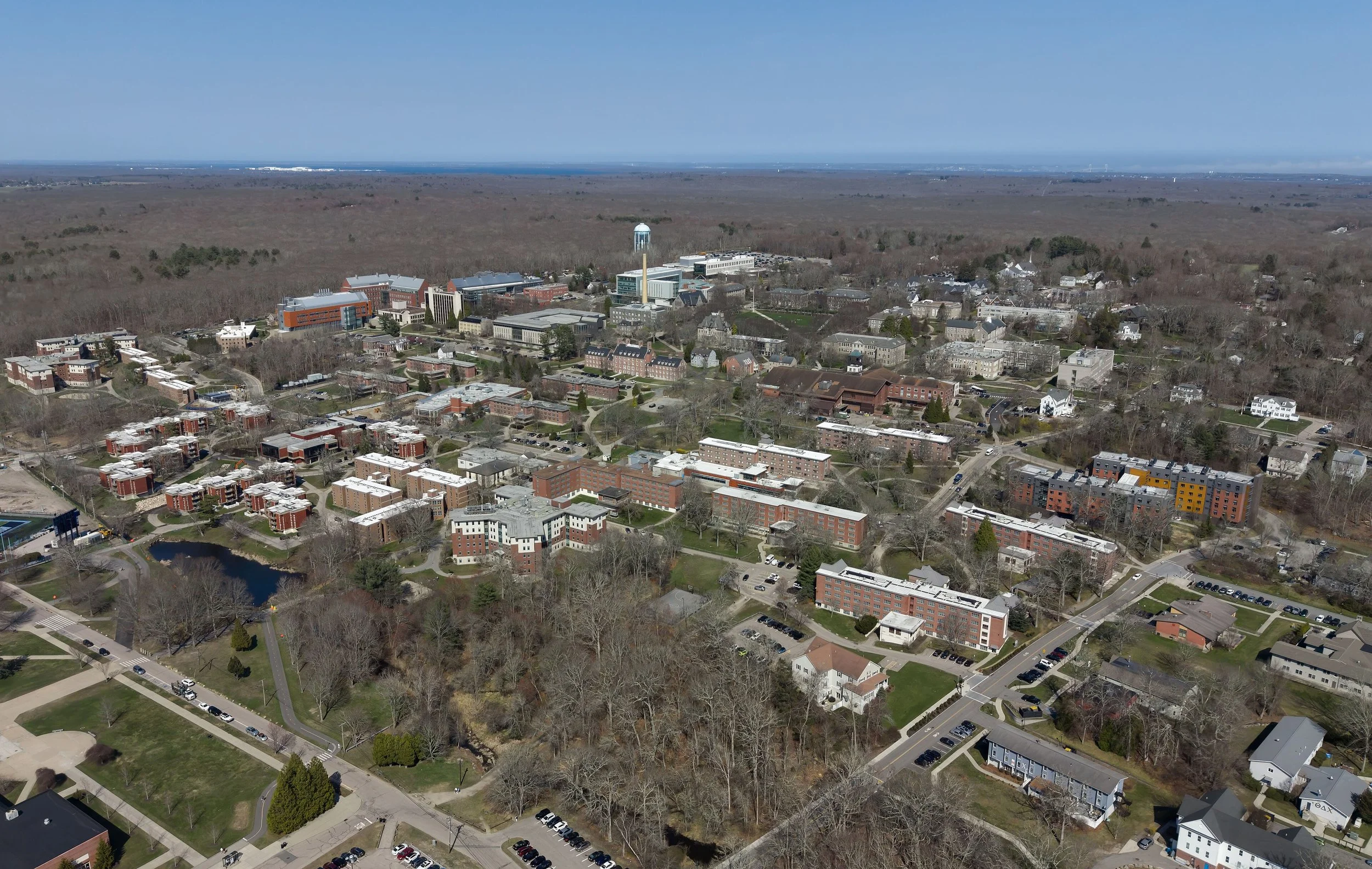
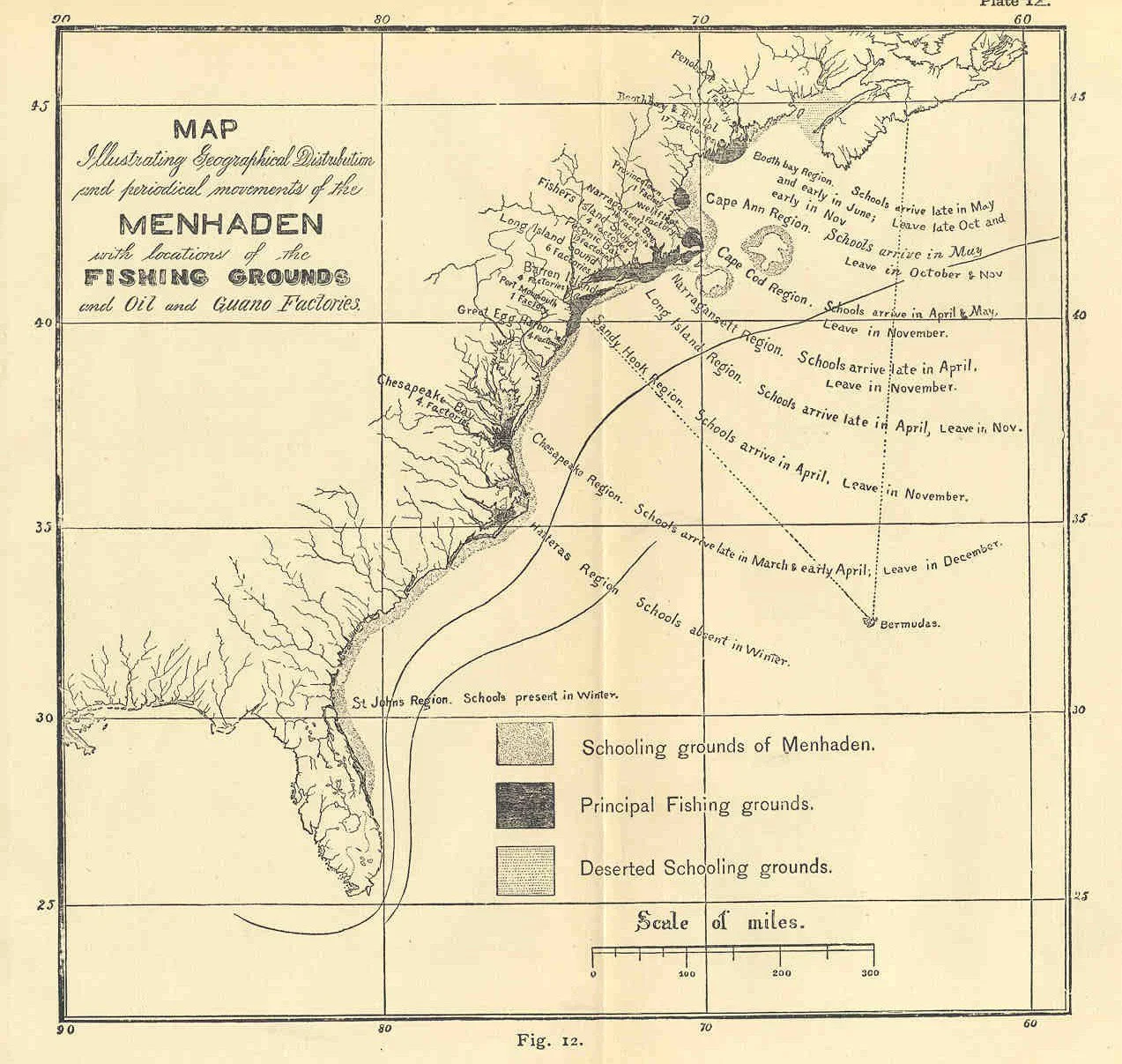

Get out into it!

"Take long walks in stormy weather or through deep snows in the fields and woods, if you would keep your spirits up. Deal with brute nature. Be cold and hungry and weary.''
-- Henry David Thoreau

The Blizzard of March 11-14, 1888, paralyzed much of the Northeast.
Don Pesci: Let us now praise a great judge in Hartford

Hartford.
Let Us Now Praise Famous Men is a book written by James Agee containing photographs by Walker Evans. In 1936, they traveled to Alabama to report on three tenant-farming families. Their original story, only recently unearthed, never ran, but Agee continued to work on the project, and in 1941 Agee and Evans published their book, now itself famous as a literary work of art. Poverty and struggle had found a voice.
The title of the book was taken from Ecclesiastics: “Let us now praise famous men, and our fathers that begat us. The Lord hath wrought great glory by them through his great power from the beginning. Such as did bear rule in their kingdoms, men renowned for their power, giving counsel by their understanding, and declaring prophecies: Leaders of the people by their counsels, and by their knowledge of learning meet for the people, wise and eloquent are their instructions.”
Agee had turned the passage on its head. The book he and Evans produced was not about rulers; its subject was the subjects of rulers, the poor of Alabama, the forgotten of the earth, who were in a different sense noble, their pain suppurating through their poverty like the waters of a spring: “The spring is not cowled so deeply under the hill that the water is brilliant and nervy, seeming to break in the mouth like crystals, as spring water can: it is about the temper of faucet water, and tastes slack and faintly sad, as if just short of stale. It is not quite tepid, however, and it does not seem to taste of sweat and sickness, as the water does which the Woods family have to use.”
Judge Raymond Norko, who retired from the bench on March 10, is the opposite of pontifical, as anyone who knows him will testify, and he is slightly uncomfortable in the presence of praise. Yet, for the people in his courtroom who bade him farewell when he left his post as the presiding judge of the Hartford Community Court, Norko is the wise counselor of Ecclesiastics. Wisdom knows that the rich spring of justice, tempered always as it must be by mercy, lies within the heart of the just judge. One acquires wisdom though understanding, and understanding through modesty; one must stoop to enter the door of wisdom that lies always above us. This is the true meaning of understanding.
In a brief farewell message, Norko wrote, “I am writing to let you know that, after thirty-three years on the bench, I am retiring on March 10. It has been my honor to serve the people of Connecticut, in particular the people of Hartford, as a Judge of the Superior Court. Since 1985, I have served on cases ranging from motor vehicle to capital felonies; I’ve seen the very best and the very worst of human nature from my place on the bench. It has been an exciting journey, one that I have learned a great deal from. I am perhaps most proud of my service during the development and continued success of the Hartford Community Court. When I was first asked to lead the development of the Hartford Community Court in 1997, I said no. It was a radical concept, with only two other community courts in the nation at that time, and I wasn’t sure it would work. After thinking about it for a short time, and seeing the commitment of the community, the Judicial Branch and our other partners, I felt that we could make a big difference in our city and our courts, and decided to accept the challenge. Happily, it has been an extremely rewarding experience and, over 18 years since opening, the Hartford Community Court remains vital.”
During a farewell party in the Hartford Community Court building, dozens of people stepped forward to commend Norko, who had shaped the court from its inception. The crowd was an assembly of pilgrims marching toward Canterbury, each bearing a singular tale.
One woman told the famous story of the ice cream truck, an account of which appeared in People Magazine. The ice cream truck was the terror of the neighborhood – loud, insistent, rude, its message and bells tearing the peace of the community. She brought the matter to Norko’s attention. We need a judge who is for us, the woman pleaded. The court intervened and convinced the driver to lower his decibels and reduce the repetitive message to, say, one message per block. Almost two decades later, the lady still marveled that Norko had intervened, quickly and decisively. Sometimes justice marches on cat paws to its appointed destination.
The judge who will preside over the Hartford Community Court now that Norko has resigned, the Honorable Tammy Geathers, told her own story. She first met Norko under stressful circumstances. As a relatively new public defender, a wheelbarrow full of cases was dumped on her desk. She found herself summoned to court to argue a case she thought had been postponed. Silently stewing over the mix up, she was a little abashed and astonished to find that Norko was that day presiding over the case. “Are you prepared to argue this case?” he asked. She briefly explained why she was not prepared. “This case will be postponed,” Norko said, “until you have been given a chance to prepare for it.” Much later in her career, she was asked during an interview to name someone she might wish to emulate as a judge. Instantly she responded – Judge Raymond Norko. Sometimes fate is kind; that is exactly what happened.
The court under Norko’s hand has been very busy. “Since 1998,” Norko wrote in his farewell message, “we have handled more than 154,000 arraignments, more than 568,000 hours of community service has been performed (at a value of $4,389,035 based on minimum wage at the time the work was performed) and tens of thousands of social service referrals have been made.” In addition, the court has had a very long reach: “I am also proud that the Hartford Community Court has become an international model for other communities looking to develop their own community courts. In 2009 and 2014, the US Department of Justice Bureau of Justice Assistance and the Center for Court Innovation selected Hartford as one of four recognized mentor courts. We have hosted visitors from throughout the United States, and we have had visitors from across the globe including Australia, China, Ukraine, France, Japan, Peru, Russia, Cape Verde, Columbia, Sweden, India and the Slovak Republic amongst many more.”
The principal lesson drawn from both Ecclesiastics and the Walker-Evans book is this: Justice seen from the outside and justice experienced from the inside are different. Wisdom and true justice lies in the reconciliation of these differences. The dozens of people who bade farewell to the architect of the Hartford Community Court, all offering their own stories, have good reason to hope that true justice will prevail in a court constructed by so wise a counselor.
Don Pesci, a frequent contributor to New England Diary, is a Vernon, Conn.-based columnist.
They'll only kill you in New Hampshire

''Black bears, though, are not fearsome. I encountered one on the road to my house in Vermont, alone at night. I picked up two stones just in case, but I wasn't afraid of him. I felt a hunter's exhilaration and a brotherly feeling.''
-- Edward Hoagland, famed essayist

Have a nice day, or not
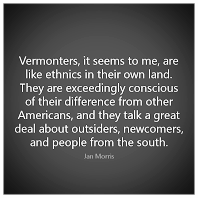




"Vermonters are not only charmless of manner, on the whole; they are also, as far as I can judge, utterly without pretense, and give the salutary impression that they don't care ten cents whether you are amused, affronted, intrigued, or bored stiff by them. Hardly anybody asked me how I liked Vermont. Not a soul said 'Have a nice day!''
-- Jan Morris, the British travel writer
Llewellyn King: Many shades of green, including the morning after

One of the O'Donoghue's pubs in Dublin on the author's 2012 pub crawl.
People who are no more Irish than the King of Siam or the Paramount Chief of the Bumangwato will, come March 17, celebrate an island nation famous for its skill with words and its fondness for drink.
It all began, of course, in the 5th Century with a Romano Christian missionary from Britain, Patrick, who brought Christianity to Ireland. As a bonus, he chased the snakes off the island. Where the fondness for something brewed, distilled or fermented came from is not recorded, but it is an intrinsic part of Irish life.
Life in Ireland often revolves around having a drink. It is treated much as we would treat having a cup of coffee. In Dublin once, I ran into a friend whom I had not seen in a year: a serious man with a big job in government. He thought, in the Irish way, that we should catch up over a glass of something, although it was just after 10 in the morning. “I think Murphy's is open,” he said as naturally as someone in an American city would have said, “There is a Starbucks on the next corner.”
In Ireland St. Patrick's Day was, until recent years, a somber religious festival. It was in America where the idea that the Irish could have a huge craic, as the Irish call a party, took hold.
Even so, the biggest celebrations, to my mind, are in Boston, Chicago and New York. But there are celebrations everywhere the Irish have set foot from Hanoi, Vietnam, to Ushuaia, Argentina, off the tip of South America.
But if you are very lucky, you will celebrate in Dublin. And what better way than with an authentic pub crawl.
I know just a bit about pub crawling in Ireland because I was lucky enough to be involved in a wonderful Dublin pub crawl in 2012. It was not a bunch of celebrants struggling from one pub to another, but rather a work of planning art.
I was in Dublin for an engineering conference that coincided with the 60th birthday of one of our number, Sean O'Neill -- by birth an American, but otherwise through and through Irish.
A pub crawl was organized by the engineers with precision: times, distances, and safety procedures.
There was a map and the 12 pubs were selected with fiendish skill. The early ones were fairly far apart. But as the crawl went on, they grew closer together, and the last two were next to each other -- in consideration of possible loss of mobility.
We were urged to go with a buddy, eat something about halfway and, in case of pub fatigue, to call a taxi.
If you get to Dublin and want to try the engineers’ crawl, here are the pubs in order: Toner's, O’Donoghue's and Doheny & Nesbitt's on Baggot Street; Dawson Lounge on Dawson Street; Kehoe's on St. Anne Street; Davy Byrnes on Duke Street; O’Neill's and another O’Donoghue's on Suffolk Street; The International Bar and Stags Head on Wicklow Street; The Long Hall on Georges Street; McDaid's and Bruxelles on Harry Street.
I think I made it as far as The Long Hall, one of Dublin's most famous bars, before I cried uncle, refused a last drink and hailed a taxi. Others persevered and, amazingly, lived to tell the tale.
You probably know that Ireland is so lush that its flora is supposed to support 40 shades of green.
Well, there is another shade of green not mentioned in the tourist brochures. It is the 41st shade and you see it in the bathroom mirror the day after a pub crawl. Surely, some of you will see it on March 18.
On Twitter: @llewellynking2
Llewellyn King is executive producer and host of White House Chronicle, on PBS.

Postcard postmarked 1912 in the United States.
The old town vs. gown danse macabre

Entrance to Ochre Court, Salve Regina University's first building. Salve is in the middle of the famous mansion district of Newport, R.I. (See Salve news below.)
From Robert Whitcomb's "Digital Diary,'' in GoLocal24.com:
The fierce opponents of Brown University’s plan to tear down four historic houses and move another one to make way for a new performing-arts center have won a victory. The university has decided to move the site of the facility. This would be smaller than the one originally planned and some of it would be underground. Four houses that had been threatened will be unmolested. Meanwhile, the quirky Lucien Sharpe Carriage House Sharpe Building will be moved from its present site to another in the neighborhood.
The people on College Hill want it both ways: They want to live near a prestigious university with a (mostly) beautiful campus but they don’t want to let the institution do some things that a growing university needs or at least wants to do in and around its campus.
It’s Brown, and to a lesser extent the Rhode Island School of Design, that prop up property prices and make College Hill such a vibrant urban neighborhood. But Brown, if it’s to remain competitive with the Ivy League and other institutions it sees as its peers, must continue to build. Expect more battles.
The latest big town-gown battle around here is in Newport, where Salve Regina University wants to build two big dorms to house hundreds of additional students. Some of the neighbors are scared that this would mean a flood of rowdy young people. And the preservationists think that the proposed buildings would be way out of scale for the neighborhood.
But the leaders of even relatively poor colleges like Salve feel that their institutions must grow or die. And even tiny colleges change their name to “university’’ to sound more important.

John O. Harney: The DACA saga in New England
Via The New England Board of Higher Education (nebhe.org):
From 2012 to 2017, nearly 15,000 New England residents participated in the Deferred Action for Childhood Arrivals (DACA) program. DACA students are ineligible for federal financial aid programs, but state and institutional aid can flow to undocumented students. As of March 2017, 20 states, including Connecticut and Rhode Island, offered in-state tuition rates to undocumented students.
It’s a moving target. President Trump announced in September that he would repeal DACA on March 5, charging that President Obama had created it unconstitutionally through executive action. The dynamic raises questions of whether protecting the DACA recipients reflects morality, regardless of its legal beginning. Trump gave Congress until that date to pass legislation addressing the legal status of undocumented immigrants brought to the U.S. as children, including nearly 800,000 approved for DACA.
In February, the U.S. Supreme Court rejected the Trump administration’s request to speed up its appeal of two federal judges’ nationwide injunctions to keep pieces of DACA. As the Chronicle of Higher Education noted, “That’s good news for the so-called Dreamers trying to avoid deportation. But it doesn’t provide what the students and colleges advocating on their behalf want the most: certainty.”
One thing that is certain is that life for immigrants is difficult in the Trump era. In addition to trying to end DACA, the president has brandished anti-immigrant rhetoric and pushed various travel bans—some challenged, some accepted.
The administration’s proposed immigration reform rests on four pillars: 1) creating a path to citizenship for DACA participants, 2) securing the border, including the controversial border wall, 3) eliminating the diversity visa lottery and 4) limiting family-based immigration spouses and minor children. Meanwhile, federal Immigration and Customs Enforcement (ICE) officials asked Boston police to detain 68 suspected illegal immigrants last year, nearly four times as many as in 2016. (Boston’s Trust Act forbids the police from participating unless ICE has a criminal warrant.) Among highly visible matters, the Trump administration has canceled Temporary Protective Status for people from El Salvador, Haiti, Nicaragua and Sudan. Its Office of Refugee Resettlement denied undocumented teenagers their right to end unwanted pregnanciNEBHE confab
Against this backdrop, NEBHE recently hosted a packed session at the College Board’s New England Regional Forum in Boston on the uncertain climate for undocumented students and related state and institution responses. The session moderated by NEBHE Associate Director of Policy & Research Candace Williams, featured: NEBHE delegate and Connecticut state Rep. Gregory Haddad, who has been a leader in supporting immigrant students; Pooja Patel, a former NEBHE policy research intern, now with the National Association for College Admissions Counselors; and Jason Corral, staff attorney at Harvard's Immigration and Refugee Clinic.
Asked about what institutions are doing, Patel noted that while a few respondents to her NEBHE survey of New England colleges and universities reacted defensively (Of course, we wouldn’t accept those students. They are breaking the law.), many are grappling with how best to serve undocumented students, including providing legal representation and advice. Tufts University has tried to actively recruit these students. One institution pointed out that it fully covered undocumented students’ healthcare, Patel noted. And the very day of the NEBHE session, Southern New Hampshire University was unveiling its work with The Shapiro Foundation and TheDream.US to offer full scholarships to DACA students to pursue associate and bachelor's degree programs through one of the university's online programs. Notably, SNHU said its DACA scholarships could follow students out of the country if they were to be deported.
State of DACA
Most undocumented students in New England attend community colleges (because they’re less expensive) or selective private institutions (because they have resources to help), said Patel. Still, she added, many undocumented students face massive obstacles.
California has been among the states that provided both in-state tuition rates and student aid for undocumented students. This year for the first time, applications have gone down because students don’t want their names out there if that could get them deported.
Connecticut state Rep. Gregory Haddad, whose district includes the University of Connecticut, said he felt a moral obligation to support DACA from the beginning. One young woman he spoke with learned she was undocumented when she went to fill out a financial aid form; another saw a story on TV about “dreamers” and found out then that she was one.
In 2011, Connecticut began offering in-state tuition for undocumented students who were Connecticut residents and graduated from a Connecticut high school and required them to file an affidavit that they had or would apply for U.S. citizenship. In 2014, when the rule was renewed with the requirements loosened somewhat, Connecticut considered legislation allowing institutional aid for undocumented students and requiring higher education institutions to create an aid pool with 15% of tuition revenue paid by documented as well as undocumented students.
Haddad notes that DACA and immigration is an economic argument. If DACA ended tomorrow, Connecticut would lose an estimated $315 million, according to the Center for American Progress. (Massachusetts would lose an estimated $606 million.) “Immigration is a way we can grow our economy,” said Haddad, especially as employers such as Electric Boat fret about an outflow of talent.
DACA opponents, on the other hand, dredge up the old arguments that immigrants are taking aid away from “our kids” but these kids are already paying into the pool, Haddad said. Some people bring up illegal activity, added Haddad, yet there’s consensus that dreamers deserve a path to citizenship. As immigration reform moves toward merit-based strategies for citizenship, Haddad said we should start helping young people get on that path now. He also added that the presence of dreamers visiting legislators in the Connecticut State Capitol has been very important.
Jason Corral told the NEBHE session how the 30-year-old Harvard Immigration and Refugee Clinic where he is an attorney is working to prepare and protect undocumented students.
After 9/11, he said, people starting viewing immigrants as people they should fear. Obama was the most efficient enforcer of deportation; Trump is just picking up where Obama left off, but more draconian with attacks on programs such as Temporary Protective Status and proposals for travel bans. What they share in common is creating a feeling that you don’t belong here.
Protecting students
As Trump’s attacks on immigration escalated, Harvard University President Drew Faust resisted a move to make Harvard a sanctuary campus. Corral and a lot of others were upset. But now, Corral sees the genius in Faust’s rationale. The issue was you don’t have to label yourself a sanctuary city to respect the U.S. Constitution and put resources behind protecting students. Those resources included hiring Corral as a special lawyer representing undocumented students, faculty and staff and hiring social work staff.
Corral noted that undocumented status can carry a stigma, whether the immigrant has came over the border from Central America or is more affluent, perhaps overstaying a visa.
Corral’s focus these days: Will undocumented students have housing during breaks in the academic year if they’re afraid to go back to their home countries? What about their parents coming to visit them? Are undocumented students safe to do jobs and internships or medical residencies? The students are confident in their abilities to carve out paths for themselves, Corral said, but they are worried about their families. In the face of threats to “chain migration,” some of the parents say they just want their kids to achieve.
Corral said he was surprised that as an immigrants advocate, he shares many concerns with law enforcement in terms of building alliances to keep communities safe. An audience member asked if immigrant students tended to avoid confrontation given the heightened tension over deportations. Corral said he tells students who are concerned about this that they are their own best advocates. This may be especially true of high achievers at Harvard. But Corral added that he warns them that if a rally includes arrests for trespassing or blocking traffic, for example, that could lead to deportation. Sometimes, he even hesitantly advises them to be anonymous.
The shadows, all over again.
John O. Harney is executive editor of The New England Journal of Higher Education.
'More bowling than polo'

The rather gritty old mill town of Norwich, in inland eastern Connecticut, which, with a few exceptions such as Pomfret and Brooklyn, is poorer than Fairfield and Litchfield counties in the west, which are enriched by New York City money, especially from Wall Street. Wally Lamb is from Norwich.
"Eastern Connecticut is very different from Western; we're more liverwurst than pâté, more bowling than polo."
-- Wally Lamb

"Low Tide, Riverside Yacht Club" (1894), Greenwich, Conn., in Fairfield, County, by Theodore Robinson. The town is well known for its elite golf and yacht clubs.
Into Africa in Amherst, named after a germ-warfare pioneer

Wooden sculptures by Ere Ibeji, of Yoruba, Nigeria, in the show ''5 Takes on African Art/42 Flags by Fred Wilson,'' through April 29 at the University Museum of Contemporary Art at the University of Massachusetts at Amherst.
This consists of African art drawn from the collection of Charles Derby, a UMass alumnus who has been collecting since the 1970s. Surrounding them are "Flags of Africa,'' by the African-American artist Fred Wilson.
Amherst is named for Lord Jeffrey Amherst, the British commander in the French and Indian War, of the 1760s, in which he led a germ-warfare campaign against the Native American allies of the French. The Brits got blankets infected with smallpox into tribal communities, killing many people.
In 2016, beautiful Amherst College (named for the town it's in, not for Lord Jeffrey) dropped its "Lord Jeffrey" mascot at the demand of students at that elite college, and it will rename the college's snazzy Lord Jeffrey Inn.
Progressive and arty Hampshire College is also in Amherst. The Connecticut River goes through a long valley of colleges.

College Row at Amherst College.

Edress Othman, M.D.: A Syrian city cries out for help

Afrin, Syria, in 2009.
This was sent to us by Edress Othman, M.D., an oncologist with Southcoast Health System, a native of Afrin and an ethnic Kurd.
Over the past six years, the Syrian Civil War has created a vast humanitarian crisis, with more than half a million people killed, almost half of the nation’s population displaced, and many cities destroyed.
The area in and around Afrin, a predominantly Kurdish enclave in northwest Syria, was one of the very few areas that had survived the war intact. The region, about the size of Rhode Island, became a safe zone and welcomed thousands of Syrians fleeing the destruction elsewhere. In 2012, a democratic system based on respect for the environment and gender equality under local administration was created for the area’s burgeoning populations. Since that time one man and one woman were selected by the people to lead every post in the government equally.
The Syrian Democratic Forces (SDF) protected Afrin from ISIS, Jihadi groups and Bashar Assad’s regime. The SDF is the same group that defeated ISIS with the assistance from the United States and coalition forces in northeast Syria. Lt. Gen. Paul Funk, commander of the anti-ISIS coalition, recently praised them as heroes, saying, "I would say that the people who fought to take Raqqa back from ISIS are heroes, no matter what nationality they were, no matter what their beliefs were.”
Since Jan. 20, 2018, however, this peaceful enclave has come under attack. Turkish President Recep Tayyip Erdogan began an aerial assault on the civilians of Afrin, forcing residents into their basements and caves. Since then Turkey has destroyed humanitarian aid stations and infrastructure, including medical facilities and water-treatment centers. Cultural sites that define the Kurdish people have also been targeted. Many villages have been destroyed, forcing an estimated 70,000 people from the region into the city of Afrin, where they now desperately wait for international aid, food and clean water. On Feb. 16, doctors in Afrin reported to their colleagues in other countries that they have begun treating villagers for injuries that they believe are consistent with chemical warfare.
Why is Afrin under assault? It is the belief of the residents living there that the attacks are a direct result of the U.S. declaration of its intention to stay in Syria and support of SDF. Turkey considers the Kurdish elements within SDF as terrorists despite the fact that they have been combating ISIS and have never targeted Turkey.
The United States has not yet stepped forward to defend the Kurdish people of Afrin. While America provides weapons and equipment to the SDF east of the Euphrates, it has repeated that it understands “Turkey’s legitimate security concerns”. On Feb. 16, Secretary of State Rex Tillerson said that the United States recognizes Turkey's legitimate right to secure its borders.
But meanwhile, Turkey’s President Erdogan continues his ethnic-cleansing campaign, publicly promising to kill “every atheist Kurd in Afrin”, thus putting the lives of Christians and Yezidis at stake. With surrounding towns now in rubble, Afrin’s population has increased dramatically as humble farmers have fled into a densely populated area, making them easy targets for aerial attacks. Since the bombing began, more than 200 civilians have been killed (that includes 32 children and 26 women) and hundreds have been injured. And more than a million people remain in the besieged city of Afrin.
Hospitals enriching job offers to nurses
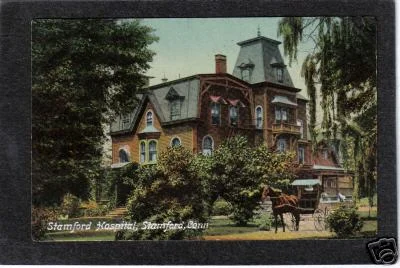
The original Stamford Hospital on a 1911 postcard. Looks like one of the mansions in that long-prosperous community.
From cmg625.com, the Cambridge Management Group Inc. Web site.
Some hospitals are pulling out the stops to address a nurse shortage, reports FierceHealthcare. Many give sign-up bonuses but some institutions have also come up with such new blandishments as offering to pay tuitions for nurses and for their children.
This has become the reality for many of the nation’s hospitals as many experienced RNs retire and too few nurses are in the pipeline to fill those positions as the population ages. The U.S. Bureau of Labor Statistics projects employment of registered nurses will grow 15 percent over the next eight years.
Hospitals are also recruiting nurses via such programs as Stamford {Conn.} Health's 12-week orientation program that pairs them with mentors in medical or surgical units. Stamford Hospital is the system's flagship.
And down Route 95, Greenwich {Conn.} Hospital, part of the Yale New Haven Health System, last year tried out a 12-month operating-room nurse-residency program, with the first five nurses graduating in January.
To read more, please hit this link.

A month for impatience
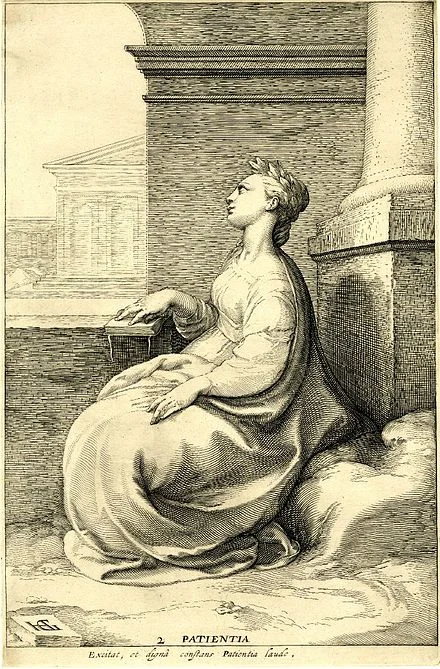
"Patientia,'' by Jan Saenredam.
"My father was often impatient during March, waiting for winter to end, the cold to ease, the sun to reappear. March was an unpredictable month, when it was never clear what might happen. Warm days raised hopes until ice and gray skies shut over the town again. ''
-- Tracy Chevalier (British-American novelist)
Jim Hightower: On tax law, mission accomplished!

Via OtherWords.org
Remember last year when Donald Trump and his congressional Trumpeteers bragged that their “yuge” tax cut for corporations would spark a “yuge” corporate spending spree to create new jobs and higher wages?
Well, just as they promised, we’re now seeing corporate chieftains spending wildly — on themselves, not on boosting America’s economy.
Mainly, they’re pouring billions into a self-serving scheme called “buybacks” — buying up shares of their own corporation’s stock. Google executives, for example, are spending $8.6 billion from their taxpayer bonanza on buybacks, PepsiCo is in for $15 billion, and Apple for $30 billion.
Why? Because reducing the total number of shares on the market increases the value of each remaining share, giving those lucky shareholders a bigger piece of the company’s profit pie. Yes, less magically means more!
But it’s not magic, it’s manipulation. And the top executives doing the manipulating are primary beneficiaries, since most of their pay comes in the form of millions of dollars’ worth of their corporation’s stock.
If Trump and the GOP Congress had really intended their trillion-dollar giveaway of the people’s tax revenue be spent for the benefit of all, they would’ve required the corporate recipients to plow the bulk of the money into our nation’s grassroots economy.
Instead, once again, our corrupt political officials duped taxpayers into giving away public funds in the name of workers. But they actually stiffed workers, enriched CEOs, increased inequality and diverted tax dollars from urgent national needs — and enabled corporate powers to donate even more corrupting campaign cash to the politicians and party doing this to us.
In other words, the Trump tax scam worked just as the GOP intended.
OtherWords columnist Jim Hightower is a radio commentator, writer, public speaker, and editor of the populist newsletter, The Hightower Lowdown.
Reconceiving feminism in exquisite Exeter, N.H.

Digital photograph by Ella Cooper, in the show "Representing Feminism(s),'' at the Lamont Gallery at Phillips Exeter Academy through April 21.
The gallery says: "This exhibition is an exploration of the nature, utility, and meaning of feminism by over 30 contemporary artists working in a variety of mediums. The intent was "to consider how feminism can be represented and, when necessary, reconceived."
xxx
Exeter is a gorgeous town with a deep pre-Revolutionary War history and close to the vast and beautiful marshes and rocky coast of New Hampshire's small seacoast.


Looking toward Great Bay at low tide.
Billy Graham did very well in the evangelical biz

Adapted from Robert Whitcomb's "Digital Diary,'' in GoLocal24.com:
Billy Graham’s death last week at 99 brought back memories of hearing his stentorian voice on radio and TV over the decades. What a set of pipes! Loved it! That voice, his charm and charisma and his ability to curry favor with (and sometimes suck up to) the rich and powerful made him rich and for a long time one of the most famous Americans. He sometimes seemed to forget that Jesus is quoted as saying: “My kingdom is not of this world.’’ dHe
In his rather theatrically self-deprecatory way, he wallowed in luxury celebrityhood. And he used powerful politicians to promote himself and they used him to curry favor with the voters, especially white Southerners.
I found some of his biblical literalism idiotic, along with some of his theology, although who knows how much he really believed in himself. And he rephrased some of his views over the years to keep up with some social and political changes and avoid offending too many potential customers.
I have always found people telling us what God thinks to be a bit, well, presumptuous. But it’s good for business from the millions who want certainty in this crazy world and are terrified by the prospect of death. As one wag put it, the Rev. Mr. Graham promised a nice condo in heaven.
Billy Graham was far from the richest man in the evangelical industry, but died with a net worth of $25 million. The lucrative family business continues: His son Franklin Graham runs an outfit called Samaritan’s Purse that for 2014, the most recent year for which I can find his compensation, paid him a salary of $622,252.
Franklin is also a devoted Republican, and a fan of that Christian gentleman Donald Trump. To think that Billy Graham used to rail against “wickedness, licentiousness and debauchery.” (I have long wondered, by the way, how many abortions the president may have had something to with….)
The best thing about Billy Graham was that he moved earlier than most of his fellow white peers in the evangelical biz to embrace integration and other elements of racial justice, which discomfited many of his Southern white followers. That took some courage. But then it was also good business: It expanded his customer base. He generally became less judgmental, more tolerant and increasingly ecumenical as he aged. Very admirable!
(But I still remember the anti-Semitism he expressed in conversations with Richard Nixon. Or was he mostly just sucking up again to power?)
Meanwhile, it’s predictable that the Republican-controlled Congress would arrange for the preacher/businessman’s body to lie in honor in the Capitol Rotunda. Many, many other Americans, including scientists, physicians, inventors and, yes, politicians, did far more than the Rev. Mr. Graham to improve American lives. But many of those weren’t Republicans. This is all about appealing to the GOP base.
'Hover by this garden bed'

"Wind,'' from TacuinTum Sanitas, a Medieval handbook.
"Ho, wind of March, speed over sea,
From mountains where the snows lie deep
The cruel glaciers threatening creep,
And witness this, my jubilee!
Roar from the surf of boreal isles,
Roar from the hidden, jagged steeps,
Where the destroyer never sleeps;
Ring through the iceberg’s Gothic piles!
Voyage through space with your wild train,
Harping its shrillest, searching tone,
Or wailing deep its ancient moan,
And learn how impotent your reign.
Then hover by this garden bed,
With all your willful power, behold,
Just breaking from the leafy mould,
My little primrose lift its head!''
-- "March,'' by Elizabeth Drew Stoddard
'Nothing to communicate'

Jan. 22, 1848 map in The New York Herald showing North American telegraph lines.
"Our inventions are wont to be pretty toys, which distract our attention from serious things. They are but improved means to an unimproved end,… We are in great haste to construct a magnetic telegraph from Maine to Texas; but Maine and Texas, it may be, have nothing important to communicate.''
-- Henry David Thoreau, from Walden (1854)
Chris Powell: A liberal state's failed poverty policy

Gov. Dannel Malloy wants to push more low-cost housing into Connecticut's suburbs. He proposed the other day to require suburbs to meet state standards for such housing on pain of losing some state financial aid.
But last year the General Assembly passed a bill weakening requirements for towns to have low-cost housing, enacting it over the governor's veto, so his new proposal seems unlikely to get far.
Connecticut does have a housing problem, since most municipalities obstruct low-cost housing with their zoning regulations. But while the housing problem goes all the way back to the settlement of the state by Europeans, even today nobody can call it by its right name: poverty.
Three centuries ago Connecticut's first towns didn't let just anyone reside in them. People had to apply for residency and were voted on by those adult males who were already "admitted inhabitants." While the early towns were religious communities, they aimed not just to exclude freethinkers but also to avoid the expense of supporting people who could not support themselves, as back then simple survival was a struggle and there wasn't much to spare.
Exclusive zoning has come to replace the "admitted inhabitants" procedure because, while life is infinitely easier today, poverty is still undesirable to be around even as public policy manufactures it by destroying the family and subsidizing indolence and anti-social behavior so much that they can pay more than self-sufficiency and responsibility. Poverty has become such a big and politically influential industry in Connecticut that the failure of poverty policy to diminish poverty cannot even be acknowledged, much less addressed.
Hence Connecticut's political compromise. Those who are not poor agree to keep paying for the poverty industry as long as zoning confines it to the cities and deteriorating old mill villages.
Some people argue that poverty is less a function of poverty policy than tax and school financing policy. But state government long has been financing most of city school budgets without producing any educational or demographic improvement, and taxes are not driving city residents to the inner suburbs once they decide they want better lives any more than taxes have been driving many city parents to remove their children from neighborhood schools to "magnet" schools.
Rather, even many poor people themselves don't want to live around the pathologies of poverty. What is portrayed as the snobbery of the rich is actually widely shared.
Nothing about poverty is likely to improve when deterioration is mistaken for progress, as it was the other day when New Haven's school system announced that it will serve dinner to students in eight schools and study serving dinner in all its other schools. Most city schools already serve breakfast and lunch, and dinner is said to be necessary because many students don’t get it at home.
Once dinner is served at school, what's left but to have the teachers take the kids home with them at night?
Of course kids have to be fed, but ordinarily the inability or refusal of parents to feed their kids might be considered child neglect or abuse. Even so, the state Department of Children and Families declined a request for comment on the New Haven kids not being fed at home. Instead the situation will be legitimized and institutionalized.
The governor is a liberal, and liberalism used to boast that it sought to address the causes rather than just the symptoms of problems. Connecticut's housing disparities are mere symptoms of the failure of poverty policy, as are the state's education, crime, and health disparities, but in government here nothing succeeds -- financially, at least -- like failure.
Chris Powell is a columnist for the Journal Inquirer, in Manchester, Conn., and a frequent contributor to New England Diary.
Stone guideposts for roaming
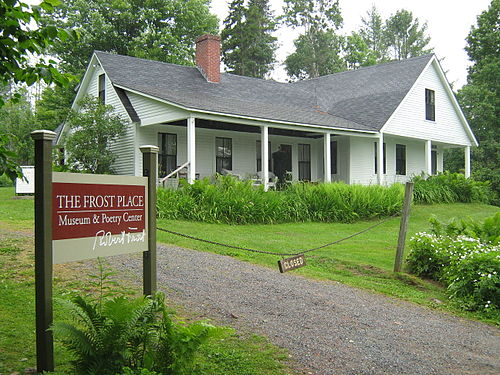
"When Robert Frost passed this stand of birch
each gray curl held his eye at word-point.
No rock but gave him pause. He’d reach to touch
it where it lay. Stones taught him to roam
by showing him where he’d been. Freedom
to go meant knowing when and where to stay.''
-- From “Unlettered,’’ by Edward J. Ingebretsen, based on a walk near Frost’s former home in Franconia, N.H. in the shadow of Franconia Range, the highest peaks of the White Mountains except for the Presidential Range.