
Vox clamantis in deserto






Frank Carini: Billionaire capitalist pushes for regulation to address the worsening climate crisis
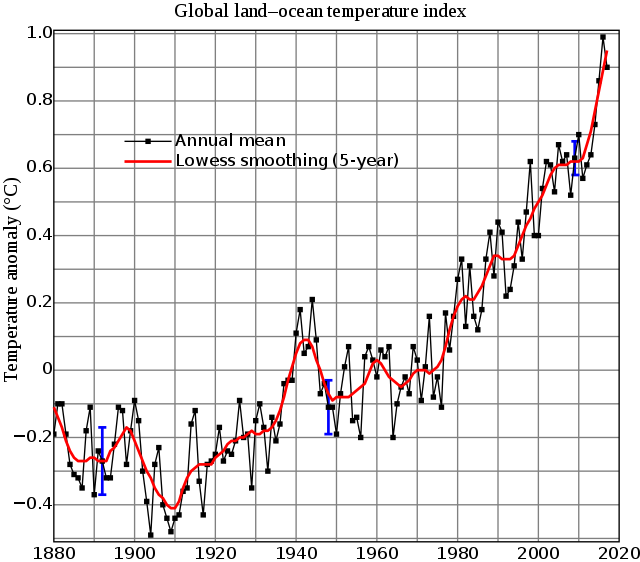
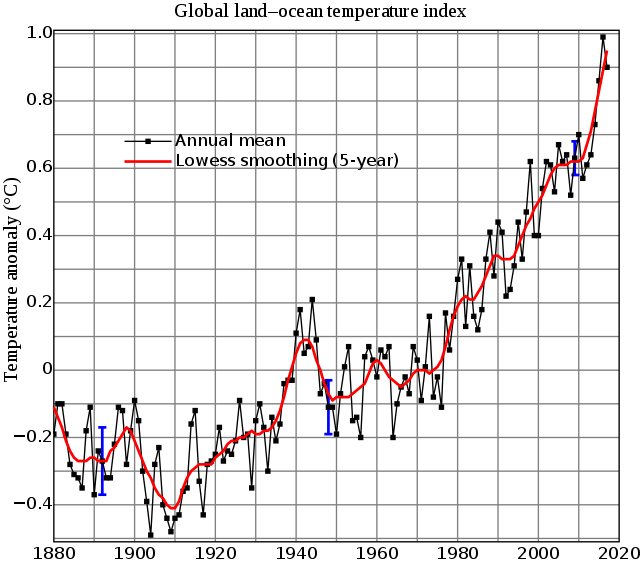
Global mean surface-temperature change from 1880 to 2017, relative to the 1951–1980 mean. The black line is the global annual mean, and the red line is the five-year local regression line. The blue uncertainty bars show a 95% confidence interval.
Via ecoRI News (ecori.org)
WESTPORT, Mass. — The talk was titled “Race of Our Lives: Trying to Live Successfully with Climate Change,” and it was one of the best presentations about climate change, its impacts, its causes and the solutions that this reporter has attended.
The speaker, Jeremy Grantham, is a billionaire, has been called a “famed investment manager” and a “legendary investor,” and is a self-proclaimed capitalist. He’s also a renowned environmentalist and philanthropist. He spoke with passion, honesty and frustration, all sprinkled with a touch of profanity.
Despite his affinity for capitalism, the venture capitalist had no problem blaming his favorite economic system for many of the climate-related challenges now facing the world.
“Capitalism is mythically good at everything, but there are a handful of things it doesn’t do well,” said Grantham, noting that it has helped orchestrate a tragedy of the commons. “Capitalism will pollute at will. It will always take the cheap route unless mandated not to. To a capitalist, grandchildren have no value.”
He noted that all but a few corporations are “profit maximizers.” He mentioned Unilever as a rare exception to the rule.
The Westport resident co-founded the global investment management firm Grantham, Mayo, van Otterloo four decades ago. Prior to that, Grantham co-founded Batterymarch Financial Management in 1969. That company became a pioneer in quantitative investing.
Grantham has made a fortune for himself and his clients, and 20 years ago he began putting a sizable slice of his own wealth into environmental charities. In 1997, he and his wife, Hannelore, used their shared wealth to create the Grantham Foundation for the Protection of the Environment. The Boston-based organization “seeks to raise awareness of urgent environmental issues” and believes “climate change represents the world’s primary environmental threat today.”
The husband-wife team launched their foundation to concentrate on climate change and agriculture. Their philanthropy has since expanded its areas of focus to include renewable energy. Grantham’s interest in climate change was forged by global travels that exposed him to masses of clear-cut forests.
Grantham called the intersection of climate and finance a “sparsely populated space.” He’s been writing about the implications of climate change and resource scarcity for several years. His writings are published in his quarterly investor letters. He has given climate presentations to the Untied Nations, the Gardening Club of America and at an MIT Climate CoLab conference. On March 4, he was the featured speaker at the Westport River Watershed Alliance’s annual meeting at Bittersweet Farm on Main Road, in Westport.
His climate-change concerns center on the issues of overpopulation and climate emissions/fossil-fuel use. He said overpopulation and climate change have partnered to produce a food-shortage problem that has led to the overuse of fertilizers and the creation of superbugs. He noted that the amount of carbon dioxide in the atmosphere has grown by nearly 40 percent since the Industrial Revolution.
“In a blink of any eye we added 120 parts per million of carbon dioxide to the atmosphere,” Grantham said. “We will add another 120 before we are done.”
The parts-per-million stress point, according to scientists, academics and the Intergovernmental Panel on Climate Change, is 350 ppm of atmospheric carbon dioxide. In 2013, CO2 levels surpassed 400 ppm for the first time in recorded history. Currently, the level is at 408.35 ppm.
Humankind’s appetite for fossil fuels has also made us more productive in bed.
“The Industrial Revolution, the use of coal and oil, hurled us into the future,” Grantham said. “Three hundred hours of human labor were replaced with a gallon of fuel. Fossil-fuel power has carried us farther than is sustainable. ... With surplus food, we began to breed like rabbits. Like rats and beavers, we moved up to the limit of the food supply.”
When Grantham was born, in 1938, the worldwide population was 2 billion. In his lifetime, the 79-year-old has seen the planet’s population more than triple. By 2100, the population is projected to reach between 10 billion and 16 billion. He said female education and family planning, most notably in Africa, are a must if the world wants to adequately address this growing problem.
“A more careful population in Africa is needed,” Grantham said. “It’s the biggest problem we face in regards to overpopulation, but it’s hard to talk about in NGO circles.”
Population, climate change and consumption are inextricably linked in their collective global impact. This triumvirate is stressing the planet’s finite collection of natural resources.
The continuing increase in carbon dioxide and other greenhouse gases, such as methane, are causing a rise in atmospheric temperature, which in turn melts glaciers and ice sheets and raises sea levels.
Grantham said the warming atmosphere holds more water and contains more energy, increasing the likelihood and severity of extreme weather events such as downpours, when an inch or more of rain falls. His PowerPoint presentation showed that the combination of higher temperatures and shifting rainfall patterns, resulting in more droughts and flooding, is decreasing crop yields.
“The climate is moving much faster than anyone would have expected,” he said.
Grantham noted that humans have been around for about 300,000 years and began practicing agriculture some 12,000 years ago. But he points to the past 100 or so years as the period that has accelerated global warming.
He said he is far more optimistic about technology’s ability to solve energy problems than most environmentalists. But he’s pessimistic about our ability to feed a rapidly growing global population.
“If we froze the population at 1.5 billion from 100 years ago, we would have no problems. We’d be cruising right along. We would have solved global poverty,” Grantham said. “With today’s population at 7.5 billion, if we froze the tech from 100 years ago, we’d be absolutely toast. We’d have no chance.”
Besides placing the blame of runaway global warming at the feet of capitalists and human reproduction, Grantham also took at shot an unexpected group: climate scientists. He said for far too long scientists have protected themselves against the risk of making an overstatement rather than accurately noting the true climate danger the planet faces.
“We're making a dreadful mistake by understating climate science,” he said. “Scientists should say what they honestly believe instead of being so damn conservative.”
He noted that during the past year more scientists have begun to admit that climate change is accelerating.
“We’re not just losing the war, but we’re losing at an accelerated rate,” Grantham said. He noted that “the powers of disinformation fueled by fossil fuels” are a big reason why we are now in this predicament. The gutting of environmental regulations is only making the problem more profound, he added.
“Speaking as a capitalist, we need regulation and government involvement,” he said. “Good regulation is a must.”
Frank Carini is editor of ecoRI News.
Exploring natural elements

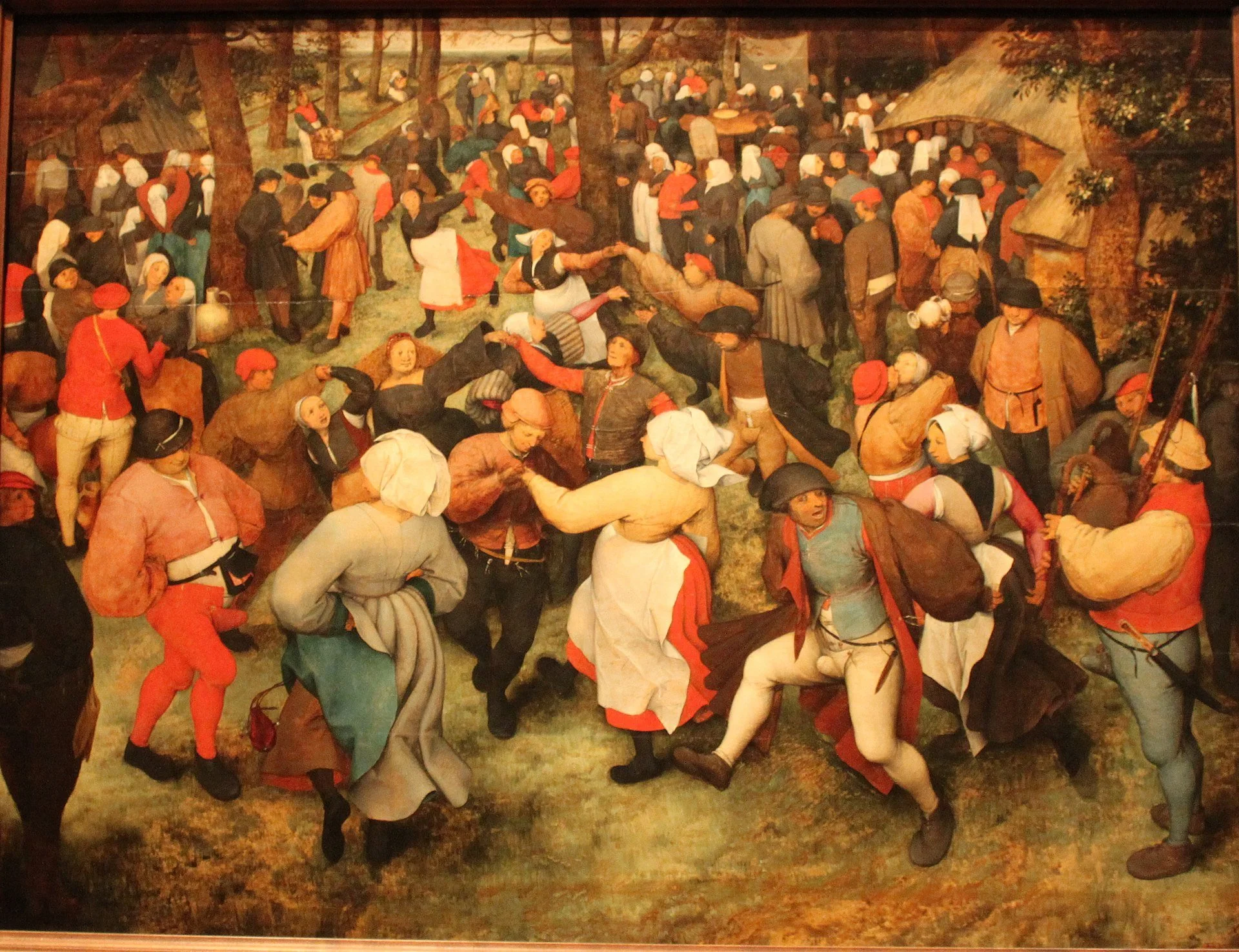
"2 Out of 4 Elements-Earth Plowed'' (watercolor on paper), by Ed Ferszt, in his show "New Work,'' through March 31 at the Hera Gallery, Wakefield, R.I. He uses art to explore the natural elements of the rural and exurban environment of southern Rhode Island, whose unofficial name is South County.
Mr. Ferszt has long used water-based media, with his most recent work on stretched paper. He creates both small and large watercolors.

Cottages at Roy Carpenter Beach, in Matunuck, in South County, whose southernmost strip consists of beautiful barrier beaches.
-- Photo by Swampyank
'Pocahontas' should take a DNA test

Portrait engraving done in 1616 of Pocahontas.
Adapted from Robert Whitcomb's "Digital Diary,'' in GoLocal24.com:
Massachusetts Sen. Elizabeth Warren, who’s apparently thinking about running for the Democratic presidential nomination in 2020, has been bedeviled by criticism from President Trump (who calls her “Pocahontas’’) and other Republicans about her assertion that she has Native American ancestors. Other than referring to family stories, she hasn’t come up with indisputable proof. Well, she could take a DNA test. Such tests aren’t perfect, but if it does show she has Indian blood that would end the debate.
Some families have myths about their ancestors that last for many generations. For example, there was long a story in part of my father's family that there been in-breeding between their English colonist ancestors in eastern Massachusetts and members of the Wampanoag Tribe. And indeed, some members of my father's family, including himself, looked a bit Native American -- reddish brown skin, etc. My father looked like an Indian brave crossed with the Arrow Collar Man.
But my sister did a DNA on herself and found no evidence of Native American (perhaps more accurately called Siberian American) ancestry. Maybe they just looked Welsh....
After the latest slush storm

"Moving Shadows" (oil and embedded rice paper on braced birch panel), by Fran Busse, at Alpers Fine Art, Andover, Mass.
Boston sucking in the health-care biz; better trains, please

Main entrance of Massachusetts General Hospital, in Boston. MGH is the flagship of Partners HealthCare.
It’s unclear what precisely is going on with the new talks among Partners HealthCare, the giant Boston-based hospital system, and Rhode Island’s Care New England (CNE) and Lifespan. Partners of course has been trying to take over CNE, and now it may be trying to take over Lifespan, too. The participants’ statement that they are assessing how “they might work together to strengthen patient care delivered in Rhode Island’’ is smoke that may camouflage what might really be going on: a plan for Partners to take over most of the Ocean State’s hospitals. (Who knows what might happen with South County Hospital, which is still independent. Westerly Hospital is part of the Yale New Haven Health System.)
The effect of a takeover by Partners would be that much (most?) of Rhode Island’s health care would be run from Boston, one of the most important medical centers on Earth. It would mean that, more and more, complex procedures for Rhode Islanders’ very serious illnesses and injuries would be performed in Boston, because of the efficiencies of scale and the density of specialists there, and not in Rhode Island, which would offer mostly primary and behavioral- and mental-health care.
It’s unclear what the impact would be on the Brown Medical School. Butler, Bradley, Hasbro Children’s, Miriam, Rhode Island and Women & Infants’ hospitals, as well as the VA Medical Center in Providence, are all teaching institutions for Brown. Partners’ facilities are teaching hospitals for the behemoth Harvard Medical School. Tough competition.
A Partners takeover of CNE and Lifespan, besides providing very lucrative golden parachutes for CNE and Lifespan executives – bosses of enterprises being acquired love mergers because they make a personal killing -- would leave an enterprise with huge pricing power. You can be pretty sure that it would take full advantage of this by jacking up prices, just as Partners has done in Greater Boston. That has drawn much scrutiny from Massachusetts regulators and long investigative pieces from The Boston Globe.
Rich and powerful Greater Boston often seems to suck up a lot of oxygen in New England. Still, overall, Rhode Island benefits from being so close to a world city, with its massive wealth creation and cultural richness. Indeed northern Rhode Island is increasingly part of Greater Boston – a cheaper residential and workplace option for people who need to be close to, especially, downtown Boston/Cambridge. Consider that Rhode Islanders will soon be able to apply for some of the 2,000 jobs that the increasingly monopolistic Amazon has just announced it will add in Boston, which is also still a candidate for the company’s much-hyped “second headquarters.’’ (Will the massive coastal flooding that seems to be an increasing threat to Boston’s Seaport District scare them away?)
The improvements in Boston-Providence MBTA commuter rail service promoted by a group called TransitMatters would improve the benefits to Greater Providence of being close to Boston. Few if any projects enrich a metro area like good mass transit.
To read the TransitMatters.org on this, please hit this link:
http://transitmatters.org/regional-rail-doc
Among the organization’s many recommendations is for trains on the Boston-Providence line to run every 15 minutes at peak times and every half hour in off-peak times, as well as free transfers among commuter trains, buses and subways. The aim is also to cut the MBTA train time between Providence and South Station, in Boston, by, say 20 to 25 minutes.
This may all seem pie in the sky until you see that Europe and East Asia already have such service – actually, some of it is even better. A major reason is that they see state-of-the-art passenger train service as crucial for the socio-economic health of their metro regions and are willing to levy the taxes needed to provide it, unlike in private-opulence-public-squalor America.
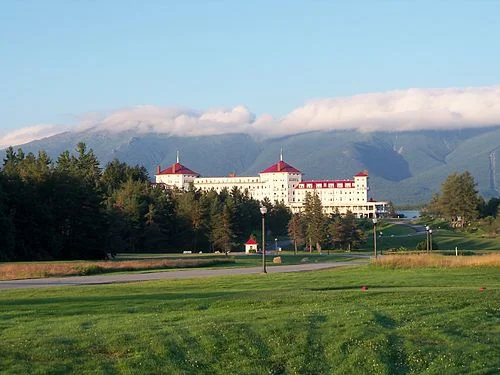
History and luxury in a surviving grand hotel in the Granite State
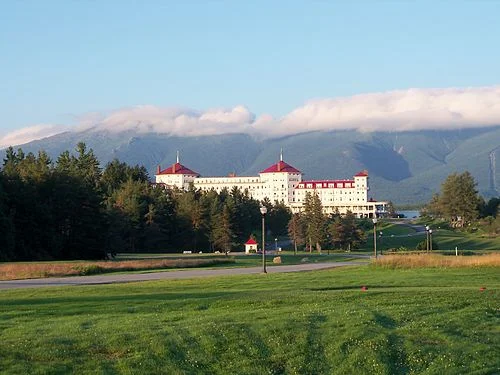
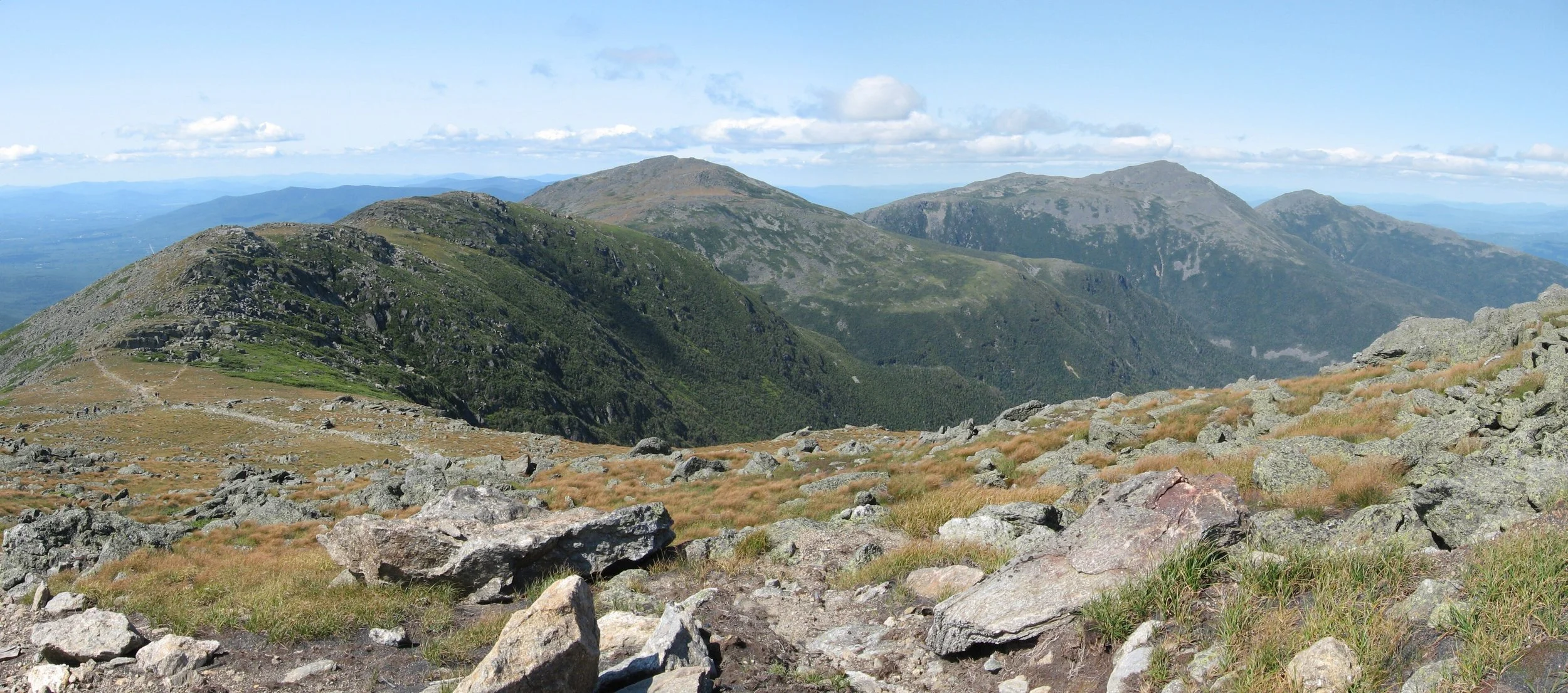
The Mount Washington Hotel, with the Presidential Range looming above.
The Mount Washington Hotel, in Bretton Woods, N.H., is one of the few remaining grand hotels/ resorts from the great age of such institutions, around the turn of the last century. It's expensive to stay there but provides wonderful memories of adventures during each of the White Mountains' dramatic four seasons. Its service is superb and recall being on a luxury transatlantic ocean liner before big jets pretty much ended that business. Just sitting on the hotel's vast porch in good weather is a joy.
New Hampshire's coastal equivalent of the Mount Washington Hotel is Wentworth-by-Sea, in New Castle.
In July 1944, the hotel was the site of the Bretton Woods International Monetary Conference, which helped stabilize the post-World War II economic and political world by establishing the World Bank and International Monetary Fund. (The United Nations was officially funded a year later, at the San Francisco Conference.)
But now the Bretton Woods arrangements are under stress from a revival of short-sighted extreme nationalism, with its accompanist protectionism. Sad. The conference helped make possible the greatest stretch of widely shared prosperity in history.
Moving on from 'snow-mobiling'

1921 Ford Model T snowmobile.
"My sleek, streamlined machine's lying in a drift
Pointed at Ely still,
And there's a shrub I didn't kill
Beside it, and there may be someone miffed
Because I chased his cow.
But I am done with snow-mobiling now.
The scent of spring is heavy in the air...''
-- From "After Snow-Mobiling,'' by Alec Bond
Tim Faulkner: Report takes aim at using wood for energy

Heater using wood pellets.
Via ecoRI News (ecori.org)
A new study contends that wood-fueled power plants continue to be a polluting energy source especially as their use grows. The report Not Carbon Neutral, recently published in Environmental Research Letters, challenges the claim that wood pellets, trees and forestry residue have a negligible effect on greenhouse-gas emissions when used to generate energy.
The author, Mary Booth, argues that many biomass/bioenergy plants and pellet manufacturers are using whole tree “rounds” instead of wood byproducts and tree residue, as they claim. And even if the wood-power and pellet industry adhered to sustainable sourcing of wood, carbon dioxide emissions are still much higher than claimed and similar to coal and other fossil fuels, according to the report.
“This analysis shows that power plants burning residues-derived chips and wood pellets are a net source of carbon pollution in the coming decades just when it is most urgent to reduce emissions,” Booth said.
Booth reaches her conclusion by including fossil-fuel emissions from the shipping and manufacturing of wood fuels, such as wood pellets. Wood pellets are produced in the southeastern United States and most are shipped to biomass power plants in the United Kingdom and Belgium. The European Union classifies woody biomass as carbon neutral and offers subsidies for switching from coal and other fossil fuels to wood.
However, a growing body of research claims that it takes decades for replanted forests to recoup the carbon emissions released from trees used as fuel or to make wood pellets. Researchers and environmentalists are raising questions as climate scientists urge greenhouse-gas reductions during the next 10 to 20 years, to curb some of the worst effects of climate change.
While Massachusetts has restrictions on biomass power plants, the state released guidelines in December for biomass boilers and industrial heating systems, systems that qualify for renewable-energy incentives. Gov. Charlie Baker supports woody biomass and sees it as a boost to the state’s lumber industry.
Rhode Island imports electricity from woody biomass power plants in northern New England for its program to deliver renewable energy to the regional grid. As of 2015, according to the latest report available, 34 percent of Rhode Island’s renewable-energy portfolio was supplied by woody biomass power plants.
President Trump supports biomass with his "all of the above" energy policy. On Feb. 13, Environmental Protection Agency Director Scott Pruitt visited New Hampshire, which has a handful of biomass power plants, to declare woody biomass a carbon-neutral energy “in appropriate circumstances.”
Booth lives in Pelham, Mass., and battles against local wood-burning power plants and state efforts to expand biomass. Her organization Partnership for Public Policy offers a global perspective on biomass energy.
“Even under the best-case scenario the carbon footprint is really big,” she said.
Booth directed her latest research toward the Intergovernmental Panel on Climate Change (IPCC), a United Nations organization that studies the causes and impacts of climate change. The IPCC endorses biomass if it is sourced from agriculture and forestry residues. But Booth noted that even if lifecycle emissions are ignored, the report “finds that even assuming the materials burned are true residues, up to 95 percent of the cumulative CO2 emitted represents a net addition to the atmosphere over decades."
And time is one part of the equation that can't be ignored.
“To avoid dangerous climate warming requires us to reduce power sector CO2 emissions immediately,” Booth said.
Tim Faulkner is a reporter and writer for ecoRI News.

Weird greening on trees

Beautiful but slightly unsettling parasitical growth spreading on trees in Little Compton, R.I., as we move into spring. It's a lichen found near the coast in damp areas and called Usnea.
This looks like a Japanese painting.
-- Photo by Lydia Davison Whitcomb
Pick the right provider and get money back
By JULIE APPLEBY
Laurie Cook went shopping recently for a mammogram near her home in New Hampshire. Using an online tool provided through her insurer, she plugged in her ZIP code. Up popped facilities in her network, each with an incentive amount she would be paid if she chose it.
Paid? To get a test? It’s part of a strategy to rein in health care spending by steering patients to the most cost-effective providers for non-emergency care.
State public employee insurance programs were among the early adopters of this approach. It is now finding a foothold among policymakers and in the private sector.
Scrolling through her options, Cook, a school nurse who is covered through New Hampshire’s state employee health plan, found that choosing a certain facility scored her a $50 check in the mail.
She then used the website again to shop for a series of lab tests. “For a while there, I was getting a $25 check every few weeks,” said Cook. The checks represented a share of the cost savings that resulted from her selections.
Lawmakers in nearby Maine took the idea further, recently enacting legislation that requires some private insurers to offer pay-to-shop incentives, part of a movement backed by a conservative foundation to get similar measures passed nationally.
Similar proposals are pending in a handful of other statehouses, including Virginia, West Virginia and Ohio.
“If insurance plans were serious about saving money, they would have been doing this stuff years ago,” said Josh Archambault, a senior fellow at the Foundation for Government Accountability, a limited-government advocacy group based in Naples, Fla., that promotes such “right-to-shop” laws. “This starts to peel back the black box in health care and make the conversation about value.”
Still, some economists caution that shop-around initiatives alone cannot force the level of market-based change needed. While such shopping may make a difference for individual employers, they note it represents a tiny drop of the $3.3 trillion spent on health care in the U.S. each year.
“These are not crazy ideas,” said David Asch, professor of medicine, medical ethics and health policy at the Penn Medicine Center for Health Care Innovation in Philadelphia. But it’s hard to get consumers to change behavior — and curbing health care spending is an even bigger task. Shopping incentives, he warned, “might be less effective than you think.”
If they achieve nothing else, though, such efforts could help remove barriers to price transparency, said Francois de Brantes, vice president and director of the Center for Value in Health Care at Altarum, a nonprofit that studies the health economy.
“I think this could be quite the breakthrough,” he said.
Yet de Brantes predicts only modest savings if shopping simply results in narrowing the price variation between high- and low-cost providers: “Ideally, transparency is about stopping folks from continuously charging more.”
Among the programs in use, only a few show consumers the price differences among facilities. Many, like the one Cook used, merely display the financial incentives attached to each facility based on the underlying price.
Advocates say both approaches can work.
“When your plan members have ‘skin in the game,’ they have an incentive to consider the overall cost to the plan,” said Catherine Keane, deputy commissioner of administrative services in New Hampshire. She credits the incentives with leading to millions of dollars in savings each year.
Several states require insurers or medical providers to provide cost estimates upon patients’ requests, although studies have found that information can still be hard to access.
Now, private firms are marketing ways to make this information more available by incorporating it into incentive programs.
For example, Vitals, the New Hampshire-based company that runs the program Cook uses, and Healthcare Bluebook in Nashville offer employers — for a fee — comparative shopping gizmos that harness medical cost information from claims data. This information becomes the basis by which consumers shop around.
Crossing Network Lines
Maine’s law, adopted last year, requires insurers that sell coverage to small businesses to offer financial incentives — such as gift cards, discounts on deductibles or direct payments — to encourage patients, starting in 2019, to shop around.
A second and possibly more controversial provision also kicks in next year, requiring insurers, except HMOs, to allow patients to go out-of-network for care if they can find comparable services for less than the average price insurers pay in network.
Similar provisions are included in a West Virginia bill now under debate.
Touted by proponents as a way to promote health care choice, it nonetheless raises questions about how the out-of-network price would be calculated, what information would be publicly disclosed about how much insurers actually pay different hospitals, doctors or clinics for care and whether patients can find charges lower than in-network negotiated rates.
“Mathematically, that just doesn’t work” because out-of-network charges are likely to be far higher than negotiated in-network rates, said Joe Letnaunchyn, president and CEO of the West Virginia Hospital Association.
Not necessarily, counters the bill’s sponsor, Del. Eric Householder, who said he introduced the measure after speaking with the Foundation for Government Accountability. The Republican from the Martinsburg area said “the biggest thing lacking right now is health care choice because we’re limited to our in-network providers.”
Shopping for health care faces other challenges. For one thing, much of medical care is not “shoppable,” meaning it falls in the category of emergency services. But things such as blood tests, imaging exams, cancer screening tests and some drugs that are administered in doctor’s offices are fair game.
Less than half of the more than $500 billion spent on health care by people with job-based insurance falls into this category, according to a 2016 study by the Health Care Cost Institute, a nonprofit organization that analyzes payment data from four large national insurers. The report also noted there must be variation in price between providers in a region for these programs to make sense.
Increasingly, though, evidence is mounting that large price differences for medical care exist — even among rates negotiated by the same insurer.
“The price differences are so substantial it’s actually scary,” said Heyward Donigan, CEO of Vitals.
At the request of Kaiser Health News, Healthcare Bluebook ran some sample numbers for a Northern Virginia ZIP code, finding the cost of a colonoscopy ranged from $670 to $6,240, while a knee arthroscopy ranged from $1,959 to $20,241.
Another challenge is the belief by some consumers that higher prices mean higher quality, which studies don’t bear out.
Even with incentives, the programs face what may be their biggest challenge: simply getting people to use a shopping tool.
Kentucky state spokeswoman Jenny Goins said only 52 percent of eligible employees looked at the shopping site last year — and, of those, slightly more than half chose a less expensive option.
“That’s not as high as we would like,” she said.
Still, state workers in Kentucky have pocketed more than $1.6 million in incentives — and the state said it has saved $11 million — since the program began in mid-2013.
Deductibles, the annual amounts consumers must pay before their insurance kicks in and are usually $1,000 or more, are more effective than smaller shopping incentives, say some policy experts.
In New Hampshire, it took a combination of the two.
The state rolled out the payments for shopping around — and a website to look for best prices — in 2010. But participation didn’t really start to take off until 2014, when state employees began facing an annual deductible, said Deputy Commissioner Keane.
Still, the biggest question is whether these programs ultimately cause providers to lower prices.
Anecdotally, administrators think so.
Kentucky officials report they already are witnessing a market response because providers want patients to have an incentive to choose them.
“We do know providers are calling and asking, ‘How do I get my name on that list’ [of cost-effective providers]?” said Kentucky spokeswoman Goins. “The only way they can do that is to negotiate.”
Trust eroding at L.L. Bean and across America

L.L. Bean shoe car (Bootmobile) in Freeport, Maine, on July 7, 2012. Besides being the headquarters town of Bean, Freeport has long hosted many outlet stores, some of them with high-end names. But some have struggled and even closed because of competition from Amazon, which has been destroying brick and mortar stores by the thousands across America. This has done a number on many Main Streets.
On a happier note, the Freeport area continues to have many fine seafood restaurants, as copious quantities of lobsters, clams, mussels and some species of finfish are still being pulled out of Casco Bay. (But cod are disappearing.....)
From Robert Whitcomb's "Digital Diary,'' in GoLocal24.com:
Trust is eroding in America. Our long-term prosperity and democracy depend upon its renaissance. The latest example of the decline of trust is the increase in fraud forcing L.L. Bean to change its famous 100 percent satisfaction guaranteed/return program. In this long-entrenched feature, the Freeport, Maine-based retailer had promised to repair or replace its products (mostly clothes and footwear) with no questions asked. Bean customers, like the old company itself, have had a reputation for integrity. But fraudsters have been proliferating in America (our commander in chief is one) and the company has increasingly been ripped off by dishonest consumers.
As Shawn Gorman, Bean’s executive chairman, said:
“Since 1912 …our commitment to customer service has earned us your trust and respect, as has our guarantee, which ensures that we stand behind everything we sell.
“{But}, a small, but growing number of customers has been interpreting our guarantee well beyond its original intent. Some view it as a lifetime product replacement program, expecting refunds for heavily worn products used over many years. Others seek refunds for products that have been purchased through third parties, such as at yard sales.
“Based on these experiences, we have updated our policy. Customers will have one year after purchasing an item to return it, accompanied by proof of purchase. After one year, we will work with our customers to reach a fair solution if a product is defective in any way.’’
The lowering of trust prevents and disrupts business relationships. Over time, it makes it harder to maintain prosperity. One of the most important factors in America’s success has been that it, like northwest European nations and Japan, has generally had a higher level of trust in business and government than in most of the world, with, of course, some famous exceptions. A collapse of trust would hammer the economy. But that’s the direction we seem to be taking.
You're a panorama

"Marche Au Supplice" ("March to Execution"), by Iwalani Kaluhiokalani, in her show "I See a Landscape in You,'' at Galatea Fine Art, Boston, through March 31.

Jill Richardson: Exploding myths about 'chain migration'

Immigrants arriving at Ellis Island about 1908.
Via OtherWords.org:
Let’s do a mental exercise.
Imagine that Jose moves to the United States from El Salvador. He comes here legally — he applied for the diversity visa lottery and he won! Then he quickly gathered together the required papers to prove to the U.S. that he was who he said he was, and he wasn’t a criminal, and he moved to New York.
Once Jose’s here, he brings his kids, his wife, and his parents. In the next two decades, his parents bring their other children, who bring their families, and so on.
In all, 40 members of their family resettle in the U.S. over a 20-year period. They do this by applying for and obtaining family reunification visas.
What is the net effect of Jose bringing his entire family on overall U.S. immigration?
Nothing. Absolutely nothing.
The U.S. has quotas for the number of immigrants who may come here legally in any given year. There are a few different types of visas, each with their own quotas.
Furthermore, there is a limit to how many people can come here from any one country, which primarily limits immigration from the countries with the most people coming here (like Mexico).
No matter how many relatives Jose wants to bring with him from his country, they still have to apply for visas — and there is a quota on how many visas will be given out.
You might have heard the term “chain migration.” It is a made-up, disparaging term for immigration for family reunification. It implies that allowing one single immigrant into the U.S. will unleash a flood of other family members all coming over the U.S. border.
It can’t. Not legally. Because we have quotas.
My family came here about a century ago. My great-great grandfather came here first. He then sent for his wife and kids, including my great grandmother.
They probably came here in the steerage. They were poor Eastern European Jews. My grandfather says that they were from Austria. I’m sure they spoke no English.
I don’t know how that generation fared economically at first. The story my family tells is that my great grandmother was nuts. My grandfather once said to me, “It makes sense my mother is from the same country as Hitler!”
By the time she died, although she was an unpleasant person to her near-relations, she was also quite well off.
I know what happened later, though. My grandfather served in the U.S. Marine Corps in World War II and then owned a small business. His children all went to college. My mother has a master’s degree, as do I.
Many families have stories like this. Maybe the first person in the family to immigrate here is poor and uneducated, but they work hard, and future generations are better educated, speak English, and become better off.
There’s a good argument for allowing families to reunite in the United States. Families support one another. A single person who comes here alone will have no support system.
Furthermore, I imagine a lot of the same people who are yelling that we should limit family reunification immigration are also the people who call themselves “pro-family values.”
What kind of family values is it to force families to split up?
Jill Richardson is a columnist for OtherWords.org
'Into her inner ear'
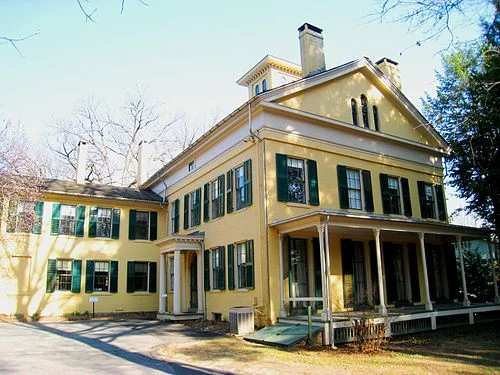
The Emily Dickinson House, in Amherst, Mass. Most critics consider Dickinson (1830-1886) one of the greatest American poets. The house is now a museum.
"As Emily Dickinson
would not come down, I'm
sorry, but I've felt the need to climb
the worn steps to her rook,
winding up the stair
as if into her inner ear.''
From "The Upper Story'', by Mary Jo Salter
Our muddy start to spring

"The date of the end of mud season may vary by four to six weeks, according to latitude and elevation. Baseball may be played in southern Connecticut by April 1 in most years, but it may be mid May before he infield is dry and ready for play in northern Maine.''
-- From the March chapter of The New England Weather Book, by David Ludlum.
'All about cold places'

-- Photo by Mike Kirby
''New Hampshire, Massachusetts, Vermont,
all cold places, that's what I learned from you,
all about cold places, England, too. Even in August,
the unmowed hay looked life drifting snow.''
-- From "Elinor White Frost {wife of Robert Frost} Speaks,'' by N.M. Brewka
Chinese imperial decadence

"Ming Huang and Yang Gueifei Listening to Music" (detail, ink and light color on silk; early Ming (Chinese) Dynasty), in the show "Dangerous Liaisons,'' at the Worcester Art Museum through April 22.
The show's curator writes:
"The exhibition is centered around the museum's Ming period handscroll painting titled "Ming Huang and Yang Guifei Listening to Music." The Tang Dynasty emperor, Ming Huang, ruled from 712-756 and his fateful love affair with and marriage to the young consort, Yang Guifie, became an enduring tale of love and tragedy.''
Through the centuries this tale has captivated poets as well as other writers and visual artists in both China and Japan. "Dangerous Liaisons Revisited" examines the story's appeal through works from the 7th to the 21st Century; each offering a different interpretation of the event and exploring the Tang Dynasty itself, ''an era marked by imperial decadence and sensuality. ''
Energy for cutting wood

"Here in Maine we draw from pioneer beginnings to maintain that pies are to cut wood on. That is, you tuck away a piece of pie and it will sustain you at your work, whereas food that digests on you is a sham and an imposter.''
-- John Gould, from his book Old Hundredth (1987)
Spring submersion

In a temporary front-yard pond in Little Compton, R.I., after the big March 2 coastal storm.
-- Photo by Lydia Davison Whitcomb.

Chris Powell: Schools shouldn't condone walkouts for gun control

See commentary on immigration below.
Nearly anything that gets their noses out of their cellphones and video games and into the wider world may be welcome, but there is a big problem with the high school walkouts being planned by students around the country to show support for more restrictions on guns.
The problem is that the students are required to be in school during the school day, not out protesting -- that the country is paying for them to be in school, that schools will suffer financial losses from the lost time, which will have to be made up if education is not to be sacrificed (teachers are not going to volunteer to give up their pay for the teaching time lost to a walkout), and that schools should not take sides in politics.
Of course there's no need for students to take time out from school to hold political rallies and otherwise get involved in politics. There is plenty of time for that after school during the week and on weekends. Indeed, by settling on a walkout during the school day rather than a rally after school or on a weekend, students seem to figure that they will draw more fellow students to their cause precisely by creating an opportunity to cut or disrupt classes.
That's part of what made the Vietnam War protests so popular at colleges during the late 1960s and early 1970s. Many colleges were so intimidated by the student disruptions that they not only canceled classes but awarded course credits to students who never earned them.
Will high school administrations condone and excuse the planned walkouts or will they impose normal discipline on students who cut or disrupt classes? Schools that condone or excuse the walkouts will be politicizing themselves. They also will be obliging themselves to do the same for all sorts of causes they may not want to approve.
xxx
NULLIFIERS WANT NO ENFORCEMENT: Federal immigration agents are being criticized for arresting illegal immigrants at the state courthouses in Stamford and New Haven as the illegals show up to answer for criminal charges pending against them. This tactic is said to interfere with the administration of justice, scaring people away from courthouses. Connecticut Chief Justice Chase T. Rogers last year asked the U.S. Justice Department and the U.S. Homeland Security Department not to do things this way.
But courthouses may be the best places to apprehend certain illegal immigrants, especially those in trouble with the criminal law, and complaints about the practice presume that federal immigration law simply should not be enforced, even though ordinarily federal law takes precedence over state law. That is, such complaints are another form of advocacy of nullification of federal law.
Illegal immigrants aren't supposed to be in the country in the first place. If their criminal cases are effectively terminated by deportation, state government will avoid a lot of expense.
This does not mean that the country's immigration problem should not be addressed humanely through new laws that give a chance of legal residency and eventually citizenship to illegal immigrants, especially those illegal immigrants who long have been living decently and productively in the country and those who were brought here as children, people who as a practical matter have no other home.
But most advocates of illegal immigrants seem not to want any immigration law enforcement at all. They seem to want the country's borders erased, which would be dissolution of the country.
Every day from Connecticut to California advocates of illegal immigrants denounce as "white supremacists" anyone who calls for restoring ordinary controls on immigration and ordinary security at the borders. Attempting political intimidation, these advocates for illegal immigrants are damaging their own cause.
Chris Powell is a columnist for the Journal Inquirer in Manchester, Conn., and a frequent contributor of New England Diary.