
Vox clamantis in deserto



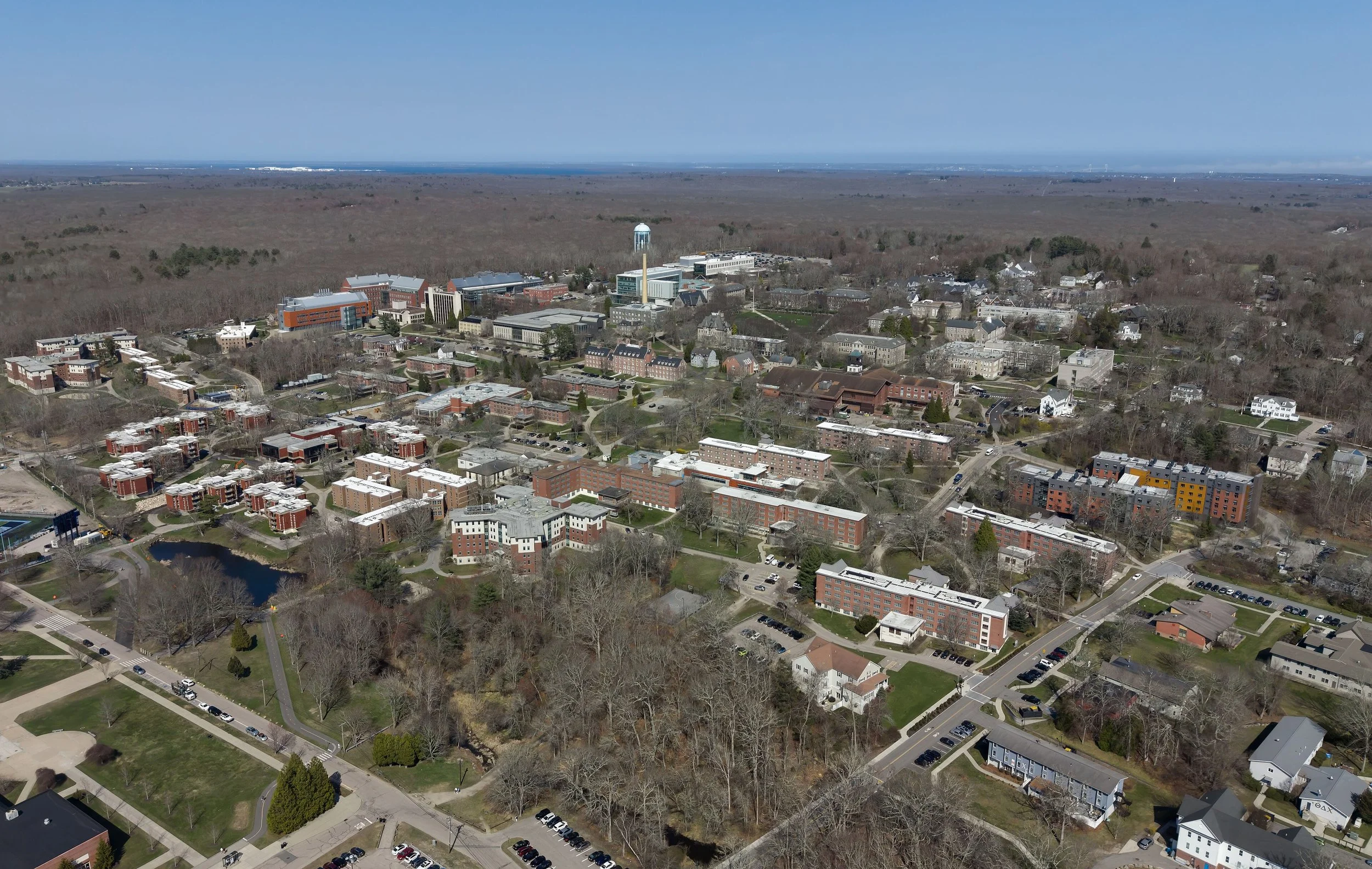

Math winners at MIT
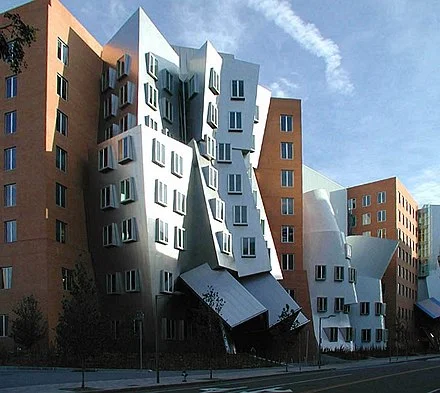
The Stata Center at MIT, whose campus is in Cambridge, Mass., and very close to Harvard.
This is from the New England Council (newenglandcouncil.com):
"Students at the Massachusetts Institute of Technology (MIT), a New England Council member, dominated the 78th Annual William Lowell Putnam Mathematical Competition, taking 17 of the top 25 spots in a field of 4,638 test-takers from 575 institutions last December. MIT can now claim the highest rank for four out of the past five years.
"The Putnam is one of the most prestigious mathematical competitions in the U.S. and Canada, with competitors attempting to solve 12 brutally challenging problems in six hours. The highest exam score was 89 out of a possible 120 points, with only 20 percent of participants earning a score above 13. Of the five top scorers who are named Putnam Fellows, four are from MIT with a total of 38 out of the 99 top scorers being MIT undergraduates.
“'I am delighted that MIT undergraduates have again won first place in the 2017 Putnam Competition. . .This stunning performance reflects the extraordinary talent of our students and the superb coaching that they receive here. Kudos to all participants and to the Department of Mathematics,' said Michael Sipser, the Donner Professor of Mathematics and Dean of Science at MIT. The school with the first-place team receives an award of $25,000 with each first-place team member receiving $1,000. Putnam Fellows receive an award of $2,500.
Raise the age to run for legislator
From Robert Whitcomb's "Digital Diary,' in GoLocal24.com:
One thing that the sex, etc., scandal around now resigned Rhode Island Republican state Sen. Nicholas Kettle reminded me of was that he was only 19 when he was elected as a Tea Party type – a sort of descendent of the 19th Century Know Nothing movement. There’s quite enough ignorance and lack of experience in our post-literate civic life without putting youths in important public jobs. The minimum age for legislators should be no younger than 25 or, better, 30.
Of course, a big problem is that politics has seemed so seedy – now worsened by the toxic swamp of social media and cable TV -- that far too many honest and experienced people who would be fine public servants don’t run for office. (Social media has been a particular disaster for civic culture.) The news media should help address this problem by making more of an effort to ladle out praise for good politicians as well as condemnation of the behavior of bad ones.
Meanwhile, could we at least keep callow youths out of public office.
Karen Gross: Do American colleges now need co-presidents?
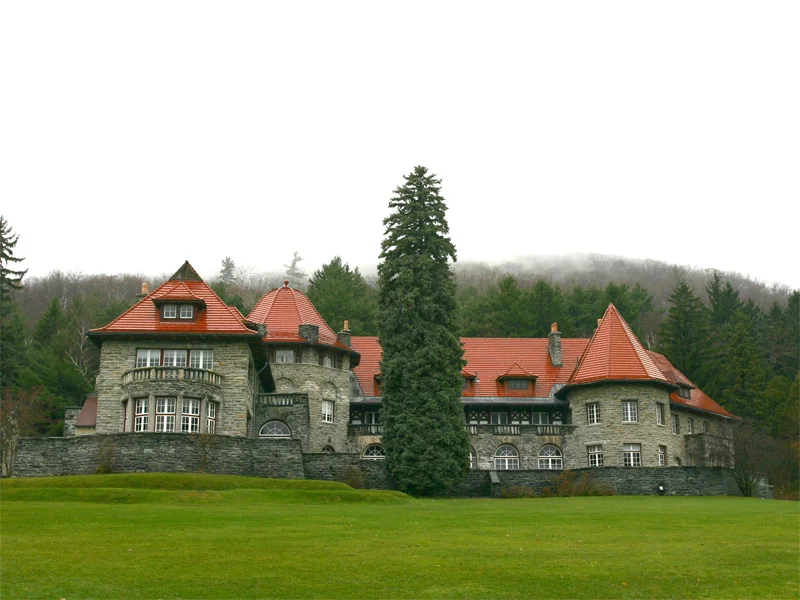
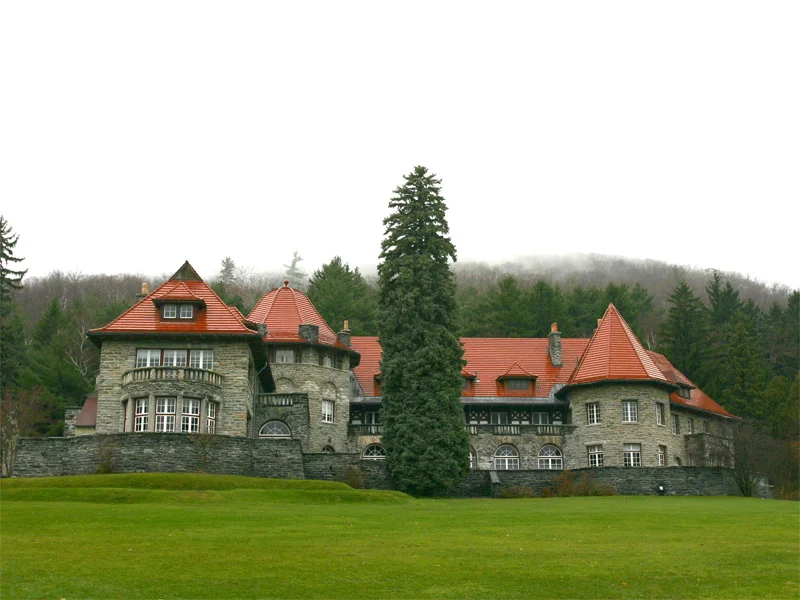
The Everett Mansion at Southern Vermont College, in the beautiful college town of Bennington, also site of a Revolutionary War battle. See more information below.
From the New England Board of Higher Education (nebhe.org):
Harvard University recently appointed a new president, Lawrence Bacow. He’s a well-known, highly regarded leader, having spent the better part of his adult life in educational administration. He’s been president of Tufts University and chancellor of the Massachusetts Institute of Technology; he also served on the Harvard Corporation, Harvard’s governing board, prior to being considered a presidential candidate. And the announcements have been clear: Even at Harvard, he has many real challenges ahead of him.
Few question the difficulties of being a college or university president in today’s era: The issues about, the needed skills are abundant and the stresses and strains real. Perhaps that is why there is even a recent book with the frightening title: Presidencies Derailed.
When I left (voluntarily) the small college I led for eight plus years (longer than the average tenure in such posts), I was and still am asked if I would consider another presidency. Until very recently, I always said “one and done.” While that is a demeaning term in collegiate athletics, I did not see anything negative in saying “one presidency is enough.” It is a lifestyle, not a job.
To be clear, Larry Bacow also apparently said, as he was leaving Tufts University, that he was one and done, reportedly using those very words. Yes, people can change their minds for sure.
But make no mistake about this: The work of college and university presidencies is getting harder not easier with the passage of time. The challenges are wide-ranging from fundraising and “friendraising” to quests for academic excellence and its quality measurement, from developing a healthy culture on campus without sexual assault and harassment to access and financial support for students who are not from wealthy families or elite high schools and prep schools. Add to all this, the problems that arise in athletics, running an art (and other) museums (and their collections), dealing with deferred maintenance and wrestling with the parameters of free speech.
And, we have a federal government that is challenging the role and importance of a college degree, a government that is also forcing us to re-think institutional finance due to changes in the tax laws that impact many while reflecting deeply on notions of truth and power as well as civility, cooperation and collaboration. Not all states are exactly higher education aficionados either.
Two heads are better than one?
A higher-education recruiter recently approached me regarding a college presidency (name and place deleted in the interests of privacy). I don’t know what possessed me to say what I said but I repeat it here: “I would not do another presidency unless it is constructed as a co-presidency.” I later added that, as an alternative, I would need to bring a senior team with me in the absence of a co-presidency, something that is antithetic to academic culture at most institutions.
Having said what I said, I needed to back it up in writing—which I have done. And the idea, which I will flesh out a bit more here, has most assuredly not met with universal approval. Indeed, some comments have been downright demeaning—suggesting that co-presidencies would replicate the good cop/bad cop aspects of parenting and thus lead to institutional disaster. Others were kinder, suggesting the idea was good but impossible, suggesting that finding co-presidents who worked well together would be like finding a celestial match. And to be clear, I don’t know any angels.
Let me start, in support of co-presidencies, with these observations. Educational administrative structure does not work well in many instances. We are not altogether clear on the role of provosts and deans, as debated in a recent piece in Insider Higher Ed. There are many openings for presidencies, some with awfully quick exits; just look at the Comings and Goings appearing in our emails on Wednesday of each week and produced by NEJHE. And there are searches, although rarely disclosed, that fail to find leaders who meet the criteria of trustees, faculty, staff and students. And presidents are staying in their roles for shorter time periods. Indeed, half the presidents report that they plan to serve for less than five years.
Don’t underestimate the price institutions pay—literally and figuratively—for failed presidencies and failed searches. The rush of recent resignations of longer-serving presidents is also not exactly a sign of leadership good health. And calls for resignation, even if not realized immediately, are institutionally disruptive.
So, why not consider a solution that has been tried outside academe. For example, co-presidencies are increasingly common in business. In late 2017, Apollo Global Management LP became the most recent example. Decades ago now, the Graduate School of Education at Harvard had co-academic deans. And within the academic sphere, there are several instances of interim co-presidents.
Risks and benefits
I could detail the risks of co-presidencies but people surely can imagine those with little effort. What’s harder is to see the benefits and demonstrate that in some situations, a co-presidency makes extraordinary sense. And those critiquing my idea misstate that I mean for co-presidencies to be appointed at every institution. Wrong. That is not what I am saying; nor would such appointment necessarily work. Knowing when they might work within an institution’s needs, culture, structure, challenges and history is key.
Instead of thinking about co-presidents like parents or conductors of an orchestra (a common analogy used when thinking about leadership generally and leading an educational institution with its multiple interests in particular), first think of airline pilots.
On every flight (virtually), there are co-pilots. Yes, there is a captain but his/her partner is called a co-pilot. They are a team that may have not even met before a particular flight. They know their tasks; they work together; they problem-solve together; they communicate; they collaborate. They each can do the other’s job to a tee. They are responsible for the lives of hundreds of people—together. And if there were a sudden need for an immediate decision and no time to discuss how to act (a rarity I assume), I cannot imagine most pilots bickering for long given that their own lives are at stake in addition to the lives of others; I assume one pilot makes the needed choice. Egos are, as a generalizable matter, in check—and I assume pilots have no shortage of ego strength.
Now consider surgical teams—two humans as opposed to a human surgeon and a robotic president (something even I am not suggesting at colleges and universities). Yes, there used to be a lead-surgeon in most surgeries, but in many of today’s complex medical situations, different established surgeons work together on different body parts and body systems as co-surgeons.
Surgeons may fight on television and perhaps in an occasional OR suite. But if I were to guess, good surgeons learn to work together and prefer working with fellow surgeons and anesthesiologists and nurses they know. Recent studies suggest some noticeable benefits of co-surgeries (with two attending physicians not one lead surgeon and one resident) although the literature is still not robust.
Decisions large and small
While some pilot and surgeon decisions are grand in size and impact, it is not as if every decision has massive consequences. Small decisions are delegated all the time on campuses. The big strategic decisions are usually ones that require both time and reflection and often require input from the board, among other groups; two people can do that as well or perhaps better than one person. And if there is an emergency or a disaster and an immediate decision must be decided, perhaps the co-presidents could agree with the board ahead of time as to who makes that call or the responsible person could change from month to month or year to year.
And if there were to be consideration of co-presidents, they would have to be interviewed both together and separately. I can see interview teams asking each possible co-president to discuss the strengths and weaknesses of his/her counterpart. And there would need to be opportunities to see them engaging with each other and with others including faculty, staff and students. Trustees too.
So, how would one come up with individuals who could be co-presidents? I think we’d need to change the paradigm for how presidents are identified and selected. I also think there would have to be a movement, a shift, in how the hiring is done, a response to the realities of the jobs that college/university presidents face.
A search
I can think of a half dozen people right now with whom I would and could happily serve as a co-president were I ever to consider another presidency (another issue altogether). To be fair, two of the people I think of have retired, but the point is I could have been a co-president with them. I do not think I am alone as an educator in being able to identify a handful of people with whom I could work well and intimately, without ego problems and with enormous sharing, communication and institutional benefit.
Here are three examples:
I can think of a current provost who wants to be a president who has real expertise in admissions, financial aid and diversity. He is younger than I am; I have known him for decades. We have worked on projects together (not in the same institution). He has served as a House Master in a campus dorm (with his wife and two children). He is thoughtful and innovative; he has a degree in Divinity. He has skills related to student life and admissions—and I can see us working on overall policy but then overseeing different areas of life within and outside a college’s walls.
There is a CFO, with whom I have worked in the Northeast, who would make an excellent co-president. He is multitalented and has served at many institutions, including in times of crisis. He also understands accreditation—both regional and programmatic, and he is decent and hard-working and thoughtful and careful. He sees problems before they actually are problems. He values teamwork.
Finally, and don’t worry because I see the risks here: there is my life partner, with whom I could easily be a co-president. He and I have very similar values and a desire to make the world a better place. We are both a product of the 1960s and you could call us both advocates and activists. But his experience in the working world (although he has taught and written including a major book in his field) is in government and technology. He has worked in several federal government agencies; he gets how institutions and processes work; he gets which technology is literally on the cusp. He cares about data and the role of big data. He understands cybersecurity and interoperability. He is smart and funny and fun and sociable.
And, none of these individuals would be scared to voice their views if they differed from my own. They all have.
My point is this: no one person in this day and age can have all the skills it takes to be a college or university president. The list is simply too long and too diverse. My shortcomings are plentiful. And, while a leader can surround him or herself with excellent talent and a sensation senior leadership team, ideally in areas in which the leader is not as strong, there is a value to considering a different model: co-leadership.
Widening the pool
Co-presidencies would, I think, widen the pool of candidates. We need that and it would foster diversity in all ways—age, race, skills, ethnicity, experience. Next, they would send a loud and clear message about collaboration and cooperation and the busting of silos. An academic could partner with a government or business official. A financially savvy person could partner with someone with vast expertise in student life. It is about putting one’s ego in the right place and giving glory to another and accepting blame. It is fundamentally about some of the very skills we want students to acquire: problem-solving, teamwork and decency.
I think a co-presidency would set an example. It models risk-taking and out-of-the-box approaches in real time. It shows the capacity to try new ideas and explore new territory thoughtfully and with deep regard for the risks and benefits. And it highlights the real world: the complexity of problems we face and the need to ask for and get help—not as a sign of weakness but as a sign of strength.
Co-presidencies are not toys of the moment; there are rich examples and case studies that can be evaluated. I see co-presidencies at this moment in time as enabling key educational institutions in American culture to be lead with expertise, grace, equanimity, talent and collaboration. And it is reflective of how many decisions are needed and how many are ones that can be shared.
And perhaps, just perhaps, there are added upsides to co-presidencies that we do not yet know about or cannot anticipate. I, for one, believe those positive possibilities exist.
Karen Gross is senior counsel with Finn Partners, former president of Southern Vermont College and author of Breakaway Learners: Strategies for Post-Secondary Success with At-Risk Students. This piece on co-presidencies is based on a similar article by Gross published in the Aspen Journal of Ideas.
Southern Vermont College was founded in 1926 in downtown Bennington as St. Joseph Business School. In 1962, it became an accredited junior college, St. Joseph College, awarding associate degrees in business and secretarial science.
In 1974, the school moved to its current location, on the Everett Estate in Bennington, and became Southern Vermont College, a nonsectarian liberal arts college.
The 27-room Everett Mansion, listed (along with most of the campus) on the National Register of Historic Places, is the college's primary administrative and academic building. It was built 1911–14 for Edward H. Everett, a rich businessman from Cleveland, and is a distinctive combination of Beaux Arts and Norman Revival styles, designed by George Oakley Totten. It has the library, theater, Center for Teaching and Learning, Burgdorff Gallery, eight classrooms, plus administrative offices. From 1977 to 1994, the theater was the residence for the regionally acclaimed Oldcastle Theater Company.nning
Bennington is also the home of Bennington College, founded as a woman's college in 1932 but co-ed since 1969 -- and still a rather arty place and definitely a bastion of progressivism.
Llewellyn King: U.S. electric grid is prime target for cyberattacks
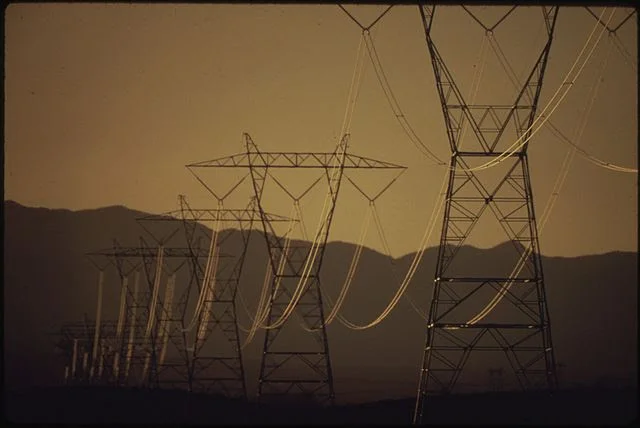
Photo by Charles O'Rear for the U.S. Environmental Agency.
Electricity is the sexiest thing you can’t see. It’s the tie that binds modern society together; makes life comfortable, even livable; and keeps everything humming, from computers to production lines. Without it civil disorder and a swift descent into hard-to-imagine chaos. Just look at Puerto Rico after Hurricane Maria, then start multiplying.
Electricity comes to us courtesy of the grid — or as Jim Cunningham, executive director of Protect Our Power, explains, the generating stations, high-voltage transmission lines, poles, wires, substations, transformers and meters that make up the matrix known as the grid.
The oft-mentioned “smart grid” is the use of sophisticated metering and measuring technologies, close to the point of use, which increase efficiency and manage the troughs and peaks in electricity demand. At 2 a.m., there’s less demand than at 6 p.m. But if you can move some demand to that slack period, efficiency increases both for the electric consumer and the electric provider. Win-win.
But the more sophisticated the grid, the more vulnerable to cyberattack it becomes. That’s a great existential threat.
Cyber is the new war space. Every new computer online, every laptop connected to the system can be the point at which the system is breached.
That’s why a word has been creeping into electric-speak: resiliency. It’s trumpeted by Secretary of Energy Rick Perry and throughout the administration. It also is a great concern inside the electric industry.
Where once the industry was concerned with reliability, it’s now concerned with resiliency, which embraces several things, one of which is the ability to deter cyberattacks and to restore power quickly if an attack takes a part or more of the grid down.
The historical philosophy of the industry has been quick response, as when catastrophic weather has brought about a supply interruption. Prevention where possible, quick response always.
Wherever computer experts gather these days, in my experience, cybersecurity of the grid has come up. The think tanks, universities and national security agencies all worry about cyberattacks.
They worry about them a lot more than they do about the other existential threat that deserves mention in any discussion of the resilience of the electric grid: electromagnetic pulses. This is a threat from a nuclear detonation in the atmosphere, which would fry computers and bring down the grid.
That concern is, among most experts, orders of magnitude less urgent than what is seen as the clear-and-present danger of a cyberattack.
Suedeen Kelly, a former three-term commissioner of the Federal Energy Regulatory Commission, the federal body that regulates wholesale power transactions and reliability, sees the big threat as coming from “Russia, China and possibly North Korea.” She is now a Washington lawyer with Jenner & Block and counsel to Protect Our Power.
The industry looks to a creation of its own for grid security standards: the North American Electric Reliability Corporation (NERC). While respected, it’s also criticized. I’ve heard NERC standards questioned in the science world, inside the utilities themselves, and in the computer-science departments of universities. As the policy centers of the electric industry are connected like a grid of their own, there’s a general desire for anonymity.
Now the Department of Energy has joined the fray. Secretary Perry has announced the administration will create a new office in the department called the Office of Cybersecurity, Energy Security and Emergency Response (CESER). In his fiscal 2019 budget request, President Donald Trump proposes $96 million for this initiative.
Unfortunately, resilience, doesn’t just mean security of supply to the Trump administration. It also means saving economically stranded, coal-fired and nuclear plants. And that complicates CESER’s mission.
Worries are abruptly rising about security of electricity supply just when broad vistas of new opportunity are opening for the electric industry. Electric vehicles are beginning to take their place on the highways, and trucks won’t be far behind. The Navy wants electric ships and Boeing, Google and others are working on electric aircraft.
Neutrons are inheriting the earth, if only we can keep the bad guys from turning off the lights.
On Twitter: @llewellynking2
Llewellyn King (llewellynking1@gmal.com) is executive producer and host of White House Chronicle, on PBS.
Icy hill towns
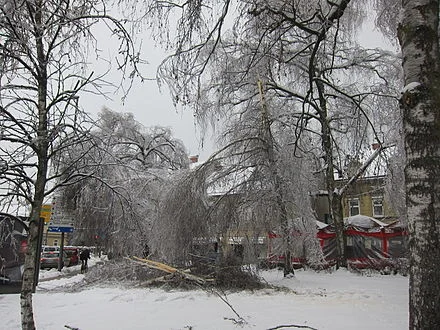
"Compared with towns near the Connecticut River, settlements in the hills just a dozen miles or so to the west and north of Amherst seem like outposts. On March 1, a month and a half before the groundbreaking, as a dank mist fell on Amherst, it rained ice up in the hills.''
-- From House, by Tracy Kidder
'Almost beggered themselves to serve others'
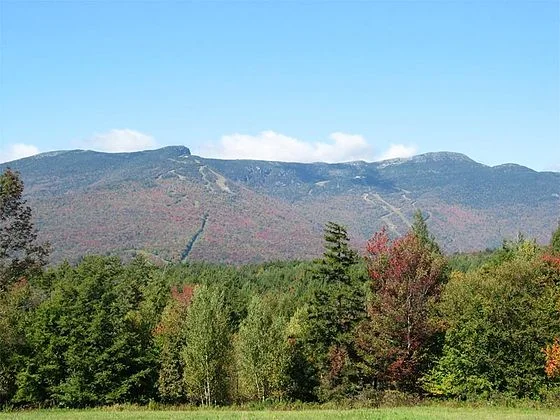
Mt. Mansfield, Vermont's highest peak, at 4,395 feet.
"Vermont is a state I love.
I could not look upon the peaks of Ascutney, Killington, Mansfield and Equinox without being moved in a way that no other scene could move me.
It was here that I first saw the light of day; here I received my bride; here my dead lie pillowed on the loving breast of our everlasting hills.
I love Vermont because of her hills and valleys, her scenery and invigorating climate, but most of all, because of her indomitable people. They are a race of pioneers who have almost beggared themselves to serve others. If the spirit of liberty should vanish in other parts of the union and support of our institutions should languish, it could all be replenished from the generous store held by the people of this brave little state of Vermont.''
-- President Calvin Coolidge, a Vermont native who later became Massachusetts governor, speaking on Sept. 21, 1928.
'Pompous joy betrays us'

Crocuses, the flowers most associated with March in New England.
"March is the month of expectation,
The things we do not know,
The Persons of Prognostication
Are coming now.
We try to sham becoming firmness,
But pompous joy
Betrays us, as his first betrothal
Betrays a boy."
-- Emily Dickinson, poem XLVIII
High Gothic Revival in the 'Quiet Corner'

The hilly rural and exurban northeast corner of Connecticut, often called the state's "Quiet Corner,'' has many lovely things to look at. One is the quirky Gothic Revival Roseland Cottage-Bowen House museum, in Woodstock, built in 1846 as a summer place for a rich family from New York City. We love its slightly crazy stained-glass windows, pointed arches and crockets, along with its spectacular gardens, with boxwood parterres and thousands of flowers.
Also on the property are such features as an aviary, a garden house, an old-fashioned bowling alley and an icehouse.
The place is open for tours June 1-Oct. 15. Check into it at: historicnewengland.org
Don Pesci: Progressive hope springs eternal in Conn. and Calif.
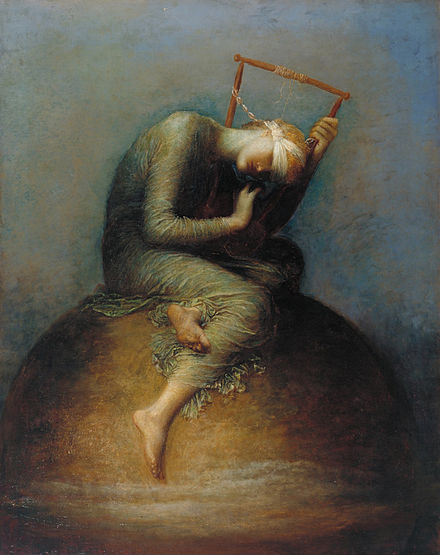
"Hope Remained,'' by George Frederic Watts.
“The best lack all conviction, while the worst
Are full of a passionate intensity” – William Butler Yeats
The Politico story came as a shock to no one: “California Democrats decline to endorse Feinstein.”
Connecticut has been blue roughly forever; ditto California, the political eagle’s nest of moderate Democrats turned progressive. Sen. Dianne Feinstein, long a Democrat moderate, did not convert quickly enough. Then too, progressives, full of a passionate intensity, find protestations of progressivism dripping from the lips of moderate, long-serving Democrat political fixtures sadly wanting. If tomorrow Feinstein said she was backing a recent move to withdraw California from the union – a prospect eagerly awaited by national conservatives -- no one on the progressive side of the political barricades in California would believe her. Lions want red meat, not well cured moderate puff pastries.
The same holds true in Connecticut, which is why nearly all of the seven members of Connecticut’s U.S. Congressional Delegation have been loud-barking progressives. U.S. Senators Chris Murphy and Dick Blumenthal want to abolish the Second Amendment – without abolishing the Second Amendment. They have fastened on the AR-15 and school shootings to pry loose the bolts attaching the amendment to the U.S. Constitution, about which progressives historically have cared little, progressivism being the doctrine that agitation rather than definition is crucial to maintaining democracy.
President Obama often reminded the country, in word and deed, that the Constitution really was a list of negative rights – “Congress shall make no law…” blah, blah, blah.’’ What was needed, however, was a Constitution of positive rights – “Congress shall support, say, Obamacare.” President Woodrow Wilson – the first Democrat progressive president, Teddy Roosevelt being a Republican – felt the same way. What the country needs are muscular chief executives like … well… Obama and Connecticut Gov. Dannel Malloy.
In both states, California and Connecticut, the progressive base has driven politics to the left. If there are any remaining moderate Democrats in Connecticut circa 2018, they are hiding behind the flower pots, cowering in fear from such as California state Senate leader Kevin de León, whom Democrat nomination delegates supported over Feinstein by a 54 percent to 37 percent margin.
“The outcome of today’s endorsement vote,” de León said, “is an astounding rejection of politics as usual, and it boosts our campaign’s momentum as we all stand shoulder-to-shoulder against a complacent status quo. California Democrats are hungry for new leadership that will fight for California values from the front lines, not equivocate on the sidelines.”
De Leon appealed to Democrat delegates as “an agent of change,” intimating that Feinstein was, as Politico put it, “a Washington power broker out of touch with progressive activists at home.”
Clearly, de Leon is the candidate of change, like Obama, that we progressives were waiting for: “I’m running for the U.S. Senate because the days of Democrats biding our time, biting our tongue, and trying to let it work the margins are over. I’m running because California’s greatness comes from paths of human audacity, not congressional seniority.” The full title of Obama’s passionately intense book is The Audacity of Hope: Thoughts on Reclaiming the American Dream. Progressivism, trickle up democracy, was the same dream that danced in the brains of Teddy Roosevelt, Woodrow Wilson, Franklin Roosevelt and Eugene Debs, a socialist candidate for president, a precursor of socialist presidential candidate Bernie Sanders.
California, de Leon neglects to mention, has been run by progressive Democrats for more than a half century. And the result? In San Francisco, “Software engineer Jenn Wong decided to start a project she calls Human Wasteland, which maps the city’s poop problem based on 311 calls from 2008-2015. Every call is listed as a poop emoji. The result is an overwhelming indictment of California’s approach to homelessness and lawlessness… San Francisco has joined Los Angeles and San Diego as three of the major cities that have caused Gov. Jerry Brown to declare a state of emergency due to a Hepatitis A epidemic currently brewing in each location.” The outbreak “was caused by strains of the 1B genetic subtype, which is rare in the United States and more commonly found in the Mediterranean and South Africa. It is spread through contact with feces, putting people with inadequate access to sanitation at highest risk.”
The political map in Connecticut is similar to that of California. Progressives are everywhere, taxes are high, businesses are fleeing, and government is broke, scurrying around in dark corners for tax crumbs. But in Connecticut, thanks in part to our inclement weather, a hepatitis A epidemic, 1B genetic subtype has been kept outside the gates. Here too, the best lack all conviction and the worst are full of a passionate intensity, but hope springs eternal in the progressive heart, especially in California and Connecticut. Maybe de Leon can make the trains run on time, and clean up the poop.
Don Pesci is a Vernon, Conn.-based columnist and a frequent contributor to New England Diary.
And now, 'Chappaquiddick,' the movie
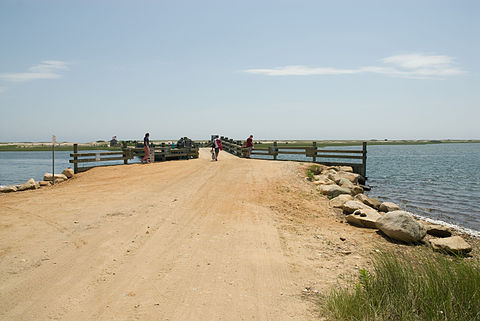
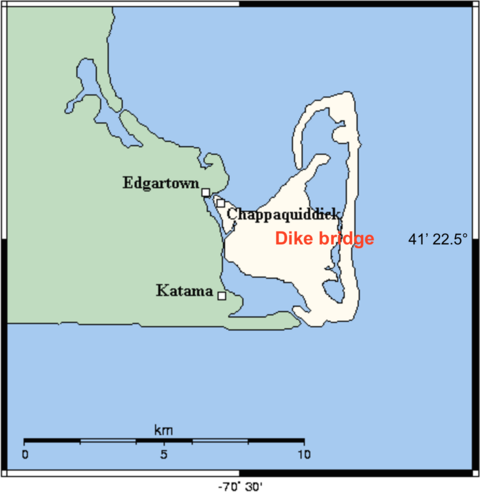
The Dike Bridge, off of which Edward Kennedy drove a car, drowning his passenger Mary Jo Kopechne The bridge didn't have a guardrail at the time of the 1969 accident.
Adapted from Robert Whitcomb's "Digital Diary,'' in GoLocal24.com:
I wonder how much interest there might still be in this infamous case:
Chappaquiddick, a new film about what happened after Sen. Edward M. Kennedy drove his car off the Dike Bridge on the eastern side of Martha Vineyard on July 1969. His passenger, Mary Jo Kopechne, drowned but Kennedy swam to safety. He pleaded guilty to leaving the scene of a crash, for which he got a suspended sentence. Many people at the time thought that was outrageously light. The word “Chappaquiddick” quickly became shorthand for the scandal, which may well have deprived Kennedy of the Democratic presidential nomination.
The movie will be shown March 15 and March 17 in the Martha’s Vineyard Film Festival before it opens nationally. I expect that it addresses the roles of power and privilege.
The moon landing, the rock festival called “Woodstock’’ and Chappaquiddick were the big U.S. stories of the summer of ’69, as the Vietnam War ground on. At the now long-dead Boston tabloid paper where I worked then in a summer job, Chappaquiddick was the big one, combining celebrity, power and salaciousness.
But the script, direction and acting would have to be mighty good to entice people under, say, 50 to see this movie about such a long-ago scandal.
Just wandering around

"Randomize'' (mixed media, dimensions variable), by Ted Ollier, in his show "Randomize,'' through April 1 at Bromfield Gallery, Boston. His artwork explores random walks.
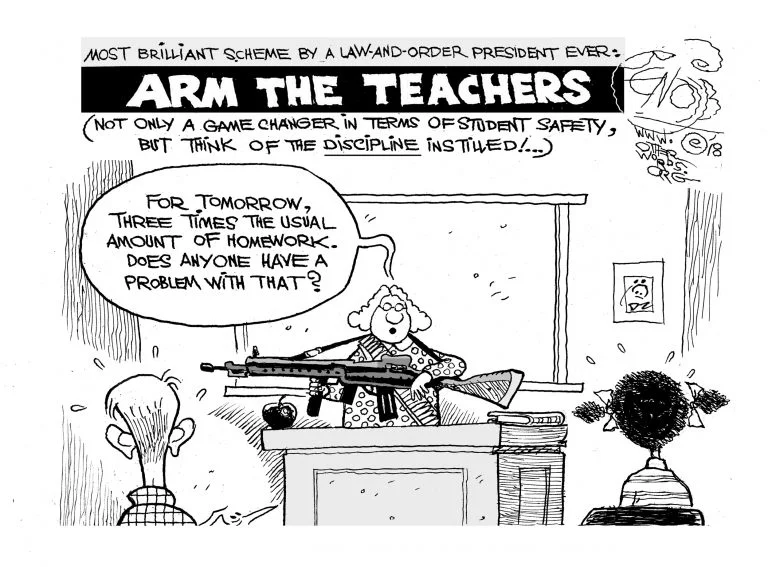
Josh Hoxie: The industrial-strength tax scam continues apace but citizens are waking up to it
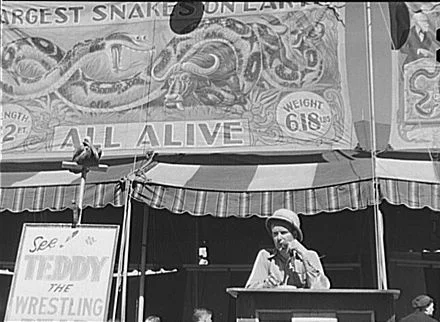
Carnival barker at the Vermont State Fair in 1941.
Via OtherWords.org
It’s no fun being scammed.
I distinctly remember looking for my first big city apartment and finding an ad that looked perfect. Beautiful picture, cheap rent, great location. It sounded too good to be true and, sadly, it was.
Just send a check in the mail, and don’t forget to send over your Social Security number, they said. We’ll mail you a key.
Fortunately, I didn’t take the bait. I’ve also managed to dodge the countless “Nigerian royalty” looking to make me rich via e-mail, and the endless robo-calls about lowering my utility bills.
Not everyone is so lucky. If there’s one constant of scams, it’s that given enough opportunities, they’ll get somebody to give up the goods.
Today, that somebody is the United States.
As their W-2s arrive in the mail, U.S. workers are starting to see the minimal impact of the new tax changes passed by Congress late last year. While the budget-busting package was a boon for millionaires, it means next to nothing for ordinary people.
Still, there’s a massive public relations campaign being waged right now by Republican donors backing the Trump tax cuts. Make the rich richer, they say, and we’ll all benefit.
And while you’re at it, they’ve got some swampland in Florida for sale.
The Koch Brothers alone will spend $20 million on ads selling the tax bill. This is a drop in the bucket compared to the $1.4 billion they stand to gain every year in tax breaks. It’s also a tiny fraction of their overall campaign spending on the 2018 midterms elections, which is projected to reach $400 million.
The Kochs have their work cut out for them. A new poll from Politico shows most workers report seeing no increase in their take home pay after the new tax laws took effect.
This is important.
The whole premise behind adding $1.5 trillion to the debt, giving massive handouts to the ultra-wealthy, and giving a tax break to the nation’s most profitable corporations was that working folks would also get a bit of cash.
Turns out, they’re not seeing that money. But the PR push is having an impact.
While majority of the American people never supported the bill, most polls have shown an uptick in support since December. The most recent poll — from GBA Strategies — found that 44 percent of voters oppose the law, compared to just 40 percent who support it.
The GBA study had another interesting finding: Voters are incredibly susceptible to messaging on this issue. That’s why the GOP donor class is spending unprecedented sums on ads.
The tax law is also getting a boost from corporations’ public relations departments, who are making splashy announcements about bonuses for their workers.
Many of those bonuses, it turns out, are being doled out to garner political support for the tax bill, not for the benefit of the business or as a thank you to workers. They’re also supposed to distract the public from the massive onslaught of layoffs that came in the wake of the tax cuts — from Walmart to Coca-Cola to Comcast and many more.
The Trump tax cuts are a scam, benefiting the wealthy at the expense of everyone else. If you happened to find yourself caught up in the scam, don’t blame yourself. The sales pitch was mighty impressive.
But also, don’t get scammed twice.
Josh Hoxie directs the Project on Taxation and Opportunity at the Institute for Policy Studies.
'Farewell gesture from winter'
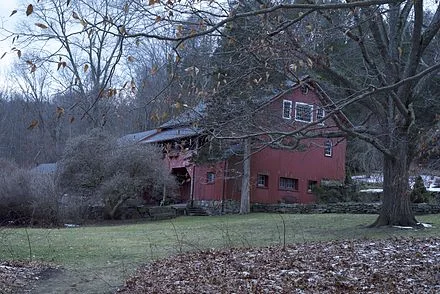
An Audubon Society nature center in Southbury, Conn.
"March brings many things, but not hurricanes. But yesterday it brought a storm and a temperature drop, a farewell gesture from winter. The pipes froze again in the back part of the house. And as I viewed the solidly frozen bath mat in my shower, I felt I could do without any record-breaking statistics.''
-- Gladys Taber, from her book The Stillmeadow Road
The late Ms. Taber wrote books about living in a 1690 farmhouse in the Stillmeadow section of Southbury, Conn.
From the Trust for Public Land:
"Long before Martha Stewart made the world safe for country chic, Gladys Taber ruled the rural roost in Connecticut. Her home base was Stillmeadow, an agricultural enclave in the southwest corner of Connecticut. Gladys Taber's 40-acre farm, her 17th-century farmhouse, the village of Southbury, and the surrounding countryside became her writerly muses, beginning in 1931, when she moved up from Manhattan, and continuing until her death at age 81 in 1980. She is buried here, too, in the graveyard of Southbury Congregational Church.
"Stillmeadow was the 'main character' in Taber's popular monthly columns in Ladies Home Journal and Everywoman's Family Circle magazines and later in more than 50 books set and written in Southbury. These writings not only established her as America's arbiter of all things authentically country, but her gentle musings on the simple life and her wholly ungentrified approach to the seasons, gardening, cooking, raising livestock, and breeding cocker spaniels helped the country get through the Great Depression--partly by following Taber's pragmatic example. In those years she answered between 7,000 and 8,000 fan letters annually.''
Have a ball in Brockton

Wheel vase, blue, purple, and opalescent white glaze, by Thomas Bezanson, a Benedectine monk, in his show "Brother Thomas: Seeking the Sublime,'' at the Fuller Craft Museum, Brockton, Mass. The show includes a range of his pottery, from tea bowls to vases.
Brockton in the late 19th Century and the first part of the 20th was one of the shoe-making capitals of the world. Eventually, however, most of its shoe companies closed or went south of abroad in search of cheap labor. The city has never fully recovered from this exit, although its proximity to the wealth of Boston has softened the blow. Several local cultural institutions, such as the Fuller, were founded by shoe moguls. The museum is in a surprisingly lovely park setting, whatever Brockton's gritty reputation.
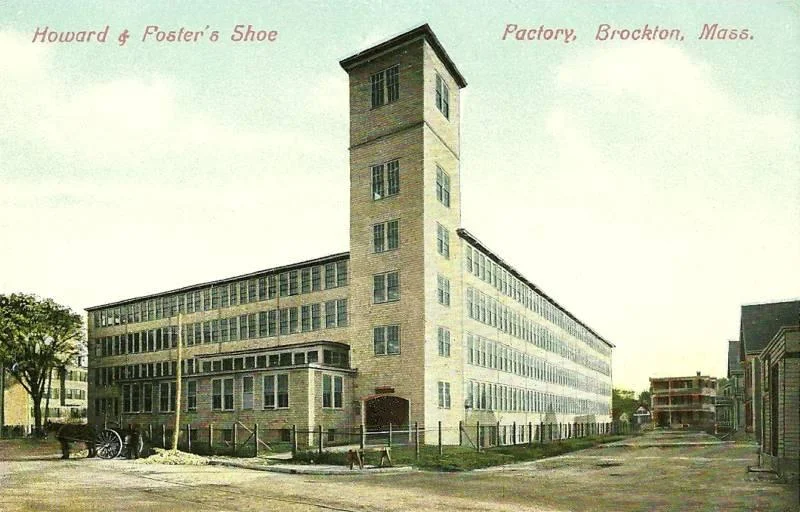
One of the Brockton area's many shoe factories in 1910.

Todd McLeish: Be careful -- salamanders, frogs on the march

A spotted salamander.
Via ecoRI News (ecori.org)
During last month’s warm spell, Emilie Holland saw and heard something she seldom detects this early in the year: the first movement of frogs and salamanders from their woodland wintering grounds to their springtime breeding pools. She observed wood frogs, spring peepers, spotted salamanders, and even a rare marbled salamander near her house not far from the Great Swamp Wildlife Management Area in South Kingstown, R.I.
“We often get pretty early activity here,” said Holland, an environmental scientist for the Rhode Island Department of Transportation and a board member of the Rhode Island Natural History Survey. “For whatever reason, the micro-climate is good for them. The problem is that my hot spot is along a road, and the frogs and salamanders are often crossing it.”
During the same warm days last month, other observers reported hearing spring peepers in North Kingstown and Cumberland, and seeing a red-backed salamander in Middletown.
According to amphibian expert Lou Perrotti, director of conservation at Roger Williams Park Zoo, frogs and salamanders don’t typically migrate to their breeding ponds until mid-March in most areas of the state. During the cold winter of 2015, when many ponds were still frozen until April, amphibian migration was delayed by almost a month. But it’s not unusual for rain showers during an especially warm period in late February to trigger an early migration.
“When that happens, the migration period tends to get extended,” Perrotti said. “A snowstorm or cold snap shuts things down for a while, and then it picks back up again. You don’t have the usual massive explosion of breeding activity all at once. It trickles along instead.”
What happens to the frogs in the ponds when the cold returns and the ponds freeze over again? Not much. Perrotti said the animals are adapted to survive such conditions for short periods of time. In fact, University of Rhode Island herpetologist Peter Paton said he commonly sees wood frogs and spotted salamanders swimming beneath the ice of local ponds in late winter. And wood frogs are uniquely adapted to freeze solid and thaw out later with no negative consequences.
The bigger concern, as Holland expressed, is that many frogs and salamanders must cross roads to reach their breeding ponds, and untold thousands of them get run over by vehicles each year in Rhode Island during those journeys.
“It’s a huge problem, one of the biggest threats to amphibians and reptiles in the area,” Perrotti said. “I’ve seen nights where there were hundreds of smashed wood frogs at just one site. Toads get hammered, too, because they typically have huge breeding explosions over a period of two or three nights. And gray tree frogs, too, which are pretty clumsy on the ground.”
Amphibian movement to and from their breeding ponds will likely continue through April – some species, such as green frogs, migrate later than others — but it typically happens at night when it’s raining. Perrotti and Holland recommend driving carefully at night along back roads in wetland areas during rain showers.
“It’s hard to avoid every frog in the road, especially if you catch it on a good night for migration when they’re everywhere,” Perrotti said.
One strategy that Perrotti said has been employed in western Massachusetts to avoid the problem of amphibian roadkill is the installation of what he calls “salamander tunnels” beneath roadways in areas where large numbers of frogs and salamanders migrate across roads. Barriers along the roadside funnel the animals toward the tunnel, which avoids much of the mortality.
The idea has been discussed in Rhode Island, but the cost is high and finding funding in municipal budgets is an impediment. Signage encouraging drivers to slow down at certain locations is another strategy that officials in the state have considered, though few have been installed to date.
Holland noted that homeowners with sump pumps should regularly check the system for amphibians that wander in and can’t escape.
“I’m constantly fishing salamanders and frogs out of mine,” she said. “People should monitor the sump in their basement and maybe they can keep a local breeding population healthy by not letting the adults die in a pitfall trap that they didn't even know they had.”
Those interested in learning more about local amphibians and participating in a related citizen science project should consider signing up for FrogWatch, a national program administered locally by Roger Williams Park Zoo. Volunteers attend a training program to learn the breeding calls of the various frog species that reside in Rhode Island, then visit a designated pond in the evening once a week from March through August to document breeding activity.
Rhode Island resident and author Todd McLeish runs a wildlife blog.
'Streets full of water'

Grand Canal, in Venice.
Adapted from Robert Whitcomb's "Digital Diary,'' in GoLocal24.com:
As the late great writer and comic actor Robert Benchley telegrammed after arriving in Venice: "Streets full of water. Advise.''
Barrington is one of the richest towns in Rhode Island. So it is particularly interesting to see how much of the town structures are under the threat of being flooded. With no more sea-level rise, 42.9 percent of residential and commercial buildings would be exposed to a “100-year’’ storm surge in the town, the Providence Business News reports, citing Rhode Island Coastal Resources Management Council data. A three-foot sea-level rise by 2050 would expose 56 percent of the structures in a 100-year storm. The PBN’s Feb. 16-22 article, headlined “Rising Waters: ‘We’re Pretty Vulnerable,’’ is well worth reading.
When you drive through Barrington, you’re struck by how very, very low it is. Almost Venetian. Of course, its marshy beauty, with ever-changing colors, is much of its appeal. But how far along is the planning to address the coming disaster there, including for the insurance industry?
Billy Graham: The king of the evangelical industry

Billy Graham with his son Franklin in 1994.
Adapted from Robert Whitcomb's "Digital Diary,'' in GoLocal24.com:
“Jesus said unto him, If thou wilt be perfect, go and sell that thou hast, and give to the poor, and thou shalt have treasure in heaven: and come and follow me.’’
-- Matthew 19:21
Later, maybe....
Billy Graham’s death last week at 99 brought back memories of hearing his stentorian voice on radio and TV over the decades. What a set of pipes! Loved it! That voice, his charm and charisma and his ability to curry favor with (and sometimes suck up to) the rich and powerful made him rich and for a long time one of the most famous Americans. He sometimes seemed to forget that Jesus is quoted as saying: “My kingdom is not of this world.’’
In his rather theatrically self-deprecatory way, he wallowed in luxury celebrityhood. And he used powerful politicians to promote himself and they used him to curry favor with the voters, especially white Southerners.
I found some of his biblical literalism idiotic, along with some of his theology, although who knows how much he really believed in himself. And he rephrased some of his views over the years to keep up with some social and political changes and avoid offending too many potential customers. (I still find the anti-Semitism he expressed in talking with Richard Nixon sickening, but maybe that was just more sucking up to curry favor with the powerful.)
I have always found people telling us what God thinks to be a bit, well, presumptuous. But it’s good for business from the millions who want certainty in this crazy world and are terrified by the prospect of death. As one wag put it, the Rev. Mr. Graham promised a nice condo in heaven.
Billy Graham was far from the richest man in the evangelical industry, but died with a net worth of $25 million. The lucrative family business continues: His son Franklin Graham runs an outfit called Samaritan’s Purse that for 2014, the most recent year for which I can find his compensation, paid him a salary of $622,252.
Franklin is also a devoted Republican, and a fan of that Christian gentleman Donald Trump. To think that Billy Graham used to rail against “wickedness, licentiousness and debauchery.” (I have long wondered, by the way, how many abortions the president may have had something to with….)
The best thing about Billy Graham was that he moved earlier than most of his fellow white peers in the evangelical biz to embrace integration and other elements of racial justice, which discomfited many of his Southern white followers. That took some courage. But then it was also good business: It expanded his customer base. He generally became less judgmental, more tolerant and increasingly ecumenical as he aged. Very admirable!
Meanwhile, it’s predictable that the Republican-controlled Congress would arrange for the preacher/businessman’s body to lie in honor in the Capitol Rotunda. Many, many other Americans, including scientists, physicians, inventors and, yes, politicians, did far more than the Rev. Mr. Graham to improve American lives. But many of those weren’t Republicans. This is all about appealing to the GOP base.
'Sadder and sadder until June'
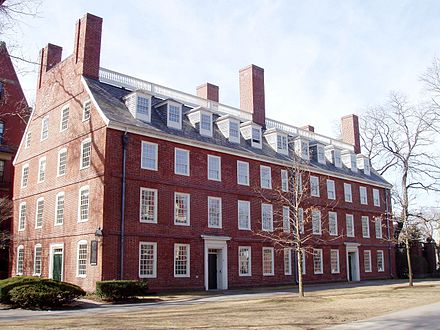
Massachusetts Hall at Harvard, probably in March.
“Springtime in Massachusetts is depressing for those who embrace a progressive view of history and experience. It does not gradually develop as spring is supposed to. Instead, the crocuses bloom and the grass grows, but the foliage is independent from the weather, which gets colder and colder and sadder and sadder until June when one day it becomes brutishly hot without warning...It was fitting, then, that the first people who chose to settle there were mentally suspect.”
― Rebecca Harrington, in her novel Penelope
'Trying to become the forest'

Thetford, Vt., in 1912. Note the beautiful elm trees, now long gone.
"This hill
crossed with broken pines and maples
lumpy with the burial mounds of
uprooted hemlocks (hurricane
of ’38) out of their
rotting hearts generations rise
trying once more to become
the forest....''
From "A Walk in March,'' by Grace Paley (1922-2007), the famed short-story writer. A native New Yorker, she moved to Thetford, Vt., in later life, where her second husband had a farmhouse. Thetford is a beautiful town on the Connecticut River, whose very fertile bottomlands still sustain some prosperous farmers. The town has drawn many celebrities to buy property there, in part because of the proximity of Dartmouth College, which is a few miles south on the New Hampshire side of the river.
