
Vox clamantis in deserto





Don Pesci: 'A moralist in disguise,' Mark Twain was funny and deadly serious on politics
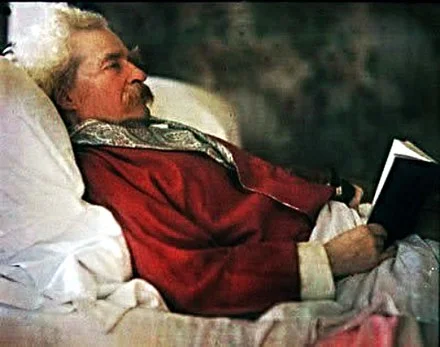
Mark Twain photographed in 1908 via the Autochrome Lumiere process.
Anyone hoping to hammer into a coherent ideology Mark Twain’s robustly critical admonitions on politics and politicians is bound to be disappointed. (Reminder to New Englanders: Twain lived for many years in Hartford.)
Here is Twain on the Congress of his day: “An honest man in politics shines more there than he would elsewhere.” That is taken from A Tramp Abroad, written in Hartford, Connecticut. Twain wrote most of his important novels in Hartford, including The Adventures of Tom Sawyer, The Prince and the Pauper, Life on the Mississippi, Adventures of Huckleberry Finn and A Connecticut Yankee in King Arthur's Court. Towards the end of his life, tragedy became the uninvited guest at Twain’s table. He lost his beloved wife, both a spiritual anchor and a literary censor. Twain did not believe that writers should self-censor. Olivia Clemons was concerned about her husband’s place in the world, as all good wives should be, and worked to keep his combustible politics from bursting into flame – at least publicly -- and singeing the politicians of his day and ours.
The following dictation note is taken from the Autobiography of Mark Twain: “Look at the tyranny of party -- at what is called party allegiance, party loyalty -- a snare invented by designing men for selfish purposes -- and which turns voters into chattels, slaves, rabbits, and all the while their masters, and they themselves are shouting rubbish about liberty, independence, freedom of opinion, freedom of speech, honestly unconscious of the fantastic contradiction; and forgetting or ignoring that their fathers and the churches shouted the same blasphemies a generation earlier when they were closing their doors against the hunted slave, beating his handful of humane defenders with Bible texts and billies, and pocketing the insults and licking the shoes of his Southern master.”
Twain left instructions that his uncensored autobiography, a product of his political “pen dipped in Hell,” should not be let loose on the general public until a century had passed after his death.
This from A letter to Helene Picard, in 1902: “Yes, you are right -- I am a moralist in disguise; it gets me into heaps of trouble when I go thrashing around in political questions.” Helen Picard was the French member of Twain’s private “Juggernaut Club.”
Here is Twain’s note to Helen, published in the Lady’s Home Journal posthumously, as was much of his writing on politics: “I have a Club, a private Club, which is all my own. I appoint the Members myself, and they can't help themselves, because I don't allow them to vote on their own appointment and I don't allow them to resign! They are all friends whom I have never seen (save one), but who have written friendly letters to me. By the laws of my Club there can be only one Member in each country, and there can be no male Member but myself. Someday I may admit males, but I don't know -- they are capricious and inharmonious, and their ways provoke me a good deal. It is a matter which the Club shall decide.”
Seriously?
Twain died on April 21, 1910 of a heart attack in Redding, Conn., where he had moved to escape certain ghosts. Perhaps not unexpectedly, the death of those he most loved liberated him. Following his near bankruptcy, the premature death of his daughter Susy of spinal meningitis at age 24 in 1896 and the passing of his wife, Olivia, in 1904, Twain went “thrashing around in political questions.”
Was Twain serious in his political writings? Indeed, is it possible to take seriously any humorist? He was deadly serious, and his writings did get him into no end of trouble with his political targets, among them President Theodore Roosevelt. Twain thought Roosevelt a rare political showman and a preposterous fraud. Roosevelt, for his part, wanted to strangle Twain – and said so.
But the question is an important and serious one: can someone with a comic turn of mind say anything useful about politics in the widest sense of the word? For a broad thinker like Aristotle, politics was anything and everything having to do with the polis, the nation state of his day. The family, for instance, was, in Aristotle’s view, a primary political unit. What we know of Socrates we have gleaned from two sources: Plato, whom everyone takes seriously, and Aristophanes, the most famous Greek comic playwright of his day and a contemporary of Socrates.\
One day, someone, possibly a political flunky whose patron Aristophanes had raked over the coals in one of his nuclear tipped theatrical satires, approached him in the street and demanded to know, “Don’t you take anything seriously?” to which Aristophanes replied, “Of course, I take comedy seriously.” Very Twainian that response.
Was Twain serious when he said of Teddy Roosevelt in a letter to Joseph Twichel in 1905, “We are insane, each in our own way, and with insanity goes irresponsibility. Theodore the man is sane; in fairness we ought to keep in mind that Theodore, as statesman and politician, is insane and irresponsible.” A year earlier, Olivia Clemons had died in Florence, Italy.\
Olivia was six years gone when the following item written by Twain appeared in The Ottowa Free Trader in 1911. William Howard Taft, a conservative Republican and a great disappointment to Roosevelt, had just been sworn in as president: “Astronomers assure us that the attraction of gravitation on the surface of the sun is twenty-eight times as powerful as is the force at the surface of the earth, that an object which weighs 217 pounds elsewhere would weigh 6,000 pounds there. For seven years this country has lain smothering under a burden like that, an incubus representing in the person of President Roosevelt, the difference between 217 pounds and 6,000.
“Thanks be we got rid of this disastrous burden day before yesterday, at last -- forever, probably not. Probably for only a brief breathing spell, wherein under Mr. Taft, we may hope to get back some of our health. Four years from now we may expect to have Mr. Roosevelt sitting on us again, with his twenty-eight times the weight of any other Presidential burden that a hostile Providence could impose upon us for our sins.
“Our people have adored this showy charlatan as perhaps no impostor of his brood has been adored since the golden calf; so it is to be expected that the nation will want him back again after he is done hunting other wild animals heroically in Africa, with the safeguards and advertising equipment of a park of artillery and a brass band.”
And indeed, Roosevelt, frustrated with the non-progressive policies of Taft, did make a showy comeback a year later as a “Bull-Moose” candidate for president. William McKinley’s Vice President, Roosevelt became president following McKinley’s assassination, was elected to a full term in 1904 and vigorously promoted a progressive agenda. The person Roosevelt groomed for president, Taft, is now heralded as a conservative, politically pretty much Roosevelt’s opposite number. Frustrated with Taft, Roosevelt sought the Republican endorsement for president in 1912, failed in his effort and, storming out of the Republican convention, founded the progressive “Bull Moose” party, ultimately throwing the presidency to Woodrow Wilson, a progressive Democrat.\
Twain would have witnessed some of this drama in his rear view mirror, and his reaction to Roosevelt was both splenetic and humorously titillating. Three years before he died, Twain dictated the following assessment for his autobiography: “Mr. Roosevelt is the Tom Sawyer of the political world of the twentieth century; always showing off; always hunting for a chance to show off; in his frenzied imagination, the Great Republic is a vast Barnum circus with him for a clown and the whole world for audience; he would go to Halifax for half a chance to show off and he would go to hell for a whole one.”
Perhaps the most read modern biography of Roosevelt is Theodore Rex, by Edmund Morris. Two paragraphs in the book mention Twain, who is quoted disparaging Roosevelt mildly only once: “Twain was never-the-less moved to express the misgivings of not a few thoughtful observers who wondered if a Roosevelt unrestrained might not become a Roosevelt moving too fast for his own good.” Morris embeds a Twain quote here: “’He [Roosevelt] flies from one thing to another with incredible dispatch… each act of his, and each opinion expressed, is likely to abolish or controvert some previous act or expressed opinion.’” This is a wordy way of saying that Twain thought Roosevelt a hypocrite; his real feelings about Roosevelt were much fiercer than that. In any case, Twain’s anti-Roosevelt vituperation is under-displayed in Morris’ book.
A Gilded Twain
Roosevelt was a type that challenged Twain’s temperamental disposition. H. L. Mencken approached the truth about Twain reverently when he wrote: “Instead of being a mere entertainer of the mob, he [Twain] was in fact a literary artist of the very highest skill and sophistication… he was a destructive satirist of the utmost pungency and relentlessness, and the most bitter critic of American platitude and delusion, whether social, political or religious, that ever lived.” Of course, Mencken’s appreciation is tinged with his own Nietzschean prejudices. Writers tend to regard as saintly other writers whose views can be forced into their own Procrustean beds.
Mencken notes that Twain’s comic mask had publicly been thrown off after Harpers Magazine had published The Mysterious Stranger and What Is Man?
Mencken lifts a quote from Twain’s preface: “The ideas in it are very simple, and reduced to elementals, two in number. The first is that man, save for a trace of volition that grows smaller and smaller the more it is analyzed, is a living machine — that nine-tenths of his acts are purely reflex, and that moral responsibility, and with it religion, are thus mere delusions. The second is that the only genuine human motive, like the only genuine dog motive or fish motive or protoplasm motive is self-interest — that altruism, for all its seeming potency in human concerns, is no more than a specious appearance — that the one unbroken effort of the organism is to promote its own comfort, welfare and survival…”
These determinist ideas, aggressively promoted by Thomas Huxley, sometimes called “Darwin’s Bulldog,” were throbbing in the public pulse during Twain’s own day. We do not know – and perhaps cannot know – whether Twain’s sentiments, as expressed above, are simply a “thought experiment” placed in the mind of a fictitious character or, more ominously, whether this dark vision of God and man represents Twain’s own world view. Nietzsche, we now know, read and liked Twain. But Twain came by Nietzsche indirectly, through a back door. George Bernard Shaw, a more rigorous Zarathustrian, yoked together both Twain and Nietzsche in a review of two translations of Nietzsche titled “Giving the Devil His Due,” only to dismiss Twain later, in a preface to Three Plays for Puritans, as a member of the Diabolonian Junior Varsity team.
Twain professed a lack of interest in Nietzsche, or indeed in any other philosopher. He drew his own philosophy, Twain insisted, “from the fountainhead… that is to say, the human race… Every man is in his person the whole human race … in myself I find in big or little proportion every quality and every defect that is findable in the mass of the race.”
Comparisons between Twain and Nietzsche lead, more often than not, into a philosophical snake pit. Aspiration is a more certain architect of character, and Twain’s aspirations mirror those of the Gilded Age and the Manchester School, a 19th Century movement that began in Manchester, England, whose most prominent proponents were Richard Cobden and John Bright. The school has more in common with modern conservativism than either modern liberalism or progressivism. The Manchester School carried into politics the theories of economic liberalism popularized by Adam Smith and Davin Hume: free trade, laissez-faire, pacifism, anti-slavery, freedom of the press, separation of church and state, and anti-colonialism.
No one can doubt that Twain was a fierce anti-colonialist. The Spanish-American War was a large stone in his shoe, and he was, one might say, instinctively wary of strong-man politicians, possibly because he was, like some important writers of his day, a superb psychologist who drew his perceptions, as did Dostoyevsky and Dickens, from a deep private well. The most important note of Manchester liberalism is its belief in free – non-government regulated – consensual relations of all groups at every level. Henry David Thoreau was shouting from the Manchurian rooftops when he said -- that government governs best which govern not at all.
It may be best to adopt a historical view of Twain and anchor him, as one sets a stone in its setting, in his own time. Twain wrote and rose to public prominence near the end of the La Belle Époque, roughly the Victorian age in Europe (1837-1901). In America, this period was called The Gilded Age, and it was Mark Twain himself who named the age in a lesser known book he wrote along with Charles Dudley Warner, published in 1873 and titled The Gilded Age: A Tale of Today.
Warner came from Puritan Massachusetts stock, practiced law in Chicago from 1856-1860, was assistant editor then editor of the Hartford Press, which later became The Hartford Courant, and also an editor for Harper’s Magazine.
The Gilded Age marked the period of rapid economic growth in America following the Civil War up to the turn of the century. And what a boom it was! The United States had come into its own. Millionaires were popping up on every street corner. And for the first time, the United States economically was outpacing Europe, torn as usual by its historic divisions. The rise of the progressive movement in the United States marked the end of the Gilded Age.
In 1884 so-called Bourbon Democrats elected Grover Cleveland to the presidency. It was the first time since 1856 that a Democrat had sat in the White House. The Bourbon Democrats, often contrasted with Republican Mugwumps, were very close in spirit to modem conservatives. Bourbon Democrats supported low tariffs, reductions in government spending and, most importantly, a laissez-faire government. Tarrifs, they argued, increased the cost of goods and subsidized government supported monopolies. They fiercely denounced imperialism and an expansionary overseas policy. Remind you of anyone?
“The mania for giving the Government power to meddle with the private affairs of cities or citizens is likely to cause endless trouble,” Twain wrote in a letter to Enterprise in 1866. “And there is great danger that our people will lose that independence of thought and action which is the cause of much of our greatness, and sink into the helplessness of the Frenchman or German who expects his government to feed him when hungry, clothe him when naked … and, in time, to regulate every act of humanity from the cradle to the tomb, including the manner in which he may seek future admission to paradise.”
Republicans, on the other hand, felt national prosperity depended upon an economy that produced high wages; they feared a flood of low priced goods from Europe would depress both wages and the burgeoning economy. The tariff , they thought, should be used as tool necessary to prevent the impending catastrophe.
The Gilded Age was brought to a stop by Progressivism, which began as a Prairie Populist movement shortly after the Civil War and flooded Teddy Roosevelt’s ambitious and fertile mind with dreams of glory. Roosevelt, the hero of San Juan Hill, was the first important progressive president. And Twain, who fulminated against the Gilded Age in the book he wrote with Warner, intensely disliked Roosevelt, the Spanish America War, US expansionist policies in the Philippines, monarchs of every shape and hue – most venomously, the Czar of Russia.
When Roosevelt, rejected by Republicans in favor of Howard Taft, now embraced as a conservative by modern American conservatives, went off to Africa on a safari – TR liked to kill things and share stuffed carcasses among his friends – Twain wrote that Zarathustra-on-the-hunt had gone off to Africa to “kill cows.” Roosevelt, hunting water buffaloes at the time, was not amused.
Progressives And Libertarians
Twain was a laissez faire child of the Gilded Age and – most importantly – an acerbic social critic and humorist. Fredric Bastiat, the father of libertarianism, also was a Manchester School liberal who, like Twain, was a suburb dialectician. In the modern period, Twain would be a libertarian and, as he was in his own day, a virulent opponent of what then was called, approvingly, muscular Christianity. It was from muscular Christianity that the progressive movement in America arose. The very notion of missionary Christianity was abhorrent to Twain, because he was an apostle of liberty as it pertains to individuals. Equally abhorrent was politics as a missionary activity.
Here is Bastiat on law officers before and after elections:
“When it is time to vote, apparently the voter is not to be asked for any guarantee of his wisdom. His will and capacity to choose wisely are taken for granted. Can the people be mistaken? Are we not living in an age of enlightenment? What! are the people always to be kept on leashes? Have they not won their rights by great effort and sacrifice? Have they not given ample proof of their intelligence and wisdom? Are they not adults? Are they not capable of judging for themselves? Do they not know what is best for themselves? Is there a class or a man who would be so bold as to set himself above the people, and judge and act for them? No, no, the people are and should be free. They desire to manage their own affairs, and they shall do so.\
“But when the legislator is finally elected — ah! then indeed does the tone of his speech undergo a radical change. The people are returned to passiveness, inertness, and unconsciousness; the legislator enters into omnipotence. Now it is for him to initiate, to direct, to propel, and to organize. Mankind has only to submit; the hour of despotism has struck. We now observe this fatal idea: The people who, during the election, were so wise, so moral, and so perfect, now have no tendencies whatever; or if they have any, they are tendencies that lead downward into degradation.”
And Twain: “No country can be well governed unless its citizens as a body keep religiously before their minds that they are the guardians of the law and that the law officers are only the machinery for its execution, nothing more.”
And here is Twain in the Galaxy Magazine telling what Huck Finn once styled one of Twain’s stretchers: “I shall not often meddle with politics, because we have a political Editor who is already excellent and only needs to serve a term or two in the penitentiary to be perfect.”
Twain did meddle with politics, and it did get him into trouble. But isn’t trouble the theatre in which a comic talent like Twain performs? The question remains: To what extent should we take comedy seriously? Does the comic lose authority by speaking behind a mask of humor?
On Christmas Eve 1909, Twain had returned four days earlier from Bermuda to his Redding home, “Stormfield.” Hours earlier, Twain’s youngest daughter, Jean, had drowned in a bathtub from a heart attack that may have been related to her epilepsy.
On Christmas Eve, Twain wrote the following eulogy:
“I lost Susy thirteen years ago; I lost her mother – her incomparable mother! –five and a half years ago; Clara has gone away to live in Europe; and now I have lost Jean. How poor I am, who was once so rich! Seven months ago Mr. Roger died – one of the best friends I ever had, and the nearest perfect, as man and gentleman, I have yet met among my race; within the last six weeks Gilder has passed away, and Laffan–old, old friends of mine. Jean lies yonder, I sit here; we are strangers under our own roof; we kissed hands good-by at this door last night–and it was forever, we never suspecting it. She lies there, and I sit here–writing, busying myself, to keep my heart from breaking. How dazzlingly the sunshine is flooding the hills around! It is like a mockery.”
Let others say Twain was not to be taken seriously. I will not say it.
Don Pesci is a Vernon, Conn.-based essayist.
'Mardi Gras Indians' in Boston

"White and Pink Feathers'' *(photo), by Max Stern , in the joint show with Robert Freeman called "Mardi Gras Indians,'' at Adelson Galleries, Boston, March 2-April 29.
The gallery's owner, Adam Adelson says:
"The photographs are more than documentation. Each image carefully captures the emotional expression of these subjects. Stern expertly focuses his lens towards plumes of feathers, beads, and a cacophony of assembled decorations that make up the elaborate garb worn by the Mardi Gras Indians of New Orleans. The figures are larger-than-life, and Stern makes it clear that the people he snapshots are just as important as the suits they inhabit. Freeman’s paintings illustrate movement and energy while Stern’s photography reveals the individuals that are responsible for this ritual and the intricacy of craftsmanship in their suits. ''
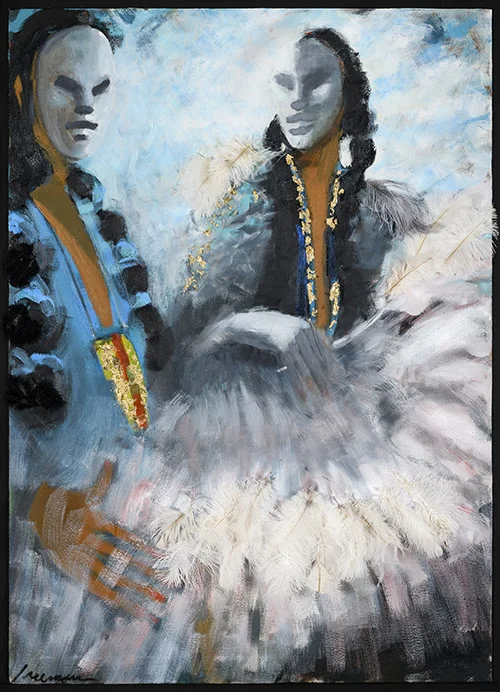
"Golden Pendant'' (painting), by Robert Freeman.
Mr. Adelson writes:
"Upon walking into Robert Freeman’s studio for the first time since our last exhibition, I was stunned to see the evolution of his work, which was inspired by his recent trip to visit his friend, Max Stern, in New Orleans. The two encountered a parade of locals referred to as Mardi Gras Indians, familiar to Max, but completely foreign to Robert. The origin of these people started after the Civil War, when African American ex-slaves were taken in by Indigenous Americans.The group melded African and Native American rituals, and have evolved into a community that is unique to New Orleans. Individuals in these local tribes will spend an entire year creating their elaborate outfits, which are rarely worn more than once. These locals emitted a passion that Robert and Max could not help but record.
"The canvases are bursting with color and the figures seem to dance off the edges of the canvas. Freeman has taken a bold new approach to his painting by adding ostrich feathers as well as gold leaf to represent the elaborate 'suits' worn by the Mardi Gras Indians. Looking at Freeman’s new paintings transports me to a place I have never been, yet as with his other series, these anonymous figures seem to invite me to participate. The loud and energetic paintings appear fictional until they are put into context with the photography of Max Stern.''
'Plein air' inside

"Interiors #41 (oil on wood panel), by Carolyn Letvin, in her show "Intimate Interiors and Other Artistic Comforts,'' at Galatea Fine Art, Boston, through Feb. 28.
She says:
"I find interior spaces to be engaging and compelling. There’s a 'lost in time' sense about the rooms that call to me, which I believe is the essence of their allure for me and others. I do all of the paintings in the actual space. I like to stretch the definition of 'plein air' by including these works in that category. Even though I’m inside, I do usually have windows and doors open. And I deal with many of the same considerations that painting outdoors create, like changing light and visual editing of the subject. But I don’t have to deal with Mother Nature so much, which I consider a good thing!''
'His emissary, smoke'

"The sluggish smoke curls up from some deep dell,
The stiffened air exploring in the dawn,
And making slow acquaintance with the day;
Delaying now upon its heavenward course,
In wreathed loiterings dallying with itself,
With as uncertain purpose and slow deed,
As its half-wakened master by the hearth,
Whose mind still slumbering and sluggish thoughts
Have not yet swept into the onward current
Of the new day;—and now it streams afar,
The while the chopper goes with step direct,
And mind intent to swing the early axe.
First in the dusky dawn he sends abroad
His early scout, his emissary, smoke,
The earliest, latest pilgrim from the roof,
To feel the frosty air, inform the day;
And while he crouches still beside the hearth,
Nor musters courage to unbar the door,
It has gone down the glen with the light wind,
And o'er the plain unfurled its venturous wreath,
Draped the tree-tops, loitered upon the hill,
And warmed the pinions of the early bird;
And now, perchance, high in the crispy air,
Has caught sight of the day o'er the earth's edge,
And greets its master's eye at his low door,
As some refulgent cloud in the upper sky.''
-- "Smoke in Winter,'' by Henry David Thoreau of Concord, Mass.
Arctic adventure at Bowdoin

Go while it's still winter. Or go on a hot day in summer to think about cool.
The Peary-McMillan Arctic Museum, at Bowdoin College, in Brunswick, Maine, has lots of neat things (such as an oak-and-rawhide sledge, furry and leathery clothing for surviving Arctic weather and entries from an expedition journal) from the polar expeditions of Robert Peary and Donald MacMillan
Peary claimed to have been the first person to have reached the North Pole, in 1909, although that has been disputed. He was a hell of a promoter. It paid off. See his Eagle Island home in Maine's Casco Bay immediately below.
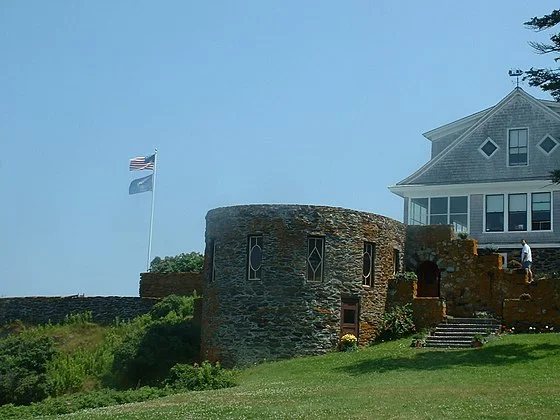
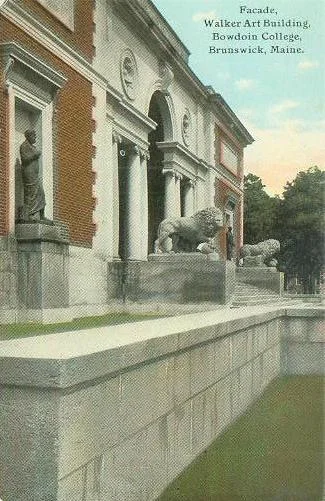
Most of the Bowdoin campus is lovely, with the Charles McKim-designed college art museum, below, the high point.
'Enhancing our essential selves'
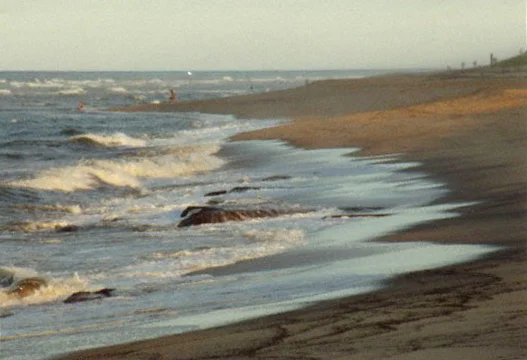
On the Cape Cod National Seashore.
"The New England spirit does not seek solutions in a crowd; raw light and solitariness are less dreaded than welcomed as enhancers of our essential selves.''
-- John Updike, in Hugging the Shore.
Updike was an immigrant from Pennsylvania. He went to Harvard, worked briefly in New York City and then moved to the Massachusetts North Shore for the rest of his life.


Retire before it's too late, Mr. Brady

Brain at right shows the effects of chronic traumatic encephalopathy, which presents itself in people who have suffered repeated blows to the head, as is common in football.
From Robert Whitcomb's "Digital Diary,'' in GoLocal24.com:
“I'm always a flop at a top-notch affair,
But I've still got my health, so what do I care?
My best ring, alas, is a glass solitaire,
But I still got my health, so what do I care?
….The hip that I shake doesn't make people stare,
But I got such health, what do I care?
The sight of my props never stops a thoroughfare,
But I still got my health, so what do I care’’
-- From “I’ve Still Got My Health,’’ by Cole Porter
Everyone wants to leave as a winner. And so it’s easy to understand why the New England Patriots’ mega-star quarterback Tom Brady would indicate that he wants to play again in the next season, when he’ll be 41, after the underdog Eagles defeated the Pats in the Super Bowl. But the effects of being hit repeatedly in the head can be insidious, with visible symptoms all of a sudden appearing catastrophically. It would be very sad to see the very smart Brady gaga in five years. He should retire now.
Jim Hightower: Counting the 'populist' Trump's lies to his sucker followers
Via OtherWords.org
Have you noticed that Donald Trump constantly prefaces his outlandish lies with such phrases as: “To be honest with you,” “To tell the truth,” and “Believe me”?
Why? Because like a snake-oil salesman, he constantly needs to convince himself that he’s speaking the truth in order to perform his next lie convincingly. The show must go on… and on.
In fact, he already ranks as the perhaps lyingest president in U.S. history. And that includes Nixon! The Washington Post‘s fact checker counted over 2,000 lies in Trump’s first year alone.
Trump’s biggest whopper is that he’s an honest-to-God “populist,” standing up for America’s hard-hit middle class against Wall Street, corporate lobbyists and moneyed elites.
This prevarication has duped many working stiffs into thinking he’s their champion. The huckster doubled down on this lie in his inaugural address last year, pompously declaring, “The forgotten men and women of our country will be forgotten no longer.”
That’s why a new, straight-talking pamphlet by the watchdog group Public Citizen is so important. It exposes the “people’s champion” as a rank fraud who’s worked from day one to further enrich and empower the corporate elites he had denounced as a candidate.
Public Citizen’s report documents with concise, easy-to-grasp specifics on how Trump-the-faux-populist has systematically sold out the working families whose votes he cynically swiped, handing our government to a kakistocracy of corporate plutocrats.
The Public Citizen exposé is titled “Forgetting the Forgotten: 101 Ways Donald Trump Has Betrayed the Middle Class,” and it drives the stake of truth through the heart of his populist pretensions. It’s available at CorporatePresidency.org/forgotten.)
Jim Hightower is a radio commentator, writer and public speaker. He’s also the editor of the populist newsletter, The Hightower Lowdown, and a member of the Public Citizen board.
The young kept busy in late 19th Century New England farm life
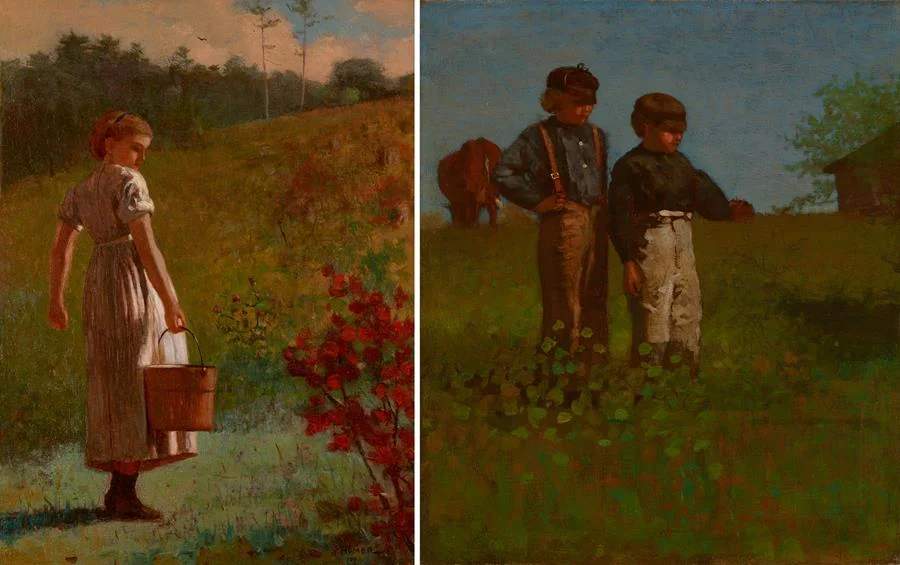
Right, "Young Farmers (Study for Weaning the Calf)'' (oil on canvas), painted in 1873-74, and, left, "Returning from the Spring'' (oil on panel), painted in 1874, both by Winslow Homer (1836-1910), at the Portland Museum of Art.
Winslow Homer (United States, 1836–1910), Young Farmers (Study for Weaning the Calf), 1873–74, oil on canvas, 13 5/8 x 11 1/2 inches.
Winslow Homer (United States, 1836 - 1910), Returning from the Spring, 1874, oil on panel, 7 7 /8 x 5 3/4 inches
North Conway getting a second branch of the New England Ski Museum

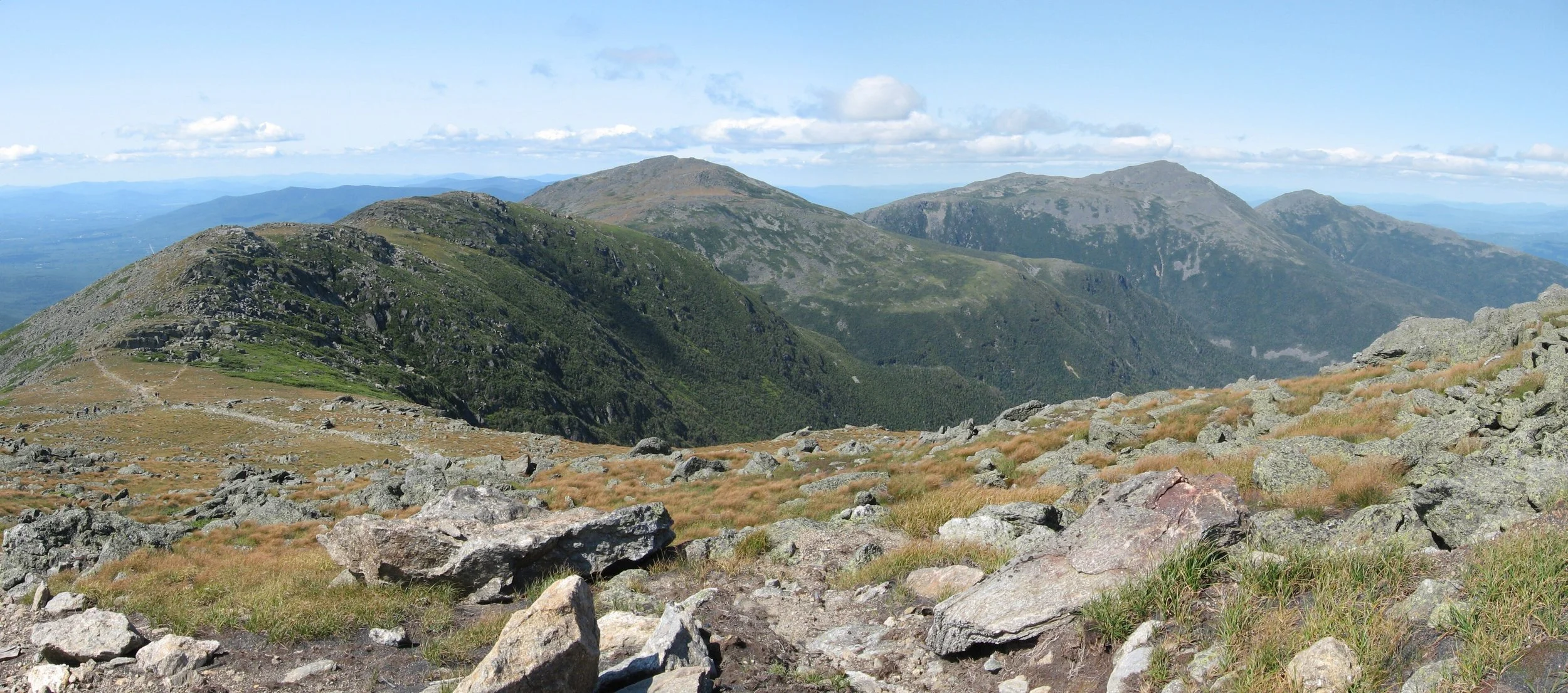
The New England Ski Museum is getting a second branch (above), this one in North Conway, N.H., near the Presidential Range.The first one is at Cannon Mountain, in the Franconia Range. To learn more, please hit this link.
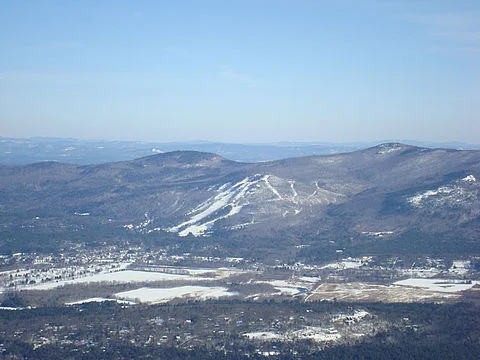
Cranmore Mountain ski area, in North Conway.
Calif. to probe Aetna's coverage denials.
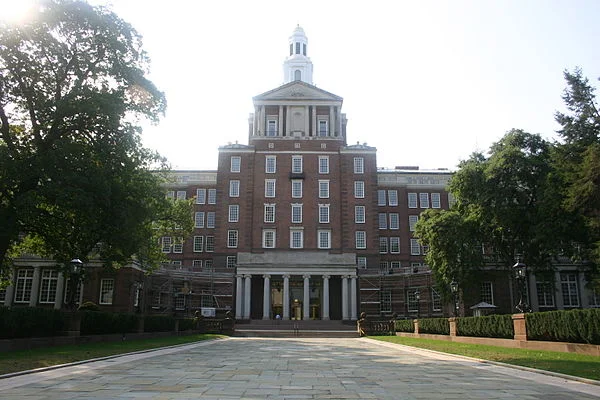
The Aetna headquarters building, in Hartford, designed by renowned architect James Gamble Rogers, is the world's largest Colonial Revival Building. It was finished in 1931.
By BARBARA FEDER OSTROV
Both of California’s health insurance regulators said they will investigate how Aetna Inc. makes coverage decisions, as the lawsuit of a California man who is suing the nation’s third-largest insurer for improper denial of care heads for opening arguments on Wednesday. Woonsocket, R.I.-based CVS Health, the pharmacy giant, seeks to buy Aetna.
The Department of Managed Health Care, which regulates the vast majority of health plans in California, said Monday it will investigate Hartford, Conn.-based Aetna after CNN first reported Sunday that one of the company’s medical directors had testified in a deposition related to the lawsuit that he did not examine patients’ records before deciding whether to deny or approve care. Rather, he relied on information provided by nurses who reviewed the records — and that was how he was trained by the company, he said.
Insurance Commissioner Dave Jones had already told CNN his office would investigate Aetna, which he reconfirmed in a statement Monday.
“If a health insurer is making decisions to deny coverage without a physician ever reviewing medical records, that is a significant concern and could be a violation of the law,” Jones said.
It is unclear how widespread the review of patient claims by non-physicians is in the industry or whether other insurers will feel compelled to revisit their practices.
The California Department of Insurance, which Jones heads, regulates only a small fraction of the state’s health plans, but they include several Aetna policies. He has previously criticized Aetna for “excessive” health insurance rate hikes, though neither his agency nor the managed health care department has the power to stop the increases.
Jones’ investigation of Aetna will review denials of coverage or pre-authorizations during the tenure of the medical director who testified in the California lawsuit, Jay Ken Iinuma, who has since left the company. Insurance department investigators will also look into Aetna’s procedures for managing medical coverage decisions generally.
The dual investigations come as federal regulators are examining a planned $69 billion purchase of Aetna by pharmaceutical giant CVS — a deal that many experts believe could transform the health care industry.
It’s unclear how the investigations might affect Aetna’s future coverage decisions, or those of other insurers, said Shana Alex Charles, an insurance industry expert and assistant professor at California State University-Fullerton. But she praised the decision to investigate as exactly what insurance regulators should be doing. “Without that strict oversight, corners get cut,” Charles said.
Scott Glovsky, the lawyer representing the California plaintiff, Gillen Washington, said he and his client were “very pleased” by the news that Aetna will be investigated. Speaking Monday, before the managed care department said it would also investigate, Glovsky said his client brought the case “to stop these illegal practices, and we’re looking forward to the insurance commissioner’s investigation so we can make things safer for Aetna patients.”
Washington, of Huntington Beach, had been receiving expensive medication for years to treat a rare immune system disorder known as Common Variable Immune Deficiency.
But in 2014, Aetna denied the college student’s monthly dose of immunoglobulin replacement therapy, saying his bloodwork was outdated. During the appeal process, Washington developed pneumonia and was hospitalized for a collapsed lung.
In recent years, as California Healthline reported last June, patients with similar diseases have faced increasing difficulty getting their insurers to approve treatments, according to clinicians and patient advocates.
In an e-mailed statement on Monday, Aetna did not directly address the question of case reviews by non-physicians. It said its “medical directors review all necessary available medical information for cases that they are asked to evaluate. That is how they are trained, as physicians and as Aetna employees.” It added, “adherence to those guidelines, which are based on health outcomes and not financial considerations, is an integral part of their yearly review process.”
Aetna also noted that it has paid for all of Washington’s treatments since 2014 and continues to do so.
Aetna said in previous documents filed in the lawsuit that it is standard for people with Washington’s immunodeficiency disease to get regular blood tests and that Washington had failed to do so. But Washington’s attorney said his client clearly needed the medication and that Aetna’s action violated its contract with Washington.
Charles, the professor, said she was most surprised by the fact that Iinuma had admitted not only that he hadn’t reviewed Washington’s medical records personally, but that he had no experience treating his disease. The burden should be on insurers to demonstrate why treatment should be stopped, not on doctors and patients to show why it should be continued, Charles said.
“It’s easy to see the cases as just files and not people standing in front of you,” she said.
More startups needed

The Central Square area in Cambridge, Mass., an area famed for business startups, especially in technology, in large part because of the proximity of Harvard and MIT.
From Robert Whitcomb's "Digital Diary,'' in GoLocal24.com:
Eduardo Porter, a New York Times columnist, in a column headlined “Where are the Start-Ups? Loss of Dynamism Is Impeding Growth,’’ suggests that the slow growth in the U.S. economy in recent years has a lot to do with the rise of huge, market-controlling companies that suppress the creation of the small new business that drive new-job creation and that boost productivity. Mr. Porter notes that the rate of company creation is about half what it was 40 years ago.
A big problem is the failure, by Republican and Democratic administrations, to enforce antitrust laws against such enterprises as Google, Facebook and other huge companies, including big banks, that have vast marketing, pricing and other power. They enthusiastically engage in legally dubious anti-competitive activities. Washington has become increasingly in the thrall of lobbyists working for these giants. It recalls the heyday of the Standard Oil Trust and other monopolies at the turn of the 20th Century.
Mr. Porter cites a study by the Hamilton Project, at the Brookings Institution, by Jay Shambaugh, Ryan Nunn and Patrick Liu, in which they explore possible causes of the American economy’s inertia.
To read the report, please hit this link.
Mr. Porter writes:
“The evidence paints a distinct picture of decline: Fewer start-ups mean fewer new ideas and fewer young, productive businesses to replace older, less productive ones.’’
There’s little indication that this will change as long as Washington favors the biggest lobbyists and campaign contributors. Of course, we have always had a few monopolies, such as the old American Telephone & Telegraph, that were regulated in varying degrees.
To read his article, please hit this link.
Chris Powell: Casinos transfer wealth to the rich from the poor but liberals still like them

The Foxwoods casino complex (the world's largest), in Mashantucket, Conn.
Nothing transfers wealth from the many to the few as casinos do, which is why they demonstrate so well the phoniness of what passes for liberalism in Connecticut.
Libertarianism can justify casinos, but they are not justified by their claims of employment, since that employment is merely the mechanism of the transfer of wealth from casino patrons, disproportionately poor, to casino owners, always rich.
So why does the clamor for enlarging casino gambling in Connecticut come mainly from supposedly liberal Democrats, most recently from Bridgeport's delegation in the General Assembly?
Because the casino jobs will go disproportionately to their constituents while the victims of casino gambling will be drawn from all over, because the casinos will pay political graft locally, and because nothing matters more to liberals than raising government revenue, whatever the source.
Fortunately for the advocates of a casino in Bridgeport there are two other issues -- the unfairness of Connecticut's current casino policy and its failure to maximize the state's royalties from the business.
That is, state government long has conferred a monopoly on the two casinos operated by reconstituted Indian tribes in the southeast corner of the state in exchange for 25 percent of their slot-machine take. But the state has never required the tribes to bid again for their monopoly even as the revenue they send the state has been declining for years because nearby states have been getting into the business.
Non-tribal casino operators such as MGM, which soon will open a casino just over the Massachusetts line in Springfield, would love to participate in an auction for casino rights in Connecticut. MGM maintains that a casino it would put in Bridgeport would pay royalties far exceeding what the tribes pay. Indeed, combined with the casinos being built in Massachusetts, a casino in Bridgeport might threaten the survival of the tribal casinos, cutting off most of their distant traffic and leaving them with a clientele that is mostly local and poor.
The big question about a casino in Bridgeport may be how long it could operate before inducing New York to put full-scale casinos in New York City, Westchester County and Nassau County and New Jersey to put them in the Newark area. Such a time is almost certainly coming anyway, and Connecticut will have caused it by legitimizing the Indian casino racket in the Northeast in the guise of social justice and ethnic reparations 25 years ago.
So what will happen with Connecticut's casino policy? Who will win -- the Indians, Bridgeport, or MGM? In any case it's not likely to be determined by any examination of the public interest.
xxx
Jostling for a return to office in recent years, former Secretary of the State Susan Bysiewicz, a Democrat, has made herself a caricature of political ambition, opportunism, and calculation.
She twice became a candidate for governor, withdrawing her second candidacy to run for attorney general, which offered her better prospects upon Attorney General Richard Blumenthal's decision to run for the U.S. Senate. But the state Supreme Court ruled imperiously that Bysiewicz lacked the lawyerly qualifications required by a manifestly unconstitutional statute. Bysiewicz then ran for U.S. senator but lost the Democratic primary. Lately she looked to move into various state Senate districts without Democratic incumbents. Last week she gave up on that and filed for governor again.
So does Bysiewicz stand for anything besides ambition? Last week she celebrated having no connection to the administration of Gov. Dannel Malloy, a Democrat not seeking re-election. Maybe that's a start.
Chris Powell is managing editor of the Journal Inquirer, in Manchester, Conn.
Subdue and beautify
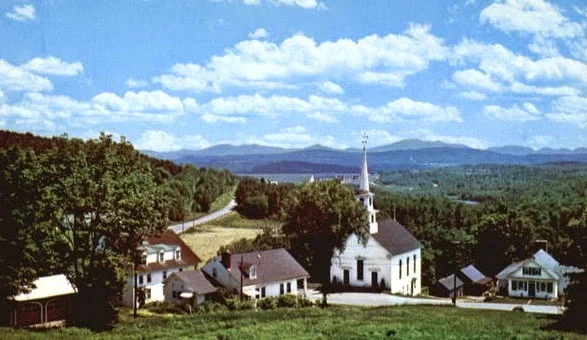
Old post card showing "White Village,'' aka Lower Waterford, on the Connecticut River and in Vermont's "Northeast Kingdom.''
“As for the wilderness, they {the Puritans} saw it as something to be ‘subdued,’ on the assumption that anything not immediately useful to man was inherently evil. The Indians who lived there had no real claim to it {the Puritans claimed}. ‘They ramble over much land,’ wrote {Boston founder John} Winthrop, ‘without title or property.’
“However they acquired their rights of possession, the new owners demonstrated an instinctive feeling for beauty in planning their towns in harmony with the land, and a sense of stewardship that abides in many communities to this day. Here in Lower Waterford, Vermont, known as White Village {because most of the buildings are painted white} the meetinghouse {church} and the library stand together as living links with the past.’’
-- From “Light From a Meetinghouse Window,’’ an essay by Paul Brooks, in the book Arthur Griffin’s New England: The Four Seasons, With Original Essays by 51 Famous Authors.
Josh Hoxie: Ryan's $1.50-a-week gift from the GOP tax law
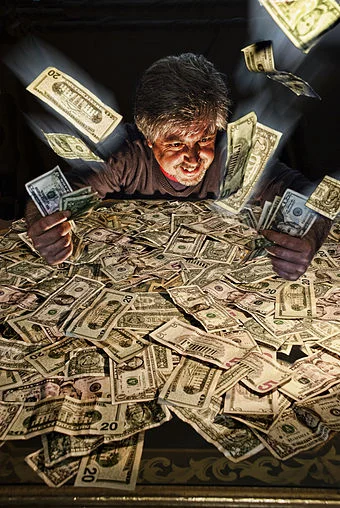
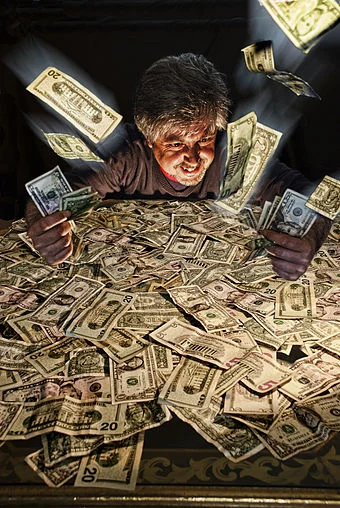
Avarice, by Jesus Solana.
Via OtherWords.org
Love is in the air. Or so the marketers want us to believe, as Valentine’s Day ads sweep the nation into a frenzy of buying flowers, greeting cards, and confections to communicate our affection.
Washington is less forthcoming with the adoration, especially for working people.
You’re probably tired of hearing about the tax plan passed by Congress late last year. If not, just wait for the media barrage coming your way from the Republican donor class, which is guaranteed to make the Super Bowl Tide ads look like child’s play.
In case you missed it, Republicans jammed through a comprehensive reform of the tax code in December without a single congressional hearing or Democratic vote. The plan was a massive gift to the ultra-wealthy — a money grab by any measure, with just a few peanuts tossed to the rest of us.
Next, Republican lawmakers and their backers announced plans to spend tens of millions of dollars promoting said peanuts, to distract from the huge windfalls going to millionaires and billionaires.
They’ve got their work cut out for them in promoting the most unpopular legislation in recent history.
Speaker of the House Paul Ryan took to Twitter to celebrate the reported tax savings of a secretary in Pennsylvania resulting from the Trump tax cuts. Her take of the $1.5 trillion cut? A whopping $1.50 per week added to her paycheck, Ryan boasted.
It’s safe to say this PR effort is off to poor start.
Ryan didn’t explain why he quickly deleted his tweet shortly after posting it. I suspect it had something to do with the Twitter users who pointed out that the billionaire Koch brothers stand to gain as much as $1.4 billion annually, according to Americans for Tax Fairness.
That’s $1.50 a week for the secretary in Pennsylvania, versus about $27 million per week for the Koch brothers.
The Koch brothers jab might’ve hit a bit close to home for Ryan — who, just days after the Trump tax cuts became law, accepted $500,000 from Charles Koch for his fundraising committee. If it looks like corruption, smells like corruption, and tastes like corruption… Well, you get the idea.
The author and Nobel Laureate Elie Wiesel taught us, “The opposite of love is not hate, but indifference.” What we’ve witnessed from Ryan and his billionaire backers, as well as Trump, is complete and utter indifference to the needs of working families.
The $1.50 tweet is indicative of just how out of touch Washington has become with ordinary families. The only group that matters is the wealthy. They get the love, the adoration, and the huge handouts.
Meanwhile, the Supplemental Nutrition Assistance Program (SNAP) will expire without re-authorization this year. SNAP, sometimes called food stamps, serves one in seven low-income Americans, over 20 million households.
This is just one of many vitally important programs on the chopping block of Trump’s proposed budget. Given the rhetoric coming from the Republican majority in Congress, prospects look dim.
Maybe this Valentine’s Day, Cupid’s arrow will strike our greedy Koch brothers as they sit in their private jets looking down on the working families for whom they hold such deep disdain. Maybe they’ll find a little love and compassion for the less-well off and stop doing everything they can to make themselves richer and everyone else poorer.
Josh Hoxie directs the Project on Taxation and Opportunity at the Institute for Policy Studies.
For a minute anyway

"Joining Minds'' ( oil and tar on linen), by Richard Nocera, in the group show "A Pairing,'' at Atelier Newport, through March 25.

Boston mayor complains about dearth of state funding for city's schools
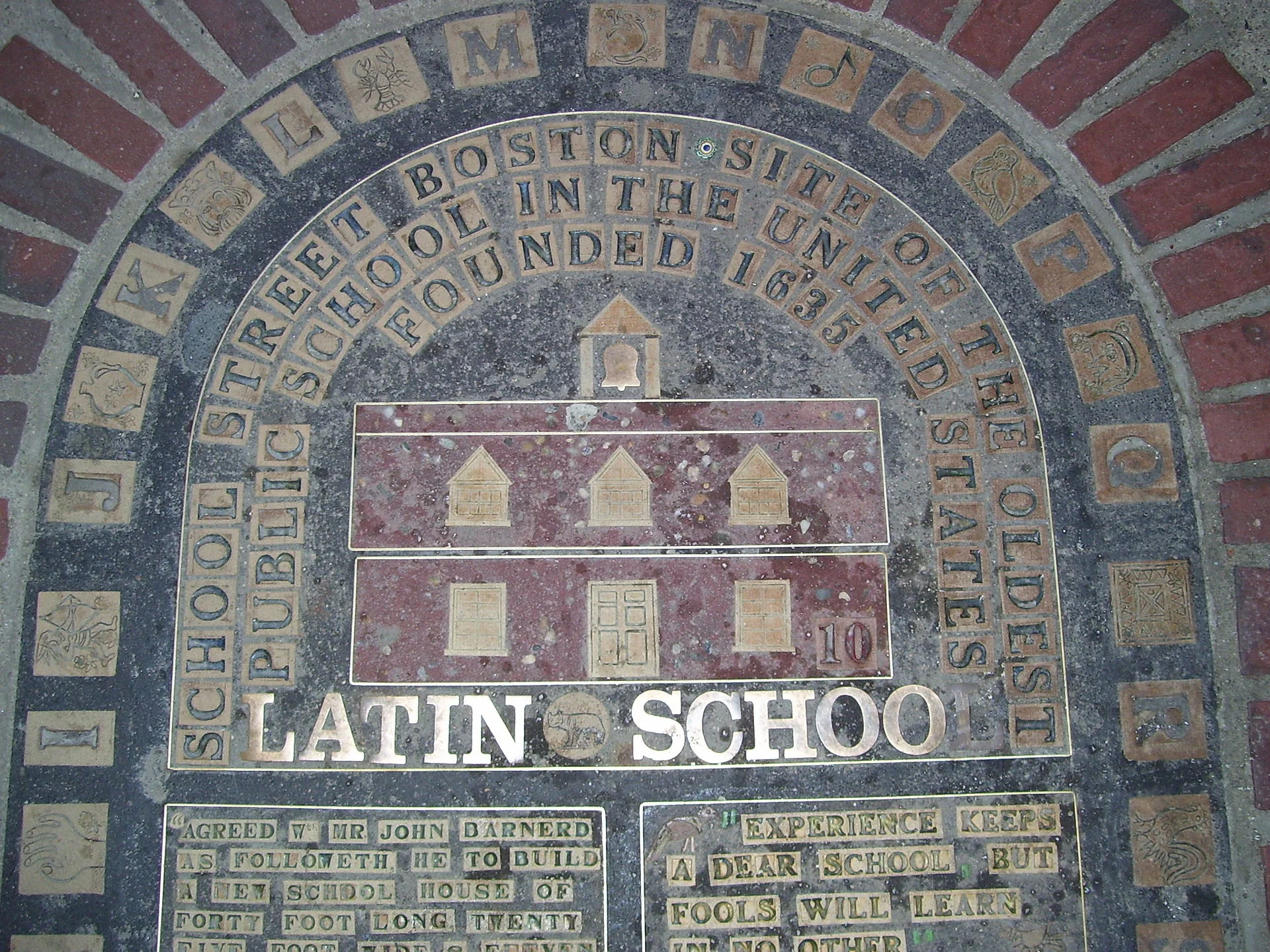
Plaque commemorating the first site, on School Street. of the Boston Latin School, the most prestigious public school in Boston and, founded in 1635, the oldest public school in America.
Boston Mayor Marty Walsh told the New England Council on Monday that his city is in a “crisis” because the state has been failing to address longstanding shortages of state funding for local schools. And he said he disappointed in the amount of aid proposed by Gov. Charlie Baker, a Republican with whom the Democratic mayor has generally had friendly political relations.
“One of our biggest fiscal challenges that we can’t wait to solve is our declining and underfunded state aid. We have issues there.''
The city says: “State aid has been reduced substantially over the course of the last two recessions. Since FY02, net state aid (defined as state aid revenues less state assessments) to the City has been reduced by over $252 million or 59%. The City lost approximately $79 million between FY03 {fiscal 2003} and FY05, gained approximately $16 million between FY06 and FY08.''
To read more, please hit this link.

Tim Faulkner: N.H. panel's rejection of Northern Pass hydro-energy project upends Mass. plans

Via ecoRI News (ecori.org)
By all accounts, the rejection of the Northern Pass energy project was a major surprise. The plan to deliver 1.09 gigawatts of hydropower from Quebec through New Hampshire to southern New England via high-voltage transmission lines was all but assured by the developer and energy officials in Massachusetts. The Massachusetts Department of Energy Resources was counting on the electricity for its Clean Energy and Climate Plan for 2020.
A Massachusetts Clean Energy power-purchase contract was recently awarded to Eversource and Hydro-Quebec for hydro electricity to help meet the state's goal of 1,200 megawatt of new land-based power by 2022. Eversource intended to start construction in April and complete the project by 2020.
On Feb. 1, however, the New Hampshire Site Evaluation Committee rejected the proposal, 7-0. The board worried that the 192-mile power-line system, including hulking towers, would disrupt main streets and harm tourism, particularly in the scenic northern portion of the state that is home to the White Mountain National Forest and Franconia Notch.
Eversource made concessions by promising to bury 52 miles of the route and set aside 5,000 acres of preservation and recreation land. But it wasn't enough. The decision was celebrated by small towns and environmental groups that vigorously opposed the project since it was announced in 2010. Thousands of New Hampshire residents submitted comments objecting to the project.
Eversource said it was “shocked and outraged” by the vote and plans to appeal the decision in New Hampshire Supreme Court. It has 30 days to appeal the vote by the site evaluation committee.
“The process failed to comply with New Hampshire law and did not reflect the substantial evidence on the record,” Eversource said in a prepared statement.
The utility referred to the economic benefits of the $1.6 billion project, including $30 million in annual tax revenue, as well as the renewable-energy goals it would be fulfilling. The process, Eversource said, “is broken and this decision sends a chilling message to any energy project contemplating development in the Granite State.”
Eversource had invested some $250 million in the project and received approval from the U.S. Department of Energy for a portion of the power lines last November, but still requires a permit from Quebec.
In Massachusetts, the office of the attorney general and the Executive Office of Energy and Environmental Affairs (EEA) said they would reevaluate the energy procurement decision, while remaining committed to acquiring imported hydropower.
Peter Lorenz, EEA communications director, said a new proposal for renewable energy would be considered if existing contracts can't meet the terms of the agreement.
Rhode Island has also shown interest in imported hydropower. Former Gov. Lincoln Chafee advocated for a deal with Hydro-Quebec after touring the company. In recent years the state discussed buying a portion of Quebec hydropower in a deal with Massachusetts but an agreement was never reached.
On Feb. 5, Gov. Gina Raimondo announced a goal of acquiring 400 megawatts of utility-scale renewable energy from the Northeast, but only small-scale hydro projects qualify for the program.
Tim Faulkner writes for ecoRI News.