Vox clamantis in deserto







Towering kitsch

The statue of legendary woodsman Paul Bunyan in the old lumber town of Bangor, Maine, is one of those pieces of kitsch that can bring a smile on otherwise depressing days. But sadly, as Lonely Planet noted, "his view of the Penobscot River {which used to be used to float logs down to the coast when Maine was a huge supplier of wood} is now blocked by a casino. ''
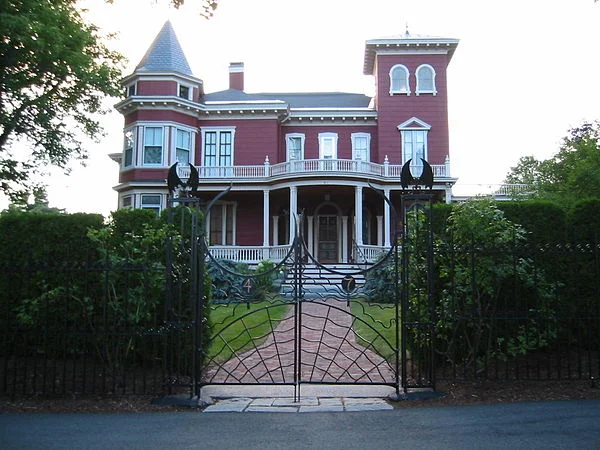
Big fortunes were made in the wood business, and Bangor still has many mansions built by those who made these fortunes. One is below, now owned by famous writer Stephen King.
Alison Stine: Where the fracking industry dumps its waste
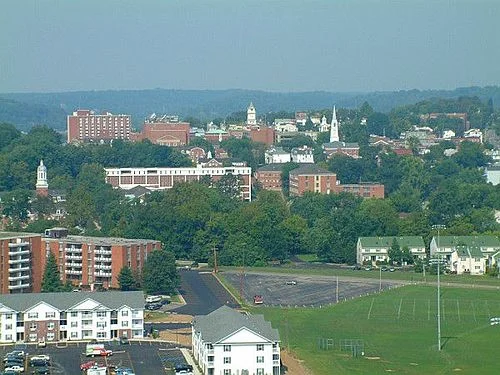
View of Athens, Ohio.
Via OtherWords.org
At Athens, my southeastern Ohio town in the Appalachian foothills, is a small, rural place where the demolition derby is a hot ticket, Walmart is the biggest store, and people in the surrounding villages must often drive for 30 minutes to grocery shop.
We hold the unfortunate distinction of being the poorest county in the state: an area that is both stunning — with rolling hills, rocky cliffs, pastures, and ravines — and inaccessible, far from industry.
It’s here, at the Hazel Ginsburg well, that fracking companies dump their waste. Trucks ship that sludge of toxic chemicals and undrinkable water across the country and inject it into my county’s forgotten ground.
My step-grandmother, the daughter of a Kentucky miner, used to tell me stories of washing her clothes in polluted red water, downstream from mines. Coal companies exploited employees like her father, paying him in company scrip and keeping him poor and exploiting the land.
That kind of abuse continues. It’s just changed shape. The Ginsburg well has a long history of violations, so many that the Ohio Department of Natural Resources ordered it shut.
It was not.
It’s a pit well, which looks like an old swimming pool, covered by a tarp. No sign indicates the presence of chemicals, just a “no trespassing” sign. Allegedly, a guard will snap your picture if you stop or turn your car around. The well is in a residential area, with houses — some with swing sets — just down the road.
In 2012, Madeline ffitch (whose last name is spelled lowercase and with the double ff) was arrested there. Her arrest was part of an action by a local anti-fracking group, Appalachia Resist. The then 31-year-old’s arms were locked into cement-filled plastic drums just before the gates, blocking the entrance.
Two years later, Christine Hughes, co-founder of the local Village Bakery, was arrested protesting against another well site, as were seven others. My town called them “the Athens 8” and they were hailed as heroes.
Ffitch and her young family continue to protest wells, despite the attempts of the fracking industry to, according to her, “paint anyone who is organizing resistance around this stuff as outsiders or extremists.” Her husband, Peter Gibbons-Ballew, was arrested in a peaceful protest in 2016, while ffitch watched, their baby strapped to her chest.
Our local economy now depends on tourism and farming. The long, humid growing season makes this part of Appalachia ideal for wild specialties such as pawpaws, black walnuts, and mushrooms. And many hunters stay here to be near our famous bucks.
By contaminating the environment, fracking wastewater wells threaten all these businesses. In 2015, tank trucks injected 4 million barrels of waste into my small county alone.
It’s hard to get answers about what it’s in that waste. But Jason Tremby, an engineering professor at Ohio University, is leading a local team to “clean” fracking wastewater using ultraviolet light, water softening techniques, and a high-pressure reactor.
It makes sense to me that a solution to the wells might come not from outside, but from people like ffitch, Hughes, and Trembly, working and living in Appalachia. People are used to doing things for themselves here — and used to the community helping the community.
I keep hoping more will be done to protect this place. “You want to forget it,” begins the Appalachian-born Ruth Stone’s poem “Garbage.” But the fracking waste in the injection wells of Appalachia can’t be forgotten forever.
It’ll bubble up, one way or another, before long.
Alison Stine is a novelist. Her most recent book is a novella, The Protectors. A longer version of this piece was produced by the Economic Hardship Reporting Project.
He went to the airport

"Waiting for Isaac Levitan After School'' (oil on canvas), by Alexandra Rozenman, at Fountain Street Fine Art, Boston.
The Maine way to boost lobster stocks

From Robert Whitcomb's "Digital Diary,'' in GoLocal24.com:
Southern New England lobstermen (or should I say lobsterpersons?) may have hurt themselves by taking as many lobsters as they can, without looking at the species’ ability to reproduce. It may be a case of “the tragedy of the commons’’ -- wherein individual users in a shared-resource system acting independently in what they see as their own self-interest undermine the common good by depleting that resource through their collective action.
Has that attitude had as much impact on the plunging lobster stocks along the Massachusetts, Rhode Island and Connecticut coasts as environmental changes, especially warming seas? Hard to tell. Commercial fishermen are notoriously independent and secretive about their catches.
You can’t but think of that when you learn that many Maine lobsterman have long used what seems to be a very effective conservation method. As reported by Fred Bever for Maine Public Radio:
For years, Maine lobstermen have used "’V-notching’: when they found an egg-bearing female in their traps, they would clip a ‘V’ into the end of its tail, and throw it back. The next time it turns up in someone's trap, even if it's not showing eggs, the harvester knows it's a fertile female, and throws it back. Later, the lobstermen also pushed the Legislature to impose limits on the size of the lobster they can keep — because the biggest ones produce the most eggs.’’
“And those fertile females have been doing that job very well in Maine. Since the 1980s, lobster abundance here has grown by more than 500 percent, with landings shooting up from fewer than 20 million pounds in 1985, to more than 120 million pounds in 2015 with a value of more than a half billion dollars.’’
To read more, please hit this link.
https://nenc.news/research-concludes-maine-conservation-technique-helped-drive-lobster-population-boom/
A small-town Hollywood for documentaries
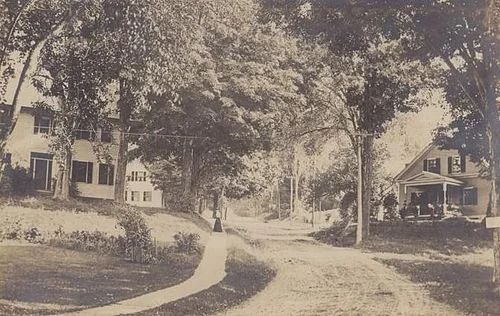
Walpole in 1915. Some of the town hasn't changed that much since then.
It's surprising what you can find in small New England towns. Consider Walpole, N.H., in the southwest corner of the Granite State.
That is where Ken Burns, Elaine Mayes and Roger Sherman, classmates at Hampshire College (in nearby Amherst, Mass.), in 1976 founded a documentary film company called Florentine Films, which went on to produce the famous films The Civil War (1990), Baseball (1994), Jazz (2001), The War (2007), The National Parks: America's Best Idea (2009), Prohibition (2011), The Roosevelts (2014) and The Vietnam War (2017).
The name of the company came from Florence, Mass., Mayes's home town, also in the Connecticut River Valley. A rather cozy company.
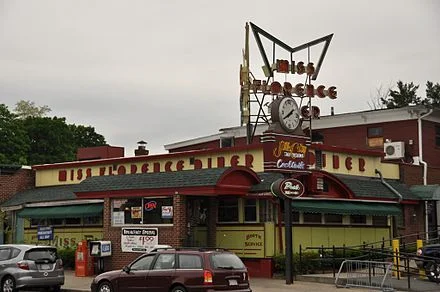
The famous Miss Florence Diner, in Florence, Mass. Such diners are civic ornaments of many small New England towns and some cities, too. They sometimes serve as informal town halls -- chatty and caffeinated central meeting places.
Retrograde spring

"Springtime in Massachusetts is depressing for those who embrace a progressive view of history and experience. It does not gradually develop as spring is supposed to. Instead, the crocuses bloom and the grass grows, but the foliage is independent from the weather, which gets colder and colder and sadder and sadder until June when one day it becomes brutishly hot without warning...It was fitting, then, that the first people who chose to settle there were mentally suspect."
-- Rebecca Harrington
(Editor's note: Meteorological spring starts soon -- on March 1.)
'Life principle'
"Winter. Time to eat fat
and watch hockey. In the pewter mornings, the cat,
a black fur sausage with yellow
Houdini eyes, jumps up on the bed and tries
to get onto my head. It’s his
way of telling whether or not I’m dead....
Off my face! You’re the life principle,
more or less, so get going
on a little optimism around here.
Get rid of death. Celebrate increase. Make it be spring.''
-- From "February,'' by Margaret Atwood
Make the whole state a foreign-trade zone?
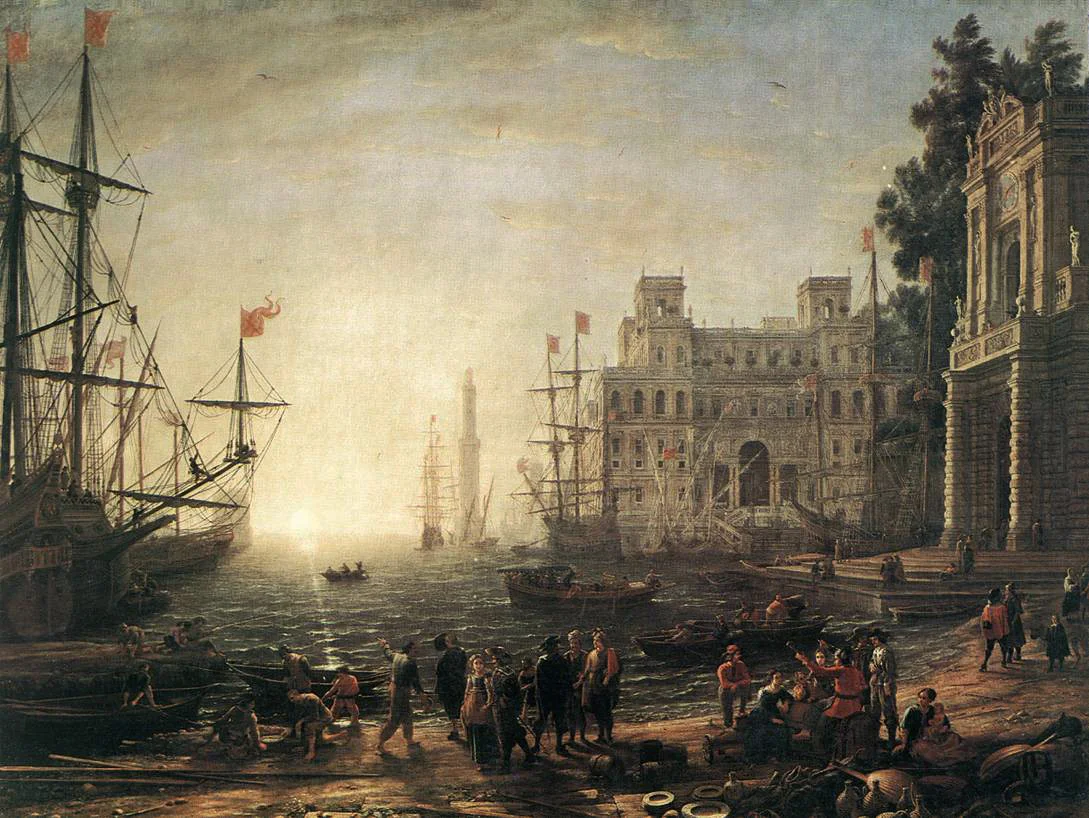
"Seaport,'' by Claude Lorrain.
Adapted from Robert Whitcomb's "Digital Diary,'' in GoLocal24.com:
With its big and mostly sheltered bay on the Northeast Corridor and proximity to major shipping lanes, Rhode Island is very well-situated for the state to expand its foreign-trade zone to the entire state. As I remember from my business editor days here and in Europe, Free Trade Zones, if promoted well, can be big prosperity builders in the jurisdictions that have them. Rhode Island’s compactness, ports on Narragansett Bay and increasingly international T.F. Green Airport should make it an easier place than most to go after revenues from international trade.
In the Jan. 26-Feb. 1 Providence Business News, Mary MacDonald well summarized the attractions of foreign-trade zones in her article headlined “R.I. bids to become a statewide foreign trade zone. Who will benefit?’’
“{A}approved companies that make use of a zone do not have to go through Customs entry or pay import duties on certain merchandise. Duties and excise taxes are only paid when products move into the U.S. market for sale. If the items are then moved on to another country, the company pays no duties or taxes on those items.
‘’Companies will often move product through a FTZ if they want to hold it before sale, because this allows them to delay the payment of their tariff, and frees that money for other purposes….there is no time limit for how long something can be stored in the trade zone.’’
Pretty alluring.
Llewellyn King: Tribute to a mad wordsmith; the comfort dog crisis
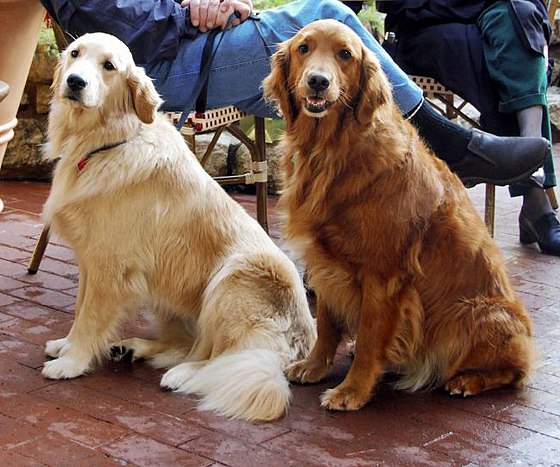
Ready to board.
Nicholas von Hoffman, who has died at the age of 88, streaked across the journalistic sky in the 1970s like a comet. From the pages of The Washington Post, he shined in a way that no journalist had done on any paper since H.L. Mencken in The Baltimore Sun in the early 20th Century.
Nick, as he was called, burst onto the pages of The Post's Style section in a way that was unique. At that time, the section itself was novel and about to be copied across the country.
People lined up to buy The Post to be entertained, to be outraged, to be titillated, but mostly to see what the mad wordsmith devil was up to that day. Nick used words to create explosive devices, which he lobbed from the pages of the paper with awesome effect.
He was my colleague at The Post and he proved that the page, any page in any newspaper, can come alive with great writing; in Nick’s case, combative stuff that took no prisoners, favored none and offended all. If you read him long enough, eventually you would be outraged. It was so exquisitely abusive, so willfully offensive that The Post had to hire security personnel to sort the mail: It contained dead animals, feces, razor blades and possibly poison.
Nick was not the perfect journalist. The serious people in the journalism schools would not cite him, I imagine, as a model. His facts were chosen to accommodate his point of view that day.
He said he was a “radical journalist”. He had worked for Saul Alinsky, the admired and reviled Chicago community organizer. Criticizing the high cost of medicine, Nick wrote that if you stare at the sign of the Hippocratic oath it will morph into a dollar sign.
Nick did not go to college, but he had a deep knowledge and love of language. He was, well, a poseur, a literary exhibitionist and a controversialist.
He did not let the facts stand in the way of a great rant. He skewered Republicans and Democrats alike, calling the Republican minority leader in the Senate, Everett Dirksen, of Illinois, “a piece of American political bric-a-brac.” The Democratic Party, he wrote ,“to its committed members was still the party of heart, humanity and justice, but to those removed a few paces it looked like a Captain Hook's crew of ambulance-chasing lawyers, rapacious public-policy grants persons, civil rights gamesmen, ditzy-brained movie stars, fat-assed civil servant desk squatters, recovering alcoholics, recovering wife-beaters, recovering child-buggers, and so forth and so on: a grotesque lineup of ill-mannered, self-pitying, caterwauling freeloaders, banging their tin cups on the pavement demanding handouts.”
He was fired from CBS's 60 Minutes for likening Richard Nixon, during the last days of his presidency, to a dead mouse on a kitchen floor, waiting for someone to take it by the tail and throw it in the garbage.
Yes, Nick was reprehensible. And I loved him. I loved him for his outrageousness and his hatred of cant. I loved his personal insouciance and his extraordinary literary skill. But most of all, I loved him because he made the pages of newspapers thrilling and unmissable: the place to have your nose buried first thing in the morning. Thanks, Nick.
Comfort Dogs Brought Up Short by the Airlines
Doggone, but it was nice while it lasted.
I refer to the number of dogs you saw in the airports during the last holiday season. People had simply declared their dogs “comfort dogs.” Quite right. Every dog is a comfort dog. I have never had a dog that was not a comfort. They are the great reliable comfort in human life, bar none, I might add.
But I read that the airlines, appalled at the sheer number of canines traveling, are going to try and limit the number of comfort dogs to those of the truly sick, blind and otherwise incapacitated. It makes me heartsick.
By the way, dogs love to fly. I used to take my Siberian Husky flying, back in my private pilot days. He loved it, except for landing: He was upset by the ground rushing up. No fool he.
The Things They Say
“There comes a time to join the side you're on.” -- Midge Decter, journalist
Llewellyn King is executive producer and host of White House Chronicle, on PBS. His e-mail is llewellynking1@gmail.com.
Russian mob money in Trump's Mob-style business. Shttp://www.msnbc.com/brian-williams/watch/report-russian-mob-money-helped-build-trump-business-empire-1002228291948
Chris Powell: The road to fiscal confusion in Connecticut
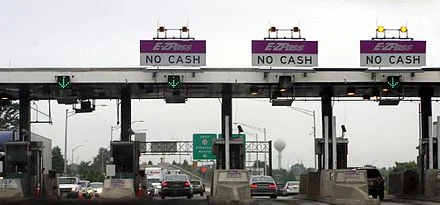
Last Wednesday may have told the crazy story of state government in Connecticut.
In the morning the Connecticut Mirror's Jacqueline Rabe Thomas reported that most state agencies had dismissed a request from Gov. Dannel Malloy's budget director to suggest savings in their budgets. Most agencies, Thomas wrote, suggested nothing or failed to reply at all, while some recommended increasing spending instead.
A few hours later the governor proposed a seven-cent increase in the gasoline tax, installation of electronic tolls on state highways, and a special $3 tax on the sale of tires. He reserved the right to propose budget cuts next week without the assistance of his own administration.
But there are suggestions from other sources. The Connecticut Conference of Municipalities, whose acronym CCM long has been mocked as really meaning "Conference of Crying Mayors," had gotten relevant a week earlier. Its executive director, Joe DeLong, and its president, Waterbury Mayor Neil O'Leary, told a study commission that state law should start excluding pension benefits and medical insurance from collective bargaining and binding arbitration of contracts for government employees.
This was remarkable, since the government employee unions control Connecticut's Democratic Party, CCM represents many local Democratic administrations, and O'Leary himself is a Democrat.
The major candidates for the Republican nomination for governor also propose to curtail collective bargaining and binding arbitration for government employees. So the idea may gain legitimacy after the state election in November.
The problem is not just the huge cost of state and municipal employees. More important is the cost to democracy, since collective bargaining and binding arbitration in government remove the bulk of public expense from the ordinary democratic process. Indeed, that is the objective -- to let elected officials avoid responsibility to taxpayers for the advantages conferred on government employees.
The biggest issue in state government is not its financial collapse. It is whether the public ever again will be master in its own house.
* * *
DEDICATED FUNDS AREN'T PERSUASIVE: Opposition to tolls is strong, and even advocates condition their support on a new state constitutional amendment guaranteeing that revenue from tolls and fuel taxes is reserved for transportation purposes. An amendment purporting to accomplish that will be on the ballot in November.
The rationale for reserving user taxes for particular purposes is that particular people who cause a particular expense should pay particularly for the benefit they receive -- that the transportation system's users should pay for it. But the rationale is not really so persuasive.
For everybody benefits from transportation, whether he or she buys gasoline or tires or not, and while everybody pays sales tax on the purchase of goods and services, the use of those goods and services usually causes no particular expense to government.
Further, for many years state government has kept 2,000 mentally handicapped adults living with elderly parents because there are not enough group homes, and there is no dedicated fund for these people, though they constitute a far more compelling need than the bus highway from Hartford to New Britain, the planned commuter railroad between New Haven and Springfield, and pothole repairs.
So why should any particular amount of tax revenue feeding a dedicated fund determine government's priorities? Shouldn't those priorities determine the allocation of revenue? And shouldn't elected officials reconsider government's priorities with every new budget?
Chris Powell is managing editor of the Journal Inquirer in Manchester, Conn.
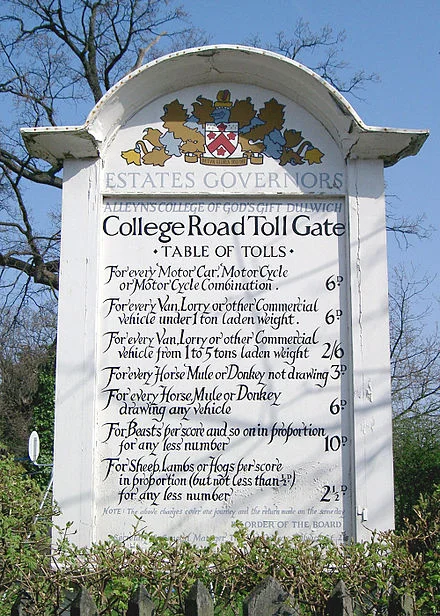
A table of tolls in pre-decimal currency for the College Road, Dulwich, London.
Once a metro area
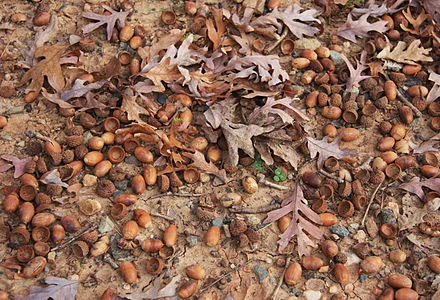
"Today they cut down the oak.
Strong men climbed with ropes
in the brittle tree.
The exhaust of the gasoline saw
was blue in the branches.
It is February. The oak has been dead a year.
I remember the great sails of its branches
rolling out green, a hundred and twenty feet up,
and acorns thick on the lawn.
Nine cities of squirrels lived in that tree.
Today they ran through the snow
squeaking their lamentations.''
-- From "The Stump,'' by New Hampshire poet and former poet laureate Donald Hall.
Saving a stoner signpost

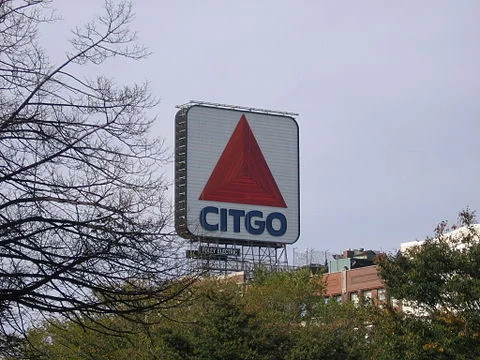
Boston Citgo sign viewed from Lansdowne Street.
From Robert Whitcomb's "Boston Diary'' column in last week's The Boston Guardian:
Even ads for companies owned by South American dictatorships can be beloved. Consider the Citgo sign at Kenmore Square. Since 1965 the spectacle with the red trimark atop 660 Beacon St. has told many millions of Bostonians and visitors where they are. Few care that Venezuela’s state oil company now owns Citgo (a descendent of the old Cities Service oil company).
The pulsing (throbbing?) logo presides in its surreal way over Fenway Park, which helps expand its hypnotic allure well beyond Boston. After all, people around the world can view it in televised Red Sox games. And exhausted Boston Marathon runners love it because they know when they see the sign that they’re near the finish.
As most Guardian readers probably know, Kenmore Square development pressures in the past few years had put the sign’s future in doubt. But happy news comes from real-estate firm Related Beal, which now owns the Citgo sign building. The company says it will preserve the damn thing and protect views of it from various points around the city and Cambridge. Mayor Marty Walsh, relentless preservationists and many in the general public deserve much credit for saving this hallucinogenic treasure.
Some proper Back Bay folks in the mid-‘60s complained that the sign was too tacky. That reminds me of the delayed love of the Twin Towers at the World Trade Center, in Lower Manhattan. I worked across the street from those skyscrapers for a few years in the ‘70s as they were being built and then slowly rented out. For quite a long time many people hated them as a sterile Modernist travesty. But as their “twinness’’ became that overused word “iconic’’ and as New York recovered from its woes of the ‘70s and again became prosperous in the ‘80s and ’90s, a deep affection developed for the towers, which, of course, with their extreme height also served as markers for those confused amidst Manhattan’s density.
I most remember the Citgo sign from summer jobs in Boston in the late ’60s, and then as a reporter for The Boston Herald Traveler in 1970-71. The sign provided geographical guidance and psychological soothing for the college kids, Hippies and even many respectable people. Further, staring at the sign was a way to, er, enrich the pot-smoking experience of that rowdy time. And it evokes the Pop Art of the ‘60s; it looks like an Andy Warhol poster.
Growing reverence for the sign was manifest when it was turned off during stretches of two energy crises. Some then called it “Boston’s very own ‘North Star,’ and The Boston Globe’s celebrated architecture critic, Robert Campbell, in 1980 called it a “symbol’’ of the city.
I remember when the gold-topped, Art-Deco United Shoe Machinery Building dominated Boston’s Financial District and the company itself, nicknamed “The Shoe,’’ was a very powerful player in the New England economy. Now you’ll have a hard time finding the quaint skyscraper amidst the many new, higher office buildings around it and the company itself is long gone.
Will the Citgo sign be there in 50 years? I doubt it. But I hope it remains to help guide me through Boston’s labyrinth for the rest of my days.
Robert Whitcomb is president of The Boston Guardian, editor of newenglanddiary.com and a GoLocal24.com columnist.
A problem with their business model

The Great Stone Building at the Enfield Shaker Museum.
The Enfield Shaker Museum, in Enfield, N.H., memorializes a community of Shakers, a mostly 19th Century New England Protestant cult dedicated to, among other things, simplicity and pacifism. At it height the Enfield community had some 300 members. They built lovely furniture and wood and brick buildings. While they took in many orphans, children from poor families and some converts, that wasn't enough to offset a major impediment to their efforts to achieve long-term growth: Sex wasn't allowed. The cult died out by the early 20th Century.
'Smothering woods'
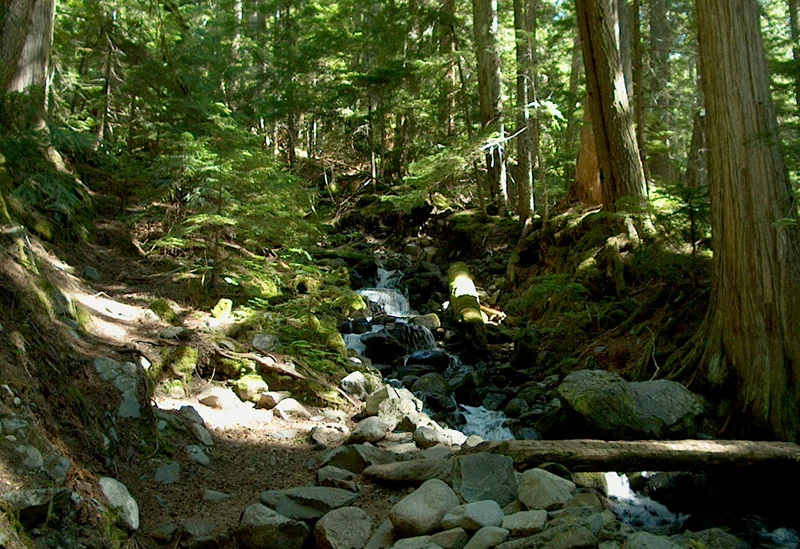
''{T}he entire Northeast seemed liked the inside of a house to me, the sky small and oddly lit, as if by an electric bulb. The sun did not pop over the great trees for hours – and then went down so soon. I was suspicious of Eastern land: the undramatic loveliness, the small scale….In time, though, out became outside my door in New England…In time, the smothering woods that had always seemed part of Northeastern civilization – more an inside than an outside, more like a friendly garden – revealed themselves as forceful and complex. The growth of plants, the lush celebratory springs made a grasslands person drunk. The world turned dazzling green, the hills rode like comfortable and flowing animals. Everywhere there was the sound of water flowing.’’
-- Novelist Louise Erdrich, in her essay “Skunk Dreams’’. From North Dakota and Minnesota, she went to Dartmouth College, in New Hampshire. She now lives in Minnesota
The perils of palm-oil agribusiness

At the Providence Committee on Foreign Relations:
"Socio-economic Effects of Palm Oil,'' with Dan Strechay, on Feb. 21. Dinner event starts at 6 p.m. with drinks, followed by dinner, the talk and Q&A.
This Providence Committee on Foreign Relations (thepcfr.org; pcfremail@gmail.com) event is open to both PCFR members and World Affairs Council of Rhode Island (WACRI) members.
Palm oil is tainted by environmental destruction and poor working conditions but global production is soaring. As the highest-yielding vegetable oil crop, global production is soaring, and also the cause widespread deforestation over the last four decades. In 2004, a group of environmental non-profits and palm oil companies joined together to set up the Roundtable for Sustainable Palm Oil (RSPO). The roundtable sets out eight principles, citing 163 criteria, which are designed to prevent the worst aspects of palm oil cultivation: illegal deforestation, chemical pollution, greenhouse gas emissions, destruction of biodiversity, water loss, poor employment conditions etc. With nearly 3,600 members, it is the largest multi-stakeholder initiative of its kind.
Dan Strechay is the U.S. Representative of the RSPO. Based in New York, he is now responsible for outreach and engagement activities to members and stakeholder in the U.S., as well as formalizing the RSPO’s presence in this important market.
Much ado about metal

"ID Series'' (aluminum with oil on panel), by Ruth Avra and Dana Kleinman, in their very metallic show at Lanoue Gallery, Boston.
Don Pesci: Few limits to Democratic demagoguery

We survived World War Two, the deadliest conflict in world history; we survived the frequently denounced McCarthy Era; we survived the Soviet Union and the darkest days of the Cold War; we survived Watergate; we even survived the publication of the Pentagon Papers.
But will the FBI survive the Nunes memo?
Piece of cake!
Prior to the release of the memo, U.S, Sen. Chris Murphy, up for re-election in 2018, warned that its release might well cripple democracy in the United States: “Attacking the FBI betrays the [law and order] traditions of the Republican Party and, of course, is a threat to democracy, if people lose faith in the highest levels of law enforcement.”
Much earlier, long before the publication of the Nunes memo, a distressed Murphy had sent a memo to the GOP: “Memo to GOP: whenever the great American experiment ends, those that left executive power unchecked will be judged guilty of its undoing.” Murphy’s unchecked “executive power” was a backhanded reference President Donald Trump; no sleight was intended to Trump’s predecessor, President Barack Obama, who was disposed, when he was rebuffed by stiff Congressional opposition, to rule with his pen and phone by means of questionable executive orders.
“By the fall of 2011, after a summer standoff between the two political parties nearly caused a government shutdown,” the New York Times reported in a 2016 review of Obama’s regulatory tropism, “it was clear to Mr. Obama that little hope remained for moving his agenda forward in a Congress controlled by Republicans. Speaking in Las Vegas that October, Mr. Obama expressed disdain for ‘an increasingly dysfunctional Congress’ and pledged: ‘Where they won’t act, I will.’”
Last November, during a Senate Foreign Relations Committee hearing, Murphy announced his concern for Trump’s mental stability: “We are concerned the president of the United States is so unstable, is so volatile, has a decision-making process that is so quixotic, that he might order a nuclear weapon strike that is wildly out of step with U.S. national security interests.”
The Trump administration cannot not last beyond the year 2025, thanks to term limits, though it seems clear that Connecticut’s two senators likely would prefer an impeachment before that date. The FBI and the permanent administrative state will have a much longer shelf life. They will survive.
There are few limits to Democrat campaign demagoguery. Democrats attempted to discredit the Nunes memo prior to its publication as ruinous to the FBI.
Post-publication, Blumenthal could not resist mentioning Sen. Joe McCarthy’s demagogic terrorism: “The release of this memo is really reminiscent of the darkest days of the McCarthy era, with character assassinations” Blumenthal fulminated on CNN during an appearance on Alisyn Camerota’s New Day. The memo, Blumenthal insisted, “endangers methods and sources of the intelligence community, and it reflects an effort to distract from the [Robert] Mueller investigation.”
Post publication, Murphy put away his pre-publication fears, insisting that the published memo was a dud. In the post-publication period, Murphy sought to defang the document characterizing it as “garbage evidence.” The memo is a four- page summary of a much larger body of evidence presented to a congressional committee concerning a FISA warrant application. Putting aside his earlier denunciation of the memo as signaling the end of the Republic, Murphy added, “This memo seems to do more to confirm the legitimacy of the FBI investigation into the Trump campaign than to undermine it.”
Democrats have sought to discredit assertions made in the Nunes memo by noting that details have been left out, the reddest of red-herrings. All narrowly focused summaries – police reports, editorials, political columns, news stories, and even the thousands of press releases sent to Connecticut’s media by Blumenthal during his 20-year reign as state attorney general – necessarily omit details of the broader investigations. Neither Blumenthal nor Murphy have yet focused on the assertions they claim are misleading in the Nunes summary memo.
The memo strongly suggests that information submitted to a FISA court wrongfully included questionable data from a dirt digger paid by the Hillary Clinton presidential campaign team to produce an opposition research document usually used in political campaigns to generate media interest. The memo suggests that some of the data presented to the FISA court was circulated by the oppo-researcher to a news outlet and the resulting story was then used by those who secured a FISA warrant to support the veracity of claims made in the dirt document. The memo argues, a recent Washington Post story tells us, that the planted story was used by the Justice Department to confirm assertions made in the unreliable oppo-research document – which “violated the cardinal rule of source handing.”
One expects partisanship of politicians like Blumenthal and Murphy, but non-partisan journalists, a vanishing species, generally do not appreciate being misused in this way -- nor should the U.S. Intelligence community.
Don Pesci is a Vernon, Conn.-based columnist.
Linda Gasparello: The mysterious mound builders; New England grits? Southern hockey

-- Photos of the Great Temple Mound by Linda Gasparello
The Mound Builders of Georgia
On a January day at the Ocmulgee National Monument, in Macon, Ga., a hiker ambles up the Great Temple Mound, a flat-topped, earthen ceremonial structure built by the Mississippians around 900-1100 A.D. Just as the Scottish explorer Joseph Thompson described Mt. Kilimanjaro in 1887, the mound is “entirely suggestive of solidity and repose, of serene majesty asleep.”
Macon lawyer Christopher Smith, a tall mound of a man, guided my husband Llewellyn King and I through the national park, which preserves an area that has been inhabited by humans since the Ice Age (before 9,000 B.C).
From the Visitors Center, we walked across a wooden bridge over a stream flanked by spindly Georgia pines and up a hill path to the Earth Lodge, which was probably a meeting place for the town's political and religious leaders.

Crouching, we entered the grass-covered lodge through an opening buttressed with thick wooden planks. Bent at our waists, we walked through a narrow hall with woven reed walls into the reconstructed council chamber of the Mississippians.
The circular chamber incorporates and protects the original clay floor, which is about 1,000 years old. There is a round fire pit and a raised platform in the shape of a large bird, where the chiefs or high priests sat. The chamber's wood-beamed ceiling and clay walls give it the look and feel of a Tudor chapel.

“The site of Ocmulgee is synonymous with Georgia and Southeastern archeology. During the 1930s, it was a training ground for a whole generation of American archeologists, some of whom later became the 'fathers' of modern American archeology,” according to the National Park Service.
The history of the park, from its inception as a Depression-era works project through to World War II, is intertwined with archaeological-project management on a grand scale by the Smithsonian Institution, various federal relief agencies (the Works Project Administration, Civilian Conservation Corps, and the Federal Emergency Relief Agency) and the National Park Service.
From 1933 to 1942 as many as 1,200 people excavated the site under the direction of Arthur R. Kelly, a Harvard-trained archaeologist working for the Smithsonian, and built the Visitors Center, which contains beautifully crafted dioramas of human habitation of the area from 10,000 BCE to the early 1700s. The 702-acre site was designated a National Monument in 1936; it is now a national park.
We toured Ocmulgee a day before its closure on Jan. 20, due to the government shutdown. That day, the national park posted a message on its Facebook page that the Visitors Center and Earth Lodge would be closed during the shutdown, but the roads, trails and outside grounds would be open as usual, daily from 9 a.m. to 5 p.m.
Dee Shannon Garrison left this comment on the page, “Stupid congress critters. Ain't happy unless they putting somebody out of work.”
True Grits
Recently, I read in Yankee magazine that the Algonquin Indians of New England, not Southerners, invented grits. That may very well be true, but I don't trust New Englanders -- not even Rhode Islanders who make a corny cousin, johnny cakes -- to cook grits.
Northerners just don't get grits. In 1980, when I was living in Manhattan, I watched Stan Woodward's hilarious and insightful documentary about grits on PBS's WNET. Using a hand-held camera, the South Carolina filmmaker went from the streets of New York to the grist mills of the South asking people a simple question, “Do you eat grits?” A New York City construction worker replied, “Grits? Ain't that the stuff on my collar?” New York Times food editor Craig Claiborne, who grew up in Indianola, Miss., replied by making a grits souffle.
True grits are cooked in the “Grits Belt,'' which stretches from Virginia to Texas. Kevin Whitener, who was our neighbor for nearly 30 years in The Plains, Va., and cooks at the Old Salem Cafe, in nearby Marshall, makes the grits of my dreams.
Georgia is the middle hole of the Grits Belt: the one that's comfy for someone with a grits belly. Grits became the state's official prepared food in 2002.
Chris Smith, host of our Georgia trip, treated us to dinner at the Grits Cafe in Forsyth, near Macon. I ordered the fried catfish, remoulade and cheddar soft grits. I left the restaurant full as a tick.
High Sticking, Tripping and Roughing in Macon
I grew up in Massachusetts: a hotbed of ice-hockey rest. So I just can't get my head around professional ice hockey teams in the South. Sure, you can build a rink and import players from Boston. But how do you build a fan base in a region where people only like ice when it's in Coke or sweet tea?
Yet there are five National Hockey League teams in the South. The Southern Professional Hockey League has 10 teams, including the Macon Mayhems, who were the 2017 President's Cup champions.
Southern ice hockey teams have crazy good names, like the Roanoke Rail Yard Dawgs. But hands down, the best-ever professional hockey team name is the Macon Whoopees. The defunct team played in Southern Hockey League during 1973-74. A Macon reporter told me, “The first game the Whoopees played, folks left during halftime because they thought the game was over.” Poor attendance led the team to disband mid-season.
The Macon Whoopees rose again in 1996, renamed the Whoopee. After several owners endured seasons of poor attendance and financial losses, the team went belly up in 2001.
An East Coast Hockey League team, the Tallahassee Tiger Sharks, relocated to Macon in 2001. They became known as the Macon Whoopee and played just one season. The Macon Trax, a later effort to continue professional hockey in Macon, got stopped short.
I hop that the Macon Mayhem, a relocation of the former Augusta River Hawks, will play in the city for a spell.
Linda Gasparello is co-host and producer of White House Chronicle, on PBS. Her e-mail is lgasparello@kingpublishing.com.