
Vox clamantis in deserto







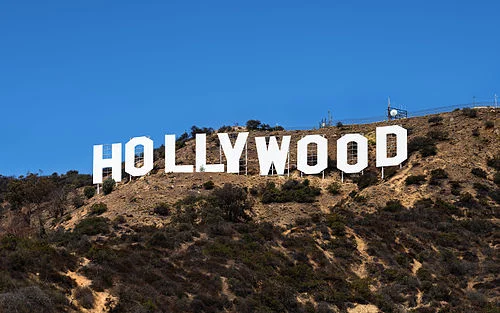
Chris Powell: Half-naked actresses denounce sexual harassment in always hypocritical Hollywood
Resending to fix word inversion in Carroll quote
MANCHESTER, CONN.
Hollywood -- the movie industry -- has always been a self-congratulatory and hypocritical cesspool and it was no less so at the Golden Globes awards ceremonies Sunday night.
Lots of pretty actresses appeared half-naked, posing in turn for photographs, embodying the sexual temptation on which the industry is built, but this time their skimpy clothing was colored black as a protest against the supposedly unwanted sexual interest they were striving to tempt.
Receiving an award for her contributions to entertainment, media entrepreneur Oprah Winfrey rebuked the predators who long have been in charge of the cesspool. "For too long," Winfrey said, "women have not been heard or believed if they dared to speak their truth to the power of those men. But their time is up."
"Not believed"? Whom was Winfrey kidding?
Hollywood has been notorious for the sexual predation of its casting couches since movies were invented. The problem has never been that actresses weren't believed but that, single-mindedly pursuing wealth and fame, they played along with the predation, until recently when a few actresses whose positions were secure publicly accused the producer who may have been the worst of the predators. Whereupon dozens more actresses came forward -- and every one was instantly believed, precisely because of Hollywood's sick reputation.
Indeed, in regard to sex the reputations of Hollywood particularly and the male gender generally are so bad that some politicians and activists, like Connectiut state Sen. Mae Flexer, D-Killingly, propose essentially to repeal due process of law with sex offenses.
After all, when all men are guilty or at least suspect, why should their accusers have to identify themselves in court, and why should there be any statute of limitations in sex crimes? So what if the premise of statutes of limitations is that it is nearly impossible even for innocent people to document their defense after an extended time, like the five years Connecticut has designated for most crimes?
A few centuries ago Blackstone's "Commentaries on the Laws of England" held that "it is better that 10 guilty persons escape than that one innocent suffer." Today's sex-crime lynch mob holds instead with the Queen in Lewis Carroll's Alice's Adventures in Wonderland: "Sentence first -- verdict afterwards."
Of course sex always has been and always will be problematical. But Western civilization gradually has improved both sexual conduct and justice, despite the movie industry, which, as the Firesign Theatre scoffed in 1970, is always "presenting honest stories of working people as told by rich Hollywood stars." Hollywood and its half-naked actresses have no authority to lecture the country about sex. With its gratuitous violence Hollywood has no authority to lecture the country about anything. Hollywood is hypocrisy.
At the awards ceremony Sunday night the actress Meryl Streep condemned the "power imbalance" in society. "It's in the military, it's in Congress, it's everywhere," Streep said.
Yes, that imbalance is everywhere. But at an Academy Awards ceremony a few years ago Streep joined a standing ovation for the director Roman Polanski, who could not attend to collect his trophy because he long has been on the run from sentencing for his statutory rape of a 13-year-old girl.
Does Polanski's artistry excuse him? Streep seems to have thought so, and the Academy of Motion Picture Arts and Sciences has not yet revoked Polanski's award. But Hollywood's self-congratulation continues.
Chris Powell is managing editor of the Journal Inquirer, in Manchester, Conn., and a frequent contributor to New England Diary.
-
Overnight sensation

19th Century mill buildings on the Pawtucket Canal, in Lowell.
"Overnight the brick town of Lowell {Mass.} rose on the Merrimack River, attracting hundreds of farmers' daughters with relatively high wages. For a generation the Lowell factory girls, with their neat dresses, proud deportment and literary weekly, were one of the wonders of America -- the first which Charles Dickens, arriving in New England, requested to see.
-- From How New England Happened, by Christina Tree
Making URI bike-friendlier
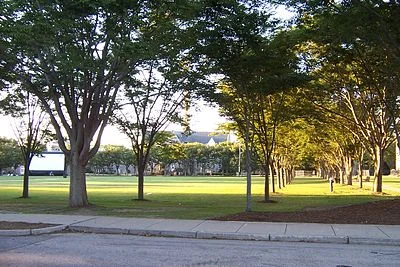
By the URI Quad.
From Robert Whitcomb's "Digital Diary,'' at GoLocal24.com:
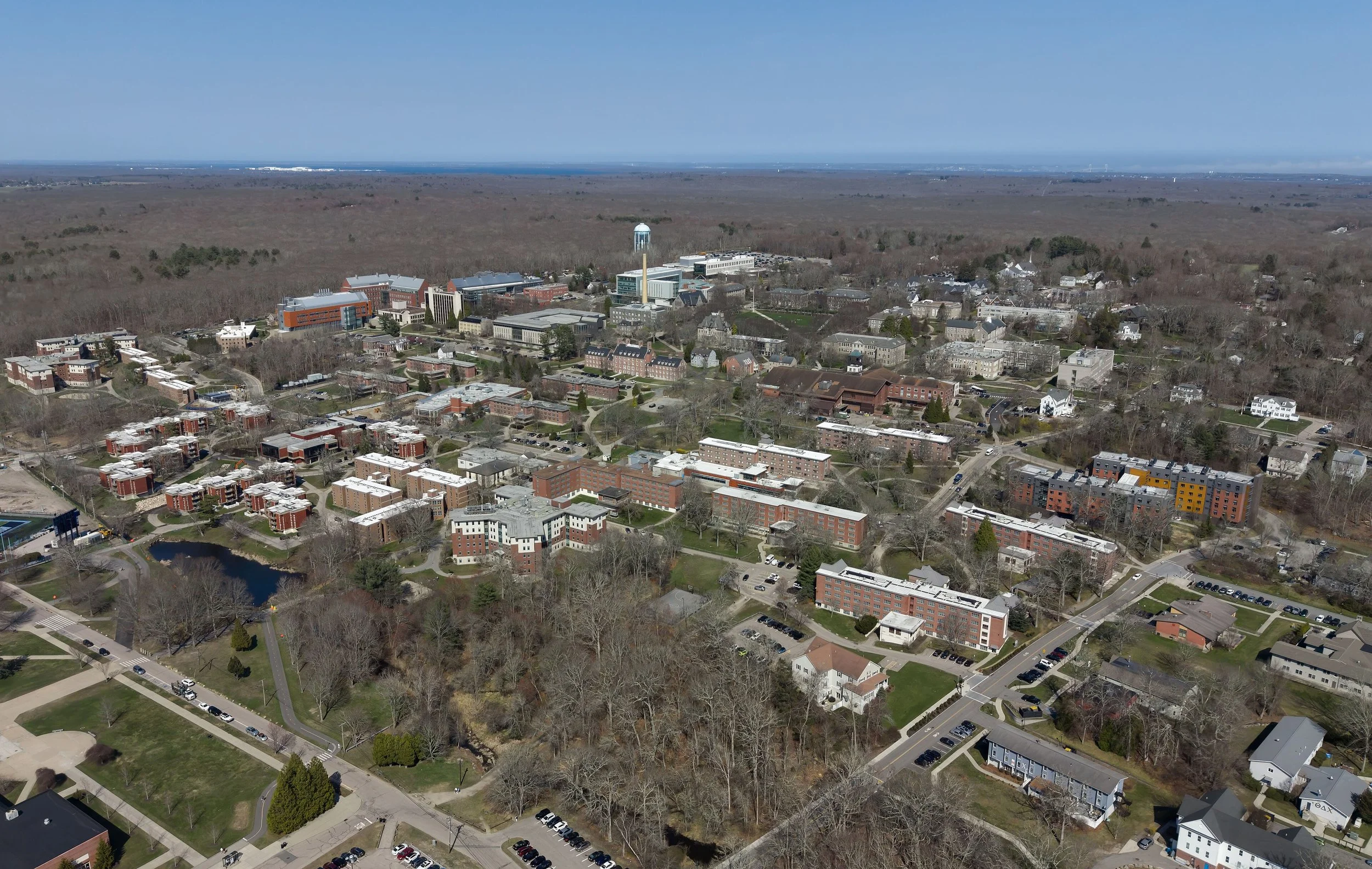
Kudos to the University of Rhode Island for working to make the Kingston campus better for bicyclists with, for example, plans to rebuild Flagg Road and Upper College Road into what a URI master plan calls “complete streets’’ that would include bike lanes on both sides. There’s also the idea of connecting URI to the William C. O’Neill Bike Path, reported the Independent newspaper. The program is officially called URI’s Transportation and Parking Master Plan.
The URI campus is mostly lovely, a good reason in itself to lay out more bike paths. And many students can’t afford cars.
The master plan, overseen by Christopher McMahan, the university’s much admired architect and director of capital planning and design, also envisions further increases in bus service provided by the Rhode Island Public Transit Authority.
These moves will make the campus more attractive, improve its natural environment, reduce the pressure to add more parking and make it easier for students and others to avoid driving. URI has made much progress in recent years in raising its academic and aesthetic stature. The transportation improvements are an important part of that.
Don't give up!

"Thaw on the Way,'' by Julius von Klever.
'' While yet the air is keen, and no bird sings,
Nor any vaguest thrills of heart declare
The presence of the springtime in the air,
Through the raw dawn the shepherd homeward brings
The wee white lambs--the little helpless things--
For shelter, warmth, and comfortable care.
Without his help how hardly lambs would fare--
How hardly live through winter's hours to spring's!
So let me tend and minister apart
To my new hope, which some day you shall know:
It could not live in January wind
Of your disdain; but when within your heart
The bud and bloom of tenderness shall grow,
Amid the flowers my hope may welcome find. ''
-- "January,'' by Edith Nesbit
Llewellyn King: Weather to be less and less trustworthy; ignored island; banal Andrew Lloyd Webber show

Hurricane Maria damage in Puerto Rico.
The recent extreme cold across much of the eastern half of the U.S. is a harsh reminder that Mother Nature isn’t as maternal as her sobriquet would imply. She is worthy of respect, even fear. The nation’s electricity system, at this writing, is holding together — often with little margin to spare. It’s an operational and engineering miracle that the lights stay on and we stay warm during weather extremes.
Unless you have open fires a la our ancestors, electricity is a critical player in keeping the nation warm. I wrote this in cozy comfort in West Warwick, R.I., when it was 1 degree outside. While the proximate cause of my comfort is natural gas, it takes that servant of modernity, electricity, to blow the toasty, gas-warmed air through the ducts. Thank you, Thomas Edison et al. Good work back then.
It also raises a cardinal issue: Given the accuracy of our forecasting, how can some authorities (you know who I mean) be so sanguine about climate change?
The cold is a manifestation of severe weather but doesn’t signal a reversal in global heating. It’s just the difference between weather and climate. The Delaware-size iceberg that broke off from Antarctica last July and the glaciers that are melting in the Arctic aren’t about to reverse course, the ice mass to reattach itself or the glaciers to freeze again.
Instead, think about climate and be scared for your descendants down through time: Flooding in cities on both coasts; disaster accelerating with Arctic permafrost thawing, releasing more gases into the gas-burdened atmosphere. It gives me the shivers even as I sit here, warm and dry and well-fed.
Keeping Puerto Rico Out of Sight and Mind Is Un-American
A thought that disturbs the equilibrium is Puerto Rico: How can we be so indifferent — and we are — to the suffering of so many? Why aren’t we talking about it with the same vengeance as we speak about Congress and the White House? Where are the fearsome resources of the United States? Are the Puerto Ricans the lesser because they speak Spanish and hadn’t ordered their affairs well before Mother Nature acted and swept away the tropical paradise with back-to-back hurricanes?
The dread thought is that even compassion has been politicized.
Andrew Lloyd Webber’s Latest: All Set, No Songs
Andrew Lloyd Webber’s Love Never Dies is touring North America, and will pop up around the country between now and September. It’s a sequel to The Phantom of the Opera, in which the Phantom has left the Paris Opera for Coney Island.
This is a spectacular production, if spectacle is what you’re after. Seldom has so much been done in the way of stagecraft with dramatic and shifting sets and whoop-dee-do lighting. But, oh, where is the music? This time, Lloyd Webber, who sent us home singing after Jesus Christ Superstar, Evita, Cats and The Phantom of the Opera, sends us home dazzled with spectacle, but with nothing to whistle. The music here doesn’t measure up and neither, for that matter, does the story, set in 1907.
If you’ve loved Lloyd Webber down through the years, you’ll be disappointed — although, I must say, the Providence, R.I., audience loved it. You’ll wonder if the Phantom has worked his final revenge: stolen the tunes and made off with them.
The Things They Say
“I became a journalist to come as close as possible to the heart of the world.” — Henry R. Luce (1898-1967), co-founder of Time and founder of Life and Fortune magazines
Llewellyn King (llewellynking1@gmail.com) is host of White House Chronicle, on PBS, and a veteran publisher, editor, columnist and international business consultant.
Todd McLeish: How New England wildlife deals with extreme cold
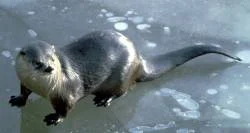
River otters like to slide across the ice of a pond.
Via ecoRI News (ecori.org)
The recent extreme cold has New Englanders avoiding the outdoors as best as they can and loading on extra layers when they must go outside. Which raises the question of how wildlife fared during this unusually cold period.
Local biologists agree that most species of wildlife that spend their winters in Rhode Island are well adapted to weather the cold. They have evolved numerous strategies to deal with the conditions, from hibernation and torpor to thick fur coats and layers of fat.
Birds, for instance, have developed a number of adaptations that enable them to survive the extreme cold. According to Scott McWilliams, a physiological ecologist at the University of Rhode Island, ducks can stand on ice for hours at a time and swim around in the icy water without suffering frostbite in their feet thanks to a counter-current heat exchange system in their legs. The warm blood flowing down to their feet warms up the cold blood flowing back to their core, and the blood in their feet is so cold that the difference between their foot temperature and the ice ensures that they lose little heat through their feet.
Birds also huddle together to stay warm, fluff up their feathers to provide an insulating layer around them, and lower their body temperature to save energy.
But not all birds are prepared for the cold.
“Most sensible birds will migrate to warmer places, thereby avoiding having to contend with the cold,” McWilliams said.
Some of those that stick around, however, “are less well-insulated or otherwise poorly adapted to living in cold places.” He noted the Carolina wren, a southern species that has expanded its range northward in recent decades, as an example. Southern New England is at the northern part of its range, and during extreme and extended cold spells in Rhode Island, many of the birds don’t survive. That was the case during the winter of 2015, when the state had a record snowfall and Rhode Island’s Carolina wren population declined. When favorable weather returns, however, the wren population bounces back again until the next severe winter.
Cold-blooded creatures such as reptiles and amphibians — animals that can’t regulate their own body temperature — are also well prepared for extreme cold. Wood frogs, for instance, have what some scientists call “antifreeze” in their blood that enables their tissues to freeze solid without harmful effects. In some winters, the frogs experience several freeze-thaw cycles.
Herpetologist Scott Buchanan said adult painted turtles, snapping turtles, and spotted turtles are also extremely cold tolerant and will likely fare well. But some painted turtle hatchlings, which overwinter in their nest cavity, may die if the temperatures are extreme for an extended period of time.
“The invasive red-eared slider, on the other hand, is less tolerant of extreme cold — both the adults and hatchlings,” Buchanan said. “Hatchlings, which also overwinter in the nest, are more vulnerable to these cold periods and would exhibit a greater rate of mortality than painteds or snappers.
“From a conservation perspective, this would be a good thing, as it would slow down the invasion.”
Wildlife that lives in the upper layer of the soil or in the grass at the surface may be particularly vulnerable to extreme cold, especially cold temperatures without a thick layer of snow to serve as insulation.
David Gregg, director of the Rhode Island Natural History Survey, speculated that the d that the dearth of leaves on the ground — thanks to two years of gypsy moth defoliation — may mean there will be less insulation for species that hibernate in the forest floor, such as box turtles and salamanders.
“Low temps and thin snow is also probably tough for small mammals like voles, which tunnel around in the grass,” Gregg said before the Jan. 4 blizzard. “Of course, that might make life easier for owls and hawks that need to be able to find voles.”
He also wondered about the impact of the cold weather on aquatic mammals, when all of the local ponds are frozen solid. During the week before New Year’s, he twice observed a muskrat wander up from a nearby frozen river to scratch for food in his lawn. And in the winter of 2015, a river otter emerged from the same frozen river to forage in Gregg’s compost pit.
Charles Brown, a wildlife biologist with the Rhode Island Department of Environmental Management, isn’t worried about those aquatic mammals, however. He said the range of muskrats, river otters, and beavers extends far to the north in Canada, where they likely experience much longer periods of extreme cold than they do in southern New England.
“So around here, they’re probably living the easy life,” he said.
Those animals typically gravitate to areas of moving water, like dams and spillways, during extreme cold, Brown said, and otters can even chew holes in the ice to gain access to pond water.
Brown is more concerned about how big brown bats will fare. He noted that most bat species that spend time in Rhode Island migrate to caves to hibernate or travel south to warmer climates to avoid the winter conditions. Big brown bats are the only species that lives in the state all year. And even those should survive without much difficulty.
“We’ve had some pretty cold winters in the past, but rarely have I ever seen any evidence of bats dying from exposure,” he said.
The big picture, according to Gregg, is that the creatures that winter in the state do so for a reason, and there’s probably a logical reason for those that don’t survive the chill.
“I think that hard cold like this helps to hold back the northward expansion of southern species, like fire ants, kudzu, and lizards,” he said. “The kind of animals and plants we think of as typical here are either helped or hurt in the appropriate ways by cold, so the net effect is good even though there are animals and plants that go up and others down.”
Rhode Island resident and author Todd McLeish runs a wildlife blog.
Where anyone could be a critic
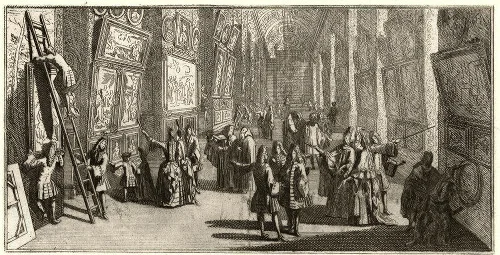
"Exhibition of the Royal Academy of Painting and Sculpture in the Grand Gallery of the Louvre, 1699'' (engraving), by A. Hadamart, in the show
"Modernity vs. Tradition: Art at the Parisian Salon 1750-1900," at the Redwood Library and Athenaeum, Newport, through April 8. The Salon is an annual art exhibition started by the French Royal Academy of Painting and Sculpture to foster artistic competition and let common folk critically view and analyze the work of its Academicians. By the mid-18th Century, it had become a public forum for intense debate on art and politics.
Ye Olde but still serving
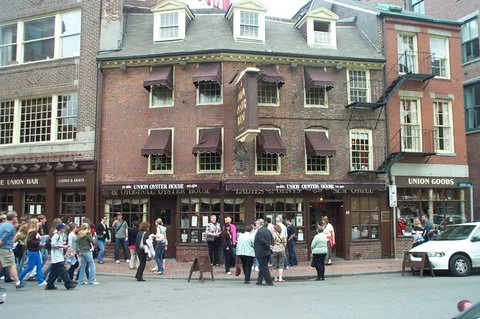
If you get a chance, go to the Ye Olde Oyster House, at 41-43 Union St., Boston, in a structure built in 1704 and since 1826 a restaurant. It's near City Hall and the waterfront.
The Union Oyster House has long lured famous people, such as the Kennedys and Daniel Webster, who used to stand at the bar and gorge himself with bivalves.
When I lunched there last year with French journalist, media executive and novelist Jean Lesieur, I belatedly discovered that in 1796 Louis Philippe, king of France from 1830 to 1848, lived in exile on the second floor. There's a sign. He earned his living by teaching French to young women. When he became king, he didn't put on heavy royal airs and so was nicknamed the "Bourgeois King.''
Much later, labor economist and Haverford College President John Royston Coleman worked there incognito as a "salad-and-sandwich man" in the 1970s, writing about the experience in his book The Blue Collar Journal. He sure picked a spiffy place; that's cheating.
For some reasons, they had no raw oysters when I ate there with Jean. We had to settle with delicious but heart-stopping fried ones.
-- Robert Whitcomb
'First smell of mud'
"In crow's-foot patterns, like deltas
seen from the air, the freeze runs off.
Five flawless days, under an azure sky,
the townsfolk come out to look. They nod
knowingly at the first smell of mud.
Jacketless, we hop from bog to bog.''
-- From "January Thaw,'' by Allan Block
Eight-legged intelligent life
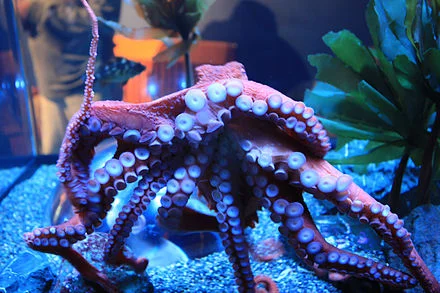
A Giant Pacific Octopus, a species that can be viewed at the New England Aquarium, in Boston.
Adapted from Robert Whitcomb's "Digital Diary,'' in GoLocal24.com:
I have much enjoyed eating grilled octopus. But after reading Sy Montgomery’s book The Soul of an Octopus: A Surprising Exploration into the Wonder of Consciousness no more.
Ms. Montgomery, after having done research at the New England Aquarium, in Boston, and elsewhere, convincingly describes the octopus as a very complex, intelligent and emotional creature and one that makes sensitive connections with humans. I think I’ll start confining my seafood consumption to clams, mussels and oysters.
Tim Faulkner: Frigid end in N.E. but 2017 was world's second-warmest

Via ecoRI News (ecori.org)
Despite ending on a frigid note, 2017 was a warm year for southern New England, and the planet.
Globally, a European Union climate agency calculates that 2017 was 2.16 degrees Fahrenheit warmer than pre-industrial temperatures, to earn the second-warmest year on record after 2016; 2015 was the previous second warmest.
Locally, 2017 was the eighth warmest for Rhode Island and Connecticut, and the 10th warmest for Massachusetts, according to the National Weather Service and the Northeast Regional Climate Center at Cornell University.
Driving up the temperatures was a record-warm February, which was 6.6 degrees above normal and the highest for the Northeast since 1895. Feb. 23 set a record of 66 degrees in Providence. The Bay State also had the distinction of having its first February tornado, which touched down in western Massachusetts.
It was the warmest October ever for New England. Massachusetts and Connecticut had their warmest autumns since data were taken. Providence had a record October, with an average temperature of 61.3 degrees, 7.7 degrees above normal.
Data from the National Weather Service shows that Providence had an average temp of 52.9 degrees in 2017. The state had an average temperature of 51.5 degrees; 2012 was the warmest year in Rhode Island since 1905, with an average of 52.9 degrees, and 2016 was the second warmest for the state, with an average temperature of 52.2 degrees.
Summer 2017 temperatures in Providence were slightly below average at 71.1 degrees, 1.35 degrees below the mean. Last spring had average temperatures, but last winter was the eighth warmest at 35.1 degrees, 3.3 degree above the average.
February was the seventh warmest in Providence, with an average temperature of 35.7 degrees. April was the third warmest in Providence, with an average temperature of 52.6 degrees, 3.5 degrees above average. May 18 reached a record 95 degrees. May 19 reached 91 degrees, breaking a record of 89 degrees set in 1906.
Winter 2017 was the eighth warmest in Providence. Jan. 12 hit a record 60 degrees, and January had an average temperature in Providence of 34.8 degrees, 5.6 above the mean.
Last spring was the fifth wettest for Providence, as April and May had nearly 14 inches of precipitation. In all, 2017 was close to the average for precipitation in southern New England. But 2018 began with record snowfall on Jan. 4, with 14.1 inches in Providence, 13.4 inches in Boston, and 10.2 inches in Hartford.
Tim Faulkner is a staff writer for ecoRI News.
Portsmouth, N.H.'s big architectural museum
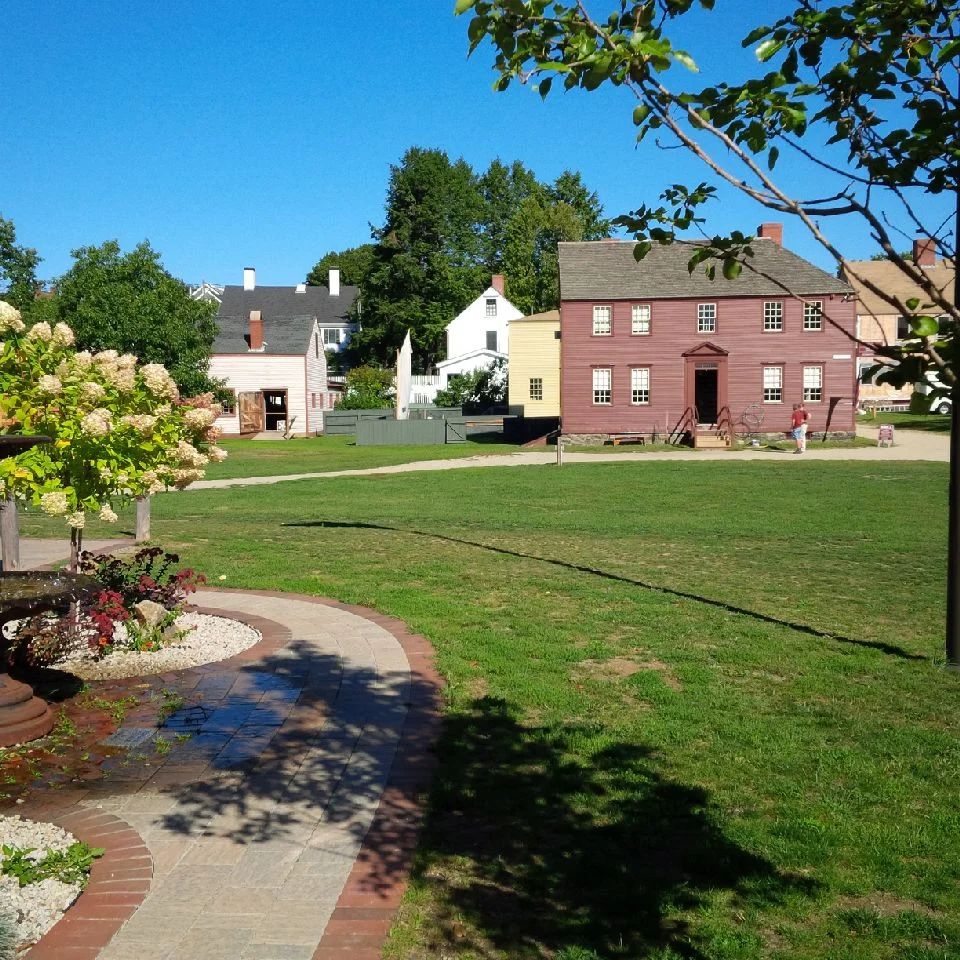
The entrance to the Strawberry Banke historic district. Yes, they have summer there.
Strawberry Banke, a neighborhood in Portsmouth, N.H. , and settled in 1630, is lovely and fascinating because of the thirty-seven historic houses, some dating to the 17th Century, and protected there by historic district regulations. And the wider Portsmouth is a hip, highly entrepreneurial, techie and increasingly arty small city/port. Strawberry Banke got its name from the many berry bushes found there by English settlers.
Don Pesci: Desperate Dems trying to steal election by labeling Trump as crazy

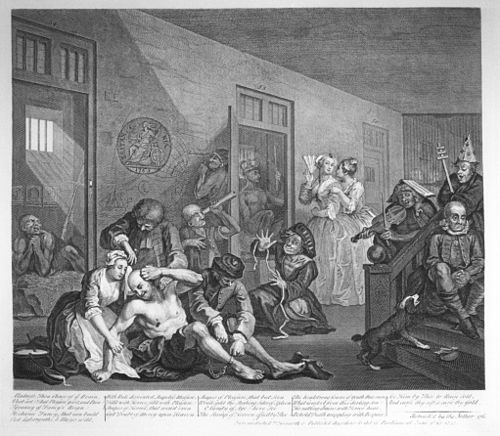
Print of Willam Hogarth image depicting Bedlam Asylum, in London.
So-called psychoanalysis is the occupation of lustful rationalists who trace everything in the world to sexual causes - with the exception of their occupation
-- Karl Kraus
U.S. Rep. Rosa DeLauro, of Connecticut, has invited Prof. Bandy Lee, M.D., a Yale psychiatrist, to address “a gathering of fellow Democrats” at her lavish digs in Washington. D.C. The subject of the gathering will be President Trump’s alleged mental imbalance.
As do many Democrats, Dr. Lee thinks that Trump is batty, according to an item in CTMirror: Recently Lee and two professors from Columbia – a university named, unfortunately, after Columbus – released a statement signed by 100 psychiatrists that said, “We believe that (Trump) is now further unraveling in ways that contribute to his belligerent nuclear threat.”
The Trump threat was a Twitter taunt in response to a statement from batty North Korean dictator Kim Jong-un that said, in effect, my nuclear weapons are bigger than yours. Sigmund Freud is reported to have said about cigars, “Sometimes a cigar is only a cigar,” meaning: try not to over-Freudenize everything. Sometimes a threat is only a threat.
The DeLauro salon no doubt will be full of like-minded folk. DeLauro is not in the habit of inviting discussion during her regular Wednesday salons; solidarity, not discussion, is mandatory for attendance. The 14-term congresswoman is unused to political opposition. Connecticut’s Third District, centered in New Haven and its suburbs, is a solid Democrat fortress. Since 1933, Democrats have held the district for all but six terms. DeLauro, one of the 50 richest members of Congress, is also one of the most progressive members of Congress.
Based on financial disclosures filed by members of Congress in 2014, the Center for Responsive Politics calculated DeLauro’s net worth at $15.2 million, 14 times more than the average member of Congress and 18 times more than the average representative. DeLauro is a feminist, a hipster and a fashion-forward one-percenter.
Of course, it would be foolhardy to deduce politics from personal wealth. Democrat President Franklin Roosevelt was redundantly wealthy and a progressive; Abe Lincoln started out poor, though he became a prosperous lawyer, and was a Republican. Is it not equally foolhardy to deduce mental stability from Tweets, or from what may appear to be an aggressive foreign-policy posture? Theodore Roosevelt, the first progressive president and a Republican – until he bolted a Republican convention that declined to choose him as a presidential nominee in the 1912 election and, like Lowell Weicker, started a party of his own, the Progressive Party – sent The Great White Fleet around the globe to display America’s new naval power to the world.
Mark Twain, among others, thought he was batty. Twain was quite serious when he wrote to his friend Joseph Twitchel in 1905, “We are insane, each in our own way, and with insanity goes irresponsibility. Theodore the man is sane; in fairness we ought to keep in mind that Theodore, as statesman and politician, is insane and irresponsible.”
To be sure, Twain was not a psychiatrist from Yale, and no one seriously attempted to impeach TR while he was declaiming progressivism from his bully pulpit. The attempt would have failed, because speaking softly – TR did not always do this – while brandishing a big stick was regarded at the time as a successful foreign-policy gambit. And it worked.
Why have the Democrats been attempting to hang a batty label around Trump’s neck?
It’s a long story. Democrats began with a failed attempt – so far – to show collusion between presidential candidate Trump and subversive Russians whose chief ambition was to spoil the campaign of Democrat presidential nominee Hillary Clinton. Actually, the Putinistas were doing what Putinistas usually do – sowing discord to try to delegitimize American democracy, and in this the Russians have been, and are, alarmingly successful.
Conspiracy is a crime, collusion is not. When an elected president opens discussions with Russian diplomats – nearly always former KGB spooks -- he is practicing diplomacy, not collusion. The collusion charge was supported by an opposition research “dossier” assembled by a dirt digger whose work was useful to Democrats, whose presidential nominee, Hillary Clinton, was a disastrous candidate, overconfident and, as Trump once said of one of his Twitter victims, a low-voltage campaigner. When Democrat fingerprints began to appear on collusion theories, battiness raised its ugly head.
Why go the batty route? Because you can impeach batty presidents, and the anti-Trump effort all along has pointed to impeachment. Hillary Clinton is not batty. And if she were, she is not president, by the grace of God and the wisdom of the American public, and therefore cannot be removed from office, which is the only outcome of an impeachment proceeding.
The bottom line is this: If you can’t win an election, you can always steal one. Rosa DeLauro has now put her fashion-forward shoulder to the effort.
Don Pesci is a Vernon, Conn.-based columnist.
Try to glom onto megacity wealth
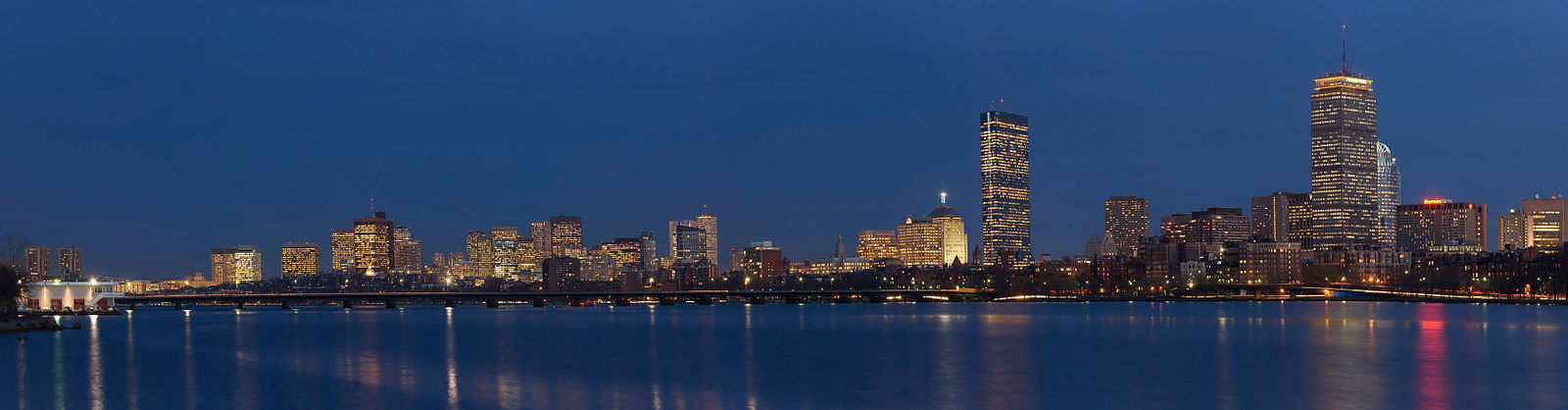
The Boston skyline from across the Charles River in Cambridge.
From Robert Whitcomb's "Digital Diary,'' in GoLocal24.com:
Emily Badger had a very important story in the Dec. 24 New York Times entitled “The Megacity, Untethered: Urban Giants are going global but losing their connections with smaller neighbors’’.
It basically says the such big globalized high-tech cities as Boston, San Francisco and Seattle no longer need as much their old connections with manufacturing centers, both nearby or elsewhere in America. She writes:
“The companies that now drive the Bay Area’s soaring wealth — and that represent part of the American economy that’s booming — don’t need these communities in the same way. Google’s {which also has a large operation in Cambridge/Boston} digital products don’t have a physical supply chain. Facebook doesn’t have dispersed manufacturers. Apple, which does make tangible things, now primarily makes them overseas.’’}
“A changing economy has been good to the {San Francisco} region, and to a number of other predominantly coastal metros like New York, Boston and Seattle. But economists and geographers are now questioning what the nature of their success means for the rest of the country. What happens to America’s manufacturing heartland when Silicon Valley turns to China? Where do former mill and mining towns fit in when big cities shift to digital work? How does upstate New York benefit when New York City increases business with Tokyo?’’
So how do the old manufacturing cities of, for example, Worcester and Providence deal with this problem? They become lower-cost extensions of Greater Boston, using their higher-education institutions to supplement the work being done in Greater Boston. They’re better positioned to do this sort of thing than are most old American mid-sized cities.
'Holes in the roads'

Why we get frost heaves.
"Testing the soul's mettle,
the frost heaves
holes in the roads
to the heart,
the glass forest
raises up its branches
to praise all things
that catch the light
then melt.''
-- From "New England Winter,'' by Erica Jong
'Fleeting fragments'
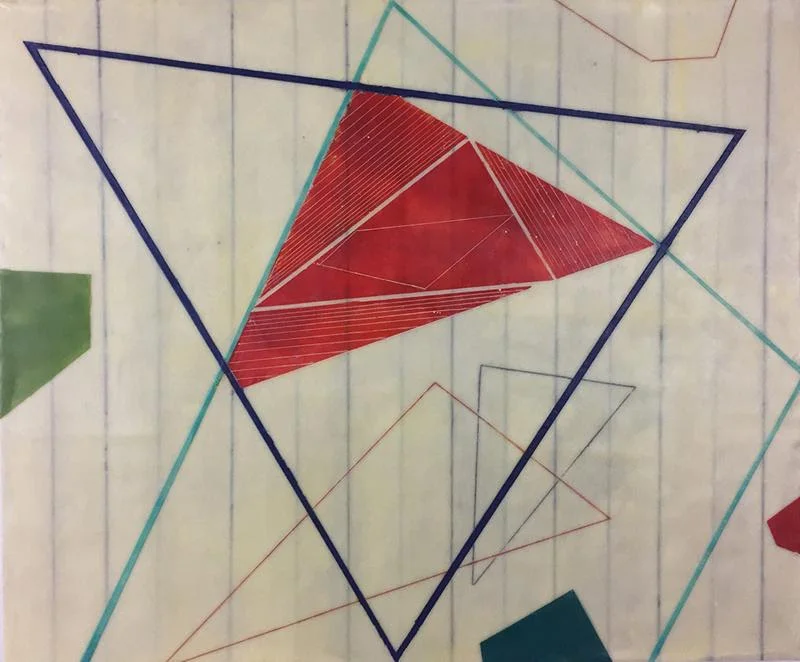
"Ukiyo6'' (encaustic and oil on wood), by Steven J. CabraL, in his show "The Depth of Stillness,'' at Galatea Fine Art, Boston, through Jan. 28.
The gallery says:
"The Ukiyo Series focuses on shifting perspectives and depths. It offers a journey of interactions filled with forms and lines that drift above and glide through atmospheric planes, while evoking a sense of energetic playfulness and movement. This collective body of work is a synthesis of inner thoughts and emotions which are depicted in narrative hues and shapes, meant to capture the fleeting fragments of past, present, and future.''
Schuss to the N.E. Skl Museum
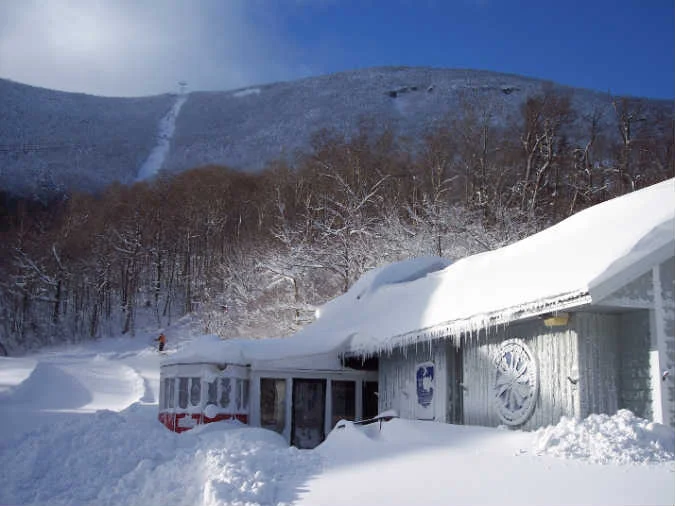
The New England Ski Museum, in Franconia, N.H., in the appropriate time of the year. That's Cannon Mountain behind it.
The Cannon Mountain Ski Area is state-owned and has nine lifts servicing 165 acres of skiing (158 with snowmaking). In the 1930s, the New Deal's Civilian Conservation Corps (CCC) cut six ski trails, some later incorporated into the Cannon Mountain Ski Area. The CCC and the Works Progress Administration (WPA) completed many attractive and useful public works during the Great Depression that are still with us.
The New England Ski Museum is a wonderful place, rich with history. To read about it,
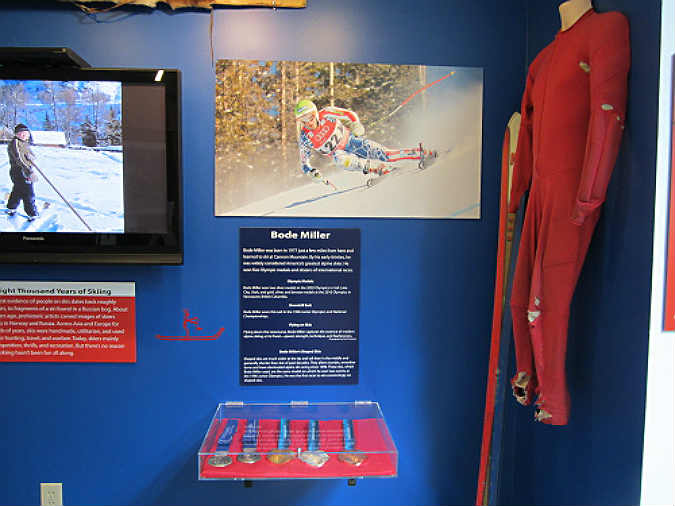
An exhibit in the museum celebrating a local hero.
A big Mormon moves on Vermont

Royalton, Vt.
The White River Valley in Vermont continues to be all shook up by the plan by David Hall, a very rich Mormon businessman from Utah, to build a bunch of 50 “villages,’’ each with up to 20,000 residents (!) in in the now generally bucolic towns of Tunbridge, Stafford, Royalton and Sharon. Mr. Hall’s NewVistas project envisions residents living in tiny housing units, thus letting most of the land be kept as countryside, and assisted by hyper-high-tech gadgets.
Of course, many of the area’s current residents hate this idea. But Mr. Hall has big piles of money as well as patience. (His father invented synthetic diamonds.)_
Why that area? Well, one reason is that Joseph Smith, founder of Mormonism, was born in 1805 on the town line between Sharon and Royalton. There’s an obelisk and museum in Sharon in his honor. It’s well worth a visit. (I’ve spent a lot of time in this rolling countryside.)
As the polite but relentless Mr. Hall pushes his dream, expect an entertaining war with stubborn Vermonters; okay, many of them are from New York.
A funny town?
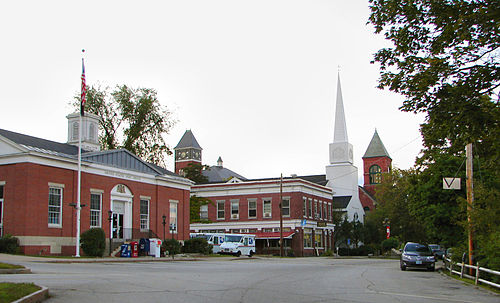
Downtown Plymouth, N.H.
''There's such an odd, eclectic group of people that make up the town of Plymouth, New Hampshire. I don't think I could avoid not coming out of there with a pretty good sense of humor.''
-- Eliza Coupe (actress) and Plymouth native.

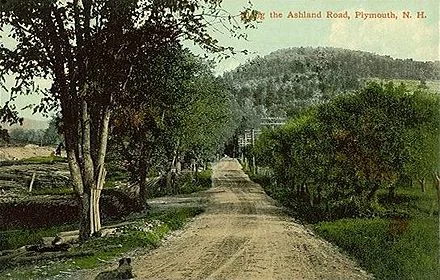
Plymouth country scene, circa 1910.
Alexandra Coso Strong/Caitrin Lynch: Learning from a moonshot
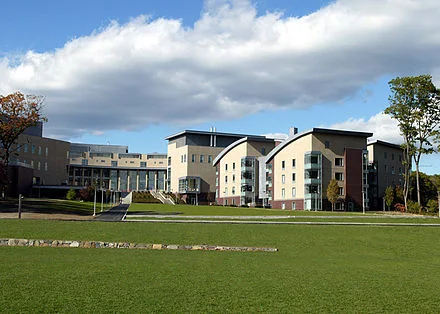
On the campus of the Franklin W. Olin College of Engineering, Needham, Mass.
From the New England Board of Higher Education (nebhe.org):
Each year, colleges around the nation select a common reading book for their incoming students or, in the case of our institution, for the entire college community. In 2017, our institution selected Hidden Figures as a reading meant to provide a common intellectual experience, illustrate the vigor and breadth of our college’s curriculum, and lend itself to a convocation discussion at the start of the school year.
Hidden Figures: The American Dream and the Untold Story of the Black Women Mathematicians Who Helped Win the Space Race, by Margot Lee Shetterly, shares the stories of four women of color who worked as human “computers” at Langley Research Center, in Hampton, Va., at the start of the space program. Katherine Johnson, who turned 99 this past August, was “the girl” whom astronaut John Glenn called on in 1961 to verify that the computer’s calculations were correct. These calculations would dictate the trajectory that would bring his orbital flight capsule safely back to Earth. Through these stories, readers learn about these heroes in science, technology, engineering and mathematics (STEM) and the invisible challenges they faced both inside and outside of work.
Now, in the deep cold of the New England winter, we begin the process of selecting next year’s summer reading. We have been reflecting on how Hidden Figures provided us the opportunity to engage with our students and colleagues on topics we might have not otherwise prioritized at the start of a school year. The form and impact of those discussions underscored for us that a good summer reading book carries with it profound immediate lessons and long-lasting consequences for the shape of intellectual debate in a community.
Fighting hate then and now
Our college community read Hidden Figures during the days surrounding the racist violence in Charlottesville, Va., and around the time of the release of a Google employee’s memo arguing that women are intrinsically less qualified for tech jobs. The historical context of the book’s narrative hits close to home in the wake of these and recent events. Its “hidden figures” point to an under-discussed example of diversity in STEM and allow us to acknowledge the critical role diverse teams have played in our nation’s history.
When our students returned to campus, Hidden Figures gave us a chance to engage in collective dialogue about not only diversity in STEM, but also these timely national issues via a compelling and concrete example. We embarked on these conversations knowing that progress in this area would rely on us building a community of trust and understanding.
Bringing our full selves to work
At a time when our country simmers with hatred, fear and misunderstanding, we, two women professors, an aerospace engineer and an anthropologist, find inspiration in the stories of Katherine Johnson and her colleagues—white and black, women and men. These individuals came together, despite Jim Crow laws and the societal pressures around segregation in the state of Virginia, to build America’s space program.
This collaborative spirit did not happen overnight, though. These Langley co-workers developed respect for and mutual understanding about each other’s backgrounds, family contexts, and skills over time, as they worked together towards a common goal. This is a lesson for all of us today: We are all products of our personal histories and differences, which impact our perspectives and our approach to problems. The Hidden Figures story represents a powerful example of what is possible when we take the time to acknowledge the complexity in the lives of people we ostracize and to join together, regardless of and because of our social differences, to achieve a collective goal.
Engaging history to find a way forward
As professors in an engineering college, this book gave us the chance to consider our work with engineering students and to ask questions about the book’s deep resonance with today’s society. While this book does not provide the answers to the challenges we face as a society, the stories of these women of color can help us shape how we collaborate with our colleagues and students.
These women are the role models we didn’t have in our own educational experiences, yet they paved the way for generations of women of color to pursue degrees and careers in STEM. By helping students connect these and other personal stories and experiences to their own, we can change the narrative of what it means to belong in STEM fields. These unsung heroes in Hidden Figures were the mathematical and engineering brains behind the operations, who helped take America to the moon, in spite of the challenges they faced inside and outside the workplace. As we engage with our students, we continue to think critically about how to support diversity within our community and a sense of belonging by each member within STEM and related fields. Through our curricular designs, we aim to help each student foster the knowledge, skills, and attitudes necessary to be a creative problem solver and an effective team member.
Taking one big step together
Hidden Figures and similar stories must be told as we continue to write our national history. It’s these personal stories, historical and current, that we should discuss with our colleagues and our students in the coming years, recognizing the our opportunities and challenges as a nation are wide-reaching as they affect all individuals, not only those in the military or scientific communities. Through collective engagement about these topics we can better understand how to overcome the workplace, societal, and educational systems and policies that impact our abilities to come together as a community to support one another and our future as a nation. This is our country’s next moonshot.
Alexandra Coso Strong is an aerospace engineer at the Franklin W. Olin College of Engineering and Caitrin Lynch is a cultural anthropologist at the college.