
Vox clamantis in deserto






And now for tidal power

The world's first commercial-scale and grid-connected tidal stream generator – SeaGen – in Strangford Lough, Northern Ireland. The wake shows the tidal current’s power.
From Robert Whitcomb's "Digital Diary,'' in GoLocal24.com:
New England’s extreme cold in the past few days has led to surges in the price of natural gas, which will in turn boost electricity rates. That ought to remind New England how much we need to develop alternative sources of power.
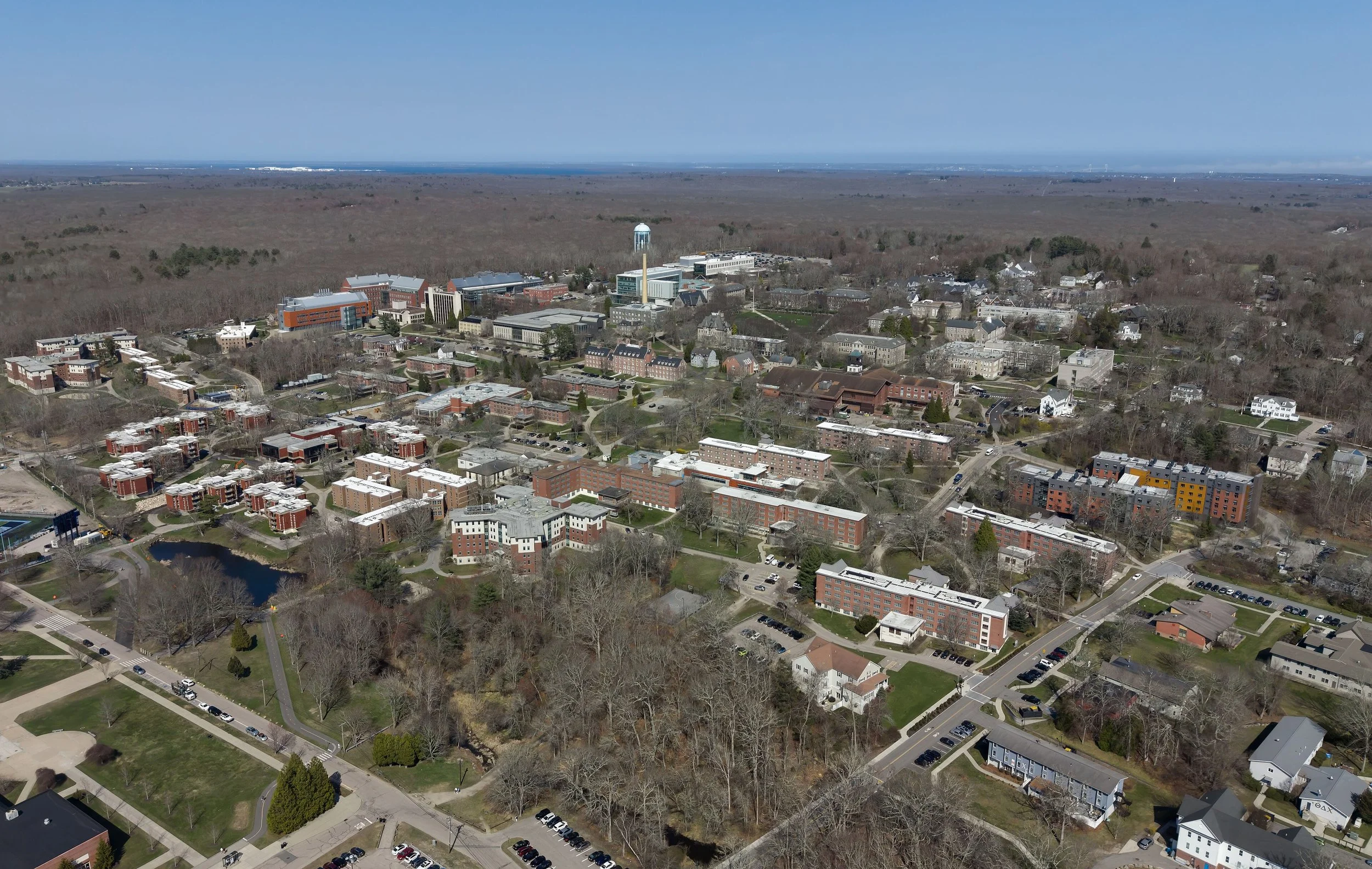
Perhaps Associate Prof. Geoffrey Cowles of UMass Dartmouth, an oceanographer, and his colleague Princeton engineering Prof. Luigi Martinelli, can help. The National Science Foundation has awarded them a $300,000 grant to work in cooperation with Ocean Renewable Power Co., to assess the performance of tidal energy turbines and their interactions with the immediate marine environment. This might or might not become an important energy source for New England; it certainly deserves investigation. The more home-grown energy the better.
I ran into a neighbor the other week a who had recently put solar panels on one side of the roof. It cost $10,000 but now he and his wife have virtually no electric bill. They can run electric heaters to their heart’s content. Pretty alluring the past few days….
Pray for the January thaw

"{R}esearch has demonstrated that {New England's January} thaw is a reality and most frequently occurs between January 20 and 26. A secondary abnormal rise in temperature has been detected between January 7 and 10. Though the thaw does not come every year, it has put in an appearance often enough to establish its place as a singular factor of the New England climate.''
-- From The Country Journal New England Weather Book, by David Ludlum and the editor's of Blair & Ketchum's Country Journal {RIP}

Celtics, GE team up to promote STEM in Boston public schools
This from the New England Council (newenglandcouncil.com):
"The Boston Celtics and General Electric (GE) are joining forces to encourage curiosity in math and science in Boston public schools.''
"The GE Foundation, the corporation’s philantrropic arm, is teaming up with the Boston Celtics to engage students in STEM (Science Technology Engineering and Math) subjects in public schools throughout Boston. Mobile teaching labs will be placed near schools as part of GE’s 'Brilliant Career Play' initiative and will offer activities such as 3-D printing of basketball sneakers. This STEM initiative is part of a larger partnership between the Celtics and GE with the latter providing various services to the Celtics who have placed the GE logo on their jerseys.''
“'While we’re starting in Boston with nine schools, the plan is to take this mobile learning lab across the state,' said Ann R. Klee, who leads the GE Foundation. ''
'''We’re able to do that in partnership with the Celtics, and we’re really excited about what they bring to the table in terms of making science and math cool. By working with the Celtics, we’re going to have access to all these kids who love basketball, and now they’re going to realize they love math and science too.'''
'Blue and bluer still'
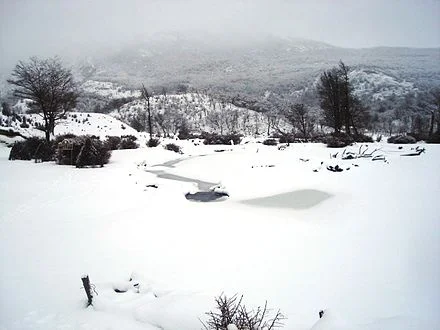
“When the cold comes to New England it arrives in sheets of sleet and ice. In December, the wind wraps itself around bare trees and twists in between husbands and wives asleep in their beds. It shakes the shingles from the roofs and sifts through cracks in the plaster. The only green things left are the holly bushes and the old boxwood hedges in the village, and these are often painted white with snow. Chipmunks and weasels come to nest in basements and barns; owls find their way into attics. At night, the dark is blue and bluer still, as sapphire of night.”
― Alice Hoffman, from Here on Earth
Science will survive Trump

From Robert Whitcomb's "Digital Diary,'' in GoLocal24.com:
The Trump administration has been trying to censor certain phrases that formerly were widely used in some federal agencies, such as “global warming’’ and “human-caused climate change’’ in the Environmental Protection Agency (the fossil-fuel industry doesn’t like them) and ‘‘evidence-based,’’ “science-based,’’ “transgender’’ and “diversity’’ at the Centers for Disease Control and Prevention. (Tea Party and some Evangelical types don’t like those words.)
At the same time, the administration is trying to force out some agency scientists disinclined to follow the new regime’s line. But science is international and these phrases and the science they refer to will still be out there, although the administration’s actions will tend to move some important scientific research abroad. Too bad.
When I worked in Paris in the ‘80s we lived right next to the Institut Pasteur, the famed medical-research center, where I often went in to look at the bulletin board to read announcements about discoveries. (Institut Pasteur scientists found the AIDS virus.) Most of the announcements were in English, the primary language for high-level scientific communications. One got a strong sense of just how global science is.
We could use one
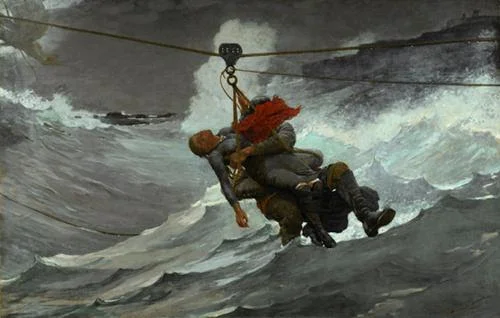
"The Life Line, 1884 ( oil on canvas), by Winslow Homer, in the show "Coming Away: Winslow Homer and England,'' at the Worcester Art Museum, through Feb. 4. Of course he was most famous for his paintings of New England scenes.

David Warsh: Global poverty and 'when necessity replaces desire'

U.S.. Depression-era photo by Dorothea Lang. She took pictures for the federal Resettlement Administration and Farm Security Administration.
SOMERVILLE, Mass.
When Anthony Atkinson was 17 and finished with boarding school, in 1962, he quit his job at IBM in London to spend nine months working at a hospital for the poor in Hamburg, Germany, as a kind of British Peace Corps volunteer. Working for IBM had been interesting, he told his friend Nicholas Stern in an interview: “there were still valves in computers in those days.” But the effect of the demanding work in the hospital was more profound. . .
Returning to his studies, he joined the Child Poverty Action Group. The Poor and the Poorest, by Brian Abel-Smith and Peter Townsend (1965), came out that Christmas Eve and made it clear that dire poverty still existed in post-war Britain. Three years before, Michael Harrington had published The Other America, the first broadside in what eventually became the “war on poverty.”
Strongly influenced by James Meade’s austere little monograph "Efficiency, Equality, and the Ownership of Property,'' Atkinson switched from mathematics to economics at Churchill College, Cambridge University. In 1970, in the Journal of Economic Theory, then just beginning its transformative run, he published “The Measurement of Inequality.” Thereafter came a book and half a dozen articles almost every year for nearly half a century.
Atkinson died on New Year’s Day 2017 a deeply beloved figure among applied economists. Among many other things, he was the scholar more responsible than any other for the first of the Sustainable Development Goals adopted by the United Nations in 2016: “Goal 1.1: by 2030, eradicate extreme poverty, for all people, everywhere, currently measured as people living on $1.25 a day.” An autobiographical interview conducted by Stern appeared in the lead position of 2017's Annual Review of Economics, an honor previously accorded only Kenneth Arrow and Paul Samuelson.
More or less the last thing that Atkinson wrote was as head of "Monitoring Global Poverty: Report of the Commission on Global Poverty'' for the World Bank, which appeared earlier this year. The original $1 a day figure (in local currency equivalents), which had risen to $1.25 in 2005 dollars, was by now $1.90 a day. Atkinson was well aware of the deficiencies of the methods by which that figure was arrived at, but, from a practical standpoint, he reasoned that it was better to stick with the original yardstick than to try change it midstream. “The $1.90 line has acquired an independent political status,” he wrote.
Perhaps not. In "Absolute Poverty: When Necessity Replaces Desire,'' the lead article in the December 2017 American Economic Review, Robert C. Allen, a distinguished economic historian, takes up the question. Originally conceived for developing countries, the World Bank poverty line can be profoundly misleading, he says.
For one thing, because of an accident of history, it is “not valid outside of the tropics,” he says. For another, it makes no attempt to assess the difference between “food” and “non-food” spending. Neither varies with climate. How far would a tropical allowance for fuel and clothing go in surviving a Russian winter?
Allen’s approach implies much more “absolute poverty” than the World Bank measure, especially in Asia. It has the added virtue of revealing that millions of persons are living in that condition in rich countries around the world – especially the U.S. and the U.K.
It was in 1991 that a trio of World Bank economists collected poverty lines that had been established in 33 countries, ranging from poor to rich, converted them to dollars using purchasing power parity exchange rates, and plotted the results against per capita consumption. The minimum standard of living in the six poorest countries clustered around a $1 a day. That became the measure of absolute poverty, especially after their finding was buttressed by a second study of 15 poor countries in 2009.
Problems with the method were pointed out over the years. For example, Angus Deaton, of Princeton University, noted in 2010 that, while India had been in the original sample of poor countries, it had grown so much in 15 years that it was no longer included when the second study was made in 2005. The Indian poverty line was very low in 1991, so leaving it out of the new sample raised the average World Bank poverty level. That meant that measured poverty in India increased dramatically in the second survey, despite all the growth that had occurred.
A historian of the British industrial revolution, Allen, 70, came to the problem of poverty measurement from historians’ longstanding tradition of assembling basic baskets of necessary goods with which to measure the purchasing power of workers’ wages. In ''Poverty Lines in History, Theory, and Current International Practice,'' a discussion paper at Oxford, where Allen taught at Nuffield College for many years, he compared historians’ straightforward practices in comparing wages in widely differing countries and climate with the World Bank’s statistical approach. He concluded:
"Perhaps the World Bank can learn a lesson from historians and settle on an explicit definition of poverty that can be applied across space and over time. Historical research indicates that this is practical. The benefits in terms of transparency and intelligibility would be large.''
In the new article, Allen shows how. Using the mathematics of linear programming, techniques discovered during World War II, Allen calculates a “food security line,” the cheapest possible diet required to keep an adult alive, with certain small allowances permitted for local substitutions and preferences. Economist George Stigler, of the University of Chicago, had reasoned his way to a close approximation of the same during the war, using trial and error.
The truly poor do the same out of experience. Absolute poverty means that your life is governed by linear programing, says Allen, not by standard consumer theory. You eat to live. Necessity displaces desire. Inevitably there is a little “wiggle-room” in the diets of the absolute poor: a small amount of sugar, a favorite spice, food prepared for festivals. But for those on the margin of survival, linear programming pretty much describes the choices made.
He augments his “Basic Needs” measure with two other headings – nonfood goods, and rented housing – and, by the end of the exercise, has described a method much more clearly related, not just to survival but to well-being. Many conceptual problems with the World Bank dollar-denominated yardstick disappear as well. Atkinson recognized as much, Allen says; he just didn’t think it was a good idea to move the goalposts in the middle of the match.
It’s a long road ahead. Allen, today Global Distinguished Professor of New York University Abu Dhabi as well as at Nuffield College, doesn’t have as much time to proselytize the historians’ approach as Atkinson did his. But the two are brothers under the skin. Measurement economists will take up Allen’s methods. The picture of poverty around the world will come into sharper focus. Safety nets will be improved.
And on a day (Dec. 24) on which Ron Lieber, of The New York Times, reported on yet another little-noticed provision of the new U.S. tax act – the one that allows families to use tax-exempt savings accounts to pay private school tuitions from elementary school instead of just college bills – Atkinson surely would have welcomed Allen’s diversion from the ordinary on another Christmas Eve.
David Warsh, an economic historian and veteran business journalist, is proprietor of economicprincipals.com, where this essay first ran.
Cold wave in Northeast and global warming
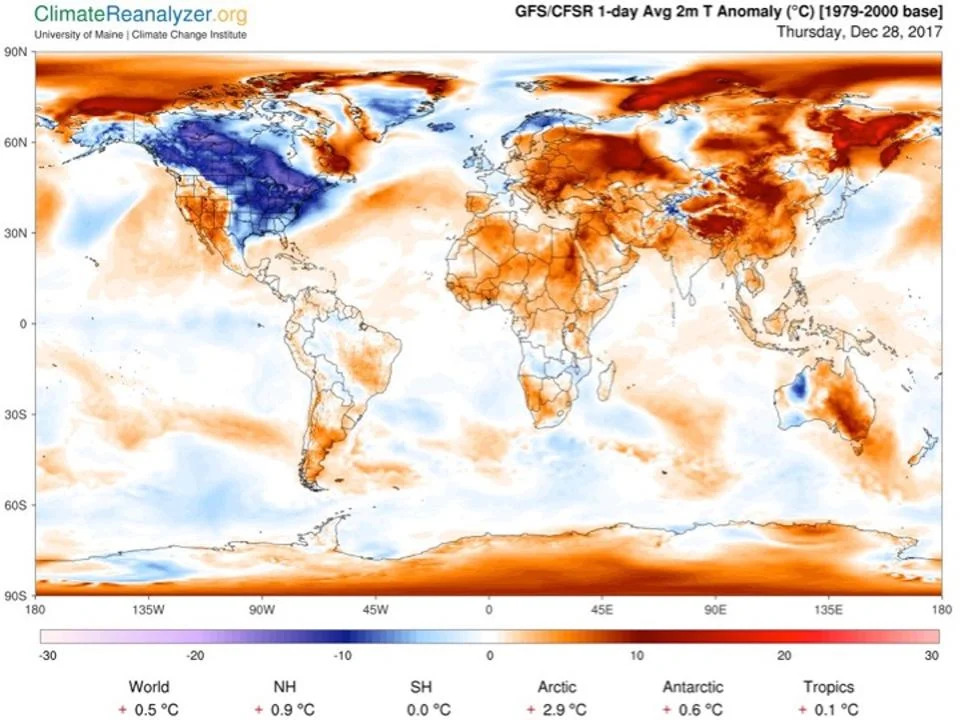
Yes, folks in the Northeast, global warming continues. Read article and see map by hitting this link.
Yale New Haven Hospital working on its image
Yale New Haven Hospital is trying to win back the trust of the low-income community around it. To read a story about it, please hit this link.
Henry James and American painters

"Santa Maria Della Salute, Venice," (1903-1907, watercolor on paper), by John Singer Sargent, in the show "Henry James and American Painting,'' at the Isabella Stewart Gardner Museum, Boston, through Jan. 21.
The museum (sadly now most famous as the victim of the biggest art theft in history) comments:
"Henry James (1843-1916) was an American writer who is considered to be one of the greatest novelists in the English language. His literary work includes such well-known and beloved novels as Portrait of a Lady and The Ambassadors. What one may not know is that he held close relationships with several artists of his day, including the Italian-born painter John Singer Sargent (1856- 1925).''
James spent much of his later life living in England but before then lived in Boston and Newport, R.I., among other places. Sargent's father was from Gloucester, Mass.
Before central heating
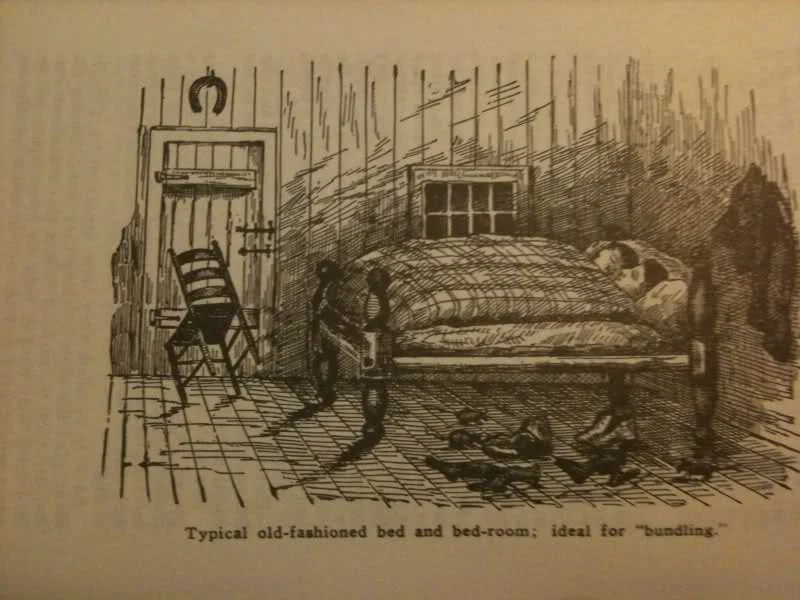
"There was a curious New England custom ...called Bundling, which was love-making under peculiar circumstances....Boys and girls who bundled went to bed together, with their clothes on, and stayed until morning. Sometimes they got married afterward. And sometimes they didn't...Many Mayflower Descendants have a bundling ancestry, though they never mention it.''
-- From Eleanor Early's A New England Sampler (1940)
Work for winter completed

"All the complicated details
of the attiring and
the disattiring are completed!
A liquid moon
moves gently among
the long branches.
Thus having prepared their buds
against a sure winter
the wise trees
stand sleeping in the cold.''
-- "Winter Trees,'' by William Carlos Williams, M.D.
.
.
The Green Party's Dr. Stein; the Russians, and Michael Flynn

Jill Stein, M.D.
From Robert Whitcomb's "Digital Diary,'' in GoLocal24.com:
It was pleasant to read that the U.S. Senate Intelligence Committee is investigating Jill Stein, M.D., the leader of the leftist Green Party and its 2016 presidential candidate, for possible “collusion’’ with Russia before the election last year.
Among other things, Dr. Stein, who lives in Lexington, Mass., attended a December 2015 tenth anniversary dinner in honor of RT (formerly called in English Russia Today), the Kremlin’s international propaganda TV network. Intriguingly, at the same table that festive night was Michael Flynn, Trump’s former (very briefly) national security adviser, and none other than Vladimir Putin.
The whole thing makes one speculate on whether the Trump campaign, and the Russians, had anything to with propping up the campaign of Stein, who took votes away from Hillary Clinton, who won the overall national popular vote by a substantial margin but lost it narrowly in three states that handed the Electoral College victory to Trump. In any event, Stein and Flynn should be ashamed of themselves for in effect honoring the murderous thug Putin and his most important international propaganda outlet. The GOP-controlled committee also is digging into reports that Clinton’s campaign paid for research in report with allegations about Trump’s behavior during a 2013 business trip to Moscow. That’s generally called “opposition research’’ and is virtually universal in American political campaigns for major offices.
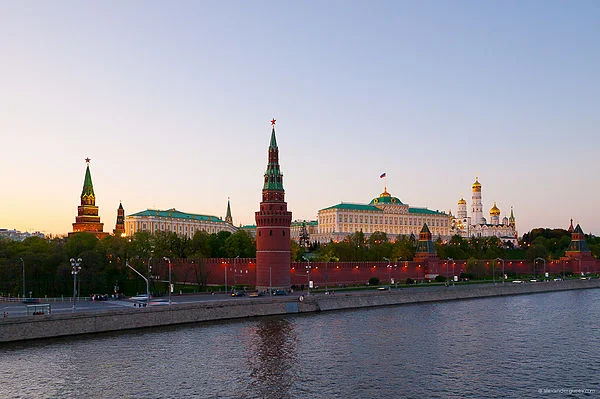
The Kremlin.
Maine's Solar System model

Jupiter, part of the Maine Solar System Model.
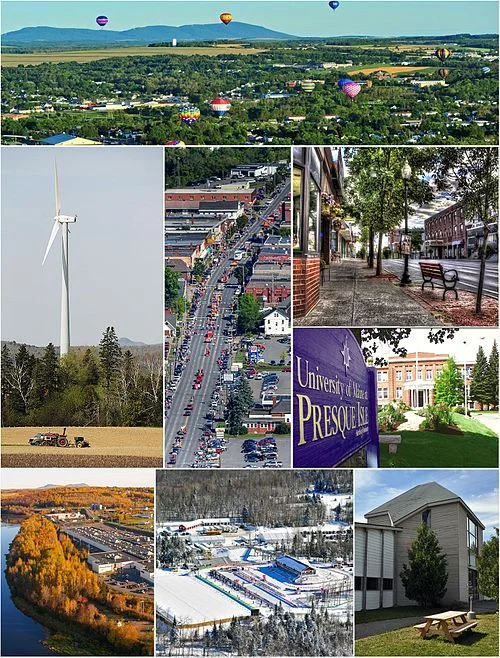
One of New England's more bizarre attractions is the Maine Solar System Model, which extends along 40 miles of Route 1 way up in northern Aroostook County, next to Canada. It's the world's biggest such exhibit.
The center, the Sun, is displayed at the Northern Maine Museum of Science, in Presque Isle. The model is a project of the University of Maine at Presque Isle.
The model is at a scale of 1:93,000,000.
Social conflicts and first principles
Joseph Asch, international businessman and editor/publisher of the always interesting dartblog.com, points to three good articles ''wherein the authors step back and look at ongoing social conflicts from a perspective that evokes first principles,'' especially involving higher education. To read them, please hit this link.
Don Pesci: All hail Chris Powell; Trump tax cuts may lift Conn., too
"Those who can make you believe absurdities can make you commit atrocities
-- Voltaire
Chris Powell would blush to hear someone say it, but his retirement as managing editor of the {Manchester} Journal Inquirer in January will leave a gaping hole in Connecticut journalism. Fortunately, Powell’s voice will still ring out in columns. The press notice announcing his retirement was placed amusingly on the right side of the paper’s obituary page. {Mr. Powell is a frequent contributor to New England Diary.}
Powell’s columns, many of them analytical jewels, always have had in them just enough bite to awaken slumberous readers. Unlike some commentators, he has managed to keep himself out of his writings, which in the age of twitter may be a sign of saintliness. But of course a writer is always present in his work as, say, Cervantes is present in Don Quixote. In the same way, a managing editor of a paper is present in his product. There are a number of fine journalists in Connecticut who have fallen out of Powell’s pockets.
***
President Trump may survive moves to eject him from his presidency, a consummation devoutly wished by two of Connecticut’s fiercest anti-Trumpers, U.S. Senators Dick Blumenthal and Chris Murphy. The state’s junior senator, Murphy, will be up for re-election in the New Year. Connecticut likely will suffer from that provision in the new tax-reform bill that will prevent high tax states – we have the distinction of being the third-highest tax state in the nation, lagging behind New Jersey and New York -- from offering write-off provisions for state taxes.
There may, however, be ancillary benefits to Trump’s tax reforms. Many economists familiar with President Kennedy’s tax reforms, somewhat similar to those of Presidents Reagan and Trump, anticipate increases in job production and GDP growth, a rising tide that will, as Kennedy once put it, lift all the boats – including Connecticut’s seriously damaged dinghy. The one thing Nutmeggers may not see in the New Year is an attempt to recover from the expected consequences of the new tax reforms through a reduction of state taxes.
***
The “Me Too” movement may ebb somewhat in the New Year, because nothing is so temporary as a temporary tax increase or a movement that has become fashionable in Hollywood. Proponents of chivalry will agree the movement has been cleansing in its effects and too long in coming. But Hollywood will survive this temporary setback to libertinism, because Hollywood always survives its breeches of good manners. It is uncertain at this point whether the “Me Too” movement will or will not signal a truce on the unending war between the sexes. Distantly related to the “Me Too'’ movement, some liberal Democrats who were not sufficiently enthusiastic about Hillary Clinton’s failed presidential campaign are now offering guarded apologies. Married to former a president, she too was a Me Too’er.
***
Connecticut Gov. Dannel Malloy, whose approval rating in Connecticut is a few points higher than Hell’s minor devils, will not be with us in the New Year, but he will have left behind, as a memorial of his passing, a load of wreckage. Bets are on whether a gubernatorial library will be erected to preserve Malloy’s destructive tendencies during his two terms on office, including both the largest and the second largest tax increases in state history. In certain quarters, the leave-taking of the most progressive governor in Connecticut since Wilbur Cross – discounting former Maverick Gov. Lowell Weicker -- will be celebrated with a moment of telling silence. Progressivism, which is state-socialism without the Gulag, will survive Malloy’s passing, because progressivism always survives.
Most recently Ben Barnes, Malloy’s budget guru, wrote a letter to his boss doubting whether legislators could restore cuts to a program that helps seniors and the disabled pay for Medicare insurance without seriously damaging a balanced budget that has mysteriously become unbalanced weeks after it had been written into law. Malloy wrote in reply that he was grateful for Barnes’s analysis, which “illustrates the difficulty of realizing significant savings on top of what we’ve already achieved with respect to overtime and ‘other expenses’ accounts. We must avoid a ‘fix’ to the MSP that relies on overly optimistic savings or unrealistic lapses, which would only exacerbate the larger, looming budgetary challenge we face.” The Malloy administration had during its run continually relied upon fanciful budget projections, thefts from this or that “lockbox” to be deposited in the general fund, and temporary “fixes” such as layoffs that Malloy’s SEBAC agreement would deny to future governors until 2027, the year when his union favorable agreement with SEBAC is due to expire.
***
No one on Connecticut’s media laughs at such preposterous posturing. Karl Kraus -- Austrian writer and journalist, essayist, aphorist, playwright, poet, perhaps the most significant European satirist since Jonathan Swift, seriously thought the fate of civilization “may depend upon the placement of a comma.” Asked why he wrote, Kraus said “I have to do this as long as it is at all possible; for if those who are obliged to look after commas had always made sure they were in the right place, then Shanghai would not be burning.”
It is a thought serious journalists might want to bear in mind during the New Year.
Don Pesci is a Vernon, Conn.-based columnist.
'Plenty of elbow room'

Bangor, Maine, which got rich in the 19th Century from the lumber industry.
"Maine out of season is unmistakably a great destination: hospitable, good-humored, plenty of elbow room, short days, dark nights of crackling ice crystals.''
-- Paul Theroux, the novelist and travel writer
'Naked across the calendar'
"All my undone actions wander
naked across the calendar,
a band of skinny hunter-gatherers,
blown snow scattered here and there....''
-- From "December 31st'' by Richard Hoffman
Chuck Collins: Help for struggling rich people and the lucky sperm club; Noem the Dakota hypocrite

Via OtherWords.org
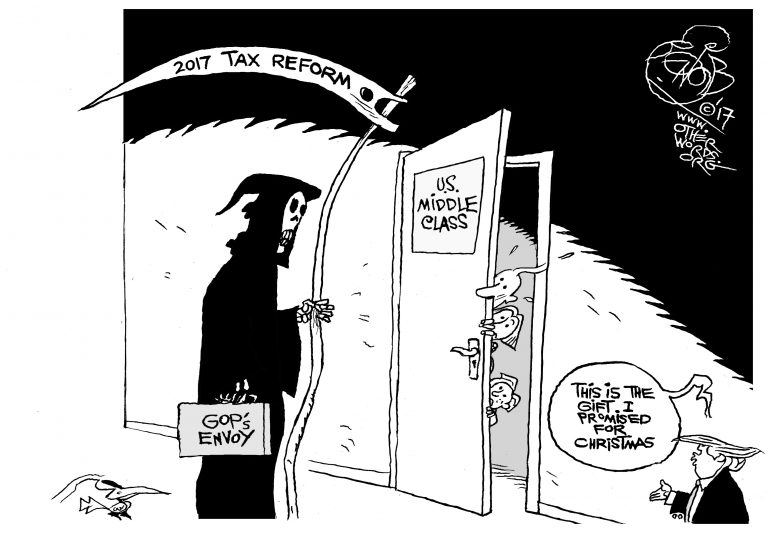
It isn’t easy being a millionaire these days, especially if you’ve got less than $20 million. Fortunately, Congress is watching out for you.
Yes, the Republican tax-cut bonanza targets lower-end millionaires for special relief. Now those struggling to scrape by with $15 million or $20 million can breathe more easily. And even lowly billionaires will be able to keep more of their wealth.
Why? Because Congress just increased the amount of wealth exempted by the estate tax, our nation’s only levy on inherited wealth.
In the bad old days, a family had to have $11 million in wealth before they were subject to the tax. This exempted the 99.8 percent of undisciplined taxpayers who, in the words of Iowa Sen. Chuck Grassley, had squandered their wealth on “booze, women, and movies.”
Now no family with less than $22 million will pay it (or individuals with less than $10.9 million). This gift to “grateful heirs” will cost the U.S. Treasury $83 billion over the next decade.
Gutting the estate tax is a bad idea — the levy raises substantial revenue from those with the greatest capacity to pay.
The estate tax was established a century ago during the first Gilded Age, a period of grotesque inequality. Champions of establishing a tax on inherited wealth included President Theodore Roosevelt and industrialist Andrew Carnegie, who viewed it as a brake on the concentration of wealth and power.
Modern Republicans, however, paint the tyrannical “death tax” as an unfair penalty on small businesses and family farmers. But that’s a myth.
The most vocal champion of estate tax repeal is Rep. Kristi Noem, a South Dakota Republican who became the GOP poster child for farmers touched by the estate tax. House Speaker Paul Ryan appointed her on the tax conference committee to advocate for estate tax repeal because of her compelling story.
Noem says her family was subject to the tax after her father died in a farm accident in 1994, a story she repeats constantly.
The only problem, as journalists recently discovered, is that her family paid the tax only because of a fluke in South Dakota law that was changed in 1995. Her experience has little to do with the federal estate tax, which has been substantially scaled down in recent decades.
And while Noem was complaining about government taxes, the family ranch has collected over $3.7 million in taxpayer-funded farm subsidies since 1995.
Noem attacked the reporting as “fake news,” even though it was based on legal documents she filed herself.
The reality is that the small number of estate tax beneficiaries aren’t farmers at all. They’re mostly wealthy city dwellers.
Still, the fact that the estate tax lives on creates an opportunity to make it better.
Lawmakers should institute a graduated rate structure, so that billionaires pay a higher estate tax rate than families with a “mere” $22 million. And loopholes should be closed so they can’t pay wealth managers to hide their wealth in complicated trusts and offshore tax havens.
Estate tax revenue could be dedicated to something that clearly expands opportunity for everyone else.
Bill Gates Sr. argues that the estate tax should fund “a GI bill for the next generation.” In exchange for military and community service, young adults should be able to get substantial tuition assistance for higher education or vocational training, paid for by a progressive estate tax.
If Congress were concerned about the middle class, that’s the kind of proposal that would become the law of the land.
Chuck Collins directs the Program on Inequality and the Common Good at the Institute for Policy Studies. He’s the author of the recent book Born on Third Base.