
Vox clamantis in deserto







Tim Faulkner: How a new economy might work in Rhode Island

Via ecoRI news (ecori.org)
PROVIDENCE
Ever hear a politician brag about how much open space she protected? Or how much food scrap he wants to divert from the landfill? Or how they both made a neighborhood healthier by shutting down a polluter? Probably not often.
Instead, the words and acts of most elected officials focus on top-down economic development, such as lowering taxes and offering big corporations massive financial incentives to relocate.
That kind of outdated thinking is driving the spread of an altered economy, one that reduces the emphasis on unbridled profit-making and gives priority to health, nature and economic equality. Models vary, but most advocates and practitioners call for a shift to a shared economy, one that relies on local resources and networks and shuns outside ownership.
Statistics show that the current economic system isn’t working. The United States is doing poorly in creating economic equality and providing health care. Success stories abound, as do data, supporting the benefits of spending local. The grassroots-economy movement has been led by networks of artists, environmentalists and social entrepreneurs.
Specific solutions vary. Some say it’s as simple as having consumers, the government and institutions buy locally made products from locally owned businesses. Everything from food to furniture should made using local raw materials and labor and sold in locally owned shops. Bartering is also common, especially for items that can't be produced locally.
This modified capitalism has also fostered a more minimalist lifestyle. Less stuff and smaller homes reduces environmental harm. It also leads to greater contentment. Houses are smaller while the role of nature and open space is greater.
Partisan gridlock and corporate-funded opposition are stalling favorable policies at the legislative level, so the movement so far has adapted through tweaks to existing rules and systems.
Local environmentalist Greg Gerritt and social-enterprise advocate and impact-investor Dan Levinson, of Main Street Resources, recently discussed the issue and policies around a new economic movement.
Gerritt’s economic platform of ecological healing focuses on addressing climate change, ending fossil-fuel use and protecting forests.
Levinson believes that Rhode Island can prosper from a food-based economy and greater simplicity. Solutions include asking large food users such as universities to exclusively buy local; shifting out-of-state tourism marketing funds into attracting locals to local destinations; government injecting money into the local economy by paying premiums to local companies that bid on local projects.
Rather than politicians, local small-business owners should decide where economic stimulus money goes, Levinson said. “Ask these guys where to put it," he said. "They are not going to want to pollute. They treat people fairly. They are not going to ship all over the world."
Tim Faulkner writes for ecoRI News.
Chris Powell: DNA doesn't tell you much; little incentive for compromise in legislature

The structure of the DNA double helix. The atoms in the structure are color-coded by element and the detailed structures of two base pairs are shown in the bottom right.
-- Graphic from Wikipedia
Solving crime and exonerating the wrongly accused are no longer the main purposes of analyzing human deoxyribonucleic acid, or DNA. No, DNA analysis now is used most often in the fast-growing business of tracing ancestry.
Television commercials proclaim that if you mail a swab from your mouth, a DNA analysis company can tell you not just which ethnicgroups you derive from but even what your culture is and who you are.
It's fun and may be slightly more accurate than an astrological forecast but it's also pathetic. For while genes determine superficial features -- complexion, eye shape and color, hair type -- as well as susceptibility to certain ailments, the connection of genetics with culture and character is small, since culture and character are much more matters of upbringing, environment, experience and insight. Indeed, connecting genetics with culture and character is the ugly, old rationale for ethnic stereotyping, racism, and genocide.
The commercials for DNA analysis also suggest that culture is as trivial as mode of dress -- a flowered hat, lederhosen, a tartan kilt -- rather than civic and religious beliefs, literature, customs, history, an entire way of living.
Just as people who think they have lived previous lives always imagine themselves to have been ancient Egyptian princes or princesses rather than sweaty and exhausted slaves who piled stones on the pyramids, people hoping that DNA will tell them who they are may not realize that, as the saying goes, if you trace your ancestry back far enough you'll always find a horse thief.
One may be glad of kinship for increasing one's appreciation of humanity. But no one deserves credit or discredit for his ancestors, and genes do not determine identity. Especially in the United States, still the land of freedom and opportunity, DNA is too lazy an explanation for anything. People are far more what they make themselves.
* * *
Calls for compromise to break the stalemate over Connecticut's state budget sound high-minded but contribute nothing. Exactly who should compromise and how?
The conflicting positions on the budget are fairly principled.
Most Democrats in the General Assembly want to raise taxes a lot to preserve the status quo in state and municipal government.
Gov. Dan Malloy wants to raise taxes a little less and to transfer state aid from suburbs to cities.
And Republican legislators and the eight Democratic legislators who voted for the Republican budget want to raise taxes much less and sharply reduce spending on higher education.
No one has much political incentive to compromise.
Governor Malloy is not seeking re-election next year and without a budget he seems empowered to allocate money arbitrarily. There may be lawsuits about this but what court is more empowered than the governor to run the state without a budget?
Most Democratic legislators were elected by a party dominated by the government and welfare classes and so cannot impose sacrifice without jeopardizing their political careers. Already the enforcer of the government and welfare classes, the Working Families Party, is challenging the renegade Democrats for re-election.
And having passed a budget that the governor has vetoed, Republican legislators can claim to have done their job already and to be the party of fiscal restraint, leaving the governor to take the blame for whatever happens because of his veto.
This stalemate could continue until the election next year.
Chris Powell is managing editor of the Journal Inquirer, in Manchester, Conn., and a frequent contributor to New England Diary.
Statehood for Puerto Rico
Adapted from Robert Whitcomb's "Digital Diary,'' in GoLocal24.com:
About 80 percent of Holyoke, Mass., public school students are of Puerto Rican background. Now district officials are preparing for a flood of new students as a result of the ravages of hurricanes Irma and, especially, Maria, in that U.S. commonwealth. Other urban school districts in southern New England, especially in Massachusetts and Connecticut, that have lots of Puerto Ricans, are making similar arrangements.
What will immediately help the ravaged island is suspension of the Jones Act, which requires goods shipped between American ports to only be carried on ships built primarily in the United States and with U.S. citizens as their owners and crews. Happily, President Trump last week suspended the law. But it may be time to get rid of it for good.
The idea behind this 1920 law was to protect the American shipping business.
But the Jones Act dramatically raises the prices of goods brought into the island. Puerto Ricans must absorb extra shipping costs of items that could be shipped directly and much more cheaply from a nearby island, such as Hispaniola or Jamaica. The Jones Act forces shippers to route through an American port, in Puerto Rico’s case most likely from Jacksonville and Miami.
Puerto Rico desperately needs supplies to start to recover from these terrible storms.
For the longer term, Daniel W. Drezner, of the Fletcher School of Law and Diplomacy at Tufts wrote:
“This is not just about recovering from Hurricane Maria. It is also about Puerto Rico’s long-term future. If the Jones Act were suspended, consumer prices would drop by 15 percent to 20 percent and energy costs would plummet. A post-Jones Puerto Rico could modernize its infrastructure and develop its own island-based shipping industry. Indeed, the island could become a shipping hub between South America, the Caribbean and the rest of the world. This industry would generate thousands of jobs and opportunities for skilled laborers and small businesses. On an island with official unemployment over 10 percent (but actually closer to 25 percent), this would energize their entire workforce.’’
Meanwhile, it continues to be perverse that residents of Puerto Rico and the nearby U.S. Virgin Islands, while American citizens who can serve in our armed forces, can’t vote in U.S. elections. But that, of course, goes back to the fact that Puerto Rico is not a state. Out of fairness and for national-security concerns, the island, perhaps combining with the U.S. Virgin Islands, should become one.
If it had been a state, it probably wouldn’t have suffered thelethal delays in receiving aid after the hurricanes. Statehood would mean that Puerto Ricans would have to pay federal taxes but that the respect and assistance that they’d get as full parts of the United States would make that well worth it.
Stephen J. Nelson: Air Force Academy chief speaks out for diversity
A college leader spoke up to his students and campus community the other week. His concern was a timely topic: race and race relations, bigotry and racial slurs. And who was the president? Well, while we don’t often think of these leaders in this way, the superintendents of our three major military academies are the presidents of their universities. And this superintendent of the Air Force Academy, Lt. Gen. Jay Silveria, the academy’s superintendent, spoke out because of race-baiting posts on the message boards of five African-American students on his campus.
He was forceful. He related his concerns to the cadets and the academy to recent events including the Charlottesville white supremacy rally last summer, and the recent dust-up over NFL players protesting unequal and unfair treatment of blacks in America. And in the process of what Silveria said, he additionally challenged the chair of his board, no less a figure than the president of the United States, his commander-in-chief up the chain of command.
Superintendent Silveria minced no words. He expressed his outrage and told his students that they, too, should be outraged, not just as Air Force students, and future military leaders for our country, but more importantly “as human beings.” His message was simple: If you cannot treat with equality and respect those different than yourself in gender or race, then you should get out. This was a cry for basic human integrity and dignity: Racial slurs are indecent acts that must be condemned. Invoking the fundamental mission of our colleges and universities, Silveria urged “civil discourse and talk about these issues.”
Then, in stark contrast to his commander-in-chief and displaying the force incumbent on college presidents, Silveria went to the heart of the value of diversity. This was not some mushy apology and boilerplate appeal for progressive politics. No this was the power of diversity, “the power that we come from all walks of life, that we come from all parts of this country, that we come from all races, that we come from all backgrounds, gender, all make-up, all upbringing.” That is, “the power of that diversity comes together and makes us that much more powerful.” This is no weak-tea argument. This is the revered founding creed of the nation and embedded as fundamental values of academia.
Contrast Silveria’s stand with that in recent months of Jerry Falwell Jr. at Liberty Baptist University, in Virginia. Falwell has done everything from apologize for the bus videotape behavior of Donald Trump, to excuse the president’s remarks about Charlottesville, "the bad people on both sides,'' and to support throwing transgendered military people out of the military services. One president stood up for cherished values of the college and university and of the nation. The other caved in a craven fashion in a quest to curry favor with the ideological proclivities of the president of the United States. (And indeed Falwell was rumored to be the head of a presidential task force on higher ed that never materialized.)
The other week, the generalplaced his leadership front and center with the men and women of his campus. He challenged them about how they must behave, and what they owe each other and the country now and in their future leadership in military service. President Trump, are you listening to this leader in your military command?
We can and should take heart from this president of one of our major universities about how campuses and leaders can best handle issues of diversity and can push back against those instigating racist messages and rhetoric. All college presidents as they work hard to take similar stands can be encouraged to be likewise forceful when called upon and take up Silveria’s urgent message about how we find unity and power in the diversity of our racial and other differences. Our colleges and universities and the nation benefit hugely from such stand-up leadership.
Stephen J. Nelson is professor of educational leadership at Bridgewater (Mass.) State University and senior scholar with the Leadership Alliance at Brown University.
Younger than springtime

"A child looking at ruins grows younger
but cold
and wants to wake to a new name
I have been younger in October
than in all the months of spring''
From "The Love of October,'' by W.S. Merwin
A proud town's ancient ball park

(See photo below.)
"Fenway Park, which opened in 1912, is the oldest Major League ball park. But forty miles west of Boston, there's another ball field that is older still -- by more than three full decades. In fact, the town of Clinton, Massachusetts, prides itself on being home to something virtually every other American city and town would envy like little else: the oldest baseball field. Anywhere.''
-- From New England Notebook, by Ted Reinstein

Cause for celebration?

"Women's Day in Iran'' (collage encaustic), by NancySpears Whitcomb, in the group show of New England Wax members entitled "Shift: Approaching Encaustic From All Angles,'' through Nov. 26 at the Fuller Craft Museum, Brockton, Mass.
Crumpled identity

"Maria as Actress'' (Polaroid emulsion transfers, ink on paper), by A.J. Nadal, in the show "Women, Interpreted and Interactive Narrative,'' at the Cambridge (Mass.) Art Association, through Nov. 2.
Falling into the shadows
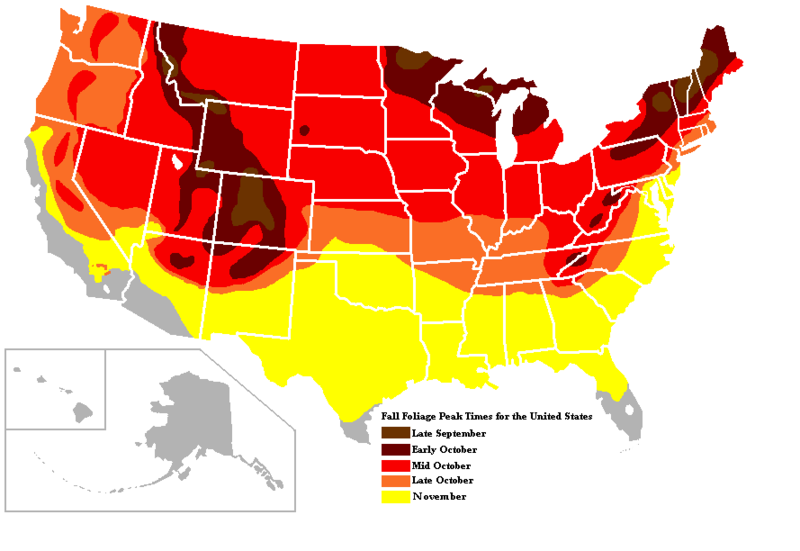
"The leaves drift in a clatter and dry hiss
over the beach chair left out in the yard
since summer; its symmetries and surfaces,
the taut green fabric of its back and seat,
the dull sheen of its frame, are aswarm with leaves
that fall all afternoon into the shadows'''
-- From "The Beach Chair,'' by David Ferry
A fall fishing tradition

From Robert Whitcomb "Digital Diary,'' in GoLocal24.com:
This time of year reminds me of fishing for smelt, which would run from fall into winter. I grew up in a house up a hill from a harbor on Massachusetts Bay. When it started to get cool in late September and early October, we’d take bamboo rods with several hooks attached to something that looked a little like a coat hanger down to a dock and try to catch as many of these small fish to take home and fry in butter. They were delicious. We’d do this several times a week until November, when it was usually too cold and windy to enjoy such fishing.
It was a quiet seasonal joy.
Seasonal 'weird laughter'

"Celia Thaxter's Garden,'' on Appledore Island, by Childe Hassam.
"Once more their weird laughter of the loons comes to my ear, the distance lends it a musical, melancholy sound. For a dangerous ledge off the lighthouse island floats in on the still air the gentle trolling of a warning bell as it swings on the rocking buoy; it might be tolling for the passing of summer and sweet weather with that persistent, pensive chime."
-- From the writer Celia Thaxter, who spent much of her life on Appledore Island, in the Isles of Shoals, off New Hampshire.

White Island (left) and Seavey Island (right) in the Isles of Shoals at high tide.
Llewellyn King: Hegemons not great for innovation

Innovation is the hot word in the business press and in academia. Business itself, maybe less so. If business is profitable and secure it would rather grow through acquisition than innovation.
There is a public sense that innovation is on a tear; that new ideas are bursting forth irrepressibly. Possibly not.
At a recent exhibition of early stationary steam engines in Rhode Island, I was struck by the inventiveness and the variety of these machines, but mostly by the diversity of the manufacturers. These were the inventions, the innovations that powered the Industrial Revolution. They were being improved and deployed in ever greater numbers until electricity — that big game-changer, that supernova of invention — came along to disrupt everything again.
Likewise, it is impressive to look at the early days of automobiles. Hundreds, if not thousands, of manufacturers, hoping that they had found the forward route and that route was the one that would survive.
Aviation, the same story.
The impediment to these kinds of diverse inventions and modifying innovations is often just the size of corporations.
The early years of computers were a time of incandescent creativity, followed quickly by innovations. But the inventors succeeded too well and instead of there still being thousands of entrants, the early winners hold hegemony over the industry. They have moved from innovators to rent collectors, from white-hot invention to comfortable, corpulent middle age very fast. Include in this list of those who went from eureka beginnings to cautious management: Microsoft, Google, Amazon and probably Uber.
Commercial success came too quickly and hegemon, as it always does, followed; then sclerosis through size.
It can be seen as a replay of what has happened in other industries, where success has led to growth and invention has given way to preservation.
Those who opposed — and lost — the merger of McDonnell Douglas and Boeing did so because they feared that Boeing, which had upended aviation not once but twice with the 707 and the 747, would lose the heart it once had for such bold and risky innovation. Big organizations are inherently hard of hearing.
Computing also has become a hegemon in its own way. The adventurous money, the best minds and the great universities all are centered on Silicon Valley and what has become celebrity technology.
But other technologies are coming on quietly, most notably additive manufacturing, colloquially known as 3D printing. It is moving very fast and has gone from manufacturing simple things to making very complex nuclear fuel, aviation parts and even human body parts. It could be the next big thing.
But what about the next little thing?
Step forward an imaginative television program running on 200 public broadcasting stations. It is called “Make48” and it is a reality show with a difference. Its CEO Tom Gray says one should think of the annualized, eight-part series as a cross between “Shark Tank” and “How It’s Made,” two very successful commercial cable television shows that cater to the latent creative, entrepreneurial spirit often daunted by the complexity of thinking up a product, making it, financing it and getting it to market.
Make48 seeks to solve those problems, or most of them, by recruiting teams of inventors who, at the Kansas City Art Institute, are supplied with experts to show the creators how to manufacture their creations in 48 hours. The product can be in any material: metal, wood, plastic, rubber — you name it. But it has to be made in front of television cameras in 48 hours. Then three winners get the professional help in marketing the products, getting them on store shelves, TV sales programs and online shopping. The whole suit of needs met.
The program is supported generously by chief sponsor Stanley Black & Decker, and by The Grommet, QVC, Duck Tape and others, who are looking outside for new products. Always the hope that the next Walkman, safety razor or Post-it is waiting to be created and taken to market. Last year’s winners were modest: a kitchen sink stopper or bath plug, a series of color-coded food preparation surfaces to prevent cross-contamination, and a laser-aiming device for men and boys using toilets.
Who knows whether a big winner, like the electric screwdriver, will come forth, but mighty oaks do start as acorns.
On Twitter: @llewellynking2
Llewellyn King is executive producer and host of White House Chronicle, on PBS.

Chris Powell: As in Detroit and Central Falls, bankruptcy could finally make Hartford responsible

Constitution Plaza, in downtown Hartford.
Advocates of a financial bailout for Hartford city government warn that a bankruptcy filing by the city will be a "black eye" for Connecticut, as if the state isn't already mortified by the failure of Gov. Dan Malloy and the General Assembly to enact a budget three months into the new fiscal year.
But last week a series of investigative reports by Eric Parker of WFSB-TV3 in Hartford examined the recent municipal bankruptcy reorganizations in Detroit and Central Falls, R.I., and concluded that the cities have greatly improved as a result.
Hartford's situation is much like those in Detroit and Central Falls before their bankruptcies, with debt and pension obligations outpacing revenue. Indeed, the two federal judges who handled Detroit's bankruptcy reviewed Hartford's financial data and recommended bankruptcy. While Hartford's city government would lose authority during a bankruptcy, the Detroit judges suggested that Mayor Luke Bronin could be appointed the city's emergency manager, thereby preserving some democratic supervision in the process.
Detroit, which long had been losing population and was becoming a giant slum, dragging its suburbs down with it, began to revive at the moment of its bankruptcy filing, Parker reported. That's when businesses gained confidence that management of the city would become responsible. Downtown is prospering again and real estate values in the city and its suburbs have risen sharply.
Detroit's bondholders and bond insurers absorbed huge losses, pensioners smaller but still substantial loses. The blow to pensioners in Central Falls was harder. But there probably won't be much private-sector investment in Hartford until the city, which is not only broke but riddled with corruption and incompetence, is reorganized both financially and politically, and that can't be done without pain.
After all, just in the last few weeks former Hartford Mayor Eddie Perez pleaded guilty to bribery and a developer, James C. Duckett Jr., was convicted of defrauding the city of hundreds of thousands of dollars in the guise of building a soccer stadium. Of course, Hartford's new minor-league baseball stadium was completed last year at $30 million or so beyond its $50 million budget even as city government had become insolvent and had stopped maintaining its schools.
The $50 million Mayor Bronin wants in additional aid from state government so that the city might avoid bankruptcy -- and probably only postpone it -- would pass the bill for the stadium along to municipalities that are not quite as corrupt and incompetent as Hartford is.
Far from giving Connecticut another "black eye," bankruptcy for Hartford would restore virtue to the city's bondholders and unionized employees, who long have been operating as if the city will be rescued financially no matter how incompetent and corrupt it becomes. For the bondholders and unions have enough political influence to prevent incompetence and corruption. Instead the bondholders have been indifferent and the unions have encouraged city government to keep giving the store away, especially to themselves.
Imagine how different Hartford might be if, instead of assuming that state government would underwrite its corruption and incompetence forever, the bondholders and the unions were compelled to audit city government constantly to maintain its fiscal responsibility, thereby insuring their bonds and pensions.
But while cities can file bankruptcy, states can't, and the way things are going, Connecticut state government soon may be little more than a pension and benefit society cannibalizing public services.
Chris Powell is managing editor of the Journal Inquirer, in Manchester, Conn.
Summer steals back

-- Photo by Dietmar Rabich
Bending above the spicy woods which blaze,
Arch skies so blue they flash, and hold the sun
Immeasurably far; the waters run
Too slow, so freighted are the river-ways
With gold of elms and birches from the maze
Of forests. Chestnuts, clicking one by one,
Escape from satin burs; her fringes done,
The gentian spreads them out in sunny days,
And, like late revelers at dawn, the chance
Of one sweet, mad, last hour, all things assail,
And conquering, flush and spin; while, to enhance
The spell, by sunset door, wrapped in a veil
Of red and purple mists, the summer, pale,
Steals back alone for one more song and dance.
-- "October,'' by Helen Hunt Jackson
Desperately chasing business
From Robert Whitcomb's "Digital Diary,'' in GoLocal24.com:
Worcester is putting in its own bid to get Amazon’s “second headquarters’’ in addition to being part of the Massachusetts application to the Seattle-based monster. Not a bad idea – two lottery tickets instead of just one. But it is hard to see Worcester having the infrastructure, techno personnel and tax-break resources to lure Amazon and what the company asserts will be 50,000 new employees. Maybe, like Providence, they could get a couple of small slices of the pie if Amazon picks Boston. (I still bet on Austin.)
xxx
I ask again: Why does Massachusetts, a rich state, refuse to help pay to build sports stadiums for private companies while much poorer Rhode Island is looking to cough up such money for the Pawtucket Red Sox?
Confident Sununu running for re-election as N.H. governor
The New England Council (newenglandcouncil.com) sent this along from New Hampshire Public Radio:
"During a wide-ranging speech in Bedford Wednesday morning, Governor Chris Sununu touched on Washington politics, President Trump, health care, millennials, and, almost as an afterthought, confirmed he’s running for re-election in 2018.
"With no script in hand, Sununu addressed several dozen members of The New England Council, a regional business group, from inside the wood-framed Bedford Village Inn. While the crowd worked on a breakfast of scrambled eggs and orange juice, Sununu worked to come across as a capable leader, a pro-growth Republican, and to carry out his perhaps most favored role: that of cheerleader for all things New Hampshire.
"And with a 62% approval rating and GOP majorities in the statehouse, there was also Sununu, the confident politician.
"'I’m running for Governor again…I love my job, I think we are doing great things. And I feel very confident that we are going to be here in a couple of years and I’ll be giving another boring speech a couple of years from now,' he said to laughs. "But at the same time, I tell my team, put your head down, assume nothing. Get everything done you can, as fast as you can, because that’s what people expect of us: to do our job.'''
To read the whole piece from New Hampshire Public Radio, please hit this link.
Background family identities and American ones

"Reliquias'' (archival pigment print), by Tori Purcell, in the "Up-Root'' show at Periphery Space gallery, Pawtucket, R.I., Oct. 21-Nov. 18. The nine-person show explores in various media the gaps between their family ethnic and national heritages and their identities as Americans.
James P. Freeman: Charlie Baker is sort of Nixonian
In his marvelously insightful book, A Man and His Presidents: The Political Odyssey of William F. Buckley Jr., Alvin S. Felzenberg recalls the 1960 presidential contest when the National Review founder saw then-candidate Richard Nixon as “less the leader of the GOP than as the ‘amalgamator’ of all the forces that composed it.” More than a half century later, a sensible survey of the Republican Party reveals that Massachusetts Gov. Charlie Baker and President Donald Trump are, likewise, “amalgamators.” They share similar Nixonian propensities.
Despite the differences in their personalities and philosophies, Baker and Trump understand 2017 politics: Recalcitrant Republicans — particularly conservatives — can be circumvented in the political process, and more importantly, in the creation of public policy. Baker and Trump exhibit a marked disdain for real conservatives. As did Nixon.
Writing for National Review in 2013, commemorating Nixon’s 100th birthday, John Fund reasoned that the president “governed more as a liberal than anything else.” Nixon, he wrote, “didn’t really like or trust conservatives, even if he hired a bunch of them.” Furthermore, “he used them and freely abandoned their principles when convenient.”
Fund cited Nixon’s numerous liberal domestic initiatives, such as creating the Environmental Protection Agency and calling for universal healthcare. These initiatives also included sweeping regulations on the economy (wage controls), affirmative action (employment quotas), and massive increases in welfare (Food Stamps). And international initiatives (opening up to China). Such actions reflected Nixon’s own background and association with what Nixon himself called the “progressive” wing of the party.
Fund concluded that “at best, it’s the record of a progressive Republican who, in the end, didn’t view conservatism as a valid governing philosophy — even though it was the basis of the republic created by the Founding Fathers.”
Today, a political amalgamator is understood as one who feels compelled to forge bipartisan coalitions with the hope that it produces suitable progress for those believing that government — at all levels — is dysfunctional. The urgency for bipartisanship is especially acute for Baker and Trump, neither of whom who hold a core political philosophy other than a kind of modulating progressivism, which floats from one issue to the next. They must know — especially Baker — that while this may be a glamorous way of governing, it is a hazardous way for securing their future. For Baker, this is strategic; for Trump, it is more tactical.
But the message is clear: Amalgamate Republicans incinerate conservatives.
Last year, Robin Price Pierre, writing in The Atlantic, believed that Nixon’s 1968 presidential campaign bore a “striking resemblance to the 2016 presidential race: Both have highlighted primal American fears.” The 1968 election, Pierre suggested, offered insight into why Trump’s supporters identified themselves as the “Silent Majority,” a term that Nixon employed to describe the electorate “whose fears and insecurities he successfully rode into the White House.”
Both elections ultimately signaled that “America, its values, and its power structure were under threat by a violent, liberal agenda.” Like Nixon in 1968, Trump in 2016 came into office after eight years of progressive governing. And those respective elections heralded shifts in political power and rhetorical discourse.
This past March, conservative commentator Mark Levin, on Facebook, asked, “Is Trump channeling Nixon?” On his syndicated radio show he said that there is a “Nixonian aspect to this administration.” Massive spending proposals on infrastructure and family-leave entitlements, coupled with talk of severe protectionism have fed Levin’s frenzy. He bemoaned the lack of any constitutional conservatives in Trump’s most senior policy and political circles. Those closest to the president include nationalist populists and progressive liberals, he noted. But no conservatives.
In the wake of Trump’s Sept. 6 agreement with Democrats — not Republicans — on spending (the continuing resolution), the debt ceiling, and Hurricane Harvey aid, Levin again spoke of the president’s “Nixonian habits.” Trump’s recent actions were “lurching left,” raising fears that he would continue in that direction.
Levin warned that “radical progressives,” including House Minority Leader Nancy Pelosi and Senate Minority Leader Chuck Schumer, with whom Trump has suddenly and surprisingly become friendly — “have absolutely no intention of supporting bipartisan government.”
At the White House, on Sept. 13, with Trump speaking to a “bipartisan group” and working in a “bipartisan fashion” (his phrasings), the real news wasn’t a purported deal he sought on DACA, over dinner with Pelosi and Schumer. The real news was Trump declaring, in response to a reporter’s question about skeptical conservatives: “Well, I’m a conservative,” and “if we can do things in a bipartisan manner that will be great.”
Conservative?
Like Bitcoin, the cryptocurrency, Trump is a cryptoconservative: virtual, speculative and fleeting. A novelty. But the megalomaniac Trump is intent on using cryptographic techniques to strike any deal; whether or not a good deal, whether or not with Republicans, is irrelevant.
Baker suffers no such grandiose illusions. But he also tears a big page out of the Nixon playbook. Only more emphatically.
His first attempt at purging the party of conservatives began during the 2014 primary season, at the Massachusetts Republican Party nominating convention, in a nasty fight with Tea Party member Mark Fisher. The party ultimately settled a lawsuit in early 2015 with Fisher, for which he was paid $240,000.
The lawsuitcame from this situation: In Massachusetts a GOP candidate must receive 15 percent of the vote of delegates at convention to secure a position on the primary ballot. Baker’s people say that Fisher never achieved that threshold but Fisher’s people asserted that Baker suppressed convention votes on Baker’s favor, effectively manipulating the vote against Fisher. So Fisher sued. He ultimately got on the primary ballot but it made no difference. The settlement was reached after the 2014 gubernatorial general election.
In the March 2015 issue of The Atlantic, Molly Ball called Baker a “technocrat” who, during the 2014 gubernatorial election, “aggressively promoted his liberal stances on hot-button issues.” Boston liberals, Ball wrote, “seem grateful to Baker for being a Republican they can get behind.” Shortly after Baker’s victory, he assembled a bipartisan cabinet “that included several Democrats and independents.” No mention of conservatives. (A Boston area blogger observing the transition said Baker’s team took “a nonpartisan approach to state government and its problems.”)
Ball wondered if Baker’s election augurs a return to liberal Republicanism reminiscent of Nelson Rockefeller. But the governor did not see himself as a model for others. He is not a model. Rather, he is an anomaly: A progressive masquerading as a Republican, who enjoys a 71 percent approval rating (higher than Sen. Elizabeth Warren’s) in a progressive state with a legislature dominated (over 80 percent) by Democrats.
Baker has described his governing style as “relentless incrementalism,” which may have inspired National Review in August 2016 to conclude Baker “resembles an older variety of conservative.”
Conservative?
That characterization now needs a thorough reassessment. Today, Baker resembles a Nixonian conservative, which is to say progressive Republican. Which is to say not a conservative.
In retrospect, Baker is about as affectionate to conservatives as sharks are to seals; his lurch left over the last 12 months has been remarkable. He appointed a progressive, Rosalin Acosta, as labor secretary. He angered conservatives for vowing to replace Planned Parenthood funding with state dollars if Washington pulls its support for the program. And incrementalism will not fix the troubled MBTA transit system or the state’s towering indebtedness and unfunded pension obligations. These problems were indeed created by partisan progressives over decades, who certainly did not consider bi-partisanship while committing such grand malfeasance. These problems desperately need definitive conservative solutions. What happened to fiscal conservatism?
There are worrisome challenges looming on Baker’s horizon.
Just last month, Joe Battenfeld in the Boston Herald alarmingly reported that some leading conservatives simply won’t vote for Baker in next year’s gubernatorial race. And last June, Jim O’Sullivan, in The Boston Globe, wrote that the governor “recently told his fund-raisers that he wants nearly a third of Democrats and almost three in five independent voters to support him.” Baker, O’Sullivan admitted, “holds greater appeal among moderates and less among the GOP base.” He won in 2014 by a margin of only 40,000 votes, or less than 2 percent. His political calculus may discount Republicans and conservatives in 2017 but Baker will need every one of the state’s 479,237 registered Republicans, who still account for nearly 11 percent of all registered voters, in 2018 to win reelection.
With perverse irony, it is possible that Baker and Trump might, at their peril, galvanize conservatives. Classical conservatives, furious at being sidelined, could coalesce with libertarian progressives to forge a new political partnership, a disruptive third party. There is still time in Massachusetts to do this as a form of protest, to punish Baker’s leftward drift. He surely loses with substantial vote-splitting.
Conservatives could simply stay home, too. As Felzenberg summarizes Bill Buckley’s thinking during the 1960 presidential election between John Kennedy and Richard Nixon: “‘We actually increase our leverage,’ Buckley told a friend, ‘by refusing to join the parade’.”
James P. Freeman is a New England-based writer and former columnist with The Cape Cod Times. His work has also appeared in The Providence Journal, newenglanddiary.com and nationalreview.com.
'Wild to an Easterner'

The Waveny Mansion, in New Canaan.
"{Added to the reasons for moving} is the charm of New Canaan (Conn.), a New England village at the end of a single track railroad with almost wild country in three directions, i.e., wild to an Easterner. An ideal place for bringing up children in the way they should go, girls anyhow.''
The late great Scribner's book editor (including of Scott Fitzgerald and Ernest Hemingway) Max Perkins on moving to New Canaan, as quoted in A. Scott Berg's 1978 biography Max Perkins, Editor of Genius (1978).
Editor's note: This is a rather romantic, rustic description of a rich New York City suburb.
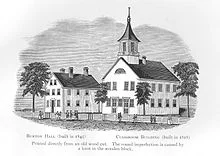
Public-private, two-state school deals
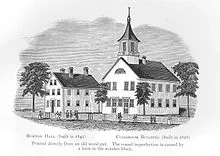
19th Century woodblock of Thetford Academy.
From Robert Whitcomb's "Digital Diary,'' in GoLocal24.com:
I was intrigued by the agreement thatVermont’s private Thetford Academy (founded in 1819), in the Upper Connecticut Valley town of the same name, has with several public schools in the area, including the Lyme, N.H., public schools, that lets students attend Thetford Academy. (Lyme has no high school.)
In this very unusual two-state arrangement, about 25 percent of Lyme’s high-school students go to Thetford Academy. Another 25 percent go to the also private St. Johnsbury Academy, way up the river in the town of the same name. About half go to Hanover (N.H.) High School, a regular public high school, and a small number to other schools in the region.
Adding to the Upper Valley’s very usual (for the U.S.) relationships is that, as I’ve recently written, Hanover is part of the two-state Dresden School District- -- the only one in America. Rather complex cross tuition/voucher arrangements pay for this.
The principal of the Lyme School District, Jeff Valence, told the Valley News: “The relationship we’ve built over the years…has brought something really special to the educational landscape here. The fact that families can choose to send their kids to an independent academy, while still upholding the tenets of public education, is very important to us.’’
Such arrangements may provide models for schools elsewhere, especially in tight, densely populated southern New England. Connecticut, Rhode Island and Massachusetts school officials should study the northern examples, which might be applicable to them, especially for communities along state lines and with a good mix of private and public schools.
To read more, please hit this link:
http://www.vnews.com/Lyme-School-and-Thetford-Academy-revise-long-standing-partnership-agreement-12652007