
Vox clamantis in deserto








Playing in Portsmouth

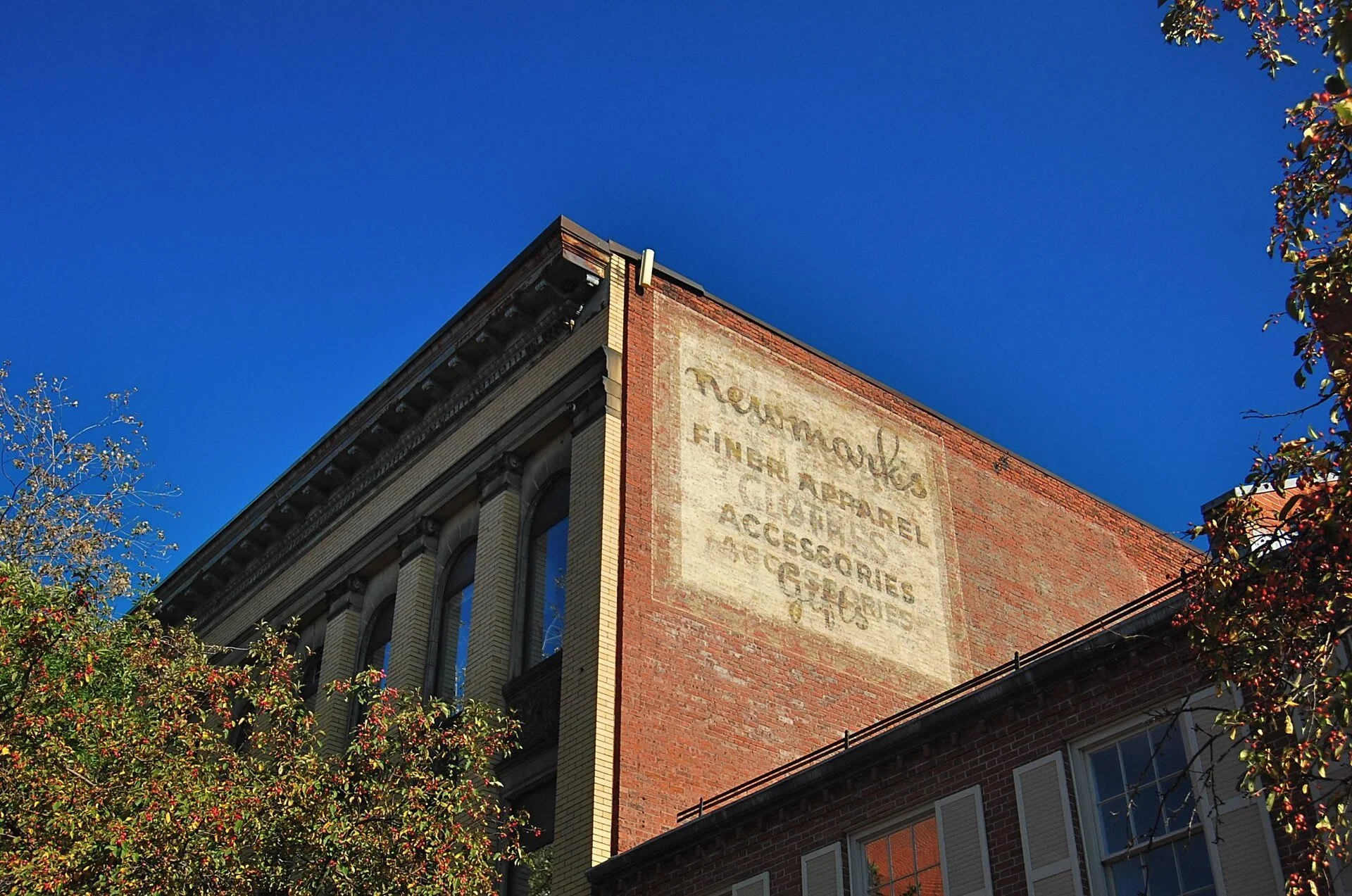
Busker in down Portsmouth, N.H.
Photo by William Morgan, noted architectural historian and photographer

Affirmative-action angst

The earliest known image of Dartmouth College, Hanover, N.H., in the February 1793 issue of Massachusetts Magazine. The college, officially founded in 1769, was an outgrowth of a Connecticut school for educating Native Americans founded in 1755.
From Robert Whitcomb's "Digital Diary,'' in GoLocal24.com
In other education news, the Trump administration, playing to its white male base, wants to sue colleges to block affirmative-action programs aimed at increasing the number of people of color on campuses. The implication is that black and Hispanic students get far more help than do white kids. (Asian-American students are put in another category.)
I’m not crazy about formal affirmative-action programs but colleges have, and should have, many things to consider when putting together classes. For example, many of the most prestigious colleges, including the Ivy League, give a big preference to “legacies,’’ those students, most of whom are white, with alumni parents or other close relatives.
Indeed, rich (mostly white) kids get a big advantage in admissions. First, they (or, rather, their families) can pay full tuition, a not minor consideration for admissions officers. Second, being already affluent, they and their families are naturally more likely to donate to their colleges before and after graduation – especially the legacy students. Thus Jared Kushner, with mediocre high school marks, got into Harvard – after his father donated $2.5 million to that illustrious institution. It’s unknown if Donald Trump’s rapacious multimillionaire real-estate operator father, Fred, wrote a donation check to get young Donald Trump into the University of Pennsylvania’s Wharton School as a transfer student from Fordham.
Finally, a thought experiment forwhite people: Do you really think that life would have been easier for you as a black person?
Probablythe fairest way to do college affirmative action in our increasingly genealogically plutocratic society is to make more of an effort to enable low-and-middle-income to attend. That would particularly benefit people of color, as well as poor whites.

Wex, a fast-growing Maine tech company, to build new headquarters in Portland
This from the New England Council (nec.com):
"WEX is one step closer to building a new global headquarters in Portland, ME, after the City Council’s Economic Development Committee approved Wex’s bid.
"Wex, a Maine-based international technology company, currently has 800 of its 2,700 employees in Maine and will add an additional 500 with the completion of their new building. The new global headquarters will not only be of use to Wex as a recruiting tool, but it will also be of great value to the city of Portland. The proposed building would be 100,000 square feet and four stories with 10,000 square feet of retail space. The City Council is expected to finalize the deal on August 21st.
'''We’re looking forward to hearing from the public regarding the committee’s selected development proposal and our purchase and sale agreement,' City Councilor David Brenerman, chair of the city’s Economic Development Committee, said in a written statement. “This is truly an exciting opportunity to attract the world headquarters of a major Maine-based international business that will bring almost 500 new high-quality jobs to Portland’s eastern waterfront.”
"The New England Council congratulates WEX on its continued growth and success.''
Candace Williams: On the affordability of New England's colleges and universities
Via the New England Board of Higher Education (nebhe.org)
The affordability of public colleges and universities, whose primary mission is to serve state residents, is top-of-mind for students and parents, institutional leaders and state policymakers. NEBHE's 2016-17 tuition & fees report "New England Fast Facts: The Price of Public Colleges in New England, 2016-17'' shows that since fall 2011, tuition and required fees have risen 16% at community colleges and 18% at 4-year institutions. Over that same period, enrollment in the region’s public institutions has fallen by 3.5%—a trend that is expected to continue due to a projected 14% decline in the number of new high school graduates in New England by 2032.
State and institutional financial aid awards seek to lower the sticker price of college. While individual financial aid packages vary, at least one program is fairly easy to predict and summarize: the federal Pell Grants. On average, Pell Grants continue to cover tuition and fees for students in the lowest income quintile in New England who are enrolled at community colleges. At the 4-year level, Pell Grants covered 60% of tuition and fees for students in the lowest income quintile in 2007-08. Today, the maximum Pell Grant pays for about half of a year’s tuition and fees at 4-year institutions.
These trends are forcing institutions and systems to get creative to ensure affordability for students, maintain enrollment and meet the needs of regional employers, who increasingly demand workers with postsecondary credentials.
In New Hampshire, a state known for its high in-state tuition prices, tuition has been frozen at community colleges. Meanwhile, the University of New Hampshire introduced the Granite Guarantee, which will provide free tuition to any full-time freshmen who are eligible for Pell Grants.
Rhode Island, with the leadership of Gov. Gina Raimondo, successfully passed a free college proposal for students entering the Community College of Rhode Island, beginning in fall 2017.
Maine, which consistently has the lowest in-state tuition rates in New England, has launched an effort, known as the Flagship Match, to extend competitive out-of-state tuition rates to residents of the five other New England states, as well as New Jersey, Pennsylvania, Illinois and California.
Nevertheless, budget shortfalls continue to jeopardize state’s efforts to address college affordability. Maine is expected to raise tuition in 2018 for the first time in over six years, while higher education leaders in Massachusetts and Connecticut wrestle with budget and tuition constraints.
Candace Williams is NEBHE's associate director of policy & research.
Frank Carini: Selfish climate-change deniers helping to ruin the world for short-term profit
Climate-change deniers are selfish, or possibly scared. The debate they have managed to manufacture is artificial, like much of the food we consume. It’s fake news.
Whatever you want to call it — climate change, global warming, overpopulation — humans, in a short period of cosmic time, have had a tremendous impact on the planet, its climate and its ecosystems. Much of it to the detriment of life.
To think that 7.5 billion people, plus the more than 100 billion who have come and gone, haven’t had an impact is the very definition of denial. Why can’t we admit it and work to lessen the impact. The answer, sadly, is simple: greed. Sacrifice is for someone else.
We spew some 9.5 gigatons of global greenhouse-gas emissions from fossil fuels into the atmosphere annually. We’ve done so for decades. One gigaton is equivalent to a billion metric tons, or more than 100 million African elephants or 6 million blue whales. If you think all that accumulating pollution isn’t having an impact on the planet, on the climate, you are divorced from reality. Pull your head out of the tar sands.
Greenhouse gases, such as carbon dioxide and methane, which we generate in abundance, are altering the climate, changing ocean chemistry and helping the seas rise. Science doesn’t lie. But politicians, CEOs and Big Business frequently do.
Diversity created the planet on which we live, and we have spent our limited existence on this sphere stamping it out, for short-term individual gain.
Our hubris led directly to the demise of passenger pigeons, Carolina parakeets and great auks, to name but a few. We have overfished and trashed the oceans. We felled cypress forests to sell mulch. New Orleans drowned as a result.
We treat the planet and life on it as if it is a free all-you-can-eat buffet. Profit trumps life. Drill, mountain mine and blast, baby.
Climate-change deniers like to argue that the planet’s rising seas and changing climate are just part of a natural cycle. They’re correct, but they also like to ignore the fact our activities play a major role. We’re changing and speeding up the process. We’re putting future generations at risk, and destroying life-creating/sustaining natural systems.
We’ve replaced natural coastal buffers, such as salt marshes and mangroves, with homes, roads, restaurants and tourist attractions, making our built-up shorelines vulnerable to storm surge, flooding and erosion. We're currently filling runoff-capturing wetlands to build another Rhode Island casino.
We dynamite and bleach coral reefs to capture fish for aquariums. We poach rhinos and elephants for their ivory. We slaughter sharks for their fins. None of these ongoing massacres are required for our survival.
We support diversity-killing monoculture so multinationals can control the world’s food supply. We poison water resources to save money or make money.
The only way to get better is to admit we're having an impact, a bigly one. We need to be educated and conscious consumers. We need to be stewards, not mindless devourers. It requires sacrifice.
Frank Carini is editor of the ecoRI News.
Public hearing on Stone House's request to let scheduled weddings, receptions proceed
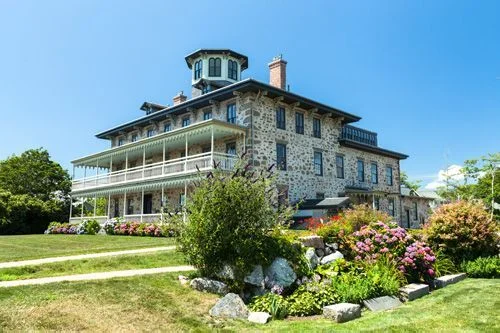
The Stone House, in Little Compton, R.I.
A public hearing is set for 7 p.m., Aug. 10, on Stone House’s request to the Little Compton Town Council to let the venue fulfill its agreements with families for long-scheduled weddings and receptions.
The request is made in order to eliminate further stress on those families who had expected to hold such events at the Stone House during the rest of the 2017 season. The Stone House was required to cease conducting such events until the Town Council grants the Stone House an entertainment license. But according to Town Code §6-7.6, the council may waive any requirement of the entertainment license ordinance. Thus the Stone House urges the council to exercise its discretion and let these very socially and emotionally important events go forward.
On Monday, August 7, 2017, the Stone House filed an application seeking zoning relief pursuant to the Superior Court’s recent order along with an application for an entertainment license in hopes of obtaining the council’s immediate approval to let the historic venue conduct its remaining 2017 events. The Stone House requested an expedited hearing on its application for zoning relief but a hearing date has not yet been scheduled.
However, a public hearing on the Stone House’s entertainment license application will be held at the Town Council Meeting Thursday, August 10, 2017 at 7 p.m. in the Little Compton Town Hall, at 40 Commons. The Stone House encourages anyone who has an interest in these scheduled events to attend.
In light of the pending application for zoning relief and the potentially very heavy impact on the Stone House’s clients, the Stone House has requested that the Town Council exercise its power to permit the aforementioned events to be conducted as originally scheduled or with any additional conditions or restrictions that the Town Council wishes to impose to satisfy councilors’ concerns.
The wages of sin are fun

"Seb and Claire Illegally stream a Movie'' (sculpture), by Evan Morse, in a group show at the New Art Center, Newton, Mass., Oct. 27-Dec. 2.
David Warsh: Of 'guardians' and 'commerce-seekers'
It’s not easy to find a disinterested and well-informed view of the Russian economy these days. I don’t know a better source among economists than Kenneth Rogoff, of Harvard University.
The former chief economist of the IMF (2001-03) has no axe to grind as far as I can tell, beyond a certain taste for good housekeeping and global order. (His wife, Natasha Lance Rogoff, produced Sesame Street for Russian television in the Nineties.) An early diagnostician of the severity of the 2008 financial crisis, he was author, with fellow Harvard professor Carmen Reinhart, of This Time Is Different (Princeton, 2009). As a reformer, he wants to rein in on cash, especially $100 bills. Rogoff wrote up a recent estimate of Russia for Project Syndicate, a source of op-ed articles by economists.
He made two basic points.
The first is that 25 years after the Soviet Union came apart, Russia remains a victim of the resource curse, and therefore highly vulnerable to the cycle of commodity prices. The great preponderance of its foreign earnings come from the export of oil and gas. With the price of a barrel of oil at $119 Russia was riding high as Dimitri Medvedev completed his sole term as president, in February 2012.
Vladimir Putin began his third term just as the cycle turned down. The price of oilfell to $27 a barrel in 2016. A deep recession accompanied the plunge, comparable to what the US suffered in 2008-09, Rogoff wrote, with real output contracting 4 percent. The ruble fell by half against the dollar, forcing consumers to cut back sharply. The Ukraine crisis welled up halfway through the downturn: Ukraine President Viktor Yanukovych fled to Moscow; the annexation of Crimea followed, and brought U.S. and European sanctions that exacerbated the recession, as least somewhat.
That Russia avoided a financial crisis, Rogoff wrote, owed largely to the efforts of the Central Bank of Russia, and its governor, Elvira Nabiullina. Despite strenuous objections by various oligarchs, she kept interest rates high to control inflation (cut from 15 percent to 4 percent) and forced banks to raise capital and write down loans (at least the smaller, less politically-connected banks). Twice Nabiullina has been cited by the trade press as central banker of the year. Putin reappointed her in March to a second five-year term.
Rogoff’s second point: Russia suffers from the failure to diversify its economy. The price of oil is back to around $50 a barrel but growth prospects for the year are barely 2 percent. The Economist reported last week that Daimler-Benz broke ground on a new Mercedes-Benz plant northwest of Moscow — the first such foreign automaker investment since sanctions were imposed three years ago.
Russian media blame the sanctions, Rogoff wrote, but far more pervasive are the problems identified by economist Sergei Guriev – weak institutions, courts inparticular. Guriev, head of Moscow’s prestigious New School of Economics, fled in 2013 rather than risk retribution for his opposition to Putin’s third presidential term. He is today chief economist of the European Bank for Reconstruction and Development. “Without reform” wrote Rogoff, “there is little reason to be optimistic about Russia’s long-term growth trend… despite having an enormously talented and creative population.”
I have a lot of sympathy for central bankers. In principle, and sometimes in practice, they are among the most importantan protectors of social order. Reading about Nabiullina, whose contributions Putin underscores by regularly referring to her in public by her first name, I realized the extent to which I see the story of Russia’s transition through the eyes of Jane Jacobs, the American-born Canadian social philosopher.
In her last major book, Systems of Survival:A Dialogue on the Moral Foundations of Commerce and Politics (Random House, 1992), Jacobs distinguished between two different and distinct ethical systems – syndromes, she called them – that had evolved over millennia to govern human conduct in different spheres of life.
Guardians (a term she took from Plato) are custodians of the political order – leaders, priests, soldiers, police, bureaucrats and, yes, central bankers. An extensive commercial class called the bourgeoisie has grown up in the last several hundred years as well — traders, or commerce-seekers, in Jacobs’s terminology, as opposed to guardians. The two ways of life are essentially incompatible. Problems arise when one moral code or another gets too much of an upper hand in society; or when values are commingled.
Jacobs enumerated aspects of the two codes:
Guardians shun trading, exert prowess, cherish obedience and discipline, adhere to tradition, respect hierarchy, prize loyalty, take vengeance, deceive for the sake of the task, embrace leisure, dispense largesse, behave ostentatiously, remain exclusive, show fortitude, remain fatalistic, and treasure honor.
Commerce-seekers shun force, compete, prize efficiency, are open to inventiveness and novelty, use initiative and enterprise, come to voluntary agreements, respect contracts, dissent for the sake of the task, are industrious, thrifty, invest for productive purposes, collaborate easily with strangers and aliens, promote comfort and convenience, are optimistic, honest.
Russia has been investing heavily in its guardian class since 1993 – the men and women of power known as siloviki. What chance is there that leaders who already recognize the necessity of a rising commercial class will accommodate it with new ways and institutions in the future – sooner or later? Pretty good, I’d say. But what a lot of tension in the meantime!
. xxx
Marshall Goldman, a mainstay of the Wellesley College Department of Economics for several decades, died last week, at 87. He was well known, too, as an expert on the mysteries of the USSR’s centrally-planned economy, appearing frequently on television. As a member of Harvard’s Russian Research Center, he wrote six books about the Soviet transition
Goldman had one major scoop as a Sovietolgist, according to David Engerman, of Brandeis University: The USSR in Crisis (Norton 1983) broke the news and galvanized the public debate about the future of the Soviet Union, just as the Reagan arms build-up reached its peak. Goldman followed up with five more books, concluding with Petrostate: Putin, Power, and the New Russia (Oxford, 2012). Those six books constitue an indelible record of what we knew (and thought we knew) and how we knew it (or didn’t) — a first-rate first draft of the history of those years.
David Warsh is proprietor of economicprincipals. com, where this first ran.
Jill Richardson: A tale of two big beach states

This summer, a heroic group of good samaritans rescued nine stranded swimmers at a Florida beach by forming a human chain.
Initially, two young boys were stranded in the ocean by a rip current. As adults swam out to try to save them and couldn’t return to shore themselves, the number of people in danger grew.
The same day, on the opposite coast, I went with a friend and her kids to the beach. She had to stay on shore to care for her baby, so when the older children asked me to go in the water with them, I agreed. Even though my friend would be watching them from the shore, it seemed safest to have an adult with them in the water.
We hadn’t been in the water five minutes before a lifeguard approached us on a jet ski. We were swimming in a rip current, he said. We needed to move. He showed us where to move to so that we would be safer. And we did.
There was no drama at the beach that day. No rescues, no near-death experiences.
Just a group of kids and two supervising adults having a great time in the water and playing in the sand. The kids found seashells and poked at sea anemones in the tide pools. They found a slimy sea slug that squirted purple ink, and saw brown pelicans flying overhead.
Unlike the people in Florida, we didn’t make the news.
The beach in Florida had no lifeguard. That’s why, even after the first two boys became stranded, nobody but other beachgoers attempted to help them out. All nine people were struggling to stay afloat while help was called when the onlookers decided to form a human chain.
It’s the sort of story that restores your faith in humanity — but it’s not the whole story. With a lifeguard present, that day at the beach in Florida would’ve resembled my day at the beach in California, in which the worst thing that happened was that the kids fought over the sand toys.
Life in California comes with liberal “big government” at its finest. The state was the first to ban smoking in bars and restaurants back in 1995. Our cars must pass an emissions test before the state will register them. Warnings that just about everything on the planet might give you cancer are a staple in our lives.
But it’s occasions like this that remind me that it’s worth it.
It’s worth it to pay taxes so that there are lifeguards at the beach. Smog is a real problem here, so I’m even glad our cars are regulated. Without the regulations, the smog would be worse.
Sure, taxes run high. But I’d even be willing to pay more if it would finance more wildfire fighters — or, better yet, public transportation, because wildfires and traffic are two problems that the government could go a long way toward solving if it had the money.
Of course, our regulations aren’t all perfect, and it’s seldom fun to pay taxes or obey rules.
But for those of us who can’t hire private lifeguards to follow us around, pooling resources is a great way to make sure that when you get caught in a rip current — literally or figuratively — you don’t have to depend on the kindness of strangers to save your life.
Jill Richardson is a columnist for OtherWords.org and the author of Recipe for America: Why Our Food System Is Broken and What We Can Do to Fix It.
Charles Pinning: In Newport, an alarming case of summer substance abuse

Money changes everything.
It was late morning and a sultry spell had settled over Newport. The beginning of August spelled just one more month of freedom, and I lay on my bed, bored, my gaze settling on the blue piggy bank on the bureau top. My recent birthday had caused it to ingest an unusually large meal of paper currency.
Staring at the ceramic piggy, something occurred to me that, oddly enough, had never presented itself before: I suddenly knew exactly what I could do, and was going to do, with some of that cash. Slipping a finger through the ring of piggy’s red cork nose, I fished out a dollar bill, put on my sneakers and headed downstairs.
“Where are you going?” asked my mother.
“Nowhere,” I replied. I kept moving, stepping out onto the porch and motoring determinedly up the street. At Bliss Road, I zeroed in on Kuznitz’s, our neighborhood corner store, which carried the usual array of cigarettes and candy, brooms and cans of soup, bread, balsa wood airplanes, peashooters and anything else one might need, including ... Hostess Twinkies!
I only got hold of Twinkies on rare occasions. Sometimes, I’d open my lunchbox, and instead of an apple or a handful of potato chips in a waxed paper bag, or a couple of homemade cookies wrapped in waxed paper, there would be a glistening store-bought cellophane package of two Twinkies, and life suddenly sparkled. I loved Twinkies, and believed there was no limit on how many I could consume.
With my one dollar, I was able to purchase 10 packages of Twinkies, which Mr. Kuznitz placed in a bag, one package at a time.
“Having a party?” he asked.
One of the good things about being a kid is that you can just stand there and not really say anything intelligible, particularly to an adult who is not your parent. I made some sort of a sound, avoided eye contact and got out of there.
My father had a 1949 Buick sedan that he only used to drive back and forth to work at the nearby Navy base, He kept it parked on the street in front of the house because “reverse” didn’t work. I discreetly got into the back and quietly pulled the door shut behind me.
The inside was a soft and silent chamber, and I disappeared deep into the sumptuous gray cloth seat. It must have been 100 degrees in there and I kept the windows shut so as not to arouse suspicion. I pulled down the fat armrest, put one leg up on the fuzzy rope attached to the back of the front seat, and removed my first package of Twinkies from the paper bag.
The cellophane of each new package fluttered off my fingers and floated down to the floor. After the fourth package, my efforts began to slow and, a couple packages later, everything began to grow hazy. The heat and the sugar were closing in on me and, suddenly, my engines reversed.
Pushing down the door handle, I shoved open the door and collapsed onto the curb. My father was coming around the corner of the house with a pair of hedge clippers in his hand and, spotting me, he grumbled, “What the hell?”
I was inching along the sidewalk on my stomach like a Marine under fire at Guadalcanal when he pulled me up by one arm.
“What the hell have you been doing?” he demanded, taking in my condition and the car’s open door. He dragged me over, then saw the Twinkie wrappers and the mess I’d left behind.
“God Almighty!”
“I had a dollar,” I moaned. “I thought they’d be good.” Was he going to spank me? I’d die.
“Were they?”
“No,” I bleated. “My head hurts.”
“That’s not the only thing that’s going to hurt,” he said, releasing me. “Go inside and clean up, then get out here and clean this damn car.”
And so the summer of 1960 writ my confused excesses into history — the beginning of a jingle-jangle decade like nobody’d ever seen before.
Charles Pinning is a Providence-based writer.
.
Foundations for extending family wealth
From Robert Whitcomb's "Digital Diary,'' in GoLocal24.com
There are lots of big charitable foundations around and many do good work, including work that government can’t or refuses to do. But they are also a way for rich families to stay rich and powerful by extending their power over generations. As The Guardian, in an article headlined “How philanthropic dynasties are exerting their power over US policy,’’ reported:
“Private foundations … offer a way to preserve – and grow – estates over many decades and even centuries. There are more than 90,000 private foundations in the US, with over $800bn {billion} in assets, almost half of which are under family control.
“Such institutions offer a powerful means for heirs to wield influence in society long after the original benefactor is gone….
“One benefit of controlling family philanthropic wealth is social status. Even if you don’t have much of your own money, the ability to give out grants means that people seek you out and pay attention to what you think. You’re asked to sit on boards and attend elite events. While that kind of popularity may not sound like it confers “blessings on generation after generation,’ as Buffett described {the advantages of inherited wealth} such status and access is a very real currency of power in society.’’
Indeed, family foundations are a way to ensure the future income (with power, connections and status come money) and privilege of people who had ancestors who made a lot of money. Meanwhile, Republican plans to get rid ofthe federal estate tax mean that the plutocracy based on inheritance will probably become even more entrenched. So much for a country created in part in opposition to hereditary, aristocratic privilege.
Another problem with some of these “charitable’’ foundations is that more than a few have become purely political organizations attached to one of the two major parties. They’re often used to promote the economic interests of those running the foundations. Donations to political parties aren’t tax-deductible. But gifts to these “charities’’ are.
See:
https://www.theguardian.com/society/commentisfree/2017/jul/25/philanthropic-dynasties-exerting-power-us-policy
'Middle-aged summer'

"Silence again. The glorious symphony
Hath need of pause and interval of peace.
Some subtle signal bids all sweet sounds cease,
Save hum of insects’ aimless industry.
Pathetic summer seeks by blazonry
Of color to conceal her swift decrease.
Weak subterfuge! Each mocking day doth fleece
A blossom, and lay bare her poverty.
Poor middle-agèd summer! Vain this show!
Whole fields of golden-rod cannot offset
One meadow with a single violet;
And well the singing thrush and lily know,
Spite of all artifice which her regret
Can deck in splendid guise, their time to go!''
-- "August,'' by Helen Hunt Jackson

Llewellyn King: America's vulnerability to China's not-so-secret weapon -- rare earths

Rare earths are used in the manufacturing of wind turbines.
In October 1973, the world shuddered when the Arab members of the Organization of Petroleum Exporting Countries imposed an oil embargo on the United States and other nations that provided military aid to Israel in the Yom Kippur War. At the same time, they ramped up prices.
The United States realized it was dependent on imported oil — and much of that came from the Middle East, with Saudi Arabia the big swing producer. It shook the nation. How had a few foreign powers put a noose around the neck of the world’s largest economy?
Well, it could happen again and very soon. The commodity that could bring us to our knees isn’t oil, but rather a group of elements known as rare earths, falling between 21 and 71 on the periodic table. This time, just one country is holding the noose: China.
China controls the world’s production and distribution of rare earths. It produces more than 92 percent of them and holds the world in its hand when it comes to the future of almost anything in high technology.
Rare earths are great multipliers and the heaviest are the most valuable. They go into many of the things we take for granted, from the small engines in automobiles to the wind turbines that are revolutionizing the production of electricity. For example, rare earths increase a conventional magnet’s power by at least fivefold. They are the new oil.
Rare earths are also in cell phones and computers. Fighter jets and smart weapons, like cruise missiles, rely on them. In national defense, there is no substitute and no other supply source available.
Like so much else, the use of rare earths as an enhancer was a U.S. discovery: General Motors, in fact. In 1982, General Motors research scientist John Croat created the world’s strongest permanent magnet using rare earths. He formed a company, called Magnequench. In 1992, the company and Croat’s patents were sold to a Chinese company.
From that time on it became national policy for China to be not just the supplier of rare earths, but to control the whole supply chain. For example, it didn’t just want to supply the rare earths for wind turbines; it insisted that major suppliers, such as Siemens, move some of their manufacturing to China. Soon Chinese companies, fortified with international expertise, went into wind turbine manufacture themselves.
“Now China is the major manufacturer of wind turbines,” says Jim Kennedy, a St. Louis-based consultant who is devoted to raising the alarm over rare earths vulnerability. A new and important book, Sellout, by Victoria Bruce, details how the world handed control of its technological future to China and Kennedy’s struggle to alert the United States.
At present, the rare earths threat from China is serious but not critical. If President Trump — apparently encouraged by his trade adviser Peter Navarro, and his policy adviser Steve Bannon — is contemplating a trade war with China, rare earths are China’s most potent weapon.
A trade war moves the rare earths threat from existential to immediate.
In a strange regulatory twist the United States, and most of the world, won’t be able to open rare-earths mines without legislation and an international treaty modification. Rare earths are often found in conjunction with thorium, a mildly radioactive metal, which occurs in nature and doesn’t represent any kind of threat.
However, it’s a large regulatory problem. The Nuclear Regulatory Commission and the International Atomic Energy Agency have defined thorium as a nuclear “source material” that requires special disposition. Until these classifications, thorium was disposed of along with other mine tailings. Now it has to be separated and collected. Essentially until a new regime for thorium is found, including thorium-powered reactors, the mining of rare earths will be uneconomic in the United States and other nuclear non-proliferation treaty countries.
Congress needs to look into this urgently, ideally before Trump’s trade war gets going, according to several sources familiar with the crisis. A thorium reactor was developed in the 1960s at the Oak Ridge National Laboratory, in Tennessee. While it’s regarded by many nuclear scientists as a superior technology, only Canada and China are pursuing it at present.
Meanwhile, future disruptions from China won’t necessarily be in the markets. It could be in the obscure but vital commodities known as rare earths: China’s not quite secret weapon.
Llewellyn King (llewellynking1@gmail.com) is host and executive producer of White House Chronicle, on PBS, and a veteran publisher, columnist and international business executive. This first appeared in Inside Sources.
Frugality and classicism

The Nickels-Sortwell House (built in 1807), in Wiscasset, Maine.
"{My grandmother} had been born and brought up in a great, flat-roofed Palladian house with fanflight windows over the doors and yard-wide pumpkin-pine paneling, in the southwest corner of Maine. There she had absorbed simultaneously the frugality and the classicism of Down East New England. She could make soap and translate Horace with equal facility and mordant effect.''
-- Robert K. Leavitt, from The Chip on Grandma's Shoulder.

Look south

"Eye of the Storm'' (digital painting), by Gloria King Merritt, in the group show "The New England Collective VIII, through Aug. 27, at Galatea Fine Art, Boston.
"One must now turn a weather eye in another direction, keeping watch to the south, where tropical storm activity accelerates markedly after July 15. A storm track leading from the tropics along the Eastern Seaboard off Cape Hatteras and past Cape Cod poses an increasing threat to New England, though dangerous hurricanes usually postpone their visits northward until the last week in August or later.''
-- From the "August'' chapter of The Country Journal New England Weather Book, by David Ludlum.
Tim Faulkner: Senate rejects Trump cuts to coastal environmental projects

The Sakonnet River, a saltwater strait that forms part of Narragansett Bay.
Via eco RI News (ecori.org)
On the same night that the U.S. Senate rejected the latest effort to repeal and replace the Affordable Care Act, it also come out forcefully against President Trump’s effort to eliminate funding for key coastal programs.
In its funding bill for the departments of Commerce, Justice and Science, the Senate approved funding for the Coastal Resources Management Council, Sea Grant and the National Estuarine Research Reserves.
Instead of level funding, the Senate increased by $2 million to $76.5 million for the Sea Grant program, a division of the National Oceanic and Atmospheric Administration (NOAA).
“The Committee flatly rejects the [Trump] administration’s proposed elimination of NOAA's Sea Grant program,” the Senate Appropriations Committee wrote in a statement regarding the 2018 funding bill.
The Sea Grant program at the University of Rhode Island is one of 33 nationwide affiliated with universities located near salt water and the Great Lakes. New England has eight Sea Grant offices that focus on coastal hazards, sustainable coastal development, and seafood safety.
Rhode Island Sea Grant receives $2 million from the federal government annually to run its research center at URI’s Bay Campus, in Narragansett. Another $1 million is provided by the state and other sources. Its research includes studies of algal blooms, oyster farming, and lobster diseases.
Had Trump’s budget passed, nine positions would have been lost between the URI research center and a laboratory at Roger William University, in Bristol.
“We are very pleased that the House and Senate have rejected the president’s request to terminate the program,” said Dennis Nixon, director of Rhode Island Sea Grant.
Nixon said Sea Grant has no critics in Congress and that it seen as a valuable institution for advancing timely research.
Trump has been accused of using a broad brush to eliminate any program with the word “grant” in it, to increase defense spending and pay for a border wall with Mexico.
Sen. Sheldon Whitehouse, D-R.I., and other Washington insiders maintain that the president’s budget holds little influence on spending and that Congress ultimately decides how money is appropriated. Soon after Trump released his proposed budget in March, Whitehouse downplayed major funding cuts to the Environmental Protection Agency and other environmental programs such as Sea Grant.
“Do not be dissuaded or dismayed by the cuts to EPA, the elimination of Sea Grant and other such efforts,” Whitehouse said on March 11. “It is an act of political theater; it is not an act of budgeting.”
Some $85 million was also restored for coastal management grants. The funds pay for about 60 percent of the budget for the Coastal Resources Management Council (CRMC), a state agency based in Wakefield. CRMC is responsible for permitting coastal development such as docks and seawalls. The 46-year-old agency also creates planning guidelines for offshore wind development and climate-change adaptation. Its Ocean Special Area Management Plan is considered one of the most advanced coastal planning documents in the country.
The Narragansett Bay Estuarine Reserve, based on Prudence Island, had its 70 percent of federal funding restored. The research reserve has eight employees and an $850,000 annual budget. It's one of 28 research reserves nationwide. The Rhode Island facility conducts research and monitoring of shoreline habitat. Recent projects have focused on eelgrass and the Asian shore crab.
The U.S. House of Representatives already passed similar funding for these coastal programs. The two budgets are expected to be modified slightly to match before they are fully approved for the fiscal year that begins Oct. 1.
“It’s good news that both the House and Senate are funding the coastal programs,” said Grover Fugate, CRMC's executive director.
Tim Faulkner writes frequently for ecoRI News.
Pedestrian placebo effect

-- Photo by Coolcaesar
Adapted from Robert Whitcomb's "Digital Diary'' in GoLocal24.com
I was amused to read in The Boston Globe that those pedestrian buttons at intersections don’t actually work. See: https://www.bostonglobe.com/metro/2017/07/24/ahead-and-press-that-pedestrian-button-makes-you-feel-good/1krGOm2CfeZBvIkEkNm5rL/story.html
But people keep pushing the buttons, even if they have long suspected that they don’t do anything. As The Globe reported “Officials say the city’s core is just too congested – with cars and pedestrians – to allow any one person to manipulate the {traffic lights} cycle.’’ But fidgety people keep pushing the buttons, in a search for a sense of control. Maybe there’s a soothing placebo effect that we all need in these tense times.
Chris Powell: Eisenhower's secret campaign to defeat Joe McCarthy
Ike and McCarthy, by David A. Nichols (Simon and Schuster. $27.95. 379 pages).
With demagoguery now running rampant across America, in large part because of a president indifferent to the truth and the dignity of his office, David A. Nichols's book is a fascinating voyage to a similarly threatening time that at least had a happy ending.
Nichols, a scholar of the administration of President Dwight D. Eisenhower, aims to correct the misimpression that Ike was timid in the face of the country's second great Red Scare (the first one came right after World War I). Rather, Nichols writes, in his first two years in office Ike became devoted to breaking the scare's primary perpetrator, Wisconsin Sen. Joseph McCarthy, with a secret political campaign run from the White House by the president's aides.
The impression of Eisenhower's timidity arose in part from his steady refusal to confront McCarthy or even mention his name as the senator kept charging, usually without evidence, that the federal government was riddled with Communists who were security risks if not outright spies for the Soviet Union. Of course there were Communists and spies, but McCarthy seldom got near one of any importance. Yet Eisenhower restrained himself even when McCarthy updated his smear of the Franklin Roosevelt and Harry Truman administrations, Democratic administrations -- from "20 years of treason" to "21 years of treason" -- encompassing the first year of the Eisenhower administration, the administration of a fellow Republican.
Eisenhower, Nichols writes, loathed McCarthy from the start but didn't want to talk back to him, believing -- or maybe rationalizing -- that this would elevate the senator and give him even more attention. Eventually Eisenhower and his aides decided that the country needed to see more of McCarthy, not less, so that the senator's bullying, intemperance and distortions would become his most prominent characteristics in the public mind.
The result was the famous Army-McCarthy Hearings in 1954 before a Senate committee, largely staged by the president and his supporters, at which the central issue became not Communist infiltration at all but McCarthy aide Roy Cohn's confidential and unseemly hectoring of the Army to get favors for another McCarthy aide, G. David Schine, who had just been drafted into the Army. Cohn and Schine were suspected of having a homosexual relationship. {Roy Cohn was later a close mentor of Donald Trump.}
Here Nichols makes plain that the supposed good guys were not above McCarthyite tactics themselves. For the Army's lead lawyer, Joseph Welch, who has gone down in history for puncturing the senator with the famous rebuke at a televised hearing -- "Have you no sense of decency, Sir?" -- had just used televised innuendo to suggest Cohn's homosexuality and to exploit prejudice against homosexuals.
Further, Nichols shows, Eisenhower himself, as president, initially flirted with and patronized the fascism of anti-communist politics, at one point proposing to outlaw membership in the Communist Party. The president also dissembled and induced his associates to dissemble about the creation of the Army's report on Cohn's interventions for Schine, even getting Secretary of the Army Robert T.B. Stevens to commit perjury about it.
Journalists of the time don't come out so well either, as Nichols shows many of them sensationalizing McCarthy's reckless allegations and others, including CBS's Edward R. Murrow, colluding with the White House press office against the senator.
Eisenhower, in light of some of those who followed him, turned out to be a pretty good president, siding soon enough with free thought and speech and due process of law. But it is hard not to wonder if the president would have come around so soon if McCarthy had not targeted the Army, from which Ike had retired as the general who had led the Western armies against Hitler.
And while McCarthy quickly fell from national influence, sunk into alcoholism, and died prematurely, his censure by the Senate remains misunderstood. The two counts of the censure had nothing to do with McCarthy's abuse of supposed Communists and their sympathizers and his contempt of due process but rather his affronting the dignity of the Senate itself.
Nichols has told and extensively documented a compelling story. Anyone interested in American history and politics may have a hard time putting this book down.
Chris Powell is managing editor of the {Manchester, Conn.} Journal Inquirer and a frequent contributor to New England Diary.
Luminous lake

"Bear Camp/Blue and Green''' (graphite and watercolor), by Sallie Wolf, at Patricia Lloyd Carega Gallery, Center Sandwich, N.H.