
Vox clamantis in deserto




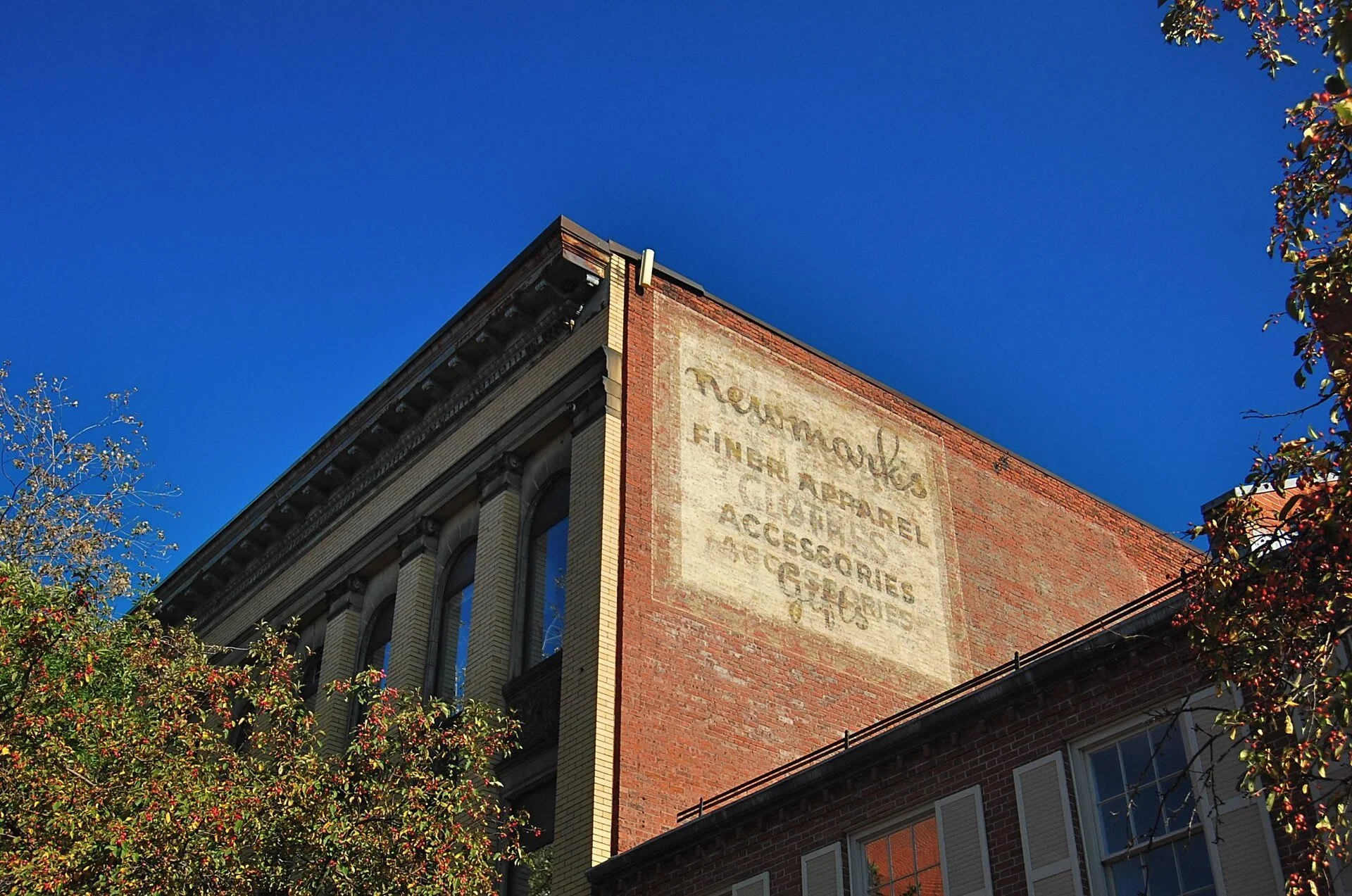

'Drip drip the trees'

"My books I'd fain cast off, I cannot read,
'Twixt every page my thoughts go stray at large
Down in the meadow, where is richer feed,
And will not mind to hit their proper targe.
Plutarch was good, and so was Homer too,
Our Shakespeare's life were rich to live again,
What Plutarch read, that was not good nor true,
Nor Shakespeare's books, unless his books were men.
Here while I lie beneath this walnut bough,
What care I for the Greeks or for Troy town,
If juster battles are enacted now
Between the ants upon this hummock's crown?
Bid Homer wait till I the issue learn,
If red or black the gods will favor most,
Or yonder Ajax will the phalanx turn,
Struggling to heave some rock against the host.
Tell Shakespeare to attend some leisure hour,
For now I've business with this drop of dew,
And see you not, the clouds prepare a shower--
I'll meet him shortly when the sky is blue.
This bed of herd's grass and wild oats was spread
Last year with nicer skill than monarchs use.
A clover tuft is pillow for my head,
And violets quite overtop my shoes.
And now the cordial clouds have shut all in,
And gently swells the wind to say all's well;
The scattered drops are falling fast and thin,
Some in the pool, some in the flower-bell.
I am well drenched upon my bed of oats;
But see that globe come rolling down its stem,
Now like a lonely planet there it floats,
And now it sinks into my garment's hem.
Drip drip the trees for all the country round,
And richness rare distills from every bough;
The wind alone it is makes every sound,
Shaking down crystals on the leaves below.
For shame the sun will never show himself,
Who could not with his beams e'er melt me so;
My dripping locks--they would become an elf,
Who in a beaded coat does gayly go. ''
-- "The Summer Rain,'' by Henry David Thoreau
Impressions of a Cape town in summer

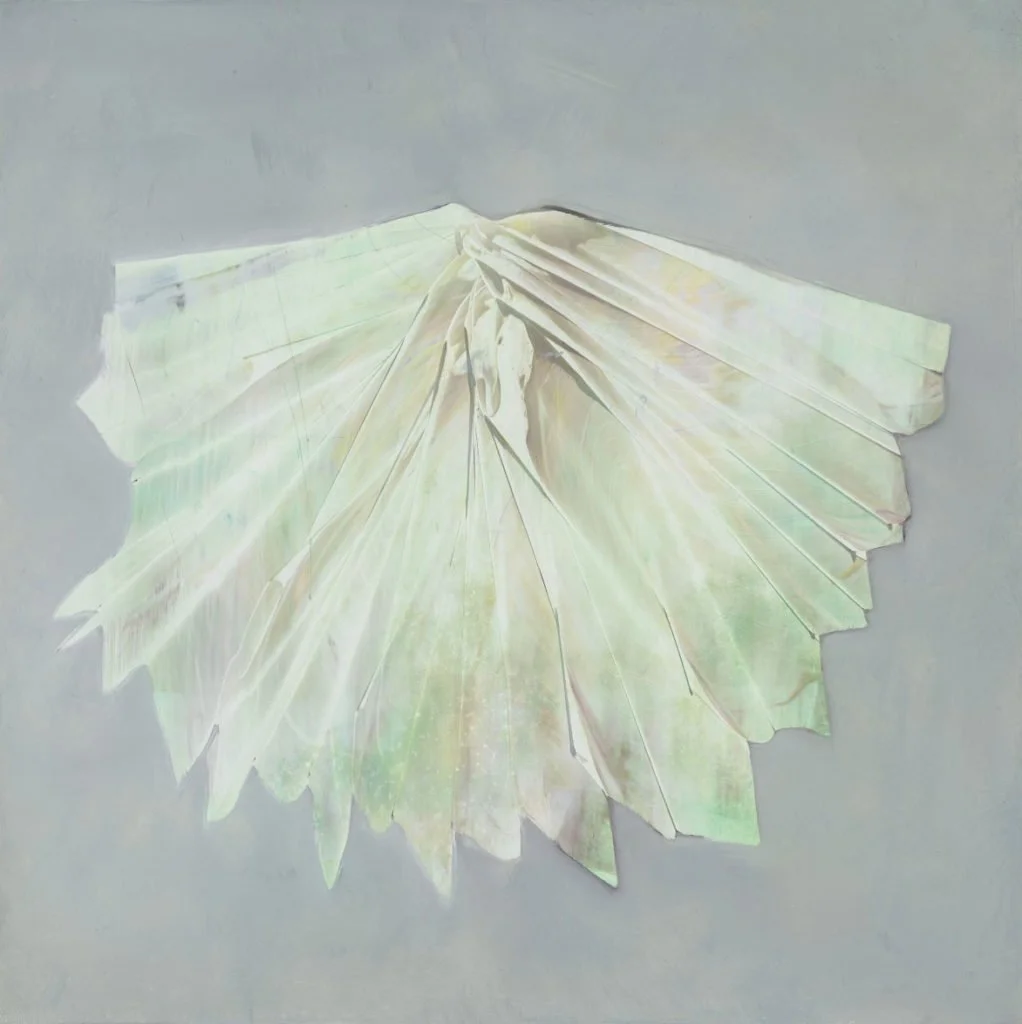
"Queen Anne's Lace'' (oil on masonite with collage materials added, fabric, mixed media behind plexiglass), by Joan Baldwin, in her show "E. Orleans,'' at Kingston Gallery, Boston, through July 30. E. Orleans means East Orleans.
She says: "I constructed a diorama like format for impressions of E. Orleans, the popular vacation town at Cape Cod. The pieces hang on the wall but are three dimensional, with the background of each terrarium painted in oil on Masonite with sculptural collage elements added to complete the habitats. In the show there is also a hanging installation of a mother and newborn moths emerging from a cocoon, that is representative of the emerging life at the Cape during the spring and summer."
James P. Freeman: RINO Baker drifts left along with the anti-Trump Bay State
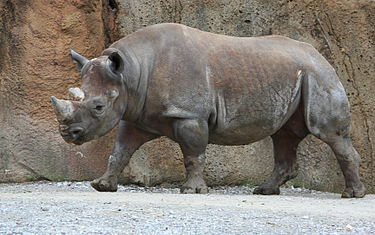
For many Massachusetts Republicans, Gov. Charlie Baker’s administration is the advancement of a dishonest marketing campaign: Baker and Switch. (Run as a Republican, cozy up to Democrats, disown the Republican Party.) Rejected Republicans, perhaps feeling duped from day one, should take note. Baker’s dispiriting drift to the left may just prove to be a stroke of genius for re-election in 2018. It’s a plan without Republicans — the abandoned, fatherless children of Massachusetts politics.
The plan was actually hatched well before President Trump skunked The Party of Ronald Reagan. As a Baker senior adviser, Tim Buckley, told The Atlantic, the governor’s campaign in 2014 focused from the beginning on “showing he could say ‘screw you’ to the Republican Party.” Those words have proven to be prophetic and strategic.
The cold calculus of political reality, as Baker’s team knows, does not favor any Republican in the Commonwealth, let alone an incumbent Republican governor. As of February 2017, there were 4,486,849 registered voters in Massachusetts, with just 479,237 registered Republicans (11 percent of the total). Unenrolled voters numbered 2,424,979 (54 percent) while registered Democrats numbered 1,526,870 (34 percent).
Since the 2014 election, unenrolled voters have increased by 133,824, while Republican voters have increased by only 9,973. Increased unenrolled voter registration is trending upwards, and may accelerate, as Trumpism (a governing style resembling the Coney Island Cyclone) roars through the land.
Even though Baker beat Martha Coakley by just 40,165 votes in 2014, the election was a blue lagoon of civility.
Next year’s election, by comparison, will be a dark pool of uncertainty but will certainly feature a rabid anti-Trump sentiment and, by extension and association, Republican defensive posturing. And in the Commonwealth — what fun! — the proselytizing progressive Sen. Elizabeth Warren will also be on the ballot. Republicans will be the expendables. Something the governor, understandably, wishes to defy for himself.
Baker is an elusive electoral enigma.
He is a social liberal and a fiscal conservative who has melted the cryogenically frozen corpse of {Nelson} Rockefeller Republicanism into new life. He enjoys a 75 percent approval rating in a state where Democrats control 79 percent of the House and 83 percent of the Senate, and Hillary Clinton overwhelmingly won last November (61 percent to Trump’s 33 percent). He maintains a working relationship with House Speaker Robert DeLeo (where massive power resides), whose understated temperament is like his own. And, he operates without a political base, given the minuscule minority status of his party.
Seemingly harboring zero national ambitions, Baker would be the first Republican Massachusetts governor to be re-elected since William Weld, in 1994 (who resigned in 1997 after being nominated as U.S. ambassador to Mexico – a nomination killed by right-wing North Carolina Sen. Jesse Helms).
Baker’s survival instincts are validated by this paradoxical fact: Even as prospective Democratic gubernatorial candidates (Setti Warren, Jay Gonzalez and Bob Massie) rightly cite his lack of grand vision for Massachusetts, many Democrats on Beacon Hill quietly concede that state government is functioning better under the bipartisan executive leadership of Baker than it did under his predecessor, Democrat Deval Patrick (who, with contempt for hands-on management, always spoke with a grand vision).
As The Boston Globe noted the other week, “State Democrats turn attention to Trump, not Baker, at convention.”
Still, for conservatives (a fringe of the fringe in the Commonwealth) hoping there might be some application of conservative ideas in this playground of progressivism, there is deep dissatisfaction with the governor. His risky political plan (popularity is perishable; a large unenrolled bloc can shift allegiance quickly) is, some believe, at the expense of foundational principles.
Howie Carr recently wrote in the Boston Herald: “As his first term in the Corner Office {of the State House} continues, it seems that the Republican-in-Name-Only (RINO) governor finds himself more and more ‘disappointed,’ not just with his party affiliation, but also with the drift of public affairs in general.”
That might explain Baker’s puzzling appointment last week of Rosalin Acosta, a Lowell bank executive, as his labor secretary. Acosta (a progressive activist and anti-Trump enthusiast) and her husband this year founded Indivisible Northern Essex, a liberal advocacy group that began supporting progressive candidates around the country. Should a progressive run against Baker, whom would Acosta vote for?
James P. Freeman, an occasional contributor to New England Diary, is a New England-based essayist, former Cape Cod Times columnist and former financial-services executive. This piece first ran in The New Boston Post.
'Residue of my dream remains'
"Like the stench and smudge of the old dump-heap
Of Norwalk, Connecticut, the residue
Of my dream remains, but I make no
Sense of even the fragments. They are nothing
More significant than busted iceboxes and stinking mattresses
Of Norwalk, and other such human trash from which
Smudge rose by day, or coals winked red by night,
Like a sign to the desert walkers"
-- From "Dream, Dump-Heap and Civilization,'' by Robert Penn Warren
Urbane bunnies

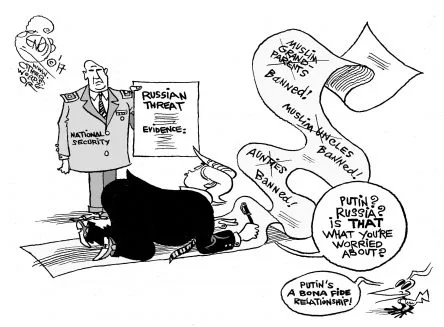
Eastern Cottontail rabbit.
Adapted from Robert Whitcomb's "Digital Diary,'' in GoLocal24.com:
I noted a while back the proliferation of rabbits in Providence. Well, the same thing’s happening in Boston, including downtown.
One Boston Globe reader suggested that a partial explanation might be the use of less toxic fertilizers, pesticides and herbicides in lawn and shrub areas these days. And maybe fewer feral cats (I hope!). Will the bunny population explosion lead to an increase in killing rabbits for food, albeit not at French levels?
But they're so cute!
Tim Faulkner: Coming soon -- live war exercises for the East Coast

--Navy map
Via ecoRI News (ecori.org)
The Navy intends to fire missiles, rockets, lasers, grenades and torpedoes, detonate mines and explosive buoys, and use all types of sonar in a series of live war exercises in inland and offshore waters along the East Coast.
In New England, the areas where the weapons and sonar may be deployed encompass the entire coastline, as well as Navy pier-side locations, port transit channels, civilian ports, bays, harbors, airports and inland waterways.
“The Navy must train the way we fight,” according to a promotional video for what is called "Atlantic Fleet Training and Testing Phase III."
An environmental impact study of the war games was released June 30. Public comment is open until Aug. 29. A public hearing is scheduled for July 19 from 4-8 p.m. at Hotel Providence. Comments can be submitted onlineand in writing, or through a voice recorder at the hearing.
The dates and exact locations of the live weapon and sonar exercises haven't yet been released. In all, 2.6 million square miles of land and sea along the Atlantic Coast and Gulf of Mexico will be part of the aerial and underwater weapons firing.
The Navy has designated southern New England as the Boston Operating Area, Narragansett Operating Area and Newport Testing Range.
The Navy describes the weapons exercise as a “major action.” The live ammunition training includes the use of long-range gunnery, mine training, air warfare, amphibious warfare, and anti-submarine warfare. The Navy says weapons use near civilian locations is consistent with training that has been done for decades.
The Navy, in conjunction with the National Marine Fisheries Service, will announce one of three options for the battle exercises by fall 2018. One of the options is a “no-action alternative.”
The Office of the Secretary of the Navy has full authority to approve or deny the live war games. President Trump, however, has had difficulties finding a new Navy secretary. Venture capitalist Richard V. Spencer is expected to face a Senate confirmation hearing this month. Previous nominee Philip Bilden withdrew from consideration in February over financial-disclosure requirements.
The Navy says an environmental review for the excises was conducted between 2009 and 2011.
The live war games would deploy passive and active sonar systems. The Navy said it will use mid-frequency active acoustic sonar systems to track mines and torpedoes. Air guns, pile driving, transducers, explosive boxes and towed explosive devises may be used offshore and inland.
Risks to sea life include entanglements, vessel strikes, ingesting of harmful materials, hearing loss, physiological stress, and changes in behavior.
The Navy says it is using acoustic modeling done by the National Oceanic and Atmospheric Administration (NOAA) to minimize impacts to marine mammals such as whales and porpoises. NOAA, however, isn't involved with efforts to mitigate environmental impacts during the war games. Spotters on naval vessels will search for mammals during the exercises. The Navy said it will partner with the scientific community to lessen impacts on birds, whales, turtles, fish and reefs.
While some sea life is expected to be harmed by the explosives and sonar, the Navy says it doesn't expect to threaten an entire population of a species.
Tim Faulkner writes frequently for ecoRI News.
Check out the special on kids' bones

"In the Future We'll Build Our Shopping Carts from Sticks and Twigs So We Can Stock Up on the Bones of Our Children" (scavenged sticks and twigs, India ink, paint, wire and cardboard), by John Christian Anderson, in his show "My Inheritance,'' through July 23 at Boston Sculptors Gallery.
Mr. Anderson uses both scavenged material and handcrafted parts to create sculptures looking like facsimiles and evoking both ominousness and humor.
The title, "My Inheritance,'' refers to a future in which art will be created with ever-dwindling resources.
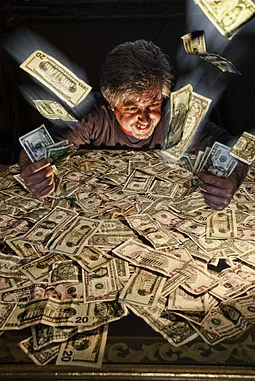
Steven Clifford: How rigged system produces grotesque CEO pay and hurts America
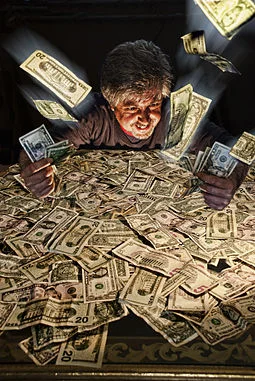
"Avarice'' (2012), by Jesus Solana
Via OtherWords.org
CEO pay at America’s 500 largest companies averaged $13.1 million in 2016. That’s 347 times what the average employee makes.
So CEOs make a lot of money. But, some say, so do athletes and movie stars. Why pick on corporate bosses, then?
First, because the market sets compensation for athletes and movie stars, but not for CEOs. Teams and movie studios bid for athletes and movie stars. CEO pay is set by a rigged system that has nothing to do with supply and demand.
NBA teams bid for LeBron James because his skills are portable: He’d be a superstar on any team. CEOs’ skills are much more closely tied to their knowledge of a single company — its finances, products, personnel, culture, competitors, etc. Such knowledge and skills are best gained working within the company, and not worth much outside.
In fact, a CEO jumping between large companies happens less than once a year. And when they jump, they usually fail.
Lacking a market, CEO pay is set by a series of complex administrative pay practices. Usually a board, often dominated by other sitting or retired CEOs, sets their CEOs pay based on the compensation of other highly paid CEOs. The CEO can then double or triple this target by surpassing negotiated bonus goals.
This amount then increases target pay for his or her peer CEOs, giving another bump. Since 1978 these annual rounds of CEO pay leapfrog have produced a 1,000 percent inflation-adjusted increase in CEO pay.
At the same time, the bottom 90 percent of American workers have seen their real incomes decrease by 3 percent.
American workers were once rewarded for productivity. Inflation-adjusted wages and productivity rose in tandem at about 3 percent annually from 1945 through the mid-'70s. But since then the bosses have taken it all. Although productivity growth increased inflation-adjusted per-capita GDP by 84 percent over the last 36 years, real wages have remained essentially flat.
Where did the money go? It went to the 1 percent, and especially to the 0.1 percent.
The latter group, a mere 124,000 households, pocketed 40 percent of all economic gains. Business executives, CEOs, or others whose compensation is guided by CEO pay constitute two-thirds of this sliver.
In other words, it’s business executives — not movie stars, professional athletes, or heiresses — who grabbed the dollars that once flowed to the American worker.
Outsize CEO compensation harms American companies, and not just in the tens of millions they waste on executive pay. The effects on employee morale are much more costly. When the boss makes 347 times what you do, it’s difficult to swallow his canard that “there’s no I in team.”
Worse, CEO pay encourages a short-term focus. Instead of making productive investments, companies buy back their own stock to keep its price high, which boosts their own paycheck. From 2005 to 2014, stock buybacks by America’s 500 largest public companies totaled $3.7 trillion. This consumed over half of their net income.
That $3.7 trillion could have been invested in plants and equipment, new technology, employee training, and research and development. Instead, corporate America cut R&D by 50 percent, essentially eating the seed corn.
If athletes and movie stars were paid less, team owners and studios would simply make more. The hundreds of millions paid to CEOs, on the other hand, hurts their companies, employees and our economy. It’s a principal driver of our country’s startling income inequality.
One of the few checks on CEO pay is a rule under the Dodd-Frank financial-reform law requiring companies to disclose the ratio of CEO to average worker pay. Congress is now considering repealing this rule.
If you think that CEOs making 347 times what you do shouldn’t be held secret, maybe it’s time to let your representatives know.
Steven Clifford is the former CEO of King Broadcasting and the author of The CEO Pay Machine: How It Trashes America and How to Stop It.
Welcome to Blueberry Muffin Lane
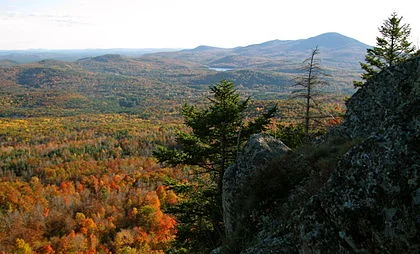
Mt. Kearsage, near poet Donald Hall's house in New Hampshire.
"Let the poor move into the spareroom of their town
cousins; pave garden and cornfield; build weekend houses
for skiers and swimmers; build Slope 'n' Shore; name the new
"road Blueberry Muffin Lane; build Hideaway Homes
for executives retired from pricefixing for General Electric
and migrated north out of Greenwich to play bridge
with neighbors migrated north out of Darien. Build huge
centrally heated Colonial ranches—brick, stone, and wood
confounded together—on pasture slopes that were white
with clover, to block public view of Blue Mountain.
Invest in the firm foreclosing Kansas that exchanges
topsoil for soybeans. Vote for a developer as United States
senator. Vote for statutes that outlaw visible poverty.''
-- From "The One Day,'' by Donald Hall (who lives in rural New Hampshire)
Mining the real rural New England
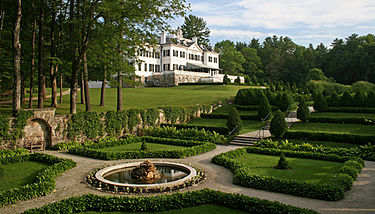
The Mount, the (mostly)summer mansion built for Edith Wharton in 2002 in Lenox, Mass., in the Berkshires.
"I had known something of New England village life long before I made my home in the same county {Berkshire County, Mass.} as my imaginary Starkfield; though, during the years spent there, certain of its aspects became much more familiar to me. Even before that final initiation, however, I had had an uneasy sense that the New England of fiction bore little -- except a vague botanical and dialectical -- resemblance to the harsh and beautiful land as I had seen it. Even the abundant enumeration of sweet-fern, asters and mountain-laurel, and the conscientious reproduction of the vernacular, left me with the feeling that the outcropping granite had in both cases been overlooked. I give the impression merely as a personal one; it accounts for Ethan Frome, and may, to some readers, in a measure justify it.''
-- Introduction to the novel Ethan Frome, by Edith Wharton

The art of hunting and fishing

"Huntsman and Dogs" (oil on canvas, 1891), by Winslow Homer, in the show "Wild Spaces, Open Seasons: Hunting and Fishing in American Art,'' at the Shelburne Museum, Shelburne, Vt., through Aug. 27.
The museum says that this is the first major exhibit in America to explore the visual culture of American hunting and fishing in painting and sculpture from the early 19th Century to World War II. The show includes works by Thomas Eakins, Winslow Homer and John Singer Sargent, as well as by such specialist sporting artists as Charles Deas, Alfred Jacob Miller, Carl Rungius and Arthur Fitzwilliam Tait and modernist interpretations of these subjects by George Bellows and Marsden Hartley, among others.
New England's tidal power
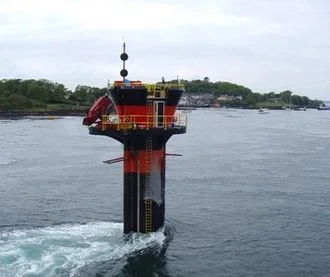
The world's first commercial-scale and grid-connected tidal-stream generator – SeaGen – in Strangford Lough., Nothern Ireland. The strong wake shows the power in the tidal current.
Adapted from Robert Whitcomb's "Digital Diary,'' in GoLocal24.com:
The old saw was that New England has virtually no sources of energy. Of course what that meant was no fossil fuel (except for tiny amounts of coal in parts of southern New England). But it does have lots of wind power, good solar-power resources and not insignificant river-water power. The last help make possible New England’s leading role in starting the American Industrial Revolution.
And, especially from Massachusetts Bay north, where the tides get progressively stronger and there are hundreds of estuaries, New England has substantial tidal-power potential, too. And so it was heartening to hear Avery Brookins’s interview on Rhode Island Public Radio with marine conservationist Jonathan White. Mr. White is the author of Tides: The Science and Spirit Of the Ocean, about the promise and challenges associated with installing tide mills. To hear his interview, hit this link:
Industrial decline
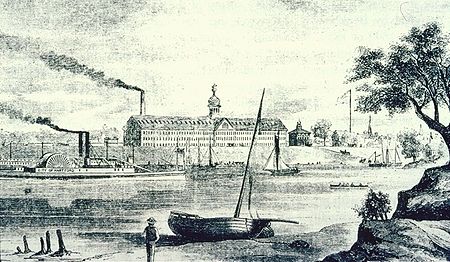
Colt's Armory, in Hartford, from an 1857 engraving viewed from the east. The Connecticut River Valley has long been a center of gun-making.
"The toolmaker
is sixty years old
unemployed
since the letter
from his boss
at the machine shop''
"The family watches
and listens to talk
of a bullet
in the forehead
maybe himself
maybe for the man
holding the second mortgage.
"sometimes
he stares down
into his wallet.''
From "The Toolmaker Unemployed: Connecticut River Valley,'' 1992, by Martin Espada.
Hey there, Donald, you with the stars in your eyes
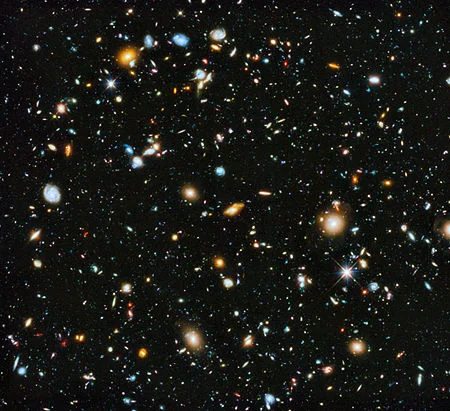
This Hubble Ultra-Deep Field image shows some of the most remote galaxies visible with present technology.
See President Trump confront infinity as former astronaut Buzz Aldrin looks on with, well, wonder. To see the video, please hit this link.
Postpone until August
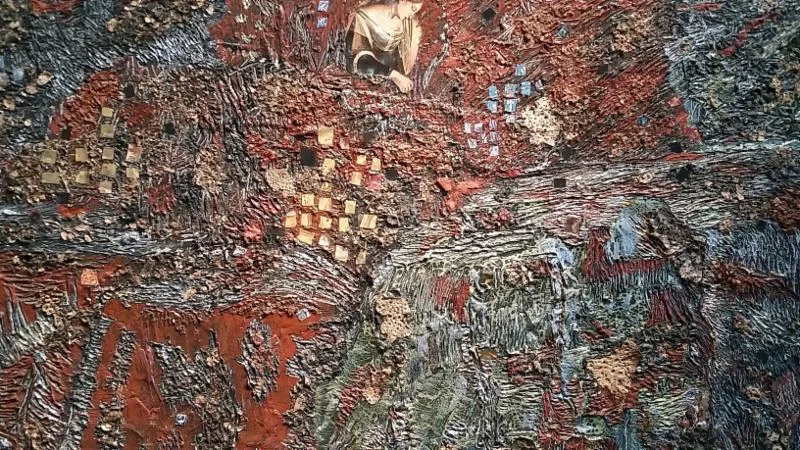
"Prayers for Rain'' (mixed media with lichen on canvas), by Dominick Takis, in the group show "Surface'' (with Ruth LaGue and George Shaw) July 8-Aug. 16 at the Gallery at Spencer Lofts, Chelsea, Mass.
The gallery writes:
‘’Dominick Takis incorporates lichen into his surfaces as a weight and balance for composition; he is mostly interested in its textures and patterns. Lichen has an ancient and weathered look: he references civilizations that revered the stone circle as a symbol of the connection between the harmony of nature and the cosmos. The patterns of the lichen appeared on man-made Dolmens and portal tombs as well as naturally on stone.
"He began to read more about lichen and it's symbiotic relationship to algae; how they create their own existence, yet are attached. He found parallels in his own life; the distance that comes from independence, yet still remaining attached to my ancestors and culture. An outcropping of land, a farmhouse, a church or a graveyard may take on greater significance when it contains some familial connection. This became apparent when traveling through his ancestral Sicily and in his wife's native Ireland. Whether figurative or intellectual, there is a symbiotic relationship with his ancestors and culture and it informs his art.’’
Note from Robert Whitcomb: As kids living next to granite outcroppings, my four siblings and I were mystified that a plant such as lichen could live with no visible source of food on bare rock, and we found lichen's subtle blue, gray and green colors eerily lovely.
Tim Faulkner: Right-wing and anti-wind types blame wind farm for whale's death -- without proof
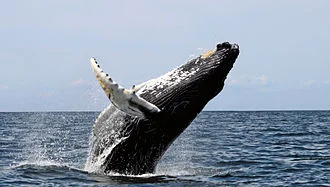
A humpback whale breaching.
Via ecoRI News (ecori.org)
JAMESTOWN, R.I.
There is nothing yet linking the Block Island Wind Farm to the death of humpback whales, but that hasn't stopped anti-wind and conservative groups from making the connection.
The recent stranding and death of a 32-foot juvenile humpback whale in Jamestown triggered speculation, and in some cases unsubstantiated assertions, that noise from the first U.S. offshore wind farm caused this and other whales to die. As the HuffPost recounts, the claim was first made by the conservative Web site Daily Caller and through a conservative news wire has been republished and rewritten in various forms by national new outlets such as The Blaze and through local anti-wind groups and press reports that inferred the link. The Newport Buzz names the five-turbine wind farm as the prime suspect.
None of the anti-wind articles offer a scientist as a source for their claims or research that deduces that the wind farm, owned by Providence-based Deepwater Wind, caused the whale to beach itself. Only the HuffPost quoted a marine biologist, at Cornell University, who said wind turbines contribute to the cacophony of underwater noise from boats, ships and barges, and that this mix of manmade noise — which can also include sonar, fossil-fuel drilling and military exercises and testing — can disorient but isn't likely to kill marine life.
Jeff Grybowski, CEO of Deepwater Wind, told ecoRI News that the five turbines are simply not to blame. "There is absolutely no evidence that the wind farm is in any way connected to this whale," he said. "The wind farm does not create any special risks to marine life. In fact, marine life is thriving near the project.”
As part of its approval process, the wind farm and its transmission system received a finding of no significant impact for acoustic impacts by the federal Bureau of Ocean Energy Management.
Deepwater Wind has a lot riding on the emerging offshore wind industry. The wind and solar developer has several wind farms in the works between New York and Massachusetts. The wind-rich region has also attracted developers from Norway, Denmark and other countries with established wind industries.
Here's what is known about the death of the Jamestown humpback whale:
A necropsy was performed by Mystic Aquarium at the site of the stranding at Beavertail State Park. Tests to determine the case of death were sent to a laboratory and aren't expected for weeks.
The Rhode Island Department of Environmental Management (DEM) won’t say where the carcass was buried. In 2005, a 50-foot finback whale found dead on Newport’s Brenton Point State Park was buried at the Great Swamp Management Area in West Kingston.
There has been a spike in humpback whale deaths along the East Coast between North Carolina and Maine. Since January, 48 humpbacks deaths have been reported. Although ship strikes and entanglements with fishing gear are the main killers of humpback whales, the recent increase in humpback deaths has been classified as an unusual mortality event by the National Oceanic and Atmospheric Administration (NOAA). An investigative team will review data, study samples from future strandings and decide what, if any, action to take.
NOAA also lists sonar, military testing, resort development and increased boat traffic as threats to humpback whales and their habitat.
The Jamestown whale death coincides with a surge in humpback whale sightings between mainland Rhode Island and Block Island, according to DEM. The whales are likely drawn to a growing food supply — the small, eel-like forage fish, called the American sand lance — DEM said.
Humpback whales are protected under the federal Endangered Species and Marine Mammal Protection acts. They grow to about 60 feet in length and have a lifespan of about 50 years. They are the most popular marine mammal for whale watching in New England, because of their habit of breaching and slapping the water surface with their tails.
Tim Faulkner writes frequently for ecoRI News. {Editor's note from Robert Whitcomb, co-author of Cape Wind: Whales and other marine mammals are primarily threatened by boats running into them, fishing nets, human overfishing of fish eaten by some marine mammals, fossil-fuel and other manmade pollution, and acidification and other seawater changes caused by a human-caused increase in greenhouse gases caused by burning fossil fuels. Offshore wind turbines are not implicated in whale deaths. Many conservative and anti-wind people have close economic ties to the oil, natural gas and coal industries.}
Don Pesci: King Kong meets a couple of frenzied Nutmeg State'Never Trumpers'
We all know that President Trump is thin-skinned, as witness the bloodstained Mika Brzezinski of Morning Joe. Recently, Trump tweeted about Ms. Brzezinski, now affianced to Joe Scarborough, the former Republican congressman who is the Joe of Morning Joe, that she had visited him recently and was “bleeding badly from a face-lift.”
The usual kerfuffle in social media ensued, and Trump was bare-knuckled by what he considers media thugs, purveyors of “fake news.” Following the pummeling, Trump tweeted, more temperately, “Crazy Joe Scarborough and dumb as a rock Mika are not bad people, but their low rated show is dominated by their NBC bosses. Too bad!" {Editor's note: The show actually has high ratings.}
If tweets had been available in the glory days of President Andy Jackson, the father of the modern Democratic Party might more easily have signaled to John Calhoun, once Jackson’s vice president, that if the newly elected senator from South Carolina continued to press nullification in response to federal tariffs adversely impacting the economy of his state, Jackson would send federal troops to South Carolina to apprehend Calhoun and hang him from the nearest oak tree.
Troops were sent; South Carolina abandoned its Nullification Ordinance; Calhoun was not hanged; tariffs were made less onerous, and a nullification dispute between the North and the South abated for a few decades, after which a bloody Civil War decided the issues of nullification and slavery.
Try to imagine, if you will, the incendiary tweets that the Civil War might have generated.
Resemblances between Trump and Jackson have been made by the lying media – but, really, Trump is no Jackson. He has not yet threatened to hang his persistent Connecticut “Never-Trumpers,” U.S. Senators Dick Blumenthal and Chris Murphy, from the state’s gypsy-moth- infested oak trees.
Relations between these three are iffy, according to a story in The Hartford Courantheadlined “Amid Vitriol, Can Trump, State's U.S. Senators Come To Terms On Coveted Appointments?”
The coveted appointment is the position soon to be vacated by retiring U.S. District Judge Robert Chatigny, who some years ago improperly intervened in the execution of mass- murderer Michael Ross, for which Judge Chatigny was rebuked, though not fired. It is nearly impossible for an aggrieved public to fire a renegade judge. Even Andy Jackson could not have fired Chatigny. Old age is now bearing him off.
The legal world, according to the story, is waiting with bated breath “to see how Trump and two of his most strident critics come to terms over coveted political appointments.”
The Courant reporter uses the expression “strident critics” to characterize the opposition of Blumenthal and Murphy to past presidential choices. But this is a considerable understatement. Critics render opinions; U.S. senators register votes. And Blumenthal and Murphy, both “Never Trumpers,” have opposed virtually all of President Trump’s major appointments. The usually cautious Blumenthal, a former attorney general for two decades in Connecticut, went so far as to impute racism to former U.S. Sen. Jeff Sessions, Trump’s choice for U.S. attorney general.
“At one point during his cross examination of Sessions,” The Courant piece noted, "U.S. senator and mud thrower from Connecticut Dick Blumenthal subtly suggested that Sessions might have a soft spot in his heart for the KKK. Blumenthal noted that Sessions had received some awards during his twenty years in the Congress, among them an award from the David Horowitz Freedom Center, Frank Gaffney's Center for Security Policy and the Federation for American Immigration Reform, the latter of which Blumenthal noted is classified as a hate group by the Southern Poverty Law Center, according to a story in the Washington Examiner.
"'Given that you did not disclose a number of those awards,' Blumenthal asked Sessions, 'are there any other awards from groups that have similar kinds of ideological negative views of immigrants or of African-Americans or Muslims or others, including awards that you may have received from the Ku Klux Klan?'"
Should Trump seek to appoint to the U.S. District Court a judge who had received awards from the Klu Klux Klan, Blumenthal might just “blue slip” the nominee. The two Connecticut Democratic senators can “issue a blue slip, which kills the nomination by preventing the Judiciary Committee from scheduling confirmation hearings,” according to the story.
Blumenthal insists – wrongly – that such measures are “traditional.” They are extraordinary. Tradition holds that senators from the same party as the president may issue recommendations for judgeships; Blumenthal is a “Never Trumper” Democrat now suing Trump for having violated the emoluments clause of the U.S. Constitution, while Trump is a duly elected Republican president who is under no obligation to accept judicial nominations from suit-prone party opposition pests such as Blumenthal.
One hopes that such issues will not erupt into a bitter twitter war.
Don Pesci (donpesci@att.net) is an essayist who lives in Vernon. Conn.
'Into the summer stars'

"Sometimes I wish I were still out
on the back porch, drinking jet fuel
with the boys, getting louder and louder
as the empty cans drop out of our paws
like booster rockets falling back to Earth
and we soar up into the summer stars.
Summer. The big sky river rushes overhead,
bearing asteroids and mist, blind fish
and old space suits with skeletons inside.
On Earth, men celebrate their hairiness.''
-- From "Jet,' by Tony Hoagland
'Let it rain for a whole day'
"When the thunder threatens the skies
And the lightning draws lines of fire
We begin to wait for the accompanying clouds
But only see a strong wind
Slaughtering those toddler clouds
It is a pain that has a thousand buds.
For a moment I may close my eyes
And may forget the ordeal of heat in mounts.
It is a July wish in vain
Let it rain for a whole day
And let there be a rose blooming in my garden
That I shall offer to the rain god in hide. ''
-- From "A July Wish,'' by M.D. Dinesh Nair