
Vox clamantis in deserto




His magical Portland
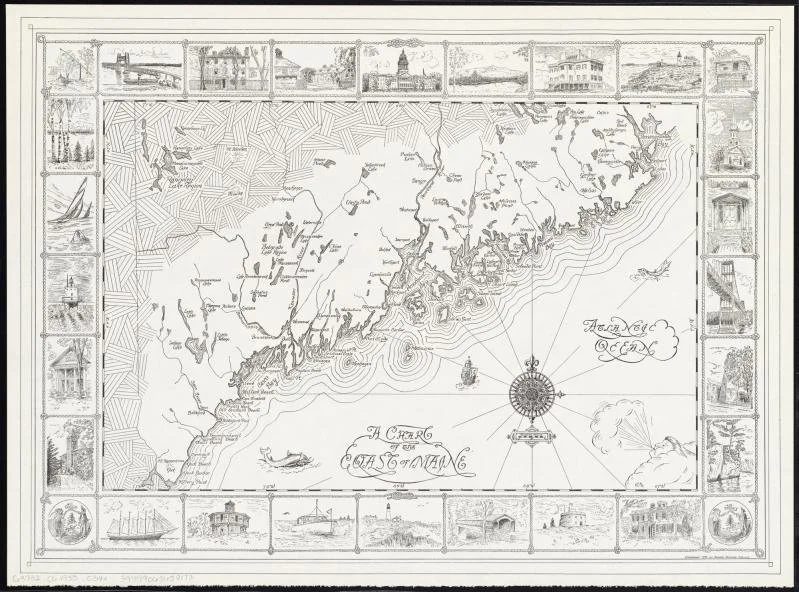
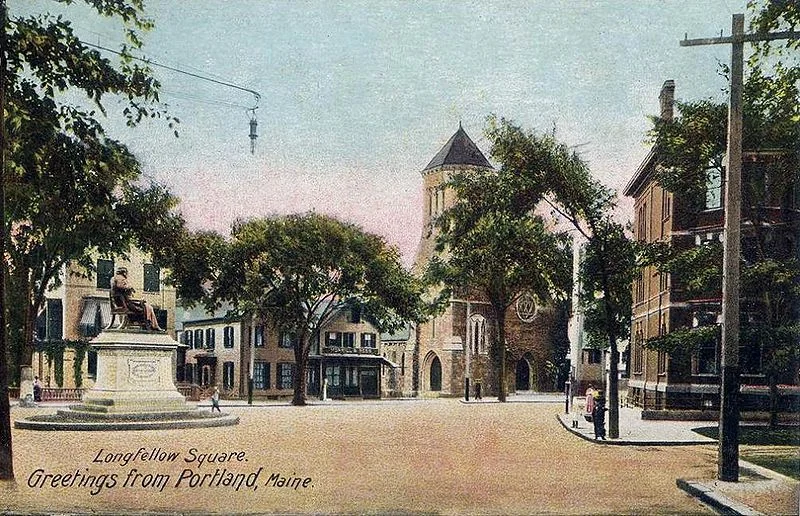
(This is a tribute to Portland, Maine)
"Often I think of the beautiful town
That is seated by the sea;
Often in thought go up and down
The pleasant streets of that dear old town,
And my youth comes back to me.
And a verse of a Lapland song
Is haunting my memory still:
'A boy's will is the wind's will,
And the thoughts of youth are long, long thoughts.'
"I can see the shadowy lines of its trees,
And catch, in sudden gleams,
The sheen of the far-surrounding seas,
And islands that were the Hersperides
Of all my boyish dreams.
And the burden of that old song,
It murmurs and whispers still:
'A boy's will is the wind's will,
And the thoughts of youth are long, long thoughts.'
"I remember the black wharves and the slips,
And the sea-tides tossing free;
And Spanish sailors with bearded lips,
And the beauty and mystery of the ships,
And the magic of the sea.
And the voice of that wayward song
Is singing and saying still:
'A boy's will is the wind's will,
And the thoughts of youth are long, long thoughts.'
"I remember the bulwarks by the shore,
And the fort upon the hill;
The sunrise gun, with its hollow roar,
The drum-beat repeated o'er and o'er,
And the bugle wild and shrill.
And the music of that old song
Throbs in my memory still:
'A boy's will is the wind's will,
And the thoughts of youth are long, long thoughts.'
"I remember the sea-fight far away,
How it thundered o'er the tide!
And the dead captains, as they lay
In their graves, o'erlooking the tranquil bay,
Where they in battle died.
And the sound of that mournful song
Goes through me with a thrill:
'A boy's will is the wind's will,
And the thoughts of youth are long, long thoughts.'
"I can see the breezy dome of groves,
The shadows of Deering's Woods;
And the friendships old and the early loves
Come back with a sabbath sound, as of doves
In quiet neighborhoods.
And the verse of that sweet old song,
It flutters and murmurs still:
'A boy's will is the wind's will,
And the thoughts of youth are long, long thoughts.'
"I remember the gleams and glooms that dart
Across the school-boy's brain;
The song and the silence in the heart,
That in part are prophecies, and in part
Are longings wild and vain.
And the voice of that fitful song
Sings on, and is never still:
'A boy's will is the wind's will,
And the thoughts of youth are long, long thoughts.'
There are things of which I may not speak;
There are dreams that cannot die;
There are thoughts that make the strong heart weak,
And bring a pallor into the cheek,
And a mist before the eye.
And the words of that fatal song
Come over me like a chill:
'A boy's will is the wind's will,
And the thoughts of youth are long, long thoughts.'
Strange to me now are the forms I meet
When I visit the dear old town;
But the native air is pure and sweet,
And the trees that o'ershadow each well-known street,
As they balance up and down,
Are singing the beautiful song,
Are sighing and whispering still:
"A boy's will is the wind's will,
And the thoughts of youth are long, long thoughts."
And Deering's Woods are fresh and fair,
And with joy that is almost pain
My heart goes back to wander there,
And among the dreams of the days that were,
I find my lost youth again.
And the strange and beautiful song,
The groves are repeating it still:
'A boy's will is the wind's will,
And the thoughts of youth are long, long thoughts.'
-- Henry Wadsworth Longfellow (1807-82), "My Lost Youth''
Welcome to the rain forest

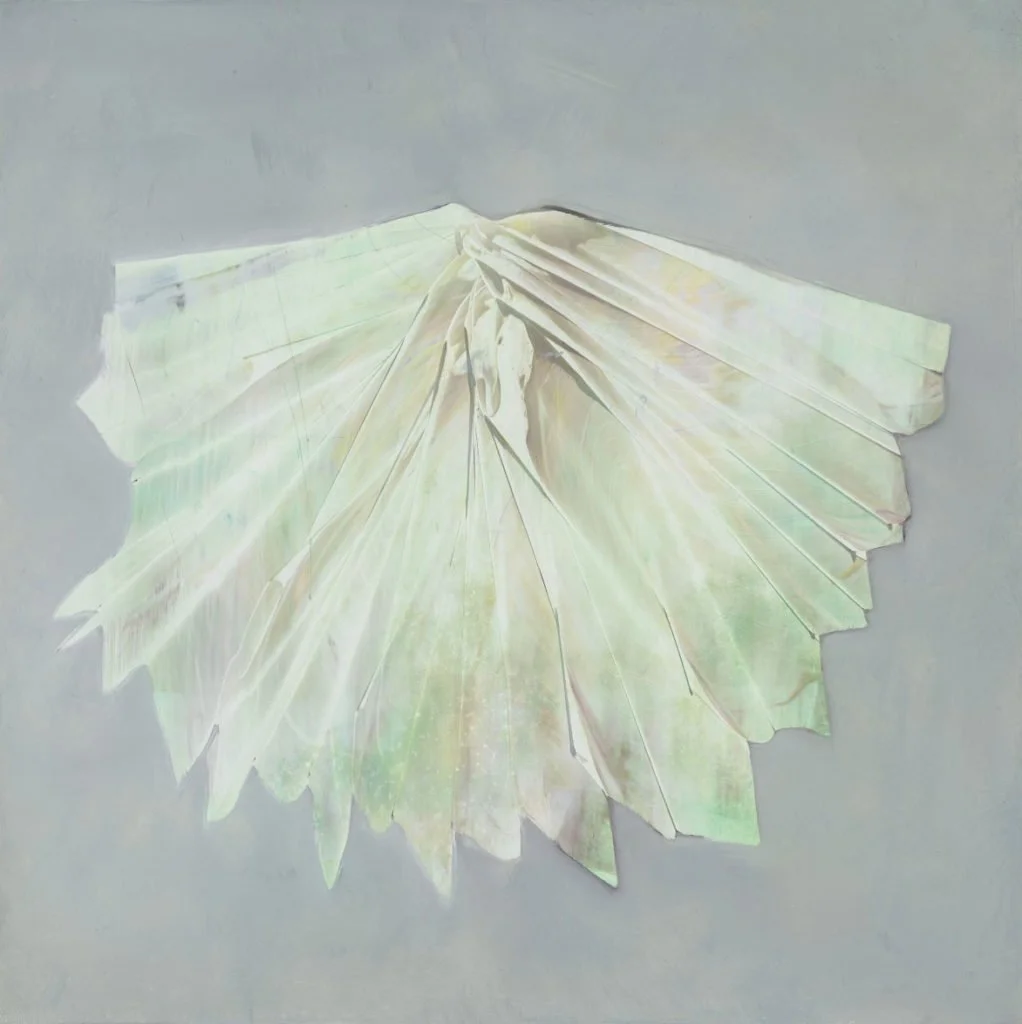
"Orange Tulips,'' Rokhaya Waring, at Alpers Fine Art, Andover, Mass.
After lots of rain, this warm week will turn southern New England into a particularly lush jungle. The smell of damp earth and plants will deepen the melancholy and joy of this time of year, which is so resonant of endings.
Chris Powell: In sea of red ink, Conn. keeps sending out discretionary grants
Despite imposing during the last six years Connecticut's two largest tax increases, state government is running its third straight big annual deficit, causing Gov. Dannel Malloy last week to spend the emergency reserve and to suspend some financial aid to municipalities.
The numbers are a judgment of failure and wrongheadedness against the administration. Yet every week the press releases still fly out of the governor's office, announcing millions in discretionary grants being sent hither and yon, seeming to proclaim obliviousness. Still, the governor deserves a little sympathy, for he alone is dealing with the problem somewhat. The municipalities just whine about it, though the governor's reduction in their aid is an invitation to them to obtain concessions from their employee unions just as the governor is seeking concessions from the state employee unions.
Having left empty the fabled "suggestion box" of a few years ago that was supposed to be filled with proposals for greater efficiency in state government, state employee union leaders speak only of raising income taxes on the rich, as if tax rates should be set not by a careful calculation of fairness and effectiveness but by whatever is necessary for the unions' contentment, as if they have first claim to everyone else's income.
While he complained this week about leaks in the roof of Gampel Pavilion, University of Connecticut women's basketball coach Geno Auriemma was no help either. At a rally of real estate agents at the state Capitol, Auriemma admitted, "I don't have any answers. I'm not running for anything, nor do I want to." He, too, just wants money. Auriemma also told the agents: "I‘m in the recruiting business. You're in the recruiting business. When people have a choice, you better give them a reason to pick you."
But through its budgeting state government already engages in a lot of recruiting: for government employees, welfare recipients, and, having made itself a "sanctuary state" for illegal aliens. Meanwhile, Republican legislators just cautiously pick around the edges of the budget for small savings in the future that won't alienate anyone in the present. Asked last week why state government shouldn't reduce teacher pension benefits, since the governor is trying to push teacher pension costs onto municipalities, Senate Republican leader Len Fasano defaulted.
Instead Fasano expounded on what he called his "tenderness" for teachers, whose unions, far from being tender themselves, are actually the state's most fearsome special interest, constituting the largest politically active group in every town. With an excess of "tenderness" for the teacher unions, the Senate last week voted unanimously to repeal a law that would end social promotion in schools, a law establishing competence examinations for graduation from high school.
Trying a little "tenderness" itself last month, the State Board of Education canceled a plan to incorporate student test scores in teacher evaluations. While state Comptroller Kevin Lembo, a Democrat who recently became a candidate for governor, is supposed to be a righteous numbers guy, this week he issued a statement denouncing President Trump's removal of FBI Director James Comey. "We must speak out, we must stay engaged, we must stay active, and we must fight back," Lembo said, though Connecticut already has seven members of Congress, all Democrats, making a very good political living on Trump issues, which involve the federal government, not state government.
If Connecticut's numbers guy has any idea of what to do about the state's catastrophic budget numbers, he hasn't yet shared them, though of course he, too, well might prefer to run against Trump.
Chris Powell is managing editor of the Journal Inquirer, in Manchester, Conn.
They should have an urge to merge
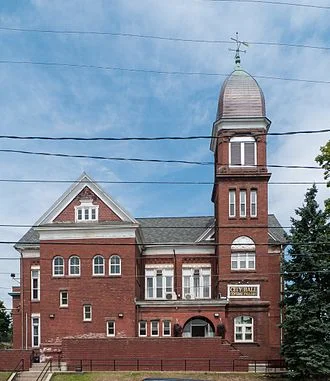
Central Falls City Hall a reminder of the city's industrial-era prosperity.
Adapted from Robert Whitcomb's "Digital Diary'' in Golocal24.com
Congratulations to tiny Central Falls, R.I. Moody’s Investors Service, touting financial progress in Rhode Island’s smallest city, raised the city’s bond rating by a notch and says it may well achieve an investment-grade rating within 12-24 months. The city is on schedule to complete its court-ordered post-bankruptcy recovery plan by June 30.
Now all eyes turn to a couple of proposed projects. The most important by far is to build a train station in Pawtucket, next to Central Falls and hyperbolically called "The birthplace of the American Industrial Revolution,'' to serve it and Central Falls with MBTA (and maybe eventually Amtrak?) rail service. It now appears that this $40 million project, funded by federal, state and local money, will probably go forward, with completion by sometime in 2019.
What a boon this would be to the two old mill towns! It would attract business and by making more accessible the inexpensive housing in them, could lure people from very expensive Greater Boston. Actually, for that matter, it would help make northern Rhode Island more part of Greater Boston than it already is.
The project, by taking cars off the road, would also reduce traffic congestion on Route 95 and some local roads.
The other project is the Pawtucket Red Sox plan to build a baseball stadium surrounded by a public park, on the site of the Apex store in downtown Pawtucket. A carefully financed public-private project could lure a lot of people into both Pawtucket and Central Falls from a wide two-state region and pay for itself in more property- and sales-tax revenue. But we still don’t know the financial and many other details of this still rather vague plan. The public is quite properly leery of such raids on the taxpayers as Hartford’s infamous new $71 million Dunkin’ Donuts Park – another slam at the finances of what used to be called “the Insurance Capital of the World’’.
Once Central Falls fully has its act together, it, Pawtucket and the state should work together to merge the two cities. Central Falls is far too small to be a separate jurisdiction. The cities should seek the economies of scale that would come from a merger.
'Look at all the history'
"The white woman across the aisle from me says 'Look,
look at all the history, that house
on the hill there is over two hundred years old, '
as she points out the window past me
"into what she has been taught. I have learned
little more about American history during my few days
back East than what I expected and far less
of what we should all know of the tribal stories
"whose architecture is 15,000 years older
than the corners of the house that sits
museumed on the hill. 'Walden Pond, '
the woman on the train asks, 'Did you see Walden Pond? '
"and I don't have a cruel enough heart to break
her own by telling her there are five Walden Ponds
on my little reservation out West
and at least a hundred more surrounding Spokane, ''
From Sherman Alexie's poem "On the Amtrak from Boston to New York City.''
Earthquakes still rare in Mass.
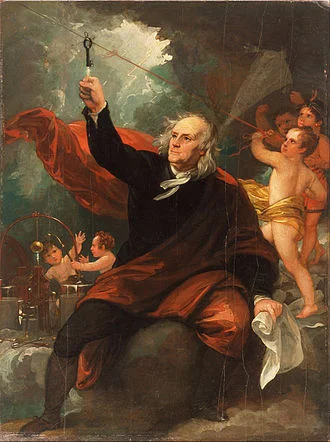
"Benjamin Franklin Drawing Electricity from the Sky' at the Philadelphia Museum of Art, by Benjamin West
“When Benjamin Franklin invented the lightning-rod, the clergy, both in England and America, with the enthusiastic support of George III, condemned it as an impious attempt to defeat the will of God. For, as all right-thinking people were aware, lightning is sent by God to punish impiety or some other grave sin—the virtuous are never struck by lightning. Therefore if God wants to strike any one, Benjamin Franklin [and his lightning-rod] ought not to defeat His design; indeed, to do so is helping criminals to escape. But God was equal to the occasion, if we are to believe the eminent Dr. Price, one of the leading divines of Boston. Lightning having been rendered ineffectual by the 'iron points invented by the sagacious Dr. Franklin,' Massachusetts was shaken by earthquakes, which Dr. Price perceived to be due to God's wrath at the 'iron points.' In a sermon on the subject he said, 'In Boston are more erected than elsewhere in New England, and Boston seems to be more dreadfully shaken. Oh! there is no getting out of the mighty hand of God.' Apparently, however, Providence gave up all hope of curing Boston of its wickedness, for, though lightning-rods became more and more common, earthquakes in Massachusetts have remained rare.”
― Bertrand Russell, "An Outline of Intellectual Rubbish: A Hilarious Catalogue of Organized and Individual Stupidity''

Llewellyn King: And now, electric planes
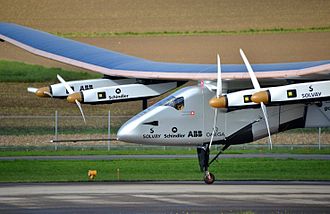
The Solar Impulse 2 is an electric-powered plane using solar energy to generate the electricity.
Electricity, the world’s silent workhorse for a century, is about to conquer new worlds.
While electric cars are coming on fast, their acceptance will speed up geometrically in the next decade, according to an extraordinary new study by RethinkX, a San Francisco-based research group and think tank. Indeed, the group is predicting a true revolution in electrified transportation.
In this revolution, futuristic companies with a lot of talent and a lot of money — like Uber, Google and Amazon — will be seminal players. Old-line car companies and the oil companies will have to deal with a new order in which their roles could be dramatically diminished.
The big winner in this transportation future is electricity. Even the electric airplane — an idea about as old as aviation — is surging forward.
While RethinkX raised the curtain on the future of ground transportation in its new study, Uber raised the curtain on the future of the electric airplane this month at its Elevate conference in Dallas. More than 500 aviation enthusiasts attended the conference: dreamers, designers, builders — and even venture-capital investors, who have already signed their checks. Dozens of designs for small electric airplanes, using multiple rotors and batteries, were on display. Enthusiasm was incandescent.
This July, small, electric pilotless aircraft — crosses between drones and helicopters — are scheduled to go into service in Dubai. They are supposed to ferry single passengers from their hotels and other gathering points to airports and recreation centers in the largest and most populous city in the United Arab Emirates.
These small aircraft, with electric motors and batteries, have an endurance time of about 30 minutes. EHang, a Chinese company, developed them.
If Uber, and more than a dozen other U.S. companies have their way, similar aircraft will one day take their place in the skies of America and other advanced nations. Uber hopes to test-fly an electric airplane in 2020.
According to RethinkX, the private car is about to disappear, or to be rapidly reduced in importance. The report — which might boost the stock of futuristic companies and electric utilities, and depress the stock of oil companies and old-line car makers and oil companies — is making waves in the far reaches of corporate thinking.
Tony Seba, co-founder of RethinkX and co-author of the report, told me that mainstream analysts are not yet on board with the changes, which will rock the automobile, oil and electric industries. They have not understood the impact of technological convergence, he said.
He sees a future, about to happen, in which driverless electric cars, owned not by individuals, but rather by transportation companies like Uber, flood the streets, to be summoned by phone and directed by voice: “Take me out to the ballgame.”
Seba, an MIT-trained engineer and student of what he calls “disruption,” told me he expects a convergence between electric vehicles, automated driving and ride-sharing will come soon, reducing the number of vehicles on U.S. roads from 247 million in 2020 to 44 million in 2030.
“The average family will save $5,600 in transportation costs,” Seba says.
Apart from the transport companies, the big winner will be the utilities that will see a demand growth of 18 percent, Seba predicts. He believes present infrastructure can accommodate this growth surge because demand will be mostly off-peak.
There are similar expectations of a golden future for small, electric, vertical takeoff airplanes, incorporating drone and other technologies. The limit for the aircraft, which use lithium batteries, is the batteries. But the enthusiasts gathered at Uber’s conference say flight is possible now with present-day batteries and these will only get better.
Richard Whittle, a leading aviation journalist and author who chaired an Elevate session, told me, “It was a pretty impressive event.”
While the arguments by Seba and his co-author James Arbib, a Silicon Valley entrepreneur and philanthropist, point to an electrified transportation future, I have one question: Will people give up the personal, primal pleasure of owning a car?
Seba and Arbib think so, pointing out that people used to take pride in their LP and CD collections, but now they access their music electronically.
The future is pulling up on a highway near you; it may also be flying overhead.
Llewellyn King (llwellynking1@gmail.com), a frequent contributor to New England Diary, is host and executive producer of White House Chronicle, on PBS, and a veteran publisher, columnist and international business executive. This piece first ran in Inside Sources.
Only good for short naps

"Heartrock Bed'' (sculpture with wood), by Karen Rand Anderson, in the group show "Heart of a Tree,'' May 31-July 8 at ArtProv Gallery, Providence.
Yes, raise the gasoline tax!

Adapted from Robert Whitcomb's "Digital Diary,'' in GoLocal24.com
President Trump is a crook and a pathological liar, and perhaps a traitor -- nobody's perfect! -- but even a low-life like him can sometimes be right, although with his ADHD most of his good ideas lack little more staying power than each of the endless series of lies, boasts and threats that comprise his Tweets.
In any case, kudos, at least for now, for his apparent openness to a very good idea. One is that he says he’d consider supporting raising the federal gasoline and diesel tax to help fund repair of America’s decayed transportation infrastructure. The federal tax on gasoline is 18.4 cents a gallon, and the diesel-fuel tax 24.4 a gallon. The tax was last increased in 1993! No wonder our roads and bridges are in such bad shape. Such an increase would not be enough to pay for all the needed work that has been put off for so long, and so further public-private spending will be needed.
The outlays should include a big increase in outlays for mass transit, which changing demographics and residential patterns require.
Amtrak, for one, needs much more work to meet the needs of its surging customer base. We’ll get plenty of inconvenient reminders of the decrepitude of much of its infrastructure this summer as the system starts on much overdue work at New York’s Penn Station, the nation’s busiest train station. Travelers going through that catacomb are warned to expect weeks of disruption this summer.
The Northeast Corridor, by far Amtrak’s busiest and most lucrative route, has a $28 billion backlog of needed repairs. And yet Congress keeps underfunding it, even as members from lightly populated states demand that the railroad continue to run money-losing trains through their jurisdictions. In the current fiscal year, Amtrak only gets about $1.4 billion in subsidies from the Feds. (Still, that is 10 times the amount of money that the government is spending this year to pay for the Trump family’s protection and its vacation and business trips….)
Failure to address decay on the Northeast Corridor could seriously hurt the economy of the stretch between Boston and Washington – the single most important area in the United States, including both the nation’s financial capital (New York) and its political capital, as well as such technological, educational and medical centers as Greater Boston and Philadelphia.
It’s not even a matter of raising the quality of the route to European or East Asian high-speed train standards. It’s a matter of maintaining, or slightly improving, the substandard service we have now.
'Lilac in me because I am New England'

Photo by Ulf Eliasson
Lilacs,
False blue,
White,
Purple,
Color of lilac,
Your great puffs of flowers
Are everywhere in this my New England.
Among your heart-shaped leaves
Orange orioles hop like music-box birds and sing
Their little weak soft songs;
In the crooks of your branches
The bright eyes of song sparrows sitting on spotted eggs
Peer restlessly through the light and shadow
Of all Springs.
Lilacs in dooryards
Holding quiet conversations with an early moon;
Lilacs watching a deserted house
Settling sideways into the grass of an old road;
Lilacs, wind-beaten, staggering under a lopsided shock of bloom
Above a cellar dug into a hill.
You are everywhere.
You were everywhere.
You tapped the window when the preacher preached his sermon,
And ran along the road beside the boy going to school.
You stood by the pasture-bars to give the cows good milking,
You persuaded the housewife that her dishpan was of silver.
And her husband an image of pure gold.
You flaunted the fragrance of your blossoms
Through the wide doors of Custom Houses—
You, and sandal-wood, and tea,
Charging the noses of quill-driving clerks
When a ship was in from China.
You called to them: “Goose-quill men, goose-quill men,
May is a month for flitting.”
Until they writhed on their high stools
And wrote poetry on their letter-sheets behind the propped-up ledgers.
Paradoxical New England clerks,
Writing inventories in ledgers, reading the “Song of Solomon” at night,
So many verses before bed-time,
Because it was the Bible.
The dead fed you
Amid the slant stones of graveyards.
Pale ghosts who planted you
Came in the nighttime
And let their thin hair blow through your clustered stems.
You are of the green sea,
And of the stone hills which reach a long distance.
You are of elm-shaded streets with little shops where they sell kites and marbles,
You are of great parks where every one walks and nobody is at home.
You cover the blind sides of greenhouses
And lean over the top to say a hurry-word through the glass
To your friends, the grapes, inside.
Lilacs,
False blue,
White,
Purple,
Color of lilac,
You have forgotten your Eastern origin,
The veiled women with eyes like panthers,
The swollen, aggressive turbans of jeweled pashas.
Now you are a very decent flower,
A reticent flower,
A curiously clear-cut, candid flower,
Standing beside clean doorways,
Friendly to a house-cat and a pair of spectacles,
Making poetry out of a bit of moonlight
And a hundred or two sharp blossoms.
Maine knows you,
Has for years and years;
New Hampshire knows you,
And Massachusetts
And Vermont.
Cape Cod starts you along the beaches to Rhode Island;
Connecticut takes you from a river to the sea.
You are brighter than apples,
Sweeter than tulips,
You are the great flood of our souls
Bursting above the leaf-shapes of our hearts,
You are the smell of all Summers,
The love of wives and children,
The recollection of gardens of little children,
You are State Houses and Charters
And the familiar treading of the foot to and fro on a road it knows.
May is lilac here in New England,
May is a thrush singing “Sun up!” on a tip-top ash tree,
May is white clouds behind pine-trees
Puffed out and marching upon a blue sky.
May is a green as no other,
May is much sun through small leaves,
May is soft earth,
And apple-blossoms,
And windows open to a South Wind.
May is full light wind of lilac
From Canada to Narragansett Bay.
Lilacs,
False blue,
White,
Purple,
Color of lilac.
Heart-leaves of lilac all over New England,
Roots of lilac under all the soil of New England,
Lilac in me because I am New England,
Because my roots are in it,
Because my leaves are of it,
Because my flowers are for it,
Because it is my country
And I speak to it of itself
And sing of it with my own voice
Since certainly it is mine.
-- Amy Lowell, "Lilacs''

A beautiful end

"The Doryman'' (Evening) (oil on canvas), by N.C. Wyeth (1882-1945), in the show "Howard Pyle, His Students & the Golden Age of American Illustration,'' opening May 26 at the National Museum of American Illustration, Newport.
Copyright National Museum of American Illustration, Newport, R.I.; Photo courtesy of the American Illustrators Gallery, New York. N.Y.
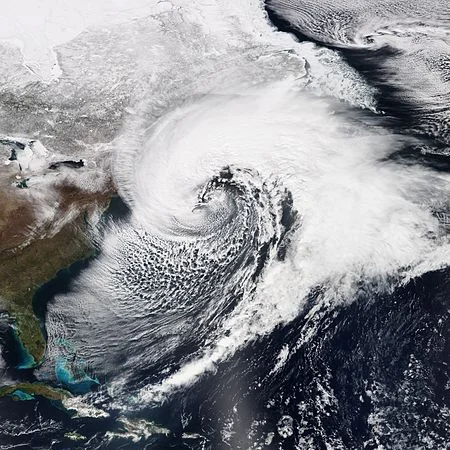
Including a Nor'easter
"The world's favorite season is the spring.
All things seem possible in May."
-- Edwin Way Teale
Coastal infrastructure under threat
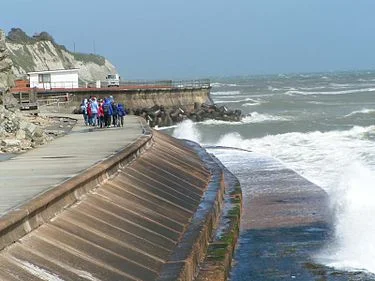
Via ecoRI News (ecori.org)
Senators Sheldon Whitehouse, D-R.I., a member of the Senate Environment and Public Works Committee and co-chair of the Senate Oceans Caucus, and Tom Carper, D-Del., top Democrat on the environment committee, recently held a Senate roundtable highlighting the current state of U.S. coastal infrastructure.
The senators were joined May 11 in Washington, D.C., by Grover Fugate, executive director of the Rhode Island Coastal Resources Management Council; Jeffrey Diehl, executive director of the Rhode Island Infrastructure Bank; and Tony Pratt, president of the American Shore and Beach Preservation Association and administrator of the Shoreline and Waterway Management Section within the Delaware Department of Natural Resources and Environmental Control.
“America’s infrastructure needs upgrades across the board. That’s especially true along our coasts, where climate change poses serious threats to coastal communities,” Whitehouse said. “As we heard today from our Coastal Resources Management Council’s director, Grover Fugate, Rhode Island is preparing for up to 12 feet of sea-level rise. For the sake of our economy and way of life, we need to support the work highlighted today by Jeff Diehl, of the Rhode Island Infrastructure Bank, and invest in coastal infrastructure that meets today’s standards and can withstand the major changes experts like Grover predict.”
Fugate told roundtable participants that the country’s shoreline is in danger.
“Our coast in Rhode Island and many other areas of this nation is under threat. It’s under threat from severe storms that we see, like hurricanes and nor’easters, but also, as we see in our state, a doubling of the sea level-rise rate,” he said. “In the last 90 years, we’ve had about 10 inches of sea-level rise. We could potentially see 10 feet. The magnitude of change in that is staggering. Our bridges, our roads, our sewage-treatment plants, our water supplies, and our utilities are all at threat, and we need to upgrade the standards to which they’re built and invest more in these areas.”
Earlier this year, the American Society of Civil Engineers gave the state of U.S. infrastructure an overall grade of D+ in its annual Infrastructure Report Card. The nation’s crumbling infrastructure, including roads and highways and drinking and wastewater systems, is in particular peril along the coasts from rising seas, storm surge and consequences of extreme weather events, according to the report.
“In Delaware, we have already rebuilt dunes and replenished beaches in an attempt to push the rising seas back from our coastal communities,” Carper said. “Without smart, forward-looking investments in our country’s infrastructure — both built infrastructure like seawalls and levees, and natural infrastructure such as marshes and wetlands — we will continue to see flooded streets, retreating coastlines and communities that need to be rebuilt after every storm. Coastal states especially understand that resiliency projects are critical, but we also know that they only address the symptoms of a much larger issue: global climate change. Ultimately, we need to work together to tackle the root causes of climate change if we want to protect vulnerable coastal communities.”
In February, the Environment and Public Works Committee held its first legislate hearing of the 115th Congress to discuss the urgent need to modernize the nation’s crumbling infrastructure. During that hearing, both Whitehouse and Carper discussed the bipartisan consensus to make smart investments in infrastructure and the growing threat climate change posed to infrastructure in their coastal states.
'Poet-seer'
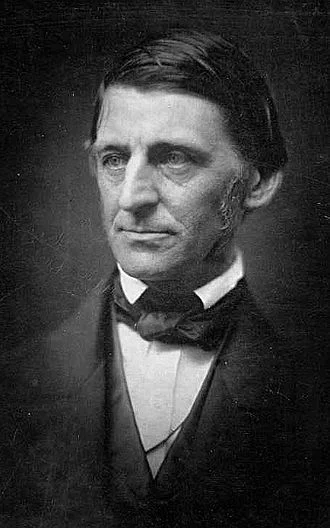
Ralph Waldo Emerson (1803-83).
''{Ralph Waldo} Emerson stands apart from the other poets and essayists of New England, and of English literature generally, as of another order. He is a reversion to an earlier type, the type of the bard, the skald, the poet-seer.''
-- John Burroughs
Clearing his mind
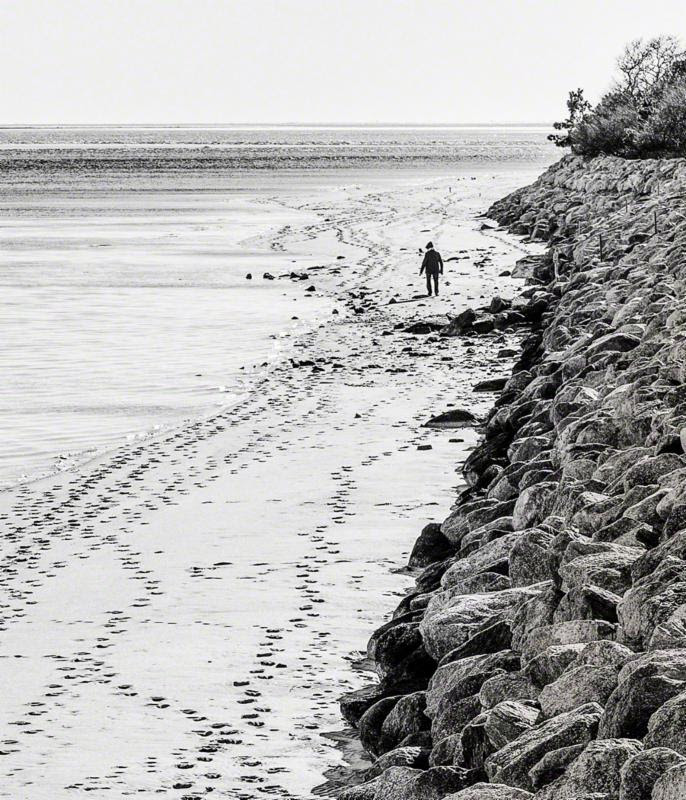
"Walking Morris'' (limited-edition AluminArte print), by Bobby Baker. (Copyright Bobby Baker Fine Art Photography). He refers to Morris Island Beach, in Chatham on Cape Cod.
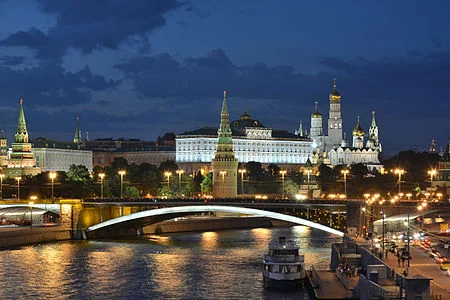
In Trump's collusion with Putin, 'follow the dead bodies'
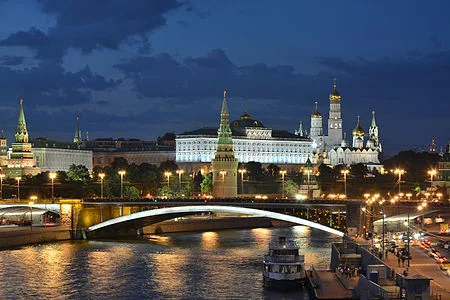
The Kremlin.
“U.S. senators probing possible links between Russia and the Trump team have been told to ‘follow the dead bodies’ as they hunt for evidence of the Kremlin’s involvement in last year’s presidential election.
‘’Appearing before the Senate Intelligence Committee, national security expert {and former FBI special agent} Clint Watts said several Russians linked to the investigation into Kremlin disinformation activities have been killed in the past three months.
‘’The alleged murders were carried out not only in Russia, but in Western countries as well, Mr. Watts said.
‘’He also accused Donald Trump of using the same techniques employed by Russian operatives against his own political opponents.
‘’Asked by Republican Sen. James Lankford (R.-Okla.) why Vladimir Putin’s supposed tactics of attempting to influence the U.S. election were ‘much more engaging this time in our election,’ Mr Watts replied: 'I think this answer is very simple and is what no one is really saying in this room.
“'The reason active measures have worked in this U.S. election is because the commander-in-chief has used Russian active measures at times against his opponents.'''
‘’’Active measures’ is a term used during the Cold War to describe political warfare carried out by the Russian security services to undermine a rival power.’’
-- From The Independent newspaper, London
To read The Independent's story, hit this link:
http://www.independent.co.uk/news/world/americas/us-politics/trump-russia-investigation-hearing-follow-dead-russians-kremlin-links-a7659006.html
Hit this link to listen to Mr. Watts on radio:
http://www.npr.org/2017/05/12/528072930/clint-watts-explains-what-he-means-by-follow-the
Bag the plastic bags
Plastic bags kill a lot of animals, especially creatures that live in the water. Until DuPont or some other chemical company comes up with a completely nontoxic and rapidly decaying material out of which to make plastic bags their sale should be banned.
The Trump administration has littleto no interest in protecting eco-systems, so such bans will have to be implemented state by state, community by community, as has happened in some New England places.
'Serial polygamy' in New England and beyond
" The aura of the theocratic death penalty for adultery still clings to America, even outside New England, and multiple divorce, which looks to the European like serial polygamy, is the moral solution to the problem of the itch. Love comes into it too, of course, but in Europe we tend to see marital love as an eternity which encompasses hate and also indifference: when we promise to love we really mean that we promise to honor a contract. Americans, seeming to take marriage with not enough seriousness, are really taking love and sex with too much.''
-- Anthony Burgess

Don Pesci: What about the Clinton-Putin connection?

"The Stolen Kiss,'' by Jean-Honoré Fragonard (1786).
VERNON, Conn.
The last few weeks of 24-7 news has been dripping with unintended irony.
Just as the Democratic Party was setting up to attribute former Democratic presidential candidate Hillary Clinton’s loss to political stumble-bum Donald Trump as a result of Russian President Vladimir Putin's interference in her campaign, President Trump bombed an air base of Syrian dictator Bashir Assad, Mr. Putin’s Kewpie Doll. The bombing served to mute some of the more outrageous claims. Everyone but Connecticut Sen. Dick Blumenthal has been investigating the Trump-Putin connection.
Along with a chorus of other Democrats, Mr. Blumenthal lately has been calling for a special prosecutor to investigate the Trump-Putin connection but, oddly, not the Clinton-Putin connection. While Mrs. Clinton was secretary of state, tons of high grade uranium moved under her winking eye from the United States to Russia.
Warming to Putin, Mrs. Clinton presented Foreign Minister Sergey Lavrov with a defective “reset button.”
CNN noted at the time:
“When it comes to Russia, the Obama administration has been talking about ‘pressing the reset button.’ It’s meant to symbolize a possible new start in U.S./Russian relations, which ‘crashed’ after Russia invaded Georgia last August [2009].
“‘I would like to present you with a little gift that represents what President Obama and Vice President Biden and I have been saying and that is: 'We want to reset our relationship, and so we will do it together....'
“‘We worked hard to get the right Russian word. Do you think we got it?’ she asked Lavrov, laughing.
“‘You got it wrong,’ said Lavrov, as both diplomats laughed.
“‘It should be 'perezagruzka' [the Russian word for reset],’ said Lavrov. ‘This says 'peregruzka,' which means ‘overcharged.’”
The overcharged Putin was understanding. Sending a message of his own, Putin invaded and annexed Crimea, a part of Ukraine. Mrs. Clinton winked. Her eyes were fixed on the prize; the term-limited president later would endorse Mrs. Clinton's bid to continue his legacy. How could she lose to a New York real estate developer whom even Bill Buckley tagged “a vulgarian?”
She did lose. Democrats theorized that she lost owing to the gross interference in her campaign of Putin and FBI Director James Comey, now fired by Trump. Concerning Mrs. Clinton’s loss to the vulgarian, Republicans and Democrats have agreed to disagree. Republicans think that Mr. Putin, advised that Mrs. Clinton would win the election, intervened to weaken her inevitable presidency.
They argue further that Mrs. Clinton lost because her own campaign was defective. Further, the damaging e-mails circulating during her campaign were not forged by Putin’s intelligence operatives; they were written by Mrs. Clinton's operatives and circulated through her private unsecured server which, Mr. Blumenthal may wish to note, is a violation of law.
Democrats now argue that Mrs. Clinton might have prevailed in the general election were not Mr. Comey such a duffer. Mr. Trump has now fired Mr. Comey because, according to his dismissal letter to Mr. Comey, he is “not able to effectively lead the Bureau.”
In Mr. Blumenthal’s mind – and in the Democratic Party campaign cheat-sheets – all this is wondrously connected: The firing of Comey and Mr. Trump’s cozy posture with Mrs. Clinton’s past reset-chum necessitate the need to appoint a special prosecutor to investigate the Gordian knot of suppositions put together by Democrats to rescue our democracy from a fascist president.
Here is Bill Curry, former comptroller of Connecticut and two-time Democrat gubernatorial contender, on the fascist:
“Trump isn't just Putin's pal. He's Putin. His firing of Comey is an all-out attack on the rule of law. We have only one branch of government left in anything close to working order and he seeks to destroy it. This is now clear: Anyone still opposed to appointing a special prosecutor is a traitor to our Constitution. It is time to call Trump what he is-- a flat out fascist-- and to call his ceaseless assaults on the first amendment and his political opponents what they are: a fascist power grab. To be silent now is to betray our democracy in the hour of its great peril. In the next few days we'll learn who the real patriots in this country are. I only pray we have enough of them.”
Patriot Blumenthal has not yet called for a special prosecutor to investigate the tortured logic evident in Mr. Curry’s intemperate outburst. That would be a misuse of a special prosecutor. Blumenthal has not yet been asked whether he intends to be present during the U.S. Coast Guard Academy’s upcoming graduation on May 17. The keynote speaker for the event will be our "fascist" president.
Don Pesci (donpesci@att.net) is a political and cultural writer who lives in Vernon, Conn.