
Vox clamantis in deserto



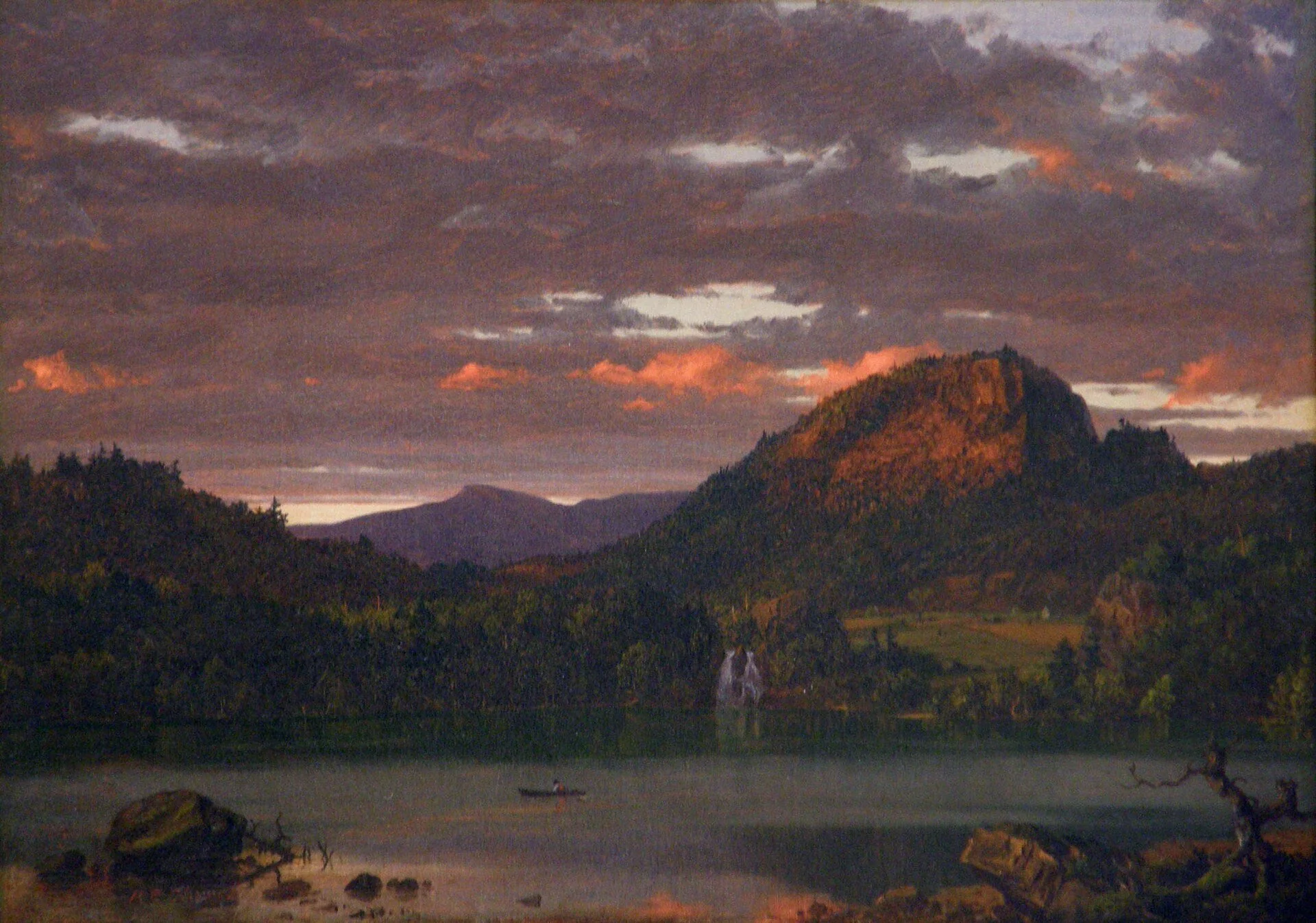
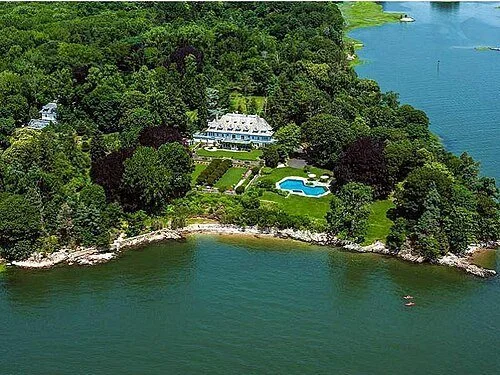

'So soft the air'
"Late February days; and now, at last,
Might you have thought that
Winter's woe was past;
So fair the sky was and so soft the air."
-- William Morris

Teaching two quirky arts in New England

Vermont Public Radio (vpr.org) ran a charming story. ‘’Despite Ringling Bros. Shutdown, The Circus Arts Remain Alive And Well In Vermont “ the other day about the New England Center for Circus Arts, in Brattleboro, Vt. The folks there see circuses as still having a bright future, even with the imminent demise of the most famous one, Ringling Bros and Barnum & Bailey Circus.
The Brattleboro school concentrates on trapeze and other gymnastics. They don’t do stuff with animals. Growing opposition from animal-rights people helped force Ringling out of business; much of the attraction had been animal acts with such “charismatic’’ animals as elephants.
But there’s a modest continuing interest in seeing circus acts with only people (and maybe a dog or two) – trapeze artists, tumblers, clowns and so on. A handful of circuses have followed this model. {A famous one, The Big Apple Circus, has folded, but the much bigger, Montreal-based Cirque du Soleil continues.)
Let’s hope that this ancient art (and athletic) craft survives in some way to bring joy to people in communities large and, especially, very small.
xxx
That reminded me of another small organization training people to succeed in a niche art: The Center for Cartoon Studies, in White River Junction, Vt. It trains people to do “sequential art’’ – mostly cartoons, comics and graphic novels. (As you see when visiting most bookstores, graphic novels have been booming.)
This quirky institution offers a master of fine arts degree, one and two-year certificate programs, as well as summer programs. It’s the only such college-level training program of its kind in the United States." Given the probable craziness of social and political events and celebrities now and for at leastthe next few years, the students and graduates of this school will have more material than ever. It’s a new golden age.
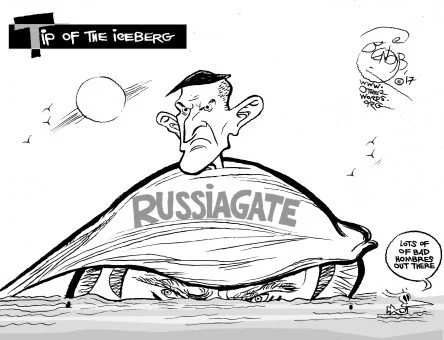
Is this a set up?
From Cristela Guerra writing in the Feb. 24 Boston Globe:
"New England winters can be spiteful. They’re as random as the toss of a coin, but also feel personal. You’re hoping this winter will stay mild, right? That Thursday’s record high of 68 {in Boston} is a harbinger?
"But you know better. Somewhere, a surprise March blizzard is brewing. And, if not that, rain will besmirch every summer weekend. We will pay.
Dissolving borders
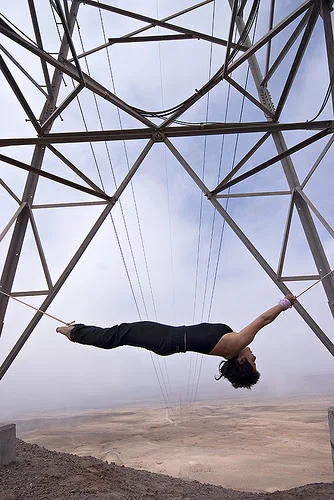
"Linea Punteada', 2007-2014,'' by Claudia Vasquez Gomez, in the group show "Last Frontier,'' at the Brush Art Gallery, Lowell, Mass., through April 14. The show presents the work of contemporary Latin American artists from a diverse array of perspectives and geographies, and explores such themes asthe dissolution of borders through globalization.
Chuck Collins: Wall St., Trump hope that you've forgotten 2008
This first ran in OtherWords.org
Remember 2008 — the bank bailouts, the spiking unemployment rate, the stock market free fall?
Maybe you lost a job, got a pay cut, or saw your retirement savings or home value evaporate. Maybe you even lost your home altogether, or saw your small business wither and die.
It’s a hard thing to let go. But Wall Street is hoping you’ve already forgotten it.
That’s because their allies in Congress and the Trump administration are poised to scrap the reforms that lawmakers put in place to prevent another meltdown.
For starters, they’re trying to gut the Consumer Financial Protection Bureau, the first independent agency with the sole mandate of protecting consumers against scam artists, predatory lenders, and bad actors in the financial sector.
The agency proved its mettle last year, when it caught Wells Fargo — the second biggest bank in the country — creating millions of bogus accounts without their customers’ permission. The bureau exposed that cheating and put an end to it.
Dodd-Frank, the law that created the bureau, also made rules to keep banks from making risky bets with your money.
For instance, it requires banks to keep some skin in the game by maintaining a 5 percent stake in loans they originate, so they have a stake in the success of the borrower and the loan. It also encourages banks to keep some cash on hand in case of emergencies, just like the rest of us try to do at home.
Yet lately, bankers have been complaining that financial regulation is hurting the economy. Gary Cohn, a former Goldman Sachs president — and now a Trump economic adviser — whined recently that banks are being forced to “hoard capital.”
If maintaining a prudent reserve is hoarding, then yes. And that’s a good thing.
Bankers like Cohn say abolishing these rules will help ordinary consumers. When you hear things like that, hold tight to your wallets and purses.
The truth is, cheap credit is abundant. The commercial and industrial business industries are booming. Credit card and auto lending are at record highs, and mortgage loans are almost back to their pre-2008 crisis high.
If that’s not enough for Wall Street lenders who want to gamble, they should go to the casino. And if venture capitalists want to take great risks in search of great rewards, blessings upon them. But they shouldn’t expect the rest of us to bail them out after their next binge.
What about Donald Trump? Will he protect us?
Trump campaigned as a champion for the “little guy,” beholden to no one because of his independent wealth. He smeared opponents like Ted Cruz and Hillary Clinton for being “puppets” of big banks like Goldman Sachs.
My advice? Watch what Trump does, not what he says.
After all, Trump just installed the most pro-Wall Street team our nation has ever seen. Three of his senior advisers — including Treasury Secretary Steven Mnuchin — have a combined 40 years at Goldman Sachs.
Now they’d like to remove the sheriff from the financial sector. If they get their way, I’ll give you better odds than Vegas that they’ll crash the economy again — and stick you and me with the bill.
Lock up your treasure. Call your lawmaker. Don’t go back to sleep.
Chuck Collins is a senior scholar at the Institute for Policy Studies and a co-editor of Inequality.org. He’s the author of the recent book Born on Third Base.
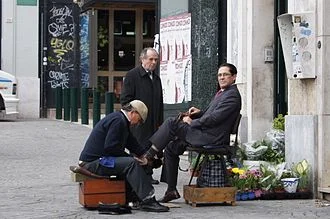
Llewellyn King: Looking for a good pub; in praise of the MBTA; dearth of shoeshiners

NOTEBOOK
What makes a British pub a pub as opposed to a bar, café or cocktail lounge? It isn't, I hasten to mention, just the décor -- although the odd horse brass and a picture of a bulldog or two helps. It's how the establishment is used.
The trick is in the name “public house,” which could easily be interpreted as home away from home. The pub is an extension of your living room or office.
British friends will ask, “What’s your local?” or “Where do you drink?” Of course, the Brits are more likely to have a glass of something after work than are most Americans, these days.
When I lived in Richmond, a London borough, I drank at “The Cricketers,” and friends would meet me there. It wasn't about the drink; it was about the social context of a pub.
But here in New England, as befits our ancestry, you find the closest things to British pubs: cozy joints where friends hang out, nourished with beer, or not.
Thousands of New England bars function as pubs, not because they call themselves that, but because of a certain ambiance, a certain feeling that I'm already home.
As the Brits have changed, so have their pubs. Once, they were mostly owned by breweries and rented out to “landlords” who operated them. Now, more of them belong to chains and have standardized food. A “free house” was a pub that belonged not to the brewer or a chain, but to the landlord or a small company. These sold the beers of various brewers, like, say, Watneys, Bass and Theakston.
The biggest change has been the end of smoking. The pubs were often awful for nonsmokers. Now they are smoke-free -- although some have outdoor sheds, where you can still smoke, pint in hand. Otherwise, the drinkers spill into the street to light up. Mind you, British drinkers have always spilled into the street. Something you won’t find in New England pubs, probably because of licensing laws.
Another change was the addition of really good food in what have come to be known as “gastropubs.” I'd venture to say most New England pubs, worthy of that appellation, have pretty decent food.
The old British pub offered limited fare: pork pies, bangers, Scotch eggs and sandwiches. Now, more elaborate fare is available including excellent French meals, great Italian, and sometimes Chinese. At the latter, you may be offered French fries in lieu of rice. Really.
Recently, I chanced upon a New England pub that exactly fits the criteria established by its old English forebears: The Village Tavern in North Scituate, R.I. It has great food plus the ambiance of the real thing. It’s real to me.
Give the MBTA Its Due
I’m a fan of public transport in general, and of trains in particular. This extends to city systems and as a stranger to its peculiarities, but nonetheless a convert, I'd like to do the improbable: Praise the MBTA.
Too much of it is old, dirty and hard to navigate, but it works; whether it is the eccentric Silver Line from Boston to Logan International Airport (with its two versions of propulsion), or the subway proper, or the commuter lines. All cry out for investment, for kindly dollars for refurbishment and substantial rebuilding of the rabbit-warren stations.
But the MBTA mostly works, which can't be said of the modern and prettier Washington, D.C. Metro. It's in need of better maintenance, better management, and more trains at rush hours.
Let’s have two cheers for the MBTA which, like the New York system, isn’t easy on the eye, but mostly works.
The Strange Dearth of Shoeshine Stands
There are certain mysteries that confound me. Why can’t you find taxis cruising in Providence, is one. Another is why, throughout the region, is it so hard to get your shoes shined. Even at Boston’s busy South Station the happy slap of the cloth on the leather isn't heard. Most stations and airports have shoeshine stands.
Chicago has one somewhere – I forget where — that even boasts that it's unionized. But the fine art of shining shoes isn't developed in these parts.
Over the decades, I've interviewed shoeshiners, almost all men, from London to New Orleans. I can report that they're a happy breed.
It's low-end work, but the potential for self-employment is great. Washington, D.C. has men who set up all over the place, but not New England. A singular exception is Thomas McNees, the shoeshiner at Rhode Island's T.F. Green Airport. He's an institution and as cheery as he's good. Unfortunately, he's on the far side of the terminal's security barrier — and even I won’t buy an airline ticket to get a shoeshine.
Llewellyn King (llewellynking1@gmail.com) is executive producer and host of White House Chronicle, on PBS.
Fooling the vegetation
Late February, and the air's so balmy
snowdrops and crocuses might be fooled
into early blooming. Then, the inevitable blizzard
will come, blighting our harbingers of spring,
and the numbed yards will go back undercover.
In Florida, it's strawberry season—
shortcake, waffles, berries and cream
will be penciled on the coffeeshop menus.
-- Gail Mazur, from "The Idea of Florida During a Winter Thaw''
'
New England as future center of U.S. manufacturing
From Robert Whitcomb's "Digital Diary'' column in GoLocal24.com
The future of American manufacturing may lie far more in such high-wage, high-tax, high-tech places as Massachusetts and Silicon Valley than in Rust Belt heavy industry, whose current and former employees President Trump appealed to so successfully in his unlikely ‘black swan’’ presidential campaign. Mr. Trump told his fans that foreign competition has been a disaster to jobs in such old-line sectors as steel. But in fact about 85 percent of the manufacturing jobs lost in the past few decades was due to automation and (related) computerization, not to globalization/imports.
That will not change, whatever the president’s protectionist promises. Companies will continue to seek to maximize profits for shareholders, which of course generally include senior corporate managements. Mr. Trump, who has shown himself fabulously greedy, must understand, whatever his rhetoric. The fewer people you have to pay to make the same products, the more money for shareholders. With artificial intelligence now coming on strong, the evisceration of the traditional workforce can only intensify.
In any event, governments that invest in good K-12 and college education and have other good public services will grab most of the new manufacturing jobs because those positions will require far more knowledge of science and technology than did working in, say, old-fashioned steel, auto and glass plants. There won’t be all that many of these new jobs, but those who have them will be very well paid.
Thus New England, where much of American manufacturing began, may become in the next few decades a manufacturing center that eclipses the 20th Century industrial powerhouses in the Upper Midwest. (I have followed this for many years, as a business editor and as someone part of whose family was in such Midwestern industries as steel.)
Psycho-ceramics
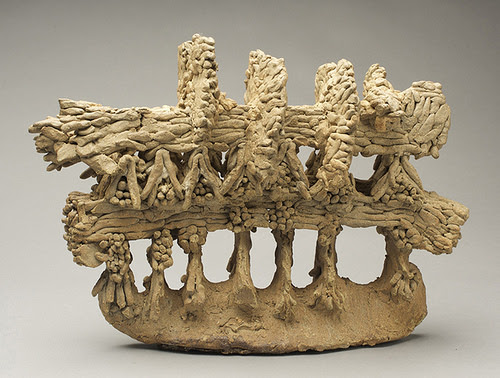
"Untitled'' (unglazed stoneware), by Stanley Rosen, in his show "Holding the Line: Ceramic Sculpture by Stanley Rosen,'' at the Bennington (Vt.) Museum through May 21.

Todd McLeish: Decline in birth rate of North Atlantic Right Whales raises alarms

North Atlantic Right Whale with calf.
Just three North Atlantic Right Whales were born this winter, a precipitous decline in the species birth rate that has scientists concerned for the future of one of the rarest whales.
With four Right Whales killed by human causes last year, the birth rate is now below the mortality rate, signaling a population decline from which the animals may have difficulty recovering.
The endangered whales give birth off the coast of Georgia and northern Florida, and the three calves born this winter is the lowest total since 1999. An average of 24 calves were born each year during the 2000s, and the average for the 2010s had been 13.
“We had an increasing trend from 1982 to 2009, when we had a record 39 calves born, but since then it’s been going in the other direction steeply,” said Robert Kenney, a marine-mammal expert at the University of Rhode Island’s Graduate School of Oceanography who manages the sighting database for the North Atlantic Right Whale Consortium. “I’m more worried about the animals than I was the first time we had a drop in calf numbers in the 1990s.”
The prior decline quickly reversed itself, but Kenney doesn’t see the present decline in birth rate improving any time soon.
“The most obvious reason for the decline is that something has disturbed the predictability of their food supply,” Kenney said. “There’s something about the warming water or the timing of the spring plankton bloom or something else — the food is just not where the whales expect it to be in the abundance and concentrations they expect. They still go to their traditional feeding grounds, but they don’t stay because the food isn’t there.
“They’re spending more time hunting for food, and looking for food is energetically expensive because they have to travel. The more they travel, the more chance they have of running into fishing gear and becoming entangled.”
Fishing-gear entanglement is the leading cause of mortality for Right Whales, followed by ship strikes.
A healthy female Right Whale gives birth every three years, according to Kenney. They are pregnant for a year, they nurse their calf for a year, and they take a year to recover and regain their fat stores so they can become pregnant again.
“But if she can’t get find enough food to put on that fat, she’ll skip a year,” Kenney said. “So that resting period between pregnancies gets longer as they become more and more energy stressed.”
In recent years, female Right Whales have doubled the interval between pregnancies from 3-4 years to 6-7 years, which lowers the species’s overall birth rate.
“Survival and mortality haven’t changed,” Kenney said. “The change in their population trajectory is because of a decline in the birth rate. Not enough babies are being born to replace those that are dying.”
Scientists believe that only about 524 Right Whales are known to exist, up from about 400 a decade ago.
“With the way the climate and oceanography is changing, we don’t know if the population can adapt to it and rebound,” Kenney said. “They’ve adapted multiple times through their history, so they might be able to do so again. But before, they weren’t getting drowned in fishing gear and run over by ships with the same frequency.”
Mortality from ship strikes is no longer increasing, despite significant growth in the shipping industry, thanks to regulations imposed in 2008 requiring ships to decrease their speed to 10 knots in areas where the whales are known to spend time during certain periods of the year. Just one Right Whale per year, on average, is killed by being struck by a ship.
About four or five Right Whales are known to die annually as a result of becoming entangled in fishing gear. However, it’s likely that others die but their carcasses aren’t recovered.
“If a healthy Right Whale is killed by a ship, it floats and is apt to wash up on a beach, so we know about it,” Kenney said. “But when a whale becomes entangled, it often takes a long time to die — they starve to death or eventually succumb to their injuries — so they are much more likely to have lost much of their fat and they sink, and we never know about it.”
Despite fishing regulations aimed at limiting whale entanglements, mortality rates haven’t declined. Four out of every five Right Whales have scars from being entangled at least once.
“There is nothing we can do in the short term about the changes in the ocean affecting the whale’s food supply,” Kenney said. “We can only stand by helpless and watch it happen. Where we can make a difference is on the human mortality side of the equation. We really need to get a handle on entanglements. It’s happening way too frequently.”
Unfortunately, he said, the future looks bleak for Right Whales.
“Given the expectation that changes in the ocean are going to be continuous and are going to get worse, the handwriting could be on the wall,” Kenney said.
Todd McLeish runs a wildlife blog. This piece originated in eco RI News (ecori.org)
A 'more primitive New England'
“Transferring in haste, I felt a curious breathlessness as the cars rumbled on through the early afternoon sunlight into territories I had always read of but had never before visited. I knew I was entering an altogether older-fashioned and more primitive New England than the mechanized, urbanized coastal and southern areas where all my life had been spent; an unspoiled, ancestral New England without the foreigners and factory-smoke, billboards and concrete roads, of the sections which modernity has touched. There would be odd survivals of that continuous native life whose deep roots make it the one authentic outgrowth of the landscape—-the continuous native life which keeps alive strange ancient memories, and fertilizes the soil for shadowy, marvelous, and seldom-mentioned beliefs.''
-- H.P. Lovecraft, The Whisperer in Darkness:Collected Stories, Volume 1
― H.P. Lovecraft, The Whisperer in Darkness: Collected Stories Volume 1
Gary Sasse: Do four governors presage Republican renaissance in New England?
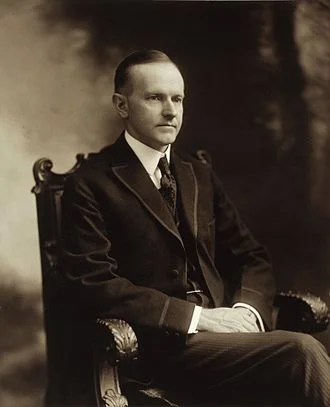
Calvin Coolidge, Massachusetts governor, and then vice president and president, was often seen as the quintessential old-fashioned, flinty New England Republican. In fact, his views and his personality were complex and in many ways he was very modern.
New England is often described as a solidly Democrat region. When one looks at the numbers, it is easy to see why. Only one of New England’s 33 congressional seats is held by a Republican, and Democrats control eight of the 12 state legislative chambers. And yet as a result of last November’s general election, Republicans now serve as governors in four of the six New England states — Maine, Massachusetts, New Hampshire and Vermont.
While nobody can predict the future with any certainty, all signs suggest that the 2018 gubernatorial races in both Connecticut and Rhode Island are eminently winnable. The ascendency of New England’s Republican governors has not gone unnoticed. A recent article in The Washington Post was headlined, “Governors lead a Republican renaissance in New England”. The question facing Republicans in the region is whether GOP victories at the gubernatorial level can usher in a new political order at other levels of government, as well.
Political success will require many things. Rather than talking about the economy in broad terms, for example, GOP governors must be ready to focus on specifics that place state government on the side of both working families and small business. Rather than being critical of social programs, Republican governors must lead and promote those that foster work, opportunity and self-sufficiency. Rather than imposing state mandates, Republican governors must deliver services based on the principles of choice and devolving responsibilities to communities.
Finally, New England’s GOP governors must contrast their “fix it” solutions for failing schools, unsafe streets, economic stagnation, over-taxation, costly regulation and cronyism to the Democrat’s identity politics and liberal overreach.
If there was ever a time to make these changes, it is now. Indeed, the economic dogmas of the New Deal have been insufficient in addressing the economic concerns of working families, recent graduates, and small businesses in New England today. From the rise of technology to the impact of globalization to the decline of manufacturing, the region has found itself lagging behind the rest of the country in its ability to compete.
A report released last month by the non-partisan New England Economic Partnership reflected this, finding that the region’s overall growth is expected to drop below the national average, and the region’s employment growth is expected to be below national employment growth through 2018.
The question facing Republicans in the region is whether GOP victories at the gubernatorial level can usher in a new political order at other levels of government, as well.
In light of these failures, it is not enough for Republicans to merely point out how Democratic policies have come up short. Instead, voters must be convinced that GOP initiatives can work and make a real difference in their lives. Massachusetts Gov. Charlie Baker summed the situation up this way in an interview with The Washington Post: “Our job is to focus on what matters most to people. Is my neighborhood safe? Do I have a good job? Are the schools I send my kids to going to prepare them for the future.”
Maine GOP Chairman Richard Bennett agreed, saying that, “Republican governors are successful candidates when they roll up their sleeves and propose practical ways to fix things and not focus on ideology.” Put another way, Republicans win when they are viewed as “can do” problem solvers who are addressing the needs of the people, rather than the needs of elites, cronies and special interests.
To achieve this moving forward, GOP governors and gubernatorial candidates should adhere to the following fundamental best practices:
First, set a few key priorities and try not to be all things to all people. The National Governors Association advises “that success in the governorship depends first and foremost on focus.” The focal point must be a strategy to make the most productive use of people, capital and natural resources. States compete to have the most productive environment to keep and grow jobs.
Second, gain control of the center. A governor’s effectiveness depends on the cooperation and goodwill of others. As Governor Baker said in that same interview, “If you’re going to get into a debate or an argument, be soft on the people and hard on the issue.” To accomplish things, it is essential to establish a good working relationship with the legislature. Conflicts are inevitable in partisan politics. How a governor manages these conflicts and controls the center can determine if his or her agenda is enacted.
Third, make effective use of the bully pulpit to mold opinion needed to garner public support for making tough decisions. What a governor can do, that no other state leader can do as well, is to tell the people where the state is, where it needs to be, and when it gets there. One of the most important powers a governor has in that regard is the power of communications. Effective and direct communication is critical, and broad popular support is essential to make the fundamental structural reforms that special interests and their legislative allies have long opposed.
Fourth, understand that good policy and good politics are linked. To achieve sustainable political success, New England GOP governors have an important role to play in party building. Voters will support Republican ideas if the party recruits excellent candidates, gets the message out and has the organization and resources to win the battle of ideas. In a 2006 essay in The Ripon Forum, then-Mississippi Gov. Haley Barbour wrote that voters do not get involved with political parties and elections because of the delight of knocking on doors and raising money. They engage and support candidates who will propose and implement programs to help their families prosper consistent with their values.
It is problematic to predict the outcome of elections. However, if New England’s Republican governors can make a lasting difference in the economic and social well being of their citizens, then we may in fact witness a revival of a strong two-party system in New England. And perhaps someday soon, blue New England will turn red.
Gary Sasse is the founding director of the Hassenfeld Institute for Public Leadership at Bryant University. Previously, he served as diirector of the Rhode Island Department of Administration and Department of Revenue. From 1997 to 2007, he served as Executive Director for the Rhode Island Public Expenditure Council, a public policy research organization. This piece was originally published in the Ripon Forum
Don Pesci: Accept that demagogues are also protected by the First AmendmentV
VERNON, Conn.
If you want a functioning First Amendment that prevents Congress or state legislatures (or college administrators?) from making laws and regulations prohibiting free speech – you must suffer the demagogues to come unto you. The First Amendment is the baby, the demagogue the bathwater, and you do not want to throw the baby out with the bathwater.
It is because we wish to preserve the right of statesmen to speak freely that we tolerate the demagogue. It may be important to point out that the word “demagogue” did not always have a negative connotation. The demagogue in ancient Greece and Rome was one who was uniquely able to speak to the populace in terms they might understand; he was the vox populi. In a society rigidly separated by class – rich and poor, privileged and non-privileged, free and slave – Greek and Roman demagogues were what today we would call populists, a term of approval in some quarters. The first notable Greek cynic, Antisthenes, a student of Socrates, would have found himself right at home in Twitterville. The demagogue is the populist with a golden tongue, popular because he is persuasive. No one very much minds unpersuasive political opponents, unless they are largely inarticulate anarchic mobs determined to destroy free speech.
The media favors the First Amendment – except when it doesn’t favor it – for the same reason toothpaste makers favor toothbrushes and the shrinking left in the United States favors Massachusetts Sen. Elizabeth Warren, a progressive demagogue. We all like the fellow-traveler sitting next to us in our political pews attending rapturously to the demagogic sermon pouring from the pulpit.
Milo Yiannopoulos is the latest, but by no means the last, canary in America’s free speech mineshaft. An address he was to give at the University of California at Berkeley, the home of the Free Speech Movement in December 1964, was terminated by puritanical protest marchers and anarchists.
Yiannopoulos has a number of strikes against him. He is alt-right, associated with Breitbart News, gay and a provocateur, but no greater a disturber of the peace than was Mario Savio a little more than a half century earlier, who opened the Free Speech Movement at Berkley with a ringing demagogic speech against the machine of the day: “There's a time when the operation of the machine becomes so odious — makes you so sick at heart — that you can't take part. You can't even passively take part. And you've got to put your bodies upon the gears and upon the wheels, upon the levers, upon all the apparatus and you've got to make it stop. And you've got to indicate to the people who run it, to the people who own it, that unless you're free, the machine will be prevented from working at all.”
Some people who raged against the machine in the mid-sixties, after administering lessons on free speech to college administrators and their parents, went on, later in life, to reform the academic machine. Bernardine Rae Dohrn -- formerly of the Weather Underground, a terrorist group responsible for the bombing of the U.S. Capitol, the Pentagon, and several police stations in New York, as well as the Greenwich Village townhouse explosion that killed three members of the Underground – spent some years as clinical associate professor of law at Northwestern University School of Law. She married her comrade in crime Bill Ayers, also a terrorist, now a retired professor from the University of Illinois at Chicago's College of Education, whose specialty was teaching social justice, urban educational reform and how properly to stomp on American flags.
Yiannopoulos, who has little in common politically with Dohrn and Ayers, finds himself on the opposite side of their political barricades, though he is not an establishment conservative, according to the editors a National Review. He describes himself as a "cultural libertarian” and a “free speech fundamentalist.” During his “Dangerous Faggot Tour," he has shown little patience with observant Salafists who continue to throw gays to their deaths from tall buildings, third-wave feminists who are strangely silent on the proper treatment of women as ordered in fatwas by Islamic scholars, fake social-justice groups, authoritarian movements of every color, ideologies he regards as noxious products of the regressive left and, with barbed-wire vehemence, political correctness as embodied in the protests that recently and violently shut down his appearance at the home of the “Free Speech Movement.”
Sometimes men and women lesser than saints carry the First Amendment flag. Such is Yiannopoulos. It is never necessary to march in lockstep to advance the colors of liberty or justice; forward movement is still progress of a kind. We should not discard the message because the messenger is imperfect. It must be supposed that George Washington regarded Thomas Paine as imperfect, if only because Paine was a revolutionary atheist, but Washington most certainly appreciated “Common Sense.”
There are some signs that Yiannopoulos may be a closeted Catholic. The cross that he sometimes wears may be more than decorative. At the very least, he is not animated by the kind of hostility to religion boastfully exhibited by, say, Bill Maher, who lacks the elegance in anti-religious vituperation of a Christopher Hitchens or, for that matter, a Thomas Paine. But, lovers of liberty may agree, Yiannopoulos is a step-up from the confusing anarchism of Berkley protesters who hate, one deduces from their actions, windows, Starbucks, gays, and – incomprehensibly – disturbers of the peace such as Yiannopoulos.
Don Pesci is a Vernon, Conn.-based political and cultural writer.

Intriguing infrastructure

"What Lies Beyond?" (photo), by J. Michael Sullivan, in his show "A Magical Narrative,'' at the Art Complex Museum, Duxbury, Mass., Feb. 26-May 14.
They got their oars in

From the fourth annual show in which oars and paddles are transformed into art. The "Oars & Paddles'' show at Dedee Shattuck Gallery, Westport, Mass., runs Feb. 25-March 4.
Llewellyn King: My friend's 'Third Way' to deal with illegal immigrants
I wonder daily, really, what life is like on the other side of the windowpane that separates the legal resident from the illegal.
I wonder if the skinny, young Chinese woman working in the restaurant is legal. I have noticed her because she works so hard: She is there when it opens and when it closes.
The restaurant is family-owned, so I wonder if she is there legally — a link in “chain migration” — or illegally, in a kind of servitude. The chain is forged when a legal family sponsors other family members, who can then come here preferentially, welcome and free.
If she came here otherwise, say on a tourist or student visa, and did not return to her home country, then she is in danger of a knock on the door, handcuffs and the horror of deportation. And if she is arrested for a crime, no matter what, she is closer to the door.
I also wonder about the Mexican family that detailed my old car so well in the July heat. Cash work without a paper trail tells part of their story. Did they walk across the border from Mexico together or separately? The women speak English, but not the men. Were they a family before or after coming here? Are some of them here legally; will children lose their fathers, wives their husbands, if there are deportations?
Meeting agents from Immigration and Customs Enforcement (ICE), wearing black windcheaters with “POLICE” on top of “ICE” emblazoned in white on the backs, must be a heart-stopping experience. These are federal enforcement agents, police, not paper-pushers. This is rough stuff, not community policing.
I listen to tales of deportations: families torn apart, and people sent to countries where they were born but had never resided. I wonder if these people are yearning for U.S. citizenship and the ability to vote. Mostly, I think they are yearning just to live here in peace, free from the fear of a knock on the door from ICE agents.
Mark Jason, a friend who lives in Malibu, Calif., has devised a way to deal with illegal immigrants that eschews the brutality of deportations and the emotional hostility that amnesty for them provokes in some Americans. He calls it the “Third Way” and for six years, he has been promoting it with his own money.
Like many good ideas, Jason’s plan is very simple: He wants to create a 10-year, renewable “Special Work Permit” with an additional dimension: Holders need to earn the permit by complying with our laws and paying a 5-percent tax on their wages, and their employers will also pay a 5-percent tax.
Taxes collected from these permits would amount to $167 billion in 10 years, according to Jason’s think tank, the Immigrant Tax Group. “Payments could be facilitated by cell phone and computer technology, and the immigrants gain their freedom with certain rights and can assimilate more easily,” Jason said.
“These payments would be used to provide hospitals, schools, policing and prisons in the local communities where the immigrants live. This third way is a win-win that can be implemented simply,” said Jason, who is a retired budget analyst for California’s university system and a former IRS agent.
If I am right about the status of the young Chinese woman and the Mexican family, they could all live the American dream, working without the fear of a knock on the door: the knell that sounds for all who live in fear of the state and its agents, who have terrified down through the centuries.
Llewellyn King (llewellyn1@gmail.com), a frequent New England Diary contributor, is a veteran publisher, editor, columnist and international business consultant. He is host and executive producer of White House Chronicle (whchronicle.com), on PBS. He is a native of Zimbabwe (once called Southern Rhodesia) who (legally) emigrated to the United States via England. He is based in Rhode Island and Washington, D.C.
Also on the Web site, you can watch episodes of "White House Chronicle" which airs nationwide on PBS and public, educational and government (PEG) access stations, and the commercial AMG Television Network; and worldwide on Voice of America Television and Radio. A list of stations is on the site.
An audio version of White House Chronicle airs weekends on SiriusXM Radio's popular POTUS (Politics of the United States), Channel 124 at these times: Saturdays at 8:30 a.m. and 5:30 p.m. ET; Sundays at 1:30 a.m. and 4:30 p.m. ET.
Deep beauty in Deep River

“My first and lasting impression of the Connecticut River Valley is its serene beauty, especially in the autumn months. Deep River was a near picture-perfect New England village. When I arrived there, the town was a typical working-class place, nothing like the trendy upper-income enclave it became. The town center had a cluster of shops, a movie theater open only on weekends, several white-steepled churches (none of them Catholic), the town hall, and a Victorian library. It was small, even by Ansonia {Conn.} standards.”
John William Tuohy, from No Time to Say Goodbye: Memoirs of a Life in Foster Care
Cuba's lessons for New England's farms

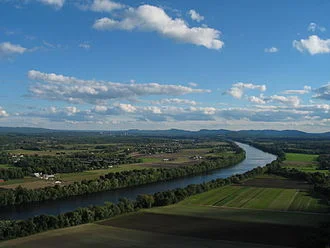
A stretch in Massachusetts of the Connecticut River Valley, the most fertile and agriculturally productive area in New England.
Adapted from Robert Whitcomb's "Digital Diary'' column in GoLocal24.com
There’s been quite a revival of small-scale agriculture in New England in recent years, with the products grown alluring to the swelling numbers of “locavore’’ customers, many of whom buy the stuff at those proliferating outdoor markets open from spring to late fall or at the increasing number of stores, including supermarkets, that tout the local origin and “organic’’ nature of their food. Proving that something is “organic’’ can be daunting….
Cuba, of all places, may have some lessons for successful small-scale organicagriculture here. Since the collapse of the Soviet Union, in 1991, deprived the Cubans of cheap petroleum-based fertilizers and pesticides, the Cubans have movedto become very successful growers of food without these manmade chemicals. This movement has been further encouraged by some reforms that have replaced huge state-run farms with many small farms -- some in urban areas -- run by individuals.
The lack of chemical fertilizers and pesticides has led over the years to more sustainable and healthier agriculture on the island.
I was reminded of this the other day after reading a Boston Globe column headlined “Is Cuba the future of farming?’’ by Greg Watson, who’s a former Massachusetts Department of Agriculture commissioner. Mr. Watson, whom I know slightly, is no apologist for the Communist dictatorship led by the late Fidel Castro and now his brother Raul. But Mr. Watson has zeroed in on what the Cubans have been doing well.
Cuba is not the “future of farming’’ for the United States in general: The economics of the food industry means that huge agribusiness farms in the Midwest, the Plains States, California, Florida and some other places will continue for decades. But in New England, where topography and population density encourage much smaller farms, Cuba offers some lessons, even when considering that the Cubans, unlike New Englanders, can grow things outdoors year round.
Providence-based United Natural Foods Inc., an “organic’’ foods distributor, is a natural partner for such small-scale farms and the markets and restaurants they help supply. The company has just announced that it’s adding 150 new jobs in Rhode Island, where it already employs about 450 people.

You can never have enough

"Girl with Options'' (encaustic painting), by Jennifer Goldfinger, in the show "Encaustic Art,'' at Francesca Anderson Fine Art, Lexington, Mass., through March 25.
David Warsh; Trump is no Putin
SOMERVILLE, Mass.
One thing you should know about Vladimir Putin: He gives a good speech. Probably you don’t know that he does. Here are three brief excerpts, from occasions that presumably most Russians remembers, more vividly than snippets in translation can convey.
In September 2004, after the Beslan massacre, in which 334 hostages were killed by Chechen terrorists, 186 of them children:
“Today we are living in conditions formed after the disintegration of a huge great country, the country which unfortunately turned out to be nonviable in the conditions of a rapidly changing world…. [D]espite all the difficulties, we managed to preserve the nucleus of that giant, the Soviet Union. We called the new country the Russian Federation. We all expected changes, changes for the better, but found ourselves absolutely unprepared for much that changed in our lives.… We live in conditions of aggravated internal conflicts and ethnic conflicts that before were harshly suppressed by the governing ideology. We stopped paying attention to issues of defense and security…. [O]ur country which once had one of the mightiest systems of protecting its borders, suddenly found itself unprotected from either West or East.’’
In February 2007, at the Munich Security Conference, after the American invasion of Iraq (which he, the Germans, and French had opposed) erupted in sectarian violence, sending an estimated 2 million Iraqis out of the country:
“The unipolar world that had been proposed after the Cold War did not take place…However one might embellish this term, at the end of the day it refers to one type of situation, namely one center of authority, one center of force, one center of decision-making. It is a world in which there is one master, one sovereign. And at the end of the day this is pernicious not only for all those within this system, but also for the sovereign itself because it destroys itself from within….’’
‘’Today we are witnessing an almost uncontained hyper use of force – military force – in international relations, force that is plunging the world into an abyss of permanent conflicts. … [I]ndependent legal norms are, as a matter of fact, coming increasingly close to one state’s legal system….First and foremost, the United State has overstepped its national borders in every way. This is visible in the economic, political, cultural, and educational policies it imposes on other nations. Well, who likes that?’’
In 2008, Russia briefly went to war with Georgia, in order to discourage Georgian ambitions to join the NATO alliance. In 2011, NATO launched airstrikes in Libya to prevent Muammar Qaddafi from attacking insurgents in eastern Libya, greatly irritating the Russian government. In 2013, the U.S. nearly went to war with Syria, before Putin persuaded Bashar al-Assad to surrender some ofSyria’s stocks of chemical weapons.
And in March 2014, after Russia annexed Crimea, not long after the flight to Moscow of Ukrainian President Viktor Yanukovych, following three months of demonstrations joined by, among others, U.S.S Assistant Secretary of State for Eurasian Affairs Victoria Nuland and Sen. John McCain:
“They are constantly trying to sweep us into a corner because we have an independent position, because we maintain it and because we call things like they are and do not engage in hypocrisy. But there is a limit to everything. And with Ukraine, our western partners have crossed the line, playing the bear and acting irresponsibly and unprofessionally.
“After all, they were fully aware that there are millions of Russians living in Ukraine and in Crimea. They must have really lacked political instinct and common sense not to foresee all the consequences of their actions. Russia found itself in a position it could not retreat from. If you compress the spring all the way to its limit, it will snap back hard.’’
I spent
week re-reading The New Tsar: The Rise and Reign of Vladimir Putin (Knopf, 2015), by Steven Lee Myers, New York Times correspondent in Moscow for seven years during the period that the Russian president consolidated his power. It is a superb book, knowledgeable, thorough, candid, readable, and well-organized. It provides an incisive account of Putin’s youth in Leningrad; his years as a young officer in the KGB, the Soviet security service; his riseto power as a junior member of reform clique that Boris Yeltsin recruited from the re-christened St. Petersburg.
It treats all the familiar domestic stories of the Putin years: his fierce conduct of the second Chechen War; his surprising elevation by Yeltsin; his gradual suppression of private media; the loss of the nuclear submarine Kursk; the Khodorkovsky trials; the Orange and Rose Revolutions in Ukraine and Georgia; the Alexandr Litvinenko, Anna Politkovskaya, and Boris Nemtsov murders; the Sochi Olympics and the trial of the Pussy Riot punk rock band. It gives a brief but even-handed account of Putin’s successful economic reforms. Like all good books, it has a narrative structure and a point of view, and that view is conveyed by the cover photograph, Putin looking haughty, powerful and sinister.
As Putin prepares to run for afourth term next year, Myers concludes:
“After returning to power in 2012 with no clear purpose other than the exercise of power for its own sake, Putin now found the unifying factor for a large, diverse nation still in search of one. He found a millenarian purpose for the power that he held one that shaped his country greater than any other leader had thus far in the twenty-first century. He had restored neither the Soviet Union nor the tsarist empire, but a new Russia with the characteristics and instincts of both, with himself as secretary general and sovereign, as indispensable as the country was exceptional. … He had unified the country behind the only leader anyone could now imagine because he was, as in 2008 and 2012, unwilling to allow any alternative to emerge. ‘’
There is only a fleeting examination of the fundamental issue that has shaped Putin’s view of the U.S. over the past twenty-five years – not American interventions abroad, not its arms placements, not even its enthusiasm for regime change in Russia, but rather the enlargement of NATO over increasingly strong Russian objections, undertaken by the Clinton administration in 1993, and pursued under presidents George W. Bush and Obama. Myers writes, axiomatically, “Most American and European officials accepted as an article of faith that NATO’s expansion would strengthen the security of the continent by forging a defensive collective of democracies, just as the European Union had buried many of the nationalistic urges that had caused so much conflict in previous centuries.”
Why is this The New Tsar’s default view? The Times has habitually viewed itself as an extension of the U.S. State Department in matters large and small, and in this case, the logic of NATO enlargement has been asserted by three presidents whose service has spanned 24 years. Of course, U.S. foreign policy hasn’t always worked out well. TheTimes editorial page supported U.S. intervention in South Vietnam in the early 1960s, and, with aggressive reporting, the invasion of Iraq in 2003. In each case, subsequent events provoked editors to undertake an extensive retracing of their steps. No such soul-searching has yet begun in the matter of NATO enlargement.
Which brings us to the current situation. The Trump-Putin equivalence that is currently all the rage –it was the cover story in The Economist earlier this month – is profoundly misleading. Putin, with consistently high approval ratings, is headed for a fourth term as president. Despite having overplayed his hand in the hacking business, he has a case to make: the US has treated Russia much too casually in the years since the Soviet empire collapsed. Like it or not, we live in a multi-polar world.
Meanwhile, Donald Trump is back on the campaign trail, hoping to salvage his first term. He has a case for better relations to make, too, but, for reasons of temperament, intellect, and his business interests, he is profoundly unsuited to make it. The U.S. debate about U.S.-Russian relations should go forward without equating the leaders of the two countries.
David Warsh is a veteran business and political columnist and economic historian. He is proprietor of economicprincipals.com, where this first ran.