
Vox clamantis in deserto
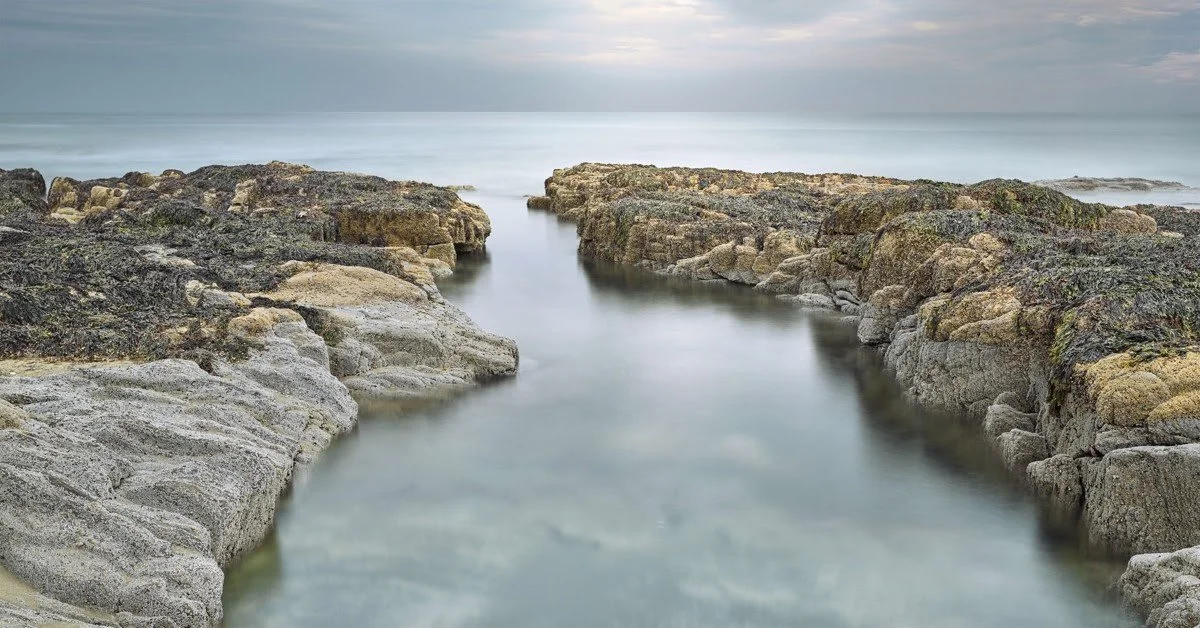


This island would be too exciting for picnicking

There’s been a bit of a rumpus about a proposal by Massachusetts conservation officials to introduce the endangered Timber Rattlesnake on Mount Zion Island in the Quabbin Reservoir. The island is closed to public access.
This is an animal native to the Bay State, in which there are only five surviving populations, spread out from the New York border in the southern Berkshires, east to the Blue Hills, just south of Boston. This species has had the greatest modern decline of any native reptile in the Bay State and is a high conservation priority species for the state Division of Fisheries and Wildlife (MassWildlife).
The Quabbin Reservoir is also the site of MassWildlife's nationally known and successful American Bald Eagle restoration project.
Mankind keeps destroying species. But all life is inter-connected. We destroy species to our long-term peril. Housing the rattlers on Mount Zion seems a responsible way of helping to save this species, which is beautiful in its way. And the presence of the rattlers on the island would definitely discourage humans from landing there and littering it. A slight whiff of terror would be good for the preservation of the wildlife of the island (the vast majority of which would not be bitten by the rattlers) and indeed the whole Quabbin eco-system.
Now to reintroduce mountain lions to Great Blue Hill, overlooking Boston? They like hilly places with caves. Just kidding, but they'd be prettier than the ski lift there.
'Brindled People'
A Field of Stubble, lying sere
Beneath the second Sun --
Its Toils to Brindled People thrust --
Its Triumphs -- to the Bin --
Accosted by a timid Bird
Irresolute of Alms --
Is often seen -- but seldom felt,
On our New England Farms
-- Emily Dickinson
Notebook: A theater may presage renewal of an old New England mill village; slow-train joys
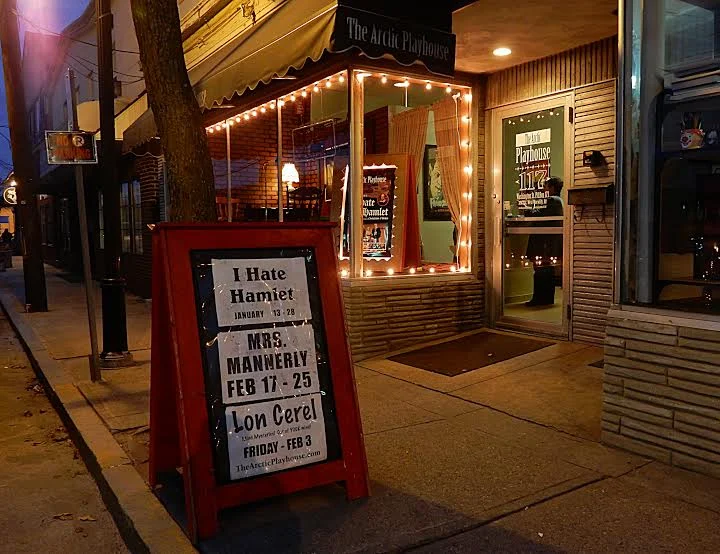
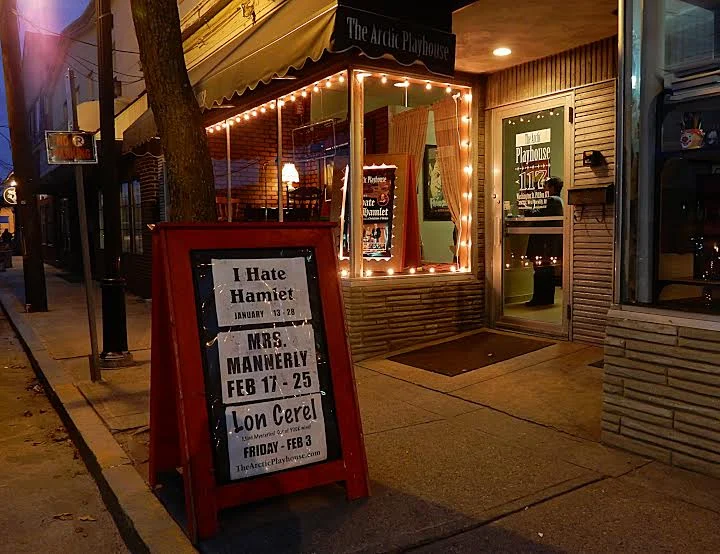
Outside The Arctic Playhouse, in West Warwick, R.I. See more pictures below. Photo: Photo: Linda Gasparello
It is the theater paradox: regional performances are often as good or better than those in big cities, even those in the hallowed locales of Broadway and the West End of London.
Away from the established talent and the marquee names, theater flourishes, sometimes in the most modest venues. Having been a theater critic in various places, including London and Washington, I can attest to the fact that theater is where you find it. I saw productions of Evita in London, New York and a dinner theater in Manassas, Va.
So I was delighted to find The Arctic Playhouse in Rhode Island, just a short distance from my home. The little theater– and I mean little -- is without pretensions. It is as modest as can be and, in its way, a little treasure.
Arctic, in its day, was a destination village in West Warwick, R.I.,: a place where professionals lived and shoppers came from afar. But the development of malls nearby doomed little Arctic. Now it is a sad place with an aged population: The senior center is a happening place for many of the residents.
Arctic is proud but poor, with businesses that have held on from better days; businesses like Rockway Tailoring and Dry Cleaners (still run by the family that opened its doors 132 years ago), Cayouette Shoe & Leather Repair and Rogers Paint Service Store.
For all of its boarded-up shops, Arctic is fighting back. The symbol of its fight is The Arctic Playhouse, in a former dog salon on the main street. It was founded by three Rhode Islanders, Jim Belanger, Lloyd Felix and David Vieira, who wanted to arrest the decay in the village.
Though lacking in many amenities, Arctic now has a live theater, which few villages can claim. It is small, seating just 90 people, and very “villagey,” adding to its charm. Audiences are local and pricing ($10 for many performances) is very reasonable. There is a cash bar, free popcorn in red-striped cups and cookies baked by volunteers.
The curtain metaphorically (there isn’t one) rises weekends to some rattling good productions, either the playhouse's own or those of New England amateur companies. The lights go up and the players are in front of you -- so close that you feel you are in the play yourself.
Whether I have seen a production in a full or half-empty house, I have sensed that the audience is part of the performance. One feels responsible for the players and the play.
My wife and I are regulars and have been enchanted. Next year, The Arctic Playhouse moves to a new home, still on the main street, still in a converted shop, but with better facilities and more seats.
The curtain is going up on renewal in Arctic, one show at a time.
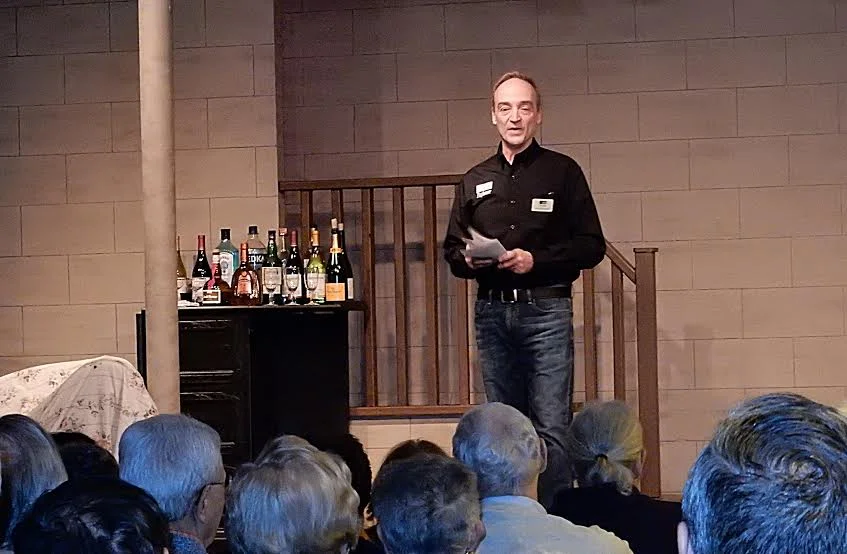
Jim Belanger introduces a play. Photo: Linda Gasparello
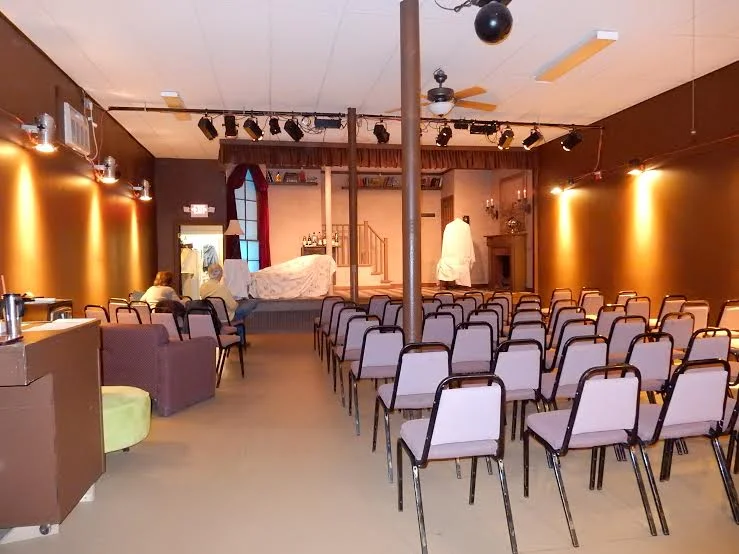
Before a performance. Photo: Linda Gasparello
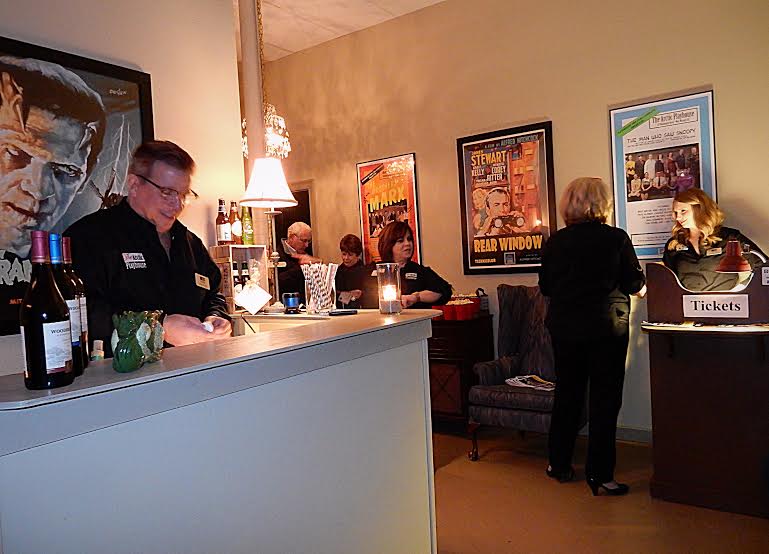
Theater co-founder Lloyd Felix mans the bar. Photo: Linda Gasparello
***
The joys of slow Northeast Corridor trains
Infrastructure is one of the things that President Trump has proposed to fix. In theory, the trains between Boston and Washington, D.C. – the famous Northeast Corridor -- could be sped up by at least 100 miles an hour.
Well, I have ridden the fast trains of Europe, swooped from Paris to Avignon, France, hurtled from Brussels to London under the English Channel. But I miss the old way of locomotion like France’s Mistral, which used to travel from Paris to Nice and on which you could eat memorable food, get your hair cut or visit a boutique.
On the cross-channel trains between Britain and the Continent, which were put on ferries and sailed overnight, it was dinner in England, breakfast in France and a divine sleep between.
If Amtrak ends up on steroids at some time in future, I shall miss the old, slow regional on which I travel to Washington, D.C., and back to Providence so often with time to read a book or get started on writing one. Forget the speed, Amtrak, but please fix the wifi.
Llewellyn King, a frequent contributor to New England Diary, is host and executive producer of White House Chronicle, on PBS, and a long-time publisher,, editor, columnist and international business consultant.
'Joy shivers in the corner'
New England
''Here where the wind is always north-north-east
And children learn to walk on frozen toes,
Wonder begets an envy of all those
Who boil elsewhere with such a lyric yeast
Of love that you will hear them at a feast
Where demons would appeal for some repose,
Still clamoring where the chalice overflows
And crying wildest who have drunk the least.
Passion is here a soilure of the wits,
We're told, and Love a cross for them to bear;
Joy shivers in the corner where she knits
And Conscience always has the rocking-chair,
Cheerful as when she tortured into fits
The first cat that was ever killed by Care.''
Edwin Arlington Robinson
Candace Williams: Number of new high-school grads in N.E. seen falling 14% by 2032
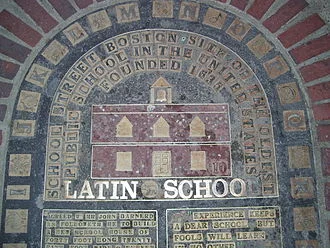
Marker commemorating the first location of the Boston Latin School, on School Street, founded in 1635 and the first public school in what would become the United States.
By 2032, the number of new high school graduates in New England is projected to decline by 22,000 to a total 140,273, according to the Western Interstate Commission for Higher Education’s (WICHE) most recent ''Knocking at the College Door'' report.
New England’s challenge with an aging population and falling birth rates has been well chronicled. With fresh projections and an ever-changing political climate, the number of high schoolers expected to graduate in the region – from a public or private high – warrants a much closer look. So does the changing demography of the graduating class, with the number of white high school graduates projected to fall by 25%, while the number of minority graduates rises significantly
Overall, the number of new high school graduates in New England is projected to decline by 14%. Within the region, Connecticut and New Hampshire face the greatest declines, with the number of new high school graduates in both states expected to decrease by 20% by 2032. The majority of graduates, currently 87%, of high schoolers in New England, attend a public high school. However, a greater share of students attends private school in this region than the rest of the nation. Whereas a projected 7% of students will graduate from a private secondary school nationally by 2032, nearly 12% of New Englanders will.
Fewer white students being born in the region can explain much of the decline in graduates in New England. During the period 2016-2032, the number of white high school graduates is projected to fall by 25%. Over that same tperiod, the number of minority graduates will increase significantly—by 46% among Hispanics, 7% among blacks , 2% among American Indian/Alaska Natives and a 37% among Asian/Pacific Islanders.
Nationally, for every 10 white graduates lost, eight minority graduates are gained. In New England, this is not the case. For every 10 white students lost, just four minority graduates are gained. Nonetheless, by 2032, 45% of high school graduates in the region will be minority.
The implication of fewer high school graduates pose real challenges to higher education institutions, both public and private, as well the regional economy. The region’s population decline has other implications including fewer congressional representatives, who have often been champions of public higher education.
Candace Williams isassociate director of policy & research for the New England Board of Higher Education, on whose Web site, nebhe.org, this piece first appeared.
'Tumultuous privacy'
"Announced by all the trumpets of the sky,
Arrives the snow, and, driving o'er the fields,
Seems nowhere to alight: the withered air
Hides hills and woods, the river, and the heaven,
And veils the farm-house at the garden's end.
The sled and traveler stopped, the courier's feet
Delayed, all friends shut out, and housemates sit
Around the radiant fireplace, enclosed
In a tumultuous privacy of storm."
-- Ralph Waldo Emerson
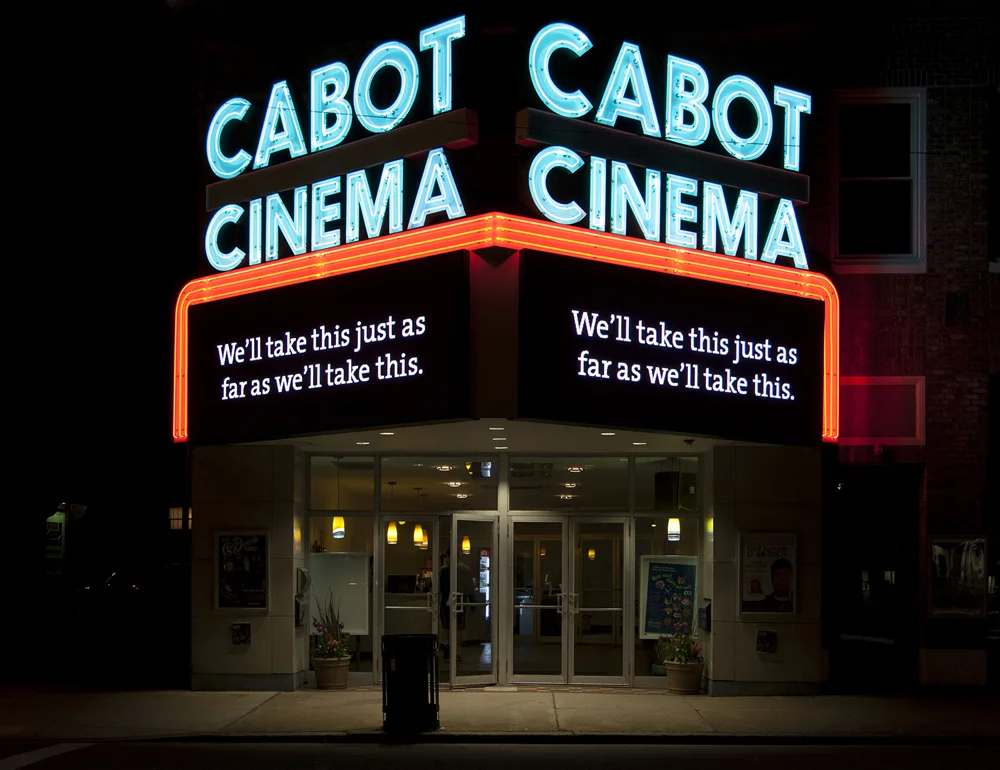
Lost and found on the road
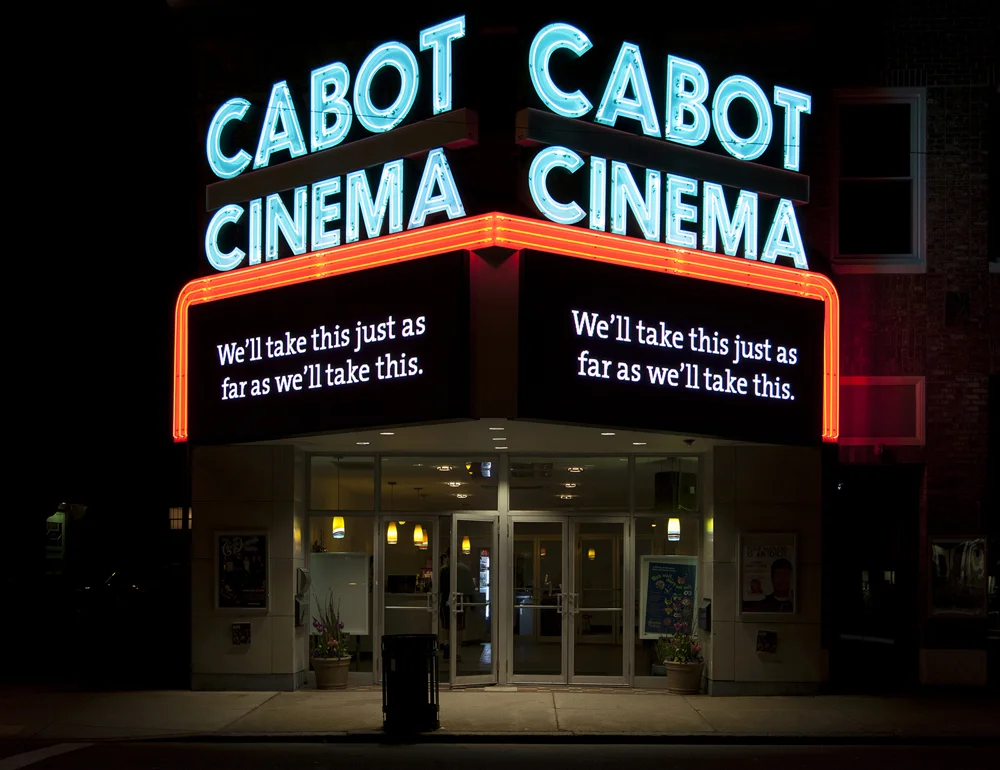
"Untitled II Beverly MA 2016'' (digital print) from “Victoria Crayhon’s show "It Says We're Not Real.'' an exhibition of an ongoing body of photographs and video entitled "Thoughts on Romance From the Road 2001-2017''. The show runs Feb. 10-April 8 at Cade Tompkins Projects, Providence.
See Ms. Ctayhon's video at: http://www.cadetompkins.com/artists/victoria-crayhon/
The gallery says:
“The images are a series of text interactions with historic and abandoned movie marquee and motel signs. As the artist traversed the roadways and interstates of New England, Michigan and other locales during long commutes and trips. These blank slates punctuated the path, causing her to recede into memory and ultimately display fragments of thoughts that might easily disappear but now exist purely as photographs.
“The messages can read as intensely personal “(In This Case the Closure Has Occurred Maybe’’), cautionary (“Approaching Dangerous Point’’) or darkly humorous “(Oh God I Love My Life’’), but all address the private self existing in public, as well as exposure to advertising media as entertainment while driving as its own unique form of existence and consumption within American culture. The proof of the performance in photographic evidence, however, is staged and stark; there are no vehicles, no passersby. Ed Ruscha’s intensely colorful paintings come to mind as a parallel of the meeting of the seemingly mundane: gas stations in the desert and flat purple plains overlaid with phrases and fragments that blur the conventions of language and art.
“Crayhon’s most recent work in the series further complicates the scenario and enriches the experience. This time she interacts with digital theater signs, transferring her message, filming the playback and photographing it simultaneously. Here, a more complete thought reaches a captive audience in the gallery; The world is not stagnant now, cars whiz and jazz from a nearby club sings in the background. ‘’

Charles Pinning: Winter humors in Newport

Another gray winter day in Newport before the construction of the Pell/Newport Bridge and the good Saturday morning cartoons and shows were over. Might as well grab the basketball and head down to the Ferguses.
The Ferguses lived two doors down and had a backboard mounted on their garage. I bounced my ball sullenly down the sidewalk, bounced it alongside their house, arrived at the cement apron in front of the garage and took a shot.
Bwong—off the rim, ran, grabbed it, hook shot from the corner…Swish! Backward shot off the backboard…miss…grabbed it, turnaround jumper…bwong…layup—Good!
Bounce-bounce-bounce-bounce….Cousy sets, shoots….It’s Good! Mrs. Fergus tapped on the kitchen window and smiled.
And on it went with the great Bob Cousy…Oscar Robertson…Bill Russell….More often than it should have, the ball bounced off the rim, hitting the broken cement spot and caromed sideways, triggering a lunge to the sidelines, a miracle save and then the hook…Nooo!!! But he was fouled!
After lunch I banged a tennis ball up against our garage door. It was uncanny how often, without trying, I could hit the raised strip in the middle where the two doors overlapped, the ball ricocheting into our hedge on one side, or into the neighbor’s driveway on the other.
Jayne, the “Mongoloid” who lived next door, watched me from her living room window, and every time the ball hit the center strip and went flying, she clapped. (“Mongoloid’’ was a termunfortunately used until recent decades because of the somewhat East Asian appearance of people we now identify as having Down syndrome.)
I let my wooden racquet drop straight down on the top edge of the head and it bounced back up. I grabbed it and did that a few times. Jayne clapped.
I went into the house and down into the cellar, where I played with the road racing set I’d gotten for Christmas a year ago. Bored after 10 minutes, I imagined shooting the BB gun at a target. The gun had been confiscated over the summer because I took a potshot at Piper Haynes, the dog next door. Piper piped and Mrs. Haynes, who was hanging clothes, caught me pulling the barrel in through the cellar window.
I went up to my room and handled my baseball trophies. I cruised into my older brother’s room and examined the top of his bureau and sniffed his bottle of Royall Lyme aftershave. I peered inside his top desk drawer. I grabbed a couple of his Mad Magazines and took them into my room where I lay down on my bed and read them. Afterwards, I returned the magazines to his room and put them precisely as they had been in the rack next to his bed.
I walked over to the window next to his desk and looked into the backyard. I turned to the bookshelf above his desk. I touched the spines of Animal Farm, House of Mirth and Bleak House.
On the top shelf of the bookcase, up near the ceiling, was a blue Maxwell House coffee can. Standing precariously on his swivel chair, I stepped up onto the desk and reached for it. Barely within my grasp, I pulled the can forward and it tumbled over. The plastic top popped off and I shrieked, instinctively dropping my head as a putrid, lumpy liquid poured over me.
My mother rushed in, followed by my brother.
“What have you done?” screamed my mother.
“Moron!” yelled my brother.
“What is all of this?” demanded my mother.
“It’s a pregnant rabbit I dissected in biology class,” said my brother.
“What? The smell!” cried my mother.
“It was in formaldehyde,” said my brother.
My mother rocketed into the far reaches of incredulity. “Why did you bring it home? Why did you have it up there?”
“What difference does it make? It belongs to me! It’s mine!” yelled my brother.
Yanking me by the arm, my mother dragged me into the bathroom. She turned on the shower. “Get undressed,” she said disgustedly.
“Teach you to snoop around my room, dorkoid!” shouted my brother.
Let me tell you, I looked like hell, I smelled like hell, but inside I was laughing and happy, but I didn’t dare show it. Finally—some excitement around this place!
Charles Pinning, an occasional contributor, is a novelist and essayist who lives in Providence.
Chris Powell: The binding arbitration disaster: How about electing municipal "contract arbiters'' to take fiscal responsibility?

With even Connecticut Gov. Dannel Malloy acknowledging that binding arbitration for municipal government employee union contracts may be a bit of a problem amid state government's worsening insolvency, maybe sensible change is coming to Connecticut. But what the governor has proposed is timid, little more than an invitation to the General Assembly to discuss the issue, which is the last thing that legislators want to do, lest they provoke the unions and all the government employees living in their districts.
The governor proposes only a change in the selection of supposedly neutral arbiters, who are picked by the arbiters already chosen by the management and union sides in contract disputes. Neutral arbiters are said to fear favoring one side or the other too much lest they not get chosen again and lose the arbitration work. So the governor proposes random selection for the neutral arbiters.
But this would leave the binding arbitration system in place, a system that removes most of a municipal budget from the ordinary democratic process. The governor's proposal is not likely to save any significant money for the public.
Elected officials want binding arbitration almost as much as government employee unions do because they don't want to have to be seen choosing between taxpayers and government employees. Elected officials want someone else -- those unelected arbiters -- to take responsibility for the big decisions that drive municipal taxes up or public services down every year. Elected officials want to be able to shrug and proclaim their helplessness to their constituents.
The real reform of binding arbitration would be to repeal it and restore to elected officials the authority to decide the compensation of municipal- government employees. But even Republican legislators would never dare to do that, since Republican town officials don't want responsibility any more thanDemocratic town officials do.
So another reform might be more instructive and almost as good: requiring each town to elect a contract arbiter at each municipal election -- to find just one person in every town willing to take political responsibility, and, really, to control a town's finances. Mayors, council members, and school board members could continue to hold their offices and pretend to be important, but in effect the town arbiter would decide how most of the town's money was spent.
Such a system would abruptly concentrate the public's attention on where most of its municipal tax money goes. There would be union candidates and taxpayer candidates for arbiter and, whoever won, the issue would be settled democratically.
If just one Republican legislator could introduce a bill to elect contract arbiters, the unions would explode in outrage at the idea of restoring democracy to municipal finance and the arbitration system would be exposed as the anti-democratic and cowardly racket it is.
The governor also has proposed a timid reform of another racket, the state's"prevailing wage" system of contracting for municipal construction projects. This system forces municipalities to hire contractors who pay above-market wages to their employees. The effect is to force municipalities to give their construction work to contractors whose employees are unionized.
The governor would raise the threshold at which "prevailing wage" work is required for municipal projects. The $100,000 threshold for remodeling work would rise to $500,000 and the $400,000 threshold for new construction would rise to $1 million.
The president of the Connecticut AFL-CIO, Lori Pelletier, denounces this as an attempt to balance budgets "on the backs of workers," which expresses the union attitude perfectly: that Connecticut's taxpayers aren't workers too.
Chris Powell is managing editor of the Journal Inquirer, in Manchester, Conn.
'To warm the frozen swamp'
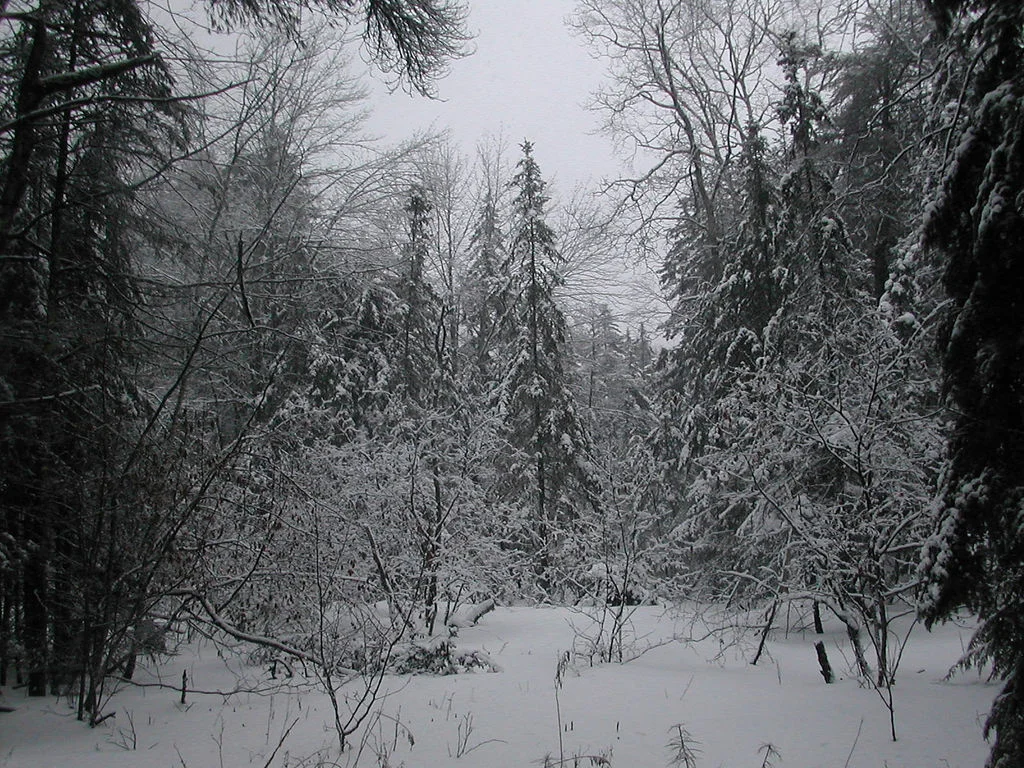
The Wood-Pile
"Out walking in the frozen swamp one gray day,
I paused and said, 'I will turn back from here.
No, I will go on farther -- and we shall see.'
The hard snow held me, save where now and then
One foot went through. The view was all in lines
Straight up and down of tall slim trees
Too much alike to mark or name a place by
So as to say for certain I was here
Or somewhere else: I was just far from home.
A small bird flew before me. He was careful
To put a tree between us when he lighted,
And say no word to tell me who he was
Who was so foolish as to think what he thought.
He thought that I was after him for a feather --
The white one in his tail; like one who takes
Everything said as personal to himself.
One flight out sideways would have undeceived him.
And then there was a pile of wood for which
I forgot him and let his little fear
Carry him off the way I might have gone,
Without so much as wishing him good-night.
He went behind it to make his last stand.
It was a cord of maple, cut and split
And piled -- and measured, four by four by eight.
And not another like it could I see.
No runner tracks in this year's snow looped near it.
And it was older sure than this year's cutting,
Or even last year's or the year's before.
The wood was gray and the bark warping off it
And the pile somewhat sunken. Clematis
Had wound strings round and round it like a bundle.
What held it though on one side was a tree
Still growing, and on one a stake and prop,
These latter about to fall. I thought that only
Someone who lived in turning to fresh tasks
Could so forget his handiwork on which
He spent himself, the labor of his ax,
And leave it there far from a useful fireplace
To warm the frozen swamp as best it could
With the slow smokeless burning of decay.''
-- Robert Frost
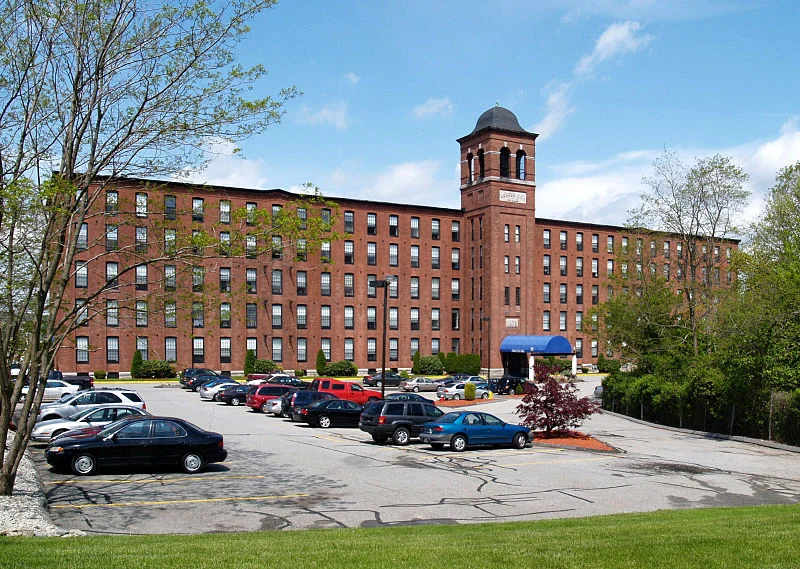
Hope on Mount Hope Bay
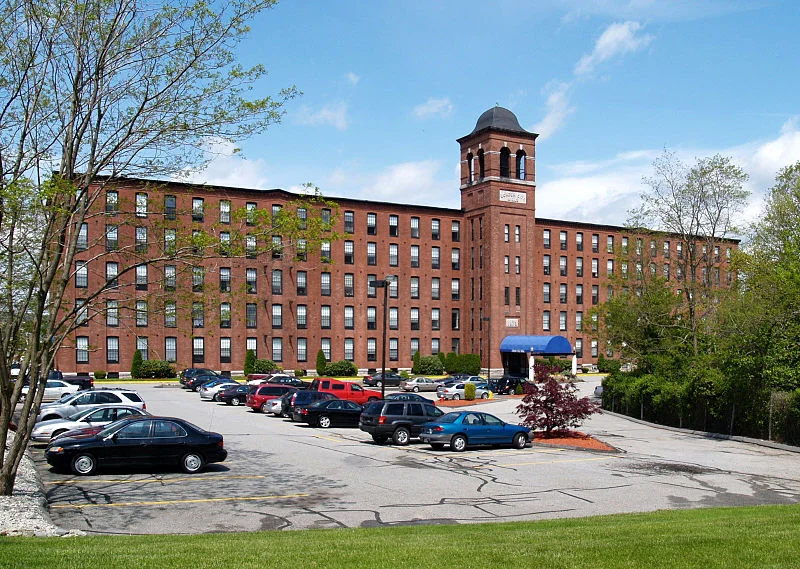
The Border City Mill in Fall River.
Adapted from an item in Robert Whitcomb's "Digital Diary,'' in GoLocal24.com
Amazon is already employing about 1,800 people in its new and gigantic fulfillment center in Fall River, Mass.
That’s a big boost to the long economically ailing ‘’Spindle City,’’ which was once the world's leading cotton-textile producer.
But folks should remember that simultaneously Amazon is killing many thousands of jobs at brick-and-mortar stores, many of which are closing because of Amazon, thus depriving their communities and states of much tax revenue and jobs and eroding their sense of community.
By the way, hilly Fall River’s setting on Mount Hope Bay is one of the most beautiful on the East Coast. And some gorgeous old granite and brick mills have survived the arsonists' efforts to enjoy the sexual pleasures of pyromania and/or the comforting piles of cash from insurance settlements.
Yes, romantic Fall River.

David Warsh: Trying to make sense of Trump's frenzy of actions

"The Plot Thickens (silver shade instant film), by Corey Escoto, in his show "A Routine Pattern of Troubllng Behavior,'' at Samson Gallery, Boston, through April 1.
The Carnegie Museum of Art observed: 'The two- and three-dimensional works of Corey Escoto meditate on the production and consumption of illusion, both in terms of what we accept as photographic truth and, more broadly, how we distinguish fact from fiction in an ever more manipulated, media-saturated world.''
SOMERVILLE, Mass.
The new president has been throwing up all kinds of ideas, orders and initiatives, presumably in hopes that some will find favor with Congress. How to understand what he’s doing? I read some careful newspaper stories, each very good, all slightly different. (WSJ: “Trump’s Week One Off Script”. WP: “Reality Check: Many of Trump’s early vows will probably never happen”. NYT: “Misfires, Crossed Wires, and a Satisfied Smile in the Oval Office”. FT: “A Whirlwind Week in the White House”.) The single most useful insight I came across was that of Politico’s Eliana Johnson, speaking on National Public Radio’s On Point:
“The way to think about this government is sort of like a coalition government, where you’ve got the populist nationalist president in the White House [who’s] going to agree with the Republican majority in Congress on some things, [as] he’s going to agree with Democrats in Congress on other things, but there isn’t a party in Congress that he aligns or sees eye-to-eye with on everything, that’s going to be able to ram through legislation. Same with his cabinet secretaries – they disagree with him on many, many things. I don’t think he nominated secretaries who are pushovers.’’
Of the bewildering array of first steps Trump proposed, none was more interesting to me than a foreign policy initiative when he was expected to call Vladimir Putin, Angela Merkel and Francois Hollande. What might he have said? For many years I’ve thought that Jack Matlock, the career Foreign Service officer who was George H.W. Bush man in Moscow, has understood the situation particularly well. He is the author of Autopsy on an Empire: The American Ambassador’s Account of the Collapse of the Soviet Union (Random House,1995) and Superpower Illusions: How Myths and False Ideologies Led America Astray – and How to Return to Reality (Yale, 2010). Matlock took to his blog to propose a four-paragraph communique for afterwards:
“The presidents agreed that there is no good reason to consider their countries enemies and there are compelling reasons for the United States and Russia to cooperate in solving common problems.
“The presidents recognize that a nuclear war would be catastrophic for humanity, must never be fought, and that their countries bear a special responsibility to cooperate to reduce the nuclear danger and prevent further proliferation.
“Regarding specific issues, they agree to begin, on an urgent basis, consultations with each other and with allies and neighbors regarding ways in which current confrontations could be replaced by cooperation.
“One question that will inevitably arise regards the continuation of U.S. sanctions on Russia. In [Matlock’s] view, these sanctions are now doing more harm than good, but [he] would hope that decisions regarding them would be made in concert with U.S. allies, who have been pressed by the United States to adopt them. Perhaps President Trump could state that he agrees that sanctions are incompatible with the sort of relationship he seeks with Russia, and he intends to explore ways to create conditions that make them unnecessary.’’
It is anybody’s guess which of those among of the frenzy of proposals emanating from the White House might eventually become the basis for blueprints for action. I can’t fault the method the president chose. Throwing much against the wall in hopes that something will stick is an approach to dire circumstances previously associated mainly with Franklin Delano Roosevelt. (Of course, then it was the nation’s circumstances, not the president’s, that were dire.) WSJ columnist Peggy Noonan and Joshua Green, writing in Bloomberg Businessweek, think that Trump is seeking to create a “workers’ party,” composed of “those who haven’t had a real wage increase in the last eighteen years.” I don’t think the populist nationalist in the White House is going to get very far with that.
David Warsh, a longtime financial journalist and economic historian, is proprietor of economicprincipals.com, where this first appeared.
More leaf-chomping on the way for this spring in New England
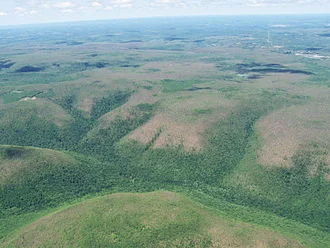
Hillsides in a gypsy-moth infestation.
Adapted from an item in Robert Whitcomb's "Digital Diary'' in GoLocal24.com
Scientists say that the gypsy moths will be back in force this spring to continue the devastation of the southern New England woods we saw last year. The ecological changes wrought by New England’s long drought are blamed. The Massachusetts Department of Conservation and Recreation reported:
“Recent drought conditions have limited the effectiveness of a soil-borne fungus, Entomophaga maimaiga, which has helped keep gypsy moth populations in check since the last large outbreak during the 1980s.”
I remember driving through vast swathes of virtually leafless trees early last summer around Worcester. In a way, the openness, combined with the ground-level greenery, was exhilarating -- until you considered it a bit more. I wonder how many trees would die if this infestation occurs more frequently, with, say, global warming.
Let's hope that conservation folks don't obey a public outcry to aerial-spray the hell out of these creatures, and in so doing kill many other creatures.
Good enough weather for burials

"February is a suitable month for dying. Everything around is dead, the trees black and frozen so that the appearance of green shoots two months hence seems preposterous, the ground hard and cold, the snow dirty, the winter hateful, hanging on too long."
-- Anna Quindlen
Actually, a few early-spring flowers have been appearinglately and for long stretches this winter (so far) the days have evoked March or even April. Some afternoons have even produced a kind of sweet spring melancholy.
Ms. Quindlen (who lives north of New York City) might have noted that while February might suggest death, it's usually a bad time in the Northeast to try to bury anyone because of the frozen ground. (The movie Manchester-by-the-Sea made light of this.)
The weather this winter, however, has often been boffo for burials, although many have been put off to April because of regional tradition.
-- Robert Whitcomb

Llewellyn King: Mr. Bannon, this is journalists' tough and essential mission
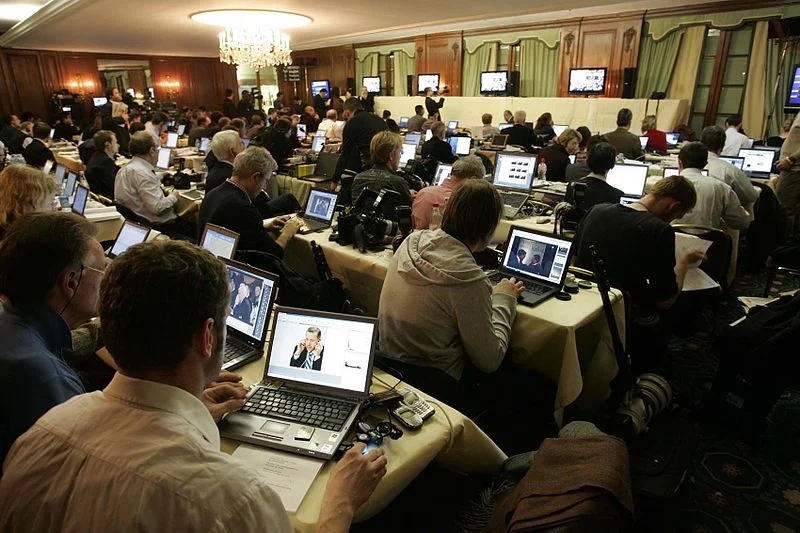
-- Photo by Kai Mork
At a news conference.
No, Steve Bannon, counselor to President Trump, the news media are not the opposition. Nor are they a monolithic structure acting at the behest of some unseen hand, in conspiratorial unison. {Editor's note: Reminder: Fox News, The Wall Street Journal editorial page, Mr. Bannon's former employer Breitbart News and many, many other large and small news and opinion media outlets that the right-wing Mr. Bannon favors are part of "the media''. }
I am of the media and have been for 60 years -- in fact from long before it was known collectively and misleadingly as a blob called "the media''.
We are an irregular army, an array of misfits, disciplined by deadlines and little else. We eat irregularly, are sustained on coffee and, at times, something stronger. We love what we do and we do it in the face of shifting threats, from death on the front lines of war, to the excesses of media owners and the difficulty of making a living at it. We do the same job and do our best, whether it is for the smallest newspaper, newsletter or some great news outlet, such as The Washington Post or a TV network. John Steinbeck once said, “No one does less than his best, no matter what he may think about it.” So do we.
My friend Dan Raviv, of CBS News, once summed up what it is about — during another one of these periods when journalism was under attack — by explaining his own motivation, “I like to find out what’s going on and tell people.”
Why, then, are the media seen as monolithic, conspiratorial and of one mind? I will suggest it is because of an immutable law of the work that is beyond explanation, but is indestructible and essential: news judgment. It is to journalism what perfect pitch is to musicians. You have it or you do not; and while it can be cultivated, it cannot be inculcated.
In play, it makes us look collaborative: Journalists appear to belong to some secret order, such as the Freemasons. Whether we are from the smallest outlet to the mighty networks, if we are reporters, we will tend to pick the same things from a speech or an event. As an example, different newspapers will find the same news in the Sunday news shows and report it their Monday editions.
That is why when Kellyanne Conway uttered the words “alternative facts,” in an interview with Chuck Todd on NBC’s Meet the Press, we pounced. We did so not because we are of one mind, but because the enormity of such a concept demanded our attention. No conspiracy, no political agenda, no common purpose beyond the news, just Conway's extraordinary concept that facts are fungible, somehow legitimately subject to manipulation for political purpose. That is news. Big news.
Conway has complained that none of the other things she said in that interview were headlined. If she feels that way, clearly, she does not grasp the import of her own words; it was not the messengers, it was the message.
Why are so many journalists considered to be ''liberal''?
I am not sure that so many are liberal, but if I concede the point, consider this: We see the soft underbelly of society, whether we are covering refugees or police courts. People come to us seeking redress for real grievances and, mostly, all we can do is sympathize. If you have seen children dying of starvation or families sleeping on the street, you are unlikely to be worrying about the property rights of the rich. What you see conditions you.
I interviewed my first refugees in 1956. They were escaping the Soviet crushing of the Hungarian Revolution. That and later having seen thousands of refugees in Jordan, Pakistan, South Africa and Turkey, has indelibly informed me; those images are etched into my being.
When President Trump suspended the trickle of Syrian refugees we are taking into the United States. It seemed again to be the powerful denying the humanity of the weak, most pitiable.
History is not to be denied and facts are just that. Journalism shows us the world out there, not the world in a leafy suburb. If knowing something of the pain of the world and wishing for justice is liberal, then indict and convict us.
Surprisingly, we are not very political. Congress is stuffed with lawyers, not journalists. We do not, in general, run for office.
Remember, Steve, if you know anything about the world, science or even politics, you learned a lot of it from journalists. We are the messengers, but we do not write the message.
Our essential job is to keep a wary eye on authority: Here’s looking at you, Steve
Llewellyn King, executive producer and host of White House Chronicle, on PBS, is a long-time publisher, editor, columnist and international business consultant.
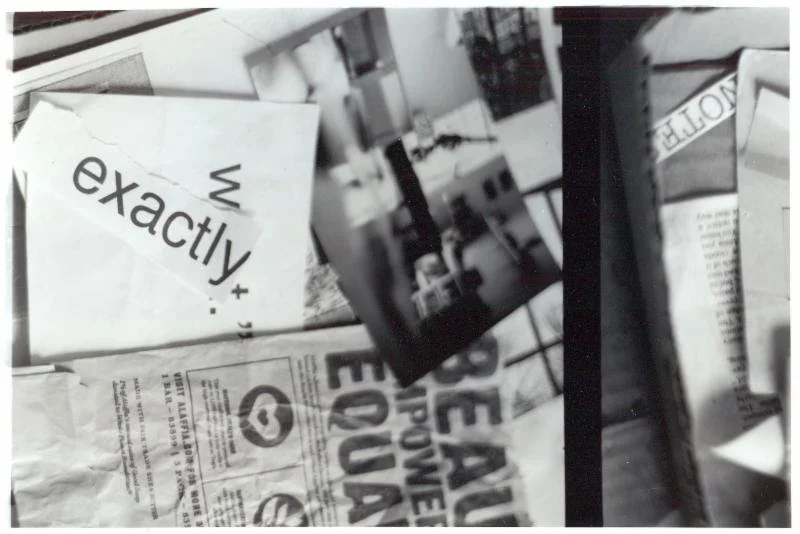
Work in progress
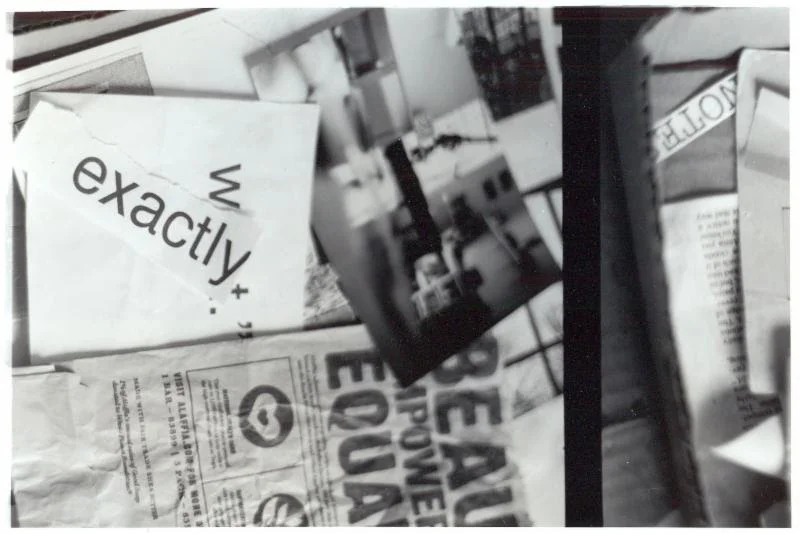
Silver gelatin print picture from Susan Alport's show "Exactly What I Want'' at the Kingston Gallery, Boston, March 1-April 2.
The show shows the process of creating art by displaying work in development. The gallery says: "Through traditional silver gelatin photographic prints, enlarged images and contact sheets, Ms. Alport shows the path as she explores various combinations of image and text.''
Jill Richardson: Trump, the EPA and chaos
Via OtherWords.org
As Donald Trump was sworn in, my inbox filled up with concerns about the future of the Environmental Protection Agency. Allegedly, scientists were being censored. References to climate change were being erased.
But all that was just a warm-up act.
Before we could really act on the EPA, down came Constitution-shredding executive orders against refugees and Muslim immigrants.
The problem, for those of us who care about due process and the rule of law, is that it’s impossible to put out one fire before the next one begins — or to even keep track of everything.
For instance, as lawyers worked to ensure that Iraqis who’d put their lives in danger working for the U.S. weren’t deported back to Iraq, Trump removed the chairman of the Joint Chiefs of Staff and the director of national intelligence from his National Security Council.
In their place, he installed the controversial white supremacist Steve Bannon (who’s stated that his goal is to “destroy the state”) and his own chief of staff, Reince Priebus.
With so much going on, some speculate that Trump is trying to create chaos, so Americans are too distracted to uncover and resist what he’s really doing.
On the environmental front, some believe that Trump is holding back on his plans until he can succeed in getting his pick for EPA administrator confirmed by the Senate. That nominee, Scott Pruitt, is a climate skeptic with several pending lawsuits against the agency he’s been picked to lead.
If that’s the case, we should re-examine what’s occurred with regard to the environment since inauguration, in preparation for what’s to come. Some changes were part of the normal change of power in Washington, whereas others were not.
For instance, any mention of climate change was wiped from the White House website.
This is in part because the entire website turns over with each new administration, removing all of the old speeches and press releases of the outgoing president. However, Trump’s new energy page presents a reality in which climate change doesn’t exist.
Moreover, the new administration froze all Obama-era regulations that hadn’t yet been finalized. In itself, this is actually a standard action new presidents take. However, the Trump administration went further than all previous presidents, also halting all EPA grants and contracts.
Another standard practice is to stop agencies from putting out press releases before the new administration has time to get its feet wet.
That said, the Trump administration has indicated it might muzzle its environmental scientists, threatening to subject their work to a case-by-case review by political appointees before their findings can be made public. That isn’t normal.
Initially, rumor had it that the EPA would remove its climate change website. This hasn’t occurred yet, but some believe it’s because Trump wants to hold back until he can get Pruitt, a longtime friend of the fossil fuel industry, confirmed.
Meanwhile, Trump has taken steps to reinstate both of the nation’s most controversial oil pipelines, the Keystone XL and the Dakota Access Pipeline.
Of course, with the Tweeter in Chief now in charge, some of the most interesting developments occurred on Twitter. When Badlands National Park tweeted data about climate change, their tweets were soon removed.
Shortly thereafter, “rogue” government twitter accounts appeared, purporting to give citizens the truth from our federal agencies.
In short, if this is the warm-up, what’s to come is scary.
The “environment” is an abstract concept, but it’s the air we breathe and the water we drink. We all must work to stay informed. Don’t get distracted by chaos when it’s used to cover up even more destructive harm to our nation and the planet it lives on.
Jill Richardson is a columnist for OtherWords.org and the author of Recipe for America: Why Our Food System Is Broken and What We Can Do to Fix It.
Chris Powell: Supreme Court is now almost entirely political
The contention over Supreme Court nominations like President Trump's of Judge Neil Gorsuch and President Obama's of Judge Merrick Garland has become so bitter because decades ago political liberals began using the court as a super-legislature and political conservatives could not resist the urge to follow suit. Maybe now the country can acknowledge at last that the Supreme Court is no longer a court at all -- that, as newspaper columnist Finley Peter Dunne's fictional Irish bartender, Martin J. Dooley, opined more than a century ago, "The Supreme Court follows the election returns."
If liberals are in power, the court somehow discovers that the Constitution requires enactment of every liberal nostrum, and if conservatives are in power, the court requires every important legal question to be answered favorably to conservatives. Connecticut's two U.S. senators, Richard Blumenthal and Chris Murphy, both liberal Democrats, confirmed as much this week upon Gorsuch's nomination, both expressing skepticism if not quite outright opposition, though not one question yet had been put to the nominee. It is enough that Gorsuch is considered a conservative.
"I want a mainstream judge, not an ideological partisan," Murphy said, and Blumenthal echoed him, as if they too aren’t ideological partisans and wouldn’t settle for a nominee who was a flaming liberal like themselves. Similarly, of course, when President Obama, a liberal Democrat, nominated liberal judges, conservative Republicans bleated about wanting "mainstream" nominees even as they would have been delighted with flaming conservative nominees.
Democratic senators are incensed about Gorsuch's nomination because they feel that the Republican majority in the Senate stole the current vacancy on the court from President Obama, refusing to consider Garland and maintaining the vacancy for most of a year until the presidential election changed control of the White House.
This was indeed crude politics, but appointments to high federal office are actually the Senate's own; the president's power is limited to nomination. Besides, Democratic senators this week played their own crude politics, refusing to attend committee meetings so they could stall some of the president’s Cabinet nominees. As for the legal and political issue believed to underlie the struggle over Gorsuch's nomination -- abortion -- it was the political left that wanted to constitutionalize it with the Supreme Court's decision in Roe v. Wade, in 1973, rather than leave the issue as a legislative prerogative of the states.
Since the country remains divided on abortion, no one should be surprised if the political reversal in Washington prompts attempts to de-constitutionalize the issue, especially since even some legal scholars who favor abortion rights acknowledge that the Roe decision was bad law.
But in the ideological hatefulness that dominates politics today, anyone who tries to make fair distinctions risks getting lynched by one side or the other.
xxx
Not everything in Connecticut is crumbling. Bradley International Airport, in Windsor Locks, is steadily improving, and the other day Gov Dan. Malloy and the Connecticut Airport Authority announced that another airline will join Bradley's stable. The airline, Spirit, a no-frills carrier, will fly from Bradley to Orlando, Fla., once a day starting in April, and, starting in June, once a day to Fort Lauderdale, Fla. Spirit also will offer spring and summer flights from Bradley to Myrtle Beach, S.C., four days a week starting in April. The airport authority will extend $400,000 to the airline in promotional expenses and fee waivers, not a big bribe. Now all state government has to do is figure out how to get Spirit's Connecticut passengers to come back from down south.
Chris Powell is managing editor of the Journal Inquirer, in Manchester, Conn.
Aren't we all

"Fragments'' (oil on canvas), by Mirela Kiloviv, at Bromfield Gallery, Boston, through Feb. 26.

Ian Morrison: Sacred Heart University buying Boston-based GE's former headquarters in Conn.
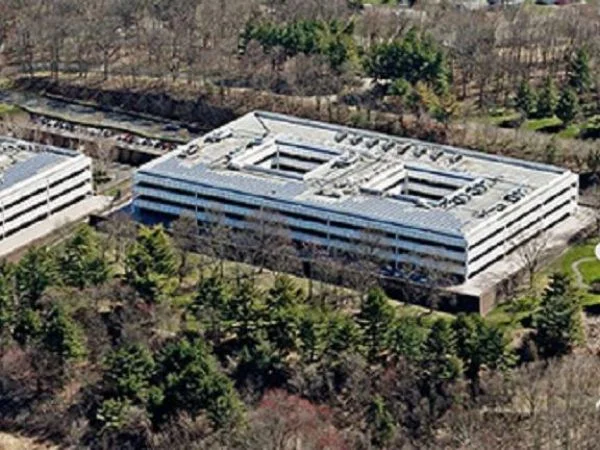
Part of the former GE complex in Fairfield.
Sacred Heart University (SHU) has purchased General Electric’s (GE’s) former global headquarters site in Fairfield, Conn. This 66-acre parcel will become an extension of SHU’s nearby main campus, as well as its Stamford Graduate Center. The acquisition is a strategic and practical move for the university, which has needed room to expand several existing programs and campus facilities, in conjunction with new building and renovation work.
The GE site, which SHU will call its West Campus, includes 550,000 square feet of existing building space for current and future use and 800 above-ground and underground parking spaces. The West Campus is expected to attract more than 250 new students and expand faculty and facilities staffing requirements by at least 50 people.
The relocation of GE’s corporate headquarters to Boston was seen as a significant blow to Fairfield’s economy and to the state. GE was Fairfield’s largest taxpayer, and many of its executives and staff resided locally. Not all of the GE employees who worked in Fairfield were forced to move, though; several hundred transferred to the company’s facilities in nearby Norwalk, Conn. Still, GE's departure left a void in support for local nonprofit organizations.
In announcing its reasons for leaving, GE cited the lack of innovation and incubation opportunities in Connecticut and noted the presence of dozens of colleges and universities in the Greater Boston area that, combined with access to a skilled pipeline of new workers and supportive industries, made the Boston area more attractive for long-term future growth. Additionally, with so many employees working from home and remote locations, GE had outgrown the need for such a large physical campus.
Ironically—given GE’s stated reasons for exiting the state—SHU will use the property as an “innovation campus.” This will include housing for the university’s recently announced School of Computing (computer engineering, computer gaming and cybersecurity) and new programs in the STEM fields, including health and life sciences, science and technology.
The School of Computing will house two graduate programs—a master’s in computer science and information technology and a master’s in cybersecurity. It also will offer undergraduate programs in computer science, information technology, game design and development and computer engineering. SHU’s game-design and development program has been lauded by The Princeton Review.
The University will move elements of its Jack Welch College of Business (WCOB) to the new campus, including its new hospitality management program that will make use of facilities both at the GE site and at SHU’s recently acquired Great River Golf Club in Milford, Conn. This expansion is particularly timely, as expenditures in the rapidly growing global hospitality industry are estimated at approximately $3.5 trillion annually.
The SHU hospitality major addresses food and service management, lodging operations, beverage management, human resources, tourism and revenue, and pricing and data analytics. The WCOB also requires students in its hospitality management program to complete internships and has developed collaborative relationships with hotels, restaurants and related service partners. Of note, the new campus site includes a hospitality wing that contains a hotel with 28 guest rooms, conference rooms, fitness centers and a medical facility.
The university also plans to move its College of Education and business office to the site, eliminating the need to rent space elsewhere. Additionally, the purchase will allow the university to pursue partnerships with local healthcare providers, offering clinical opportunities for students in SHU's colleges of Health Professions and Nursing.
SHU’s growing community of teachers, staff, students, their parents and visitors already spend close to $56 million in the regional economy. Additional new spending is estimated at $27 million to $33 million annually. But having a local college or university also brings many additional benefits beyond economics.
Institutions of higher learning support new-business development, collaboration and incubation across a range of sciences, business and the arts that will continue serving as a beacon to current and prospective employers, manufacturers and residents. Additionally, other vocations benefit from the presence of a local college, as demand rises sharply for restaurant workers, construction crews and other less-skilled jobs.
As an example of support for regional business and organizational growth, Sacred Heart already works with a variety of Connecticut cities, towns and organizations sharing expertise and resources. SHU’s Center for Not-for-Profit Organizations, offered through the WCOB, has conducted more than 200 local projects for close to 100 regional clients. Founded 14 years ago, the center has provided strategic planning, competitive analyses, feasibility studies and marketing planning for businesses, health organizations, art associations and museums.
The university intends to provide incubator space that would allow students, in conjunction with investors and area businesses, to develop their creative ideas for new products and programs. Overall, SHU’s move to this new campus directly speaks to new-business incubation and the need for an active pipeline of skilled workers—exactly the types of innovation large corporate employers—GE included—have been clamoring for to meet the needs of today’s rapidly evolving economies.
With the purchase by SHU, Fairfield should receive payments from the state’s PILOT (Payment in Lieu of Taxes) program, which compensates Connecticut towns and cities for tax revenue they do not collect from nonprofit entities such as colleges, universities and hospitals. Those dollars are based on formulas established by the Connecticut Legislature and, in part, determined by tax revenue collected statewide. Future PILOT-related reimbursement revenue from SHU also will include growth at several local facilities now being renovated for classes, administration and housing.
Colleges and universities play a critical role shoring up the infrastructure and long-term viability of the communities and regions they call home, explained SHU President John J. Petillo. This, he pointed out, includes new manufacturing jobs and creative collaborations that help meet employer and community needs in fields like science, engineering, public education and health services.
These important economic growth stimulants are now at risk as public funding and financial aid for private colleges and universities continues to decrease. To remain competitive and successful, institutions of higher learning must continue aligning themselves and their programs with emerging industries and evolving employer, nonprofit and organizational requirements.
Sacred Heart’s purchase of the former GE headquarters property to expand its business, technology, hospitality and human services programs directly reflects this commitment to continued growth and future needs.
“This is a transformational moment in the history of Sacred Heart University, and for Connecticut,” Petillo said. “With this property, SHU has a unique opportunity to expand its contributions to education, research, healthcare and the community. SHU is vested in the success of our students and in the continued success and prosperity of the region. We are happy to be contributing toward our state’s economic growth and proud to be a continuing catalyst for the future generations of employees, residents and business owners.”
Ira Morrison is a writer and communication consultant. He has worked as a communication manager for several Fortune 500 companies and was an adjunct professor at the University of Hartford School of Communication. This piece started at the Web site of the New England Board of Higher Education (nebhe,org)