
Vox clamantis in deserto





Llewellyn King: The causes of nearly incurable 'Potomac Fever'

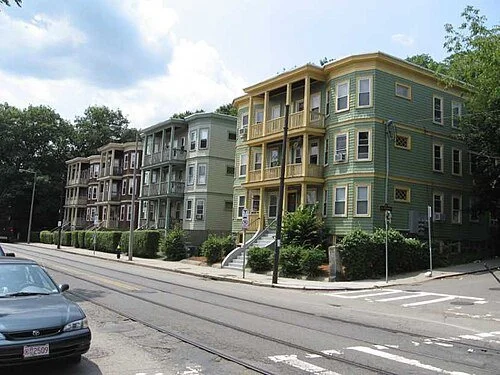
Looking toward the Potomac and Washington, D.C., with the Pentagon in the foreground.
You are part of the new administration, or want to be part of the administration, or your company thinks it will gain favor if it moves its headquarters to Washington. One way or another, a lot of people are on the move to the nation's capital.
It is part of the Washington mystique that more come than go. Once you get in the Washington whirlpool, you don’t simply swim back to where you came from.
Members of the diplomatic corps yearn to come back to Washington. And members of the Washington press corps seldom leave Washington, although they may change employers.
Explaining the power that Washington exerts over its migrants isn’t easy, but it is there. Part of it, as Martin Walker, who covered Washington for Britain’s Guardian, told me when I met him in Brussels, where he had been sent by the newspaper, that he longed to get back to Washington – and he did, later, with UPI. “I like living somewhere where the head of government can send in a battle fleet,” he explained.
Journalists love Washington because it is one-stop shopping. There are innumerable stories and many places of employment, from the multifaceted world of trade journalism to the throes of political journalism.
Others, who don’t cover the White House or write for a major international newspaper, are also smitten. Maybe, I should say infected because an unnatural attraction to our nation’s capital is more often referred to as “Potomac Fever.”
There is no therapy for the malady, or known cure. People say, “I love Washington” and they mean it. Writers say, “I love writing.” But author Susan Seliger told me it means, “I love having finished writing.”
A common diagnosis of Washington’s peculiar sickness is that it is about power. But most people in Washington have precious little power and do ordinary jobs. It could be argued that, for the most part, investment banks on Wall Street or software shops in Silicon Valley have more power.
The president has real power, but even he is restrained, as President-elect Donald Trump is about to learn. Most power in Washington is derivative: Your wife’s best friend is married to the chairman of an influential Senate committee. Letting this be known gives you a sense of power.
One man I knew for years impressed people with his “White House contact.” He let it be known that he was “well-connected at the White House.” Beyond bragging, it did him no good.
Access is the currency most sought after. It, too, is dubious. If you have a telephone or an e-mail account, well, you have access. People in Washington get back to you, just in case you’re important.
Lobbyists work on access, raising money, providing tickets to sports events, and ingratiating themselves with members of Congress and their staffs.
This isn’t as hard as it seems. Members of Congress enjoy the attention which multiplies the sense that they are important, therefore, powerful.
Washington schools are important. As Frederic Reamer, professor at Rhode Island College and an expert on prisons, told me in a television interview: “Washington has the best and worst schools in the country.”
The best schools are the private ones -- Sidwell Friends and St. Albans stand out – and they are part of the power structure in Washington. Presidents, members of Congress, diplomats and other power people send their children to these schools. School functions are where the elite meet. It’s heady, it's Washington. The better suburban schools are also part of the game.
The downside of Washington is that it gets more expensive daily, particularly housing. Affordable housing is available in less-savory areas of the city or in the suburbs that spread out 40 miles into neighboring Maryland and Virginia. Washington traffic is second only to Los Angeles. If you have close friends, better live close to them because they won’t be dropping in on a whim.
The spring and fall are beautiful, but summer hot humid and hellish. When it snows, everything shuts down. Enjoy!
Llewellyn King is executive producer and host of White House Chronicle, on PBS. His e-mail is llewellynking1@gmail.com
Don Pesci: Progressivism is the opposite of thoughtful restraint
“The having made a young Girl miserable may give you frequent bitter Reflections, none of which can attend the making an old Woman happy.... [and Lastly] They are so grateful!!”
-- Benjamin Franklin in a letter toa friend in 1745
It probably is not true that older wives are by nature more grateful than, say, Melania Trump, soon to be the nation’s First Lady. But, true or not, Franklin’s whiplash wit helps one to understand why the American ambassador, who lived in France for nine years, was so joyously received in French salons.
The Republican Party in Connecticut has for a long while been the old wife whom voters do not wish to marry. Registered Democrats in the state still outnumber Republicans by a ratio of two to one, and Democrats are outnumbered by party averse Independents, who, hopping from bed to bed, apparently do not believe in political marriages. This may be changing. Republicans will be very grateful if it does.
The change, if any, will be brought about in part by the mistreatment suffered by voters at the hands of their contractual spouse, the Democratic Party. Gov. Dannel Malloy’s fling with Connecticut voters certainly changed radically after Mr. Malloy’s first honeymoon campaign was over. Economically, everyone in the state but for those receiving tax payouts is poorer following the largest and second largest tax increases in state history. But the radical changes among Connecticut’s cutting edge progressives may best be appreciated when viewing social rather than economic issues.
The operative economic principle of progressivism is that laisse faire government is inherently unjust for reasons stated by Woodrow Wilson, a president who is viewed as marking an historical line of division between progressive government and the generally accepted pre-Wilson ideal that government governs best which governs least, a sentiment credited variously to Thomas Jefferson, Tom Paine and Henry David Thoreau.
Wilson’s view on the prerogatives of the state was, well… different. Prior to the advent of the Wilson presidency, said Wilson, “the ideal of government was for every man to be left alone and not interfered with, except when he interfered with somebody else; and that the best government was the government that did as little governing as possible.” However, this arrangement, Wilson felt, leaves defenseless citizens at the mercy of predatory corporations. Limits on government should be expanded, Wilson thought, so that the “sphere of the state may reach as far as the nature and needs of man and of men reach, including intellectual and aesthetic wants of the individual, and the religious and moral nature of its citizens."
Government overreach under both outgoing President Obama and Governor Malloy is proof, if any were needed, that a government without limits that does everything will do everything poorly.
Is there any area of life into which the state may not intrude in order to redress perceived injustices? Apparently not, according to the modern progressive. Mr. Wilson, who had been a Princeton professor and the university’s president before becoming New Jersey governor and then president, had an aversion to Big Business; but the modern progressive has an aversion to anyone seeking to escape molestation by an omnipresent and omniscient state.
No red line may be drawn between a citizen and his solicitous state, which is why we are now debating whether it is proper for the state to order predatory businesses to allow men who want to be women to use women’s bathrooms. Progressives in Connecticut have protectively leapt aboard this new bandwagon, arguing that forbidding a transgender man-to-woman, or a man who fancies dressing up in women’s clothing, from bursting in upon women in public powder rooms is on a par with forbidding African Americans from being seated in public lunch counters and busses along with white folk. One can only wonder what the Rev. Martin Luther King Jr. might have made of that proposition.
Connecticut has been for the past few years a vanguard progressive state. It provides sanctuary to illegal aliens, college educations to some of its convicted criminals, and its governor has proudly marched with union strikers, some craven few would say, to garner union votes during elections. Such was the case before Governor Malloy very recently detected retrograde conservative tendencies in his approach to governance. “Who is the most conservative governor that any of you have worked with in the last whatever period of time you’ve been here?” Mr. Malloy recently asked Connecticut’s media. The media, dumbfounded, could make no answer.
Mr. Malloy’s messaging is purposely confusing. Is his government fish or fowl, progressive or conservative? It cannot be both.
Mr. Malloy is quoted most recently in Politico to this effect in defense of sanctuary cities: “I am not a shy individual; I have opinions, and as long as people ask my opinion I will lend it.” No kidding.
And he continues, “There are these states that are progressive that have benefited from that progressiveness, that are going to be examples of restraint and voices of responsibility. I would urge right-thinking individuals who’ve benefited from the advances our society has made to not be quiet. We’re going to continue to do the things we can do, and the things we can afford to do. We’re certainly not going to backtrack on refugees. We’re certainly not going to backtrack on gay, lesbian, transgender rights. We’re certainly not going to give up on making sure our citizens have healthcare."
Sure, sure. Progressivism is the opposite of a doctrine of governmental restraint, and progressives in Mr. Malloy’s administration have been boisterously progressive, in word and deed. Connecticut is suffering from progressive overreach, the corrective for which is a large dose of conservatism or, as President Calvin Coolidge might have insisted, a return to economic and social traditional and normality. That is the message that was delivered by voters during the late lamented national elections. This unsatisfied longing for normalcy very well may deliver the political heights in Connecticut to Republicans in the near future. To be sure, Donald Trump, infested with some dangerous conservative tendencies, is no “silent Cal,” but neither is Mr. Malloy.
Don Pesci is a Vernon, Conn.-based political writer.
The soul of Maine
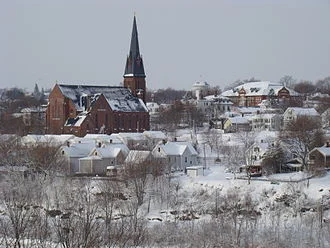
Bangor, Maine.
Maine is a joy in the summer. But the soul of Maine is more apparent in the winter.
--- Paul Theroux
Jim Hightower: Would Trump put a big tariff on his daughter's company?
Via OtherWords.org
Bring those jobs back home, Donald Trump bellowed to those greedy corporate executives who’ve shipped middle-class jobs out of country, or I’ll slap you with a big tariff when you try to sell your foreign-made products here.
Great stuff, Donnie — and to prove you mean business, I know just the CEO you should target first: Her name is Ivanka. Your daughter.
Her multimillion-dollar line of clothing and accessories, sold through major national retailers ranging from Macy’s to Amazon, is pitched to America’s working women. Yet practically all of her products are made on the cheap in low-wage factories in China, Indonesia and Vietnam — anywhere except America.
Imagine the message it would send to runaway corporations — and the integrity it would establish for Trump — if he slapped his first tariffs on Ivanka’s goods.
But neither Daddy Trump nor the daughter want to discuss the embarrassing conflict between his political bluster and her ethic of runaway capitalism. Instead, she’s tried to dodge the issue by saying it doesn’t matter, since she’ll “separate” herself from the business if she becomes a White House adviser.
Nice try, Ivanka, but the stench of hypocrisy will only grow nastier if you’re at your father’s side while he pretends to castigate other corporations that abscond from America.
The only way to salvage even an iota of moral virtue is to repatriate the manufacturing of your brand-name apparel. Bringing those middle-class jobs home to the Good Ol’ US of A would also make a powerful political statement.
Yet because money trumps both political savvy and the morality of simply doing what’s right, Ivanka says her corporate brand will stay offshore. As a spokeswoman put it: “We want to make responsible business decisions.”
Really? How does that “Make America Great Again”?
Jim Hightower is a radio commentator, writer, public speaker and editor of the newsletter, The Hightower Lowdown.

But now slush-soaked

"Windswept'' (pastel), by Ann Coleman, at Ann Coleman Gallery, Wilmington, Vt.
New England's beloved January thaw is a bit early this year.
Frank Carini: Brockton's water use threatening region's environment
By FRANK CARINI
In late October of last year, the water level of Silver Lake, in the Brockton, Mass., area, was down 72 inches, or 6 feet. Three weeks later, in mid-November, the level had dropped another 8 inches. Large portions of Massachusetts remain under drought conditions, but Alex Mansfield and Pine duBois of the Jones River Watershed Association claim the lake’s demise is a preventable manmade crisis.
They and others blame the problem on decades of overuse and misuse of local and regional waters. The city of Brockton, for instance, takes about 10 million gallons daily out of Silver Lake and pumps it 20 miles through two pipes, one of which is more than 100 years old.
The water level of 640-acre Silver Lake, which touches three Massachusetts communities, Pembroke, Kingston and Plympton, is at a 30-year low, according to Mansfield. He said this fact shouldn’t surprise anyone. In fact, both he and duBois say it’s long been known that Silver Lake can’t sustain that amount of daily withdrawal. It can’t even sustain half the current daily allotment, according to duBois.
Mansfield said the city of Brockton tracks the lake’s water level and water quality daily. ecoRI News spoke with Mansfield and duBois on the evening of Jan. 4. They said Silver Lake’s water level was down another foot and a half from mid-November.
“This issue doesn’t have anything to do with drought,” Mansfield said. “It’s about the city taking too much water. And the thing is we haven’t seen anything close to the worst of it. We’re starting 2017 at a 30-year low, and it’s so low that the lake isn’t going to rebound by April. That’s a bad starting point.”
Silver Lake, which lies within the Jones River watershed, is the 12th-largest natural lake in Massachusetts. When substantially drained, many additional feet of lakebed are exposed, and slow-moving animals, most notably freshwater mussels that clean the lake water of nutrients, can’t keep up with the receding shore and die.
Mansfield said the current crisis has killed fish, turtles and “tens of thousands” mussels. He also noted that people are riding their ATVs around the dry lakebed.
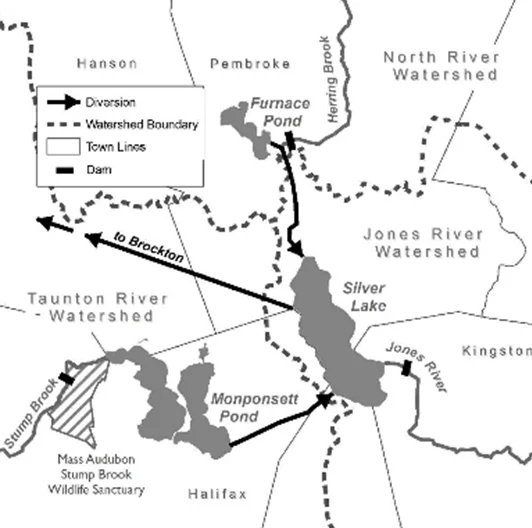
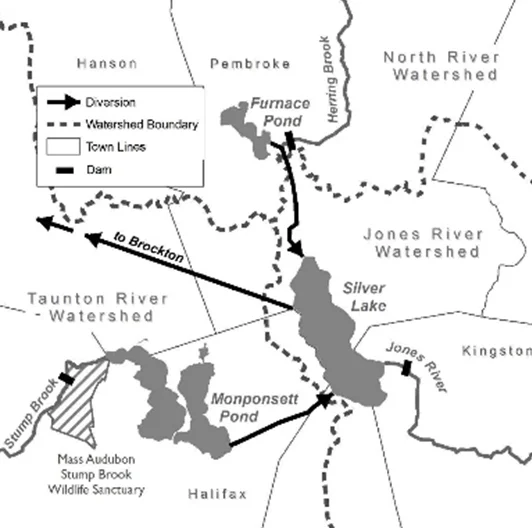
The city of Brockton gets its water from Silver Lake and several ponds in the surrounding area. (Mass Audubon)
The pumping of Silver Lake and other area waterbodies to meet Brockton’s water needs is impacting water quality and wildlife habitat from Halifax to Cape Cod, according to the Jones River Watershed Association (JRWA). Both Tubbs Meadow Brook, Silver Lake’s largest inflow, and Mirage Brook, a sub-watershed that makes up 25 percent of Silver Lake’s watershed, are stressed, according to the Kingston-based organization.
“The city of Brockton couldn’t care less,” said Mansfield, noting that the city is still negotiating a consent order with the Massachusetts Department of Environmental Protection (DEP). “They continue to say there’s no problem.”
In a Jan. 5 e-mail to ecoRI News, Larry Rowley, Brockton’s Department of Public Works commissioner, wrote that the city is “still in negotiations with DEP on this issue so no one should be discussing anything about this. When we have a final agreement we would be happy to talk to you.”
The city of Brockton began pumping water from Silver Lake in 1904. Several times during the next five decades the city was encouraged to find additional sources, or likely face water shortages. The advice was ignored.
In 1964, Brockton and the lake’s surrounding communities got a first-hand look at the predicted impact, when Silver Lake was drawn down by more than 8 feet, like it is now. The city had to stop drawing water from the lake for several months. The crisis prompted the creation of a special commission to find Brockton more water.
The commission’s report found that Silver Lake couldn’t supply more than 4.5 million gallons daily. Despite local opposition, however, the report eventually lead to an emergency legislative action that allowed Brockton to divert water from Monponsett Ponds in Halifax and Furnace Pond in Pembroke into Silver Lake, to expand the city’s water supply.
The decision to increase Brockton’s regional water withdrawals — the JRWA says 11 million gallons a day from all sources is the recommended limit — has had an adverse impact on the environment, according to Mass Audubon.
Among those impacts, according to the organization, are: lack of flow to Jones River, from Silver Lake, Stump Brook, from Monponsett Ponds, and Herring Brook, from Furnace Pond, during significant periods of the year; severe drawdown of Silver Lake for months at a time every year; habitat for fish and other aquatic life in local waterways is severely degraded, and in some cases eliminated for months at a time; and both Monponsett Ponds and Furnace Pond both have excessive-nutrient problems.
The special commission also suggested that connecting Brockton to the Metropolitan District Commission — now the Massachusetts Water Resources Authority (MWRA) — water supply would be the better solution, But it was decided that such an effort would take too long to address the existing emergency.
A decade later, in 1974, a consulting firm was hired to examine the city’s existing water supplies and needs. It determined that Brockton still didn’t have enough water to survive a drought. Nothing was done. In both 1982 and ’86, Massachusetts had to enact water-supply emergencies because Brockton had drawn Silver Lake down by as much as 20 feet.
A search began for more water. Connecting to the MWRA water supply was again recommended. The idea was again ignored. Instead, a desalination plant was built on the western banks of the Taunton River in Dighton. The facility takes water from the lower part of the Taunton River and purifies it to drinking-water standards.
Since the Aquaria Desalination Plant went on-line in 2008 it has supplied Brockton with about 3 percent of its annual water needs. Last year, the plant supplied less than 7 percent of the city’s water.
Mansfield said Brockton has never made the switch to MWRA water because of cost. “It’s more expensive than taking water out of the lake,” he said. “The desalination plant is barley used because the city doesn’t want to get locked into using it.”
The MWRA was established by an act of the Legislature in 1984 to provide wholesale water and sewer services. Today, the agency serves some 2.5 million people and more than 5,500 large industrial users in 61 cities and towns.
The 1964 Legislative act didn’t include any protections for Silver Lake, but it did include protections for Monponsett and Furnace ponds. The act set limits on when water can be diverted: no diversions in the summer when there are recreational uses; no diversions when the ponds are low; and no diversions when water quality presents a public-health risk, for example.
These important protections mean these additional water supplies aren't always available. Monponsett Ponds have been suffering from poor water quality for more than year. Excessive nutrient loading, lack of flushing and other problems have led to blooms of potentially toxic cyanobacteria. In fact, cyanobacteria cell counts have been measured in the millions per milliliter, far exceeding the public-health standards for swimming, according to the DEP.
The DEP has found that the nutrient levels of Monponsett Ponds, most notably West Monponsett Pond, are more than 300 times what they should be, which is fueling the cyanobacteria blooms.
Silver Lake also has spent time on the Massachusetts impaired waters list, for “fish, other aquatic life and wildlife,” according to DEP. The Jones River, which flows out of Silver Lake, is impaired in terms of “aesthetics, fish and wildlife, and recreational contact.” The river’s specific impairments include low dissolved oxygen and excess algae growth. DEP cites “flow alterations from water diversions” as the reason for these impairments.
“The quality of the ponds that go into Silver Lake have been degraded,” Mansfield said. “Bacteria blooms, swimming bans, no pets in the water. The entire arrangement has caused water-quality problems.”


David Warsh: Of Russian hacking and 'minimal democracy'

CHICAGO
I pored over the program of the Allied Social Science Associations, looking for a panel devoted to Russia, the topic uppermost on my mind. (I’m interested in the thinking behind the Russian intervention in the U.S. election.)
The closest I came was a session on the persistent effects of culture and institutions. It had been organized by James Robinson, director of the Pearson Institute for the Study and Resolution of Global Conflicts at the Harris School of Public Policy of the University of Chicago (not dean of the school, as asserted earlier) and author, with Daron Acemoglu, of the Massachusetts Institute of Technology, of Why Nations Fail: The Origins of Power, Prosperity, and Poverty (Crown, 2012).
That produced an especially interesting paper, A Theory of Minimal Democracy, by Francesco Trebbi, of the University of British Columbia, Chris Bidner, of Simon Fraser University, and Patrick Francois, also of UBC. Trebbi distinguished between relatively robust democracies, extending all or most of the familiar complement of rights to non-elites — to vote; to form and join associations; to be protected by the rule of law, and by a free press — and those states long known as minimalist democracies These hold regular elections, which may be hotly contested, but otherwise offer ordinary citizens relatively little else. They are widely distributed around the world but little understood: competitive autocracies, non-redistributive democractizations, captives of the resource curse.
Clearly Russia is one. The Dominican Republic, Ecuador, El Salvador, Haiti, Honduras, Nicaragua, Panama, Indonesia, Nepal, Moldova, and Mongolia are others.
A major question is how they change. Does deep culture dominate? Or might institutions — elections, for example — become self-enforcing? Questions like this one are at the heart of the contretemps with Russia: Vladimir Putin apparently believes that Hillary Clinton, as Secretary of State, sought to foment dissent in Russia in 2011, when he ran for a third term as president. Maybe she did.
A new sub-discipline of political economy, revivified by Acemoglu and Robinson, Torsten Persson and Guido Tabellini, and many others, has much to say about the issue, but has only just begun to train a new generation of area experts.
The territory of economics has exploded in the last 55 years, the American Economic Review, which once decorously appeared but five times a year, now arrives with a pound or two of new material every month. The Journal of Economic Literature, established to keep non-specialists abreast of the steadily broadening stream of publications, is approaching fifty; the Journal of Economic Perspectives, designed to communicate developments to an interested lay audience, is celebrating thirty years; four new field journals publish new work in microeconomics, macroeconomics, applied economics, and economic policy. And those are just the organs of the American Economic Association. Universities publish distinguished journals, too, as do other associations, societies, and commercial publishers.
A new entrant, The Annual Review of Economics, has begun to impinge on this established universe slightly since it first appeared, eight years ago. The first Annual Review — of Biochemistry — appeared in 1932. The enterprise proved so successful that the independent publishers who started it prepare today 41 collections of critical surveys of tightly focussed disciplines — including the Annual Review of Financial Economics and the Annual Review of Resource Economics. Established by Kenneth Arrow and Timothy Bresnahan, both of Stanford University, editing of ARE this year passed to Philippe Aghion, of the College de France, and Helene Rey, of London Business School..
By providing more and somewhat higher-level surveys of new important findings and new tools, the ARE has forced, or freed, JEL editor Steven Durlauf, of the University of Wisconsin, to cast his net more widely. The JPE, where Enrico Moretti, of the University of California at Berkeley, has replaced David Autor, of Massachusetts Institute of Technology, now seems more newsy than ever. As for the AER, I zero-in to see what’s new when the mammoth Papers and Proceedings record of the annual meeting arrives in May. Because it offers rapid publication of lightly-vetted articles deemed important, it regularly contains the first reports of inquiries that lead in due course to fault lines and fractures in received wisdom — hence to further spreading of the disciplinary tent.
The meetings themselves still fufill the basic functions. The incoming president and his program committee organize the sessions that are to be published in the Proceedings; he or she invites the Ely lecturer, too. President this year was Nobel laureate Alvin Roth, of Stanford University, an exponent of market design; he chose Esther Duflo, of MIT, who spoke about “The Economist as Plumber: Large-Scale Experiment to Inform the Details of Policy-Making.” Next year Olivier Blanchard will preside, having stepped down from eight years as chief economist of the International Monetary Fund.
A luncheon honored Nobel laureate Angus Deaton, of Princeton University. The John Bates Clark Medal was presented, to Yuliy Sannikov, of Stanford University. Four Distinguished Fellows of the Association were recognized: Richard Freeman, of Harvard University; Glenn Loury, of Brown University; Julio Rotemberg, of Harvard Business School; and Isabel Sawtell, of the Brookings Institution. The exhibit hall bustled a little less than usual, perhaps at the news that Peter Dougherty, a famous economics editor, would soon retire as director of the Princeton University Press.
Robert Shiller, of Yale University, gave the presidential lecture, “Narrative Economics.” He told the audience, “Narratives matter for human thinking, and they ought to matter for economics.” I think so too. There are too few of them. But there’s no time for narrative at the ASSA.
David Warsh, a longtime financial journalist and economic historian, is proprietor of economicprincipals.com.
An exciting tour of Trump's deep ties with Putin's mobster empire
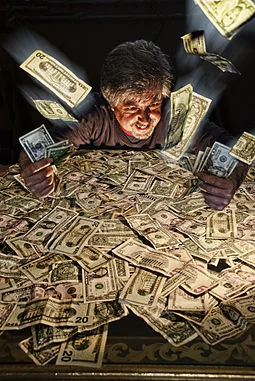
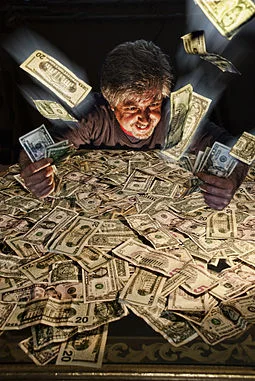
"Avarice,'' by Jesus Solana.
For a fascinating if alarming look at Donald Trump's connections to murderous Russian dictator Vladimir Putin and the ruthless fellow kleptocrats around him, read this investigative piece in the magazine The American Interest by hitting this link. The text below is from journalist David Cay Johnson's introduction:
Throughout Donald Trump’s presidential campaign he expressed glowing admiration for Russian leader Vladimir Putin. Many of Trump’s adoring comments were utterly gratuitous. After his Electoral College victory, Trump continued praising the former head of the KGB while dismissing the findings of all 17 American national security agencies that Putin directed Russian government interference to help Trump in the 2016 American presidential election.
As veteran investigative economist and journalist Jim Henry shows below, a robust public record helps explain the fealty of Trump and his family to this murderous autocrat and the network of Russian oligarchs. Putin and his billionaire friends have plundered the wealth of their own people. They have also run numerous schemes to defraud governments and investors in the United States and Europe. From public records, using his renowned analytical skills, Henry shows what the mainstream news media in the United States have failed to report in any meaningful way: For three decades Donald Trump has profited from his connections to the Russian oligarchs, whose own fortunes depend on their continued fealty to Putin.
We don’t know the full relationship between Donald Trump, the Trump family and their enterprises with the network of world-class criminals known as the Russian oligarchs. Henry acknowledges that his article poses more questions than answers, establishes more connections than full explanations. But what Henry does show should prompt every American to rise up in defense of their country to demand a thorough, out-in-the-open congressional investigation with no holds barred. The national security of the United States of America and of peace around the world, especially in Europe, may well depend on how thoroughly we understand the rich network of relationships between the 45th President and the Russian oligarchy....

Wintry-looking scribbles

One of Sol Lewitt's "Scribble Wall Drawings''.
Eric Litke, an assistant to Mr. Lewitt in 2001-2006, will present an overview of the artist's ''wall drawing'' murals, which used a graphite-scribbling technique. Meanwhile, there's a current exhibition of Mr. Lewitt's graphite wall drawings at Barbara Krakow Gallery, Boston.
Mr. Litke's lecture will be at Concord Art, 37 Lexington Rd., Concord, Mass., on Jan. 19, starting at 6:30 p.m.
.
Endure this evil month
"January, month of empty pockets! … let us endure this evil month, anxious as a theatrical producer's forehead."
-- Colette
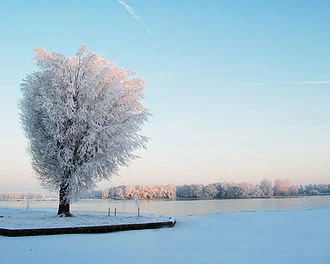
Snow's 'pure' beauty
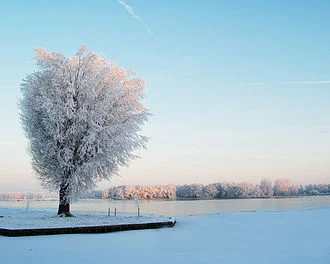
"To be part of summer one must feel a part of life, but to be part of winter one must feel a part of something older than life itself....A snowscape is white of course, and of course white is the universal symbol of "purity''. But its beauty is also a matter of "pure'' form, without color and without accent. Most important of all, perhaps, it is "pure'' after a fashion peculiar to that which is not alive, since all life is "impure'' both in the sense of being mixed and in the sense of being warm in various ways, including the sexual.''
-- Joseph Wood Krutch

Tim Faulkner: Mass., R.I. seek to patch natural-gas leaks from mains and service lines
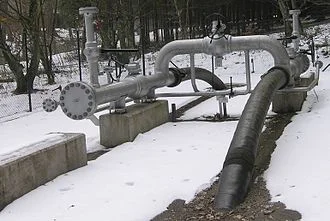
Via ecoRI.News (ecori.org)
Beneath our streets and front yards lie miles of leak-prone natural-gas pipes. Most are decades-old cast-iron and steel pipes. How much gas is escaping into the atmosphere and contributing to climate change is hard to calculate.
A 2015 Harvard University-led study estimated that nearly 3 percent of natural gas is lost as it moves through gas mains and service lines that connect to homes and businesses across southern New England. It may not sound like much, but depending on the season, the leaking gas accounts for between 60 percent and 100 percent of methane emissions in the region. Natural gas, of course, is about 90 percent methane, one of the most potent greenhouse gases.
Massachusetts and Rhode Island are looking to patch these errant emissions to meet their long-term emission-reduction goals to address climate change.
Fortunately, these old and leaking pipes are getting replaced, albeit slowly. Rhode Island is currently on pace to replace 1,237 miles of leak-prone pipes — about 39 percent of all gas pipes in the state — by 2035. Massachusetts has an estimated 20,000 gas leaks, but only those that pose an immediate health hazard are being fixed.
To speed up and expand the process, Massachusetts passed a law in 2016 to repair leaks that pose a low threat for explosion but still cause a significant environmental impact. As a result of the law, the state Department of Public Utilities (DPU) is exploring ways for utilities to quickly and affordably spot and fix the leaks, known as fugitive emissions.
As part of its efforts to curb climate emissions, the DPU released new rules in December that set emission caps for gas-distribution companies such as National Grid and Eversource Energy based on the miles of pipeline they own. The caps are expected to cut emissions by 10 percent by 2020.
Natural gas, of course, isn't a liquid but an invisible and mostly odorless gas. Leaks therefore seep undetected into the ground and percolate up into the atmosphere. In addition to causing explosions, leaky gas pipes increase ground-level ozone and reduce oxygen. They also kill vegetation, such as trees. In Massachusetts, Brookline, Hingham, Milton and Saugus have filed lawsuits against National Grid for not fixing leaky pipes that killed trees in their communities.
National Grid, the largest distributor of natural gas in the Northeast, is gradually replacing these gas lines. In 2015, they replaced 75.3 miles of gas lines in Rhode Island. In 2016, 64.6 miles were replaced. They plan to replace another 65 miles this year.
The improvements are part of a $445 million upgrade to pipes and natural-gas infrastructure in the state. Ratepayers pay those costs. Environmental advocates claim repairing leaks and replacing old pipelines reduces the need for new, interstate gas pipelines and other fossil-fuel infrastructure, such as power plants.
The Conservation Law Foundation estimates that gas customers in Massachusetts pay $38.8 million annually for gas that is lost from leaks.
“It's consumers that pay the price for a perpetually leaking gas system. The end consumer pays for all of the gas that local distribution companies purchase from producers, regardless of how much of that gas is lost to leaks (or other causes) on the way to consumers’ homes and businesses,” CLF said in a report it did on gas leaks.
Distribution pipelines are the “mains” that run under the street and can be 2 inches to 2 feet in diameter. Service pipelines are the gas pipes that connect from the main to homes and businesses. They are about 2 inches in diameter.
Transmission lines are the large pipelines that carry natural gas from the well, such as a fracking field, to a regional distribution center.
Prior to the 1950s, many of the mains and service pipes were made of cast iron. In the 1950s, the pipes switched to steel. Since the 1980s, plastic composite tubes have become the primary material for pipelines and now account for more than half of distribution and service pipes.
National Grid says that the age of a service line or a gas main doesn’t necessarily mean that it leaks. According to the company, third-party incursions caused by construction close to the lines by contractors or homeowners causes most leaks.
The new plastic pipelines are flexible and lighter than the cast-iron and steel mains, some of which date back to the late 1800s. Cast-iron and steel sections were mostly welded together. The plastic sections are fused to one another with a heat-producing device. This eliminates the joints between sections, which are the source of many leaks.
Wood pipes were first used when gas pipelines began in the mid-1800s. They were eventually abandoned for cast iron and steel. Some wood pipes remain in the ground but are unused.
The advocacy group HEET Home Energy Efficiency Team of Cambridge, Mass., says the public can help patch leaky pipes by supporting state bills and municipal endorsements of efforts to speed up repairs.
The public can also help by reporting suspected leaks to their utility. Patches of dead vegetation are a sign of leaks. A sulfur-like smell is another. A substance called mercaptan is added to natural gas, which is odorless, to give it its distinctive rotten-egg smell.
Tim Faulkner writes for ecoRI News.
Why Trump sucks up to Putin?
Donald Trump, unlike other presidents is the past 40 years, refuses to release his tax returns or other data related to his conflicts of interest, The information below suggests some reasons why:
Why did Putin order hacking to help Trump get elected? Stacey W. Porter posted to Facebook as follows:
1) Trump owes Blackstone/ Bayrock group $560 million (one of his largest debtors and the primary reason he won't reveal his tax returns)
2) Blackstone is owned wholly by Russian billionaires, who owe their position to Putin and have made billions from their work with the Russian government.
3) Other companies that have borrowed from Blackstone have claimed that owing money to them is like owing to the Russian mob and while you owe them, they own you for many favors.
4) The Russian economy is badly faltering under the weight of its over-dependence on raw materials which as you know have plummeted in the last 2 years leaving the Russian economy scrambling to pay its debts.
5) Russia has an impetus to influence our election to ensure the per barrel oil prices are above $65 ( they are currently hovering around $50)
6) Russia can't affordably get at 80% of its oil reserves and reduce its per barrel cost to compete with America at $45 or Saudi Arabia at $39. With Iranian sanctions being lifted Russia will find another inexpensive competitor increasing production and pushing Russia further down the list of suppliers.
As for Iranian sanctions, the 6 countries lifting them allowing Iran to collect on the billions it is owed for pumping oil but not being paid for it. These billions Iran can only get if the Iranian nuclear deal is signed. Trump spoke of ending the deals which would cause oil sales sanctions to be reimposed, which would make Russian oil more competitive.
7) Rex Tillerson (Trump's pick for Secretary of State) is the head of ExxonMobil, which is in possession of patented technology that could help Putin extract 45% more oil at a significant cost savings to Russia, helping Putin put money in the Russian coffers to help reconstitute its military and finally afford to mass produce the new and improved systems that it had invented before the Russian economy had slowed so much.
8) Putin cannot get access to these new cost saving technologies OR outside oil field development money, due to US sanctions on Russia, because of its involvement in Ukrainian civil war.
9) Look for Trump to end sanctions on Russia and to back out of the Iranian nuclear deal, to help Russia rebuild its economy, strengthen Putin and make Tillerson and Trump even richer, thus allowing Trump to satisfy his creditors at Blackstone.
10) With Trump's fabricated hatred of NATO and the U.N., the Russian military reconstituted, the threat to the Baltic states is real. Russia retaking their access to the Baltic Sea from Lithuania, Latvia and Estonia and threatening the shipping of millions of cubic feet of natural gas to lower Europe from Scandinavia, would allow Russia to make a good case for its oil and gas being piped into eastern Europe.
Sources: Time Magazine, NY Times, The Atlantic, The Guardian UK.
Sent from my iPhone
Slob/celebrity culture puts a threat to national security in the White House
That Donald Trump is a sociopath has long been clear. He’s a volatile, astonishingly greedy and corrupt narcissist and quasi-fascist who lies nonstop. That the Republican Party nominated him and that a minority of voters swimming in rage, wishful thinking and willful ignorance elected him says something about America’s steep decline into a slob culture.. (I wrote in Jim Webb’s name for president on Election Day, by the way.)
But what is even scarier is that someone who might be a traitor, working closely with a foreign power, Russia, now has access to the most secret U.S. intelligence information. What will the leaders of a mostly supine Republican Party do to protect America from the grave security threat posed by having this sleazy man as our head of state? If they don’t do anything, how can they call themselves “conservatives’’? But for most of them, fear and opportunism will out.
From the federal statute on treason:
“Whoever, owing allegiance to the United States, levies war against them or adheres to their enemies, giving them aid and comfort within the United States or elsewhere, is guilty of treason and shall suffer death, or shall be imprisoned not less than five years and fined under this title but not less than $10,000; and shall be incapable of holding any office under the United States.”
-- Robert Whitcomb


Baffling blue

"Maragalle'' (mixed media on wood), by Deborah Barlow, in the group show "Clew: A Rich and Rewarding Disorientation,'', at the Lamont Gallery, at Phillips Exeter Academy, Exeter, N.H., Jan. 20-April 15.
The gallery writes:
“Clew: The word can mean variously a ball of yarn, part of a ship's sail, and an expanse of wings. The most famous clew in Western culture was the ball of thread given to Theseus by Ariadne, used to guide the hero back through the labyrinth of the Minotaur. Over time clew has come to mean “a fact, circumstance, or principle which, being taken hold of and followed up, leads through a maze, perplexity, difficulty, intricate investigation” (Oxford English Dictionary). The labyrinth in that famous story is often a metaphor for what is baffling, complex and unfathomable. But a labyrinth can also suggest the mysterious and uncanny. Wandering through a maze—to be in a state of ‘amazement’—can be a rich and rewarding disorientation. When sailing in uncharted waters, the clew we need is one that brings us into proximity to the unknown and then back out again. Wings open and expand.
“’Clew: A Rich and Rewarding Disorientation’ is an artistic collaboration that emulates the labyrinth with its confluences and unexpected turnabouts. Using overlays of music, poetry and visual arts, four artists give viewers and listeners new ways to see, hear and navigate a tripartite, intricately layered world. Within the setting of a physical gallery space, all three formats intermingle freely, and scheduled events shift the central focus from poetry to sound to the visual. Experienced individually or collectively, Clew compounds and expands into a journey of multidimensionality and surprise.’’
His summer within
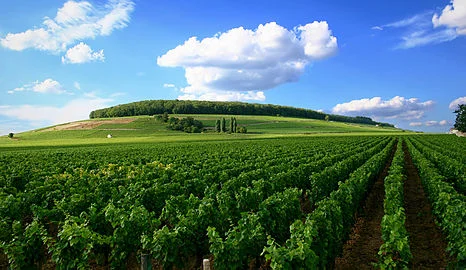
"In the depths of winter I finally learned that within me there lay an invincible summer."
-- Albert Camus
German general consul to speak on Jan. 11 about post-Brexit Europe
To members and friends of the Providence Committee on Foreign Relations (thepcfr.org; pcfremail@gmail.com).
Happy New Year. Here’s our updated schedule through June.
Our next speaker comes on Wednesday, Jan. 11, with German General Consul Ralf Horlemann on the role of Germany in the post-Brexit world and facing a more aggressive Russia.
Internationalepidemiologist Rand Stoneburner, M.D., had been scheduled for Jan. 18. He has asked to resked to the spring in order to, among other things, have more information on Trump administration public-health policies and to be nearer to the start (in the Northern Hemisphere) of the Zika season. So we have reskedded him to Tuesday, May 2.
.
On Thursday, Feb. 23, we’ll have international security and anti-terror expert Carl Maccario, who runs the Center for Nonverbal Communication. (He’s a tough guy who will have some exciting visuals for us!) He replaces Indian Navy Admiral Nirmal Verma, who was to be our February speaker but has had to resked because of an unexpected duty in Asia.
Dr. Stephen Coen, director of the Mystic Aquarium, will speak on the condition of the oceans, Wednesday, March 8.
Brazilian political economistand commentator Evodio Kaltenecker, who had been skedded for April, has been moved to Thursday, March 16, to talk about the crises facing that huge nation.
On Wednesday, April 5, famed French journalist, novelist and broadcaster Jean Lesieur will speak on the global order being turned upside down by the advances of dictators, the retreat of democracies and the presidency of Donald Trump, not tomention the existential crisis of the European Union.
As noted above. Dr. Rand Stoneburner, the international epidemiologist, is now scheduled to speak onTuesday, May 2.
James E. Griffin, an expert on ocean fishing and other aspects of the global food sector, will speak to us on Wednesday, May 17.
Joining us on Wednesday, June 14, will be Laura Freid, CEO of the Silk Road Project, founded and chaired by famed cellist Yo-Yo Ma in 1998, promoting collaboration among artists and institutions and studying the ebb and flow of ideas across nations and time. The project was first inspired by the cultural traditions of the historical Silk Road.
Meanwhile, we’re trying to keep some flexibility to respond to events. Everything in human affairs is tentative. ”We make plans and God laughs….’’

Carolyn Morwick: Some New England election results in review

Via the New England Board of Higher Education (nebhe.org)
All six New England states voted for Hillary Clinton in the race for the White House, despite her loss nationally in the electoral college. It's unclear how the 115th Congress and President-Elect Donald Trump will act on proposals by Clinton and her Democratic rival Bernie Sanders for free college and reduced student debt. Among highlights of the 2016 elections:
New Hampshire and Vermont elected Republican governors, increasing the slate of GOP governors in New England to four
Maggie Hassan’s election to the U.S. Senate gave women Democrats control of New Hampshire’s congressional delegation; women are also slated to fill House speakers’ posts in Maine and Vermont
Republican gains in the Connecticut state Senate produced an 18–18 tie
Maine voters approved a hike in the minimum wage and new income tax for those with incomes of $200,000 or higher to fund public education
Maine voters also made a national splash by approving "rank choice" voting which would allow voters to rank their choices of candidates in elections
Massachusetts voters rejected a call for more charter schools
Maine, Massachusetts voters approved recreational use of marijuana.
Connecticut election results
All six Democratic congressional incumbents easily defeated their challengers, as the state voted handily for Clinton in the race for president.
It was a different story In the Connecticut General Assembly. In the state senate, the election produced an 18-18 tie. Republicans picked up three seats by unseating two Democrats and winning an open seat. Sen. Dante Bartolomeo (D) lost her re-election bid to Republican Len Suzio; veteran legislator Sen. Joseph Crisco Jr. (D) lost his race to Republican George Logan. In the contest for an open seat, Republican Heather Somers beat former Democratic State Rep. Timothy Bowles.
Republicans also gained eight seats in the House, where Democrats held on to a 79 – 72 majority. Republicans unseated six Democrats and won two open seats.
Maine election results
In a rematch in the 2nd Congressional District, incumbent Congressman Bruce Poliquin (R) defeated challenger Emily Cain 54% to 45%. In the 1st Congressional District, incumbent Chellie Pingree easily won re-election, defeating Republican challenger Mark Holbrook.
In a close race for the White House, Clinton beat Trump 47% to 45%.
In the Maine Legislature, Senate Republicans maintained control by a one-vote margin, 18–17. In the House, Democrats have the majority, 76-72 with two Independents.
In the House, lawmakers chose Democrat Rep. Sara Gideon of Freeport to succeed outgoing speaker, Mark Eves. Senate President Republican Micheal Thibodeau was re-elected to his post.
Ballot questions
Question 1: Legalization and Regulation of Recreational Marijuana. Passed
Question 2: New income tax for household incomes higher than $200,000 to fund public education. Passed
Question 3: Require background checks before the sale or transfer of firearms between individuals not licensed as dealers. Failed
Question 4: Raise the minimum wage to $12 in increments by 2020. Passed
Question 5: Rank choice voting which would allow voters to rank their choices of candidates in elections and to have ballots recounted at the state level in multiple rounds in which last place candidates are eliminated until a candidate wins by majority. Passed
Question 6: Allows $100 million in bonds for transportation projects. Passed
Gov. Paul LePage remains opposed to ballot questions 2 and 5, saying they would hurt the Maine economy.
Massachusetts election results
Nationally, all nine Democratic congressional incumbents were re-elected while Clinton trounced Trump, 61% to 34% in the race for president.
In the Massachusetts legislature, Democrats continued to hold a wide majority over Republicans. In the House, Democrats had a supermajority, 124–33 while in the Senate, Democrats retained control, 34 to 6Ballot questions
Question 1: Expand slot machine gaming (allow at tracks) Failed
Question 2: Expand charter schools (up to 12 new approvals) Failed
Question 3: Improve farm animal confines (space to stand, turn) Passed
Question 4: Legalize marijuana (regulate and tax) Passed
New Hampshire election results
In a closely watched race, Clinton narrowly edged Trump 46.8% to 46.5% ,while former Governor and Democra, Maggie Hassan squeaked by incumbent Republican Kelly Ayotte 48% to 47.9% in the race for U.S. Senate. Democrat Carol Shea-Porter defeated incumbent Frank Guinta in their fourth matchup. Incumbent Democrat Annie Kuster was re-elected, defeating Jim Lawrence 50% to 45%.
In the race for governor, Republican Chris Sununu defeated Democrat Colin Van Ostern 49% to 48%. In the legislature, Republicans kept control of the House—the largest state chamber in America—220 to 180. Both Speaker Shawn Jasper and Senate President Chuck Morse were re-elected to their posts.
Rhode Island election results
Both Democratic congressmen, David Cicilline and James Langevin easily defeated their opponents. Democrat Clinton soundly defeated Trump in the race for president, 55% to 39%.
Ballot questions
The following ballot questions were all approved.
Question 1: Restores Ethics Commission’s full authority over state lawmakers Passed
Question 2: Twin River Proposal to build a new casino (pending local approval) Passed
Question 3: Proposal to borrow $27 million for new veterans home Passed
Question 4: Proposal to borrow $45 million to fund building new engineering school and new innovation center at University of Rhode Island Passed
Question 5: Proposal to borrow $70 million to fund new port projects at Quonset and Providence ports Passed
Question 6: Proposal to borrow $35 million for various environmental projects Passed
Question 7: Proposal to borrow $50 million for housing Passed
In throwing her support behind Question 4, Gov. Gina Raimondo said: "This bond builds on our success, and it positions us for greater, more sustainable success in the years ahead. By voting 'yes' on 4, you're going to be voting for a stronger economy. You're going to be voting for the innovative jobs that will position Rhode Island to lead a new industrial revolution in advanced industries and advanced manufacturing."
Vermont Election Results
U.S. Democratic Sen. Patrick Leahy easily defeated his challenger, Republican Scott Milne 60% to 32%. Democratic Congressman Peter Welch handily defeated his challenger, Erica Clawson of the Liberty Union Party, 77% to 9%. Clinton beat Trump, 56% to 29%.
In the race for governor, Lt. Gov. Republican Phil Scott defeated Democrat Sue Minter 51% to 43%.
In the Vermont General Assembly, Democrats control the House by a 98 to 52 margin, while in the Senate Democrats maintain a 23 to 7 margin. Democrats have chosen a new speaker, Rep. Mitzi Johnson and Sen. Tim Ashe is the new president of the Senate.
Carolyn Morwick directs government and community relations at the New England Board of Higher Education and former director of the Caucus of New England State Legislatures.