
Vox clamantis in deserto



Summary justice
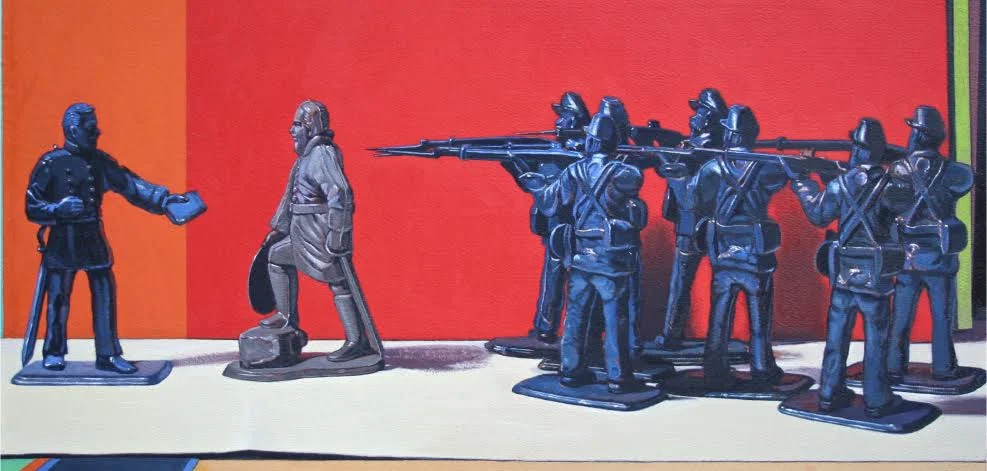
"Decision by Committee'' (still life with nine toys, oil on panel), by Gerry Perrino in ArtProv Gallery's (in Providence) show, "Henry's Kids,'' Feb. 8-March 18.
"Henry's Kids'' is a show of current work by former students of Enrico “Henry” Pinardi, who taught at Rhode Island College from 1976-1995 and affected the work and personal lives of the more than 30 participating artists in the show.
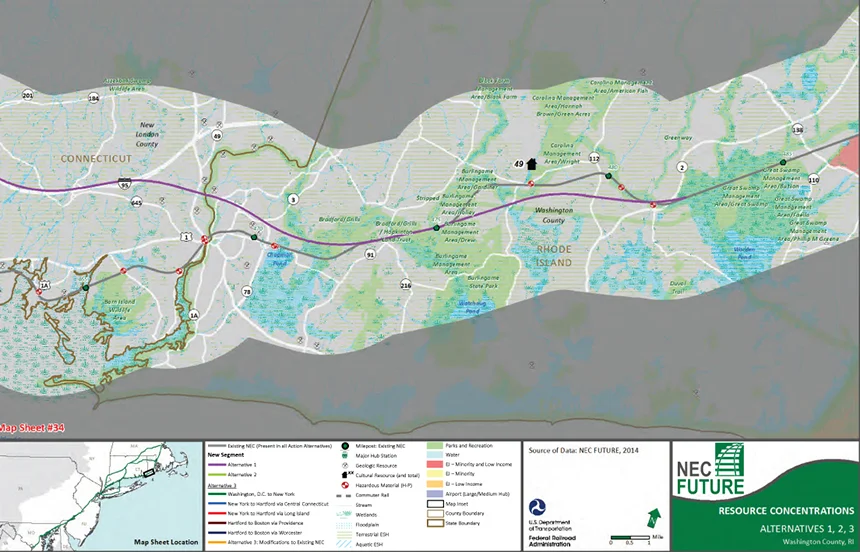
NIMBY war underway against straightening Northeast Corridor train route to improve service
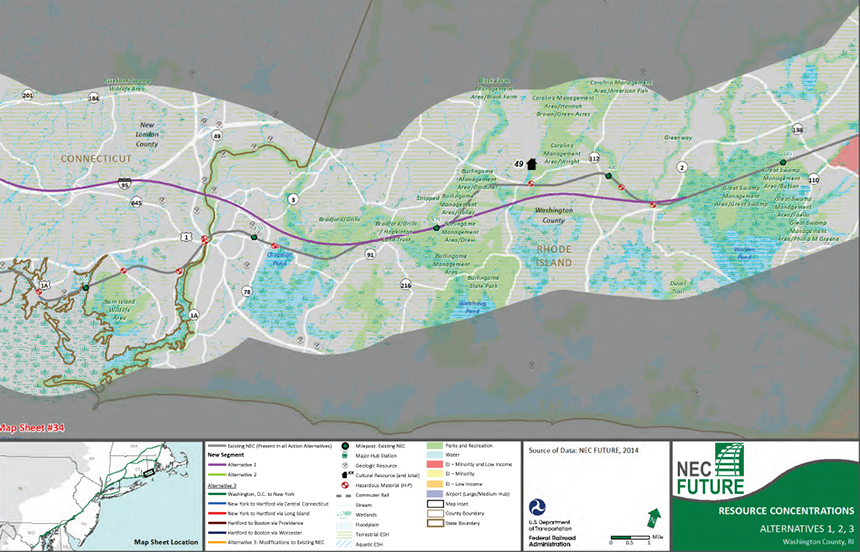
The proposed path of the new Northeast Corridor railroad route through the Rhode Island towns of Westerly and Charlestown has some officials and residents worried. (NEC Future environmental impact statement). Yes, much of this is impossible to read, but you get a sense of the route.
Via ecoRI News (ecori.org)
By FRANK CARINI
The Federal Railroad Administration, about a week before Christmas, released its final environmental impact statement regarding the straightening of Northeast Corridor tracks, from Washington, D.C., to Boston, during the next few decades.
Impacted communities, including Charlestown, South Kingstown and Westerly, R.I., and Old Lyme, Conn., have 30 days to respond. The comment period is open until Jan. 31. The Federal Railroad Administration (FRA) has estimated the cost of its proposal at nearly $130 billion, plus an additional $2 billion annually to operate. Northeast Corridor (NEC) states will be expected to pay part of the cost, and the project can’t happen without approval from the corridor’s eight states.
The proposed new railroad path would cut off an estimated 45 minutes of travel time between New York City and Boston, according to the FRA’s NEC Future initiative, by straightening out curves that currently exist in the tracks.
Both public and private property could be impacted, including some sensitive areas.
The proposal calls for rerouting the tracks through Grills Preserve in Westerly, and through Charlestown's Frances C. Carter Memorial Preserve and Amos Green Farm. The new tracks would rejoin the old rail bed in the Great Swamp Management Area in South Kingstown, where a third rail would be added to increase railroad width by 50 percent, according to NEC Future.
Some wetlands would reportedly be filled in Burlingame and the Great Swamp Management areas, and in Indian Cedar Swamp. The project also calls for the possibility of blasting and trenching.
The massive rail project proposal has both activists and lawmakers concerned about potential environmental impacts and cost.
Gregory Stroud, executive director of SECoast, recently told The Connecticut Mirror he’s no fan of the plan.
“A $100 billion dollar infrastructure project shouldn’t be planned in secret and announced by surprise, on a Friday (Dec. 16), just nine days before the Christmas holiday,” he told the newspaper. “This sets a terrible precedent, not just for NEC Future, but for all of the infrastructure projects planned for towns across Connecticut over the next two decades. This isn’t how you announce a good plan, or a plan with real public support.”
At a Dec. 16 press conference in Hartford, Sen. Richard Blumenthal, D-Conn., said “this concept and plan, just to reassure people in Connecticut, is simply not happening,” according to the same Mirror story.
Other environmentalists and officials in both Connecticut and Rhode Island have noted their concerns. In a Dec. 19 e-mail to ecoRI News, a Rhode Island planning board official, who wished not be identified, wrote, “The proposed rail line appears to cut through state and private properties including the middle the Francis Carter Preserve ... this would make it dangerous for wildlife and people to use and negate its value. Wildlife and important flora will be affected.”
In a Dec. 21 e-mail to ecoRI News, Kristen Castrataro wrote that the proposed track changes would impact the entire state. The Richmond resident noted that FRA's environmental impact statement indicated that 11 Rhode Island cultural resources and historic properties would be impacted.
Castrataroalso noted two other concerns: the proposal would impact an additional 200 acres of prime Ocean State farmland; and, of the eight states and the District of Columbia named in the plan, Rhode Island would have the highest acreage of parkland — more than 50 acres — "converted to a transportation use."
NEC Future is a comprehensive planning effort to define, evaluate and prioritize future investments in the Northeast Corridor. The FRA launched the initiative in February 2012, to consider the role of rail passenger service in the context of current and future transportation demands.
Amtrak’s Stephen Gardner, who is in charge of business operations on the corridor, told The Associated Press that the plan affirms the railroad’s “long-held view that rebuilding and expanding the Northeast Corridor is essential for the growth and prosperity of the entire region.”
The 457-mile NEC — anchored by D.C.’s Union Station in the south, New York’s Pennsylvania Station in the center and Boston's South Station in the north — is one of the most heavily traveled rail corridors in the world, according to the FRA. The NEC is shared by intercity, commuter and freight operations, and moves more than 365 million passengers and 14 million car-miles of freight annually.
While improvements continue to be made, the FRA says NEC faces serious challenges, with century-old infrastructure, outdated technology and inadequate capacity to meet current or projected travel demand.
Sen. Jack Reed, D-R.I., is a proponent of the plan and was against Providence not being included in the project.
“One of the key points we’ve made emphatically is that Providence station has to be a key part of the Northeast Corridor and that’s been accepted by the secretary of transportation and everyone else,” Reed told WPRI Eyewitness News earlier this month. “It has to be an integral part because it’s important not only to Rhode Island but to the whole region.”
Reed is the top Democrat on the appropriations subcommittee that allocates Amtrak funding.
Frank Carini is editor of ecoRI News.

Trump's American Nazi followers are gleeful and hard at work

Here's an example of the work of some avid American Nazi supporters of Donald Trump. In this case they are denouncing Bill Kristol, who has stepped down as the editor-in-chief of The Weekly Standard.
''Bill Kristol the evil Zionist Jew warmonger has called us Alt-Right Nazis 'scaredy cats.'
"What a disgusting faggot this vermin is.''
To read more from the Nazis’ publication The Daily Stormer, please hit this link.
Safer sushi from the Gulf of Maine
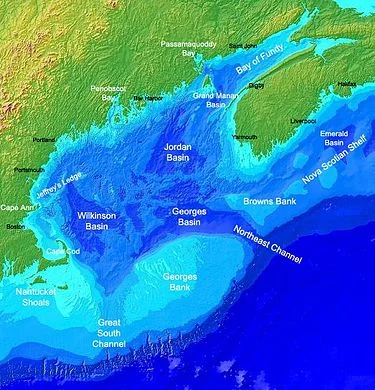
People who are environmental-science “skeptics,’’ such as our next president, and/or who basically want industry to do whatever it wants to maximize profits, might look at the Gulf of Maine, where anti-pollution regulations imposed on coal-fired power plants in the Midwest cut mercury levels in Gulf of Maine by 2 percent a year in the 2004-2012 period, Maine Public Radio reported. Bad for utility execs and shareholders, good for public health and fishermen. Enjoy your sushi.
-- Robert Whitcomb
David Warsh: Andrew Marshall and U.S. defense strategy; Gates for president?
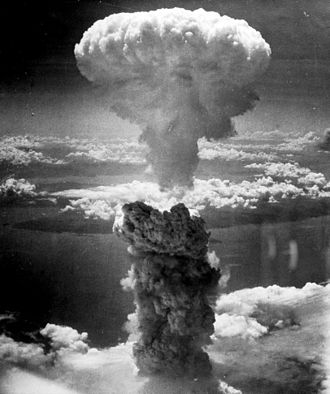
Avoided since 1945. Are we on borrowed time?
Somerville, Mass.
The U.S. last elected a person without formal political experience to the presidency in the 1950s, in a landslide election. By common consent, Dwight David Eisenhower worked out extremely well. Sixty-four years later the nation has elected another outsider, a real estate developer turned television celebrity, this time by the narrowest of margins. Donald Trump is giving plentiful signs of becoming a disaster.
It’s best, I’ve argued, to view Trump’s victory as largely accidental, to seek to limit the damage during his administration, and think ahead. To what? Polarization will be even worse by 2020. We’ll badly need to elect a president who can be trusted. It’s not too soon to for the rudderless Dems to begin thinking about the possibility of drafting a soldier-statesman of their own +– Robert Gates (b. 1943), who served as secretary of defense under Presidents George W. Bush and Barack Obama, is the one who comes to mind. At 77, Gates could conduct a front-porch campaign.
The question of the extent and effect of Russian hacking has taken on a new prominence. There seems little doubt that some, perhaps difference-making interference took place. The New York Times went a long way last week toward showing that the CIA is not making this stuff up, though there remain some knowledgeable skeptics. It’s a stretch to suggest that the existence of a Russian campaign somehow delegitimizes Trump’s victory. But the way the president-elect has rejected intelligence assessments out of hand poses a whole new range of problems.
In the circumstances, it is worth thinking back to the somewhat complicated story of what happened last time an incoming president doubted the competence of the U.S. intelligence community and sought to overhaul it. That was 1969, when Richard Nixon took office.
The world was scary then, too. More than half a million U.S. troops were in Vietnam; the American war there was entering its fifth year. The Soviet Union and China were threatening to go to war with each other along the Amur River, and each had enmity to spare for the United States as well. True, the U.S. was landing the first man on the moon, but the Soviets were testing their first multiple independently targeted re-entry vehicles, missile warheads that might confer a first-strike capability, a possibility much-feared in the Pentagon. West German Chancellor Willie Brandt had begun his new Ostpolitik, seeking better relations with the Soviets. Tensions simmered between Israel and Egypt in the wake of the Six-Day War, in 1967.
Nixon knew a thing or two about foreign relations from eight years as Eisenhower’s vice president. He was dissatisfied with the CIA’s intelligence reports, seeing them as lackluster and smug; indeed, he began skipping their morning briefing reports in favor of those prepared by the National Security Council staff of the White House Situation Room. Instead of quarreling openly with CIA Director Richard Helms, Nixon instructed former Harvard Prof. Henry Kissinger, his national security adviser, to plan a massive overhaul of the intelligence community.
Kissinger turned to Andrew Marshall, an expert on long-range economic competition with the Soviet Union, who had replaced James Schlesinger as director of strategic studies at RAND Corp. when Schlesinger left to become deputy director of the Office of Management and Budget in the new administration. .
Marshall, born in Detroit in 1921, attended the city’s premier vocational high school during the Great Depression. For the first three years of World War II, he worked as a machinist in a B-17 factory; a heart murmur kept him out of the Army. Having been broadly educated by his father, an English immigrant stonemason, Marshall tested straight into graduate studies in economics at the University of Chicago in late 1944.
He soon found himself involved in one of the great intellectual hothouses of 20th Century social science, the Cowles Commission, working with Jacob Marschak and Tjalling Koopmans, hanging out with Herbert Simon and Kenneth Arrow. All but Marschak (who died in 1977) eventually became Nobel laureates. Among Marshall’s professors were Milton Friedman, Allen Wallis, and, especially influential, Frank Knight.
(Knight has been enjoying something of a renaissance in recent years, largely because of his 1920 thesis book, Risk Uncertainty and Profit, with its distinction between calculable risks and the more deeply uncertain ones that are life’s “unknown unknowns.” A deeply skeptical Midwesterner, Knight struggled mightily to escape the Christianity of his youth. By the time that Marshall met him, he was becoming irascible; in 1954, Friedman ran him off into retirement. He continued to exert influence, though, especially at the University of Virginia Department of Economics. A particularly good account of various issues raised by Knight can be found in Escape from Democracy: The Role of Experts & the Public in Economic Policy, Cambridge, 2016, by David Levy, of George Mason University, and Sandra Peart, of the University of Richmond.
Marshall moved on to the Washington office of RAND Corp, a cutting edge social- science think-tank set up by the U.S. Air Force in Santa Monica, Calif., in the years after World War II. Soon he was splitting his time between Washington and the more free-wheeling West Coast environment, where he paired up with like-minded physicist Herman Kahn, worked with economists Burton Klein, Richard Nelson and Sidney Winter, and gradually migrated towards other social sciences.
As early as 1952 Marshall was arguing that Western responses to Soviet power should designed, not just for self-protection, but to affect the behavior of the enemy. By the mid-1960s, he had embarked on studies of organizational behavior in the Soviet Union. Then Kissinger called and asked him to come by for a visit.
In December 1969, Marshall set up in the Executive Office Building next to the White House to analyze flows of information to the president. His next task was to referee an argument between the CIA and the Air Force over the significance of the new Soviet SS-9 rocket (those multiple warheads). By March 1972 he had become director of a newly created Net Assessment Group within the NSC.
Then in June 1972, the behind-the-scenes struggle among the Nixon White House, the CIA and the FBI catalyzed the Watergate burglary and subsequent scandal, whose complex dynamics have been unraveled and brought up to date by independent journalist Max Holland in Leak: Why Mark Felt Became Deep Throat (Kansas, 2012).
The White House forced CIA Director Helms to retire in December 1972, after he refused to impede the FBI’s investigation of Watergate. Marshall’s friend Schlesinger was assigned to replace him, then six months later was named secretary of defense, replacing Elliott Richardson, who had become attorney general. (Former Saigon Station Chief William Colby took over the CIA.)
Schlesinger asked Marshall to move to the Pentagon, creating the Office of Net Assessment for him – a small group, far from the spotlight, modestly funded, a “skunkworks” charged with keeping abreast of the growth of knowledge, reporting directly to the secretary of defense. In the bourgeoning Watergate scandal, Marshall enjoyed an extra layer of invisibility.
In his initial memo, August 20, 1973, Marshall told Schlesinger, “We are the end of an era,” and that the United States needed to play “a more sophisticated game.” Previously the competition with the Russians had been that of a rich man and a poor man, but now the Soviets had achieved military equality.
In general we need to look for opportunities as well as problems; search for areas of comparative advantage and try to move the competition into these areas; [and] look for ways to complicate the Soviets’ problems.
So much for détente; within a year Nixon was gone. All this is described in Casting Net Assessment: Andrew W. Marshall and the Epistemic Community of the Cold War, by Lt. Col. John M. Schutte, published by the School of Advanced Air and Space Studies of Air University, is available for free. It is, of course, a somewhat triumphalist account. There, is much corroborating evidence, however, including Jonathan Haslam’s excellent Russia’s Cold War: From the October Revolution to the Fall of the Wall (Yale, 2011).
Over the next 15 years the U.S. ratcheted up the pressure on the Soviet Union, largely along lines suggested or supported by Marshall. The Strategic Defense Initiative (“Star Wars”) pursued an exotic new generation of space-based ballistic missile defenses. The B-1 bomber forced the Soviets to invest in conventional defenses along their nine-time-zone border, adding to the military burden on the USSR’s economy. Extensive new war-gaming techniques demonstrated the value of strategic arms-limitation talks. The ONA battled with CIA and Congress, but always behind the scenes. And in the end, Net Assessment won out.
After 1991, Marshall moved on to promoting a new view of the middle-range future – one in which U.S. relation with China and Japan would become a major aspect of U.S. strategy, and technological advances would be so great as to bring about what he called a “military revolution” — global positioning satellites, drones, operational innovations (think SEAL Team Six), and organizational adaptation (think Tampa’s Central Command).
The second part of the story is laid out in detail in The Last Warrior: Andrew Marshall and the Shaping of Modern Defense Strategy, (Basic, 2015), by Andrew Krepinevich and Barry Watts. In a foreword, former CIA director Gates writes
“[I]n the early 1970s, the CIA estimated the burden Soviet defense spending placed on the USSR’s economy to be 6 or 7 percent. Marshall’s independent assessment of the Soviet defense burden led the CIA to double its estimate. It convinced a number of key senior leaders that it would be difficult for the Soviets to sustain this level of effort over the long term. Put another way, it suggested that time was on our side. A decade later, Marshall was proved right.’’
It was hardly noticed when Marshall retired after 41 years of service to 12 defense secretaries under eight administrations. With Mie Augier and James March, Marshall published one paper last year –“The Flaring of Intellectual Outliers: An Organizational Interpretation of the Generation of Novelty in the RAND Corporation’’ – and is working away on another.
One virtue of the history of the Office of Net Assessment is to call attention to all that has changed in the nearly 50 years since 1969. Then the world had been carved into three great sectors, a First World (industrial democracies, Second (centrally planned economies) and Third (post-colonial nations). China was in the throes of its Cultural Revolution; the Soviet Union was entering upon a period of stagnation, and the U.S. was only just beginning to realize that the height of its powers lay in the past. Today, China is surging, the U.S. is deeply divided, and it is the Russians who, having taken a page from Marshall’s book, are searching for areas of comparative advantage and looking for ways to complicate America’s problems – with some success.
. xxx
Thomas Schelling died last week. He was 95. Sometimes vilified for work on nuclear deterrence in the early 1960s, he lived long enough to broadly apply his work on strategic thinking and to be recognized by a Nobel Prize. Tyler Cowen gives a good summary of Schelling’s influence
Many readers may have seen online Patti Smith’s performance of Bob Dylan’s song, “A Hard Rain’s A-Gonna Fall,” at the Nobel concert earlier this month. Only a few will have watched Schelling’s Nobel lecture about the origins of the taboo that has prevented the use of nuclear weapons for 75 years. One takes 9 minutes to view, the other 43 minutes. They are equally moving.
David Warsh, a longtime economic historian and columnist, is proprietor of economicprincipals.com, where this essay first ran.

Chris Powell: At least until spring, let the 'nattering nabobs' do their thing
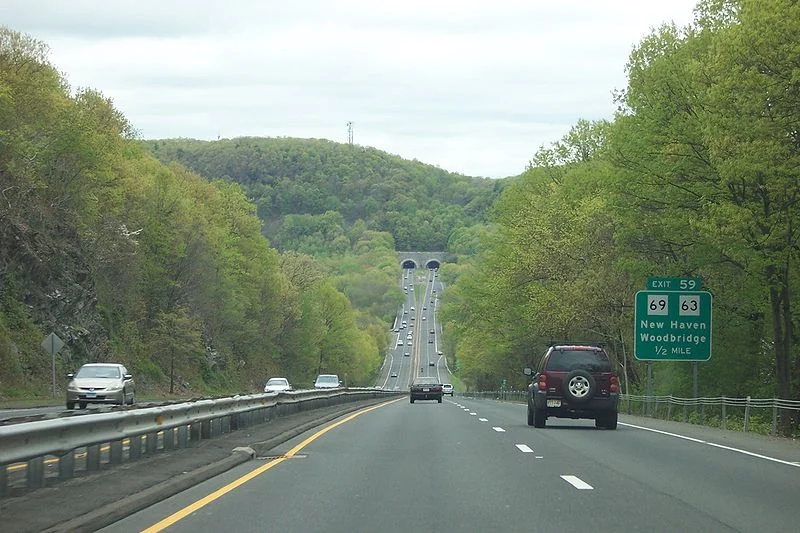
Springtime on Connecticut's Wilbur Cross Parkway.
During the congressional election campaign in 1970, a campaign to me almost as nasty as this year's presidential campaign, Vice President Spiro T. Agnew famouslyvderided the Nixon administration's critics in the news media.
"In the United States today," Agnew said, "we have more than our share of the nattering nabobs of negativism."
Elected officials everywhere sometimes share that feeling, and Connecticut Gov. Dannel Malloy seems to be the latest one. Speaking last week to the Middlesex County Chamber of Commerce breakfast in Cromwell, the governor complained about the dismal view of Connecticut that is sometimes reflected by news organizations.
"There is more good news than bad news," the governor insisted, "but we dwell on the bad news." Having suffered a lot of bad news during his six years in the state's top office, news that included his two mammoth tax increases, the governor has developed a thicker skin, and his tone in Cromwell was more plaintive than demagogic like Agnew's.
Further, given the financial disaster bequeathed to him by his predecessors, Malloy is always deserving of some sympathy, while Agnew never was, since he was a mere political hatchet man, and sometimes equated disagreement with disloyalty and even communism. {And he was forced by office by a corruption charge.}
But most people in Connecticut really don't need to be told that times are good or bad. While they are paying less attention to the news and more to "social media," less attention to public policy and more to cat videos and other comic relief, they still can tell if their incomes are rising and their tax burdens falling or not, just as they can tell if the people around them are happier or more harried and depressed.
Even as national surveys still rank Connecticut high for quality of life, opinion polls of state residents find most of them in a mood so sour that they claim to be inclined to leave. That is, while living conditions here still may be better than elsewhere, people sense that conditions are getting worse.
As the governor spoke in Cromwell, Bristol-Myers Squibb announced that it wouldclose its research and development office in Wallingford, eliminating 500 jobs or moving them out of state.
Just after the governor spoke three men were shot, one of them being critically wounded, in separate incidents in the poverty factory known as New Haven.
Meanwhile, police in the poverty factory known as Hartford announced that they soon will start carrying the opioid overdose-reversal drug naloxone to combat the heroin plague that has broken out of the cities and is sweeping the rest of the state, even prosperous suburbs. (People tend not to inject themselves with heroin when their lives are going well.)
A few hours earlier Hartford's mayor had told a suburban audience that the city is insolvent and needs more of their money, but a suburban state senator replied that none would be forthcoming.
And just after he spoke the governor himself warned that a potentially deadly cold wave was sweeping down on the state from the northwest, prompting state government to begin emergency protocols to prevent the demoralized and destitute from freezing to death.
So even those who are not nattering nabobs of negativism might have been prompted by all this to start seeing virtue in those supposedly uneducated, uncultured, redneck-infested, and generally benighted but at least warm Southern states such as South Carolina and Florida, especially the latter, since it has no state income tax and half its residents already seem to be exiles fromConnecticut.
By May the young bloom of Connecticut's rolling countryside once again may make the state the most beautiful place in the world. But that's a long time to wait. Until then, offsetting the state's many disadvantages must begin with identifying them rather than minimizing them, which in turn will require some negativism and the nattering nabobs to provide it.
Chris Powell is managing editor of the Journal Inquirer, in Manchester, Conn., and an essayist on political and cultural matters.
Reach out and saw

"Reaching Daisy'' (acrylic on ash wood), by Nick Hollibaugh, in his show "Between You and Me,'' at Cade Tompkins Projects, Providence, through Dec. 23.
Fresh-frozen words
"Antisthenes says that in a certain faraway land the cold is so intense that words freeze as soon as they are uttered, and after some time then thaw and become audible, so that words spoken in winter go unheard until the next summer."
- Plutarch, "Moralia''
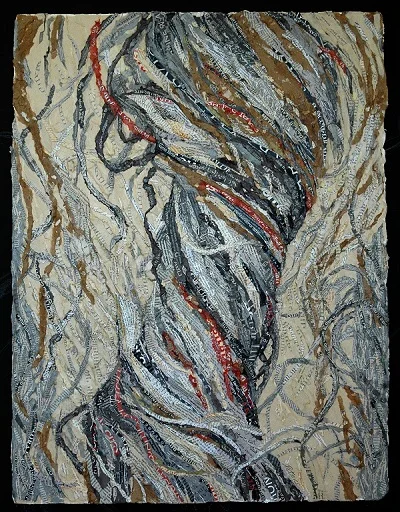
Trying to make sense of 'The Fabric of Life'
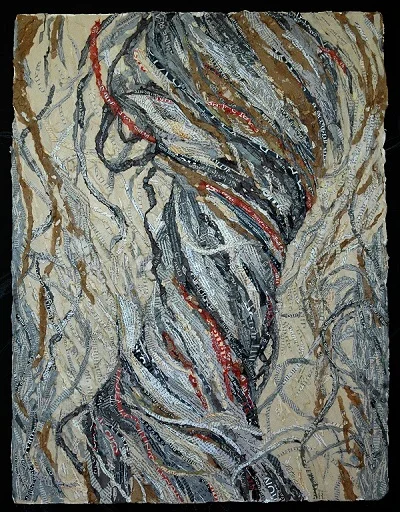
From the "The Fabric of Life: Themes from the Personal Well'' group show at The ArtSpace Gallery, Maynard, Mass., through Jan. 13. The gallery says" "The fabric of life is complex and layered and unravels at times in everyone’s life bringing with it challenge and loss.''
Chris Powell: The origins of the contempt shown by Trump voters
As many people are, Gov. Dannel Malloy is appalled by President-elect Trump's selection of former Texas Gov. Rick Perry for secretary of the U.S. Energy Department, since Perry, as a presidential candidate, pledged to abolish it -- that is, when he could remember the department at all. Perry's selection, Malloy says, is "contemptuous."
But then Trump's election itself is a gigantic gesture of contempt by many of those who voted for him.
Yes, in the popular vote for president Trump, nominally a Republican, trails Hillary Clinton, the Democrat, by around 2.8 million. But Clinton received only 48 percent of the popular vote, and a majority of the votes for minor presidential candidates, 5½ percent of the vote, probably would have gone for Trump if people had been forced to choose among the top two candidates. Clinton, President Obama's candidate, represented continuity with the Obama administration and most of those voters for minor candidates wanted change.
Since there will be more elections soon enough, those who are appalled by Trump's election and some of his Cabinet appointments might do well to try to understand the contempt he embodies.
Maybe it arises from the contemptibility of so many voters themselves, people Clinton disparaged as "deplorables" for their supposed racism and other prejudices, as well as their supposed ignorance. But many of them live in the previously Democratic states that threw the Electoral College to Trump -- Pennsylvania, Michigan and Wisconsin -- and four years ago many voted for Obama.
Or maybe the contempt felt by so many voters arises from the performance of the Obama administration. Even some leading Democrats acknowledge that living standards for the majority have been declining, and theoretically at least it is possible to resent the trend toward ever-larger, politically correct, special interest-serving, and dependence-inducing government without wishing harm to racial, ethnic, religious, and sexual minorities.
With certain nominees to head federal departments, the new president's contempt and arrogance may take him too far. Being narrowly divided between the political parties, the Senate will be in a good position to check him. If Trump's administration fails to improve conditions in the country, as the expiring administration has failed, the people themselves may check him at the next two elections.
But Trump did not spring forth out of nowhere; he did not even create himself. Rather Trump is a reaction, just as he will produce a reaction. As the liberal sloganeering goes, "This is what democracy looks like," even if this time liberals don't like it.
* * *
HIMES IS TOO LATE ON THE WARS: Fearing that President-elect Trump will strive to get the country into more wars, Connecticut U.S. Rep. Jim Himes has introduced what he calls the Reclamation of War Powers Act. It would prevent deployment of the armed forces into hostilities without a declaration of war by Congress, similar congressional authorization, or an attack on the country or other national emergency.
These days, Himes says, "we operate in state of perpetual pseudo-war where neither the executive nor Congress is ultimately responsible. That has to end."
Valid as that criticism is, it has nothing to do particularly with Trump's ascension. While he is ill-tempered and reckless, Trump didn't get the country into and sustain its stupid imperial adventures in Afghanistan, Iraq and Syria. Lately those adventures have been sustained by President Obama, the head of Himes's own party. So Himes's legislation should have been introduced a long time ago.
Instead the congressman is turning against the wars only when a president from the opposing party is about to become responsible for them -- just as Democratic congressmen who supported the Vietnam War while a Democrat was president turned against it only when Richard Nixon, a Republican, took office in 1969.
Chris Powell is managing editor of the Journal Inquirer, in Manchester, Conn.
Climb to some more commerce
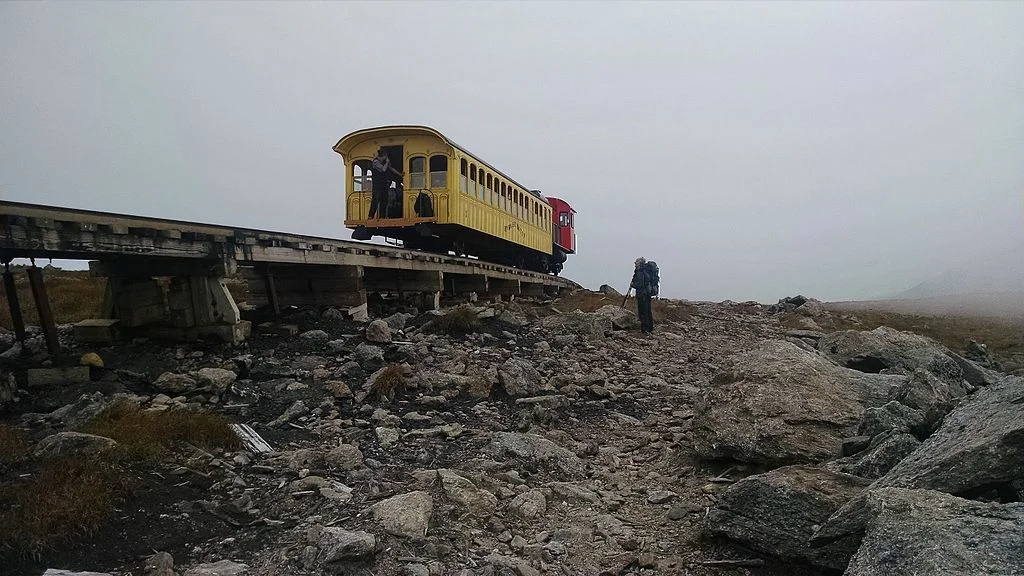
The Mt. Washington Cog Railroad goes by a hiker above the tree line.
-- Photo by David W. Brooks
Adapted from Robert Whitcomb's Dec. 15 "Digital Diary'' column in GoLocal24.com.
The owner of the famous Mt. Washington Cog Railway, Wayne Presby, wants to build a luxury hotel, along or even over its tracks, at about 5,000 feet up New England’s highest peak (6,288 feet).
This has inevitably caused a rumpus. Hikers complain that the hotel will degrade their experience on the mountain, whose summit is now crowded in the summer with climbers and people silly enough to ruin their brakes and transmissions by driving there. (In my healthier times long ago, I climbed it in the winter, when it’s more beautiful, albeit a tad nippy and breezy, than in its over-populated summer.)
Some locals are pushing back against the complaining greenies, many of whom are from out of state, saying that since tourism is the lifeblood of the White Mountains, the hotel should be allowed. I’m a former resident of New Hampshire and understand the tourism imperative but I think that building the hotel will, in the long run, hurt tourism by sending hikers and others bearing money elsewhere in search of a less sullied nature – maybe across the nearby border to Canada.
Yes, there was a hotel on top of the mountain in Victorian and Edwardian times but there was a lot more available nature in the region those days, before most people had cars and the invention of ski lifts.
The whole thing reminds me of current successful efforts to let companies turn some of our National Parks into major advertising venues. Thus it will get even harder to get away from the images and cacophony of commercialism in order to quietly reflect on life while enjoying the beauty of things so much bigger than loud, unreliable, anxious and grasping humanity.
Splendid isolation on Mt. Guano
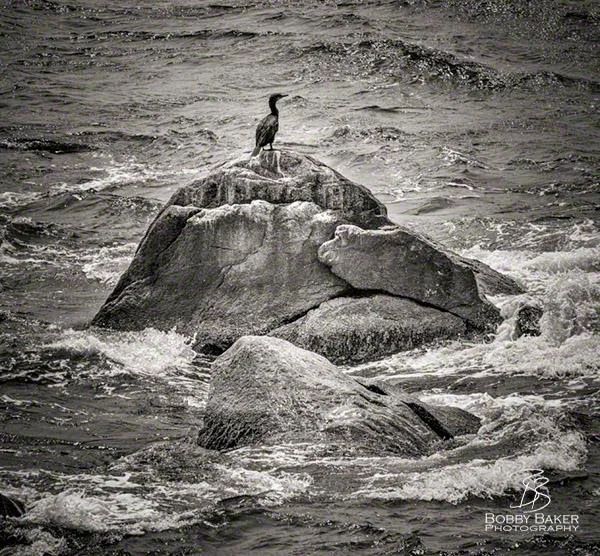
"Observation,'' by Bobby Baker (copyright Bobby Baker Photography). Mr. Baker is based on Cape Cod.
Trump and treason; longing for Jim Webb and John Kasich
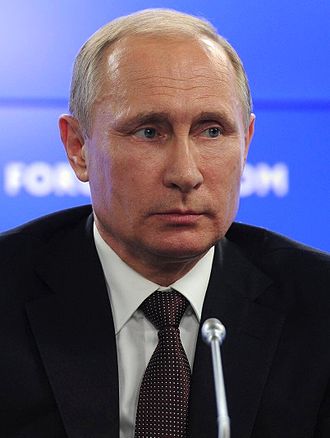
Our great leader.
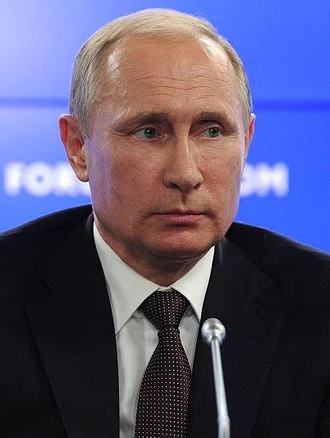
Given Donald Trump’s pathological lying, record of personal and business corruption, narcissistic rapaciousness, and his hiding of the sort of financial information that previous presidents have provided to the public, we may never know the full extent of his ties to Russian murderer and kleptocrat–in-chief Vladimir Putin. (Some estimates put Putin's fortune as high as $100 billion.)
But given the extent of Putin’s relentless and successful effort to throw the presidential election to his fan Mr. Trump, we must start asking whether Mr. Trump is a traitor, perhaps because his organization has received massive loans from Russian figures close to the dictator. How much coordination was there between the Trump campaign and the Kremlin? How much will there be when our new maximum leader takes over?
One hint might be Donald Trump Jr.’s remark in 2008: “Russians make up a pretty disproportionate cross-section of a lot of our assets. We see a lot of money pouring in from Russia.’’
And then there is Mr. Trump's sleazy and very close associate Paul Manafort, with his very tight ties with the Kremlin. Much of the Trump entourage, including some members of his family, makes one want to take a bath in disinfectant. A creepy, immoral bunch.
John Shattuck, a lawyer and an assistant secretary of state (1993-98) in the Clinton administration and now at the Fletcher School of Law and Diplomacy at Tufts, wrote for the Dec. 17 Boston Globe a column headlined “Trump raises specter of treason, '' about the Russian hacking to get Donald Trump elected. Among his comments:
“Why does Trump publicly reject these intelligence agency conclusions {on the Russian assault on our electoral system} and the bipartisan proposal for a congressional investigation? As president-elect, he should have a strong interest in presenting a united front against Russia’s interference with the electoral process at the core of American democracy.
“There are several possible explanations for Trump’s position. They are not mutually exclusive. First, he may be trying to shore up his political standing before the Electoral College vote on Monday. Second, he may be attempting to undermine the credibility of US intelligence agencies in advance of his taking office so that he can intimidate them and have a freer hand in reshaping the intelligence product to suit his objectives. Third, he may be testing his ability to go over the heads of intelligence professionals and congressional critics and persuade the American public to follow his version of the truth about national security threats. And finally, he may be seeking to cover up evidence of involvement or prior knowledge by members of his campaign team or himself in the Russian cyberattack.
“In each case the president-elect is inviting an interpretation that his behavior is treasonous. The federal crime of treason is committed by a person ‘owing allegiance to the United States who . . . adheres to their enemies, giving them aid or comfort,’ and misprision of treason is committed by a person ‘having knowledge of the commission of any treason [who] conceals and does not disclose’ the crime. By denigrating or seeking to prevent an investigation of the Russian cyberattack Trump is giving aid or comfort to an enemy of the United States, a crime that is enhanced if the fourth explanation applies — that he is in fact seeking to cover up his staff’s or his own involvement in or prior knowledge of the attack.’’
Meanwhile, many of us say: “If only the Democrats had nominated someone like Jim Webb as their presidential candidate and the Republicans John Kasich!’’ Honorable and able men with remarkably little bad baggage.
For a trip down Memory (or is it Amnesia) Lane, take a look at this show. http://trumpthemovie.com/
-- Robert Whitcomb
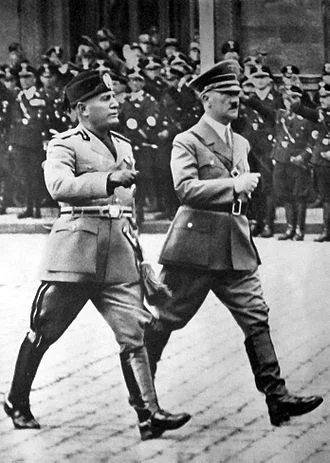
Jim Hightower: Our fraudulent, pathological liar president-elect still addicted to Twitter
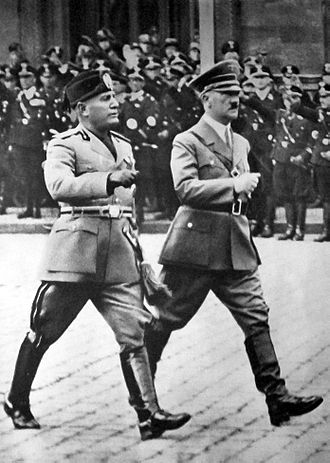
Two previous pathological liars/egomaniacs in their glory days.
Via OtherWords. org
All hail Augusts Trumpus — the American Putin, whom none can criticize! All hail the All Knowing One, who reveals “realities” that aren’t there and finds “facts” that mere mortals can’t detect.
Once again, the Amazing Donald has demonstrated his phantasmagoric power of perception, having found a new outcome in November’s election that others haven’t seen. Trump has been greatly perturbed by the official results, which showed that while he won the Electoral College majority, he wasn’t the people’s choice.
Instead, according to the latest tally, Hillary Clinton won the popular balloting by a margin of more than 2.7 million votes and counting.
Growing increasingly furious at this affront to his supernatural sense of self, the master of factual flexibility went on Twitter with an amazing revelation: “I won the popular vote,” decreed our incoming tweeter-in-chief.
How did he turn a 2.7 million vote loss into a glorious victory? “I won,” he tweeted, “if you deduct the millions of people who voted illegally.”
Wow again! Millions?
You’d think that such a massive conspiracy, with millions of illegal voters in line at thousands of precincts, would’ve been noticed by election officials, GOP poll watchers, and the media. How did Trump find this truly incredible “fact”?
It seems he channeled it from the mysterious Twittersphere — and specifically from a Texas conspiracy hound who had earlier posted a tweet declaring: “We have verified more than 3 million votes cast by non-citizens.”
But this guy turns out to be part of a right-wing fringe group chasing non-existent voter frauds. Exactly none of those 3 million “illegal” votes have been verified. Stunned that Trump would cite his tweet as proof, he asked sheepishly: “Isn’t everything on Twitter fake?”
Get used to it — fakery is reality for America’s next president, Augustus Trumpus.
OtherWords columnist Jim Hightower is a radio commentator, writer, and public speaker. He’s the editor of the populist newsletter, The Hightower Lowdown.
'A Life that wearies me'
I heard a bird sing
In the dark of December
A magical thing
And sweet to remember.
Come, come thou bleak December wind,
And blow the dry leaves from the tree!
Flash, like a Love-thought, thro’me, Death
And take a Life that wearies me.
–- Samuel Taylor Coleridge, 1772-1834, ''Fragment 3''
Worsening the panhandlers' problems
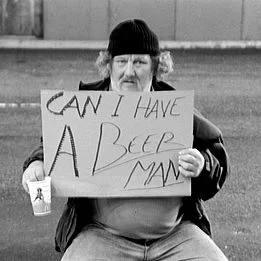
Excerpted from Robert Whitcomb's Dec. 8 "Digital Diary'' column in GoLocal 24.
Kudos to those in the Rhode Island General Assembly for trying to suppress the epidemic of panhandling concentrated at intersections in Providence. It can cause car accidents, crime and scares away business. Better to beef up social services to deal with the panhandlers, many of whom are mentally ill, than to allow panhandling along the streets.
The ACLU is all wet on this. Reducing panhandling, including by penalizing motorists who stop and give panhandlers money (often swiftly used for drugs and booze), isa matter of common-sense public safety. Tolerating panhandlers reinforces their problems

But you wouldn't want to live there

'Faraway Land,'' by Katherine Downey Mlller, in the group show 'Landforms,'' at New Art Center, Newtonville, Mass., through Jan. 5.
The gallery writes:
"Katherine Downey Miller uses nature, imagery and emotion in order to create her pieces. With a background in drawing and painting, Miller. uses shapes from the landscapes and her own emotions to capture the landscape in an abstract way. Miller states, 'My goal is to try to create paintings that capture visual and emotional moments."'
Trump will hit the suckers who voted for him good and hard
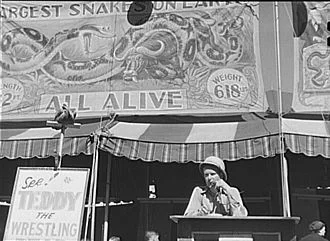
Barker at Vermont State Fair, 1941.
Adapted from Robert Whitcomb's Dec. 8 "Digital Diary'' column in GoLocal 24.
''Democracy is the theory that the common people know what they want, and deserve to get it, good and hard.''
-- H.L. Mencken
Steven Pearlstine, who writes on business and economics for The Washington Post and is a professor of public policy at George Mason University, had an entertaining observation the other day in a Washington Post essay headlined “Under Trump, red states are finally going to be able to turn themselves into poor, unhealthy states’’. Actually, many Red States are already poor and unhealthy. The much denounced liberal, higher-tax states are generally richer, in part because they have better public services.
“After all,’’ Mr. Pearlstine writes, “if Republicans cut taxes — in particular, taxes on investment income — then the biggest winners are going to be the residents of Democratic states where incomes, and thus income taxes, are significantly higher. Governors and legislatures in those states — home to roughly half of all Americans — will now have the financial headroom to raise state income and business taxes by as much as the federal government cuts them — and use the additional revenue to replace all the federal services and benefits that Republicans have vowed to cut.’’
That means the Northeast! And this region will continue as the richest in America. Good public services make states richer.
Peter Certo: CIA is well practiced in subverting elections
Via OtherWords.org
Even in an election year as shot through with conspiracy theories as this one, it would have been hard to imagine a bigger bombshell than Russia intervening to help Donald Trump. But that’s exactly what the CIA believes happened, or so unnamed “officials brief on the matter” told The Washington Post.
While Russia had long been blamed for hacking e-mail accounts linked to the Clinton campaign, its motives had been shrouded in mystery. According to The Post, though, CIA officials recently presented Congress with a “a growing body of intelligence from multiple sources” that “electing Trump was Russia’s goal.”
Now, the CIA hasn’t made any of its evidence public, and the CIA and FBI are reportedly divided on the subject. Though it’s too soon to draw conclusions, the charges warrant a serious public investigation.
Even some Republicans who backed Trump seem to agree. “The Russians are not our friends,” said Senate Majority Leader Mitch McConnell, announcing his support for a congressional probe. It’s “warfare,” added Sen. John McCain.
There’s a grim irony to this. The CIA is accusing Russia of interfering in our free and fair elections to install a right-wing candidate it deemed more favorable to its interests. Yet during the Cold War, that’s exactly what the CIA did to the rest of the world.
Most Americans probably don’t know that history. But in much of the world it’s a crucial part of how Washington is viewed even today.
In the post-World War II years, as Moscow and Washington jockeyed for global influence, the two capitals tried to game every foreign election they could get their hands on.
From Europe to Vietnam and Chile to the Philippines, American agents delivered briefcases of cash to hand-picked politicians, launched smear campaigns against their left-leaning rivals, and spread hysterical “fake news” stories like the ones some now accuse Russia of spreading here.
Together, political scientist Dov Levin estimates, Russia and the U.S. interfered in 117 elections this way in the second half the 20th Century. Even worse is what happened when the CIA’s chosen candidates lost.
In Iran, when elected leader Mohammad Mossadegh tried to nationalize the country’s BP-held oil reserves, CIA agent Kermit Roosevelt led an operation to oust Mossadegh in favor of Shah Mohammad Reza Pahlavi. The shah’s secret police tortured dissidents by the thousands, leading directly to the Islamic Revolution in 1979.
In Guatemala, when the democratically elected Jacobo Arbez tried to loosen the U.S.-based United Fruit Co.’s grip on Guatemalan land, the CIA backed a coup against him. In the decades of civil war that followed, U.S.-backed security forces were accused of carrying out a genocide against indigenous Guatemalans.
In Chile, after voters elected the socialist Salvador Allende, the CIA spearheaded a bloody coup to install the right-wing dictator Augusto Pinochet, who went on to torture and kill thousands of Chileans.
“I don’t see why we need to stand by and watch a country go communist due to the irresponsibility of its own people,” U.S. Secretary of State Henry Kissinger purportedly said about the coup he helped orchestrate there.
And those are only the most well-known examples.
I don’t raise any of this history to excuse Russia’s alleged meddling in our election — which, if true, is outrageous. Only to suggest that now, maybe, we know how it feels. We should remember that feeling as Trump, who’s spoken fondly of authoritarian rulers from Russia to Egypt to the Philippines and beyond, comes into office.
Meanwhile, much of the world must be relieved to see the CIA take a break from subverting democracy abroad to protect it at home.
Peter Certo is the editorial manager of the Institute for Policy Studies and the editor of OtherWords.org.