
Vox clamantis in deserto



Unrequited love
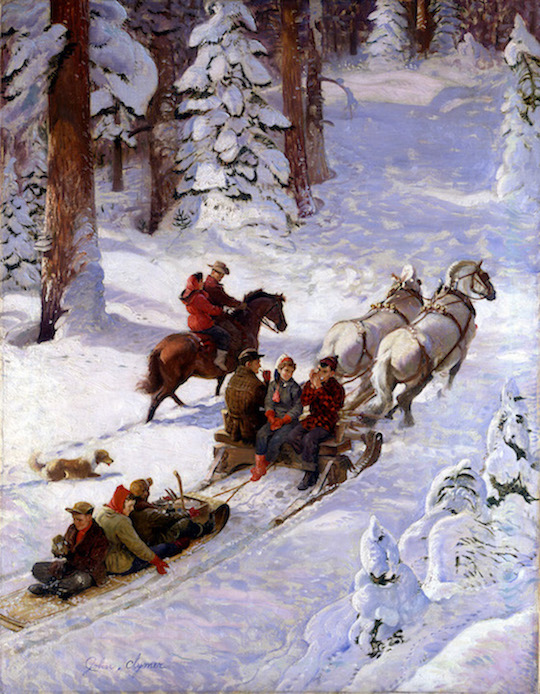
"Winter Sleigh Ride'' {would there be a summer one?} (oil on canvas), by John Clymer (1907-1989), Saturday Evening Post cover, Dec. 17, 1949, at the National Museum of American Illustration, Newport, RI. (© Image courtesy American Illustrators Gallery, NYC, 2016)
On the Snow
We're all supposed to love the Earth
And thrill to nature's bold displays.
We're all supposed to be entranced
When nature sends us snowy days.
But I just tumbled on the snow
And gave my knee a nasty whack.
If I'm supposed to love the Earth,
The Earth should try to love me back.
-- Felicia Nimue Ackerman
*

Llewellyn King: What the Energy Department does
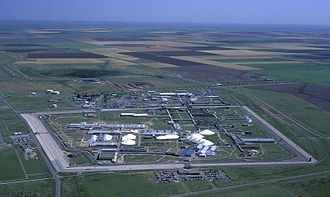
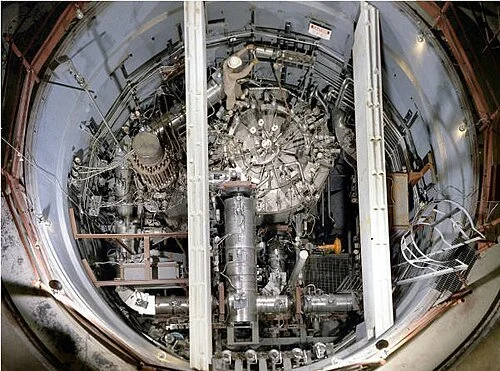
Pantex facility in the Texas Panhandle, where nuclear weapons are made and later dismantled.
To former Texas Gov. Rick Perry, who has been nominated to be the next U.S. energy secretary. Texas is, of course, a huge fossil-fuel producer:
Welcome to the U.S. Department of Energy. It is a cornucopia of scientific wonders, brilliant people and, to be true, some duplication and wasted effort.
Oil, natural gas and coal are not the overriding concern of the DOE. Indeed, until President Jimmy Carter created it in 1977, fossil fuels were the province of the Department of the Interior.
The DOE was preceded by the Energy Research and Development Administration. This was a short-lived agency that combined the non-regulatory functions of the Atomic Energy Commission with the Federal Energy Administration, a policy coordinating body.
To be sure, the DOE has had a manful role in coal gasification, fracking and carbon capture and storage.
But its main role is to be the nation’s armorer; to build and maintain the U.S. stockpile of nuclear weapons, and to detect bad guys testing weapons in places like North Korea and Iran.
The department has 17 major laboratories, headed by the three big weapons labs: Los Alamos, Sandia and Lawrence Livermore.
In your own state of Texas, as you must know, is the Pantex facility. That is where the weapons are constructed and dismantled. That is ground zero, if you will, of weapons making. That where the “pits” are assembled and disassembled. Weapons are designed and engineered in the weapons laboratories.
You will find that cleanup of nuclear waste -- much of it from earlier weapons production -- in places like Hanford, Wash., and Los Alamos, N.M., is an ongoing and seemingly endless task that chews up talent and money.
Some of the other work of the DOE may surprise you. It was a major player in the human-genome project and it helps U.S. companies improve their manufacturing technology. It has developed ceramics for all sorts of non-nuclear uses, like car engines. Its work with 3-D seismic and advanced drill bits has made the fracking revolution possible.
You are, in fact, about to lead the largest science department anywhere in the world.
When you get the feel of the place, one hopes that talk of disbanding it will disappear. Likewise, wild talk about rooting out climate science, which has the department in shock. The DOE is not part of climate-science conspiracy. Please examine your charge before you trash it.
The DOE national laboratory system is a national treasure, the science mind of the nation. It collaborates with dozens of universities.
If President-elect Trump is determined to renegotiate the Iranian deal, you will be a player. The present secretary, Ernie Moniz, handled the negotiations brilliantly for the treaty we have with Iran. He knew as much about the workings of a hydrogen bomb and its supply chain as his opponent, Ali Akbar Salehi, who also went to MIT. If there is another negotiation as the president-elect has suggested, you will have to support the chief negotiator, the secretary of state, with expertise from your department.
First and foremost, the DOE is a nuclear agency, charged with making the weapons that protect the nation. But it also does some amazingly disparate things at its labs, from improving coal combustion to studying cancer to examining the very nature of matter. And, of course, climate science. It has been said that it takes a new secretary a year to find out what the department does.
Because the DOE operates in many states through the laboratory system, Congress rides it hard. Congressmen fight for dollars and projects in their states. An example – and one you will have to adjudicate -- is the battle over whether to continue with the construction and operation of the mixed oxide (MOX) fuel-fabrication facility at the Savannah River Site, in Georgia. The Obama administration has said that it should be terminated; Congress says no.
As there is throughout government, there is waste in the lab system. But it is a small problem compared with its huge value to the nation. A suggestion: Work on making it even more user friendly to technology transfer. That is how we assure the future of U.S. competitiveness: science and more science.
You have a great charge, Governor Perry, and it has very little to do with oil.
Llewellyn King is executive producer and host of White House Chronicle, on PBS. His e-mail is llewellynking1@gmail.com.
As repetitive as snow

"Snow Day,'' by Emily Berger, in the group show "Painting Is Not a Good Idea,'' at HallSpace, in the Dorchester section of Boston, through Jan. 7.
The gallery says that this show "invites viewers… to challenge views about what art should be and how art should be expressed. Guest curator Jo Ann Rothschild selected work from abstract painters Emily Berger, David Fratkin, Colleen Randall and Elizabeth Yamin. Though each artist works abstractly, their works are vastly different. Emily Berger, for her part, notes that the "paintings and drawings are based on a structure of repetitive and deliberate gesture that is intuitive but carefully considered."
Don Pesci: The CIA, Trump and an unhinged Democrat
VERNON, Conn.
U.S. Rep. Jim Himes, a Democrat who just won re-election to office, has been pushed over the edge by Donald Trump, according to a story in the New York Post.
“What finally pushed me over the edge, Himes said in an interview on CNN’s New Day, “was when the president-elect of the United States criticized the CIA and the intelligence community. Can you imagine what the leaders in Beijing and Moscow and Tehran are thinking as they watch the next president of the United States delegitimize and criticize his own intelligence community and stand up for the defense of Russia, one of our prime adversaries.”
Mr. Himes must have been standing very close to the edge, because he believes that Mr. Trump’s remarks on the CIA report show that the President-Elect is unhinged: “We’re five weeks from inauguration and the president-elect is completely unhinged.” In plain-speak, “completely unhinged” means that he’s nuts.
Among Democratic politicians still suffering from painful election losses – Republicans, this election season won the House, Senate and White House, a trifecta – the expression may indicate a general unease with the results of the election, rather than a serious appraisal of Mr. Trump’s mental health. Wounded politicians under stress are occasionally subject to hissy fits.
We should be thankful that the CIA, unlike Caesar’s wife, is not yet above criticism. Mr. Himes failed to note in his press response that reports issuing from the CIA and the FBI were in conflict. The FBI’s investigation found no unimpeachable evidence that Russian intelligence services – which, like their counterparts at the CIA, engage in hacking – had materially affected the U.S. elections. The CIA instructed members of Congress that Russian intelligence services did engage in hacking, perhaps through intermediaries, but hard evidence supporting the charge has not, and probably will not, be made public, principally because the CIA as a rule safeguards top-secret information more diligently than did former Secretary of State Hillary Clinton, whose loss to Mr. Trump has unhinged many a Democrat.
Mr. Himes will appreciate the distinction between spying, which may include acquiring data by hacking, and election interference through the manipulation of voting data. In fact, it would be nearly impossible for Russian spooks to manipulate election votes, because polling machines carry separate computer chips. Mr. Himes has not charged Russians with manipulating voter data, to be sure, but the charge he does make is broad and amorphous enough to leave in the public mind the notion that foreign entities have tampered with our near sacred voting process.
“The leaders in Beijing and Moscow and Tehran,” we know, are all expert in the fine art of hacking, as is the CIA -- one hopes. China in particular has masterfully exploiting data it illicitly gathered from American businesses, which permits it to produce products – cheap drone knockoffs, for instance – it then underprices and sells to countries such as North Korea, Iran and Syria, all announced enemies of the United States, a continuing practice that really should push American politicians over the tolerance edge.
Some Republicans and many Democrats have urged that a special prosecutor should be appointed to examine hacking by foreign entities and their bearing, if any, on elections. Mr. Himes is not new to investigatory work; he serves on The Permanent Subcommittee on Investigations, which conducts oversight of the U.S. Intelligence Community. He must know that the proper venue for the investigation of possible voter interference by foreign entities lies within the political jurisdiction of appropriate Senate committees.
Timorously peeking out of Mr. Himes’s campaign hoopla is a serious point. Mr. Trump should be more concerned than he appears to be with Vladimir Putin’s ambitions affecting Russia, Ukraine, the Baltic States and his bosom buddies in the Middle East, which include Bashir Assad, Syria’s mass murderer, and the ayatollahs in Iran who, despite Mr. Obama’s velvet-glove treatment, continue to finance terrorist organizations with the planeloads of cash given to them by Mr. Obama as a side agreement to a deal struck between Mr. Obama and the Iranian regime; suspiciously, the dark deal arranged between Iran and the United States was never referred to the Congress for its advice and consent.
Neither Mr. Himes nor any of the six other members of Connecticut’s all Democratic U.S. congressional delegation were advised by Mr. Obama that planeloads of hard cash, easily transferable to Hamas, a militant organization that grew out of Egypt’s Muslim Brotherhood movement in the 1990s and the early 2000s, were in the dead of night delivered to terrorists that had conducted numerous suicide bombings and other attacks against Israel. U.S. Sen. Dick Blumenthal's silence on matters affecting Israel in particular is crushing. Mr. Blumenthal is Jewish. Had Mr. Himes been advised that American taxpayers were clandestinely supporting a heavily armed anti-Israeli terrorist group, presumably he might rightly have been pushed over the edge.
Don Pesci (donpesci@att.net) is apolitical writer who lives in Vernon, Conn.
'Old papers flocking away'
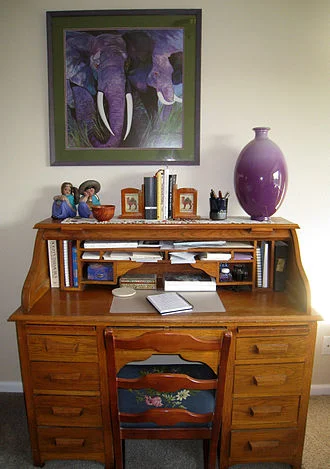
"Now the seasons are closing their files
on each of us, the heavy drawers
full of certificates rolling back
into the tree trunks, a few old papers
flocking away. Someone we loved
has fallen from our thoughts,
making a little, glittering splash
like a bicycle pushed by a breeze.
Otherwise, not much has happened;
we fell in love again, finding
that one red feather on the wind."
-- Ted Kooser, “Year's End’’
What's old is new again, continued

Adapted from Robert Whitcomb's Dec. 8 "Digital Diary'' column in GoLocal24.com
So Amazon is opening up physical-book stores, and vinyl records are making a comeback. One example is Kevin Morosini’s Olympic Records, onincreasingly interesting Wickenden Street, in Providence’s Fox Point neighborhood, near Narragansett Bay. As the (too slowly) developing Route 195 relocation land and the gradually-being-spiffed up waterfront attest, the street can only get more interesting and prosperous.
Mr. Morosini told The Providence Journal that he’s seeing a lot more young people coming in lately to buy vinyl records. Maybe they have discovered what I rediscovered recently a while back while listening to Thelonious Monk (jazz) record I bought in 1966: The sound is richer than with CDs. Other than a few scratches, which only added to the evocativeness (including a romance of the time...) of the music from so long ago, it was in good shape. And it didn’t even have any cigarette burns on it.
I hope that the young Mr. Morosini can expand his store. And, he’s right, Wickenden also needs a good bookstore. Every street does.
Ampersand architecture

"&ight'' (mixed media), by Kevin Gilmore, in his show "Cellar Doors,'' at the Atrium Gallery, One Financial Gallery, Providence, through March. The show is sponsored by the Providence Art Club.
Mary Mallinger: Researchers seek to save Eastern hemlock trees and the 'cathedrals' they build
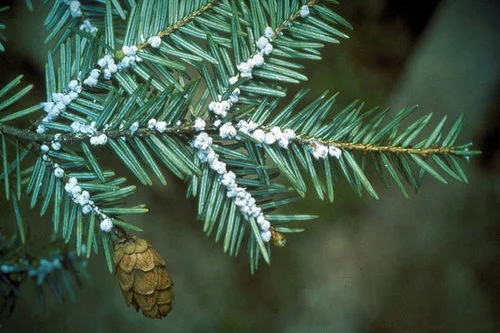
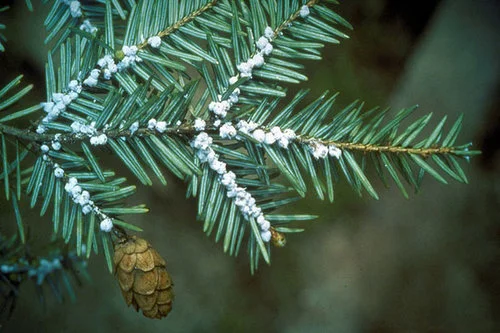
Woolly adelgid on an Eastern hemlock tree.
--- Courtesy State of Connecticut Agricultural Experiment Station
So distinctly dark and quiet is an Eastern hemlock forest that walking through a healthy stand has been described as finding oneself in a “cathedral-like atmosphere.” This native North American conifer is shade-tolerant, and as it grows it keeps its needles on lower branches. This unique feature of hemlock trees creates a densely shaded forest floor where few other plant species can survive. In time, this results in a forest stand nearly entirely dominated by hemlocks.
Economically speaking, Eastern hemlock isn’t a highly valued tree. Hemlock wood is coarse-grained, knotted and subject to splitting, making it difficult to work with. The bark was used in tanneries for making leather during the 19th Century, but as other sources of tannins were developed, the economic utility of hemlocks declined significantly.
The Eastern hemlock forests of North America do, however, play an important ecological role. Eastern hemlock is considered a foundational species, meaning it creates and defines an entire ecological community. These forests serve as important habitat for numerous animals. Several bird species, including the black-throated green warbler, have been identified as hemlock obligates, meaning they depend on this forest tree for breeding habitat. Eastern hemlocks also shade and cool headwater streams, creating suitable habitat for many aquatic species, such as trout.
This ecologically significant species is currently under threat from a tiny invasive insect. The hemlock woolly adelgid, native to Japan, was first discovered in the United States in Virginia in the 1950s and has since spread from Georgia to southern Maine. The adelgid is a small wool-covered insect and isn’t capable of moving long distances on its own. Yet, it has caused widespread hemlock mortality throughout North America. In some adelgid-infested stands of the Northeast, hemlock mortality has exceeded 95 percent.
As the climate warms, this invasive insect will continue to move north, potentially spreading throughout the entire range of Eastern hemlock in North America.
As the adelgid has steadily swept across the eastern United States, not all infested trees have responded similarly, however. In several forest stands, amongst an expanse of skeletal trees, occasional individuals appear to be healthy, in spite of heavy adelgid infestation. University of Rhode Island ecology Prof. Evan Preisser and post-doctoral researcher Chad Rigsby want to know why, and how, these trees are surviving.
Preisser said it’s highly unlikely that among the many millions of Eastern hemlock trees in North America there wouldn’t be individual trees that had developed some degree of resistance to the adelgid. It’s plausible that naturally occurring genetic mutations would create this type of resistance, he added. In the fight against this invasive insect, these resistant trees would have thicker armor to defend itself, so to speak.
To test their hypothesis, potentially resistant individual trees must first be located. And that, as Preisser said, is no easy task. In fact, he likens finding resistant individuals to finding a needle in a haystack.
However, the destruction that the adelgid has brought upon hemlock forests may actually make that task a bit easier.
“The best way to find a needle in a haystack is to burn the haystack and sift the ashes,” Preisser said. “Essentially, adelgid is a highly selective forest fire. It is going through forest stands and removing all the hemlocks.”
Any trees left standing after such an intense attack, it can be reasoned, are likely still alive because of some genetic mutation that left them more resistant than their neighbors, and not simply because of luck.
After locating potentially resistant individual hemlock trees, the next step is to determine if there are things about their genetic makeup that might indicate to researchers why those trees appear to be resistant.
Rigsby, the post-doctoral researcher in the Preisser lab, is well prepared to orchestrate such tests. Previous research of his includes working on resistance mechanisms of ash trees to the invasive emerald ash borer. Rigsby is currently applying those skills and techniques in the investigation of hemlock resistance.
He and Preisser are interested in hemlock resistance from a conservation perspective because that this information could help inform conservation, such as breeding efforts, and the planting of hemlocks, Rigsby said.
The hope is that eventually the trees that possess the specific resistant traits will be used in breeding programs to create a stock of healthy adelgid-resistant hemlock trees that can be planted throughout Eastern forests.
“It is becoming increasingly clear to me,” Rigsby said, “and I think the evidence is mounting in the face of the broader scientific community, that this really is the only approach to long-term continental hemlock conservation.”
Mary Mallinger is a graduate student at the University of Rhode Island pursuing a master’s degree in ecology.

Art for a nasty time

"Friend: Unfriend, the Inauguration of the 45th President of the United States,’’ by Kirstin Ilse, at Galatea Fine Art, Boston Jan, 4-29.
The artist says: “Reckon the vitriol remainder of the presidential election. This painting explores the tumult at the heart of a cultural crisis in which friends were friendly no more and new connections forged. Painted in steamed dye on silk, dynamic, luminous and colorful; feel the nation in the wounds and heals of the cultural shift. Drop off things left unsaid. Reconnect the world.''
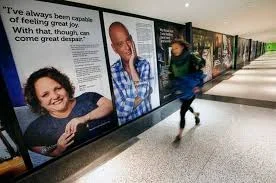
Mental-health exhibit at Logan Airport
From the New England Council (NEC):
"McLean Hospital, part of Partners Healthcare, recently opened an art exhibit in Boston’s Logan International Airport, which is owned and operated by Massport. The exhibit is designed to highlight the stigma around mental health.
"The exhibit, titled 'Deconstructing Stigma: A Change in Thought Can Change a Life,' fills the 235-foot hallway between terminals B and C with 34 photographs of individuals with mental illness and quotes from them. The pictures tell the stories of depression, anxiety, bipolar disorder, and other mental illnesses. The exhibit is part of a public-awareness campaign by McLean Hospital intended to change the way mental illness is perceived.

“'Mental health affects everyone, whether we recognize it or not. I am proud that Massport has collaborated with NAMI (Natonal Alliance for Mental Illness) and now McLean working to reduce stigma,' said Thomas P. Glynn, CEO of Massport and a member of the NEC Board of Directors. The exhibit 'Deconstructing Stigma' is another example of how we are all working together to help our state and country make strides in this area.”
"The New England Council thanks McLean Hospital and Massport for working to change perceptions of mental illness.''


At PCFR: Looking at trade wars

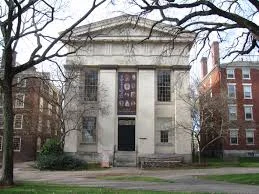
To members and friends of the Providence Committee on Foreign Relations (thepcfr.org; pcfremail@gmail.com).
Our next dinner comes on Wednesday, Dec. 14, with:
Jeffrey Frankel, James W. Harpel Professor of Capital Formation and Growth at Harvard and former member of the President’s Council of Economic Advisers. He will talk about international trade and when and if it’s good for national economies.
His research interests include international finance, monetary policy, regional blocs, East Asia and global climate change. His publications include "Does Trade Cause Growth?" in the American Economic Review, and “Regional Trading Blocs.’’
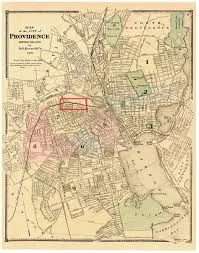
American trade deals were, of course, huge (or is it “yuge’’?) issues in the U.S. presidential campaign and helped elect Donald Trump.
Meanwhile, Jeff Colgan sent this along:
https://www.washingtonpost.com/news/monkey-cage/wp/2016/11/29/donald-trump-is-an-economic-nationalist-whats-an-economic-nationalist/
'Crowding the mall'
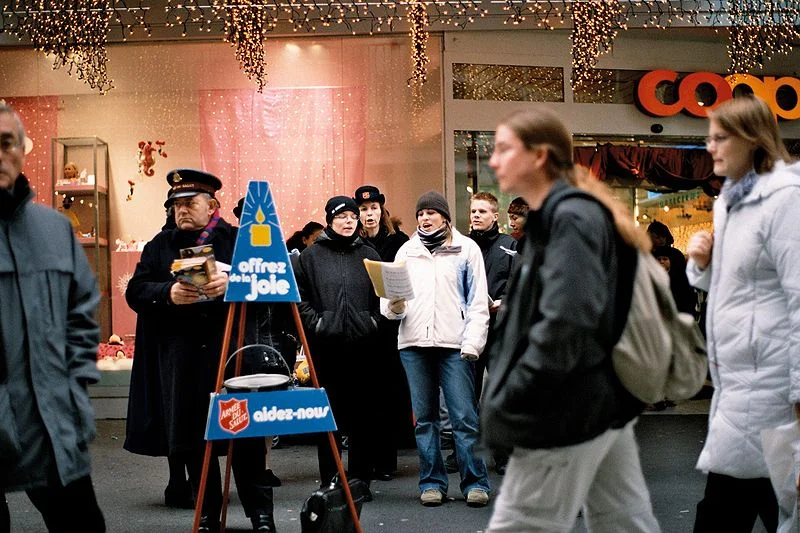
Photo by Rama
"A full moon shines
over the morning frost;
the lanes are full of late-fallen leaves;
walking across the mulch
is almost as tricky
as treading over ice.
In town the carol-singers are in
crowding the shopping mall,
while a group of muffled musicians
play by the outside market.
This year but two robins
on the early Christmas cards;
the squirrel still runs along the fence
skirting our newly erected shed."
-- Gerald England, “Mid-December’’
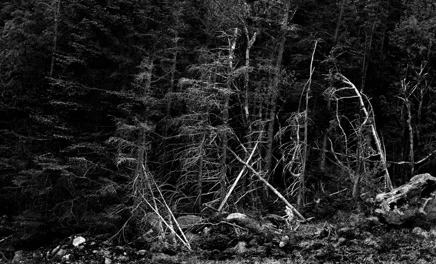
Looks better with snow on it
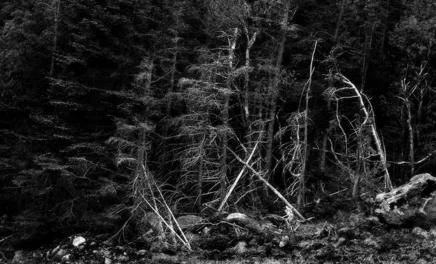
"Slope, Mt. Washington,'' by Russell duPont. (Copyright Russ duPont Photographs.) By the way, there's a plan by owners of the cog railway that goes up the mountain to put a luxury hotel at 1,000 feet below the 6,288 summit of the peak. More on that to come.
Chris Powell: Species of fraud at UConn and Carrier
College football and basketball coaches are paid the big bucks because they're so talented and their programs earn the big bucks -- and sometimes, as at the University of Connecticut lately, they are paid the big bucks even when they produce only failure.
That is, of course, the case with UConn's football coach, Bob Diaco, who is paid almost $1.7 million per year and has just completed his third season at the university, all losers -- 2-10 in 2014, 6-7 in 2015, and 3-9 this year. Just a few months ago the university somehow thought so well of him that it extended his contract through 2020 and promised to give him fat raises each year.
Lucky for Diaco, his golden parachute is firmly in place. While the university could have fired him early this year for a mere $700,000, firing him before the end of this year now will cost UConn $5 million. After Jan. 1 the price of dismissing him will go down, but only to $3.4 million.
But like love, working at UConn means never having to say you're sorry -- and not just for Diaco but also for the university's athletic director, David Benedict, and its president, Susan Herbst, who arranged the contract extension on the eve of what may have been the football team's worst season in living memory. Two years ago Herbst also gave a $251,000 honorarium to presidential candidate Hillary Clinton for a brief, informal public conversation at a university auditorium -- another bet that failed spectacularly.
Meanwhile, as the decline of Connecticut's economy accelerates, Gov. Dannel Malloy is trying to save money by, among other things, closing state parks and reducing day-care services for the working poor and rehabilitation services for drug addicts. But the governor never seems to notice any extravagance at the state's flagship university. The governor, Herbst, and Benedict must hope that UConn's men's and women's basketball teams, which have just begun their seasons, will make everyone forget about football before snow covers Pratt & Whitney Stadium's empty end zones.
xxx
Making America great again probably will require more than what President-elect Donald Trump and the vice president-elect, Indiana Gov. Mike Pence, arranged to persuade Carrier Corp. not to relocate quite as many jobs from Indiana to Mexico.
Contrary to the triumph being claimed by the Trump camp, many Indiana jobs still will be shipped out. The remaining jobs were saved only through the usual corporate welfare -- tax breaks delivered by state government and more tax breaks promised by the new president -- and saved by the possibility of extortion.
That is, Carrier is part of conglomerate United Technologies Corp., based in Farmington, Conn., and a major military contractor that needs to curry favor with the incoming administration, circumstances that don't apply to other corporations attracted by cheaper foreign labor.
Tax and tariff policy may discourage the export of manufacturing jobs, but bigger forces are at work here, such as the longstanding use of the dollar as the world reserve currency, which enables this country to run huge trade deficits, in effect printing money for other countries and exploiting their cheaper labor, and the declining educational performance of the U.S. workforce relative to foreign workforces.
Blessed with peace and plenty of capital from dollars, the most backward parts of the world are industrializing even as U.S. students are not keeping up with foreign students. In addition, the movement to raise the minimum wage to $15 an hour throughout the United States will not just induce employers of low-wage workers to automate; it will also induce such employers to export more simple manufacturing jobs.
America won't be made great again by scapegoating employers for pursuing their own interest just as everyone else pursues his own interest. Greatness may begin with enough courage and honesty to tell people about their own shortcomings.
Chris Powell is managing editor of the Journal Inquirer.

Manhattan still marvelous in season, in spite of Trump-caused neighborhood woes
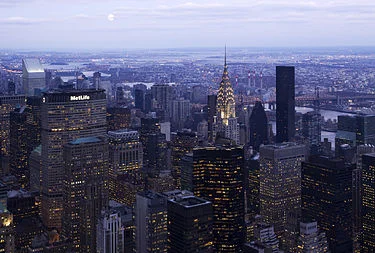
From Robert Whitcomb's Dec. 8 "Digital Diary'' in GoLocal24.com
“It's time to end my holiday and bid the country a hasty farewell.
“So on this gray and melancholy day, I'll move to a Manhattan hotel.
“I'll dispose of my rose-colored chattels and prepare for my share of adventures and battles,
“Here on the twenty-seventh floor looking down on the city I hate and adore!
“Autumn in New York, why does it seem so inviting?
“Autumn in New York, it spells the thrill of first-nighting.’’
-- The opening of “Autumn in New You’’ (1934), by Vernon Duke
We were in New York the past few days. November and December are, in my view, the best time to visit New York. It’s crisp outside, people seem to walk with a hopeful spring in their step and commerce is at its most colorful. It reminds me of what New York was in the '50s, in its “Imperial New York’’ heyday before urbanpathologies (especially crime, drugs, decaying infrastructure, “white flight to the suburbs’’ and yawning budget deficits) seemed to pose a lethal challenge to Gotham in the late ‘60s and the ‘70s. Starting around 1980, things started to get better.
You can now sense a little decline. That’s in part, I think, because Mayor Bill DiBlasio is no Mike Bloomberg. There seem to be more homeless people sleeping on sidewalks and some new graffiti but still, all in all, it’s a place of vast energy and idea creation and implementation.
Newly unhappy New Yorkers include those living and working around Trump Tower in midtown Manhattan. There, the security around what continues to be the president-elect’s base of operations has hamstrung residents and the many large and small businesses there. Mr. Trump has implied that even after he takes the oath of office on Jan. 20 he will continue to do much of his government (and business deals?) work in Trump Tower. Some local businesses may have to close as a result.
And the cost to taxpayers will be gigantic: Midtown Manhattan may well be the most complicated and by far the most expensive place in America to maintain a massive security operation. Once again, Donald Trump, who pays little or no federal income taxes, will take the taxpayers to the cleaners.

Llewellyn King: The gig economy -- by turns liberating and exploitive

An Uber driver at work.
You might not know this, but if it has not happened yet, you may be about to become a company of one.
Welcome to the gig (as in a musician doing a gig) economy. It is coming and faster than anyone expected. In fact, it is coming so fast that in 2050 more people will be in gig employment than conventional employment, according to Wired magazine.
I want to stand on my chair and utter three cheers for it. Except I can only muster two cheers.
In the gig economy workers become consultants, contractors, freelancers.
From the worker point of view, it is an end to conventional bosses, burdensome hours and fitting into a corporate culture.
For the firm outsourcing what used to be salary work, it is a freedom from the costs of employing, like healthcare and retirement plans, safety rules and regulations.
The poster example of gig employment is Uber. Let me say, parenthetically, that I love Uber in almost all ways: the convenience, the ride tracking, the clean cars and polite drivers.
Also, I love the idea that the personal automobile, a large capital investment for most, can be put to work.
It works almost as well for the owner of other capital-intense possessions, notably apartments and boats. Get a little back on your sunk investment. What could be better?
Not much, but there are problems. Primarily, the architecture of our society is not ready for the shift from corporate to private, from big to very small.
At the heart of this stage of the gig economy is the Internet and its ability to bring the willing buyer, renter, seller and worker together.
Companies that have understood these uses of the Internet have gone for the capital-intensive goods: boats, cars and homes. But at the low end, freelance workers are hooking up with customers who are seeking pure service plays like car detailing, dog walking, home computer assistance, house cleaning and repairs of all kinds.
Most of this should only worry the tax man. If you work for one of the ride-sharing services, like Uber or Lyft, the taxman knows all about you.
But if you are in a less-dragooned environment, tax collection halts. Do you withhold taxes from your house cleaner, for example?
One can understand why ride-sharing is beating the daylights out of the taxi business, and so what? Well, the problem is to use ride-sharing you need a credit card and a cell phone. The very poor, or those in temporary difficulties, do not have these. They need taxis.
The law has not caught up with new realities.
The promise of the gig economy is every worker is a contractor protected by a contract. The reality, as with the ride-sharing services, is that the internet company becomes an employer in all but name. The worker has given up the security of a job for the insecurity of entering into a contract he did not write and cannot amend. In weak economic times, the worker is vulnerable to a global system of serfdom.
It is easy to single out Uber, which has greatly improved the quality of life for passengers, and the usage of under-used assets. But what of the drivers? There are laws that govern the old workplace with wage-and-hour standards, workers’ compensation and conditions monitored by the Occupational Health and Safety Administration.
If you are semi-self-employed, say as a delivery contractor, the Internet-facilitating company holds the whip hand when it comes to paying the drivers. Nowhere have I read that drivers really can make a living driving. A little extra, yes. The problem is the independent contractors are not so independent if they just have one customer — and that is not the passenger, but rather some ubiquitous computer network.
The gig economy knows and cares nothing about health care, sick leave, Social Security payments, tax collections, vacations and working conditions. It is free, it is exhilarating and it is the future. But it may be exploitative as well.
Llewellyn King, a veteran publisher, columnist and international business consultant, is host and executive producer of White House Chronicle, on PBS. This first appeared on the opinion site “Inside Sources,’’ where New England Diary overseer Robert Whitcomb also contributes essays.
Creepy walk in the woods

"Container #2, 2016'' (pigment print mounted to dibond), by Joiri MInaya, at Samson Projects gallery, Boston, through Jan. 28.
CIA: Putin successfully intervened in the U.S. election to elect Trump
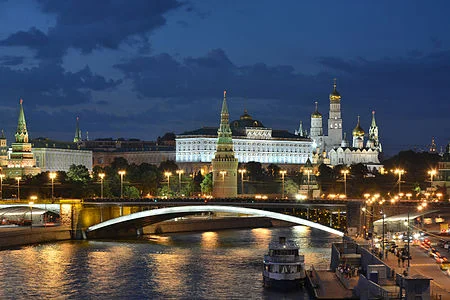
How much money and how many votes do Donald Trump owe residents of this city?
The CIA has found that the Russians worked hard to elect Donald Trump and, of course, succeeded. The implications of this, of course, are very alarming,
The Washington Post reported:
"The CIA has concluded in a secret assessment that Russia intervened in the 2016 election to help Donald Trump win the presidency, rather than just to undermine confidence in the U.S. electoral system, according to officials briefed on the matter.
"Intelligence agencies have identified individuals with connections to the Russian government who provided WikiLeaks with thousands of from the Democratic National Committee and others, including Hillary Clinton’s campaign chairman, according to U.S. officials. Those officials described the individuals as actors known to the intelligence community and part of a wider Russian operation to boost Trump and hurt Clinton’s chances.
“It is the assessment of the intelligence community that Russia’s goal here was to favor one candidate over the other, to help Trump get elected,” said a senior U.S. official briefed on an intelligence presentation made to U.S. senators.
“That’s the consensus view.”
To the whole story, please hit this link.
Todd McLeish: Deer population explosion threatens New England forests

While climate change gets most of the media attention these days for the dramatic effects it is predicted to have — and, in some cases, is already having — on coastal communities, it has yet to have serious effects on Northeast forests.
Eventually, say local experts, climate change will likely cause a shift in the composition of tree species in the region, due in part to southern species moving into the region and the arrival of new pests and pathogens, which may reduce the abundance of currently common species. The predicted drier weather conditions will also likely play a role in altering woodlands.
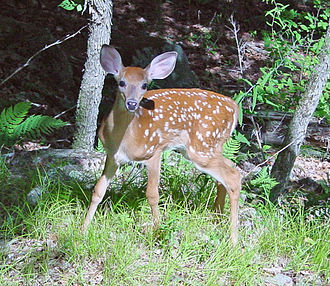
But southern New England’s forests are already facing what some say is an even greater threat than climate change: an overabundance of deer. That’s the warning from foresters, biologists and ecologists from throughout the Northeast, who say that even without climate change, the region’s forests are in trouble unless the state’s deer herd can be reduced and managed more effectively.
According to forester Marc Tremblay, outreach coordinator for the Rhode Island Forest Conservators Organization, deer have had a dramatic impact on forest understory by feeding on young trees, shrubs and plants.
“They’ve browsed all of the favorable species like oaks and maples, they’ve destroyed our wildflowers, and a lot of the understory plants they like to eat are the ones we rely on for the future stocking of the forest,” Tremblay said. “What’s worse, they don’t like invasive species, so barberry and buckthorn and other invasives are growing like crazy. The end result is a complete alteration of the forest, where the invasives have a leg up.”
The Rhode Island chapter of the Society of American Foresters has issued a position statement noting that the long-term health of the state’s forests are dependent on sufficient tree regeneration to re-occupy openings in the canopy created by timber harvesting, development and natural disturbances.
But “deer herbivory at high population levels limits the amount of regeneration and is a serious problem in many parts of the state that, if not addressed, will continue to impact the forest ecosystem and the ability of the forest to regenerate itself,” according to the Rhode Island chapter.
It’s not just the trees that are suffering, though. The Nature Conservancy has reported that populations of songbirds and other species that live in the forest understory are declining because deer have consumed their habitat.
“Think about all the species you know that utilize the understory — rabbits and other small mammals, hermit thrushes and other birds, lots of things,” biologist Numi Mitchell said. “They’re very vulnerable if you take away that understory. Think what it’s doing to our biodiversity.”
The Rhode Island Natural History Survey conducted a two-year study of deer herbivory at the University of Rhode Island’s W. Alton Jones Campus that illustrated the dramatic impact of too many deer. Fencing out deer from two half-acre, forested parcels clearly showed how deer had reduced the density and diversity of native plants and exacerbated the expansion of invasive species.
Inside the fence, where deer couldn’t gain access, seedlings of oak, sugar maple, hickory and tuliptrees were abundant, while outside the fence few could be found. Jack-in-the-pulpit plants inside the fence were knee high while those outside were browsed to stubble by deer. Native trillium planted decades ago were blooming inside the fence, while none had been seen elsewhere in a decade.
“Deer look for every plant they can eat and they eat it,” Natural History Survey botanist Hope Leeson said at the conclusion of the project. “We have continuous still images showing them looking for the proverbial needle in a haystack — heads down searching for any little tidbit of a native plant they can find. Due to taste or texture, they tend not to eat invasive plants.
“Deer promote the growth of invasive species, which decreases the biodiversity of native vegetation and sets into motion a cascade of effects on the health of the ecosystem.”
The scientific community says that forests throughout the Northeast are in a seriously degraded ecological condition as a result of high deer densities. But deer management is the responsibility of each state, so it can’t be addressed by uniform federal regulations.
Brian Tefft, state wildlife biologist responsible for tracking deer statistics for the Rhode Island Department of Environmental Management, said the state is home to about 16,000 deer, some 15 per square mile, far more than the habitat can support. About 1,000 deer are killed annually in collisions with vehicles, and another 2,000 or so are harvested by hunters.
Using hunting as the primary means of managing the herd isn’t particularly effective when most hunters want to shoot a buck rather than a doe that is likely to give birth to twins the following spring. For the sake of our forests, most foresters and biologists suggest altering hunting regulations to encourage the harvesting of more does.
Mitchell said the first step is for sport hunters “to not be so sportsmanlike any more. We need to kill as many does as possible. We’ve gotten rid of our predators, so we need to bring the population down with an increased emphasis by humans.”
She also noted that coyotes might be able to help the situation. Mitchell has studied the Aquidneck Island coyote population for more than a decade, and she said that eastern coyotes have about 20 percent wolf genes, which has helped to make them excellent cooperative hunters.
“Coyotes are a piece of the puzzle,” she said. “They can get deer in the suburbs where people aren’t legally able to shoot. I get calls all the time from people saying they have a dead deer in their yard, and I tell them to wait a day or two and the coyotes will eat them.”
The next phase of her research will be to see how coyotes can be used to help manage the state’s deer population.
David Gregg, executive director of the Rhode Island Natural History Survey, said deer are the greater immediate threat to the region’s forests than climate change, but he also noted that climate change could be even more damaging if the deer problem isn’t addressed first.
“I don’t want to downplay climate change, but certainly one plus one equals three, that’s for sure,” he said.
He pointed to a project his organization is currently undertaking to build resilience into the habitat at Norman Bird Sanctuary and Sachuest Point National Wildlife Refuge, both in Middletown. The plan was to install a variety of native plants, thinking that a diverse ecosystem will be one that can better withstand the coming climatic changes.
“But what we’re finding is that there is so much deer browse there that we'll be hard pressed to do anything unless it is inside a fence,” Gregg said. “We’re going to need to adapt our strategy a bit.”
Mitchell agreed that the cumulative effect of deer and climate could be catastrophic for the region’s forests.
“I think climate change is a bigger long-term crisis,” she said, “but deer are our immediate crisis.”
Rhode Island resident and author Todd McLeish runs a wildlife blog.
At the PCFR: Is foreign trade good for us?

Containerships carrying international cargo.
To members and friends of the Providence Committee on Foreign Relations (thepcfr.org; pcfremail@gmail.com).
Our next dinner comes on Wednesday, Dec. 14, with:
Jeffrey Frankel, James W. Harpel Professor of Capital Formation and Growth at Harvard and former member of the President’s Council of Economic Advisers. He will talk about international trade and when and if it’s good for national economies.
His research interests include international finance, monetary policy, regional blocs, East Asia and global climate change. His publications include "Does Trade Cause Growth?" in the American Economic Review, and “Regional Trading Blocs.’’
American trade deals were, of course, huge (or is it “yuge’’?) issues in the U.S. presidential campaign and helped elect Donald Trump.