
Vox clamantis in deserto



Welcome to Brockton
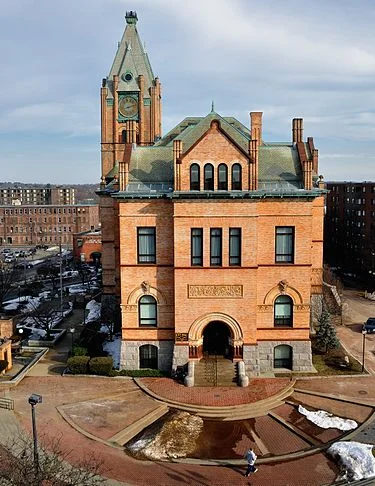
Brockton City Hall, a Romanesque pile built in 1892-94 as the city was moving toward its most prosperous period, albeit with such horrors as child labor and gruesome industrial accidents.
Adapted from an item in Robert Whitcomb's Dec. 1 "Digital Diary'' in GoLocal24.
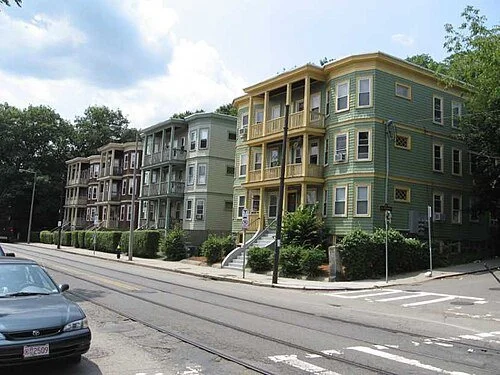
Brockton, once the shoemaking capital of the world, is another mostly deindustrialized area. But immigrants have moved there in large numbers, drawn by cheap rents and Massachusetts’s relatively generous social services, including healthcare.
MayorWilliam Carpenter was recently under fire for spending $585 in city money to pay for a community college course for himself in Cape Verdean Creole to better communicate with a major ethnic group there. The City Council eventually approved the expenditure after some grumbling that he should have paid for it himself.
Of course, immigrants used to flock to such cities as Brockton for jobs, many of them relatively high-paying skilled positions. No more. Now the large number of low-income immigrants, many with little or no skills in English, serve to irritate many of the sort of people who voted for Donald Trump. They make some Americans feel that they are strangers in their own land.
But just up the road, Boston and Cambridge get richer and richer with 21st Century high tech and an embrace of a global economy.
-- Robert Whitcomb
Better than a homeopathic physician

"The Magician's Assistant'' (photographic combine -- archival pigment print face-mounted), by Marybeth Rothman, at Lanoue Fine Art, Boston, in the current Sowa Winter Festival.
SOWA is the burgeoning arts district of Boston south of Washington Street.

Josh Hoxie: Sucker voters give Wall Street more power and money than ever
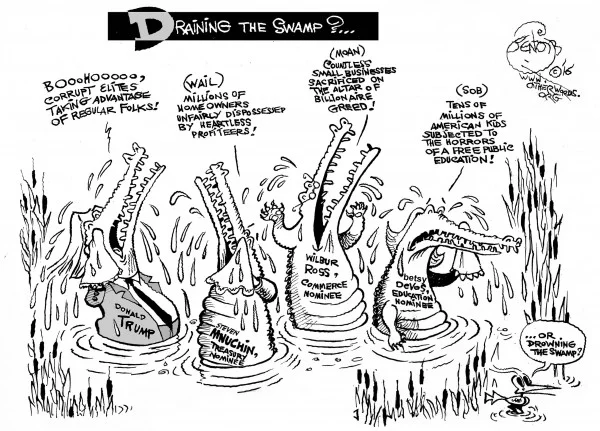
During the campaign, Donald Trump said he wanted to fix our rigged economic system. And we can’t do that, he said, by counting on the people who rigged it in the first place.
He talked a big game about Wall Street and the big banks. He repeatedly called out Goldman Sachs, the Wall Street behemoth, by name in ads and speeches, characterizing the firm as controlling his rivals Hillary Clinton and Ted Cruz.
So it should come with some shock, at least to Trump voters, that now President-elect Trump has chosen a consummate Wall Street insider, Steve Mnuchin, for Treasury secretary.
Mnuchin spent 17 years as an executive at Goldman Sachs before continuing his lucrative career as a banker and investor. Is this not the swampiest of characters that Trump vowed to drain away?
Trump’s anti-Wall Street messaging resonated with millions of voters. A poll taken just before the election showed that nearly 70 percent of undecided voters in key swing states wanted to break up the big banks and cap their size to avoid another financial crisis.
The same proportion wanted to close the “carried-interest loophole,” an insidious provision that enables hedge-fund managers to pay lower taxes than nurses.
It’s unclear whether Trump’s anti-Wall Street messaging made the difference for these voters. But it’s abundantly clear that he didn’t mean a word of it.
In Washington, personnel is policy. And Mnuchin’s appointment casts serious doubt that Trump will follow through with any of his bluster on Wall Street.
Mnuchin isn’t just any Goldman Sachs alumnus: He oversaw one of the largest foreclosure operations in the country. Mnuchin bought mortgage lender IndyMac in 2009, renamed it OneWest, and continued on as its chair through 2015 — a period in which OneWest foreclosed on more than 36,000 families.
What exactly does Mnuchin want to do while in power?
In his first announcement, Mnuchin exclaimed his “number one priority is tax reform,” promising to work with Congress to pass the “biggest tax cut since Reagan.” He claims the benefits of this tax cut will go to middle-class families, rather than the upper class.
Fortunately, tax plans, unlike campaign promises, can be easily and quickly fact checked. Unfortunately, Mnuchin’s statement comes back pants-on-fire false.
Over half of the cuts in Trump’s proposed tax plan would exclusively benefit the top 1 percent, according to the non-partisan Center on Budget and Policy Priorities. The plan would increase their after-tax income by 14 percent, 10 times more than for middle-income earners.
Mnuchin won’t be the only Wall Streeter in the Trump administration. Steve Bannon, the chief strategist for the president-elect and former head of the white supremacist “news’’ outlet Breitbart, is a fellow former Goldman Sachs employee.
The Wall Street swampiness of both Mnuchin and Bannon, however, pales in comparison to that of Wilbur Ross, the billionaire investor selected by Trump to lead the Commerce Department. The 79-year-old investor built a career on greed, exploitation and apparent tone deafness. Ross infamously whined in 2014, “The 1 percent is being picked on for political reasons.”
These former Wall Streeters will have serious power overseeing major parts of the government and the overall economy.
It’s been just eight years since Wall Street bankers had to come to Washington, hat in hand and utterly humbled, to ask for a taxpayer funded bailout. The reforms put in place to prevent a repeat of the 2008 crisis are tenuous at best — and now they’re under serious threat from the same people they were designed to rein in.
Josh Hoxie directs the Project on Taxation and Opportunity at the Institute for Policy Studies. Distributed by OtherWords.org.
'Unconscious of observation'
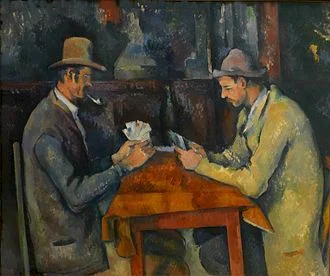
“The rapid nightfall of mid-December had quite beset the little village as they approached it on soft feet over a first thin fall of powdery snow. Little was visible but squares of a dusky orange-red on either side of the street, where the firelight or lamplight of each cottage overflowed through the casements into the dark world without. Most of the low latticed windows were innocent of blinds, and to the lookers-in from outside, the inmates, gathered round the tea-table, absorbed in handiwork, or talking with laughter and gesture, had each that happy grace which is the last thing the skilled actor shall capture -- the natural grace which goes with perfect unconsciousness of observation. Moving at will from one theatre to another, the two spectators, so far from home themselves, had something of wistfulness in their eyes as they watched a cat being stroked, a sleepy child picked up and huddled off to bed, or a tired man stretch and knock out his pipe on the end of a smouldering log.”
― Kenneth Grahame, from ‘’The Wind in the Willows”
And mellow

"Dried Yellow,'' by Dianne Shullenberger, in the "Treasure the Small'' show at the Furchgott Sourdiffe Gallery, in Shelburne, Vt. through Jan. 21.
Vermont trying all-payer healthcare system to curb costs, improve care

Vermont's state seal, in a stained-glass window in the State House, in Montpelier.
Governing magazine has looked at Vermont’s development of an all-payer healthcare system.
In this approach, the publication says, ”{i}nstead of billing doctors for each service they provide, insurers in Vermont will now give them a fixed sum each month, along with bonuses for keeping patients healthy. (Doctors can also pay penalties for adverse health effects, like having a high number of patients getting readmitted to the hospital within 30 days.) The hope is to eliminate unnecessary procedures, reduce costs and elicit more positive health outcomes.”
“In the 1970s, a dozen or so states tried all-payer systems for their hospitals. Except for Maryland, they all eventually shifted back to the standard fee-for-service because there was little evidence that all-payer was actually reducing overall health-care spending.”
“All of those states, however, only applied all-payer to hospitals — leaving out a large portion of health-care providers and limiting its potential impact.”
“Vermont’s system will cover all providers — hospitals, primary care, specialists, urgent care clinics, you name it. And instead of the state paying the providers their monthly fixed sum, it will be up to accountable care organizations (ACOs), which are groups of providers that have the same goals as all-payer: to reduce spending by rewarding better, not more, care.”
But there will be big challenges to making this work.
To read the Governing piece,
This item first ran in the Web site of Cambridge Management Group (cmg625.com).
Jane A. Difley/John D. Judge: Time to bury the huge Northern Pass power project
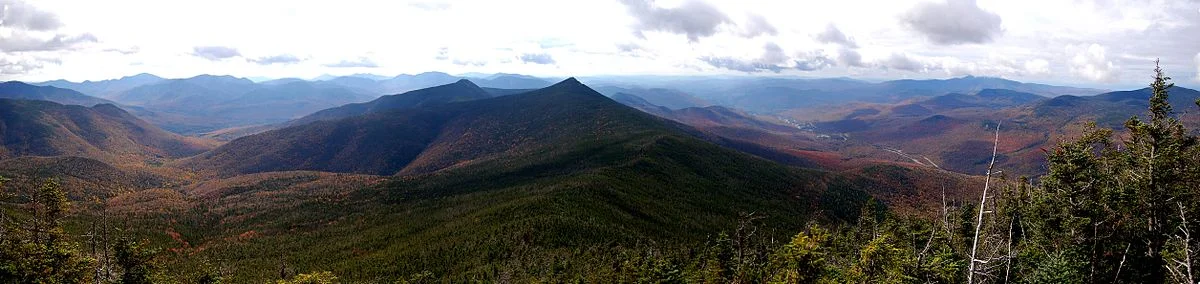
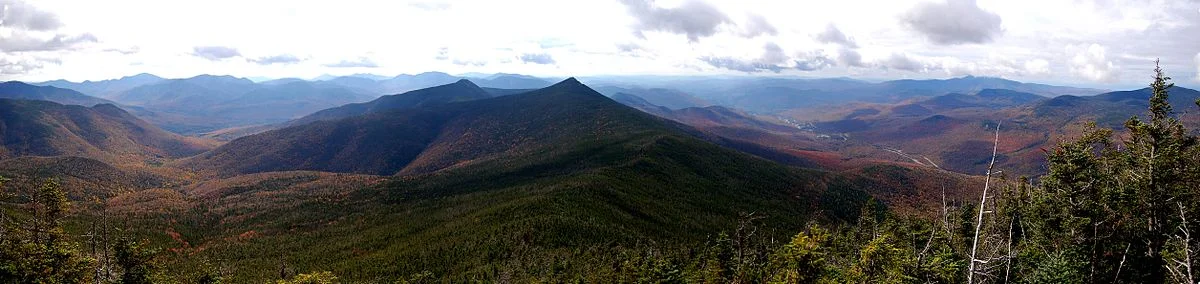
In the White Mountain National Forest.
It’s time for the out-of-state and out-of-country interests pushing the current Northern Pass proposal to bury the private transmission line along appropriately designated transportation corridors. A similar project in Vermont shows that it can be done.
The fast-track toward approval of the 154-mile New England Clean Power Link, which recently received a Presidential Permit from the U.S. Department of Energy, highlights the benefits of burying transmission lines along state highways. That project has leapfrogged Northern Pass in the quest for permitting by using 56 miles of existing road rights-of-way and running along the floor of Lake Champlain. It would serve the same purpose as Northern Pass by enabling Canadian hydropower generators to market more energy to southern New England.
In terms of scenic degradation, vulnerability to catastrophic weather events and alteration of prized public lands, Northern Pass has it all wrong. Perhaps that’s why, six years since its proposal went public, the opposition to Northern Pass among New Hampshire residents is stronger than ever.
New Hampshire’s citizens know that Northern Pass as proposed is a wrong-headed project and that its more than 1,000 steel towers across 192 miles would destroy the state’s lifeblood: the iconic scenic views that draw millions of visitors to the state’s mountains and forests, feeding our tourism-dependent economy. Furthermore, Northern Pass is wholly incompatible with such conservation gems as the White Mountain National Forest and the Appalachian National Scenic Trail, both of which would be hurt.
New Hampshire’s people know that it is wrong to have our scenic beauty and environmental legacy sacrificed for the money-making interests of private power producers.
At public meetings and hearings, and in written testimony, the public has spoken out against this damaging and unnecessary project. Thirty-one towns that would be affected have voted to oppose it.
The U.S. Department of Energy has received more than 7,500 comments, largely negative, about Northern Pass. Given that public push-back, the DOE is studying no fewer than 24 alternatives to the project.
By comparison, things on the Vermont side of the border look very different. The Clean Power Link project has generated just 12 written comments. Two alternatives were reviewed in its Draft Environmental Impact Statement, which was released in May, just one year after the application was submitted.
The environmental impact of the Vermont project appears to be far less than the impact of the Northern Pass proposal. Using modern technology, the Vermont cables would rest in a 4-foot-deep-by-4-foot-wide trench alongside public rights of way, or submerged in Lake Champlain. TDI, the transmission developer, will pay the State of Vermont $21 million annually for its use of road rights-of-way and will create an additional $298 million Public Good Benefit Fund.
In contrast, what would New Hampshire get? Steel towers 155-feet high looming over the tree canopy and scarring scenic views. Negative impacts on resources of regional and national significance. The danger of power outages due to wind, snow and ice storms due to vulnerable, overhead lines. Damage to the state’s tourism economy, and no lease payments to support the state budget.
The Appalachian Mountain Club, the Society for the Protection of New Hampshire Forests and our respective members have long defended New Hampshire’s scenic landscapes. As we contemplate the Northern Pass vision, we are reminded of another wrong-headed proposal.
In the 1950s, the Feds proposed blasting a four-lane superhighway through Franconia Notch. We objected. Ultimately, a compromise was reached and the two-lane Franconia Notch Parkway was built.
The Northern Pass proposal is mired in a contentious state permitting process with a very uncertain outcome. We believe that it’s time that the executives at Eversource and Hydro-Quebec recognize that their own interests may be best served by respecting the wishes of New Hampshire people and the landscapes we cherish. We call on Eversource and Hydro-Quebec to look at the benefits of the Vermont model and put forward a proposal that buries Northern Pass for its entire length.
There are many who point to the downsides of importing more power from Quebec and call for no new transmission lines. We see no need for the Northern Pass project. But burying the Northern Pass would prevent at least the selling out of New Hampshire and the natural resources of regional and national significance on which the livelihoods of Granite State citizens depend.
For more information on the status of unprecedented fight against the Northern Pass proposal, visit https://www.forestsociety.org/advocacy-issue/northern-pass or http://www.outdoors.org/conservation/hot-issues/northern-pass.cfm
Jane Difley is president/forester for the Society for the Protection of New Hampshire Forests. John D. Judge is president of the Appalachian Mountain Club.
December wind
"This is what I have heard
at last the wind in December
lashing the old trees with rain
unseen rain racing along the tiles
under the moon
wind rising and falling
wind with many clouds
trees in the night wind."
-- W. S. Merwin
Chris Powell: Trump's charge about illegals voting raises a good question
Donald Trump's assertion that he might have won the popular vote in the presidential election if so many illegal aliens had not voted against him is implausible if not ridiculous. But Connecticut is not in a good position to dismiss the complaint entirely.
For while extracting the information from the Connecticut secretary of the state's office was nearly as difficult as pulling teeth, the (Manchester) Journal Inquirer reported the other day that Connecticut does not require any documentation of citizenship from people registering to vote. Only documentation of identity and residency are required, and it's up to municipal voter registrars to decide what sort of documentation they will accept, even whether to accept the identification cards that "sanctuary cities" like New Haven have been issuing to illegal immigrants to facilitate their violation of federal law.
New voters need only to attest under penalty of perjury that they are citizens. For Connecticut considers it too onerous to require new voters to produce a birth certificate, and there are no checks of the eligibility of applicants and no audits of the eligibility of those already registered.
Of course it's unlikely that many illegal immigrants have registered to vote in Connecticut. But since the state's illegal immigrant population already is estimated to exceed 100,000 and keeps growing thanks to the "sanctuary cities," more illegal immigrants are likely to register over time. Since illegal immigrants have no reason to vote Republican, their registering is in the interest of the Democratic administrations of the "sanctuary cities" -- not just New Haven but also Hartford and New London and, probably, soon, Bridgeport as well.
Those cities always produce big Democratic pluralities and their administrations have great incentive not to be fastidious about the citizenship requirement for voters.
Further, influential forces on both the political left and right want to perpetuate illegal immigration. The left benefits from increasing the low-skilled, low-wage population, which becomes dependent on government. The right gets cheaper labor that depresses the working-class wage base and living standards.
The other day the Hartford Courant assisted this process with an editorial advising Hartford city government how it could distribute to illegal immigrants the sort of city identification cards issued in New Haven without maintaining records that could be pursued by federal immigration authorities, even when the feds are chasing criminals or terrorists. In issuing the cards, the Courant said, the city should not keep any records of the information submitted by illegal immigrants, nor any records of the issued cards themselves.
The card-issuing process then would be beyond evaluation, even by news organizations like the Courant. Anyone could come to Hartford, obtain city identification with forged documents, and slip into the community without a trace. As New Haven has done, Hartford thus would commandeer both national immigration and national security policy.
Even citizens seeking a change of identity for criminal and debt-evasion purposes could exploit this system.
All this destruction of standards is being cloaked in political correctness and humanity, as if it is the only alternative to Gestapo-style raids and deportations of the estimated 12 million illegal immigrants in the country.
But the issues are separate. Ending the facilitation of illegal immigration by local nullification of immigration law does not require inflicting cruelty on anyone, and while the nullifiers complain that the immigration system is "broken," they are the ones breaking it.
If the country won't enforce any standards in voting and immigration, eventually it won't be a country anymore.
Chris Powell is managing editor of the Journal Inquirer, in Manchester, Conn., and an essayist on cultural and political issues.

North of the bugs?

"Pine Ledge'' (oil on lexan), by James Mullen, at Alpers Fine Art, Andover, Mass.
Excerpted from Robert Whitcomb'sDec. 1 "Digital Diary'' column.
I stopped off at an old friend’s office in Newport, N.H., the other day for lunch. Now retired as a CEO, he moved his company’s headquarters up there from Connecticut long ago. I asked my friend whether he had made any trips to the tropics lately and whether he’ll go south this winter. He has plenty of time and money to do so.
He said absolutely not: Travel is tiresome and he prefers to live far enough north to avoid tropical diseases and poisonous snakes. He has houses in Newport (N.H.) and Bar Harbor, Maine.
Some small solace to New Englanders fearing the onrushing winter – it’s healthier here?

Which signal?

By Nancy Dyer Mitton, in the group show "Small Works 2016,'' at DeDee Shattuck Gallery, Westport, Mass, through Dec. 18.
Is this a matter of "red sky in morning, sailors take warning'' or "red sky at night, sailors' delight''?
Vladimir Putin: Presidential elector; TPP actually good for us!
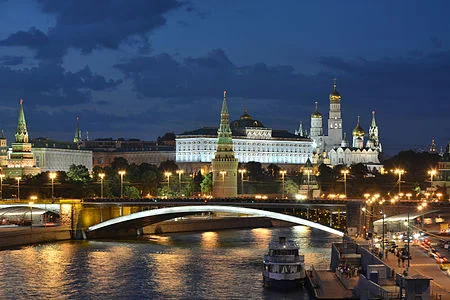
Welcome to Moscow.
From Robert Whitcomb's Dec. 1 "Digital Diary'' in GoLocal24.
This winter will include continued controversy about the presidential election. For one thing, there’s the unsettling fact that Hillary Clinton has won more than 2 million more popular votes than Donald Trump.
For another thing, reports continue to circulate that Russian government-sponsored hackers may have manipulated some voting results to help Donald Trump, a Vladimir Putin fan, win three very closely contested states – Pennsylvania, Wisconsin and Michigan – and thereby the election. Very chilling thought indeed, but whatever hacking took place was probably not crucial in the outcomes.
What was crucial was the Russian/WikiLeaks hacking and publicizing of emails of people connected with the Hillary Clinton campaign and the creation offake and often vicious news stories meant to show everyone connected with Mrs. Clintonin the worst light. (That’s not to say that the Clintons don’t have enough baggage to open up a small luggage store.)
Given the closeness of the election, it seems entirely plausible that a ruthless dictator has managed to make Donald J. Trump our president.
At the very least, the uneasiness about all this ought to encourage Mr. Trump and his followers to avoid trying to impose whatever incoherent and extreme set of policies they may have in mind because of some sort of a “mandate’’. He has no mandate and it is even possible (though unlikely) that his election itself was fraudulent.
In any case, Mr. Trump seems to have no particular principles, other than that he should always be at the center of attention and be seen as a “winner’’. Post-election, he has been madly backtracking on campaign promises on immigration, climate change, healthcare and persecuting/prosecuting the Clintons, among other things, because, as he must have known before the election, while these promises pleased some of his more ignorant, naïve and angry followers, they could not be easily implemented and might swiftly make him very unpopular.
I suspect that he first ran for president as a sort of lark to keep himself inthe public eye and pump up his future reality-TV business and at first had no idea that he could actually become president. But with the incoherence of the GOP’s constituencies, and the failure of his primary-election rivals to thrive in the Celebrity Culture that dominates so much of American life, he came to realize he could win. And he certainly didn’t want to be branded a “loser’’ – the most offensive thing he could think of being called. He is, after all, rather childlike.
So he winged it, telling his followers and potential followers what they wanted to hear and had the good luck to run against a Democrat whom many people were sick of and thought dishonest, although her dishonesty level is many times lower than his. And Donald Trump is a hell of a salesman, as a cousin of mine who has negotiated with him reminded me last month.
Now the president-elect has to somehow square his promises with governing via a government that has the tedious old thing called “separation of powers.’’
xxx
One position he might not back down from is opposition to the Trans-Pacific Partnership, a trade deal that if the U.S. adhered to it would strengthen America in its competition with China, which is the biggest threat to U.S. national security, including its economy – worse than Mr. Putin’s Russia and the Islamic terrorist community.
The TPP is a proposed 12-nation (if you include the U.S.) trade deal that doesn’t include China – indeed it’s meant to push back against Chinese efforts to economically and militarily dominate East Asia and the western Pacific region.
The TPP would help prevent China from writing the trade rules for much of the world. Note that the Chinese government called the TPP “the economic arm of the Obama administration’s geopolitical strategy to make sure that Washington rules supreme in the {East Asia/Pacific} region.’’ Mr. Trump, by rejecting what had been expected to be much expanded U.S. cooperation with friendly nations in the region, may have thrown the other 11 nations into the arms of the Chinese dictatorship, whose plans include taking over the entire South China Sea.
China and the technology that allows relentless automation have been by far the biggest killers of well-paying U.S. jobs, whose loss had a lot to do with Donald Trump’s crucial victories in battlefield states. Mr. Trump’s avid followers would cheer if, as he has promised, he officially kills the TPP soon after he takes office. A year or two or three down the road, they won’t like the results in job losses. It will be interesting to see how President Trump improvises his way out of that. Will he do it via series of frantic tweets?
Felicia Nimue Ackerman: The horror, the horror
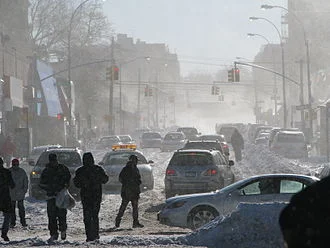
In the bleak mid-December
Icy winds attack your face.
Icy streets impede your pace.
Worst of all (lest you forget),
It's not even winter yet.
-- Felicia Nimue Ackerman
Don Pesci: The Castros' useful idiots
Hillare Belloc’s “Advice to the Rich” was lost on the Castro brothers: “Get to know something about the internal combustion engine, and remember – soon, you will die.”
Fidel Castro, Cuba’s deathless tyrant, died Nov. 25 full of years and a very rich man, his foreign bank account stuffed with other people’s money, though one would never guess it reading Jesse Jackson’s encomium.
The Washington Examiner noted, shortly after Fidel’s passing, that Jesse Jackson, “the civil rights leader, urged the nation to join ‘oppressed people’ across the globe in celebration of ‘the life of a liberator who fought and won against the rich and oligarch rule of [former Cuban President Fulgencio] Batista.’"
For as long as the Castro brothers ruled Cuba with a mailed fist, there were only two one-percenters in the island nation, both named Castro. Fidel lives on, one supposes, in his estate; Raul just lives on, waiting for the grim reaper to carry him off. In Cuba, the poor people – the Castro brothers must have loved them, because they made so many of them -- were afraid to speak Fidel's name in the street, not without reason. When referring to the "freedom fighter," they pointed to their chins, indicating Fidel's beard. Fidel began his life as dictator of Cuba by lying to then President Dwight Eisenhower – “no, I'm not a communist’’ -- and ended it by lying to himself and Jesse Jackson, who is still credulous enough to believe the lies. The problem with Jackson – and others inextricably entangled in their own past leftist commitments -- is that Mr. Jackson’s own unexamined past lies over his eyes like thick cataracts. He cannot see the political idol behind the veil.
“The idols of the nations are but silver and gold,” says the psalmist, “the work of man's hands. They have mouths, but they do not speak; they have eyes, but they do not see; they have ears, but they do not hear, nor is there any breath at all in their mouths…”
The bloody 20th Century replaced religious idols with political idols, such asvMussolini in Italy, Hitler in Germany, Stalin in Russia, Mao in China, Kim Il-sung in North Korea and the Castro brothers in Cuba. There was breath enough in their mouths to bury the tender shoot of democracy beneath mounds of lies. And all of them met and crushed by violent means courageous resistance in their own lands.
The brothers Castro knew well how to deal with the resistance. Their tutors were the atheistic communist idols of the political market place – Marx, Lenin and Stalin, each of whom made use of doctrinal enforcers. The Castro brothers' chief enforcer was Che Guevara, a murderer and thug whose somber bereted image appears today on the tees and sweatshirts of Ivy League radicals here in the United States.
In addition, the Castro brothers made full use of Lenin’s “terror,” and Stalin’s Lubyanka, the seat of Communist oppression in Russia. Once an insurance company, the Lubyanka became the headquarters of Stalin’s secret police, the Cheka. Irreverent Russians jokingly called it “the tallest building in Moscow,” since Siberia, the Gulag labor camp system, could be seen from its basement.
There were lots of secret police basements in Cuba, all put to good use by Cuba’s “civil rights leader.”
Cuba could not have survived so many years of Castro’s attentions without patrons and leftist useful idiots in the so called Free World. Just now, Raul, the surviving Castro, is in need of yet another patron. Nikita Khrushchev began moving away from Fidel after he had suggested a nuclear strike as an answer to U.S. aggression against Cuba. Even then Cuba was a patron sponge. Another patron, the worshipful Hugo Chávez of Venezuela, later took up the slack. Under the strains of Castro styled socialism, the economy of Venezuela collapsed, and the country’s current socialist caudillo, Nicolás Maduro, a former bus driver, has been unable to keep Venezuela’s grocery store shelves stocked with toilet paper, not to mention food.
Enter President Obama who, with his phone and pen, opened Cuba to American tourism. Alas, U.S. presidents come and go, unlike communist dictators such as Fidel, lauded by Canada’s 23rd Prime Minister Justin Trudeau as “Cuba’s longest serving President… a larger than life leader who served his people for almost half a century… A legendary revolutionary and orator… While a controversial figure, both Mr. Castro’s supporters and detractors recognized his tremendous dedication and love for the Cuban people who had a deep and lasting affection for ‘el Comandante.’”
During the beloved comandante’s reign of terror, a million Cubans fled into exile. Not all of them made it to freedom. On July 13, 1994, during the infamous Tugboat Massacre, Castro’s brown shirts killed 37 would-be escapees, most of them children and their mothers. Juanita Castro who fought alongside her brothers against the Batista regime, also was a defector: “I could not remain indifferent to what is happening in my country. My brothers Fidel and Raúl have made it an enormous prison surrounded by water,” she said. Someone should tell Mr. Trudeau and Mr. Jackson.
It is easy to understand the Castro brothers: They cared nothing about the internal combustion engines of the human spirit and, like most moral monsters, they thought they would live forever. But understanding the useful idiots has always involved a ticklish moral hazard: How is it possible for “civil rights leaders” and democracy defenders to bestow compliments upon civil rights offenders and democracy destroyers?
Don Pesci is a Vernon, Conn.-based political writer.

An island for opioid treament
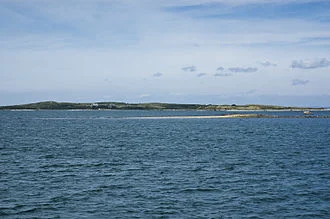
Penikese Island from the southeast.
Excerpted from Robert Whitcomb's Dec. 1 Digital Diary column in GoLocal24.
Tiny Penikese Island, off southwestern Cape Cod and part of the Elizabeth Islands, has been turned into a beautiful if austere retreat for the treatment of opioid addiction, a staggering problem all over America. You can blame the addiction epidemic, in part, on pharmaceutical companies and their salespeople asserting that such newish opiates as OxyContin were not dangerously addictive and were needed to address an alleged American “pain crisis."
In the past, Penikese has hosted a leper colony, a school for troubled boys and a bird sanctuary. Its latest use is admirable, though, it should be emphasized, the facility can only take a few clients at a time – at this point only young men.
There must be some other New England islands that would serve as places where addicts can confront and overcome their demons with the help of tough but compassionate therapists and without the temptation, followed all too often by quick relapse, they’d have on a mainland. It’s hard to avoid the mindfulness and perspective you gain in such a quiet, if windy place. Not that you’d want to spend the rest of your life there.
Llewellyn King: The Donald's power tweets will make America great again
Do not tell anybody, but I am totally tweeterized. I long to see the latest tweet from Donald Trump. I am addicted, dependent, enslaved and hooked to the great man’s tweets.
If there has been one overnight, my day is going to be good. I will know The Donald is in his Tower of Power on Fifth Avenue in New York City, at his Mar-a-Lago palace in Palm Beach, Fla., or at a luxury hotel that he owns, along with some big banks, and all is well with the world because he has tweeted me.
And he is coming to Washington. I am overexcited, thrilled and all atremble that -- Can my heart take it? -- President Tweet will be sworn in as the 45th President of the United States, and the first to govern by tweet.
Tweeting is going to make him the most democratic president ever. He will tweet – forgive me for thinking it is just to me -- at each great milestone of his presidency: the start of building the wall; the end of the North American Free Trade Act; the beginning of wonderful health care, for some people; the slashing of that nasty federal income tax; the new Asian order, when China is burden with high U.S. tariffs and is put in its place -- I will not let my imagination go there.
Never will any president be so close to the public (There goes my heart again.) as when he speaks to us by tweet, at any hour of the day or night, because it is necessary, or when the great man just cannot get to sleep.
When Chuck Schumer, the Democratic leader in the Senate, has the effrontery to criticize the new privatized education system, The Donald will put him away in 140 characters. That is showing the power of Twitter-disciplined mind for you: so concise, so complete, so exact and right between the eyes.
If that Mr. Putin betrays The Donald’s trust in him and starts moving armies around Europe, the tweeter-in-chief will mobilize and let him have it by tweet at whatever hour, regardless of time zone. He will tell us, even before he has tweeted the Joint Chiefs of Staff on what they should do, and we will be comforted. Little me will be thrilled to see this world leader doing what he does best in crisis: tweeting.
I will feel so connected to the White House, or one of his grand resorts, which is probably where he will hang out mostly away from the prying press and the awful tourists. Just remember, all Tweet Man needs is a phone and he is connected to each and everyone of us: no journalists, press conferences, staff meetings needed. Just a word with one of his family members -- and action.
Ring the bells, shout from the hills, spread the word – by tweet of course -- and tell everyone there is a new order! The middlemen and women are out. A leader is one with his people by tweet, in touch 24/7.
There will be tweets to advise us if Ivanka is having a baby; if there are to be gold faucets at 1600 Pennsylvania Avenue; if the British are ending the special relationship; and if Mexico and Canada form a mutual defense pact.
A tweet here, a retweet there and very soon things are turned around: education policy, environment policy, foreign policy, health care policy, trade policy and, of course, policies affecting Empire Trump. What is good for America is good for business. Forget blind trusts, even the blind know what is good for golf and the leisure industry. If you can tweet in the dark, you can see in the dark. Trust him.
The Big Tweet, the one I am waiting for more than for all the others, is, of course, the one we are all waiting for: When President Tweet tweets “America is great again.”
Llewellyn King is executive producer and host of White House Chronicle, on PBS. His e-mail is llewellynking1@gmail.com. This first ran on Inside Sources.
Chris Powell: The U.S. created Castro's dictatorship; Hampshire College's anti-Americanism
For practical purposes Fidel Castro died a decade ago as he bequeathed his dictatorship to his brother and slipped into decrepitude. For practical purposes Cuba itself died 25 years ago upon the collapse of its financial patron, the Soviet Union. The country remains impoverished and totalitarian.
But the cheering throughout the United States, particularly from Little Havana in Miami and the right-wingers in Washington, is hypocritical. For the United States created Castro with its decades of military intervention in Cuba and then its support of his predecessor as dictator, Col. Fulgencio Batista, who overthrew Cuba's elected government in a military coup in 1952.
Indeed, there is hardly a country in the Americas that hasn't been invaded, occupied, or controlled or exploited economically by the United States in the last century and a half, even as we presume to lecture them about freedom. The Monroe Doctrine's principle of keeping European powers out of the Western Hemisphere has been one thing. It has been something else to make the hemisphere safe for the United Fruit Co. and its successors.
As in Cuba, U.S. support of oppressive regimes in the name of containing communism has led to tyrannical pushback. In Iran the shah begot the ayatollahs. In Nicaragua the Somoza regime begot the Sandinistas. In Libya King Idris begot Moammar Gadhafi.
But our intervention in Cuba has been more extreme than anywhere else. Even today the United States continues an economic embargo against the country, though President Obama has loosened it by executive action. Federal law prohibits normal relations with Cuba unless it becomes free, though there are no restrictions on our relations with similarly repressive countries like China and Saudi Arabia.
This week even President-elect Trump couldn't resist beating up on Cuba, announcing that he would reverse Obama's opening to the country unless it democratizes. (What's the problem, Mr. President-elect -- that Cuba lacks an Electoral College?)
Imperial communism is no longer a threat to the world. The only imperialism operating today is that of the U.S. dollar and the market rigging done by Western central banks to support it so this country can maintain a huge trade deficit, consuming from the world more than it produces in return.
Developing countries should be left to solve their own problems in their own way, ugly as it sometimes will seem. For foreign intervention creates distractions and resentments that tyrants exploit with nationalism and thus only makes things worse.
Permitted to have normal relations with the United States, Cubans inevitably will want more freedom, will make more demands of their government, and will be drawn into the U.S. economic sphere. Eventually the best Cuban baseball players will be able to earn a good living at home, Havana's team in the Eastern Division of the Liga Nacional will win the World Series, and, as is starting to happen in increasingly capitalistic Vietnam, people will wonder what all the fuss was about.
* * *
ACADEMIA'S OPEN DISLOYALTY: Having taken down the national colors from its flagpoles, Hampshire College, in Amherst, Mass., reflects the increasing disloyalty of academia as it sinks deeper into political correctness.
A spokesman for the college explains that for some students the American flag is "a powerful symbol of fear." But if those students were really so afraid, they wouldn't stick around. They'd high-tail it to a more congenial jurisdiction -- maybe Cuba, though, unlike the United States, that country doesn't let people leave.
Last Sunday military veterans went to the college to protest the decision about the flag. They shouldn't have bothered. Instead they should try to persuade their families to get more particular about the left-wing indoctrination that is passing for higher education.
Chris Powell is managing editor of the Journal Inquirer, in Manchester, Conn., and an essayist, mostly on political and social issues.
Coastal welfare for the rich
Excerpted from Robert Whitcomb's Nov. 24 "Digital Diary'' in GoLocal24.
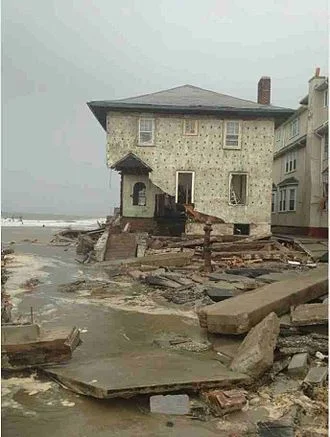
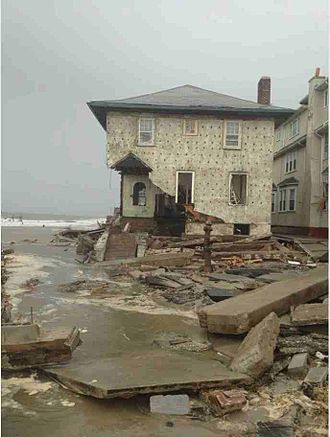
Contrary to the usual rhetoric, much “government welfare’’ in America, be it through tax policy or direct federal spending, goes to the affluent. A good example is the federal flood insurance program, in which vast sums of taxpayer money are spent to protect the investment of the well off (including some very rich) folks who can afford to have a seaside house, which is in many cases a second home.
This insurance, of course, encourages people to build and/or keep expensive houses in flood zones. Thus over and over the taxpayers have to keep bailing them out (sometimes literally).
We got a reminder of this the other week with word that the Army Corps of Engineers said it wants to spend $58.6 million to lift up 341 private structures in southern Rhode Island to make them less vulnerable to storm surges as the ocean continues to rise with global warming. This would be in addition to continuing to subsidize the owners’ flood insurance. Many of the owners are from New York, Connecticut and elsewhere from outside the Ocean State.
This would be a raid on the U.S. Treasury to further comfort the comfortable but will almost inevitably happen, encouraged by the seaside towns because most of these people do pay hefty property taxes. But inland-town folks paying federal taxes might not find this pleasing.
You'll eat alone

"Oak Trees and Picnic Table,'' by Sandra Shenk, at the Helen Day Art Center, Stowe, Vt., Dec. 2-31.