
Vox clamantis in deserto



Chris Powell: Species of fraud at UConn and Carrier
College football and basketball coaches are paid the big bucks because they're so talented and their programs earn the big bucks -- and sometimes, as at the University of Connecticut lately, they are paid the big bucks even when they produce only failure.
That is, of course, the case with UConn's football coach, Bob Diaco, who is paid almost $1.7 million per year and has just completed his third season at the university, all losers -- 2-10 in 2014, 6-7 in 2015, and 3-9 this year. Just a few months ago the university somehow thought so well of him that it extended his contract through 2020 and promised to give him fat raises each year.
Lucky for Diaco, his golden parachute is firmly in place. While the university could have fired him early this year for a mere $700,000, firing him before the end of this year now will cost UConn $5 million. After Jan. 1 the price of dismissing him will go down, but only to $3.4 million.
But like love, working at UConn means never having to say you're sorry -- and not just for Diaco but also for the university's athletic director, David Benedict, and its president, Susan Herbst, who arranged the contract extension on the eve of what may have been the football team's worst season in living memory. Two years ago Herbst also gave a $251,000 honorarium to presidential candidate Hillary Clinton for a brief, informal public conversation at a university auditorium -- another bet that failed spectacularly.
Meanwhile, as the decline of Connecticut's economy accelerates, Gov. Dannel Malloy is trying to save money by, among other things, closing state parks and reducing day-care services for the working poor and rehabilitation services for drug addicts. But the governor never seems to notice any extravagance at the state's flagship university. The governor, Herbst, and Benedict must hope that UConn's men's and women's basketball teams, which have just begun their seasons, will make everyone forget about football before snow covers Pratt & Whitney Stadium's empty end zones.
xxx
Making America great again probably will require more than what President-elect Donald Trump and the vice president-elect, Indiana Gov. Mike Pence, arranged to persuade Carrier Corp. not to relocate quite as many jobs from Indiana to Mexico.
Contrary to the triumph being claimed by the Trump camp, many Indiana jobs still will be shipped out. The remaining jobs were saved only through the usual corporate welfare -- tax breaks delivered by state government and more tax breaks promised by the new president -- and saved by the possibility of extortion.
That is, Carrier is part of conglomerate United Technologies Corp., based in Farmington, Conn., and a major military contractor that needs to curry favor with the incoming administration, circumstances that don't apply to other corporations attracted by cheaper foreign labor.
Tax and tariff policy may discourage the export of manufacturing jobs, but bigger forces are at work here, such as the longstanding use of the dollar as the world reserve currency, which enables this country to run huge trade deficits, in effect printing money for other countries and exploiting their cheaper labor, and the declining educational performance of the U.S. workforce relative to foreign workforces.
Blessed with peace and plenty of capital from dollars, the most backward parts of the world are industrializing even as U.S. students are not keeping up with foreign students. In addition, the movement to raise the minimum wage to $15 an hour throughout the United States will not just induce employers of low-wage workers to automate; it will also induce such employers to export more simple manufacturing jobs.
America won't be made great again by scapegoating employers for pursuing their own interest just as everyone else pursues his own interest. Greatness may begin with enough courage and honesty to tell people about their own shortcomings.
Chris Powell is managing editor of the Journal Inquirer.

Manhattan still marvelous in season, in spite of Trump-caused neighborhood woes
From Robert Whitcomb's Dec. 8 "Digital Diary'' in GoLocal24.com
“It's time to end my holiday and bid the country a hasty farewell.
“So on this gray and melancholy day, I'll move to a Manhattan hotel.
“I'll dispose of my rose-colored chattels and prepare for my share of adventures and battles,
“Here on the twenty-seventh floor looking down on the city I hate and adore!
“Autumn in New York, why does it seem so inviting?
“Autumn in New York, it spells the thrill of first-nighting.’’
-- The opening of “Autumn in New You’’ (1934), by Vernon Duke
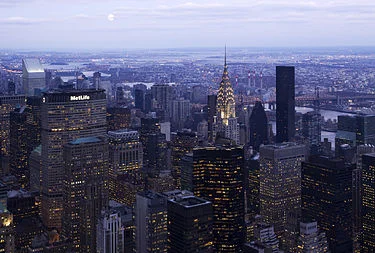
We were in New York the past few days. November and December are, in my view, the best time to visit New York. It’s crisp outside, people seem to walk with a hopeful spring in their step and commerce is at its most colorful. It reminds me of what New York was in the '50s, in its “Imperial New York’’ heyday before urbanpathologies (especially crime, drugs, decaying infrastructure, “white flight to the suburbs’’ and yawning budget deficits) seemed to pose a lethal challenge to Gotham in the late ‘60s and the ‘70s. Starting around 1980, things started to get better.
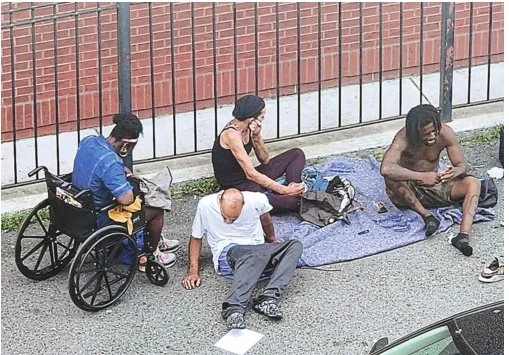
You can now sense a little decline. That’s in part, I think, because Mayor Bill DiBlasio is no Mike Bloomberg. There seem to be more homeless people sleeping on sidewalks and some new graffiti but still, all in all, it’s a place of vast energy and idea creation and implementation.
Newly unhappy New Yorkers include those living and working around Trump Tower in midtown Manhattan. There, the security around what continues to be the president-elect’s base of operations has hamstrung residents and the many large and small businesses there. Mr. Trump has implied that even after he takes the oath of office on Jan. 20 he will continue to do much of his government (and business deals?) work in Trump Tower. Some local businesses may have to close as a result.
And the cost to taxpayers will be gigantic: Midtown Manhattan may well be the most complicated and by far the most expensive place in America to maintain a massive security operation. Once again, Donald Trump, who pays little or no federal income taxes, will take the taxpayers to the cleaners.

Llewellyn King: The gig economy -- by turns liberating and exploitive

An Uber driver at work.
You might not know this, but if it has not happened yet, you may be about to become a company of one.
Welcome to the gig (as in a musician doing a gig) economy. It is coming and faster than anyone expected. In fact, it is coming so fast that in 2050 more people will be in gig employment than conventional employment, according to Wired magazine.
I want to stand on my chair and utter three cheers for it. Except I can only muster two cheers.
In the gig economy workers become consultants, contractors, freelancers.
From the worker point of view, it is an end to conventional bosses, burdensome hours and fitting into a corporate culture.
For the firm outsourcing what used to be salary work, it is a freedom from the costs of employing, like healthcare and retirement plans, safety rules and regulations.
The poster example of gig employment is Uber. Let me say, parenthetically, that I love Uber in almost all ways: the convenience, the ride tracking, the clean cars and polite drivers.
Also, I love the idea that the personal automobile, a large capital investment for most, can be put to work.
It works almost as well for the owner of other capital-intense possessions, notably apartments and boats. Get a little back on your sunk investment. What could be better?
Not much, but there are problems. Primarily, the architecture of our society is not ready for the shift from corporate to private, from big to very small.
At the heart of this stage of the gig economy is the Internet and its ability to bring the willing buyer, renter, seller and worker together.
Companies that have understood these uses of the Internet have gone for the capital-intensive goods: boats, cars and homes. But at the low end, freelance workers are hooking up with customers who are seeking pure service plays like car detailing, dog walking, home computer assistance, house cleaning and repairs of all kinds.
Most of this should only worry the tax man. If you work for one of the ride-sharing services, like Uber or Lyft, the taxman knows all about you.
But if you are in a less-dragooned environment, tax collection halts. Do you withhold taxes from your house cleaner, for example?
One can understand why ride-sharing is beating the daylights out of the taxi business, and so what? Well, the problem is to use ride-sharing you need a credit card and a cell phone. The very poor, or those in temporary difficulties, do not have these. They need taxis.
The law has not caught up with new realities.
The promise of the gig economy is every worker is a contractor protected by a contract. The reality, as with the ride-sharing services, is that the internet company becomes an employer in all but name. The worker has given up the security of a job for the insecurity of entering into a contract he did not write and cannot amend. In weak economic times, the worker is vulnerable to a global system of serfdom.
It is easy to single out Uber, which has greatly improved the quality of life for passengers, and the usage of under-used assets. But what of the drivers? There are laws that govern the old workplace with wage-and-hour standards, workers’ compensation and conditions monitored by the Occupational Health and Safety Administration.
If you are semi-self-employed, say as a delivery contractor, the Internet-facilitating company holds the whip hand when it comes to paying the drivers. Nowhere have I read that drivers really can make a living driving. A little extra, yes. The problem is the independent contractors are not so independent if they just have one customer — and that is not the passenger, but rather some ubiquitous computer network.
The gig economy knows and cares nothing about health care, sick leave, Social Security payments, tax collections, vacations and working conditions. It is free, it is exhilarating and it is the future. But it may be exploitative as well.
Llewellyn King, a veteran publisher, columnist and international business consultant, is host and executive producer of White House Chronicle, on PBS. This first appeared on the opinion site “Inside Sources,’’ where New England Diary overseer Robert Whitcomb also contributes essays.
Creepy walk in the woods

"Container #2, 2016'' (pigment print mounted to dibond), by Joiri MInaya, at Samson Projects gallery, Boston, through Jan. 28.
CIA: Putin successfully intervened in the U.S. election to elect Trump
How much money and how many votes do Donald Trump owe residents of this city?
The CIA has found that the Russians worked hard to elect Donald Trump and, of course, succeeded. The implications of this, of course, are very alarming,
The Washington Post reported:
"The CIA has concluded in a secret assessment that Russia intervened in the 2016 election to help Donald Trump win the presidency, rather than just to undermine confidence in the U.S. electoral system, according to officials briefed on the matter.
"Intelligence agencies have identified individuals with connections to the Russian government who provided WikiLeaks with thousands of from the Democratic National Committee and others, including Hillary Clinton’s campaign chairman, according to U.S. officials. Those officials described the individuals as actors known to the intelligence community and part of a wider Russian operation to boost Trump and hurt Clinton’s chances.
“It is the assessment of the intelligence community that Russia’s goal here was to favor one candidate over the other, to help Trump get elected,” said a senior U.S. official briefed on an intelligence presentation made to U.S. senators.
“That’s the consensus view.”
To the whole story, please hit this link.

Todd McLeish: Deer population explosion threatens New England forests

While climate change gets most of the media attention these days for the dramatic effects it is predicted to have — and, in some cases, is already having — on coastal communities, it has yet to have serious effects on Northeast forests.
Eventually, say local experts, climate change will likely cause a shift in the composition of tree species in the region, due in part to southern species moving into the region and the arrival of new pests and pathogens, which may reduce the abundance of currently common species. The predicted drier weather conditions will also likely play a role in altering woodlands.
But southern New England’s forests are already facing what some say is an even greater threat than climate change: an overabundance of deer. That’s the warning from foresters, biologists and ecologists from throughout the Northeast, who say that even without climate change, the region’s forests are in trouble unless the state’s deer herd can be reduced and managed more effectively.
According to forester Marc Tremblay, outreach coordinator for the Rhode Island Forest Conservators Organization, deer have had a dramatic impact on forest understory by feeding on young trees, shrubs and plants.
“They’ve browsed all of the favorable species like oaks and maples, they’ve destroyed our wildflowers, and a lot of the understory plants they like to eat are the ones we rely on for the future stocking of the forest,” Tremblay said. “What’s worse, they don’t like invasive species, so barberry and buckthorn and other invasives are growing like crazy. The end result is a complete alteration of the forest, where the invasives have a leg up.”
The Rhode Island chapter of the Society of American Foresters has issued a position statement noting that the long-term health of the state’s forests are dependent on sufficient tree regeneration to re-occupy openings in the canopy created by timber harvesting, development and natural disturbances.
But “deer herbivory at high population levels limits the amount of regeneration and is a serious problem in many parts of the state that, if not addressed, will continue to impact the forest ecosystem and the ability of the forest to regenerate itself,” according to the Rhode Island chapter.
It’s not just the trees that are suffering, though. The Nature Conservancy has reported that populations of songbirds and other species that live in the forest understory are declining because deer have consumed their habitat.
“Think about all the species you know that utilize the understory — rabbits and other small mammals, hermit thrushes and other birds, lots of things,” biologist Numi Mitchell said. “They’re very vulnerable if you take away that understory. Think what it’s doing to our biodiversity.”
The Rhode Island Natural History Survey conducted a two-year study of deer herbivory at the University of Rhode Island’s W. Alton Jones Campus that illustrated the dramatic impact of too many deer. Fencing out deer from two half-acre, forested parcels clearly showed how deer had reduced the density and diversity of native plants and exacerbated the expansion of invasive species.
Inside the fence, where deer couldn’t gain access, seedlings of oak, sugar maple, hickory and tuliptrees were abundant, while outside the fence few could be found. Jack-in-the-pulpit plants inside the fence were knee high while those outside were browsed to stubble by deer. Native trillium planted decades ago were blooming inside the fence, while none had been seen elsewhere in a decade.
“Deer look for every plant they can eat and they eat it,” Natural History Survey botanist Hope Leeson said at the conclusion of the project. “We have continuous still images showing them looking for the proverbial needle in a haystack — heads down searching for any little tidbit of a native plant they can find. Due to taste or texture, they tend not to eat invasive plants.
“Deer promote the growth of invasive species, which decreases the biodiversity of native vegetation and sets into motion a cascade of effects on the health of the ecosystem.”
The scientific community says that forests throughout the Northeast are in a seriously degraded ecological condition as a result of high deer densities. But deer management is the responsibility of each state, so it can’t be addressed by uniform federal regulations.
Brian Tefft, state wildlife biologist responsible for tracking deer statistics for the Rhode Island Department of Environmental Management, said the state is home to about 16,000 deer, some 15 per square mile, far more than the habitat can support. About 1,000 deer are killed annually in collisions with vehicles, and another 2,000 or so are harvested by hunters.
Using hunting as the primary means of managing the herd isn’t particularly effective when most hunters want to shoot a buck rather than a doe that is likely to give birth to twins the following spring. For the sake of our forests, most foresters and biologists suggest altering hunting regulations to encourage the harvesting of more does.
Mitchell said the first step is for sport hunters “to not be so sportsmanlike any more. We need to kill as many does as possible. We’ve gotten rid of our predators, so we need to bring the population down with an increased emphasis by humans.”
She also noted that coyotes might be able to help the situation. Mitchell has studied the Aquidneck Island coyote population for more than a decade, and she said that eastern coyotes have about 20 percent wolf genes, which has helped to make them excellent cooperative hunters.
“Coyotes are a piece of the puzzle,” she said. “They can get deer in the suburbs where people aren’t legally able to shoot. I get calls all the time from people saying they have a dead deer in their yard, and I tell them to wait a day or two and the coyotes will eat them.”
The next phase of her research will be to see how coyotes can be used to help manage the state’s deer population.
David Gregg, executive director of the Rhode Island Natural History Survey, said deer are the greater immediate threat to the region’s forests than climate change, but he also noted that climate change could be even more damaging if the deer problem isn’t addressed first.
“I don’t want to downplay climate change, but certainly one plus one equals three, that’s for sure,” he said.
He pointed to a project his organization is currently undertaking to build resilience into the habitat at Norman Bird Sanctuary and Sachuest Point National Wildlife Refuge, both in Middletown. The plan was to install a variety of native plants, thinking that a diverse ecosystem will be one that can better withstand the coming climatic changes.
“But what we’re finding is that there is so much deer browse there that we'll be hard pressed to do anything unless it is inside a fence,” Gregg said. “We’re going to need to adapt our strategy a bit.”
Mitchell agreed that the cumulative effect of deer and climate could be catastrophic for the region’s forests.
“I think climate change is a bigger long-term crisis,” she said, “but deer are our immediate crisis.”
Rhode Island resident and author Todd McLeish runs a wildlife blog.
At the PCFR: Is foreign trade good for us?

Containerships carrying international cargo.
To members and friends of the Providence Committee on Foreign Relations (thepcfr.org; pcfremail@gmail.com).
Our next dinner comes on Wednesday, Dec. 14, with:
Jeffrey Frankel, James W. Harpel Professor of Capital Formation and Growth at Harvard and former member of the President’s Council of Economic Advisers. He will talk about international trade and when and if it’s good for national economies.
His research interests include international finance, monetary policy, regional blocs, East Asia and global climate change. His publications include "Does Trade Cause Growth?" in the American Economic Review, and “Regional Trading Blocs.’’
American trade deals were, of course, huge (or is it “yuge’’?) issues in the U.S. presidential campaign and helped elect Donald Trump.
Welcome to Brockton
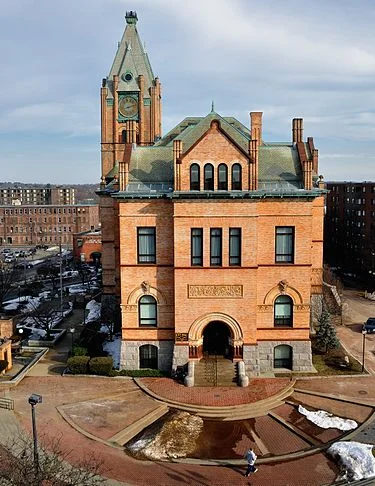
Brockton City Hall, a Romanesque pile built in 1892-94 as the city was moving toward its most prosperous period, albeit with such horrors as child labor and gruesome industrial accidents.
Adapted from an item in Robert Whitcomb's Dec. 1 "Digital Diary'' in GoLocal24.
Brockton, once the shoemaking capital of the world, is another mostly deindustrialized area. But immigrants have moved there in large numbers, drawn by cheap rents and Massachusetts’s relatively generous social services, including healthcare.
MayorWilliam Carpenter was recently under fire for spending $585 in city money to pay for a community college course for himself in Cape Verdean Creole to better communicate with a major ethnic group there. The City Council eventually approved the expenditure after some grumbling that he should have paid for it himself.
Of course, immigrants used to flock to such cities as Brockton for jobs, many of them relatively high-paying skilled positions. No more. Now the large number of low-income immigrants, many with little or no skills in English, serve to irritate many of the sort of people who voted for Donald Trump. They make some Americans feel that they are strangers in their own land.
But just up the road, Boston and Cambridge get richer and richer with 21st Century high tech and an embrace of a global economy.
-- Robert Whitcomb
Better than a homeopathic physician

"The Magician's Assistant'' (photographic combine -- archival pigment print face-mounted), by Marybeth Rothman, at Lanoue Fine Art, Boston, in the current Sowa Winter Festival.
SOWA is the burgeoning arts district of Boston south of Washington Street.

Josh Hoxie: Sucker voters give Wall Street more power and money than ever
During the campaign, Donald Trump said he wanted to fix our rigged economic system. And we can’t do that, he said, by counting on the people who rigged it in the first place.
He talked a big game about Wall Street and the big banks. He repeatedly called out Goldman Sachs, the Wall Street behemoth, by name in ads and speeches, characterizing the firm as controlling his rivals Hillary Clinton and Ted Cruz.
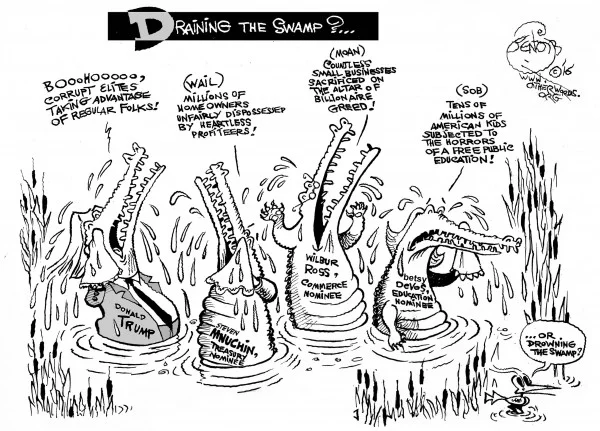
So it should come with some shock, at least to Trump voters, that now President-elect Trump has chosen a consummate Wall Street insider, Steve Mnuchin, for Treasury secretary.
Mnuchin spent 17 years as an executive at Goldman Sachs before continuing his lucrative career as a banker and investor. Is this not the swampiest of characters that Trump vowed to drain away?
Trump’s anti-Wall Street messaging resonated with millions of voters. A poll taken just before the election showed that nearly 70 percent of undecided voters in key swing states wanted to break up the big banks and cap their size to avoid another financial crisis.
The same proportion wanted to close the “carried-interest loophole,” an insidious provision that enables hedge-fund managers to pay lower taxes than nurses.
It’s unclear whether Trump’s anti-Wall Street messaging made the difference for these voters. But it’s abundantly clear that he didn’t mean a word of it.
In Washington, personnel is policy. And Mnuchin’s appointment casts serious doubt that Trump will follow through with any of his bluster on Wall Street.
Mnuchin isn’t just any Goldman Sachs alumnus: He oversaw one of the largest foreclosure operations in the country. Mnuchin bought mortgage lender IndyMac in 2009, renamed it OneWest, and continued on as its chair through 2015 — a period in which OneWest foreclosed on more than 36,000 families.
What exactly does Mnuchin want to do while in power?
In his first announcement, Mnuchin exclaimed his “number one priority is tax reform,” promising to work with Congress to pass the “biggest tax cut since Reagan.” He claims the benefits of this tax cut will go to middle-class families, rather than the upper class.
Fortunately, tax plans, unlike campaign promises, can be easily and quickly fact checked. Unfortunately, Mnuchin’s statement comes back pants-on-fire false.
Over half of the cuts in Trump’s proposed tax plan would exclusively benefit the top 1 percent, according to the non-partisan Center on Budget and Policy Priorities. The plan would increase their after-tax income by 14 percent, 10 times more than for middle-income earners.
Mnuchin won’t be the only Wall Streeter in the Trump administration. Steve Bannon, the chief strategist for the president-elect and former head of the white supremacist “news’’ outlet Breitbart, is a fellow former Goldman Sachs employee.
The Wall Street swampiness of both Mnuchin and Bannon, however, pales in comparison to that of Wilbur Ross, the billionaire investor selected by Trump to lead the Commerce Department. The 79-year-old investor built a career on greed, exploitation and apparent tone deafness. Ross infamously whined in 2014, “The 1 percent is being picked on for political reasons.”
These former Wall Streeters will have serious power overseeing major parts of the government and the overall economy.
It’s been just eight years since Wall Street bankers had to come to Washington, hat in hand and utterly humbled, to ask for a taxpayer funded bailout. The reforms put in place to prevent a repeat of the 2008 crisis are tenuous at best — and now they’re under serious threat from the same people they were designed to rein in.
Josh Hoxie directs the Project on Taxation and Opportunity at the Institute for Policy Studies. Distributed by OtherWords.org.
'Unconscious of observation'

“The rapid nightfall of mid-December had quite beset the little village as they approached it on soft feet over a first thin fall of powdery snow. Little was visible but squares of a dusky orange-red on either side of the street, where the firelight or lamplight of each cottage overflowed through the casements into the dark world without. Most of the low latticed windows were innocent of blinds, and to the lookers-in from outside, the inmates, gathered round the tea-table, absorbed in handiwork, or talking with laughter and gesture, had each that happy grace which is the last thing the skilled actor shall capture -- the natural grace which goes with perfect unconsciousness of observation. Moving at will from one theatre to another, the two spectators, so far from home themselves, had something of wistfulness in their eyes as they watched a cat being stroked, a sleepy child picked up and huddled off to bed, or a tired man stretch and knock out his pipe on the end of a smouldering log.”
― Kenneth Grahame, from ‘’The Wind in the Willows”
And mellow

"Dried Yellow,'' by Dianne Shullenberger, in the "Treasure the Small'' show at the Furchgott Sourdiffe Gallery, in Shelburne, Vt. through Jan. 21.
Vermont trying all-payer healthcare system to curb costs, improve care

Vermont's state seal, in a stained-glass window in the State House, in Montpelier.
Governing magazine has looked at Vermont’s development of an all-payer healthcare system.
In this approach, the publication says, ”{i}nstead of billing doctors for each service they provide, insurers in Vermont will now give them a fixed sum each month, along with bonuses for keeping patients healthy. (Doctors can also pay penalties for adverse health effects, like having a high number of patients getting readmitted to the hospital within 30 days.) The hope is to eliminate unnecessary procedures, reduce costs and elicit more positive health outcomes.”
“In the 1970s, a dozen or so states tried all-payer systems for their hospitals. Except for Maryland, they all eventually shifted back to the standard fee-for-service because there was little evidence that all-payer was actually reducing overall health-care spending.”
“All of those states, however, only applied all-payer to hospitals — leaving out a large portion of health-care providers and limiting its potential impact.”
“Vermont’s system will cover all providers — hospitals, primary care, specialists, urgent care clinics, you name it. And instead of the state paying the providers their monthly fixed sum, it will be up to accountable care organizations (ACOs), which are groups of providers that have the same goals as all-payer: to reduce spending by rewarding better, not more, care.”
But there will be big challenges to making this work.
To read the Governing piece,
This item first ran in the Web site of Cambridge Management Group (cmg625.com).
Jane A. Difley/John D. Judge: Time to bury the huge Northern Pass power project
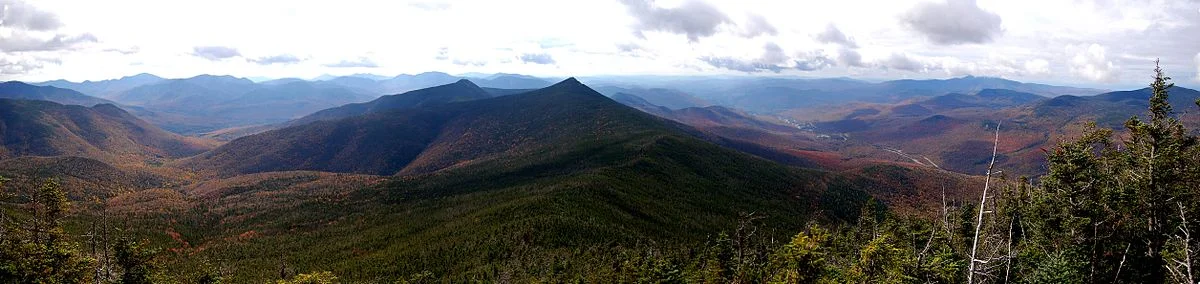
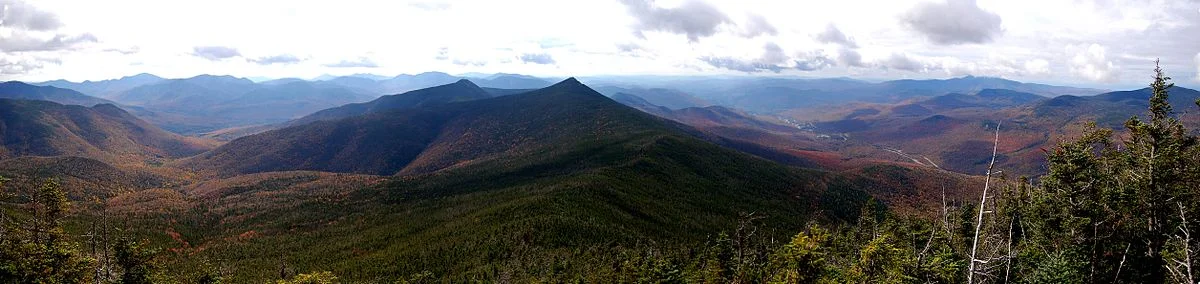
In the White Mountain National Forest.
It’s time for the out-of-state and out-of-country interests pushing the current Northern Pass proposal to bury the private transmission line along appropriately designated transportation corridors. A similar project in Vermont shows that it can be done.
The fast-track toward approval of the 154-mile New England Clean Power Link, which recently received a Presidential Permit from the U.S. Department of Energy, highlights the benefits of burying transmission lines along state highways. That project has leapfrogged Northern Pass in the quest for permitting by using 56 miles of existing road rights-of-way and running along the floor of Lake Champlain. It would serve the same purpose as Northern Pass by enabling Canadian hydropower generators to market more energy to southern New England.
In terms of scenic degradation, vulnerability to catastrophic weather events and alteration of prized public lands, Northern Pass has it all wrong. Perhaps that’s why, six years since its proposal went public, the opposition to Northern Pass among New Hampshire residents is stronger than ever.
New Hampshire’s citizens know that Northern Pass as proposed is a wrong-headed project and that its more than 1,000 steel towers across 192 miles would destroy the state’s lifeblood: the iconic scenic views that draw millions of visitors to the state’s mountains and forests, feeding our tourism-dependent economy. Furthermore, Northern Pass is wholly incompatible with such conservation gems as the White Mountain National Forest and the Appalachian National Scenic Trail, both of which would be hurt.
New Hampshire’s people know that it is wrong to have our scenic beauty and environmental legacy sacrificed for the money-making interests of private power producers.
At public meetings and hearings, and in written testimony, the public has spoken out against this damaging and unnecessary project. Thirty-one towns that would be affected have voted to oppose it.
The U.S. Department of Energy has received more than 7,500 comments, largely negative, about Northern Pass. Given that public push-back, the DOE is studying no fewer than 24 alternatives to the project.
By comparison, things on the Vermont side of the border look very different. The Clean Power Link project has generated just 12 written comments. Two alternatives were reviewed in its Draft Environmental Impact Statement, which was released in May, just one year after the application was submitted.
The environmental impact of the Vermont project appears to be far less than the impact of the Northern Pass proposal. Using modern technology, the Vermont cables would rest in a 4-foot-deep-by-4-foot-wide trench alongside public rights of way, or submerged in Lake Champlain. TDI, the transmission developer, will pay the State of Vermont $21 million annually for its use of road rights-of-way and will create an additional $298 million Public Good Benefit Fund.
In contrast, what would New Hampshire get? Steel towers 155-feet high looming over the tree canopy and scarring scenic views. Negative impacts on resources of regional and national significance. The danger of power outages due to wind, snow and ice storms due to vulnerable, overhead lines. Damage to the state’s tourism economy, and no lease payments to support the state budget.
The Appalachian Mountain Club, the Society for the Protection of New Hampshire Forests and our respective members have long defended New Hampshire’s scenic landscapes. As we contemplate the Northern Pass vision, we are reminded of another wrong-headed proposal.
In the 1950s, the Feds proposed blasting a four-lane superhighway through Franconia Notch. We objected. Ultimately, a compromise was reached and the two-lane Franconia Notch Parkway was built.
The Northern Pass proposal is mired in a contentious state permitting process with a very uncertain outcome. We believe that it’s time that the executives at Eversource and Hydro-Quebec recognize that their own interests may be best served by respecting the wishes of New Hampshire people and the landscapes we cherish. We call on Eversource and Hydro-Quebec to look at the benefits of the Vermont model and put forward a proposal that buries Northern Pass for its entire length.
There are many who point to the downsides of importing more power from Quebec and call for no new transmission lines. We see no need for the Northern Pass project. But burying the Northern Pass would prevent at least the selling out of New Hampshire and the natural resources of regional and national significance on which the livelihoods of Granite State citizens depend.
For more information on the status of unprecedented fight against the Northern Pass proposal, visit https://www.forestsociety.org/advocacy-issue/northern-pass or http://www.outdoors.org/conservation/hot-issues/northern-pass.cfm
Jane Difley is president/forester for the Society for the Protection of New Hampshire Forests. John D. Judge is president of the Appalachian Mountain Club.
December wind
"This is what I have heard
at last the wind in December
lashing the old trees with rain
unseen rain racing along the tiles
under the moon
wind rising and falling
wind with many clouds
trees in the night wind."
-- W. S. Merwin
Chris Powell: Trump's charge about illegals voting raises a good question
Donald Trump's assertion that he might have won the popular vote in the presidential election if so many illegal aliens had not voted against him is implausible if not ridiculous. But Connecticut is not in a good position to dismiss the complaint entirely.
For while extracting the information from the Connecticut secretary of the state's office was nearly as difficult as pulling teeth, the (Manchester) Journal Inquirer reported the other day that Connecticut does not require any documentation of citizenship from people registering to vote. Only documentation of identity and residency are required, and it's up to municipal voter registrars to decide what sort of documentation they will accept, even whether to accept the identification cards that "sanctuary cities" like New Haven have been issuing to illegal immigrants to facilitate their violation of federal law.
New voters need only to attest under penalty of perjury that they are citizens. For Connecticut considers it too onerous to require new voters to produce a birth certificate, and there are no checks of the eligibility of applicants and no audits of the eligibility of those already registered.
Of course it's unlikely that many illegal immigrants have registered to vote in Connecticut. But since the state's illegal immigrant population already is estimated to exceed 100,000 and keeps growing thanks to the "sanctuary cities," more illegal immigrants are likely to register over time. Since illegal immigrants have no reason to vote Republican, their registering is in the interest of the Democratic administrations of the "sanctuary cities" -- not just New Haven but also Hartford and New London and, probably, soon, Bridgeport as well.
Those cities always produce big Democratic pluralities and their administrations have great incentive not to be fastidious about the citizenship requirement for voters.
Further, influential forces on both the political left and right want to perpetuate illegal immigration. The left benefits from increasing the low-skilled, low-wage population, which becomes dependent on government. The right gets cheaper labor that depresses the working-class wage base and living standards.
The other day the Hartford Courant assisted this process with an editorial advising Hartford city government how it could distribute to illegal immigrants the sort of city identification cards issued in New Haven without maintaining records that could be pursued by federal immigration authorities, even when the feds are chasing criminals or terrorists. In issuing the cards, the Courant said, the city should not keep any records of the information submitted by illegal immigrants, nor any records of the issued cards themselves.
The card-issuing process then would be beyond evaluation, even by news organizations like the Courant. Anyone could come to Hartford, obtain city identification with forged documents, and slip into the community without a trace. As New Haven has done, Hartford thus would commandeer both national immigration and national security policy.
Even citizens seeking a change of identity for criminal and debt-evasion purposes could exploit this system.
All this destruction of standards is being cloaked in political correctness and humanity, as if it is the only alternative to Gestapo-style raids and deportations of the estimated 12 million illegal immigrants in the country.
But the issues are separate. Ending the facilitation of illegal immigration by local nullification of immigration law does not require inflicting cruelty on anyone, and while the nullifiers complain that the immigration system is "broken," they are the ones breaking it.
If the country won't enforce any standards in voting and immigration, eventually it won't be a country anymore.
Chris Powell is managing editor of the Journal Inquirer, in Manchester, Conn., and an essayist on cultural and political issues.

North of the bugs?

"Pine Ledge'' (oil on lexan), by James Mullen, at Alpers Fine Art, Andover, Mass.
Excerpted from Robert Whitcomb'sDec. 1 "Digital Diary'' column.
I stopped off at an old friend’s office in Newport, N.H., the other day for lunch. Now retired as a CEO, he moved his company’s headquarters up there from Connecticut long ago. I asked my friend whether he had made any trips to the tropics lately and whether he’ll go south this winter. He has plenty of time and money to do so.
He said absolutely not: Travel is tiresome and he prefers to live far enough north to avoid tropical diseases and poisonous snakes. He has houses in Newport (N.H.) and Bar Harbor, Maine.
Some small solace to New Englanders fearing the onrushing winter – it’s healthier here?

Which signal?

By Nancy Dyer Mitton, in the group show "Small Works 2016,'' at DeDee Shattuck Gallery, Westport, Mass, through Dec. 18.
Is this a matter of "red sky in morning, sailors take warning'' or "red sky at night, sailors' delight''?
Vladimir Putin: Presidential elector; TPP actually good for us!
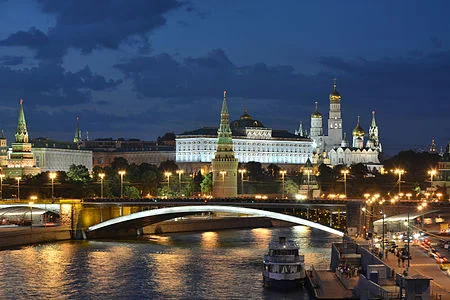
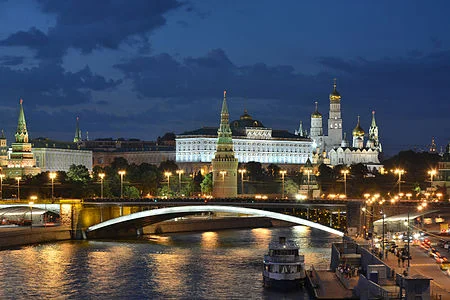
Welcome to Moscow.
From Robert Whitcomb's Dec. 1 "Digital Diary'' in GoLocal24.
This winter will include continued controversy about the presidential election. For one thing, there’s the unsettling fact that Hillary Clinton has won more than 2 million more popular votes than Donald Trump.
For another thing, reports continue to circulate that Russian government-sponsored hackers may have manipulated some voting results to help Donald Trump, a Vladimir Putin fan, win three very closely contested states – Pennsylvania, Wisconsin and Michigan – and thereby the election. Very chilling thought indeed, but whatever hacking took place was probably not crucial in the outcomes.
What was crucial was the Russian/WikiLeaks hacking and publicizing of emails of people connected with the Hillary Clinton campaign and the creation offake and often vicious news stories meant to show everyone connected with Mrs. Clintonin the worst light. (That’s not to say that the Clintons don’t have enough baggage to open up a small luggage store.)
Given the closeness of the election, it seems entirely plausible that a ruthless dictator has managed to make Donald J. Trump our president.
At the very least, the uneasiness about all this ought to encourage Mr. Trump and his followers to avoid trying to impose whatever incoherent and extreme set of policies they may have in mind because of some sort of a “mandate’’. He has no mandate and it is even possible (though unlikely) that his election itself was fraudulent.
In any case, Mr. Trump seems to have no particular principles, other than that he should always be at the center of attention and be seen as a “winner’’. Post-election, he has been madly backtracking on campaign promises on immigration, climate change, healthcare and persecuting/prosecuting the Clintons, among other things, because, as he must have known before the election, while these promises pleased some of his more ignorant, naïve and angry followers, they could not be easily implemented and might swiftly make him very unpopular.
I suspect that he first ran for president as a sort of lark to keep himself inthe public eye and pump up his future reality-TV business and at first had no idea that he could actually become president. But with the incoherence of the GOP’s constituencies, and the failure of his primary-election rivals to thrive in the Celebrity Culture that dominates so much of American life, he came to realize he could win. And he certainly didn’t want to be branded a “loser’’ – the most offensive thing he could think of being called. He is, after all, rather childlike.
So he winged it, telling his followers and potential followers what they wanted to hear and had the good luck to run against a Democrat whom many people were sick of and thought dishonest, although her dishonesty level is many times lower than his. And Donald Trump is a hell of a salesman, as a cousin of mine who has negotiated with him reminded me last month.
Now the president-elect has to somehow square his promises with governing via a government that has the tedious old thing called “separation of powers.’’
xxx
One position he might not back down from is opposition to the Trans-Pacific Partnership, a trade deal that if the U.S. adhered to it would strengthen America in its competition with China, which is the biggest threat to U.S. national security, including its economy – worse than Mr. Putin’s Russia and the Islamic terrorist community.
The TPP is a proposed 12-nation (if you include the U.S.) trade deal that doesn’t include China – indeed it’s meant to push back against Chinese efforts to economically and militarily dominate East Asia and the western Pacific region.
The TPP would help prevent China from writing the trade rules for much of the world. Note that the Chinese government called the TPP “the economic arm of the Obama administration’s geopolitical strategy to make sure that Washington rules supreme in the {East Asia/Pacific} region.’’ Mr. Trump, by rejecting what had been expected to be much expanded U.S. cooperation with friendly nations in the region, may have thrown the other 11 nations into the arms of the Chinese dictatorship, whose plans include taking over the entire South China Sea.
China and the technology that allows relentless automation have been by far the biggest killers of well-paying U.S. jobs, whose loss had a lot to do with Donald Trump’s crucial victories in battlefield states. Mr. Trump’s avid followers would cheer if, as he has promised, he officially kills the TPP soon after he takes office. A year or two or three down the road, they won’t like the results in job losses. It will be interesting to see how President Trump improvises his way out of that. Will he do it via series of frantic tweets?
Felicia Nimue Ackerman: The horror, the horror
In the bleak mid-December
Icy winds attack your face.
Icy streets impede your pace.
Worst of all (lest you forget),
It's not even winter yet.
-- Felicia Nimue Ackerman