
Vox clamantis in deserto




Fierce joy at the feast

"Ready for Thanksgiving Feast'' (oil on canvas), by J.C. Leyendecker (1874–1951), at the National Museum of American Illustration, Newport, R.I. This kid's family was presumably very happy that World War I had ended on Nov. 11, 1918. But in part because of ill-considered, revenge-seeking peace treaties signed in 1919, there would be another, even worse, world war in 20 years. Perhaps the boy who was the model for the one here would fight in it. Perhaps he'd look back longingly at the family feasts of his childhood as he ate his Army K-rations.
This turkey, raised before big-time agribusiness, would never pass muster now -- too skinny, not enough steroids and antibiotics.
Image courtesy of, and copyrighted by, American Illustrators Gallery, New York, N.Y., 2016.
,
Chris Powell: Conn. governor should feel free to be hated
Much of Connecticut state government's budget problem, Gov. Dan Malloy noted last week,,
arises from the failure of previous governors and legislatures to appropriate
adequately for the state employee and teacher pension funds.
That'swhy state government and municipal governments should be prohibited from
offering defined-benefit pensions to their employees. Elected officials always
divert pension deposits to ordinary current spending so they can look like
political heroes in the present, knowing that the pension bills will come due
only when they are long out of office and enjoying their own state pensions down
South.
While Malloy is trying to improve pension funding, he has done little to restore
state government's general solvency. His two massive tax increases only fed the
government's usual pursuits. Nearly every week he triumphantly announces new
spending that would be inessential in good times and now, in bad times, is
delusional.
Last week, for example, the governor announced nearly $5 million in state grants
to 17 towns for purchase of open space, even as most of those towns are rural
and will remain mainly open space for a long time as the state's economic
decline continues.
Asked about the grants, a spokesman for the governor said the money came from a
fund dedicated to such purposes, drawn from the tax on real estate transactions.
But amid the budget shortfalls, the Malloy administration often has diverted
money from dedicated funds and has imposed "rescissions" on many appropriations.
The open space money also could be diverted to more compelling needs.
Indeed, with a shortfall of more than a billion dollars predicted for the next
state budget, the governor should declare an emergency and challenge the many
mistaken policy premises that have laid Connecticut low.
Last week the governor lamented a report that within two years "fixed costs" --
costs locked in by law or contract, mainly pension and debt payments -- will
consume more than half the state budget. Yet his administration continues to add
to the debt and has not even endorsed Republican proposals to eliminate
defined-benefit pensions for new state employees. Anyone lamenting "fixed costs"
should realize that the first step in saving Connecticut is [ITALICS] unfixing
[END ITALICS] them, since those costs were fixed not by God but by man.
But then Connecticut will not even be trying to save itself financially while it
maintains collective bargaining for government employee unions and binding
arbitration for their contracts, forfeiting democratic control over huge
government expense; while it subsidizes childbearing outside marriage instead of
defining it as catastrophically expensive child abuse; while its primary
education system operates as social promotion and its higher education system is
largely remedial; while it spends hundreds of millions every year pretending to
outlaw popular drugs, not realizing that society has only as much crime as it
legislates; and while it fails to imprison incorrigibles for life after three
felonies instead of waiting for 23.
Of course there is little political support for saving the state. Everyone on
the payroll will risk riding the ship to the bottom rather than sacrifice
anything to keep it afloat.
Last week the Connecticut Conference of Municipalities, whose acronym, CCM, is
often construed as "Caucus of Crying Mayors," objected to a new law that gently
limits the growth of municipal spending. The mayors don't want to have to
challenge their municipal employee unions; they want the state to keep
reimbursing the wage gains of municipal employees through increased financial
aid.
No, saving the state will require a political leader who is ready to be hated.
Since the polls say he already is, and since the presidential election has
foreclosed any escape for him through a federal appointment, Malloy might as
well try.
Chris Powell is managing editor of the Journal Inquirer, in Manchester,
Conn.

Back in force

From the collection of the Providence Athenaeum: a wild turkey from A Popular Handbook of the Ornithology of the United States and Canada, by Montague Chamberlain, 1891. After many years of over-hunting, wild turkeys almost disappeared from southern New England but conservation efforts in the past few decades have brought them back big time.
More things in heaven and earth than in all your politics*
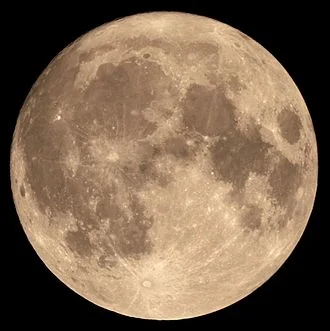
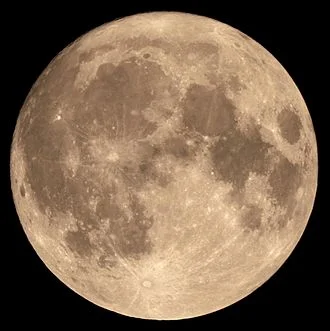
The "Super Moon'' on Nov. 14.
Adapted from Robert Whitcomb's Nov. 18 "Digital Diary'' in GoLocal 24.
Not everything in life is politics, thank God. Until the last few gray, windy and cold days, it's been golden here in southern New England, with the weather perfect for walking in burnished woods and looking across bays to the far shore. And the “Super Moon’’ was semi-spectacular early last week, reminding us of our insignificance, although that big fat satellite wasn’t quite as “super’’ as promised. At least we can still see the moon in cities, unlike many of the stars we used to see that are now obscured by manmade-light pollution.
Thereare some local signs of kindness amidst the current rancor. Consider that Massachusetts voters by a wide margin backed a state ballot question that will set new rules on the size of the cages in which farmers can raise chickens, cows and pigs.
A new law will ban selling eggs in Massachusetts from hens raised in cages too small for them to spread their wings, meat from pigs kept in tight quarters—or pigs whose mothers were similarly confined during pregnancy—and veal from calves trapped in tiny crates before being slaughtered. The new law also bars Massachusetts farmers from using these torture chambers.
This will be a tough law to oversee.
Given the interstate nature of agriculture, it’s unclear howthis will work out for Bay State farmers, who have enjoyed a renaissance in recent years because of the spreadof local farmers’ markets and the “Locavore’’ movement. I hope that the idea spreads. More and more we learn that nonhuman animals are much smarter, and more intensely feeling, than we had thought. Even birds, let alone our fellow mammals. (Pigs are especially smart.)
But if only all “animal lovers’’ showed as much empathy for, say, the Syrians, many of them children, being killed every day by Assad, Putin and ISIS.
Increasingly the big changes in American life come from the coasts and then move inland, albeit slowly. This may be another example. Within 20 years, maybe even many Trump people will turn vegetarian as the research accumulates on how much we make other animals suffer.
* After the line in Hamlet:
"There are more things in heaven and earth, Horatio, Than are dreamt of in your philosophy.''
But wash first

"Come and Rest Your Bones with Me'' (oil and mixed media), by Hilary Tait Norod, at Sotheby's Unlimited, Jamaica Plain (Boston), Mass.
Hilary Cosell: 'National Nervous Breakdown'***
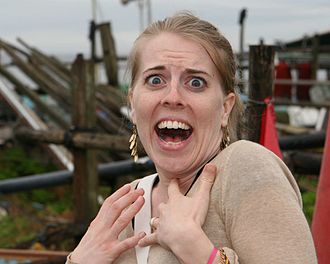
He’s a birther, bigot, bully, brat you can’t avoid to save your life.
Center of a crowd, talking hate so loud, sowing violence and such strife.
It seems to us he’s been a psychopath and predator all his years
And he never tries to stop his lies or trading on our fears.
We better stop! and look around
Here it comes, here he comes, here it comes, here he comes
Here comes our national nervous breakdown.
When he was just a child he was filthy rich
But he was never, ever brought up right.
Wouldn’t rent a place to anyone whose skin wasn’t pure white.
His businesses went bankrupt but he still made a lot of dough
Paid no taxes, stiffed his workers, assaulted women down below.
We better stop! And look around
Here it comes, here he comes, here it comes, here he comes
Here comes our national nervous breakdown.
Oh, who’s to blame, that man’s just insane.
Nothing we try don’t ever work.
It just gets worse ‘cause he’s such a jerk oh, please.
His opponent’s a crook, the election’s rigged, the media treat him mean.
He ponders nukes and Putin’s looks and endlessly vents his spleen.
He’ll build a wall, deport them all and keep all Muslims out.
He’s out of his mind, now I’m out of mine, and we’re all drowning in doubt.
America, stop! And look around.
Here it comes, here he comes, here it comes, here he comes
Here comes our national nervous breakdown.
Oh, who’s to blame? The GOP’s insane.
Got Breitbart Bannon crawling in my brain
And racist Jeff Sessions causing me such pain
We better stop! And look around.
Here it comes, here he comes, here comes our national nervous breakdown.
Here comes our Trump-fed nervous breakdown.
***(Sung to the tune of “19th Nervous Breakdown,” by Jagger-Richards)
Llewellyn King: Why I am greatly grateful to little old Rhode Island
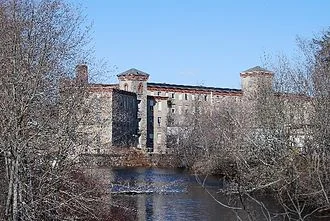
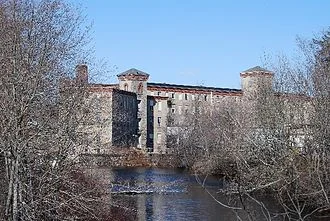
Centreville Mill, in West Warwick, R.I.
I have special reasons to be thankful this Thanksgiving. One is to be thankful to America for admitting me as an immigrant back in 1963. From what I can remember, I was welcomed as part of the then-huge British quota that applied to me, even though I was born in Southern Rhodesia (now Zimbabwe).
I am also very grateful to Rhode Island, where my wife, Linda Gasparello, and I have, by happy chance, made our home for more than four years.
People, you have a little treasure here; a bolthole for the world-weary, a welcoming and pleasant place with great restaurants, a wonderful selection of beaches, interesting countryside and the warmest people this side of I know not where -- and I have traveled to more than 100 countries and lived on three continents.
Take it from me, Rhode Island is a treasure. To me, it nestles between the arrogance of Massachusetts and the upward-tilted-nose superiority of Connecticut.
In London, they listen to how you speak: “Just listen to her speak, She's not our class, darling.” In New York, they speak about money: “I’m heavily invested in pharmaceuticals.” In Washington, they speak about power: “I’m well-connected at the White House.”
By comparison, Rhode Islanders speak about everyday things. But, oh, must you have such a bad self-image? Self-deprecation has its limits and, if I might be so bold, you have reached them. I sometimes want to take dear Little Rhody by its lapels and gently shake it, saying, “Don't you know you have it all here, give or take a larcenous politician?”
John of Gaunt described England in Shakespeare's Richard II as “this other Eden, demi-paradise.” Of course, he had not seen Rhode Island, the jewel in New England’s crown.
But Rhode Island, my adopted home, is more than being about eating and sunbathing. A special delight for us has been good, affordable theater. There is live theater everywhere, if you look. Sure you know about Trinity, the Gamm, 2nd Story and Ocean State. But did you know about the Arctic Playhouse, in West Warwick's impoverished Arctic village? Its productions are polished, and it is moving to new, swankier premises next year. Whereas the other theaters charge around $50 a ticket (which is a bargain), little Arctic only charges $10 for its own productions. That should be sent to the Guinness Book of World Records for theater ticket prices.
Newport has its place on the list of destination cities, but I would throw in Providence with its downtown masculine charm, and the best Italian food offerings in the nation. I speak as a man familiar with the likes of Little Italy in Baltimore and North Beach in San Francisco.
When I lived in London in the early 1960s, the thing that struck Americans was how polite the English were. Now London and New York are interchangeable, and Washington is well on the way to losing what is left of its manners.
I would offer up the whole state of Rhode Island for recognition as a place of lovely, cheering politeness that makes daily living a pleasure, and smooths a little grease on the rough edges of any day. People of all ages open doors, thank you profusely for even a small purchase, give way to traffic entering a highway and stop for pedestrians.
Also -- and as an old newspaperman, this is important to me -- Rhode Island has great pubs, as in public houses. A bar is where you go to drink, a pub is an extension of a living room: a place to hang out, meet friends, eat and, yes, imbibe if you wish. In Rhode Island, as in Britain, people tend to have a “local,” a regular haunt. I have two quite different locals that are quintessentially pubby: the Harris Grill, in Coventry, and the Square Peg, in Warren.
I give thanks to Rhode Island and you, the Rhode Islanders. You are a good lot.
Llewellyn King is executive editor and host of White House Chronicle, on PBS, and a veteran publisher, columnist and international business consultant. His e-mail is llewellynking1@gmail.com.

James P. Freeman: Post Trump victory, looking at ambiguities of 'the Catholic vote'
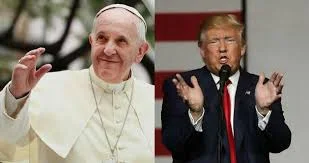
Much has been made over the failed prognostications by pundits and pollsters this past election at the presidential level. One particularly fascinating epic “miss” was predicting how the “Catholic Bloc” would vote. The results of the 2016 election reveal, if anything, how difficult it is to measure the depths of voter sentiment — especially religious fervor — in a complex, continental country of 320 million people.
On Aug. 30, a Washington Post story, “Donald Trump Has a Massive Catholic Problem,” showed that Democrat Hillary Clinton was leading among Catholic voters by a margin of 27 percentage points (61 percent to 34 percent) over Republican Trump.

“Trump is basically adding 5 to 7 percentage points to Clinton’s overall margin,” wrote the Post. The paper cited Trump’s tussle with Pope Francis this past February over the border wall with Mexico as a possible reason (“A person who thinks only about building walls, wherever they may be, and not building bridges, is not Christian,” the pontiff said).
But two months later, in a vacillation as wide as St Peter’s Basilica, an IBD/TIPP poll had Trump ahead of Clinton among Catholics by 13 percentage points — 50 percent to 37 percent.

In his Oct. 5 letter to the Denver Catholic, The Most Rev. Samuel J. Aquila, Archbishop of Denver, raised a conundrum for Catholics: “I have voted in every presidential election since 1972 and I have never experienced an election like this year’s. So, what should Catholics do when we vote in November?”
Like many Americans (80 percent of likely voters nationwide were embarrassed by the presidential race, according to a Colby College-Boston Globe poll commissioned just prior to the election), Archbishop Aquila shared an “aversion for both candidates.” As might be expected, he believed that the faithful needed “to reflect on the platforms of both parties, with an emphasis on the human life issues.”
Purported Catholic support of Clinton and her stance on abortion (pro-choice) seemed to defy Archbishop Aquila’s call for Catholics to focus on “human life issues.” Further still, with agonizing irony, Clinton (as discovered in the WikiLeaks email hacks) appeared to be mocking Catholics during the campaign — what the Washington Times just last month called an “assault on Catholics.” Notably, Trump throughout the campaign professed his pro-life stance.
But according to The New York Times’s review of exit polling, Trump actually won the Catholic Vote by 7 percentage points (52 percent to 45 percent). This led cruxnow.com a day after the election to conclude, “rumors of the demise of religion as a voting issue have been greatly exaggerated.” But this conclusion may be overly simplistic even as Catholics represent 20 percent of the electorate.
Catholics have played a pivotal role in voting and affecting outcomes since the earliest days of the republic. In its captivating “History of the Catholic Vote,” Our Sunday Visitor traces the roots of its political leverage from Catholic Federalists in the 1700s to the John F. Kennedy’s narrow election victory over Richard Nixon in 1960 (“the time had come when ‘a man can say his beads in the White House’”) through the modern era.
Today, national media still cite the influence of the so-called “swing vote” of the Catholic Bloc” which was thought to vote as a monolithic group. However, the reality now is that, as a demographic group, it is more disparate and no longer reliably a single-issue bloc of voters. Commentator E.J. Dionne, who is Catholic, has steadfastly said: “there is no Catholic vote and it is important.” As National Catholic Reporter sees it, “they are important because they have voted for the winner of the popular vote in almost every presidential election since Roosevelt.”
Since 1960 — when Kennedy won 78 percent of the Catholic vote — Catholics have voted for the presidential winner in every election except in 1976 (Carter-Ford), 1988 (Dukakis-Bush), 2000 (Gore-Bush) and 2004 (Kerry-Bush). In 2012, Mitt Romney lost the Catholic vote by two percentage points (50 percent to 48 percent).
Nevertheless, Catholics look at the complexities of modern day politics as it interweaves the complexities of their spiritual and religious lives as factors in their voting decisions. Their voting patterns, which were once well defined and clear, are murkier, marked, at times, by confused convictions. Hence Dionne’s assertion that there is no “Catholic vote.” This helps explain why they twice did not vote for pro-life George W. Bush.
Translating “human life issues” into the simple act of casting a vote for one candidate, while adhering to Catholic doctrine, all in the name of compassion, is an enormously difficult exercise. Euthanasia, LGBT rights, and immigration along with abortion and contraceptives, are, after all, a complicated bundle of human life issues.
Archbishop Aquila also warned that “Our society suffers and has suffered for quite some time because too few people live an integrated life — one that does not divide ‘the personal’ from ‘the public.’” He must have been addressing those Catholic politicians whose private views differ from their public positions —such as Tim Kaine.
Should Clinton have won, Kaine would have become only the second Catholic to be vice president in our history (the first being Joe Biden). But Breitbart observed that Kaine’s “habit of showcasing his faith credentials is proving to be a two-edged sword, as more and more Catholics find his ambiguous relationship with Church teaching to be deeply problematic.” For Catholics, then, like many Americans, this election might have been more anti-Clinton/Kaine than pro-Trump.
James P. Freeman is a New England-based writer and a former Cape Cod Times columnist. He also works in the financial-services industry.This first ran in The New Boston Post.

The big picture

"Lisbon,'' by Gary Duehr, in the show "Inventing 3D Landscapes,'' at the Brickbottom Artists Association, Somerville, Mass., Dec. 1-Jan. 14. The group show focuses on new ways with which artists use dimensionality to explore landscapes -- whether, as the gallery notes say, "inspired by Google or ancient means of navigation.''

Philip K. Howard: Repairing Democracy in an age of distrust
Democracy can’t earn the allegiance of its citizens with centralized dictates. We need to have our say, and be free to do things in our own way. This crisis of democratic identity can’t be resolved merely with new policies at the top. Top-down government is itself the problem. Americans now have an historic opportunity to reimagine government. The key is to abandon the centralized operating philosophy which, in thousand-page rulebooks, purports to tell everybody how to do everything. Government must still protect against abuse—otherwise freedom will be destroyed by bad actors just as surely as it is by suffocating bureaucracy.
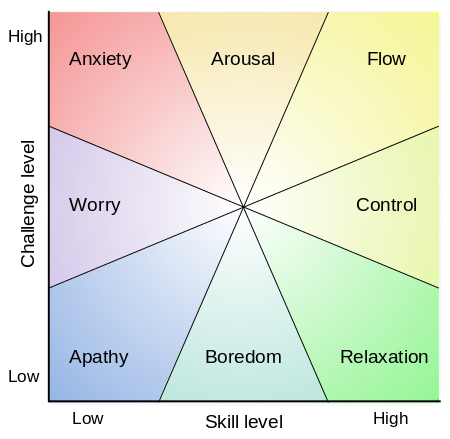
Americans now have an historic opportunity to reimagine government. The key is to abandon the centralized operating philosophy which, in thousand-page rulebooks, purports to tell everybody how to do everything. We need to re-empower human agency at all levels of society.
The Trump revolution was not a Republican revolution. It was a revolt against Washington. Voters wanted someone who would shake things up. The new President’s mandate is for change, but what kind of change? The campaign did not exactly illuminate a new vision for how to govern.
Since the election, Republican leaders have pulled off the shelf their standard agenda, including broad de-regulation. But I doubt if disaffected voters are dreaming about fixing Dodd-Frank or corporate taxes. Voters seemed to be lashing out in every direction. Many are upset at stagnant wages and a perception that jobs are disappearing.
But voters were angry at more than that. They seemed tired of being talked down to by political phonies and know-it-all bureaucrats. They were tired of political correctness and mindless bureaucracy in their schools, hospitals, and workplace. Anger comes from the gut, not the mind. No clear policy agenda emerged from the Trump campaign because the struggle was not about policy. It was about a sense of frustration, alienation, and powerlessness. There can be a kind of wisdom in crowds.
Democracy can’t earn the allegiance of its citizens with centralized dictates. We need to have our say, and be free to do things in our own way. This crisis of democratic identity can’t be resolved merely with new policies at the top. Top-down government is itself the problem. Americans now have an historic opportunity to reimagine government. The key is to abandon the centralized operating philosophy which, in thousand-page rulebooks, purports to tell everybody how to do everything. Government must still protect against abuse—otherwise freedom will be destroyed by bad actors just as surely as it is by suffocating bureaucracy.
But government can protect freedom by adopting an oversight role that guards against abuses rather than micromanaging daily choices. Communities ought to be able to run schools and provide services in their own way, within broad boundaries. Regulatory dross of all sorts—HIPAA privacy forms, and most warnings and disclaimers—should be revised or scrapped, because they insult our common sense and cumulatively interfere with our ability to focus on what’s important. There are some areas where centralized, detailed regulation is needed—say, pollution discharge limits. But in areas that hinge on human attitudes and competence—say, workplace safety or school discipline—too many rules and protocols are generally counterproductive. Far better for government to stand at a distance, making sure people don’t breach the boundaries of reasonableness.
Guarding outer boundaries is the traditional mechanism of law—acting as a kind of dike against misconduct. Law is vital to freedom because it affirmatively protects an open field of free interaction. Law sets “frontiers, not artificially drawn, within which men should be inviolable,” as Isaiah Berlin put it. Law today doesn’t protect an open field of freedom; it more often strangles daily choices with dictates that make no sense in the circumstances.
Scrapping the micro-regulation model is not a matter of degree—not merely cutting back on red tape. American government requires an historic shift of operating philosophy, one that puts humans back in the driver’s seat. Law must be the framework, but human responsibility must be the activating mechanism. The goal is to liberate people to try to do what’s right and sensible, accountable to those around them.
So far, so good. But there’s a bone here that will stick in throat of ideologues from both sides. Without a thick rulebook, the official must be free to use his or her best judgment. How else can he use common sense, when applying legal principles to the particular circumstances, to decide when conduct is unfair or unsafe? Oversight for results almost always requires human judgment. The paradox of freedom, forgotten in recent decades, is that empowering citizens requires empowering officials to fulfill their legal responsibilities.
This is not just the Hobbesian requirement of police protection. The interdependence of the modern world puts a huge burden on government oversight. People you don’t know are taking care of your loved ones in schools and nursing homes. How can you influence them if the official in charge is not empowered to act sensibly? The parents’ ideas don’t matter if the principal doesn’t have authority to act on them. The current void of human authority disempowers everyone. People don’t feel they, or anyone around them, can roll up their sleeves and fix things. The answer to every frustration is the same: “The rule made me do it.” (President Obama, explaining why the 2009 stimulus couldn’t be used to fix broken infrastructure: “There’s no such thing as shovel-ready projects.”)
The solution to powerlessness—the only solution—is to re-empower human agency at all levels of society. I’ll assert two first principles that hold the key to remaking a healthy democracy: Principle One: Human choice at implementation is required for accomplishment. Nothing good in the history of mankind was created except when a human, or group of humans, made it happen. Rules, and law in general, can prevent bad things from happening, and can establish protocols for joint action. But even those negative goals cannot be accomplished with a selfexecuting legal structure. Following rules mindlessly crowds out what Michael Polanyi called “tacit knowledge,” the vast store of instincts and know-how that resides in our subconscious.
Most people don’t know and cannot clearly articulate how they get things done. Trial and error—the opposite of compliance—is the secret sauce of progress. No endeavor can succeed, management expert Peter Drucker found, without “a principle of management that will give full scope to individual strength and responsibility.”
Principle Two: Personal ownership of choices is required for self-fulfillment. People want to make a difference. It gives us a sense of self-worth. Doing things in our own way requires freedom to adapt, adjust, and try new things. Being stymied by a rulebook, or trudging all day through compliance checklists, makes people miserable. Anomie, now hardened into anger, comes mainly from a feeling of personal unimportance. People with rote jobs have higher levels of stress and heart disease, while, paradoxically, people with more responsibility and personal risk feel less tension and are healthier.
Tocqueville here as in other areas put his finger on the misery of self-executing systems: “It is especially dangerous to enslave men in the minor details of life. For my own part, I should be inclined to think freedom less necessary in great things than in little ones” because, otherwise, “their spirit is gradually broken…” Humans need to be in charge. Only then can things get done sensibly. Only then does democratic accountability mean anything.
Today, the FAA certifies new aircraft as “airworthy” based on their expert judgment, not detailed specifications like how many rivets it has. This is not “de-regulation,” but an all too-rare liberation of American common sense inside government. When humans are allowed to take responsibility, law becomes far simpler and more effective. A few legal principles can replace a thousand rules if people are free to take responsibility for implementation. To regulate nursing homes, Australia replaced a thick rulebook with 31 results-oriented principles, such as to have a “home-like setting.” Within a short period nursing homes had improved markedly. Why? Professors John and Valerie Braithwaite found that all stakeholders—nurses, regulators, and families—now focused on making homes better instead of mindless compliance with a thousand input-oriented rules.
Letting humans focus on results would transform every area of public concern. For example, within a year we could get America rebuilding its decrepit infrastructure—just by giving an environmental official the job of deciding when there’s been sufficient environmental review. Today, multi-year environmental reviews obscure, not illuminate, vital issues, and often cause environmental harm by prolonging bottlenecks. Schools and government agencies would have a lot more zip if principals and managers could make basic personnel decisions without having to endure a years-long legal trials to prove that someone doesn’t do the job. Everybody knows who the bad teachers are; site-based oversight committees could guard against vindictive or unwise decisions. Recently Bill Bradley, Mitch Daniels, Tom Kean, and Al Simpson joined with the nonprofit Common Good, which I chair, to launch a campaign (“Who’s in Charge Around Here?”) advocating the radical simplification of government so that people can take charge again.
Human responsibility was, of course, the founding concept of our Republic: Elect and appoint people who have the job of using their best judgment for the common good. James Madison could hardly have been clearer: “It is one of the most prominent features of the Constitution, a principle that pervades the whole system, that there should be the highest possible degree of responsibility in all Executive officers thereof; anything, therefor, which tends to lessen this responsibility is contrary to its spirit and intention.”
Principles-based regulation would actually make law comprehensible to real people—a core tenet of the rule of law ignored by the mandarins in Washington. Again, Madison: “It will be of little avail to the people, that the laws are made by men of their own choice, if the laws be so voluminous that they cannot be read, or so incoherent that the cannot be understood.” Democracy will be revitalized when officials can take responsibility for results. Focusing regulation on goals will also allow people in different communities to do things in different ways. They can take ownership of their choices. As legal philosopher Jeremy Waldron has argued, a principles-based structure offers humans the dignity of being able to argue about right and wrong with a real decision-maker. People won’t feel so powerless any more.
The Wages of Distrust
Distrust is the mortar that keeps the current America governing philosophy firmly in place. Distrust of democracy went into high gear in the 1960s, when we woke up to abuses of racism, pollution, lies about Vietnam, neglect of the disabled, and more. Making law as detailed as possible was the solution chosen to balance against supposedly bad values. There would be no room for abuses of authority if official decisions were prescribed in thick rulebooks. Even some libertarians joined in. They believe in the power of human freedom, of course, but legal control of officials is how they strive to preserve freedom.
Nobel economist Friedrich Hayek, usually a font of wisdom, pronounced in early writings that “government in all its actions . . . [should be] bound by rules announced and fixed beforehand.” It is now received wisdom, among liberal professors as well as industry lobbyists, that laws and regulations should be as detailed as possible. The Volcker Rule is 950 pages of casuistry because lobbyists wrote it that way. Obsessive legal control is a formula not for better freedom, but for mutual powerlessness: The tighter the shackles on the regulator, the tighter the shackles on the regulated. If the nursing home inspector is shackled to a thousand detailed rules, so are the nurses in the nursing home —even if the rules do little or nothing for the quality of the home. Freedom turns out to be a concentric concept. If the traffic cops aren’t free to do their job, then pretty soon you’ll be stuck in gridlock. The citizen’s vote matters only when the President is free to make genuine choices.
John Locke, no fan of centralized authority, concluded that “many things…must necessarily be left to the discretion of him that has executive power in his hands.” The fear that keeps everyone quivering in the legal jungle is also based on a misconception: There’s no need to trust any particular flesh-and-blood official. What’s required is to trust the framework of our republic—to rely on human checks and balances, in which each official is surrounded by other officials who check his fidelity to legal principles.
An official or judge is not, as Justice Benjamin Cardozo put it, “a knight errant roaming at will.” Just as free citizens are not free to breach contracts or cheat others, officials are constrained by their legal mandate. As Ronald Dworkin has put it: “Discretion, like the hole in a doughnut, does not exist except as an area left open by a surrounding belt of restriction…. An official’s discretion means not that he is free to decide without recourse to standards of sense and fairness.”1 Havel viewed democratic authority as a temporary delegation that “is lost when a person betrays that responsibility.”
Our paranoia about official authority is ironic. The rule of law famously fosters trust because it gives people confidence that, say, contracts will be honored and abuse not tolerated. What we’ve forgotten is that law itself is tethered to norms of good faith and reasonableness, applied by judges and officials taking responsibility to do justice in the particular case. Hayek himself recanted his views on the “supposed greater certainty [when]…all rules of law have been laid down in written and codified form.”
Law can only support freedom when a judge or official applies it in a way most people consider reasonable. “Law floats in a sea of ethics,” as Chief Justice Earl Warren put it. Without giving it much thought, Americans generally trust the judges and others who enforce broad principles of civil and criminal law. Government, too, must be tethered to norms of reasonableness. Putting official authority into solitary confinement, hemmed in by impregnable and obsessively detailed law, was supposed to enhance our freedom.
Instead, we locked ourselves in as well. The “simultaneous recession of both freedom and authority in the modern world” is no accident, Hannah Arendt observed. Without a coherent theory of authority, we are “confronted anew…by the elementary problem of human living-together.”
Rebuilding Trust Through Responsible Choices
Here we are in 2016, with half the country in revolt, needing to find a way to live together. We shouldn’t worry too much about abandoning the de facto technocratic regulatory system as it has evolved. Our government “has outgrown the structure, the policies and the rules designed for it,” Peter Drucker observed, with the result that it is “bankrupt, morally as well as financially.” It was an heroic effort but, like central planning, it was doomed to fail because it was built on “the arrogant belief, “as Vaclav Havel put it, “that the world is merely a puzzle to be solved, … a body of information to be fed into a computer in the hope that sooner or later it will spit out a universal solution.”
America requires a new operating philosophy that embraces the unavoidable humanness of governing. Getting past the pervasive distrust is the challenge. Years of public failure and powerlessness feed the distrust. If there were any trusting souls left in America, the 2016 campaign showed that it’s “us versus them.”
The stakes are high. Trusting cultures tend to prosper, as Francis Fukuyama and others have demonstrated, because people can stride toward their goals without fear of ambush. Shared values of fair dealing and common purpose are reinforced by shared norms of reciprocity; you do your part, others will do theirs. People feel they own their own choices, and feel comfortable with trial and error. Success feeds on itself.
Distrust, by contrast, corrodes the foundations for success. Like acid, it weakens our willingness to move forward because we don’t trust other people to do their part. People become defensive, and tiptoe through the day. Transactions slow to a crawl, or don’t happen at all. In Edward Banfield’s study of a backward village in Italy, pervasive distrust removed the conditions for cooperation. Neighbors could not get together to fix roads and other common resources. The local Mayor refused outside subsidies because, he said, his constituents would assume he would pocket much of it.
For the past half century, America has looked to law not only to change values, a good thing, but also to dictate daily choices. Now Washington overflows with law, but it is also a cesspool of distrust. As in Banfield’s village, America’s leaders can’t get together to fix broken roads. People in Washington also huddle within defensive bubbles, treating outsiders as enemies. Political leaders from different parties no longer break bread, much less forge deals to move forward. The White House has walled itself off from the Executive Branch it supposedly runs.
Do Americans really differ on basic values of hard work and fair play? I don’t think so. I think government drove us apart, with the best of intentions, by clogging up society with a giant bureaucratic hairball and by removing our ability to try to work things out for ourselves. People don’t want to be trapped in red tape, and they’re obviously sick of political leaders who act like “puppets…in a giant rather inhuman theatre,” as Havel put it.
Rebuilding trust starts at the top: Leaders must make choices that are trustworthy. President Trump will not be reluctant to start making decisions. But his decisions must be viewed as fair and sensible, with due respect for differing interests. Trust is also a two-way street. If Trump empowers others to do things in their own way, they will be more likely to reciprocate. If his decisions are viewed as high-handed, however, we’ll soon fall back into the maw of too much law. This is an historic and perilous moment. Change is overdue. But it’s not the change advocated by either party. The change needed, to liberate American citizens and to fix American government, is to return to our founding philosophy: to honor humans by creating a framework that empowers them to take initiative, act on their beliefs, and make a difference.
Philip K. Howard is chair of Common Good, a nonprofit government- and legal-reform group, and author, most recently, ofThe Rule of Nobody (2014). This piece first ran in The American Interest.
In Mass., striving for 100 percent renewable energy
ecor.org
BOSTON
The nation can move quickly to generate 100 percent of its energy from renewable resources such as solar and wind, according to a panel of researchers and experts who spoke Nov. 14 at Old South Church to an audience of about 200 people.
“America needs to shift to 100 percent renewable energy to address our largest environmental challenges,” said Ben Hellerstein, state director for the Environment Massachusetts Research & Policy Center. “At a time of great uncertainty over our national climate and energy policy, it’s more important than ever before for Massachusetts to lead the way towards 100 percent renewable energy. Now is the time for bold action, not half steps.”
Experts in the fields of public health, urban sustainability, renewable-energy technology and the electric utility sector spoke at “The Road to 100 Percent: Opportunities and Challenges in the Transition to a Fully Renewable Energy Society” — a town hall event organized by the Environment Massachusetts and co-sponsored by several other environmental and health organizations.
The discussion is one of more than 50 events held across the country during the week of Nov. 14 for the “100% Committed, 100% Renewable Week of Action.” The week of action is sponsored by Environment America, the national partner of Environment Massachusetts.
“The road to 100 percent renewable is finally achievable because of a confluence of lower prices for solar and wind and increasingly greater access to all electric transportation,” said Sanjeev Mukerjee, Ph.D., professor of chemistry and chemical biology at Northeastern University and faculty director of the Northeastern University Center for Renewable Energy Technology. “Massachusetts has to make proper policy decisions which incentivize decentralized power, higher subsidies for hybrid and electric vehicles and higher spending on public transportation. In all of these, energy storage is the key. Massachusetts can set the national clean-energy agenda by providing the proper basis for success in this arena.”
Jonathan Buonocore, Ph.D., program lead for Climate, Energy and Health at Harvard’s T.H. Chan School of Public Health, said, “While we often think about averting climate change when we think about renewable energy, getting energy from fossil fuels has many other social costs. Air pollution from fossil-fueled electricity is responsible for around 21,000 deaths each year, and there are other impacts, including water pollution, land disruption, and accidents, to name a few.”
Earlier this year, Environment Massachusetts released We Have the Power, a report that reviewed seven studies from academics, government agencies and nonprofits showing that there are no insurmountable technological or economic barriers to achieving 100 percent renewable energy.
“We need to fuel the nation with renewable energy. The technology exists, and the benefits go far beyond just reducing carbon,” said Robert Dostis, vice president of Green Mountain Power. “Energy transformation is an economic driver, creating jobs and fueling a new green economy. Utilities are especially positioned to achieve an energy transformation that reduces costs and carbon while increasing reliability and resilience — a critical focus in light of a changing climate.”
Advocates argued that one of the ways Massachusetts can accelerate the transition to 100 percent renewable energy is by strengthening the Regional Greenhouse Gas Initiative, a program that limits carbon pollution from power plants in Massachusetts and eight other northeastern states, including Rhode Island. Environment Massachusetts is urging Gov. Charlie Baker to double the pace of renewable-energy progress under the regional initiative.
San Diego, Aspen, Colo., and Greensburg, Kan., are among the cities that have pledged to achieve 100 percent renewable energy. Hampshire College in Amherst will soon become the first residential college in the United States to obtain 100 percent of its electricity from on-campus solar installations.
This past summer Environment Massachusetts profiled 17 cities and towns in Massachusetts, including New Bedford and Worcester, that are leading the way toward 100 percent renewable energy.
Guano factory assembly-line worker

"Gull Perch,'' by Alecia Barry Underhill, in group show at ArtProv Gallery, Providence, Dec. 7-Jan. 20.

A November space

"Fall Trees" (pastel on paper), by Dave Kaphammer, in the show "32 Almost Miniatures,'' at Francesca Anderson Fine Art, Lexington, Mass., through Jan. 14. He works primarily in pastels to evoke impressionist details of nature to capture the beauty and personality.
“But there is always a November space after the leaves have fallen when she felt it was almost indecent to intrude on the woods…for their glory terrestrial had departed and their glory celestial of spirit and purity and whiteness had not yet come upon them.”
L.M. Montgomery, from "Anne of Windy Poplars''
Featured artist Dave Kaphammer works primarily in pastels in order to create impressionist details of nature in order to capture the beauty and personality,
Jill Richardson: No, let's not play nice with this authoritarian abuser
As Donald Trump plans his transition into the White House, some have called for “unity.” Let’s “come together,” they say. Let’s “give him a chance.”
I say no.
When a man abuses his wife, you don’t tell her to give him a chance. You don’t tell her to try to talk things out with him. Meet him halfway. Hear his side of it. Believe him when he says he loves her and he won’t hit her again.
Why? Because it won’t work.
The rules of normal social conduct don’t apply in such a case. Nor do they apply in this one. As I’ve said before, Trump exhibits textbook emotional abuse tactics.
If you give him a chance, he’ll walk all over you. If you go into any negotiation ready to meet him in the middle, he’ll demand it isn’t enough, that he must get his way entirely. And he’ll strong-arm you to get it.
We already have evidence that Trump does absolutely everything he can get away with.
He walked in on naked teenage beauty queens while they were changing, just because he could. Twelve women have accused him of sexual assault. He openly admits that he kisses and gropes them without consent.
He doesn’t pay contractors for their work. During the campaign, he even stiffed his own pollster. And his lawyers had to meet with him in pairs to prevent him from lying about their meetings.
This is a man who’ll do anything he can get away with. And he’s about as ready to change as a man who beats his wife would be.
So we can’t roll over and let him. We fight.
That’s what we must do now. We must make it absolutely as hard as possible for this man to wreck our democracy. And that’s not a partisan statement.
At this point, it’s not about whether you’re a Democrat or a Republican. It’s not about whether you prefer to repeal NAFTA or Obamacare, or about whether you think same-sex marriage should be legal.
It’s now about whether you think the democracy the United States has had for over 200 years should remain in existence. If the answer to that question is yes, then it’s time to fight. Because that’s what’s under threat.
The pain of this bitter election hurts. For the second time in recent years, the Electoral College is on track to install a president who received fewer votes from the American people than his opponent--- in this case more than a million fewer.
We’re all dealing with difficult emotions in different ways. I’m listening to audiobooks and knitting. Okay, and ugly crying. Others are protesting. And some are trying to handle their anger and fear by “thinking positive.”
It’s not the time for that. Not when thinking positive means denying reality.
It’s been only days since the election and Trump has already appointed Steve Bannon, a white supremacist and “alt-right” media kingpin, as a top adviser. If you wanted to give Trump a chance, there. He’s had one. He blew it.
The next four years are going to be hard. But now is the time to start mobilizing. The continuation of our very democracy depends on it.
OtherWords columnist Jill Richardson is the author of Recipe for America: Why Our Food System Is Broken and What We Can Do to Fix It. Distributed by OtherWords.org.
David Warsh: Now what after newspapers' colossal business mistakes?
Bridges, roads, airports, the electricity grid, pipelines, food and fuel and water systems: all of these are underfunded to some degree. So are the myriad new arrangements, from satellites and ocean buoys to emission scrubbers and ocean barriers, required to keep abreast and cope with climate change. Which wheels will begin to get the grease in coming months? We’ll see.
At the moment I am even more interested in the well-being of social information systems Last week The Wall Street Journal announced it would reduce its print edition from four sections to two on weekdays, bringing it into line with the Financial Times. Should that be an occasion for concern? On the contrary, let me try to convince you that it is welcome news.
Although newspapers still carry crossword puzzles, comics, agony aunts, and churn out all manner of fashion magazines, they are mainly in the business of producing provisionally reliable knowledge. What’s that? I have in mind propositions on which every honest and knowledgeable person can agree.
Not so much big judgment, such whether climate change is occurring or whether Vladimir Putin is a despot, but rather ascertainable facts, beginning with what parties to various debates are saying about themselves and each other and about their pasts. These are the foundations on which big judgments are based
A case in point: almost all of what the world knows about Donald Trump, that is, that we consider that we really know, we owe to The New York Times, The Wall Street Journal, The Washington Post, the Financial Times, and various newspaper-like organizations, Bloomberg News, Politico, and The Guardian in particular. The Associated Press, Reuters and the BBC contributed a little less; magazines still less; the rest of radio and television, hardly anything at all, with the notable exception of Fox News anchor Megyn Kelly’s lead off question in the first presidential debate. Someone will prepare a list of the fifty or a hundred of the best stories of the last year, I expect. I’ll only mention a few memorable examples:
The Post’s coverage of the Trump Foundation; the Times’ many investigations, including those of his tax strategies and his practices as a young landlord; a Politico roundtable of five Trump biographers; the WSJ’s pursuit of the George Washington bridge closing, coverage that changed the course of the campaign; and the FT’s continuing emphasis on the foreign policy implications of the America election. The same thing could be said about newspapers’ coverage of Hillary Clinton.
Newspapers exist to process and assess the rival claims of experts – politicians, governments, corporations, the professoriate, pollsters, authors, whistleblowers, filmmakers, and denizens of the blogosphere. When its own claims to authority are misplaced – a spectacular example having been the Monday before the election, when newspapers were still expecting a Clinton victory – the print press and its kith and kin correct themselves (the next day) and investigate the prior beliefs that led them to error. A free and competitive press resembles the other great self-correcting systems that have evolved over centuries – democracy, markets, and science.
And as for social media, the new highly decentralized content producers, to the extent they are originators of new information, the claims made there are slowly becoming subject to the same checking and assessment routines as are claims advanced in other realms. (No, the Pope did not endorse Donald Trump.) As for intelligence services, in which the experts’ job is to know more than is public, it is the newspapers that make them less secret. More than any other institution in democratic industrial societies, newspapers produce a provisional version of the truth. So the condition of newspapers should concern us all.
In “What If the Newspaper Industry Made a Colossal Mistake?,’’ in Politico, Jack Shafer speculated recently the newspaper companies had “wasted hundreds of millions of dollars” by building out Web operations instead of investing in their print editions, “where the vast majority of their readers still reside and where the overwhelming majority of advertising and subscription revenue still come from.” As perspicacious a press critic as is writing today, Shafer was reporting on an essay by a pair of University of Texas professors, H. Iris Chyi and Ori Tenenboim, in Journalism Practice.
Chyi and Tenenboim overstated their case, I think. Those dollars invested in Web operations weren’t wasted; they had to be spent. Most newspapers, all but the WSJ, made the mistake of making their content free on the Web for several years. Only gradually did they come round to the approach the Journal had pioneered: a paywall, with some sort of a metering technology designed to encourage online subscriptions.
More serious has been the lack of thinking-out-loud about the future of those print editions. No one needs to be told that smart phones have replaced newspapers, radio, and television as the tip of the spear of news. It appears that Facebook and Twitter have supplanted cable television and radio talk shows as the dominant forum for political discussion. But newspapers haven’t gone away; indeed, by establishing beachheads for the content they produce on social media platforms, they have become more influential than ever.
The immense prestige associated with newspapers arose from the fact that for centuries they were reliable money machines, thanks to their semi-monopoly on readers’ attention. It is no longer news that the revenue model has turned upside down, Advertisers used to pay two thirds or more of the cost of publishing a successful newspaper; today it is more like a third, if that. Attention was slowly eroded away by radio, broadcast and pay television, until the invention of search-based advertising in 2002 turned decline into a seeming rout. The basic business model is still the same, as Tim Wu explains in The Attention Merchants; The Epic Scramble to Get Inside Our Heads (Knopf, 2016): “free diversion in exchange for a moment of your consideration, sold in turn to the highest-bidding advertiser.” It’s the technology that has changed.
In a world in which the gas pump starts talking to you when you pick up the hose and video commercials are everywhere online, the virtues of print are many-sided, for readers and advertisers alike. In “Why Print Still Rules,’’ Shafer laid out the case for print’s superiority as a medium – “an amazingly sophisticated technology for showing you what’s important, and showing you a lot of it.” It’s finite. It attracts a paying crowd, which is why advertisers are willing to pay more – much more – for space.
The fancy newspapers are in good shape to refurbish their printed editions. Three of the four have new owners with deep pockets. Rupert Murdoch, a maverick Australian, now a U.S. citizen, bought the WSJ in 2007; Amazon’s Jeff Bezos, thought to be the second richest American, after Bill Gates, bought the Post, in 2013; the Japanese newspaper group around Nikkei bought the FT in 2015. The NYT is the shakiest of the four, but there seems little doubt that the cousins of the Sulzberger/Ochs clan will find a suitable partner, the oft-expressed enmity of President-elect Trump notwithstanding.Fav
Pricing, meanwhile, is all over the map, as is the appropriate size of the paper edition itself. The FT delivers two sections of tightly written no-jump news over five days and a great weekend edition for $406 a year. The WSJ costs $525 a year for six days, including a first-rate weekend edition. The Times charges $980 a year for seven days a week, including a Sunday edition that contains much more content than most readers need. (Its ads bring in a ton of money.) That’s why the WSJ decision to cut back to from four to two daily sections is significant: it acknowledges the reduced but still very powerful claim of print on consumers’ ever-more stretched budget of time. It puts more pressure on the Times’s luxury brand.
It’s the regional papers that worry me, as much for their roles as distributors of news as producers of it. When the Times, WSJ and FT are placed on the stoop in the morning, my old paper, The Boston Globe, is not among them. At around $770 a year, it simply costs too much, especially considering the meager local content it provides.
Assume that the “right” price for a year of a fancy paper today is somewhere between the FT and the WSJ, at around $500 a year. At around half as much, or even $300, a print edition of the Globe would be highly attractive. My hunch is that circulation would again begin to increase, and, in the process, shore up the metropolitan area’s home-delivery network. Instead I buy digital versions of the Globe (for $208) and the Post (for $149). Want to know what a year of the print Post costs? So does the copy editor. But I stopped looking after interrogating the Web page for five minutes. Newspapers are notorious for gulling their subscribers. Not even the FT is straightforward about it.
Like the other leading papers – the Chicago Tribune, Los Angeles Times, Philadelphia Inquirer, and Baltimore Sun – the Globe was sold for a song to a non-newspaper owner in the course of the panic that followed the advent of search advertising in 2002.
These publishers no longer seem to see themselves as part of an industry that was quite tight-knit before the fall. That’s another disadvantage with which the big national dailies must cope. For many years, newspaperfolk considered that their businesses were mostly exempt from the laws of supply and demand. Price cuts play a big part in the lore of its past. Today, the future of the industry depends on the recognition that price/performance is everything.
. xxx
Around two years ago, I began to think it was fairly likely that a Republican would win the election in 2016. So I am not altogether surprised that this has turned out to be the case. I am, however, astonished that it is Donald Trump who has been selected to provide the zig to President Obama’s zag. The Republicans found their crossover voters elsewhere.
Trump breaks promises as easily as he makes them. Look past his odious qualities (not easy to do) and you’ll see that among the policies he seems likely to embrace are several that GOP conservatives have refused to permit the Democrats to carry out. Trump apparently favors a big jobs bill, a $1 trillion stimulus; let’s see what the Tea Party-goers say now about the national debt. He is a realist in foreign relations, likely to stop baiting Russia with NATO enlargement and the threat of intervention in Syria. At least in his personal views, he has been a social liberal. His position will probably swing round even on climate change, as the trends continue to become more clear. The Supreme Court? He could challenge his uneasy Republican allies in Congress by re-nominating Judge Merrick Garland if he were interested in governing instead of showing off.
Trump has reinvented himself several times before. Now that he is president-elect, he will try to do it again. This time I very much doubt that he will be successful. Nothing in his background prepared this dubious projector for the presidency. This time Trump won’t escape his past.
David Warsh, a longtime financial columnist and economic historian, is proprietor of economicprincipals.com, where this originated.
Program to help fix Mass. dams
Massachusetts officials recently announced $10 million in funding to assist communities and groups statewide in addressing deteriorating dams and refurbishing critical coastal infrastructure. The money will support engineering and construction phase work for seven dam repair projects, five dam removal projects and eight coastal protection reconstruction projects.
The program will award $2.91 million to Attleboro, Fall River, Gardner, Gloucester, Holbrook, the Jones River Watershed Association, the Kestrel Land Trust, The Nature Conservancy, Scituate, the Sherwood Forest Lake District, Westfield and Weymouth for dam projects, and nearly $7.7 million to Marshfield, Plymouth, Quincy, Salem, Scituate and Yarmouth for coastal-protection projects.
The following are the dam projects:
Gloucester ($500,000, $500,000 low-interest loan)
The Haskell Pond Dam is owned and managed by the city as part of its water supply network. The dam is a high-hazard structure in poor condition. This 43-foot-high, 480-foot-long structure was built in 1902. This award will provide funding for the construction work necessary to refurbish the structure to ensure compliance with state law. This project was previously funded with $175,000 to support engineering, permitting and the development of construction documents.
The Nature Conservancy ($257,055)
The Carver Cotton Gin Mill Dam in East Bridgewater on the Satucket River, a tributary of the Taunton River, is rated a significant hazard in unsafe condition. The concrete structure is 10 feet high and 44 feet long. It’s the first dam from the ocean without fish passage, and removal is part of a multi-partner effort to connect major tributaries of the Taunton River with the main stem, Narragansett Bay, and the ocean. Removal of this dam will enhance public safety, create a navigable waterway for small boats and re-establish connections to large spawning areas for numerous fish species.
Attleboro ($250,000)
The Dodgeville Pond Dam is a significant-hazard structure in poor condition. This award will support the rehabilitation of the structure. While the structure is privately owned, the city is committed to having this structure refurbished as part of a larger master plan for improvements. The impoundment that it creates and the backwater along the Ten Mile River provide recreational opportunities. The city recently received a state grant from the Gateway Cities Parks Grant program to provide riverside walking and biking paths along the Ten Mile River. Preserving and Dodgeville Dam/Pond is needed to maintain water depths along this section of the Ten Mile River that will be part of the Riverwalk.
Scituate ($225,000)
The Hunters Pond Dam, also known as the Mordecai Lincoln Road Pond Dam, is the first dam on the Bound Brook system and is located at the head of tide in the Gulf River estuary. The dam is in poor condition and rated as a significant hazard. The Hunters Pond Dam is the primary impediment to fish passage on the Bound Brook system and its removal will promote the recovery and increase in diadromous fish populations by restoring access to spawning and rearing habitat.
Jones River Watershed Association ($223,000)
The Elm Street Dam is owned by the town of Kingston, and this project will plan for its removal. The dam is a significant hazard in fair condition. The dam forms the head of tide on the Jones River creating an obstruction to tidal flow into upper reaches of the river. This creates a backwater of tides below the dam resulting in an increase of downstream bank overtopping. The dam contributes to poor water quality and even with a fish ladder, this dam blocks fish from passage upstream to historic spawning grounds. The removal of the dam will improve conditions for river herring, rainbow smelt, eastern brook trout, American shad and American eels.
Kestrel Land Trust($215,000)
The Lake Warner Dam in Hadley is owned by the land trust. The dam is classified as a significant hazard and is in poor condition. The dam at Lake Warner, also known as North Hadley Pond, has been part of the historic village center of North Hadley for more than 350 years and is greatly valued by local residents. This project will restore the structural integrity of the dam.
Holbrook ($207,750)
The Lake Holbrook Dam is a 300-foot earthen dam with a paved roadway across the crest. The dam is classified as a significant hazard and is in poor condition. The dam has numerous deficiencies that compromise the safety of the roadway and homes and businesses downstream. This project will help bring the dam back into compliance with safety standards.
Westfield ($163,800)
The Tekoa Reservoir Dam, built in 1873, is on Moose Meadow Brook in Montgomery. The dam impounds a reservoir that can provide water for the city of Westfield but hasn’t been used for this purpose for many years. The city has determined that the reservoir is no longer needed as a potential water supply; therefore removal of this 32-foot-tall, 200-foot-wide dam is in the best interests of the city and its residents by reducing the costs of owning and operating unnecessary structures.
Weymouth ($150,000)
The Weymouth Great Pond Dam was built in 1884 and is a key component of the city’s water supply. The structure retains a 450-acre reservoir and is classified as a significant hazard and is in fair to poor condition. This award will support the engineering and design for a series of repairs and improvements.
Fall River ($119,853)
The Rattlesnake Brook Dam is owned by the Fall River Water Department and is located in Freetown. The dam doesn’t provide benefits for water supply and is now a liability for the city. The dam is in unsafe condition and has created a downstream situation where there are multiple unmanaged stream channels. There is currently no operational way to control water level. A partial breach has also been reported. Removal of this dam will create a more stable downstream channel configuration and protect Narrows Road 500 feet below the dam. The project will also naturalize stream processes and open the brook to migration to trout from Assonet Bay for miles upstream to cold-water habitat in the upper watershed.
Gardner ($67,400)
The Wrights Reservoir Dam impounds Mahoney Brook to form Wrights Reservoir. The dam is classified as a high hazard. The structure is part of the Gardner Local Protection Project flood-management system built by the Army Corps of Engineers in the 1960s for flood protection of important industrial properties along the Mahoney and Greenwood brooks. The project will repair the dam and bring the structure into compliance.
Sherwood Forest Lake District ($52,500)
The Lancelot Lake Dam in Becket is classified as high hazard and is in poor condition. This award will support the planning and engineering phase of the project to return the dam to safety standards.
The following are the coastal protection projects:
Marshfield ($2,500,000, $500,000 low-interest loan)
The money will be used for Phase II of a seawall repair project along the shoreline of Massachusetts Bay in the Fieldston section of Marshfield. Phase I of the project, completed in 2015 and funded through a prior grant, included design and permitting for the entire Foster Avenue Seawall and implemented the replacement of the existing seawall between Old Beach Road and 9th Road. The Phase II project includes updating the existing design package, bidding and replacing the existing concrete seawall along Foster Avenue between 9th Road and 3rd Road. The structure is deteriorated and this section of the Foster Avenue Seawall is assigned a condition rating of poor and a high priority. This project addresses the last remaining portion of the original 1931 structure and will complete the reconstruction of the seawalls protecting this densely populated area.
Marshfield ($139,000)
The money will be used to design and obtain regulatory approvals for the reconstruction and improvements to an approximately 600-foot-long section of deteriorated seawall on Ocean Street near Brant Rock. The structure protects Ocean Street, adjacent residential areas and associated utilities from storm damage. The existing structure has become increasingly deteriorated. Ocean Street is the primary access through the area connecting the communities of Brant Rock and Ocean Bluff with major state highways and is also an evacuation route during storms.
Scituate ($2,500,000, $500,000 loan-interest loan)
The money will support the construction phase of a 640-linear-foot section of the seawall and revetment. During major storm events, this area of Oceanside Drive is heavily flooded and inundated with overwash consisting of large cobbles and sand, which in turn results in compromised public access and safety and the temporary closure of the roadway and cross streets. In recent years, there have been occurrences where first responders have been unable to respond to house fires and other emergencies in the area bevcause of extreme flooding.
Plymouth ($810,993)
The money will repair and reconstruct portions of the 720 linear feet of retaining wall fronting a vertical concrete seawall about 2.5 miles southeast of Plymouth Center. A series of severe northeast storms caused continued lowering of the fronting beach and moderate damage to the revetment. Although the seawall and retaining wall have remained intact, previous repairs didn’t return the structure to its “as-built” condition. More recent work re-established the retaining wall to design conditions; however, portions of the revetment have settled over the past 10-plus years as the beach continues to lower, allowing wave action to destabilize portions of the revetment.
Plymouth ($93,563)
The grant will support design and environmental permitting services for the reconstruction/upgrading of about 900 linear feet of retaining wall primarily fronting the Plymouth Long Beach parking lot and Route 3A. The existing vertical concrete seawall has failed at several locations and doesn’t provide an appropriate design for the lowered condition of the beach.
Quincy ($441,000)
The grant will support the final design and permitting costs for repairs and improvements to about 6,000 linear feet of seawall along the northern shore of Adams Shore and Houghs Neck. These structures protect the shoreline, residential homes, public utilities, and critical transportation and evacuation routes. The seawalls will be repaired and raised to accommodate future sea-level rise and impacts from the changing climate, including increased frequency and intensity of storms.
Salem ($143,625)
The grant will support the design and permitting for the repair/replacement of an approximately 60-year-old deteriorating, concrete seawall at the eastern boundary of Forest River Park. The existing seawall is part of the city’s Canal Street Flood Mitigation Project. The Canal Street Flood Mitigation Project is a $20 million project that has received funding from the Federal Emergency Management Agency with a goal of reducing flooding in the Canal Street and Salem State University O’Keefe Parking Lot.
Yarmouth ($77,500)
The grant will support the design and permitting for an approximately 500 linear foot section of deteriorating revetment at Bass River Beach. The structure protects the adjacent dunes and provides public access via a parking lot, boat ramp, and fishing pier. The structure also protects the western shore of the river from the Bass River Beach as well as the eastern edge of the Bass River entrance channel.
'Earth sinks to rest'
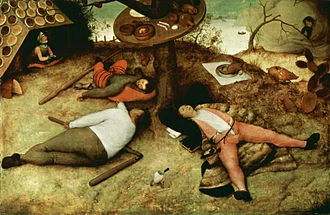
"November comes
And November goes,
With the last red berries
And the first white snows.
With night coming early,
And dawn coming late,
And ice in the bucket
And frost by the gate.
The fires burn
And the kettles sing,
And earth sinks to rest
Until next spring."
- Elizabeth Coatsworth

Chris Powell: Taking down a tower of election misconceptions
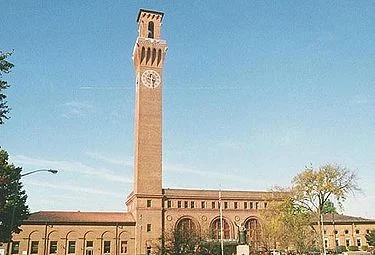
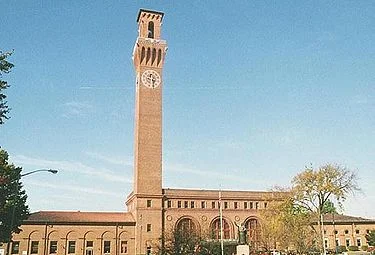
The daily newspaper in Waterbury, Conn., spent $800,000 to repair this landmark tower. See item at bottom.
Having lived by executive orders during President Obama's administration, disregarding consensus with Congress, the left now may die by executive orders under Donald Trump's administration if the new president really believes some of the things he said during his campaign.
The left will deserve as much, but having received only 47 percent of the popular vote, about a million fewer votes than Democratic nominee Hillary Clinton received, Trump should not just try to fulfill his campaign platform, such as it was, but also try to build consensus rather than deepen division.
Democrats still have enough votes in the Senate to obstruct legislation and Supreme Court nominees, and the political margin in the House of Representatives is close enough that moderate Republicans who were appalled by Trump's campaign and character can still make trouble too.
But just as Republicans are claiming for Trump a mandate he did not win, Democrats are making too much of Trump's running second in the popular vote. For this doesn't necessarily mean that Clinton was the country's first choice.
Rather, Clinton so far has received only about 47.6 percent of the popular vote, with more than 5 percent having gone to minor-party candidates, mainly Gary Johnson of the Libertarian Party and Jill Stein of the Green Party, who received 3 percent and 1 percent respectively.
Libertarians lean Republican, Greens Democratic. In a "ranked voting" system that transfers the votes of minor-party candidates to the second-choice candidates of minor-party voters, Trump might have come out first in the popular vote after all, if not by much. The failure of a major candidate to win half the popular vote makes the Electoral College look more undemocratic than it really is.
Indeed, while the country is in a rotten mood and this election may result in profound changes in policy, the popular vote contradicts claims that there has been a political revolution. Instead the Democrats lost the election for a very narrow reason — the alienation of part of their core constituency, working-class whites, in one part of the country, the swath from Pennsylvania to Michigan and Wisconsin. A shift of only 60,000 votes altogether in those states would have given Clinton the Electoral College as well as the popular vote and thus the presidency.
The claim that Trump's election disproved the opinion polls is also false, though it is being used to discredit national news organizations for what seemed like their prejudice against Trump. (Actually until it was too late the national news organizations largely gave Trump a pass about his grotesque business operations and potential conflicts of interest.)
On the whole the polls in the final days of the campaign were correct, showing a tightening race with Clinton still holding a measurable lead.
It was the uneven distribution of the vote, especially the huge and wasted Democratic plurality in California, approaching 3 million votes there, that skewed the Electoral College.
SAVING HISTORY IN WATERBURY: The Waterbury Republican-American, which for more than 60 years has occupied the city's grand former railroad station downtown, has just spent $800,000 repairing the station's 240-foot clock tower, the city's defining landmark, built in 1909 and modeled on the tower of Siena, Italy.
The tower produces no income for the newspaper, but, as the Republican-American's editor and publisher, William J. Pape II, said the other day, it's important to the city and is listed on the National Register of Historic Places, so "we just had to spend the money."
Now the tower should be ready for another century.
Of course in their ordinary operations newspapers are also very much about preserving local history, even if not all of them are as civic-minded as Waterbury's.
Chris Powell is managing editor of the Journal Inquirer.

Tim Faulkner: Trump vs. the biosphere?
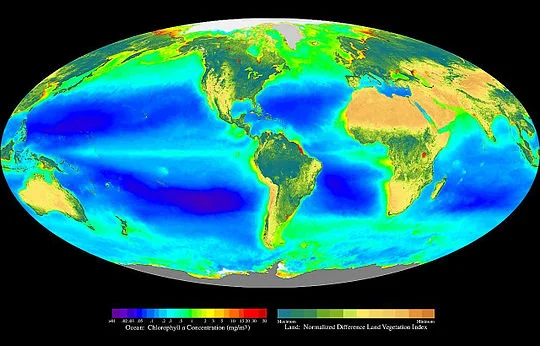
The day after Donald Trump’s surprise election win, the mood among environmentalists was, as expected, glum.
During his campaign, Trump, a climate-change denier and fossil-fuel proponent, vowed to withdraw from global climate treaties and neuter the Environmental Protection Agency. All told, his candidacy was considered a colossal threat to the biosphere.
Now that he’s two months away from taking office, it’s mostly guesswork as to which of Trump’s grand proclamations of environmental ruin will become reality.
Nationally, environmentalists expect that, at least, the goal of limiting temperature rise to 2 degrees is a lost cause, as is limiting atmospheric carbon dioxide to less than 400 parts per million.
To deal with their anxiety, environmental groups such as 350.org are encouraging environmentalists to partake in peaceful protesting. The National Resources Defense Council hosted a conference call for the aggrieved Nov. 10 titled “Defending Our Environment from the Trump Presidency.”
The consensus response from local government officials is to embrace autonomy.
“(Trump's win) puts an even greater burden on states to take action and be creative,” Rhode Island Gov. Gina Raimondo said during a Nov. 9 meeting of the Rhode Island climate council.
Raimondo received an update on Rhode Island’s long-term emissions-reduction plan. She and agency and department officials gave no indication of changing course on climate adaptation and mitigation efforts.
Raimondo said it's not known what Trump will do with President Obama’s Climate Action Plan. But Trump’s unexpected victory creates urgency to move forward with local initiatives, she added.
“Norms change in times of crisis, and I do believe we are facing a climate-change crisis, so we do have to get people to take action,” Raimondo said.
The governor confirmed that she isn't changing her neutral-to-favorable position on the proposed fossil-fuel power plant in Burrillville, a project that would be the state’s largest emitter of greenhouse gases.
Janet Coit, director of the Rhode Island Department of Environmental Management, told ecoRI News that Trump’s victory was sobering. “It means we have to work all the harder.”
Fortunately, Rhode Island is surrounded by states with shared regional and local environmental goals, Coit said.
If federal support and guidance declines, she said, “Now we have to stop, regroup and guess that the leadership will have to come from the state level. I guess we have to look to ourselves more.”
Ken Payne, chair of state renewable energy committee, as well as food and farm programs, said the election means that progress on these issues will not only have to come from the state, but from communities and neighborhoods. Before the election, he and Brown University Prof. J. Timmons Roberts announced plans to launch a new, non-government affiliated group to advance green initiatives.
Roberts wasn't at the recent climate council meeting; he's in Morocco with students researching the United Nations Framework Convention on Climate Change negotiations.
In an article for Climate Home, he echoed the wait-and-see refrain put forth by environmental experts who wonder if the country and climate policy will be governed by Trump the negotiator or Trump the tyrant.
“So which Trump will govern? There is cause for both hope and fear,” Roberts wrote.
To others, fear caused by the election affirms reality. Morgan Victor of the Pawtucket-based environmental activist group The FANG Collective, said Trump’s win is evidence of American ongoing legacy of colonialism and slavery.
“It’s a reality that white supremacy runs in this country both overtly and covertly,” Victor said.
The Providence resident and member of the Wampanoag tribe participated in the ongoing Standing Rock Sioux pipeline protests taking place in North Dakota.
Having Trump in office will justify more attacks against indigenous groups and their land, Victor said.
“It’s scary. I hope it wakes people up, especially white people, to take care of the ones they love,” she said.
Tim Faulkner writes for ecoRI News.
William Morgan: First Communion
A bit of kitsch in the town where Henry David Thoreau made Walden Pond world-famous.
Despite its trite name, Thoreauly Antiques, on Walden Street, in Concord, Mass., remains a fertile hunting ground for old photos that suggests many a tale of everyday New Englanders.
Maybe with computers and their sophisticated photo programs, a lot of images are being stored for future generations – knowing that all my floppy disks are unreadable, perhaps not. Maybe the shoebox of treasured images was just as good a storage system.

For 50 cents I was able to recapture the day of this young woman's first confirmation three quarters of a century ago. The Regal Magic-Eye Enlargement was made in Quincy. The girl's name and other information may have been in the scrapbook in which this memory was pasted. But one does not want to contemplate the demise of the scrapbook or the journey of this snapshot of one of life's landmark moments to a junk shop.
May 19, 1942 was a Tuesday, so we can guess the confirmation took place on May 17. On that day, German and Soviet forces were battling for Kharkov, American submarines were chasing their Japanese counterparts following the Battle of the Coral Sea, while in the Atlantic U-boats sunk almost a dozen Allied ships.
But back in Boston, the day was sunny and full of hope.
William Morgan is a Providence-based writer and architectural historian. He has taught the history of photography, and co-authored the book Bucks County with the late RISD photography professor Aaron Siskind.