
Vox clamantis in deserto





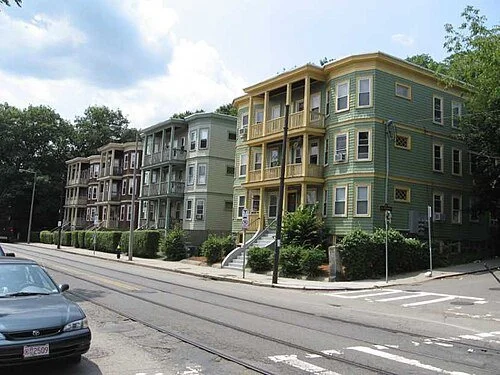
Western Civ at Providence College
From Robert Whitcomb's Nov. 10 "Digital Diary'' in GoLocal24.
Prof. Anthony Esolen, who teaches Renaissance English Literature and the Development of Western Civilization at Providence College, a Catholic institution, has questioned the college being a "committedly and forthrightly Catholic school" and has been denounced for his remarks.
"Is not diversity, as currently promoted, at odds with the foundational diversity built into the nature of the human race, the diversity of male and female, to be resolved most dynamically and creatively in the union of man and woman in marriage?" wrote Mr. Esolen for Crisis Magazine. "Is not that same call for diversity, when Catholics are doing the calling, a surrender of the Church to a political movement which is, for all its talk, a push for homogeneity, so that all the world will look not like the many-cultured Church, but rather like the monotone non-culture of western cities that have lost their faith in the transcendent and unifying God?’’
Inevitably, he was denounced for his remarks by some PC faculty members. What they should have criticized – maybe -- is the seeming opaqueness of some of his phrasing. In any event, a faculty letter against him reads, in part:
“As PC Faculty, we pledge to break the silence around systemic racism and discrimination on Providence College’s campus. While we vigorously support free expression, recent publications on the part of PC faculty have involved racist, xenophobic, misogynist, homophobic, and religiously chauvinist statements. The use of this type of language by people with power over students runs counter to the Catholic mission of Providence College, which aims ‘to reflect the rich diversity’ of our world, and ‘extend a loving embrace to all."’
“As a diverse coalition of students have consistently highlighted, such statements are part of a broader pattern of racism, sexism and other forms of hate that are all too common not only on campus, but in the broader public culture. As professors who care deeply about the well being, safety, and growth of our students, we are committed to combating racism and overcoming the hostile learning environment for too many of our students, while creating spaces where all of our students can engage in meaningful ways.’’
Oh, come on! The statement, which sounds like a call for censorship by the college or at least self-censorship by the likes of Mr. Esolen, makes mild-mannered PC sound like a 24/7 Ku Klux Klan meeting!
Note such empty words as “meaningful’’ and “diversity’’ (of what?). And of course they treat the poor little lambkins students as if they’re far too fragile to hear an opinion that might lower their comfort levels or make them reconsider the received wisdom that now rules on most American campuses. And, as usual in such cases, they accuse Professor Esolen of writing things he never wrote. Their rhetoric recalls the rhetorical dreck of dictatorships such as Stalin’s Soviet Union in which “class enemies’’ are singled out in language contorted to fit the political lies needed to help the likes of Stalin stay in power.
The response from the Rev. Brian Shanley, PC’s president, was the usual stuff you get from college presidents these days, many of whom lack intellectual and cultural self-confidence:
Father Shanley wrote:
“He {Mr. Esolen} certainly does not speak for me, my administration, and for many others at Providence College who understand and value diversity in a very different sense from him.’’
So what precisely does “diversity’’ mean to the PC administration? Is it just about skin color, varieties of sexual desire, surname, ethnic cuisine….? Are intellectual and political diversity also encouraged?
Meanwhile, let’s put in a good word for Western Civilization, which Professor Esolen reveres and his presumed preference for which over other cultures is presented as making him an enemy of “diversity’’.
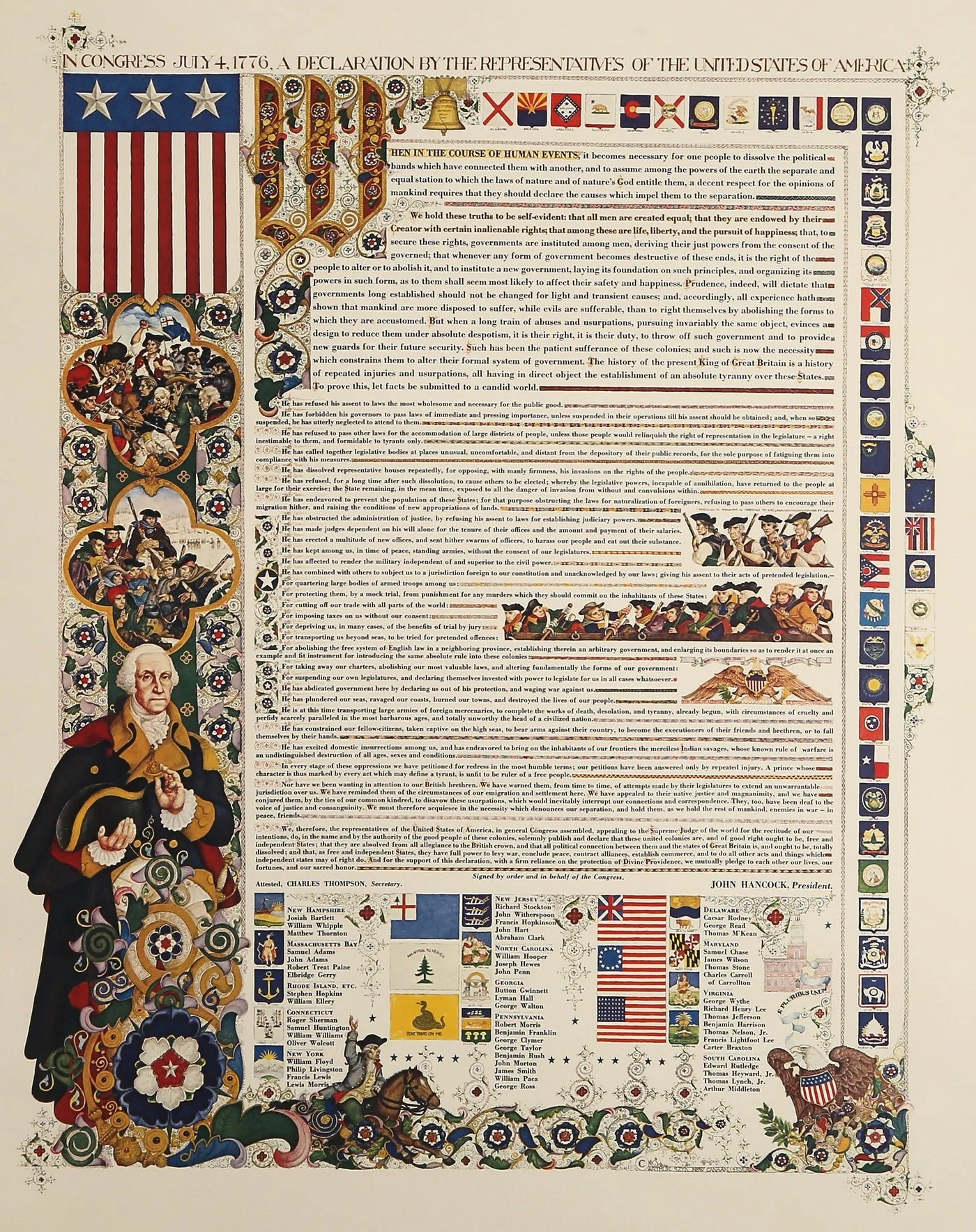
It’s a civilization that has permitted students and faculty at colleges in the West to speak freely and pursue their dreams as in no other place in the world. Refugees want to flee to the West because of its freedom of expression and of inquiry, and how it protects what Jefferson memorably called “the pursuit of happiness.’’ Those freedoms are key drivers in creating the prosperity that also leads people to flee to the West. If it is so awful, why is the flight one way? And where are things more “diverse’’ than in nations within what many of usstill call Western Civilization?
The complainants can easily resolve their issues by transferring to a non-Catholic college. Since we’re in Western Civilization (or what’s left of it), they have the freedom to move.
'Economic performativity'
Donald MacKenzie, of the University of Edinburgh, came through Boston last week, presenting a welcome opportunity to stop thinking about the U.S. presidential election for a day. The author of An Engine, Not a Camera: How Financial Models Shape Marketsv (MIT, 2006) is the most interesting historian of the advent of modern finance since Peter Bernstein (Capital Ideas: The Improbable Origins of Modern Wall Street (The Free Press, 1990) laid down his pen.
MacKenzie is a sociologist, not a journalist like Bernstein, which means his account comes somewhat encumbered by theory. His background is that of science studies, the broad approach to the history of science, headquartered in Edinburgh, deliberately skeptical of various claims of science to authority: cultural, social, political, philosophical and so on.
His Inventing Accuracy: A Historical Sociology of Nuclear Missile Guidance (MIT, 1990) unpacked the astonishing suite of instrumentation that was developed to guide intercontinental ballistic missiles in the days before GPS. But like Bernstein, MacKenzie had done an enormous amount of interviewing of participants, and it makes for deeply interesting reading.
An Engine Not a Camera is concerned with the relationship between financial markets and the emergence of modern financial theory since the 1950s, at first in Cambridge, Mass., and Chicago, and then in universities and business schools around the world. The title comes from a phrase originally employed by Alfred Marshall to describe the difference between static and dynamic theories — timeless snapshots of the world at a given moment, as opposed to developmental and therefore potentially generative accounts.
The path that modern finance has taken has been amply highlighted by a series of Nobel Prizes – Harry Markowitz, Merton Miller, William Sharpe, Robert Merton, Myron Scholes, Eugene Fama, Robert Shiller, Lars Hansen (and the equally revealing omission of Fischer Black). Peter Bernstein filled in around the edges. MacKenzie is more interested in the shadows between the pools of light, specifically the relation between theory and practice.
He recognizes that participants have been building markets for millennia. What happens, he asks, when theory starts catching up with practice and, in some cases going beyond? When theory becomes prescriptive to a world which to that point has been a matter of trial and error? When analytical and mathematical methods replaced descriptive scholarship in finance after the 1950s, was it all pure triumph? Or were unexpected new risks and other costs incurred as well?
This aspect of economic ideas that affects the world he calls their “performativity,” following the linguistic philosopher J. L. Austin, who distinguished between utterances that actually do something and those that simply report on an already existing state of affairs. Austin:
If I say “I apologize” or “I name this ship the Queen Elizabeth” or “I bet you sixpence it will rain tomorrow,” then, in saying what I do, I actually perform the action.
MacKenzie considers three degrees of economic performativity: the most basic sort, as when an idea (a theory, model, concept, procedure, or data set) is used by participants as a tool; effective performativity, meaning when the use of the tool makes something happen; and, most interesting, what he calls “Barnesian” performativity, after Edinburgh sociologist S. Barry Barnes, who in a 1988 book, The Nature of Power (anticipated in 1983 by his article “Social Life as Bootstrapped Induction”) identified “self-validating feedback loops” as the fundamental building blocks ofboth practice and theory. Barnes:
If an absolute monarch designates Robin Hood an “outlaw,” then Robin Hood is an outlaw. Someone is a “leader” if followers regard him or her as such. A metal disc, a piece of paper, or an electronic record is “money,” if, collectively we treat it as a medium of exchange and a store of value.
Thus we are in the realm of the social construction of everything social. The example MacKenzie gives of Barnesian performativity: widespread adoption of index funds has made “less untrue” William Sharpe’s troubling conjecture that one day everyone would simply buy the market (meaning a broad index fund). For those interested in finance, MacKenzie’s book is edifying reading. Recently he has begun writing regularly on financial topics for the London Review of Books.
It is, of course, equally possible to approach “performativity” from the other end, as a matter of the evolution of practice. That’s what Lawrence Busch, of Michigan State University, does in Standards: Recipes for Reality (MIT, 2011). What is a standard, after all, if not a Barnesian “self-fulfilling prophecy”? Standards are ubiquitous in social life, Busch says: there are standards for professional accreditation, the environment, consumer products, animal welfare, healthcare, education, acceptable stress on highway bridges, all of them the subject of intense and continuing negotiation.
Busch writes, “While standardization can be traced back to the origins of civilization, it was given an enormous boost by the grand universalizing project known as the Enlightenment.” And while his capsule description of the rise of the tendency to standardization in science, military affairs and, horrifyingly, colonization, is eye-opening, it pales in comparison to the persuasive power of Deidre McCloskey’s 2,000 page Bourgeois trilogy.
I have read only a fraction of each book (Bourgeois Virtue: Ethics for an Age of Commerce (2006); Bourgeois Dignity: How Ideas, Not Capital or Instructions, Enriched the Modern World).(2010); and Bourgeois Equality: Why Economics Can’t Explain the Modern World; (2016). You can read as much as you like about the project here. In the introduction to the final volume, McCloskey writes:
The modern world was made by a slow-motion revolution in ethical convictions about virtues and vices, in particular by a much higher toleration than in earlier times for trade-tested progress – letting people make mutually advantageous deals and even admiring them or doing so, and especially admiring them when, Steve Jobs-like, they imagine betterments.
McCloskey may give short shrift to democracy as one of the critical institutions of the modern world, along with science and the market (the topic doesn’t rate an index entry in the last volume). But note that we are back at the U.S. elections. My day of thinking about inductive boot-strapping passed quickly.
xxx
Devlin Barrett and Christopher Matthews, of The Wall Street Journal, did an excellent job of reporting on the dissension that exists within the Federal Bureau of Investigation with the respect to Bureau investigations of Hillary Clinton. Beyond her e-mail practices, it turns out that field agents in the New York office had aggressively advocated for a second probe, previously unreported, this one of the Clinton Foundation. On Nov. 2, Barrett and Matthews wrote:
Secret recordings of a suspect talking about the Clinton Foundation fueled an internal battle between FBI agents who wanted to pursue the case and corruption prosecutors who viewed the statements as worthless hearsay, people familiar with the matter said.
Agents, using informants and recordings from unrelated corruption investigations, thought they had found enough material to merit aggressively pursuing the investigation into the foundation that started in summer 2015 based on claims made in a book by a conservative author called Clinton Cash: The Untold Story of How and Why Foreign Governments and Businesses Helped Make Bill and Hillary Rich, these people said.
I speculated last week that a desire to mitigate the effects of bitter and widespread controversy within the FBI lay behind Director James Comey’s decision to disclose to Congress the existence of a new and unexamined trove of Hillary Clinton’s e-mails, over the objections of the Justice Department. Comey’s motive may be open to interpretation, but the existence of dissention has been confirmed. Then, of course, a few days before the election, he said there was no smoking gun in the latest e-mails.
David Warsh, a longtime economic historian and financial columnist, is proprietor of Boston-area base economicpri
Training through the middle of New England
This first ran in Robert Whitcomb's "Digital Diary'' column in GoLocal24.com
New England, unlike most of America, has passenger-train service and with some vision can soon have a lot more to boost its economy, better protect its environment and make life easier.
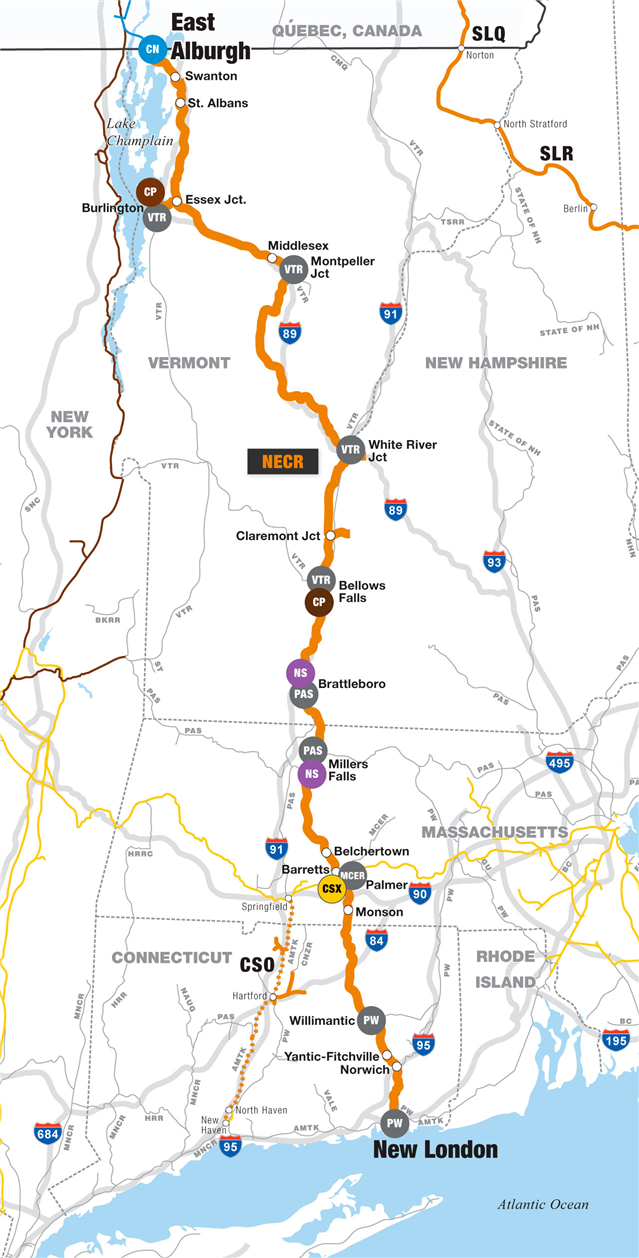
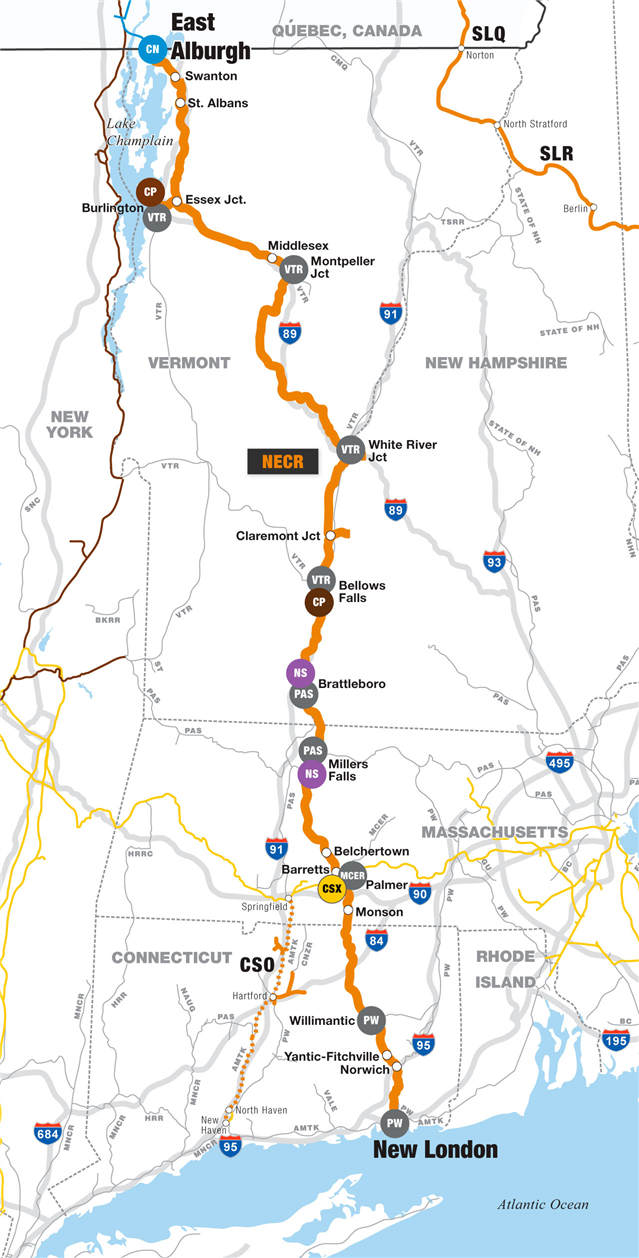
Consider the New England Central Railroad, a freight line that runs from Alburgh, Vt., at the U.S.-Canadian border, through the middle of our region and terminates at New London, Conn., on Long Island Sound. The owner of the line, Genesee & Wyoming (sounds like something from Mark Twain!), has been spending millions to improve the route by putting in new welded rails where needed, upgrading bridges and road crossings, getting new and refurbished rolling stock and adjusting schedules. It will spend a lot more, supplemented with some federal funds to improve sections of the line.
All the towns and cities along the way will benefit, but particularly New London, with its deepwater port. New London’s mayor, Michael Passero, said: “This is one of the greatest things to happen for New London in decades. An investment in this rail line that goes directly to the state pier is going to allow New London to tap into one of its greatest unused assets.’’ Watch out, Quonset and Providence: It might steal some of your business.
But with the Genesee & Wyoming planning to buy the Woonsocket-basedProvidence and Worcester Railroad, which exchanges freight with the New England Central, we can expect that Rhode Island will also be brought more tightly into this rail system.
The New England Central’s improved service is helping the many communities along its route. It may even boost manufacturing in some old factory towns by cutting the cost of receiving and shipping goods. The improvements should let interior New England share in more of the wealth now heavily concentrated near the coast. Rhode Island Public Radio quoted Connecticut Transportation Commissioner Jim Redeker as noting:
“Connecticut has the distinction of, on the highway side, three of the top 10 worst congested locations in the nation for truck freight. This {rail-improvement} project is the solution to that problem.’’ Well, “a’’ partial solution anyway by getting more freight off the roads and onto tracks.
But I also want to tout proposed passenger service on the New England Central between Brattleboro, Vt., and New London. The proposed service, to be called the Central (as in central New England) Corridor Rail Line, would run from Brattleboro, Vt., to New London. This would provide the only long-distance (by New England standards) north-south service rail service in the middle of New England except for Amtrak’s Vermonter service.
Backers note that it would provide a rail link between 13 colleges and universities, including the University of Connecticut and the University of Massachusetts, and link up with Amtrak at Brattleboro to take travelers to Burlington, home of the University of Vermont. That means, among other things, connecting people working on research and development at those schools, as well as at businesses along the way.
And given the hill, valley and riverine beauty ofmuch of the route, the passenger service should attract many tourists, too, especially in the fall foliage season.
The idea is that initially the rolling stock would be refurbished Budd Rail Diesel Cars (aka Buddliners), which used to be heavily used by commuters and on spur routes and recall the days of Mad Men in the New York City suburbs. They can go up to 80 miles an hour, a lot faster than you can drive legally in New England. This, again, could be a particular boon to Connecticut by taking many drivers off its famously crowded and slow roads.
The aging of the population and that young adults drive less than their predecessors are other reasons to get this service going.
Electoral College must name Trump the winner; ignore the petition
A Democratic Party outfit called change.org has me erroneously listed (unless it has been removed) as signing a petition asking the Electoral College members to name Hillary Clinton as the presidential election victor. While I wish very much that Donald Trump were not the president-elect, I do not support this petition.
I favor the current Electoral College system and will say why in my next column.
-- Robert Whitcomb
Peter Certo: The KKK is but part of America's new ruling racist coalition
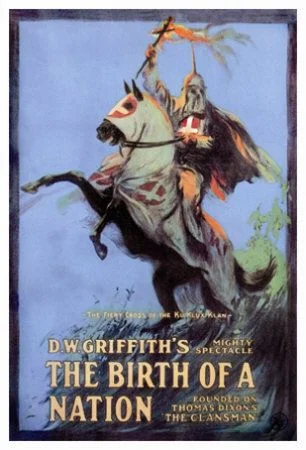
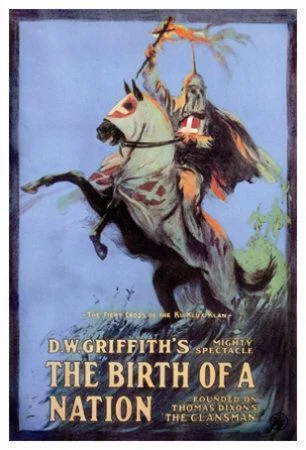
Movie poster in 1915. The movie is often cited for reviving the Ku Klux Klan.
An election that might have marked the ascension of America’s first woman president has instead proven historic for an altogether different reason. Namely, that Americans voted for the unabashedly anti-democratic alternative offered by her rival.
And they did it despite his almost cartoonish shortcomings.
Trump didn’t just offend pious liberals with his hard line on immigration, disdain for democratic norms, and disinterest in policy. He transgressed standards of decency across all political persuasions.
He bragged about sexually assaulting women. He disparaged injured war veterans. He was endorsed by the KKK. And now he’s America’s voice on the world stage.
How could that happen? Here’s one theory you might’ve heard:
After years of seeing their jobs outsourced, their incomes slashed, and their suffering ignored, the white working class threw in their lot with the candidate who cast aside political niceties and vowed to make their communities great again.
It’s a nice story — I even used to buy a version of it myself. But while Trump surely did clean up with white voters, the evidence simply doesn’t support the idea that they were as hard-up as the story goes.
For instance, pollster Nate Silver found during the GOP primary that Trump supporters pulled in a median income of $72,000 a year — some $10,000 more than the national median for white households. And while many did come from areas with lower social mobility, they were less likely to live in the stricken manufacturing communities Trump liked to use as backdrops for his rallies.
So if it wasn’t the economy, was it Hillary?
Clinton was clearly unpopular, in many cases for defensible reasons. She was cozy with Wall Street. She backed poorly chosen wars. Apparently people didn’t like the way she e-mailed.
But when you consider that we chose to give the nuclear codes to a man whose own aides refused to trust with a Twitter account over a former secretary of state, it hardly seems like Trump voters were soberly comparing the two candidates.
Instead, Vox writers Zack Beauchamp and Dylan Matthews poured through scores of studies and found a much more robust explanation — and it isn’t pretty.
It’s what pollsters gently call “racial resentment.”
That is, Trump’s core supporters were far more likely than other Republicans to hold negative views of African Americans, Latinos, and Muslims. They overwhelmingly favored the mass deportation of immigrants. And they were the most likely Republicans to agree that it would be “bad for the country” if whites comprised a smaller share of the population.
What’s more, another study found, racially resentful voters flocked to the GOP candidate regardless of their views about the economy. Their views on race drew them to Trump, not their job prospects.
Scores of other data back this up. Despite years of job growth and the biggest one-year bump in middle-class incomes in modern history, another researcher found, Republicans’ views of both African Americans and Latinos nosedived during the Obama years.
Not even a slowdown in immigration itself staunched the venom. Net migration between the U.S. and Mexico fell to 0 during the Obama years, yet Trump still launched his campaign with an infamous tirade against Mexican “rapists” and “murderers.”
None of that is to accuse all Trump voters of racism. But even if the bulk of them were just Republicans following their nominee, the social science strongly suggests that one of our major parties has been captured by whites so anxious about the changing face of America that they were willing to vote alongside the Klan.
That fringe has turned mainstream. The Trump years to come may herald any number of horrors, but the scariest part may be what we’ve learned about ourselves.
Peter Certo is the editorial manager of the Institute for Policy Studies and the editor of OtherWords.org. Distributed by OtherWords.org.
A New England November
Today is one of those windy, cool-to-cold days that seem the quintessence of November in New England. I see that most of the leaves are now stripped off the trees across the street, finally.
-- Robert Whitcomb
But beware extreme introspection

"Arcology: Mulling Things Over'' (watercolor), by Ilona Anderson, in her show "Ilona Anderson: Neon Network,'' at Kingston Gallery, Boston, through Nov. 27.
Chris Powell: Democrats underestimated the rage that has given us a repellent president-elect

Storming the Bastille.
Donald Trump has been vile, a megalomaniac, and ignorant when he has not been vague or incoherent, and has been distrusted even by many people who voted for him. So now that he has been elected president, what does that say about Hillary Clinton?
Probably it says that the Democratic Party managed to nominate the only candidate who could lose to someone of Trump's character -- managed to nominate a candidate who had spent decades as part of the country's political establishment and who was manifestly corrupt and a robotic campaigner but who was offered to the country anyway just when it seethed with resentment of declining living standards and wanted change.
Indeed, Trump's platform was little more than contempt for the establishment and even for the decencies themselves. But the more contemptible his demeanor became, the more support he gained.
Trump himself was the first to figure this out. Campaigning in Iowa in January he marveled, "I could stand in the middle of Fifth Avenue and shoot somebody and I wouldn't lose voters." Nor, as it turned out, did he lose voters -- or at least not too many of them -- even for boasting about his career of grabbing women by the crotch.
Clinton, the Democrats, the elites, and many national news organizations never appreciated the rage to which Trump appealed, even when, toward the end of the campaign, opinion polls showed him rising. The polls still underestimated his support because people who were surveyed feared being perceived as politically incorrect.
But then Clinton, the Democrats, the elites, and national news organizations never understood, or at least never admitted, that for years now most economic figures issued by the federal government have been lies or deliberately misleading. Most of what national news organizations report about the economy has been mere spin meant to please the government.
The collapse of the labor-participation rate is not just a political scandal but a journalistic one, given the refusal of most national news organizations to examine and emphasize it. The federal government's constant and surreptitious intervention in the financial markets to keep them from falling and thereby exposing the decline of the real economy is also both a political and journalistic scandal.
In telling people that the economy is improving when they see it deteriorating in their daily lives, the government and national news organizations only deepened people's political rage.
The gamble taken by Gov. Dan Malloy, U.S. Sen. Chris Murphy, and other leading Connecticut Democrats with their constant attacks on Trump and his running mate, Indiana Gov. Mike Pence, might have paid off well if Clinton had won. Instead these attacks likely will prove costly, depriving Connecticut of any sympathy from the new national administration for the next four years.
Now no federal appointment will rescue Malloy from the perpetual disaster of his budgeting. Connecticut's congressional delegation, all Democrats, will spend another two years in the minority in Washington, though maybe the shock of Trump's election will make the Republican majorities a little less rabid and more inclined to work reasonably with the other side.
In their travels in support of Clinton the governor and the congressmen don't seem to have noticed the political rage of "flyover America." But while Connecticut went comfortably for Clinton, the gains made Tuesday by the Republican minority in the General Assembly hint at the possibility of rage even in this state, whose elites may be the most smug, especially since state government's finances keep deteriorating, compelling more tax increases or spending cuts.
State government's financial problems are not going to be fixed in two years; pension underfunding, among other things, will only make them worse. By then the rage may be explosive here too.
Chris Powell is managing editor of the Journal Inquirer, in Manchester, Conn.

The West should circle the wagons.

Adapted from Robert Whitcomb's Nov. 3 "Digital Diary'' column in GoLocal 24.
In one of the nuttier episodes in the trade wars, the government of Wallonia, the poorer, French-speaking part of Belgium, held up for days a trade deal between the European Union and Canada. Finally, concessions were made to the Walloons aimed at protecting their farmers and Rust Belt-style businesses from being hit hard by competition with multinational companies, and the pact was signed.
The Comprehensive Economic and Trade Agreement (CETA), which backers predict will boost trade by 20 percent between Canada and the E.U., will now go into effect.
I can understand the opposition of many people in Europe and the U.S. to international trade that seems to have benefited the elite and not the middle class, but we should be expanding trade within the West as much as possible to strengthen the world’s core of democracy, human rights (including labor rights) and environmental protection. It’s trade with police state China that has done the most damage. Cut U.S. trade with China, Russia and other dictatorships as much as possible and boost it with Western Europe, Canada, Australia, NewZealand, as well as with India, Japan and Taiwan and a few other non-Western nations that share many of our democratic values.
Western nations need to circle the wagons and do as much as they can to better compete with China and other dictatorships. We need a free-trade zone with all the Western democracies. That doesn’t mean a larger version of the European Union, which, with its noneconomic elements, is quite something else. Rather we need, first off, what used to be called the “European Common Market’’ expanded to include the U.S. and Canada while boosting NATO to stop Russian aggression.
Will Putin admirer (and debtor?) and "free-trade'' foe President-elect Donald Trump come to recognize this?
Walking, drawing and painting

"Poet's Walk'' (acrylic and ink on paper, mounted on board), in the show of the same name by Patty Adams, at Bromfield Gallery, Boston, through Nov. 27. Her work for the show was inspired by her walks in parkland in Rhinebeck, N.Y. The gallery says her "initial drawings in ink and charcoal explored a connection to the landscape which she intensified with color in her studio.''
Small N.E. hospital focuses on care transitions
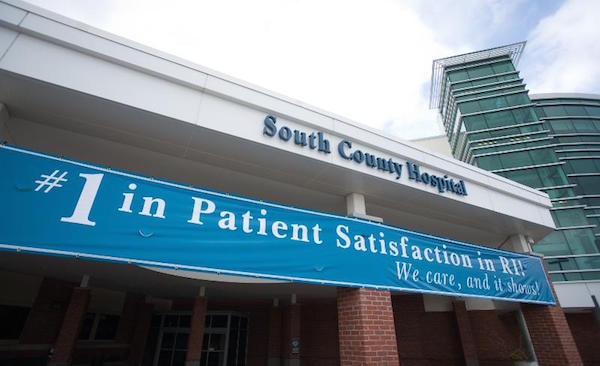
This first ran on the Web site of Cambridge Management Group (cmg625.com).
South County Health, a small nonprofit system in bucolic southern Rhode Island, owes a large part of its success to its ability to manage transitions of care – an increasingly urgent imperative as healthcare moves from fee-for-service to value-based reimbursement.
The system’s flagship is South County Hospital, a 100-bed community hospital. The system also includes South County Home Health Services (a home health agency); South County Surgical Supply (home medical supplies); South County Medical Group, with 65 physicians and advanced-practice providers, and two Medical and Wellness Centers, one in Westerly and the other in East Greenwich, with urgent-care facilities and an array of primary-care and specialist physicians.
South County Hospital has long had very high marks for quality and patient satisfaction. Indeed, surveys have often called it the best hospital in its state and one of the best in New England. It was recently awarded a five-star rating by the Hospital Consumer Assessment of Healthcare Providers and Systems (HCAHPS), putting it in the top 2 percent of those surveyed nationwide.
Louis R. Giancola, the system’s president and chief executive, attributes much of the hospital’s success in patient satisfaction — and fiscal stability — to the strong engagement of its staff, which “we keep in the know’’; a “supportive board’’; the long-term loyalty of people in the service area, and the “nimbleness of a community hospital’’. Having a relatively affluent market with many well-insured people hasn’t hurt either, he acknowledged.
A particular point of pride is: “We’re good at transitions of care. Maybe that’s a result of our being small.’’
South County Hospital, like virtually all health systems these days, faces many challenges in dealing with the rewards and penalties involved in the forced-march transition to value-based reimbursement. Mr. Giancola notes:
“Medicare incents us to improve patient satisfaction, reduce hospital infections and avoid various patient injuries. Most commercial payers (insurers) have followed suit. I believe the threat of reduced payments has focused our attention on these measures even though we sometimes complain that the measures are not always fair.’’ (See below.)’’
“It’s all about blocking and tackling. The biggest issue is readmissions within 30 days. {South County has long had lower readmission rates than most hospitals.}
We’ve really focused on managing the transition from the hospital to another level of care. The important element is good communication between the hospital providers and the skilled-nursing facility, home health and the doctors caring for the patients in the community.’’
Part of South County’s recognized success in overseeing clinically successful and financially efficient transitions – and, in so doing, reducing costly readmissions — has been its emphasis on using, when possible, home health care instead of nursing centers to save money and improve care, Mr. Giancola said.
The Centers for Medicare & Medicaid Services and other regulators and payers have been pushing hard for better patient-care management, especially since the Affordable Care Act took full effect. Much of South County Health’s work in this area involves helping primary-care physicians to be better traffic managers of their patients’ care.
Another transition success story he cites is medication reconciliation. “Often patients are confused about their drugs and that can lead to readmission because they take drugs that are contra-indicated or they take two meds designed to address the same problem. We’ve hired pharmacists that review meds in the hospital to ensure they are reconciled and the patients get clear advice on discharge.’’
He notes as an example of what might sometimes be unfair pressure from the Feds: CMS’s making hospitals put many patients who have to stay in the hospital for a night or two into “observation’’ status instead of as inpatients, thus slashing potential hospital reimbursement.
Bundled payments, Medicaid and an ACO
An increasingly important strategy for controlling costs and improving care is bundled payments.
South County Health participates in a bundled-payment program for joint-replacement patients with Blue Cross for their Medicare Advantage and commercial-insurance members. (Cambridge Management Group has been doing a lot of work in bundled-payment programs and so this particularly caught our eyes.)
With older-than-average market demographics, the joint-replacement business is a major contributor to the system’s bottom line. (However, while the system is financially stable, its operating margin is only about 2 percent; the system is closely managed.)
Mr. Giancola said that, as with many things in the brave new world of value-based medicine, it’s unclear what sort of savings may come out of the move to bundled payments. However, he thinks that the clinical benefits are clear:
“The bundling process helps us to get a better handle on the clinical process. Having to report quality throughout the entire episode of care makes for better transitions and final outcomes.’’
South County Hospital’s leaders are happy that the Affordable Care Act has put so many uninsured people into Medicaid. While Medicaid reimbursements lag those of Medicare it’s a lot better than no insurance for low-income people. Many of those people, of course, have long used the emergency room as their major source of “free’’ (to them) medical care.
But, perhaps surprisingly, Mr. Giancola told us, Medicaid expansion has not yet cut the flow of people into South County Hospital’s ER, despite efforts encouraged by public and private insurers to promote more and better preventive care to keep people out of the ER. “ERs are too handy for lots of people,’’ he observed.
South County Hospital has had to deal with many other changes, whose long-term fiscal effects are difficult to predict. One is the rising number of employed physicians, hired, Mr. Giancola says, to ensure that the hospital can maintain the range of services that patients want and need in an acute-care facility, such as obstetrics.
Mr. Giancola notes that’s expensive. “Hiring doctors away from private practices to be based in the hospital puts them in more expensive places, with expensive support staffs, equipment and technology. The jury is out on whether the increase in hospital-employed physicians will save money in the long run.’’
Also unknowable at this point is whether South County’s participation in an Accountable Care Organization with Blue Cross & Blue Shield of Rhode Island (BCBSRI) and Integra Community Care Network will ultimately save money. Integra is a partnership of Care New England Health System and its network physicians, Rhode Island Primary Care Physicians Corporation and South County Health and its network physicians. Focused on population-health management, the ACO provides incentives for Integra’s providers to proactively manage patient health, with a heavy emphasis on prevention of illness, while trying to restrain costs.
South County Health, as befits a, well, beloved local institution is big on promoting community-wide collaboration of institutions that can help improve not just healthcare in a clinical sense, but population health.
Toward that end, it has brought together such diverse agencies as the YMCA, the five Federally Qualified Health Centers in its area, school systems, the local Community Action Program and community members to harness the resources of the community. Whatever happens to the ACA, the move toward community and population health will continue, and South County Health will help lead it in southern Rhode Island.
Mr. Giancola has written: “Our long-term goal is to inspire the broader community to see health as a community issue and to mobilize government, schools, businesses and citizens at large to rally around efforts to ensure a healthy community.’’

Philip K. Howard: Start rebuilding America's crumbling infrastructure now

This from our friend Philip K. Howard, who runs Common Good, a reform group:
American voters have rejected the ways of Washington. The challenge is to channel that populist force for positive change.
Here are two initiatives that could enjoy broad support:
1. Start rebuilding infrastructure now. Trump is committed to this, as are Democratic leaders, but he will be stymied unless Congress passes a simple bill creating clear lines of authority to make needed decisions. Otherwise projects will languish in bureaucracy for years as experts write foot-thick reports. (See Common Good’s report “Two Years, Not Ten Years”). The upside here is YUGE: Cut costs in half, build a greener footprint, and create 1.5 million new jobs.
2. Begin simplifying government. Red tape is choking America, including government itself. Trump should announce a new approach to regulating: Simplify law into goals and principles, so that it is understandable and people have room to use their common sense. He should also appoint an outside commission to recommend radically simplified structures. Governing sensibly is impossible in today’s red tape jungle.
If you agree, pass this note along. We have a vision to reconnect Washington to the rest of America.
Copyright © 2016 Take-Charge.org, All rights reserved.
A campaign brought to you by commongood.org.
Mission accomplished
''As democracy is perfected, the office of the President represents, more and more closely, the inner soul of the people. On some great and glorious day, the plain folks of the land will reach their heart’s desire at last and the White House will be occupied by a downright fool and complete narcissistic moron.”''
H.L. Mencken, in 1920
Living with uncertainty

"Side by Side'' (encaustic), by Carol Odell, in the "Almost Miniatures'' show at Francesca Anderson Fine Art, Lexington, Mass., Nov. 17-Jan. 14.
“When you’re young you prefer the vulgar months, the fullness of the seasons. As you grow older you learn to like the in-between times, the months that can’t make up their minds. Perhaps it’s a way of admitting that things can’t ever bear the same certainty again.”
-- Julian Barnes, in "Flaubert's Parrot''
Post-election notes
Four fast observations after Trump's victory:
1. Perhaps in the next presidential primaries, more people will get off their rear ends and bother to vote so we don't end up with the general-election choices we had this year.
2. Look for an amusingly rapid drop in donations to the Clinton Foundation.
3. Trumpists are going to be mighty angry in about a year when all those promises about swiftly returning America to "greatness'' look hollow. I wonder where they will turn then.
4. This has been Mrs. Clinton's last political campaign. The Clintons are history.
-- Robert Whitcomb
Inviting or ominous?

"Interior With Stairs,'' painting by Gretchen Dow Simpson, the famed Providence-based painter and magazine illustrator. Stairs can look inviting, drawing you up or down to, you hope, happiness-evoking spaces, or evoke dread.

The weight of war

From the show "Atrocity Landscapes,'' large black and white photos by Sondra Peron, at Hampden Gallery, at the University of Massachusetts at Amherst, Nov. 13-Dec. 7. The curators say the photos "reveal our collective historical memory as it inhabits our landscape today.''
Llewellyn King: A government of strangers
Prepare for a government of strangers: people we don’t know and haven’t met.
That government, those strangers, or mostly strangers, will shape the presidency of Donald Trump -- not the slogans, not the declarations of intentions, not the hopes of those who threw in with Trump, but the merging of those interests represented by officeholders who aren’t well known in Washington or the nation.
In the short time between now and Jan. 20, the Trump transition team has to come up with some very key players, who eventually will have to be confirmed by the Senate -- an easier prospect with a Republican-controlled Senate, but not a slam-dunk.
In relations with the world’s nations, some of whom Trump has vigorously unfriended during the campaign, these jobs will be of first importance, including secretary of state; secretary of defense; national security adviser; secretary of the Treasury, and secretary of energy (often forgotten as a defense agency), who is the keeper of our nuclear arsenal.
Domestically, Trump needs to name quickly staff at the White House, especially the Office of Management and Budget, which, within short weeks of climbing aboard, must prepare a budget for him to send to Capitol Hill. That budget will be, in many ways, the first indication of how Trump plans to govern. Republicans as much as Democrats will be leery of what it contains.
After those critical positions, there are 4,000 additional positions to filled, 100 of which require Senate confirmation.
The conservative think tanks in Washington stand ready to heed the call, and maybe to provoke it, if they have an in. The think tanks are sounding boards for political ideas, like what to do about healthcare, foreign policy and trade, but they also represent something of a government in exile.
When a party is defeated, the ranks of the think tanks sympathetic to that party swell. Expect to see the Brookings Institution, the Progressive Policy Institute, the Economic Policy Institute and the New America Foundation find places for those leaving the Obama administration.
Likewise, the American Enterprise Institute, the Heritage Foundation, the Center for Strategic and International Studies and the newer Foreign Policy Initiative will be ready to disgorge their best to serve in government.
It is a changing of the guard that takes place with each election that results in a change of party.
After the think tanks, or maybe in lockstep, come the universities. Look for Obama refugees to show up at places like Harvard’s John F. Kennedy School of Government: a kind of halfway house for politicos. MIT and Stanford expect to have their faculty raided for the top jobs in the department of defense, energy and homeland security. Whether Trump and his people will raid these larders of talent is unknown.
Normally, White House watchers have a trail of crumbs to follow. They can say so-and-so was at college with the president, that professor so-and-so helped him form a position on nuclear power, or some think-tanker may have had a role in the campaign.
The Trump the clues are meager. Only four names stand out: Steve Bannon, of Breitbart News, the campaign’s chief executive; Kellyanne Conway, his campaign manager; New Jersey Gov. Chris Christie, his transition-team head, and Sean Hannity of Fox News. Another clue: Many on the campaign staff once worked for Bob Dole (R.-Kan.) when he was in the Senate.
Journalists will be watching the Trump camp just as Kremlin watchers in the days of the Soviet Union watched for hints out of Moscow. How will Trump govern? Who will staff his administration?
While Trump and his administration get settled in, while they find out how enormously complicated and far-flung the responsibilities of the U.S. government are, the day to day running of the country will be with the disparaged civil service: the bureaucrats so despised by Trump the campaigner, now his vital aides in transition.
Llewellyn King is executive producer and host of White House Chronicle, on PBS. His e-mail address is llewellynking1@gmail.com.
'As beautiful as days can be'
My Sorrow, when she's here with me,
Thinks these dark days of autumn rain
Are beautiful as days can be;
She loves the bare, the withered tree;
She walks the sodden pasture lane.
Her pleasure will not let me stay.
She talks and I am fain to list:
She's glad the birds are gone away,
She's glad her simple worsted grey
Is silver now with clinging mist.
The desolate, deserted trees,
The faded earth, the heavy sky,
The beauties she so truly sees,
She thinks I have no eye for these,
And vexes me for reason why.
Not yesterday I learned to know
The love of bare November days
Before the coming of the snow,
But it were vain to tell her so,
And they are better for her praise.
-- Robert Frost, "My November Guest''