
Vox clamantis in deserto






Llewellyn King: Addressing the storage challenge in green energy

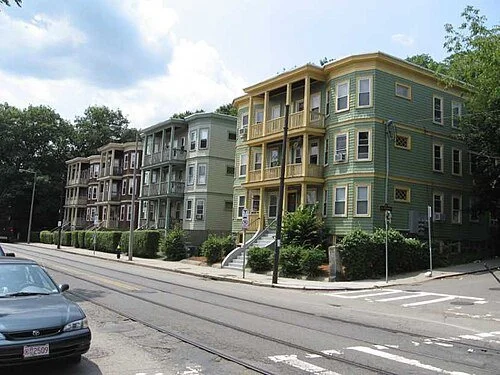
The energy-storage train discussed below (1/4 scale).
Editor’s note: With the windpower project off Block Island soon to go online, the issue of energy storage comes to mind.
In research there is evolution, revolution and — sometimes — what I call “retro revolution,” which happens when old methods have new applications. All three are in play in the world of electricity, and are affecting storage.
The inability to store electricity has been a challenge since the time of Thomas Edison. Electricity is made and used in real time, putting huge pressure on utilities at particular times of the day. For much of the East Coast in summer, for example, the peak is in the evening, when people come home from work or play, crank up the air conditioning, flip on the lights, the TV and start cooking. In many cities, the subways operate at peak and the electricity supply is stretched.
Traditionally, there have been two ways to deal with this. One is that utilities have some plant on standby, in what is called “spinning reserve,” or they have gas turbines ready to fire up.
Solar and wind power, an increasing source of new generation, have made the need to store and retrieve power quickly more critical. The sun sets too early and the wind blows willy-nilly. Also the quality of the power reaching the grid varies in seconds, necessitating a quick response to ease supply or increase it.
Until now, the best way to store large amounts of electricity — it is never really stored, but has to be generated afresh — is known as “pump storage.” This occurs when water is pumped up a hill during low demand times, at night and early in the morning, and released through generators to make new electricity during peaks.
It has gotten harder and harder to get permission to install new pumped storage because the best locations are often in scenic places. In 1962, Consolidated Edison Co. proposed building a pump storage facility on the Hudson River at Storm King Mountain near Cornwall, N.Y. After 17 years of environmental opposition, it gave up.
Now battery technology has reached a point where utilities are installing banks of lithium-ion batteries to help with peak demand. They also play an important part in smoothing out variable nature of alternative energy.
Batteries are not the only play, but because Mr. Battery, entrepreneur Elon Musk, is a showman, they tend to get more public attention.
Other mechanical methods hold as much promise and some dangers. One is flywheels, which would be wound up at night and would release power when needed. It is an old concept, but one that has new proponents — although there are concerns about when things go wrong and that super-energetic device flies apart.
“What happens if it gets loose and goes to town?” asks a wag.
Another method is compressed air in underground vaults. Natural gas already is compressed routinely for storage. The technology exists, but the compression would have to be many times greater for air, and there are concerns about the impact of this “air bomb.”
Yet another method involves a column of water with a heavy, concrete weight pressing down on it.
My own favorite — and one likely to appeal to many because of its safety and mechanical efficiency — is an electric train that stores energy by running up a track and then down to generate power. A Santa Barbara, Calif., company, Advanced Rail Energy Storage (ARES), is planning to run a special train 3,000 feet up a mountain track in Pahrump, Nev., and then have the train come down the mountain, making electricity as it does so. They plan to use hopper cars loaded with rock or other heavy objects. The Economist magazine has dubbed it the “Sisyphus Railroad.”
The train will go up or down the track depending on the needs of the California grid to which it will be linked. The developers claim an incredible 85-percent efficiency, according to Francesca Cava, an ARES spokeswoman. “That’s what you get with steel wheels on steel track,” she says.
The company has received Bureau of Land Management approval for its 5.5-mile track, and construction of the energy train starts next year. “All aboard the Voltage Express making stops at Solar Junction, Wind Crossing and Heavy Goods Terminal.”
Choo-choo! Back to the future.
Llewellyn King (llewellynking1@gmail.com), based in Rhode Island and Washington, D.C., is executive producer and host of White House Chronicle, on PBS, and a longtime publisher, columnist and international business consultant. The piece first ran on InsideSources.

Southern spectacle moving north

--- Photos (one is below the text) by Thomas Hook
With leaves like ferns, beautiful, sweet-smelling pink-puffball flowers and a tropical aesthetic, mimosa trees are moving north with global warming. These fast-growing, messy and rather short-lived trees are becoming increasingly common in southern New England. I think that they’re beautiful, romantic and a bit sadness-producing. And unlike most trees in our region, they bloom into late summer.
They also create a bit of a jungle feeling, which takes a while to get used to in our clime, but then our clime is changing.
Try to ignore their overproduction of seedpods, which means that if you have a mimosa you may soon have a mimosa population explosion.
Get used to those drawbacks and enjoy the spectacle that these immigrants from the South create.
Mr. Hook, a distinguished nature photographer, took these pictures last week on his andhis wife’s forested land in Southbury, Conn.
-- Robert Whitcomb

Lessons from the Greenland shark?
Excerpted from Robert Whitcomb's Aug. 18 Digital Diary column.
Does the Greenland shark have lessons for us? Scientists have discovered that these creatures, deepwater predators, are apparently the longest-living vertebrates. Researchers studied 28 of them. One was about 400 years old. Cold water is apparently good for longevity!
Sounds heartening. On the other hand, these very slow-growing creatures don’t have sex until they’re about 150. Perhaps of more importance/hope to us mammals is that a fellow mammal – a bowhead whale – was estimated to be 211 and that that species starts having sex in its early teens….
Charles Pinning: Film avant garde in our Newport backyard
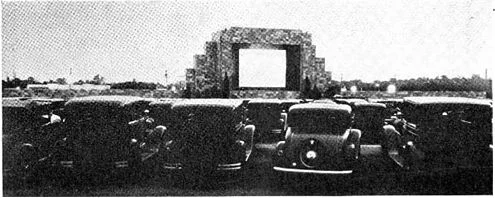
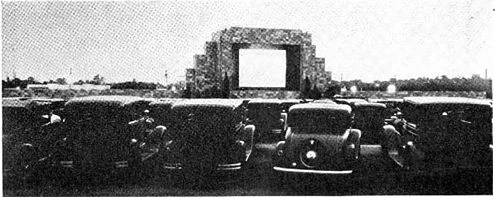
A recent ad for something called the Newport Outdoor Film Series reminded me that my childhood was not solely a medieval horror show of spankings and more subtle tortures. It was also imbued with moments of the avant garde. Film and children are eminently well-suited to taking a healthy whack at the status quo. Startling and immediate, both can leave us speechless.
In the ‘50s and early ‘60s my naval officer father was stationed on several ships in Newport. In the officer’s wardroom they screened movies, and before the film had to be returned he would sometimes bring it home and we’d have movie night in the backyard.
Neighbors were invited and we put out folding canvas chairs and chaise lounges, and some people brought their own. There was iced tea and Narragansett Beer and ginger ale and snacks.
We watched Shane, Gone With the Wind and other classics. On the night I am about to describe it was going to be Around the World in 80 Days.
My father set up his big projector, swinging open the arms and snapping the take-up reel into place. Then he removed the film reel from the round metal canister, both reels as big as the steering wheel on our Pontiac station wagon, and snapped it onto the other arm. Then came the careful threading of the film between the rollers and onto the take-up reel.
The screen, its surface pearlescent and surprisingly abrasive, was set up in front of our huge, globular Japanese cherry tree.
It was turning dark now, and the kids’ running around began to slow, the chatter of the adults grew softer and sound of the crickets in the field behind the cherry tree began to rise up.
My father’s voice: “All right everyone. The movie is about to begin!”
I sat down in my canvas chair. Connie Hayes, who lived next door and had one of Newport’s foremost Barbie doll collections, sat to my right, and to my left, Chrissie Blank, a bonnie little tomboy with bangs if ever there was. They were my best friends.
And suddenly it began, the mechanical clicking and flutter of the celluloid winding its way at 24 frames per second through the projector’s sprockets and the cone of light splitting the darkness, carrying the image to the screen, first the leader countdown flashing the numerals with a beep for each: 5…4…3…2…1...And then!
I’d never been out of the United States, and leaned forward to meet Victorian fussbudget Phileas Fogg and his exotic valet, Passepartout. Beginning in London, they made the wager and readied themselves for their journey around the world, first stop Paris. Paris! Where they climbed into the basket of a colorful hot air balloon with streamers. Up they went, floating above the most beautiful city I’d ever seen. As they sailed over France, they crossed the Alps and Passepartout leaned over and scooped an armload of snow off a mountain peak.
It was at that moment, timing perfect, that a little gust of wind rose up and the screen blew over! Suddenly, there was Phileas Fogg and Passepartout in their hot air balloon sailing across our cherry tree, leaving behind the screen’s confines.
We sat transfixed, and in the half minute before my father was able to right the screen, nobody complained. We were being transported someplace we’d never been before, discovering by accident a new way of seeing.
Isn’t that just the way life is? By trying something just a little different, getting the film projector outside on a summer evening, the stage was set for a gust of wind to usher in a movie projected against a tree. And what could’ve been more perfect than the image to be a hot-air balloon in the sky?
Our faces were aglow and we were letting go, living the free life with Phileas Fogg and Passepartout. Living our cutting-edge life in little Newport many decades before the avant garde began projecting video against buildings and, yes, trees. There we were in the season that favors accidents, racing at the speed of light into the future.
Charles Pinning, of Providence, is a novelist and an occasional contributor to New England Diary.
Germany said to plan big military buildup to counter Russian aggression
Diane Francis, a Canadian journalist, a member of the Hudson Institute and a former speaker at the Providence Committee on Foreign Relations, reports that Germany plans a huge increase in its military strength to be able to confront an expansionist Russia and terrorists.
She writes that Germany's new "civil defense'' initiative would:
· Give the government the right “to reintroduce military conscription (stopped in 2011) in case of a ‘national emergency,’ but with a major difference. Its armed forces (currently 178,000) could swell by another 600,000, and be deployed internally to help police for the first time since the Second World War, and, significantly, to guard NATO’s borders which extend to Turkey.
· "{E}ncourage the public to stockpile 10 days’ supply of food and five days’ of water in case of national emergencies or “existential” (i.e. terrorist) attacks.
"This represents a potentially dramatic extension of German military presence with a mandate to be deployed as domestic police as well as beyond its borders.
"The initiative is due to three unstated reasons: Russia’s occupation of part of Ukraine and {threats to} other countries on its eastern flank; America’s growing weariness of military costs; and terrorist threats to its other European and NATO members.’’
To read her essay, please hit this link.
Cape Cod fishermen are challenged by huge mid-water herring trawlers
By Nicole St. Clair Knobloch
for ecoRI News (ecori.org)
CHATHAM, Mass.
Cape Cod fishermen may be on their way to some relief from sharing inshore fishing grounds with mid-water herring trawling, a practice they say is threatening their livelihoods. But a persistent lack of data on the impact of the trawls may hamper efforts to regulate them.
On Aug. 17, the Herring Oversight Committee of the New England Fisheries Management Council voted to send the council two options for establishing a buffer zone prohibiting mid-water trawling off Cape Cod. The zone would extend either 12 miles or 35 miles from shore — significantly farther than the 6-mile zone proposed by the herring industry and closer than the 50-mile mark sought by environmental groups. The council will consider the options when it meets in September.
Fishermen have been complaining for years about the industrial-sized ships landing on the back side of Cape Cod, scooping up millions of pounds of herring and leaving, they say, a temporary ocean “bio-desert” in their wake.
In 2015, the Cape Cod Commercial Fishermen’s Alliance collected hundreds of comments and individual letters from fisherman about the phenomenon called “localized depletion” — defined as “when harvesting takes more fish than can be replaced locally or through fish migrating into the catch area within a given time period.”
For those who fish bluefin tuna, striped bass, dogfish and are still recovering from drastic cuts to allowable catches of groundfish such as cod, competing with the large ships doesn’t feel like a fair fight.
“We have a problem on the back side of the Cape,” said striped bass fisherman Patrick Paquette at the recent committee hearing. “We have big industrial boats fishing in shallow water.”
The comments were part of a new look at how herring fishing should be managed. The New England Fisheries Management Council (NEFMC) was tasked in 2007 with establishing a control rule for herring stocks. But in 2014, a lawsuit from environmental groups prompted an examination of the biological and ecological role of herring in the western Atlantic Ocean ecosystem, with the aim of establishing a stronger control rule reflecting the herring’s status as a forage species.
Even if the NEFMC is able to determine that role, and assign a new acceptable biological catch limit for herring, its science committee asserts that stronger stock-wide limits wouldn’t necessarily avoid local effects on the food web when trawlers come through.
A local dogfish fisherman, who didn’t want to use his name for fear of “retribution” from the herring companies, described the experience of encountering a mid-water trawler inshore.
“We go out and they’re out there with their lights off, inside of three miles (from shore),” he said at the Chatham dock two days before the Aug. 17 meeting. “They see us and turn their lights on, and plow right through our lines, leaving no groundfish. We might as well just go home and call it a season.”
The herring industry disputes such claims, as proving them has been problematic. At the August meeting, the task force charged with analyzing the impacts of midwater trawling on other species presented few results. Though it confirmed significant numbers of trawler landings in Area 114, a section of ocean on the “back” of Cape Cod, it didn’t show the effect of that activity on other species. NEFMC staff cited lack of reported data and noted the lack of an adequate computer model and the time to develop one.
The staff did find that both large and small schools of tuna, which prey on herring, are lower in New England now than in the 1980s, but suggested lack of prey as only one of several possible explanations for the decline.
“Year after year, we have no scientific basis for taking any action on herring. We have no evidence localized depletion exists,” said Herring Oversight Committee member Mary Beth Tooley, who is on the board of O’Hara Industries, a herring company operating two mid-water trawlers out of Rockport, Maine.
Herring fisherman Gerry O’Neill got up from the audience to agree with Tooley.
“I feel this whole thing is going forward based on perception, not based on facts,” he said. “The research — there are ways to do it. We’d like to see it done. If we are going to lose access to fish we would like some biological, scientific basis for it.”
Getting that level of proof in New England is difficult, according to John Pappalardo, CEO of the Cape Cod Commercial Fishermen’s Alliance.
“We don’t have synced or simple data collection systems on each fishery,” he said. He pointed to Alaska, where herring fishing is intensely monitored and pair trawling is limited to a few areas. There, he said, “Industry is more involved in the collection of that data. It’s partly the (New England) culture, which is a resistance to being observed or monitored.”
Making that happen here, Pappalardo said, is up to Congress and the National Marine Fisheries Service. “Where is the political will?” he asked.
He expressed exasperation with the idea that a connection between herring trawls and other species had to be proved absolutely.
“These people will not draw a correlation,” he said. “(For them) there is always something else to eat in the ocean.”
Even without more data, NEFMC’s Atlantic herring management plan was amended in 2006 to ban midwater trawling in the summer in the inshore area for the entire Gulf of Maine. The ban ends just above the fishing area of Cape Cod. It came after thousands of comments from Gulf of Maine fishermen with similar complaints as their Cape Cod counterparts.
At the September meeting, the council is expected to hear the science committee’s findings on how much herring is needed to support the area’s ecosystem.
To some, herring’s role is obvious, even if acceptable catch levels are not.
“The ecosystem starts with herring,” said the Chatham dogfish fisherman. “Am I the only one that remembers that part in elementary school? When they drew a circle around a herring and said the food chain starts here.”

Refugee art in a 'Sanctuary City'

"Protection,''by Dariush Rose, in the group show "Stories from Far and Near: Refugee Artists in New Haven.'' Rose is from Iran. Other artists in the show are from Congo, Iraq and Mauritania, all usually pretty terrible places, but especially in the last few decades.
New Haven, by the way, is a "Sanctuary City'' -- one of those U.S. cities whose municipal leaders have declared that they and their local police forces won't assist U.S, Immigration and Customs Enforcement officials to nab illegal alien living and perhaps hiding there. While this has pleased some minority groups in those cities, it has infuriated many other people at this massive violation of U.S. law. Of course, when one of these illegally protected people is arrested for a horrific crime, the outrage is red hot.
Engineering a revival in R.I.?
It was heartening to read in The Providence Sunday Journal on Aug. 15 about the rapid growth of engineering education at four of Rhode Island’s universities – Brown University, the University of Rhode Island, Johnson and Wales University and Roger Williams University. (Readers should not forget that the Rhode Island School of Design, with its famous industrial design department, could also be a part of this complex.)
This development, perhaps more than in other in recent years, could spawn the new, high-value-added economic activity that the Ocean State so desperately needs. It bears noting that the mid- and late- 19th and early 20th Century booms in the state had a lot to do with the fact that our region was at the forefront of Industrial Revolution engineering.
-- Robert Whitcomb

Late summer blues

"Nigralle'' (mixed media on canvas), by Deborah Barlow, in her Aug. 31-Sept 25 show with Yizhak Elyashiv, at the Dedee Shattuck Gallery, Westport, Mass.
"Inebriate of Air - am I -
And Debauchee of Dew -
Reeling through endless summer days -
From inns of Molten Blue."
--Emily Dickinson, No. 214, St. 2, 1860

Robert Whitcomb: Forever and a day to build something

Excerpted from Aug. 18 Digital Diary column in GoLocalProv.
Please, city, don’t hold this up too! MSI Holdings LLC wants a few waivers to build an 11-story retail/residential building on what is now a parking lot on Canal Street in downtown Providence, most notably a waiver that would let the owners exceed the official height limit for the neighborhood in the city’s zoning rules.
The Providence Business News also reports that “the applicant has requested waivers from the recess requirement, and ground floor and upper level transparency requirements for the portion of the building that faces a narrow alley, called Throop Street.’’ Few people would see that side.
The applicant ought to get the waivers promptly. Having lots of parking lots downtown in place of buildings is deadly. They shout urban decay. Density, on the other hand, speaks of vitality and prosperity. Jam in those buildings!
Time and time again, excessively rigid zoning rules have prevented what would be perfectly respectable structures from going up in Providence, or has grossly delayed them. The parking lot that this building would cover is an eyesore. Let’s get as much bustle as we canfrom people and businesses in downtown Providence, an eminently walkable place.
Which gets me to how long it takes to get anything done in Rhode Island.
The Rhode Island Department of Transportation expects to finally award a bid in October to build the long-delayed (for 10 years!) pedestrian bridge over the Providence River, with completion expected by November 2018. It looks like this thing will cost about $20 million.
The bridge will link College Hill and Fox Point with downtown, creating various commercial and other synergies. It should become a kind of tourist site and popular meeting place. Let’s hope that a brilliant architect designs it. Friedrich St. Florian?
Of course, because of the necessary oversight of publicly funded projects, the zoning-ordinance labyrinth, constituency politics and the vagaries of the economy, public projects usually take much longer than private ones. Still, 10 years is far too long! Businesses and individuals take negative notice of places where minor but needed repairs, such as filling potholes, let alone big projects, seem to take eons to happen. Such delays are particularly frustrating in a place as small as Rhode Island, where you might think it would be easier to get things done.
It’s a problem around America.
Common Good, run by my friend Philip K. Howard, has a very useful and proscriptive report out called Two Years, Not Ten Years: Redesigning Infrastructure Approvals that among otherthings discusses the huge costs of delaying infrastructure permits. To read the report, please hit this link.
Robert Whitcomb is the overseer of New England Diary.

James P. Freeman: Charlie Baker's quiet reinvention of state government

As the national Republican Party self-immolates as a consequence of its traumatic homage to the incendiary and self-destructive Donald Trump, Massachusetts Republicans should seek solace in knowing that Gov. Charlie Baker is quieting reinventing state government and, in the process, creating a model of New Republicanism.
Baker – and Lt. Gov. Karyn Polito – are governing in style and substance that is moderate, pragmatic and unpretentious (there are no hints at being a “compassionate conservative,” for instance) which, even in the firmly progressive commonwealth, is highly effective. It should be considered a new form of Republicanism and a model of success -- especially for the few national Republicans vocalizing an oath of fidelity to the party’s core values.
Even The Boston Globe has taken notice. In a front page story on Aug. 8, it noted that Baker has -- “without grandstanding for the media or waging partisan battles – successfully courted the overwhelmingly Democratic Legislature, declaring victory on many of the major issues he’s tackled in the past 19 months with rarely a word of opposition from longtime lawmakers.”
Citing “no bold agenda but with a potent combination of high-level government experience, a strong grasp of complicated public policies, and just plain charm,” Baker, remarkably, has emerged as “the dominant figure on Beacon Hill.”
Among his achievements: slowly (it took decades to reach this point; dozens of legislative sessions and eight governors since the1970s) repairing and reforming the troubled MBTA; addressing the opioid crisis (in March he signed into law limits on opioid prescriptions); increasing tax credits for low-income workers; creating fairness in the workplace with equal pay for comparable work; reducing the state workforce as a means of balancing the budget; and, just the other week, celebrating completion of a $1 billion economic development bill.
And the work continues…
Baker-Polito, a political synchronized diving team, are now plunging into the swampy green pool of state regulation in search of efficiency and efficacy, not accolades. As reported by The New Boston Post, their administration is “eliminating nearly 15 percent of Massachusetts state regulations and amending at least another 40 percent in a top-to-bottom overhaul aimed at making state government more efficient and business-friendly.” These are waters that the previous administration, under former Gov. Deval Patrick, never dared wading into, given the progressive proclivity that more and greater government regulation is better and best for its citizens.
When the governor launched this regulatory initiative, he laid out three options for all executive office departments to consider during this methodical promulgation process: either retain, amend or rescind regulations. Those deemed unnecessary and obstructive in making the commonwealth a “better place to live, work and grow a business,” would be amended or rescinded, according to Brendan Moss, Baker’s deputy communications director.
Thus far, 336 regulations are slated to be amended and 122 are to be rescinded, with hundreds more under the hot white spot light of review. As Moss further explains, “members of the administration met with municipalities, businesses, and individuals at over 100 listening sessions across the state and we look forward to finalizing this comprehensive review in the near future.”
Baker’s best act of 2016 is, actually, inaction. He rightly decided not to immerse himself into the presidential contest; he neither embraced Trump or attended the convention in Cleveland, thereby immunizing himself – unlike so many so-called “principled” Republicans -- from association with the embarrassing national ticket. Instead, he has quietly gone about the people’s business. According to veteran observers, reports The Globe, Baker “listens and wants to understand everyone’s views – and is willing to adjust his own.”
As a testament to Baker’s sensible reforms and keen political instincts, he is, for the second year in a row, the most popular governor in the country. For many this development would have been simply unimaginable just two years ago during the gubernatorial race. But for those listening in 2014 it was inevitable.
Two years ago, while at a campaign stop at The Pilot House in Sandwich, Mass., he spoke of the practical agenda he intended to implement, relying heavily on a theme of restoration and repair. As far as his latest projects -- reducing the saturation of codes, rules and regulations along with economic development – they are rooted in his pronouncements from 2014. Back then he said that Massachusetts “is a complicated place to do business” and that Bay Staters need “to think differently about economic development.” Baker is proof that one can be successful in linking campaigning with governing. A lesson lost on many Republicans today.
With much work to do (such as state debt and pension reforms), one fact will, however, emerge by the end of the day on Nov. 8: Charlie Baker will be seen as the top of the presidential class of 2020. And perhaps more importantly, his brand of governing – and the heavy lifting of effecting sensible policymaking -- will be seen as a model for the national party and should be emulated by members of the national party to ensure that the Grand Old Party retains its grandeur.
As Labor Day 2016 approaches, Baker’s New Republicanism must be a novel concept to those Republicans still pledging allegiance (without a trace of buyer’s remorse) to its two national candidates, who are positioning themselves, ever so effortlessly and recklessly, for massive electoral losses.
James P. Freeman is a New England-based writer and former columnist with The Cape Cod Times.

The Cape, distilled

"Chatham II (acrylic on canvas), by Brenda Horowitz, in her show at the Berta Walker Gallery, Provincetown. She has a place in Truro, on Cape Cod, where, the gallery says, she works on compositions "simplified to land, water, sky sometimes a house {to} explore the inherent character of the Cape landscape, where the quality of light reflected by the ocean intensifies the color of nature. The work in the current exhibition was created in plein air in the hills, dunes and marshland of Truro.....'
Llewellyn King: How McLaughlin blew up the political talk show world
Thirty-four years ago, a former Jesuit priest threw an incendiary device into the world of televised political talk shows. He was John McLaughlin, host of The McLaughlin Group, who has died at the age of 89.
Until McLaughlin exploded the scene, it was all rather sedate. The dominant programs were PBS’s Washington Week in Review and Agronsky & Company, hosted by veteran broadcaster Martin Agronsky.
In these programs, the host was magisterial and the guests were journalists who answered questions either about what they were covering or what they thought; and their answers were expected to conform to a level of decorum. Agronsky & Company -- largely because of Agronsky’s own strong personality -- had a little more flash than Washington Week in Review, but there was a level of earnestness about both programs.
Along came Providence-born McLaughlin, who was not so much a seeker-of-wisdom- and-truth as a man in pursuit of fun and something watchable. With The McLaughlin Group, a window was opened and fresh air gushed in. The conventions were trounced.
Shouting and loud dispute on television arrived, all skillfully goaded by McLaughlin.
The program became essential viewing not only for political junkies, but also for much of the nation. At one time, it was carried on nearly 400 PBS stations, although it originated on commercial television in Washington. It was sponsored by the Edison Electric Institute.
It was also commercially successful, so it was able to pay its contributors and to have a large staff -- a very large staff for a half-hour show. McLaughlin was not easy to work for, staffers who later worked with me said. Washington television circles are replete with stories of him sending staffers on personal errands and, in one case, ordering a woman to make toast for him.
All I can say is that in our very occasional meetings, he was very encouraging about my own television and radio talk show, White House Chronicle.
McLaughlin left nothing to chance: The effect had to be right. So shows were packaged, reworked and second and third takes were common. There was perfectionism in the riot.
He was the ringmaster, demanding terse answers, switching subjects and making declarative statements. After a “lightning round” of questions, he would opine, “The answer is.”
McLaughlin had the best opinion journalists of the time on his program, including Jack Germond, Robert Novak, Morton Kondracke, Pat Buchanan, Eleanor Clift and Michael Barone. There were falling outs with some of his stars: Novak is reported to have stormed off the set, and Germond also quit with harsh words.
But there were loyalists and people who loved McLaughlin. They include Clift and Buchanan, whose friendship with McLaughlin dated back to the Nixon White House where they had both worked.
In the past decade, the program fell victim to the “new journalism” it had created. As the cable networks grew, they adopted the aggressive approach to political discussion that McLaughlin had introduced, but often without the finesse or the self-deprecation, which was part of McLaughlin as a broadcaster and as a man.
He loved Dana Carvey's skewering of the program on Saturday Night Live. He would openly joke about a very prudish article of advice to girls about sex that he had written when he was in the priesthood.
McLaughlin, an extraordinary man with an extraordinary legacy, was an ordained Jesuit who left the priesthood and married twice. He ran unsuccessfully as a Republican for the Senate from Rhode Island, became a speechwriter for President Nixon, and editor and columnist for National Review and then, without a background in television, reinvented political talk shows.
If you are tired of journalists shooting off their mouths and shouting at each other 24/7, blame John McLaughlin. He would have loved you for it.
Llewellyn King (llewellynking2@gmail.com) is host of White House Chronicle, on PBS, and a longtime publisher, editor, columnist and international business consultant . This piece first ran on InsideSources.
William Morgan: State-sponsored kitsch
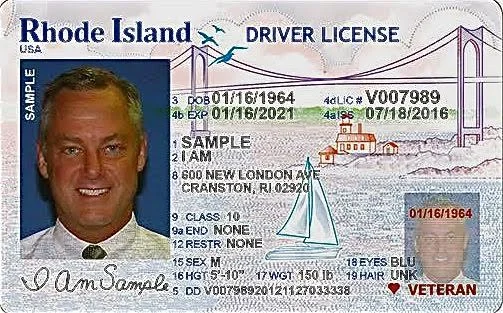
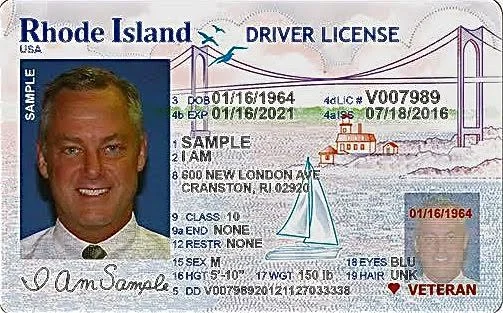
The new Rhode Island Driver [sic] License features I Am Sample, a veteran with unknown hair.
The embarrassingly amateurish design of the new Rhode Island driver’s license once again raises the issue of who is responsible for the visual branding of the state I live in.
So, you may say, it is just a daily-use piece of plastic, akin to a credit card, something you show to cash a check, buy booze, or hand over to the policeman when you've been caught in a speed trap. Like an auto tag, in its small but ubiquitous way the license can serve as an ambassador of the state. Sadly, this wee but official document says volumes about how we identify ourselves and about our self-confidence as a civic entity.
What if the new driver 's license were your primary business card? Do you think that you would impress a lot of potential clients with your classy image?
What would happen, say, if you were wrongly arrested by the secret police in a banana republic somewhere and you flashed your Little Rhody license with its kiddy coloring-book graphics? Your captors might be dazzled, but more likely they'd laugh out loud.
What about the guffaws that would come from notable graphic designers if the new license were entered in a contest to showcase the imaginative designs solutions emanating from the "Creative Capital" (as Providence’s branders call the city)? Instead of "Cooler and Warmer," how about "Cheaper and Uglier"?
But most states have real shortcomings when it comes to designing their images.

One hesitates to ask how this unfortunate logo got approved.
And then, too, logos and branding that come out of the federal government are often substandard. The usual Hallmark Card-meets-Soviet Realism design approach is well demonstrated by the George W. Bush-era redesigned U.S. passport, with its grade school textbook-style illustrations.
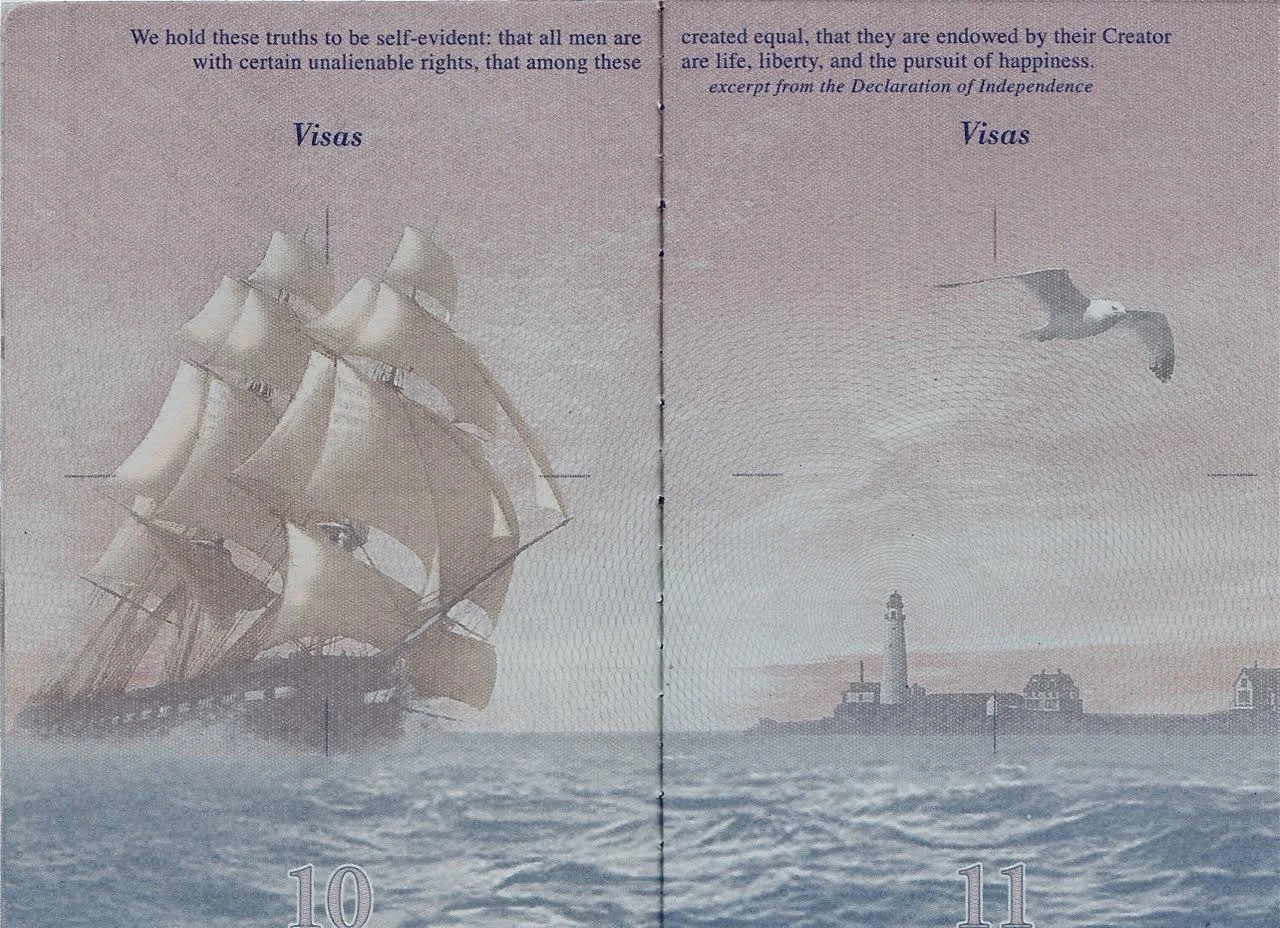
A page from the overhauled U.S. passport, complete with the U.S.S. Constitution, a lighthouse, and seagulls (not unlike Rhode Island’s new license). Additional pages in the passport show the Liberty Bell, Mount Rushmore, cowboys, Indians, farmers and other hackneyed subjects.
Rather than bemoan America's low level of visual literacy, let's ask why Rhode Island, with its supposedly high proportion of artistic brainpower, cannot produce less pathetic symbols and slogans. With the exception of the "wave" license plate (a handsome and distinctive design by native and noted RISD graduate Tyler Smith), most of the state's recent efforts to promote Rhode Island have bordered on the woeful.
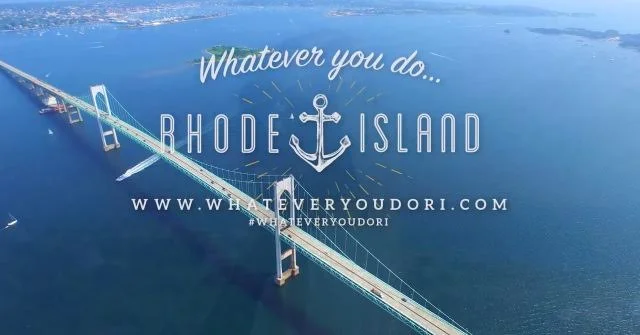
"Whatever you do … " What kind of slogan is that? This is the sort of result you expect from a slick advertising agency. Like the license, this focuses on Newport and Narragansett Bay, as if there are no inland towns, such as Burrillville, Smithfield, Foster or Glocester.
Perhaps the most egregious aspect of pumping up Rhode Island is the effort to give the state a new motto: Beautiful. What does that mean? That it was not beautiful before, but is now? Is it more beautiful because we tell our visitors and ourselves? Are we so insecure that we need an official state campaign to make us feel better about ourselves?
The "Discover Beautiful Rhode Island" signs placed at its borders are in themselves handsome objects. But what is their point? That Rhode Islanders may live there, but have never chosen to be curious about their habitat? Does beauty include the grittier parts of Central Falls, Cranston and Pawtucket? Ultimately, these bits of boosterism are just more distraction on the highway, as meaningful as another Cardi's or Alex + Ani billboard.
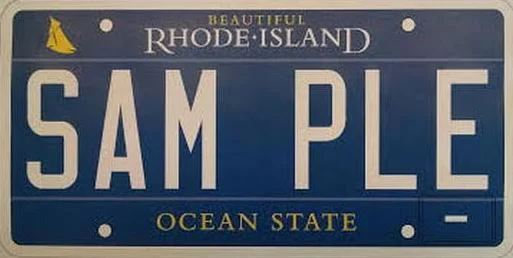
While the proposed "Beautiful Rhode Island Ocean State" (what a burden for such a small place!) license plate has been put on hold – permanently, let us hope, its design is yet another example of our design malaise. The Ocean State moniker is still there, the handsome anchor is gone, but a tiny wall-flower like "Beautiful" has been added, as well as the awkward thumbnail-sized blob of a Herreshoff racing yacht – but lacking the graceful lines of the real thing.
Whether designing license plates, welcome signs, stationary, or drivers' licenses, one solution may be found in keeping it simple. We already know how beautiful Rhode Island is (or isn’t). But let us be mysterious, low key and tease people into wanting to come here.
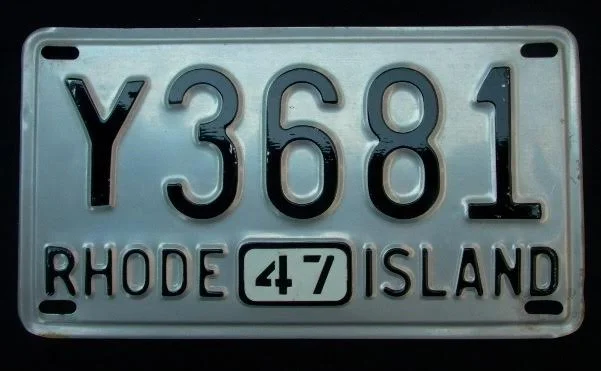
Rhode island license plate–made of aluminum because of World War II steel scarcity–was like a basic black dress: understated, yet oh so elegant.
William Morgan is Providence-based architectural historian who is interested in all aspects of design. He has been variously licensed to drive in several states, including New Jersey, Kentucky, Maryland and Mississippi, the last three of which identified him by race. He is licensed to drive reindeer in Finland.

Charles Chieppo: In Mass. and elsewhere low returns imperil public pensions
In June, I wrote that public-sector pension plans were facing an existential crisis. Even though many states have adopted reforms, a sampling by the Center for State and Local Excellence of systems that cover 90 percent of the nation's state and local government pension-plan members found that in the last year the plans had on average of 74 percent of the money needed to fund their liabilities -- only a slight uptick from the previous year's figure of 73 percent.
That news was particularly troubling in light of a McKinsey Global Institute reportearlier this year suggesting that pension funds were likely to see lower investment returns going forward. Those McKinsey folks are looking awfully smart: A recent report from the Wilshire Trust Universe Comparison Service found 20-year annualized returns for U.S. public pension systems at their lowest point in the nearly 15 years the service has tracked the statistic.
A look at public pension fund performance in Massachusetts suggests just how bad things might get and underlines the need for far more fundamental reforms if we are to pay for pensions without having to raise taxes or shift money away from core government functions. According to a recent Boston Business Journal report, in fiscal 2016 the state pension fund achieved a mere 1.14 percent return on its investments, just a fraction of the 7.5 percent assumed annual return on which the fund's financial projections are based.
And the state fund's performance looked pretty good compared to other Bay State public pension systems. Including the state fund, the 107 funds averaged returns of less than 1 percent. Twenty-two of the Massachusetts systems actually saw negative returns last year, and 20 have less than half of what they owe to current and future retirees. The pension system for Springfield, the state's third-largest city, is only 26 percent funded.
State officials have tried to put the pension funds on a path to solvency. In 2011, Massachusetts enacted reforms that included increasing the minimum retirement age and limiting the degree to which large salary increases just prior to retirement can boost pension payouts. But the impact of those reforms has been marginal.
Increasingly, it looks like sustainable pension programs will require reforms more likethose enacted earlier this year in Arizona, whose Public Safety Personnel Retirement System had in just over a decade gone from being fully funded to having less than half the assets needed to cover its liabilities. The fund's outlook is a lot better in the wake of a series of bold reforms. The maximum salary for purposes of pension calculations was reduced from $265,000 to $110,000. Current and future pension costs will be split evenly between employers and employees. And to reflect the shared risk, the number of labor representatives on the fund's board was increased.
Under the reformed system, new employees will choose between a defined-contribution plan and a hybrid that combines defined-contribution elements with those of traditional defined-benefit plans. While those new employees can't begin to collect retirement benefits until age 55, they can retire at any time. This important change makes pensions portable, so employees wanting to move on no longer have an incentive to stick around just so they can vest in the retirement plan.
The overhauled system will be so much less expensive that new employees will likely be required to make smaller pension contributions than current employees. In all, 30-year savings are expected to be more than a third of accrued liability.
Comprehensive reforms like those that Arizona has produced become all the more important in an era of paltry pension fund investment returns. While officials in other states may feel that they've already enacted politically difficult pension changes, it's become clearer than ever that the time for more sweeping action is upon us. And we know that nothing does more to add to the pain of necessary reforms than procrastination.
Charles Chieppo is a research fellow at the Ash Center of the Harvard Kennedy School and the principal of Chieppo Strategies, a public policy writing and advocacy firm. This piece first ran on governing.com. Charlie_Chieppo@hks.harvard.edu

Tropical fish are arriving earlier in the summer in Narragansett Bay

A crevalle jack.
By TODD McLEISH, for ecoRI News (ecori.org)
When a tropical fish called a crevalle jack turned up this summer in the Narragansett Bay trawl survey, which the University of Rhode Island conducts weekly, it was the first time the species was detected in the more than 50 years that the survey has taken place.
The Rhode Island Department of Environmental Management’s (DEM) seine survey of fish in Rhode Island waters also captured a crevalle jack this year for the first time.
While it’s unusual that both institutions would capture a fish they had never recorded in the bay before, it’s not unusual that fish from the tropics are finding their way to the Ocean State. In fact, fish from Florida, the Bahamas and the Caribbean have been known to turn up in local waters in late summer every year for decades. But lately they’ve been showing up earlier in the season and in larger numbers, which is raising questions among those who pay attention to such things.
“There’s been a lot of speculation about how they get here,” said Jeremy Collie, the URI oceanography professor who manages the weekly trawl survey. “Most of them aren’t particularly good swimmers, so they probably didn’t swim here. They don’t say, ‘It’s August, so let’s go on vacation to New England.’ They’re not capable of long migrations.”
Instead, fish eggs and larvae and occasionally adult fish are believed to arrive in late summer on eddies of warm water that break from the Gulf Stream. Collie said they “probably hitch a ride” on sargassum weed or other bits of seaweed that the currents carry toward Narragansett Bay.
Most of these tropical species, including spotfin butterflyfish, damselfish, short bigeye, burrfish and several varieties of grouper, don’t survive long in the region. When the water begins to get cold in November, almost all perish.
“There’s no transport system to carry them back south, which is the reason they can’t get back where they came from,” Collie said.
While climate change and the warming of the oceans has been responsible for many unusual marine observations in recent years, that doesn’t appear to be the case with the annual arrival of tropical fish in local waters.
“Warming doesn’t really have an effect on it,” said Mark Hall, owner of Biomes Marine Biology Center in North Kingstown, which has been exhibiting locally caught tropical fish since it opened in 1989. “It’s just the way the Gulf Stream meanders and carries these fish our way.”
Ocean warming does appear to be affecting the timing of the arrival of the fish, however.
“Twenty years ago I wouldn’t bother trying to find tropicals until mid-August, but now we’re seeing them in July,” Hall said.
The good news is that none of these tropical species appear to be harming or out-competing the native marine life in Narragansett Bay.
“They arrive in July or August and are dead by November, so they’re just not here long enough to have an impact,” Hall said. “I can’t think of a single animal that’s having a negative effect.”
Collie agrees. “These strays are small and appear here in small numbers. The threat would come from wholesale movements of new species that can stay here for long periods. Tropicals aren’t a threat.”
For those interested in seeing some of the tropical species that are making their way to Rhode Island, visit Biomes in North Kingstown or Save The Bay’s Exploration Center and Aquarium at Easton’s Beach in Newport. Save The Bay just opened a new exhibit this month featuring tropical fish species collected locally by its staff, volunteers and partner organizations, including the Norman Bird Sanctuary and DEM. The exhibit, called The Bay of the Future, features a variety of what manager Adam Kovarsky calls Gulf Stream orphans.
“We want to spark people’s thought processes about the things that can happen from climate change,” he said. “While tropical strays have been showing up here forever and ever, there’s evidence that now they’re showing up in larger numbers and arriving earlier and surviving later. It’s not a problem now, but eventually they may stay year-round, and that could stress our local species.”
Rhode Island resident and author Todd McLeish runs a wildlife blog.

Edible alternative energy

"He had been eight years upon a project for extracting sunbeams out of cucumbers, which were to be put into vials hermetically sealed, and let out to warm the air in raw, inclement summers."
-- Jonathan Swift
Robert Whitcomb: 38 Studios disaster mainly just sloth, stupidity and provinciality
Excerpted from "Digital Diary,'' in GoLocal24.
There may well have been corruption in the 38 Studios disaster. Certainly the roles of dubious fixer/lobbyist/lawyer Michael Corso and the now jailed former Rhode House Speaker Gordon Fox and their allies need further investigation or at least exposure, and I wish that all the legal information about this outrage had been released.
But stupidity and sloth seem to be the major factors in the plus-$100 million (with interest) disaster, not out-and-out corruption. Maybe the desire of the powers that be to avoid being revealed as slobs has more to do with keeping the full files of this case secret than anything else.
For the fact is that if the legislators (such as then state representative and now state Atty. Gen. Peter Kilmartin) who voted in 2010 for a package of $125 million in state bond guarantees, $75 million of which turned out to befor one untested video-game company, had bestirred themselves to look into the legislation and then call a few venture capitalists and ask them what they thought of what most would have seen as an idiotic investment, and then displayed a little courage to reject the deal against the wishes of legislative leaders, this outrage never would have happened.
The failure of legislators time and again to do any research on what they’re asked to vote on and to follow, without little information and no courage, in lockstep the directions of legislative leaders is, to say the least, a problem. Of course that then Gov. Donald Carcieri, a former high-level backslapper at Old Stone Bank (RIP) and Cookson America, was enthusiastically pushingthe deal, complete with photo ops with Curt Schilling, also helped set the table for the catastrophe.
Making the whole thing more irritating is the knowledge that if the state had spent the equivalent of the $75 million bond guarantee for 38 Studios on some substantial projects – e.g., fixing bridges, filling potholes, picking up more roadside trash, repairing state-owed buildings, vocational training or even marketing the state as a tourist mecca – then a wide range of Rhode Islanders could have benefitted and not just the likes of Michael Corso. Or backed bonds of some small but promising Rhode Island-based companies that already had revenues, of all things.
Also, the not-yet-laid-off members of the news media at the time that 38 Studios was proposed could have done a better job in asking investment experts their opinion of this absurd deal. Boston, a major venture-capital center, is just up the road.
-- Robert Whitcomb

Pompeii in Cohasset

From "Once There Was a House…Echoes from the Villa of Mysteries,'' a site-specific installation by Laurie Kaplowitz and Katha Seidman at the South Shore Art Center, Cohasset, Mass., Sept. 16-Nov. 6.
The artists write: "'Once There Was A House' is based on the Villa of Mysteries in Pompeii, a house where time has stopped, millennia have passed, and as if through a wormhole, we look on recognizing much, wondering at more.''
There are many lost-world villas in Cohasset, too. It's a old colonial town/fishing village that morphed into, in part, a summer place for rich Bostonians and shoe moguls from Brockton until finally becoming mostly an affluent Boston suburb, with sky-high real-estate prices.
During the heyday of its summer-place epoch -- from about 1900to 1930 -- some summer people had the fad of putting up Italianate stucco mansions (with fountains, etc.) on bluffs along its rocky coast and behind itsuncomfortably pebbly beaches. Some of them looked like knockoffs from Pompeii.
Ross Gittell/Jeremy Hitchcock: 'Skating to where the puck is going'
New England’s economy has improved, but economic opportunity and skills gaps contribute to slower growth in employment, income and social mobility than in previous recoveries from recessions. With an aging population and relatively slow natural growth rates in the labor force, these gaps put the future of the New England economy at greater risk than that of other regions.
There are ways to overcome these gaps. Stronger bridges between education and employment (“E-to-E”) and specifically between the region’s employers and community colleges can be built, which would benefit the regional economy and individuals and their families across New England.
The data are strong on the benefits for state economies and for individuals from advancing higher educational attainment. In New Hampshire, for example, moving the percentage of working-age adults with college attainment from its current level of approximately 50% to 65% would mean a $1,400 increase in per-capita personal income and an increase of about $130 million in state revenue annually, according to the National Center on Higher Education Management Systems (NCHEMS).
For individuals in New Hampshire, the increase in average weekly earnings from high school graduate to associate degree is over 21% and, for bachelor’s and higher, over 50%. Even with the strong returns to higher education, the percentage of working-age adults with a college degree is not rising fast enough to keep New Hampshire among the top states in educational attainment and make up for the retirement of the state’s aging, highly educated Baby Boomers.
Nationwide, from 2008 through 2012, the percentage of U.S. adults with an associate degree or higher increased by 1.5%, while New Hampshire’s percentage increased by less than half that—just 0.7%. This is occurring while increasing numbers of employers are bemoaning the lack of available skilled workers and many New Hampshire working families are struggling financially.
Currently many high school graduates in New England, particularly from low-income families, are going directly into the labor market and taking jobs in relatively low-paying positions in retailing and services with very limited advancement prospects. They will very likely be the “working poor” for an entire generation. They will receive low pay and be the first to lose their jobs during the next economic downturn. The challenge and the opportunity is to inform these young people and their parents of the benefits of going to college and working in the region—and the consequences of not going to college. Business and education leaders have to provide guided, supportive and affordable pathways to college completion and into fruitful employment in New England.
The lack of skilled workers while many residents remain marginally employed might be best characterized as an education-to-employment gap—an E-to-E disconnect. Individuals without postsecondary education or an applied higher education skillset are not as successful as those with higher education and with their education aligned with the needs of companies that are hiring for well-paying positions. In New England, the employer needs are increasingly complicated and specialized. Employers need workers with the so-called “soft skills” of communication and teamwork, plus the ability to problem-solve and think critically—and they increasingly require workers with domain expertise in a field that they can apply, for example, marketing, industrial design, machining or coding.
But fixing the problems in the labor market and economy is more complicated than advocating “advanced education.” In Future of the Professions, Oxford University economist Daniel Susskind talks about 130 licensed professionals, and the U.S. Bureau of Labor Statistics uses a Standard Occupational Classification to define 840 different occupations. It used to be employment was as simple as medical school for a doctor, law school for an attorney, business school for an accountant, engineering school to be a civil engineer, or a community college for welder.
Those examples—medical, accounting, welding, engineering programs—suggest the value of an “apprentice-type” model with education aligned with and drawing on work experience and tied to employment after credential obtainment. And there are many examples of programs at the doctoral, bachelor's and certificate levels that continue to be effective at education-to-employment progression and are based on apprenticeship-like approaches. But what we need now are more programs developing student skillsets for which there are rising numbers of unmet jobs. In many of these, a credential alone will not complete a graduate’s training, but will be part of their E-to-E journey. This gets more pronounced as the economy becomes more complicated.
Because E-to-E is traditionally decoupled and new jobs are being created outside standard progressions, too small portion of the population can fill these jobs—and that is slowing the growth of the economy. There are many fields and job classifications that have no well-defined program or progression. Education institutions and business organizations need to partner more than ever to create the bridge from education to employment to close the skill gap and the opportunity gap.
We can point to several places where building that E-to-E bridge from education to employment has been successful in New Hampshire. In each of these cases, N.H. community colleges have been a catalyst for creating on-ramps to economic opportunity and employment. Great Bay Community College (GBCC) in Portsmouth and Rochester, and Nashua Community College are partnering with suppliers to the global aerospace industry, Albany International, Safran and GE to train workers in advanced composite materials manufacturing and CNC machining. In these programs, college faculty worked closely with company engineers, management and frontline workers to design curriculum. Students’ program work includes on-the-job experience and students have internship opportunities and virtually guaranteed employment after successful program completion.
Given the context of the opportunity and skills gaps we face, it’s clear that we need to cross the chasms. If we can tap that potential, we can unleash another wave of growth and enhance the competitiveness of the region. How can we broaden work-based education and training models beyond traditional Department of Labor strategies and other traditional apprenticeship practices to have them span K-12, postsecondary education and the workforce with a larger number of employers and industries, including in the fields of health, IT and financial services.
One of our previous education solutions was a general purpose “high school” education. The rise of high school education began with the Committee of Ten in the late 19th Century, and high schools became ubiquitous during the early 20th Century. This has been a great success as we are able to reach the entire population. The high school systems have become built up, standardized and, now unfortunately, too often exist in discipline silos and divorced from 21st Century workforce requirements. To confront our new challenges, we need to partner, collaborate and adapt. Where we all have fallen short is that our high schools, community technical education, community colleges and industry do not collaborate enough in the areas of high employment need.
The mental model is nothing new but it’s essentially a dual-education system that combines theory and practice (which happens to be the motto of Jeremy’s alma mater, the Worcester Polytechnic Institute).
NHTI (Concord’s community college) and Manchester Community College IT graduates comprise over 10% of the workforce for Dyn Inc, the fastest-growing IT company in New Hampshire. GBCC and River Valley Community College in Claremont and Lebanon are partnering with Exeter Hospital and Dartmouth-Hitchcock, respectively, on training medical technicians. All these programs provide guided pathways from general education, to job-specific employment skills in occupations that pay greater than average wages for associate degree holders and have promotion and career opportunities. All these programs provide work-based learning opportunities such as internships and job placement And students can enter all these programs while still in high school through dual-enrollment (Running Start) courses that the Community College System of New Hampshire has with virtually every high school (over 90) in the state.
These programs are not educating professional engineers or doctors but rather professionals, desperately needed by employers as evidenced by the thousands of openings in these fields. In essence, we expanded the high-skilled talent pool by bridging the education to economy divide by establishing educational pathways to regional employment and, in doing this, we are addressing the opportunity and skills gaps in New Hampshire.
What is required is that community college and other educators work alongside employers from industry in the design and delivery of the guided-pathway programs and that these programs are focused on 21st Century skills—those with high future need and strong career prospects. We in workforce development and higher education need to do what hockey great Wayne Gretzky attributed his success to: skating “to where the puck is going to be, not where it has been.”
Industry and community college leaders have to work together to build bridges and guided pathways that support economic opportunity, employment and income growth, and a strong future for the New England regional economy. We can help to address the opportunity and skill gaps by building stronger connections of E-to-E: education-to-employment.
Ross Gittell is chancellor of the Community College System of New Hampshire. Jeremy Hitchcock is the founder of Dyn, a New Hampshire-based Internet performance management company.
This piece first ran on the Web site of the New England Board of Higher Education (nebhe.org).