
Vox clamantis in deserto




How Trump clawed up the towers of power
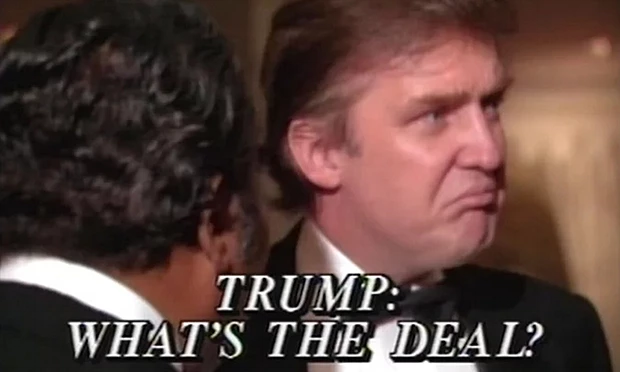
Watch and listen here to Libby Handros, the producer of Trump: What's the Deal?, talk on MSNBC about Mr. Trump's dubious rise to celebrity. A New York-based TV and film producer, she has been studying the real estate developer, "reality'' TV star and possible future president for decades. Then look at trumpthemovie.com
Lan Anh: Building a foundation for close U.S.-Vietnamese relations
By Lan Anh
On the night of May 22, President Obama landed at Noi Bai International Airport to start his official visit to Vietnam. U.S. Presidents Bill Clinton and George W. Bush had also visited Vietnam while in office.
The American War in Vietnam was a long and sad chapter but that conflict ended 41 years ago.
President Obama’s visit to Vietnam was a dramatic turning point as the two countries establish stronger ties to promote the development, peace and security of the both countries, the Asia/Pacific region and the wider world.
Vietnam has spent much blood, wealth and time defending itself from invadersto regain and preserve its independence. The country has constantly faced threats to its freedom, sovereignty and territorial integrity.
But, overcoming the sorrow of historical events, and some missteps in its economic-development strategy, Vietnam has today achieved remarkable improvements in the economic and other aspects of its development. It has great potential strengths from its location and its population of 100 million, (making Vietnam the 13th most populous nation) including its large number of young people who are very receptive to new technology. It is also playing an increasingly important role in global economic development.
Meanwhile, Vietnam preserves many of its ancient traditions while it stays open to learning and accepting the best aspects of cultures and values all over the world.
Vietnam has become an inspiring story of a country in transition. A nation that suffered the sorrow of a long war with the U.S., Vietnam has since normalized the relationship with America and is taking steps to improve it further. Vietnamese-U.S. relations are now a world-recognized symbol of reconciliation and of progress toward a peaceful, more secure and developed world.
America has the world’s largest economy and is the global military superpower. Thus, the U.S. plays a crucial role in preserving stability around the Earth. American military power can be deployed quickly to any place in the world. Further, America is the innovation hub of the planet. It’s where leading technologies are constantly being invented and refined with great international impact.
Since World War II, the U.S. has led the establishment of a network of multilateral organizations -- most notably the World Bank, the International Monetary Fund (IMF) and such regional security organizations as NATO. In part becase of these organizations, the U.S. has strong allies around the world.
These factors are crucial parts of the foundation for stronger Vietnamese-U.S. relations.
Prof. Thomas Patterson, a leading Harvard scholar on politics, press and public policy, and a co-founder and director of The Boston Global Forum (BostonGlobalForum.org), said that the bases for a strong and sustainable relationship between the U.S. and Vietnam are trust and respect for each other and mutual understanding of each other’s needs and values. Despite some inevitable differences, the two countries have many shared goals, which include building their own and each other’s prosperity, friendly cultural exchanges and peace and security in the South China Sea (called in Vietnam the East Sea). Strong andfriendly U.S.-Vietnamese relations will foster the strong growth of the two countries in the Pacific Era.
The U.S. can help Vietnam with capital and advanced technology so that Vietnam can continue growing its knowledge and innovation economy via such technology solutions as artificial intelligence (AI) and network security.
After the Trans-Pacific Partnership agreement (TTP) comes into effect, Vietnam’s GDP is projected to increase to $23.5 billion in 2020 and $33.5 billion in 2025. Its exports are projected to rise by $68 billion by 2026. Under the TPP, big markets, such as the U.S., Japan and Canada, willeliminate tariffs for goods imported from Vietnam, which will obviously give its exporting activity a big boost..
Meanwhile Fulbright University Vietnam has officially been granted approval to open. This is a milestone in the journey of cooperation between U.S. and Vietnam in education. Further, the University of California at Los Angeles ( UCLA ) will soon work with Vietnam to carry out new initiatives in global citizenship education.
To establish itself as a major global player, Vietnam needs to be independent of bigger countries so that it can strategize its path ahead while following universal standards and values. Vietnam will raise its visibility in the world with a loving, tolerant and generous attitude.
Vietnam has overcome sorrow and loss to make peace with other countries that caused it pain. Hence, Vietnam has become a symbol of reconciliation and can play an important role in preserving international peace and security in the Asia/Pacific region and around the world.
For example, Vietnam can contribute to the effort to resolve conflicts between the U.S. and Russia, between Europe and Russia, between China and Russia, between the U.S., Japan and North Korea, and between the U.S. and China. Vietnam could also become a centerfor finding solutions to conflicts in the Middle East and forhelping North Korea integrate with the rest of the world (as when Vietnam helped Myanmar reintegrate). And it can be a pioneer in building harmony and security in online space in South East Asia and around the world. This can include educating people to be responsible online citizens in Internet era; teaching them to respect each other’s culture, knowledge and morality, and promoting initiatives for global citizenship education.
Building strong Vietnamese-U.S. relations, as well as the other initiatives cited above, can’t be completed overnight but the path to a brighter future is opened. Tomorrow has started today.
Lan Anh is a journalist for VietNamNet.
Lyrical, tragic and comic
"Everything in nature is lyrical in its ideal essence, tragic in its fate, and comic in its existence."

-- George Santayana
Enough to make you jump
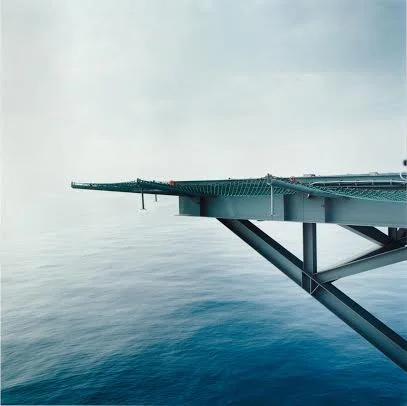
"Platform 1, Gorilla VI -- A Free and Anonymous Monument'' (C-type print on aluminum), by Jane and Louise Wilson, in the "Landscapes after Ruskin: Redefining the Sublime,'' curated by Joel Sternfeld and on view at the Hall Art Foundation, in Reading, Vt., through Nov. 27.
Dark thoughts in a black tie
We went to a black-tie fund-raising dinner for a nonprofit (Trinity Rep) last night in Newport. It may be my last after having attended dozens of these events over the years.
Yet again, I ask myself: Why not ditch these interminable, loud and often pompous affairs and just send money to these fine and always needy nonprofit outfits? (And I'm more conscious of the cost of going to these things these days because I no longer have a regular salaried job and because for 30 years I'd be, in effect, ordered to go to them by companies that employed me that would usually pay my tab. Corporate PR.)
Last night was the usual claustrophobic march from cocktails to the much too long general remarks and then the introductions of the prize winners of the night, in this case of some Pell Awards for the Arts. The introducers, as typical at these things, talked too much about themselves as we sat in folding chairs in a wind-battered tent. But a couple of the prize winners (whom I think might consider us semi-personal friends -- why we attended) were admirably concise in their acceptance remarks.
I was again surprised by the four-letter words and other reflections of the growing crudeness of our society in the remarks of some of the speakers. Depressing. But seeing how much some people had aged since I last saw them elicited my zoological interest. It recalled Proust's description of the old men and women in the last part of In Search of Lost Time whom he had known when they were young and fresh.
Then we went to the usual skimpy catered meal, in which the (very cheery) waiters seem to have been rigorously instructed to give diners the very minimum amount of wine. And then we were one night older....
-- Robert Whitcomb
Flash of beauty before the decline

Photo by Thomas Hook, who writes that this is "our first Swallowtail of the season, wings intact and not yet marred and chewed up by aging in this perilous world.''
Mr. Hook, a superb wildlife photographer based in Southbury, Conn., is an old friend and classmate. At our school reunion the other day we heard and saw many things to remind us of the ravages of time, amidst the lushness of May in Connecticut.
-- Robert Whitcomb
Young to old without transition
I went to a 50th boarding school reunion this past week in Connecticut and had several Proustian experiences. One of them was seeing the face of an old lady whom I well remembered as the lovely young wife of a faculty member. She is now a lovely old woman. Seeing her gave me a start, adding to the eerie quality of the reunion.
I hadn't see her for 50 years and so of course my brain had not had the opportunity to very slowly view -- and thus mostly ignore -- her aging
--- Robert Whitcomb
Frank Carini: Answers to global-warming deniers and minimizers
Well-documented facts, and common sense, tell us how humans are affecting the world, often with negative consequences. For example, greenhouse gases, such as carbon dioxide and methane, which we generate in abundance, are altering the climate, changing ocean chemistry and helping the seas rise.
Since ecoRI News first went online, in September 2009, people skeptical of manmade global warming — also referred to as climate change — have asked and e-mailed us, in most cases politely, to prove what most climate scientists already have. The following are the three most popular questions, presented in various forms, we have been asked in the past six-plus years:
Melting glaciers are often cited as proof of climate change. Given that they have been retreating for thousands years, why is their continued withdrawal, or even disappearance, of concern?
The obvious answer, at least to us, is that humans have built a lot of stuff, much of it highly valued, along the shore. In Newport, R.I., for instance, 968 historic structures are threatened by rising seas.
Whether you want to believe that belching smokestacks and tailpipes, deforestation and industrial agriculture, among many other human practices, have played a role in altering the planet’s climate, the fact is the world’s oceans have risen by an average of nearly 8 inches since the beginning of the 20th Century. They are projected to rise another 3-7 feet by 2100.
Even if you believe that Earth’s rising waters are part of a natural cycle, or your god’s will, the fact we have replaced natural coastal buffers, such as salt marshes and wetlands, with homes, roads, restaurants and tourist attractions has made our developed shorelines vulnerable to storm surge, flooding and erosion.
Now, southern New England’s coast is rebuilding itself, and humans weren’t invited to submit plans.
Besides contributing to global sea-level rise, fresh water from melting glaciers alters the sea, pushing down heavier salt water and changing ocean currents. The impacts ripple far and wide. Weather patterns change. Fish migrations change. Species go extinct. Temperatures rise, because the white surfaces of glaciers — they cover 10 percent of the Earth’s land — reflect the sun’s rays, helping to maintain the climate humans have become so accustomed to.
If even climate scientists are wrong — although my money’s on the science — lessening our dependence on the burning of fossil fuels would still improve public health and the environment’s well-being. No one would get hurt or suffer. A reconfigured energy industry would still provide plenty of employment opportunities. Plus, I’m sure the new-look industry could also be rigged to benefit the few over the many.
Of course, if the deniers are wrong, and we do nothing or not enough, it will prove costly on so many levels.
Environmentalists treat ecosystems as if they never change, attempting to preserve the same environment with which they grew up or trying to restore their vision of what the environment may have been like prior to industrialization and large-scale agriculture. But don’t ecosystems change all the time?
The often-used argument that the environment-was-going-to-change-naturally-and-species-were-going-to-go-extinct-regardless rings oh so hollow — kind of like a murderer defending himself by saying his victim was going to die eventually anyway.
Just because ecosystems change and species disappear without the help of human hands, doesn’t mean we have carte blanche to ruin environments for profit and sport. We share this sphere with many living things, and we have an obligation to future generations.
I, for one, would have enjoyed seeing a flight of passenger pigeons darken an afternoon sky. Sadly, the last one of its kind died in a zoo in 1914. We hunted them to extinction. Let’s hope we don’t make the same mistake with grizzly bears, wolves and African elephants.
The climate has changed many times in the past, so why is it a problem now?
The climate reacts to whatever forces it to change, and 7-plus billion humans — a population that is growing rapidly — are now the dominant force. It’s really no different than how an overpopulation of deer would stress a forest ecosystem. Neither species seems to be able to confront this reality.
Humans are stressing the plant’s resources through a combination of manmade pollution and ceaseless development. The negative impacts of our growth far outweigh the positives. Mother Nature will respond in kind. Why do you think we're looking to colonize Mars?
Frank Carini is the editor of ecoRI News.
Naked in nature

From "What Grows Without,'' a show of photos by Chris Maliga, at Piano Craft Gallery, Boston, through May 29.
The show features black and white photos that deal with "the concept of oneself within nature as well as one's own identity,'' says the gallery. The photos show Mr. Maliga "alone and naked within different natural landscapes, speaking to his own personal struggle and experience.''
Llewellyn Smith: Hedrick Smith a torchbearer for beaten-down middle class
The middle class has been taking a shellacking for years. It began in the 1970s, when the business and political elites separated from the people and it has been accelerating ever since, according to Hedrick Smith, a former Pulitzer Prize-winning New York Times reporter and editor, an Emmy award-winning PBS producer and correspondent, and a bestselling author. In short, an establishment figure.
Add to Smith’s establishment credentials schooling at Choate, the private boarding school, a stint at Oxford, and you have the picture of someone with the credentials to join the elite of his choosing. Instead Smith is a one-man think tank, a persuasive voice against the manipulation of the public institutions, such as Congress, for money and power.
But Smith is not a polemicist. He uses the reporter's tools, honed over decades in Moscow and Washington and on big stories, such as the civil-rights movement and the fall of the Soviet Union, to make his points against the assault on the middle class.
It all began with Smith's looking into what was happening to American manufacturing, which led to his explosive 2012 book, Who Stole the American Dream? Encouraged by the book's success, he created a Web site,reclaimtheamericandream.org, which now has a substantial following. In the past three years, he has lectured at over 50 universities and other platforms on his big issue: the abandonment of the middle class by corporate America and its corrupted political allies.
Smith documents the end of the implicit contract with workers, where they shared in corporate growth and stability. He outlines how money has vanquished the political voice of the middle class.
Instead, according to Smith, corporations have knelt before the false god of “shareholder value.” This has resulted in the flight of corporate headquarters to tax-friendlier climes, jobs to cheap labor, and a managerial elite indifferent to those who built the companies they manage.
In Smith’s well-researched world it is not only the corporations that have abandoned the workers, but the political establishment is also guilty, bowing to lobbyists and fixing elections through redistricting. Two big villains here: money in politics and gerrymandering electoral districts.
The result is a democracy in name only that serves the powerful and perpetuates the power of those who have stolen the system from the voters.
Smith cites the dismal situation in North Carolina, where districts have been drawn ostensibly to ensure black representation in Congress, but also to ensure Republican domination of all the surrounding districts. The two districts that illustrate the mischief are called “the Octopus” and “the Serpent” because of the way they are drawn to identify the voter preference of the inhabitants.
The rise of Bernie Sanders and Donald Trump are testament to the broken system, says Smith. They are symbolic of the rising up of the middle class against the predations of the elites.
But Smith is hopeful because, he says, the states have taken up arms against the Washington and Wall Street elites. People should “look at the maps,” he says, “They will be surprised to find out that 25 states are engaged in a battle against partisan gerrymandering, or that 700 cities and communities plus 16 states are on record in favor of rolling back ‘Citizens United’ and restoring the power of Congress to regulate campaign funding.”
Smith sees the middle class reclaiming America: a great social revolution that again unites the government with governed, the creators of wealth with the managers of the wealth. Smith is no Man of La Mancha, tilting at windmills, but a torchbearer for a revolution that is underway and overdue.
“My thought is that more people would be emboldened to engage in grassroots civic action if they could just see what other people have already achieved,” he told me.
Smith’s Web site has drawn 82,000 visitors in the past year, and Facebook posts have reached 2.45 million, he says.
Smith cautioned me to write about the Web site and cause and not the man. But the man is unavoidable, and unique. He has as much energy as he had when I first met him in passing in a corridor at the National Press Club in Washington decades ago. At 82, Smith still plays tennis, skis, hikes, swims and dances with his wife, Susan, whom he describes as a “gorgeous dancer.”
At 6 feet 2 1/2 inches, Smith is an imposing figure at the lectern, but his delivery is gentle and collegiate: a reporter astounded and pleased with what he has found in the course of his investigation of the American body politic.
Llewellyn King is host of White House Chronicle, on PBS. He is a long-time publisher, columnist and internationalist business consultant. This piece first ran on Inside Sources.
Chuck Collins: A commencement address for the most indebted graduates ever
Congratulations, college graduates! As you enter the next phase of life, you and your parents should be proud of your achievements.
But, I’m sorry to say, they’ve come at a price: The system is trying to squeeze you harder than any previous generation.
Many Baby Boomers, perhaps including your parents, benefited from a time when higher education was seen as a shared social responsibility. Between 1945 and 1975, tens of millions of them graduated from college with little or no debt.
But now, tens of millions of you are graduating with astounding levels of debt.
This year, seven in 10 graduating seniors borrowed for their educations. Their average debt is now over $37,000 — the highest figure for any class ever.
Already, some 43 percent of borrowers — together owing $200 billion — have either stopped making payments or are behind on their student loans. Millions are in default.
This debt casts a long shadow on the finances of graduates. During the last quarter of 2015 alone, the Education Department moved to garnish $176 million in wages.
There’s no economic benefit to this system whatsoever. Indebted students delay starting families and buying houses, experience compounding economic distress, and are less inclined to take entrepreneurial risks.
One driver of the change from your parents’ generation has been tax cuts for the wealthy, which have led to cuts in higher-education budgets. Forty-seven states now spend less per student on higher education than they did before the 2008-2009 recession.
In effect, we’re shifting tax obligations away from multi-millionaires and onto states and middle-income taxpayers. And that’s led colleges to rely on higher tuition costs and fees.
In 2005, for instance, Congress stopped sharing revenue from the estate tax — a levy on inherited wealth exclusively paid by multi-million dollar estates — with the states. Most state legislatures failed to replace it at the state level, costing them billions in revenue over the last decade.
In fact, the 32 states that let their estate taxes expire are foregoing between $3 to $6 billion a year, the Center on Budget and Policy Priorities estimates. The resulting tax benefits have gone entirely to multi-millionaires and billionaires — and contributed to tuition increases.
For example, California used to raise almost $1 billion a year in revenue from its state-level estate tax. Now that figure is down to zero. And since 2008, average tuition has increased over $3,500 at four-year public colleges and universities in the state.
Florida, meanwhile, lost $700 million a year — and raised tuition nearly $2,500. Michigan lost $155 million a year and hiked average tuition $2,200.
But it doesn’t have to be this way. Washington State went the opposite route.
Washington taxes wealthy estates and dedicates the $150 million it raises each year to an education legacy trust account, which supports K-12 education and the state’s community college system. Other states should follow this model, and students and parents should take the lead in demanding it.
Presidential candidate Bernie Sanders said at a Philadelphia town hall that there’s one thing that he’s 100 percent certain about:
If millions of young people stood up and said they’re “sick and tired of leaving college $30,000, $50,000, $70,000 in debt, that they want public colleges and universities tuition-free,” he predicted, “that is exactly what would happen.”
Sanders is right: Imagine a political movement made up of the 40 million householdsthat currently hold $1.2 trillion in debt.
If we stood up and pressed for policies to eliminate tax breaks for millionaires and dedicate the revenue to debt-free education, it would change the face of America.
Graduates, let’s get to work.
Chuck Collins directs the Program on Inequality and the Common Good at the Institute for Policy Studies.
Rely on your mind's eye
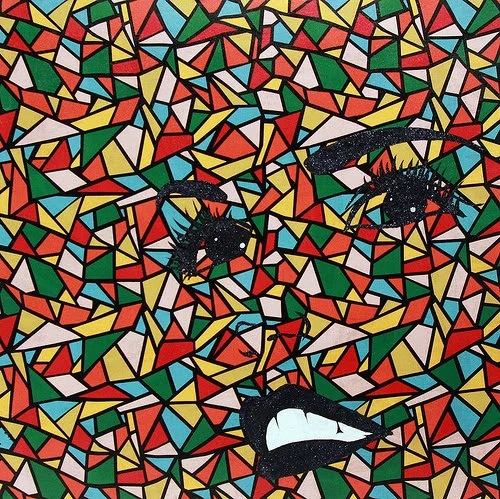
"More Than Meets the Eye,'' by Caroline O'Day, at the Cantor Art Gallery, College of the Holy Cross, Worcester, in the "Senior Concentration Seminar Exhibition.''
Roadside lunch break

From photographer Thomas Hook: "I was driving back from Woodbury. Conn., to my house in Southbury and from my car, I saw a Carolina Wren. I grabbed the camera and got off three shots while stopped at an intersection. Here was that bird with what looks to me like a rather large earwig firmly in its grasp. It was lunchtime after all.''
Llewellyn King: Internet is a cesspool of crime, war and mischief
Via Inside Sources
The big news coming out of the G7 meeting in Japan will not be about establishing international norms for cybersecurity. That will only get an honorable mention at best. But maybe it should get greater attention: The threat is real and growing.
Consider just these four events of the recent past:
The electric grid in Ukraine was brought down last Dec. 23 by, it is believed, the Russians. Because of its older design, operators were able to restore power with manual overrides of the computer-controlled system.
The Hollywood Presbyterian Medical Center in Los Angeles was ransomed. This crime takes place when a hacker encrypts your data and demands a ransom, often in untraceable bitcoin, to unlock it. The hospital paid $17,000 rather than risk patients and its ability to operate.
While these ransom attacks are fairly common, this is the first one believed to have been launched against a hospital. Previously, hospitals had thought patient records and payment details were what hackers would want, not control of the operating systems. Some of the ransoms are as low as $3,000, with the criminals clearly betting that the victims would lose much more by not settling immediately, as did the medical center. The extortionists first asked for $3.6 million.
In a blockbuster heist on the Internet, the Bangladesh central bank was robbed of $81 million. The crooks were able to authorize the Federal Reserve of New York to release the money held in an account there. They would have got away with another $860 million, if it were not for a typing mistake. In this case, the money was wired to fraudulent accounts in the Philippines and Sri Lanka.
Target, the giant retailer, lost millions of customer records, including credit-card details, to an attack in February 2014. Since then, these attacks on retailers to get data have become common. Hackers sell credit card details on what is known as the “black web” to other criminals for big money.Often the finger is pointed at China, which will not be at the G7. While it may be a perpetrator, it also has victim concerns. There is no reason to think that Chinese commerce is not as vulnerable as that in the West.
China, with the help of the Red Army, is blamed in many attacks, particularly on U.S. government departments. But little is known of attacks Chinese institutions sustain.
Governments want to police the Internet and protect their commerce and citizens, but they are also interested in using it in cyberwar. Additionally, they freely use it in the collection of intelligence and as a tool of war or persuasion. Witness U.S. attempts to impede the operation of the centrifuges in Iran and its acknowledged attacks on the computers of ISIS.
As the Net’s guerilla war intensifies, the U.S. electric utility industry, and those of other countries, is a major source of concern, especially since the Ukraine attack. Scott Aaronson, who heads up the cybersecurity efforts of the Edison Electric Institute, the trade group for private utilities, says the government’s role is essential and the electric companies work closely with the government in bracing their own cyber defenses.
Still, opinions differ dramatically about the vulnerability of the electric grid.
These contrasting opinions were on view at a meeting in Boston last month, when two of the top experts on cybersecurity took opposing views of utility vulnerability. Juliette Kayyem, a former assistant secretary for intergovernmental affairs at the Department of Homeland Security who now teaches emergency management at Harvard’s Kennedy School of Government, said she believed the threat to the electric grid was not severe. But Mourad Debbabi, a professor at Concordia University in Montreal, who also has had a career in private industry, thinks the grid is vulnerable -- and that vulnerability goes all the way down to new "smart meters."
The fact is that the grid is the battleground for what Aaronson calls “asymmetrical war” where the enemy is varied in skill, purpose and location, while the victims are the equivalent of a standing army, vigilant and vulnerable. No amount of government collaboration will stop criminals and rogue non-state players from hacking out of greed, or malice, or just plain hacker adventurism.
Governments have double standards, exempting themselves when it suits from the norms they are trying to institutionalize. Cyber mischief and defending against it are both big businesses, and the existential threat is always there.
Llewellyn King is a longtime publisher, columnist and international business consultant. He is host and executive producer of White House Chronicle, on PBS.
Editor's note: See bostonglobalforum.org for coverage of international cybersecurity issues.
You can't trust spring
"The wind is tossing the lilacs,
The new leaves laugh in the sun,
And the petals fall on the orchard wall,
But for me the spring is done.
Beneath the apple blossoms
I go a wintry way,
For love that smiled in April
Is false to me in May."
-- Sara Teasdale'
Bathroom bathos: Some Democrats' obsessive identity politics
Yet again some Democrats' obsession with identity politics undermines the traditional Democratic strengths onbroad socio-economic issues. The latest example of this stupidity is the Obama administration's obsession with forcing states to let anyone self-declare his or her sex and use public bathrooms that by any criteria of common sense and history should only be used by people according to their biological sex -- i.e., by their sex.
The idea that anyone can make a (nonphysiological) gender "choice'' and move between facilities that by prudence and tradition are assigned to one sex is ridiculous. This will lose the Democrats quite a few votes that they could otherwise have won by appealing to voters for the right to address the downward mobility that most Americans now deal with.
The Democrats need another FDR, not a campaign for unisex bathrooms.
-- Robert Whitcomb
Chris Powell: Have politics reformed away the virtue of the citizenry?
Connecticut's former and sometime Republican U.S. senator and governor, Lowell P. Weicker Jr., told the Connecticut Post the other day that Donald Trump's capture of the party's presidential nomination may be the “last act“ of the party's destruction nationally, leading to “total reformation“ of the party.
Maybe. But Trump's ascendance may be that reform already, and since polls show him running competitively against the likely Democratic nominee, Hillary Clinton, in the decisive states of Ohio, Floridaand Pennsylvania, the demise of the Trumpian Republican Party is no sure thing.
Yes, Trump's success suggests that the Religious Right's influence in the party has been greatly exaggerated. His reference during the campaign to “two Corinthians“ when he meant “Second Corinthians“ was among his big gaffes, but it did him no more harm. He embodies an entire environment without fear of God or even concern for ordinary decency. But no matter -- the candidate of the Religious Right, Texas Sen. Ted Cruz, was easily turned aside even in the Bible Belt.
Meanwhile the candidates from the presumably sane section of the party -- Jeb Bush, Marco Rubio, Chris Christie and John Kasich -- only divided it fatally.
Disparaged as they may be by respectable news organizations, the major grievances of Trump supporters are legitimate: illegal immigration and the political establishment's calculated devaluation of citizenship; the disastrous failures of U.S. foreign policy; and the steady decline in incomes. In response to these grievances Trump has gotten away with offering only demagogic nonsense because little else is on offer.
No wall along the Mexican border would be necessary under a government that enforced immigration law against employers. But Trump prefers the wall because it lets him vilify powerless foreigners instead of powerful citizens.
Trump's foreign policy is merely incoherent rage: “America first“ except when certain foreign powers are so repugnant that he wants to nuke them.
As for incomes, no one more than Trump has used a system of cronyized government credit and corporate welfare that has pushed wealth upward.
But no matter again, for reveling in his vileness, Trump even more than Bernie Sanders has captured the political mood -- a contempt so complete that people feel exempted from responsibility even for their own place in public life.
It's not hard to see what caused this contempt -- the exploitation of most basic institutions of government by their supposed custodians, from government employment to finance to education and medical care, undertakings where service to the public has become secondary, service to self primary, and elected officials have done nothing to reverse the trend.
Democrats have “reformed“ too. They have managed to become the party of both Wall Street and the slob culture, of corporate and individual welfare. To try to win a pass from the masses for delivering the economy into a new Gilded Age of plutocratic consolidation, the Democrats promise free college tuition for students who never master high school, encourage racial and ethnic minorities to think that their lagging has nothing to do with their own lack of effort, and righteously contrive constitutional rights for any sexual oddity no matter how trivial its grievances nor how much it tramples on social conventions.
So not only has the country's political health collapsed. Its basic social health is collapsing as well under waves of drug addiction and suicide.
Yes, what if the political "reform" is already here -- not just with Trump and the Republicans but with Clinton and the Democrats too? What if politics has reformed the people themselves out of their virtue?
Chris Powell is managing editor of the Journal Inquirer, in Manchester, Conn.
Leaves on a May afternoon

Japanese maple leaves in Southbury, Conn., by photographer Thomas Hook, a superb bird photographer who is now, he says, taking more plant pictures these days. "It's easier on my knees.''
The moment between moments
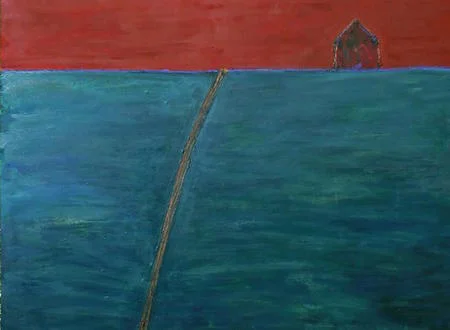
"Forest Road Series: Dead Red Sky'' (oil and cold wax on wood panel), by George Shaw, in his show "Home Again,'' at Galatea Fine Art, Boston, June 1-26.
He writes:
''We live from moment to moment but rarely in the moment. Time appears to be a
seamless flow from then to now to when. But to perceive time we are forced to break
it up into ticks of a clock, endlessly making each tick shorter as we perfect our
measure.
"We thus create a paradox or perhaps a conundrum that makes existence perceptible.
Although we think that time marches on as we perceive it, it flows backwards. We
live for tomorrow but we can never reach it. When we do it all too quickly becomes
but a memory - a dream that never ends. But what of that moment between moments?
The works in this exhibition are a continuation of my interest and fascination with
what that place may be and what tales it may tell.''