
Vox clamantis in deserto




Chris Powell: Worthless educations; yes, exploit working-class fears
From President Obama to Connecticut Gov. Dannel Malloy, elected officials are boasting aboutimprovements in high school graduation rates. But last week even The New York Times acknowledged that it's a fraud. For higher graduation rates are comingmainly at the expense of educational standards, since, while graduation ratesare up, "measures of academic readiness for college or jobs are much lower."
"The most recent evaluation of 12th-graders on a national test of reading andmath found that fewer than 40 percent were ready for college-level work," TheTimes reported. "College remediation and dropout rates remain stubbornly high."
Recent testing of Connecticut high school students and state government’s ownmost recent survey of college freshmen show the same thing: Most students arenot mastering grade-level work but are promoted and awarded high school diplomasanyway, and most freshmen in the state university and community college systemsrequire remedial high school math or English or both.
That's because Connecticut's educational policy now is formally one of socialpromotion. Promotion and graduation require no actual learning. Rather, onlysimple attendance is required. Promotion and graduation are left to thediscretion of local school boards, which have lost the nerve to enforcestandards that measure learning.
Students and parents may be fooled by this dumbing down of education butemployers are not. While students eventually find out, leaving college withdegrees in politically correct fluff like "women's studies" and incurringcrushing student loan debt only to find themselves qualified to be only cashiersand burger flippers, by then it's too late. The education racket has taken theirmoney, and their futures, in the guise of protecting their self-esteem, whichshatters soon enough anyway.
If mere higher graduation rates are the objective, Connecticut should distributehigh school diplomas with birth certificates. Actual education will requireimposing standards and measures of learning -- serious testing -- and riskinghurt feelings earlier.
NO WORKING-CLASS HERO: President Obama complains that presidential candidateDonald Trump is exploiting the fears of the working class, and of course Trumpis. But those fears are entirely valid, since living standards for mostAmericans have been declining for several decades. Somebody should exploit those fears politically.
To some extent the Obama administration has tried to assist the working class. That's how the national medical insurance scheme dubbed "Obamacare" was meant, though increasingly it seems to be failing, driving up costs while leavingpeople with deductibles so high as to make it prohibitive for them to use theirinsurance.
Meanwhile mergers and acquisitions in the economy have exploded, fueled bygovernment’s suppression of interest rates and the preferential access that bigbusiness has to capital. By one estimate mergers and acquisitions in the UnitedStates this year reached a record $2.5 trillion in value. These combinationsdiminish competition and thereby drive costs up and employment down. The ObamaJustice Department's Antitrust Division has slept through them.
FOOL, BRITANNIA: Trump wants to use religion to prohibit certain people fromentering the United States, whose anthem nevertheless identifies it as "the landof the free and the home of the brave."
Responding to a petition protesting Trump, Britain's home secretary, Theresa May, says she might bar the presidential candidate from visiting thatcountry because she has the authority to exclude people who are not "conduciveto the public good." That is, she might keep people out for being controversial. One of the U.K.'s several anthems says: "The muses still with freedom found/ Shall to thy happy coast repair." But soon those muses may be admitted only ifthey sing the right tune.
Chris Powell is managing editor of the Journal Inquirer, in Manchester, Conn.
Philip K. Howard: How to bring parties together to fix infrastructure mess
Fixing America’s decrepit infrastructure shouldn’t be controversial—it enhances competitiveness, creates jobs, and helps the environment. And of course, it protects the public. Repairing unsafe conditions is a critical priority: More than half of fatal vehicle accidents in the United States are due in part to poor road conditions.
After years of dithering, Washington is finally showing a little life for the task. Congress recently passed a $305 billion highway bill to fund basic maintenance for five years. But the highway bill is pretty anemic—it barely covers road-repair costs and does nothing to modernize other infrastructure. The total investment needed through the end of this decade is actually $1.7 trillion, according to the American Society of Civil Engineers. Further, the highway bill does nothing to remove the bureaucratic jungle that makes these projects so slow and costly.
But these two failures—meager funding and endless process—may actually point the way to a potential grand bargain that could transform the U.S. economy: In exchange for Democrats getting rid of nearly endless red tape, Republicans would agree to raise taxes to modernize America’s infrastructure.
Stalled funding. The refusal to modernize infrastructure is motivated by politics, not rational economics. By improving transportation and power efficiencies, new infrastructure will lower costs and enhance U.S. competitiveness—returning $1.44 for every dollar invested, according to Moody’s. That’s one reason why business leaders, led by the U.S. Chamber of Commerce and the National Association of Manufacturers—normally on the same page as congressional Republicans—have been pleading for robust public funding. As an added benefit, 2 million new jobs would be created by an infrastructure-modernization initiative, jump-starting the economy. That’s why labor leaders and economists have joined with the business community to advocate for it.
But these benefits largely accrue to society at large—not to the public entities funding the infrastructure. Because tolls and other user charges, where applied, rarely cover all the capital costs, the federal government often must subsidize public works if the United States wants modern interstate transportation, water, and power systems. As a matter of party ideology, however, Republicans have steadfastly refused to raise the gas tax and other taxes needed to fund infrastructure. This line in the sand was drawn in the 1990s because of the Republican conviction, widely shared by the public, that government is wasteful.
So when the highway trust fund expired this year, Congress found itself in an ideological struggle over how to fix potholes. Unfortunately, Washington’s answer is an inadequate funding plan that is also basically dishonest, resorting to gimmicks like selling oil from the nation’s strategic petroleum reserve at more than $90 per barrel (when the market price is closer to $40).
Red-tape waste. The Republican frustration about government waste is illustrated by the inefficiencies of infrastructure procurement and process. The arduous procedures by which public infrastructure gets approved and built shows that total costs could be cut in half by dramatically simplifying the environmental review and permitting processes—which can often consume a decade or longer. The water-desalination plant in San Diego, for example, which is vital for water-parched California, began its permitting in 2003. It finally opened in December 2015, after 12 years and four legal challenges.
Even projects with little or no environmental impact can take years. The plan to raise the Bayonne Bridge roadway, which spans a strait that connects New Jersey to Staten Island—in order to allow a new generation of post-Panamax ships into Newark Harbor—had virtually no environmental impacts because it used the same foundations and right of way as the existing bridge. Yet the project still required five years and a 20,000-page environmental assessment. Among the requirements was a study of historic buildings within a two-mile radius of the Bayonne—even though the bridge touched no buildings. Once approved, the project was then challenged in the courts based on—you guessed it—inadequate environmental review.
All of this process is expensive. The nonpartisan group Common Good (which I chair) recently published a report on bureaucratic delays, Two Years, Not Ten Years, which found that decade-long review and permitting procedures more than double the effective cost of new infrastructure projects. Delay increases hard costs by at least 5 percent per year. Delay prolongs bottlenecks and inefficiencies, which totals 10 to 15 percent of project costs per year (depending on the infrastructure category). A six-year delay, typical in large projects, increases total costs by more than 100 percent.
Careful process, the theory goes, makes projects better. But the U.S. approval process mainly produces paralysis not prudence. America’s global competitors don’t weigh themselves down with these unnecessary costs. Take Germany: It is a far greener country than the United States, yet it does environmental review in a year not a decade. Germany is able to accomplish both review and permitting in less than two years by creating clear lines of authority: A designated official decides when there has been enough review and resolves disputes among different agencies and concerned groups. The statute of limitations on lawsuits is only one month, compared with two years in the United States—and that two years is only because it was shortened under the new highway bill. Following Germany’s lead, Canada recently changed its permitting process to complete allreviews and other infrastructure decisions within two years, with clear grants of authority to officials to meet deadlines.
Like most laws, America’s infrastructure process has its supporters. Any determined opponent of a project can “game” the procedures to kill or delay projects it doesn’t like. And, just as most Republicans are adamant about not raising taxes, many Democrats are adamant about not relinquishing the effective veto power environmentalists currently wield. After all, who knows when a new Robert Moses might appear to flatten urban neighborhoods?
Spending years arguing about if the project is worthwhile rarely improves the decision.
The tragic flaw in this position, however, is that lengthy environmental review is dramatically harmful to the environment. Prolonging traffic and rail bottlenecks, the Common Good report found, means that billions of tons of carbon are unnecessarily released as officials, environmentalists, and neighbors bicker over project details. America’s archaic power grid—not replaced in part because of permitting uncertainties—wastes electricity equivalent to the output of 200 coal-burning power plants. At this point, the decrepit state of America’s infrastructure means that almost any modernization, on balance, will be good for the environment. Water pipes from 100 years ago leak an estimated 2.1 trillion gallons of water per year. Faulty wastewater systems release 850 billion gallons of waste into surface waters every year. Overall, America’s infrastructure receives a D+ rating from the American Society of Civil Engineers. For every project that is environmentally controversial, such as the Keystone pipeline, there are scores of projects that would easily provide a net benefit to the environment.
In some vital projects, adhering to rigid legal processes could even lead to catastrophe. For example, the proposed new rail tunnel under the Hudson River must be completed before the adjoining tunnel is shut down to repair damage caused by Hurricane Sandy. Any delay in approvals would cut rail capacity to Manhattan from New Jersey in half, with unthinkably bad consequences on traffic, carbon emissions, and the economy.
Environmental review is important, but the tough choices required can usually be understood and aired in a matter of months not years. The trade-offs for the most part are well known: A desalination plant will produce one gallon of briny byproduct for every gallon of clean water; the new rail tunnel under the Hudson River will require dislocating homes and businesses at either end; a new power line will emit electromagnetic energy and mar scenic vistas. But California’s fresh water must come from somewhere, New York needs to eliminate rail bottlenecks, and new power lines will carry clean electricity to cities from distant wind farms. In each case, the relevant questions are whether the new project is worth the costs and, sometimes, whether there’s a practical way to mitigate the effects. Spending years arguing about if the project is worthwhile rarely improves the decision—it only makes projects more expensive while prolonging pollution.
A new bargain. There’s a way to break the logjam caused by a lack of needed funding and an overabundance of process. Conservatives concerned about wasteful government should agree to raise taxes to fund infrastructure if liberals agree to abandon the bureaucratic tangle that causes the waste. This deal will cut critical infrastructure costs in half, enhance America’s environmental footprint, and boost the economy.
Adequate funding will get America moving with safe and efficient infrastructure. And abandoning years of process need not undermine environmental goals or public transparency. The key, as in Germany and Canada, is to allocate authority to make needed decisions within a set time frame. Public input is vital, but it can be accomplished in months. Plus, input is more effective at the beginning of the process, as adjustments can be made before any plan is set in the legal concrete of multi-thousand-page environmental-review statements.
Politically, of course, getting Republicans and Democrats to strike a bargain—more funding for less bureaucracy—won’t be easy. Special interests on both sides have their claws deep into the status quo. It is notoriously difficult to raise taxes, and curbing review timelines can sound like cutting corners. But America can’t move forward on infrastructure built two generations ago. Eliminating traffic jams, electricity outages, airplane delays, and unnecessary tragic accidents will be more than worth the small increase in taxes and a shorter review period.
Congress knows there’s a problem. The new 1,300-page highway bill tiptoes toward streamlining decisions. Unfortunately, these good intentions may actually make matters worse. The bill creates a new 16-agency committee to review projects and defines elaborate procedures on how to set a permitting timetable. But the timetable can be waived, and the new procedures assiduously avoid the one indispensable element for enforcing deadlines: a final decision maker. Indeed, the reluctance to grant anyone the ability to resolve disagreements is almost comical. The director of the Office of Management and Budget is supposedly in charge, but the director’s ultimate grant of authority amounts to no authority all: “If a dispute remains unresolved … the Director … shall … direct the agencies party to the dispute to resolve the dispute.”
But a new bipartisan bargain doesn’t require complicated drafting. It only takes a few words for Congress to approve a gas tax or other taxes to fund infrastructure-modernization programs. And the radical change needed to reduce permitting from ten years to two years will not be made in substantive law—underlying environmental requirements, for example, would remain the same—but rather in authorizing specific officials to make and review decisions. Creating clear lines of authority is much simpler than defining the intricacies of a procedural labyrinth. The law can give the chair of the Council on Environmental Quality responsibility over deciding when there has been enough environmental review, and it can give the OMB director responsibility over resolving disputes among squabbling agencies. They will both be accountable to the president and, if necessary, to the courts. Common Good, at the request of relevant committees in Congress and with the help of two former Environmental Protection Agency general counsels, has already drafted proposed amendments that establish these lines of authority as well as oversight standards for the president and the courts.
The good news is that the political winds are shifting. Hillary Clinton recently proposed a $500 billion infrastructure initiative that included a call to radically streamline permitting and review processes. And Jeb Bush recently called for permits to be granted “within two years instead of ten.” With strong leadership, the nation can get there: If the Democrats cut waste and the Republicans provide funding, Americans will have better rules and better roads.
Philip K. Howard is chairman of Common Good, a regulatory and legal reform organization, a New York-based lawyer and civic leader and the author of several books, including The Death of Common Sense and The Rule of Nobody.
New Year's flowers
I noticed while walking on the path to the front door of a nursing home this morning that pansies had recently been planted and were brazenly blooming in an area with a southwest exposure. In the hard freeze tonight they'll be killed but their presence was a nice reminder of the mild December we've had and that we'll see flowers blooming there again in a few months.
I was at the nursing home to see a physically failing friend who still has his mental faculties. I suspect that he's asking himself how he fits into the cycles of death and birth as he looks out the window at the windy, glittery head of the estuary and wonders whether he will see green trees again in the little park along the water.
-- Robert Whitcomb
Of cheap fares and Christmas card quandaries
There’s been pushback to the Rhode Island Public Transit Authority’s plan to make some low-income elderly and/or disabled people who have been riding for free pay 50 cents a ride.
With those tiny fares, taking public transportation will still be much cheaper for them than owning/driving a car. Further, at least most low-income old people have Social Security and Medicare, unlike younger working-class folks unprotected by AARP lobbyists.
When many people ride for free or at very low fares, it dangerously drains RIPTA’s fiscal ability to provide the frequent and predictable service that could draw many more paying customers; that added revenue could be used to improve the service and, in a virtuous circle, get new riders and revenue. Many riders would happily pay fares more commensurate with the real cost of service if service were better.
The Providence Journal reported that RIPTA “spends about $4.20 per ride on fixed-route buses, and the average fare paid by riders is $1.50….’’ That is absurdly low but helps explain (along with bad labor contracts and inadequate state support) why RIPTA service is so inadequate: It never has enough money to really improve.
Special-interest politics keep undermining sound public policy in Rhode Island, whose dense population would seem readymade for mass transit. The MBTA has plenty of problems, but Greater Boston’s great prosperity can be attributed in part to that system’s dense network and frequent service.
xxx
There are always lessons from holiday seasons, if only to reinforce what you already knew, such as needing to appreciate how much time seems to accelerate as you get older and thus to savor each day as it speeds past. You look up from your morning coffee and it’s Christmas again!
And how fragile we are! Consider the annual casualty list as expressed by Christmas cards that don’t arrive because the senders are dead or too sick or enfeebled by age to write. Or sometimes it’s that the absent senders are newly divorced. Send the latter a “Happy New Year’’ card! (But maybe happiness is overrated: An article in The Lancet, the British medical journal, says that research suggests that unhappy people don’t die earlier than happy ones
Those lazy -- perhaps modern is a better word – e-mail cards: I respect any efforts to keep in touch but something on a screen doesn’t measure up to something tactile. It’s just too easy to push “send’’ to multitudes who get exactly the same message, like an ad. We’re much more grateful getting a physical card with a few words written with a pen by someone mentally and physically trying to maintain or restore a connection with one or a few individuals.
Meanwhile, deciding to whom to send cards can become a rather ruthless exercise. You’ve accumulated a lot of acquaintances but how many are really friends? You’re tempted to start culling the list even faster than death does.
Then you get a surprise card from someone you knew slightly years before but always wished that you knew better. Sending back a card might be a way to start establishing a real friendship, though that’s rare: You’ve moved on too far.
Another funny thing that happens as the Christmases roll by is that not only do you selfishly not want the bother and expense of buying Christmas presents but maybe you don’t want to get them either – it’s just more stuff to store or, at best, “regift.’’ Except, of course, for cash….
A lot of these thoughts are simply about getting older, which speaks to newspaper readers’ demographics. Anyway, if you maintain a clinical curiosity leavened with some humor aging can sometimes be pleasant.
And an observation from this past Yule shopping season: While some small neighborhood shops will keep thriving as people seek convenience, community and quirkiness, Amazon, et al., may soon kill most big department stores. Prepare for a post-retail Providence Place. Textile factory? Dorms?
Robert Whitcomb (rwhitcomb51@gmail.com) is a Providence-based editor and writer and the overseer of New England Diary.

'For reward, for revenge, and for rest'
She’d rather be killing birds,
but instead, she settles beside me
and purrs.
Walking down the road
with fireflies lighting the way –
Christmas in July.
There must be a god somewhere,
for reward, for revenge,
and for rest.
A sure sign that I’m getting old:
people are polite to me.
Old age:
the age of silence
and the age of talking too much.
I’m very lucky:
the only problems I have
can never be solved.
Growing older –
my real fear
is that I will get
what I deserve.
Returning to work after retirement,
trespassing on land you used to own.
One day,
people will become worthy
of the works of art they create.
Is that my smile,
or a river of wrinkles
spreading across my face?
Grateful for having,
ashamed of having,
tired of having,
afraid of losing.
After the concert:
we applaud,
not because we won’t forget it,
but because we will.
Youth passes, thank God.
I’d just make the same mistakes
all over again.
The mind lusts after the flesh,
but the flesh is lost in dreams.
About my wife:
yes, she could have done better,
but she could have done worse.
As the future shrinks,
the past expands
and takes revenge on the present.
After the argument,
the boat springs a leak
but doesn’t quite sink.
I can’t believe these hands are mine –
their knuckles and veins
are so ancient and wise.
The thread snapped –
you could barely hear it –
and people went on with their lives.
The ballet of cars
at a busy intersection –
beauty is everywhere.
Listening to Beethoven
during a thunderstorm –
Beethoven always wins.
The past is an open wound
that never heals.
I can’t forgive
or be forgiven.
Killing ants in the bathroom –
it doesn’t help,
but at least I feel guilty.
Remembering and forgetting –
the two diseases of old age.
Slowly, finally,
my home becomes a home,
my wife becomes a wife.
A single blade of grass
casts a shadow on the fence.
Frank Robinson
James P. Freeman: Mass. in '15: A state of hope and (fiscal) peril
It is right there
Betwixt and between
The orchard bare
And the orchard green
— Robert Frost from “Peril of Hope”
With an eerie prescience, the Jan. 9, 2015, front page of The Boston Globe captured perfectly the mixture of fear and anticipation associated with the hope a new year brings. Two headlines above the fold – “Boston picked to bid for Olympics” and “Baker promises firm fixes, sensitive touch” – would set the tone for 2015 in Greater Boston.
Boston 2024 Partnership, the consortium of business and political interests (so-called “thought leaders”) to bring the 2024 summer Olympic games to The Hub, underestimated Bostonians’ capacity for common sense and overestimated Bostonians’ tolerance for large municipal projects. (Didn’t anyone remind planners of the Big Dig experience?) Residents rightly feared costs would be socialized and any profits would be privatized by special interests. The bid was rescinded in July.
Charlie Baker was sworn in as Massachusetts’ 72nd governor within hours of the Olympic announcement. No politician campaigned on the Olympics but it consumed precious time and energy from more mundane and serious matters, such as the opioid emergency, which rages on unabated (1,256 people – likely more this year – fatally overdosed in Massachusetts in 2014). Alarmingly, more people die in Massachusetts from overdoses than from car crashes.
Boston broke the record for snowiest winter on record, with 108.6 inches. But the MBTA was broken long before 2015 from decades of incompetent government oversight. With melting irony, man could not make the trains run during the blizzards but a train actually ran without a man this December in Braintree, due to “operator error.” Baker must restore the entire system to ensure a second term.
The New England Patriots earned their fourth Super Bowl championship in February, amidst the faux-scandal of Deflategate (which is now being taught as a class at University of New Hampshire). A federal judge determined that the NFL went too far in suspending quarterback Tom Brady. In May, some suggested that Salem State University went too far in paying him $170,000 for a one hour “lecture.” But don’t tell that to the local media, which cover the team by way of sports jingoism, not journalism.
It took a jury in April nearly 26 minutes just to read the “guilty” verdict on all 30 counts against unrepentant terrorist Dzhokhar Tsarnaev, in the Boston Marathon bombing trial.
Irish rockers U2, who lived through the terror of “The Troubles,” charmed the town with four sold-out concerts this summer, as “#BostonStrong” was featured prominently on a massive vidi-wall during their encores.
Pedro Martinez was inducted into the Baseball Hall of Fame and David Ortiz announced this post season he would retire in 2016. Their recognition and retirement mark the perilous end of an era of Boston baseball dominance. Perhaps no other players were better catalysts of hope for a despondent Red Sox Nation before 2004.
Two films about Boston’s ugly underbelly proved to be, in many respects, largely for Boston; another cathartic exercise in order to exorcise criminality. “Spotlight” chronicled the unspeakable and unimaginable clergy sex abuse cover up, and “Black Mass” showcased Whitey Bulger. Each affirmed that evil can reside both in men of the cloth and the cleaver.
After nearly a century, Cambridge-based Converse unveiled the long-awaited Chuck Taylor II sneakers.
After 20 years since the first charter school was opened in Massachusetts, with some municipalities having reached their quotas, many want a reset, a Charter 2.0.
Atty. Gen. Maura Healey, prodigal progressive, concluded that more regulation (of course) would be best for Boston-based fantasy sports league website DraftKings (and FanDuel). But former Gov. Deval Patrick, promiscuous progressive, discovered free enterprise by joining the investment firm Bain Capital.
In November, the financial news Web site 247wallst.com ranked Massachusetts as the best place to live among the 50 states. General Electric thinks so, as it imagines what a world headquarters might look like in Boston as it contemplates relocation from Connecticut for lower taxes and closer proximity to the area’s innovation ecosystem.
This autumn, the Oxford Dictionaries determined that its word of the year was, in fact, not a word, but a pictograph. The “Face with Tears of Joy” emoji according to Oxford lexicographers, “best reflected the ethos, mood and preoccupation of 2015.”
In retrospect, then, Frost got it partially right. Time — and 2015 — might best be defined as an alloy of peril and hope.
James P. Freeman is a New England-based writer and a former Cape Cod Times columnist. This comes via the courtesy of The New Boston Post.
For some of his previous columns, read:
- See more at: http://newbostonpost.com/2015/12/30/the-year-2015-and-the-peril-of-hope/#sthash.VrgyiQQu.dpuf
That green and fuzzy feeling

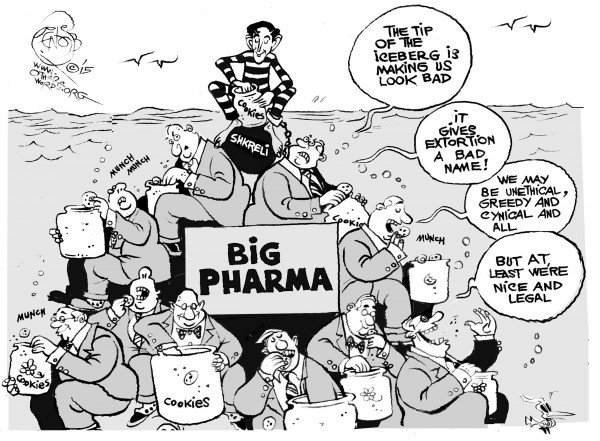
"Marsh Wake,'' by JOAN COLLINS, in the photo show "Shutters,'' at the South Shore Art Center, Cohasset, Mass., Jan. 8-Feb. 21.
These marshes, on the edge of which I grew up, were so lovely and yet so smelly.
Emily Schwartz Greco: Congress's strange energy bill
As lawmakers scurried to keep the government open and head home for the holidays, they wrapped spending and tax deals into a costly measure that highlighted our nation’s mismatched energy policies.
Specifically, this monster bill extended and restored tax incentives for wind and solar power while lifting a ban on crude-oil exports that began during Jimmy Carter’s presidency.
On the one hand, the private sector can keep generating a growing share of the nation’s electricity from renewable, free, and non-polluting resources. On the other hand, some oil that might have stayed in the ground just became more likely to be extracted and burned.
But the deal’s contradictory compromises won’t cancel each other out. Ultimately, the Republican-led Congress — which largely pledges its allegiance to Big Oil — wasted no time in helping the United States adhere to its commitments under the global accord sealed in Paris.
As more homeowners, drivers, industries, and utilities draw their power from the sun and the wind, catastrophic climate change will become less likely. And the long-term climate benefits of boosting wind and solar power for five more years will outweigh the potential climate pollution from allowing crude exports, Council on Foreign Relations energy expert Michael Levi predicts.
Currently, oil prices are so depressed due to a global glut that there’s little demand elsewhere for U.S. crude. If oil markets bounce back, the long-term climate consequences of this largely symbolic victory for Big Oil will probably be small.
Stretching renewable-energy credits out for another five years, however, will deliver major relief to the wind industry. The Production Tax Credit, its primary source of federal support, had been in limbo for most of the past two years.
Then there’s the solar energy Investment Tax Credit. Without the new tax deal, it would have expired at the end of 2016. Now it’s assured through 2022.
Wait. Many Republican lawmakers scoff at the notion of climate action and are trying to sabotage President Obama’s Clean Power Plan. Why would they buttress renewable energy right after the Paris deal?
There are plenty of reasons.
Take job creation. The solar industry alone already employs 200,000 workers and anticipates bringing another 140,000 on board because of the tax credit’s extension. It also goes out of its way to hire veterans and plans on hiring 50,000 of them by 2020.
“These jobs are stable, well-paying, and cannot be exported overseas,” observed Solar Energy Industries Association CEO and President Rhone Resch.
There’s also the shockingly good results of government support for these industries through the tax code, which in recent years has coincided with technological breakthroughs that are now slashing costs for turbines and solar panels.
Over the first three quarters of 2015, wind and solar energy constituted more than 60 percent of the nation’s new energy capacity. The United States is undergoing a renewable-energy boom that’s leaving coal and nuclear power in the dust and overshadowing what until recently appeared to be unstoppable growth for natural gas-fired power stations.
Then, there’s vigorous public support for wind and solar energy, which is nearly as strong among Republicans as Democrats.
While letting solar tax credits lapse wouldn’t have short-circuited that part of the renewable boom outright, Rhone’s solar trade group predicted that it would have slowed things down, including the pace of job and investment growth.
Likewise, the wind industry — despite boasting about $20 billion worth of wind farms now under construction — feared falling off an “economic cliff” had Congress failed to restore the Production Tax Credit for multiple years.
Now the forecast for renewable energy looks sunny and bright, thanks to this green and dirty gift from Congress.
Emily Schwartz Greco is the managing editor of OtherWords, a non-profit editorial service run by the Institute for Policy Studies.
Soon enough

"Sunny Path'' (oil on panel), by PAUL GEORGE, at Alpers Fine Art, Andover, Mass.
Providence should go the Detroit route
With such pathologies as continuing massive "injury'' fraud by Providence firefighters and some other city workers and other "inefficiencies,'' I think more than ever that Providence should go the Detroit route into bankruptcy and restart municipal operations with a clean slate.
-- Robert Whitcomb
Thanks for the memory of great old songs
The end of the year tends to put one in a reflective mood, as does this witty and bittersweet song. The level of literacy of many songs written in the '30s was a mile higher than about 99 percent of the songs cranked out now.
Charles Pinning: I intended nothing bad that Christmas season
I go, and it is done. The bell invites me.
Hear it not, Duncan, for it is a knell
That summons thee to heaven or to hell.
-- from Macbeth
Twas the week of Christmas and it was off to the library to return books and pick out something new. It was cold and blowing snow, but God-forbid that ma mere would let a library book become overdue.
Hustling our barrel buttons and wool into the station wagon, we rumbled toward Bellevue Avenue, parking in the shopping center lot in front of Cherry and Webb, trudging around the corner to the library with our books.
The Newport Public Library was at that time in an Italianate mansion, whimsical and stern at the same time, at the top of a hill overlooking the harbor. Today it’s a senior center and the new library is a brutish thing, squatting at the bottom of the hill.
We entered glittering and while my mother returned the books, I climbed up the central staircase to get closer to the enormous red bell that was suspended from the ceiling.
It was huge and pleated, one of those paper bells that comes flat and accordions out. Only this was industrial strength, probably four feet high and ten feet around, a giant Christmas hoop skirt of a bell, hanging on fishing line from a gold hook.
Why, if I leaned a little forward over the railing, I could…and I did. I lifted the loop off the hook and freed the bell, watching it float silently straight down, where it landed on top of the librarian sitting at the front desk in the middle of the foyer.
“Waaaaaaaaaaaaaah!!!!” Her unbridled shriek rang though the building, sending me melting into the first available room of books, grabbing a volume entitled Diseases of the Horse, and plunking myself down at a long table.
Soon, I heard my mother’s voice calling me. But I was studying so hard that when she came into the room I could hardly look up.
“I think we had better go now,” she said.
Book in hand, I stood up.
“Leave it,” she said.
She led me downstairs where a group of people surrounded the librarian who lay crumpled on floor as if shot. We didn’t pause but put on our hats and swept out the door.
We said nothing rolling slowly down Bellevue Avenue and turning onto Kay Street. My mother began rocking back and forth and suddenly burst out laughing.
“Oh, Dear God! Dear God!...Get a stick of gum out my purse, please, sweetie.”
She placed the back of one hand in a red driving glove up against her mouth and began shaking with uncontrollable laughter. She stopped for a moment and then suddenly started up again.
“Dear God…Dear God…,” she repeated and then the laughing began again.
Before we got out of the car, Mom got serious and said, “Never tell anybody about this. Do you hear me? Promise me that. Do you promise?”
“I promise,” I said, gripping the door handle.
“You’re a good boy,” said my mother, and then we exited the vehicle.
I got my bicycle under the tree that Christmas, glistening and perfect, just as I’d imagined. And nothing was ever mentioned about the librarian upon whom the bell fell. If I heard something about someone’s untimely death, I blocked it out. Newport was a small town back then, and the librarian could have been anyone; a former classmate of my mother’s at Rogers High…the sister of the man who owned the dry cleaners…anyone.
I’ve at times been tempted to delve into old records, newspaper obituaries, but haven’t.
Once a swan suddenly swooped down upon me when I fell water skiing at dusk on a mountain lake, and I sensed what the bell must have felt like to her, the amorphous presence, the shock. I’ve entered dark rooms and felt a specter….
I used to remember the incident and feel badly every Christmas, especially at the sight of a red pleated bell. But now, with the passage of more years, I realize that sometimes bad things can be for the best. Who knows? It is my annual Christmas present to myself, that wish that I did something good. God knows I intended nothing bad. I was only a boy, curious to see what it would be like, the bell floating.
Charles Pinning is a Providence-based novelist.
Quilting up a storm in Gloucester

From an exhibition of quilts by members of the Rose Baker Senior Center in Gloucester, Mass., at the Cape Ann Museum there.
Above, left to right: "Portuguese Hill." Quilt, mixed media. Linen backing made possible through grants from the Massachusetts Cultural Council. Gift of the Art Program at Gloucester's Rose Baker Senior Center, 2015. [Acc. #2015.033.09]; "West Gloucester." Quilt, mixed media. Linen backing made possible through grants from the Massachusetts Cultural Council. Gift of the Art Program at Gloucester's Rose Baker Senior Center, 2015. [Acc. #2015.033.08]; "Magnolia." Quilt, mixed media. Linen backing made possible through grants from the Massachusetts Cultural Council. Gift of the Art Program at Gloucester's Rose Baker Senior Center, 2015. [Acc. #2015.033.03]
Chris Powell: How it can be a wonderful life
Frank Capra's 1946 film, It's a Wonderful Life, to be broadcast tonight at 8 by NBC television, is loved most for its personal message of discovery at Christmas: that its hero's life has been, unbeknownst to him, crucial to his family, friends, community and even his country.
Such general encouragement may seem more needed than ever these days; indeed, this may be, sadly, the cause of the film's popularity. But It's a Wonderful Life may be more important still for its overlooked lesson in democratic economics, a lesson arising from the struggle for survival of a combination credit union and savings bank, the Bailey Building & Loan in the Everytown of Bedford Falls.
The Building & Loan's founder and chief executive, Peter Bailey, has died and its board of directors is deciding the institution's future. The richest man in town, Potter, a misanthropic banker, ruthless landlord and board member, played by Lionel Barrymore, proposes dissolving the Building & Loan, and his callousness angers Bailey's elder son, George, played earnestly by Jimmy Stewart, who has been working as assistant to his father.
POTTER: Peter Bailey was not a businessman. That's what killed him. Oh, I don't mean any disrespect to him, God rest his soul. He was a man of high ideals -- so-called. But ideals without common sense can ruin this town. Now you take this loan here, to Ernie Bishop. You know, the fellow who sits around all day on his ... brains, in his taxi. I happen to know the bank turned down this loan. But he comes here, and we're building him a house worth $5,000. Why?
GEORGE BAILEY: Well, I handled that, Mr. Potter. You have all the papers there -- his salary, insurance. I can personally vouch for his character.
POTTER: A friend of yours.
BAILEY: Yes, sir.
POTTER: You see, if you shoot pool with some employee, you can come and borrow money. What does that get us? A discontented, lazy rabble instead of a thrifty working class. And all because a few starry-eyed dreamers like Peter Bailey stir them up and fill their heads with a lot of impossible ideas. Now I say. ...
BAILEY: Now hold on, Mr. Potter. Just a minute. Now you're right when you say my father was no businessman -- I know that. Why he ever started this cheap, penny-ante building-and-loan I'll never know. But neither you nor anyone else can say anything against his character, because his whole life was. ... Why, in the 25 years since he and Uncle Billy started this thing, he never thought of himself. Isn't that right, Uncle Billy? He didn't save enough money to send Harry to school, let alone me, but he did help a few people get out of your slums, Mr. Potter. Now, what's wrong with that? Why, you're all businessmen here. Doesn't it make them better citizens? Doesn't it make them better customers? You said that ... what did you say a minute ago? "They have to wait and save their money before they even think of a decent home." Wait? Wait for what? Until their children grow up and leave them? Until they're so old and broken-down that they. ... Do you know how long it takes a working man to save $5,000? Just remember this, Mr. Potter: that this "rabble" you're talking about, they do most of the working and paying and living and dying in this community. Well, is it too much to have them work and pay and live and die in a couple of decent rooms and a bath? Anyway, my father didn't think so. ...
At the board's insistence, George Bailey takes over in his father's place to keep the Building & Loan going, and soon he forestalls a run on it, part of a general financial panic, by putting up the money he has saved for his honeymoon and by preaching to a mob of frightened depositors about how they should not withdraw their money but instead have faith in the institution, because their money isn't kept in cash in the safe but rather is invested in the houses, the mortgages, the very lives of their neighbors.
Of course, this is Capra's metaphor for politics and the world: that there is progress when everyone is given a chance, a little capital and credit, when people play by the rules, look out for each other, and don't take too much more than they need, and that selfishness is the ruin of everything.
Something like this -- more or less a policy of helping to make middle-class everyone who aspired to it and would indeed play by the rules, a policy of democratizing capital and credit -- made the United States the most prosperous country and the most successful in elevating the human condition.
But for a few decades now the price of obtaining and maintaining those "two decent rooms and a bath" and the middle-class life to go with it has risen as real wages have fallen for most, largely under the pressure of government's unrelenting taxes in the name of services that have not really been rendered, a welfare system that has subsidized what somehow is not permitted to be called the antisocial behavior it is, and a plutocracy that has gained control of both major political parties.
There seem to be more people who, if too confused or demoralized to be dangerous, are still closer to being a "rabble" than the country saw even during the Great Depression.
Even at its best now Christmas is seldom more than an itinerant charity that, necessary as it may seem, tends to suppress the great political question of the day after Christmas, the question of how things can be organized to ensure that everyone has a good chance to earn his way in decency. But the great joy of Christmas is that the answer has been given, that we are not lost, that the country has been shown the way and can recover it -- that society can work for all, that it really can be a wonderful life if enough selfless people make it a political one.
Chris Powell is managing editor of the Journal Inquirer, in Manchester, Conn.
Judeo-Christian Christmas songs
I've always thought that it's charming, and says something about the ecumenical nature of America, that the partial or full authors of three of the most famous popular Christmas songs -- "Rudolph the Red-Nosed Reindeer'' (lyrics by Robert May), "White Christmas'' (words and music by Irving Berlin) and "The Christmas Song'' -- ("Chestnuts roasting,'', etc.) (music and some of the lyrics by Mel Torme) -- were of Jewish background.
On "White Christmas,'' it's too bad that so many singers leave out the opening of the song, as they do with many, perhaps most, such songs from the Great American Songbook.
Anyway, the intro to one of the most popular songs in world history is:
The sun is shining, the grass is green,
The orange and palm trees sway.
There's never been such a day
in Beverly Hills, L.A.
But it's December the twenty-fourth,—
And I am longing to be up North—
It may be hard for young people to understand why the song evoked such emotion among members of the so-called "Greatest Generation'' until they understand that it was written early in World War II and thus evoked a powerful longing for family and home.
My father, a Navy combat veteran and not a bad amateur musician, hated the tune, denouncing it as being musically tedious and, of course, maudlin. But the song drew tears of sweet melancholy from many of his friends, especially after a few drinks.
David Warsh: "System of 1896'' and GOP hopes for decades of power

SOMERVILLE, MASS.
So impatient am I with the Trump phenomenon that I spent a good part of the week reading The Triumph of William McKinley: Why the Election of 1896 Still Matters, by Karl Rove (Simon & Schuster, 2015).
I read all the way to the end to discover the answer that Rove gives — not every word of a fairly long book, mind you, but enough to get a feeling for the argument. It was an interesting time. Rove tells a good story. He had plenty of help from the published works of a quartet of academic historians – “the Modern McKinley Men,” he calls them – and from own his extensive staff.
McKinley (1843-1901), the 26th president of the United States, rose to prominence as a young hero of the Civil War, later governor of Ohio. He is more widely remembered as the man whose assassination by an angry anarchist catapulted Theodore Roosevelt, his 42-year-old vice president, into the White House.
Yet McKinley had won two presidential elections, the first of them towards the end of a bitter depression that began in 1893. He reconfigured the political map of the day, creating Republican majorities in the Northeast, the Upper Midwest and California – just the opposite of the present day. In defeating William Jennings Bryan, he created what scholarly historians have called the “system of 1896,” which, they say, lasted until 1932. After 1896, Rove writes,
The Republican Party was no longer a shrinking and beleaguered political organization composed of white Anglo-Saxon Protestants in the North and Southern blacks being systematically stripped of their right to vote. Instead, it was a frothy, diverse coalition of owners and workers, longtime Americans and new citizens, lifetime Republicans and fresh converts drawn together by common beliefs and allegiances.
Rove, of course, is himself a practicing political operative, the consultant widely credited with producing the 2000 candidacy of George W. Bush. He served as the administration’s senior political adviser and deputy chief of staff until resigning, in August 2007. In 2010 he organized American Crossroads, a political-action committee to raise money for the 2012 elections. In 2013, he organized the Conservative Victory Project, with a view to supporting “electable” conservative candidates.
As befits an expert fundraiser, Rove ends the books with what amounts to a literary PowerPoint presentation: eight reasons for McKinley’s first victory. He conducted a campaign based on big issues, sound money and protection for infant industries. He attacked his opponent, turning a strength (free silver!) into a weakness (inflationist!). He sought to broaden the Republican base, appealing with considerable success to Catholics, labor unions and immigrants, formerly excluded groups. He put more states in play than had previously been the case. He campaigned as an outsider against traditional GOP bosses in New York and Pennsylvania. He successfully portrayed himself as an agent of change. He adopted the language of national reconciliation, in sharp distinction to Bryan. Finally, he raised plenty of money and brought his advisers into his campaign – Mark Hanna in particular. And he did all this from the comfort of his own home in Canton, Ohio –- receiving one delegation of would-be constituents after another, including a body of former Confederate soldiers, in his “Front-Porch” campaign.
In other words, says Rove, McKinley was the first modern president. If all this still seems a little remote in time, here is a video of Rove himself zestfully describing what he sees as the parallels. He writes, “McKinley’s campaign matters more than a century later because it provides lessons either party could use today to end an era of a 50-50 nation and gain the edge for a durable period.”
The really interesting part is this search for a durable edge, it seems to me, and not because I am especially interested in history. Like Rove, I am concerned mainly with the present day. Also like Rove, I believe that the US electorate is prone to subtle long-term mood swings.
Speculation about long political cycles—periodic electoral “realignments” of political parties, students of politics call them – had great vogue in the 1960s and ’70s, when Rove and I were young. Professors of political science described them, notably V.O. Key, Walter Dean Burnham, E.E. Schattschneider and James L Sundquist. Historians Arthur Schlesinger, senior and junior, popularized the idea. Recently, , of Yale University, has critically examined to good effect the idea of generation-long spans, first in a landmark article for Annual Review of Political Science, and in a subsequent book, Electoral Realignments: A Critique of An American Genre (Yale, 2004). He is certainly right when he says that contingency, strategy and valence all play a part. “Politics cannot be about waiting,” he writes, “for realignments or anything else.” Here is Mayhew’s review of Rove’s book.
And yet the narrative itch persists – before, during and after. The idea that the election of 1896, McKinley vs. Bryan, brought into existence an electoral “system” that dominated U.S. politics until 1932, has been neglected, I think, somewhat obscured by the eight-year presidency of Woodrow Wilson, which eventuated only after the Republican Roosevelt staged his third-party “Bull Moose” run in 1912. Even the Federal Reserve System was largely a Republican creation, under the leadership of Sen. Nelson Aldrich (R-R.I.). I am no historian, but I am inclined to believe Wesleyan University’s Schattschneider, who wrote: “The most substantial achievement of the Democratic Party from 1896 to 1932 was that it kept itself alive as the only party to which the country could turn if it ever decided to overthrow the Republican Party.”
Taken together, along with an account of the influence of congressional Republicans during the Wilson administration, the presidencies of McKinley, Roosevelt, Taft, Harding, Coolidge and Herbert Hoover constitute it seems to me, as coherent a period of governance as the two that followed. The realignment that followed the election of Franklin Roosevelt in 1932 lasted until 1976, at least if you buy the argument that Richard Nixon was the last “liberal” president. The realignment that began with the election of Ronald Reagan in 1980, or, if you prefer, Jimmy Carter in 1976, lasted at least until 2008.
That’s where Rove comes in. He thinks that the Republican Party can gain a second wind – another 30 years or so of hegemony, if only it finds a candidate who can adopt McKinley’s tactics. This, in turn, is where Rove hopes Jeb Bush will serve. Sure enough Bush last week finally began to make his move, preparing to challenge Trump for the political fraud that he is. I still expect the contest for the nomination will come down to Bush vs. someone else – Ted Cruz, or Marco Rubio or even Chris Christie. It’s even conceivable that Bush could still beat Hillary Clinton in the general election, if all the stars were to align.
Would that outcome be the beginning of a second long skein of Republican victories? I doubt it. Rather than cycles, why not call it a zig-zag pattern? – somewhat irregular but durable shifts in majority voter preferences, every couple of generations or so? My hunch is that, for now, the GOP has had its turn. Even an unlikely Bush victory would point away from the policies enunciated in the primary campaign. National security aside, the big issues of the next twenty years in presidential politics – inequality, citizenship, climate change – have barely begun to show up.
David Warsh is a proprietor of economicprincipals.com and a longtime financial journalist and economic historian.
Visitors welcome to Selma
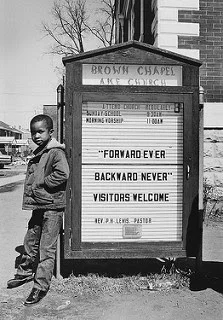
"Saturday, March 21 {1965}. Afternoon. Taken on my arrival in Selma {Ala.}, at the Brown Chapel area," by JAMES H. BARKER, in the show "Through the Lens of History: Selma & Civil Rights,'' Grand Circle Gallery, Boston, through January.
Through January, 2016
Yuletide editing
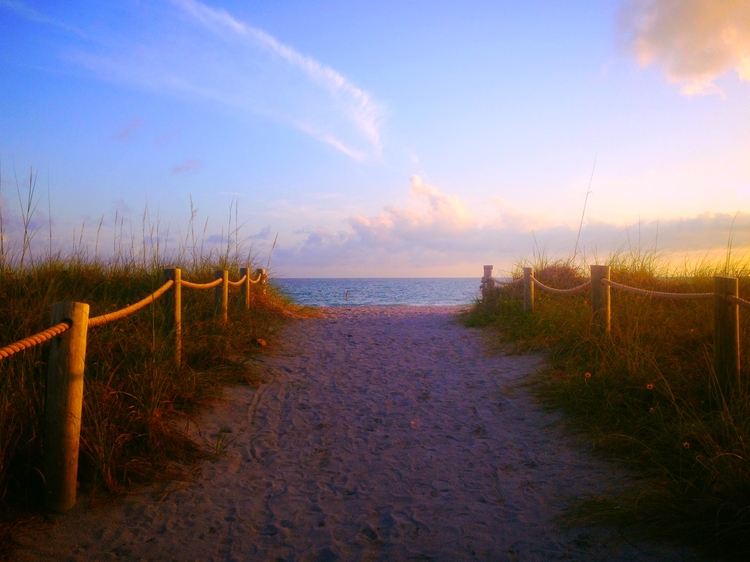
Going through the Christmas card mailing list at this time of year concentrates the mind on the difference between mere acquaintances and real friends. The editing function gets stronger with age -- you realize that you won't have time to keep up with all these semi-friends -- but the deletion by death and disability of your friends is of course an even stronger force.
The holiday season casualty list.
--- Robert Whitcomb