A_map_of_New_England,_being_the_first_that_ever_was_here_cut_..._places_(2675732378).jpg

Vox clamantis in deserto

Commentary Robert Whitcomb Commentary Robert Whitcomb

Landfill art

"Out of the Earth'' (found objects, burlap, dried plant material, plaster, white paint, graphite, fish line, twine, glue and nails), by JOE CARUSO, at Galatea Fine Art, Boston, through September.

"Out of the Earth'' (found objects, burlap, dried plant material, plaster, white paint, graphite, fish line, twine, glue and nails), by JOE CARUSO, at Galatea Fine Art, Boston, through September.

Read More
Commentary Robert Whitcomb Commentary Robert Whitcomb

Amidst the tourists and the traffic that clog the so-called prettiest village in Maine..

morgan
morgan

Photo gaph and comments by William Morgan

Amidst the tourists and the traffic that clog the so-called prettiest village in Maine in the summer, there is this wee reminder of simpler times, of when Wiscasset was a village.

The drug store, the shoe store, and the hardware store are all gone. But Charlotte is still calling herself the village barber–she does not run a salon or a spa or a place to get a pedicure. She is still–when she feels up to it–just cutting hair.

You have to wish for her recovery.

Read More
Commentary Robert Whitcomb Commentary Robert Whitcomb

Stop the bombs; let us go home


This was sent to us by Josephine Shagwert, of the Center for Civil Society and Democracy in Syria

Dear Josephine, 

I’m writing this to you from a refugee camp in Germany. All the Syrians here are so grateful for the welcome people have given us but we want to live in Syria, not Germany.

I was 22 when the fighting started in 2011. I was living in a neighbourhood called Ghouta, a short drive from Damascus. A year after the uprising the regime of Bashar al-Assad placed Ghouta under siege - this means nothing comes in or out - no food, no medicine, nothing. A year after that the regime attacked us with chemical weapons and more than a thousand were gassed to death. For years they have also dropped barrel bombs and missiles on us from regime aircraft. Normally we got struck eight times a day. How could we continue to survive that hell on earth?

I had to cross twenty checkpoints on fake documents to make it out of Syria. Each time your heart stops as you know that there is a chance you will be arrested and taken away. I made it out and survived a death boat. I have survived so many ways a human being can be killed.

At home I was a medical student. We had so many attacks I assisted more surgeries than most surgeons do by the time they retire. My dream is to only have to perform ‘normal surgeries’, what I trained for, not picking shrapnel from bombs out of children's limbs.

We cannot go back while the war continues which is why we are asking for you to do everything you can to stop the war. All your governments agree there needs to be a political transition in Syria but no amount of words have made it happen. The Assad regime is still in power, killing seven times more civilians than Isis.

World leaders have to act to stop the bombs from the sky. We can survive sniper fire, chemicals but the barrel bombs are unbearable. A no-fly zone or creation of safe zones would save lives instantly. And I would be the first person on the plane home.

Right now everybody in Europe is talking about us refugees. But not many are listening to us. Please sign this petition to Europe’s leaders asking them to do more to stop the bombs and help us return home:

https://act.thesyriacampaign.org/sign/we-want-to-go-home

See:

www.thesyriacampaign.org

Thank you,

Abo Adnan

Read More
Commentary Robert Whitcomb Commentary Robert Whitcomb

Past time to get tough with Xi regime

The Obama administration should call off the visit to America of Chinese dictator Xi Jinping and levy serious sanctions against his regime for its aggression in the South China Sea, intense cyber-warfare against American individuals and institutions and relentless theft of U.S. intellectual property. --- Robert Whitcomb

Read More
Commentary Robert Whitcomb Commentary Robert Whitcomb

Central Park Strollers

centralpark

Image credit: Gerda Peterich, Central Park Strollers, 1939-46, gelatin silver print, 6.375” x 6.375”, Collection of theMuseum of Art, UNH, Gift of Lily Hoffman 1977.1.61

Read More
Commentary Robert Whitcomb Commentary Robert Whitcomb

Creepy Thomas Street

"Dream Work of Thomas Street'' (acrylic on panel), by SHAWN KENNEY.

He was one of three  Providence Art Club artist members selected for prizes in the recent "Rhode Island Eerie'' show, whose guiding spirit was the late (and to me boring) horror writer H.P. Lovecraft, whose gravestone in beautiful Swan Point Cemetery has etched on it: "I AM PROVIDENCE''.  Sure hope he isn't.

The building represented here is part of the  multi-building Providence Art Club, which borders much of Thomas Street on Providence's College Hill.

These art clubs founded in the Gilded Age of the late 19th Century, such as this one and the National Arts Club, on Gramercy Park, in Manhattan, and the Arts Club of Washington, are exotic works of social art in themselves, with curious mixtures of eccentric artists, socialites and businesspeople.

Read More
Commentary Robert Whitcomb Commentary Robert Whitcomb

Women's club

"Somewhere Between Blood and the Sky'' (oil on linen), by SUZANNE SCHIRESON,  in the show "A Collective Body: Uncovered and Illuminated,'' at the New Bedford (Mass.) Art Museum.

"Somewhere Between Blood and the Sky'' (oil on linen), by SUZANNE SCHIRESON,  in the show "A Collective Body: Uncovered and Illuminated,'' at the New Bedford (Mass.) Art Museum.

Read More
Commentary Robert Whitcomb Commentary Robert Whitcomb

To cut fossil-fuel use, slash world birth rate

Shove religious zealots aside and get birth-control devices and pharmaceuticals in the hands of as many reproduction-age people as possible. And, no, I am not talking about abortion, or stopping sex, for that matter.

As we're told, and quite rightly, to curb our use of fossil fuel lest we destroy the planet, we hear remarkably little about a highly effective way to slow our use of fossil fuel --- launch an international effort to reduce the birth rate. There are far, far too many people in the world and that's a major reason for the global-warming crisis and other environmental damage.

Shove religious zealots aside and get birth-control devices and pharmaceuticals in the hands of as many reproduction-age people as possible. And, no, I am not talking about abortion, or stopping sex, for that matter.

-- Robert Whitcomb

Read More
Commentary Robert Whitcomb Commentary Robert Whitcomb

Samantha L. Plesser: Transnational firms' dubious background, uncertain future

  The author holds  a bachelor of arts degree from Brown University and graduated from Cornell Law School, after which she practiced corporate law in Manhattan at a complex-litigation firm. She recently received a master of science in nonprofit management.

On the surface it makes sense that corporations inherently conflict with the concept of corporate social responsibility (CSR). Traditionally, the basic definition of a business is to generate profits for its shareholders.[1] CSR, at its most basic level, is the idea that businesses have responsibilities not only to their shareholders but also to stakeholders whom their business activities either directly or indirectly and therefore should create policies designed to protect the interests of stakeholders.[2] Corporations have never been interested in embracing CSR. In 1970, the same year that the term CSR was first used, famed economist Milton Friedman stated in an interview in The New York Times Magazine that a corporation “has one and only one social responsibility — to use its resources and engage in activities designed to increase its profits so long as it stays within the rules of the game, which is to say, engages in open and free competition without deception or fraud.”[3]

Today’s world, of course, has changed from the 1970s. Transnational corporations (TNCs) dominate the economic landscape with some of them earning more money per year than some states’ gross domestic product (GDP) and employing more foreign workers than the population of entire states.[4]   With the rise of TNCs, CSR also increased has increased in popularity as global leaders are now more concerned about the environment, sustainability, human rights, and the future of the planet as opposed to economic interests.[5] External factors, including the 2008 financial crisis and the increased sophistication of the media, raised public awareness of corporate activities and with that increased the demand for transparency and accountability in business. While the decision to ignore CSR policies might have in the past been defensible as a business decision, today from both a business and legal standpoint it is simply foolish not to consider implementing CSR initiatives.

With a new presidential election in the near future and the world focused now on stakeholder interests, now is the moment that TNCs have the chance to control how to incorporate CSR policies into their business models. If they chose to ignore CSR altogether, soon this decision might be out be of their hands entirely.

The Rapid and Unfettered Growth of TNCs

Before the rapid expansion of businesses across the ocean in the 1990s, they were restricted to their own state borders. This limited business operations in a number of important ways.   Most importantly, a business restricted to its incorporating state is subject to strict scrutiny of its operations. Labor in Western Europe and the United States is protected by a number of laws making labor extremely costly. Minimum wage and hour requirements, paid leave, requirements for overtime pay, and employer health care plans are standard in the West but are also costly for businesses. Businesses also have to work with unions to negotiate contracts, deal with safety inspectors, and pay taxes to the government.[6]  Moreover, workers are aware of their rights and also of the legal avenues to file suit if those rights are violated.

During the 1990s, third party global economic organizations, including the World Bank, the United Nations, and the North American Free Trade Agreement (NAFTA), decided that in order to encourage the growth of business, laws would be drafted to encourage the unrestricted free flow of goods, services, and capital between nations.[7] Once trade restrictions were relaxed, the size, scope, and wealth of businesses exploded quickly. This “rapid globalization led to an “inexorable integration of markets, nation states, and technologies to a degree never witnessed before...enabling individuals, corporations, and nation states to reach around the world farther, faster, deeper, and cheaper than before, the spread of free-market capitalism to virtually every country around the world.”[8]

No Rules to Follow So Why Follow the Rules

TNCs expanded their foreign operations into developing countries because they had limited financial capital, a weak infrastructure, were isolated from the rest of the world, and had massive populations below the poverty line in desperate need of work and willing to work in any conditions. This labor force was easily exploited given their desperate circumstances and lack of opportunities elsewhere.[9]

Many developing countries had vast natural resources in their countries but were the subjects of UN embargoes for violating human rights.[10] Based on the argument that they were “states” and therefore were not bound by  the  Universal Declaration of Human Rights, TNCs financed dictatorships by supplying them with capital and circumventing UN economic embargoes for their own personal profit.[11]

By buying their raw materials, employing their populations, and being their own only source of financial capital, TNCs soon became de facto leaders of entire nations. They were not only able to purchase a nation’s people and raw materials but its sovereignty as well.

Dealing with Human Rights Violations

Even today, TNCs take a “reactive” approach to human rights violations abroad whereby a representative from a parent company performs damage control after an incident occurs. A reactive approach is not concerned with stakeholder interests and does not address the underlying source of the harm. The goal of this approach is protecting the reputation of the company by preventing news of the incident from leaking to the public.   How the company deals with incidents varies but the goal is to pay as little as possible to get the parties involved to sign nondisclosure agreements (NDA) legally binding them to silence.[12]

Conversely, a preventative approach is aligned closely with CSR. It emphasizes the idea that investing money in worker safety, better working conditions, training, sustainable materials, and other initiatives before problems arise creates a better working environment, avoids problems or litigation, and creates a loyal and better trained work force. A preventative approach is rooted in the belief that a business can both maximize profits and protect stakeholder interests.[13]

Complex Jurisdictional Issues

For years, TNCs have occupied a gray area outside international law. Given their expansive size, complex levels of subsidiaries, millions of employees, and thousands of projects, untangling these levels to find the parent company at the top is a Gordian knot so complex even Alexander the Great would have difficulty unraveling it.   Now it is often the case that laborers are unaware whom they are actually working for or the project for which they are working only on a small part.[14]

Even more disturbing is that a parent company is often unaware to whom they contracted out important projects. There have been incidents in which a parent company will contract a job to a supplier and without notifying the parent, that contractor will in turn contract this job to a sub contractor who is cheaper. Of course, the sub contractor is cheaper because its work is defective or it engages in unethical business practices and in the end, the product, which by now has been mass produced around the world, must be recalled.[15] It is astonishing that corporations who have such vast wealth also have such little oversight over their own operations. They are like the ancient Greek and Roman Empires, ruling from an ocean away with little thought as to what occurs after they have sent out their instructions and no real knowledge of the faceless and replaceable laborers who are working day and night on their projects.

Moreover, just like the empires of old who discouraged uprisings of any kind, on the rare occasions that labor manages to voice their grievances, it usually results in when they have torture, imprisonment, exile, or death.[16]

Comparing United States Based TNCs to Those Based in Europe and Asia

A logical assumption to make is that United States based TNCs would be more likely to institute laws protecting labor because for years the United States has had strong laws in place protecting labor and a strong legal precedent for holding corporations liable.[17] This is not the case.

Despite laws protecting labor in the United States, corporations still feel strongly that business is a private enterprise whose sole purpose is to generate profits. Europe and Asia take a more integrated view of business, seeing it performing the dual role of generating a profit for its shareholders and having a “shared responsibility [with the government] to advance society’s interests and concerns.”[18]

Even though the United States continues to hold the position as the world’s wealthiest country, its advantage now is not nearly as great as it was a decade ago. The financial crisis of 2008 demonstrated the weakness of the capitalist economic system and the economies of Europe and Asia have rebounded faster than that of the United States because of government stabilization.

Even though U.S.-based TNCs are still not accepting of CSR policies, they now realize that having the reputation of a “CSR friendly” corporation is of value to today’s consumer.[19] Instead of simply implementing CSR initiatives many TNCs are instead designing a PR strategy around philanthropic and charitable endeavors and labeling it CSR to confuse the general public into believing that they are “CSR friendly.” CSR is an investment in the workers and business model of one’s own company to effect change in one’s own business. Philanthropy is a donation of money or time to an unrelated cause.[20]

Corporate Liability: Addressed but Not Answered

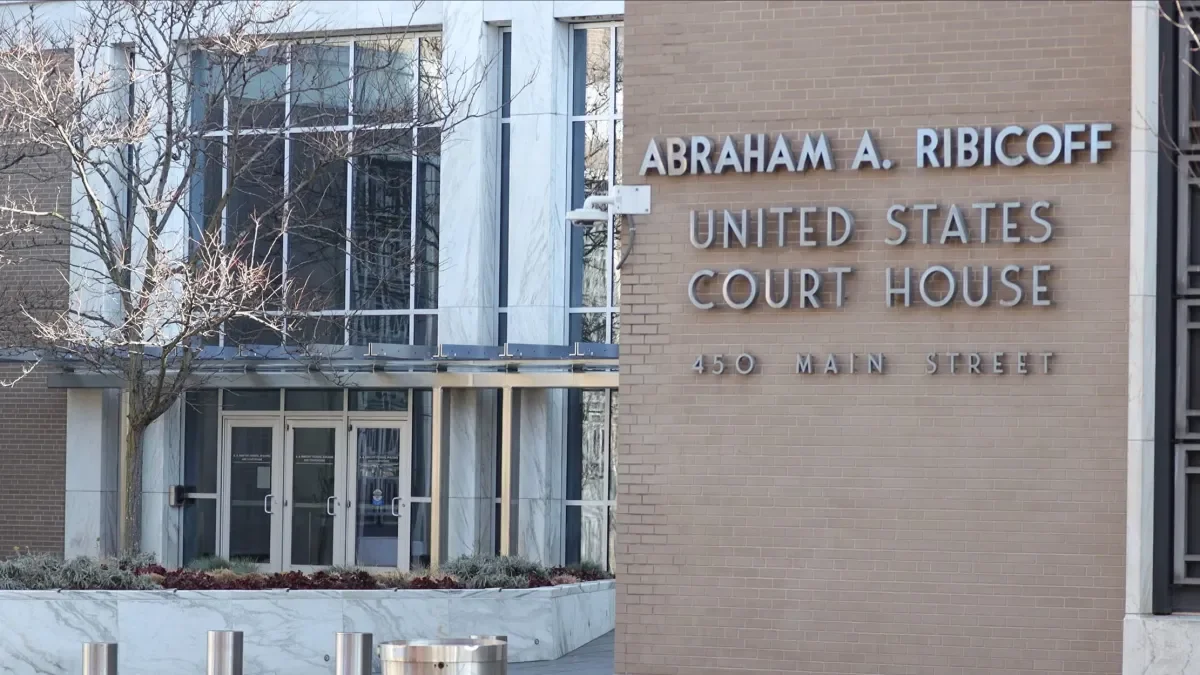
For years, company attorneys were confident that even if a foreign plaintiff were able to file suit against a parent company for a tort committed by its subsidiary, no federal court would grant that plaintiff jurisdiction.  That changed, however, when an enterprising legal team dusted off a statute not used since 1789 getting jurisdiction for his foreign client for a tort committed abroad .

Dolly Filártiga, a political refugee from Honduras, filed a claim against the Inspector General of Paraguay, for the murder and torture of her son in Paraguay, using the Alien Tort Statute (ATS.[21] On appeal from the Eastern District of New York, The Supreme Court ruled that “for purposes of civil liability, the torturer has become like the pirate and slave trader before him hostis humani generis, an enemy of all mankind’ and that  ‘whenever an alleged torturer is found and served with process by an alien within our borders, § 1350 provides federal jurisdiction.’'[22]

Despite a clear indication that the ATS could demonstrate jurisdiction, there was only 31 reported cases filed under the ATS between 1980 and 2004.[23]

The Supreme Court got involved in ATS litigation to define the limits of the ATS when it ruled on Sosa v. Álvarez-Machain et al.[24] Sosa was a DEA agent who was tasked to extradite  from Mexico a suspect accused of torturing and killing two DEA agents.  Unable to extradite him, Sosa hired two Mexican nationals to kidnap him; he then stood trial, where the suspect was  acquitted. Later, Sosa was put on trial for arbitrary detention and arrest and a judgment was entered against him in the Ninth Circuit. The Supreme Court accepted the case on the issue of whether the ATS creates private causes of action for torts committed anywhere, in violation of international law or treaties with the United States, or whether it is instead merely a provision that grants jurisdiction to federal courts.[25]

The Court found that although the ATS is a jurisdictional statute, it was intended to have a practical effect. The Court concluded that it “ is best read as having been enacted on the understanding that the common law would provide a cause of action for the modest number of international law violations with potential for personal liability at the time.”[26] Rather than enumerating specific international norms which would give rise to causes of action, the Court set forth a standard which recognized the evolving nature of international law and provided a modern framework for determining whether a tort constitutes a cause of action under the ATS; this framework incorporates the features of universality, obligatory nature, specificity and prudential considerations .[27] Since arrest and arbitrary detention did not violate any treaty with the United States; nor did the arrest and detention violate an international norm meeting the “specific, universal and obligatory” standard, the case against Sosa was dismissed.

The 2013 Supreme Court holding in Kiobel v. Royal Dutch Petroleum was relevant for its procedural posture more than its actual verdict.[28] Nigerian plaintiffs alleged that The Royal Dutch Shell Company compelled its Nigerian subsidiary and the Nigerian government to brutally crush a peaceful resistance movement protesting aggressive oil development. The defendants moved to dismiss, arguing (1) that customary international law itself provided the rules by which to decide whether conduct violates the law of nations where non-state actors are alleged to have committed the wrong in question and (2) no norm ever existed between nations that imposes liability upon corporate actors.[29]

In 2010, the SDNY found for the defendants, holding that (1) corporations cannot be held liable for violations of customary international law and that the scope of liability is determined by customary international law itself and (2) under Supreme Court precedent, the ATS required courts to apply norms of international law—and not domestic law—to the scope of defendants' liabilities.[30] Trying to reconcile a circuit split, The Supreme Court accepted the case to decide “whether corporations are immune from tort liability for violations of international law.”[31]

After presented oral argument and the submission of amicus briefs, the Court remanded the case to the attorneys for further argument on an entirely new legal issue: ‘Whether and under what circumstances the Alien Tort Statute, 28 U.S.C. § 1350, allows courts to recognize a cause of action for violations of the law of nations occurring within the territory of a sovereign other than the United States.”[32]

Defendants invoked the “presumption against extraterritoriality,” stating that the territorial reach of the ATS should be limited since the statute does not state explicitly it applies to conduct outside the United States and further to rule on the matter would violate state sovereignty.[33]

While the U.S. Government originally supported the Kiobel plaintiffs on the issue of corporate liability, the briefs submitted in the second round were more divisive. The Justice Department argued that The Supreme Court refused to recognize ATS suits that “challenged the actions of a foreign sovereign in its own territory” where “foreign plaintiffs are suing foreign corporate defendants for aiding and abetting a foreign sovereign’s treatment of its own citizens in its own territory.”[34]  The brief further argued that the executive branch play a stronger role in determining whether the ATS applies to violations committed overseas, on a case-by-case basis because this way judges are able to detect when the primary human rights abuser is physically present in the United States and detain them which best serves U.S. foreign policy interests in denying safe haven to violators of human rights.   Both the Justice and State Departments agreed that The Supreme Court continue to allow extraterritorial ATS suits to continue if the plaintiff could demonstrate jurisdiction.

The Supreme Court affirmed the SDNY’s verdict but avoided the issue of corporate liability thus making the events leading up to the opinion more important than the verdict itself. Justice Breyer, writing for the majority of the Court, held that [plaintiffs’ claims fail because] “ATS claims rest on conduct that occurred outside the United States, those claims must “touch and concern the territory of the United States . . . with sufficient force to displace the presumption against extraterritorial application.”[35]  The Court reasoned that the defendants’ conduct occurring outside the United States indicated no more than a “mere corporate presence” and did not sufficiently “touch and concern” the United States to displace the presumption against extraterritoriality.[36]  For all intents and purposes, The Supreme Court avoided an actual legal ruling on this case by first restating a basic premise of civil procedure and then, even avoiding the opportunity to provide guidance to circuit judges on (1) factors to use to determine level of corporate presence in the forum state and (2) factors to use in determining if the level of conduct rises to that which “touches and concerns” the United States. Thus, each ATS case remains a matter of first impression for circuit judges.[37]

Initially, the 2014 holding in Daimler AG v. Bauman reversing the Ninth Circuit seemed as though The Supreme Court finally had ruled in favor of corporate interests but upon closer examination the reality is that the Court’s legal reasoning is sound and based on established precedent. In this case the plaintiffs simply did not prove jurisdiction.[38]

The issue presented was whether a U.S. court had the authority to hear a case against a foreign corporation "solely on the fact that an indirect corporate subsidiary performs services on behalf of the defendant" in the state where the lawsuit was filed.” Plaintiffs worked at a Argentinian subsidiary of Mercedes-Benz, a wholly owned subsidiary of Daimler and alleged that when they tried to unionize, management, with the help of police and military, tortured and threatened them. The Ninth Circuit reversed the District Court finding personal jurisdiction under an “agency theory.”[39]

In an unanimous decision, The Supreme Court upheld the District Court’s verdict, holding (1) that DaimlerChrysler’s wholly owned subsidiary Mercedes-Benz USA was not an agent of its owner, therefore it was unreasonable to exercise personal jurisdiction directly over DaimlerChrysler and (2) that “sizable” sales in a forum state was not enough to rebut the theory of extraterritoriality because corporate sales in a forum state is not sufficient to prove defendant’s presence “touched and concerned” the forum state or that it rose to the level of a “corporate presence”.[40]

The Future of TNCs

Currently, TNCs control approximately 16% of the entire world’s productive assets and employ over 73 million global citizens.[41] The market value of the wealthiest TNCs is worth hundreds of billions of dollars on the global exchange.[42] Apple Inc., the richest TNC to date, is listed on the global price indices at $725 billion.[43] United States based TNCs control around 40% of that wealth.[44] TNCs were able to accumulate vast wealth rapidly because of relaxed regulations and lack of oversight. However, now focus has shifted away from economic expansion to emphasis on stakeholder interests, sustainability, and concern for the environment.

Third party global governance organizations are not interested in grating TNCs free range in their behavior any longer. Task forces are forming around the world to address holding them accountable for their misconduct.

In 2001, The United Nations created a specialized committee whose sole purpose was to hold TNCs accountable for human rights violations by extending the authority to sanction to the European Court of Human Rights or creating an entirely new international court specifically designed to hear human rights abuses committed by TNCs.[45]

Soft law exists specifically governing the behavior of TNCs and more is being drafted every day by third party global governance organizations. In 2003, The United Nations Norms on the Responsibility of Transnational Corporations and Other Business Enterprises with Regard to Human Rights was drafted as a precursor to what will one day be enforceable international law governing the behavior of TNCs as they relate to contracting with developing nations and ethical business practices.[46] The Global Compact, a voluntary corporate citizenship initiative whose signatories commit to basic principles of sustainability, is publically available.   Companies who do not sign the Compact are therefore noticed and their business practices are immediately questioned.[47]

Despite continued equivocation by many TNCs to embrace CSR as part of their business agenda, there is now real data showing that corporations who implement CSR initiatives also generally increase their profit margins. Thus, the real resistance to CSR now is no longer that it will affect profit but simply a resistance to change.[48] If history has taught us anything it is that nothing is permanent. In 1938, the British Empire covered 13.01 square miles of the Earth or 22% of the earth’s land and it reigned over 20% of the world’s population. Today, that empire is 93,800 square miles and has 64.5 million people.   If TNCs want to remain dominant in today’s changing society, they must adopt to the new priorities of that society. As Benjamin Disraeli said, “In a progressive country…change is inevitable.”

[1] See Goddard v. Chaffee, 2 Allen (Mass.) 305, 79 Am. Dec. 796; Sterne v. State, 20 Ala. 46) (1861).

[2] A company’s stakeholders are individuals or groups who are directly impacted by the business’ operations and decisions and can be either potentially benefitted or harmed by the decisions the business makes. See Carlson, J.R., Carlson D.S., & Ferguson M. (2011); See alsoDeceptive Impression Management: Does Deception Pay in Established Workplace Relationships?Journal of Business Ethics,100(3), 497-514 (2010).

[3] See Milton Friedman, "The Social Responsibility of Business is to Increase its Profits", The New York Times Magazine, (Sept. 13, 1970.)

[4] See Danailov, Sylvia, “The Accountability of Non-State Actors for Human Rights Violations: the Special Case of Transnational Corporations,” at 45 (Geneva, October 1998) (citing studies to show the enormous wealth and power of TNCs today).

[5] See generally Community Legal Education Center White Papers, “New Findings on Conditions Across

Wal-Mart’s Garment Supplier Factories in Cambodia, India, and Indonesia,” Society for Labor and Development, India, 19 (May 2015) (discussing a culture denying “freedom of association” to all factory workers, the punishment and torture of pro-worker groups, and enforced intimidation techniques used to silence workers from organizing.)

[6] United States. Http://www.dol.gov/dol/topic/wages/. Cong. Bill. N.p. Web.

[7] The most important of these laws was The General Agreement on Tariffs and Free Trade (GATT).

[8] See Id. at 6 quoting Milton Friedman.

[9] See Danailov, Sylvia, “The Accountability of Non-State Actors for Human Rights Violations: the Special Case of Transnational Corporations” (October 1998).

[10] See The United Nations. Universal Declaration of Human Rights. 1948 (The Universal Declaration of Human Rights is a compromise in that in exchange for promising to further the principles and practices of human rights (and thereby giving up some aspects of self-rule), signatories are guaranteed certain privileges and protections as members of the United Nations.)

[11] See generally Masshiro, Miyoshi, “Sovereignty and International Law, Sovereignty, Territory & International Law (April 2014); See also Ozden, Melik, “Transnational Corporations and Human Rights,” European Third World Centre (Geneva 2006) (discussing various transnational corporations who, in direct contravention of United Nations policy, contracted with countries who had violated human rights laws to buy materials or contract for foreign labor simply for their own economic gain including Nestle, Chiquita, Dow Chemical Corporation, Standard Fruit, Dole Food, Parmalat, and Union Carbide and have not been held accountable for their actions).

[12] See generally John M. Conley & Cynthia A. Williams, Engage, Embed, & Embellish: Theory versus Practice in the Corporate Social Responsibility Movement”, 31 J. Corp. 1,1-2 (2005).

[13] See Id.

[14] See Osman & Recep Yucel, “Globalization of Markets, Marketing Ethics and Social Responsibility,” International Journal of Tech Engineering, 10(5) (2010).

[15] See Story, Louise. "Lead Paint Prompts Mattel to Recall 967,000 Toys." The New York Times. The New York Times, 01 Aug. 2007. Web. 12 Sept. 2015 (discussing breakdowns in supply chains in China whereby original suppliers contracted with sub contractors in China to paint toys without notifying parent companies resulting in toxic toys and the need for a complete recall of toys in the United States.   Mattel and RC2 (the maker of Thomas Train Engines) were affected.); See also Strom, Stephanie. "A Sweetheart Becomes Suspect; Looking Behind Those Kathie Lee Labels." The New York Times. The New York Times, 26 June 1996. Web. 12 Sept. 2015 (discussing the 1996 controversy surrounding Kathie Lee Gifford’s shock when she discovered that the clothing line she designed for Wal-Mart was being mass-produced in Honduras by children working in sweatshops) .

[16] See generally Community Legal Education Center, New Findings on Conditions Across Wal-Mart’s Garment Supplier Factories in Cambodia, India, and Indonesia, Society for Labor and Development, 19 (2015) (describing corporate policies denying freedom of association to workers attempting to organize, instances of torture, disappearance, exile, and murder to those who attempt to file grievances concerning their working conditions, and a corrupt system whereby unions are stacked with management so that workers continue to get no say but it appears that they are represented to the outside world); See also Hough, Phillip A., “A Race to the Bottom? Globalization, Labor Repression, and Development by Dispossession in Latin America’s Banana Industry,” Global Labor Journal, Vol.3, No.2 (2012) (After attempts to unionize in Colombia, Nicaragua, Belize, and other Latin American countries in order to peacefully request a living wage, paramilitary forces were brought out, workers were summarily executed, others were forced into exile without being allowed to tell their families farewell, and others were beaten to death.); Report of the International Commission for Labor Rights. (2013); Merchants of Menace: Repressing workers in India's new industrial belt, Violations of workers' and Trade Union Rights at Maruti Suzuki India Ltd. (In India in 2012, dozens of workers were first detained without charge and summarily fired without severance after it was discovered their membership in a trade association.) The workers rioted (without any weapons) which resulted in the arrest of over two hundred workers and a fire at the plant and the dismissal by management of over two thousand laborers, thousands of whom had never been affiliated with any organized union.

To date, over two hundred workers are still in police custody and have yet been granted access to counsel).

[17] See generally Pembina Consolidated Silver Mining Co. v. Pennsylvania, 125 U.S. 181 (1888) (holding the Fourteenth Amendment, forbidding a State to deny persons equal protection under the law, applies to private corporations as well as to individuals, public agencies, and the government); See also Trustees of Dartmouth College v. Woodward, 17 U.S. 518 (1819) (holding corporations may contract with other parties and sue or be sued in court in the same way as natural persons or unincorporated associations of persons).

[18] See Id. at 47.

[19] See Naeem, Farukkh. "CSR: Good Business, or PR Ploy?" Kippreportcom. N.p., 29 Mar. 2010. Web. 12 Sept. 2015.

[20] See Id.

[21] The Alien Tort Statute (ATS), 28 U.S.C. § 1350, enacted as part of the Judiciary Act of 1789 and originally intended by the Framers was created to assure foreign governments that the U.S., as a fledgling nation, was partially to prevent and provide remedies for breach of customary international law concerning diplomats and merchants.

[22] See Filártiga v. Peña-Irala, 630 F.2d 876, 9, 11 (2d Cir. 1980).

[23] See Ku, G. Julian, “The Third Wave: The Alien Tort Statute and the War on Terror, 19 Emory Int’l L. Rev. (2005).

[24] 542 U.S. 692 (2002).

[25] See Id.

[26] See Id.

[27] See Id. at 31-33.

[28] See Kiobel v. Royal Dutch Petroleum Co., 621 F.3d 111 (2d Cir. 2010), cert. granted,

132 S. Ct. 472 (Oct. 17, 2011) (No. 10-1491).

[29] See Id.

[30] See Kiobel v. Royal Dutch Petroleum Co., 621 F.3d 111 (2d Cir. 2010)

[31] See Kiobel v. Royal Dutch Petroleum Co., 621 F.3d 111 (2d Cir. 2010), cert. granted,

132 S. Ct. 472 (Oct. 17, 2011) (No. 10-1491) at 2.

[32] See Id.

[33] See Brief for Royal Dutch Petroleum, Kiobel v. Royal Dutch Petroleum, 621 F.3d 111, Respondents’ Brief.

[34] See Brief for Royal Dutch Petroleum, Kiobel v. Royal Dutch Petroleum, 621 F.3d 111 Amici Curiae Supporting Respondents.

[35] 132 S. Ct. 472 at 2.

[36] See Id.

[37] Although ATS filings continue, the only case to make it past the motion to dismiss stage since Daimler is Mwani v. Laden, 417 F.3d 1 (D.C. Cir. 2005), 947 F. Supp. 2d 1 - 2013 (Kenyan plaintiffs survivors of the 1998 embassy bombing in Nairobi filed claim against terrorist organization and state government; Court found that activities clearly “touched and concerned” the United States to rise to a level that jurisdiction was appropriate).

[38] Daimler AG v. Bauman, 134 S. Ct. 746 (2014).

[39] See Id.

[40] The Court relied on the established precedent set forth in International Shoe v. Washington, 326 U.S. 310 (1945) for the established precedent that a “state may exercise “state may exercise personal jurisdiction over an out-of-state defendant, so long as that defendant has "sufficient minimum contacts" with the forum state, from which the complaint arises.”

[41] See Danailov, Sylvia, “The Accountability of Non-State Actors for Human Rights Violations: the Special Case of Transnational Corporations,” (Geneva, October 1998) (citing studies to show the enormous wealth and power of TNCs today).

[42]“Market value” is the share price times the number of shares outstanding. Listed companies do not include investment companies, mutual funds, or other investment vehicles.

Definition provided by The World Bank,

http://data.worldbank.org/indicator/CM.MKT.LCAP.CD/countries

[43] See Danailov, infra, at 47.

[44] See Id.

[45] See John Ruggie, "United Nations Guiding Principles on Business and Human Rights", March 21, 2011

[46] See “UN Norms on the Responsibility of Transnational Corporations and Other Business Enterprises with Regard to Human Rights,” UN Doc. E/CN.4/Sub.2/2003/12/Rev.2 (2003) of August 26, 2003.

[47] See Hoessle, Ulrike: The Contribution of the UN Global Compact towards the Compliance of International Regimes: A Comparative Study of Businesses from the USA, Mozambique, United Arab Emirates and Germany. In: Journal of Corporate Citizenship, Volume 2014, Number 53, March 2014, pp. 27-60(34).

[48] See Naeem, Farukkh. "CSR: Good Business, or PR Ploy?" Kippreportcom. N.p., 29 Mar. 2010. Web. 12 Sept. 2015.

Read More
Commentary Robert Whitcomb Commentary Robert Whitcomb

Anders Corr: An art coup for Korea-Japan relations

Curators Kyoko Sato and Kate Shin at Waterfall Mansion, in New York City, on Sept. 9.

-- Photo by Quyn Duong.

The South Korean pop jazz singer Ruby Choi crooned over a band and dozens of  Korean art installations, including a framed tree by famed  photographer Myoung Ho Lee (Tree…#2, 2012).

Hundreds of young South Korean and Japanese art lovers flowed up and down the stairs of Waterfall Mansion, on Manhattan's Upper East Side, at a massive celebration of the 70th anniversary of the independence of Korea. The event, named “Re:Kontemporary Exhibition, Fermented Souls,” was sponsored by the  South Korean electronics company LG and can be seen by appointment until Nov. 15. At the opening on Sept. 9, Gaonnuri plated Korean hors d’oeuvres and KGC poured Korean Red Ginseng Tea.

What made the event truly remarkable, though, was the Korean owner and curator, Kate Shin. She included a Japanese curator, Kyoko Sato, and Japanese art pieces on every floor of her mansion for the show.

Why would a South Korean curator court controversy by including Japanese art at a celebration of Korean independence? Ms. Shin explained that she did so in the spirit of cultural diplomacy and to improve still-strained relations between  South Korea and Japan.

“Emotions are the most effective and direct way to mitigate what the system and history produced to create the conflict and tension between Japan and Korea,” said Ms. Shin. “Artistic collaboration heals and mitigates this very invisible but real tension.” Ms. Shin believes that art heals historical wounds more effectively than politics.

“When you address it by law, structure, or regulation, you are forced to do it but it is not natural,” she said. “But with art you can change people’s perception overnight because it interacts with you emotionally.”

On the fifth floor of the mansion, AIKO's “It’s Over!” (mixed media on canvas, 2011) hangs over the South Korean muralist Yoonhyup’s “Above the Clouds” (acrylic, 2015). Ms.  Sato found the Japanese artist, and Ms. Shin chose the placement.

“Kyoko was freaking out,” said Ms. Shin, because the Japanese art blocked part of the Korean art. “But I told her it works,” said Ms. Shin. AIKO and Yoonhyup are both street artists, a no-hold-barred art form in which artists often cover and change each other’s works.

Ms. Shin sees her generation moving beyond the war. “A lot of young people didn’t even experience this horrible history, it is only their grandparents or parents,” said Ms. Shin. “Conflict is only a perception now – we [are having this art show] to change perception very softly, very naturally, over time.”

In the photo above, Japanese curator Kyoko Sato stands with South Korean gallerist Kate Shin at the Waterfall Mansion. In the background is  South Korean artist Osang Gwon’s “Ki & Blue” (ink jet print on aluminum, 2015), which showed in Japan’s Okinawa Contemporary Art Center this year. Ms. Sato and Ms. Shin opened their show, with 38 South Korean and Japanese artists, to commemorate the 70th anniversary of Korean independence, and to improve still-strained relations between Japan and  South Korea on the 50th anniversary of normalized relations.

According to Ms. Shin, her show is just a small gesture towards peace. “It showcases what other countries can do who had such a conflict.” She wants to take the show global. “I’m starting here, but I want it to be in cities worldwide.”

Ms. Shin may just succeed, and spectacularly so. Okamura Yoshifumi, ambassador to the United Nations from Japan, attended the show. South Korea’s Minister of Culture, Jongdeok Kim, sent a letter of support from Seoul. “[T]his exhibition is especially meaningful because not only Korean artists, but also Japanese artists will be spotlighted here,” he wrote. “This is in honor of the 50th anniversary of the normalization of diplomatic relations between Seoul and Tokyo.”

The young South Koreans and Japanese at the party, however, didn’t seem to care too much about the high-level international attention grabbed by the show. Much more interesting was Tavalon Tea’s new cocktail, the sakeTEAni, served to tipplers on the mansion’s fourth floor. The sakeTEAni is a fitting and delicious mixture of Ozeki Japanese Sake and Korean Plum Tea. The revelers, that night, tossed away conflict like they tossed back sakeTEAnis – with youthful enthusiasm.

Anders Corr, Ph.D., founded Corr Analytics in 2013. Corr Analytics provides international political analysis to media, financial and non-profit organizations.

Read More
Commentary Robert Whitcomb Commentary Robert Whitcomb

Robert Whitcomb: Is Europe ready for this future?

  The haunting picture of a little Syrian boy’s body being carried up a Turkish beach has intensified demands that the West admit millions more refugees from the Islamic world’s violence, tyranny, bigotry, corruption and poverty. How much of the problem is Islam in general?  Or is the main problem  simply some Muslims'  savage adherence to some of its harsh 7th Century scriptures?

The West is the best place. See where people flee to. Its democracy, tolerance, rule of law, free inquiry, ingenuity and energy have produced what are the world’s most humane and prosperous conditions, along, it is true, with sybaritic excesses. Of course, since we’re told to respect “multiculturalism’’ (whatever that means) it’s politically incorrect to say that some cultures are better. And, yes, non-Western societies have some admirable elements, some of the finest of which the West, the most open culture, has adopted.

But everybody wants a piece of the West. For example, when Muslim Arabs get very rich, many live in, drink in and have bank accounts in Europe and North America.

However, the West’s success could be its undoing. The economic and political refugees pouring into Europe include many (nice and not-so-nice) people who don’t share many of our values. Many will continue to adhere to Islamic ideas antithetical to Western societies.

Many, perhaps most, Muslims drawn to the West’s wealth and security don’t accept our full separation of religion and the state. They’ve been indoctrinated to believe that Islam ( “submission’’) should replace other religions. (A minority of the refugees are Christians, increasingly brutalized by Mideast Muslims. Will a few of the Muslim refugees become Christian out of gratitude to their rescuers?)

Mull how negatively many, perhaps most, Muslims confront such Western causes as equality for women, gay rights (including gay marriage) and freedom of religion and speech – including the right to criticize the murderous bigotry encouraged by some Muslim scripture. The presence of so many Muslims in Europe has already led to growing self-censorship from fear of being murdered by Islamic fanatics. Yes, there’s violent barbarism, bigotry, extreme sexism, etc., in the Bible, mostly in the Old Testament, but very few Jews or Christians follow those archaic directives anymore.

Some Muslim immigrants, especially those young men who find getting a job more difficult in Europe than they had thought it would be, will grow angry when they discover the streets aren’t paved with gold. Then a few will become the same sort of fanatics who have terrorized swaths of the Muslim world daily and from time to time the West.

It would generally be better if most Muslim refugees were permanently resettled as new citizens in Muslim states, particularly the rich Arab states on the Persian Gulf and (non-Arab) Turkey. But with the callousness that most Arab nations have long displayed in refusing resettlement of Palestinians in their lands, the Gulf dictatorships are loathe to accept waves of Syrian, Iraqi, Libyan, Afghan and Pakistani refugees, though they do provide financial aid to temporarily assist some of them.

And the big nearby corrupt police states of Russia and Iran won’t take the refugees, though they have plenty of room. The latter, a Shiite Muslim theocracy, doesn’t want Sunnis, and the former fears adding more Muslims who might fuel Islamic separatism in Vladimir Putin’s kleptocratic empire.

Many Westerners, even as their heartstrings are pulled by so many desperate people trying to escape the Muslim world (while planning to remain Muslims), are understandably anxious about the influx. Their anxiety is fueling right-wing and even fascist responses that, along with so many people coming from an undemocratic and intolerant tradition, could threaten European democracy.

What to do? Refugee applications should be decided case-by-case. But the West must do what it can to stem the tide of refugees if it wants to remain, well, the West. This would include creating safe areas, supplied with massive, open-ended foreign humanitarian aid, in Syria and Iraq – such as “no-fly’’ and other protected zones. There people could live relatively safe from Islamic State killers and rapists and in Syria, also from Bashar Assad’s barrel bombs and poison gas. Further, the West should apply much more pressure to get rich Muslim countries to take in their co-religionists and let them become citizens. 

And it would be both humane and in the interest of the West’s security for Europe, Canada and the U.S. to provide  much more aid in Turkey, Jordan, Lebanon  and Egypt to help those nations host the millions of refugees there, within the Islamic world.

Meanwhile, Europeans better think more clearly about the future they want. How many intolerant refugees can a nation accept before that nation becomes intolerant too?

Robert Whitcomb (rwhitcomb51@gmail.com), a Providence-based writer and editor, is  a former editorial-page editor  of The Providence Journal, former finance editor of the International Herald Tribune and a Fellow of the Pell Center for International Relations and Public Policy.


Read More
Commentary Robert Whitcomb Commentary Robert Whitcomb

The agony of power

yellen

Read More
Commentary Robert Whitcomb Commentary Robert Whitcomb

John Morlino: Holmes mass-murder case highlights gap in the law

My immediate reaction to James Holmes’s 2012 shooting rampage at an Aurora, Colo.,  movie theater was twofold: horror and incomprehension. Who in their right mind could do such a thing?

Who in their “right mind,” indeed.

This summer, a jury found Holmes guilty of multiple counts of first-degree murder and attempted murder. Rejecting the young man’s plea of insanity, the court sentenced him to prison for the rest of his life.

It’s nearly impossible to fathom the terror that left 12 people dead and 70 injured. It’s also difficult to maintain one’s composure while listening to the heartbreaking testimony of survivors and loved ones, who shared their stories of trauma and loss.

Nothing can change what happened that night. And only a seismic shift in America’s stance on gun ownership — coupled with accessible, comprehensive mental health care — could possibly deter comparable acts of violence.

The verdict in this case, however, accomplishes neither. Nor does it represent justice. Instead, it highlights a fatal flaw in the way our legal system treats people with mental illness.

Holmes’s attorneys never denied he was the shooter. Nor was there any dispute that he meticulously planned the attack. And while he did verbalize having homicidal thoughts before that evening, he kept his specific intentions secret until shortly before the massacre. Those facts, prosecutors argued, proved that he knew what he was doing and was thereby legally sane.

But as a former social worker, those same facts — coupled with other evidence introduced in court — lead me to a very different conclusion.

Twenty minutes into The Dark Knight Rises, Holmes walked out a side door and headed to his car. After donning body armor, he hesitated before re-entering the theater, locked in a battle with his psychotic self — a titanic struggle he’d been losing since the onset of mental health issues as a child, 15 years earlier.

Looking for someone to talk him out of the carnage he was about to
 unleash, Holmes called a crisis helpline. The call was disconnected before anyone picked up.

Still, he held out hope that he might get a reprieve, convinced by his paranoia that FBI surveillance agents would soon emerge from the shadows and stop him. But no one was there to save him from himself.

Weeks before, that same internal struggle led Holmes to reveal his thoughts of killing to a psychiatrist. As jurors later saw on video, he expressed regret that she didn’t pursue admitting him to a psychiatric facility.

The jury also reviewed a notebook Holmes kept during the run up to his unfathomable crime. “It is broken,” he wrote of his disintegrating mind. “I tried to fix it. I made it my sole conviction, but using something that’s broken to fix itself proved insurmountable.”

There’s no comparison between the devastation experienced by those directly affected by the shootings and the tortured mind of the man at the center of it all. And there shouldn’t be. Though inextricably linked, each is a tragedy unto itself.

Still, it’s easier for us to identify with the victims than it is to relate to James Holmes.

Perhaps that’s a way to protect our own psyche — since the notion that we too could descend into madness may be too much to bear. It may also be why our criminal justice system is skewed disproportionately toward punishment, rather than treatment and rehabilitation.

In a letter to prosecutors about their son, published in The Denver Post, Holmes’s parents said as much. “We have read postings on the Internet that have likened him to a monster,” they wrote. “He is not a monster. He is a human being gripped by a severe mental illness.”

Given the magnitude of his crime — and confronted by the traumatic experiences of his victims — the jury may have felt the need to reject his insanity plea and deliver 
a guilty verdict. But there’s nothing sane about carrying out a mass execution.

Absolutely nothing.

John Morlino is a former social worker who founded The ETHIC (The Essence of True Humanity Is Compassion) to promote peace, nonviolence, and unconditional compassion. This was distributed by OtherWords.org.

Read More
Commentary Robert Whitcomb Commentary Robert Whitcomb

How eco-friendly is your pet?

Tanner, the ecoRI News newshound.

-- Joanna Detz/ecoRI News

By DONNA DeFORBES, for ecoRI News

Pets are beneficial to our health and make wonderful family companions, but have you ever considered how they add to your carbon footprint? Can a pet be eco-friendly?

Dogs A controversial 2009 book claimed that owning a dog is twice as ecologically harmful as driving an SUV — the main reason being the large amount of land and energy given over to producing their meat-based food.

Research estimates that 1.7 miles of land is needed to cultivate 2.2 pounds of chicken — beef is higher, of course. That doesn’t sound too bad until you know that the average dog consumes about 360 pounds of meat annually, and that there are upwards of 83 million owned dogs in the United States.

Eco option: Feed your dog food comprised of chicken or rabbit, instead of beef or lamb, to reduce his dietary footprint. Or try a vegetarian dog food.

Then there’s the disposal of all that poop — about 274 pounds per dog per year, according to the Environmental Protection Agency (EPA). Unscooped poop contains nutrients that contaminate local waters and deplete the oxygen supply, which is vital to seagrass, fish and other marine creatures. There are up to 65 diseases including e. coli, roundworms, giardia and salmonella that can be transmitted through dog feces to other dogs, cats or people.

Dog poop, even when scooped and tossed in the trash, produces methane, a greenhouse gas stronger than carbon dioxide.

Eco option: The Natural Resources Conservation Service offers ideas on how to properly compost dog wasteso that it can be used later as a quality soil additive.

Cats The nation’s 95 million cats annually generate 2 million tons of litter. That litter is usually the non-biodegradable, clay-based kind that can only be produced by strip mining the earth.

Cat poop can be equally destructive, since cats are often the carrier of the parasite, Toxoplasma gondii, an organism that kills sea otters and other creatures when people wrongly flush cat poop down the toilet. T. gondii also affects humans, especially pregnant women and those with weakened immune systems.

Eco option: Choose an eco-friendly litter made from recycled newspaper, wood shavings, sawdust or corn cobs. Toss into the trash, not the toilet.

Cats also get a bad rap for their penchant for killing wildlife. According to one scientific report, U.S. domestic cats kill an average of 12.3 billion mammals and 2.4 billion birds annually. Feral and outdoor cats also urinate and poop in other people’s yards and gardens, potentially infecting the soil and children’s play areas.

Eco option: Protect your local ecosystem by keeping your cat indoors.

What you can do All is not lost for dog and cat lovers. You can reduce your pet’s footprint by buying eco-friendly pet supplies when possible. You can find beds, collars, leashes and toys made from organic fabrics or recycled materials. Choose biodegradable poop bags and eco-friendly litter, and opt for pet shampoos free of sodium lauryl sulfate, and flea and tick solutions that use essential oils.

Consider the rabbit If you’d love a pet, but are concerned about their eco footprint, there is one house pet that ranks pretty high on the scale of greenness: the bunny rabbit. Here’s why:

Since bunnies are vegetarians, eating a variety of greens and herbs, you can grow their food alongside yours in a lovely garden. They can also weed your lawn, as rabbits love dandelions.

Rather then contaminate the waterways, rabbit poop acts as the perfect garden fertilizer. You can dump it directly onto your flowers or mix it into your compost pile.

Shredded newspaper, hay or straw makes the perfect litter box filler, and you can toss all of it into the compost right along with the bunny poop.

A rabbit’s favorite toys are things you’d often toss or recycle — cardboard toilet paper tubes, boxes, wood scraps. Rabbits actually need to chew on such things to manage their continuously growing teeth.

If this information inspires you to adopt a house rabbit, get informed first. Bunnies tend to have a disposable reputation, but while their 8-10 year lifespan is not as long as cats' or dogs', it does require a long-term commitment.

Rhode Island resident Donna DeForbes is the founder of Eco-Mothering.com, a blog that explores ways to make going green fun and easy for the whole family. She is a contributor to Earth911, MammaBaby and author of the e-bookThe Guilt-Free Guide to Greening Your Holidays.

Read More
Commentary Robert Whitcomb Commentary Robert Whitcomb

Tim Faulkner: Mass. solar-power effort may face slowdown

for ecoRI News

Massachusetts ranks among the best in the country for solar energy, but there is increasing concern that Gov. Charlie Baker is hampering progress.

“Massachusetts is a national leader for solar power, but inaction by our state’s leaders is threatening to change that,” said Ben Hellerstein, state director for the environmental advocacy group Environment Massachusetts.

A recent report released by the organization, “Lighting the Way III: The Top States that Helped Drive America’s Solar Energy Boom in 2014,” ranked Massachusetts fourth in the nation last year for new solar capacity per capita. Solar capacity is the maximum amount of electricity a solar panel can generate.

For more than a year, however, the industry has seen its key program, net metering, threatened, as demand for solar-energy installations has far exceeded the electric limits set by the state and the electric utility.

These caps were raised several times during former Gov. Deval Patrick’s administration as stopgap compromises. But Baker is less open to resume the current cap after the limit was reached in March. In all, 171 communities served by National Grid have hit the limit.

However, Baker introduced a bill last month to increase the caps, but the legislation would slow the industry by making it harder for renters and residents of low-income communities to access the benefits of solar power, according Environment Massachusetts.

“The Governor’s bill would significantly reduce the compensation that many types of solar projects receive under net metering,” the organization wrote in a prepared statement.

Dan Berwick of solar installer Berrego Solar, based in Lowell, wrote in a blog post that the bill has short-term benefits. However, he also wrote that its net-excess proposal wouldn’t allow net-metering systems to bank electricity production from one month to another, a provision that “would undermine the fundamental structure of net metering that has led to its adoption in 44 states, and move Massachusetts from the front of the pack to the back in terms of net-metering policy.”

A report released in June by GTM Research predicts that the solar sector in Massachusetts will drop 1.3 percent this year because of regulatory uncertainty.

The state has experienced dramatic growth, reaching its best year in 2014 by installing 308 megawatts of new solar capacity. The Bay State’s entire mix of policies has increased solar-sector jobs to more than 12,000, with an average 127 percent growth per year between 2010 and 2013, according to the Massachusetts Clean Energy Center.

“But without prompt action to lift the net-metering caps, we'll see a major slowdown in solar power,” said John Livermore, marketing and outreach director for the Woburn-based solar installer Boston Solar.

“The net-metering limits are killing hundreds of solar projects across Massachusetts,” said Lisa Podgurski, manager of business development for the International Brotherhood of Electrical Workers (IBEW) Local 103.

Fees are also a concern. While Massachusetts hasn’t added monthly costs to homes and businesses with solar panels, Arizona has done so. The fees have been blamed for cutting solar demand in Arizona, prompting it to fall from first to eighth place last year in new solar capacity.

The Environment Massachusetts report concluded that New York and Texas have strong solar sectors, although for different reasons. New York’s growth is credited to strong state policies, while Texas has poor state policies but strong municipal incentives in cities such as San Antonio and Austin.

Here are some interesting facts and figures from that report:

California, Hawaii and Arizona get more than 5 percent of their electricity from solar power.

Nine of the top 10 solar states have the Property Accessed Clean Energy (PACE) financing program.

Connecticut ranked 10th in new solar electricity installed per capita in 2014.

Vermont and Hawaii have the strongest renewable electricity standards, which is the amount of “green” energy that comes from an electric socket. Hawaii has a goal of 100 percent renewable energy by 2045; Vermont has a goal of 75 percent after 2032.

The American Legislative Exchange Council has helped state lawmakers across the country introduce 20 bills to repeal local renewable electricity standards.

U.S. solar capacity has grown 700 percent since 2010. During that time, the cost of generating solar power has dropped from 21.4 cents per kilowatt-hour to 11.2 cents.

Read More
Commentary Robert Whitcomb Commentary Robert Whitcomb

Welcome to Anomie, N.M.

"Albuquerque, New Mexico'' (Gelatin silver print),  by GARRY WINOGRAND © The Estate of Garry Winogrand, in the show "People/Place: American Social Landscape,'' at the Bennington (Vt.) Museum through Nov. 8.

Read More
Commentary Robert Whitcomb Commentary Robert Whitcomb

Ripe countryside

"Afternoon Light, Bagaduce'' (valley in Maine) (oil on canvas), by LOUISE BOURNE, at Alpers Fine Art, Andover, Mass.

This is superb rendition of how beautiful rural New England can be at this ripe time of year.

Read More
Commentary Robert Whitcomb Commentary Robert Whitcomb

Rebecca Eidelman: Rebranding STEM for Millennials

What if schools in the U.S. treated their innovation and emerging technologies with as much glamour as they give to athletics? At the New England Board of Higher Education’s (NEBHE) recent Advanced Manufacturing Problem Based Learning (AM PBL) Showcase, industry representatives addressed this question and discussed ways to improve the branding and appeal for STEM (science, technology, engineering and math) careers.

The PBL Projects’ AM PBL Challenges—interactive multimedia curriculum modules that promote student-centered learning—are part of the solution to prepare students for the workforce and garner excitement for the rewards of STEM careers, including those inadvanced manufacturing.

During the AM PBL Showcase, the need for curriculum that both prepares student with 21st Century skills and propels them toward STEM fields emerged as an ongoing concern for many of the industry partners with which NEBHE collaborates. Making STEM careers exciting is what drives Don Bossi. The president of FIRST Robotics has made his organization a leader in fostering enthusiasm for STEM activities through robotics competitions. FIRST Robotics, a nonprofit organization that sponsors an after-school robotics program to engage young people in STEM, also focuses on recruiting diverse students who may not have otherwise had access to robotics instruction.

Bossi’s keynote address at the AM PBL Showcase focused on two issues: the quantity of students entering the STEM workforce and the quality of new employees’ skills. Remarking on a study pointing out “leaks” in the STEM pipeline, Bossi commented, “The year this study was done [2008], between ninth grade and college graduation, only four percent of our students actually ended up getting college STEM degrees. How do we stop the leak?”

Bossi would support the STEM pipeline between education and the workforce by increasing the number of students who graduate high school and intend to pursue STEM careers, especially in emerging technologies like robotics. Bossi would also provide students with problem-solving skills for the workforce as NEBHE’s PBL projects aim to do. “As we all know,” he said, “it’s not just important enough to know science, technology, engineering and math, but it’s important to know how to work as a team, how to pick up other twenty-first century skills that really determine impact and effectiveness in so many different settings.”

Unlike robotics, however, the larger sphere of advanced manufacturing struggles with its image—still mistakenly viewed as dirty by people who don’t know how clean and technologically complex the field has become. The industry is also held back by a shortage of workers and a skills gap between incoming employees and those about to retire. NEBHE’s PBL Projects team has been working to demystify the profession and foster interest in AM.

A report released by the New England Council (NEC) and Deloitte earlier this spring, Advanced to Advantageous: the Case for New England’s Manufacturing Revolution, also supports the effort to prepare students for real-world problems with engaging curriculum and problem-solving skills. New England needs to take the demand for more manufacturers seriously: Nearly 60 percent of manufacturing jobs can be classified as AM. According to the report, Advanced Manufacturing—from working with lasers to advanced robotics—is responsible for $62.6 billion of the region’s gross domestic product (GDP).

The Deloitte/NEC report advocates a six-point strategy to address the looming workforce shortage in AM. Among the actions it puts forward, rebranding is one essential step in getting students to consider advanced manufacturing careers. A 2011 report from Deloitte and The Manufacturing Institute, "Boiling Point? The Skills Gap in U.S. Manufacturing,'' notes that among 18- to 24-year-olds, manufacturing ranked last in a list of preferred careers. One of the more effective models to changing student perceptions are the NEBHE PBL Projects’ Challenges, which are considered by the 2015 report to be “holistic” curriculum models that could be used to effectively change the perceptions held by students about manufacturing careers. AM PBL Challenges, or curricular modules, let the problem drive the learning, which, though difficult for students at first, appeals to their sense of curiosity. Teachers are able to step back and let students pursue answers to their questions, investigate ill-structured problems (just like the ones they will discover in the workforce) and assemble solutions with teams (including team members whom they may not have chosen themselves—the same situation they will find in a work environment).

To align the career expectations of millennials with the needs of the manufacturing companies, rebranding needs to begin with the people closest to students: parents, career counselors and teachers, many of whom do not advocate for using STEM skills in manufacturing due to its association with dangerous and outdated working conditions. A recent survey commissioned by the Alcoa Foundation and SkillsUSA found that 89% of parents underestimate the minimum wage of advanced manufacturing employees by $12, and one in five parents believes that manufacturing jobs don’t offer benefits or job security in a recession. In fact, the opposite is true: according to the U.S. Department of Commerce, entry-level manufacturing engineers have an average annual salary of $60,000; 90% of manufacturing workers receive medical benefits; and manufacturing employees have the highest job tenure in the private sector.

These benefits, however, do not necessarily attract students to manufacturing careers. According to the same study, “67% of manufacturers reported a moderate to severe shortage of available, qualified workers, and 56% anticipate the shortage to grow worse in the next three to five years.” Increasing the number of students pursuing STEM professions is vital to the survival and growth of the advanced manufacturing industry.

With increased awareness about the opportunities for stable, high-paying and in-demand jobs in the manufacturing sector, the skills gap that is of such concern to the industry may begin to close. In an effort to supply students with the vital 21st century skills they need to thrive in the workplace, NEBHE will be scaling up its efforts with a PBL Resource Center to continue disseminating Challenges from the AM PBL, STEM PBL, and PHOTON PBL Projects. The PBL Resource Center will also focus on professional development and training to extend the reach of its resources among educators. After the Showcase, Kelli Vallieres, president and CEO of Sound Manufacturing, in Old Saybrook, Conn., commented on scaling up the PBL projects, saying, “The PBL projects have provided the foundation for changing teacher practice. In order to gain real traction, I believe we need to work with administrators to begin the systemic changes necessary to impact teacher practice on a large scale.”

With support from industry leaders and efforts across New England to rebrand the mechanical professions, NEBHE will be in a uniquely powerful position to advance its curriculum throughout the region.

Rebecca Eidelman is project coordinator for Problem Based Learning (PBL) Projects for the New England Board of Higher Education (nebhe.org), from whose Web site this comes.

Read More
Commentary Robert Whitcomb Commentary Robert Whitcomb

Robert Whitcomb: 4 policy changes to address infrastructure crisis

That America's physical infrastructure is  crumbling is doing ever more serious damage to U.S. economic and social health. Thus we send along word of a very important report from Common Good, the reform organization chaired by our friend Philip K. Howard. Please read this press release:

Delays in approving infrastructure projects cost the nation more than twice what it would cost to fix the infrastructure, according to a new report released today by Common Good, the nonpartisan government reform coalition. Those approvals can take a decade or longer, and the report shows that a six-year delay in starting construction on public projects costs the nation over $3.7 trillion, including the costs of prolonged inefficiencies and unnecessary pollution. That’s more than double the $1.7 trillion needed through the end of this decade to modernize America’s decrepit infrastructure.

Titled "Two Years, Not Ten Years: Redesigning Infrastructure Approvals,'' the report proposes a dramatic reduction of red tape so that infrastructure can be approved in two years or less. This can be accomplished by consolidating decisions within a simplified framework with deadlines and clear lines of accountability.

The White House Council on Environmental Quality (CEQ), for example, should have authority to draw lines on the scope of environmental review. To cut the Gordian knot of multiple permits, the White House needs authority to resolve disputes among bickering agencies. The report comes as the federal government considers funding for infrastructure projects, but funding alone is not sufficient.

Even fully funded projects have trouble moving forward. In 2009, America had the money (over $800 billion in the economic stimulus package) but few permits. In its five-year report on the stimulus, released in February 2014, the White House revealed that a grand total of $30 billion (3.6 percent of the stimulus) had been spent on transportation infrastructure.

In the current legal quagmire, not even the president has authority to approve needed projects. The report also comes as Americans are increasingly frustrated with the federal government’s inability to improve the nation’s infrastructure.

A nationwide poll of U.S. voters conducted for Common Good in June by Clarus Research Group found that 74 percent of voters would be more inclined to vote for a candidate for President who promised to take charge of federal infrastructure reviews to speed up the process; 79 percent of voters think there are no good reasons for infrastructure delays, which are mostly viewed as an example of wasteful and inefficient government.

In analyzing the costs of delay, the report includes the direct costs (legal, administrative, and overhead), the opportunity costs of lost efficiencies during the years of delay, and the environmental costs of antiquated infrastructure during the delay. These costs are estimated for electricity transmission, power generation, inland waterways, roads and bridges, rail, and water.

To rebuild America’s infrastructure on an efficient and timely basis, the report proposes four major policy changes:

• Public comment should be solicited before formal plans are finalized, as well as throughout the process. Input should be informal, not a matter of formal hearings and “building the record.” This change would help broaden public discussion and make government decisions more accountable.

• The scope and adequacy of environmental review should be determined by a designated environmental official. Review should focus on material issues of impact and possible alternatives, not endless details. Net overall impact should be the most important finding. Environmental review should generally be completed in no more than a year, and should not be longer than 300 pages, as set forth in current regulations. The report proposes that CEQ assume this responsibility.

• It is also important to eliminate the fear of litigation that leads project proponents to practice a kind of “defensive medicine” that transforms environmental-impact statements into multi-thousand page documents. Needed changes would: i) require all claims challenging a project to be brought within 90 days of issuance of federal permits; ii) require credible allegations that the review is so inadequate as to be arbitrary or, for permits, that the project violates substantive law; and iii) require that impact be measured against the overall benefit of a project.

• Multiple permitting should be replaced by a “one-stop shop.” If America wants new infrastructure on a timely basis, approvals must be consolidated. The new framework should preempt state law for interstate projects (similar to the Federal Energy Regulatory Commission’s authority over new gas pipelines), and give the White House authority to designate a single agency to balance regulatory concerns and issue permits for an interstate project.

“The upside of rebuilding infrastructure is as rosy as the downside of delay is dire,” said Philip K. Howard, chairman of Common Good. “America can enhance its competitiveness, achieve a greener footprint, and create upwards of two million jobs. Americans clearly want infrastructure improvement – not further waste and inefficiency. The question is: Will the federal government make it happen?”

The full report is available at www.commongood.org. For more information or to talk with Common Good Chairman Philip K. Howard, please contact Chelsey Saatkamp at 212-576-2700 x259 or csaatkamp@goodmanmedia.com.

Common Good (www.commongood.org) is a nonpartisan government reform coalition dedicated to restoring common sense to America. The  chairman of Common Good is Philip K. Howard, a lawyer and author of most recently The Rule of Nobody. He is also author of The Death of Common Sense.

Read More
Commentary Robert Whitcomb Commentary Robert Whitcomb

Science, sexual innuendo and basketball

"Untitled'' (wood and acrylic  vintage NBA photo layered with the late famed MIT engineer Harold Edgerton's iconic photo "Bullet Through the Apple''). This is a  "photo-sculpture'' by TODD PAVLISKO in his show "Hummingbird,'' Sept. 11-Oct. 24 at Samson Gallery, Boston.

Mr. Edgerton, the inventor of the electronic flash, was known as "The Man Who Froze Time''.

The gallery says of the show:

"For those ... interested in unpacking Pavlisko's layers of meaning in this series, the works deliver on that front as well. One need consider the dual action of sports drama blended with scientific alchemy in order to build elaborate narratives surrounding competition, sexual prowess, indictments of masculine bravado, or any number of allusions toward the passing of time and the fading of clarity. At the apex of their momentum, objects are caught in their trajectories. The athletes’ clenched bodies along with bullets, basketballs and sensuous droplets of water are all frozen in time. Though their explosive kinetic force is silenced by the medium; the images, caught at the moment of release, imply a highly audible experience. Like much of Pavlisko's work, this content confronts us from a variety of angles—at times with levity and sharp wit, and at other times with absolute stoicism and sobriety. Often, the murky territory in limbo is the only real static landing pad for these mixed reactions. A bombastic front underpinned with quiet subtle nuance is a paradigm invariably present.''

Read More