






A_map_of_New_England,_being_the_first_that_ever_was_here_cut_..._places_(2675732378).jpg

Vox clamantis in deserto

Commentary Robert Whitcomb Commentary Robert Whitcomb

David Warsh: Scott Walker: Political asset stripper


SOMERVILLE, Mass..

This appeared in economicprincipals.com last spring.

Republican Party business interests and  centrists have rallied around Jeb Bush. Tea Party conservatives so far seem to prefer Wisconsin Gov. Scott Walker to the rest of the list of would-be contenders – Chris Christie, Ted Cruz, Mike Huckabee, Rand Paul, Rick Perry, Marco Rubio, and Rick Santorum. {Editor's note: This was written before the recent rise of Donald Trump.}

The first state primary is still  months away.  But to understand the appeal of Bush and Walker to their respective constituencies, it helps to know something about the situation on the ground in Wisconsin.

Walker, 47, who rose from state legislator in 1993 to county executive for Milwaukee to governor, achieved national prominence in 2011 when he successfully campaigned to strip the state’s public unions of most of their collective bargaining rights.  He survived a recall election and, in 2014, won a second term.

Recently he picked a new fight with organized labor when he said he would sign “right-to-work” legislation on the verge of passage in the Republican-led legislature. The measure would deprive unions of their right to charge non-member workers the equivalent of dues.

Robert Samuels, of The Washington Post, spent time in the state recently and found the public unions reeling. Describing an ill-attended meeting in a union hall in a small town in central Wisconsin, his report began:

The anti-union law passed here four years ago, which made Gov. Scott Walker a national Republican star and a possible presidential candidate, has turned out to be even more transformative than many had predicted.

Walker had vowed that union power would shrink, workers would be judged on their merits, and local governments would save money. Unions had warned that workers would lose benefits and be forced to take on second jobs or find new careers.

Many of those changes came to pass, but the once-thriving public sector unions were not just shrunken — they were crippled….

The state branch of the National Education Association, once 100,000 strong, has seen its membership drop by a third. The American Federation of Teachers, which organized in the college system, saw a 50 percent decline. The 70,000-person membership in the state employees union has fallen by 70 percent.

The story artfully hints at the disparities in job security, wages, and benefits that exist between union and non-union jobs.  Statistics are hard to come by, but where government workers 50 years ago routinely accepted lower levels of compensation in return for greater job security and reliable pension benefits, anecdotal evidence suggests that government salaries in recent decades have tended to equal and often surpass comparable private-sector employment opportunities.

Samuels writes,

While some union members have been energized by the fight, they say they notice a new, more vocal animosity toward them. It has been particularly pronounced in rural areas, where public-sector jobs were some of the most prized gigs in town.

In King [Wis], population 1,700, [union steward Terry] Magnant said she couldn’t change a sign at the union hall without someone giving her the finger. Farther west, in Stanley, prison workers said they ditched their favorite pizza pub because the owner stood by while other customers called them “leeches.”

In Reedsburg, that tension surprised Ginny Bourgeois, 52, who clerks at a local Kwik Trip. The community had always been divided, defined as much by the factories manufacturing car parts as it was by cornfields now blanketed in snow. Still, it was a place where the community got together for spaghetti and corn feeds and filled bleachers to watch the Reedsburg Beavers play. Now, she said, people were fighting over politics at gas stations.

Still, she felt unions needed to sacrifice.

“Everyone knows teachers’ insurance was some of the best you could get,” Bourgeois added. “They do fairly well around here, and they do a good job teaching. But everyone in this town has had to tighten their belts. They should too.”

Judy Brey, a 58-year-old speech therapist who taught in the community for 22 years, said such sentiment hurt teachers’ morale. She said she grew up admiring her dad, who put six children through college on his union-supported job as a forester. “I don’t make a lot, but we’ll be okay with retirement, ” she said he told her. That, she was taught, was the reward for public service in Wisconsin.

“Now I’m always nervous that everyone will think they’re moochers,” Brey said. “That I’m a moocher.”

The history of the union movement can only be understood in the larger context of American business in the 20th Century – but it seldom is,   Even the broad outlines of the story of American business are not well understood.

Alfred Chandler, the great historian of business, who spent his last 40  years at  Harvard Business School, worked tirelessly to demonstrate the importance for economic growth of giant corporations – not just in the US, but in Britain, Europe and Japan, too.  First in Structure and Strategy: Chapters in the History of American Industrial Enterprise (MIT, 1962), then in The Visible Hand: The Managerial Revolution in American Business, (Harvard, 1977) and finally in Scale and Scope: The Dynamics of Industrial Capitalism (Harvard, 1990), Chandler described and analyzed the stability that arose when industries became oligopolies, markets dominated by a handful of first-movers, each with substantial power to set prices, all determined to compete on other grounds.

But when the time came for an international conference in 1994 to celebrate what was clearly a triumph of empirical economics, Big Business and the Wealth of Nations (Cambridge, 1997), European unions were barely mentioned. and American unions had no place at all in the index. Moreover, it was already apparent that market conditions had changed dramatically since the 1970s  – that the twin forces of innovation and globalization were undermining familiar arrangements of enterprise that had begun taking shape more than a hundred years before.

No comparable economic history of the labor movement exists, though Atlantic Crossings: Social Politics in a Progressive Age (Harvard, 1998), by Daniel T. Rodgers, of Princeton University, made a very good start.  Steven Greenhouse, for  19 years a labor reporter for The NewYork Times, contributed The Big Squeeze: Tough Times for the American Worker (Knopf, 2008) before he retired earlier this year to begin another book. In the mid-1950s, 35 percent of American workers belonged to unions, Greenhouse writes; in 2008, the number was 12.1 percent and declining, just 7.5 percent in private sector unions -- the lowest proportion since 1901.  But those numbers come toward the end of the book, not the beginning.

The story of the last  40 years has been one of pell-mell corporate  restructuring in industrial economies and newly industrializing ones around the world.  Call it what you like: deregulation, a Big Bang, the Leap Outward, Perestroika. Private unions have been intimately affected by the turmoil, public unions somewhat less so.

In the US, the   Employment Retirement Security Act of 1974, known as ERISA, spelled out rules under which companies could legally freeze their pension plans.  Few have hesitated to do so.

But no such measure was undertaken for public pensions.  As Mary Williams Walsh, the dean of pension reporters, wrote recently inThe New York Times,  cracks have started to appear in the legal foundation of government pensions, the  doctrine of “vested rights:”

First in Detroit, then in Stockton, Calif., now in New Jersey, judges and other top officials are challenging the widespread belief that public pensions are untouchable.

Walker is clearly part of this evolution.  He should be seen to have begun doing something that needs to be done – albeit in an especially combative way.  Just as corporate restructuring called forth a gallery of types over the years – entrepreneurial geniuses and private equity kings, roll-up artists and spin-off wizards, merger mavens and makeover masters – so the restructuring of labor markets eventually will be seen to have produced a few basic sorts of innovative leaders.  Walker is one such rxample..

Among corporate chieftains, the lowest rung is reserved for those known as asset-strippers, a term of no great precision, except that the community knows one when it sees one —  raiders who borrow heavily and then sell off assets to pay down debt with no clearer goal than the accumulation of riches. My hunch is that is the category in which Walker will come to be placed – a political asset-stripper of uncommon ambition, who sought to convert a policy of smug confrontation to personal gain.

It’s Wisconsin, a state of sharply divergent traditions, not Indiana or Michigan; maybe it could not have been done any other way. But Scott Walker is very unlikely to become the Republican nominee, much less president of the United States.

David Warsh, proprietor of economicprincipals.com,  is a  longtime economic historian and financial journalist.

.

Read More
Commentary Robert Whitcomb Commentary Robert Whitcomb

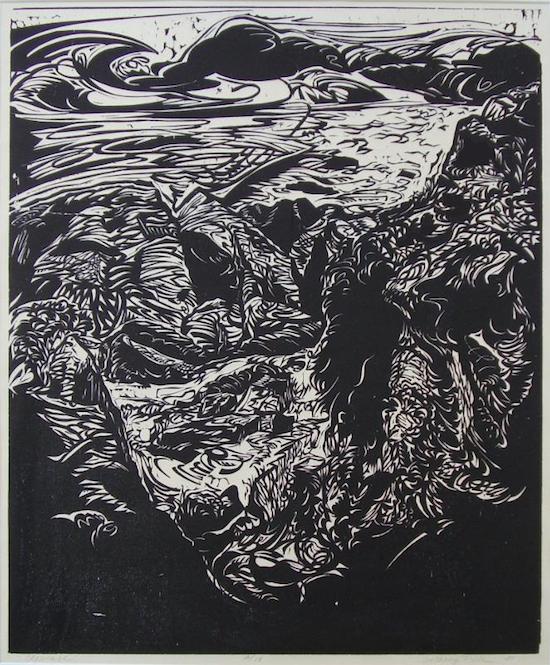
Cleavage and creation

pilla "Cleavage'' (woodcut), by ANTHONY PILLA,  at Alpers Fine Art, Andover, Mass.

Read More
Commentary Robert Whitcomb Commentary Robert Whitcomb

What's done is done

piwinski Work from STACEY PIWINSKI'S show "The Left Behind.'' at Fountain Street Fine Art, Framingham, Mass., through Aug. 15.

The gallery says: "Working with objects, memories, and energies of the left behind, this work is more about inclusion than exclusion.''

Read More
Commentary Robert Whitcomb Commentary Robert Whitcomb

Rise and fall of Stamford as a banking center

Read More
Commentary Robert Whitcomb Commentary Robert Whitcomb

Summer hiatus

Early this morning, the cool, damp air and an unexpectedly dim sun made it feel a little like September. Nice, but a little sad.

Read More
Commentary Robert Whitcomb Commentary Robert Whitcomb

Waxy buildup

encaustic

Read More
Commentary Robert Whitcomb Commentary Robert Whitcomb

Michael DeRosa: Zoo animals vs. invasive plants

Read More
Commentary Robert Whitcomb Commentary Robert Whitcomb

In summer white

hawthorne  

"A Study in White'' (oil on canvas), by CHARLES WEBSTER HAWTHORNE (1872-1930), in the show "American Impressionism: The Lure of the Artists' Colony,'' at the D'Amour Museum of Fine Arts, Springfield, Mass, though Oct. 25.

New England, especially the coast and mountains, had lots of artist colonies from the Civil War on. It probably still does but doesn't seem to producing as many famous artists as it did in Victorian and Edwardian times. And most artists can't afford to live in the scenic coastal towns to which they used to flock, Even the Berkshires have gotten too pricey.


Read More
Commentary Robert Whitcomb Commentary Robert Whitcomb

Fading memories

Palimpsest #7  

"Palimpsest #7'' (digital photo, archival inkjet print), by DAVID WEINBERG, at Galatea Fine Art, Boston.

Read More
Commentary Robert Whitcomb Commentary Robert Whitcomb

Why do cities waste public money on stadiums?

This Pacific Standard magazine article/investigation asks: "Despite every number suggesting they shouldn't, why do American cities keep building sports stadiums funded with public money?"

The money helps impoverish essential public services  and is a huge wealth transfer from poorer people to the rich.

Read More
Commentary Robert Whitcomb Commentary Robert Whitcomb

Gets even more violent after dark

Feldman "Sunset on the Pond'' (oil stick on braced panel), by NAN HESS FELDMAN, in the "Hydration'' show at Alpers Fine Art, Andover, Mass.

My parents for a few years lived on a pond they shared with a neighbor that was kept at slightly under 10 acres. More than 10 acres meant that they would have to give the public access to it under the colonial era "Great Pond'' rule.

They controlled the size of the pond via a little dam, which created a cute little waterfall. If they had chosen, they could have flooded  a road downstream by pulling up a wooden slat. They did think that would be fun to try but never got around to it.

While my parents seemed to like the pond, with its canoe, little swimming raft and large population of bass, I always found it smelled too much of decaying organic material and iron (they used to mine a little nearby in colonial days) and hosted far too many mosquitoes that in an earlier time might have given you malaria.

I missed the usually antiseptic smell of  the ocean at their previous place on a hill above the shore, where, unlike on the  pond,  hemmed in by tall trees and thick brush, there was almost always a breeze -- indeed, often a gale.

Some of the water in the pond flowed in a little stream from a cranberry bog. God knows what sort of pesticides were used there in pre-EPA days. But whatever they used wasn't enough to cut into the bass or snapping-turtle population as the brook flowed into the pond via a swamp that recalled the movie The African Queen, from which came  one of  the famous lines assigned to Humphrey Bogart: "One thing in the world I hate: leeches. Filthy little devils.''

Everything seemed so much cleaner in the winter, though the remoteness of the house and pond led one roofer to ask my mother if they had bought the land from Lewis and Clark.

Fairly soon after my father died suddenly  we sold the place, unfortunately during a real-estate slump.

--- Robert Whitcomb


Read More
Commentary Robert Whitcomb Commentary Robert Whitcomb

Dennis Berkey/Jay Halfond: Cheating in online courses

BOSTON

Without having to miss out on fun, just outsource your test to us, an expert will take it and you will get the awesome grade that you deserve. All at prices you will not believe. How does that sound?”

—Excerpt from one of many results of googling “take my test”

This pitch is more than incredibly crass. It is really just outright pimping of hired poseurs to online students willing to “pay for performance.” With the massive growth of online education, such parasitic companies have sprung up like weeds, presenting a serious threat to program integrity.

In a famous 1993 New Yorker cartoon, a dog at a computer quipped, “On the Internet, nobody knows you’re a dog.” We are still haunted by concerns about whether remote learning can ever be conducted fairly. Of course, the Internet didn’t invent dishonesty. For years, students have been reporting anonymously having cheated and plagiarized – more than 70 percent in most studies. The public believes, along with many faculty, that cheating is easier to do, and likely even more common, in online courses than on campus. While many online leaders agree, they do not see cheating as a major challenge or barrier to program success.

What’s harder – and even more important – than deterring and detecting cheating in online education? Certainly designing interesting course formats that catch and hold the attention of students halfway around the world through all hours of day and night. Distractions abound, and the convenience of asynchronous learning makes it all the more tempting to put off work until the last minute (thus making the siren’s call from cheating companies doubly tempting). Distance creates the illusion of anonymity. Behavioral ethicists have long noted that context matters: In situations where dishonesty is easy to conduct and rationalize, we are far more prone to caving in to temptation.

Thus, designing effective assessments is a critical part of the task of creating distance-learning programs of high integrity. An online program cannot claim to be truly worthy of academic recognition without strong assurance that students are being fairly and effectively assessed in their learning.

Student honesty is a prerequisite for the credibility of online programs. That made it worthwhile for us to better understand its nature. To that end, we designed a survey to learn more about what was being done about cheating in online programs, and how technology itself is being used in solutions. The results were interesting, even somewhat surprising.

Who is actually participating in my course?

From both the survey results and our direct conversations with online program leaders, a frequently stated concern is the lack of face-to-face contact with students. Aside from the concern about cheating, faculty and students miss the experience of direct involvement with one another. One instructor commented, “We feel a professional obligation to know who our students are, and the degree to which they are engaged in our courses, whether or not there is cause for concern about cheating.”

Academic sentimentality aside, what about ringers—can we be certain that the student doing the work is actually the one registered in the course? The federal government weighed in on this, requiring in the Higher Education Opportunity Act of 2008 that online programs must have stronger procedures to ensure this than just the use of usernames and passwords, which can be too easily shared.

This is where a legitimate industry has emerged: commercial “test proctoring.” For many years, there have been commercial bricks-and-mortar “testing centers” (Pearson and Prometric centers being the most prevalent) where individuals needing professional certification complete exams under the scrutiny of professional proctors. Customers verify their identities using government photo IDs, drivers’ licenses, passports, etc., before sitting for proctored tests. Online programs began using these centers or otherwise requiring online students to come onto campus to take exams. While commercial testing centers can be expensive, the real cost was in student travel time and inconvenience.

The changing landscape

In the rise of online education with its flexible features (learning anytime, anywhere), entrepreneurs saw an opportunity to provide less expensive, more convenient means of student authentication and test proctoring. An early and still-dominant approach is to use a computer’s webcam and the Internet to enable trained human proctors either to monitor students’ test-taking in real time or to review video recordings of the test session after the fact. In either case, the proctors look for evidence of cheating as well as authenticating the test-taker (typically by comparing the image of the test-taker seen by the webcam with a previously recorded image from the student’s photo ID). Major vendors include ProctorU, Examity and Software Secure.

More recently, a new generation of vendors has introduced fully automated systems making use of “recognition” technologies (facial, voice, fingerprint biometrics, even typing styles) to achieve the same results at considerably lower cost, due primarily to the absence of the human factor. These fully automated solutions are generally more convenient, as there is no need to schedule a proctor, and more scalable as human labor is replaced by algorithms. They typically establish a biometric profile when the student initially enrolls, and then use the computer’s webcam, microphone or keyboard to authenticate (via biometric comparison) the student at later times.

These technologies are also capable of identifying behaviors suggestive of cheating, typically reporting these to course instructors on convenient dashboards, along with the relevant evidence from video recording or screen captures made during the test. Current such vendors include Verificient (ProctorTrack), ProctorFree, Proctorio and BIOMIDS.

Where it all stands now: the survey

In order to reach a broad audience of online leaders, this survey was executed in different ways, through emails and blog links, during its fielding period from January 2015 to May 2015. Participants fromUPCEA and WCET member institutions were asked to give indications, ranging from strong disagreement to strong agreement with statements in six general areas of online education. From the strong participation, including thoughtful responses to open-ended questions, it was clear that the online programs in these membership organizations are under strong, engaged leadership with high ambitions for growth in size and quality. The matters of integrity, cost and convenience to students are of great interest and concern, and programs leaders are open and committed to emerging solutions.

We saw strong appreciation for the challenges of student dishonesty and program integrity, with clear confidence that the problems are manageable. Eight-four percent of the 141 respondents concurred that student dishonesty is a significant issue. Half of all who responded believed that the public thinks dishonesty is more likely to occur in distance learning. But 79 percent did not see this as a difficult barrier, as effective solutions are available.

By far the most frequently cited means of ensuring program integrity, specifically the deterrence of cheating, was reliance on honor codes or clearly articulated institutional policies. Three-quarters of these online leaders felt that establishing, articulating and enforcing such policies provided the essential foundation for online integrity, if not fully satisfactory solutions.

Slightly less than half of the 141 respondents currently use test proctoring, and an additional quarter are considering it. Our impression is, however, that even among users, actual use is erratic and infrequent (such as only for final examinations or other high-stakes assessments). In its formats, the field itself seems not yet to have progressed much beyond the video stage, either as real-time monitoring via webcam or by record and review. We noted that over two-thirds of the respondents indicated being open to considering the newer fully automated solutions for student authentication and test proctoring.

Almost half of those surveyed thought that the major concerns about cheating involved browsing or otherwise using unauthorized notes or other sources during tests. 38 percent thought having another person pose as the student during a test was problematic, and 42 percent were concerned about those who consult others for help during an examination.

When asked to name the most desirable features in a remote proctoring system, a large majority–not surprisingly–cited simplicity and ease of use, a high degree of integrity and reliability and low cost. Cost is a particularly vexing problem, as the addition of an authentication or proctoring system represents an added expense, either to the institution or individually to students. News media  recently reported strong objections from students surprised by new requirements to pay outside vendors to proctor their tests.

Our impression is that low cost, automated solutions funded by institutions are far preferable to having students pay separate test-proctoring fees.

The most interesting results speak to the distinction between video-monitoring and newer fully automated solutions. More than half of the respondents rated as “very desirable” or “desirable” the features of freedom from having to schedule live proctors, student authentication via intelligent software that persists throughout the session and fully automated proctoring with results summarized for the instructor immediately following the test.

Relatively less desirable features included remote monitoring by live proctors who could intervene during a test, automation running locally on the student’s computer, and video-recording for post-test review by live proctors. Anecdotal information gained from direct conversations with online students shows a much greater comfort level with automated (i.e., biometric, AI) proctoring than with having another live person monitoring their test-taking remotely.

In short, instructors, students, and administrators want solutions that are neither distractions nor intrusions–that simply address the concerns effectively, at low cost and without compromising the focus on teaching, learning and assessment.

The future

The roles and nature of online authentication and proctoring continue to evolve. Leaders in online education appreciate the very real concerns about student honesty and want to provide effective, affordable solutions that are respectful of all concerns. The costs are not only financial, but also matters of time, convenience, integrity and preservation of educational priorities. We see an increasing demand by accreditors and public officials for greater accountability for ensuring the identity, active participation and demonstrated achievement by students in online programs. There is also important concern about fraud in programs whose students are eligible for federal financial aid. Recent auditshave revealed huge amounts of federal financial aid awarded to students registered for online courses in which they never actually participated.

Fortunately, there is growing awareness of the tools available for addressing these issues—especially as we evolve from human to automated authentication and proctoring. Greater use of these tools, however, will require the attributes of lower cost, ease of use and demonstrated integrity of the proposed solutions. We see the further development of fully automated systems as a powerful next-generation response, becoming a ubiquitous, nearly transparent part of remote authentication and proctoring.

To achieve this, we will need to help students–even more in online courses than on-campus–to understand that the integrity of their academic credits, certificates and degrees might very well depend on automated measures to confirm their participation and ensure the validity of their assessment. We are not so much replacing Mr. Chips’ personal touch with Big Brother’s remote scrutiny—as ensuring a level playing field for all students, and demonstrating our respect and responsibility for their certified achievements.

Dennis Berkey is the former president of Worcester Polytechnic Institute and former provost of Boston University and is currently the president of BIOMIDS Inc. Jay Halfond is a former dean and currently a professor of the practice at Boston University. The authors thank UPCEA’s Center for Research and Marketing Strategy and WCET for invaluable help in conducting this research. For further information on this study, contact Mr. Berkey at dennis.berkey@biomids.com.

This piece originated on the Web site of the New England Board of Higher Education (nebhe.org).
Read More
Commentary Robert Whitcomb Commentary Robert Whitcomb

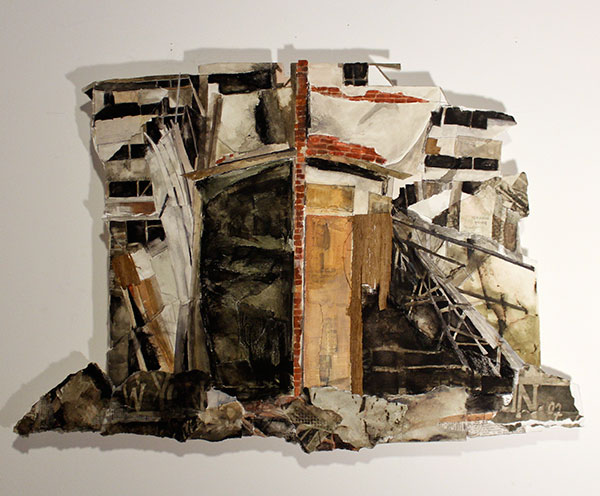
From annals of urban renewal

Chase"Where we used to sit on the stoop'' (mixed media collage), by MEGHAN CHASE, in the "Free Association'' group show at Kingston Gallery, Boston, Aug. 5-30.

Read More
Commentary Robert Whitcomb Commentary Robert Whitcomb

Chris Powell: ICE's bizarre refusal; 'radical forgiveness'

  Connecticut has a failure of immigration-law enforcement just as big as the recent one in San Francisco, although its location -- Norwich -- hasn't been glamorous enough to gain similar attention, despite outstanding journalism by the local newspaper, the Bulletin.

In San Francisco an illegal alien and repeat felon who has been deported from the United States many times has been charged with shooting a young woman to death on a tourist pier. Before the murder city police were holding the illegal alien on other charges, and federal immigration authorities had asked to be informed of his release so they could collect him. But San Francisco is a "sanctuary city" whose political correctness obstructs immigration-law enforcement. So the Feds were not notified and the illegal alien was not deported again as he should have been.

In Norwich an illegal alien who had just been released from prison after serving 17 years in prison for attempted murder in that city was charged there again last month with the murder of a young woman in her apartment. While Connecticut has declared itself a "sanctuary state," its obstruction of immigration-law enforcement does not go as far as San Francisco's.

At least Connecticut will cooperate with federal immigration authorities for the deportation of felons, and the state apparently notified the U.S. Immigration and Customs Enforcement (ICE) office of this illegal alien's imminent release.

But ICE did nothing about it, and the agency's explanation is contemptible. That is, ICE claims that, upon his release from prison, it couldn't deport the illegal alien now charged with the Norwich murder because he would not produce any documents associating him with his native country, Haiti. So having attempted murder once already in Norwich, this illegal alien was simply set free and ICE forgot about him. Now he is charged with murder itself.

If ICE maintains its excuse -- that illegal aliens can't be deported unless they cooperate by producing adequate documentation -- then every illegal alien in the country can gain permanent residency here simply by destroying his documents.

Norwich's U.S. representative, Joseph D. Courtney, is pressing ICE for a better explanation. He should be joined by the rest of Connecticut's congressional delegation, the state's news organizations, and all concerned citizens. Even in politically correct Connecticut an innocent life must be worth more than this.

XXX

In a recent letter to the editor a reader from Tolland scolded this writer's June 29 column for not having been impressed by the forgiveness given the racist mass murderer in Charleston by the survivors of his victims. "Powell apparently knows little about the teachings of the New Testament," the reader wrote, adding: "Radical forgiveness, even of one's worst enemies, is the way of the cross."

But one can be familiar with the New Testament and willing to let people follow "radical forgiveness" and the way of the cross i their personal lives and still maintain that these things can be contrary to national survival -- and national survival was the point of that column, national survival as sustained by the astounding loyalty of black people to their country despite centuries of abuse, abuse that continued with the mas murder in Charleston.

People can make of forgiveness whatever they will in their personal lives, as a matter of religion, as a psychology of life, or whatever. That won't harm anyone else. But a nation is infinitely bigger than that; it is a collective for which responsibility is shared, and all who are part of it will share its fate.

If one believes that this country, more than any other, aspires to uphold individual liberty within democracy and is, more than any other, the universal nation, then any subversion of it, such as an attempt to terrorize one of its components and start a race war, is the worst treason and, in the national sense, must never be forgiven.

Chris Powell is managing editor of the Journal Inquirer, in Manchester, Conn.

Read More
Commentary Robert Whitcomb Commentary Robert Whitcomb

In N.H., 'Politics and Eggs'

  This is about a newish New Hampshire tradition -- "Politics & Eggs,'' another part of New Hampshire's storied presidential-nomination campaigns.

The first few paragraphs are below. See this link to read the whole story.


By SUSAN DOUCET

Concord Monitor Staff

In the world of pro sports, athletes have long followed a tradition of signing anything from baseball mitts to trading cards.

In New Hampshire presidential politics, the stars sign wooden eggs.

Any aspiring president who wants some notoriety and an audience of politically well-connected business people makes sure to speak at one of the Politics & Eggs forums, a collaboration between the New Hampshire Institute of Politics and the New England Council.

But before the speakers take the stage, they are given a task. A basket of wooden eggs – the namesake items of the series – is placed in front of the speaker, who must sign the glossed shell.

Asking the candidates to sign these wooden icons, the same size as real eggs, was not part of the original plan for a political event designed for local business people. But as the series has grown, so has the prominence and tradition of the wooden eggs, establishing them as political collectibles.

Read More
Commentary Robert Whitcomb Commentary Robert Whitcomb

Celebrating water protection in N.E.

connriver

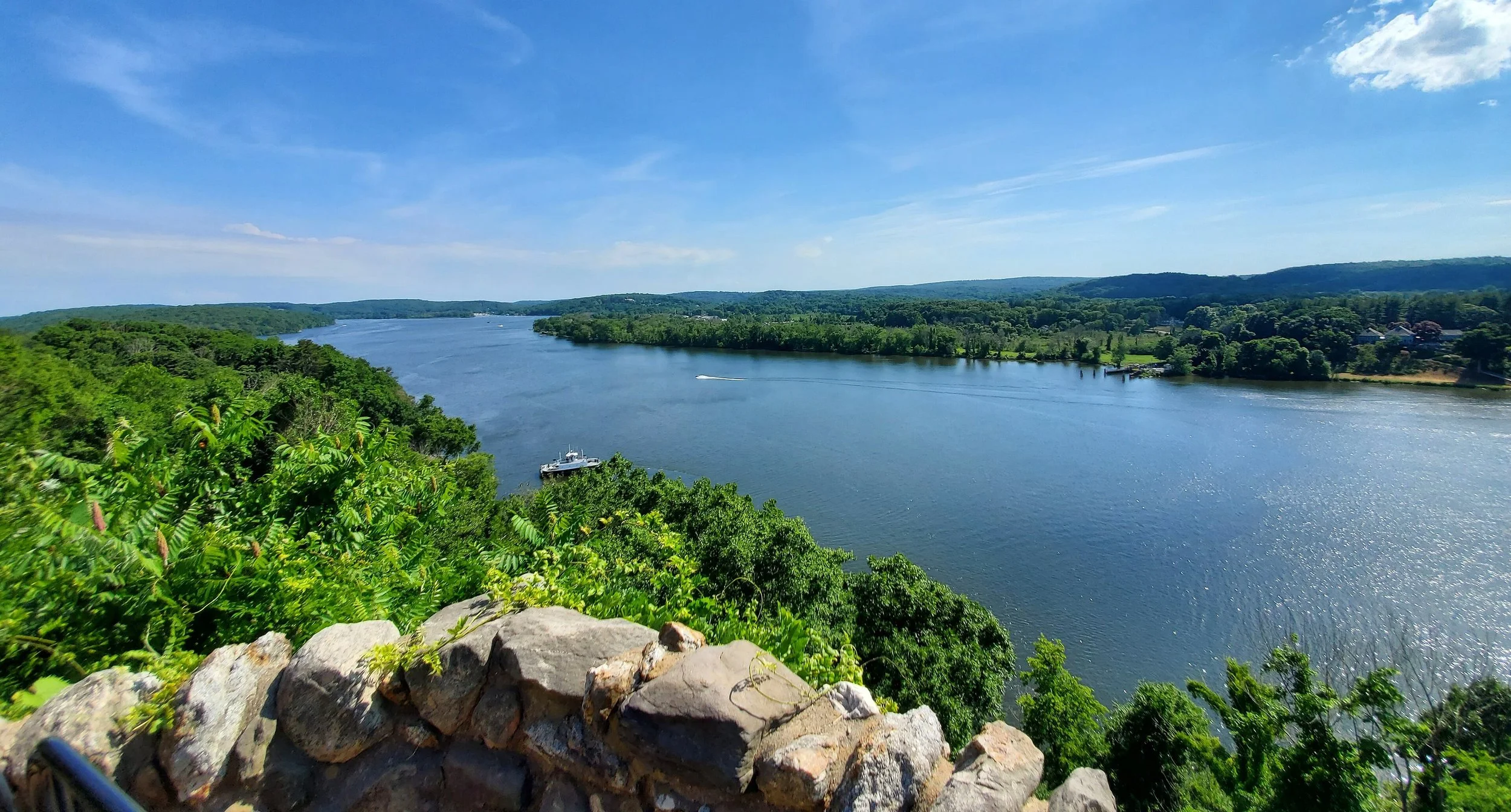
A stretch of the Connecticut River in western Massachusetts.

From ecoRI News.

BOSTON

At a spot overlooking Boston Harbor, once choked with toxic pollution but now home to some of the cleanest urban beaches in the United States, advocates gathered July 1 to thank the Obama administration for closing loopholes in the Clean Water Act that previously left more than half of Massachusetts’s streams at risk of pollution.

“We’ve made so much progress in cleaning up our waterways, and we can’t afford to turn back the clock,” said Ben Hellerstein, state director for Environment Massachusetts. “The EPA’s Clean Water Rule will make a big difference in protecting Boston Harbor, the Charles River and all of the waterways we love.”

The Clean Water Rule, finalized in late May, clarifies federal protections for waterways following confusion over jurisdiction created by Supreme Court decisions in 2001 and 2006. It restores Clean Water Act protections to thousands of miles of streams that feed into waterways that provide drinking water for millions.

“In New England, protecting our water is more important than ever, especially as we work to adapt to climate-change impacts such as sea-level rise and stronger storms,” Environmental Protection Agency (EPA) Regional Administrator Curt Spalding said. “Protecting the most vulnerable streams and wetlands — a drinking-water resource for one in three Americans — helps our communities, and this rule provides clarity for businesses and industry without creating new permitting requirements.”

Before the Clean Water Rule became law, small streams, headwaters and certain wetlands were in a perilous legal limbo, allowing polluters and developers to dump into them or destroy them in many cases without a permit. In a four-year period following the rule’s creation, the EPA had to drop more than 1,500 cases against polluters, according to one analysis by The New York Times.

Prior to the passage of the Clean Water Act in 1972, Massachusetts waterways suffered from decades of pollution and neglect. As late as the 1980s, untreated sewage was regularly dumped into Boston Harbor, and high concentrations of industrial pollutants posed a public-health risk.

The Clean Water Act prompted a major cleanup of the harbor. Today, Boston boasts some of the cleanest urban beaches in the nation, and wildlife habitat has significantly improved, according to Environment Massachusetts.

Advocates pointed out that the Clean Water Act has enabled similar improvements in water quality in many of the state’s most iconic waterways, from the Charles River to the Connecticut River.

Despite broad public support for clean-water protections, polluting industries and some members of Congress are fighting to block implementation of the Clean Water Rule. In recent weeks, congressional committees have approved multiple bills aimed at rolling back the Clean Water Rule.

Read More
Commentary Robert Whitcomb Commentary Robert Whitcomb

Uber Urban Partnership in Conn.

New England Council member Uber has announced a new initiative called UberUP (Uber Urban Partnership) in Connecticut. The program seeks to relieve transportation issues that workers face when seeking employment. In addition, the program seeks to recruit drivers in urban areas that could use the work by adding over 1,500 drivers over the next year. In January, Uber and the New Haven chapter of the NAACP published a report on the affects of lack of transportation on chronic unemployment in the area. Now, Uber is working to relieve these problems through their urban program. The program waives the deposit and weekly fee for drivers who do not have a smartphone and offers seminars in skill-building for locals. Uber is working with the NAACP, The WorkPlace, and Workforce Alliance to put on these events. In addition, Uber will recruit new drivers who live in urban areas who could use the work.

Scot X. Esdaile, president of the NAACP Connecticut, praised the program stating, “The Connecticut NAACP & Uber partnership helps brings jobs and greater economic opportunities to the inner cities of Connecticut. The Connecticut NAACP is committed to thinking out of the box and creating new relationships that deliver economic substance for the communities we serve!”

The New England Council commends Uber for its mission to create employment opportunities and looks forward to this new program’s success.

Read More
Commentary Robert Whitcomb Commentary Robert Whitcomb

Practice for manipulating people

  , 6/25/15, 12:51 PM,  8C, 7390x9566 (470+842), 100%, Art 1,  1/30 s, R126.7, G95.3, B108.6

 "The Dance'' (mixed media), by CHERYL POLCARO, in the "New England Collective VI'' show at Galatea Fine Art, Boston, Aug. 5-30.


Read More
Commentary Robert Whitcomb Commentary Robert Whitcomb

Bid on a Rockwell!

  jfk

This just in from the National Museum of American Illustration, which sends New England Diary  images from its astounding collection from time to time. The museum is on Bellevue Avenue in Newport, R.I.

"To allow all of our supporters and patrons to purchase their own original illustration artwork and contribute to our goal of establishing an Endowment Fund, the National Museum of American Illustration's 15th Anniversary Benefit Auction is now open for bidding online. To view the auction and bid, please visit http://www.32auctions.com/NMAIBenefitAuction . If you would like to place an absentee or phone bid to participate in the live auction on July 30, please see the attached bidder registration form.

"Among the many wonderful auction items, there is: Norman Rockwell’s historic Portrait of President John F. Kennedy (shown above) painted for the April 6, 1963 Saturday Evening Post cover; Maxfield Parrish's ethereal 1901 Scribner's illustration, Twilight Had Fallen; John Falter's unique perspective on an exciting baseball; two J.C.Leyendecker studies for Saturday Evening Post covers; illustrations of beautiful muses painted by Howard Chandler ChristyPhilip BoilleauHarrison Fisher, and F. Sands Brunner; a Bemelmans from Madeline’s RescueMead Schaeffer’s South Seas pirates; and much more! The proceeds from the sale will benefit the NMAI’s Endowment Fund, to continue the Museum’s mission into perpetuity.

"The online bidding will continue until Thursday, July 30, at 10 a.m.  and the auction will conclude at the 15th Anniversary Gala hosted at Vernon Court, the Museum's home, in Newport, Rhode Island. The Gala begins at 6 p.m., and items will be available for silent bidding. At approximately 9:30 p.m., the top lots will be sold by an auctioneer in a live event. Bidding on all other lots will conclude at Midnight on July 30th. To ensure winning of a lot, please see the attached absentee and phone bidding form to place a bid for the live event.

"We welcome and encourage all our supporters to bid online and to register for Absentee and Phone bids. For assistance and additional information, please call the NMAI at 401.851.8949, or visit our Website, http://americanillustration.org/''

Read More
Commentary Robert Whitcomb Commentary Robert Whitcomb

Summer sleep-in

zener-full moon "Full Moon,'' by ERIC ZENER, at Lanoue Gallery, Boston.

Read More